Publishing Info: HMH Books for Young Readers, October 2018
Where Did I Get this Book: NetGalley
Book Description: When Rose first met Charles, he was trapped in the form of a white bear. To rescue him, Rose traveled to the land that lay east of the sun and west of the moon to defeat the evil Troll Queen. Now Rose has found her happily-ever-after with Charles—until a sudden storm destroys his ship and he is presumed dead. But Rose doesn’t believe the shipwreck was an act of nature, nor does she believe Charles is truly dead. Something much more sinister is at work. With mysterious and unstoppable forces threatening the lives of the people she loves, Rose must once again set off on a perilous journey. And this time, the fate of the entire world is at stake.
Review: I read “East” forever and a day ago. It was an obvious read for me, as I love fairytale re-tellings and love “East of the Sun, West of the Moon” in particular. While I have yet to find my “one true love” version of this story (yes, this is a thing for me. For example, Robin McKinley’s “Beauty” and Juliet Marillier’s “Daughter of the Forest” both hold this esteemed title for their respective fairytales), I remember enjoying Pattou’s version and mentally shelving it as a “win” for this fairytale. So, when I saw that now, years later, Pattou was releasing a sequel story, it was a no-brainer to pick it up.
A few years after the events of “East” readers find Rose and her beloved Charles mostly settled into life. With a young baby boy to call their own and established lives pursuing their passions (Charles’s music), they are happy and it feels like the fantastical events of their lives are behind them. That is until Charles’ ship is struck down in a strangely powerful storm on a return journey from one of his musical expeditions. Now Rose will once again brave all to track down the love of her life who she knows, deep down, has not died but must have once again fallen into the grasp of villainy.
Reading this story so many years after “East” was an interesting experience. To be honest, I only had the vaguest memories of that book and they mostly had to do with generally liking it. But, as I said above, not loving it to the extent that I have other fairytale stories. With this book, as I read, I began to remember more and more about the original, not only its own specific take on the tale, but what exactly I liked about it, as well as what held me back.
What I liked has largely to do with a rather nebulous idea regarding writing tone. For fairtyales in particular, there’s a hard-to-pin-down style of writing that often comes hand-in-hand with this type of fantasy. It seems to be a combination of lyrical word choice, simple sentence structure, and a general approach to fantasy that leaves many things unexplained. Magical elements just exist, and it’s expected that readers can just accept them without detailed histories or systems. So, in this way, “West” definitely excels. While the story doesn’t speed along, it also reads nicely, filling its pages with the types of mini adventures and new characters that one expects to run across in fairytales.
The other thing that I remember enjoying from “East,” and that remains strong here, was the characterization of Rose herself. She’s a no-nonsense, go-getter type of heroine of the type that I always particularly enjoy. She doesn’t waffle amidst indecision or others fears (her family all try to convince her that Charles truly died in the ship wreck, as that’s how it appears in every rational sense), but instead has faith in her own abilities and feelings and takes charge of her situation. I also particularly enjoyed her knowledge of trolls to suss out suspicious instances early in the story.
However, there were also elements of this story that reminded me why I didn’t absolutely love “East” either. For one, like that book, Rose is not our only POV character. In the first book, I didn’t love this take on the story either, but I remember enjoying a few of the other POV characters enough that I was able to get on board with it. Here, I feel like there are not only even more POV characters, but that, between them, they tended to bog down Rose’s own story, rather them add nice supplements to it. On top of Rose’s own adventures, we have her brother who is always one step behind her. And her family back in her home village confronting a deadly plague. Both stories were fine, as far as it goes. But there was just too much going on between them all to ever feel truly invested in any of them. Mostly, I just wanted to focus on Rose’s journey to find Charles; I wasn’t too interested in seeing her brother just miss her time and time again. And the plague story, while interesting, just seemed like another tacked on plot that distracted from the main plot line.
In the end, I think my feelings for this book were about on par with what I felt for “East.” Perhaps a bit less so, since the whimsy of trying to track the original story in the retelling was lost in this one. But, as the books are so similar in whats on offer at their core, I think there’s a good chance that however you felt about “East” will transfer to how you feel here. And, as I know a lot of readers really loved that book, I’m sure this will also find a large number of devoted fans. For me, it was still just “kinda good.”
Rating 7: A steady sequel that aptly captures the same tone and feel of the first book, for better or worse.
Publishing Info: Viking Books for Young Readers, January 2017
Where Did I Get this Book: from the library!
Book Description: June 1812. Just weeks after her catastrophic coming-out ball, Lady Helen Wrexhall—now disowned by her uncle—is a full member of the demon-hunting Dark Days Club. Her mentor, Lord Carlston, has arranged for Helen to spend the summer season in Brighton so that he can train her new Reclaimer powers. However, the long-term effects of Carlston’s Reclaimer work have taken hold, and his sanity is beginning to slip. At the same time, Carlston’s Dark Days Club colleague and nemesis will stop at nothing to bring Helen over to his side—and the Duke of Selburn is determined to marry her. The stakes are even higher for Helen as she struggles to become the warrior that everyone expects her to be.
Review: Ok, I haven’t ranted about a cover for a long time. But man. MAN! This one deserves a good rant. Not only is this cover truly awful on its own, but when you compare it to the first book’s cover, it just gets even worse.
That cover is good. It’s not doing anything super brilliant or unique, but it’s getting the job done. We know this is a historical novel, and we get that there is some darkness involved in the story, likely fantasy-related. And then we have this new cover…The model looks ridiculous. The weird magical sword is bizarre (and hard to connect with anything in the book). And the whole thing looks like the type of book you’d scoff at in an airport. We’d all like to think that we don’t judge books by their covers, but we do. And this series was already criminally underappreciated, and I can’t imagine this change to cover art helped anything. Also, spoiler alert, it definitely DOESN’T improve with the third book. *sigh*
Lady Helen has forgone the life of marriage and respectability she had previously seen as her future. Instead, she is now a full-fledged member of the Dark Days Club, a secretive society that fights against demonic beings that lurk among the unwary. More to the point, she and her colleagues suspect that the Grand Deceiver is on the move, one of the most powerful and evil beings the Club has ever faced. But Lady Helen is also still in training, with much to learn not only about her own unique abilities, but how she is to balance her responsibilities to the society as well as her loyalties to her friends. Especially Lord Carlston, whose erratic behavior has set him smack dab in the cross hairs of the leadership in the Dark Days Club.
While this book was a bit more wishy-washy for me (not really a surprise for the dreaded “second book” in a trilogy), there were still several aspects of the series that I greatly enjoyed. For one, the pitch perfect mixture of historical regency “manners” story, flitting through ballrooms and strolls through parks with parasols, and magical adventure featuring some legitimately dark villains. Lady Helen must be given full credit as a well-drawn character who is capable of reading as believable in both these very different scenarios. What’s more, both versions of herself, socialite and powerful Reclaimer, are not two suits that fit well together. Those who know her as a well-bred lady first and foremost, question her ability to exist in an action-packed and dangerous world. Here, she rises to the occasion by learning to fight and donning an alter-ego as a young man. On the other side, her Reclaimer friends don’t see the importance or value that Helen does in maintaining a grip on her role as a woman in society. And here, she proves that a well-timed conversation with the right person can be just as valuable as pulling out a sword.
I still also very much like the world that has been imagined here. Reclaiming is a dangerous business, and we see that though Helen has great power, she still has much to learn to survive in this world. Not only that, the most successful Reclaimer must still deal with the negative side-affects of their work, which we see in Lord Carlston’s quick spiral into violence and madness. We also see that the Deceivers themselves can come with a wide variety of motives and ways of living in the world, some more destructive than others. There are also more than a few humans who prove that you don’t have to be a demonic being to be evil.
While I liked all of these general aspects, I did find myself struggling with much of the book. For having so much action and adventure, the pacing also felt very slow. This is a long book, and towards the middle I was becoming more and more tempted to skim along. This is partly due to Helen’s arc itself within the story. Yes, she is new to this world and still trying to figure out who to trust and how to align herself. But she was just so indecisive, trying to play a middle field that anyone a mile away could see as a fool’s quest from the start. She also falls victim to the unfortunate and all too common martyr complex, choosing to make incredibly stupid decisions rather than, I don’t know, communicate with her friends. And for heaven’s sake, it seems all too clear who and what the Duke of Selbourn really is. Even the most naive lady of the time would be side-eyeing a man like this so determinedly not being put off by the repeated refusals and strange revelations about his lady love.
So, while I still liked much of the story, it ultimately felt a bit too long, a bit too predictable, and a bit too clumsy with its main character. But, that said, I’m still all in for the third and final book. At the very least, I can’t wait to read about Lady Helen finally waking the hell up about some things that I’m sure most readers have already guessed.
Rating 7: Falls victim to “second novel syndrome” a bit, but still has enough going for it to pull readers in for the final story.
Book Description: Princess Andaryn’s six older brothers have always been her protectors–until her father takes a new Queen, a frightening, mysterious woman who enchants the men in the royal family. When Ryn’s attempt to break the enchantment fails, she makes a bitter bargain: the Queen will spare her brothers’ lives if Ryn remains silent for six years.
Ryn thinks she freed her brothers, but she never thought the Queen would turn her brothers into swans. She never thought she’d have to discover the secret to undoing the Queen’s spell while eluding the Otherworldly forces that hunt her. And she never thought she’d have to do it alone, without speaking a single word.
As months as years go by, Ryn learns there is more to courage than speech . . . and that she is stronger than the Queen could have ever imagined.
Review: Omg, I was so excited when I just randomly stumbled on this book on Edelweiss. I obviously love fairytale retellings. But I LOVE the “Six Swans” fairytale in particular. Juliet Marillier’s “Daughter of the Forest” is probably one of my favorite books ever and is the golden standard as far as I’m concerned for retelling this fairytale. And, frankly, in a world becoming chock-full of other fairytale retellings, there are still very few that tackle this particular tale. So, with those facts in mind, I went into this both very excited and very challenged to not simply do a comparison read with Marillier’s take.
The story follows the classic fairytale. Ryn is a young girl when the story starts out, the youngest of seven siblings with six beloved older brothers. When a sorceress bewitches the king, their father, these siblings rebel only to become caught in the crosshairs of a magical spell themselves. The brothers are all turned into swans, and Ryn is left with impossible task of remaining silent for six years while weaving six tunics out of painful nettles to free her brothers and restore their kingdom.
Long story short, I loved this book. I loved our main character. I loved how true it remained to the original fairytale. I loved the ways that it expanded on the original fairytale. I loved the romance. I loved the magic. Review done now? Probably could be if I didn’t feel like I owed readers (and the book) at least a bit more detail.
Outside of my general love for the story, there were a few things that stood out in particular. For one, I loved the brothers in this book. Six brothers who spend most of a story as swans and off the page is always going to be a hard thing to tackle for an author. How do you make sure they each have personalities and can be differentiated from each other? While I won’t say that McGuire was completely successful here (there are still one or two brothers who I can only remember small details about), for the most part she does an excellent job of giving the brothers enough distinct traits to make each stand out. For one thing, the way the curse is laid out in this book, the brothers get to spend one night each month as humans. This gives them much more page time than other versions of the tale (Marillier’s swans only become human twice a year). With the addition of these scenes, we get to see much more of the brothers. I particularly loved Aiden, the oldest brother, and his close relationship with Ryn. He’s probably the brother that is given the most throughout the book, and I just loved everything about him. Secondly, I very much liked Ryn’s twin brother who is the one who has the most of an arc in this book, going from a kind of bratty, young kid to a loyal brother who is the one who really understands the extent of Ryn’s sacrifice in the end.
I also loved the inclusion of particular elements of the fairytale that have been left out of other versions of the story. I always loved the part of the original tale that dealt with the swans carrying their sister across the sea to safety. This is the kind of fairytale scene that is pretty hard to adapt, being very whimsical and hard to actually picture in the real world. McGuire adapts the scene here, having the swans pull a raft carrying Ryn. It was thrilling to see this part of the tale included, and it was also one of the most shining moments for Aiden as a character, even in swan form.
I also loved the romance that builds up between Ryn and the foreign prince, Corbin. As this is a middle grade novel, I had to repeatedly remind myself to be happy with the romance I was getting. But as an example of middle grade romances, this one does very well. It’s another tough part of the story to adapt, what with the usual late entrance of the romantic interest in the fairytale itself. And the fact that our heroine can’t speak, so creating meaningful moments where readers can really buy this type of connection forming can be challenging. McGuire rises to the occasion with aplomb.
The only criticism of the book I have does have to do with my expectations and comparisons to Marillier’s version. Like I said, it was a huge challenge to not compare the two as there are so few examples of this fairytale and Marillier’s is superb. “Daughter of the Forest” is also an adult fantasy novel and has some very adult scenes in the book. It can be a tough read, but its darker moments are also what adds to the ultimate beauty and triumph of the story.
This book, as a middle grade novel, had to take a very different route. And while I can appreciate certain changes (the romance needing to be written in a different way, for one), there were also a few choices that I felt were unnecessary and needlessly removed some of the teeth from the story. For one, the aforementioned monthly transformation of the brothers. This lead to a lot of great development for these characters, but also made Ryn’s experience much easier as she regularly had the support of her brothers to tackle basic tasks, like shelter building. She was also limited to not speaking or writing, but was still able to tell others every bit of her tale as long as she mimed it or acted it out. This let her explain her situation to a lot more people, thus creating even more of a safety net for herself. Beyond this, the nettles themselves become less of a challenge. Ryn quickly finds a way of handling the viscous plants in a way that doesn’t injure her at all. Much of the power of the original story is the way the heroine perseveres through the awful trial that is this curse, and part of that trial is the combination of remaining silent while completely a very painful task. All of these choices, when put together, make Ryn’s story a bit too light, in my opinion. Yes, it is a middle grade novel, but I think the author took it a little too far here and could have kept a bit more of the original’s darkness.
But! I still absolutely loved this story. I was so pleased that is lived up to many of my expectations and even surpassed some of them. It’s also a nice alternative to point to for readers looking for a retelling of this fairytale. There are some younger readers to whom, before, I would have hesitated to hand “Daughter of the Forest” because of some of its adult themes. But now we have this! And put together, we have a version for younger readers AND a version for adults!
Rating 9: A beautiful take on a much-overlooked fairytale.
Publishing Info: Scholastic Paperbacks, April 2000
Where Did I Get this Book: own it!
Book Description: Ax and the Animorphs find new hope when they learn that he is not the only non-infected Andalite on Earth.
Narrator: Marco
Plot: I had some vague memories of this book, of the fact that it was another “more Andalites on Earth” book VERY shortly after we had just gotten done with the last “more Andalites on Earth” book. But since I really liked the last one, I had high hopes for this one. And while it doesn’t paint certain Animorphs coughAxcough in the best light, it’s a pretty good book as far as general characterization for our team and for Marco in particular.
Me towards Ax throughout this entire book.
Marco is chilling at home on one of his rare free evenings when he sees a strange video clip being highlighted on the news and immediately recognizes the blurry form as an Adalite. Sure that Ax has been caught on film and that a good percentage of Controllers also saw the clip and will be trying to find him, Marco immediately morphs osprey and flies off to find Ax and Tobias in their meadow. Once there, Ax is able to view the clip and notes that this is an entirely different Andalite, since it is missing the last half of its tail. Tobias is also able to guess at the location of the scene and he, Ax, and Marco quickly take off to check it out. Once there, Marco demorphs. Halfway through, however, a local possum starts morphing as well and they find themselves confronted with a massive, adult Andalite, notable NOT the one in the film. After a brief confrontation where the adult Andalite threatens them, smacks around Tobias, and insists they leave, they split off. But, of course, they decide to follow the new Andalite. After seeing him morph human, they are able to track him to a house in the suburbs. They decide that now is the time to call in the rest of the team.
Back with the group, Ax reports that he has heard of both the Andalites who are stranded on Earth. The large one is named Gafinilan and the injured one is named Mertil. Both have strong reputations, though Ax makes sure to get in a few digs about how Mertil is now essentially useless due to his injury. The group decides that for now it is best for just Ax and Marco to approach, not giving away their true numbers. At the house, osprey!Marco decides to try and get a closer look, but when he flies in towards the house he is zapped by a force field. Gafinilan gets on a speaker system and tells him to surrender and come in or he will shoot them. Marco and Ax demorph and approach.
After some more barbed words, Marco and Ax are invited in. On the way in, Marco notices a slight tremble in Gafinilan’s large body. Inside, he leads them to a hidden room where through mad gardening skills he has re-created an Andalite meadow. He and Ax partake in eating an Andalite herb while Marco surreptitiously acquire a bee that is buzzing around, figuring he may need the morph later. After establishing a reluctant amount of trust, Marco and Ax agree to bring their Prince to meet with Gafinilan.
The next day, the group meets up at the mall to discuss their plan of action. It’s agreed that while Gainilan appears to be a bit of a loose canon, Jake should go ahead and meet with him. The others head out, but Rachel lingers behind with Marco. She has correctly guessed that Marco has his own plans and isn’t about to let Jake wander in without further investigation. The two team up for a spy job.
At Gafinilan’s house, Rachel sets up to provide back up support and Marco morphs bee to make his way in. He almost gets eaten by another bug on his way in, but eagle!Rachel manages to rescue him. The second trip in goes better and bee!Marco makes his way into the house. He doesn’t find Mertil. Anywhere.
After Jake scolds Marco and Rachel, the team try and figure out what game Gafinilan is playing. Ax suddenly realizes the importance of the herb he ate while visiting. It is a pain killer, and after witnessing Gafinilan’s shaking, Ax is able to guess that he has a horrible Andalite disease called Soola’s Disease. It create horrendous pain and is fatal. They figure out that Gafinilan is likely trying to meet Jake thinking that he is an adult Andalite whom Gafinilan could acquire and thus escape his disease (even though, according to Ax, this is considered a very shameful thing to do).
The next day, Jake goes in to meet with Gafinilan. After becoming frustrated when Jake refuses to “demorph” to his Andalite form, Gafinilan pulls a shredder on him and tries to force him to demorph. The other Animorphs barge in in their battle morphs. Gafinilan realizes that they all are human, except for Ax. Gafinilan finally comes clean with what is going on. He does not want to acquire Jake, agreeing with Ax that this is a shameful way out of his illness. Instead, the Yeerks have captured Mertil and are willing to exchange him for a healthy Andalite (the Yeerks don’t want Mertil since he is morph incapable and don’t want Gafinilan because of his illness). Ax is incredulous that Gafinilan would be willing to exchange one of his own people for a mere vecol, an Andalite who can’t morph. Gafinilan says that he would do anything for his friend, vecol or no.
They begin to form a plan to rescue Mertil. The Yeerks move him daily and he is well-guarded. Ax again protests that a vecol is not worth them risking their lives over. Marco finally snaps and calls Ax out on his horrible attitude. Jake says it doesn’t matter what Ax things and they will move forward with the rescue plan.
Marco, speaking from his own ruthless nature, recognizes the same trait in Gafinilan. That he would do terrible things (like turn them over) all to reach the goal of saving his friend. This leaves the Animorphs in a perilous position, trusting Gafinilan to not give them up in the middle of the mission. They move forward with the plan, however, and locate Mertil in an old train yard.
The Animorphs and Gafinilan go in for the rescue, but what started out as a surprise attack quickly devolves into the team be largely outnumbered by Yeerks. A massive fight breaks out. The team is quickly divided up, all fighting seemingly losing battles. The Yeerks attempt to drive off with Mertil in a Uhaul, but gorilla!Marco and elephant!Rachel manage to catch up with them. Gafinilan shows up too and helps rescue Mertil.
Ax again sinks to his normal low for this book with more disparaging comments about Mertil. Tobias finally snaps and calls Ax out on his inability to look past “normal.” Ax finally seems to cave and reluctantly greets Mertil saying that he will always remember the hero he was (great progress, really great).
After they escape, Gafinilan asks the Animorphs to give the two Andalites their space. Gafinilan is dying and would like to be left alone with Mertil during this time. A few days later, Marco makes his way to visit Mertil in the greenhouse. He lets Mertil know that once Gafinilan passes, he would be wiling to visit Mertil, not wanting him to just be alone. After a long silence, Mertil thanks Marco.
The Comic Relief: After the Marco’s last book which was a massive letdown, it was a relief to open this one and find myself back with the character I know and love. We again have a smart, strategic thinker who is impatient with others’ bullshit and willing to confront his own darkness.
Throughout the book, Marco repeatedly calls Ax out for his really negative attitude towards Mertil and those with disabilities. As the story progresses, these put-down become more and more harsh; but in this case, one is completely on Marco’s side of this situation. At one point towards the end, Marco chews Ax out pretty thoroughly and Rachel notes that this might be a bit hypocritical of Marco, who regularly makes some pretty inappropriate jokes. He rightly notes that there is a big difference, that that is gallows humor and that when it comes to his actions, he’s not like that at all. It’s a nice highlight of a key feature for Marco. Yes, he makes a lot of jokes, some that definitely tow the line. He’s also very cynical and suspicious. But, importantly, he owns these aspects of himself and, even more importantly, when it comes to his actions, he’s one of the most loyal members of the group. We also see, at the end of this book, that he can be very considerate, coming to visit Mertil and offering companionship. Just making sure not to tell the others that he has a heart.
We also get a return to Marco’s self-evaluation as far as his ruthlessness and direct-line method of getting from point A to point B. He sympathizes with Gafinilan, who was willing to turn over another Andalite to save a friend. To Marco, this type of cold-hearted decision making makes sense. Gafinilan’s priority is his friend, and that rules all. It’s a very unique point of view to Marco, and it’s nice to see it used to differentiate how Marco can see, and understand, Gafinilan’s choice as compared to the others.
Our Fearless Leader: Jake has some really good lines when he first meets Gafinilan. At this point, Jake’s met his fair share of arrogant, adult Andalite leaders and isn’t having any of it. It’s always fun to see him in his element as leader of the group, fully embracing his role and even making sure that others (usually other Andalites) know that he will be the one calling the shots from here on out.
Xena, Warrior Princess: I really liked how much Rachel/Marco team up action there was in this book. Though I’ll save some of my thoughts on that for the “Couples” section since there isn’t any actual romantic couple stuff to cover for this book. But we see Rachel team up with Marco not only for the initial spy mission, but also in the end when they both are the ones to catch up with and rescue Mertil from the UHaul.
A Hawk’s Life: There are a lot of weird hints in this book about Tobias being a bit off. I can’t remember this building up towards anything in other books (at least not in a way that feels like it was intentional here), so I have to imagine it was just to lead up to the last discussion about Ax and his unpleasant attitudes when Tobias finally cracks and comes down on him. He has a nice little speech about “normal” being a word that this group, in particular, probably shouldn’t throw around. He mentions all the weirdness in his own life as good examples. Stuck as a bird. Best friend is an alien. Girlfriend is a human. Etc. But as good as his speech is, he’s also not saying anything that the others haven’t said to some extent before in this book. They all come down on Ax at one point or another. But we have to imagine that when Tobias finally speaks up, it’s more the fact that he’s Ax’s best friend than what he actually says that finally breaks through to Ax.
Peace, Love, and Animals: Cassie doesn’t have a whole lot in this book. She makes one really strange observation towards the middle of the book that makes you question whether she’s actually paying attention to what’s going on, though. After Marco returns from the spy mission and they’re debating whether they can trust Gafinilan, she says that he must be a good guy because of the care he’s taken of Mertil. But…we’ve just established that no one really knows where Mertil even is! Why is she so sure that Gafinilan is taking such good care of him? It’s really strange. Marco even partially notes that this is a ridiculous line of reasoning, so it can’t be excused as just a weird writing mishap. The author actually just wrote Cassie as being this out of it. I mean, we all know Cassie’s not my favorite character, but this would be really dumb, even for her. But she’s also the one to note in the end that Marco’s right, that his actions do prove more than his out-there jokes, as far as being on the right side of the disability argument.
E.T./Ax Phone Home: Man, it’s been a long time since I’ve disliked Ax this much. And really, the other times it at least made more sense, because it was usually early in the series and he wasn’t quite on-board with his role in the team. In other stories, we’ve seen plenty of examples of the nastiness at the heart of the Andalite culture. But this is one of the few times where we’ve seen it really come out in Ax himself. And not just once, but again, and again, AND AGAIN. It never really gets better, and in fact just gets worse and worse. He tries to claim that he never said he was human, but the Animorphs (and readers, I have to think) aren’t going for it. Especially when you have another Andalite in the book who is proving that you can get past this type of backwards thinking, regardless of how instilled it is in Andalite culture. But nope! Ax is all-in, saying again and again that Mertil is completely valueless, not worth saving, and even says as much to Mertil’s face after they rescue him. Even in the end, his small step in the right direction is so tiny that it barely counts. Especially with the insult that is wedged into it as well, that all that is worth honoring/remembering about Mertil is how he was before. At this point, between the attitude towards the disabled and the idea that it is somehow “cowardly” for an Andalite like Gafinilan to try to save himself, I think we just have to admit that the Andalites as a whole are just kind of bad people. They can be on the right side of this war, but being better than a Yeerk is a low bar, and I’m not convinced they’re doing a whole lot to elevate themselves above it.
Rachel said it best as far as Ax goes in this book. Not only Ax actually making progress on his own thinking, but the sheer number of times we have to go over his bad attitude.
<Jeez, can’t we just get over this issue, please?> Rachel said.
Best (?) Body Horror Moment: There wasn’t really much as far as body horror, other than our usual descriptions of gross morphing. Marco rightly is concerned about morphing a bee, theorizing that it is also a hive-mind insect like the ants and might be equally horrible. Luckily, he has a better time of it here than he did then.
Couples Watch!: So, it’s been a long time since I’ve been able to indulge my side-ship of Marco/Rachel. As I’ve noted so many times in the past, these two are really the members of the group who have the most in common as far as their philosophies and attitudes towards the war. We still usually see them on the same side of most arguments and they still have good banter. So, it’s nice to see here that Rachel is the only member of the group to cotton on to Marco’s plan to further investigate Gafinilan’s house before letting Jake go in. They have a nice little buddy adventure scoping it out, and it really proves how in-step they both are with the other.
If Only Visser Three had Mustache to Twirl: Visser Three is absent from this book. I do wonder at the reasoning behind some of his choices though. I mean, from a strategic standpoint, Gafinilan and Mertil would still be strong assets on their own as Controllers, if only for their knowledge of Andalite strategy and plans. It also seems strange that Visser Three would ask him to only turn over one other Andalite or, really, even attempt this kind of trade at all. It seems more in line for him that he’d try to just set a general trap to capture all of the bandits who he’s assume are connected to these two.
Adult Ugly Crying at a Middle Grade Book: Not much really, other than my general frustration at the number of times we have to hear about Ax’s horrible ideas.
What a Terrible Plan, Guys!: They have some good plans in this book. Their approach to Jake’s first meet-and-greet with Gafinilan is probably one of the better ones. They are all prepared in various forms of back up (Marco going in with Jake as a bug, the others waiting in the wing in their battle morphs), and Jake never flinches when Gafinilan goes off track and pulls the shredder on him. Clearly, they were expecting this and it shows with the tidy way they clean up the situation.
Favorite Quote:
One of Marco’s more lethal put-downs of Ax:
Ax interrupted,
“Okay, Ax-man,” I said, my voice a little less than steady. “I’ve been cutting you slack on this handicapped thing because you’re part of the team. But when you talk like that, like this guy is some sort of dirty, worthless thing, I have to say you’re just not one of us.”
And a nice, funny bit of dialogue when they’re going in to the train yard to rescue Meril at the end:
<Gee, Jake, have the odds ever been this bad?> I asked brightly.
<Sure,> Jake answered. <But this time we’ve got the element of surprise.>
“Andalite!”
<Oh, crap.>
Scorecard: Yeerks 10, Animorphs 15
No change! Technically this is a win for the Animorphs, but the stage remains largely unchanged by the end of it, since Mertil and Gafinilan pretty much take themselves out of the equation on both sides.
Rating: I really liked this book as a Marco book. I’m not sure about it as anything else. As I said, it was a relief to get back to a book from his narrative standpoint that wasn’t ridiculous. But man, other things about this book drove me up the wall. For one thing, Ax makes himself very, VERY unlikable in this book. And the book just keeps hitting.that.point.home. And in the end, it doesn’t even feel like he’s made progress. Beyond that, it seems to further reinforce the fact that Andalites are probably just a terrible group of beings, given what we’ve seen about their general culture. And lastly, it’s only been one book since the LAST story we’ve had dealing with new Andalites on Earth. The timing makes it feel very strange and its proximity to the last book kind of cuts the legs out of the interest of this one. After going for long in the series without anything from the Andalites, it’s a bit much to have two stories like this so close together. But, again, I liked it as a Marco book, so I came away pleased.
Note: I’m not going to rate these books since I can’t be objective at all! But I’ll give a one sentence conclusion and you can take from that what you will!
In the wake of a scandal, the Montrose family and their three daughters—Catherine, Lydia, and Emeline—flee Boston for their new country home, Willow Hall. The estate seems sleepy and idyllic. But a subtle menace creeps into the atmosphere, remnants of a dark history that call to Lydia, and to the youngest, Emeline.
All three daughters will be irrevocably changed by what follows, but none more than Lydia, who must draw on a power she never knew she possessed if she wants to protect those she loves. For Willow Hall’s secrets will rise, in the end…
Review: I picked up this book from NetGalley based on a promotional line comparing it to a spooky Jane Austen novel set in the U.S. Well, as we know, about 95% of the time, any comparison to Jane Austen will both A.) lead to me reading the book and B.) leave me massively disappointed. While I’ve definitely read books that fared worse (for one, for all I can tell the only reason this comparison was made was because of the time period and the “manners romance” aspect of it…which, just stop it. It’s a historical romance. There are plenty of those, and they don’t all need to be compared to Austen), this book was a disappointment to me. Maybe not a massive disappointment, but a disappointment all the same.
Lydia, the middle daughter, has always known there is something strange about herself, ever since she mildly blacked out as a child when fighting with a local bully and re-awakened to find him beaten on the street. But at this point, any concerns about scandal she may bring to the family pale in comparison to the mess that her sister, Catherine, has gotten them into. Fleeing to the country, the family now find themselves closed up in a mysterious house with many strange rumors surrounding it. But on the positive side, they have quite a charming neighbor, a gentleman named John.
There were a few strong points of this book that I want to start by highlighting. For one, I’m always going to love a good historical setting. While there were a few anachronisms here and there, nothing was too extreme to really throw me out of the book in any meaningful way. Instead, I still enjoyed the general rhythm of language, emphasis on social callings, and historical setting that were employed. As long as an author doesn’t greatly mess these basic features up, they’re always going to come away with at least a partial win under their belt as far as I’m concerned.
Secondly, as readers of this blog know, Kate is the horror fan. While I’ll read the heck out of dark fantasy novel any day of the week, I tend to steer clear of straight-up horror. And this is probably one of the closest reads to that genre that I’ve wandered into for a while. Don’t get me wrong, horror fans will likely be underwhelmed by this book, since, let’s be real, this is definitely a historical romance at its heart. But I will say that there were elements of the story that legitimately creeped me out. It didn’t help that I was reading this book the one night my husband was out of town. But I think either way, there would have been some shivers.
The other positive note is that, alongside with these legitimately creepy scenes, the book didn’t shy away from going to some pretty grim places with the story. It starts out with a pretty rough scene dealing with animal cruelty and then continues in a story that insists that even main characters aren’t safe from harsh consequences. There was one scene in particular that was lead up to and the entire time I was partially rolling my eyes, expecting the author to pull back at the last minute. Instead, she went full throttle into it and I was honestly surprised and (in a very grim sort of way) pleased that she committed to this particularly story thread.
But, even with these positives in its favor, I still greatly struggled with the story. For one thing, there were a few twists that I found entirely predictable and the story took way too long to finally come out with the “mysterious” truth. And then when this secret does land, it didn’t really seem to have much of an impact. Not only did I already suspects this particular twist, but the revelation doesn’t greatly change the situation. The family is still disgraced; the mystery behind why doesn’t have much impact on the reality of that situation.
I also didn’t particularly enjoy Catherine as a character. As the focal point of said “twisty” family rumor, there was a lot of room to do something interesting with her arc. Instead, she is written as pretty much an awful person with no redeeming qualities. There are a few moments where I thought we would see some growth or some expanded depth of character revealed, but then in only a few short pages, she goes right back to just being plain terrible with very little else in the way of character development to support her. And with this being a fact of her character, many of Lydia’s own struggles are automatically undercut. I couldn’t sympathize with her indecision or naivete when everything that the reader has seen (and we’re only exposed to Catherine for a period of a few short months, when presumably Lydia has a lifetime of experience) would point to a relationship that has been not worth fighting for for quite a while. There were a few moments towards the last third, in particular, where Lydia’s choices are so incredibly stupid that I had to actually put the book down and take a deep breath before continuing.
This same problem, Lydia’s bizarre choices and fixations, lead to my not particularly enjoying the romance at the center of this story. And this is where the Austen comparisons are coming into play, as there is a lot of miscommunication and confusion at the heart of this romance to draw out the moment of happiness until the end. But the thing is, Austen created legitimate stumbling blocks and points of misdirection in her romances. We get why Elizabeth misunderstood Darcy. We understand why Emma didn’t recognize her feelings for Knightly. But here, we have a hero who is actually spelling it out for our heroine and she, instead, is choosing to believe the terrible sister who has mislead her and betrayed her at every turn. Or she simply gives in to crippling indecision and insecurity for no real reason whatsoever.
I have very little patience for these types of heroines or these types of plot points that aren’t based in anything other than an author’s need to follow a typical romance plot storyboard where the main characters can’t get together until the final scene. If you don’t have a legitimate, plot- or story-based reason for keeping your romance in suspense, you might just need to re-think the entire thing. Either flesh out your plot/characters, or just accept that your romance needs to follow a non-traditional path. This type of forced suspense not only kills any real suspense there might be, but also damages the characters at its heart.
In the end, I was ultimately let down by this book. I’m glad I got in at least one sort-of spooky book before Halloween, but it’s too bad that other than the creepiness and general historical setting, this book didn’t have a lot going for it. If you really love historical romances with a dash of creepiness, than you might enjoy this. But if you’re wanting any depth of character from your heroine, hero, and villain, you probably need to look elsewhere.
Rating 5: Some legitimate spooky scenes were let down by a plot and set of characters that were simply too weak to carry the story.
Book: “Dry” by Neal Shusterman and Jarrod Shusterman
Publishing Info: Simon & Schuster Books for Young Readers, October 2018
Where Did I Get this Book: Edelweiss Plus
Book Description: The drought—or the Tap-Out, as everyone calls it—has been going on for a while now. Everyone’s lives have become an endless list of don’ts: don’t water the lawn, don’t fill up your pool, don’t take long showers.
Until the taps run dry.
Suddenly, Alyssa’s quiet suburban street spirals into a warzone of desperation; neighbours and families turned against each other on the hunt for water. And when her parents don’t return and her life—and the life of her brother—is threatened, Alyssa has to make impossible choices if she’s going to survive.
Review: Important first note: I literally just now, starting to write this review, figured out what that cover design was. It’s a water drop being eaten up by flames from below. For the life of me I couldn’t figure it out the entire time I was reading the book, only seeing the blue portion and being like “…is it…a feather?? What does that have to do with this topic?”
Living in southern California, Alyssa and her family have been hearing about the water shortage for a while now. But like any other news that is told too often, they have quietly gone about their lives not expecting any big changes. Sure, they’d water the lawn less and swimming pools have been banned, but life goes on. Until one day the water turns off. Completely. And in a very short period of time Alyssa comes to realize just how fragile her life and community has been. With the lack of this one crucial resource, chaos and danger quickly descend and she finds herself fighting for her life alongside her brother and a random assortment of other teenagers: the son of the prepper family next door, a teenage girl who has been living by her own laws for years, and a teenage boy with a gift for gab and his own shading dealings. Who can she trust and more importantly, where can they go if they want to survive?
Teaming up with his son, Shusterman once again proves why he is a master of dystopia fiction. What makes this book special is how very real it feels. While “Scythe” looks at a completely foreign society, there are still enough aspects of humanity to imagine this as a very true future. “Dry,” instead, feels as if it could happen tomorrow and that makes it all the more terrifying. Not only is the threat one that we can understand, but it is one that already feels like it is on our door, at least to some extent. But both “Scythe” and “Dry” rely on the very honest and true portrayals of how humanity operates in crisis. In this book, we see how very quickly “society” can devolve and makes the world we live in feel as if it is simply balancing on a very thin knife’s edge. Reacting on spectrums, we see all the extremes in reactions to how a crisis like this might play out. But what makes it all the more disturbing is the transformation of regular people into survivors who will quickly cross moral boundaries to horrific results.
I particularly the way this novel was lain out, with points of view from not only Alyssa but the other teenagers in her group. And between these sections we also saw glimpses into small moments throughout the city as people respond to this crisis. One woman’s time trapped on a freeway. A reporter who finds a way to twist the situation to her benefit. A factory manager who quickly find himself at the center of a mob. Each serves as harsh reminders of the plethora of dangers that immediately show up in a situation like this and how crucial every decision has to the one’s own survival.
Beyond these glimpses, each of the teenage characters were interesting to follow. And what made them all the better as narrators was that there was no assumption that they were all “heroic” as readers often expect from our point of view characters. Instead, they each have their own strengths and weaknesses, and, more importantly, their own priorities that can often run in conflict with other members of the group. While Alyssa does feel like the “main” character, I found myself much more invested in the story of her neighbor who is the son of a family of preppers. His arc felt the most fully-realized of the group. Alyssa, on the other hand, was probably one of least favorite. While she presents an important point-of-view, being the most optimistic and moral of the group, she also had an early tendency to make very bone-headed decisions when all the evidence was already against her. She had already seen the depths to which humanity had sunk and was still taking dumb risks with the idea that these same people would somehow react differently. It made her read as naive and a bit silly at times.
But the strength of this story really lies with its plotting and descriptions of the horrors brought about by an event like this. Unlike many other disaster/post-apocalyptic stories, there is no major BOOM that sets things off. Instead, it is something much more insidious and quiet. We also see how this lack of “boom” surrounding a situation like this would play against it, with too many people not treating it with the seriousness it deserves. There is a clear commentary on global warning that can be drawn from this, but both Shustermans are careful to not beat readers over the head with it too much. Instead, the discomforting “realness” of the situation does all the work for them on this point.
This story was gripping and impossible to put down. I was frantically turning pages with a feeling of growing dread. And by the last page, while this story was completed (it’s a standalone work), I was left thinking about it and, let’s be honest, mentally prepping for days. I highly recommend this for fans of post-apocalyptic stories and Shusterman’s writing in particular.
Rating 9: A horrifyingly real-feeling story about the collapse of humanity in crisis situations.
Reader’s Advisory:
“Dry” is a newer title so it isn’t on any relevant Goodreads lists, but it should be on “Natural Disaster Fiction.”
Publishing Info: Little, Brown Books for Young Readers, October 2018
Where Did I Get this Book: ARC from the publisher
Book Description:In the wake of tragedy, neither Lazlo nor Sarai are who they were before. One a god, the other a ghost, they struggle to grasp the new boundaries of their selves as dark-minded Minya holds them hostage, intent on vengeance against Weep.
Lazlo faces an unthinkable choice—save the woman he loves, or everyone else?—while Sarai feels more helpless than ever. But is she? Sometimes, only the direst need can teach us our own depths, and Sarai, the muse of nightmares, has not yet discovered what she’s capable of.
As humans and godspawn reel in the aftermath of the citadel’s near fall, a new foe shatters their fragile hopes, and the mysteries of the Mesarthim are resurrected: Where did the gods come from, and why? What was done with thousands of children born in the citadel nursery? And most important of all, as forgotten doors are opened and new worlds revealed: Must heroes always slay monsters, or is it possible to save them instead?
Review: While I loved “Strange the Dreamer” with its unique world, beautiful prose, and well-drawn characters, it did commit one of the biggest sins in the book: ending on a horrible cliff-hanger! Why?! Why would you do this?! But, unlike certain other books that Kate and I reviewed recently, cough”Career of Evil”cough, there was only a short, year-long wait before the follow up story was released. I guess that makes it ok. Doesn’t hurt that the sequel was a blast to read on its own, even after tackling the immediate issue left by the cliffhanger.
Lazlo has discovered that he is a God. And not only any ole God, but one of the most rare and powerful with the ability to manipulate the strange blue metal that makes up the godspawns’ home. But power isn’t everything, and Sarai is still dead, even if her being has mostly been saved in the form of one of Minya’s ghosts. And Minya has her own plans for life going forward, ones that distinctly feature revenge and the use of Lazlo’s abilities to achieve it. However, soon, thoughts of revenge begin to subside when all involved realize how small their scope of past events has really been and how much more is truly at stake.
One of the strongest points of all of Taylor’s books is her lyrical manner of writing. That talent is put to good use here and the beautiful imagery continues. However, the topic and storyline of this book is much more action-oriented and in many ways darker in theme. While the first book spent much of its time establishing Strange as a dreamer and exploring Sarai’s abilities, painting lush landscapes with words. Here, Taylor’s gorgeous prose instead speaks to the pain and heartache that is at the core of so many of our characters and how they approach the world they now find themselves in.
Lazlo and Sarai, our main characters from the first book, largely subside into the background in this one, which came as a complete surprise to me. I don’t want to misrepresent the book, as they still narrate a large portion of the story and their romance is still heavily focused upon. However, for me, I found other characters quickly rising to the forefront of my interest.
Minya, in particular, comes to mind. We briefly explored her experiences in the first book, but here we learn that we had only scraped the surface. Not only are past events expanded upon, but we learn more about her own motivations and the mysteries of her being. Why has she remained a child? What drives the seemingly bottomless well of darkness within her and how does her power truly work? There were several great reveals with this character and in many ways I think she has a greater depth of character built for her than Lazlo and Sarai who have a tendency to fall into the rather generic hero category. We know what to expect from them: they’re good people who want to do good things. Minya is much more complicated, and in that way, I found her much more interesting.
There are also two sisters whose stories are introduced. They live in a far away world, and it is only slowly revealed throughout the story how these disconnected bits make up the history of Lazlo and Sarai’s world. I, of course, love stories about sisterhood, so I was all over this arc of a deep bond that drives two sisters to achieve the impossible. And even here, nothing is made simple, easy, or predictable. There is tragedy, confusion, anger, and, of course, a boundless love and loyalty.
This takes me to a few of my criticisms for the book. As I said, other characters (Minya, the sisters, Thyon Fane, etc.) largely took over my interest in this book and while I still enjoyed Lazlo and Sarai, I was much less intrigued by their romance in this go-around. So much of the first book was devoted to establishing their connection that I guess I would have just been fine mostly leaving it at that. I’m guessing this will be an unpopular opinion, as I know many fans of Taylor’s work read her for the beautiful romances. And I still enjoyed it. But given the depth and scope of the larger topics at hand (topics such as revenge, forgiveness, self-identity and discovery), reading more scenes of their ongoing romance taking place in mystical dream-scapes just seemed to interrupt the flow and left me anxious to return to the more serious subjects at hand.
From there, I also continued to struggle to connect to the other godspawn. There were a few whiffs of dialogue here and there that rang a bit too “twee” or “pixy dream girl” esque from these areas. As a fan of Taylor’s writing, I could recognize some of these beats from characters who filled similar roles in her other books, but that recognition just made them fall all the more flat here, as I was never able to fully understand Ruby, Sparrow or Feral as unique characters in their own right.
But, to end on a positive note, for fans of Taylor’s “Daughter of Smoke and Bone” series, there are some really incredible tie-ins to be found in this book that took my completely by surprise. Readers by no means need to be familiar with that series, but it’s a great connection for those of us who have read those books.
I was lucky enough to snag an ARC of this book, and now I want to give it away to you! The giveaway ends on October 31 and is open to US residents only.
Rating 8: “Muse of Nightmares” expands upon its predecessor by leaps and bounds, exploring complicated and deep topics of revenge, loyalty, and self-created identity.
Publishing Info: Scholastic Paperbacks, March 2000
Where Did I Get this Book: own it!
Book Description: The Yeerks plan to use the Helmacron ship they have repaired to capture the Andalites and track down Elfangor’s blue cube–the cube that gives Cassie, and the other animorphs the ability to morph.
Narrator: Cassie
Plot: I had zero memory of this book when I picked it up again. I think if you had asked me whether there was an Animorphs cover with Cassie morphing a buffalo, I wouldn’t have been entirely sure you were even serious. That’s how fully I’d forgotten this book.
Except when I’m busy getting mad about the mechanics of the blue box and morphing being thrown out the window…
Erek shows up at Cassie’s barn with bad news: the Yeerks have discovered how to use the Helmacrons’ morphing tracker and are even now on their way towards the blue box that emits a low level morphing energy. Cassie quickly nabs the cube and hops a ride to The Gardens with her mother. There, the others in seagull morph show up and they try to decide what to do, since any morphing will draw the attention of the Yeerks. Before they can form a plan, helicopters begin circling the area and Cassie makes a break for it, hiding in a van that is exiting the park. Inside she confronts a cape buffalo. She acquires it to keep it calm, but chaos suddenly erupts when the van is intercepted by the Yeerks, including Chapman and Visser Three. She morphs the buffalo and barges out of the van. The real buffalo attacks the Controllers and head butts Chapman. Cassie is able to escape into the nearby woods, with the real buffalo trailing behind.
Back as a girl in the woods, she witnesses something horrific: the buffalo must have touched the blue box and acquired Chapman when he headbutted him. He wildly morphs and demorphs partially between his true buffalo body and the human Chapman form. By morphing the buffalo again herself, Cassie is able to get the buffalo to mimic her actions and return to its true form as well. The others arrive and are caught up to speed on the horror of the situation. What’s worse, the buffalo has now witnessed Cassie morphing, so if the Yeerks capture or infest it, the Animorphs’ secret will be out.
The helicopters are still circling, so they morph wolves and take off once again, leaving the buffalo behind. They hide in a cave and continue to discuss what to do not only about the tracker, but about the buffalo. They all know that the buffalo can’t be left alive, though Cassie is hesitant to kill it, now that it has human DNA in its system. As for the tracker, the challenge will be getting to it when it’s up in a helicopter. So they decide to go with the tried and true method of dropping something heavy on the bad guys over water. But before they can move on this plan, they hear the buffalo in distress. Knowing they can’t let the Yeerks capture it, they head off.
They find the buffalo surrounded by Controllers with Visser Three himself yelling at the “Andalite” to reveal himself and tell the Visser where the cube is. The buffalo manages to acquire the Visser and begins morphing him. The group uses this as a distraction to escape (sorry, but I just can’t help but interrupt myself…didn’t they JUST say they were there to rescue the buffalo? And then immediately ditch said buffalo to escape the situation they willingly put themselves in in the first place? Ugh.) As they run off, they see the Andalite!buffalo and Visser Three go at it with their tail blades. The Andalite!buffalo gets in a lucky shot and knocks out Visser Three and then comes running after them.
The group decides that the majority of them will continue on to the ocean, but that Cassie will stay behind with the buffalo to distract the following Yeerks. She manages to get the buffalo to again demorph into its natural state before the Yeerks show up once again. She takes off, buffalo following, and jumps off a minor cliff to escape. They both crash to the bottom and are horribly injured. Cassie demorphs and gets the buffalo to also morph human to heal its own injuries. She then catches up with the group again.
The others wonder at how the buffalo managed to survive the fall and Cassie tells a white lie that the buffalo simply mimicked her morphing, leaving out that she was actively trying to save it. In human form, the buffalo begins mimicking their speaking patterns. Cassie insists that it is learning, but the others push back saying that it is only mimicking and that she is making too much out of this. As they are talking, Cassie brushes an ant off of the cube that she is holding. She finally gets the buffalo to morph back to buffalo and then they have to leave it behind once again when they hear the helicopters approaching.
As the others continue forward, Cassie begins to demorph again to put the plan in action. But before she can get far, she sees something truly nightmare-inducing: an ant morphing into a version of Cassie herself. She realizes that the ant that had crawled on the box and her hand earlier must have acquired morphing abilities and her own DNA. The Cassie!ant goes crazy half way through morph and attacks her with gigantic pincers. The buffalo shows up and attacks the Cassie!ant, but the ant begins demorphing. Cassie rushes over and stomps everything in sight. She then quickly begins morphing the osprey, finally ready to put their plan into action. As she gets ready to leave, the Yeerks show up and kill the buffalo with a Dracon beam.
Osprey!Cassie flies out to sea where the Yeerks are now shooting down at the rest of the Animorphs in dolphin morph. Gaining altitude, Cassie positions herself directly above the helicopter and begins to demorph. But it goes wrong and she loses her wings too quickly and begins to fall too fast. She makes it back to human and is partially through her whale morph when she realizes that she won’t be big enough when she hits the helicopter and will likely be cut to pieces by the blades. What’s worse, the helicopter pilot looks up and spots her, veering out of her line of descent. Luckily for everyone, a rogue seagull gets sucked into the engine and the helicopter blows up, destroying the Helmacron sensor within it. Cassie is badly burnt, but wakes up again in the ocean in her human form and surrounded by her friends. They call it a success and head home.
Peace, Love, and Animals: This is one of the better Cassie books as far as characterization of Cassie herself goes. The book is a hot mess in every other way, but her sympathy and struggle with how to resolve the buffalo situation is a very sympathetic cause. Any animal lover would understand just how difficult this situation would be. Though, that being said, her nonsense about the human DNA part of it is just that: nonsense. And what makes that worse is not only does this line of thought just seem ridiculous and undermines Cassie’s character as a rational, thoughtful being, but it was completely unnecessary. As an animal lover myself, the idea of having to kill an innocent animal, especially one that has bounded with you and trusts you, is just agonizing. We don’t need any silly other justifications to explain Cassie’s hesitancy.
The one question I do have about her handling of this situation is the balance between her repeatedly saying that she understand the buffalo can’t be allowed to live but then her willingness to essentially draw out its torment. We’ve seen some really good examples in the past of Cassie knowing that sometimes the harder choice is the right one, specifically when she was trying to save the Hork Bajir the Yeerks had experimented on back in the Atlantis book and knows that in the end it is best to let him die then to keep trying to fix the unfixable. That was an excellent scene that highlighted that mercy some times comes in strange forms. But here, the poor buffalo is repeatedly being abandoned by the Animorphs, drawn into battles with the Yeerks to protect the Animorphs, lead of a cliff to plummet to a painful end, and then finally killed by the Yeerks. It’s a tough situation, but it would have been another good opportunity to highlight this particular strength of Cassie’s, had she realized that this ongoing torment was not actually better.
Our Fearless Leader: At one point in the story, Cassie is upset with Jake for “not trusting her to do what is right.” But….really? I mean, for better or worse, Cassie has a long history of not necessarily doing the “right” thing objectively, even if she feels it is right for herself and her moral code. From a team leader perspective, I can absolutely understand Jake not trusting Cassie to do the “right” thing. Girl let herself be infested by a Yeerk! She asked Jake to outright murder a Controller on her behalf! Just a few books ago, she was all set to go on a mission purely based on revenge! She lost the right to feel miffed about casual distrust like this quite a while ago. And really, at this point, after being in Jake’s head, we know that some level of casual distrust goes out to all of the Animorphs at various times, it’s just one of the struggles of being a leader. Jake knows the weaknesses of them all, and thus can’t always trust them to do the right thing in specific scenarios that play to those weaknesses.
Xena, Warrior Princess: Along with Marco, Rachel is quite clear from the very beginning that the buffalo will have to go. She also firmly tells Cassie to stop making more out of the human DNA thing than it deserves, which, thank you!
A Hawk’s Life: Tobias has practically nothing. I mean, you could probably count his lines of dialogue on one hand.
The Comic Relief: As expected, Marco is not very sentimental about the fact that the buffalo can’t be left alive. He and Rachel both team up on this position right away, and there’s really no arguing with their reasoning. The case could maybe be made for getting the buffalo to acquire some similar animal, morph that animal, and then get itself stuck in that form and then have Cassie “adopt” it at her farm. Seems like something that Cassie or even Tobias would think of, but we can say that they were all too frazzled from the constant running to really think of this solution.
E.T./Ax Phone Home: Ax has a running joke with Marco where he’s trying to still understand humor. He even joins in the fun with what he thinks are good jokes only to be met with silence and thus concluding that humor is over-rated. So there’s some good dialogue bits with that, but not much else for him in this book.
Best (?) Body Horror Moment: I mean, the entire concept of this book is pretty horrifying, but I will reserve the honor of this section for the Cassie!ant. It just had to be ants, didn’t it? It’s not like the poor Animorphs haven’t suffered enough trauma at the hands (pincers?) of ants already, but now one has to go and partially morph Cassie and then almost bite her arm off with its ginormous pincers. Then Cassie gets to watch the buffalo start tramping something that looks just like her to death. Though, I will note that apparently human DNA is only morally impactful in mammals, since she had zero concerns about stomping all over that ant once it was small again, human DNA or no human DNA.
Couples Watch!: Not much really. After Cassie’s fall from the sky, Jake remarks privately to her how glad he is that she is ok and since she’s in human form, she has to respond out loud, cluing in everyone as to what’s going on. Marco teases them some, but she says she doesn’t care since everyone knows how much Jake and Cassie “like” each other. This might just be my age speaking, but it gets more and more uncomfortable as the series progresses to hear about these relationships in terms of “liking” each other, especially when the “love” word has been thrown around. It just doesn’t ring true to the level of maturing and closeness that has built after fighting a war like this for as long as they have. I get that its done for the age-level of the audience, but I still find it weird. I honestly don’t think teens would have been weirded out if the writers had just gotten over it and said “love” already.
If Only Visser Three had Mustache to Twirl: So, Visser Three loses a tailblade fight to a buffalo….there’s just no getting around that fact. A mammal, in a completely foreign body, with a very low-level of intelligence, somehow managed to knock him out cold pretty quickly. I’m not sure who this is worse for, Visser Three and his ego, or all of the others (including Ax!) who have failed to take Visser Three down themselves in a fight! It’s not a good look for any of them that’s for sure. Also, I’ll add, this is yet another supremely unbelievable element of the book, so even talking about this in any verging-on-serious manner is pretty pointless. But the fact remains: it’s now canon that a buffalo is a better tailblade fighter than Ax.
Adult Ugly Crying at a Middle Grade Book: Ok, as dumb as the whole buffalo morphing plot was, I have to admit that there was a good amount of tearing up in this book for me. I’m a sucker for animals and I particularly have a hard time with descriptions of animals suffering and not understanding why. So all of the scenes of the Animorphs running off and the poor buffalo trying to follow behind just really got to me. And then it goes and saves them several times and just casually gets blown up, right after Cassie is saying goodbye and doesn’t know what else to do but tell it that it has been good, one of the few words it seems to understand.
<l have to go now,> I said, knowing it couldn’t understand me. <Thank you for saving my life.>
The buffalo’s ears twitched. And then I knew what to say.
<You are good,> I said softly. Its ears came forward and it made a soft, almost friendly sound.
So stupidity aside, they definitely got me invested in this buffalo storyline in the end and there may, MAY, have been some tears.
What a Terrible Plan, Guys!: Oh man, this entire book, again was full of terrible plans. But two big ones come to mind. 1.) They keep insisting that the buffalo can’t be allowed to be captured by the Yeerks, even going so far as to run back towards danger to “rescue” it at one point. And then they repeatedly abandon it and leave it behind to potentially be captured. And their “rescue” attempt was the worst example of it. They literally run back to it, find themselves surrounded, and then immediately use the buffalo itself as a distraction to bail, leaving it behind once again. What was the point of even going back if this was the plan?? And like I said, that was just the worst example. They leave the buffalo behind at least 4-5 times, any of which could have resulted in its capture by the Yeerks. 2.) The “anvil” plan with whale!Cassie. I mean, this was implausible enough the first time it showed up in Megamorphs #1 and in no way deserved a second showing. Not only am I getting sick and tired of this “wash and repeat” attitude towards past plot devices, but this one in particular was rather hard to swallow the first time and is even dumber here. At least it didn’t work, which is shouldn’t have for all the reason we saw here, mainly that it’s pretty easy for a helicopter pilot to become aware of a whale plummeting towards them and move out of the way. Luckily, a convenient sea gull was just where the author wanted it.
Favorite Quote:
<He should trust me to do the right thing,> I said. <He does, or he would’ve made somebody else carry the cube. That’s why he put me back here. While you do the right thing, I do the necessary thing. Get it?> [said Rachel]
(Inset long rant about the difference between doing the the right vs. necessary thing. It’s a nice distinction that Rachel is drawing here, but I’m pretty sure Jake’s version of it was not trusting Cassie to do the right OR necessary thing.)
Scorecard: Yeerks 10, Animorphs 15
I’m going to give a point to the Yeerks just because they were the only ones with the semblance of a clever plan here with the idea to use the Helmacron ship this way. The Animorphs only survived this out of sheer luck, with the Yeerks taking care of the buffalo and a random seagull sacrificing its life for the cause.
Rating: I liked this book as far as Cassie’s characterization goes. I hated this book for its bizarre ret-conning of the blue box. And I couldn’t care less about this book for the fact that I honestly couldn’t even remember the order of events during the middle third since all it was was running around randomly stopping/splitting up/getting attacked by Yeerks and repeat.
But man, that blue box thing. That’s pretty out of line as far as completely disregarding past precedent for a pretty important artifact. Not only does the box thing itself make zero sense (it’s not like David suddenly had morphing abilities after just touching the box), but the fact that animals would then be able to acquire DNA and morph?? In every book, EVERY BOOK, we hear the Animorphs talk about having to concentrate to both acquire DNA initially and then to morph. There is no way the buffalo, let alone the ant, would be able to do anything like this. It’s so stupid and there’s no getting around the fact that the majority of this book is hanging on this idiotic concept.
Then add in the fact that we have yet another repeated story that involves essentially just re-writing a previous book. The entire Megamorphs #1 book was about some Yeerk controlled thing tracking morphing and then ends with whale!Cassie crashing it into the sea. And here, YET AGAIN, we have the Yeerks tracking morphing and whale!Cassie trying to crash it into the sea. Like I said in the Marco book that did this, at least mix and match. At least TRY to pretend you’re doing something original. Or…maybe don’t, if what you consider original is ret-conning the blue box and pretending that ants/buffalo are capable of the intelligence required to morph.
Note: I’m not going to rate these books since I can’t be objective at all! But I’ll give a one sentence conclusion and you can take from that what you will!
Book: “The Ape Who Guards the Balance” by Elizabeth Peters
Publishing Info: William Morrow, September 1998
Where Did I Get this Book: audiobook from the library!
Book Description: The prospects for the 1907 archaeological season in Egypt seem fairly dull to Amelia Peabody. Despite her adored husband’s brilliant reputation in his field, his dashing-yet-less-than-diplomatic behavior has Professor Radcliffe Emerson ignominiously demoted to examining only the most boring tombs in the Valley of the Kings — mere leftovers, really. All the Peabody Emersons profess stiff upper lips and intend to make the best of a bad situation, but this year the legendary land of the pharaohs will yield more than priceless artifacts for the Emerson expedition. For the desert guards even deeper mysteries that are wrapped in greed — and sealed by murder.
In a seedy section of Cairo, the youngest members of the expedition purchase a mint-condition papyrus of the famed Book of the Dead, the collection of magical spells and prayers designed to ward off the perils of the underworld and lead the deceased into everlasting life. But for as long as there have been graves, there have also been grave robbers — as well as those who believe tomb violators risk the wrath of gods like Thoth, the little baboon who protects the scales used to weigh such precious commodities as hearts and souls.
Review: It’s been a while, but we’re back with another Amelia Peabody novel. I usually turn to these when I find myself in a reading slump, but luckily I’ve had a pretty good run on books recently. But I still found myself with a hankering for my favorite female sleuth, and so here we are!
Back in Egypt, Amelia and her family find themselves looking forward to what will likely be a long, boring season. They have been “banished,” essentially, to some of the lesser tombs in the Valley and aren’t likely to make any grand discoveries. However, adventure is sure to find them, this time in the appearance of a priceless artifact that is recovered by Ramses, Nefret, and David. But following the artifact is a wake of mayhem and murder. Determined to find out who is behind these disturbances, Amelia and co. are on the case! Matters are only muddied, however, when their extended family (Walter, Evelyn, and their daughter, Lia) arrive and previously unknown attachments are revealed.
Many of the tried and true aspects of this series that I have always enjoyed are still present. While the narration is now more broken up, with the introduction of manuscripts and letters written from the perspectives of Ramses and Nefret, we still spend much of our time with our familiar and beloved Amelia. Here, however, the story really does take a new turn with regards to our heroine and her role in these stories. Up to this point, Amelia has been a solid point of reason, sound thinking, humorous commentary, and an adventurous spirit. All of these aspects of her personality remain here, however we are also exposed to a new reality: even Amelia herself has flaws and falls prey to certain prejudices that she wasn’t even aware of in herself. While it is difficult to see our reliable main character clash up against points of view that the modern reader immediately recognizes as traps of prejudices, I loved the full exploration of how this type of latent viewpoint could exist even within the most modern and intellectual beings of the time. And, be assured, even this challenge, as unexpected as it may have been for our heroine, is one that she is up to conquering!
As these books have continued, readers become more and more invested in the goings ons and thoughts/feelings of the younger group of the Emerson party. And this is probably the first book where I felt like these sections truly came into their own. Ramses continues to struggle with his repressed feelings for Nefret. Nefret, herself, continues to run into the barriers that are set against her due to her age and sex (even by members of her own family). And David struggles to find his role in a world that would often judge him first by the color of his skin, even when strong connections exist between him and those who might judge.
The mystery itself was also enjoyable. While I was able to predict certain twists and turns, the romp was still worth the ride. Many familiar faces play a role in this mystery, wandering in and out of scenes in some unexpected ways. I was particularly pleased to see the return of a certain villain who often creates many disturbances in the Emerson clan. What’s more, the stakes in this mystery are much higher than they have been in the past. While the book is still a “feel good” mystery, there was much more darkness and tragedy than I have come to expect. I never love crying over a book, but in this instance, I felt like the sadder moments were not only well-earned but a necessary send-off to certain storylines.
The archeological portions of the story were also quite compelling. We’ve gotten so used to our meticulous and studious main characters, that reading this book and its descriptions of the mishandling of a tomb found by another excavation team, I found myself almost getting as emotionally worked up as Emerson himself!
As I’ve said, many portions of this book felt familiar, but in the best way. There are significant strides made in advancing the storylines of the younger generation, which I’m sure we’ll see continue to play out in books to come. It also takes a new approach to examining Amelia’s own character, forcing her to confront some weaknesses in her own perceptions, an aspect of the story that I particularly enjoyed. As always, for fans of this series, keeping plugging along! You won’t be disappointed!
Rating 8: Continues the series’ long line of success, but adds new layers with an exploration of Amelia’s own flaws and an extra focus on the lives of Ramses, Nefret, and David.
Book Description: The rite has existed for as long as anyone can remember: when the prince-who-will-be-king comes of age, he must venture out into the gray lands, slay a fierce dragon, and rescue a damsel to be his bride. This is the way things have always been.
When Ama wakes in the arms of Prince Emory, however, she knows none of this. She has no memory of what came before she was captured by the dragon, or what horrors she has faced in its lair. She knows only this handsome prince, the story he tells of her rescue, and her destiny to sit on the throne beside him. Ama comes with Emory back to the kingdom of Harding, hailed as the new princess, welcomed to the court.
However, as soon as her first night falls, she begins to realize that not all is as it seems, that there is more to the legends of the dragons and the damsels than anyone knows–and that the greatest threats to her life may not be behind her, but here, in front of her.
Review: Oof, this is going to be a tricky one. Even now, starting out this review, I’m not really sure if my thoughts and feelings on this book are fully formed. I guess we’ll just see where the words take me!
The description of this book lays out a fairly typically fantasy story: a princess is rescued from a dragon by a handsome prince. But something is not right. She doesn’t remember her time before the rescue and the prince may not be what he seems. However, this is as it always has been. Damsels being rescued, going on to be Queens and mothers of princes themselves.
Between the book description that, while fairly typical, does lay the groundwork for some type of subversion of this typical fairtyale storyline, and the beautiful, flowery cover art, I went into this book with a certain set of expectations. While I didn’t expect it to play out along typical lines (I was fairly sure that she wouldn’t end up with said prince, for example), I wasn’t prepared for the level of darkness that was introduced in this book and I do have some qualms about certain topics’ sudden appearances.
But the book did have some steady points in its favor, and I want to cover those before I get into the parts that gave me pause. For one, the writing is excellent and I immediately felt drawn into the story. Ama herself doesn’t even show up for the first few chapters and yet I was still fully invested, which speaks again to the strength of the writing. And once Ama is introduced, she was a very cheer-worthy heroine. I was immediately drawn to her story and felt the same fears, confusion, and bewilderment that she experiences. The reader, too, doesn’t know her history, so while she looks for answers, we’re right there with her. But this same attachment to her made other parts of the book incredibly hard to read.
As I said, the description sets the story up to be a subversion of the traditional tale, however, I was not prepared for how completely dark and mature some of the themes and topics became in this book. The beautiful cover, light and fluffy, also belied these dark and heavy themes. I could probably write an entire post on its own discussing my complicated feelings about trigger warnings for books (I generally feel that this idea has been taken too far given the obviousness of the fact that there are a million people out there with a million life experiences and no novel can anticipate all of their reactions to any given story), but this book does serve as an example of why some type of warning might be necessary for certain topics.
Nothing about the description, cover, or classification (YA) of this book would give an indication that this book would dive so heavily into topics that can be very hard for many readers, regardless of their age. Specifically for this book, the topic of sexual assault. And this is by no means the only dark subject matter introduced. There are some tough scenes dealing with animal cruelty and a weird moment in the end that verges on bestiality? I’m not even sure how to qualify that scene. I’m a librarian, so I am by no means saying that these topics shouldn’t appear in books or even that there is a reading level that should be maintained for exposure to them (that is between any given reader and his/her parents, depending). But I do think that more needs to be done to prep readers in what they are picking up. With its cover and light description, I could see middle grade readers thinking this would be a good read for them and then being very taken off guard with the graphic nature of the tale.
I also struggled with the ending of the story. While Ama’s own tale comes to a satisfying conclusion, it is a very brief scene that I’m not convinced fully balances out all of the awfulness that happened before. What’s more, the world that is set up is one where this type of abuse has been happening forever and is by no means limited to the Damsels, though theirs is a unique version of it. So while Ama gets her revenge in the end, there is really no resolution for the world itself and the other women living in it. This heavily dampened any feelings of satisfaction that came from her act of defiance.
In the end, while I did enjoy aspects of the book, I’m not convinced that the darker topics were completely earned or necessary (at least not as the many times they’re repeated throughout the story). And my larger concern is that the book does nothing to warn readers what they are getting when they pick it up. We all know I love dark fairytales, but if a story is going to get this dark, more needs to be done with the marketing to prep unsuspecting readers. I’m not sure what the real answer to that is, but I know that this book was shocking for me to read, and I’d hesitate to recommend it to others without giving them some fair warnings of its subject matter.
Rating 5: I have to give this book a middle-of-the-road rating. I liked Ama and the writing was strong, but the book was incredibly dark and I’m not sure its graphic nature was either necessary or resolved in the end.
Reader’s Advisory:
“Damsel” is a newer title and isn’t on any relevant Goodreads lists, but it should be on “Dark Fairy Tales.”
 Book: ” West” by Edith Pattou
 Book: “The Dark Days Pact” by Alison Goodman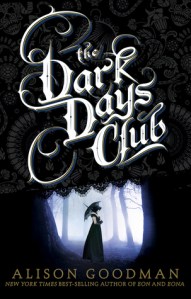
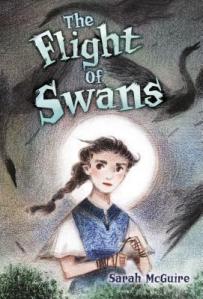 Book: “The Flight of the Swans” by Sarah McGuire
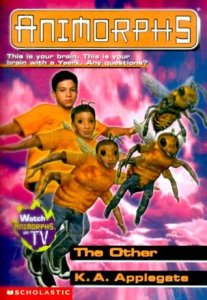 Animorphs #40: “The Other”
 Book: “The Witch of Willow Hall” by Hester Fox
 Book: “Dry” by Neal Shusterman and Jarrod Shusterman
 Book: “Muse of Nightmares” by Laini Taylor
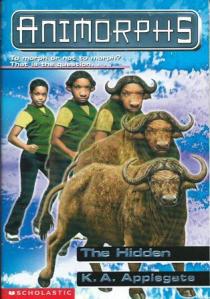 Animorphs #39: “The Hidden”
 Book: “The Ape Who Guards the Balance” by Elizabeth Peters
 Book: “Damsel” by Elana K. Arnold
 The Library Ladies