In the wake of a scandal, the Montrose family and their three daughters—Catherine, Lydia, and Emeline—flee Boston for their new country home, Willow Hall. The estate seems sleepy and idyllic. But a subtle menace creeps into the atmosphere, remnants of a dark history that call to Lydia, and to the youngest, Emeline.
All three daughters will be irrevocably changed by what follows, but none more than Lydia, who must draw on a power she never knew she possessed if she wants to protect those she loves. For Willow Hall’s secrets will rise, in the end…
Review: I picked up this book from NetGalley based on a promotional line comparing it to a spooky Jane Austen novel set in the U.S. Well, as we know, about 95% of the time, any comparison to Jane Austen will both A.) lead to me reading the book and B.) leave me massively disappointed. While I’ve definitely read books that fared worse (for one, for all I can tell the only reason this comparison was made was because of the time period and the “manners romance” aspect of it…which, just stop it. It’s a historical romance. There are plenty of those, and they don’t all need to be compared to Austen), this book was a disappointment to me. Maybe not a massive disappointment, but a disappointment all the same.
Lydia, the middle daughter, has always known there is something strange about herself, ever since she mildly blacked out as a child when fighting with a local bully and re-awakened to find him beaten on the street. But at this point, any concerns about scandal she may bring to the family pale in comparison to the mess that her sister, Catherine, has gotten them into. Fleeing to the country, the family now find themselves closed up in a mysterious house with many strange rumors surrounding it. But on the positive side, they have quite a charming neighbor, a gentleman named John.
There were a few strong points of this book that I want to start by highlighting. For one, I’m always going to love a good historical setting. While there were a few anachronisms here and there, nothing was too extreme to really throw me out of the book in any meaningful way. Instead, I still enjoyed the general rhythm of language, emphasis on social callings, and historical setting that were employed. As long as an author doesn’t greatly mess these basic features up, they’re always going to come away with at least a partial win under their belt as far as I’m concerned.
Secondly, as readers of this blog know, Kate is the horror fan. While I’ll read the heck out of dark fantasy novel any day of the week, I tend to steer clear of straight-up horror. And this is probably one of the closest reads to that genre that I’ve wandered into for a while. Don’t get me wrong, horror fans will likely be underwhelmed by this book, since, let’s be real, this is definitely a historical romance at its heart. But I will say that there were elements of the story that legitimately creeped me out. It didn’t help that I was reading this book the one night my husband was out of town. But I think either way, there would have been some shivers.
The other positive note is that, alongside with these legitimately creepy scenes, the book didn’t shy away from going to some pretty grim places with the story. It starts out with a pretty rough scene dealing with animal cruelty and then continues in a story that insists that even main characters aren’t safe from harsh consequences. There was one scene in particular that was lead up to and the entire time I was partially rolling my eyes, expecting the author to pull back at the last minute. Instead, she went full throttle into it and I was honestly surprised and (in a very grim sort of way) pleased that she committed to this particularly story thread.
But, even with these positives in its favor, I still greatly struggled with the story. For one thing, there were a few twists that I found entirely predictable and the story took way too long to finally come out with the “mysterious” truth. And then when this secret does land, it didn’t really seem to have much of an impact. Not only did I already suspects this particular twist, but the revelation doesn’t greatly change the situation. The family is still disgraced; the mystery behind why doesn’t have much impact on the reality of that situation.
I also didn’t particularly enjoy Catherine as a character. As the focal point of said “twisty” family rumor, there was a lot of room to do something interesting with her arc. Instead, she is written as pretty much an awful person with no redeeming qualities. There are a few moments where I thought we would see some growth or some expanded depth of character revealed, but then in only a few short pages, she goes right back to just being plain terrible with very little else in the way of character development to support her. And with this being a fact of her character, many of Lydia’s own struggles are automatically undercut. I couldn’t sympathize with her indecision or naivete when everything that the reader has seen (and we’re only exposed to Catherine for a period of a few short months, when presumably Lydia has a lifetime of experience) would point to a relationship that has been not worth fighting for for quite a while. There were a few moments towards the last third, in particular, where Lydia’s choices are so incredibly stupid that I had to actually put the book down and take a deep breath before continuing.
This same problem, Lydia’s bizarre choices and fixations, lead to my not particularly enjoying the romance at the center of this story. And this is where the Austen comparisons are coming into play, as there is a lot of miscommunication and confusion at the heart of this romance to draw out the moment of happiness until the end. But the thing is, Austen created legitimate stumbling blocks and points of misdirection in her romances. We get why Elizabeth misunderstood Darcy. We understand why Emma didn’t recognize her feelings for Knightly. But here, we have a hero who is actually spelling it out for our heroine and she, instead, is choosing to believe the terrible sister who has mislead her and betrayed her at every turn. Or she simply gives in to crippling indecision and insecurity for no real reason whatsoever.
I have very little patience for these types of heroines or these types of plot points that aren’t based in anything other than an author’s need to follow a typical romance plot storyboard where the main characters can’t get together until the final scene. If you don’t have a legitimate, plot- or story-based reason for keeping your romance in suspense, you might just need to re-think the entire thing. Either flesh out your plot/characters, or just accept that your romance needs to follow a non-traditional path. This type of forced suspense not only kills any real suspense there might be, but also damages the characters at its heart.
In the end, I was ultimately let down by this book. I’m glad I got in at least one sort-of spooky book before Halloween, but it’s too bad that other than the creepiness and general historical setting, this book didn’t have a lot going for it. If you really love historical romances with a dash of creepiness, than you might enjoy this. But if you’re wanting any depth of character from your heroine, hero, and villain, you probably need to look elsewhere.
Rating 5: Some legitimate spooky scenes were let down by a plot and set of characters that were simply too weak to carry the story.
Book: “Dry” by Neal Shusterman and Jarrod Shusterman
Publishing Info: Simon & Schuster Books for Young Readers, October 2018
Where Did I Get this Book: Edelweiss Plus
Book Description: The drought—or the Tap-Out, as everyone calls it—has been going on for a while now. Everyone’s lives have become an endless list of don’ts: don’t water the lawn, don’t fill up your pool, don’t take long showers.
Until the taps run dry.
Suddenly, Alyssa’s quiet suburban street spirals into a warzone of desperation; neighbours and families turned against each other on the hunt for water. And when her parents don’t return and her life—and the life of her brother—is threatened, Alyssa has to make impossible choices if she’s going to survive.
Review: Important first note: I literally just now, starting to write this review, figured out what that cover design was. It’s a water drop being eaten up by flames from below. For the life of me I couldn’t figure it out the entire time I was reading the book, only seeing the blue portion and being like “…is it…a feather?? What does that have to do with this topic?”
Living in southern California, Alyssa and her family have been hearing about the water shortage for a while now. But like any other news that is told too often, they have quietly gone about their lives not expecting any big changes. Sure, they’d water the lawn less and swimming pools have been banned, but life goes on. Until one day the water turns off. Completely. And in a very short period of time Alyssa comes to realize just how fragile her life and community has been. With the lack of this one crucial resource, chaos and danger quickly descend and she finds herself fighting for her life alongside her brother and a random assortment of other teenagers: the son of the prepper family next door, a teenage girl who has been living by her own laws for years, and a teenage boy with a gift for gab and his own shading dealings. Who can she trust and more importantly, where can they go if they want to survive?
Teaming up with his son, Shusterman once again proves why he is a master of dystopia fiction. What makes this book special is how very real it feels. While “Scythe” looks at a completely foreign society, there are still enough aspects of humanity to imagine this as a very true future. “Dry,” instead, feels as if it could happen tomorrow and that makes it all the more terrifying. Not only is the threat one that we can understand, but it is one that already feels like it is on our door, at least to some extent. But both “Scythe” and “Dry” rely on the very honest and true portrayals of how humanity operates in crisis. In this book, we see how very quickly “society” can devolve and makes the world we live in feel as if it is simply balancing on a very thin knife’s edge. Reacting on spectrums, we see all the extremes in reactions to how a crisis like this might play out. But what makes it all the more disturbing is the transformation of regular people into survivors who will quickly cross moral boundaries to horrific results.
I particularly the way this novel was lain out, with points of view from not only Alyssa but the other teenagers in her group. And between these sections we also saw glimpses into small moments throughout the city as people respond to this crisis. One woman’s time trapped on a freeway. A reporter who finds a way to twist the situation to her benefit. A factory manager who quickly find himself at the center of a mob. Each serves as harsh reminders of the plethora of dangers that immediately show up in a situation like this and how crucial every decision has to the one’s own survival.
Beyond these glimpses, each of the teenage characters were interesting to follow. And what made them all the better as narrators was that there was no assumption that they were all “heroic” as readers often expect from our point of view characters. Instead, they each have their own strengths and weaknesses, and, more importantly, their own priorities that can often run in conflict with other members of the group. While Alyssa does feel like the “main” character, I found myself much more invested in the story of her neighbor who is the son of a family of preppers. His arc felt the most fully-realized of the group. Alyssa, on the other hand, was probably one of least favorite. While she presents an important point-of-view, being the most optimistic and moral of the group, she also had an early tendency to make very bone-headed decisions when all the evidence was already against her. She had already seen the depths to which humanity had sunk and was still taking dumb risks with the idea that these same people would somehow react differently. It made her read as naive and a bit silly at times.
But the strength of this story really lies with its plotting and descriptions of the horrors brought about by an event like this. Unlike many other disaster/post-apocalyptic stories, there is no major BOOM that sets things off. Instead, it is something much more insidious and quiet. We also see how this lack of “boom” surrounding a situation like this would play against it, with too many people not treating it with the seriousness it deserves. There is a clear commentary on global warning that can be drawn from this, but both Shustermans are careful to not beat readers over the head with it too much. Instead, the discomforting “realness” of the situation does all the work for them on this point.
This story was gripping and impossible to put down. I was frantically turning pages with a feeling of growing dread. And by the last page, while this story was completed (it’s a standalone work), I was left thinking about it and, let’s be honest, mentally prepping for days. I highly recommend this for fans of post-apocalyptic stories and Shusterman’s writing in particular.
Rating 9: A horrifyingly real-feeling story about the collapse of humanity in crisis situations.
Reader’s Advisory:
“Dry” is a newer title so it isn’t on any relevant Goodreads lists, but it should be on “Natural Disaster Fiction.”
Publishing Info: Little, Brown Books for Young Readers, October 2018
Where Did I Get this Book: ARC from the publisher
Book Description:In the wake of tragedy, neither Lazlo nor Sarai are who they were before. One a god, the other a ghost, they struggle to grasp the new boundaries of their selves as dark-minded Minya holds them hostage, intent on vengeance against Weep.
Lazlo faces an unthinkable choice—save the woman he loves, or everyone else?—while Sarai feels more helpless than ever. But is she? Sometimes, only the direst need can teach us our own depths, and Sarai, the muse of nightmares, has not yet discovered what she’s capable of.
As humans and godspawn reel in the aftermath of the citadel’s near fall, a new foe shatters their fragile hopes, and the mysteries of the Mesarthim are resurrected: Where did the gods come from, and why? What was done with thousands of children born in the citadel nursery? And most important of all, as forgotten doors are opened and new worlds revealed: Must heroes always slay monsters, or is it possible to save them instead?
Review: While I loved “Strange the Dreamer” with its unique world, beautiful prose, and well-drawn characters, it did commit one of the biggest sins in the book: ending on a horrible cliff-hanger! Why?! Why would you do this?! But, unlike certain other books that Kate and I reviewed recently, cough”Career of Evil”cough, there was only a short, year-long wait before the follow up story was released. I guess that makes it ok. Doesn’t hurt that the sequel was a blast to read on its own, even after tackling the immediate issue left by the cliffhanger.
Lazlo has discovered that he is a God. And not only any ole God, but one of the most rare and powerful with the ability to manipulate the strange blue metal that makes up the godspawns’ home. But power isn’t everything, and Sarai is still dead, even if her being has mostly been saved in the form of one of Minya’s ghosts. And Minya has her own plans for life going forward, ones that distinctly feature revenge and the use of Lazlo’s abilities to achieve it. However, soon, thoughts of revenge begin to subside when all involved realize how small their scope of past events has really been and how much more is truly at stake.
One of the strongest points of all of Taylor’s books is her lyrical manner of writing. That talent is put to good use here and the beautiful imagery continues. However, the topic and storyline of this book is much more action-oriented and in many ways darker in theme. While the first book spent much of its time establishing Strange as a dreamer and exploring Sarai’s abilities, painting lush landscapes with words. Here, Taylor’s gorgeous prose instead speaks to the pain and heartache that is at the core of so many of our characters and how they approach the world they now find themselves in.
Lazlo and Sarai, our main characters from the first book, largely subside into the background in this one, which came as a complete surprise to me. I don’t want to misrepresent the book, as they still narrate a large portion of the story and their romance is still heavily focused upon. However, for me, I found other characters quickly rising to the forefront of my interest.
Minya, in particular, comes to mind. We briefly explored her experiences in the first book, but here we learn that we had only scraped the surface. Not only are past events expanded upon, but we learn more about her own motivations and the mysteries of her being. Why has she remained a child? What drives the seemingly bottomless well of darkness within her and how does her power truly work? There were several great reveals with this character and in many ways I think she has a greater depth of character built for her than Lazlo and Sarai who have a tendency to fall into the rather generic hero category. We know what to expect from them: they’re good people who want to do good things. Minya is much more complicated, and in that way, I found her much more interesting.
There are also two sisters whose stories are introduced. They live in a far away world, and it is only slowly revealed throughout the story how these disconnected bits make up the history of Lazlo and Sarai’s world. I, of course, love stories about sisterhood, so I was all over this arc of a deep bond that drives two sisters to achieve the impossible. And even here, nothing is made simple, easy, or predictable. There is tragedy, confusion, anger, and, of course, a boundless love and loyalty.
This takes me to a few of my criticisms for the book. As I said, other characters (Minya, the sisters, Thyon Fane, etc.) largely took over my interest in this book and while I still enjoyed Lazlo and Sarai, I was much less intrigued by their romance in this go-around. So much of the first book was devoted to establishing their connection that I guess I would have just been fine mostly leaving it at that. I’m guessing this will be an unpopular opinion, as I know many fans of Taylor’s work read her for the beautiful romances. And I still enjoyed it. But given the depth and scope of the larger topics at hand (topics such as revenge, forgiveness, self-identity and discovery), reading more scenes of their ongoing romance taking place in mystical dream-scapes just seemed to interrupt the flow and left me anxious to return to the more serious subjects at hand.
From there, I also continued to struggle to connect to the other godspawn. There were a few whiffs of dialogue here and there that rang a bit too “twee” or “pixy dream girl” esque from these areas. As a fan of Taylor’s writing, I could recognize some of these beats from characters who filled similar roles in her other books, but that recognition just made them fall all the more flat here, as I was never able to fully understand Ruby, Sparrow or Feral as unique characters in their own right.
But, to end on a positive note, for fans of Taylor’s “Daughter of Smoke and Bone” series, there are some really incredible tie-ins to be found in this book that took my completely by surprise. Readers by no means need to be familiar with that series, but it’s a great connection for those of us who have read those books.
I was lucky enough to snag an ARC of this book, and now I want to give it away to you! The giveaway ends on October 31 and is open to US residents only.
Rating 8: “Muse of Nightmares” expands upon its predecessor by leaps and bounds, exploring complicated and deep topics of revenge, loyalty, and self-created identity.
Publishing Info: Scholastic Paperbacks, March 2000
Where Did I Get this Book: own it!
Book Description: The Yeerks plan to use the Helmacron ship they have repaired to capture the Andalites and track down Elfangor’s blue cube–the cube that gives Cassie, and the other animorphs the ability to morph.
Narrator: Cassie
Plot: I had zero memory of this book when I picked it up again. I think if you had asked me whether there was an Animorphs cover with Cassie morphing a buffalo, I wouldn’t have been entirely sure you were even serious. That’s how fully I’d forgotten this book.
Except when I’m busy getting mad about the mechanics of the blue box and morphing being thrown out the window…
Erek shows up at Cassie’s barn with bad news: the Yeerks have discovered how to use the Helmacrons’ morphing tracker and are even now on their way towards the blue box that emits a low level morphing energy. Cassie quickly nabs the cube and hops a ride to The Gardens with her mother. There, the others in seagull morph show up and they try to decide what to do, since any morphing will draw the attention of the Yeerks. Before they can form a plan, helicopters begin circling the area and Cassie makes a break for it, hiding in a van that is exiting the park. Inside she confronts a cape buffalo. She acquires it to keep it calm, but chaos suddenly erupts when the van is intercepted by the Yeerks, including Chapman and Visser Three. She morphs the buffalo and barges out of the van. The real buffalo attacks the Controllers and head butts Chapman. Cassie is able to escape into the nearby woods, with the real buffalo trailing behind.
Back as a girl in the woods, she witnesses something horrific: the buffalo must have touched the blue box and acquired Chapman when he headbutted him. He wildly morphs and demorphs partially between his true buffalo body and the human Chapman form. By morphing the buffalo again herself, Cassie is able to get the buffalo to mimic her actions and return to its true form as well. The others arrive and are caught up to speed on the horror of the situation. What’s worse, the buffalo has now witnessed Cassie morphing, so if the Yeerks capture or infest it, the Animorphs’ secret will be out.
The helicopters are still circling, so they morph wolves and take off once again, leaving the buffalo behind. They hide in a cave and continue to discuss what to do not only about the tracker, but about the buffalo. They all know that the buffalo can’t be left alive, though Cassie is hesitant to kill it, now that it has human DNA in its system. As for the tracker, the challenge will be getting to it when it’s up in a helicopter. So they decide to go with the tried and true method of dropping something heavy on the bad guys over water. But before they can move on this plan, they hear the buffalo in distress. Knowing they can’t let the Yeerks capture it, they head off.
They find the buffalo surrounded by Controllers with Visser Three himself yelling at the “Andalite” to reveal himself and tell the Visser where the cube is. The buffalo manages to acquire the Visser and begins morphing him. The group uses this as a distraction to escape (sorry, but I just can’t help but interrupt myself…didn’t they JUST say they were there to rescue the buffalo? And then immediately ditch said buffalo to escape the situation they willingly put themselves in in the first place? Ugh.) As they run off, they see the Andalite!buffalo and Visser Three go at it with their tail blades. The Andalite!buffalo gets in a lucky shot and knocks out Visser Three and then comes running after them.
The group decides that the majority of them will continue on to the ocean, but that Cassie will stay behind with the buffalo to distract the following Yeerks. She manages to get the buffalo to again demorph into its natural state before the Yeerks show up once again. She takes off, buffalo following, and jumps off a minor cliff to escape. They both crash to the bottom and are horribly injured. Cassie demorphs and gets the buffalo to also morph human to heal its own injuries. She then catches up with the group again.
The others wonder at how the buffalo managed to survive the fall and Cassie tells a white lie that the buffalo simply mimicked her morphing, leaving out that she was actively trying to save it. In human form, the buffalo begins mimicking their speaking patterns. Cassie insists that it is learning, but the others push back saying that it is only mimicking and that she is making too much out of this. As they are talking, Cassie brushes an ant off of the cube that she is holding. She finally gets the buffalo to morph back to buffalo and then they have to leave it behind once again when they hear the helicopters approaching.
As the others continue forward, Cassie begins to demorph again to put the plan in action. But before she can get far, she sees something truly nightmare-inducing: an ant morphing into a version of Cassie herself. She realizes that the ant that had crawled on the box and her hand earlier must have acquired morphing abilities and her own DNA. The Cassie!ant goes crazy half way through morph and attacks her with gigantic pincers. The buffalo shows up and attacks the Cassie!ant, but the ant begins demorphing. Cassie rushes over and stomps everything in sight. She then quickly begins morphing the osprey, finally ready to put their plan into action. As she gets ready to leave, the Yeerks show up and kill the buffalo with a Dracon beam.
Osprey!Cassie flies out to sea where the Yeerks are now shooting down at the rest of the Animorphs in dolphin morph. Gaining altitude, Cassie positions herself directly above the helicopter and begins to demorph. But it goes wrong and she loses her wings too quickly and begins to fall too fast. She makes it back to human and is partially through her whale morph when she realizes that she won’t be big enough when she hits the helicopter and will likely be cut to pieces by the blades. What’s worse, the helicopter pilot looks up and spots her, veering out of her line of descent. Luckily for everyone, a rogue seagull gets sucked into the engine and the helicopter blows up, destroying the Helmacron sensor within it. Cassie is badly burnt, but wakes up again in the ocean in her human form and surrounded by her friends. They call it a success and head home.
Peace, Love, and Animals: This is one of the better Cassie books as far as characterization of Cassie herself goes. The book is a hot mess in every other way, but her sympathy and struggle with how to resolve the buffalo situation is a very sympathetic cause. Any animal lover would understand just how difficult this situation would be. Though, that being said, her nonsense about the human DNA part of it is just that: nonsense. And what makes that worse is not only does this line of thought just seem ridiculous and undermines Cassie’s character as a rational, thoughtful being, but it was completely unnecessary. As an animal lover myself, the idea of having to kill an innocent animal, especially one that has bounded with you and trusts you, is just agonizing. We don’t need any silly other justifications to explain Cassie’s hesitancy.
The one question I do have about her handling of this situation is the balance between her repeatedly saying that she understand the buffalo can’t be allowed to live but then her willingness to essentially draw out its torment. We’ve seen some really good examples in the past of Cassie knowing that sometimes the harder choice is the right one, specifically when she was trying to save the Hork Bajir the Yeerks had experimented on back in the Atlantis book and knows that in the end it is best to let him die then to keep trying to fix the unfixable. That was an excellent scene that highlighted that mercy some times comes in strange forms. But here, the poor buffalo is repeatedly being abandoned by the Animorphs, drawn into battles with the Yeerks to protect the Animorphs, lead of a cliff to plummet to a painful end, and then finally killed by the Yeerks. It’s a tough situation, but it would have been another good opportunity to highlight this particular strength of Cassie’s, had she realized that this ongoing torment was not actually better.
Our Fearless Leader: At one point in the story, Cassie is upset with Jake for “not trusting her to do what is right.” But….really? I mean, for better or worse, Cassie has a long history of not necessarily doing the “right” thing objectively, even if she feels it is right for herself and her moral code. From a team leader perspective, I can absolutely understand Jake not trusting Cassie to do the “right” thing. Girl let herself be infested by a Yeerk! She asked Jake to outright murder a Controller on her behalf! Just a few books ago, she was all set to go on a mission purely based on revenge! She lost the right to feel miffed about casual distrust like this quite a while ago. And really, at this point, after being in Jake’s head, we know that some level of casual distrust goes out to all of the Animorphs at various times, it’s just one of the struggles of being a leader. Jake knows the weaknesses of them all, and thus can’t always trust them to do the right thing in specific scenarios that play to those weaknesses.
Xena, Warrior Princess: Along with Marco, Rachel is quite clear from the very beginning that the buffalo will have to go. She also firmly tells Cassie to stop making more out of the human DNA thing than it deserves, which, thank you!
A Hawk’s Life: Tobias has practically nothing. I mean, you could probably count his lines of dialogue on one hand.
The Comic Relief: As expected, Marco is not very sentimental about the fact that the buffalo can’t be left alive. He and Rachel both team up on this position right away, and there’s really no arguing with their reasoning. The case could maybe be made for getting the buffalo to acquire some similar animal, morph that animal, and then get itself stuck in that form and then have Cassie “adopt” it at her farm. Seems like something that Cassie or even Tobias would think of, but we can say that they were all too frazzled from the constant running to really think of this solution.
E.T./Ax Phone Home: Ax has a running joke with Marco where he’s trying to still understand humor. He even joins in the fun with what he thinks are good jokes only to be met with silence and thus concluding that humor is over-rated. So there’s some good dialogue bits with that, but not much else for him in this book.
Best (?) Body Horror Moment: I mean, the entire concept of this book is pretty horrifying, but I will reserve the honor of this section for the Cassie!ant. It just had to be ants, didn’t it? It’s not like the poor Animorphs haven’t suffered enough trauma at the hands (pincers?) of ants already, but now one has to go and partially morph Cassie and then almost bite her arm off with its ginormous pincers. Then Cassie gets to watch the buffalo start tramping something that looks just like her to death. Though, I will note that apparently human DNA is only morally impactful in mammals, since she had zero concerns about stomping all over that ant once it was small again, human DNA or no human DNA.
Couples Watch!: Not much really. After Cassie’s fall from the sky, Jake remarks privately to her how glad he is that she is ok and since she’s in human form, she has to respond out loud, cluing in everyone as to what’s going on. Marco teases them some, but she says she doesn’t care since everyone knows how much Jake and Cassie “like” each other. This might just be my age speaking, but it gets more and more uncomfortable as the series progresses to hear about these relationships in terms of “liking” each other, especially when the “love” word has been thrown around. It just doesn’t ring true to the level of maturing and closeness that has built after fighting a war like this for as long as they have. I get that its done for the age-level of the audience, but I still find it weird. I honestly don’t think teens would have been weirded out if the writers had just gotten over it and said “love” already.
If Only Visser Three had Mustache to Twirl: So, Visser Three loses a tailblade fight to a buffalo….there’s just no getting around that fact. A mammal, in a completely foreign body, with a very low-level of intelligence, somehow managed to knock him out cold pretty quickly. I’m not sure who this is worse for, Visser Three and his ego, or all of the others (including Ax!) who have failed to take Visser Three down themselves in a fight! It’s not a good look for any of them that’s for sure. Also, I’ll add, this is yet another supremely unbelievable element of the book, so even talking about this in any verging-on-serious manner is pretty pointless. But the fact remains: it’s now canon that a buffalo is a better tailblade fighter than Ax.
Adult Ugly Crying at a Middle Grade Book: Ok, as dumb as the whole buffalo morphing plot was, I have to admit that there was a good amount of tearing up in this book for me. I’m a sucker for animals and I particularly have a hard time with descriptions of animals suffering and not understanding why. So all of the scenes of the Animorphs running off and the poor buffalo trying to follow behind just really got to me. And then it goes and saves them several times and just casually gets blown up, right after Cassie is saying goodbye and doesn’t know what else to do but tell it that it has been good, one of the few words it seems to understand.
<l have to go now,> I said, knowing it couldn’t understand me. <Thank you for saving my life.>
The buffalo’s ears twitched. And then I knew what to say.
<You are good,> I said softly. Its ears came forward and it made a soft, almost friendly sound.
So stupidity aside, they definitely got me invested in this buffalo storyline in the end and there may, MAY, have been some tears.
What a Terrible Plan, Guys!: Oh man, this entire book, again was full of terrible plans. But two big ones come to mind. 1.) They keep insisting that the buffalo can’t be allowed to be captured by the Yeerks, even going so far as to run back towards danger to “rescue” it at one point. And then they repeatedly abandon it and leave it behind to potentially be captured. And their “rescue” attempt was the worst example of it. They literally run back to it, find themselves surrounded, and then immediately use the buffalo itself as a distraction to bail, leaving it behind once again. What was the point of even going back if this was the plan?? And like I said, that was just the worst example. They leave the buffalo behind at least 4-5 times, any of which could have resulted in its capture by the Yeerks. 2.) The “anvil” plan with whale!Cassie. I mean, this was implausible enough the first time it showed up in Megamorphs #1 and in no way deserved a second showing. Not only am I getting sick and tired of this “wash and repeat” attitude towards past plot devices, but this one in particular was rather hard to swallow the first time and is even dumber here. At least it didn’t work, which is shouldn’t have for all the reason we saw here, mainly that it’s pretty easy for a helicopter pilot to become aware of a whale plummeting towards them and move out of the way. Luckily, a convenient sea gull was just where the author wanted it.
Favorite Quote:
<He should trust me to do the right thing,> I said. <He does, or he would’ve made somebody else carry the cube. That’s why he put me back here. While you do the right thing, I do the necessary thing. Get it?> [said Rachel]
(Inset long rant about the difference between doing the the right vs. necessary thing. It’s a nice distinction that Rachel is drawing here, but I’m pretty sure Jake’s version of it was not trusting Cassie to do the right OR necessary thing.)
Scorecard: Yeerks 10, Animorphs 15
I’m going to give a point to the Yeerks just because they were the only ones with the semblance of a clever plan here with the idea to use the Helmacron ship this way. The Animorphs only survived this out of sheer luck, with the Yeerks taking care of the buffalo and a random seagull sacrificing its life for the cause.
Rating: I liked this book as far as Cassie’s characterization goes. I hated this book for its bizarre ret-conning of the blue box. And I couldn’t care less about this book for the fact that I honestly couldn’t even remember the order of events during the middle third since all it was was running around randomly stopping/splitting up/getting attacked by Yeerks and repeat.
But man, that blue box thing. That’s pretty out of line as far as completely disregarding past precedent for a pretty important artifact. Not only does the box thing itself make zero sense (it’s not like David suddenly had morphing abilities after just touching the box), but the fact that animals would then be able to acquire DNA and morph?? In every book, EVERY BOOK, we hear the Animorphs talk about having to concentrate to both acquire DNA initially and then to morph. There is no way the buffalo, let alone the ant, would be able to do anything like this. It’s so stupid and there’s no getting around the fact that the majority of this book is hanging on this idiotic concept.
Then add in the fact that we have yet another repeated story that involves essentially just re-writing a previous book. The entire Megamorphs #1 book was about some Yeerk controlled thing tracking morphing and then ends with whale!Cassie crashing it into the sea. And here, YET AGAIN, we have the Yeerks tracking morphing and whale!Cassie trying to crash it into the sea. Like I said in the Marco book that did this, at least mix and match. At least TRY to pretend you’re doing something original. Or…maybe don’t, if what you consider original is ret-conning the blue box and pretending that ants/buffalo are capable of the intelligence required to morph.
Note: I’m not going to rate these books since I can’t be objective at all! But I’ll give a one sentence conclusion and you can take from that what you will!
Book: “The Ape Who Guards the Balance” by Elizabeth Peters
Publishing Info: William Morrow, September 1998
Where Did I Get this Book: audiobook from the library!
Book Description: The prospects for the 1907 archaeological season in Egypt seem fairly dull to Amelia Peabody. Despite her adored husband’s brilliant reputation in his field, his dashing-yet-less-than-diplomatic behavior has Professor Radcliffe Emerson ignominiously demoted to examining only the most boring tombs in the Valley of the Kings — mere leftovers, really. All the Peabody Emersons profess stiff upper lips and intend to make the best of a bad situation, but this year the legendary land of the pharaohs will yield more than priceless artifacts for the Emerson expedition. For the desert guards even deeper mysteries that are wrapped in greed — and sealed by murder.
In a seedy section of Cairo, the youngest members of the expedition purchase a mint-condition papyrus of the famed Book of the Dead, the collection of magical spells and prayers designed to ward off the perils of the underworld and lead the deceased into everlasting life. But for as long as there have been graves, there have also been grave robbers — as well as those who believe tomb violators risk the wrath of gods like Thoth, the little baboon who protects the scales used to weigh such precious commodities as hearts and souls.
Review: It’s been a while, but we’re back with another Amelia Peabody novel. I usually turn to these when I find myself in a reading slump, but luckily I’ve had a pretty good run on books recently. But I still found myself with a hankering for my favorite female sleuth, and so here we are!
Back in Egypt, Amelia and her family find themselves looking forward to what will likely be a long, boring season. They have been “banished,” essentially, to some of the lesser tombs in the Valley and aren’t likely to make any grand discoveries. However, adventure is sure to find them, this time in the appearance of a priceless artifact that is recovered by Ramses, Nefret, and David. But following the artifact is a wake of mayhem and murder. Determined to find out who is behind these disturbances, Amelia and co. are on the case! Matters are only muddied, however, when their extended family (Walter, Evelyn, and their daughter, Lia) arrive and previously unknown attachments are revealed.
Many of the tried and true aspects of this series that I have always enjoyed are still present. While the narration is now more broken up, with the introduction of manuscripts and letters written from the perspectives of Ramses and Nefret, we still spend much of our time with our familiar and beloved Amelia. Here, however, the story really does take a new turn with regards to our heroine and her role in these stories. Up to this point, Amelia has been a solid point of reason, sound thinking, humorous commentary, and an adventurous spirit. All of these aspects of her personality remain here, however we are also exposed to a new reality: even Amelia herself has flaws and falls prey to certain prejudices that she wasn’t even aware of in herself. While it is difficult to see our reliable main character clash up against points of view that the modern reader immediately recognizes as traps of prejudices, I loved the full exploration of how this type of latent viewpoint could exist even within the most modern and intellectual beings of the time. And, be assured, even this challenge, as unexpected as it may have been for our heroine, is one that she is up to conquering!
As these books have continued, readers become more and more invested in the goings ons and thoughts/feelings of the younger group of the Emerson party. And this is probably the first book where I felt like these sections truly came into their own. Ramses continues to struggle with his repressed feelings for Nefret. Nefret, herself, continues to run into the barriers that are set against her due to her age and sex (even by members of her own family). And David struggles to find his role in a world that would often judge him first by the color of his skin, even when strong connections exist between him and those who might judge.
The mystery itself was also enjoyable. While I was able to predict certain twists and turns, the romp was still worth the ride. Many familiar faces play a role in this mystery, wandering in and out of scenes in some unexpected ways. I was particularly pleased to see the return of a certain villain who often creates many disturbances in the Emerson clan. What’s more, the stakes in this mystery are much higher than they have been in the past. While the book is still a “feel good” mystery, there was much more darkness and tragedy than I have come to expect. I never love crying over a book, but in this instance, I felt like the sadder moments were not only well-earned but a necessary send-off to certain storylines.
The archeological portions of the story were also quite compelling. We’ve gotten so used to our meticulous and studious main characters, that reading this book and its descriptions of the mishandling of a tomb found by another excavation team, I found myself almost getting as emotionally worked up as Emerson himself!
As I’ve said, many portions of this book felt familiar, but in the best way. There are significant strides made in advancing the storylines of the younger generation, which I’m sure we’ll see continue to play out in books to come. It also takes a new approach to examining Amelia’s own character, forcing her to confront some weaknesses in her own perceptions, an aspect of the story that I particularly enjoyed. As always, for fans of this series, keeping plugging along! You won’t be disappointed!
Rating 8: Continues the series’ long line of success, but adds new layers with an exploration of Amelia’s own flaws and an extra focus on the lives of Ramses, Nefret, and David.
Book Description: The rite has existed for as long as anyone can remember: when the prince-who-will-be-king comes of age, he must venture out into the gray lands, slay a fierce dragon, and rescue a damsel to be his bride. This is the way things have always been.
When Ama wakes in the arms of Prince Emory, however, she knows none of this. She has no memory of what came before she was captured by the dragon, or what horrors she has faced in its lair. She knows only this handsome prince, the story he tells of her rescue, and her destiny to sit on the throne beside him. Ama comes with Emory back to the kingdom of Harding, hailed as the new princess, welcomed to the court.
However, as soon as her first night falls, she begins to realize that not all is as it seems, that there is more to the legends of the dragons and the damsels than anyone knows–and that the greatest threats to her life may not be behind her, but here, in front of her.
Review: Oof, this is going to be a tricky one. Even now, starting out this review, I’m not really sure if my thoughts and feelings on this book are fully formed. I guess we’ll just see where the words take me!
The description of this book lays out a fairly typically fantasy story: a princess is rescued from a dragon by a handsome prince. But something is not right. She doesn’t remember her time before the rescue and the prince may not be what he seems. However, this is as it always has been. Damsels being rescued, going on to be Queens and mothers of princes themselves.
Between the book description that, while fairly typical, does lay the groundwork for some type of subversion of this typical fairtyale storyline, and the beautiful, flowery cover art, I went into this book with a certain set of expectations. While I didn’t expect it to play out along typical lines (I was fairly sure that she wouldn’t end up with said prince, for example), I wasn’t prepared for the level of darkness that was introduced in this book and I do have some qualms about certain topics’ sudden appearances.
But the book did have some steady points in its favor, and I want to cover those before I get into the parts that gave me pause. For one, the writing is excellent and I immediately felt drawn into the story. Ama herself doesn’t even show up for the first few chapters and yet I was still fully invested, which speaks again to the strength of the writing. And once Ama is introduced, she was a very cheer-worthy heroine. I was immediately drawn to her story and felt the same fears, confusion, and bewilderment that she experiences. The reader, too, doesn’t know her history, so while she looks for answers, we’re right there with her. But this same attachment to her made other parts of the book incredibly hard to read.
As I said, the description sets the story up to be a subversion of the traditional tale, however, I was not prepared for how completely dark and mature some of the themes and topics became in this book. The beautiful cover, light and fluffy, also belied these dark and heavy themes. I could probably write an entire post on its own discussing my complicated feelings about trigger warnings for books (I generally feel that this idea has been taken too far given the obviousness of the fact that there are a million people out there with a million life experiences and no novel can anticipate all of their reactions to any given story), but this book does serve as an example of why some type of warning might be necessary for certain topics.
Nothing about the description, cover, or classification (YA) of this book would give an indication that this book would dive so heavily into topics that can be very hard for many readers, regardless of their age. Specifically for this book, the topic of sexual assault. And this is by no means the only dark subject matter introduced. There are some tough scenes dealing with animal cruelty and a weird moment in the end that verges on bestiality? I’m not even sure how to qualify that scene. I’m a librarian, so I am by no means saying that these topics shouldn’t appear in books or even that there is a reading level that should be maintained for exposure to them (that is between any given reader and his/her parents, depending). But I do think that more needs to be done to prep readers in what they are picking up. With its cover and light description, I could see middle grade readers thinking this would be a good read for them and then being very taken off guard with the graphic nature of the tale.
I also struggled with the ending of the story. While Ama’s own tale comes to a satisfying conclusion, it is a very brief scene that I’m not convinced fully balances out all of the awfulness that happened before. What’s more, the world that is set up is one where this type of abuse has been happening forever and is by no means limited to the Damsels, though theirs is a unique version of it. So while Ama gets her revenge in the end, there is really no resolution for the world itself and the other women living in it. This heavily dampened any feelings of satisfaction that came from her act of defiance.
In the end, while I did enjoy aspects of the book, I’m not convinced that the darker topics were completely earned or necessary (at least not as the many times they’re repeated throughout the story). And my larger concern is that the book does nothing to warn readers what they are getting when they pick it up. We all know I love dark fairytales, but if a story is going to get this dark, more needs to be done with the marketing to prep unsuspecting readers. I’m not sure what the real answer to that is, but I know that this book was shocking for me to read, and I’d hesitate to recommend it to others without giving them some fair warnings of its subject matter.
Rating 5: I have to give this book a middle-of-the-road rating. I liked Ama and the writing was strong, but the book was incredibly dark and I’m not sure its graphic nature was either necessary or resolved in the end.
Reader’s Advisory:
“Damsel” is a newer title and isn’t on any relevant Goodreads lists, but it should be on “Dark Fairy Tales.”
Book Description: Under the cover of “Sherlock Holmes, consulting detective,” Charlotte Holmes puts her extraordinary powers of deduction to good use. Aided by the capable Mrs. Watson, Charlotte draws those in need to her and makes it her business to know what other people don’t.
Moriarty’s shadow looms large. First, Charlotte’s half brother disappears. Then, Lady Ingram, the estranged wife of Charlotte’s close friend Lord Ingram, turns up dead on his estate. And all signs point to Lord Ingram as the murderer.
With Scotland Yard closing in, Charlotte goes under disguise to seek out the truth. But uncovering the truth could mean getting too close to Lord Ingram—and a number of malevolent forces…
Review: I warned you in our “Highlights” post that a review was coming quickly! Thanks to the lovely Edelweiss, I’ve had access to this title for a while but had been trying to resist reading it until closer to its publication date. Torture indeed. And at this point, after three amazing books (spoiler: I loved this one), it’s such a pleasure to find another series that I can now put full faith into the fact that I’m sure to love future titles as well. Why can’t they all just be out now though?? They should defy space and time and arrive ala Netflix binging. But enough of that, on with the review!
The fallout of the events that took place in “A Conspiracy in Belgravia” are still being felt, most largely by Lord Ingram himself whose world has crumbled after the discovery of his wife’s involvement with the criminal mastermind Moriarty. But a bad situation can always get worse and very much does with the discovery of Lady Ingram’s body on his own property. Of course, Charlotte Holmes would never watch idly as disaster befell her dear friend. But still banished from society and with a gossip-worthy connection with Lord Ingram himself, how can she involve herself in the case in a useful manner? In disguise, of course!
Oh where, oh where to start my crazed ranting! I think part of my love still comes down to the very fact that this series exists and exists as well as it does. I’ve recommended it to a few people lately, including my husband, and his and many other’s responses have often been the same. Something like “…really? but…why?” For some, this is simply because they see no reason to adapt the character once again at all and for others there is a general distrust that a series could effectively gender swap the character while also maintaining its historical setting. And really, these are both legit concerns. In the last several years, though it has been waning a bit recently, it seems the entire world was under a certain “Sherlock” fever, with a new adaptation, either written or on some screen or another, announced every other day. But to these skeptics I say a loud and resounding “nay!” There is always room for another adaptation if and when an author is truly capable of bending these classic characters into something truly new without losing the essence of said characters and stories. And that is what makes Sherry Thomas’s books so amazing.
“The Hollow of Fear” is no exception. By this point, we know that Thomas has tackled the biggest challenge: creating a new version of Sherlock that both rings true to the original but also has enough novel factors to stand alone among other adaptations. And from there, it’s just a matter of releasing said character into another plot and seeing what happens. I think what makes this story stand out in particular is the fact that it is more of a direct sequel to its predecessor than the original. The first two definitely had connected through lines, but could perhaps be read individually. Here, this story directly pulls from the events of the last and is stronger for having a more robust mystery built upon information and puzzles that have been laid down through both books now.
I also enjoyed that the story largely takes place in a small space, Lord Ingram’s estate. We jump here and there to a few places in the surrounding community, but in many ways it reads like a classic mansion mystery where a large group gathers, a murder is committed, and the culprit and method must be sought out amidst the question of how such an event could occur with so many witnesses around.
All of our favorite characters make an appearance though the amount of page time for each is switched around a bit. Here, we spend a lot more time with Charlotte’s sister, Livia and got to see her come a bit into her own, building confidence as she went. We also spend a good amount of time with Detective Treadles, and I particularly enjoyed his storyline here. In the last few books, he’s been a bit unlikable due to his feelings and prejudices about his wife, but here we see him truly have to confront these aspects of himself. In retrospect, I very much enjoy this slow transformation. I think it reads as a much more honest version of this type of change and the moments that lead him to real inner reflection in this book also ring true for what would open one’s eyes about one’s own behaviors and thoughts with regards to these types of prejudices.
Charlotte herself is of course amazing. I very much enjoyed her undercover work, and it was a fun twist to see her more fully interacting with the mystery as the story unfolded. Due to her gender and outcast status, she always had to operate a bit on the sidelines in the past books, and while that lead to some really great moments too, this was a nice change of pace from what could have become a predictable set of events.
Her relationship with Lord Ingram was also further explored, and while I still very much enjoy this building relationship, there were a few things at the end that were particular to this couple that lead me to drop my rating from a full 10. Some of the explanations for past actions I’m not sure truly made sense or were necessary in the grand scheme of things. Instead, they almost read as excuses to include certain parts of the story that were hard to work in otherwise. And then were largely reset again at the end of this book. I’m curious where things will go from here, however, as I don’t think this type of bait-and-switch will work twice, so at some point this complicated relationship is going to need to be dealt with in another way.
The mystery itself was also very good and remains one of the strongest pros of the entire series. Here there were a few moments where I thought I had guessed at crucial information and was feeling quite smug about it only to later discover that, nope, that wasn’t right at all. And while there were a few very satisfying scenes at the end where Charlotte was able to put some self-important police investigators in their place, part of that reveal also relied on one concept that felt a bit too convenient. But, again, that’s a very nit-picky criticism. Because overall, for fans of historical mysteries, this series is turning out to be a must read!
Rating 9: Sherry Thomas continues to make the difficult task of writing a new version of Sherlock Holmes seem “elementary” indeed!
Reader’s Advisory:
“The Hollow of Fear” is a newer title and isn’t on many relevant Goodreads list, but it is on “Historical Mystery 2018.”
Publishing Info: Scholastic Paperbacks, February 2000
Where Did I Get this Book: own it!
Book Description: Ax’s people have arrived on Earth, and they want Ax back on board with them. Ax is torn. Should he join his fellow Andalites? Can he desert the Animorphs?
Narrator: Ax
Plot: Oh thank god, a return to sanity as far as these books go. Not only is our narrator blessedly in character, but we once again have a team that is capable of rational thought and pulling off complicated (and, importantly, NECESSARY) plans.
Ok, maybe this is an overreaction. But after that last book?!? I’m not so sure…
The story starts off with the Animorphs already in the midst of a mission: rescuing Mr. King from where he’s being held by the Yeerks. In their battle morphs, they succeed in breaking in to where he is being held and fending off the few Controllers there. But before they can leave, things get bad. This is a trap and Hork Bajir warriors begin pouring out of all the doors into the room and even falling in through the ceiling. Of course, Visser Three is there as well. Very beaten up, the Animorphs struggle to escape. It doesn’t look good until suddenly a small troop of Andalites show up and start kicking butt. Ax ends up fighting alongside a young female warrior who he immediately admires. As they escape, she tells Ax that her name is Estrid and that they will find him.
Back in the barn, they all meet up to discuss what’s happened. Ax is thrilled to see his people again, but the others are skeptical, given that their last experience with the Andalites resulted in Ax’s abandonment to a traitor Andalite on Leera. Ax reassures them that he knows who is Prince is.
The next day, Tobias and Ax decide to go to the mall to get some tasty food. Once there, they realize a commotion is going on in the food court: some woman has gone crazy and is eating all of the jelly beans. They quickly realize that this is one of the new Andalites in morph. They nab her and manage to get her out of the mall and arrange a time to meet with her leader.
Jake and Ax make their way to the designated meeting place. Once there, they are introduced to the other Andalites: the commander of the mission, Gonrod, an assassin named Aloth, and a high-up intelligence officer named Arbat who also reveals that he is the brother of Alloran, the Andalite host body of Visser Three. Gonrod blusters about leadership, but Jake doesn’t flinch, stating that he is in charge on Earth and he and his team don’t take order from them. Ax agrees and remains with Jake. Enraged, Gonrod orders the others to fire on Ax but before they can get off a shot, they realize that cobra!Marco and snake!Cassie are poised to strike and poison each of them. Everyone calms down a bit, and they reveal that the larger Andalite forces are not coming, that they are away in another sector dealing with problems there. This small group has only come to assassinate Visser Three, as his remaining in control of an Andalite body is a shame the Andalites can no longer tolerate.
Back in the barn, the team discuss what they have learned. They are all disheartened and demoralized to learn that the Andalites aren’t coming. One by one they begin falling apart under this new reality. Marco takes one of his cynical jokes too far and Rachel gets in a fight with him. Tobias announces that he is out of the fight and flies off. Rachel says that she’s going to take out as many as she can before she dies and leaves as well. Cassie agrees that if there is no hope of winning without Andalite reinforcements, there’s no excuse for killing innocent Hork Bajir hosts. Marco throws his hands in the air and decides to spend his remaining time on the beach. Alone, Jake releases Ax from his vow to follow him as it looks like the Animorphs are through. After they are all gone, Ax calls out to Estrid and points out that Earth rabbits don’t typically follow larger animals into barns full of yelling humans, but that it’s ok, he’s decided to join the Andalites.
On the Andalite ship, Ax begins to notice strange things about these Andalites. Estrid doesn’t seem to follow orders from the leader. And, in many ways, it seems as if Arbat is calling the shots more than Gonrod. They ask Ax where Visser Three is most likely to be found and Ax points them to the Sharing, then the Community Center, and as a last resort, the Yeerk pool. While the first are more obvious choices, Arbat presses about how to get to the Yeerk pool, but Gonrod insists that the Sharing meeting will suffice.
Later Ax and Estrid go on a “date” to the Gardens where they morph humans and eat more candy and practice the odd human custom of kissing. As birds, they begin to fly back but Ax says he wants to see his friends once more. As they pass a McDonalds they see grizzly!Rachel destroying the parking lot. They see owl!Cassie fly off and follow her back to the barn. There, they watch as Cassie tries to convince Jake and Marco to do something about Rachel. But Marco is supremely uninterested in getting involved and Jake is too busy hiding from Tom who has been picking on him. Sadly, Ax says he has seen enough and they leave. Estrid crows that Andalites would never behave so poorly in defeat. As they fly back, Estrid points out that she’s seen a certain fierce looking bird near them before. Ax waves it away saying that there are many such birds.
Back at the ship, Ax takes the first shift to stand guard. He tries to access the computer files, but is denied access. Aloth catches him at it, but Ax talks his way out of it. Aloth then reveals that he and Gonrod were each in prison before this mission. Aloth for illegal organ sales from dead soldiers and Gonrod for cowardice on the battlefield. They were each chosen for their unique skills as an assassin and a skilled pilot, respectively.
The next day, they attack the Sharing meeting. Visser Three is there in human morph. They manage to get in quickly, but Arbat, who insisted that he would be the one to take the shot on his “brother” (another weird question for Ax who thought Aloth was there as the assassin), misses an easy shot. Ax and Gonrod also take shots and miss, but by this time Hork Bajir are pouring into the building. As they flee, Aloth is hit and injured. Ax tries to help carry him out, knowing he could survive, but Arbat shoots and kills him. They run out and find Gonrod already at the helm of the ship; he had fled.
Arbat hastens through any mourning and insists that now their only option is the Yeerk pool. Gonrod resists, and Arbat takes over leadership and locks Gonrod away. They all decide to rest before their next mission. Ax sneaks out and returns with Mr. King. Again, they break into the computer, but are successful due to Mr. King’s better tech abilities. There they discover the truth: in the records, Aloth, Gonrod, and Arbat are already listed as having died on their ship in some other sector and Estrid isn’t listed at all. This is a suicide mission.
Ax sneaks off to find Estrid and confront her. He discovers her in a new part of the ship and sees her conducting some type of science experiment. He grabs the vial she is holding and she panics. He forces her to tell him the truth or he will drop it. She reveals that she is not an aristh, but a science student who was recruited by Arbat. She has developed a virus that is deadly to Yeerks. However, it also mutates and can become deadly to humans as well. Ax realizes that Gonrod and Aloth were dupes and that Arbat was in charge the whole time. He doesn’t care about taking out Visser Three but instead wants to release this virus in the Yeerk pool. Arbat arrives and confirms this all.
Arbat admits that he was looking for a science student, any science student, to pull of this mission and Estrid can’t live to confirm what’s been done here. Only high level intelligence will ever know of this mission. He pushes a button, and Ax and Estrid become trapped in a laser cage. Arbat leaves with the virus to complete the mission, and Estrid despairs, regretting that she allowed Arbat to convince her that the humans were a sacrifice worth making because they are weak and easy to give up. She reveals that Arbat was also in the barn that day when the Animorphs broke up.
Ax replies that they knew that just as Marco walks in. Around the room, the rest of the Animorphs demorph from bugs. Estrid accuses him of lying to his people, but Ax replies that the Animorphs are his people.
They make their way to the Community Center and down into the Yeerk pool. Their they all morph/demorph to human and spread out trying to find human!Arbat. Ax realizes that Arbat has little experience with a human morph, so he is able to spot him just as he reaches the pool due to the fact that he turns his head often, not used to not having an extra set of eyes. Arbat spots them and fires a Dracon beam at them, creating chaos. The others all morph battle morphs and Estrid and Ax return to their regular forms.
The battle quickly goes badly with many Hork Bajir converging around them. Estrid begins to panic and starts to think that maybe just using the virus is better. But they continue to fight, with Ax making his way towards Arbat. He realizes that he is not going to make it, but Estrid manages to fire a Dracon beam and destroy Arbat’s hand and the vial. But the Animorphs are still losing and Ax prepares to die in battle. At the last minute, Gonrod shows up in his ship, having blown a hole down through the roof of the McDonalds (Tobias had seen things going south for his friends and retrieved Gonrod and the ship). They all run for the ship and Arbat calls for them to take him with them. They do not, and he becomes the Taxxons’ dinner.
The next day, Estrid and Gonrod prepare to leave. Estrid tries to convince Ax to join them, but he refuses, and they leave. Ax and the Animorphs go to get burgers, but only Cassie realizes how hard this has been for Ax and holds his hand as they walk.
E.T./Ax Phone Home: This is the kind of book that is again almost so full of action that we miss out on some of the character building beats. I mean, we get a lot of “fake” character building that is exploring how Ax is feeling about all of the fake scenes that he and the Animorphs are putting on. But we don’t get to see the real scene where he agrees that the Andalites aren’t to be trusted initially and that this whole plan is worth trying. Here and there we get a few insights into how he is coping with the continued steep descent of the morality of his people, but I have to imagine it hits harder than we see here.
I do like the fallout with his crush with Estrid. That entire storyline felt very real the entire time, from his initial crush, to their date where he wishes they could just fly away (he doesn’t say it here, but part of this has to be because he’s putting on a whole show that inherently speaks to the fact that he can’t trust his own people. No wonder he’d want to escape before getting any real confirmations either way), to his reaction when he finds out that she was playing at least a partially willing role in the planned genocide on Earth. He tells her in the end that she is beautiful but that he doesn’t think he likes her very much. I’m sure she makes up for it some with her shot on Arbat, but probably not fully.
We also get a few references early on to the fact that Ax still feels terrible for abandoning his friends on the escapade in Leera. So it’s also nice seeing him here so fully loyal to his human friends and Jake as his Prince.
Our Fearless Leader: Jake’s showdown with Gonrod in the very beginning is a really great scene. It’s awesome seeing him in these types of scenes where he has fully embraced his leadership role and is facing down someone else.
The clearest giveaway that something is up is when we see Jake “hiding” from Tom in Cassie’s barn because Tom is picking on him. Every part of it is ridiculous for those who know Jake. He’s not only hiding in the barn, but is actually crouched down in a horse stall as if Tom is going to appear at any moment on Cassie’s farm to bully him. Right.
Xena, Warrior Princess: In the fake scene, Rachel’s response is pretty accurate to what we’d expect. She’s clearly stressed and a stressed Rachel is an angry Rachel so when Marco pushes it too far, she goes after him. It also makes sense that her approach would then be to go out fighting. Probably the most honorable of them all if this was a real scene, as the rest of them seem to be “out” in the sense that they’re going to just wait around for the end. But her destroying the McDonalds in the second scene was also kind of a give-away as it doesn’t seem like that’d be what she’d choose to do, go after one little Controller at a fast food place, when she could go out in a blaze of glory at the Yeerk pool trying to get to Visser Three or something.
A Hawk’s Life: In the fake scene, Tobias is the first to quit and really gives no reason for it, he’s just out of there. Probably the first sign that something’s off as Tobias has always been the most gung-ho about sticking with the fight and is the only one who is continually sacrificing himself (remaining a bird) to do it because it matters that much to him. He also follows around Estrid and Ax, getting spotted by Estrid at one point. And then in the end, he’s the one to fetch Gonrod and get him to bring in the ship to rescue the rest of them.
Peace, Love, and Animals: As it was all a fake scene, we can’t really take anything that any of them said here at face value. But at one point, Cassie is going on and on about how immoral it is for the Andalites to be there to take revenge on Visser Three because “revenge is wrong.” But wait, wasn’t it literally just two books ago that Cassie’s whole motivation for going after the Yeerks was in revenge for what they did to the Hork Bajir and Marco had to actually call her out on it? We’re just going to have to assume that this was part of the act, but a small part of me also wouldn’t have been surprised if this was her actual outlook, again conveniently adjusted for how others should behave vs. herself. But that scene at the end where she holds Ax’s hand is quite sweet, showing the one consistent strength of hers: to understand when others are feeling pain and to try to comfort them.
The Comic Relief: Marco has some good lines in this book, especially in the barn scene when he’s highlighting just how hopeless the whole scenario is if the Andalites aren’t coming. Makes me want to see the real scene where they discuss the fallout of this new situation. But Marco’s reaction is also out of character for where he is at this point in the series. Sure, the early version of Marco would have been all for beach days while you wait for the end of the world. But this version of Marco has been coming up against some of the hardest scenarios in the entire series with the interactions with his mom/Visser One. I think at this point that he’d likely follow a similar track to Rachel in going out swinging rather than waiting. Of course, his “going out” would likely be better planned than hers and have a greater chance of success, too. I could even see the two of them ganging up for something like this, though.
Best (?) Body Horror Moment: There really weren’t many in this book. At one point Ax describes morphing human and how the flesh “flowed down to cover the bones” which is a pretty icky way of thinking of it. He also talks a bit about the non-pain of morphing and how knowing that it should hurt is its own kind of pain anyways.
Couples Watch!: Awww, Ax goes on a date. I had completely forgotten this bit of the series and had been fully prepared to never really have much to include for Ax in these sections. But he goes on a full-on date here, more than we’ve seen from the other two couples really. There’s an event/location with the Gardens. There’s food with the candy. And there’s kissing. Of course, Ax and Estrid are just “practicing” a “strange human custom.” But alas, it all goes south fairly quickly and Ax ends up disliking Estrid quite a bit for a while there due to her role in things. He does come around a bit in the end, but I think his tears at the end were more for the loss of his people once again than Estrid specifically.
If Only Visser Three had Mustache to Twirl: Visser Three only makes a few brief appearances in this book, though Ax does note that he seems to be learning that bigger is not always better. When the Andalites attack at the Sharing meeting and begin shooting at him, he wisely chooses to morph something small and hard to hit.
In many ways, the Andalites themselves are the villains of this story. At what point do you have to start fully questioning their whole “moral leaders of the universe” claim? The Animorphs’ initial skepticism of them is completely and utterly justified, and I’m sure it turned out even worse than they had suspected. At this point, other than Elfangor and Ax, the Animorphs’ knowledge/experience of the Andalites has been finding out about the genocide of the Hork Bajir, being betrayed by a high up Andalite traitor on Leera, and then here, watching the Andalites seemingly go all-in on genocide 2.0, this time taking out the humans. As readers we’re taught that the Andalites are the good guys, but at this point…The story never really gets back around to the Animorphs’ true feelings about the Andalite fleet not arriving, but, I mean, after all of this, it doesn’t necessarily seem like them showing up is much better than them not. If anything, the Yeerks are a known and understood enemy with clear motives and goals.
Adult Ugly Crying at a Middle Grade Book: You have to feel bad for Ax. Not only did his first crush turn out to be a willing participant in plans to commit genocide, but as a whole, the Andalites are really not putting a good face forward. Not only does this make it hard to face his friends, but the story never really gets into the existential crisis that must be going on to realize how low your people have really sunk. And really, they’ve already killed off one species and planned on a second. Who knows what other atrocities they’ve done? Kind of seems like a regular thing for them. All of this makes that last scene where they’re walking to get food and Cassie is hold Ax’s hand while he cries a pretty dark experience.
What a Terrible Plan, Guys!: Hurrah for a return to the smart Animorphs who can spot a con early and pull off complicated plans of deception! I mean, after the David incident, they’re kind of old hands at this whole “put on a scene for the spies in the barn” thing. The one bit I do question is the necessity of the second little scene they put on, where Rachel is destroying things, Marco is supremely lazy, and Jake is bizarrely hiding from his brother. It’s the kind of things that just reads funny. For readers, we know something is up by several parts of this, but mostly the whole “Jake hiding from Tom because he’s being picked on.” Clearly, that’s not a thing. But, from a logical stand point, I’m not sure what the value was in putting on this performance. It seemed like none of the Andalites were questioning the original “break up” at all and Ax could have reported that that was the case. As it was, we later learn that Estrid had needed further convincing by Arbat that killing off the humans along with the Yeerks was ok. And he was able to do this by convincing her of how weak, pathetic, and easy to give up humans are. If anything, this extra little scene just reinforced this perspective and perhaps pushed Estrid even further over the edge on this thinking. The Animorphs couldn’t have know this, of course, but still, like I said, the Andalites seemed to already buy the first scene, so this was never necessary anyways.
Favorite Quote:
Not to beat a dead horse, but I think this quote shows some good insights into the problems of the last book too:
Rachel was one of the ones who came down the hardest on Ax when he abandoned them on Leera, and it is clear here that she is still the one to hold the most of a grudge on this subject, because she sees Jake as their leader. Her loyalty to Jake as leader has been clear for a long time, and both here and then she was the one to be most insulted by someone giving up on that. None of that makes sense with the Rachel we saw in the last book who was chomping at the bit to overthrow Jake and be the “hero” and “king” herself. Ugh. Sorry, I’m still bitter.
And one of Marco’s many good lines:
“In a world where slugs can take over entire civilizations, anything is possible,” Marco reminded me.
Scorecard: Yeerks 9, Animorphs 15
I’m not going to change the score on this one. Yes, the Animorphs prevent a catastrophe, but the enemy in this case was really the Andalites, not the Yeerks.
Rating: I really, really liked this book. Other than a few picky issues about their second little performance, the Animorphs had a lot of really clever plans in this book. All of the characters sounded like themselves, and the scene in the barn where they “broke up” read very true for how that could really have played out. Ax, as always, is a great narrator with his quips about his confusion about humanity, and there was a really solid through-line exploring the Andalites as a people and some of the problems that exist within their culture.
I didn’t really get to it anywhere else, but there was a really neat scene in the Yeerk pool when the Animorphs were getting their butts kicked where the humans in the cages formed a body shield to protect them from the Hork Bajir who could have just shot at them. We don’t really think about it much, but the humans who are being Controlled are fully aware during past attacks by the Animorphs. They, too, recognize this team and for them, we have to imagine that they’re seen as heroes whom they are rooting for silently in their own heads even as their Yeerk Controllers force them to fight against them. So it’s a nice moment for them to actually have the freedom to throw their support behind these heroes, putting their own lives on the line to protect them. It’s pretty cool.
Overall, like I said before, this book was a big relief after the disaster that was the last one. And it was a fun read on its own, regardless of what came before it.
Note: I’m not going to rate these books since I can’t be objective at all! But I’ll give a one sentence conclusion and you can take from that what you will!
Book: “The Sisters of the Winter Wood” by Rena Rossner
Publishing Info: Redhook, September 2018
Where Did I Get this Book: from the publisher!
Book Description: Raised in a small village surrounded by vast forests, Liba and Laya have lived a peaceful sheltered life – even if they’ve heard of troubling times for Jews elsewhere. When their parents travel to visit their dying grandfather, the sisters are left behind in their home in the woods.
But before they leave, Liba discovers the secret that their Tati can transform into a bear, and their Mami into a swan. Perhaps, Liba realizes, the old fairy tales are true. She must guard this secret carefully, even from her beloved sister.
Soon a troupe of mysterious men appear in town and Laya falls under their spell-despite their mother’s warning to be wary of strangers. And these are not the only dangers lurking in the woods…
The sisters will need each other if they are to become the women they need to be – and save their people from the dark forces that draw closer.
Review: The book description for this title reads like an itemized list of “what Serena looks for in fantasy fiction.” Fairytale-like? Check. Sisterhood? Check. Mysterious men? Check. Add to that a gorgeous cover and requesting this book really was a no brainer. And I’m definitely glad I did, as not only were the expectations raised by the description met, but the book offered up several other unexpected surprise delights.
Much of the main plot points are lain out in the book description itself. The two sisters who are suddenly thrust into a new reality, one filled with shape-shifters and magic. The sudden absence of beloved parents. The appearance of a strange group of men. And throughout it all, the looming fear of what it truly means to be these new, strange beings who can transform into bears and swans. Who are their people? Who is their family? And who will they be once they allow this power to emerge?
I very much enjoyed the fairytale feeling that was at the heart of this story. Many elements involved, the dark woods, mysterious stranger but oddly beautiful and compelling strangers who temp with delicious, rare fruits, animal transformations, and sibling relationships, all ring for the type of tale we expect. But what made it even more exciting to read was that together as a whole, this was a completely unique tale. Reading a bit of how the author read the book, it sounds like it is partially based on some Jewish folklore, so while there were familiar pieces (remnants of “The Goblin Market” story), it felt like a breath of fresh air into a genre often bogged down in the same stories told a million different ways.
The writing in this book completely supported this fairytale medium, deftly laid down in beautiful and lyrical strokes. On top of this, the author included a good amount of the Yiddish language within the story and dialogue. Not familiar with the language myself, I often had to take advantage of the definitions at the end of the book, but I truly appreciate the added authenticity these language choices gave the book. Rossner did not pull back and dumb down any of these choices for the unfamiliar reader and added to the feeling of immersion in this world and culture.
Further on the writing, going in, I was unaware that half of the book was written in verse. The story alternates chapters between Liba and Laya, and Laya’s portions are told through poetry. This was an interesting choice to not only diversity the type of writing but to further examine the differences between Liba and Laya. Liba, the older sister and, rather stereotypically, more responsible sister is written in very straightforward prose. She presents her experiences, thoughts and emotions clearly and without much embellishment. This further ties together towards her animal form, the bear, an Earth bound creatures that is strong and steady. Laya, on the other hand, is a being of the air and has the ability to transform into a swan, so her bits flow wildly to and fro and benefit from the stylistic choices available through poetic style.
While I liked the overall choices behind writing these characters this way, it did ultimately present a bit of a problem with how I connected with each character. I was likely always going to gravitate towards the more pragmatic Liba, but Laya was also slightly damaged for both her storyline (she’s the one to get into trouble with the mysterious strangers after, something that is obviously a terrible idea from the get go) and the fact that she simply had much less page time being written from a poetic form. But overall, stories of sisterly bonds are always going to pull together for me, so even while I was always anxious to return to Liba’s portions of the story, Laya pulled her own weight as far as valuing her sister which ultimately endeared her to me.
There is also a good deal of history woven through the text, especially regarding the tensions that can so quickly build and the anti-semitism that can lurk below the surface even in seemingly happy secular and Jewish communities. Some of the portions of this book were rather hard to read with the challenges that Liba, Laya and her people face, but it was also a good exploration of how easily prejudices can be used to outcast an entire group of people from a home they’ve loved and built for years.
From the book description, and the fact that it is targeted towards adult audiences, I had some assumptions about this being a darker fairytale. And while there are dark elements in it, I’m not sure that that is truly the genre (or audience) that this story is geared towards. Instead, it read much more like a fantasy romance and I think would greatly appeal to YA readers, especially those who like reading poetry. But that being said, I do think all fantasy fans, especially fairytale fantasy fans, will enjoy this book.
Rating 8: A strong new entry in fairytale fiction, especially for those looking for unique tales with a heavy dose of sisterhood and romance.
Reader’s Advisory:
“The Sisters of the Winter Wood” is a new title so isn’t on many relevant Goodreads lists, but it is on “Atmospheric Woods.”
Where Did I Get this Book: audiobook from the library!
Book Description: Not long ago, Daleina used her strength and skill to survive those spirits and assume the royal throne. Since then, the new queen has kept the peace and protected the humans of her land. But now for all her power, she is hiding a terrible secret: she is dying. And if she leaves the world before a new heir is ready, the spirits that inhabit her beloved realm will run wild, destroying her cities and slaughtering her people.
Naelin is one such person, and she couldn’t be further removed from the Queen—and she wouldn’t have it any other way. Her world is her two children, her husband, and the remote village tucked deep in the forest that is her home, and that’s all she needs. But when Ven, the Queens champion, passes through the village, Naelin’s ambitious husband proudly tells him of his wife’s ability to control spirits—magic that Naelin fervently denies. She knows that if the truth of her abilities is known, it will bring only death and separation from those she loves.
But Ven has a single task: to find the best possible candidate to protect the people of Aratay. He did it once when he discovered Daleina, and he’s certain he’s done it again. Yet for all his appeals to duty, Naelin is a mother, and she knows her duty is to her children first and foremost. Only as the Queen’s power begins to wane and the spirits become emboldened—even as ominous rumors trickle down from the north—does she realize that the best way to keep her son and daughter safe is to risk everything.
Review: “The Queen of Blood” was a book that seemed to be flying under the radar and much deserved a bigger notice. The story of Daleina’s tremulous rise to the queendom was full of action, pain, death, and triumph, and I loved every minute of it. Ending with her finally on the throne, I was so excited to see where her story went next, so I went into “The Reluctant Queen” with high expectations. Unfortunately, while it still had strong aspects that I liked, over all it didn’t quite live up to those expectations for me.
Daleina has only been on the throne for six months when she learns that she is dying, having contracted a disease that results in her falling into a death-like coma at random intervals, until, after a few short months, she finally doesn’t wake from one. This leaves the kingdom in a terrible state, having lost all of its heirs in the massacre that occurred when Daleina rose to power at the end of the last book. Frantic, she sends out her Champions to search for an heir, but secretly places all of her hope and trust into Ven, her own Champion. And luckily for everyone, he finds someone. But unluckily for everyone, she’s a happy family woman how has no interest in ambition or taking on the dangerous role of Queen.
While this book didn’t live up to my expectations based on the first one, several of the strengths that I so appreciated there were still used here. For one, the world-building remains on point. Renthia is not a safe place to live, and even with a Queen in power, we see that challenges that face the people of a world infested with malicious spirits who wish to do them harm. Like the first book, this one doesn’t shy away from the bloody and tragic results when the spirits gain even an ounce of freedom. And it isn’t only nameless deaths, but ones that our characters and us as readers feel ourselves. By leaning into these horrors, the stakes of this story are high from the beginning and we’re never given a chance to forget what it would really mean should our main characters not find a solution.
There is also a compelling mystery at the heart of the story that leaves readers and the characters questioning the loyalty of everyone around them. While I could guess the identity of the person ultimately pulling the strings fairly easily, the traitor at the heart of things did come as a surprise and had its own tragedy tied up with it.
I also enjoyed reading once again about some of the familiar characters. Ven, of course, was still his excellent grumpy, but dangerous, self. We saw our favorite clever wolf Bane back again. And most surprising of all, got to spend a good deal of time with Daleina’s younger sister as she worked to find a cure for her sister’s illness. Daleina, herself, was also still a joy to read, but this starts to get into my qualms as well. There simply wasn’t enough of her! After spending the entire first book reading about her story, it was tough coming into this one and finding her largely side-lined for most of it, seen through the eyes of others as a regal, powerful figure, while we, who have seen her inner struggles, know there is so much more going on there. I think it was a misstep to essentially bench a character like Daleina who had been given such a good amount of development and was now finally facing the challenges she had been working towards in the first book.
And then, of course, that leaves us with our other major new character, the reluctant heir Naelin. Look, I really, really wanted to like Naelin. For one thing, she’s another example of a middle aged woman serving as a lead in fantasy fiction, something that’s not seen very often. And, what’s more, she’s a mother who must balance her this role with every decision she makes.
I’m not a mother myself, so I can’t speak to the realities of this situation, and I get what the author was trying to do, presenting Naelin in a manner that reinforces that this is the part of herself that she values the most. But after reading an entire book from Daleina’s perspective, a girl who had suffered her own tragedies and left those she loved behind because she recognized the greater duty of protecting them using even her own limited powers, it just rankled to read about Naelin’s struggles here. Naelin who is immensely more powerful than Daleina and who is presented with an even more dire situation. And yet, for almost three quarters of the book, all we get from her is not just reluctance, as the title would suggest, but out right, irrational, refusal to step up.
And I want to highlight the “irrational” portion of that. Her fears are largely based in not wanting harm to come to her children and thinking her best avenue to protect them is staying with them constantly. Yes, in a vacuum this is correct. But she lives in a land plagued by spirits who are only held in check by the power of a queen. Without that queen, without heirs ready to take over should that queen fall at any moment, everyone, including her children, will be exposed to not only danger but likely death. Again and again, Naelin’s actions were so short-sighted that it became harder and harder to like her. At a certain point, it started to even come across as selfishness. Did she think all of the others heirs and queens didn’t have families and loved ones of their own? And she’s even being allowed to keep her family with her!
She does come around in the end, and the last portion of the book has some really intense action and it is fun to watch Naelin’s power at work. But for me, it was a bit too little too late. On top of not connecting to Naelin’s character fully, as the story went on and she dug her heels more and more into incomprehensible refusals, I also began to resent the lost page time that we could have spent with Daleina.
Ultimately, while the story still retained much of what made me like the first book so much (the dark work, great side characters, and Daleina herself), my dislike of the new main character plagued the story too much for me to fully ever enjoy it. I’ll likely still read the next one, as, like I said, Naelin does get herself together at the end of the book, and the story was left with several big questions left open. But fans of the original story should definitely expect a change if they pick up this one.
Rating 6: A disappointing sequel due largely to an unlikable new main character, but not without merit as a whole.
Reader’s Advisory:
“The Reluctant Queen” isn’t on many relevant lists for some reason, but it is on “Queens.”
 Book: “The Witch of Willow Hall” by Hester Fox
 Book: “Dry” by Neal Shusterman and Jarrod Shusterman
 Book: “Muse of Nightmares” by Laini Taylor
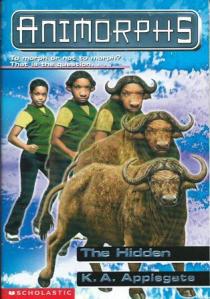 Animorphs #39: “The Hidden”
 Book: “The Ape Who Guards the Balance” by Elizabeth Peters
 Book: “Damsel” by Elana K. Arnold
 Book: “The Hollow of Fear” by Sherry Thomas
 Animorphs #38: “The Arrival”
 Book: “The Sisters of the Winter Wood” by Rena Rossner
 Book: “The Reluctant Queen” by Sarah Beth Durst
 The Library Ladies