Serena’s Review: “The House in the Cerulean Sea”

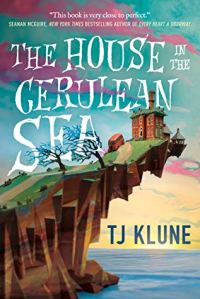
45047384._sy475_Book: “The House in the Cerulean Sea” by TJ Klune

Publishing Info: Tor Books, March 2020

Where Did I Get this Book: NetGalley

Book Description: A magical island. A dangerous task. A burning secret.

Linus Baker leads a quiet, solitary life. At forty, he lives in a tiny house with a devious cat and his old records. As a Case Worker at the Department in Charge Of Magical Youth, he spends his days overseeing the well-being of children in government-sanctioned orphanages.

When Linus is unexpectedly summoned by Extremely Upper Management he’s given a curious and highly classified assignment: travel to Marsyas Island Orphanage, where six dangerous children reside: a gnome, a sprite, a wyvern, an unidentifiable green blob, a were-Pomeranian, and the Antichrist. Linus must set aside his fears and determine whether or not they’re likely to bring about the end of days.

But the children aren’t the only secret the island keeps. Their caretaker is the charming and enigmatic Arthur Parnassus, who will do anything to keep his wards safe. As Arthur and Linus grow closer, long-held secrets are exposed, and Linus must make a choice: destroy a home or watch the world burn.

Review: Cover art alert! Cover art alert! Yes, again, I selected a book almost completely based on the cover art itself. I’ve never read any of TJ Klune’s work before, though I believe he was largely a self-published author before the break-out into big publishers with this title. I did see a few references to “The Umbrella Academy” thrown around, so that was the last bit of justification I needed for placing a request for a book just because I thought the cover was pretty! But it is! Look at all of those colors! For some reason, the cover art put me in mind of the covers for “A Series of Unfortunate Events.” Not a bad thing at all, as I enjoyed that series for the most part. In the end, I did enjoy this book quite a bit.

While not ecstatic about life, Linus Baker is quite content with the solitary existence he’s created for himself. A stable job, a small, cozy house, and, of course his beloved cat and records. But this quiet life is suddenly interrupted when Linus finds himself given a peculiar assignment: to travel to a remote orphanage and evaluate the state of things. Once there, Linus discovers six wondrous, but dangerous, children and their charming caretaker Arthur. As Linus learns more about these wards and Arthur himself, he finds himself more and more drawn to this small family, danger and all.

I’m not typically a fan of contemporary fantasy (though I will concede that that’s a pretty catch-all subgenre so my preferences therein aren’t particularly well-defined), but this book was a great opportunity for me push my comfort levels a bit. And it was a bit of a stretch, as the fantasy elements were fairly low, other than our magical children. But they were delightful enough that the parts of me that was missing world-building and magic systems was satisfied enough.

The comparisons to “The Umbrella Academy” (only watched the Netflix show) is very apt, and, similar to story, this one lives and dies on its characters. The collection of bizarre orphans are where Klune’s work really shines. They were all perfect blends of heart-wrenching and heart-warming, misfits and fitting perfectly together, witty but hiding deep emotions behind their words. The dialogue for these character in particular was quite good, and I found myself really speeding through the book once Linus met up with them.

Linus himself was a solid main character and his slowly built relationship with Arthur and the kids was lovely to explore. There was a lot of exploration around themes of found families, trust, and how we judge those around us. The romance was definitely more on the sweet side, and I would say that the book overall would appeal to a varied range of ages from middle grade to adults (a very good thing, as the cover definitely speaks to a younger audience, I think).

There were a few moments where the story did strike me as trying a bit too hard, just a bit too bizarre for its own good. But readers will have different experiences with this, depending on their preferences for fantasy writing and modes of humor. The book was also a tad longer than I would have liked. Most of it read very quickly, but I felt that there were times when Klune was simply having fun with his characters and the book got away from him a bit. I mean, the characters are a blast, so I can easily understand getting carried away with all of these moments, but it did end up with the book having a bit of a bloated feel. Overall, I really enjoyed this book, and fans of contemporary fantasy, found family stories, and ensemble casts of characters are sure to have a blast!

Rating 7: A bit long, a bit silly at times, but its characters were so heart-warming that they carry it through.

Reader’s Advisory:

“The House on the Cerulean Sea” is a newer book so it isn’t on many Goodreads lists, but it is on “Books released in 2020 I’m curious about.”

Find “The House on the Cerulean Sea” at your library using WorldCat!


Serena’s Review: “Storm from the East”

45043929Book: “Storm from the East” by Joanna Hathaway

Publishing Info: Tor Teen, February 2020

Where Did I Get this Book: NetGalley

Book Description: Battles, revolution, and romance collide in Joanna Hathaway’s stunning, World Wars-inspired sequel to Dark of the West

Part war drama, part romance, Storm from the East is the second novel in Joanna Hathaway’s immersive, upmarket YA fantasy series that will appeal to readers of Sabaa Tahir, Marie Rutkoski, and Evelyn Skye.

War has begun, and the days of Athan’s and Aurelia’s secret, summer romance feel a world away. Led by Athan’s father, the revolutionary Safire have launched a secret assault upon the last royal kingdom in the South, hoping to depose the king and seize a powerful foothold on the continent. Athan proves a star pilot among their ranks, struggling to justify the violence his family has unleashed as he fights his way to the capital—where, unbeknownst to him, Aurelia has lived since the war’s onset. Determined to save the kingdom Athan has been ordered to destroy, she partners with a local journalist to inflame anti-Safire sentiment, all while learning this conflict might be far darker and more complex than she ever imagined.

When the two reunite at last, Athan longing to shake the nightmare of combat and Aurelia reeling from the discovery of a long-buried family truth come to light, they’ll find the shadow of war stretches well beyond the battlefield. Each of them longs to rekindle the love they once shared . . . but each has a secret they’re desperate to hide.

Previously Reviewed: “Dark of the West”

Review: I really enjoyed “Dark of the West” when I read it last spring. It wasn’t a book that had been on my radar much, but I was instantly drawn in by the complicated world-building and the even more complicated deep dive into themes regarding revolution, warfare, and a world shifting between monarchy, democracy, and everything that lies in between. The sweet romance between our two teenage main characters who represent vastly different positions was also a big draw. So, when I saw the sequel was coming out, I placed a request immediately. I did struggle with this one a bit more than the first, but it still comes out solidly in the “win” category.

Athan and Aurelia are separated by much more than distance, as Athan, unknown to Aurelia, is the son of the war-mongering leader of the Safire nation. They now find themselves involved on opposite ends of a war to determine the future of the last kingdom of the South with a monarchy at its heart. Aurelia finds herself in this capital in an attempt to use her family connections through her mother (born a Southerner herself) to stave off a growing war. But while there, Safire makes its move, and with it Athan, leading the aerial forces, they draw ever neared to the city where Aurelia is staying. But as they each move unknowingly closer together, they discover new truths about their parents, about themselves, and about the people and causes they’re fighting for.

This is a complicated book, and that’s both a good and bad thing. One way in which this complication is a good thing is the very honest approach it takes to themes that are very complicated and all to often are written about in black and white terms, with good guys and bad guys seeming to pop straight from the earth fully formed in their one-sided moralities. But this book lives in shades of grey. At one point or another, the reader finds themselves sympathizing with every angle involved in this quickly changing world. And I say angle, and not side, because that’s another good thing the book does: there aren’t just two sides to the conflicts here. Sure, it’s a war with one country invading another. But we also see the complicated relationships that allies have with both the invaders and those being invaded. There are other forces involved as well. Some would call them terrorists, others would call them freedom fighters. These names are completely dependent on who is doing the telling and who is listening, and even that can change with just the slightest readjustment of context, history, and priorities. But this same nuanced look at the fact that there are no “good guys” in war also leaves the reader in a precarious state, emotionally.

At the beginning of the story, it is all too easy to dismiss Aurelia’s viewpoints and plans as foolishly optimistic. And they are. Of the two main characters, she has the more limited view of  the world. Growing up in a privileged and traditionally monarch-ruled country has left her with a very simplistic idea of how the world work. Like many young people, she thinks that only she sees the full picture and if others would simply listen to an argument from her, they’d all see that their feuds are pointless and agree to a peaceful resolution. It was both heart-breaking and a relief to see her have to confront the folly of these views.

But it was also just a very depressing story arc, overall. By the end, between Athan’s struggles in the midst of some truly terrible acts of warfare and Aurelia’s slow sink into the grim realities of the world, it was hard not to feel a bit hopeless. We see all the shades of grey. We see all the wrongs committed by every group, each playing victim and aggressor in different points of history and with regards to various groups. It’s very realistic and believable, but also a tough story to feel happy reading.

I also wish there was a prequel series to this story. We learn much more about both Athan and Aurelia’s parents in this book, and it’s all pretty fascinating. One part really stood out, a moment when Aurelia discovers a secret about her mother and realizes, in a very honest and true-to-life moment, that her mother was a person with a life before Aurelia was born. It was the kind of moment that is hardly ever felt in YA books. Aurelia comments that she has fallen into the trap of feeling like these conflicts and histories all started in her own life. But this moment reminds her that people had lives, had fights, had secrets, had allegiances and enemies, all long before her. That she was plopped down in the middle of it all. Just like her parents were plopped down in the middle of it all. And back. I loved this thought. Like I said, most YA books do nothing to discourage this way of thinking in its protagonists, that the world starts and ends with them. And yes, they are the main character of their story and thus their’s is the one we care about, but it’s a nice reminder that there is more to it than all of that. I mean, most YA books either kill off the parents or conveniently forget to mention them for much of the story. They definitely rarely presented as fully fledged people with histories of their own (outside of some direct connection to the main character). But this series is really excelling at creating a story that is clearly about Athan and Aurelia but still puts them down in the middle of an already complicated world, not making them the whole world in and of themselves.

But yes, it’s all very complicated. Having a year-long break between these two books was frankly very challenging. It took me a long time to re-orient myself to the world and the players in it. I’ve been reading e-ARC versions which don’t have maps, and I’m not sure if the finished books do either? If not, they could really benefit from one. It took me quite a while in the first book to picture this world, and almost just as long here in the second to re-create it in my mind. And all the weavings in and out of secret relationships and allegiances were hard to keep up with. I’d have to constantly remind myself who knew what, who had betrayed whom, and which of our main characters knew which pieces of the greater puzzle. It was a lot.

The pacing was also pretty slow in the beginning, so between these two factors, it took a bit to really get into this story. Having liked the first book, I was wiling to do the work, but for anyone feeling more middling about the series, this could be a challenge. But one definitely worth facing if you’re looking for a complicated political series! And ultimately, fans of the first book should be happy with this second outing, and, like me, anxious to see where it all ends up in the third book. We still have that prologue from the first book looming over us. How, oh how, do our main characters get to that awful place? And, more importantly, how do they get out of it??

Rating 8: A beautiful, horrible world of greys where I just want my two precious main characters to be happy.

Reader’s Advisory:

“Storm from the East” is a newer title so it isn’t on many relevant Goodreads lists yet, but it should be on “Original Stories . . . a Breath of Fresh Air.”

Find “Storm from the East” at your library using WorldCat!

My Year with Jane Austen: “Pride and Prejudice” [1995]

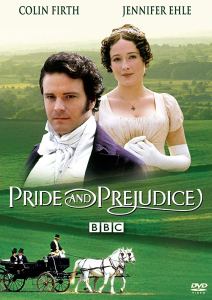
mv5bmdm0mjflogytntg2zc00mmrkltg5otqtm2u5zjuyytgxzthixkeyxkfqcgdeqxvyntayodkwoq4040._v1_sy1000_sx706_al_Movie: “Pride and Prejudice”

Release Year: 1995

Actors: Elizabeth Bennett – Jennifer Ehle

Mr. Darcy – Colin Firth

Jane Bennett – Susannah Harker

Mr. Bingley – Crispin Bonham-Carter

Comparison – “Indulge your imagination in every possible flight.”

I am definitely in the camp of fans who believe that this version of “Pride and Prejudice” is the definitive, will-never-be-topped, adaptation of this book. Pretty  much everything is perfect, as far as I’m concerned. The casting in particular is so spot-on that I find it impossible to read the book now without picturing these people as the characters. There are stand-outs, of course, but I don’t have a single quibble with any of the choices. If I had to pick, I might say that I thought Matthew Goode’s Wickham in “Death Comes to Pemberley” might be a smidge better. But that’s only if I was forced to pick, as I have no complaints with Adrian Lukis’ take.

The fact that is a six part mini series allows this version to include not only all the big moments in the book (and many of the little ones to boot), but even add in some smaller, quieter moments that just help to flesh out characters even further. We see hints at Lizzy’s active, independent nature with scenes of her frolicking through the fields (of course making sure she’s not watched; she is a proper lady after all!) Bingley and Darcy have moments as friends, riding horses and viewing Netherfield; and in the end we get to actually see the scene where Darcy apologizes for meddling in his love affair with Jane. The camera drifts through the Bennett household through out the show, giving us small glimpses in the day-to-day ways each member of the household spends their time when not caught up in grand balls and the like. For the romance angle, we get lovely scenes like a recently bathed Darcy being entranced by Elizabeth as she play with a dog during her stay at Netherfield. And, of course, the lake scene, an added element that pretty much turned into the defining moment of this adaptation (so much so that it was listed All of these moments and more just add to the joy that is this story.

The one area in which is lacks, however, is the ending. A proposal while on a walk serves its purpose well enough on the page. But in a movie/mini series, the movement and inability for the actors to look directly at each other as they speak hurts the romance of the moment. And, for all of its length, much of the last few chapters of the book are cut out leaving us without some of the nicer moments of Darcy and Elizabeth while engaged and interacting with various family members. It’s really too bad as the inclusion of these post-proposal scenes was something that really stood out to me in this re-read as a strength of the book. Instead, this movie jumps almost directly from the proposal to the marriage (other than a nice scene between Jane and Lizzy, which, to be fair, if you’re only going to include only one, this was the right choice by far!).

I also love the light, bright score that makes up much of the music for this version. It fits so perfectly with the overall mood  as well as feeling

Heroines – “I hate to hear you talk about all women as if they were fine ladies instead of rational creatures.”

Jennifer Ehle is a treasure. Even more so than Firth’s Darcy, hers is the character that most perfectly fits how I imagined the book character and who now always serves as my mind’s image when I re-read the story. She perfectly balances the wit and vivacity of Elizabeth while never losing touch with the propriety of the times for which Elizabeth was also credited. She has a great ability to, I don’t quite know how to say it, but keep her face active? There’s a lot of sitting and talking in this story, but her face is always telling a story of its own, even if she’s not speaking and it adds to the sense of Elizabeth’s lively and playful nature. Even when she doesn’t laugh out loud (that would be improper!), it’s easy to see that she’s laughing on the inside. Her eyes even do sparkle, for heaven’s sake! I also liked that they really emphasized her independent nature by not only having her out walking about on her own (often used to indicate the passage of a season), but by setting several scenes around walks and being in out of doors settings.

Ehle also has great chemistry with Susannah Harker who plays Jane. The moments between the sisters at night in their bedroom are just the sort of scenes that ground this story in a realistic place that one still recognizes today: sisters sprawled out in their rooms talking about the hot gossip. Of course, they look much more refined while doing it than any of us do, I’m sure. Harker’s Jane is also pitch perfect. She is quiet, calm, and willing to go to great lengths to look for the good in people. But, like Bingley (who I’ll discuss next), Harker gives Jane enough earnestness and sense as to not come across as silly and foolish.

Heroes – “What are men to rocks and mountains?”

Of course, I love Colin Firth as Mr. Darcy. He manages perfectly to be both highly unlikable in the first half of the movie, and then, practically on a dime, turn to being highly likable and heroic. He’s handsome the entire time, which doesn’t hurt. But the movie definitely doesn’t shy away from showing Darcy at his worst in the beginning. He’s rude in public and in private, snobby and insulting of those around him, and, worst of all, playing along with Caroline’s own disdain.

I will, say, however, that the one misstep in this willingness to show Darcy at his worst was the letter he wrote Elizabeth. In the book, there’s a long section in which he details not only his problems with Elizabeth’s family, but also goes on at length about how he was convinced Jane didn’t return Bingley’s affection. There’s a brief line or two about this in the letter in this movie, but there isn’t nearly the amount of explanation around this that we have in the book. There, while still pretty harsh, it is easy to understand that Darcy could really have been lead astray here and, like Elizabeth, begin to forgive him for even that. But in the movie, it’s left feeling still pretty bad on his part. Luckily the Wickham stuff comes next and that’s the part that sticks with you, but it still leaves Darcy kind a worse light than I think he was in in the book.

I do like how they added scenes showing Darcy’s search for Wickham. Not only did it give him more action, but we got to see his heroics in action and it was clearly more than just a rich guy paying someone off to fix it. He’s out there on the streets tracking Wickham down.

I really like Crispin Bonham-Carter’s Mr. Bingley, too. He’s sweet, charming, but, unlike some adaptations, not a buffoon. His romance with Jane is adorable, but his relationship with his sisters and Darcy also makes sense. I particularly enjoy one scene when they’re back at Netherfield and he keeps trying to get a word in only to be interrupted by Caroline. It’s funny and also just adds to the “love to hate” quality for Caroline. I also really enjoy having the scene where Darcy apologizes to Bingley included. It’s also another good moment for Bingley in that we see him angry at Darcy but, just as quickly, go back to wishing for his friend’s approval. But, again, Bonham-Carter manages to play this quick switch with a sense of sincerity and earnestness that doesn’t leave Bingley looking foolish.

Villains – “I do not want people to be very agreeable, as it saves me the trouble of liking them a great deal.” 

As I said above, Adrian Lukis would be my only tough call if I had to pick a character whose been done better elsewhere. But even then, I think it is context dependent. The Wickham in “Death Comes to Pemberley” has a very different story than the Wickham we see here. Most notably, he’s already a known villain, so much so that he’s suspected of murder. Here, however, Wickham must not only be an unknown, but immediately likeable enough to fool our beloved Elizabeth. And in this, Lukis excels. He is charming, easy-going, and completely believable as just an average, good kind of guy. And to contrast that, he’s also equally smarmy at the end of the movie when he attempts to continue ingratiating himself to Lizzy after his “elopement” with Lydia. It’s uncomfortable to watch and just excellent.

Catherine de Bourgh is also particularly good. She sneers with the best of them, and I love the image of her literally chasing Elizabeth through the yard shaking her cane at her as she tries to get her to promise not to marry Darcy. There’s a particular facial expression, a narrowing of the eyes at Elizabeth, that the actress does during the first meeting at Rosings Park that my mom says is a look that I give. To this day I can’t decide whether to be insulted or pleased.

I also enjoy Anna Chancellor’s Miss Bingley quite a lot. She entirely hateable in the most fun way. One particular moment that comes to mind is when she confronts Darcy early in the movie asking what he’s thinking about. He says fine eyes and Chancellor does a very distinct flick of her own eyes at just the right point in her line to make it clear that Caroline is expecting herself to be the answer. It’s great.

Romance – “A lady’s imagination is very rapid: it jumps from admiration to love, from love to matrimony in a moment.”

There are quite a few added moments that help build the romance. Of course, the lake scene where its implied that Darcy is so tormented by his love for Elizabeth that he literally has to cool down by diving into the nearest body of water. But there are several other goods ones too. I already mentioned the early moment when he spots Elizabeth playing with a dog outside (notably, another opportunity for the movie to show a drenched Colin Firth as the scene involves Darcy bathing). There’s also another great moment where we see Darcy in London practicing dueling. At the end of a bout, he exclaims to himself “I shall beat this, I shall.” What woman doesn’t  want a man to be so besotted with her that he tries to drive it out of himself physically?

And, of course, the coup de gras: the look of pure adoration that he gives Elizabeth while she plays piano during her visit to Pemberley. My mom, sister and I once put together a list of romantic moments from movies that when put together would make the perfect romantic hero. This look from Darcy to Elizabeth was always top of the list. Firth practically trademarked it, and it’s immediately recognizable when he pulls it out again in “Bridget Jones’s Diary,” a modern retelling of “Pride and Prejudice” where he once again plays Darcy. We’ll get to that movie in a few weeks!

Like I said above, the movie does cut out many scenes from the end of the book as well as one of the visits Darcy and Bingley make before Bingley and Jane’s engagement. The visit makes sense, but I do wish they had included a few more moments of Elizabeth and Darcy happy together. Mostly, we just get a kind of somber wedding scene at the end, before it closes with a few joyful minutes of the happy couples riding off into the sunset. Notably, I think this is the only time in the entire movie that we see Colin Firth smile with teeth.

Comedy – “For what do we live, but to make sport for our neighbors, and laugh at them in our turn?”

Lydia really shines in this adaptation. In the book, she’s mentioned often enough as ridiculous, but we don’t really get to see her in action other than small snippets of dialogue here and there. But here, she really comes to life: all of the giggling, the running about, the forwardness. By the time she runs off with Wickham, it feels more like it was only a matter of time than a shock. There were a lot of great moments, probably best all around for comedy in general was the ball at Netherfield where we really feel how much of a challenge the elder miss Bennetts have at finding good husbands when surrounded by so much foolishness. But for Lydia in particular I really enjoyed the juxtaposition of her and Kitty coming to meet Elizabeth on her return trip from Rosings Park and Lydia saying how jolly a party they’ll make on the carriage ride home. The scene then immediately switches to the next day and we hear Lydia and Kitty squabbling as the carriage pulls away.

Mr. Collins is also excellent in all of his smarminess. The actor portrays him as hunched over in a false sense of humility and often has him out of breath when accompanying the ladies on walks. The book makes a brief reference to the fact that he doesn’t know all the steps to the dances at the Netherfield Ball, but here we actually get to witness it as he bumbles head first into another lady when dancing with poor Elizabeth.

And, of course, Mrs. Bennett is great, particularly with the actor’s portrayal of when Mrs. Bennett is taken to her room with nerves while Lydia is missing. She’s over-the-top, emotional, and irrational. Throughout the entire movie, this representation of Mrs. Bennett does nothing to excuse her ridiculous behavior as a worried mother figure going to extremes. And, given that so many of her lines are directly from the book, I feel that it’s a pretty honest take on what Austen had in mind.

Fun facts – “Life seems but a quick succession of busy nothings.”

Jennifer Ehle wanted the part so badly that she dyed her eyebrows a darker color and didn’t wash her hair the day before casting as she was worried that her naturally blonde color would be a mark against her.

Ehle was perhaps right to be concerned about hair color as Colin Firth was almost passed over for being “too ginger.” Andrew Davies, the showrunner, had to be talked into giving Firth a chance with hair dye as an option.

Joanna David (Mrs. Gardiner) and Emilia Fox (Georgianna Darcy) are  mother and daughter. David was cast first and when they were looking for a Georgianna (they went through 70 or so actresses) David’s daughter, Emilia was mentioned.

Susannah Harker, Jane, was pregnant while filming but the flowing outfits worked well enough for her to conceal it. She is also the daughter of Polly Adams who played Jane in the 1967 version of “Pride and Prejudice.”

Best Movie Gif/Meme: “I dearly love a laugh.”

This has been a favorite of mine for quite awhile:

In two weeks, I’ll review the 2005 version of “Pride and Prejudice.” 

Serena’s Review: “Jade War”

41716919Book: “Jade War” by Fonda Lee

Publishing Info: Orbit, July 2019

Where Did I Get this Book: from the publisher!

Book Description: On the island of Kekon, the Kaul family is locked in a violent feud for control of the capital city and the supply of magical jade that endows trained Green Bone warriors with supernatural powers they alone have possessed for hundreds of years.

Beyond Kekon’s borders, war is brewing. Powerful foreign governments and mercenary criminal kingpins alike turn their eyes on the island nation. Jade, Kekon’s most prized resource, could make them rich – or give them the edge they’d need to topple their rivals.

Faced with threats on all sides, the Kaul family is forced to form new and dangerous alliances, confront enemies in the darkest streets and the tallest office towers, and put honor aside in order to do whatever it takes to ensure their own survival – and that of all the Green Bones of Kekon.

Previously Reviewed: “Jade City”

Review: After it took me so long to get around to reading “Jade City,” I wasn’t about to let the same happen for the second book in this series. I promptly started reading the sequel, and, sure enough, Fonda Lee has done it again. It was both everything I was expecting/wanting while also blowing wide the world and stakes that were set up in the first book.

Over a year after the events of “Jade City,” the Kaul family is still entrapped in the ongoing feud with their rival clan, the Mountain. While the Mountain was hurt by the sudden loss of one of their leaders, their calculating leader is nowhere close to finished. Throughout it all, Hilo and Shae continue to try to grow into their unexpected roles of leadership, while those closest to them try to find their own places. Wen, Hilo’s wife and secret ally of Shae, works in the open to provide an heir to the No Peak clan, while working behind the scenes to help gather information for Shae. And their adopted brother Anden finds himself exiled to a foreign land experience life for the first time out of both the shadow and the privilege of his powerful family.

“Jade City” was impressive in its detailed world-building, solid plotting, and nuanced characters who anything but paper cut-outs of typical staple roles. While the story left off with a wide open path ahead, I didn’t expect it to expand outwards as much as it does forwards. Meaning that the story moves ahead in unexpected ways, but the world itself and even our understanding of our main characters expands outwards in such a way that by the middle of the book I felt like I had been barely scratching the surface when I read the first book.

Through Anden’s perspective, the story expands past the borders of Kekon giving us not only new insights into the geo-political stagings of this unique world but offering a lot of commentary on the immigrant experience. Anden must learn new cultural norms, a new language, and confront the differences between the Kekon he grew up knowing and the smaller Kekon that his fellow immigrants have created for themselves in a new country. It was a really fascinating window into the feeling of familiarity yet continued displacement that is unique to an immigrant experience. While Anden sees elements of his familiar home, there are enough small changes and minor differences that highlight how the immigrant Kekonese community is essentially subculture all of its own.

The characters were also expanded upon and there were a bunch of twists here, specifically, that I didn’t see coming. Hilo, especially, had a few moments that really shocked me, sometimes for the better, sometimes for the worse. But this mix of traits that makes it hard to label him is the same thing that makes him read as so real. Flawed, desperate, constantly holding in his inner demons that push him towards foolish action. Shae also had an interesting story arc that I hadn’t anticipate. I continue to enjoy both Shae and Wen for the solid women characters they represent. Like Hilo, they are complex and we see their weaknesses and strengths laid out through the cool, objective, narrative of the story.

It’s a large book, and it fills it pages with as much continued world-building and expanded character moments as it does with plot. Readers looking for solid action might struggle with some of the slower paced portions. But if you enjoyed “Jade City,” than this book is a superb successor.

Rating 8: Bigger and better in every way! “Jade War” will leaving you craving for more!

Reader’s Advisory:

“Jade War” is on these Goodreads lists: “Essential Silkpunk” and “#ReadPOC: List of Speculative Fiction by Authors of Color.”

Find “Jade War” at your library using WorldCat!

Serena’s Review: “A Broken Queen”

45046564Book: “A Broken Queen” by Sarah Kozloff

Publishing Info: Tor Books, March 2020

Where Did I Get this Book: from the publisher!

Book Description: Barely surviving her ordeal in Oromondo and scarred by its Fire Spirit, Cerulia is taken to a recovery house in Wyeland to heal from the trauma. In a ward with others who are all bound to serve each other, she discovers that not all scars are visible, and dying can be done with grace and acceptance.

While she would like to stay in this place of healing, will she ever be able to leave the peace she has found to re-take the throne?

Previously Reviewed: “A Queen in Hiding” and “The Queen of Raiders”

Review: And we’re back with the third book already! Man, I’m really loving being able to read an entire series like this. In the “My Year with Jane Austen” series I’m writing, I’m getting near to reviewing the 1995 mini series version of “Pride and Prejudice.” It’s excellent for many reasons, but I’ll be honest, a large part of my love for it is simply that it’s nearly six hours long, meaning I can sink into one world with one set of characters for an extended period of time all once. It’s been a similar experience with this series.

Cerulia is badly injured, both physically by the scars left on her body by the flames, but also internally, unsure of her own role as a leader and queen going forward. In the quiet and peace of the healing ward where she is recovering, she is badly tempted to give up her quest of regaining her throne. The path has been harder than she ever thought, but she comes to see her responsibility to her people is greater than her own insecurities and fears. But without an army and with her sister poised to marry the son of her great enemy, Cerulia must work hard to remain free and in a position to challenge Matwyck for her throne.

I actually ended up liking this third book a bit more even than the first two, especially portions in the first half of the book while Cerulia is struggling to find her way again. For an individual who has been in exile for so long, jumping from one place to another, one entire identity to another, it’s no wonder that questions would arise about whether it is worth it and who she really is beneath all of the disguises. Through these reflections, she’s forced to confront her own insecurities and fears. She also come across the tried and true “with great responsibility” way of thinking, recognizing that her own struggles are ultimately not about what she has lost as a princess/queen forced from her home, but in the service of a greater duty to the country that’s been left behind. All of the people who don’t have the option to flee and re-create lives for themselves with the help of magical abilities and a grand heritage.

After this period of reflection, the action picks up again with Cerulia returning home, reuniting with her foster family, and facing the stark reality of the challenges ahead of her on her journey to the throne. There are also some interesting discussions regarding the necessity of a queen at all. It was fun seeing Cerulia go full circle and finally return to her home and her foster family, and it’s a great set-up for the final conflict to come in the last book.

But, with the increased interest I had in Cerulia’s story, I found myself feeling more disconnected from the other characters’ portions of the story. While there have been some moments where these other characters’ perspectives have added strength and context to the story, at this point, as we near the end of the series, their portions felt like more of a distraction than anything. I was always eager to return to Cerulia’s story and found myself more and more impatient with any breaks in the momentum of her plot line.

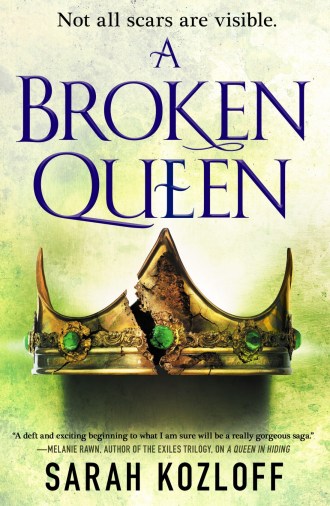
Lastly, I want to throw out a brief kudos to the cover art for this series! I always like covers that don’t include models, so that was a great start. But mostly I think the understated changes to the crown and how it reflects the action of each story was very clever. The first cover had a crown that was literally hidden behind vines. In the second, we see a crown being consumed by flames, a direct nod to Cerulia’s own perilous experience with fire. And here we have the broken remains of that ordeal, cracked but not destroyed. The final cover, of course, finally brings the crown to it’s completed state: regal and whole, free of damage or concealment. It’s a very simple little theme, but I think it works perfectly for this story.

Only one more month to go until we wrap this all up! In the meantime, make sure to enter the giveaway for a finished copy of “A Broken Queen.”

Rating 8: Poignant reflections on the responsibility of privilege and the definitions of self set a solid foundation for the final book to come.

Reader’s Advisory:

“A Broken Queen” is a newer title so it isn’t on many Goodreads lists, but it is on “Upcoming 2020 SFF with female leads or co-leads.”

Find “A Broken Queen” at your library using WorldCat!

Giveaway: “A Broken Queen”

45046564Book: “A Broken Queen” by Sarah Kozloff

Publishing Info: Tor Books, March 2020

Where Did I Get this Book: from the publisher!

Book Description: Barely surviving her ordeal in Oromondo and scarred by its Fire Spirit, Cerulia is taken to a recovery house in Wyeland to heal from the trauma. In a ward with others who are all bound to serve each other, she discovers that not all scars are visible, and dying can be done with grace and acceptance.

While she would like to stay in this place of healing, will she ever be able to leave the peace she has found to re-take the throne?


Previously Reviewed: “A Queen in Hiding” and “The Queen of Raiders”

Giveaway Details: In partnership with the publisher, I’m happy to be able to offer an ongoing giveaway for each book in this series as they come out! I’ve reviewed the first two in the series and am excited to see what come in the third book! There was a bit of a cliffhanger at the end of the last, but luckily, due to the quick publishing schedule for this series, I haven’t had to wait long to find out! My review for “A Broken Queen” comes out this Friday.

If you, too, have been speeding through this series and can’t wait to find out what next, here’s your opportunity to win a finished copy of the third book in the series! And don’t forget to check back in April when we host a giveaway for the fourth and final book. This giveaway is open to U.S. residents only and ends on March 25.

Enter to win!

My Year with Jane Austen: “Pride and Prejudice” Part II

1886._sy475_Book: “Pride and Prejudice”

Publication Year: 1813

Book Description: The romantic clash between the opinionated Elizabeth and her proud beau, Mr. Darcy, is a splendid performance of civilized sparring. And Jane Austen’s radiant wit sparkles as her characters dance a delicate quadrille of flirtation and intrigue, making this book the most superb comedy of manners of Regency England.

Part II – Chapters 35 – 61

Story – “The person, be it gentleman or lady, who has not pleasure in a good novel, must be intolerably stupid.”

While out walking the morning after the disastrous proposal, Elizabeth runs into Mr. Darcy once again who quickly passes off a letter to her and leaves. She reads it and discovers some shocking news. First, while she was correct about Darcy separating Jane and Mr. Bingley, she gets a better insight into his evaluation of her family’s behavior. He points to instances where all of her family, her father, mother, and three younger sisters behaved badly in public. He excludes Jane and Elizabeth, noting that they have always been perfectly proper and charming. Elizabeth is angry, but also recognizes the truth in what he says. He also points out Jane’s calm demeanor as misleading him into thinking she didn’t care much for Mr. Bingley. Again, Elizabeth is angry, but then reflects back on what Charlotte had advised months ago about Jane’s needing to show more of what she feels and concedes that perhaps for those who don’t know her, Jane might be hard to interpret.

But then the more shocking tale comes out, that of Darcy’s history with Wickham. While the first half of Wickham’s story is true, Darcy alludes to poor behavior in Wickham’s lifestyle almost from the moment of his reaching adulthood. And once Darcy’s father passed away, Wickham asked for money instead of the living. This was given and Wickham went his own way. But then when the living became vacant, he returned, presumably much in debt, and demanded the living be given to him anyways. This was refused. Later, Wickham went on to pursue Georgiana, only sixteen at the time, when she was staying with a governess and convinced her to elope with him. It was only Darcy’s surprise visit and Geogiana’s love for her brother that prevented her from not sharing the truth that prevented the elopement from happening. Darcy suspected that while Georgiana’s fortune was part of Wickham’s goal, revenge on Darcy was also part of it. He also writes that Colonel Fitzwilliam is also Georgiana’s care taker and thus knows all of these details if Elizabeth is so suspecting of him as to need to double check the truth.

Elizabeth is horrified, not only be the truth of these claims which she quickly realizes can’t be lies (it’s close to Wickham’s story, no brother would make up a story like that about his sister, and, of course, he’d not suggest she check with Fitzwilliam if it were untrue) but by her own lack of solid information to justify her prior opinions. Thinking back, she realizes that Wickham’s behavior has always been odd, sharing this information with her in the first place, having only known her for a day. And his avoidance of Darcy at the ball and the fact that once Darcy was gone from the neighborhood, suddenly the story was everywhere, even though Wickham had first claimed he’d never share it, for his supposed love of Darcy’s father. Elizabeth is miserable and is secretly relieved when she returns to the Collins’ and learns she’s missed Darcy’s leave-taking of the neighborhood.

Elizabeth heads back home. On the way, she stops in London to meet up with Jane and travel the rest of the way back with her. Jane is still obviously upset about Bingley, but Elizabeth distracts her with news of Darcy’s proposal and Wickham’s true history. Jane desperately tried to create a situation where they’re both good people, but Elizabeth claims that she now believes all goodness to be only Darcy’s. Back home, the hear that the regiment is scheduled to leave their town. Elizabeth is relieved. However, Lydia is soon asked to be the special companion of the wife of the colonel of the regiment and accompany them. Elizabeth warns her father about the evils of Lydia continuing to run about as a wild flirt, that it hurts not only Lydia’s own future respectability but she also harms her sisters by proxy. Mr. Bennett essentially pats Elizabeth on the head and says that peace will only be had at home if Lydia is allowed go. And so she does.

Elizabeth’s travels continue as she joins her Uncle and Aunt Gardner on a tour of the countryside. They eventually come into the neighborhood of Pemberley and the Gardner’s express an interest in seeing it. After learning Darcy is not at home, Elizabeth agrees. However, while they’re their, Darcy unexpectedly returns catching Elizabeth by surprise. Much awkwardness ensues, but Darcy is quick to put on the most social and friendly face that Elizabeth has ever seen from him. He is kind to her aunt and uncle and expresses a wish to introduce his sister to Elizabeth while she’s in the neighborhood. He’s so intent on this goal that he brings his sister to visit the very next day, the same day she arrives home. With her comes Mr. Bingley who fishes around for information about Jane.

The next day Elizabeth and her aunt call on Georgiana while at home. While there, Caroline needles Elizabeth about the militia leaving her town, clearing hinting about Wickham, much to Georgiana’s dismay. Later, once the guests have gone, Caroline once again begins negatively evaluating Elizabeth. She finally goads Darcy into speaking only to hear him proclaim that he thinks Elizabeth is one of the most handsome women he knows.

The next day still Elizabeth finally hears from Jane. She writes of terrible news, that Lydia has eloped to London. Worse, they’re not sure the marriage has taken place and she begs for Elizabeth and co. to return. Darcy comes upon Elizabeth right after she finishes the letter and she confesses all of it to him. He comforts her, but leaves fairly quickly; she imagines this is the last she’ll see of him given this new shame on her family.

Once home, Mr. Gardner quickly goes to London to meet up with Mr. Bennett who is already there. Eventually, however, Mr. Bennett has to return after not accomplishing much. Soon enough, though, they hear news from Mr. Gardner that Wickham and Lydia have been found, they are to married, and there will be some money leftover after it all. Mr. Bennett sees this for what it is: Wickham has been paid off handsomely to persuade him to marry Lydia, likely by Mr. Gardner himself. Mrs. Bennett insists they invite the new Wickhams to visit and they do. While there, Mr. Wickham once again starts up conversations with Elizabeth about his wrongs at the hands of Mr. Darcy. She hints enough about knowing the truth that he quickly shuts up.

While visiting, Lydia lets it slip that Mr. Darcy was at their wedding. Elizabeth quickly writes to her Aunt Gardener to get to the truth of the matter. Her aunt writes back saying Darcy did everything: located Wickham and Lydia, arranged all matters, and paid off Wickham to marry Lydia. Darcy claimed responsibility for Wickham’s bad reputation not being known and thus Lydia falling into his clutches. Her aunt also hints that they were OK with him taking such a lead because he obviously has an interest in the family…if Elizabeth knows what she means.

Shortly after Wickham and Lydia leave, Mr. Bingley unexpectedly comes back to the area, bring Mr. Darcy with him. On their visit, Mr. Bingley clearly remains interested in Jane, but Darcy in stand-off-ish. Soon enough, Mr. Bingley finally proposes to Jane. Everyone is overjoyed, but Elizabeth is worried to hear Darcy has gone back to town before she is able to thank him for what he did for her family. Not long later, Lady Catherine makes a sudden appearance. She demands a private audience with Elizabeth and proceeds to inform her that she’s heard that Elizabeth is soon to be engaged to Mr. Darcy; Lady Catherine is not pleased. The two argue, with Lady Catherine insisting that Elizabeth promise never to do such a thing and Elizabeth adamantly refusing to agree to such a ridiculous request. Lady Catherine leaves, unsatisfied.

Soon after, Mr. Darcy returns. On a walk with Elizabeth, while Jane and Bingley  wander behind them, Elizabeth finally manages to thank him for his help with Lydia. He protests and says he did it for her and again asks her to marry him. This time she agrees.

The book concludes with some shorter scenes describing Elizabeth breaking the news to her mother, writing a joyous letter to her aunt, and sharing her happiness with her sister. After the wedding, we learn that she forms a good friendship with Georgiana, and that after a year living close to the Bennett family, Jane and Bingley break down and move close to Pemberley themselves. All is well, and Mrs. Bennett ends with not one, not two, but three daughters married (though no one really wants to talk about the one…)

Heroines – “I hate to hear you talk about all women as if they were fine ladies instead of rational creatures.”

Oh, Elizabeth, our beloved Austen heroine. Many people point to her as the most approachable heroine for modern readers due to her wit and independence. Alongside her, Emma is often also named, another witty, independent lady. But do you know what else both of these favorites have in common? Both of their stories revolve largely around their own personal growth. Each starts out feeling very comfortable with themselves, but over the course of the story, they both realize they have some pretty big flaws that have misled them and hurt people. And then they go on to do the personal work to improve themselves. What’s more, this personal work is directly responsible for bringing about their own happy endings. Elizabeth wouldn’t have ended up with Darcy if she didn’t acknowledge her own role in their previous bad relationship. Emma wouldn’t have ended up with Mr. Knightley if she didn’t realize that she shouldn’t play games with other people. This is what I think truly makes these two heroines people’s favorites. There’s nothing more sympathetic to a reader than a character who reflects ourselves, flaws and all. One who highlights that these flaws can be overcome, past wrongs can be made right (or at least avoided in the future), and maybe this effort will be rewarded with some hot, rich dude falling in love with you! Cuz it’s still a wish-fulfillment book, let’s be real.

For me, personally, the other big appeal of Elizabeth is her smart conversation. Particularly her come-backs to the attacks from Lady Catherine. I’m definitely one of those people who spends too much time in the shower thinking up all the smart responses I should have said in the midst of some argument. I’ve pretty much given up hope of every having the perfect response come off my tongue at the right time. But Elizabeth, she’s a master. Lady Catherine says something rude. Boom! Elizabeth has the perfect zinger in reply. One after another. It’s all very cathartic.

Poor Jane, on the other hand. First she’s in London having to endure the harsh realization that Caroline Bingley is kind of a b. Then she ends up being home without Elizabeth, her other source of sanity, when all of the Lydia nonsense first goes down. And even in the end, with her happy ending in hand, there’s a line about how the Wickhams would often over stay their welcome with the Bingleys. Ah well, there’s the price of too much niceness! It’s all well and good, but Elizabeth had several wise points about there being a line between reason and foolish goodwill. At least they eventually moved away from Netherfield and at least go some semblance of distance from the more immediate Bennett drama.

Heroes – “What are men to rocks and mountains?”

In many ways, the reader experiences a similar sense of surprise and shock as Elizabeth does by Mr. Darcy’s about face at Pemberley. What’s more, we have even more insights into his changed behavior as we see his interactions with Caroline Bingley later. But what makes these changes feel real, and not just a facade put on to please a woman who has called him out (like perhaps the relationship between Fanny and Henry Crawford in “Mansfield Park”) are all the smaller moments they are paired with.

Elizabeth and her aunt and uncle rightly recognize the weight of the praise that comes from the housekeeper. And Mr. Bingley’s good opinion begins to reassert itself as an important testament to Darcy’s long-standing goodness, even if it was shrouded in pride before. We also see enough evidence of Darcy remaining the same in many ways, if better behaved overall. Elizabeth notes that Mr. Bingley likely got something like permission/a blessing from Darcy before pursuing Jane again. Darcy is still removed and distant in large groups. And, of course, the secrecy and rather forceful (if still good) insistence on doing everything himself with regards to Wickham.

Whenever I re-read this book, I always find myself falling into a similar camp as Elizabeth does early on with regards to Mr. Bingley: any man who can be talked out of his love for a woman based on his friends’ criticisms of her is not worth having. But then we get the letter that highlights, in particular, the fact that Bingley was convinced by others that Jane didn’t actually care for him. And then as the book continues, and as we come across Mr. Bingley again at Pemberley, all the smaller character moments for him begin to settle in again and it becomes easy to understand and forgive. From very early moments in the book, we see how, while confident in general, Mr. Bingley does look to Darcy as a source of sound judgement. We also see a lot of reminders of Bingley’s humble nature (of the extreme sort, similar to Jane) that would make him even more prone to not trusting his own opinion with regards to Jane’s feelings for him.

Villains – “I do not want people to be very agreeable, as it saves me the trouble of liking them a great deal.” 

Wickham is by far the most famous of Austen’s villains, and for good reason. While Willoughby was potentially worse (unlike Wickham who probably did intend to marry Georgiana for her fortune and his revenge on Darcy, Willoughby seduces Brandon’s ward for nothing and then ends up abandoning her to her ruin),  we see a lot more of Wickham in this book, both before and after his character is known. But like Elizabeth, it is easy to be taken in by him at first. There are a few clues sprinkled here and there that reveal his true character, but they are of the sort that only become glaring after Darcy’s history is provided and Elizabeth reflects back.

But the letter itself is condemning in all of the worst ways. It’s impossible not to feel for Elizabeth as months-worth of preconceptions come crashing down around her, revealing unflattering aspects of her own self she hadn’t been aware of. But what is even worse is the sheer sense of sliminess that exudes from even the mention of Wickham from there on out. Lydia, on first meeting back up with Elizabeth, crows about how Wickham is freed from having to marry the unpleasantly-freckled Miss King. But Elizabeth sees this for what it was: yet another botched, mercenary attempt by Wickham to pursue a vulnerable young woman.

And, of course, his coup de gras, the elopement with Lydia. But in this re-read, what really stood out was Wickham’s behavior when he and Lydia return to the Bennett household. First off, the sheer ballsiness of returning at all! This is a family whose daughter he recently whisked away and who knows he had planned to simply abandon at a moments notice had he not been paid off! There has to be something off in the head of a person who could walk back through that door, apparently without any shame or remorse. And then, to go a step further, and start up a conversation with Elizabeth again about his past. If it ever needed to be made more clear that Wickham never truly respected or cared for Elizabeth, this conversation confirms it. If he had had any true respect for her, she would have been the one to avoid the most, let alone start up a conversation about lies that he must have suspected she already had begun to question. Even without that, any respect for her or understanding of her character would have a made it clear to him that she would not forgive and forget, even if the more silly members of the rest of her family would. This all makes it clear that his friendship with her was based on nothing more than his enjoyment in basking in her attention and growing esteem without sharing any similar respect for her.

The other villain pales in comparison to Wickham, but I have to think Lady Catherine belongs in this category. That her efforts had no effect on one party and actually encouraged the other is beside the point; her intentions were clearly villainous. Though I will say that this is one of the instances of having a “villain” who you love to hate. I’m pretty sure one of my high school friends, Hallie, loved this book almost purely for this last scene between Elizabeth and Lady Catherine.

Romance – “A lady’s imagination is very rapid: it jumps from admiration to love, from love to matrimony in a moment.”

I think it’s fairly undisputed that the romance between Darcy and Elizabeth is one of literature’s greatest love stories. Of course, many lovers of romance stories enjoy the “enemies to lovers” tropes and this is one of the early examples of it. And it still holds up as one of the best examples of it, in my opinion. Mostly because Austen wasn’t lazy about it. Both of these “enemies” had to reconcile within themselves their own failings that lead them to being enemies in the first place. And from there, we see each have to make concrete steps to self-betterment and have the grace to accept what the other is offering. Darcy makes a concentrated effort to be welcoming to the Gardners (two people he had previously scoffed at, if only in theory). And Elizabeth makes her own efforts to re-start their relationship, being open to the revised histories that she’s now hearing of him (from the housekeeper and from Georgiana). All of this leg work that is done in the middle of their romance is the part that is all too often left out of modern “enemies to lovers” stories. There, we often see two characters “hate” each other (usually for no real reason), then realize how super hot the other one is, make out for a bit, and then suddenly be in TRU LUV 4EVER. The middle section is completely skipped over. They literally go directly from enemies to lovers. It’s not only unbelievable, but nowhere near as compelling as the very human changes we see Darcy and Elizabeth go through. Not to mention, we all love that scene where Darcy shuts down Caroline with the line about Elizabeth being one of the most handsome women in his acquaintance.

All of this presents a stark departure from the romances we saw in “Sense and Sensibility.” Like the first half of the book, we have brief moments where we see our heroes experiences (the Caroline/Darcy moment that I mentioned just a bit ago). And we also see the lead up to, the actual engagement itself, and even several scenes after the fact. This is a lot more payoff than we saw between either Elinor/Edward or Marianne/Brandon.

Comedy – “For what do we live, but to make sport for our neighbors, and laugh at them in our turn?”

There’s really not a whole lot of comedy in this second half. The serious nature regarding Wickham’s past and the even more serious real time events with regards to him and Lydia overwhelm many of the comedic characters. Mrs. Bennett is still ridiculous, but beneath that is a mother who is truly worried about a lost daughter. And her nerves, in the past a largely harmless quirk, become an active burden upon a family who has more than enough on their plate without having to devote extra care to a needlessly bedridden woman. It is also harder to laugh at her nonsense when that nonsense includes the complete 180 back to adoring both Lydia and Wickham, with her fawning over the two of them during their visit, all past harms forgotten. And for her part, Lydia is so obnoxious that it’s hard to not feel viscerally uncomfortable whenever she or Wickham are on page.

Mr. Collins, too, is mostly represented in this half by the truly awful letter he writes to the Bennetts while Lydia is lost, saying that it would be better for her to be dead than their current situation. Sure, there are elements of the comedic here, but again, it’s overwhelmed by the terrible things he’s saying to those who are his family. Also, one can only imagine that he also joined in with Lady Catherine’s toxic assessment of Elizabeth’s failings as a potential Mrs. Darcy.

Favorite quotes – “What did she say? Just what she ought, of course. A lady always does.”

There a bunch of popular quotes from this book, but I want to focus on a few that aren’t always seen on mugs and the like. Not that I don’t love those, too.

“Angry people are not always wise.”

This one is pretty self-explanatory. Very true, very insightful, and should in fact be on a mug.

“If gratitude and esteem are good foundations of affection, Elizabeth’s change of sentiment will be neither improbable nor faulty. But if otherwise – if regard springing from such sources is unreasonable or unnatural, in comparison of what is so often described as arising on a first interview with its object, and even before two words have been exchanged, noting can be said in her defense, except that she had given somewhat of a trial to the latter method in her partiality for Wickham, and that its ill success might, perhaps, authorize her to see the other less interesting mode of attachment.”

This is a very thoughtful little paragraph towards the end of the book. And it’s especially interesting after having just read “Sense and Sensibility.” Between that entire book’s theme and this paragraph, I think we can definitively say that Austen was skeptical to the highest degree of the romantic, sentimental “love at first sight” attitude. I suspect that had Austen been alive today, she’d be writing novels, “Northanger Abbey-like,” in response to the YA trend about ten years ago of over-the-top love at first sight found in books like “Twilight” and its ilk.

“Are the shades of Pemberley to be thus polluted?”

This line makes me laugh out loud every time. It’s so ridiculous and hyperbolic that in one fell swoop Lady Catherine shows all her cards as far as her poor manners and character go.

Final thoughts – “I declare after all there is no enjoyment like reading!”

This was my first favorite Jane Austen novel, as it is for many fans, I think. As I’ve re-read all of Austen’s books and gotten older, others have risen, and I’d probably have a hard time now picking an all-time favorite. But it’s easy to see the general appeal of this story. Elizabeth is by far the easiest Austen heroine to immediately love. She’s smart, independent, charming: pretty much everything every woman wants to be! And on top of it all, she has flaws that keep her grounded as a believable character, flaws of the sort that many of us likely catch ourselves struggling with every now and then.

It has a whole host of great comedic characters, with Mrs. Bennett and Mr. Collins likely vying for the best comedy throughout all of Austen’s works (though “Emma” does have a good number of great ones, too). The other supporting characters all offer interesting insights into the story as it goes, with Jane’s goodness (sometimes to the point of blindness) and Charlotte’s sense of practicality (sometimes to the point of foolishness).

And, of course, the romance is of the sort that still greatly appeals to people today. The “enemies to lovers” trope is everywhere and anywhere to be found. But Austen does it best! By grounding both our hero and heroine on solid foundations, their original conflicts are believable and the slow process of their growing to understand and appreciate each other is not rushed. They aren’t even on the same time line with this process, making it all the more realistic. But I think a lot of it comes down to the simple fact that many of us whole-heartedly agree with this sentiment:

“It was gratifying to have inspired unconsciously so strong an affection.”

In two weeks, I’ll review the 1995 version of “Pride and Prejudice.”

Serena’s Review: “The Queen’s Assassin”

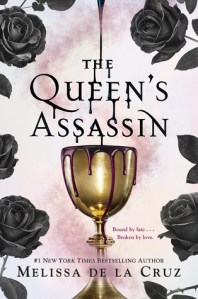
39334176._sy475_Book: “The Queen’s Assassin” by Melissa de la Cruz

Publishing Info: G. P. Putnam’s Sons, February 2020

Where Did I Get this Book: Edelweiss+

Book Description: Caledon Holt is the Kingdom of Renovia’s deadliest weapon. No one alive can best him in brawn or brains, which is why he’s the Guild’s most dangerous member and the Queen’s one and only assassin. He’s also bound to the Queen by an impossible vow–to find the missing Deian Scrolls, the fount of all magical history and knowledge, stolen years ago by a nefarious sect called the Aphrasians.

Shadow has been training all her life to follow in the footsteps of her mother and aunts–to become skilled enough to join the ranks of the Guild. Though magic has been forbidden since the Aphrasian uprising, Shadow has been learning to control her powers in secret, hoping that one day she’ll become an assassin as feared and revered as Caledon Holt.

When a surprise attack brings Shadow and Cal together, they’re forced to team up as assassin and apprentice to hunt down a new sinister threat to Renovia. But as Cal and Shadow grow closer, they’ll uncover a shocking web of lies and secrets that may destroy everything they hold dear. With war on the horizon and true love at risk, they’ll stop at nothing to protect each other and their kingdom in this stunning first novel in the Queen’s Secret series.

Review: Something, something, quippy and non-spoilery intro. *Sigh* But frankly, this book didn’t make any effort to be good or original, so why should I! Yes, holding myself to the standard of books that I hated is the writing goal I want to set for myself and this blog! This was a whim book request for me, even though the synopsis didn’t seem particularly inspiring. I’ve had some great results from reading random books I haven’t heard a bunch about before (see “The Bones Houses”), but it does seem that it really goes one of two ways: I’m either blown away, the surprise only adding to the fun, or I absolutely hate the book and wonder why I ever risk it. Obviously, this was the latter.

I’m not going to even bother re-summarzing this book. The book blurb does a decent enough job and as the story is so predictable, there’s nothing new I could add to my summary of the story that isn’t an out-right spoiler. So let’s jump right into it! Usually I would start with the things I liked, but I have to be honest, there was really nothing I liked about this book. Often, if I don’t like the story itself, the writing is still good. If the writing is bad, there’s a character I can enjoy. Not so, here. The best I can say was that perhaps this book missed a publishing window where it wouldn’t have been quite so bad. I still wouldn’t have enjoyed it, but perhaps some of its most trope-y plot points wouldn’t have felt quite so egregious had this been released five years ago. It sure does read like a book that has completely missed the fact that everything it is doing has been beaten into the ground already over the last several years of YA fantasy publishing. So, good points: maybe passable if existed in an alternate reality where it came out in 2015.

The plot is incredibly predictable. Read the summary again. Make a few predictions. Spoiler alert! They’re all right. The book takes itself way too seriously with these supposed surprises as well. When I wasn’t simply exhausted by the pretense of it all, I was flabbergasted that anyone, anywhere, would ever think that these “reveals” could be read in a serious light. Shadow’s (there you go, another thing to hate! That name…) entire history is obvious to any one who has even a passing familiarity with these stories. The one aspect of her tale that could even be a surprise didn’t work in the book’s favor as it then retroactively undermined much of Shadow’s own narration throughout the book. Her story is told in first person. There are certain rules to first person narration, and this “surprise” threw all those rules in a dumpster fire in pursuit of “surprises.”

Speaking of first person narration, the writing was fairly bad in this book. Mostly this was due to the choice to alternate POVs between Shadow and Caledon and, inexplicably, to switch between first and third person narration for these two characters. This type of switch is always jarring and rarely justifiable. The only books I can think of that pulled off something similar were N. K. Jemisin’s “Broken Earth” trilogy titles, and those books were award winners, so you know they’re already a rarity. The choice here is not only bizarre but exists for no clear reason. If the author can’t differentiate between these two characters’ voices without switching writing tenses, that speaks to a whole new problem. If it was meant to represent some greater distinction between these two, I couldn’t spot it. And in the end, all it did was interrupt any flow or rhythm that the story was trying to establish.

Even without this, the pace of this story was all over the place. In the first few chapters, a million things seemed to happen one after another, leaving the reader confused and unable to connect to anything of these events. Worst of all, Shadow’s motivations behind these actions were never clear or explained. She just did things, so that things would happen, so that she could react to those things. And then the story took a jarring halt for a good chunk, and then again with the manic pacing. This, finally, was unpredictable but in the worst way.

The romance was also cringe-worthy and full of unnecessary angst and drama. At one point, the two go undercover…as siblings. Why? Because now there can be all of this increased awkwardness when others discover them being romantic! Angst! Drama! The author’s fingerprints were all over this, and each smudgy, forced moment just made me, again, cringe. To offset this, for a book with the name “assassin” in the title, there are next to no actual assassinations. It’s just yet another example of playing to the supposed YA fantasy crowd. People like books with the word “queen” in the title. And they like assassins…so.

Like I said before, the best I can say for this book is that some of the surprises, had they come in a book published five to ten years ago, could  have maybe worked. But the poor writing with the swaps in tenses and fast/slow pacing would remain. The poor characterization would remain. The romance, such as it is, would remain. And you’d still have to take a character named “Shadow” (get it? cuz she wants to be an assassin?) seriously for an entire book. I really can’t recommend this book to anyone. The author has several other books, so perhaps her die-hard fans will enjoy this. But for everyone else, there are better things out there. My usual recommendation for those looking for a good assassination book is “Skullsworn” so check that out instead.

Rating 2: I didn’t like anything about this book. The characters and plot were tired re-hashes of things we’ve seen a million times before in YA fantasy fiction. And the writing was poor, to really put the last nail in the coffin (a coffin that was not necessary to the plot as, again, no assassinations.)

Reader’s Advisory:

This book isn’t good. You shouldn’t look for ones like it. But here’s a generic Goodreads list that it’s on: “Queen in Title.”

Find“The Queen’s Assassin” at your library using Worldcat! If you must…

Serena’s Review: “The Wolf of Oren-Yaro”

46207682Book: “The Wolf of Oren-Yaro” by K.S. Villoso
Publishing Info: Orbit, February 2020

Where Did I Get this Book: ARC from the publisher!

Book Description: “I murdered a man and made my husband leave the night before they crowned me.”

Born under the crumbling towers of Oren-yaro, Queen Talyien was the shining jewel and legacy of the bloody War of the Wolves that nearly tore her nation apart. Her upcoming marriage to the son of her father’s rival heralds peaceful days to come.

But his sudden departure before their reign begins fractures the kingdom beyond repair.

Years later, Talyien receives a message, urging her to attend a meeting across the sea. It’s meant to be an effort at reconciliation, but an assassination attempt leaves the queen stranded and desperate to survive in a dangerous land. With no idea who she can trust, she’s on her own as she struggles to fight her way home.

Review: I was sent an ARC of this book from the publisher. Having never heard of it, I kind of glanced at it and put it on the pile. But, after a few disappointing reads (ones that gave signs of being disappointments almost from the very first page), when I picked this one up, started reading, and looked up not long later having already somehow read ten chapters, I knew that I had finally found a read to break the spell. The rest of the book didn’t let me down!

Talyien has grown up knowing what it is to be immediately distrusted and disliked. Her father lead an unpopular revolt, and even though it ended with a marriage proposal between his daughter and the leading rival family’s son, Talyien’s people have walked a tight line ever since. When her husband of three years mysteriously walks out on the eve of the both his and her coronation, Talyien finds herself ruling alone, now disliked and distrusted more than ever. Now, years later, Queen Talyien hears from him once again, and all too soon she sees herself betrayed, cut off from all that is familiar, and left on her own to prove that she is the strong queen her father raised her to be.

The other day my husband and I happened to have a conversation about the differences between books written in third and first person. I was making the argument that first person often reads s younger, hence it often being found in YA novels. Since the narration is limited to only one point of view, the narrative has to work hard to draw in details with regards to scene and setting. The narrator is also unreliable to a certain extent as they are only able to speak to other characters’ thoughts and motivations through their own lens and perceptions. This leaves a lot of room in the narrative voice to focus on the internal emotions and thoughts of the main character, a strength in particular for YA protagonists and stories where these types of internal musings typically shine. For adult novels, these challenges and limitations are often enough to prompt many authors to stick to the more common third person perspective. All of that to say, this book was an excellent example of an adult fantasy novel turning all of the challenges of first person narration to its advantage.

Talyien has a very distinct voice right off the bat. It’s also made clear early in the book that we don’t know her entire history and that her views of those around her are formed from her own experience of the world. Her father’s history, her own experience as a disliked queen abandoned by her husband, all color her distrusting and stark outlook on humanity. At the same time, she’s incredibly brave, stubborn, and determined to do what she thinks is best for her son and her country. I’m hesitant nowadays to make “Game of Thrones” references, but in a lot of ways she reads the way I always imagined Daenerys to be. Talyien can be ruthless and goal-oriented, but, through the very personal nature of first person narration, we also see the vulnerability and self-doubt that continues to plague her. Plague her, but never stop her.

I really enjoyed the world-building in this story. It is a refreshing new world that is pulling from inspirations that are clearly no European. I’d be hesitant to place it anywhere specifically, as it is clearly a fantasy world, but details about the culture, food, and naming conventions all read as coming from Asian inspiration. I believe the author was born in the Philipines, so I imagine that was part of the backbone building up this world. Again, it is challenging to build a compelling and realistically detailed world through only the eyes of one main character who, in theory, would know much of these facts and have no reason to share them with a reader. But the narration is seamless, and as the story expanded, so did the world surrounding this story. The use of flashback also continued to add layers to our understanding of not only Talyien, but the complicated political history of her nation and its many clans.

The story doesn’t end on a cliff-hanger, per se, but all is definitely not well at the end of this book. We finally learn some of the secrets that Talyien has held so close to her chest throughout much of the book and these reveals explain much about not only her choices but her general views towards those around her and how she chooses to interact with them. There were definitely some unexpected twists to the story, and I was left not knowing how I felt about certain other characters. This speaks to the very fleshed out nature of even secondary characters. They all felt real, and real people aren’t simply good or bad.

I can’t wait to get to the next book in this series. Talyien is at a pretty low point and the stakes are incredibly high, not only for her nation, but on a very personal nature for her. Hopefully I can get my hands on the next book soon! I know the author self-published this one before Orbit picked it up, so I’m hoping they will be able to release the second one quickly! Fans looking for a refreshing new fantasy epic featuring a strong queen who doesn’t give a sheep what you think of her, this is the book for you!

Rating 8: Talyien is everything I want in my fantasy heroines and I can’t wait to see what she does next!

Reader’s Advisory: 

“The Wolf of Oren-Yaro” is on these Goodreads lists: “Upcoming 2020 SFF Books with Female Leads or Co-Leads” and “Asian-Authored Books in 2020.”

Find“The Wolf of Oren-Yaro” at your library using WorldCat!


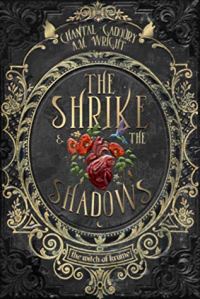
Serena’s Review: “The Shrike & the Shadows”

51012361._sx318_sy475_Book: “The Shrike & the Shadows” by Chantal Gadoury and A.M. Wright

Publishing Info: The Parliament House Press, March 2020

Where Did I Get this Book: NetGalley

Book Description: Men have gone missing before.

The village of Krume is plagued by a haunted wood and a hungry witch. It’s been that way for as long as Hans and Greta can remember, though they have never seen the witch themselves; no one has.

When men start to disappear once again in the cover of night – their bloody hearts turning up on doorsteps – the village falls into frenzied madness.

Hans and Greta, two outcast orphans, find themselves facing accusations of witchcraft and are met with an ultimatum: burn at the stake, or leave the village forever.

With nowhere else to go, they abandon their only home.

As they venture into the strange forest, their path is fraught with horrific creatures, wild and vivid hallucinations, and a mysterious man tied to the witch’s past.

The Shrike is watching, just beyond the deep darkness of the woods.

Review: A lot of fairytales have been retold a million different times in a million different ways. And I, being the sucker I am for fairytale retellings, am more than happy to read the millionth and one version of many of these popular tales. That said, it’s always particularly exciting when I see a new book coming out that it tackling one of the less popular story. I’m sure I’ve read a “Hansel and Gretel” story in the past, but I couldn’t think of one off the top of my head, so I immediately placed a request for this book. Unfortunately, this was not only a disappointment as far as new fairytale retellings go, but also, in my opinion, just not a very good book overall.

The village where Hans and Greta have grown up has long been haunted by an evil that claims the lives of its men, leaving their hearts on the doorsteps of the grieving families. It is under this constant threat that Greta and Hans have tried to make a life for themselves, praying each night that Hans won’t be next. But when they are driven out of the only home they’ve ever know, the two siblings find themselves alone in the very same forest in which lurks this evil force. Will they make it through this woods? And what waits on the other end?

I was really bummed to find that this book was such a miss for me. I seem to have had a recent run of either books I’ve really enjoyed or ones that have really, really not worked for me. I’m hesitant to make this comparison, but what first came to mind was that this book read like a bad fanfiction story. I say this having read and enjoyed a good amount of fanfiction, some of which with writing as good or better than many published novels I’ve read. So this is in no way a ding against fanfiction as a whole. That said, this book exemplifies several of the pitfalls that poor works of fanfiction have been known to fall into: lackluster world-building, washed out characters, and, unfortunately, over use of sex scenes and trauma, seemingly to make up for a lack of real story at its heart.

The world-building is lacking and transitions from scene to scene are awkward at best and nonexistent at worst. I’d have a hard time describing much of anything about the world in which this book takes place. In the beginning of the story we have a scene with Greta frantically searching for her brother. She runs around quite a bit, but I was completely unable to track her movements. She’s at one point in her cabin, then outside, then, I think, in a field. Shortly after that, she and Hans are in the village itself. This action takes place in the first few pages, but it is a perfect example of the lack of attention that went into setting the scenes for this story. There is no foundation upon which any of this happens, and the writing makes no effort to draw a picture in the reader’s mind.

The writing didn’t serve the story any better as far as the plot goes either. Early in the book there’s a scene depicting an attempted assault (this comes out of nowhere, by the way, and was jarring in and of itself). It’s a serious topic, but the way it is depicted is cartoonish in its villainy. The assaulter’s lines of dialogue were cringe-worthy, and the villain himself was made up of only the broadest strokes of stereotypes without any effort to delve into the seriousness of the real-life history behind the power imbalance that was being described. Again, this was only an early example, but this writing problem continued throughout.

Hans and Greta were also difficult to care about. While the writing seemed a bit better equipped to handle these two main characters, they still often felt flat at times. Hans, in particular, was very hard to sympathize with. Greta had the stronger moments of the two, but as the story was split between them, this wasn’t enough on its own to balance out Hans.

And then there’s the sex scenes. As I mentioned, there’s an attempted assault that comes out of nowhere within a few pages of the start of the book. There’s very little build up to this, and, overall, it doesn’t feel handled particularly well. I’m not in the camp that says every book that has scenes like this should have an overt trigger warning on the cover. Mostly this is because strong writing will build to an event of this nature in a way that allows readers time to decide whether to read the event or not. But with weaker writing, these scenes are a bit trickier. And from there, once our characters are in the woods, there are still numerous sex scenes. I enjoy romances here and there and am not a prude about scenes like this in my books. But the sheer volume of them was off-putting, not to mention the jarring juxtaposition of these scenes against the story’s effort to build up the horror and threat of their travels through the woods. Like I said, kind of like bad fanfiction.

I didn’t enjoy this book. I’m not familiar with either of these authors, so I’m not sure if this is indicative of either of their other works. But on its own, this wasn’t a strong story. I had a hard time connecting to the characters, and the world-building was so superficial that I couldn’t describe much of the book if you asked.

Rating 4: Very disappointing, “Hansel and Gretel” deserve better.

Reader’s Advisory: 

“The Shrike and the Shadows” is on this Goodreads list: “Parliament House Novels.”