My Year with Jane Austen: “Pride and Prejudice” Part I

1886._sy475_Book: “Pride and Prejudice”

Publication Year: 1813

Book Description: The romantic clash between the opinionated Elizabeth and her proud beau, Mr. Darcy, is a splendid performance of civilized sparring. And Jane Austen’s radiant wit sparkles as her characters dance a delicate quadrille of flirtation and intrigue, making this book the most superb comedy of manners of Regency England.

History – “I read it a little as duty, but it tells me nothing that does not either vex or weary me.”

 When “Pride and Prejudice” was first completed, Jane Austen’s father, believing it to be quality writing, submitted it for publication. It was rejected. Austen then moved on to writing “Sense and Sensibility” and self-publishing that title herself. After its success, she sold the copyright to “Pride and Prejudice” to a publisher who listed the title as by the author of “Sense and Sensibility.” Like that first novel, “Pride and Prejudice” was an immediate success, and the publisher ordered several reprints of the story after the first  run sold out. This, of course, resulted in the publisher profiting much more from this title than did Austen who only earned 110 pounds on the original copyright sale. Austen, however, was pleased with its success and especially with the critical praise that was garnered by her heroine, Elizabeth Bennet. (source)

“”I must confess that I think her [Elizabeth] as delightful a creature as ever appeared in print, & how I shall be able to tolerate those who do not like her at least, I do not know.” 

 —Jane Austen, letter to Cassandra Austen,  January 29, 1813

Part I – Chapters 1 – 34

Story – “The person, be it gentleman or lady, who has not pleasure in a good novel, must be intolerably stupid.”

We are first introduced to the Bennet family as we hear Mrs. Bennet share the exciting news that a wealthy gentleman has moved into the neighborhood. To her, this provides much hope that one of her five daughters might marry well, a necessity in a family that is by no means wealthy, has no sons, and whose estate is entailed away to a distant cousin. After teasing his wife and the sillier of his daughters, Mr. Bennet does visit Mr. Bingley.

The rest of the family then meets him at a ball. There, the eldest Miss Bennet, Jane, does in fact gain the attention of Mr. Bingley. But Elizabeth, the second oldest, gets spurned by the more rich but more proud Mr. Darcy, a friend of Bingley’s. Elizabeth finds this mostly amusing and is happy enough to see her sister be happy. As the weeks progress, they see more of Mr. Bingley and his snobby sisters. Jane is invited over for a dinner by the sisters, but comes down with a bad cold after her mother insists she ride in the rain (hoping for an outcome where Jane is forced to stay the night, though illness was not part of the plan.) Elizabeth goes to care for Jane and spends a good deal of time with the entire party. She draws more and more of Mr. Darcy’s attention (who, we learn, has begun to admire her fine eyes), but neither are particularly pleased by this fact. Jane recovers and the two go home.

The Bennet family is then visited by their cousin, Mr. Collins, who is in line to inherit their home. Mr. Collins is a silly, pompous man, much inclined to give nonsensical speeches and praise his wealthy patroness, Catherine de Bourgh. He also sets his eyes on marrying one of the Bennet sisters and decides on Elizabeth once he learns that Jane is out of the question due to her informal attachment to Mr. Bingley. The family also meet a new officer (a regiment of the army is stationed in the town nearby, much to the delight of the two youngest, and silliest, of the sisters), Mr. Wickham. In the process of making their first introductions, Mr. Darcy and Mr Bingley stop by. Elizabeth notes the cold meeting of Mr. Darcy and Mr. Wickham and privately wonders about it.

They are all charmed by Mr. Wickham’s easy nature and open temperament, but Elizabeth is the lucky woman who is singled out by him for more attention. In the course of an evening on their second meeting, he shares the shocking history between him and Mr. Darcy. The two grew up together, Wickham’s father being the late Mr. Darcy’s groundskeeper, and Mr. Darcy’s father was very attached to Wickham. So much so that he left a valuable estate to him on his death. But when the tragic event happened, the son refused to uphold his father’s will and Wickham was cast out into the world to fend for himself. Elizabeth is shocked that Darcy, whom before she had thought was only proud and rather rude, is as bad as this. She later retells the story to Jane who warns her about making quick judgments against either man.

Mr. Bingley hosts a grand ball at Netherfield, an event all of the Bennet sisters look forward to greatly. Once there, however, Elizabeth is disappointed to find that Wickham has decided not to come, not wanting to be near Mr. Darcy. Instead, she ends up having to dance first with Mr. Collins, and then, shockingly, with Mr. Darcy himself. The two have an awkward dance filled with alternating silences and conversation hidden with double meanings as Elizabeth tries to get to understand Darcy better. The evening is a disaster from there on out. Mary, the middle daughter, makes a poor display on the piano, followed by an even more awkward display by Mr. Bennet has he tries to get her off the piano. The two youngest flirt wildly with everyone in their path. Mr. Collins confronts Mr. Darcy without introduction having found out that Darcy is the nephew of Lady Catherine. And Mrs. Bennet loudly congratulates herself on what she suspects to be the likely marriage between Jane and Mr. Bingley.

The next morning Mr. Collins proposes to Elizabeth. She turns him down. And then has to keep turning him down for quite some time before being forced to just leave the room as he insists on not getting the point. But, to everyone’s amazement, his trip does not end with him returning home, still single, because he then proposes to Elizabeth’s dear friend, Charlotte, who, being in her late 20s and from a family without many prospects, agrees.

Around this same time, Jane receives the distressing news that Mr. Bingley and his entire party have removed themselves back to London. His sister, Caroline, even goes so far as to say that she and her sister are hoping for a quick engagement between Bingley and Mr. Darcy’s younger sister, Georgiana. Jane is distressed, but Elizabeth is quick to tell her that this is clearly a plot by the sisters and friend who never approved of Jane and Mr. Bingley’s attachment. But weeks go by with no news of their returning. Their Uncle and Aunt Gardner come to visit and Jane is asked to go back with them to London when they return home. All are hopeful that she will meet with Bingley again there.

Charlotte asks Elizabeth to come visit her in her new home with Mr. Collins. Elizabeth agrees, though not particularly looking forward to it. Once there, she gets to meet the famed Lady Catherine. She’s a overly proud woman who takes a great deal of interest making proclamations about even the smallest aspects of the Collins’ lives. While there, Mr. Darcy and his cousin Colonel Fiztwilliam come to visit their aunt. Charlotte notes that Mr. Darcy is making more of an effort to call on her family than usual and says it must be due to Elizabeth. Elizabeth scoffs at this idea, though she does wonder at the number of times she meets him while on walks around the park.

She finds Colonel Fitzwilliam to be a very charming man and gets along with him well. On one walk, Colonel Fitzwilliam share some details about how his cousin, Mr. Darcy, congratulates himself on recently saving his dear friend, Mr. Bingley, from a bad marriage. Elizabeth is furious and hurt that her sister’s happiness was ruined by his friend’s interference. Later, alone at the parsonage, Mr. Darcy arrives and unexpectedly proposes to Elizabeth. She refuses. The encounter ends with the two fighting. Elizabeth accuses Darcy of separating Jane and Bingley and also points to his dishonorable treatment of Mr. Wickham. Mr. Darcy makes more belittling comments about Elizabeth’s family and her situation saying that he was kinder to Bingley than to himself in preventing his friend from a connection so beneath himself. He is shocked by the accusations about Wickham but doesn’t directly refute them. He leaves and Elizabeth remains behind, stewing.

Heroines – “I hate to hear you talk about all women as if they were fine ladies instead of rational creatures.”

I think it can be reasonably assumed that Elizabeth is one of the most beloved heroines to ever be penned. Her character is one that could be appreciated in the time she was written but who also appeals to modern readers who can be put off a bit by the more reserved leading ladies of books written at a similar time. She handles a lot of uncomfortable situations in a way that I think most of wish we could, with a smirk, a witty reply, and the ability to say what she thinks without offending others. She’s romantic, wishing to marry for love, but also the most practical of her sisters, being much more cynical than Jane. She’s also flawed. But unlike Emma, the other famously flawed Austen heroine, Elizabeth’s flaws are of the sort that many of us can sympathize with, especially her own lack of awareness that she even possesses this flaw. For the most part, she’s clear-eyed and an excellent judge of character. So it’s easy for her to then slip into a judgement of someone and not question or challenge her own thoughts further. It’s not until the second half of the book that she has to confront this challenge, but I think this self-reflection and learned self-awareness is still very appealing to modern readers. That, and, as I’ll go into later, she has the best lines, especially when arguing.

Jane is our other heroine. She’s an interesting character, really. Elizabeth clearly respects Jane, and Jane is spoken about as being of good sense and rationality. But she pairs these traits with an almost aggressive level of optimism that leaves her almost paralyzed in the face of the evils of the world. And yet Elizabeth, and the reader by proxy, never judges her as foolish. Yes, she’s wrong about Caroline. Yes, when she tries to make both Darcy and Wickham into good guys somehow it’s fairly silly. But she’s written so well that it all feels truly earnest; readers are left, like Elizabeth, wishing they could think so well of others as Jane does.

Heroes – “What are men to rocks and mountains?”

Our two heroes benefit greatly from the increased time with their respective heroines as well as the added scenes we have of them on their own. This does away with most of the problems that the heroes suffered from in “Sense and Sensibility.” While we don’t see a lot of Mr. Bingley and Jane’s actual romance, we do see enough of the two individually interacting with friends and family to easily understand their relationship. Indeed, I’m inclined to agree with Mr. Bennet’s assessment at the end of the book that, if anything, Jane and Mr. Bingley are almost too alike. It is nice to see so much of Bingley and through the more clear eyes of Elizabeth even. Her time at Netherfield cements readers understanding that Bingley deserves all the credit he gets as a charming, good natured gentleman. Even in the face of his sisters’ poor manners and Mr. Darcy’s standoffishness, Bingley holds true as an excellent host and the only one among them to truly behave well under the circumstances.

And, of course, we see much of Darcy as well, both the good and the bad. In the beginning of the book there’s no denying that he could use some improvement. Even if he has always behaved properly (in his dealings with Georgiana and to gain the respect and friendship of a man like Bingley), he is still fairly lacking. His open rudeness to Elizabeth at their first meaning and general aloofness at his surroundings makes him deserving of the early poor reputation he has in the neighborhood (even if Wickham’s contributions to it aren’t true). And we see even further with his snobby comments after the fact when he willing plays along with Caroline’s game of mocking everyone around her, including Elizabeth.

Knowing what we do about his growing interest in Elizabeth, it’s easier to see his actions through a lens of expressing interest. His attentions at Rosings in particular stand out. But, without that inner knowledge, it’s also very easy to see Elizabeth’s side of things. Even without Wickham’s lies, she’s right about his actions with Jane and at best, he’s taken an interest in her to debate points and to sit in silence. Maybe a big concession from his standpoint, but not so for any reasonable woman.

Villains – “I do not want people to be very agreeable, as it saves me the trouble of liking them a great deal.” 

Since at this point in the story Wickham’s version of his history with Darcy is all we have, we’re left in the awkward position where we at best have no real villain and at worst…maybe the villain is Darcy himself? Obviously even the most oblivious reader sees the writing on the wall about Darcy and the inevitable revelation that he is the true hero of the story and the bogus tale Wickham put out there is just that, bogus. But that fact aside, we’re left with a lot of comedic characters who maybe dabble in wrong-doings but mostly get into trouble more due to buffoonery than any actual ill intent. Mr. Darcy, on the other hand, outright admits to separating Jane and Bingley. Which, again, at this point in the story, is the only real, known, and accepted by the perpetrator himself, wrongdoing we have! We get a better understanding of his reasoning in the letter to come in the second half, but by the end of the book Mr. Darcy still reflects back on his actions with regards to this pair as in the wrong.

Caroline, of course, is the other more true villain. She was complicit in convincing Bingley that Jane didn’t care for him. The text never states this, but one would suspect their her view of this matter might have held even more weigh than Darcy’s. She’s a woman (assumed to be more knowledgeable in matters of the heart, whether true or not) and is still considered to be a dear friend of Jane. Of course she should have knowledge of Jane’s inner heart, and if she  says Jane doesn’t care, it’s pretty understandable that Mr. Bingley would believe her. And, unlike Jane, we see Caroline’s behind-the-scenes cruel commentary about her friend and her friend’s family, especially Elizabeth.

This, truly, is a testament to the wrongness of Darcy’s pride in action, that he tolerates and even agrees with some of Caroline’s early snobbery. By the end of the book, Darcy tells Elizabeth that he had been left to follow the good morals he’d been raised with in pride and conceit and would have still been like that if not for her. More so than even Elizabeth saw, we, the readers see this to be true in the change of his private behavior from a man who criticized Jane for “smiling too much” to the one who welcomes the Gardners to his home and shuts down Caroline when she tries to start up the “Elizabeth isn’t all that much” speech again.

But for much of this half of the book, Caroline and Darcy are on the same side of many matters and work together to quell Jane and Mr. Bingley’s burgeoning love affair. Caroline’s treatment of Jane in London is also a good example of why she deserves to be solidly in this category. The reader, however, like Elizabeth, is almost gratified that at least Jane won’t be duped any more as Caroline has now so thoroughly shown her true colors.

Romance – “A lady’s imagination is very rapid: it jumps from admiration to love, from love to matrimony in a moment.”

The most interesting commentary on romance in this first half is the ongoing disagreement between Elizabeth and Charlotte on how to go about courtship and what to expect from matrimony. Charlotte, early in Jane and Bingley’s romance, comments to Elizabeth that Jane should show more affection than she feels to ensure a quick engagement.  Elizabeth laughs at this idea, but later Charlotte puts her own words in action, agreeing to marry Mr. Collins, who she knows to be foolish, after only a few days acquaintance. While Elizabeth is quick to come down harshly against this action, Jane herself weighs in on the argument that different temperments and circumstances will call to different actions. While it is clear that Austen is writing true romances where love is of course necessary for her main protagonists, Jane’s argument here, and even Elizabeth later acceptance of Charlotte’s situation, are nice balances to these lucky few women. Many women of the time would have made a similar choice to Charlotte and, in many ways, her was the more practical and realistic option. We can’t all wait around for handsome, kind, 10,000 pounds a year men to come around! Austen carries this point further in Mansfield Park where we see the other, more unfortunate, side of the “marry for love” choice in Fanny’s mother’s situation.

But, of course, the main romance is between Elizabeth and Darcy. One of the major differences that stood out to me in this re-read, especially reading this one directly after “Sense and Sensibility” is how important are the scenes we witness of Darcy that Elizabeth isn’t privy to. Not only are readers aware of his admiration the entire time, in general, we get a much better understanding of him as a character than we did the romantic leads in the previous book. And there are simply more scenes between Elizabeth and Darcy than we had there, too. We witness scenes of their verbal sparring which reinforce the idea that Darcy would naturally be attracted to her lively nature. There is also Caroline Bingley lingering about as a perfect contrast to Elizabeth.

The failed proposal scene has to be one of my favorite scenes in literature. It’s just so painfully perfect! Darcy’s terrible original attempt, his slow slip into shocked bewilderment at the realization that he’s being turned down, and the sharp anger when the accusations start flying. And Elizabeth’s righteousness and masterclass put-downs are priceless. But what makes it a perfect fight is that in between the honest anger and words, we clearly can identify the moments when each goes overboard in their anger and just gets mean. It’s a point in fighting that almost everyone is familiar with and everything about this scene reads so true to life.

Comedy – “For what do we live, but to make sport for our neighbors, and laugh at them in our turn?”

There are so many great comedic characters in this book! I mean, other than the four characters from the two couples, almost everyone else in this first half play for laughs at one point or another. But there are two that always come up when talking about this book and for good reason: Mrs. Bennet and Mr. Collins.

There has been a more sympathetic eye turned towards Mrs. Bennet recently, given the very real uncertainties and struggles of the future should Mr. Bennet die and none of the daughters be married well. It would definitely be hard, and the girls’ future is largely left to Mrs. Bennet to worry about. This is the kind of thing that would almost always fall on the mother anyways, and Mr. Bennet is particularly unsuited to be of help, what with his general lack of concern regarding what he largely sees as frivolities.

But in many ways this is similar to the circumstances of Mrs. Dashwood and her daughters. But there, while Mrs. Dashwood could be sentimental and romantic to the extreme, she didn’t materially damage the very goal she had in mind. Mr. Darcy’s letter in the second half of the book will lay this out more clearly, but it doesn’t take an astute reader to pick up on the fact that Mrs. Bennet’s nonsense would have a impact on potential suitors wishing to pursue her daughters. Not only would they have to look forward to a future of her as a mother-in-law, but many would likely assume the daughters to be the same and not bother getting to no them further and discovering that the eldest two, at least, have seemed to escape this familial trait.

All of this to say, while I do have some sympathy for Mrs. Bennet, I think she is pretty firmly written as a ridiculous person, a detriment to her daughters, and a character that is not meant to be largely felt for by the reader. One can both be in a bad situation and also make that bad situation worse, and that’s Mrs. Bennet. But with all the seriousness of the situation aside, she’s great fun to read about. Her inconsistencies (particularly with her quick about-face with regards to Darcy’s handsomeness), her nerves, her crowing over her neighbors. Good stuff all.

And, of course, Mr. Collins. No attempt here to redeem him as he just gets worse in the second half of the book. His humor is tinged with a greater feeling of awkwardness and embarrassment. Reading over some of his interactions with others, I almost felt my own discomfort for what Elizabeth and Jane must have felt. Secondary embarrassment for a fictional character! But, again, it’s the proposals where Austen shines in this book. His “wooing” of Elizabeth is the best/worst. There is a very fine line here that is walked perfectly: his buffoonery and pompousness are at a peak, but it’s also still believable enough that a man like him could exist. And, of course, Elizabeth once again shines in her repeated refusals. This scene in particular is almost impossible for me to read now without picturing the 1995 movie version of it. Spoilers: I loved that movie (but doesn’t every Austen fan??).

Favorite quotes – “What did she say? Just what she ought, of course. A lady always does.”

A decent number of the quotes I use in my section titles come from this book, so there’s that. And one cannot write a “Pride and Prejudice” review with a “favorite quotes” section and not highlight one of the most famous opening lines in all of literature:

“It is a truth universally acknowledged, that a single man in possession of a good fortune, must be in want of a wife.”

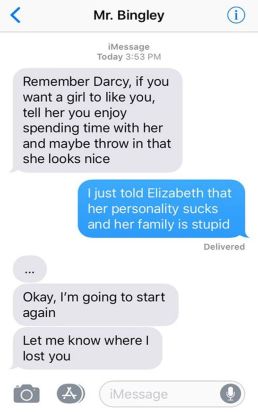
And, if he had left it at this, perhaps…

“You must allow me to tell you how ardently I admire and love you.”

But I always like this meme with regards to Darcy’s first proposal:
453f066eb2029f85d54e9316be261504

In two weeks, I’ll review the last half of “Pride and Prejudice” and share my final thoughts on the book as a whole.
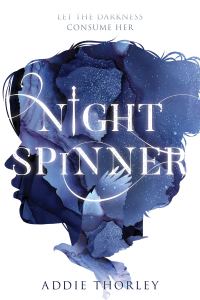
Serena’s Review: “Night Spinner”

45046766Book: “Night Spinner” by Addie Thorley

Publication Info: Page Street Kids, February 2020

Where Did I Get this Book: Edelweiss+

Book Description: Before the massacre at Nariin, Enebish was one of the greatest warriors in the Sky King’s Imperial Army: a rare and dangerous Night Spinner, blessed with the ability to control the threads of darkness. Now, she is known as Enebish the Destroyer―a monster and murderer, banished to a monastery for losing control of her power and annihilating a merchant caravan.

Guilt stricken and scarred, Enebish tries to be grateful for her sanctuary, until her adoptive sister, Imperial Army commander Ghoa, returns from the war front with a tantalizing offer. If Enebish can capture the notorious criminal, Temujin, whose band of rebels has been seizing army supply wagons, not only will her crimes be pardoned, she will be reinstated as a warrior.

Enebish eagerly accepts. But as she hunts Temujin across the tundra, she discovers the tides of war have shifted, and the supplies he’s stealing are the only thing keeping thousands of shepherds from starving. Torn between duty and conscience, Enebish must decide whether to put her trust in the charismatic rebel or her beloved sister. No matter who she chooses, an even greater enemy is advancing, ready to bring the empire to its knees.

Review: Another beautiful cover! It seems like I’m a broken record recently in my praise of the cover art of my books, but it’s also just true that many of them have been extraordinary! It’s nice to see original cover art that properly reflects the book itself rather than trying to brazenly mimic other successful titles in an attempt to trick readers into picking books up. I mean, I get it, publishing is a business and all of that. But a beautiful cover will do the job just as well, as many readers, myself included, will pick up titles like this because the cover is lovely and unique. The book was also marketed at a retelling of “The Hunchback of Notre Dame.” And because I can’t even really picture what that looks like, this was an immediate request for me!

Enebish’s life is now one of seclusion and repression, a far fall from a few years ago when she had been on the cusp of becoming a great warrior and great leader for her people. But when a horrific accident occurs, killing many and crippling Enebish, her life takes a drastic turn, leaving her hated and feared by those who used to respect her. But, after years of hiding from her own powers and ignoring the temptations of the night, she is finally given a path forward to redeem herself. As she chases down a notorious criminal, however, she learns that there are many secrets in the night, not least of all her own.

While this book wasn’t the home run I’d been hoping for, there was still a lot I ended up liking about it. For one thing (and in my book, most importantly), Enebish was an excellent character. While some of her secrets and the reveals she discovers throughout the book were easy to guess, her own process of exploring these new insights was always sympathetic and relatable. As the story progresses, we see more and more clearly that her physical injuries are not nearly as crippling as her fear. Fear of her past, fear of the judgement of others, and, of course, fear of herself.

I was also a fan of the writing style and world-building. It was the kind of book that I was able to immediately sink into. Writing is always one of the hardest aspects of a book to review because what makes one author’s style work and another’s struggle can be both very subjective to the reader as well as almost impossible to pinpoint with specifics. I can usually tell within the first few chapters of a book whether the writing is going to click for me, and right off the bat, this one did. The world-building was also interesting, and I was able to easily picture the various locations that Enebish travels to.

The romance is definitely on the slow-burn side and there were hints of a love triangle at points. Luckily, the story didn’t commit fully to said triangle and the romance itself was very sweet, what little we had of it.

My struggles had to do with the length/pacing of the story, as well as the comparison to ” The Hunchback of Notre Dame.” To the latter point, I found this expectation more distracting than anything. I can see the base elements for why this was referenced in the blurb, but frankly, in the first half of the book I spent way too much time comparing characters and events to that story and not enough appreciating the book before me. I think, as a whole, the comparison is too weak to add anything to the story and is likely to prove more distracting to readers. I recommend trying to put that thought out of your head immediately to better enjoy the book. The middle of the story also lagged a bit, and, overall, I think the book was a bit longer than what was necessary. As the writing and characters were strong, these were minor concerns, but still worth noting.

Overall, I thought this was a really interesting read. I’m not biting at the bit to get to the second one, but it laid down a decent foundation for the plot going forward, and I’m fairly invested in Enebish herself. If you’re looking for an original fantasy novel this spring, this might be one worth checking out!

Rating 7: A bit longer than was necessary, but a compelling lead character and interesting magic system pulled this one into the “win” column.

Reader’s Advisory:

“Night Spinner” is a new book, so it isn’t on many relevant Goodreads lists. But it is on “Profiles in Silhouette.”

Find “Night Spinner” at your library using WorldCat!


Serena’s Review: “The Queen of Raiders”

45046587Book: “The Queen of Raiders” by Sarah Kozloff
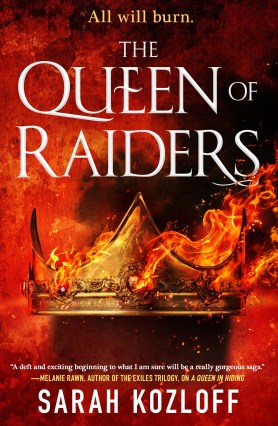
Publishing Info: Tor Books, February 2020

Where Did I Get this Book: from the publisher!

Book Description: The soliders of Oromondo have invaded the Free States, leaving a wake of misery and death. Thalen, a young scholar, survives and gathers a small cadre of guerilla fighters for a one-way mission into the heart of an enemy land.

Unconsciously guided by the elemental Spirits of Ennea Mon, Cerulia is drawn to the Land of the Fire Mountains to join Thelan’s Raiders, where she will learn the price of war.

Previously Reviewed: “A Queen in Hiding” 

Review: It’s really fun being able to review an entire series like this, one book a month for four months to the series’ conclusion. It makes the whole process so much less painfully unsure. I can read this book, confident that any questions I still have or tension points that are left hanging will be followed up on in only 30 short days! (Well, less, because the publisher was kind enough to send ARCs.) But! Even the public has a very short wait between books, and for a fantasy series that started off as well as this one did, that’s something, indeed!

Cerulia, or Wren as we now know her, is still a queen without a home. Her quest back to her throne is by no means clear, but she is determined to find her way. In many ways, she is still learning the ins and outs of her Talent and is still coming to know her own strengths and weakness as a leader. In this book, her story converges with that of Thalen and his raiders who continue to work towards their own political goals.

This is definitely a complicated political fantasy novel. I’m in the midst of reading another book like this right now. It, too, is the second book in a series. But unlike this one, the first book came out a year ago. It took me quite a while to re-orient myself to the various players, the known (and unknown) alliances, the character motivations, etc. All this on top of the secrets and reveals that were still coming out in the book. It was a lot. This is one of the biggest strengths of releasing a series like this one after another. It’s a decision that may work better or worse for various types of books, but I think Tor picked the best option right of the gate choosing this series to release this way. All of these intricate moving pieces are a lot to keep in mind, but having the books come out one right after another allowed me to jump right into this book with very little adjustment needed.

We get most of the same POV characters that we had before, but between keeping up with Cerulia and Thalen, we also see behind enemy lines into the maneuverings of Lord Matwyck who is currently serving as Lord Regent. Through his son’s eyes, we see the corruption at the heart of Matwyck regime and the priority he places on his own power above that of the country he is meant to care for. I still continue to enjoy Thalen and Cerulia/Wren/Kestrel’s journey. It was fun trying to anticipate how their choices and actions would affect other aspects of the story, and it was great watching some storylines begin to converge (always a point of excitement for books with large ensemble casts like this).

I liked the detailed look into the effects of warfare on an entire region, not only the country first immediately targeted by an army itself. The book explores how war is a long-term disaster, one that doesn’t wrap up neatly or quickly, but instead spreads out with ripple effects touching far and wide. We also look into what rebellion looks like, both on the macro and micro level, from the organized actions of a group of raiders to the personal choices of those with varying levels of influence and power.

My one criticism of the book is one that I had in the first book, as well, and it has carried over here, too. For me, there is something a bit stilted about the writing style of the story. I think part of this is simply word choice and sentence construction. She has a very frank, and to the point, way of writing. But while this leaves a lot of room for detail, it also makes it hard to become emotionally invested in what is going on. The other part comes down to editing: a good editor could potentially identify parts of the story that could be trimmed down, giving the pacing a boost that I think it could use at times.

Overall, I continue to enjoy this series and am excited to get started on the third book in the series! I’ll have a giveaway for that title and my review coming out in March! In the mean time, don’t forget to enter the current giveaway to win a paperback copy of “The Queen of Raiders!”

Rating 7: The short wait time definitely plays in this series’ favor as the author only presses down harder on the complicated-political-fantasy gas pedal in this second novel.

Reader’s Advisory:

“The Queen of Raiders” is a new book, so it isn’t on many Goodreads lists, but it is on “Upcoming 2020 SFF with female leads or co-leads.”

Find “The Queen of Raiders” at your library using WorldCat!


Giveaway: “The Queen of Raiders”

45046587Book: “The Queen of Raiders” by Sarah Kozloff

Publishing Info: Tor Books, February 2020

Where Did I Get this Book: from the publisher!

Book Description: The soldiers of Oromondo have invaded the Free States, leaving a wake of misery and death. Thalen, a young scholar, survives and gathers a small cadre of guerrilla fighters for a one-way mission into the heart of an enemy land.

Unconsciously guided by the elemental Spirits of Ennea Mon, Cerulia is drawn to the Land of the Fire Mountains to join Thelan’s Raiders, where she will learn the price of war.

Previously Reviewed: “A Queen in Hiding”

Giveaway Details: In partnership with the publisher, I’m happy to be able to offer an ongoing giveaway for each book in this series as they come out! As I mentioned in my review of “A Queen in Hiding,” I was drawn to check out these books not only because of  the intriguing book description but because of the publisher’s initiative “binge-style” approach to publishing: releasing all four books over the course of four months. What a novel approach! Think of it, being an epic fantasy fan and not only not having to secretly wonder whether your favorite series will ever be finished at all, but knowing that you’ll be able to get your hands on the next book in only one short month! Short enough that many readers might even struggle to keep up with publishing rate! An unheard thing for most of us fantasy fans who are used to grueling waits.

So, if you’ve already gotten through the first book in the series, don’t miss your opportunity to win a finished copy of the second! And don’t forget to check back in March and April for giveaways of the third and fourth books, too! The giveaway is open to U.S. residents only and ends on February 26.

Enter to win!

My Year with Jane Austen: “Sense and Sensibility” [2008]

250px-s26s_dvd_cover_2008Movie: “Sense and Sensibility”

Release Year: 2008

Actors: Elinor Dashwood – Hattie Morahan

Marianne Dashwood – Charity Wakefield

Colonel Brandon – David Morrissey

Edward Ferrars – Dan Stevens

Comparison – “Indulge your imagination in every possible flight.”

The biggest difference between this movie and the 1995 version is the added length. It has at least an hour of extra running time which allows the story to both add in scenes and characters that were cut from the book as well as create some unique scenes that, for the most part, do enhance the story. That said, there were also a few mishaps in these added scenes and in the characterization of Willoughby. But overall, I think it did more right than wrong, in this aspect. Watching the two adaptations back-to-back was an entertaining process. It was clear that as much as this story was attempting to be faithful to the novel and be its own thing, the 1995 version was too beloved to completely ignore. There were several scenes or character beats that were clear mirrors to similar ones in the older movie, like some of the early scenes with Edward, Margaret, and Elinor in the library. It wasn’t a scene in the book, so it was a clear nod to the earlier, beloved movie.

I’ll go into more detail below, but I think I liked both actresses in both movies about equally. But the heroes are more split. I preferred Dan Stevens’ Edward here much more than Hugh Grant’s take on the character. Some of this is due to my own dislike of Hugh Grant, but some of it is also simply due to the choices that were made with the character here. Colonel Brandon is a tougher call. I think Alan Rickman’s is probably better, but the added time, again, does a lot for the character here and David Morrissey is still a good fit.

I really liked the use of the dramatic scenery in this movie. There are several moments when nature itself is used to highlight or mirror the internal emotions of the characters. The waves crashing, the driving rain, even the quiet of a seaside cave. It was all beautiful, and paired with a lovely score, the overall tone of the story felt perfect.

I’ve definitely watched this version more than the 1995 version. As I said in that review, I had almost forgotten how much I liked it and will likely increase my re-watching of it in the future. However, I think this one will likely to continue to beat it out overall, if only because, being longer, there’s just so much more of it to enjoy.

Heroines – “I hate to hear you talk about all women as if they were fine ladies instead of rational creatures.”

Both actresses are superb in their roles. They also both bring very different vibes to the characters than Emma Thompson and Kate Winslet did to theirs in the 1995 version. Morahan’s Elinor feels a bit more in line with the character, perhaps. Emma Thompson was almost a bit too perfect, making Elinor, a character who already walks the line of being unbelievable in her perfection, stand out even more above those around her. The solemnity of Morahan’s Elinor is combated by her wide-eyed bewilderment and innocence to the failings of many of those surrounding her. Wakefield leaned in strongly to the lively aspect of Marianne’s character. Due to the increased run time, more of the original lines from Marianne that highlight some of her more extreme romanticisms were included which helped flesh out her character here. Winslet’s version was a bit more refined, I think, but both are enjoyable. I’d have a hard time picking favorites between the four versions and can only really say that I enjoyed them all thoroughly in the adaptations they were in.

The longer running time was also nice in that it gave the story more room to focus on the the small moments in the Dashwoods family. We see a lot of added scenes with Elinor and Marianne, Elinor and Mrs. Dashwood, and even Mrs. Dashwood and Margaret. The movie was very successful in making the viewer feel that this was a real family with real relationships between them that were just as important, if not more so, than the romantic ones that are developing before us.

Heroes – “What are men to rocks and mountains?”

Like the 1995 adaptation, we see the most changes to the original text with how the heroes are depicted. Edward is given many more actual scenes interacting with Elinor in the beginning of the story, and, due to the increased length of this adaptation, we gain back a few scenes with him that were cut in the 1995 version, such as his visit to the Dashwoods about halfway through the story. I particularly liked this inclusion again as it helped keep Edward in the front of the mind (in the 1995 version he kind of fades into the background, making his reappearance towards the end of the movie a bit jarring). It also allowed for an additional small moment where we see him working off his feelings while cutting wood for the Dashwoods. He comments about how little help they have at the cottage and cuts himself off from saying more, though it is clear to the viewer that he is thinking about what he could do for them if he was free to marry as he wishes. I think it works really well as a wholly original added segment, giving viewers a better peak into Edward’s current mindset.

Colonel Brandon, too, benefits from the added time. We see more moments between him and Sir John while they’re hunting, a nice insight into Brandon’s friendship with characters who, on the surface, it would seem are not the type to attract his attention. The movie also adds back in the duel with Willoughby and a few added scenes between these two characters. Unlike the Edward moment, I’m not sure if these added scenes worked as well. I’ll go into more about the Willoughby/Brandon problems below, but even the duel was a bit strange. It seemed out-of-step with the rest of the movie and a Jane Austen story as a whole, feeling too dramatic and too unecessary. Nothing is actually resolved from this duel, it’s never mentioned again, and it doesn’t provide any insights into either character, except, perhaps, lowering Brandon to the level of petty dueling which feels amateurish and boorish and more inline with Willoughby than Brandon overall.

Villains – “I do not want people to be very agreeable, as it saves me the trouble of liking them a great deal.” 

One of my biggest criticisms of this adaption is the character of Willoughby. There are several things working against it for me, but two really stand-out: the choice of actor and several added scenes to the script. As I have more conflicted feelings about the latter choice, I’ll begin with the first. Dominic Cooper is routinely type cast as villainous characters. He’s not super well-known, of course, but for anyone who is familiar with him, it’s an instant giveaway for Willoughby’s being bad. He’s also type cast this way for obvious reasons, he’s simply excellent at being sleazy! So much so, however, that it’s almost impossible to buy his love for Marianne as being anything other than nefarious. This, in turn, makes her own blindness towards him (as well as her mother’s and Elinor’s as well) harder to understand and sympathize with. In the 1995 version of it, it’s easy to see the appeal of Willoughby, and Winslet’s Marianne is blithely shrouded in easy-to-understand youthful naivety.

What’s more, the script makes no effort to keep Willoughby’s villainy a secret. The movie actually opens with the scene of his seduction of Brandon’s ward and her abandonment. Cooper’s face isn’t shown, but he does speak, so careful listeners are immediately alerted when he later shows up. The creator mentioned that this scene was added because they felt that the seduction of Brandon’s ward, a truly awful act, is often easily skipped over, both by book readers and viewers of the 1995 movie. But, while I do think this concern has merit, particularly where the book is involved, it does hurt the movie as far as Willoughby himself. This problem is only compounded when only shortly after meeting Willoughby, the movie adds a scene between him and Brandon in which Brandon asks what his intentions are. Willoughby is shady, Brandon is honorable, it’s all fairly easy to put together.

This movie does include the scene where Willoughby shows up during Marianne’s illness to explain his side of things. But, by token of highlighting the true villainy of his previous acts, the movie undercuts the sincerity of feelings that Willoughby expresses for Marianne. In the book, it’s easier to discern the grey areas in which Willoughby exists and that his decisions are ones that will truly haunt him with the loss of Marianne. Here, you’re too busy disliking him to care about any true regret he may have.

Romance – “A lady’s imagination is very rapid: it jumps from admiration to love, from love to matrimony in a moment.”

Like the 1995 movie, this version also flip flops the order of marriage proposals for Marianne and Elinor. It, too, recognizes the greater investment that the viewer likely has in Elinor’s relationship, thus using her happily ever after as the grand finale of the movie. While we don’t have Emma Thompson’s flamboyant crying, Morahan’s break down and frantic cleaning is perfect for the, up to this point, put together Elinor. I also liked how they showed the different circumstances of Marianne and Elinor once they’re married, with Marianne being romantically swept off her feet into a grand house and Elinor and Edward sharing a small domestic moment, laughing together as he chases chickens around their yard. It’s a nice coda to the different versions of love that they both have always aspired to. I also like how it helps highlight that while Marianne’s first choice wasn’t right and some of her extreme sensibilities were taken too far, she’s not “bad” or “wrong” for wanting the typical, romantic ending with the fancy house and grand husband.

This version also, like that earlier movie, makes more effort to show the growing love of Marianne for Brandon, unlike the book with its quasi “love will come with time but I kind of owe him this” approach. There are only a few short scenes, but they are compelling and classically romantic, highlighting the natural fit of Marianne and Brandon.

Comedy – “For what do we live, but to make sport for our neighbors, and laugh at them in our turn?”

Since this version is so much longer, there was a lot of leeway to add back in characters who were missing in the 1995 version. This includes several characters who played pretty much solely for comedic purposes, like Lady Middleton and the elder Miss Steele. Miss Steele, similarly to her character in the book, has a bigger presence than Lady Middleton, who by definition is bland and uninteresting, and I was glad to see the character return. This also returns the story to the original version where she, not Lucy, is the one to reveal Edward and Lucy’s engagement. As vindicating as it was to see Lucy slapped down in the 1995 one, it did stretch the bounds of the imagination to think she’d be so taken in as to reveal a secret that she felt was important enough to have kept for 5 years prior. Her older sister, perfectly primed as a rather thoughtless blabber mouth, always made more sense, and it plays perfectly here.

While perhaps not “comedic,” I also enjoyed the extended scenes we get with their older brother, Mr. Dashwood. Mark Gastiss, who I knew of mostly from his role as Mycroft in “Sherlock,” is excellent in the role. He’s almost pitiable in how completely ruled he is by his wife, with his every small, good intention being quickly squashed by her.

Fun facts – “Life seems but a quick succession of busy nothings.”

Hattie Morahan and Dan Stevens appear together in “Beauty and the Beast” with him as the handsome prince/Beast (Edward is supposed to be plainish, so we can all agree that the “Beauty and the Beast” casting was better suited to Stevens’s natural good looks than Edward) and she as the Enchantress.

I knew of Dan Stevens first from “Downton Abbey,” so seeing him as a romantic hero was easy enough. David Morrissey, however, was more familiar as the Governor on “The Walking Dead,” so that was a bit of an adjustment. He also reportedly questioned whether another Jane Austen adaptation was necessary, but eventually signed on once he saw how much more action the men were given. Glad he came around, because he does an excellent Brandon here, a tough job after the superb Alan Rickman’s take on the character. But he shall never live down questioning the necessity of another adaptation!

There are a bunch of period costumes that are used repeatedly in Jane Austen adaptions. The actors, of course, are fun to spot popping up in various things, as I mentioned in the 1995 movie review. The re-used houses and locations are the next step of fandom obsession. But costume spotting between adaptations is truly where you know that you’ve arrived at perhaps an unhealthy state of re-watching. There were a bunch in this one, but the dress I did notice was a dotted dress that Marianne wore in this movie that Winslet’s Marianne wore as well in the 1995 movie. Apparently it’s also seen in “Mansfield Park” and “Persuasion,” so I’ll look for it there, too, when I get to those.

Best Movie Gif/Meme: “I dearly love a laugh.”

The script writer, Andrew Davies, is well-know for his work with many other Austen adaptations. In an interview, he mentioned that he felt pressure to do for “Sense and Sensibility” what he did for the 1995 “Pride and Prejudice,” which is commonly seen as the best adaptation of that work even today, going on 30 years later. To that purpose, he created this scene of Edward chopping wood in the rain in a flimsy white shirt to mirror the iconic scene where Colin Firth parades around in a similarly see-through shirt after jumping in a lake.

In two weeks, we jump into our next novel, the first half of “Pride and Prejudice!”

Serena’s Review: “Age of Death”

30613608._sy475_Book: “Age of Death” by Michael J. Sullivan

Publishing Info: Riyria Enterprises LLC, February 2020

Where Did I Get this Book: e-ARC

Book Description: Winter blankets the land, and more than just hope has died. Prevented from invading the Fhrey homeland by the tower of Avempartha, the western army seeks a way across the Nidwalden River before the fane obtains the secret of dragons. As time runs out for both humanity and the mystic Suri, the only chance for the living rests with the dead. Having made their fateful choice, can a handful of misfits do the impossible, or are they forever lost to an inescapable grave? Do gods truly exist? Is it possible to know the future? And what lies beyond the veil of death? In the tradition of Virgil’s Aeneid, Dante’s Divine Comedy, and Milton’s Paradise Lost, the most epic of tales transcend the world of the living. It’s time to see what lies in Elan’s Age of Death.

Previously Reviewed: “Age of Myth” , “Age of Swords”, “Age of War” and “Age of Legend”

Review: Sullivan is not only an established fantasy author, but I have to think he’s one of the most successful as a self-published author. Not only did he start out his career that way and manage to break into the major league standard publishing circuit, he also has now managed to go back to self-publishing and break all kinds of Kickstarter records for books. It also works well for his fans, as I, like many others, was able to get my hands on an early ebook copy. Kind of important after that cliffhanger in the last one! Alas, a cliffhanger was here too (warning!), but, a Kickstarter campaign starts up again shortly, so my wait time is again cut down. Thank god! All of that is neither here nor there to my overall review of the book, but it’s a kind of neat unique trait of these books that I like to highlight. But, the long and the short of it: per the usual for this series, I had a great time reading this book and am now hanging on hooks waiting for the grand finale!

The last book ended with our grand party sinking to their “death” in a disgusting bog, hoping to journey through the land of the dead to the realm of the Fhrey where their dear friend and most powerful ally, Suri, is being held captive. This book picks up immediately from there as our party begins to make their way through the various lands of the dead, meeting up with old friends and new foes along the way. Suri, on the other hand, is caught up in the political maneuverings of the power that be among the Fhrey people, trying to determine friend from foe while protecting the deadly secret of dragon-making, the only advantage the human army has had on their side during this decade-long war.

As this is the fifth book in the series, the characters are all pretty well-established. Aside from a one or two new character that we meet in the underworld, we spend most of our time with these familiar faces. Of course, the challenges they face in the underworld bring new elements of their characters to light, but for the most part, they are all largely as we have come to expect. Of them all, I seem to be enjoying Moya more and more. In this book we see her face some incredibly hard decisions and losses. But the characters who saw the most growth were the two that have walked the line of villainy to some extent to this point, who both feel that they may deserve to be in some of the deeper levels of this underworld.

As far as the underworld itself went, I enjoyed the version we were given here. There were elements of it that were fairly predictable, the groundwork being laid early in the story and predictably coming to fruition later. However, I didn’t feel that this detracted much from the story. There were a couple of character introduced here that did take me completely by surprise, however, and it was exciting to finally see them on the page given how often they had been referenced in other books.

My biggest struggle with this book, however, was the pacing. All of the books are clearly part of six part, epic series, so none of them can truly be read as standalones. That said, they all felt like they had clear beginnings and endings with at least one character seeming to experience an entire arch through the one book. Even the last with its massive cliffhanger felt fairly complete on its own. Here, however, it’s like we were given the Moria scene from “Lord of the Rings”…and that’s it. Nothing before and nothing after. There’s another cliffhanger, yes, but I went in expecting that. It’s more that the story as a whole didn’t really feel like its own thing in its own right. More than any of the others, this one felt like a chunk that had been removed from a larger book and then made its own book. Like it could have been the “Part II” of a bigger book. Again, this wasn’t a game changer or anything, but it did stick out more in this book than in others.

Per the usual now, I really enjoyed this book. On its own, I probably enjoyed it less than others just because it didn’t really feel like a complete book so much as a long section of the previous book and, likely, the last book combined. I also missed not seeing as much of Persephone. But I’m excited for the direction the story is taking with Suri and the Fhrey and, of course, the cliffhanger leaves a lot of tension built up that can’t be resolved quickly enough. Fans of the series so far will be both satisfied with this one and left in a similar position as before: impatient for the next (and last!) book to come!

Rating 8: Gearing up for the final book, this fun fantasy adventure struggles to hold its own as a complete work, but rocks as the next step in the whole.

Reader’s Advisory:

“Age of Death” is a newer title so it isn’t on many Goodreads lists, but it is on “Adult Sci-Fi/Fantasy Releases of 2020.”

Find “Age of Death” at your library using Worldcat!


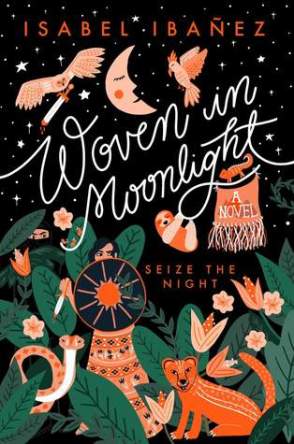
Serena’s Review: “Woven in Moonlight”

40877706._sy475_Book: “Woven in Moonlight” by Isabel Ibnez
Publishing Info: Page Street Books, January 2020

Where Did I Get this Book: BookishFirst

Book Description: Ximena is the decoy Condesa, a stand-in for the last remaining Illustrian royal. Her people lost everything when the usurper, Atoc, used an ancient relic to summon ghosts and drive the Illustrians from La Ciudad. Now Ximena’s motivated by her insatiable thirst for revenge, and her rare ability to spin thread from moonlight.

When Atoc demands the real Condesa’s hand in marriage, it’s Ximena’s duty to go in her stead. She relishes the chance, as Illustrian spies have reported that Atoc’s no longer carrying his deadly relic. If Ximena can find it, she can return the true aristócrata to their rightful place.

She hunts for the relic, using her weaving ability to hide messages in tapestries for the resistance. But when a masked vigilante, a warm-hearted princess, and a thoughtful healer challenge Ximena, her mission becomes more complicated. There could be a way to overthrow the usurper without starting another war, but only if Ximena turns her back on revenge—and her Condesa.

Review: This book was a no-brainer for me to request. I mean, look at that gorgeous cover? I’m not sure I can remember a book with a cover like that; it immediately stands out and I’m sure the book will benefit from many a spur-of-the-moment pick-up while on the shelves at stores. The book description itself was also incredibly unique-sounding and dealing with a people, place, and culture that I am only passingly familiar. In many ways, the cover and description reminded me greatly of “Gods of Jade and Shadow” which I read last summer and loved. Unfortunately, this comparison didn’t hold true in the actual reading experience…

Ximena has lived most of her life pretending to be someone else, a queen, the Condesa. But mostly a queen under siege: managing dwindling supplies, sending out scouting parties, and dreaming of one day returning her people to their homeland and the city that is now occupied by the cruel king Atoc. Now, with a demanded-marriage between the two leaders of these divided peoples, Ximena has the greatest of all performances before her. She must marry the usurper and serve as an embedded spy, searching for that crack that can benefit her people and her sister-friend, the true Condesa.

Even typing up that description makes me excited about the story this could have been. Yet, alas, could have been, but wasn’t. This is one of those strange books where I question whether I read the same story others read. Currently, it’s rated over 4 on Goodreads, so many people are loving it. Perhaps I can see elements of what all of these other readers are latching on to, but it all seems like too little, too familiar, and too inexplicable to really earn those 4 stars.

The biggest strength this book has going for it is the unique setting, the unique culture (what little we really get of it), and the descriptions of Ximena’s weavings. There are some truly lovely depictions of these detailed creations, and having a mother who is an avid weaver, I could see the magic in her abilities here, even without the actual magic involved. What descriptions we received of the countryside and the city itself were intriguing, but this is also where the bare minimums began to show. I had just enough to form loose images, but I have to admit that many of these were probably drawing from stereotypical images of South American culture (there isn’t even such a thing, hence the extreme stereotype of my mental images that were just drawing from random images from other books and movies set in South American countries). I wish there had been a more detailed look into the daily life of the people, a clearer image drawn of their lives and the world they lived in. Half of the reason I picked up this book was because of the uniqueness to be had here. Finally not another European fantasy novel! But then it felt like the author only went halfway, and I was left wanting.

From the “too little” we move to the “too familiar.” Most of this plot will read as incredibly predictable to anyone who reads a lot of YA fantasy. I could quickly guess who El Lobo was as well as predict several of the other major plot points of the story. Perhaps for readers who aren’t as well versed in current YA fantasy tropes this would read better. Or even age it down to middle grade readers who simply haven’t had the time to build up these stores of memory that make stories like this feel rote and tired. There’s nothing inherently wrong with it; I’ve just read it too many times before. And when the surprise has been taken out of most of the twists, there’s not a lot of drive behind speeding through the rest of the story.

And lastly, the “too inexplicable.” I really struggled with Ximena herself. The love story was, again, predictable. And she kept referring to said characters as “the boy” which I just found cringe-worthy. I get that typing out “young man” seems kind of silly and obviously “guy” is anachronistic and has its own issues. But given the situation we’re meant to be in (she’s there to marry a king), I think we can just stick with “man” and be done with it. Regardless of age, this is an adult situation, and she’s been an adult for many years, making decisions as a ruler and now serving as a spy meant to marry the enemy. Referring to someone as “a boy” can only be a demeaning comment in these circumstances. But she uses it as a bland, seemingly objective description, and it bothered the heck out of me. If he’s “a boy,” he’s a kid and my mind will neatly file him away in the “non-love-interest” section.

Beyond that small nit-pick that I blew out of proportion with my own annoyance, it was hard to understand Ximena. We’re meant to believe that she’s been training, and acting, as the Condesa for almost all of her grown life. Not only would the real Condesa have to be well-versed in self-control, cool thinking, and precise speaking/acting, someone who grew up to serve as a decoy in this role would have to be all of that twice over. But Ximena routinely and regularly loses all self-control. It’s hard to believe that she wasn’t immediately seen through. Or, if not that, it would seem that all respect would be quickly lost for “the Condesa” as a leader since she can’t stop behaving like a rash, easily provoked youth. Ximena spends way too much time caught up in her own personal angst and far too little behaving as a true Condesa would. Sure, she always comments after the fact on how that was really “un-Condesa-like,” but that doesn’t do away with the fact that had she been trained to do this her entire life, there should be nowhere near as many outbursts as there are in the first place.

A book is always going to be a hard sell for me if I can’t connect with the POV character. I found Ximena unbelievable at best and incredibly annoying at worst. From there, the predictable story just lowered it further. I’m really sad that this wasn’t a great read for me. So many people are enjoying it, and I really wish I had read whatever book they’re loving so much. There are many great elements of this story, particularly with the snippets of the world, culture, and history we get. Unfortunately, there’s not enough of any of those things to counteract the weak main character and tired story. But, like I said, lots of people are liking it, so if you’re looking for an ownvoice, Latinx story, it might still be worth a shot.

I didn’t love this one, but a lot of people do. So I’d like to share it with someone who will appreciate it more than I was able. If this sounds like something you would enjoy, make sure to enter the giveaway for a hardback copy!

Rating 6: A really confusing read where I’m not sure what I’m missing that so many other people are loving.

Reader’s Advisory:

“Woven in Moonlight” is on these Goodreads lists: “Latina Leads in YA and Middle Grade Fiction” and “Upcoming 2020 SFF Books with Female Leads or Co-Leads.”

Find“Woven in Moonlight” in your library using WorldCat!

Giveaway: “Woven in Moonlight”

40877706._sy475_Book: “Woven in Moonlight” by Isabel Ibnez

Publishing Info: Page Street Books, January 2020

Where Did I Get this Book: BookishFirst

Book Description: Ximena is the decoy Condesa, a stand-in for the last remaining Illustrian royal. Her people lost everything when the usurper, Atoc, used an ancient relic to summon ghosts and drive the Illustrians from La Ciudad. Now Ximena’s motivated by her insatiable thirst for revenge, and her rare ability to spin thread from moonlight.

When Atoc demands the real Condesa’s hand in marriage, it’s Ximena’s duty to go in her stead. She relishes the chance, as Illustrian spies have reported that Atoc’s no longer carrying his deadly relic. If Ximena can find it, she can return the true aristócrata to their rightful place.

She hunts for the relic, using her weaving ability to hide messages in tapestries for the resistance. But when a masked vigilante, a warm-hearted princess, and a thoughtful healer challenge Ximena, her mission becomes more complicated. There could be a way to overthrow the usurper without starting another war, but only if Ximena turns her back on revenge—and her Condesa.

Giveaway Details: Though it did take me until February to get around to it, I was excited enough about this book to include it as one of the three titles I was most looking forward to in January. And now the time has come! My full review comes up on Friday, so I won’t go into any spoilers as to my opinions here.

I will say that the concept is an intriguing one, intertwining a unique magic system with the political upheaval and history of Bolivia. It’s an ownvoices work, so the author brings much vibrancy to her story and world. And here, the cover artist really upped the ante creating a cover image that perfectly communicates the heart of the story and is sure to draw readers in. I know it worked well on me!

It’s always great to see young adult fantasy escape from the often overwhelming European-centered stories that are everywhere. And this one presents an area of the world and history that I’m sure many readers are only passably familiar with. For myself, I knew very little and, while this book is still clearly fictional and, you know, magic, it did inspire me to do some research of my own into the country’s history.

So, for those of you who still haven’t gotten around to this book, or for those of you who have already read it and loved it (according to Goodreads, there are many of you!), here’s your chance to get your hands on a hardback copy! The giveaway is open to U.S. residents only and closes on February 12.

Enter now!

My Year with Jane Austen: “Sense and Sensibility” [1995]

mv5bnzk1mju3mdqyml5bml5banbnxkftztcwnjc1otm2mq4040._v1_ux182_cr00182268_al_Movie: “Sense and Sensibility”

Release Year: 1995

Actors: Elinor Dashwood – Emma Thompson

Marianne Dashwood – Kate Winslet

Colonel Brandon – Alan Rickman

Edward Ferrars – Hugh Grant

Comparison – “Indulge your imagination in every possible flight.”

At two hours and 20 minutes, this was definitely a longer film for what was the norm in the 90s, though even that required a lot of adjustments of the original text. Quite a few characters are cut out, as well as several scenes throughout the story. It doesn’t exactly make the case that there were superfluous characters in the book, but I will say that other than some of the humor from the elder Miss Steele (who is cut in the movie), I never really missed any of the characters who were removed. The small changes made to the order of reveals (Brandon’s history comes out much sooner) and the cut scenes towards the middle and the end all feel natural and smooth. This is truly the test of a good adaptation, and this movie passes with flying colors. The heart of the story remains true even when drastically shortened.

Beyond the cuts to scenes and characters, the screenplay works hard to give its heroes a bit more to do, particularly Edward who barely speaks in the first half of the book. We see a lot of scenes with him bonding with Margaret and through this attention gaining notice by Elinor. There’s also an interesting addition here where Elinor responds to Edward’s complaints about not having an occupation that even his situation is better than what women have: no chance of even having an occupation so without income, they have very few options. It’s only a brief scene, but it does shine an important light on the differences between their situations.

Overall, it seems that this movie was quite well-received, both critically and by audiences. Alan Rickman, in particular, is still pointed to as the quintessential Colonel Brandon, and I think many Austen fans file this movie in the positive category of adaptations. I hadn’t re-watched it for quite some time, but now that I’ve been reminded just how good it is, I’m sure it will not be nearly as long before I pull it out once again.

Heroines – “I hate to hear you talk about all women as if they were fine ladies instead of rational creatures.”

Emma Thompson is a treasure. There is no denying this one universal truth. With regards to her casting, I would say that she reads as a bit older than what the book Elinor was supposed to be (around 19 or 20, I believe). However, in some ways, this older version of Elinor fits even better with the character we are given. The age difference being greater between Elinor and Marianne both makes Elinor’s own perfection when dealing with family trials more believable, but also makes Marianne’s youthful naivety and foolishness seem more in line with the silliness of younger person, leaving her basic sense and intelligence intact with the thought that she, like most, only needed to age out of the follies of youth.

The movie also made a few early efforts to give Elinor opportunities to show emotion which I think also helped translate her character better. In the very beginning of the movie, Edward comes across her silently crying as she watches Marianne play a sad piano piece, knowing that it will be one of the last times Marianne will have a chance to play. Towards the middle of the movie, she also shows more emotion when revealing her prior knowledge of Lucy and Edward’s engagement to Marianne.

Kate Winslet does well with Marianne’s character. Her hair is atrocious, but we can forgive her for that, I guess. She plays Marianne’s love affair with Willoughby with a lovely sense of naive innocence and shines in many of the scenes with him early in the movie. As the movie cuts out some things in the second half of the story, she fades largely into the background during the second hour. Though the scene when she looks down upon Willoughby’s home while standing in the raging storm has all of the classic tragic romance once could possibly want.

Heroes – “What are men to rocks and mountains?”

Seeming to recognize the want of action given to the heroes in the book, it is clear early on that the movie is trying very hard to give the audience opportunities to connect with our leading men during the few chances they get. Edward has a lot more screen time during his initial visit to the Dashwood family home, going on horse back rides with Elinor, playing swords with Margaret, etc. Hugh Grant does a good job lending his typical affable charm to the character and playing up the humorous side of the script. I’ve never loved Hugh Grant as an actor, but there’s no denying how charismatic he is and he makes Edward immediately appealing. Which makes it all the more weird when Edward disappears for a large chunk of time only to reappear briefly to deal with the Lucy situation, disappear again, and then show up for 5 minutes to reuinite with Elinor. The seriousness of the Lucy situation also makes for an awkward transition from funny, charming Edward to morose, gloomy Edward. Grant clearly does better with the former.

Ah, Alan Rickman. Another actor, like Thompson, who will always be a treasure. He is perfectly cast as Colonel Brandon, I think most people agree. The book itself gave more opportunities for Colonel Brandon to shine than Edward, and the movie follows this. Unlike Edward, his presence is more steady throughout and his characterization seems to flow more naturally. The movie also lets us in on his past much earlier in the story, with Mrs. Jennings revealing much of his past to Elinor even before Willoughby arrives on the scene. With this knowledge in advance, it’s easy to connect with Rickman’s serious, but endearingly earnest, take on Colonel Brandon. His romantic actions during Marianne’s illness also play directly to his strengths, rounding out the almost gothic romance of that entire scene.

Villains – “I do not want people to be very agreeable, as it saves me the trouble of liking them a great deal.” 

Greg Wise is a convincing Willoughby. He has enough of a good-natured face that viewers immediately want to like him, an important aspect of the character to more fully sympathize with one of our heroines being so taken in. He also does a good job with the scene in which he leaves Marianne behind and the one where he meets her again at the ball. In the former, he really sells the idea that it is a torment for him and that he truly feels the loss of his connection with Marianne and the family (even if we later learn it is of his own deciding). And at the ball, he still seems affected, but has a good sense of coldness to his demeaner. The movie, however, omits his later visit while Marianne is sick, so all of the coldness of his letter is left as is and not revealed to have been dictated to him by a cruel fiance/wife. Instead, all of Willoughby’s history is delivered by Colonel Brandon, and we are never given Willoughby’s version of events from his own mouth. This seems like a worthwhile cut, in my opinion, as that scene in the book did little to change my feelings towards Willoughby. And as far as the movie is concerned, there is no reason to attempt to redeem him after the fact.

Imogen Stubbs’ Lucy Steele is particularly slimy feeling. From the very first, the actress manages to instill a certain look into Lucy’s eyes that immediately triggers suspicion to the viewers. This suspicion is, of course, immediately gratified by her revealing her history to Elinor. The movie cuts out her older sister, so instead we see Lucy herself revealing her history to Mrs. John Dashwood. What follows, Mrs. John Dashwood physically attacking her, plays for great comedic value and also as a satisfying moment for the viewers themselves.

Romance – “A lady’s imagination is very rapid: it jumps from admiration to love, from love to matrimony in a moment.”

The movie does hard work to try to up the ante for the romance in this story. As I mentioned in my review of the book, there is really very little there. Like I said above in the heroes section, they gave Edward a lot more time in the beginning of the movie to show his growing attachment to Elinor and general character as a whole. This does a lot of good work making their relationship one that viewers become invested in. The movie also adds a scene in the first act where we see Edward begin a confusing conversation with Elinor about his early education that later pays off when we discover his relationship with Lucy and can connect it back to Edward’s attempts to let Elinor know what his hold up is. But, again, there’s no escaping his total absence for much of the rest of the movie. The story also cuts out his visit to the cottage, which is probably for the best, but this choice also just expounds the problem of his dropping off entirely for much of the movie. By the time we get to the romantic conclusion, I, for one, felt more joy in Elinor finally being rewarded just in general than in any real investment in the relationship as a whole.

Colonel Brandon still comes out as the more romantic of the two. Though here, even the movie struggles to really develop a relationship between its two “lovers.” The early scenes between Marianne and Colonel Brandon are barely worth mentioning. We see them playing yard bowling, but never really hear them even talk to each other. But through Rickman’s superb acting and the fact that many of his scenes are with the equally superb Thompson, it’s still easy for viewers to become invested in at least his side of the romance. They add to the ending for Marianne and Brandon as well, since the verging on “marry with the expectation of love to come later” theme of the book for these two wouldn’t work well with modern audiences who want their fairytale ending. So, instead, we get nice scenes of Brandon reading poetry to Marianne quietly as she recovers.

Comedy – “For what do we live, but to make sport for our neighbors, and laugh at them in our turn?”

They cut out several of the comedic characters, like the elder Miss Steele. But, of course, Mrs. Jennings and Sir John are left intact, re-imagined as living together after Mrs. Jenning’s daughter, Sir John’s wife, died. The actors play off each other very well and the other characters are barely missed.

Hugh Laurie, bizarrely, shows up as the grumpy Mr. Palmer. Just another example of the fact that if you watch enough Jane Austen adaptations and Harry Potter, you’re almost sure to run into every famous British actor we know from the last 30 years or so. His Mr. Palmer is just as surly as ever, but he does bring a more sympathetic turn to the character when he expresses worry for Marianne and regret in his family needing to essentially abandon them when they move due to a concern for their young baby.

Fun facts – “Life seems but a quick succession of busy nothings.”

Emma Thompson was nominated for “Best Actress” for this movie and won for “Best Adapted Screenplay.” I believe she is the only actor to be nominated for two categories like this in one film?

The movie ends with a double wedding, a change from the book in which the two sisters marry several months apart. But, the fun fact of it all, is that the scene itself is very like that of the ending of the BBC “Pride and Prejudice” which also features a double wedding for two sisters and also came out in 1995. Collusion? Coincidence? You decide!

Gemma Jones, who plays Mrs. Dashwood, will next appear in this re-read as another famous Austen mother: Mrs. Jones (Bennett) in “Bridget Jones’s Diary.” She will be joined by fellow cast mate, Hugh Grant, who plays the Wickham character in that adaptation.

Greg Wise and Emma Thompson are married. Wise was told by a palm reader, or some such thing, that he would have a love connection with someone in the movie. He went on a date with Winslet, the only single person at the time, but it wasn’t a match. Later, he and Thompson, who got along well on set, married after she split from the cheating Kenneth Branagh (who cheats on Emma Thompson!? A question we all asked of Alan Rickman’s character in “Love, Actually.” If you’re not careful, the recurring cast members in these films can feel a bit inbred when you start putting them all together…).

Best Movie Gif/Meme: “I dearly love a laugh.”

This is a blatant abuse of category creation purely for self-indulgence.

Image result for sense and sensibility 1995 gif

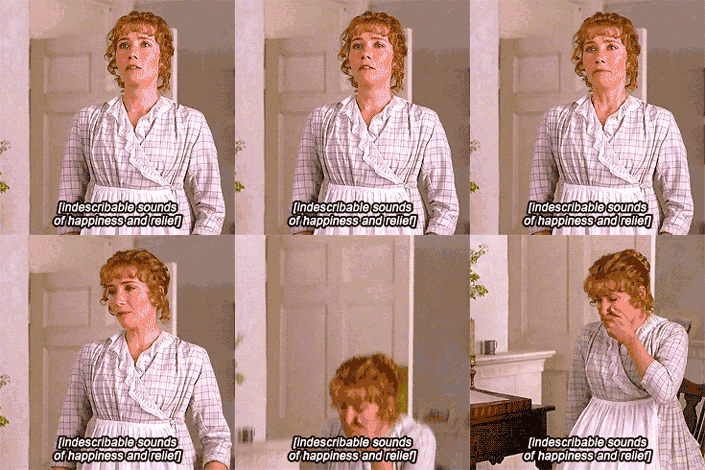
My best friend in college and I had a running joke/list of the most ridiculous crying scenes in movies, and the performance given by Thompson when Elinor discovers that Edward isn’t married was always at the top of this list. This is not to say that the scene is poorly acted, just that, for a crying scene, it’s definitely not subtle.

In two weeks, I’ll review the much longer 2008  version of “Sense and Sensibility.”

Serena’s Review: “City of Stone and Silence”

34640582._sy475_Book: “City of Stone and Silence” by Django Wexler

Publishing Info: Tor Teen, January 2020

Where Did I Get this Book: NetGalley

Book Description: After surviving the Vile Rot, Isoka, Meroe, and the rest of Soliton’s crew finally arrive at Soliton’s mysterious destination, the Harbor―a city of great stone ziggurats, enshrouded in a ghostly veil of Eddica magic. And they’re not alone.

Royalty, monks, and madmen live in a precarious balance, and by night take shelter from monstrous living corpses. None know how to leave the Harbor, but if Isoka can’t find a way to capture Soliton and return it to the Emperor’s spymaster before a year is up, her sister’s Tori’s life will be forfeit.

But there’s more to Tori’s life back in Kahnzoka than the comfortable luxury Isoka intended for her. By night, she visits the lower wards, risking danger to help run a sanctuary for mage-bloods fleeing the Emperor’s iron fist. When she discovers that Isoka is missing, her search takes her deep in the mires of intrigue and revolution. And she has her own secret―the power of Kindre, the Well of Mind, which can bend others to its will. Though she’s spent her life denying this brutal magic, Tori will use whatever means she has to with Isoka’s fate on the line…

Review: After blowing through the first book in this trilogy in about two days, I immediately nabbed a copy from NetGalley. What a joy to find a new series that you absolutely love and have the second book come out the very month you finish the first! While I think the first book stills ranks ahead of this, I was quite pleased with the direction the series seems to be headed in and the surprises that were in store here!

It seems that the ghost ship, Soliton, has finally reached its port. But answers here are as illusive as they were on the mysterious ship. In a land riddled with the walking dead, Isoka must untangle the complicated history of the ship and its makers if she has any hope of returning to her beloved sister, Tori. Back in her home city, Tori has been getting out and about much more than Isoka knew or would have wanted. She spends much of this time volunteering at a hospital for the poor, but her own street instincts have not been lost or forgotten either. With her eyes constantly on an exit strategy, Tori has been carefully cultivating her own connections. But when the city begins to teeter on the bring of revolt, Tori finds herself thrust into the spotlight in a way that may expose secrets that she’s kept even from her own sister.

The introduction of Tori was quite the shift for this book, with the chapters now alternating between the two sisters and their experiences. I enjoyed the addition of this new character quite a lot, though I will also admit that Isoka was still by far my favorite character and I found her story here the more intriguing of the two. But it’s a brave choice to make, and I think it was pulled off well. Tori’s story lays a lot of groundwork for the final confrontation in the third book and brings some complicated themes into a story that, before, was pretty solidly a fun adventure fantasy.

Isoka is still as brilliant as ever. Brave, straight-forward, but with a hard shell that she is only beginning to shed. In the first book we saw her confront her own ability to care for others, both in the immediate and personal, as well as in the whole, as she leads the other Soliton residents to the last remaining safe space on the ship. In this book, she confronts the challenge of lasting leadership when the goal is not so obvious or so black and white in what needs to be done to achieve it. More than anything, she learns what it means to trust others to help her. She’s just the sort of prickly, gruff, super competent hero I like.

The mystery of the port of Soliton is also incredibly intriguing. In the first book, we really only scraped the surface of the ghost ship, knowing just enough to know that we didn’t know anything. This book takes that one ship and now explodes it out to an entire lost city with mysteries that reach back thousands of years. There are answers here to more than just the strange ship and its solitary mission to collected young people with access to magical Wells. There were a lot a lot of legitimately creepy elements. The crabs from the first book read like the type of exciting monsters that one finds in Japanese monster flicks. But here an element of horror is painted over top it all. And I’ll just say this…dinosaurs. Take from that what you will.

As I said above, while I still enjoyed the adventure of Isoka’s story and her own character arc best, Tori was overall an excellent addition. It becomes clear early on that Tori’s own experiences of life on the street were not so effectively wiped away as Isoka had hoped. But, being a very different girl than Isoka with very different gifts, Tori has taken her own route in building up a life for herself, one that is still always prepared for the worst. Through her story, we get a much deeper look into the geo-political state of the Empire Isoka left behind. And the story of growing unrest, a tipping point, and the uprising of the common people against an Empire that has pushed too far is very compelling.

Tori’s own role in this revolution was a very interesting contrast to Isoka. Both have been thrust into leadership roles that they feel ill equipped to manage. Both have incredible power that others can both admire and fear (though Tori’s is kept under wraps from those around her for much of the book). The classic “with great power come great responsibility” motif is explored thoroughly from both angles. But the book takes an interesting approach to the idea. The power itself isn’t in question, it’s more what does responsibility actually look like when one has power? The story explores how power can bring out both the best and worst of people. And that similar experiences of having power, and more importantly here, responsibility thrust upon a person can have very different outcomes, depending on the person. Power alone does not good or evil make.

Overall, I thoroughly enjoyed this sequel. Tori was a fantastic addition, adding new themes into the story as well as creating more shades of grey to the ones already being covered. The world-building and magical history seemed to multiply in this book, and what had been contained to a strange ship, expands out to provide insights into the entire world and magical system itself. And, of course, I love Isoka. I have no filter for this type of powerful, yet emotionally walled off, heroines it seems. If you enjoyed the first book, be ready to kick into the next gear!

Rating 8: A fantastic second outing that highlights the author’s meticulous story-telling techniques, leaving so many goodies and reveals for the second book that one can only wonder at what will come in the third!

Reader’s Advisory:

“City of Stone and Silence” is a newer title so it isn’t on many relevant Goodreads lists, but it is on “Can’t Wait Sci-Fi/Fantasy of 2020.”

Find “City of Stone and Silence” at your library using WorldCat!