Kate’s Review: “Highway of Tears”

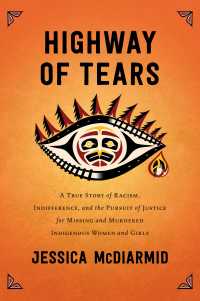
40538634Book: “Highway of Tears: A True Story of Racism, Indifference, and the Pursuit of Justice for Missing and Murdered Indigenous Women and Girls” by Jessica McDiarmid

Publishing Info: Atria Books, November 2019

Where Did I Get This Book: I received an eARC from NetGalley.

Book Description: In the vein of the astonishing and eye-opening bestsellers I’ll Be Gone in the Dark and The Line Becomes a River, this stunning work of investigative journalism follows a series of unsolved disappearances and murders of Indigenous women in rural British Columbia.

Along northern Canada’s Highway 16, a yellow billboard reads GIRLS, DON’T HITCHHIKE. KILLER ON THE LOOSE. The highway is a 450-mile stretch of dirt and asphalt, surrounded by rugged wilderness and snowy mountain peaks. It is known as the Highway of Tears. It is here that at least twenty women and girls—most of them Indigenous—have vanished since 1969.

Highway of Tears explores the true story of what has happened along this troubled road. Journalist Jessica McDiarmid reassembles the lives of the victims—who they were, where they came from, who loved them, and what led them to the highway—and takes us into their families’ determined fight for the truth. The book also indicts the initial police investigation marred by incompetence and systemic racism, even as it shines a light on a larger phenomenon: more than a thousand missing and murdered indigenous women across Canada, a topic brought to international attention when Canadian Prime Minister Justin Trudeau opened an official inquiry into the case.

Combining hard-hitting reporting with a keen, human eye, Highway of Tears is a penetrating look at decades’ worth of tragedy and the fight to honor the victims by preserving their stories and providing them the justice they deserve.

Review: Thanks to NetGalley for sending me an eARC of this book!

I’m a true crime aficionado to the bone, and I have been for as long as I can remember. But I do recognize that there are problematic issues within this genre that should definitely be acknowledged and worked on. One of those issues is that the stories that usually get paid the most attention to involve pretty white women victims, and other victims, especially POC, are not as widely acknowledged. One of the most egregious examples of this is the case of the Highway of Tears in British Columbia, Canada. Highway 16 is a highway that runs a number of miles, and a number of Indigenous women have either disappeared altogether near it, or have been found murdered in the vicinity. Almost all of the cases have gone cold and unsolved, and the victims have been deprived of justice. In “Highway of Tears”, Jessica McDiarmid jumps into a deep and emotional investigation of the crimes, but also of the stories of the women who have been victimized and cast aside, and the life that they were leading before. And boy oh boy, this is one of the most emotionally wrenching true crime books I’ve ever read.

The most important aspect of this book I mentioned above. McDiarmid is very conscientious to give backgrounds and back stories to a large number of the victims, whose disappearances and murders have been happening since the 1970s and up through today. Instead of just being a number of names and a group of lumped in all together, as if their violent ends were their only defining traits, we get comprehensive stories about the various lives that these women led, and the people who were left behind to mourn their loss. I had known about the story of Alberta Williams because of the podcast “Missing and Murdered”, but as each profile and backstory was explored my heart grew heavier and heavier. She makes all of them personalized individuals, and by seeing the trauma that some experienced in life and all of their families experienced in death just shows how unjust it is that not only did they meet these horrible ends, but they haven’t gotten answers or justice.

McDiarmid doesn’t pull any punches when she talks about how the victimization of these women, and in turn their families, is a direct result of a racist system that doesn’t value these women because of their race, their place in society, and their gender. She also does a very good job of showing how the system perpetuates multiple social injustices towards the First Nations population, and how in turn these injustices create an environment where this kind of victimization is far more prevalent compared to other populations in Canada. She also pulls in colonial practices throughout Canadian history, and the direct line that these practices have to modern fallouts for Indigenous groups. From residential schools to alcoholism to poverty to many more, McDiarmid makes it VERY clear that many of these practices have consequences that are still felt today. And on top of all of that, she juxtaposes the differences in approach, attention, and outcomes between the Indigenous women who are missing and murdered, and a few cases where the victims are white women. Suffice to say, Missing White Woman Syndrome plays a huge role, and while the missing and murdered Indigenous women fade into the background, white women get lots of media attention, and lots of resources are poured into the investigations surrounding them. It’s all very upsetting, but all too true.

On top of all of this, McDiarmid has a writing style that will suck you in, and will set the scene so that you feel like you are there. I had a very hard time putting this book down, even though the topic was very upsetting and hard to read about. But McDiarmid insists that you do so, because the story is far too important and has gone unacknowledged by too many for too long. I want this to become the next “I’ll Be Gone In The Dark”. I want this to be read and I want these womens’ stories to be heard and I want them to be seen as who they were. There is no closure with this story. Justice hasn’t been served. But one can only hope that if more people learn about this and speak up, perhaps more will be done.

“Highway of Tears” is a must read. One of the year’s best.

Rating 10: An incredibly powerful and evocative examination of the Indigenous women who have gone missing or been murdered along Highway 16 in British Columbia, “Highway of Tears” in unforgiving in its indictment of a racist society, and emotional in its profiles of many victims who have been cast aside or forgotten.

Reader’s Advisory: 

“Highway of Tears” is new and not on many relevant Goodreads lists, but I think it would fit in on “Best True Crime”, and “Canadian Indigenous Books”.

Find “Highway of Tears” at your library using WorldCat!

Kate’s Review: “Anything For You”

43263434Book: “Anything for You (Valerie Hart #3)” by Saul Black
Publishing Info: St Martin’s Press, November 2019

Where Did I Get This Book: I received an eARC from NetGalley!

Book Description: Critically acclaimed author Saul Black returns with a heart-racing thriller in which a brutal murder forces one woman to reckon with her own past–and her future.

On a hot summer night, a watchful neighbor locks eyes with an intruder and unwittingly alerts the police to a vicious crime scene next door: a lavish master bedroom where a man lies dead. His wife is bleeding out onto the hardwood floor, clinging to life.

The victim, Adam Grant, was a well-known San Francisco prosecutor–a man whose connection to Homicide detective Valerie Hart brings her face-to-face with a life she’s long since left behind. Adam’s career made him an easy target, and forensic evidence points towards an ex-con he put behind bars years ago. But while Adam’s wife and daughter grapple with their tragic loss, Valerie uncovers devastating clues that point in a more ominous direction. Lurking in the shadows of the Grants’ pristine life is a mysterious blonde who holds the key to a dangerous past.

As Valerie struggles to forge a new path for herself, the investigation forces her to confront the question: can we ever really leave our pasts behind?

Sophisticated and stunning, Anything for You is an unforgettable thriller that will grip readers long after turning the last page.

Review: Thank you to NetGalley for sending me an eARC of this novel!

We had to wait a little while, but finally, FINALLY the gritty and complex detective Valerie Hart is back for another mystery! Saul Black continues the adventures of the San Francisco sleuth in “Anything For You”, and I was lucky enough to get an advanced copy. I don’t have many mystery series I follow, but when a new one comes out I’m game to dig in. I had some mostly positive, but also a bit mixed, feelings about the previous Valerie Hart books after revisiting them (as seen in my previous review), but had high hopes that I’d come out of “Anything For You” still feeling good. And I did. Mostly.

I’ll talk about the mystery first, as that really in the central plot point and Hart is just living in it. A well known lawyer is found murdered in his home, leaving behind a wife and daughter. Hart is on the case, though she should probably step aside given that she almost slept with the man a few years ago (because of course she did). It initially looks open and shut, but as Hart continues to investigate we get to see the slow reveal of a more complex (and sinister) plan and past that the victim might have been hiding. Along with Hart’s investigation and her slow clue building, we also get the perspective of a mysterious woman whose connection isn’t apparent at first, but slowly becomes more and more clear. To me this was the most interesting aspect of this story, and possibly the most interesting slow reveal of all of Black’s Valerie Hart books. I was actually more interested in seeing what this mysterious woman’s story was going to bring next than I was in the official investigation, and then once the tethers did intersect and wrap everything together I was all the more satisfied with how Black build up a cohesive and complex mystery.

As for Hart, I still really like Valerie and I like seeing how she progresses in each book. When we see her in this one, she is now married to her lover Nick, and they are considering starting a family. The questions of parenthood and whether she’s cut out for her are obviously weighing on her mind, and it means that, once again, she starts to drift towards her usual self destructive tendencies. And as much as I love Valerie and I like that it’s being acknowledged that family planning can be filled with complex emotions, I do feel like Valerie’s constant slip up potential is a little old at this point. I’m not saying that there wasn’t any growth whatsoever with her character, as she certainly isn’t static in her behavior or personality. But I do think that it’s an easy out to revert to questions of ‘will she or won’t she’ make bad decisions just for the sake of inner conflict and turmoil. I’m also becoming more and more sensitive to the ‘men write women’ pattern that can be seen sometimes, especially when it comes to ‘strong female characters’. When it comes to Hart, she sometimes falls into all too common tropes about what that means, like sacrificing any aspect of femininity, pointing out the flaws of other women to make her look better, or simply putting more ‘masculine’ traits (that is traits commonly associated with masculinity in our culture) into her bag of tricks to show how tough she is. That isn’t to say that all men or all women exist in a monolith when it comes to behavior and emotional coping skills, as that would also be a foolish thing to insist upon. The problem with Valerie is that more and more she falls into the ‘not like other girls’ box, and it’s one that I have less and less patience for. And honestly, every time that Valerie referred to her genitalia as ‘her c*nt’, I cringed. And I know that Black is British and the associations with that word are very different there, but still. It just felt like another ‘not like other girls’ moment, and it was laid on pretty thick.

giphy-4
(source)

Overall there was a lot for me to like about “Anything for You”, and I am still interested in seeing what lies in store for Valerie Hart and any future endeavors she may undertake. But I’m hoping that her character gets to grow a little more in the future.

Rating 7: Valerie Hart is still a compelling protagonist and the mystery was good, but I’m starting to worry that we’re edging into all too common ‘tough but messed up girl’ tropes.

Reader’s Advisory:

“Anything For You” is new and not included on many Goodreads lists, but I think that it would fit in on “Women Who Solve Crimes”.

Find “Anything For You” at your library using WorldCat!

Previously Reviewed: “The Killing Lessons” and “Lovemurder”


Kate’s Rev Up Series Review: The Valerie Hart Series


Books: “The Killing Lessons” and “Lovemurder” by Saul Black

Publishing Info: St. Martin’s Press, September 2015; Orion, November 2016

Where Did I Get These Books: The library!

Book Descriptions: When the two strangers turn up at Rowena Cooper’s isolated Colorado farmhouse, she knows instantly that it’s the end of everything. For the two haunted and driven men, on the other hand, it’s just another stop on a long and bloody journey. And they still have many miles to go, and victims to sacrifice, before their work is done.

For San Francisco homicide detective Valerie Hart, their trail of victims–women abducted, tortured and left with a seemingly random series of objects inside them–has brought her from obsession to the edge of physical and psychological destruction. And she’s losing hope of making a breakthrough before that happens.

But the murders at the Cooper farmhouse didn’t quite go according to plan. There was a survivor, Rowena’s ten-year-old daughter Nell, who now holds the key to the killings. Injured, half-frozen, terrified, Nell has only one place to go. And that place could be even more dangerous than what she’s running from.

In this extraordinary, pulse-pounding debut, Saul Black takes us deep into the mind of a psychopath, and into the troubled heart of the woman determined to stop him.


The second spine-chilling serial-killer thriller featuring homicide detective Valerie Hart from the author of the critically-acclaimed THE KILLING LESSONS.

Troubled San Francisco homicide detective Valerie Hart is planning a rare weekend away from the job when she gets the call. A body has been found. A woman, brutally murdered. And the cryptic note left by the body is addressed to Valerie.

The victim is unknown to her, but as Valerie analyses the scene, the clues begin to point in a deeply disturbing direction: to a maximum security prison where a woman called Katherine Glass is awaiting execution for a series of gruesome killings. And Valerie was the cop who put her there.

The last thing Valerie wants to do is re-enter Katherine’s twisted world, but when a second body is discovered, with another puzzling clue, she realises she has no choice. Katherine Glass holds the key to the killings, and Valerie needs to find out what she knows before the murders come even closer to home.

Even if it means playing a deadly game where once again, the psychopathic killer holds all the cards.

Review: A few years ago, I took a chance on a book called “The Killing Lessons” by Saul Black. I went in more interested in the overall story and plot, expecting it to be a one off with horrific travelling murderers and a run of the mill hard boiled detective on their tail. But what I found instead was Valerie Hart, a damaged, complex, and fascinating protagonist whose demons and past eclipsed the already compelling and disturbing main plotline. A year later, “Lovemurder” came out, and I was thrilled to see that Valerie Hart was, once again, the hero of the tale. And now, a few years after that, the third in the Valerie Hart series “Anything For You” is about to come out. In anticipation of this new novel, I decided to go back and revisit “The Killing Lessons” and “Lovemurder”, and get myself super hyped for the return of Valerie. So before I review that book, let’s look at the books that came before it, as they are very different stories, and yet are connected by a protagonist that I’ve come to really enjoy.

When we first meet Valerie in “The Killing Lessons”, she is a detective in San Francisco who is haunted by a couple of different things. The first is that she has had a couple of unsolved cases that she can’t shake, cases that have rocked her to her core and have become a dark obsession. The other is a failed relationship with another detective named Nick Blaskovich. She and Nick had a real shot at happily ever after, but after her frustrations about her unsolved cases made her spiral, she pushed him away in the most destructive ways possible. Little does she know that out east in Colorado, the men she has been trying to find are about to strike again, and this time they mess up and leave a witness alive, a little girl named Nell who ran when her mother and brother were brutally murdered. Black seamlessly connects the stories of Valerie, Nell, and the two murderers, and shows them on a collision course. Black gives a lot of attention to all of the players, the chapters trading off between what Xander and Paulie, the murderers, are up to, what Nell is doing as she hides from them, and how Valerie is slowly but surely piecing their tracks together and closing in on them. The story treads more towards the literary than what you may expect from a detective story, and the brutality is striking, and at times a little much to handle. When I read it initially it didn’t seem to bother me, but during my revisit the violence, which is mostly directed towards women, was very difficult to swallow. I think that had Valerie not been given as much attention, depth, and complexity, I would have been more critical. But as it was, Valerie’s storyline shows not only the tenacity and spunk of a truly gifted detective, but also what being a good detective can sometimes do to your psychological state. 

In “Lovemurder”, we turn from overblown sadistic violence, and gravitate more towards a psychological cat and mouse game. In this story, Valerie has to confront Katherine Glass, a serial killer that she put away years ago, but whose mystery partner has started killing again, and claims they won’t stop unless Glass is set free. Like Hart, Glass is a hyper-intelligent woman who knows how to read people, and when she and Valerie start to face off again, the mind games start up again between the two women. Glass claims that she wants to help Valerie since her partner, whom she never knew the identity of, left her high and dry to rot in jail, but Valerie isn’t certain that she can fully trust this woman, insights aside. In this story, there is still a case that is haunting her, but Valerie has grown from the complete mess that she is in “The Killing Lessons”, and exudes a new strength and confidence that really suits her. I like seeing her character grow between novels, as had she just remained static between the two it would have been exhausting. I also liked that Black didn’t feel a need to up the ante on the violence, and that while there is STILL violence in this book, it doesn’t feel nearly as exploitative or misogynistic as it did in “The Killing Lessons”. On top of that, Katherine Glass is another fascinating, complex character, and I really liked seeing her and Valerie go head to head in a battle of the wits. Another aspect I liked is that Valerie’s personal life with Nick is still there, but it doesn’t take the forefront, nor does Black put Valerie in any situation where she is the ‘bad guy’ because she takes her job so seriously and will put it over romance when she deems it fit to do so. 

That isn’t to say that there aren’t pitfalls with Hart and her characterization. I do think that from time to time Black does fall into the ‘men writing women’ trap. Every once in awhile Valerie may do something that would make me pause and say ‘okay, that reads more like a guy’s idea of what a woman would do as opposed to how a woman author would write and read the same situation’. And it’s hard to deny that, as mentioned above, there are definitely misogynistic undertones towards some of the women characters, be it as victims, or just other characters that aren’t Valerie (this is especially evident with a character named Carla in “The Killing Lessons”; her hatred for Valerie is petty and comes back to a man). Plus, there were some strange moments, especially in “The Killing Lessons”, where objectification and violence ruled, and sexuality popped up in places it probably shouldn’t. While it makes some sense when it’s from Xander and Paulie’s point of view (they are sexual sadists after all), there was one moment involving Nell, a prepubescent girl, and the odd note that she hasn’t hit puberty yet as denoted by a, shall we say, lack of certain secondary sexual characteristics. Why did THAT need to be noted? What did it add to the plot as a whole, ESPECIALLY when the observation is coming from a character who is supposed to be benevolent and someone she is safe with? 

But that said, as a whole I am always interested in finding out more about Valerie, and to see where she goes next. So go on I shall, problematic aspects aside (but also kept track of, in case it becomes too much). Suffice to say, when I saw that Black had a new book about her, I was THRILLED and requested it from NetGalley almost immediately. Valerie herself is such a compelling character, as of now I am eager to come back for more. On Thursday, I’ll review her newest adventure, “Anything For You”.

Rating 7 and 8: Black has brutal, dark, and propulsive thrillers, but the true strength is the protagonist Valerie Hart. These books aren’t for the faint of heart and sometimes come off as sexist in some ways, but overall Hart is a complex and interesting character to follow.

Reader’s Advisory:

The Valerie Hart Series is included on the Goodreads lists “Best Female Lead Characters”, and “Best Modern Thrillers”.

Find “The Killing Lessons” and “Lovemurder” at your library using WorldCat!

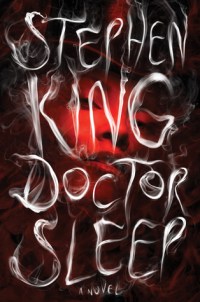
Kate’s Review: “Doctor Sleep”

16130549._sy475_-1Book: “Doctor Sleep” by Stephen King

Publishing Info: Scribner, September 2013

Where Did I Get This Book: I own it.

Book Description: Stephen King returns to the characters and territory of one of his most popular novels ever, The Shining, in this instantly riveting novel about the now middle-aged Dan Torrance (the boy protagonist of The Shining) and the very special 12-year-old girl he must save from a tribe of murderous paranormals.

On highways across America, a tribe of people called The True Knot travel in search of sustenance. They look harmless – mostly old, lots of polyester, and married to their RVs. But as Dan Torrance knows, and spunky 12-year-old Abra Stone learns, The True Knot are quasi-immortal, living off the “steam” that children with the “shining” produce when they are slowly tortured to death.

Haunted by the inhabitants of the Overlook Hotel where he spent one horrific childhood year, Dan has been drifting for decades, desperate to shed his father’s legacy of despair, alcoholism, and violence. Finally, he settles in a New Hampshire town, an AA community that sustains him, and a job at a nursing home where his remnant “shining” power provides the crucial final comfort to the dying. Aided by a prescient cat, he becomes “Doctor Sleep.”

Then Dan meets the evanescent Abra Stone, and it is her spectacular gift, the brightest shining ever seen, that reignites Dan’s own demons and summons him to a battle for Abra’s soul and survival. This is an epic war between good and evil, a gory, glorious story that will thrill the millions of hyper-devoted fans of The Shining and wildly satisfy anyone new to the territory of this icon in the King canon.

Review: Around the time the trailer for Mike Flanagan’s film “Doctor Sleep” dropped, I was texting back and forth with the aforementioned Blake. He told me that he had never actually picked up “Doctor Sleep”, as he’d heard it was middling at best, but wanted to know what I thought. I told him how much I loved it, but admitted that I hadn’t read it for a long time. So when he later told me that he’d picked it up and was, so far, really liking it, I decided that I needed to go back and re-read it. One, so he and I could potentially have a mini-book club over the sequel to the book that started our friendship, and two because the movie was coming out and I wanted to have the novel fresh in my memory. So I picked up “Doctor Sleep”, figuring I’d meander through it at a lazy pace… But then I ended up binging the entire thing in a couple of days. The continuing story of Danny Torrance post-Overlook once again sucked me in. 

giphy-11
Poor Danny can’t escape the past. (source)

What you need to know about “Doctor Sleep” is that while it’s a sequel to “The Shining”, the tone, feel, and approach are very different. While they both take a look at addiction (though in different ways, as King was in the middle of his during “The Shining” and in recovery during “Doctor Sleep”), “The Shining” is about ghosts, an evil place, and the slow violent spiral of a husband and father because of the influence of the two. “Doctor Sleep”, however, goes in a different direction. Instead of relying mostly on the ghosts and ghouls, at its heart is a story about trauma and coming to terms with your past while finding a hopeful future. And, of course, still dealing with supernatural themes like psychic abilities and monsters. Dan Torrance is now an adult, who has tried to escape his memories of The Overlook and his abilities by falling into a bottle. Seeing Danny all grown up is a very bleak, but realistic, look at what trauma can do to a person, and how sometimes people cope in ways that are incredibly destructive to others and to themselves. You are already invested in Dan because you know he was that little boy at the Overlook, and some of the best moments of dread in this book have less to do with the visions he still has, and more to do with whether or not he is going to fall off the wagon. It just so happens that around the time he decides to fully commit to recovery, he makes a psychic connection with a newborn girl named Abra, whose Shining abilities are above and beyond his own. Abra is a fantastic new character to bring into the story, as her childhood is a reversed mirror image of what Danny went through as a child. She comes from a loving family, she easily makes friends, and her powers are accepted (albeit hush hush and not totally understood) by her parents, while Danny’s powers were cultivated and nurtured in a dark, abusive setting and a lonely childhood. You definitely get the sense that their connection isn’t pure happenstance, but that doesn’t really matter; what matters is that they are both vital to each other’s survival. Abra needs someone who understands her and understands the dangers of her powers, and Dan needs a reason to keep going and to keep his addictions at bay. King captures an authentic and very likable, yet complex, voice in Abra, and her kindness and joy radiates off of the page, just as her own inner darkness rears in relatable and believable ways. Her friendship with Dan brings out the best in both of them, and as they learn from each other and protect each other from impending dangers, you get super invested in their connection, even if you aren’t completely sure as to why it’s happening.

And let’s talk about those dangers, too. King creates a malevolent and wholly original villain group as only he can with the True Knot, a nomadic group of vampirelike beings that feed on psychic energy. They target children with The Shining, as the True Knot can achieve eternal life by extracting their abilities in ‘steam’ form. The leader of the group is Rose the Hat, a charismatic and vicious woman who kills without remorse for the good of her group. Rose the Hat is a top three King villain for me, as she is intimidating, mysterious, and alluring in every sense of the word. You see this group stalk and murder other children, and once their sights set on Abra a slow burn game of cat and mouse begins, with some unexpected surprises for all parties thrown in along the way that up the ante even more. King doesn’t rush this prolonged confrontation, and he sets the pieces into place in very intentional ways that come together seamlessly. But I think that one of the best achievements that King does, at least for me, is that he makes you kind of care about The True Knot as well, at least in some ways. You get a deep dive into who they are and how they function, and by the time things start to go down you find yourself invested, even if you know that they are monstrous and terrible. He gives them, especially Rose, complexity and nuance, and I ended up loving her when all was said and done, even if it was because of what a horrible and terrifying villain she is. 

I think that a lot of people believed that there was no way that King could write a sequel to “The Shining”. And, in some ways, I think they are right. Because “Doctor Sleep” is its own story, its own identity, and while it may be the continuing story of Danny Torrance, it doesn’t feel like a direct sequel. It feels like King achieved a lot more than that, and has expanded a world and a story in ways that only time and experience could have aided. It’s not a perfect book; there are some hiccups, and moments of cloying coincidence or sappiness, but honestly, I love this story so much that I can easily forgive these stumbles. I have high hopes going into the movie, but even if I don’t care for the adaptation, I know that I can revisit this book and find deep, deep enjoyment. “Doctor Sleep” is probably my favorite of the recent King novels. You don’t have to be a fan of “The Shining” to enjoy it.

And with that, we end Horrorpalooza 2019! I hope that everyone has a Happy Halloween and that you get all the scares. And if you don’t want the scares, all the candy!

Rating 10: A deep, emotionally wrenching, and quite creepy follow up to a classic horror story, “Doctor Sleep” examines familiar characters and themes with an eye for trauma, redemption, and hope.

Reader’s Advisory:

“Doctor Sleep” is included on the Goodreads lists “Adult Books That Feature Powerful or Magic Children”, and “Creepy Halloween Reads”.

Find “Doctor Sleep” at your library using WorldCat!


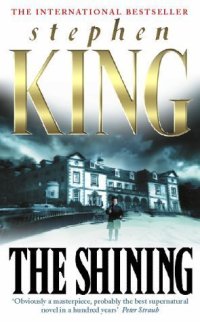
Kate’s Review: “The Shining”

11588Book: “The Shining” by Stephen King

Publishing Info: Doubleday, 1977

Where Did I Get This Book: I own it.

Book Description: Jack Torrance’s new job at the Overlook Hotel is the perfect chance for a fresh start. As the off-season caretaker at the atmospheric old hotel, he’ll have plenty of time to spend reconnecting with his family and working on his writing. But as the harsh winter weather sets in, the idyllic location feels ever more remote…and more sinister. And the only one to notice the strange and terrible forces gathering around the Overlook is Danny Torrance, a uniquely gifted five-year-old.

Review: Believe it or not, “The Shining” has a deep, personal meaning for me, and that is because it’s proof that Stephen King books can bring people together. I approached my best friend from high school (and still good friend today) Blake because of this book. He was reading it in the hallway, and as someone who had already read it seeing someone else experiencing it gave me the need to be like ‘I LOVE that book!’ It was the start of an enduring friendship. But on top of that, “The Shining” is a terrifying read that has gone down in literary history as one of the best horror novels of the 20th Century, and really solidified King’s place as a horror author. And the rest, as they say, is history. In anticipation of the film adaptation of “Doctor Sleep”, the sequel to “The Shining”, I decided to re-read both books to see how they held up. So, just in time for Halloween Week, the first up is the original, and I’m finally returning to The Overlook Hotel after all these years of being away.

thestanley
Outside of the time I went to the actual Overlook this past summer, aka The Stanley Hotel in Estes Park, Colorado!

At the very heart of “The Shining” is a gothic ghost story, and while it may not take place on a moor in England, it has all the elements that make the genre great. You have an isolated hotel that cannot be escaped once the snows come. You have three people living in said hotel, and one of them is slowly being driven mad, be it because of the isolation, his own demons, or something else. And you have unique and incredibly scary ghosts and a twisted history that has made the location rotten to the core. King has a variety of bad things at The Overlook, from the decomposing Mrs. Massey in room 217 to visions of a Mafia murder in the Presidential Suite to topiaries that move and fire hoses that act like coiling snakes.  Mrs. Massey is by far the worst, a lurching a rotting corpse that reaches out for those who dare enter her room, but many others are lurking and effective in their own right. While it may seem like the idea of moving animal shaped plants is a little cheesy, it’s not cheesy when a character is being slowly stalked by them in a deranged game of red light, green light. King builds the dread and makes you wonder if what we are seeing is real, a vision (on Danny’s part), or a descent into madness (on Jack’s part), and boy does the tension pull you tight. Even the little things that could just as easily be placed in real life, like the boiler that ‘creeps’, set a scene on a knife’s edge. The Overlook is still one of King’s greatest villains, and the way that King made a place into a character with such malevolence and horror stands the test of time all these years later. 

Danny Torrance is one of the people who sees the Overlook’s horrors, his gift of ‘The Shining’ (or psychic powers) making him incredibly perceptive, but also susceptible, to it’s evils. Danny’s voice is so authentic, as King really harnesses the thoughts, feelings, and actions of a little boy. Danny is endearing, and strange, and as his visions get worse and his father Jack starts to become more and more corrupted, he becomes more vulnerable and yet resilient. Reading this book as a teen I liked Danny enough, but now revisiting it I just loved him. King captures childhood earnestness, captures the innocence that a little boy could still have even though he’s seen and experienced terrible things, and never makes Danny sound juvenile, nor too precocious either. And the things that he sees are filtered through a child’s eyes, which in some ways makes them all the more disturbing. Danny going into Room 217 is still one of the most horror filled moments of this novel, and perhaps of all of King’s bibliography.

But for me, the scariest part of “The Shining” has changed. As an adult, and a new mother to boot and therefore someone with a whole new perspective on parenthood, now the biggest scares come from Jack Torrance and his potential to be a family annihilator, be it due to the hotel’s influence or his own violent tendencies.

giphy-9
I know King hates this movie, but honestly, it really got Jack right. (source)

Even before The Overlook, Jack’s alcoholism had him spiraling into addiction, emotional instability, and domestic abuse towards his wife and little boy. When we meet Jack he’s been sober for a little over a year, and while it seems that he is on the upswing with Wendy and Danny, there are still violent tendencies that come through and have serious consequences, consequences that make him take this isolating job in the first place, and more vulnerable to the malignant influence of The Overlook. It’s interesting to read this now, knowing that King himself was battling his own addictions as he wrote it, and how his insecurities about how he was as a father and husband come through off the page. Jack’s portrayal is both a villain who could potentially kill those he loves most, and yet a tragic figure who wants so badly to be better, even if he can’t quite achieve it. While The Overlook is certainly a bad influence and its ghosts are certainly helping drive Jack insane, you can’t help but get the feeling that perhaps, even without the ghostly interference, he might have ended up doing something horrible to Wendy and Danny, should he give in to his addictions at any time. It’s a deeply resonant characterization, and knowing that King was struggling as well it gives it even more dour weight and tragedy. I remember that around the time I read this book as a teen I asked my Dad why he hadn’t read it or even seen the movie. And he said that he couldn’t handle the idea of a husband and father murdering those he was supposed to love and care for. I didn’t really get it then. I absolutely get it now. King, once again, shows that some monsters in life don’t have to be supernatural.

“The Shining” isn’t without faults. Wendy, our one female (non ghost) character, isn’t terribly fleshed out or interesting. And as much as I love Dick Halloran, he sure fits into the ‘magical negro’ trope that King still tends to embrace with too much vigor. And, like many King stories, the ending has some flaws and doesn’t QUITE land, at least not completely. But there is a reason that it has endured for so long, and that it’s one of King’s most beloved works. It’s damned scary. I am so glad I went back to it after all these years. And given the influence this book, like all of King’s works, has had on my life, in some ways, like the ghosts at The Overlook, I never really left.

giphy-10
(source)

On Thursday we’re going to dive in to the sequel, “Doctor Sleep”.

Rating 9: A haunting and deeply scary horror story that melds ghosts, evil, and emotional demons into one entity of terror. Stephen King’s classic is still effective and disturbing.

Reader’s Advisory:

“The Shining” is included on the Goodreads lists “Ghost Stories”, and “Modern Gothic”.

Find “The Shining” at your library using WorldCat!

Kate’s Review: “His Hideous Heart”

39127647Book: “His Hideous Heart” by Dahlia Adler (Ed.)
Publishing Info: Flatiron Books, September 2019

Where Did I Get This Book: I own it.

Book Description: Thirteen of YA’s most celebrated names reimagine Edgar Allan Poe’s most surprising, unsettling, and popular tales for a new generation.

Edgar Allan Poe may be a hundred and fifty years beyond this world, but the themes of his beloved works have much in common with modern young adult fiction. Whether the stories are familiar to readers or discovered for the first time, readers will revel in Edgar Allan Poe’s classic tales, and how they’ve been brought to life in 13 unique and unforgettable ways.

Contributors include Kendare Blake (reimagining “Metzengerstein”), Rin Chupeco (“The Murders in the Rue Morge”), Lamar Giles (“The Oval Portrait”), Tessa Gratton (“Annabel Lee”), Tiffany D. Jackson (“The Cask of Amontillado”), Stephanie Kuehn (“The Tell-Tale Heart”), Emily Lloyd-Jones (“The Purloined Letter”), Hillary Monahan (“The Masque of the Red Death”), Marieke Nijkamp (“Hop-Frog”), Caleb Roehrig (“The Pit and the Pendulum”), and Fran Wilde (“The Fall of the House of Usher”).

Review: I’ve been a fan of Edgar Allan Poe since grade school when I read “The Raven” and “The Tell Tale Heart” in my free time. It was truly the first indication that I was going to shift into full on Goth in high school. His melancholic writings and nerve wracking imagery is still very effective, and while it does have some dated elements it can’t be denied that he has had a huge influence on American Horror writing to this day.

giphy-3
Super relatable in so many ways too. (source)

I still hold him and his works near and dear to my heart, even if I haven’t read as many as I thought I had. I came to this realization as I read “His Hideous Heart”, a collection of new YA interpretations of Edgar Allan Poe’s most famous works, edited by Dahlia Adler. I bought this book for my Kindle, as I was so excited to read it I really didn’t want to wait before I could get it in my hands. The group of YA authors selected was really the icing on the cake, as it includes some of my favorites like Stephanie Kuehn and Tiffany D. Jackson. A group of authors coming from lots of backgrounds and experiences to update some of the stories from the OG Creep Master of American Literature? It can’t get better than that! Like with most Short Story collections I am going to talk about my three favorite works, and then give a summation of the collection as a whole.

“Night-Tide” (based on “Annabel Lee”) by Tessa Gratton

The poem “Annabelle Lee” has made me cry many times in my life. It’s about the death of a young woman and her husband who has been left behind to mourn her, and is most likely based on Poe’s own wife Virginia who tied of tuberculosis. Tessa Gratton takes this always upsetting story theme and twists it up in many positive ways. She changes it into a prose narrative instead of a poem, sets in in a historical fiction timeline, and makes the two lovers two young women who are living in a time where gay romance and love is never going to be accepted. Annabel Lee and Jackie have spent summers at the resort of Kingdom by the Sea and became close friends. But the summer she’s sixteen Jackie arrives to find out that Annabel has passed away of illness, and that Annabel’s family blames Jackie because of their ‘close friendship’ and the sin it was. As Jackie tries to come to terms with her friend’s death, and to try to come to terms with the guilt that she is feeling because of it. Like the poem there are no happy endings here, but it makes the sadness of the poem all the more emotional, as Jackie has to live with the guilt that others and society has placed upon here merely because she and Annabel Lee were in love. And, like it’s inspiration, it made me cry as well.

“The Glittering Death” (based on “The Pit and the Pendulum”) by Caleb Roehrig

“The Pit and the Pendulum” is a tense and scary read where a prisoner is being psychologically and physically tortured during the Spanish Inquisition. Caleb Roehrig, however, subverts that into a modern retelling involving a serial killer, a teenage girl, and misogyny. Laura finds herself the newest victim of a murderer called The Judge, who kidnaps and tortures young women for the sins he’s perceived they’ve committed. Laura has to figure out how to survive the situation and escape. This was probably my favorite story in the collection, as Roehrig does a GREAT job of drawing comparisons between his zealous and woman hating serial killer and the forces that were behind The Spanish Inquisition, showing how repression, misogyny, and religious fundamentalism can instigate violence. Laura as a main character was spunky and tough, and the tension of her imprisonment and her plans for escape had me on the edge of my seat. It’s definitely the scariest story in this book, and I thought that it really found the heart of the source material and cleverly applied it.

“Happy Days, Sweetheart” (based on “The Tell-Tale Heart”) by Stephanie Kuehn

One of Poe’s most famous stories is “The Tell-Tale Heart”, and it’s about jealousy pushing someone to murder, and the guilt that drives the murderer insane. Leave it to Stephanie Kuehn to take that and make something totally different, all while finding the deeper themes and applying them perfectly. An unnamed high school girl has been living in the shadow of Jonah, a charismatic but mediocre white guy at their boarding school. She has always worked hard to be the best, but being a bi-racial girl from outside their community has always kept her down. But now she has a plan to finally become number one, to finally get the praise and recognition she deserves. I LOVED how Kuehn took the idea of women (especially women of color) having to work harder and do more to get the same recognition that a white man gets just by existing, and how that frustration can turn into an all encompassing anger. While it’s true our narrator eventually takes it to extremes (as one would have to with the source material), I still felt that Kuehn drew out her motivations in a way that I found incredibly relatable in a lot of ways. Kuehn is one of my favorite authors, and her contribution to this collection knocked it out of the park to be sure.

And there were a lot of other really strong stories that I didn’t mention! “His Hideous Heart” covers a wide range of genres, and most of the segments were all very strong in their own ways. Even the ones that I didn’t end up caring for as much were more based on the genres they fell in as opposed to the content. There are so many strong authors here, and they all did their very best to do justice to Poe’s original works, with many of them succeeding. But wait, there’s even more to sing the praises of! “His Hideous Heart” not only has these thirteen original stories, it also includes the original works by Poe! So if you aren’t familiar with the source material, you have direct access to it. LOVED that!

“His Hideous Heart” was a great short stories collection. If you are a Poe fan you should read it, and if you aren’t familiar with Poe this is the perfect introduction to the original works AND the updates. And hey, it’s almost Halloween. This is just the book to read this time of year.

Rating 8: A well done and well updated collection of stories that pay homage to Poe, “His Hideous Heart” is an enjoyable read and the perfect book for the Halloween season.

Reader’s Advisory:

“His Hideous Heart” is included on the Goodreads lists “Edgar Allan Poe in YA & Middle Grade Fiction”, and “The Unlikable Female Characters Podcast”.

Find “His Hideous Heart” at your library using WorldCat!

Kate’s Review: “Ghoster”

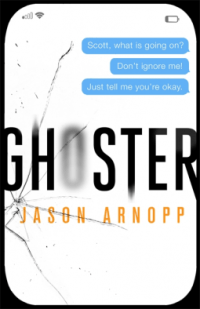
31934011Book: “Ghoster” by Jason Arnopp

Publishing Info: Orbit, October 2019

Where Did I Get This Book: I received an ARC from the publisher.

Book Description: Jason Arnopp – author of acclaimed cult hit The Last Days of Jack Sparks – returns with a razor-sharp thriller for a social-media obsessed world. Prepare to never look at your phone the same way again . . .

Kate Collins has been ghosted. She was supposed to be moving in with her new boyfriend Scott, but all she finds after relocating to Brighton is an empty apartment. Scott has vanished. His possessions have all disappeared. Except for his mobile phone. Kate knows she shouldn’t hack into Scott’s phone. She shouldn’t look at his Tinder, his calls, his social media. But she can’t quite help herself. That’s when the trouble starts. Strange, whispering phone calls from numbers she doesn’t recognize. Scratch marks on the walls that she can’t explain. And the growing feeling that she’s being watched. Kate refuses to leave the apartment – she’s not going anywhere until she’s discovered what happened to Scott. But the deeper she dives into Scott’s digital history the more Kate realizes just how little she really knows about the man she loves.

Review: Thanks to Orbit for sending me an ARC of this novel!

Back in 2017 I was flying back from New Zealand and was totally enthralled by “The Last Days of Jack Sparks” by Jason Arnopp. While I am not usually super into nor affected by possession and exorcist stories, the uniqueness and genuine creepiness of this novel completely blew me away and was one of my favorite reads of the year. I waited anxiously for a new book by Arnopp to drop, and when I saw that he had a new book called “Ghoster” coming out, I was ecstatic. I was fortunate enough to receive an ARC of “Ghoster”, and once I had finished a couple other books that took precedent, I dove right in. “Ghoster” isn’t a possession story. At least, not in the way that we normally think about them. But it is a story about obsession, and how things can seemingly take you over in unexpected, and dangerous ways. 

Oh, and we once again get some creepy and unsettling imagery that freaked me the hell out.

giphy-8
Sometimes I just had to step away. (source)

Kate, or protagonist, is a bit of a complex and unreliable character. We know that she has had obsessive issues with social media and romance in the past, and after her lover Scott seemingly disappears on the eve of them moving in together, you wonder if her need to find him is based on worry for his safety, or a dark jealousy that is hinted at from her previous relationships and actions. It’s first person, so we get into her mind and how quirky and obsessive it can be. She is convinced that Scott has left her, or has tricked her, and since it isn’t often that she stops to think that maybe something bad happened to him it makes you question a lot about her mental state. Is she a woman with a legitimate beef, or is she a bit more unstable than she’d like us to think?  It sets a tone that is already uneasy and makes it all the more jarring. I felt bad for Kate, but I also wasn’t sure if I could totally trust her and her perceptions, or the story that she was telling us. It’s true that there were a couple of times where I thought that her strangeness was laid on a little thick, but for the most part it was well done and a great way to make the reader question even more about the story than they already may have been. It also makes it so that when the very strange things start happening, we have to wonder what is real and what isn’t. I wouldn’t say that Kate is likable, but she sure doesn’t have to be. It’s not like Jack Sparks was a likable character, after all, so why can’t Kate also be that way? It didn’t make me any less invested in her story.

The creepy elements and plot of this book aren’t as amped as Arnopp’s previous novel, but they are still there and they are still done in a way that left an impression. As Kate slowly tries to trace Scott’s steps and whereabouts, she finds more and more things that suggest something is afoot. She has his cell phone, and is able to see his browsing history, which implies that he may not have been the person he said he is. There is a missing woman that may have a connection to him. And on top of that, as she stays in Scott’s apartment and her obsession with his phone and social media footprint intensifies, she starts to see things that shouldn’t be possible. I don’t want to go into specifics, but I will say this: one of the things that gets me really freaked out in movies and books are the images and descriptions of people and things moving in ways that they shouldn’t be moving. Be it jerky motions or weird contorted moving, it’s going to mess me up every single time. Arnopp does something like that in this book, and boy did it hit all the nerves. Arnopp has always been very good at describing an incredibly visual medium and making it work on the page and within the reader’s imagination. All that said, I did think that the metaphors about technology and social media having a malevolent hold on people are pretty well played out at this point, so that wasn’t as strong as I had hoped it would be, commentary wise.

“Ghoster” was another satisfying and spooky read from Jason Arnopp. It’s a great one to pick up right in time for Halloween, and now that I’ve read it I’m back to square one and not at all patiently waiting to see what he comes out with next! 

Rating 8: A spine tingling and tense horror story about relationships, social media, and obsession.

Reader’s Advisory:

“Ghoster” is new and isn’t on many relevant/specific Goodreads lists, but I think that it would fit in on “Fiction Involving The Internet”.

Find “Ghoster” at your library using WorldCat!


Kate’s Review: “The Institute”

43798285Book: “The Institute” by Stephen King

Publishing Info: Scribner, September 2019

Where Did I Get This Book: The library!

Book Description: From #1 New York Times bestselling author Stephen King, the most riveting and unforgettable story of kids confronting evil since It—publishing just as the second part of It, the movie, lands in theaters.

In the middle of the night, in a house on a quiet street in suburban Minneapolis, intruders silently murder Luke Ellis’s parents and load him into a black SUV. The operation takes less than two minutes. Luke will wake up at The Institute, in a room that looks just like his own, except there’s no window. And outside his door are other doors, behind which are other kids with special talents—telekinesis and telepathy—who got to this place the same way Luke did: Kalisha, Nick, George, Iris, and ten-year-old Avery Dixon. They are all in Front Half. Others, Luke learns, graduated to Back Half, “like the roach motel,” Kalisha says. “You check in, but you don’t check out.”

In this most sinister of institutions, the director, Mrs. Sigsby, and her staff are ruthlessly dedicated to extracting from these children the force of their extranormal gifts. There are no scruples here. If you go along, you get tokens for the vending machines. If you don’t, punishment is brutal. As each new victim disappears to Back Half, Luke becomes more and more desperate to get out and get help. But no one has ever escaped from the Institute.

As psychically terrifying as Firestarter, and with the spectacular kid power of It, The Institute is Stephen King’s gut-wrenchingly dramatic story of good vs. evil in a world where the good guys don’t always win.

Review: Whenever a new book I really want to read is about to come out, I try to get myself positioned high on the request list at the library. When this doesn’t work, I will make sure it’s going to be available at my former job on the day it comes out, as copies from that branch don’t go to the request list. And then once it’s publication day, if I can I will rush to that branch before opening, and become that patron that I used to kvetch about: the one who hangs out outside before the doors open and rushes the new wall as soon as they do. This made it so I got a copy of Stephen King’s “The Institute” at the library the day it came out, and yeah, I was a bit of a sore winner when I snagged it off the display. We are kind of in the midst of a King Renaissance right now, from new books to adaptations of his works in movie theaters and on TV and computer screens. I’m always going to be stoked for anything King related, and he has so much content to explore that you have a lot to work with. Unfortunately, on the flip side of that is the fact that not everything is going to be a winner, and “The Institute”, for me, was not a winner.

But like usual, we’ll start with the good. Even in books he’s written that don’t quite click with me, I am almost always happy with the way that King portrays childhood experiences and childhood friendships. From “It” to “The Body”/”Stand By Me”, the way that he can capture the innocence and yet importance of these childhood bonds and put them on the page is almost always incredibly effective. He brings this talent to “The Institute”, as whenever he focuses on Luke Ellis, Kalisha, and the other child prisoners it feels like you’re seeing real kids interacting with each other. I was worried that the innate precociousness of the children, especially super genius Luke, would stunt the dialogue and relationships, but I greatly enjoyed all of them whether they were playing, scheming, or mourning. While I didn’t feel like I got to know all of them as deeply as I got to know The Losers Club or the four boys who went looking for a dead body, I still liked seeing the glimpses into the relationships that we did, as it was always entertaining. With a resurgence in popularity of ‘kids solving mysteries/fighting back against more powerful entities’ because of “Stranger Things”, I definitely get tapping back into that kind of tale. It is also very hard to deny that, given the horrific reality that children are being imprisoned in cages at the Southern Border, some of the themes are all the more resonant in this story. King does a good job of drawing comparisons without treading into distaste, and given that I’m sure this book had already been submitted to the publisher before some of the more recent developments I definitely couldn’t help but connect his story to the horrible things our Government is doing. Especially as the slow reveal of The Institute’s true intentions is carefully peeled back. Plus, the pacing was well done and it never felt slow, so it was mostly entertaining.

The reason that this doesn’t get a higher score from me is because “The Institute”, while being entertaining, didn’t quite evoke the emotions I have come to want from Stephen King novels. Yes, the concept is horrible and scary, and there were certainly thrilling aspects of the plot as we reach the end, but I never felt the actual tension, elation, sadness, and fear. For whatever reason it just didn’t connect with me. I think that part of it was that this felt less like a horror novel and more like a conspiracy thriller, and while that’s fine and I generally like a good conspiracy thriller, this one just didn’t quite click. And I think the other part I already kind of touched on earlier, in that while I liked the characters and the relationships they had with each other (the kids especially), I don’t think that we got to know them well enough for me to really connect with them. And if I’m not as connected, I’m not as invested. I don’t think “The Institute” was a bad read by any definition, but if a book falls into these traps that I’ve mentioned, I’m just not going to enjoy it as much.

I’m so happy that Stephen King is still writing, and that he’s getting all kinds of attention right now. While “The Institute” was a miss, the man is still my favorite horror author of all time. And given that there’s already rumors of this book being adapted into yet another TV series based on King source material, it may be in your interest to give it a go regardless of what I thought!

Rating 6: While “The Institute” was an entertaining read and had its moments and details that I liked, overall it fell a little flat for me.

Reader’s Advisory:

“The Institute”, surprisingly, isn’t included on many relevant or specific Goodreads lists. But I think that it would fit in on “Conspiracy Fiction”, and “Books like Stranger Things”.

Find “The Institute” at your library using WorldCat!

Kate’s Review: “Mooncakes”

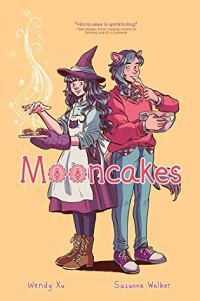
44774415._sy475_Book: “Mooncakes” by Suzanne Walker and Wendy Xu (Ill.)
Publishing Info: Lion Forge, October 2019

Where Did I Get This Book: I received an eARC from NetGalley.

Book Description: A story of love and demons, family and witchcraft.

Nova Huang knows more about magic than your average teen witch. She works at her grandmothers’ bookshop, where she helps them loan out spell books and investigate any supernatural occurrences in their New England town.

One fateful night, she follows reports of a white wolf into the woods, and she comes across the unexpected: her childhood crush, Tam Lang, battling a horse demon in the woods. As a werewolf, Tam has been wandering from place to place for years, unable to call any town home.

Pursued by dark forces eager to claim the magic of wolves and out of options, Tam turns to Nova for help. Their latent feelings are rekindled against the backdrop of witchcraft, untested magic, occult rituals, and family ties both new and old in this enchanting tale of self-discovery.

Review: Thanks to NetGalley for providing me with an eARC of this book!

I know that not everyone has the same love and affinity for all things horror that I do. And while I know that for me the month of October is all about the ghosts, ghouls, slashers, and monsters that I want to associate with, for others that may not be as appealing. So for today’s Horrorpalooza book, we’re actually inching away from the horror, and looking at a kinder, gentler kind of book of the season, where witches and werewolves fall in love, and magic can lead to self discovery. Today I’m going to talk about the sweet and romantic graphic novel “Mooncakes” by Suzanne Walker and Wendy Xu, a story about a witch named Nova and a werewolf named Tam and the magic that surrounds their lives, for better or for worse.

“Mooncakes” takes the kinder, gentler witch story and gives it some new and unique twists. Nova’s family life is the familiar matriarchal witch household, as she is living with her grandmothers Quili and Nechama and learning about magic and spells from them. While I do love a vengeful or spiteful witch, or one who has legitimate grievances with society and the patriarchy, I do have to say that I also like the positive stories of witches empowering other witches through education, family, and love. “Mooncakes” really embodies this positive trope, and Quili and Nechama are the perfect supportive and bustling mother figures that fill the void of Nova’s parent’s deaths. Nova herself is a unique main character. She is Chinese American, so her culture influences not only her home life but also her magic. Along with that she also has hearing aids, and after she lost her hearing she began to master the art of nonverbal magical spells, a concept that we may see (as sometimes witches don’t have to say ANYTHING to make magic happen in stories), but is rarely explored. But it’s her romance with Tam that is the center of the story. Tam and Nova were childhood friends, but Tam left town and has been wandering on their own, living as a werewolf and distancing themself from an abusive home life. When Tam and Nova reconnect, their lingering feelings for each other start to re-boot. Their romance is sweet and not terribly complicated, and I liked that Tam’s nonbinary identity wasn’t the focus of the conflict, and that they were easily and readily accepted by the other characters.

The plot and the magical aspects of this story, however, weren’t as strong as I had hoped they would be. We know that Tam is being targeted for some kind of nefarious spells, as when we meet them they are in conflict with a horse demon in the woods. Nova is there for Tam and is determined to figure out what is going on, but I never felt like that aspect of the plot was really focused on. We get hints as to who may be behind it, and while I feel like Walker tried to hide the culprit, it felt pretty obvious as to who it was going to be. While we are told that Tam is in some serious danger, it never feels like the stakes are all that high. And once we got to the big showdown, things resolved themselves rather easily, and threw in some obvious tropes that have been seen many times before for good measure in terms of resolution. Is that a bad thing? Not necessarily! I love a ‘the love for the other person is able to fight through a spell’ twist as much as the next person, but when the rest of the magical plot and conflict feels a little haphazard, that doesn’t exactly make the twist seem stronger. I think that had this story paid more attention to building up the conflict and magic issues, it would have worked better. As it was, it felt more like an afterthought.

The art, however, is totally adorable and sweet! I really like Wendy Xu’s style, and I love the details and designs that she brought to the characters.

tumblr_nxl5ltyonv1ubonrfo1_1280
(source)

If you want a sweet romantic story with magical elements, “Mooncakes” could be a good choice. I wouldn’t go in expecting a whole lot of magical system building, but it does have charming characters and some great representation. And if you don’t want something scary this witchy season, it’s a good alternative.

Rating 6: A cute and romantic story about witches, family, and magic, “Mooncakes” is filled with a lot of sweetness, though not much complexity.

Reader’s Advisory:

“Mooncakes” is included on the Goodreads lists “Comics for Witches”, and “Graphic Novels Featuring LGBTQ Themes”.

Find “Mooncakes” at your library using WorldCat!

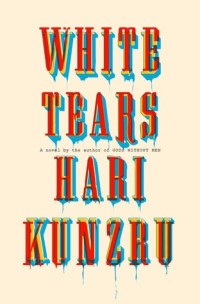
Kate’s Review: “White Tears”

30780283Book: “White Tears” by Hari Kunzru

Publishing Info: Knopf Publishing Group, May 2017

Where Did I Get This Book: The library!

Book Description: From one of the most talented fiction writers at work today: two ambitious young musicians are drawn into the dark underworld of blues record collecting, haunted by the ghosts of a repressive past.

Two twenty-something New Yorkers. Seth is awkward and shy. Carter is glamorous and the heir to one of America’s great fortunes. They have one thing in common: an obsession with music. Seth is desperate to reach for the future. Carter is slipping back into the past. When Seth accidentally records an unknown singer in a park, Carter sends it out over the Internet, claiming it’s a long lost 1920s blues recording by a musician called Charlie Shaw. When an old collector contacts them to say that their fake record and their fake bluesman are actually real, the two young white men, accompanied by Carter’s troubled sister Leonie, spiral down into the heart of the nation’s darkness, encountering a suppressed history of greed, envy, revenge, and exploitation.

White Tears is a ghost story, a terrifying murder mystery, a timely meditation on race, and a love letter to all the forgotten geniuses of American music.

Review: There has been a strange narrative that has come out lately that I’ve had a hard time swallowing when it comes to the horror genre, and that is the idea of ‘elevating’ horror. While I think that there has been a healthy respect from creators of newer horror movies that manage to gather more from the story than just jump scares or cliches (Jordan Peele, for example), there are others that seem to think that they can ‘improve’ the genre by being more artistic or surrealistic. For example, while I liked aspects of the new “Suspiria”, I definitely felt like it had a very high opinion of itself, and I didn’t enjoy it as much as I had hoped I would because it took itself almost too seriously. It’s not really something you see as much in literature, so I don’t go into horror stories with these worries. But I will say that I was a LITTLE worried about “White Tears” by Hari Kunzru, if only because a few people who I know who really liked it seemed to be saying that this was superior to genre horror specifically because of the literary style. That said, I was definitely interested in the themes of social justice and cultural appropriation and violence, and decided that it was finally time to pick it up. I will admit that the horror elements weren’t very horror based, at least for this fan. But everything else was executed wonderfully.

I will actually start with the weaker points in this review, just to get them out of the way. This is advertised as a horror novel, and while it absolutely has horror themes that involve possession, ghosts, and slow descents into instability, none of these themes or moments really made me feel scared, nor did they instill much dread in me. I think that part of this was the writing style choices that Kunzru made, be it the way the dialog was written or the way that sometimes things would jump around. This made it so that the scares couldn’t build up as much as they might have were the beats written in other ways. I tend to have a harder time with literary horror because of these kinds of things, and while I can appreciate authors experimenting and doing their own thing, it didn’t make the action as exciting or ‘unputdownable’ as I wanted. Even moments that could have felt merely unsettling as opposed to outright scary didn’t quite get to that level.

But honestly, the strengths of this book outweigh those issues, specifically the commentary about cultural appropriation, violence, and racism in American culture and society. Our protagonists are Seth and Carter, two white college students who think that because they study and have a fascination with American Blues that they have ownership over it. Seth isn’t nearly as entitled as Carter, whose wealth and status has really inflated his ego, but Seth definitely shares similar views when it comes to music. It’s an entitlement that is seen in American culture as white audiences consume and repackage facets from Black culture and market it to wider audiences and profit off of it. The idea that these two men think that they create a unique song and performer, only to find out that this person and his music was real, is very reminiscent of this view (even if there is something a bit supernatural about this specific instance within the story). I liked the contrast between Carter and Seth, as while Carter is clearly toxic from the get go, Seth is almost more damaging because he thinks that he is immune to these critiques because he doesn’t think he has the privileges that Carter has. Which is, of course, flagrantly ignoring his White privilege. You see a lot of White entitlement in this story, and when we finally start to see the voices of African American characters, specifically Charlie Shaw, the hypocrisy and scumbaggery of Seth, Carter, and others is highlighted and really punctuates the overall violence that artists like Shaw had to endure. I liked how Kunzru did a good job of applying the ideas of possession and haunting to the idea of cultural appropriation and the damages and injustices that it can foster. This is the kind of ‘horror elevation’ that I greatly enjoy, specifically because horror fiction, be it movies or literature, has always had some political and social commentary elements to it. “White Tears” knows how to weave those messages into this story seamlessly.

While I wish that “White Tears” had done a little bit more to scare me, I really enjoyed it for everything else that it had to offer! I should be more adventurous when it comes to literary horror, because this had some serious chops.

Rating 8: While the story wasn’t as horror centric as I had hoped, the social commentary more than made up for that.

Reader’s Advisory:

“White Tears” is included on the Goodreads lists “Books White People Need To Read”, and “Diversity in Fantasy and Science Fiction”.

Find “White Tears” at your library using WorldCat!