
Kate’s Review: “While Justice Sleeps”

Book: “While Justice Sleeps” by Stacey Abrams

Publishing Info: Doubleday, May 2021

Where Did I Get This Book: I received an eARC from NetGalley.

Book Description: Avery Keene, a brilliant young law clerk for the legendary Justice Howard Wynn, is doing her best to hold her life together–excelling in an arduous job with the court while also dealing with a troubled family. When the shocking news breaks that Justice Wynn–the cantankerous swing vote on many current high-profile cases–has slipped into a coma, Avery’s life turns upside down. She is immediately notified that Justice Wynn has left instructions for her to serve as his legal guardian and power of attorney. Plunged into an explosive role she never anticipated, Avery finds that Justice Wynn had been secretly researching one of the most controversial cases before the court–a proposed merger between an American biotech company and an Indian genetics firm, which promises to unleash breathtaking results in the medical field. She also discovers that Wynn suspected a dangerously related conspiracy that infiltrates the highest power corridors of Washington.

As political wrangling ensues in Washington to potentially replace the ailing judge whose life and survival Avery controls, she begins to unravel a carefully constructed, chesslike sequence of clues left behind by Wynn. She comes to see that Wynn had a much more personal stake in the controversial case and realizes his complex puzzle will lead her directly into harm’s way in order to find the truth. While Justice Sleeps is a cunningly crafted, sophisticated novel, layered with myriad twists and a vibrant cast of characters. Drawing on her astute inside knowledge of the court and political landscape, Stacey Abrams shows herself to be not only a force for good in politics and voter fairness but also a major new talent in suspense fiction.

Review: Thank you to NetGalley for providing me with an eARC of this novel!

Back in November of 2020, when it was clear that Georgia was going to go into a run off for their senate seats in January of 2021, my parents were expressing hesitance that Georgia could possibly go blue. While I didn’t want to get my hopes up, of course, I just kept saying ‘don’t underestimate Stacey Abrams’. I then got to tell them that not only is Abrams a political dynamo, but that she is also a published author of romance novels (as well as a fan fiction writer too, because she is also a great big nerd, which is great). Shortly thereafter, I saw that Abrams had a new book coming out, but this time it was going to be a thriller. I was VERY interested in seeing what that was going to be like, and assumed that at the very least it would be well written and entertaining, as well as a fun read given how well versed in the ups and downs of the political world she is.

Abrams takes it even further than I anticipated, and what I found was a very complex and intricate legal and political thriller. Given that I don’t usually gravitate towards thrillers that involve politics (sometimes I’ll go the legal route, if it’s soapy enough), “When Justice Sleeps” was a fairly new experience for me. I’m glad that it was Abrams’s vision and story that took me down this road, because I think that had it been in anyone else’s hands I may have given up. But the biggest strength for this story for me was our protagonist, Avery Keene. For one, it’s always nice to see a woman protagonist in stories that perhaps have gravitated more towards male characters in the past. For another, Avery is a biracial woman whose merits and talents are sharp just as her personality and personal life have relatable highs and lows. Watching her have to not only deal with her boss and mentor be suddenly thrown into a coma, but also have to deal with the scrutiny of being a young, biracial woman thrown into the spotlight because of being named his power of attorney, was riveting in and of itself. She is very easy to root for, and works well as an entry point for the reader to take on some really complex issues in the legal world, the political world, and the medical world.

In terms of the plot and the mystery that Avery has to take on, it’s a doozy. We have a lot of different components, from corporate mergers to the reaches of the Supreme Court to genetics testing to the White House to chess metaphors. As mentioned above, I wasn’t expecting it to be as complicated as it is, and keeping all of the moving parts in order was, at times a little hard for me to do. But Abrams always veers us back on track, bringing in reveals at the right times and finely connecting all of the puzzle pieces, no matter how far flung they are from each other. For someone like me, who doesn’t usually take on this kind of carefully and masterfully woven conspiracy thriller, it was a lot, and it led to brain overload on more than one occasion. But for someone who loves these kinds of wide reaching and well oiled conspiracy thrillers that dabble in lots of themes (like my Dad, for instance)? This will probably hit all the right notes for that kind of reader. I am considering looking into some of her romance work, because my guess is that it is also super well done, which just solidifies the point that Stacey Abrams is an amazing human being who can really do just about anything.

I definitely recommend giving “While Justice Sleeps” a go if you like political and legal thrillers. If you’re like me and are not as versed, you will still find things to like, even if you have a hard time keeping up. Now which of her romance novels should I try on for size?

Rating 7: A complex and intricately crafted thriller that has a deep conspiracy theme, “While Justice Sleeps” was a little too serpentine for me, but almost assuredly will be a hit for political and legal thriller fans.

Reader’s Advisory:

“While Justice Sleeps” is included on the Goodreads lists “Mysteries/Thrillers by BIPOC Authors”, and “Reading Women Challenge 2021 #17: Women in Politics”.

Find “While Justice Sleeps” at your library using WorldCat, or a local independent bookstore using IndieBound!

Kate’s Review: “Later”

Book: “Later” by Stephen King

Publishing Info: Hard Case Crime, March 2021

Where Did I Get This Book: The library!

Book Description: The son of a struggling single mother, Jamie Conklin just wants an ordinary childhood. But Jamie is no ordinary child. Born with an unnatural ability his mom urges him to keep secret, Jamie can see what no one else can see and learn what no one else can learn. But the cost of using this ability is higher than Jamie can imagine – as he discovers when an NYPD detective draws him into the pursuit of a killer who has threatened to strike from beyond the grave.

Later is Stephen King at his finest, a terrifying and touching story of innocence lost and the trials that test our sense of right and wrong. With echoes of King’s classic novel IT, Later is a powerful, haunting, unforgettable exploration of what it takes to stand up to evil in all the faces it wears. 

Review: I’ve spent twenty plus years of my life reading Stephen King, and I imagine that I will keep on going for another however many years he continues to write. He rarely lets me down (even when I come across the occasional clunker I still feel like it was generally worth my time), and it’s even MORE exciting when he tries out other genres beyond his usual horror fare. This brings us to “Later”, his most recent work and also his most recent title he’s done with Hard Case Crime, an imprint which tends to focus on gritty crime fiction. Hey, sign me up regardless, but one thing that I can count on when it comes to King is that he is probably going to throw SOME kind of supernatural spin into most of his books. “Later” is no exception, and King melds the hard boiled crime and supernatural horror paths seamlessly.

“Later” is a fast paced crime tale told through the perspective of Jamie Conklin, a young man who has had the ability to see and speak to ghosts ever since he was a kid. This story focuses on his youth, from how he first realized he had this power (told in a gruesome scene involving a dead bicyclist), to how his power scared but also helped his single mother Tia, to how it was exploited by Liz, Tia’s onetime girlfriend and NYPD detective. King has always had a true talent for capturing the minds and personalities of kids, and while narrator Jamie is an adult, the story is his childhood, and boy does it feel realistic in its voice. Like other kids in King’s works, Jamie is slightly precocious but not too forced, and his childhood interactions with his mother, his friends, and the ghosts that he sees range from the charming to the heartbreaking to the terrifying. I’m a true sucker for any story that has to do with people who can speak to the dead, and Jamie’s story really hit all of the notes that I like in this trope. I also liked how we get to know Tia through Jamie’s eyes, with King throwing in enough details about her that their relationship is well thought out and quite lovely. Our antagonists, primarily Liz and a spectre named Therriault (maybe a sly reference to Roch Thériault? SUPER creepy if so!), are menacing in their own ways. For Therriault it’s the obvious, being a malevolent spirit that has started to harass Jamie whose stalking and description will surely send chills up anyone’s spine. But Liz is far more insidious, as she is a corrupt cop who uses her power, her charm, and her authority to manipulate, and hurt, those around her. Her renegade nature could have been used to prop her up as an anti-hero, as some hard boiled detective stories do. But King just shows us what so many of these ‘renegade’ cops are: super, super dangerous.

And as we’ve learned, King has a real delight in calling back to some of his previous works (and also the works of his son, Joe Hill, those easter eggs are especially fun to spot). For some people this may seem hokey, but I eat it up and revel in it whenever it happens. And this time, King pulls out a heavy hitter, one that I didn’t expect from a story that has been published with a crime imprint. SPOILER ALERT HERE!!! Skip to the last paragraph if you don’t want to know! I won’t go into TOO much detail, but if you know, you know (and thanks to a certain recent film franchise, you probably know): One of the characters asks Jamie if he’s ever heard of something called “The Ritual of Chüd”. THIS IS IN THE “IT” UNIVERSE, FOLKS!!!

I can assure you, the amount of excited screeching I did was copious. (source)

Like I said, I don’t want to give too much away, but King takes a concept that feels like it couldn’t work outside of “It”, and applies it to this story without it feeling too forced or hackneyed. I mean, he made a revisit to “It” work in “11/22/63”, so I shouldn’t be surprised that he made it work here as well. And none of this is to say that you have to have read “It” for this entire aspect to work. You don’t. King gets you caught up to speed quickly, and it feels like its own thing in these pages. It totally works.

If there is a qualm I had with this book, there is a quick curveball thrown in at the end that made me go ‘wait, WHAT?’. It doesn’t derail anything or totally throw the entire story out of whack, but it was a momentary blip that felt unnecessary. Superfluous may be the better word. But overall, I found “Later” to be enjoyable and unsettling. For a fast read with a kid who can talk to ghosts, this is the book to check out!

Rating 8: A fast paced and at times very creepy thriller, “Later” has a hard boiled feel to it while harkening back to one of King’s most beloved stories.

Reader’s Advisory:

“Later” is included on the Goodreads lists “I See Dead People”, and “Books About People with Strange Powers”.

Find “Later” at your library using WorldCat, or at a local independent bookstore using IndieBound!
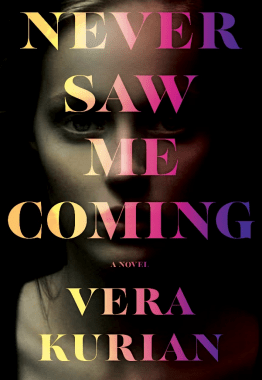
Kate’s Review: “Bury the Lede”

Book: “Bury the Lede” by Gaby Dunn & Claire Roe (Ill.)

Publishing Info: Boom! Studios, October 2019

Where Did I Get This Book: The library!

Book Description: Twenty-one-year-old Madison T. Jackson is already the star of the Emerson College student newspaper when she nabs a coveted night internship at Boston’s premiere newspaper, The Boston Lede. The job’s simple: do whatever the senior reporters tell you to do, from fetching coffee to getting a quote from a grieving parent. It’s grueling work, so when the murder of a prominent Boston businessman comes up on the police scanner, Madison races to the scene of the grisly crime. There, Madison meets the woman who will change her life forever: prominent socialite Dahlia Kennedy, who is covered in gore and being arrested for the murder of her family. The newspapers put everyone they can in front of her with no results until, with nothing to lose, Madison gets a chance – and unexpectedly barrels headfirst into danger she never anticipated.

Review: As I continue to try and up my graphic novel stats after a few months of a whole lot of novels, I found “Bury the Lede” by Gaby Dunn on a list about dark graphic novels with LGBTQIA+ themes and characters. Both wanting to get out of the fantasy realms of graphics, and always wanting to read more books by LGBTQIA+ authors about LGBTQIA+ characters, I found it at my library and placed it on hold. When it came I was a little shocked to see how short it was, but hey, a story about a young wannabe reporter getting close to a potential murderer in hopes of solving a baffling case? That could be covered in a trade paperback collection sized graphic, right? Right. Then it was too bad that “Bury the Lede” had far more plot points and aspirations than just that, because it’s a lot to cram into one thin book.

In terms of what did work for me, there were some really cool ideas in this book. I love the concept of a budding journalist wanting to prove herself getting in a bit over her head. I really liked the sapphic obsessive relationship that our journalist, Madison, starts up with accused murderess and socialite Dahlia. On paper it sounds very “Silence of the Lambs”, with a prisoner perhaps manipulating an investigator, but also leading them to a much bigger case nonetheless. I thoroughly enjoyed every scene that Madison and Dahlia had together, the weird sexual chemistry oozing and crackling when you aren’t exactly certain if this is something you’re supposed to be cool with. That works so, so well. I also enjoyed the ‘ripped from the headlines’ character of Raquel Stief, a woman in an education position that is being considered for a place in the President’s circle of advisors and administrators, and who is CLEARLY based on that demon Betsy DeVos. There may have been some living vicariously going on here as I read, given that one of the true monsters in this story is Stief, and Madison is hoping to take her down. And hell, I liked that there was a broader conspiracy afoot, because something like that is a really good idea that has a lot of potential to explore. And as mentioned earlier, this book does have numerous LGBTQIA+ characters and themes, and any time we get some diversity in graphic novels written by Own Voices authors, it’s going to be positive.

But oh, the stumbles within the good ideas and broad themes. While the idea of a sweeping political conspiracy theory with implications that could go all the way to Washington D.C. is very interesting, this isn’t a very long book, and it all feels like it goes VERY fast. Madison uncovers connection after connection at break neck speed, and it gave very little space to breathe by the time we get to the big reveal and climax of the book. And while the book pulls you in with the mystery of Dahlia, the murder of her husband, and her missing child, by the time we do get to the revelations involving that whole thing, it feels like a bit of a cobbled together afterthought. So does the connection that Dahlia has to Stief. By the end it feels more like Dunn wanted to have an “All the President’s Men” kind of story, but thought that the only way to get people to read such a thing in graphic novel form was to throw in a nice carrot on a stick in the form of murder. And by the end, neither aspect felt wholly explored. Hasty plot points aside, in terms of the characters, there really isn’t anyone to root for. I like that Madison is determined, but not only do we really only get to see this one side of her, she is also wholly, WHOLLY unethical in her journalistic ways. I’m sure that it was meant to establish her as a morally gray character whose drive to do ANYTHING for a story is damaging, but that’s not exactly a new theme to stories about journalists. And if anything, she left the morally gray area and went into straight up villain territory (mild spoiler alert: she roofies someone to get information out of them. Like, holy shit.), but it never seemed to be treated as such.

But, I did like the artwork and the character designs. Claire Roe uses some effective shadows and colors to establish mood, and it definitely felt neo-noir in her illustrations.

I had expectations for “Bury the Lede” that weren’t met. Though it had glimmers of really cool ideas, the execution didn’t get off the ground.

Rating 5: Definitely has a well conceived plot with some good ideas, but it just felt like it was executed a little too quickly with not enough focus. Throw in unlikable characters, and it’s just meh.

Reader’s Advisory:

“Bury the Lede” is included on the Goodreads lists “Journalists, Photographers, Etc. in Comics”, and “Novels with Bisexual Protagonists”.

Find “Bury the Lede” at your library using WorldCat, or at a local independent bookstore using IndieBound!

Kate’s Review: “Arsenic and Adobo”

Book: “Arsenic and Adobo” by Mia P. Manansala

Publishing Info: Berkley Books, May 2021

Where Did I Get This Book: I received an eARC from NetGalley.

Book Description: The first book in a new culinary cozy series full of sharp humor and delectable dishes—one that might just be killer….

When Lila Macapagal moves back home to recover from a horrible breakup, her life seems to be following all the typical rom-com tropes. She’s tasked with saving her Tita Rosie’s failing restaurant, and she has to deal with a group of matchmaking aunties who shower her with love and judgment. But when a notoriously nasty food critic (who happens to be her ex-boyfriend) drops dead moments after a confrontation with Lila, her life quickly swerves from a Nora Ephron romp to an Agatha Christie case.

With the cops treating her like she’s the one and only suspect, and the shady landlord looking to finally kick the Macapagal family out and resell the storefront, Lila’s left with no choice but to conduct her own investigation. Armed with the nosy auntie network, her barista best bud, and her trusted Dachshund, Longanisa, Lila takes on this tasty, twisted case and soon finds her own neck on the chopping block…

Review: Thank you to NetGalley for providing me with an eARC of this novel!

I’ve said in the past few months that I’m trying to expand my literary experiences this year in terms of genres. First that meant that I was going to read more romance. And then after our Book Club read “The Widows of Malabar Hill” I thought that perhaps I would give more cozy mysteries a try. Admittedly my preconceived notions of cozy mysteries usually involve crafting or baking themes, and also usually star white women. Whether these were accurate notions or not, they were the notions I had before Book Club opened my eyes. And then I stumbled upon “Arsenic and Adobo” by Mia P. Manansala on NetGalley, and I decided that it was time to finally dive in. And what better way to do it, but with a story that takes place in a Filipino restaurant in small town America?

The premise is pretty simple: our protagonist Lila has returned to her small town after a bad break up that made her flee Chicago. She rejoins her Tita Rosie, as well as her grandmother and her meddling but well meaning aunties, and is helping at Rosie’s restaurant. Things get sticky when Lila’s old boyfriend Derek dies after eating the food at the restaurant, and also after arguing with Lila. So Lila has to clear her name, as well as help save the restaurant from going under. Simple stuff, but Manansala writes with such joy and verve that it’s just a fun story to read in spite of some of the more simplistic aspects. Lila is a fun character to follow, as she is a good balance of a bit self absorbed and frazzled, but also clearly cares about her family and her friends. She’s the perfect amateur detective for a story like this, getting into trouble but charming her way (or sometimes bumbling her way) through her investigation. I also liked the other supporting characters, from her loving Tita Rosie to her busy body aunties. My favorite, however, was definitely her high school best friend Adeena, who is both spunky and yet sensitive, and provides a good foil to Lila both in positive and negative ways. Really, the entire cast is fun, it’s diverse, and we are getting ideas as to what parts they are going to play as the series goes on.

As for the mystery itself, it’s entertaining and perfectly alright. The stakes are high, given that Lila’s freedom and her aunt’s business are both threatened, but it never feels like things aren’t going to work out, one way or another. I know that’s one of the things that appeals about cozy mysteries, but as someone who reads some pretty dark shit I’m not as used to it, and it was a bit refreshing. There are a wide array of suspects and some red herrings, but when all is said and done it was pretty predictable as to what was going on and who was guilty if you knew what to look for. I guessed the culprit long before I was supposed to, but since the journey with the quirky characters was enjoyable I wasn’t too frustrated by that. And it was well done enough that I will probably be seeking out the next book in the series.

Also, RECIPES! I’m sure that there are many cozy mystery series that have recipes and crafting instructions and such if those are the themes, but that didn’t make it any less delightful when I saw that we get some really delicious and simple recipes in the back of this book! I am fully intending to try my hand at a few of them. If the COVID-19 Pandemic has taught me anything it’s that I can distract myself with a recipe and experimenting with new ones is fun as hell!

I can now make bagels, challah, and a mean green bean casserole, and can’t wait to add some Filipino recipes to my three ring binder. (source)

“Arsenic and Adobo” is super fun, and I’m glad that this is the cozy mystery series I decided to take a chance on. Whatever Lila is up to next, I will surely be on board. I can’t recommend stretching your genre comforts, guys. I’ve been having a ball.

Rating 7: A fun mystery with enjoyable characters, “Arsenic and Adobo” was a little predictable, but a good time. Also, recipes!

Reader’s Advisory:

“Arsenic and Adobo” is new and not on many relevant Goodreads list, but I think it would fit in on “Filipino Authors”, and “Culinary Cozy Mysteries”.

Find “Arsenic and Adobo” at your library using WorldCat, or at a local independent bookstore using IndieBound!
Kate’s Review: “Empire of Wild”

Book: “Empire of Wild” by Cherie Dimaline

Publishing Info: William Morrow, July 2020

Where Did I Get This Book: I own it.

Book Description: A bold and brilliant new indigenous voice in contemporary literature makes her American debut with this kinetic, imaginative, and sensuous fable inspired by the traditional Canadian Métis legend of the Rogarou—a werewolf-like creature that haunts the roads and woods of native people’s communities.

Joan has been searching for her missing husband, Victor, for nearly a year—ever since that terrible night they’d had their first serious argument hours before he mysteriously vanished. Her Métis family has lived in their tightly knit rural community for generations, but no one keeps the old ways . . . until they have to. That moment has arrived for Joan.

One morning, grieving and severely hungover, Joan hears a shocking sound coming from inside a revival tent in a gritty Walmart parking lot. It is the unmistakable voice of Victor. Drawn inside, she sees him. He has the same face, the same eyes, the same hands, though his hair is much shorter and he’s wearing a suit. But he doesn’t seem to recognize Joan at all. He insists his name is Eugene Wolff, and that he is a reverend whose mission is to spread the word of Jesus and grow His flock. Yet Joan suspects there is something dark and terrifying within this charismatic preacher who professes to be a man of God . . . something old and very dangerous.

Joan turns to Ajean, an elderly foul-mouthed card shark who is one of the few among her community steeped in the traditions of her people and knowledgeable about their ancient enemies. With the help of the old Métis and her peculiar Johnny-Cash-loving, twelve-year-old nephew Zeus, Joan must find a way to uncover the truth and remind Reverend Wolff who he really is . . . if he really is. Her life, and those of everyone she loves, depends upon it.

Review: I missed Cherie Demaline’s YA dystopia novel “The Marrow Thieves” when it first came out, and still haven’t really rectified that. Honestly, it’s on my list! But it took me a couple moments to realize and make the connection that “Empire of Wild”, a book I ordered during the height of the 2020 timeline of the pandemic and then let sit on my shelf for far too long, was by the same author. Having let another book of hers miss me again, I decided that it was time to fix at least part of my problem. “Empire of Wild” caught my eye because of the phrase ‘werewolf-like creature’ in the description. Feeling like I need to read more werewolf fiction, I went in excited to see what that could mean. But let me tell you, this isn’t your average werewolf story. The folklore, mythology, and symbolism go to more interesting and unique places than that.

The plot is both deep and yet very simple. Joan is a Métis woman who left her small, fractured town in Canada, and came back with a husband named Victor. He was the love of her life, but one night after a fight he left and disappeared. Joan has been mourning the loss for almost a year, and while everyone around her thinks he’s left her for another woman, she is convinced she can find him. So when she stumbles upon Victor one day, but he’s a Reverend of a Tent Revival group and says his name is Reverend Wolff and has no clue who she is, things get interesting. And then her grandmother, one of the elders in the town where there are few left, is killed by a wild dog. Or perhaps a wolf. What you think you’re going to read is not what you’re going to read. Dimaline finds layers of loss, grief, generational trauma, and love within this story, and you so desperately want Joan to find Victor, and when she does, but doesn’t, you are invested in how it’s going to turn out for her. It’s mostly following Joan on her journey, though we do get chapters interspersed in of others. The most significant are the chapters from Victor’s POV, as we slowly find out what happened to him in the woods the night he disappeared from her life, and it’s written in such eerie, surreal exposition that it slowly builds up the dread. There are also some chapters that follow various antagonistic forces, which never really get explored too much, but that’s okay. Because this is Joan and Victor’s story.

It’s also the story of a rogarou, a folk tale that has been seen in numerous cultures and can be compared to werewolf stories. A rogarou in the Métis lens in this story is a wolf like creature that haunts roads, searching for people to devour. From the get go we see that there is, indeed, some kind of threat like this, as Joan’s grandmother, Mere, is killed by some kind of canine early in the story. She also happened to be one of the few people who knew how to deal with rogarou. Joan eventually turns to another elder named Ajean for help, and Dimaline uses this opportunity to show aspects of the folklore and how it relates specifically to the Métis people. I really liked how this was woven into the story, and thought that it fit well.

But the most striking theme at the very heart of “Empire of Wild” is the insidiousness of colonialism, and the violence it has committed (and continues to commit) against Indigenous people. The fight between Joan and Victor that sent him into the unknown was based on him wanting to sell the land that she inherited from her father, as developers are constantly looking to buy Métis land, which has led to a fracturing of an already fractured community. The tent revival group that Joan finds Reverend Wolff leading has an explicit motivation to convert Indigenous people to Evangelical Christianity, and therein take more of their culture from them as well as taking them away from the devotion they have to their land (and therein allowing developers to take it and profit from it). The loss of culture and family is seen in many ways, from the land loss to the shrinking number of elders, to Joan’s nephew Zeus who is slowly losing his connection to his identity and turning his back on traditions as the story goes on. Even the Métis version of the rogarou myth has angles about people being devoured not just in body but also in spirit. If Victor has, indeed, been the victim of a rogarou, the focus is more on the mind and identity that has been erased as it takes on his body. All of this comes together in ways that directly challenge imperialist and colonialist motivations, and how Indigenous pain is profited upon over and over again. I loved this searing commentary.

“Empire of Wild” is unique and suspenseful, and filled with a lot of heart and ardor. If you want something a little different from your average werewolf story, this is where you should look for it.

Rating 8: A truly unique dark fantasy tale about love, loss, the violence of colonialism, and wolves, “Empire of Wild” is a haunting read.

Reader’s Advisory:

“Empire of Wild” is included on the Goodreads lists “Anticipated Literary Reads For Readers of Color 2020”.

Find “Empire of Wild” at your library using WorldCat, or at a local independent bookstore using IndieBound!

Kate’s Review: “The Sandman (Vol. 9): The Kindly Ones”

Book: “The Sandman (Vol.9): The Kindly Ones” by Neil Gaiman, Marc Hempel (Ill.), Richard Case (Ill.), D’Israeli (Ill.), Teddu Kristiansen (Ill.), Glyn Dillon (Ill.), Charlie Vess (Ill.), Dean Ormston (Ill.), & Kevin Nowlan (ill.).

Publishing Info: Vertigo, 1995

Where Did I Get This Book: I own it.

Book Description: The Penultimate volume to the phenomenal Sandman series: distraught by the kidnapping and presumed death of her son, and believing Morpheus to be responsible, Lyta Hall calls the ancient wrath of the Furies down upon him. A former superheroine blames Morpheus for the death of her child and summons an ancient curse of vengeance against the Lord of Dream. The “kindly ones” enter his realm and force a sacrifice that will change the Dreaming forever.

Review: If I’m being totally honest, as I was going through my “Sandman” re-read, “The Kindly Ones” was the issue that I was most dreading. For one, it’s long. It’s the longest of all the volumes. Normally length doesn’t daunt me, but knowing what was coming, added thickness just wasn’t getting me stoked for this part of my re-read. And the bigger reason, without spoiling too much, is that “The Kindly Ones” is really where the big, sad, frustrating and beautiful climax happens for this series. Yes, we have one more volume to go, but that’s all release and wrap up. “The Kindly Ones” is the action part of the finale, and it packs an emotional wallop.

Pardon me while I go stare aimlessly at a wall for a good long time. (source)

“The Kindly Ones” is the volume in which everything comes to a head. In “Worlds’ End” we saw a haunting funeral procession in the sky. In “Brief Lives”, Morpheus finally released Orpheus from his eternal life, though the consequences were sure to be dire. In the middle of the series, a faerie named Nuala stays in the Dreaming to live her life in a lonesome way. And way back, early in the series, we saw Morpheus tell Lyta Hall that her son Daniel would always belong to him in some way, as a child conceived in the Dreaming. All of these moments come together in “The Kindly Ones”, and lead to a huge consequence that destroyed me the first time I read this book. And knowing it was coming didn’t make it any less painful. But let’s move back a little bit.

“The Kindly Ones” is about vengeance, and retribution, and paying the Piper. It opens with an image of a ball of string, and ends with the image of a ball of string, symbolizing the circular events that this series has always been about, at least in part. Plot set up wise, Lyta Hall’s son Daniel is suddenly kidnapped. She assumes that not only is her only child, and last tie to her dead husband, dead, but it is at the hands of Dream because of what he told her about Daniel way back when, that he would always belong to Dream. Lyta, already a bit emotionally unstable because of her husband’s death, is basically destroyed, and hellbent on revenge. So she turns to The Furies (also known as The Kindly Ones), hoping that they will grant her vengeance against Dream and all he holds dear. It’s been building and simmering awhile, and now it has come to fruition: Lyta’s rage has serious consequences through the Furies, and characters that we met and have grown to love, or at least expect to be there, are victims to her wrath.

And it all feels inevitable, like the pages in Destiny’s book. Gaiman pulls out all the stops and spares nothing, and as we are reunited with some characters, we say goodbye to others. And all the while, we watch Dream as he has to meet with his own destiny, and has to do so in the same lonely, isolated way that he’s had to endure so much before this. My God, it just hurts as you read it. Through the entire series Dream has been about responsibility above most other things, sometimes to his detriment, and because of his responsibility to another character he made a promise to in this arc, it leads to a terrible fallout. It feels both devastating and incredibly in character for him. We also have a lovely and incredibly painful call back to the first time we saw Dream and Death interact, amongst a flock of pigeons, as they have their inevitable moment before everything changes. Gaiman, you monster!

I will say, however, that “The Kindly Ones” has probably my least favorite artwork of the entire series. I know some people who love it, and hey, to each their own, but it feels discordant when compared to what is going on in the narrative.

“The Kindly Ones” is arguably the most epic and consequential of “The Sandman” series. It was a hard read again, even knowing what was to come. Up next is the epilogue to this series, “The Wake”.

Rating 8: “The Kindly Ones” isn’t a story that I really ‘enjoy’ because it hurts so much, but it’s a really well done bit of storytelling from Gaiman.

Reader’s Advisory:

“The Sandman (Vol.9): The Kindly Ones” is included on the Goodreads lists “Death Gods and Reaper Protagonists”, and “Mythic Fantasy Comics”.

Find “The Sandman (Vol.9): The Kindly Ones” at your library using WorldCat, or at a local independent bookstore using IndieBound!
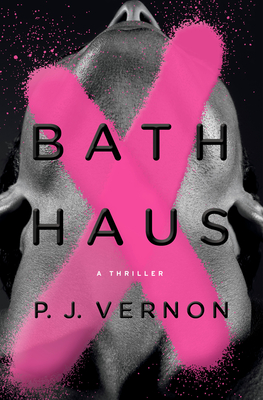
Previously Reviewed:

Kate’s Review: “Hour of the Witch”

Book: “Hour of the Witch” by Chris Bohjalian

Publishing Info: Doubleday Books, May 2021

Where Did I Get This Book: I received an eARC from NetGalley.

Book Description: A young Puritan woman–faithful, resourceful, but afraid of the demons that dog her soul–plots her escape from a violent marriage in this riveting and propulsive historical thriller from the #1 New York Times bestselling author of The Flight Attendant.

Boston, 1662. Mary Deerfield is twenty-four-years-old. Her skin is porcelain, her eyes delft blue, and in England she might have had many suitors. But here in the New World, amid this community of saints, Mary is the second wife of Thomas Deerfield, a man as cruel as he is powerful. When Thomas, prone to drunken rage, drives a three-tined fork into the back of Mary’s hand, she resolves that she must divorce him to save her life. But in a world where every neighbor is watching for signs of the devil, a woman like Mary–a woman who harbors secret desires and finds it difficult to tolerate the brazen hypocrisy of so many men in the colony–soon finds herself the object of suspicion and rumor. When tainted objects are discovered buried in Mary’s garden, when a boy she has treated with herbs and simples dies, and when their servant girl runs screaming in fright from her home, Mary must fight to not only escape her marriage, but also the gallows. A twisting, tightly plotted thriller from one of our greatest storytellers, Hour of the Witch is a timely and terrifying novel of socially sanctioned brutality and the original American witch hunt.

Review: Thank you to NetGalley for providing me with an eARC of this novel!

Back in middle school I decided to read “The Crucible” by Arthur Miller, after my drama class chose it as one of the scenes that we’d perform and I was voted to be Mary Warren in said scene. After reading the whole play my thirteen year old self was super indignant, and I basically have had a seething anger deep in my soul for any kind of witchcraft or Satanic Panic fueled hysteria ever since. Because of this, I was eager to snatch up the new historical fiction thriller “Hour of the Witch” by Chris Bohjalian. I’ve enjoyed Bohjalian’s stories in the past, I love me a good historical fiction thriller, and demolishing the Patriarchy in Puritan times? We ALL know how I feel about that!

Yes please. (source)

Now I don’t want anyone thinking that “Hour of the Witch” is a pro-Witchcraft-As-Way-To-Smash-Misogyny kind of tale. Instead, Bohjalian takes the idea of a community turning on a strong minded woman and tries to tell it in a way that would be realistic towards the time and culture. Mary isn’t a woman who ends up turning to Satan because it’s the only clear path to agency in her life. Instead, we get a tale of a woman who dares stand up for herself and wants to advocate for her health and happiness against an abusive husband while still being God fearing and devout, and while also questioning power structures that are hypocritical. I admittedly don’t have as much breadth of knowledge in this part of American history and Puritan times, but from the historical notes in the back it seems like Bohjalian did his very best to make it realistic, and therein I found Mary to be believable. Her story of trying to divorce her abusive husband Thomas, and being the target of scorn and then witchcraft accusations for daring to push against the misogynistic norms, is suspenseful, frustrating, and incredibly readable. I loved Mary as a character, and seeing her fight in the face of powerful and abusive men was both cathartic, but also tense, as we all know how the power structures during the Puritan times could easily cry ‘witch’ and have a person killed (that said, while this story really does a good job of addressing the oppression that women faced, little is noted of the Indigenous groups in the area. I’m not sure how Bohjalian could have tackled such a huge aspect from Mary’s perspective without feeding into paternalistic or oppressive views, but when the groups were mentioned it felt like a nod without doing much work beyond that. Take that as you will).

In terms of plot, “Hour of the Witch” is definitely steeped in suspense, as well as a little bit of mystery. Working against Mary in her endeavors are her husband’s standing in the community, the fact that no one has seen him hurt her as he’s always careful to do it when they are alone, and the fact that some three tined forks were found buried in her yard, which at the time were thought to be ‘the devils tines’ due to the three prongs resembling a pitchfork (side note: when I worked at a historic fort that had a context set during the Georgian period, a dining demonstration did mention the lack of three tined forks in America in spite of the fact they were prevalent in Europe. We didn’t talk about ‘the devils tines’ aspect, however). The questions are 1) is Mary going to be able to escape her husband without being convicted of witchcraft, and 2) who IS the one who is setting her up to look like a witch? Such moments will make you shake with rage, but it also just goes to show that some things never change. Mary is accused of lying for attention, lying to offset the fact she hasn’t been able to have children as of yet, lying because she’s lustful, and lying because she’s a witch. These days, maybe we don’t see as much ‘witch’ stuff, but the rest of those accusations against an abused woman in hopes of painting her as a liar are all too familiar. And as for what is really going on with the buried forks in her yard, I really enjoyed trying to figure out what was going on there, as Bohjalian has a whole SLEW of suspects and possibilities, some one which are not as they seem. I was left on pins and needles worrying about what was going to happen to Mary, as well as wanting to spit nails out of rage when looking at how the men in the community (with a couple exceptions) and some of the women were treating her because of the misogyny that was rife. BE PREPARED TO BE MAD.

Overall, I thought that “Hour of the Witch” was a pretty good read, with a unique setting that felt timeless all the same. It may not be the Satanic feminism that I tend to love, but I still enjoyed it!

Rating 8: Suspenseful and unique in voice and setting, “Hour of the Witch” tells a tale as old as time about misogyny, women, and a society that uses one to keep the other in its place no matter what the outcome.

Reader’s Advisory:

“Hour of the Witch” is included on the Goodreads lists “Witch Hunts in Historical Fiction”, and “2021 Gothic”.

Find “Hour of the Witch” at your library using WorldCat, or a local independent bookstore using IndieBound!

Kate’s Review: “Don’t Tell a Soul”

Book: “Don’t Tell a Soul” by Kirsten Miller

Publishing Info: Delacorte Press, January 2021

Where Did I Get This Book: I received an eARC from NetGalley.

Book Description: People say the house is cursed. It preys on the weakest, and young women are its favorite victims. In Louth, they’re called the Dead Girls.

All Bram wanted was to disappear—from her old life, her family’s past, and from the scandal that continues to haunt her. The only place left to go is Louth, the tiny town on the Hudson River where her uncle, James, has been renovating an old mansion. But James is haunted by his own ghosts. Months earlier, his beloved wife died in a fire that people say was set by her daughter. The tragedy left James a shell of the man Bram knew—and destroyed half the house he’d so lovingly restored.

The manor is creepy, and so are the locals. The people of Louth don’t want outsiders like Bram in their town, and with each passing day she’s discovering that the rumors they spread are just as disturbing as the secrets they hide. Most frightening of all are the legends they tell about the Dead Girls. Girls whose lives were cut short in the very house Bram now calls home.

The terrifying reality is that the Dead Girls may have never left the manor. And if Bram looks too hard into the town’s haunted past, she might not either.

Review: Thank you to NetGalley for providing me with an eARC of this novel!

I decided to pick up “Don’t Tell a Soul” by Kirsten Miller after a Minnesota snow storm, one of the first of the season and no doubt a precursor to a long winter ahead. There is just something about the dead of winter that makes a haunted house story feel all the more ominous, probably the isolation factor (which is amped up by the pandemic we are facing right now), and while my review is just now coming out in the Spring, I will say that had I read it now that feeling would have been different. I hadn’t read anything by Miller before this book, so I had no idea what to expect. All I wanted was something creepy and satisfying to match the atmosphere, as well as a story that would keep me on my toes and tick all the boxes of a genre that I love. And I didn’t really get that from this book, unfortunately.

We will start with what I did like about this book. For one, there were some really creepy moments within the manor house, moments that felt like they could have fit right in in a classic haunted house story. From flashes of someone running across the property at night, to the sense of someone standing just around the doorway but right out of sight, the unsettling moments were crafted and described very well. I also liked how Miller takes the idea of the tragic woman in a Gothic haunted house story and tweaks with it a bit. There was a line I loved in particular, “Ghosts and girls go hand in hand. Why do you suppose that is?” It gave me chills, as so many ghost stories, especially in this subgenre, do have to do with women who were probably victims in one way or another. Instead of running with the outcome as interesting, Miller decides to look at the victimization at hand and show the injustice of that. Many of the women in this story are victims of misogyny and rape culture, and there is a lot of pushback against that, which I appreciated.

But the qualms I had with “Don’t Tell a Soul” skewed my ultimate enjoyment of the novel. For one, while we get a lot of hints about Bram’s tragic backstory, up until the reveals about her circumstances we get a lot of ‘other girls aren’t like me’ and ‘but if they knew who I REALLY was they wouldn’t think that’ kind of malarky that I find frustrating. “I’m Not Like Other Girls” is frustrating when it’s used to make a girl seem cooler, and it’s just as frustrating when it’s used to make a girl seem tragic. By the time we did find out what was going on with her, the build up didn’t match the way that it was just kind of stated and then not explored. It also felt like a lot of the people in her circles were just there to be awful and unsympathetic to bolster her tragic-ness, but it made them feel more two dimensionally villain-y than actual real world problematic people. On top of all that, while I DID like how Miller takes apart the idea of the ‘crazy girl in the haunted manor’ trope we’ve seen many a time before, it was done in a lot of heavy handed ways that felt more like telling as opposed to showing.

My biggest problem, however, was that while “Don’t Tell a Soul” wanted to make good points about misogyny and the dangers that women face, too often was the bad behavior of certain men written off as okay. There were many times where Bram was feeling intimidated by local men in the town, while characters who are supposed to be ‘good’ would tell her that she didn’t have anything to worry about when it came to them. My biggest issue of this was with the character Maisie. Maisie is a local girl who befriends Bram, and is there to be the character that makes you question the ‘crazy woman’ tropes, as she actively pushes back against it in theory, and also has to deal with a mother who has a reputation for being a crazy alcoholic (but is in actuality dealing with trauma). Maisie continuously brings up some really good points, but she herself is toxic in many ways. One of the biggest examples was how she was quick to defend the very clearly abusive and bad behavior of local men (spoilers here: at one point in hopes of ‘saving’ Bram from a situation, she literally gets two local men to kidnap her and tries to write it off as ‘oh their intentions were good you don’t have to worry about the men here’. WHAT THE FUCK). I was fine with the taking down of the privileged wealthy men who were abusing the town and its locals in various ways, but it felt like others who were behaving in other bad ways got more of a pass, and that didn’t sit right.

Overall, I found “Don’t Tell a Soul” mundane and frustrating. There were glimmers here and there, but it missed the mark for me.

Rating 5: Character development felt left behind in favor of messaging, but “Don’t Tell a Soul” brings up some interesting, though not terribly unique, points about misogyny.

Reader’s Advisory:

“Don’t Tell a Soul” is included on the Goodreads list “2021 YA Mysteries and Thrillers”.

Find “Don’t Tell a Soul” at your library using WorldCat, or a local independent bookstore using IndieBound!

Kate’s Review: “Mirrorland”

Book: “Mirrorland” by Carole Johnstone

Publishing Info: Scribner, April 2021

Where Did I Get This Book: I received an ARC from the publisher.

Book Description: With the startling twists of Gone Girl and the haunting emotional power of Room, Mirrorland is a thrilling work of psychological suspense about twin sisters, the man they both love, and the dark childhood they can’t leave behind.

Cat lives in Los Angeles, far away from 36 Westeryk Road, the imposing gothic house in Edinburgh where she and her estranged twin sister, El, grew up. As girls, they invented Mirrorland, a dark, imaginary place under the pantry stairs full of pirates, witches, and clowns. These days Cat rarely thinks about their childhood home, or the fact that El now lives there with her husband Ross.

But when El mysteriously disappears after going out on her sailboat, Cat is forced to return to 36 Westeryk Road, which has scarcely changed in twenty years. The grand old house is still full of shadowy corners, and at every turn Cat finds herself stumbling on long-held secrets and terrifying ghosts from the past. Because someone—El?—has left Cat clues in almost every room: a treasure hunt that leads right back to Mirrorland, where she knows the truth lies crouched and waiting…

A twisty, dark, and brilliantly crafted thriller about love and betrayal, redemption and revenge, Mirrorland is a propulsive, page-turning debut about the power of imagination and the price of freedom.

Review: Thank you to Scribner for sending me an ARC of this novel!

Right before I picked up “Mirrorland” by Carole Johnstone, I gave up on a thriller novel involving twin women, one of whom goes missing off a boat, and the other who finds herself getting closer to her twin’s husband after her sister’s supposed death. I actually ended up giving up on it, and it just wasn’t gelling with me. So imagine my double take when I picked up “Mirrorland”, and found a story about twin women, one of who goes missing off a boat, and the other getting closer to the MIA twin’s husband. Coincidence like whoa! Very “Dante’s Peak” and “Volcano”! All that aside, I did find myself more interested in “Mirrorland”, and didn’t find it hard to finish. But that only gets one so far.

“Mirrorland” has a lot of promise and potential that made me interested to read it, but the execution was a little lackluster. In terms of the good, I loved seeing Cat try to hunt through her old home, finding out piece by piece what someone (could it be El?) has left for her to find. As she slowly peels back the clues and starts to piece together what could have happened to her sister, we get a really fun narrative device that feels like it could also be unreliable. I also liked slowly learning about what Mirrorland’s purpose was for Cat and El, and the slow reveal as to what their home life was like that necessitated a place like Mirrorland. There were genuine surprises to go with it, and some of the big reveals totally caught me off guard.

But that is part of the problem with this book. For a few of the twists and reveals, one in particular that I don’t want to go into too much detail about, we have to really, REALLY do some suspension of disbelief and plot gymnastics for it to work. By the time we got to that big reveal, it was so out of left field that we had to have a character actively sit down and explain it, in the ultimate telling versus showing strategy. It feels a lot like the end of “Psycho”, where we get a stilted monologue about what the heck was going on with Norman Bates kind of offsets the entire film. It doesn’t work very well there, and it doesn’t work very well here either. And really, it’s so farfetched and unbelievable, and the story before it isn’t strong enough to make up for it (unlike “Psycho”). I was kind of flabbergasted that we got all of the wrap up in a monologue, as that feels like a big no no to me.

And to add insult to injury, I really didn’t connect with any of the characters. The only one that we really got to know was Cat, and she didn’t feel like she was reinventing the wheel when it comes to unreliable and tortured protagonists in stories like this one. And everyone else fit into very familiar and well worn tropes we see in the genre without really exploring beyond. Overall, it just felt like more of the same. While I definitely don’t doubt that this book and the book I had given up on previously were complete coincidences when it came to plot details and ideas, the fact remains that there just didn’t feel like there was a lot of originality going on in this book, nor were the characters people I was invested in.

“Mirrorland” was a bit of a letdown. Books don’t always have to reinvent the wheel, but if you’re going to lean into familiar themes and ideas, I want a seamless execution.

Rating 5: Lots of twists and turns, but some real plot gymnastics to make some of them work and not terribly interesting characters makes “Mirrorland” a bit of a letdown.

Reader’s Advisory:

“Mirrorland” is included on the Goodreads list “Mystery & Thriller 2021”.

Find “Mirrorland” at your library using WorldCat, or at a local independent bookstore using IndieBound!

Kate’s Review: “The Forest of Stolen Girls”

Book: “The Forest of Stolen Girls” by June Hur

Publishing Info: Feiwel & Friends, April 2021

Where Did I Get This Book: I received an eARC from NetGalley.

Book Description: After her father vanishes while investigating the disappearance of 13 young women, a teen returns to her secretive hometown to pick up the trail in this second YA historical mystery from the author of The Silence of Bones.

Hwani’s family has never been the same since she and her younger sister went missing and were later found unconscious in the forest, near a gruesome crime scene. The only thing they remember: Their captor wore a painted-white mask. To escape the haunting memories of this incident, the family flees their hometown. Years later, Detective Min—Hwani’s father—learns that thirteen girls have recently disappeared under similar circumstances, and so he returns to their hometown to investigate… only to vanish as well.

Determined to find her father and solve the case that tore their family apart, Hwani returns home to pick up the trail. As she digs into the secrets of the small village—and reconnects with her now estranged sister—Hwani comes to realize that the answer lies within her own buried memories of what happened in the forest all those years ago.

Review: Thank you to NetGalley for providing me with an eARC of this novel!

Last year I read June Hur’s novel “The Silence of Bones”, and quite enjoyed it. It’s always great to see new Own Voices authors getting new stories out into the world, especially within genres that tend to be associated with whiteness. While I know that there are a myriad of historical mysteries out there from many backgrounds, in my experience and the experiences of people around me the general thoughts on the genre tend to skew towards European or American settings. I want to stretch and challenge this thought in my own reading. So given that “The Silence of Bones” took place in 19th Century Korea, it was a fresh feeling setting when I read it, and I liked that a lot. When I saw that Hur had a new historical myster/thriller coming out called “The Forest of Stolen Girls”, I was massively excited to read it, hoping that it would live up to “The Silence of Bones” in terms of plotting and mystery. And I have great news: it exceeded it.

Let’s start with the time, setting, and characters. Given that Hur really connected with me on all three of these points with “The Silence of Bones”, I had high hopes that same would be said for “The Forest of Stolen Girls”. And this time she went even above and beyond my expectations. Once again we are in historical Korea, though we’ve gone even further back in time to the 15th Century on Jeju Island. The setting is isolated and remote, and for Hwani, who has spent a few years on the mainland it is a jarring return because of culture shifts and also because of the trauma that she suffered there. I loved the descriptions of the island and the nature and wilderness that surrounds the village, and I also loved that Hur did throw in tidbits of historical facts (like the Haenyeo divers, and how on Jeju girls weren’t much less valued than boys because it was the girls who did the diving), about the area. It just felt like a unique setting, one that lends itself very well to the plot, and it was one that I greatly enjoyed. I also really liked our main characters, Hwani and Maewol, two sisters separated by distance and also their shared trauma and the fallout. The strong bond that they share as sisters has been tested and strained because of Hwani being sent to the mainland to live with her aunt, while Maewol was left behind, a decision made by their father. Hwani has the utmost respect for him, while Maewol resents him. Hwani felt constrained by her time on the mainland, while Maewol felt abandoned. Their frustrations and resentments, of course, come out and target each other, but this felt realistic and true to how sometimes sibling relationships can be fraught because of circumstances they can’t always control. I loved seeing both of them have to learn to trust each other again, and have to team up and use each other’s various skills to try and solve what had happened to their father, and what had happened to the local girls.

In terms of the mystery itself, I found it to be very engaging, suspenseful, and well crafted. There are a number of people in their town who could be very believable suspects when it comes to who is taking teenage girls, and Hur makes sure to give believability as well as deniability to almost all of them. The way that the mystery connects to Hwani and Maewol is well done, as is the compounded mystery of what happened to their father when he tried to go solve it once and for all. And on top of all that, for added context Hur adds a historical note at the end of the book that talks about human trafficking, specifically that of girls and women, during this time period in Korea, which really put into perspective that while the years and centuries can keep on going and progress and changes can be made, but some things just keep on happening and one of those things is violent misogyny.

“The Forest of Stolen Girls” is another great historical mystery/thriller from June Hur. If you are looking to shake up your historical fiction content and reading lists, definitely give this one a look! I cannot wait to see what Hur comes out with next.

Rating 8: A dark, suspenseful novel with timeless themes and a unique setting, “The Forest of Stolen Girls” is a solid historical mystery!

Reader’s Advisory:

“The Forest of Stolen Girls” is included on the Goodreads lists “Asian Historical Fiction”, and “2021 YA Mysteries and Thrillers”.

Find “The Forest of Stolen Girls” at your library using WorldCat, or at a local independent bookstore using IndieBound!