Kate’s Review: “Nothing But Blackened Teeth’

Book: “Nothing But Blackened Teeth” by Cassandra Khaw

Publishing Info: Tor Nightfire, October 2021

Where Did I Get This Book: I received an eARC from NetGalley.

Book Description: Cassandra Khaw’s Nothing But Blackened Teeth is a gorgeously creepy haunted house tale, steeped in Japanese folklore and full of devastating twists.

A Heian-era mansion stands abandoned, its foundations resting on the bones of a bride and its walls packed with the remains of the girls sacrificed to keep her company. It’s the perfect wedding venue for a group of thrill-seeking friends.

But a night of food, drinks, and games quickly spirals into a nightmare. For lurking in the shadows is the ghost bride with a black smile and a hungry heart.

And she gets lonely down there in the dirt.

Review: Thank you to NetGalley for providing me with an eARC of this novella!

While I’ve seen and read a fair number of Japanese and Japanese inspired horror things, I know that there are many, MANY stories out there that I haven’t come across as of yet. I don’t have a very vast knowledge of Japanese folklore in general, and therefore I’m definitely game to read anything that would broaden my horizons in that manner. Enter “Nothing But Blackened Teeth” by Cassandra Khaw, a new horror novella that takes place in a rural Heian-Era mansion in Japan that is super, super haunted. I’m no stranger to various Japanese haunted house stories, from “Ju-On” to “Hausu”, but the cover alone of this book caught my attention. And hey, haunted house stories? Absolutely my jam. I held onto “Nothing But the Blackened Teeth” for what was supposed to be a stormy night, and though we didn’t get the rain we were promised I still found myself reading the book at night, which was, perhaps, a mistake. Because it’s SCARY.

“Nothing But Blackened Teeth” is a novella clocking in at around 120 pages, but Khaw has no trouble building a plot, pulling out everything they can from their characters, and leading them to a terrifying ending. It never feels rushed to get to that point, it never feels like we could have learned more about our cast or the house itself, and it is engaging and definitely terrifying. Khaw has a gift for description and atmosphere, as I could see the mansion as it goes from abandoned but docile home to an incredibly disturbing hellscape. While Cat is definitely the character we get to know the best, we still get to know enough about most of her friends and all of the tenuous relationship strings between them to fully buy into the choices they make, from the good to the bad. It feels like a slow burn at first, but the tension starts to build from the get go and when it finally releases it’s SO unnerving and scary.

And a lot of the scares come from the Japanese folklore that the horror elements derive themselves from, namely the Ohaguro-Bettari, a spirit that takes the form of a bride whose facial features are only a mouth filled with black teeth. I know a little bit about Japanese folklore and ghosts, specifically the Onryō, so seeing another yokai (spirit) at the forefront was refreshing and new to me. It made me do some independent reading on more Japanese folklore regarding ghosts and entities, which was really fun for me as a horror fan who likes lore of all kinds. And boy does Khaw really make this the stuff of nightmares. Cat is the first to start seeing this yokai, and given that she has a history of mental problems we get the usual ‘is this really happening or am I going crazy’ questioning that comes with such a history in stories like these. But what I liked is that for the most part Cat isn’t portrayed as hallucinating to the reader, and instead of an unreliable narrator we get a woman who is seeing something VERY wrong, and therein slowly sending shivers up our spines every time she sees something. Until, that is, it goes full gonzo bloodsoaked horror show. Khaw nails every part of the horror here, and the end was so incredibly disturbing that I had to flip back to re-read a few things to make sure that THAT was what had happened. I think that I would have liked even more suspense before we got to the gory ending, and maybe a little more easing into the wrap up, but overall it was enjoyable as hell and a sinister ghost story soaked in viscera and blood. And very easy to read in one sitting (though maybe not late at night, a tip from me to you)!

“Nothing But Blackened Teeth” is an enjoyable novella that set me on edge. Halloween is almost here, and if you haven’t read this one yet you should make it a part of your reading list before the holiday passes us by!

Rating 8: Disturbing, atmospheric, and brimming with Japanese folklore and yokai, “Nothing But Blackened Teeth” is the perfect short read for this Halloween season!

Reader’s Advisory:

“Nothing But Blackened Teeth” is included on the Goodreads lists “Celebrate Horror 2021”, and “Diverse Horror”.

Find “Nothing But Blackened Teeth” at your library using WorldCat, or at a local independent bookstore using IndieBound!

Kate’s Review: “Chasing the Boogeyman”

Book: “Chasing the Boogeyman” by Richard Chizmar

Publication Info: Gallery Books, August 2021

Where Did I Get This Book: The library!

Book Description: The New York Times bestselling coauthor of Gwendy’s Button Box brings his signature prose to this story of small-town evil that combines the storytelling of Stephen King with the true-crime suspense of Michelle McNamara.

In the summer of 1988, the mutilated bodies of several missing girls begin to turn up in a small Maryland town. The grisly evidence leads police to the terrifying assumption that a serial killer is on the loose in the quiet suburb. But soon a rumor begins to spread that the evil stalking local teens is not entirely human. Law enforcement, as well as members of the FBI are certain that the killer is a living, breathing madman—and he’s playing games with them. For a once peaceful community trapped in the depths of paranoia and suspicion, it feels like a nightmare that will never end.

Recent college graduate Richard Chizmar returns to his hometown just as a curfew is enacted and a neighborhood watch is formed. In the midst of preparing for his wedding and embarking on a writing career, he soon finds himself thrust into the real-life horror story. Inspired by the terrifying events, Richard writes a personal account of the serial killer’s reign of terror, unaware that these events will continue to haunt him for years to come.

A clever, terrifying, and heartrending work of metafiction, Chasing the Boogeyman is the ultimate marriage between horror fiction and true crime. Chizmar’s writing is on full display in this truly unique novel that will haunt you long after you turn the final page.

Review: I was describing “Chasing the Boogeyman” to my mother during one of my parents weekly visits, where we inevitably start talking about what we are reading at the moment. She basically asked ‘so wait, is this a fictional book or a nonfiction book?’, to which I paused for a beat or two and said ‘I…. don’t know?’ And at the time I didn’t feel like I did. I knew that Richard Chizmar had written horror novels, as I’ve read him before, and I knew that people were describing it as ‘metafiction’. But surely this book that read like a narrative nonfiction story was nonfiction, right? I mean, there was a whole introduction by James Renner who talked about a previous edition and how he always wondered what happened to the Edgewood Boogeyman case! But it’s catalogued as fiction! IS THIS ACTUALLY REAL?!

No, “Chasing the Boogeyman” is not a true story, at least not the meat of it. And that is a testament to Chizmar’s writing and set up that I found myself questioning if it was a true story or not in spite of many pieces of evidence and flat out statements that it is, indeed, not. This book definitely reads similar to Michelle McNamara’s personal “I’ll Be Gone In the Dark”, as a fictionalized version of Richard Chizmar investigates a hometown serial killer and finds himself not only obsessed, but also perhaps on the killer’s radar. The setting of Edgewood, Maryland is real, and Chizmar does take anecdotes and community locations and people who exist or existed in the 1980s (when the bulk of the story takes place) to make the story even more realistic. It makes for a very engaging and realistic tale, and it makes the town of Edgewood just as much a character as Chizmar and his mirror-universe self and counterparts. The set up is unique, and the details that Chizmar puts in, from that tricky intro to staged photographs and documents are so great and just add to the narrative nonfiction feel. It’s easily one of the most ambitious works I’ve read this year in how it combines two completely different takes on literature and creates a fictional story that reads like a real one.

The plot itself isn’t terribly ambitious to the naked eye. A serial killer preying on young women in a small town is, unfortunately, all too familiar within the true crime world. The mystery is well set up, and by the time we got to the reveal I was legitimately surprised by the whodunnit solution (and we also get a very unsettling interview between Chizmar and the perpetrator, which just gave me CHILLS). But I think that what makes it stand out the most is that by framing it as Chizmar having this personal connection to the community, and an obsession with this dark reality that is functioning in it, it makes the story more about the darkness of small town America, and how sometimes we have to reckon with the dark realities of our childhoods. While Chizmar (both fictional and real world) has happy memories about growing up in Edgewood, he also has to ruminate on the fact that really bad things happened to women in his community, and how even beyond that there are definitely imperfect and dangerous things in small town America that are hidden behind the veneer of tight knit community and traditional morality. But as more girls and women are attacked and killed, the paranoia, gossip, and fear starts to show that people are capable of destructive things that aren’t limited to murder. It feels a lot like a Stephen King deconstruction of small town values, but since Chizmar has made it personal, it has its own spin. And his affection for his real small town of Edgewood makes it so that it feels more bittersweet of a revelation, as opposed to a Derry-esque complete take down of Americana.

“Chasing the Boogeyman” is unique and ambitious, and I don’t think I’ve ever read anything quite like it. Part horror, part thriller, part faux (but also a bit real) memoir, it is truly a book that stands out this year.

Rating 8: An ambitious dive into metafiction that explores true crime through a fictional lens, “Chasing the Boogeyman” is unique and entertaining, and unsettling as well.

Reader’s Advisory:

“Chasing the Boogeyman” is included on the Goodreads lists “Horror With an Author As the Main Character”, and “Mystery & Thriller 2021”.

Find “Chasing the Boogeyman” at your library using WorldCat, or at a local independent bookstore using IndieBound!

Kate’s Review: “The Seven Visitations of Sidney Burgess”

Book: “The Seven Visitations of Sidney Burgess” by Andy Marino

Publishing Info: Redhook, September 2021

Where Did I Get This Book: I received an ARC from the publisher.

Book Description: From an electrifying voice in horror comes the haunting tale of a woman whose life begins to unravel after a home invasion.

Possession is an addiction.

Sydney’s spent years burying her past and building a better life for herself and her young son. A respectable marketing job, a house with reclaimed and sustainable furniture, and a boyfriend who loves her son and accepts her, flaws and all.

But when she opens her front door, and a masked intruder knocks her briefly unconscious, everything begins to unravel. She wakes in the hospital and tells a harrowing story of escape. Of dashing out a broken window. Of running into her neighbors’ yard and calling the police.

The cops tell her a different story. Because the intruder is now lying dead in her guest room—murdered in a way that looks intimately personal. Sydney can’t remember killing the man. No one believes her.

Back home, as horrific memories surface, an unnatural darkness begins whispering in her ear. Urging her back to old addictions and a past she’s buried to build a better life for herself and her son. As Sydney searches for truth among the wreckage of a past that won’t stay buried for long, the unquiet darkness begins to grow. To change into something unimaginable. To reveal terrible cravings of its own.

Review: Thank you to Redhook for sending me an ARC of this novel!

It isn’t super often that you find a demonic possession story in my book pile when it comes to horror. I’m not against it, really, as I have certainly enjoyed a few stories that involve such things. But there is always an undercurrent of religious fervor that goes hand in hand with possession tales, and I have no problem with that as a concept. It just doesn’t really connect with me. But something about “The Seven Visitations of Sidney Burgess” by Andy Marino caught my eye when it read the description, and I felt compelled to pick it up. It’s been awhile since I’ve read a book with possession at its heart, and one that looks at it through the lens of addiction seemed like a take that I hadn’t encountered before in the subgenre.

I will say that in terms of the possession angle of this story it goes to unpredictable places. In general that is usually a good thing for me, because as a rule I am not as able to connect to traditional possession tales due to a serious lack of belief in demons and devils. If you take that and go to more interesting places, however, be it by examining a priest’s loss of faith a la “The Exorcist”, or a professional skeptic’s slow descent into turmoil a la “The Last Days of Jack Sparks”, I will be more on board. And in this book we go in unexpected and unique territory regarding Sidney’s ‘swimmer’, as she refers to whatever it is that is making her black out and is always lurking at the edges of her consciousness. I don’t want to give anything away, but I will say that the reveal as to what is going on is definitely unexpected, but didn’t quite work for me. Nor did the rapid time jumping and choppy structure. My guess is that it was supposed to add to the confusion and disorientation that Sidney is feeling as she is losing time and memories and then pulling them back out of the ether, but I found it disruptive more than effective.

What did work was how Marino brings the theme of addiction into the story. Sidney has been sober for nine years when we meet her, and as this ‘swimmer’ starts to slowly encroach upon her consciousness, it tempts her to fall back into old and destructive habits. As Sidney starts to lose her grip on what is up and what is down, she starts to lose the will to remain sober. Marino has a lot of dark and uncomfortable moments when it comes to Sidney’s fight against addiction, both in her past and in her present, and it feels raw and relentless in how he portrays the slow slipping back into an addiction spiral. While the theme of ‘addiction as possession’ is kind of obvious (and ultimately, not the biggest issue when it comes to Sidney’s personal possession problems), Marino makes it feel very powerful and emotional. Part of the dread is wondering how badly Sidney is going to fall. There are also some really gnarly moments of body horror in this book. You probably need a bit of that in a possession story, to be honest, and this book has it in spades.

“The Seven Visitations of Sidney Burgess” went to places I wasn’t anticipating. While it didn’t quite break free from my general apathy towards possession stories, the human and very real world emotional notes are great and will leave the reader unsettled.

Rating 7: Intense, strange, and unique on how it looks at ‘possession’ stories, “The Seven Visitations of Sidney Burgess” is a gory slow burn of a horror novel that has some powerful insights on addiction, but a structure problem and some out there revelations.

Reader’s Advisory:

“The Seven Visitations of Sidney Burgess” is not included on any Goodreads lists yet, but I think that it would fit in on “Demonic Possession”.

Find “The Seven Visitations of Sidney Burgess” at your library using WorldCat, or at a local independent bookstore using IndieBound!

Kate’s Review: “Cackle”

Book: “Cackle” by Rachel Harrison

Publishing Info: Berkley Books, October 2021

Where Did I Get This Book: I received an eARC from NetGalley.

Book Description: All her life, Annie has played it nice and safe. After being unceremoniously dumped by her longtime boyfriend, Annie seeks a fresh start. She accepts a teaching position that moves her from Manhattan to a small village upstate. She’s stunned by how perfect and picturesque the town is. The people are all friendly and warm. Her new apartment is dreamy too, minus the oddly persistent spider infestation.

Then Annie meets Sophie. Beautiful, charming, magnetic Sophie, who takes a special interest in Annie, who wants to be her friend. More importantly, she wants Annie to stop apologizing and start living for herself. That’s how Sophie lives. Annie can’t help but gravitate toward the self-possessed Sophie, wanting to spend more and more time with her, despite the fact that the rest of the townsfolk seem…a little afraid of her. And like, okay. There are some things. Sophie’s appearance is uncanny and ageless, her mansion in the middle of the woods feels a little unearthly, and she does seem to wield a certain power…but she couldn’t be…could she?

Review: Thank you to NetGalley for providing me with an eARC of this novel!

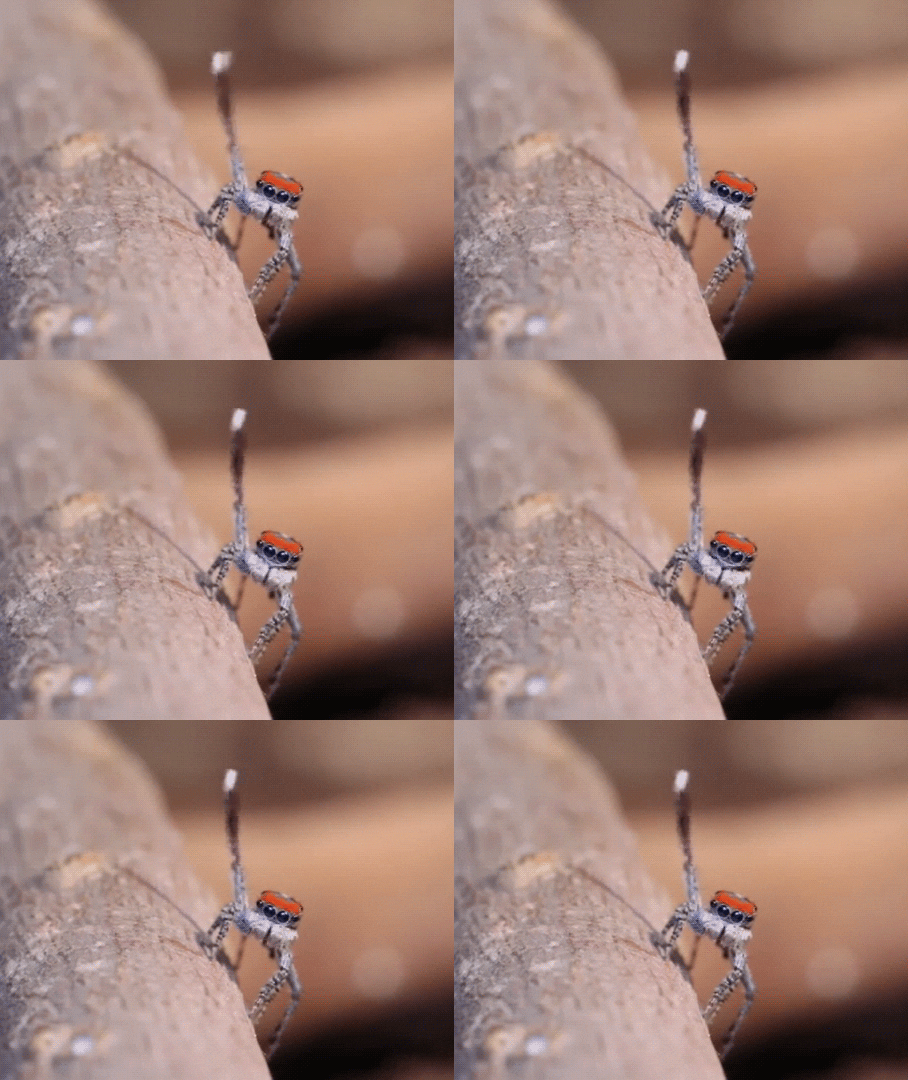
I used to be terrified of spiders. It was a phobia that I eventually outgrew, and now I usually do okay with arachnids (unless they are too big, as well as too big AND inside my house. Then I’m not as fine). I’ve talked about eventually getting a tarantula as a pet, though my husband has nixed that idea. So when I saw that Rachel Harrison had a new book coming out that touted not only the story of a witch, but also an adorable spider pet named Ralph, I was absolutely interested. That is “Cackle”: the story of a woman a bit lost, a witch friend, and a kind and supportive pet spider.

If I’m going to have a spider gif, it’s going to be a cute one. (source)

Is “Cackle” a terrifying follow up to the highly enjoyable “The Return”? Not really. But what it may not have in terror, it has oodles of in charm and feel good lady pal narrative. Our protagonist, Annie, has found herself newly single after he long time boyfriend Sam breaks up with her due to no more ‘spark’ in their ten year relationship. She takes a teaching job in the small town of Rowan, and immediately befriends Sophie, a charming, mysterious woman whom the rest of the town seems terrified of, or at the very least wary. Annie is a relatable (though admittedly a little sad sack-y) main character who feels lost, and Sophie is properly mysterious and perhaps a little intimidating. You blend that together and you find a story that has some familiar notes and beats of one woman helping another become self actualized, but is still framed in a novel way. After all, I can’t think of other lady friendship stories that have a jovial spider named Ralph. Yes, I’m obsessed with Ralph. I loved seeing their friendship slowly grow and blossom, and how said friendship helps Annie become a strong and confident person, even if with that confidence comes a little bit of darkness that she never anticipated (as well as questions about whether or not Sophie is dangerous… she is a witch, after all). Oh, and a spider infestation, a set of angry ghosts, and newfound powers that may be running a bit amok.

I went in expecting something a little more toxic, just because of how Harrison’s previous novel went, but “Cackle” is actually a really lovely story about two women who feel alone and isolated and then find joy in each other’s company. It just so happens that one of them is a witch. I really loved Sophie, from the way that she looked at the world to how Harrison addresses her past traumas (being a witch makes you a target, after all), to how supportive, but also lonely, she is. True, there are questions about her actual intentions and motivation, but it becomes clear that this is less a toxic friendship story, and more a woman discovering herself story. Annie is the less interesting character, but as she starts to believe in herself, she starts to take her power back. In some cases, literally. As Annie believes in herself more, partially due to Sophie’s cheerleading, she starts to develop powers of her own. And THIS is where some of the ‘horror-esque’ moments happen. There are definite gnarly moments that involve spells, bones, blood, and more, but it never feels too scary and is always rooted with a tongue firmly in cheek. True, I think that Harrison kind of leads us down a primrose path with some red herrings, but by the end I just had a smile on my face as two women go on a journey find friendship and self sufficiency in a society that has told them they have to tamp down their true selves. It’s cathartic and enjoyable.

“Cackle” isn’t the scary book I thought it would be, but it’s a good choice for a Halloween read if you want something a little spooky, but not terribly horror filled. Why not spend the Season of the Witch with Sophie?

Rating 9: A fun witchy tale about friendship, finding yourself, and the joys of spiders as pets. “Cackle” is a bit of light horror for his Halloween season!

Reader’s Advisory:

“Cackle” is included on the Goodreads list “2021 Horror Novels Written by Women (cis and trans) and Non-Binary Femmes”, and would fit in on “Witchy”.

Find “Cackle” at your library using WorldCat, or at a local independent bookstore using IndieBound!

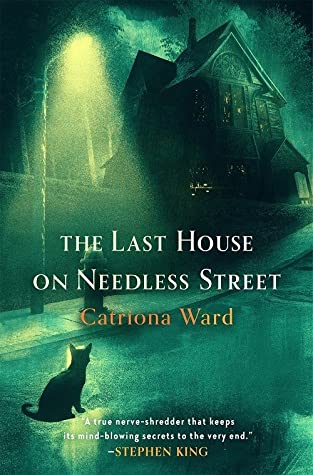
Kate’s Review: “The Last House on Needless Street”

Book: “The Last House on Needless Street” by Catriona Ward

Publishing Info: Tor Nightfire, September 2021

Where Did I Get This Book: I received an eARC from NetGalley.

Book Description: Catriona Ward’s The Last House on Needless Street is a shocking and immersive read perfect for fans of Gone Girl and The Haunting of Hill House.

In a boarded-up house on a dead-end street at the edge of the wild Washington woods lives a family of three. A teenage girl who isn’t allowed outside, not after last time. A man who drinks alone in front of his TV, trying to ignore the gaps in his memory. And a house cat who loves napping and reading the Bible.

An unspeakable secret binds them together, but when a new neighbor moves in next door, what is buried out among the birch trees may come back to haunt them all.

Review: Thank you to NetGalley for providing me with an eARC of this novel!

Welcome to HorrorPalooza 2021!!! I cannot wait to showcase and review all horror, all the time for the month of October, as is tradition, and right off the bat we have one of the most hyped horror novels of the Fall: “The Last House on Needless Street” by Catriona Ward! I had been thinking about this one as a solid HorrorPalooza choice for so long that I completely forgot that it actually came out in September (hence I missed it on my highlights that month), but by no means does that mean I wasn’t eager for it. And I’m here to report that while it was much anticipated by me, it wasn’t as compelling of a story as I expected. But who doesn’t love the idea of a cat being a character with perspective chapters?

“The Last House on Needless Street” follows a man named Ted, who lives a fairly solitary life outside of his cat Olivia and his daughter Lauren. They all live on Needless Street, and Ted is dealing with an angry teenager, as well as an unreliable memory that is causing him some problems. His cat Olivia is constantly watching over him, her devotion true but starting to wane as she starts to see changes in his behavior. And then there is Dee, a new neighbor who has moved to Needless Street with one motivation: she believes that Ted was responsible for her sister Lulu’s disappearance a number of years ago, and wants to find out what he did with her. As Dee tries to untangle what is going on with Ted, Ted seems to be shifting into a more and more unstable emotional state as daughter Lauren comes in and out of his life and Olivia observes. Ted’s chapters are haphazard and have a disjointed and unreliable feel to them, which made for a character that I desperately wanted to know more about, for the good or the bad. Olivia’s are VERY funny and feel super cat-like, with both loyalty to her owner/friend Ted as well as an aloof above it all snark. Dee’s are probably the most linear which kind of tie one of the mysteries into the larger story, which then plays into the rest of the story too. I liked all of the voices and found them varied, especially Olivia’s. I mean, a cat being a narrator of a scary story is just so fun. Ward really gives them their own personalities and they all feel pretty realistic for what they are and what their arcs are like.

The plot itself had some bumps, however. Not the tension or the suspense, that was all on point! Ward really knows how to build up atmosphere and wring out every ounce of creepiness and discomfort, no question. There were multiple scenes that just had me on the edge of my seat. However, one of the things that I was seeing about “The Last House on Needless Street” was that it had really surprising twists and turns. I will certainly agree that it does have a couple of those! One even totally took me by surprise, even though looking back there were hints here and there as to the truth of the matter at hand, and I love finding the hints after the fact. But as for the others, I think that there were some desperately laid red herrings that just screamed out that they were red herrings. And I really don’t want to give anything away in regards to some of the reveals, but to really address one of the twists I feel like I have to get into at least a little of the nitty gritty. So here is your SPOILER ALERT! Skip down past the next paragraph if you don’t want to be spoiled.

So what I will say is that one of our characters has Dissociative Identity Disorder, aka DID, aka Multiple Personality Disorder (though this name is out of favor). Generally those who have DID suffered a horrific trauma and in an effort to cope the mind creates ‘alters’, or other personalities. While I thought that Ward did this in a way that didn’t feel shaming or stigmatizing in a ‘all mentally ill people are dangerous’ kind of way (and even listed a number of sources into the research she did about DID, which was good to see), it’s still a bit of a trope in thriller and horror stories these days, having seen it in “I’m Thinking of Ending Things”, “Fight Club”, “Psycho”, and others. And the problem with turning a mental condition into a ‘twist’ is that, even with the best intentions (and I do think that Ward has them here!), it can come off as gimmicky at best and dehumanizing at worst. I myself don’t think that Ward treads into dehumanizing territory, BUT I also don’t have DID, so I’d bet I’m not the best judge of that.

Overall, “The Last House on Needless Street” has its ups and downs! I didn’t find it to be as excitingly twisty as others have, but I did overall enjoy a fair amount about it. Especially Olivia the Cat!

Rating 7: A creepy and somewhat bittersweet story about a man, his cat, and coming to terms with guilt and trauma. But one that relies on a trope that is a bit overdone and becoming more and more controversial.

Reader’s Advisory:

“The Last House on Needless Street” is included on the Goodreads lists “Brilliant Dark Fiction”, and “Books To Get You in the Halloween Mood”.

Find “The Last House on Needless Street” at your library using WorldCat, or at a local independent bookstore using IndieBound!
Kate’s Review: “Glorious Wrestling Alliance: Ultimate Championship Edition”

Book: “Glorious Wrestling Alliance: Ultimate Championship Edition” by Josh Hicks

Publishing Info: Graphic Universe (Tm), October 2021

Where Did I Get This Book: I received an eARC via NetGalley from the author.

Book Description: Step into the ring at Glorious Wrestling Alliance, the universe’s least-professional wrestling company. The Great Carp, an amphibious wonder, is feeling the weight of his championship. Miranda Fury has donned a mask to smash wrestling’s glass ceiling. And Gravy Train is desperate for a new gimmick, but it’s hard when you’re shaped like a giant gravy boat.

Collected in colossal full color for the first time, Josh Hicks’s cult-hit comic covers identity, anxiety, and leg drops. In this hilarious love letter to the surreal theater of pro wrestling, the insecure grapplers of GWA lock up, throw things, throw each other, and occasionally curl up into little balls.

Review: Thank you to Josh Hicks and NetGalley for providing me with an eARC of this novel!

I’ve been with my husband since we were in high school, and I distinctly remember his bedroom being adorned with pro-wrestling posters. Just recently his mother cleaned some of his stuff out of storage at her house, and one of the items was a framed poster of The Rock that is now sitting in our mudroom, waiting to be placed somewhere in our home. I didn’t get into pro wrestling until recently, when a now closed (DAMN YOU COVID) bar in Minneapolis had a Mexican food and pro-wrestling theme. We would go there for drinks, and watch old school matches, and now I appreciate it for the entertainment that it is. So when author Josh Hicks reached out asking if I would be interested in reading his graphic novel “Glorious Wrestling Alliance: Ultimate Championship Edition”, I absolutely jumped at the chance!

“Glorious Wrestling Alliance” follows the wrestlers of the Glorious Wrestling Alliance, a quirky and a little bit of a hot mess in some ways wrestling organization. They are popular and well loved, but their CEO, Ricky Lovett Junior, has the company teetering. On top of that their reigning champion, Great Carp (a being with a fish head for a head and a human body), is suffering from anxiety, one of their bigger heels Death Machine is more interested in poetry than wrestling as of late, a frontman named Gravy Train wants to switch up his character in spite of the fact he is literally shaped like a gravy boat, and Miranda Fury wants to be taken seriously, when the women’s division is sidelined. We have our various moments of focus on each of these characters, and their storylines range from the funny, to the poignant, to the inspirational. You can’t help but root for all of them in their personal missions and goals, and seeing some rise while others start a free fall feels both VERY wrestling, but also very typical of stories about fame. There are definitely absurdist elements to this story (see above: a fish head guy and a man shaped like a gravy boat), but there are also relatable and familiar themes that shine through the absurd. My favorite was definitely Miranda’s arc, as she dons a mask and an androgynous look so that she can wrestle with the guys and be taken seriously. I felt that Hicks captured the frustration of being a woman in an industry that still has a lot of misogyny intertwined with it, and I liked seeing her persevere and kick butt, a lot of the time with humorous results.

Along with this, as a novice pro-wrestling fan who doesn’t see much of it outside of the annual Royal Rumble, Wrestlemania, and the occasional Smackdown here and there, there were a number of cute Easter eggs that I spotted here and there on the pages. From similarities to trajectories that some wrestlers took post-wrestling (a budding writing career? That feels like Mick Foley to me!) to a one off character who is saying Ric Flair’s trademark ‘woo!’, I liked seeing the little references here and there to broader wrestling lore. And I have to imagine that there was a LOT there that a more knowledgable fan would be able to pick up on with ease. Maybe I should make my husband read this, I’m sure he’d spot a lot.

And finally, the artwork feels a lot like quirky cartoons a la “Steven Universe” or something that you may see from Noelle Stephenson, and it worked well for the tone and tongue in cheek attitude that this story has. And the character designs for some of the wrestlers and their mental states are really, really cute. I especially liked the moments where you would see an HP bar for the character depending on what was happening to them in the moment.

The guffaw I let out at this entire panel…. (Source: Graphic Universe)

I thought that “Glorious Wrestling Alliance: Ultimate Edition” was a hoot!! It makes me want to dig up some old hilarious wrestling clips and watch to my heart’s content. There is so much love for the art form on these pages, it’s delightful.

Rating 8: A fun, funny, and sometimes poignant story about pro wrestling and some quirky people who have devoted their lives to it, for better or worse.

Reader’s Advisory:

“Glorious Wrestling Alliance: Ultimate Championship Edition” isn’t on any Goodreads lists at the moment, but I think that it would fit in on “Wrasslin'”.

Find “Ultimate Wrestling Alliance: Ultimate Championship Edition” at your library using WorldCat, or at a local independent bookstore using IndieBound!
Kate’s Review: “Horseman: A Tale of Sleepy Hollow”

Book: “Horseman: A Tale of Sleepy Hollow” by Christina Henry

Publication Info: Berkley Books, September 2021

Where Did I Get This Book: I received an eARC from NetGalley.

Book Description: Everyone in Sleepy Hollow knows about the Horseman, but no one really believes in him. Not even Ben Van Brunt’s grandfather, Brom Bones, who was there when it was said the Horseman chased the upstart Crane out of town. Brom says that’s just legend, the village gossips talking.

Twenty years after those storied events, the village is a quiet place. Fourteen-year-old Ben loves to play Sleepy Hollow boys, reenacting the events Brom once lived through. But then Ben and a friend stumble across the headless body of a child in the woods near the village, and the sinister discovery makes Ben question everything the adults in Sleepy Hollow have ever said. Could the Horseman be real after all? Or does something even more sinister stalk the woods?

Review: Thank you to NetGalley for providing me with an eARC of this novel!

I’ve definitely mentioned it before on this blog, but I will do it again and again: I really love “The Legend of Sleepy Hollow” by Washington Irving. I’ve enjoyed it ever since I was a little kid who watched the Disney adaptation, and I eventually got around to reading the short story, just in time for the Tim Burton adaptation that totally changes the story, but in the best way. The last adaptation I read was “The Spellbook of Katrina Van Tassel”, which I reviewed here and really loved. So quite obviously I was interested in “Horseman: A Tale of Sleepy Hollow” by Christina Henry. For one, I’ve heard good things about Henry as an author and wanted to give her a try. And the other, of course, is the setting of Sleepy Hollow.

When a Halloween Party involves this kind of shenanigans, I definitely am going to love the place that throws it. (source)

“Horseman”, unfortunately, didn’t really live up to my high hopes for a new Sleepy Hollow story. But, as always, I am going to start with the things about this book that did for for me, and that is mostly our protagonist, Ben. Ben is the grandchild of Brom Bones and Katrina Van Tassel, important characters from the original story in that Ichabod Crane was pursuing Katrina, and Brom Bones was almost assuredly the ‘horseman’ that chased Ichabod out of town. We now see that they have married and Brom is still the town hero, as well as being a successful farmer. Ben is short for Bente, as while Ben appears to be a girl, Ben actually is a boy at heart who wants to live life as his true self. I really liked seeing how Christina Henry had a trans character at the forefront, and how it was presented in a way that felt rooted in the time period as how Ben saw himself. It was also really nice seeing Ben’s relationships with his grandparents Brom and Katrina, as he was orphaned at a young age and Brom and Katrina raised him. I liked how Brom nurtures Ben’s gender identity (though this is most likely because he misses his dead son Bendix, but still, the genuine love he felt for Ben was really good), and while Katrina has a harder time, it’s less based in Ben’s identity and more based in the fact that she wishes that she could have the same relationship that Brom has with Ben, and during this time period gender roles make it so that she can’t connect with Ben as easily. All of this felt pretty genuine and novel to me. Big caveat here, however: as a cis woman, I could be totally off base about how Henry decided to portray a trans character. If there are problematic things about this depiction, please let me know.

But here’s the thing: “Horseman” stumbles in a lot of ways for me when it comes to the things that I like about the “Sleepy Hollow” stories. For one, it’s difficult for me to see Brom Bones as anything other than an antagonistic force. I clearly can’t say that Irving meant for him to be something other than a somewhat bullyish but ultimately ‘boys will be boys’ kind of character, but he has ALWAYS come off as a loutish asshole to me ever since I was a little girl watching the Disney version. I especially have little to no patience for men who do very cruel or abusive things and then have no consequences, or get painted as perhaps tricky but certainly not malevolent. To me, Brom Bones is a villain in the original story, as while Ichabod’s intentions towards Katrina are probably dubious at best, taking advantage of his superstitions and throwing a flaming pumpkin at his head because you are mad he likes the woman you like is pretty gross. So I didn’t like how Henry decided to make him this ‘well boys will be boys’ character, especially given how some things shook out for characters from the original story (no spoilers here, though). Along with that, I thought that the reveal of what was behind the new murders involving headless victims didn’t have the resonance that it needed. Henry didn’t really lay the foundation well, and then by the time we found out what was going on, it didn’t have the emotional impact it should have had. And the biggest issue I had with this? The Horseman plays VERY little role in this book. Ben has a mysterious emotional connection to him, but again, the reasons for it aren’t constructed terribly well, and once THAT whole thing plays out, that, too, felt like it didn’t get to the narrative punch it wanted, and needed, to have.

So while I liked the main character quite a bit, as a “Sleepy Hollow” tale “Horseman” didn’t work very well for me. I am not opposed to check out other books by Christina Henry, but perhaps my next move will be with a story I’m not as connected to or picky about.

Rating 5: I love me a good “Sleepy Hollow” reimagining and Ben was a good protagonist, but “Horseman” didn’t have enough Horseman and was a little too kind to characters who probably didn’t deserve it.

Reader’s Advisory:

“Horseman: A Tale of Sleepy Hollow” is included on the Goodreads list “2021 Horror Releases”.

Find “Horseman: A Tale of Sleepy Hollow” at your library using WorldCat, or at a local independent bookstore using IndieBound!
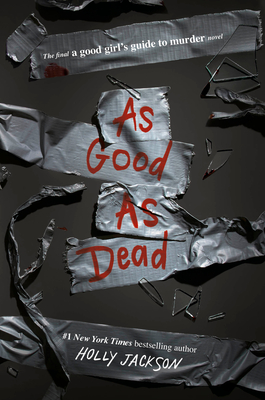
Kate’s Review: “As Good As Dead”

Book: “As Good As Dead” (A Good Girl’s Guide to Murder #3) by Holly Jackson

Publishing Info: Delacorte Press, September 2021

Where Did I Get This Book: I received an eARC from NetGalley.

Book Description: The highly anticipated, edge-of-your-seat conclusion to the addictive A Good Girl’s Guide to Murder series that reads like your favorite true crime podcast or show. By the end, you’ll never think the same of good girls again.

Pip’s good girl days are long behind her. After solving two murder cases and garnering internet fame from her crime podcast, she’s seen a lot.

But she’s still blindsided when it starts to feel like someone is watching her. It’s small things at first. A USB stick with footage recording her and the same anonymous source always asking her: who will look for you when you’re the one who disappears? It could be a harmless fan, but her gut is telling her danger is lurking.

When Pip starts to find connections between her possible stalker and a local serial killer, Pip knows that there is only one choice: find the person threatening her town including herself–or be as good as dead. Because maybe someone has been watching her all along…

Review: Thank you to NetGalley for providing me with an eARC of this novel!

Whenever I get to a final book of a series I have genuinely enjoyed, I am torn between wanting to devour it to see how it all plays out, and savoring it to stave off the end as long as possible. When I saw that “As Good As Dead”, the last book in Holly Jackson’s “A Good Girl’s Guide To Murder” series was coming out, I was thrilled and saddened. I think part of me had hoped that perhaps Jackson would make Pippa Fitz-Amobi, true crime obsessive and amateur detective, a series a la Temperence Brennan or Amelia Peabody. But if this is truly the end for Pip, I have to say that, while I was sad to say goodbye, this goodbye was so satisfying that I have few regrets.

Me saying goodbye to this series (though all three books are on my shelf to revisit whenever). (source)

When we left Pip at the end of “Good Girl, Bad Blood”, she had just survived a house fire and witnessed the brutal murder of sometimes ally, sometimes thorn in her side Stanley, who had been revealed as the son of a notorious murderer and who was killed out of revenge though he himself was a child at the time of the murders. Pip has been downward spiraling ever since, as while she’s counting the days down until she leaves for college, she’s also been taking Xanax on the sly to help her sleep, having PTSD episodes in secret, and fighting back unbridled rage issues. Especially since serial rapist Max Hastings, whose actions had far reaching consequences for Pip and those she cares about, has gone free. I had a very clear idea of what I thought was going to happen with this book. Pip is very unwell, understandably so, and I figured that we were going to get an exploration of a detective on the edge, who is after one last case to try and absolve herself of her roles in past cases and tragedies that came from them. As well as trying to solve the newest case of who is stalking her before it is too late.

In terms of these things, Jackson soars. I completely believed Pip’s mental state, and I loved that Jackson decided to go in this direction. I also found the slowly escalating stalker events in her life to be very creepy and unsettling, and through a combination of narrative as well as pictures, graphs, and epistolary segments (much like the previous books), we have a new case of a long supposedly solved serial killer that Pip now has to attend to, lest she be the next victim. Did this seem a little out there? Sure. But I was totally willing to buy in. Mostly because Jackson really knows how to plot a thriller that has wonderful characters and good connections to previous books/cases in the series.

It was about halfway through this book that I realized that Jackson had something else in store for the reader, and when I realized where it was all going, I was both blown away and a little bit horrified. I’m not going to spoil anything here, as it’s definitely worth keeping close to the vest. But “As Good As Dead” does away with preconceived notions of where this final book could go, even more so than just making Pip a complete emotional wreck. At first I was skeptical and a little bit incredulous, but as the plot goes on, it becomes very clear that Jackson has plans for Pip, and they are probably a foregone conclusion for her storyline given how things have been building since the first book. It’s so well done, and so suspenseful, and it made this final book a serious firecracker of a thriller. And I found myself going back to the previous two books to look for clues to see just how far back Jackson was planning this whole thing. It’s very well done. As mentioned above, while the main issue that Pip is facing (being the target of a potential dormant serial killer) did feel a little bit much, Jackson tells that story and the whole new other story so well that I was just enjoying the hell out of the ride. As well as getting my emotions totally run through the wringer. Sweet, sweet agony.

“As Good As Dead” is a satisfying end to a very enjoyable series! I look forward to seeing what Jackson writes next, and I wouldn’t mind revisiting Pip and all her loved ones down the road.

Rating 9: A supremely satisfying (and at times very very bleak) conclusion to a YA series I love, “As Good As Dead” takes Pip on her darkest case yet.

Reader’s Advisory:

“As Good As Dead” is included on the Goodreads lists “Young Adult THRILLERS”, and “Can’t Wait Crime, Mystery, and Thrillers 2021”.

Find “As Good As Dead” at your library using WorldCat, or at a local independent bookstore using IndieBound!
Previously reviewed:

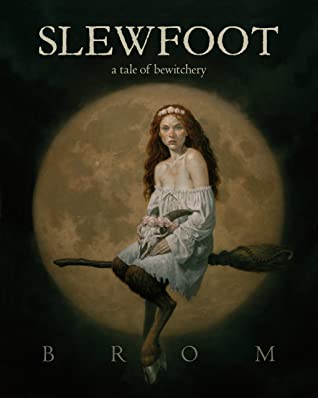
Kate’s Review: “Slewfoot: A Tale of Bewitchery”

Book: “Slewfoot: A Tale of Bewitchery” by Brom

Publishing Info: Tor Nightfire, September 2021

Where Did I Get This Book: I received an eARC from NetGalley, and a preview from Tor Nightfire via a giveaway.

Book Description: A spirited young Englishwoman, Abitha, arrives at a Puritan colony betrothed to a stranger – only to become quickly widowed when her husband dies under mysterious circumstances. All alone in this pious and patriarchal society, Abitha fights for what little freedom she can grasp onto, while trying to stay true to herself and her past.

Enter Slewfoot, a powerful spirit of antiquity newly woken… and trying to find his own role in the world. Healer or destroyer? Protector or predator? But as the shadows walk and villagers start dying, a new rumor is whispered: Witch.

Both Abitha and Slewfoot must swiftly decide who they are, and what they must do to survive in a world intent on hanging any who meddle in the dark arts.

Review: Thank you to NetGalley for providing me with an eARC of this novel, as well as Tor Nightfire for sending me a preview with illustrations.

I’ve crowed on here about how much I love the historical horror film “The Witch” probably dozens of times. If you are sick of it, sorry! But I really love the story of a Puritan family being tormented by a coven that lives in the woods by their farm…. Or is it their own hubris and mistreatment of their teenage daughter Thomasin that is the true horror of that movie? Who can say? Best movie ending EVER. When I was reading up on “Slewfoot: A Tale of Bewitchery” by Brom, I was getting serious “The Witch” vibes, which made me super eager to get my grubby little paws on it, and I sat down one night thinking I’d start it, and enjoy the first few chapters. But then the ol’ Soup Brain happened, because I basically read this book in one sitting.

Jumping for joy at this book, truly. (source)

I never knew that I needed a “Beauty and the Beast” meets “The Witch” story, and yet here we are and “Slewfoot” gave me LIFE. Brom has created two compelling main characters who are isolated, angry, scared, and in need of companionship, and makes you care about both of them so, so much. Our first is Abitha, an Englishwoman who was sent to The Colonies to become a bride for a farmer (at a price, of course, as her father had no need for her but need for drinking cash). Abitha’s husband Edward is caring and a little awkward, and while they aren’t really romantic there is an intimacy there that is lovely, as well as short lived. When Edward dies tragically, Abitha takes over the farm, lest his nasty brother Wallace take it over and take her in as an indentured servant. And then we have a nameless forest spirit who awakens after a slumber, hungry and egged on by other spirits to kill and feed, in hopes that a mysterious Pawpaw tree will rebloom and recapture the magic of the forest. When Abitha and this being meet, thus begins a slow burn friendship, quasi-romance that both their worlds don’t approve of.

For me Abitha’s story was the more compelling one, as she is a headstrong woman in a Puritan community, and tales of this kind of strife are always my jam (especially if there is hope for the woman taking her freedom… and maybe a little revenge). Abitha is very easy to root for, and watching her slowly start to trust ‘Slewfoot’ (as her community calls The Devil, and she isn’t so sure this being she befriends ISN’T a devil of some kind) and come into her own ‘cunning’ powers through his assistance and friendship is so, so gratifying. You want her to remain powerful, you want her to get the best of Wallace as he plots against her and turns the town against her, and you want her and Slewfoot to just be together, be it romantic or platonic or a third kind of love that transcends both.

I also liked seeing Slewfoot slowly learn that he can be more than just a slayer and avenger for nature, which is what the wildfolk Forest, Creek, and Air have told him he is. Slewfoot has no memory of what he was before he went into this stasis, and while he starts out hungry and violent and frankly a bit terrifying, he starts to yearn to be more than this, and to connect with Abitha as they tentatively begin to interact with each other. I did find some of the folklore stuff to be interesting, though it KIND OF also felt a bit appropriative as Brom does take stories from Indigenous cultures of the region and applies them to this tale in some ways. It sounds like he did a lot of research and also spoke to members of the Pequot community to be as accurate and respectful as possible, which is definitely good, but there were some elements of the story that felt glossed over in regards to themes involving Indigenous people and their role in the narrative.

And the horror elements of this story are pretty on point, though they are few and far between until they are REALLY front and center. I would almost consider this more of a dark fairy tale or fantasy than a horror story, but that said I’m going to keep it as horror because there are definitely moments of body horror and just the horror of terrible humans that set me on edge. Slewfoot has his moments (especially when he’s still in the cave at the beginning of the book), but it’s really more the horrors of a fanatical community that will commit terrible acts in the name of God that really made me uncomfortable. As this kind of story always does. Abitha is so beaten down and abused by most of the town (with a few exceptions), that by the time she has to make a choice about mercy or revenge, you almost assuredly will be rooting for revenge. But that is also interesting, because as the story goes on and Slewfoot’s true identity is slowly parsed out, it becomes clear that sometimes the things we see as evil are actually neutral in the big scheme of things, and the things we consider righteous and good are deeply insidious. It’s a direction that I am all for, and I was wholly satisfied with how everything in this book gets wrapped up.

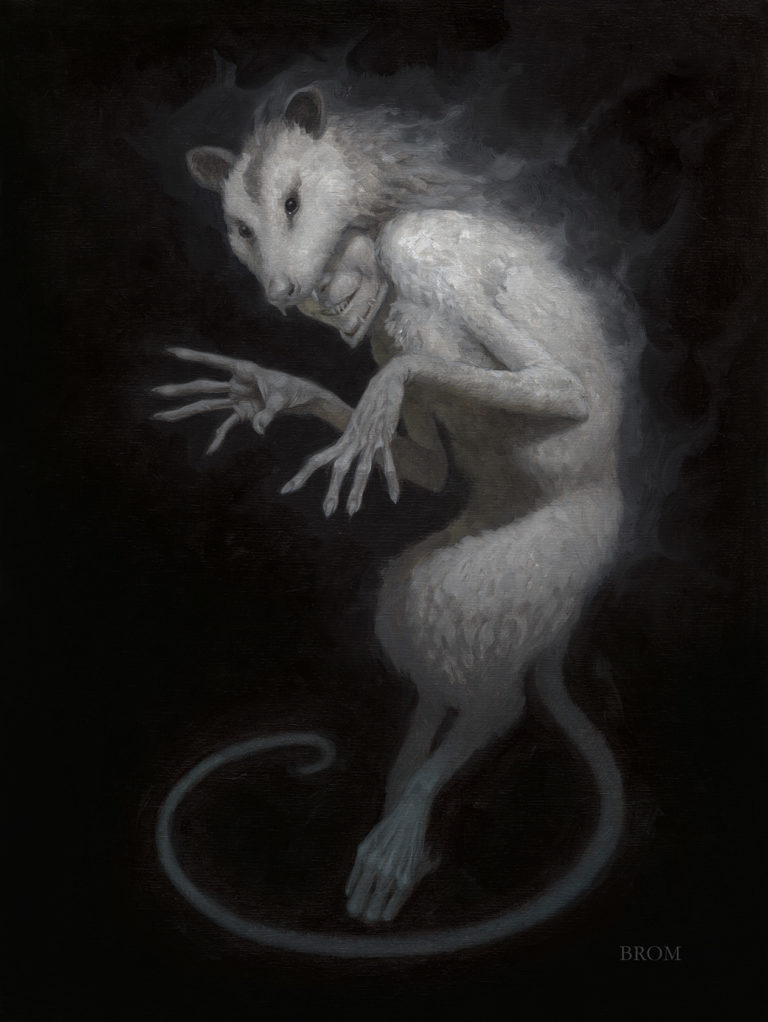
And finally, I have to mention the illustrations. The eARC that I received from NetGalley didn’t have any illustrations, but I was lucky enough to win a giveaway of a preview of the book from Tor Nightfire, which had a written sample of the story and a sampling of some of the artwork that Brom has included in the book. It’s haunting and feels very traditional in its design, and I know that when I do eventually get the book in print (as I need this to be a part of my home library) I will be excited to see what other images there are beyond the handful in the preview.

“Slewfoot: A Tale of Bewitchery” is one of the most enjoyable reads I’ve had this year to be sure. If you like “The Witch”, this book will probably be a good fit for you. It’s just so damn good.

Rating 10: Magical, dark, angry, and wondrous, “Slewfoot” is a fantastic tale of witchcraft and finding out where you belong.

Reader’s Advisory:

“Slewfoot: A Tale of Bewitchery” is included on the Goodreads list “2021 Horror Releases”, and would fit in on “Witch Hunts”.

Find “Slewfoot: A Tale of Bewitchery” at your library using WorldCat, or at a local independent bookstore using IndieBound!

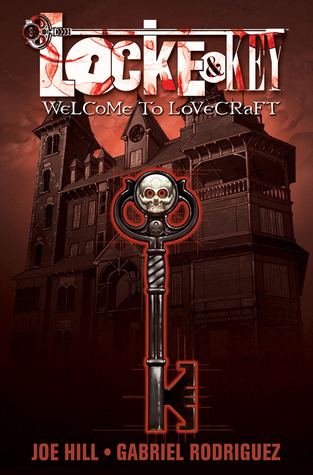
Kate’s Review: “Locke & Key (Vol. 1): Welcome to Lovecraft”

Book: “Locke & Key (Vol. 1): Welcome to Lovecraft” by Joe Hill and Gabriel Rodríguez (Ill.).

Publishing Info: IDW Publishing, 2008

Where Did I Get This Book: I own it.

Book Description: Locke & Key tells of Keyhouse, an unlikely New England mansion, with fantastic doors that transform all who dare to walk through them. Home to a hate-filled and relentless creature that will not rest until it forces open the most terrible door of them all…

Review: Back when I was still in graduate school, I decided to look into Joe Hill’s comic series “Locke and Key”. I didn’t know that much about it outside of the fact that I loved Joe Hill, and I checked out Volume 1, “Welcome to Lovecraft” from the library with very little to go off of. I eventually tore through the whole series, with my husband giving me the complete set as my graduation present in 2015. Since I’ve had a good time re-reading graphic series that I’ve loved, I thought that I would make my next re-read “Locke and Key”. I remembered how much I enjoyed the series overall. But I had forgotten how bleak the first volume is. Like, holy shit this is relentless in its bleakness bleak.

Had it been a weekend evening as opposed to a midday during the week that I finished this volume, I would have been Roy Kent upon finishing. (source)

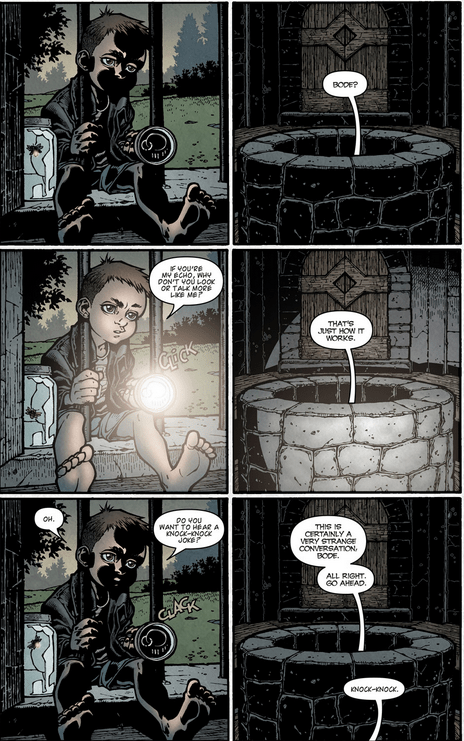
“Welcome to Lovecraft” introduces us to the Locke family, which has just experienced an unspeakable tragedy. The family patriarch Rendell was a principal of a high school, and two of his students broke into his home, raped his wife, murdered him, and attempted to hunt down his three children Tyler, Kinsey, and Bode. Now the surviving family members are moving back to Rendell’s childhood home out east, a humungous and strange mansion called Keyhouse where Rendell’s brother Duncan lives. What appears to be a couple of psychopathic teenagers run amok is, anything but, however, as the surviving assailant, Sam, is communicating with something otherworldly that is living in the well of Keyhouse from his prison cell across the country. This first volume does a lot of heavy lifting, from giving voice and perspective to all of the Locke kids (and how they are all faring after this tragedy), to slowly unfolding the demonic presence in the well, to staring to sprinkle in the magical systems and objects that Keyhouse has hidden within its walls. It is a LOT, but Hill manages to fit it all in without it feeling overwrought or hurried. Granted, the magical systems are barely touched upon as of yet, but I am a-okay with building up the family members and their dynamics first. Hill isn’t in a rush, and I think that the characterizations benefit.

The magical elements we do have remain shrouded in mystery. We know that there are keys, and we know that they can do different things, like make you be able to leave your body and travel in a ghostly manner, or change from male to female. But where they come from, and what the deal is with the demon in the well, who is communicating with both murderer Sam and youngest Locke, Bode. They keys are important, and we get a taste as to why. I loved how we slowly see how the demon in the well (unnamed as of yet) inserts itself into both Sam’s consciousness, and the role that it plays in Sam’s violence AND how it manipulates Bode because of his age and naivete. Again, we don’t know much about this demon yet. The creepiness is well established through other means.

But I had really forgotten how freakin’ dark this first volume is. From the attack on the Locke Family at the beginning to Sam’s cross country murder spree after he is set free by the well demon, I found this volume harder to read now than it was the first time I dove in. I will say that some of the worse stuff is left off page in terms of graphic content (specifically Nina Locke’s rape, and it is a relief that we didn’t have to see it), but Hill absolutely pulls out the horrors in the aftermath of it all. I don’t remember the rest of this series being this upsetting, but who knows, maybe I blocked it out? My point is that there are lots of content warnings here. None of this seems exploitative to me in how Hill writes it, but it’s still disturbing.

And finally, I had forgotten about how much I really like the art of Gabriel Rodríguez. It definitely has a ‘cartoon-y’ vibe, but he really knows how to capture pain, sadness, joy, and all things macabre in his designs.

Even though diving back into “Locke and Key” was a bit rough with “Welcome to Lovecraft”, I have a feeling that this is once again going to be a successful re-read. This is old school Joe Hill, and it was clear even then that he was a horror and dark fantasy force to be reckoned with.

Rating 9: A fantastical and incredibly grim start to a dark fantasy series I love, “Locke and Key (Vol.1): Welcome to Lovecraft” will suck you in from the get go.

Reader’s Advisory:

“Locke & Key (Vol.1): Welcome to Lovecraft” is included on the Goodreads lists “Best Horror Comics/Graphic Novels”, and “Comics + Graphic Novels To Read for Halloween”.

Find “Locke & Key (Vol.1): Welcome to Lovecraft” at your library using WorldCat, or at a local independent bookstore using IndieBound!