Kate’s Review: “Firekeeper’s Daughter”

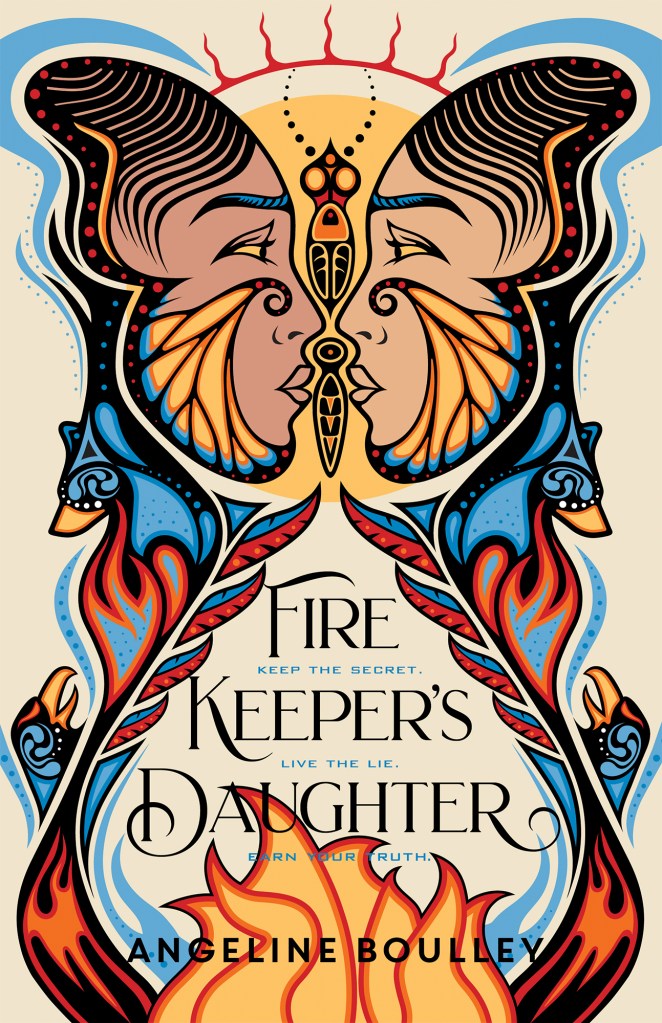
Book: “Firekeeper’s Daughter” by Angeline Boulley

Publishing Info: Henry, Holt, & Co., March 2021

Where Did I Get This Book: I own it.

Book Description: As a biracial, unenrolled tribal member and the product of a scandal, eighteen-year-old Daunis Fontaine has never quite fit in, both in her hometown and on the nearby Ojibwe reservation. Daunis dreams of studying medicine, but when her family is struck by tragedy, she puts her future on hold to care for her fragile mother.

The only bright spot is meeting Jamie, the charming new recruit on her brother Levi’s hockey team. Yet even as Daunis falls for Jamie, certain details don’t add up and she senses the dashing hockey star is hiding something. Everything comes to light when Daunis witnesses a shocking murder, thrusting her into the heart of a criminal investigation.

Reluctantly, Daunis agrees to go undercover, but secretly pursues her own investigation, tracking down the criminals with her knowledge of chemistry and traditional medicine. But the deceptions—and deaths—keep piling up and soon the threat strikes too close to home. Now, Daunis must learn what it means to be a strong Anishinaabe kwe (Ojibwe woman) and how far she’ll go to protect her community, even if it tears apart the only world she’s ever known.

Review: Sometimes, when you are reading a book, there is a moment where you just know that it is going to knock your socks off. I couldn’t pinpoint where it was in “Firekeeper’s Daughter” by Angeline Boulley, but I know it was early. I know there was a moment where there was a switch that flipped, and I said to myself ‘this is going to be fantastic’. I bought it after hearing a bit of buzz, but it admittedly sat on my pile for awhile. I happened to pick it up the same day that I had the pleasure of seeing Boulley talk during a virtual conference, and what began as ‘oh, that’s cool serendipity’ shortly thereafter morphed into something more.

It was very this. (source)

I loved this book. I LOVED it. Angeline Boulley is a fantastic writer who has a gift for imagery, characterization, and plotting, and the result is a hell of a debut novel. The mystery at hand as so many layers, and not just in terms of evidence and components, but also in terms of the consequences and difficult realities that it has because of the community it is affecting. Our main character, Daunis, is such an effective and complicated but easy to root for protagonist, and she is completely believable in every step she takes based on her experience, background, and personality. We slowly learn her backstory while we are meeting her in the middle of a huge traumatic change, as her maternal grandmother has just had a stroke and months previously her maternal uncle was found dead of a meth overdose. Daunis is feeling adrift, even when she has already felt a bit adrift, being the biracial daughter of a white mother and an Anishinaabe man, so her very existence was a huge scandal (parentage aside, her mother was a teenager when she became pregnant, and shortly thereafter he left her for another girl he’d also gotten pregnant). Daunis has had to straddle the privileged white identity as well as her Indigenous one, and has never felt truly and fully accepted by either side of the family, no matter how much love she feels from both sides. Her need to find herself, and her need to avenge the death of her best friend Lily (whose murder she witnessed), as well as her uncle, drives her even more. Daunis is such a compelling main character, I just loved her and loved everything about her. When I saw Boulley speak during the Virtual U.S. Book Show, she described Daunis as a ‘Native Nancy Drew’, and while meth is a bit more high stakes than secrets in old clocks, her pluckiness and likability is totally an homage to young women detectives in literature. And yes, her chemistry with Jamie is…. it’s just wonderful, and heartbreaking, and beautiful, and that’s all I am going to say about her and Jamie. Because you gotta read the book.

But Daunis’s Indigenous cultural identity plays a huge part in this story, and Boulley weaves it all in spectacularly. I think that in a lot of YA thrillers in which a young adult protagonist would be asked to be a CI for the government, it may be a hard and dangerous decision, but on that they would ultimately do for ‘the greater good’ without many personal qualms outside of danger. But that isn’t so in Daunis’s case, nor can it be. Her decision to work with the FBI and the BIA is certainly not one to take lightly, given the terrible history both organizations have with Indigenous people in this country (really, the United States Government in general has just been awful in this regard). But once she’s in it, we get a gritty and suspenseful, as well as critical, look at what it means to be a CI, as well as the way that the FBI and BIA approach communities with such systemic and cyclical oppression. Daunis approaches this as ‘the greater good’, but never truly trusts Ron, the FBI agent, as his motivation is to stop the criminals, as opposed to helping the community that is being affected by the meth supply heal and get better.

There is also the complicated relationship that Daunis has with her maternal side, in particular her Grandmary, who absolutely loves her granddaughter, but is racist towards the Indigenous population in the community as seen through flashbacks and second hand accounts. While it could be written that Daunis either completely excuses her grandmother, or completely shuns her grandmother, instead we find a very realistic and complicated middle ground for her. Along with both those really complicated examinations, every time we get information about Daunis’s culture, be it through conversation, demonstration, or flat out explanation, it is done in a way that is so natural that it always fits the moment. It feels strange to say that it’s ‘unique’, as the uniqueness of it probably comes from the fact that Indigenous voices in literature have been underrepresented for far too long, but it was certainly a fair amount of new information to me, someone who grew up on Dakota Land and has spent a lot of time north on Ojibwe/Anishinaabe Land.

AND, as if I haven’t gushed on long enough, BUT I’M GOING TO CONTINUE, the mystery is also great. I may have guessed some parts of it, but that didn’t even matter to me because it was well crafted, complex, and it was really able to hit home the tragedies of meth running in this community and Missing and Murdered Indigenous Women that are at the center of the mystery. There is so much power in this story. As well as a lot of darkness (content warnings here an there, from domestic abuse to murder to a sexual assault that happens off page, but is definitely upsetting). But the darkness always has a bit of hope and resilience to go along with it, and that made all the difference.

“Firekeeper’s Daughter” is one of the best books I’ve read in a long time. Do yourself a favor and read this book. It is almost assuredly going to be on my Top Ten list this year.

Rating 10: It’s just fantastic. A healthy and powerful mix of a well done mystery and a meditation on being Indigenous in the 21st century, “Firekeeper’s Daughter” blew me completely away.

Reader’s Advisory:

“Firekeeper’s Daughter” is included on the Goodreads lists “Books by Indigenous Women”, and “Hello Sunshine YA Book Club Book List”.

Find “Firekeeper’s Daughter” at your library using WorldCat, or a local independent bookstore using IndieBound!

Kate’s Review: “Sheets”

Book: “Sheets” by Brenna Thummler

Publishing Info: Oni Press, August 2018

Where Did I Get This Book: The Library!

Book Description: Marjorie Glatt feels like a ghost. A practical thirteen year old in charge of the family laundry business, her daily routine features unforgiving customers, unbearable P.E. classes, and the fastidious Mr. Saubertuck who is committed to destroying everything she’s worked for.

Wendell is a ghost. A boy who lost his life much too young, his daily routine features ineffective death therapy, a sheet-dependent identity, and a dangerous need to seek purpose in the forbidden human world.

When their worlds collide, Marjorie is confronted by unexplainable disasters as Wendell transforms Glatt’s Laundry into his midnight playground, appearing as a mere sheet during the day. While Wendell attempts to create a new afterlife for himself, he unknowingly sabotages the life that Marjorie is struggling to maintain.

Review: Who says that ghost stories need to be scary? I know that when I cover them on this blog, they usually are. But there are also kind and friendly spirits, not just ones that want to make peoples lives miserable. “Sheets” by Brenna Thummler is one such tale, a ghost story for kids, but instead of focusing on scares and bumps in the night, it takes on friendship, loss, and moving on from tragedy. All themes that can fit within a ghost story pretty well. I had high hopes for this story, as ghosts are definitely my jam. “Sheets”, however, didn’t really give me what I wanted from it.

But let’s talk about what I did like first. The themes I mentioned above are all very well done in the narrative. We have two main characters, both of whom are dealing with these themes in different ways. For Marjorie, a thirteen year old girl running the family laundromat, she is still mourning the loss of her mother and adjusting to her new life. Her father has been so depressed that he doesn’t leave his room, and Marjorie is left to care for her brother, the family business, and to take care of herself. On the other side of the coin is Wendell, a ghost who lives in a world of other ghosts (who all wear sheets) who died when he was very young. He doesn’t really feel like he fits in in his new afterlife, and decides to hitch a ghost bus (loved this idea!) back to the living world. Where he finds himself in Marjorie’s laundromat, and their worlds collide. Both characters are dealing with loss and sadness, and I thought that Brennan did a really good job of exploring grief in ways that kids could understand without being condescending or grim. I especially liked her take on what the Ghost world is like, with lots of different designs for a bunch of stereotypical sheet wearing ghosts and some really humorous moments.

My biggest qualms with this story, however, really dock the points that I would have given it. Namely, the complete lack of any empathetic, responsible, and caring adults in Marjorie’s life, bordering on complete criminal negligence. I understand that this is a book written with a kid protagonist, and as such needs to give the protagonist more agency and independence than a regular kid would have in the real world. But I really struggled with it in “Sheets”. Marjorie is a thirteen year old girl who is running the family business herself, as after her mother died her father has been completely overtaken by depression and barely leaves his room. And if that had been the extent of it, I might have been able to swallow it down. Depression can absolutely be completely hobbling, and it’s not unrealistic for him to fail his children and to have Marjorie feel like she needs to pick up the pieces. My BIGGEST problem is that the customers she does have aren’t asking ANY questions as to why this child is running this place! Hell, they even get mad at her when Wendell messes things up, more inconvenienced about their laundry than they are concerned about a child, a CHILD, having to run the business in which they are patronizing! We get a couple adults who do question her life and how she’s doing here and there, but it’s never pursued. Perhaps it is strange for me to be questioning this in a story about literal ghosts, but I couldn’t get past it. It seems really farfetched, and spoiler alert, it isn’t really resolved! We get a deus ex machina at the end and Marjorie is STILL running the darn laundromat instead of, you know, living her life as a child. I’m just not sure about what this tells kids about Marjorie’s circumstances. Because oh man, her Dad really needs to get his act together.

And this could possibly be because of the fact the story itself feels a bit half baked. Marjorie interacts with Wendell here and there, they never really have super in depth moments, but we just kind of have to believe that the way it all wraps up is because of their friendship, which I never felt like was really explored. There is a connection that Marjorie and Wendell share even before he became a ghost, but it feels convenient and twee, and not used enough that it really felt important. Had their connection been stronger, both before and after his death, it would have been a more enjoyable relationship. As it was, it was hard to invest in the two of them as friends.

I did like the artwork though! It’s quite unique, and the designs of the ghosts are pretty darn cute. And as someone who appreciates a nice color scheme, I really liked the palette in this one.

“Sheets” didn’t give me the feel good ghost story I was anticipating, but I absolutely can see myself recommending it to kids who are looking for something ghostly, though maybe not too scary.

Rating 6: A really good examination of different kinds of grief, but ultimately felt half baked and unrealistic (even taking into account we’re dealing with ghosts!).

Reader’s Advisory:

“Sheets” is included on the Goodreads lists “Spooky Graphic Novels for Kids”, and “Friendly Ghosts”.

Find “Sheets” at your library using WorldCat, or at a local independent bookstore using IndieBound!

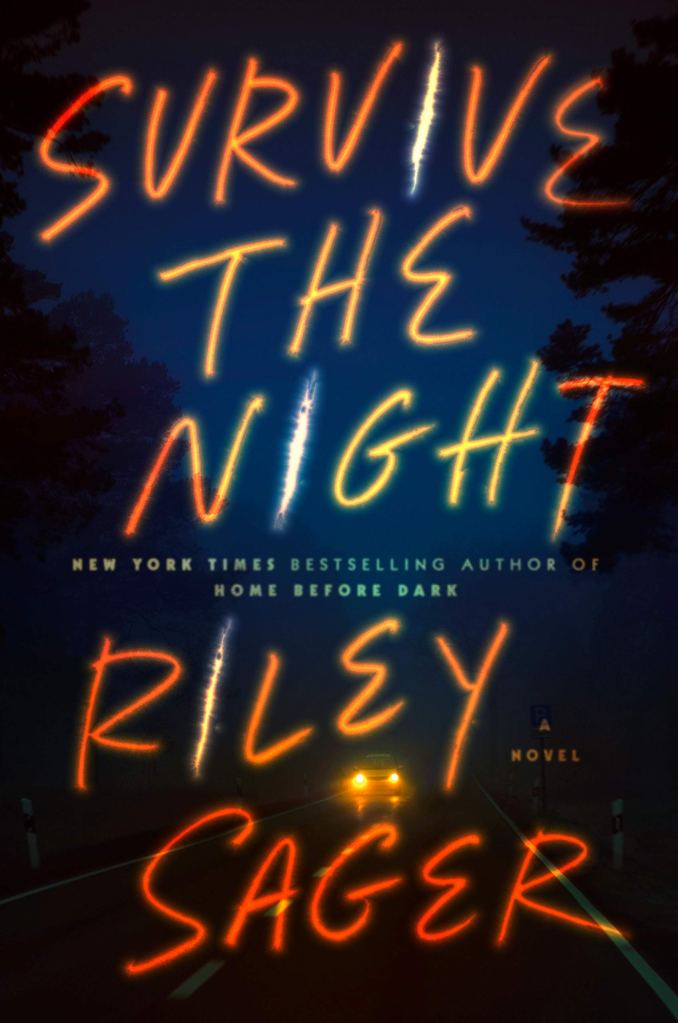
Kate’s Review: “Survive the Night”

Book: “Survive the Night” by Riley Sager

Publishing Info: Dutton Books, June 2021

Where Did I Get This Book: I received an eARC from NetGalley.

Book Description: It’s November 1991. George H. W. Bush is in the White House, Nirvana’s in the tape deck, and movie-obsessed college student Charlie Jordan is in a car with a man who might be a serial killer. Josh Baxter, the man behind the wheel, is a virtual stranger to Charlie. They met at the campus ride board, each looking to share the long drive home to Ohio. Both have good reasons for wanting to get away. For Charlie, it’s guilt and grief over the murder of her best friend, who became the third victim of the man known as the Campus Killer. For Josh, it’s to help care for his sick father. Or so he says. Like the Hitchcock heroine she’s named after, Charlie has her doubts. There’s something suspicious about Josh, from the holes in his story about his father to how he doesn’t seem to want Charlie to see inside the car’s trunk. As they travel an empty highway in the dead of night, an increasingly worried Charlie begins to think she’s sharing a car with the Campus Killer. Is Josh truly dangerous? Or is Charlie’s suspicion merely a figment of her movie-fueled imagination?

What follows is a game of cat-and-mouse played out on night-shrouded roads and in neon-lit parking lots, during an age when the only call for help can be made on a pay phone and in a place where there’s nowhere to run. In order to win, Charlie must do one thing–survive the night.

Review: Thank you to NetGalley for providing me with an eARC of this novel!

One of the things I’ve looked forward to every summer for the past few years is that, like clockwork, Riley Sager has written a new thriller novel. I’ve been reading Sager since his debut, “Final Girls”, and I have genuinely enjoyed every book he has come out with. Sometimes with varying degrees of enjoyment, but enjoyed nonetheless. Sager is a reliable thriller author for me; I know what to expect, I know I will probably like his characters, and I know that he will find ways to surprise me. So, of course, I’ve been looking forward to “Survive the Night” since I first heard of it. I wanted to savor it, saving it on my Kindle for awhile, knowing that it would probably be devoured right up as soon as I began but hoping I’d restrain myself. And I didn’t, really, as I read it in two big chunks over the course of two days. But hey. That’s reliable as well.

The book is mostly from Charlie’s point of view, as while it’s in the third person, it is mostly from her perspective. Charlie is a fairly typical protagonist for a book like this; she has a lot of baggage stemming from childhood trauma, which has been compounded by the fact that her roommate and best friend Maddy was brutally murdered by The Campus Killer, and Charlie blames herself. It’s the kind of thing we’ve seen before, which isn’t necessarily a bad thing, just worn. Adding into this well worn treading into overdone territory is that Charlie’s unreliability as a quasi narrator is partially based in some mental health issues, in that she has hallucinations and dissociative states she calls ‘going to the movies’. So of course, a scene that could be one thing, will end up not being real. There are a lot of things to be said about using mental health as a plot point in this way, and while I don’t necessarily think that it’s damaging or offensive, I do think that it’s something we’ve seen before. I LIKE Charlie, she’s just not really reinventing the wheel. Josh is our other main character, who has a few moments of perspective, but most of what we see is what we get from Charlie, and her paranoia and trauma could make her unreliable when it comes to him. Again, things we’ve seen before. It works out fine, Sager does it well, and I enjoy Josh as a character too. But again. We’ve seen it.

The plot, however, is a true rollercoaster from beginning to end, and Sager sprinkled little clues in here and there that I definitely missed. It could have been a healthy mix of sleight of hand on his part and me being so engaged with wanting to find out what happened next, but missed them I did, and it made some of the surprises all the more fun. I talked above about how using dissociative episodes in fiction to make someone unreliable is a bit old hat and overused, but there were lots of other well done tricks and twists that obfuscated details and solutions that I wasn’t too put off. The cat and mouse elements between Charlie and Josh slowly build and build, and even when one reveal happens a new conflict or danger will start to slowly build almost immediately after, so the release doesn’t last too long. It makes for a very tense and addictive mystery at hand, and it hooked me from start to finish. And while Sager sometimes tends to tread a bit towards outlandish twists nearing the end of the book, I felt that “Survive the Night” never quite overdid itself in that regard. And I’m not going to spoil anything, really, but I will say that the sappy romantic in me who gets invested in fictional relationships had a lot to work with in this story.

Yes, I find ways to swoon in a story with a plot like this, sue me. (source)

So while I thought some of the character choices were slightly underdeveloped or tropey, overall I found “Survive the Night” to be a really fun thriller novel. Riley Sager hasn’t failed me yet, and this is definitely the kind of book you should pick up if you like suspense.

Rating 8: Suspenseful, cinematic, and highly addictive, “Survive the Night” is another entertaining rollercoaster of a book by Riley Sager!

Reader’s Advisory:

“Survive the Night” is included on the Goodreads list “Mystery and Thriller 2021”.

Find “Survive the Night” at your library using WorldCat, or at a local independent bookstore using IndieBound!
Kate’s Review: “Darkness and Grace”

Book: “Darkness and Grace” by Kathryn Schleich

Publishing Info: Self-Published, March 2021

Where Did I Get This Book: I received an eARC from Book Publicity Services

Book Description: Even the strongest of families aren’t immune to malice, betrayal, and deceit. Supportive, loving, and affluent, the Pierson family is delighted to celebrate the marriage of sensitive middle son Paul Pierson and his wife, Pamela. Everyone rejoices that Paul has finally recovered from the tragic loss of his beloved first wife and looks forward to Paul and Pamela’s new life together. But just as family members are celebrating his happiness, they start noticing that his beautiful bride may not be what she seems.

As the strain between siblings and spouses worsens, the Piersons discover that neither their money nor their considerable influence can keep the family safe from one woman’s malicious intent. When the true nature of this family member is revealed, each of the Piersons is confronted with the quandary of human conduct and moral responsibility.

Darkness and Grace is a compelling story of the classic struggle between good and evil, as well as the violent undercurrent running beneath the illusory serenity of a close-knit Midwestern family. 

Review: Thank you to Book Publicity Services for providing me with an eARC of this novel!

It wasn’t until very recently that I saw the Scorsese film “Casino”, which is admittedly strange as it is my husband’s favorite Scorsese feature. I’m sure that he loves it for the Vegas aspect as well as the interesting mob entanglements, but I think that for me the strongest feature is Sharon Stone, who plays Ginger, the narcissistic and potentially psychopathic wife of Robert DeNiro’s Sam. Stone puts in a powerhouse performance of a charming and vivacious woman who slowly turns into a nightmare as she is overtaken by drugs, alcoholism, and her sociopathic tendencies, which makes DeNiro’s life a bit of a nightmare. But Stone also brings a sad bit of vulnerability to Ginger, and even though you absolutely want her to have to face responsibility for her actions, you do feel a little sorry for her. As I was reading “Darkness and Grace” by Kathryn Schleich, I felt like I was reading about Ginger, only taking place in Minnesota, and without any of the vulnerability and empathy.

Our first person protagonist, Kay Pierson-Scott, is telling the story of how her family got entangled with Pamela, her brother Paul’s wife who turns out to be a psychopathic manipulator who runs an emotional mac truck through their happy family. Pamela is relentless, Paul is beaten down, and Kay and her family are running out of patience and the wherewithal to deal with it. As a family drama with a lot of suds to go around, it is entertaining as hell, making my blood pressure rise as Pamela’s manipulations and machinations run amok and Kay becomes more and more harried and the Pierson clan is targeted more and more. I liked Kay as a protagonist, who is a devoted and somewhat doting oldest sister who wants to protect her brother and the rest of her family as best she can. It’s all from her POV, so there are definitely some blind spots as to the other characters, deliberate or not, but she was enjoyable enough that I was okay with focusing on her. Pamela is the other big character in this book, and she is pretty much a cartoony villain in a lot of ways, though that said I know people who have dealt with people like her in their lives. So I’m not about to say that she’s unrealistic. You definitely spend the entire book waiting for her to get what is coming to her, and holding your breath in suspense as to whether or not she will do something REALLY terrible along the way (oh how I was SCARED for her daughter, Kaitlin!). All of this makes the plot easy to consume, and the side of me that lives for this kind of over the top drama was definitely entertained.

One of the hurdles “Darkness and Grace” faces is that the writing style is very simple, almost conversational, as though Kay is telling this story to a person over cocktails or brunch. I do think that this CAN work if done well, but it felt kind of stunted and a bit informal in this case, and therefore distracting. But it’s important to note that this was the first novel from Schleich, and that this is a re-release. Given that the other book of hers I read “Salvation Station”, didn’t have these issues, it’s really just a sign that this is a debut, or at least very early, work for an author who has time to grow and evolve.

And I would be remiss if I didn’t shout out to the numerous, NUMEROUS Minnesota references peppered throughout this book. I know that Schleich is local, and that aspects of this story are loosely based on something her family had to deal with in the 1990s, so it’s not too surprising to see all the MN moments. For me, a Minnesotan born and raised, it was fun to be like “I know what neighborhood that is!” or “I’ve been to that place!”. It may be laid on pretty thick for other readers, but trust me, us Minnesotans LOVE to have our state acknowledged in media, so this was a-okay by me.

“Darkness and Grace” is an entertaining and soapy thriller that kept me interested. It doesn’t reinvent any wheels, but it gets the job done, and sometimes that just what you want in a suspense novel.

Rating 7: The story is engaging and easy to invest in, even if the writing style felt a little rudimentary to me at times. But the Minnesota references were top notch!

Reader’s Advisory:

“Darkness and Grace” isn’t on any Goodreads lists as of yet, but I think it would fit in on “Family Drama Books”.

Find “Darkness and Grace” at Amazon.com.

Kate’s Review: “That Weekend”

Book: “That Weekend” by Kara Thomas

Publishing Info: Delacorte Press, June 2021

Where Did I Get This Book: I received an eARC from NetGalley.

Book Description: Three best friends, a lake house, a secret trip – what could go wrong?

It was supposed to be the perfect prom weekend getaway. But it’s clear something terrible happened when Claire wakes up alone and bloodied on a hiking trail with no memory of the past forty-eight hours. Three went up the mountain, but only one came back. Now everyone wants answers – most of all, Claire. She remembers Friday night, but after that… nothing. And now Kat and Jesse – her best friends – are missing.

That weekend changes everything. What happened on the mountain? And where are Kat and Jesse? Claire knows the answers are buried somewhere in her memory, but as she’s learning, everyone has secrets – even her best friends. And she’s pretty sure she’s not going to like what she remembers.

Review: Thank you to NetGalley for providing me with an eARC of this novel!

Kara Thomas is one of those authors who has never disappointed me. I have genuinely enjoyed and been surprised by all of her books, and she has easily been one of the authors whose works I am guaranteed to read as soon as I possibly can. I admit that the pessimist in me tends to worry whenever I pick up a book by one of these ‘can do no wrong’ authors, as I am always wondering ‘is this the book that is going to disappoint me?’ Thus far, with her newest novel “That Weekend”, Thomas has never done so. Hell, when I was reading this book and I was enjoying it and trying to figure out what was going on, I had an epiphany moment in the tub (when I wasn’t even reading the book) in which I thought that no, THIS was going to be the big reveal that was going to change everything. I wasn’t even mad about it, as it was, to my mind, a great reveal and surely that was what was going to happen because that would be genius.

And then, like she always does, Kara Thomas went and pulled the rug out from under me and my expectations of what was to come.

SHE DID IT AGAIN! (source)

But I am so ahead of myself. “That Weekend” is a YA thriller that could have used some tried and true tropes to tell a pretty familiar story. Thomas is a talented enough writer and mystery weaver that she could have done this and still made it work and feel fresh, but no, instead she takes it to other places that make it all the more interesting and suspenseful. We mostly follow Claire, a girl who went on a camping trip with her best friends Kat and Jesse, and woke up in the wilderness with a head injury, blood on herself, and no memory of what had happened for the past twenty four hours. On top of that, Kat and Jesse are no where to be found. From the jump we are in the weeds as much as Claire is, as she is the perfect unreliable narrator in that she has memory loss AND has some issues with Kat and Jesse that she is only starting to work through (specifically, the fact that they are now a couple, and she has been in love with Jesse for years). The mystery of what happened to Claire and what happened to Kat and Jesse seems pretty straight forward at first, with familiar beats and plot points, but never fear; Thomas has much more in store. What happens next is an engaging and very addictive mystery about friendship, secrets, trauma, and the things we don’t know about the people we love most. I really liked Claire’s storyline trajectory, as she goes from victim of something, to scrutinized potential suspect, to hard boiled amateur detective, all while realistically dealing (or perhaps not dealing) with the horrifically traumatic experience she went through and continues to go through as time moves on. Her characterization felt realistic in it’s messiness, and her resentment and determination was organic and never forced. Because of this, she was easy to root for, even if she was sometimes hard to like. We do get to see into the minds of other characters a little bit, and while they are all done well too, it’s really Claire that shines as a flawed but mostly empathetic protagonist.

And as I was gushing above, the mystery is so well plotted that I was always a few steps behind. Thomas has all the clues laid out so that you can trace everything back, but she knows how to keep them close to the vest. The reveals and surprises are all pretty darn rewarding because of this, and the pacing was such that I found it very hard to put this book down. And even one kind of out there late game twist that could have been seen as overkill was done in a way that I really didn’t hate it. It didn’t necessarily ADD to anything, but it worked well enough that the late revelation wasn’t the cheap moment that it could have been. Thomas also brings up some good, damning points about true crime tourism and media, as not only are there some armchair detectives online who come off as pretty terrible, there is a VERY clear nod to that horrible trauma scavenger Nancy Grace in one of the characters whose only goal is to get ratings by turning the public against literal teenagers. It’s one of the things that the true crime community really needs to reckon with, as people like Grace (and this character) see blood in the water and exploit it for ratings, even if they make chum of innocent people in the process.

“That Weekend” continues the streak that Thomas has had from the get go. It may be my favorite of her books. Thriller fans of all ages should definitely check it out.

Rating 9: Thomas has once again written a suspenseful, engaging, and surprising YA thriller!

Reader’s Advisory:

“That Weekend” is included on the Goodreads list “2021 YA Mysteries and Thrillers”.

Find “That Weekend” at your library using WorldCat, or at a local independent bookstore using IndieBound!

Kate’s Review: “Ghosted in L.A. (Vol.3)”

Book: “Ghosted in L.A. (Vol.3)” by Sina Grace & Siobhan Keenan (Ill.)

Publishing Info: BOOM!Box, December 2020

Where Did I Get This Book: I own it.

Book Description: The critically-acclaimed series concludes as Daphne Walters must confront her former roommate Michelle, discover the mystery of just who’s behind that basement door and decide her entire future – this should be totally easy, right?

CRAZY, SUPERNATURAL, LOVE.

Daphne Walters’ life is complicated enough, living at Rycroft Manor with her ghostly friends and trying to figure out why everyone in LA is always 30 minutes late for everything important. So it’s TOTALLY the perfect time for Daphne to lose one of her friends, for the mystery of the ghost behind the basement door to be revealed and for Daphne to decide her entire future, RIGHT? And did we forget to mention that Daphne’s former roommate Michelle just unveiled a scheme to exorcise the friendly ghosts from Rycroft? Yeah, there’s that too.

GLAAD Award-nominated Sina Grace (Iceman) and illustrator Siobhan Keenan (Jem and the Holograms) conclude the acclaimed series that proves true love and friendship never dies!

Review: We find ourselves once again coming to the end of a series, and this time we are saying goodbye to the living and the dead at Rycroft Manor. “Ghosted in L.A.” is a very different beast from “The Sandman”, the other big conclusion in graphics I’ve had as of late, but one of the charms was its simplicity and heart that is content to just be a fun, funny urban fantasy. But that said, even something light and airy still needs to have due diligence done if it wants to end well. And, unfortunately, “Ghosted in L.A. (Vol.3)”, the last volume of the series, stumbles.

We’ll start with the good. As someone who found herself invested in Daphne, Ronnie, and the ghosts of Rycroft Manor, I was mostly happy with how things turned out for all of them. I thought that Daphne’s arc, from aimless young adult to competent ghost friend and in general friend, was well done and realistic within what we know about the character. I liked seeing how she changed and adapted her relationships with her ex boyfriend Ronnie, and how she grows after living with the spirits at Rycroft Manor and learning from them. In terms of how her arc ends, and how the arc of the ghosts and Ronnie and everything else ends, I enjoyed the trajectory and found it to be funny, sweet, and just a nice ending to a nice series. I also appreciated that we did get SOME glimpse into Daphne’s roommate Michelle’s background, as she has mostly been a surly and grumpy foil who is very religious up until this point. This volume tries to show a little bit more to her, and I like that there was some context for her behaviour.

But here is the problem with everything getting wrapped up right now, albeit in a mostly satisfying kind of way. There is SO MUCH GROUND to cover, from plot points to character growth to relationship strife to general conclusions and climaxes, that cramming it all together in this one volume feels stuffed, rushed, and haphazard. Like, what all happened in the last volume that needed to be resolved? Let’s see: Daphne and Kristi had a huge fight; Zola is creating tension in the house; a strange door has started causing issues in the house; Ronnie is feeling caught between his human friends and his ghostly ones; Michelle is starting to get suspicious. That’s just to name a few. I don’t know if this series was cancelled early (as we’ve seen in other graphics reviews on this blog), or if it was always planned to end like this, but “Ghosted in L.A. (Vol. 3)” needs to pull together a lot in just one volume, and it suffers for it. What could have been drawn out mysteries and plot points (specifically the mystery of what is going on behind the mysterious door) end up being explained and solved nearly in succession, which completely undercuts the tension and impact of the story. We also find ourselves a bit cheated out of really getting to know some of the ghosts at Rycroft, as characters like Ricky and Pam are waylaid in favor of Zola since she is now a love interest for Daphne (also thrown together I might add). New conflict is tied up way too fast, and character exploration isn’t given its due. It was supremely disappointing, as I felt like this series has a lot of potential to dig into interesting things, especially given the ghost roster. I don’t want to take off too many points for this kind of thing, as perhaps this was all a bit of a surprise and things just had to be concluded on a shorter timeline. But it definitely made this the weakest of the three volumes.

But the artwork by Siobhan Keenan is still utterly charming. Along with the same designs that we’ve seen in the series, we dabble a bit more into some horror moments in this volume, which are reflected well in the drawings themselves.

I still think that “Ghosted in L.A.” as a whole is worth checking out if you like some lighter ghostly fare. It has humor, an inclusive cast, and a lot of heart. The end may be a bit of a stumble, but the sum of it’s parts is enjoyable.

Rating 6: A mostly satisfying end to the series, though it feels rushed and thrown together.

Reader’s Advisory:

“Ghosted in L.A. (Vol.3)” isn’t on any Goodreads lists as of yet, but it would fit in on  “Paranormal Romance/Urban Fantasy Set in California”.

Find “Ghosted in L.A. (Vol.3)” at your library using WorldCat, or at a local independent bookstore using IndieBound!

Previously Reviewed:

Kate’s Review: “Children of Chicago”

Book: “Children of Chicago” by Cynthia Pelayo

Publishing Info: Agora Books, February 2021

Where Did I Get This Book: The library!

Book Description: This horrifying retelling of the Pied Piper fairytale set in present-day Chicago is an edge of your seat, chills up the spine, thrill ride. ‪ When Detective Lauren Medina sees the calling card at a murder scene in Chicago’s Humboldt Park neighborhood, she knows the Pied Piper has returned. When another teenager is brutally murdered at the same lagoon where her sister’s body was found floating years before, she is certain that the Pied Piper is not just back, he’s looking for payment he’s owed from her. Lauren’s torn between protecting the city she has sworn to keep safe, and keeping a promise she made long ago with her sister’s murderer. She may have to ruin her life by exposing her secrets and lies to stop the Pied Piper before he collects.

Review: There were, of course, many disappointments that came with the pandemic, and one of the biggest sub groups for me was of the cinematic variety. Not only do I really miss going to the Alamo Drafthouse for throwback movie nights, there were a number of movies I was very excited to see in the theater, that either had to be released on demand, or were bumped back by a year. One of those movies was the reboot of “Candyman”. For the unfamiliar, the premise is that if you say ‘Candyman’ into a mirror five times, he will come out of it and brutally murder you. I really enjoy the original, as not only does it tick my boxes of urban legend based horror and social commentary, it’s also an awesome deep dive into the city of Chicago and all of its darker realities (and seeing that I’m vaxxed now, if the numbers are looking good by the time this new movie comes out, maybe that will be my triumphant return to the movies…. fingers crossed?). Lucky for me, I randomly stumbled upon “Children of Chicago” by Cynthia Pelayo on Twitter, and after looking into it, lo and behold: it’s a horror story in Chicago, involving a mysterious game and the fairy tale of the Pied Piper, the man who steals children away when he isn’t compensated. OH MAN, THIS IS WHAT I WANT IN MY HORROR STORIES!

“You were not content with the stories, so I was obliged to come.” (source)

There are certainly comparisons to be drawn between “Children of Chicago” and “Candyman”, but Pelayo has created a horror story that feels wholly unique because of the themes and twists that she throws into it. The Pied Piper story turned urban legend is a great premise, as the fairy tale on its own is horrifying. When you bring it into a modern setting, and add in elements of “Bloody Mary” like kids games and Slenderman stabbings, it becomes something new and even more sinister. As our protagonist Detective Lauren Medina investigates the deaths of kids in Chicago, we find ourselves in a modern fairy tale with elements that suit both the horror genre and the genre it’s paying homage to. Pelayo has a stellar mystery of what the Pied Piper is, how he connects to Lauren, and how he’s involved in not only the deaths of teens in her jurisdiction, but also that of her younger sister, who was found drowned in a lagoon in Humboldt Park when Lauren was a child. As she investigates and starts to piece together what is going on, the tension builds and the terror creeps up. I loved how Pelayo took the original story and applied it to the present, bringing in modern horrors and anxieties to create something twisted and new. Sometimes things got a bit muddled, or I would feel like it was lagging a bit in terms of pacing, but mostly I was hooked and wanted to keep going.

Pelayo also has a lot of really fun tidbits about Chicago’s history, both that of the innovative and joyful city, and that of the darkness and violence that has plagued it since its inception. I know a little bit about Chicago, given that I’m from the Midwest and it is the biggest city in our region, but I feel like I learned more about it and its history as I read this book. Pelayo has a special focus on the systemic racism that has caused so many problems and damaged so many lives, and how Chicago has a lot of death surrounding it because of its history and because of the ills that still plague it. You get the sense that Pelayo loves Chicago, and wants it to be the best that it can be, while still acknowledging how dark it is in some ways.

But what struck me most about “Children of Chicago” is that our protagonist, Lauren Medina, is not exactly a hero. She carries a lot of baggage from her past, from the disappearance of her mother to the death of her sister, to trying to live up to the Medina name as her father was a highly respected police officer in his own right. There is also the very pesky fact that Lauren has a pretty serious pattern of discharging her weapon on suspects, and while in one case it’s possibly justifiable, in a number of other cases it isn’t. I feel like in cop stories where a cop or detective or what have you is trying to hunt down someone monstrous, more often than not if they ARE a ‘renegade’, it’s portrayed in a way that makes their behavior seem justified (though recently we saw a bit of a challenge to this in Stephen King’s “Later”). Not so in “Children of Chicago”. Lauren is a renegade and it is a serious problem, in that it damages her credibility, it damages the credibility of her department, and it causes damage to innocent peoples lives. It’s just one more layer of darkness to this tale, and getting into the mind of Lauren and peeling back the elements of her character is just as disturbing as some of the other aspects of this book.

Horror fans, you should definitely go read “Children of Chicago”. And I’m on board with whatever Pelayo comes out with next.

Rating 8: Dark and twisted, as well as a biting character study, “Children of Chicago” is a love letter to a complicated city, and an urban legend scary story sure to delight horror fans.

Reader’s Advisory:

“Children of Chicago” is included on the Goodreads list “2021 Horror Releases”.

Find “Children of Chicago” at your library using WorldCat, or a local independent bookstore using IndieBound!

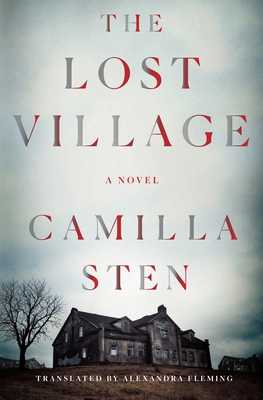
Kate’s Review: “The Lost Village”

Book: “The Lost Village” by Camilla Sten

Publishing Info: Minotaur Books, April 2021

Where Did I Get This Book: I own it.

Book Description: The Blair Witch Project meets Midsommar in this brilliantly disturbing thriller from Camilla Sten, an electrifying new voice in suspense.

Documentary filmmaker Alice Lindstedt has been obsessed with the vanishing residents of the old mining town, dubbed “The Lost Village,” since she was a little girl. In 1959, her grandmother’s entire family disappeared in this mysterious tragedy, and ever since, the unanswered questions surrounding the only two people who were left—a woman stoned to death in the town center and an abandoned newborn—have plagued her. She’s gathered a small crew of friends in the remote village to make a film about what really happened. But there will be no turning back.

Not long after they’ve set up camp, mysterious things begin to happen. Equipment is destroyed. People go missing. As doubt breeds fear and their very minds begin to crack, one thing becomes startlingly clear to Alice: They are not alone. They’re looking for the truth… But what if it finds them first?

Review: Awhile back I was perusing the titles on NetGalley, and I kept stumbling upon a book called “The Lost Village” by Camilla Sten. Every time I would see it I’d ask myself ‘why haven’t I looked into that?’, but then I’d look again and the description was the key. You have me at “Blair Witch Project”, but you lose me at “Midsommar” (sacrilege? Maybe. I just didn’t like that movie). But eventually I decided that I needed to give it a go. So I bought it, and as soon as I started it I never should have waited as long as I did.

Me contemplating the time I wasted. I dislike the movie, but love this meme! (source)

“The Lost Village” is a slow burn horror story that (absolutely) has similar elements to “The Blair Witch Project” and “Midsommar”, but stands very well on its own. The story is told through various channels. The first and most prominent follows Alice and her film crew in the modern day, as they start to explore the abandoned village of Silvertjärn. Alice’s grandmother was a resident who had left before the disappearance, and who lost her entire family. Alice is obsessed and determined to make a documentary about the town in hopes of getting answers, but there is tension in her crew due to messy histories and secrets. In this timeline strange things start happening, and the crew slowly starts finding themselves in danger. The second channel follows Elsa, Alice’s great grandmother who is seeing her town slowly become seduced by a new pastor, whose zealotry is manipulating everyone and leading them down a dangerous path. The third is through letters between Elsa’s daughters Margareta and Aina, which slowly shows Aina becoming more and more entranced with the new leader. All of these pieces come together to tell a well thought out horror story that slowly builds the dread and terror. I liked the back and forth through the narrative, as each storyline contained clues about the others, and the ultimate fate of Silvertjärn. The strongest was the modern day perspective, as not only did it have some of the scariest moments, it also had the most interesting characters. Alice is a flawed but interesting protagonist, and her interactions with her compatriots (particularly with Emmy, an ex-friend that Alice harbors some bitter resentment towards) are realistic as the situation turns from intriguing to dire. I found myself invested in them, so when the stakes are raised, the fallout has true weight. Sten makes you care about these characters, and that ultimately amps up the horror aspects.

And let’s talk about the horror aspects. Because they are spot on and very, very disturbing. The more obvious is that of the feeling that the crew is being watched in the abandoned town, and the slow build of paranoia as strange things start to happen, and one of the members of the crew starts acting strange as well. Some of the images that Sten brings forth in the narrative really messed with me in this regard, from descriptions of a corpse on a post to a shadowed silhouette staring towards Alice and her crew in the dark. The other horror, of course, is set firmly in the past storyline, as a town of generally decent people start to form a cultish devotion to a sociopathic con artist who twists religious fervor to suit his own needs. You eventually kind of see where this is all going, knowing that eventually Silvertjärn’s population just vanishes without a trace, but it still made me tense and completely horrified as people fell under his spell and terrible things came about because of it. The horrors of real life are put on perfect display here, and boy oh boy does it pack a wallop.

Fans of horror stories absolutely need to read “The Lost Village”. I cannot, CANNOT wait to see what Camilla Sten comes out with next.

Rating 9: Tense and ultimately horrifying, “The Lost Village” is sure to disturb any avid fans of horror in all the best ways.

Reader’s Advisory:

“The Lost Village” is included on the Goodreads lists “Haunting Reads”, and “Books Set in Sweden”.

Find “The Lost Village” at your library using WorldCat, or at a local independent bookstore using IndieBound!

Kate’s Review: “When No One is Watching”

Book: “When No One is Watching” by Alyssa Cole

Publishing Info: William Morrow Paperbacks, September 2020

Where Did I Get This Book: The library!

Book Description: The gentrification of a Brooklyn neighborhood takes on a sinister new meaning…

Sydney Green is Brooklyn born and raised, but her beloved neighborhood seems to change every time she blinks. Condos are sprouting like weeds, FOR SALE signs are popping up overnight, and the neighbors she’s known all her life are disappearing. To hold onto her community’s past and present, Sydney channels her frustration into a walking tour and finds an unlikely and unwanted assistant in one of the new arrivals to the block—her neighbor Theo.

But Sydney and Theo’s deep dive into history quickly becomes a dizzying descent into paranoia and fear. Their neighbors may not have moved to the suburbs after all, and the push to revitalize the community may be more deadly than advertised. When does coincidence become conspiracy? Where do people go when gentrification pushes them out? Can Sydney and Theo trust each other—or themselves—long enough to find out before they too disappear?

Review: While it doesn’t happen often these days, between chores, day to day commitments, and a rambunctious toddler to chase after, there is very little more satisfying, reading wise, than sitting down and reading a book in one go. Being able to consume a book in one sitting can leave my brain a little soupy, but overall I love feeling that engaged with a story, even if I rarely make it happen. When I sat down on a Friday evening with Alyssa Cole’s “When No One is Watching”, I figured I’d probably start it and make may way through it that weekend. What actually happened was that I didn’t put it down until I finished the very last page. So yeah, I guess you could say that this thriller really took me on a ride in all the best ways!

“When No One is Watching” is a suspenseful thriller that uses the genre to make an effective social commentary on the harm and damage that gentrification, corporate greed, and systemic racism has on minority communities, specifically the Black community in Brooklyn. While a lot of people have been comparing it to “Get Out”, I think that a more direct comparison is that of “Vampires vs The Bronx” (though not as funny, but that’s by design). We have two perspectives in this book: Sydney, who is a Black woman who has just moved back to her childhood home after leaving an abusive marriage, and Theo, who is a white man who has just moved into the neighborhood with his white girlfriend Kim (though their relationship is in shambles). Both of them serve their own purposes for the reader besides being two narrative roads. Sydney is experiencing the frustration, anger, and pain that comes with a gentrifying Brooklyn as white people move in, prices go up, and Black residents start to move out for other options (or are they? We’ll get to that). She is also an unreliable narrator as the story starts to have suspense moments, as her former husband was a gaslighting abuser, and now she has anxiety attacks and questions her sanity when seemingly outlandish things start happening. Theo, on the other hand, is the well meaning but clueless and ultimately complicit white guy who doesn’t see himself as a racist, but also has never had to think about what gentrification and White Supremacy do to Black communities, and his own role in those systems. He’s likable enough, and has many lessons to learn as he and Sydney are put together when he volunteers to do the research for her burgeoning Black History of Brooklyn walking tours. But he too has some things from his past that he’s trying to move past, and while Sydney is understandably easily frustrated with his cluelessness, he is also genuine in wanting to learn. Both voices worked well for me, and I was invested in both of them.

In terms of the plot, “When No One Was Watching” has a lot of slow burn build up which I personally liked. I like a steady creep of dread as a story goes on, and as more and more things that just aren’t right keep happening to Sydney, and Theo too, the more suspense I felt until I was ready to break from the tension. Since we have two perspectives, we have two different ways of seeing clues laid out, as well as having a third device of a continuing online conversation on a “Next Door”-like website. As more white businesses and people start to move in, Sydney’s neighbors, some of whom have been there for years, abruptly leave, with rumors of them moving on to other neighborhood after being outpriced, or needing a change of scenery. But the more the story goes on, the more reasons we find to believe that maybe that isn’t really the case. Because no matter how much Sydney doubts her senses, something is very not right. Admittedly, the pacing is a LITTLE stunted, as the slow burns turns into a VERY fast and action heavy finale that feels rushed. But overall, I highly enjoyed the mystery and the big reveal, no matter how bananas some of the reveals felt.

The strongest part of “When No One Is Watching”, however, is the stark social commentary on gentrification, capitalism, and systemic racism in housing in urban settings. White it’s true that this book takes it to conspiracy theory laden extremes, the heart of the problem is very real. Sydney and her Black neighbors have to deal with over-policing, as well as the entitlement of their new white neighbors who deal out micro-aggressions to flat out racist acts. Kim, Theo’s girlfriend, is the main antagonist in this case, as we see a litany of familiar actions from her. Be it complaining about noise, to threatening to call the police on her Black neighbors for any little thing, to using not so coded language when talking about them, she is racist white womanhood at its worst. But we also get to see systemic predatory behavior of real estate companies, to the disparities in healthcare, to the historical racism of Brooklyn in all forms. This book is very much about the dangers of White Supremacy, and as satire it’s biting as well as educational for those who may need to become familiar.

I quite enjoyed “While No One Is Watching”. Fiction can teach readers about very real issues, and this one does that as well as being genuinely thrilling.

Rating 8: The twists and turns are well done and the main characters are likable. The ending is a little bananas, but overall “When No One Is Watching” is a fun, suspenseful read with some good satire and social commentary.

Reader’s Advisory:

“When No One is Watching” is included on the Goodreads lists “Tales of New York City (fiction and nonfiction)”, and “Horror/Thriller Books by Black Authors”.

Find “When No One is Watching” at your library using WorldCat, or or a local independent bookstore using IndieBound!

Kate’s Review: “The Sandman (Vol.10): The Wake”

Book: “The Sandman (Vol.10): The Wake” by Neil Gaiman, Michael Zulli (Ill.), Jon J. Muth (Ill.), & Charles Vess (Ill).

Publishing Info: Vertigo, 1996

Where Did I Get This Book: I own it.

Book Description: When a Dream ends, there is only one thing left to do…

THE WAKE

In which the repercussions of the Death of Lord Morpheus are felt, and, in an epilogue, William Shakespeare learns the price of getting what you want.

This is the tenth and final volume of Neil Gaiman’s Sandman, described by author Mikal Gilmore in his introduction as “nothing less than a popular culture masterpiece, and a work that is braver, smarter and more meaningful than just about anything “high culture” has produced during the same period.”

Review: When I’m coming to the end of a series that I’ve spent a lot of time with, I almost always feel melancholy. It’s like saying goodbye for a comfortable friend. The interesting thing about “The Sandman (Vol.10): The Wake” is that we have already reached the crux of the ending of the story, and said goodbye to that friend. After all, at the end of “The Kindly Ones” Morpheus, aka Dream, died. For many stories, that would be the end. But Neil Gaiman knows that true closure means that there is a need for a wake. And that is what this final volume gives us: a moment of goodbye, some ruminations on the memories and the people that Dream has left behind, and the promise of moving on. It’s a volume that serves as an epilogue. And it’s beautiful.

Pretty much my entire being during this final re-read. (source)

As mentioned above, the real climax of the story was in the last volume, and now we get to see the fallout in the form of an actual wake for Dream, attended by not only his siblings, his friends, and other dieties, but also by mortals he encountered throughout the series (though they attend through their dreams, of course). I loved the quiet and gentle tone that this story took as we see those who loved Morpheus mourn and come to terms with his death, the most effective being that of Matthew, his messenger Raven, who is now lost without his master and friend. I haven’t really talked about Matthew in this re-read. He’s always around, ready to provide some insight or a sarcastic remark, but I found his journey to process Dream’s death to be the most bittersweet moment in this volume (well, it may be a tie, but more on that later). But his ambivalence ties into the other aspect of this whole plot point, and that is that, since Dream is Endless, and Endless are ideas and concepts, Dream isn’t really gone. Morpheus is. But now Daniel, Lyta’s son, has transformed into a new version of Dream, as the Endless are, well, Endless. As the other siblings say goodbye to Morpheus, they have to contend with meeting their new sibling, and Daniel!Dream (this is how I’m going to refer to him going forward) has to contend with starting over as someone new, even though he has elements of Morpheus still. It all connects back to the conversation that Morpheus and Delirium had with Destruction in “Brief Lives”, and it all ties up so wonderfully because of it. Daniel!Dream continues on, and nothing ever really ends.

There are two more stories in this volume which both serve as epilogues. The one that the book truly ends on has to do with Shakespeare, as earlier in the series we see the creative relationship and connection he has to Morpheus. But the other one, and the one that I think really works better, involves Hob, Morpheus’s immortal friend whom he meets up with at a pub ever century. Hob’s final bow is him with his current girlfriend, going to a Renaissance Festival, looking at how the life that he literally led at one time has now become re-enacted in modern times. It’s so poignant, knowing what he’s been through, what he’s seen, and seeing him meet up with Death and getting confirmation about Morpheus just feels like the right way for this series to end. I loved this story, as it has all the best things about Hob; his grumpiness, his sarcasm, and his deep love and respect for his friend.

I am so happy that we have “The Wake” to process the end of a truly magnificent series. “The Sandman” is so influential, so engaging and ambitious, and it changed comics as we know them. It doesn’t feel a need to go out in a huge and dramatic fashion, and instead opts for something more bittersweet, and it just fits perfectly. I’ll miss Morpheus. and Delirium, and Death. But luckily, I can always go back and start over again.

Rating 9: A lovely, sad, and hopeful ending to a truly remarkable and transformative series.

Reader’s Advisory:

“The Sandman (Vol.10): The Wake” is included on the Goodreads lists “Graphic Novels that Rocked My World”, and “Mythic Fiction Comics”.

Find “The Sandman (Vol.10): The Wake” at your library using WorldCat, or a local independent bookstore using IndieBound!

Previously Reviewed: