The Play’s The Thing!: Books Turned Into Theater

With “Harry Potter and the Cursed Child” taking the world by storm, we thought that it could be fun to focus our Monday post on the stage! Though “Cursed Child” is a play that has been released as a novel, we are going to focus on the other way around: books that have been turned into successful and famous plays.

Book/Play: “The Phantom of the Opera” by Gaston Leroux (play by Andrew Lloyd Webber)

Publication/Premiere Information: September 1909; 1986

“The Phantom of the Opera” is a classic tale of beauty and the beast, obsessive and tragic love, and the power of music. The play is a personal favorite of both of us, the music and the story and the tragedy of Erik the Phantom overtaking us every time. And before you start to say “oh gross, how could you like a story about an obsessive and murderous stalker,” we have to say to you:

giphy
(source)

We know. It’s fine. Whatever. We still love it. Leroux’s novel is about Christine, an opera singer who rises to stardom thanks to lessons from her “Angel of Music.” The opera house that she sings at is also the home to an “Opera Ghost” who terrorizes those who don’t bend to his will. The Angel and the Ghost are one and the same, a disfigured man named Erik who is obsessed with Christine and wants her to marry him. But Christine is in love with Raoul, a nobleman who wants to whisk her away. This displeases Erik, and carnage and violence ensues. In spite of his creepy demeanor and stalker persona, there is just something incredibly tragic about the Phantom that makes him very, very sympathetic, and Michael Crawford’s depiction of him on the stage is a performance that is timeless. The music is very operatic and dramatic, which is perfect for a book that is basically a soap opera. “The Phantom of the Opera” has been running on Broadway since 1988, with no signs of stopping. And if you want a surefire way to make both of us sob, just play the entire finale track from the show.

Book/Play: “Les Miserables” by Victor Hugo (play by Claude Michel-Schonberg and Jean Marc Natel, English lyrics by Herbert Kretzmer)

Publication/Premiere Information: 1862; 1980

Known affectionately as “The Brick” by its fandom, the novel “Les Miserables” tackles and disseminates the French political and judicial systems of the time period. It focuses on many characters from many walks of life, but perhaps the most famous is Jean Valjean, a thief turned do gooder. Hugo’s book is considered to be one of the best of French Literature, and the play is one of the most beloved musicals of all time. The show gives many voices to many characters, especially giving voice to Eponine, a somewhat side character in the book. In the play she is arguably the second most important female role, as she is portrayed as very three dimensional and complex. The play has been translated into more than twenty languages, and has been the longest running play in London’s West End. You would be hard pressed to find someone who hasn’t at least heard of “Les Miserables,” book or play, and its enduring legacy is still going strong among classics lovers and theater kids alike.

Book/Play: “Frankenstein” by Mary Shelley (play by Nick Dear)

Publication/Premiere Info: 1818; February 2011

So this one is kind of a fun anomaly that we both wanted to talk about. The book “Frankenstein” is quite possibly one of the first examples of science fiction in literature, as a young Mary Shelley told the story of science and electricity raising the dead. This story has had MANY adaptations, from Boris Karloff as the Monster to a parody written by Mel Brooks. But this play is kind of interesting. First of all, it was directed by “28 Days Later”‘s Danny Boyle, which is pretty neat. The second, and far more relevant thing to us, is that it starred Johnny Lee Miller and Benedict Cumberbatch. Miller and Cumberbatch played both Dr. Frankenstein, and his monster, swapping roles for different performances. The play takes some licenses with the original text, but both Miller and Cumberbatch won awards for their performances as Frankenstein and The Monster.

Book/Play: “Wicked” by Gregory Maguire (play by Stephen Schwartz and Winnie Holzman)

Publication/Premiere Info: 1995; 2003

This is kind of a no-brainer for us, as “Wicked” is another of our favorite musicals. The book is more of a examination of political propaganda, social commentary, and ethics, with Elphaba Thropp, the Wicked Witch, leading a revolution and being vilified for it. The play certainly has this theme, but it gives far more play and time to the theme of friendship, specifically that between Elphaba and Glinda the Good Witch. Schwarz’s musical also makes Elphaba and Glinda more layers of complexity, as while they are complex in the novel, their complicated and fierce friendship makes both of these witches not only stronger, but more vulnerable.

Book/Play: “Peter Pan” by J.M. Barrie (musical directed by Jerome Robbins)

Publication/Premiere Information: 1911, 1954

And, of course, no list of famous book/play/musical adaptations would be complete without mentioning “Peter Pan.” Technically this is a tricky one as as Barrie originally wrote “Peter Pan” as a play that debuted in 1904 and then later adapted it into a novel. And then in 1954, it was re-adapted as the musical, lead by Mary Martin as the title character, that we are all most familiar with today. While both have challenging aspects to modern viewers/ readers, Barrie’s timeless story of childhood and the perils of growing up is one that continues to spark imagination. Sadly, that imagination does not always translate into great things…

walken
(source)

So that’s it from us! What are some of your favorite book-to-stage adaptations?
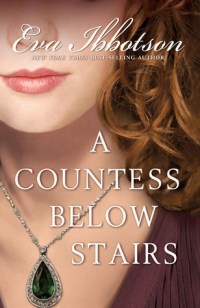
Serena’s Review: “A Countess Below Stairs”

714569 Book:“A Countess Below Stairs” by Eva Ibbotson

Publishing Info: Speak, May 1981

Where Did I Get this Book: audiobook from the library!

Book Description: After the Russian revolution turns her world topsy-turvy, Anna, a young Russian Countess, has no choice but to flee to England. Penniless, Anna hides her aristocratic background and takes a job as servant in the household of the esteemed Westerholme family, armed only with an outdated housekeeping manual and sheer determination.

Desperate to keep her past a secret, Anna is nearly overwhelmed by her new duties—not to mention her instant attraction to Rupert, the handsome Earl of Westerholme. To make matters worse, Rupert appears to be falling for her as well. As their attraction grows stronger, Anna finds it more and more difficult to keep her most dearly held secrets from unraveling. And then there’s the small matter of Rupert’s beautiful and nasty fiancée…

Review: I am on a bit of a historical fiction kick currently, it seems. And this story, with its mixture of “Downton Abbey” themes and motifs combined with a main character who survived the Russian revolution, sounded just about perfect right now. While there were definite strengths and weaknesses of this story, I ultimately very much enjoyed it.

Anna, whose family lead an idealic life in the Russian aristocracy before the revolution overcome their country, has now fled to England with the remaining members of her family, and is broke and facing a new life for which she is completely unprepared. Luckily, she finds a place as a housemaid in the household of the Earl of Westerholme. I say “luckily” because, while the book description leads readers to believe that Anna struggles with this transition, she manages to find herself in one of the best households one could imagine. Her co-workers are hardworking and, while initially very skeptical of her clearly inexperienced background (though they only think she is untrained, unaware of her high born status), they are supportive and recognize her hard work and effort. And the family all end up loving her immediately as well, even the family dog!

This speaks to one of my largest criticisms of the book. Reading the book description, I was looking forward to a story about struggle, hope, and the ability to overcome the tough hand life had dealt Anna. But ultimately? She seemed to glide through it all with barely a misstep! Her childhood, before the revolution, is described in rosy hues and she’s pretty much the perfect child, notably never spoiled, always humble and cheerful. And then, thrown into a position as a maid, she seems to adjust instantly and everyone love her! The dog, the eccentric uncle (they bond over classical music), the senile mother of the butler (Anna gives her something to do!), Ollie, the young neighbor girl who struggles with her health (Anna never makes her feel like an outsider!). Anna was bit of a “special snowflake,” I guess is what I’m saying.

While this aspect of her characterization was a bit much, there were also very funny bits. For example, to learn to be a housemaid, Anna reads a 3 volume tome about the do’s and don’ts of service and is eternally quoting it at the other workers, much to their chagrin. She also curtsies elaborately to everyone, like so:

tumblr_m59hugea111qlgcyro1_500
I was pretty much picturing “Anastasia”throughout this whole book…(source)

Ultimately, it was the villain character that made this book so fun. I found myself wanting to rush through the story just to get to the parts where Rupert would realize how completely terrible his fiancee really was. And she’s not villainized in the typical way (I was concerned that this was going to be a bit of a “evil for being popular” trope). Instead, Muriel has a keen interest in eugenics and “perfecting” the human race. So, you can guess where that was going! She was delightfully horrible.

My second criticism of the book was the ending and how it was resolved. Rupert is a rather bland leading man, and I was waiting for him to actually make some choices and stand up for his family and household whom he had exposed to the workings of his cruel fiancee. Instead, things are wrapped up in a way that seemed a bit out of left field, and by periphery characters. I feel that this could have been handled a bit better.

I listened to the audiobook version of this and very much enjoyed the narrator. She had a very “Dowager Countess of Grantham” type style which was lovely. The quality of the recording was a bit lacking, but I generally enjoyed it.

If you want a short, sweet historical story and can tolerate a bit of a “Mary Sue” type leading lady, definitely check this book out! Like I said, the villain is lovely to hate.

Rating 6: Solid story with a unique addition of the Russian revolution, but the leading lady was a bit too perfect and the ending a bit too much of an “easy out.”

Reader’s Advisory:

Kate’s Review: “End of Watch”

25526965Book: “End of Watch” by Stephen King

Publishing Info: Scribner, June 2016

Where Did I Get This Book: The library!

Book Description: Brady Hartsfield, perpetrator of the Mercedes Massacre, where eight people were killed and many more were badly injured, has been in the Traumatic Brain Injury Clinic for five years, in a vegetative state. According to his doctors, anything approaching a complete recovery is unlikely. But behind the drool and stare, Brady is awake, and in possession of deadly new powers that allow him to wreak unimaginable havoc without ever leaving his hospital room.

Retired police detective Bill Hodges, the unlikely hero of Mr. Mercedes and Finders Keepers, now runs an investigation agency with his partner, Holly Gibney, who delivered the blow to Hartsfield’s head that put him on the brain injury ward. Brady also remembers that. When Bill and Holly are called to a murder-suicide with ties to the Mercedes Massacre, they find themselves pulled into their most dangerous case yet, one that will put not only their lives at risk, but those of Hodges’s friend Jerome Robinson and his teenage sister, Barbara. Because Brady Hartsfield is back, and planning revenge not just on Bill Hodges and his friends, but on an entire city.

In End of Watch, Stephen King brings the Hodges trilogy to a sublimely terrifying conclusion, combining the detective fiction of Mr. Mercedes and Finders Keepers with the supernatural suspense that has been his trademark. The result is an unnerving look at human vulnerability and up-all-night entertainment.

Review: You know that you are coming to the end of a good series when you are both racing through a book, and yet not wanting to finish it. This is the experience I had while reading “End of Watch”. On the airplane I realized that I had read half of the book, and decided that it was time to put it down, because I needed to savor it. I needed to hold onto the last Bill Hodges story for as long as I could. So when I did commit to sit down and finish it, it was both wonderful and awful. I wanted to know how it all ended, but I never wanted it to end.

It was definitely good to get back to the roots of this series, and those roots are Brady Hartsfield. As I mentioned in my review of “Finders Keepers”, it just isn’t quite the same without The Mercedes Killer himself. And he came back with all the malevolence that he had in the first book. But this time he is using a video game console and his newly acquired psychic powers to take out his victims. He gets them obsessed with this game, specifically trying to click on pink fish for points, and hypnotizes them into committing suicide. I’m sure it was meant to be a damning indictment of social media, but what’s even more accidentally relevant is that I started reading this right around the time that Pokemon Go had started taking the world by storm.

giphy6
This has not stopped my own quest for Dragon and Ghost types, however. (source)

So the idea of Brady now having psychic, body jumping powers is kind of… silly. I mean, it doesn’t really fit with the realism of the rest of this series, but I was willing to give it a pass because 1) it goes back to King’s roots of “Carrie”, “Firestarter”, and “The Shining”, and 2) it gave Hartsfield a way to come back in spite of the fact he’s nearly braindead thanks to Holly Gibney.

This is very much Hodges swan song, though, as his health is deteriorating. Given that the book is called “End of Watch”, it should as no surprise that this is, indeed, the end of Hodges’ times as a detective. That didn’t make it any less melancholy, however, and his connections to his friends, especially Holly, made it hurt all the more. Hodges has helped Holly adjust and acclimate to a life she never thought she would have, and while so much of that is because of her, her friendship with Hodges (and Jerome too) played a big factor in it. So knowing that Hodges’ health issues are very serious makes the reader ache for Holly just as much the ache is for Hodges. They have come so far from “Mr. Mercedes”, their relationship going above platonic and romantic, and being in a category of it’s own. I am also still very happy with how King has characterized Holly, as while she has become more comfortable with herself for the most part, she still has her problems and they are NEVER presented as a character weakness. They are just shown as a part of who she is, that it’s just fine. King has made efforts in his more recent works to include more diverse characters, and Holly is a great example of that. Jerome Robinson is too, but I feel like we didn’t really get to see enough of him in this last book. Granted, he’s off at school and has his own life now, but I would have loved to see a bit more of him and his sister Barbara. That said, the part that Barbara did have was another good way for King to take on issues of race in this country. It was momentary, but it was well done.

The thriller elements in this book were spot on, as I was on the edge of my seat the entire time. King manages to take themes from the noir genre and makes them feel modern and unique, and the rivalry between Hodges and Hartsfield reflect this perfectly. We are ready for them to finally have their showdown, a moment we’ve been waiting for since “Mr. Mercedes”. Once I got into the final climax of the book, I was completely tense and freaked out, ready to find out how it was all going to turn out, and I was LIVID when I got a text from the husband that it was time to come pick him up from his morning excursion on our trip right as it was all shaking out.

giphy7
Actual file footage from that day. (source)

Suffice to say, I didn’t want to put it down because it was just too damn addicting. And that is everything I want in a thriller novel.

“End of Watch” was an imperfect end to the Bill Hodges series, but it managed to hit all of the right notes and left me incredibly satisfied. I was very, very happy with how the Bill Hodges Trilogy wrapped itself up. Stephen King is a true master, who has proven that he can write many different stories of many different types, but he’ll probably always have a place in his original horror roots.

Rating 8: Though there were some moments that felt rushed and some characters who felt left behind, “End of Watch” was a solid and satisfying end to King’s Bill Hodges Trilogy.

Reader’s Advisory:

“End of Watch” is included on these Goodreads Lists: “Protagonists over 60”, and “Can’t Wait Reads of 2016”.

Find “End of Watch” at your library using WorldCat!

Previous reviews in the series: “Mr. Mercedes”, “Finders Keepers”

Serena’s Review: “My Lady Jane”

22840421Book: “My Lady Jane” by Cynthia Hand, Brodi Ashton, and Jodi Meadows
Publishing Info: HarperTeen, June 2016

Where Did I Get this Book: the library!

Book description: The comical, fantastical, romantical, (not) entirely true story of Lady Jane Grey. In “My Lady Jane,” coauthors Cynthia Hand, Brodi Ashton, and Jodi Meadows have created a one-of-a-kind fantasy in the tradition of “The Princess Bride,” featuring a reluctant king, an even more reluctant queen, a noble steed, and only a passing resemblance to actual history—because sometimes history needs a little help.

At sixteen, Lady Jane Grey is about to be married off to a stranger and caught up in a conspiracy to rob her cousin, King Edward, of his throne. But those trifling problems aren’t for Jane to worry about. Jane gets to be Queen of England.

Review: I listed this book as one of my picks for June Highlights without any real knowledge of what it would be. A comedy of the definitely-tragic life of Lady Jane Grey? Something about a horse? But the comparison to “The Princess Bride” is what truly sold me on it, and I immediately requested it from the library. And it was a blast!

King Edward is dying. Or so he’s been told. And in a brilliant scheme of his (not) own making, he decides to line up his best friend and cousin Lady Jane Grey to inherit the throne behind him. But to do so, she should really be married so the male heirs can take over eventually, because women are questionable leaders, Edward has to believe. And so enters Lord Gifford, or “G” who has a bit of a “horse” problem. That is, he becomes a horse from dawn to dusk every day. So now, poor Jane must mourn Edward (or does she?), become queen, and deal with a husband who prefers apples. It’s all quite lovely.

I am generally hit-and-miss on the concept of duel protagonists, even more skeptical of three. But this book pulls it off! We have chapters from Edward, G, and, of course, Jane, to tell us their story. Naturally, it would be easy for Edward’s chapters to fall to the wayside in a story that is largely about Jane’s queenship and her burgeoning relationship with G, her husband/horse. But I was surprised to find myself truly enjoying Edwards contributions and his journey to self-awareness. Yes, Edward, maybe women can rule…maybe, your half-sister, even, Ness (also known as Elizabeth…)?

G and Jane, however, were the true heart of the story and I enjoyed them both immensely. Jane loves books, so there was a natural kinship between us there.

giphy5
(source)

At one point, in the early more rocky stages of their relationship, Jane builds a wall of books between herself and G in the carriage because there was not enough room in the trunks. This is my kind of girl. G, too, had a great voice and sense of humor. His perspective from his “horse self” was hilarious.

Really, the humor is what made this book. The dialogue was witty, and the authors fully embraced the ridiculousness of their concept, and it as almost impossible to not feel their own laughter emanating from the pages.

And yes, the comparisons to “The Princess Bride” were on point. The use of a narrator inserting thoughts and opinions throughout the story was used in the same way, and there definite nods to the story itself. In one scene, G refers to a large bear by some long acronym and proclaimed he didn’t believe it existed (ala “ROUSs? I don’t believe they exist!”) However, while I enjoyed these nods and the style in general, there were points where I felt like it was leaning too heavily on elements from that story. A nod here and there, sure, but there were a few too many, especially with the parenthetical narration bits that struck a bit too closely to “The Princess Bride.” It’s one thing to follow a format, it’s another to almost copy an idea. Parts of this made me uncomfortable.

I also really liked the twisting of history. Instead of the actual struggle between Catholics and Protestants that was going on during this time period (and lead to the conflict in rulers with Mary and Elizabeth fighting for different national religions, essentially), this book changes it to a conflict between the Verities (people who stay people and believe this is the RIGHT way to be) and the Ethians (those who can turn into nifty creatures like horses/dogs/etc). It was fun seeing what was actually a very serious conflict be turned into such a creative fantasy adventure.

Which speaks to tone over all. Like I said, this is definitely a comedy story. If you’re looking for anything regarding a serious, historical book, this is not for you. The story/characters/narrator consistently make fun of elements of the time period (see: sexism regarding women rulers), and the dialogue is full of anachronisms. But, if you’re in the mood for a quirky, fun, romantic comedy, this book is definitely for you!

Rating 8: Super fun story, with three great leads. If you liked “The Princess Bride,” you’ll like this. But was also a bit too close to this original, at times.

Reader’s Advisory:

“My Lady Jane” is a very new book, so it’s not on many lists. Obviously, if you liked this and haven’t read “The Princess Bride,” go do that now! And another great comedy fantasy series I love is called the “Hero” series by Moira J. Moore and starts with “Resenting the Hero.”

Find “My Lady Jane” at your library using WorldCat!

Kate’s Rev-Up Review: “Finders Keepers”

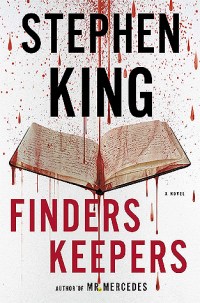
22453035Book: “Finders Keepers” by Stephen King

Publishing Info: Scribner, June 2015

Where Did I Get This Book: The Library!

Book Description: “Wake up, genius.” So begins King’s instantly riveting story about a vengeful reader. The genius is John Rothstein, an iconic author who created a famous character, Jimmy Gold, but who hasn’t published a book for decades. Morris Bellamy is livid, not just because Rothstein has stopped providing books, but because the nonconformist Jimmy Gold has sold out for a career in advertising. Morris kills Rothstein and empties his safe of cash, yes, but the real treasure is a trove of notebooks containing at least one more Gold novel.

Morris hides the money and the notebooks, and then he is locked away for another crime. Decades later, a boy named Pete Saubers finds the treasure, and now it is Pete and his family that Bill Hodges, Holly Gibney, and Jerome Robinson must rescue from the ever-more deranged and vengeful Morris when he’s released from prison after thirty-five years.

Not since Misery has King played with the notion of a reader whose obsession with a writer gets dangerous. Finders Keepers is spectacular, heart-pounding suspense, but it is also King writing about how literature shapes a life—for good, for bad, forever.

Review: The flashback to the “Bill Hodges Series” continues with the middle book, “Finders Keepers”. I got my grubby little paws on this book shortly after I had listened to “Mr. Mercedes” on audiobook, but couldn’t wait for the CDs to arrive so I just grabbed the print book. Sorry, Will Patton, I was just too anxious to dive right in. The upside with reading this book in print form was that I basically devoured it once I had it in my hand. I read faster than Will Patton speaks, after all. Eager was I to fall back into the world of Private Detective Bill Hodges and his assistants Jerome and Holly. Eager was I to revisit that horrible and evil Brady Hartsfield, who was left beaten and practically brain dead by Holly in an effort to stop him from blowing up a concert of teenage girls. Eager was I.

So it was too bad that “Finders Keepers” kind of let me down.

It certainly wasn’t the writing. King brings some more great suspense to this narrative, building layer upon layer of serious tension. He starts out with a horrific murder, and doesn’t let the action or intensity die down. Morris Bellamy is like a male and more expansive version of Annie Wilkes, his obsession with his favorite writer pushing him over the edge into violence and madness.He is a very clear threat, and I definitely felt a lot of fear for poor Pete Saubers, a boy whose family is falling into financial ruin and is looking for a miracle. So of course he’s going to take that money that he finds, any empathetic reader would understand it. Had this been any other Stephen King book, I probably would have loved this and bought into it 100%. The problem for me is that this is Book 2 in the Bill Hodges Trilogy. And Bill, Holly, and Jerome do not make an appearance in this book until about one third of the way, and to me that is just far too long to bring these characters back when it is supposed to be the middle part of a Bill Hodges Trilogy. It kind of felt like that King had a new fun idea, and then, knowing he wanted to write more Bill Hodges stuff, decided to throw both themes together to kill two birds with one stone. He did it in a believable way, even connecting the Saubers family to the Mr. Mercedes massacre (Mr. Saubers was one of the victims, left with a permanent limp and few job prospects because of it), but it still felt cobbled together. Perhaps this could be written off as a good way to show that Hodges and Holly and, to a lesser extent, Jerome have started their own detective business together (called Finders Keepers), but it still was a bit too long to keep them away for the sake of the new characters.

And plus, I feel that this story as a whole has just as much to do with Brady Hartsfield as it does with Bill Hodges. Hartsfield has a small role in this, but being something of a vegetable lying in a hospital bed makes it kind of difficult to give him much to do. Given all the weight he was given in the first one, I was expecting a bit more from him, especially since it was pretty clear from the get go that there was more to his story. I think that if this series was more than just three books I would have been a bit more forgiving with not focusing on him as much. I would have felt like there was plenty of time. But with three books in this series, to barely have Hodges’ nemesis, and to keep Hodges and his gang out of it for the first third as well, it just doesn’t feel right.

But there are things here that I really did like. Jerome’s sister Barbara, relegated to role of potential victim in “Mr. Mercedes” gets to do a bit more in “Finders Keepers”. She’s the friend of Pete Saubers’ sister, who is worried about her brother and her family. Barbara is the one who prompts her to go see Hodges about what’s going on in her life. I like the fact that King is trying to have more diverse people in his books as of late, and Jerome and Barabara Robinson work very well as characters and as helpers to Bill Hodges. Perhaps the greatest accomplishment of this book, however, is the progression of Holly Gibney. When we met Holly in “Mr. Mercedes” she was a nervous, unstable wreck who was conquered by her demons. But in “Finders Keepers”, her new found freedom and purpose (and friend group of Hodges and Jerome) has helped her bloom into a confident and savvy detective in her own right. True, she still has some of her hang ups, and her less extreme personality quirks are still quite present (being too literal and lacking any kind of filter), she is far more in control of her nerves and feels a lot better about herself and her life. I love Holly, and she brings her own bit of diversity to the story, being a character who has mental disabilities and may be on the spectrum. King still writes her tenderly and with a gentle touch, but never condescends to her as a character either. Her character development is really the best damn thing about this book, and her friendship with Hodges is very satisfying.

And then there is the fact that Brady Hartsfield seems to be gaining some strange powers…. I thought that this was a real world King story, not necessarily a supernatural one. That isn’t to say that I was irritated with this. I like that King decided to go back to his roots, ALL the way bak to his first book, “Carrie”.

“Finders Keepers” wasn’t as strong as “Mr. Mercedes”, and something of a disappointing distraction from the Hodges/Hartsfield story that is at the heart of this series. But distracted or not, my girl Holly Gibney got some time to shine in this one, and that was worth it. Up next I will take on the last of the trilogy, “End of Watch”.

Rating 7: A solid mystery on it’s own, but it feels like a strange, out of place add on to the overarching story of Bill Hodges. Frankly, it needs more Brady Hartsfield. But Holly Gibney really shined bright.

Reader’s Advisory: 

“Finders Keepers” is included on these Goodreads Lists: “Quirky Books”, and “Stephen King’s Non-Horror Books”.

Find “Finders Keepers” at your library using WorldCat!

Previous Reviews in this series: “Mr. Mercedes”

August 2016 Highlights

We have entered the Dog Days of summer, everybody, and as such it is time for our highlights and choices we’re most excited about for the month! Let’s see what we are looking forward to!

Serena’s Picks

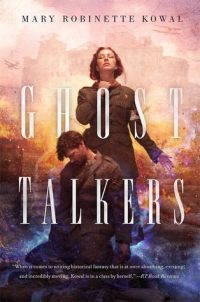
26114291Book: “Ghost Talkers” by Mary Robinette Kowal
Publication Date: August 16th, 2016

Why I’m Interested: Set in an alternate-Earth where a Psychcorp division of the military helps with the war efforts in World War I, this unique stand-alone definitely seems worth checking out. The lead character, Ginger Stuyvesant, is a medium who becomes caught up in the war efforts and the possibility of a traitor in their midst when her fiance is sent to the front line. This has the potential to be very tragic, but I’m willing to risk it!

26228034

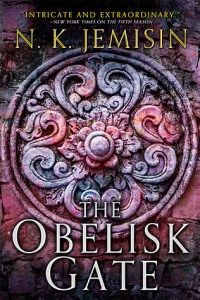
Book: “The Obelisk Gate” by N.K. Jemisin

Publication Date: August 16th, 2016

Why I’m Interested: This is the second in Jemisin’s “The Broken Earth” series, and alas, I haven’t even gotten to the first one, “The Fifth Season,” yet! But I have read other works by this author and love them all, and she’s a highly praised name in the fantasy community right now. Featuring her trademark world building and incredibly high stakes (see: a world with repeated apocalyptic events), the release of this book just highlights the fact that I need to prioritize this series pronto!

26114175

Book: “The Swarm” by Orson Scott Card and Aaron Johnston

Publication Date: August 2nd, 2016

Why I’m Interested: “Ender’s Game” is one of my all-time favorite sci-fi books. I’ve read sporadically within the rest of the series and spin offs with mixed feelings. This story is essentially a prequel, and features Mazer Rackam, Ender’s mentor in the original, during the second second war with the Formics. This seems to be the first in a trilogy set during this period of time and is also a first pairing for Card and Johnston. I’m curious to see how the authors merge their styles and how this series will hold up against the original.

Kate’s Picks

27774725

Book: “The Smaller Evil” by Stephanie Kuehn

Publication Date: August 2nd, 2016

Why I’m Interested: Stephanie Kuehn is one of my favorite YA authors writing today, as I love her book “Charm and Strange” and quite enjoyed both “Complicit” and “Delicate Monsters”. Now she’s back with a new one, which is sure to be as tense as her others. This one seems to deal with a strange group that is leading a self help retreat in the remote Big Sur mountains, and the teenage boy who has found himself in it’s fences. I smell a cult story, and I love a good cult story.

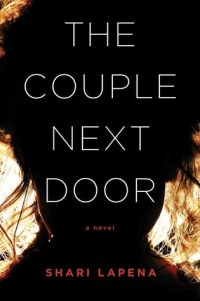
28815474Book: “The Couple Next Door” by Shari Lapena
Publication Date: August 23rd, 2016

Why I’m Interested: This book sounds like it has it all: a seemingly perfect family, a terrible crime, and secrets and lies that are about to come out. I wanted something like this when I read “The Magpies” by Mark Edwards, but didn’t quite get it, so hopefully “The Couple Next Door” will fill my insatiable need for terrible things happening to suburban bliss. It seems to have some pretty okay hype, so I am looking forward to this.

23308488

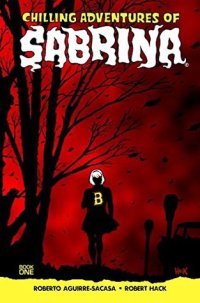
Book: “The Chilling Adventures of Sabrina Book 1” by Roberto Aguirre-Sacasa and Robert Hack (Illustrator)

Publication Date: August 16th, 2016

Why I’m Interested: So you know how the Archie Comics are kind of getting a more edgy and darker make-over, or have had some darker themes at least? Apparently the same can be said for Sabrina the Teenage Witch!! I loved the show when it was on and I liked the comics when I was little, so seeing that it’s been given the horror treatment makes me so relentlessly excited I can’t even begin to contain my excitement!! This has the potential to bring in some fun witch themes to an old favorite.

What books are you guys excited for that are coming out this month? Let us know in the comments!

Reader’s Advisory for “The Raven Cycle”

Thank you for reading our joint series review for “The Raven Cycle” by Maggie Stiefvater. As promised, here is our longer, in-depth Reader’s Advisory post for the entire series now that we have completed it. On to the picks!

Serena’s Picks:

Series: “Daughter of Smoke and Bone” series by Laini Taylor

This book is right up there as one of my newer favorite young adult fantasy series. If you liked the combination of fantasy and horror that you got with the “Raven Cycle,” this series is right up your alley. Also, if you liked anything about Mary Shelley’s “Frankenstein”…don’t want to give it away, but yikes! Taylor also introduces a strong cast of characters, and while the romance is probably a stronger element in this series than it was in the “Raven Cycle,” it never overpowers what is otherwise an incredibly creative and unpredictable fantasy story.

518848Book: “Sabriel” by Garth Nix

This is one of my all time favorite fantasy novels. I wasn’t as aware of it as a teenager reading the story, but man is it dark as well! I guess there are necromancers in it, so I should have been aware as a kid, but for some reason, as an adult reader who regularly revisits this book, I’ve come to appreciate how well Nix handles the dark fantasy elements in this book. It also features a kickass heroine in Sabriel herself, a slow-burn romance that doesn’t overtake the story, and snarky cat. So, it’s pretty much the perfect book. It can also be read as a standlone, but Nix has written several sequels in the years since it was first published. I still prefer this one above all and so am only highlighting it here, but if you do read it and enjoy it, I did enjoy the others, too.

10626594Book: “The Scorpio Races” by Maggie Stiefvater

Maybe this is a cheaty answer, but I don’t care! Obviously, if you like Stiefvater’s writing for this series, you are likely to enjoy her writing in this book. Mythology in the modern day, this book is simply a beautiful imagining of an only slightly alternate world where horses can come from the sea and are as beautiful as they are dangerous. The writing is exquisite, the two main characters are sympathetic and strong, and, it’s a stand alone that leaves the reader fully satisfied. Regardless of anything else, if you love horses or books about horses, this story is perfect for you.

Kate’s Picks:

Series: “Locke and Key” by Joe Hill and Gabriel Rodriguez

A dark fantasy comic about family, magic, friendship, and demons, “Locke and Key” by Joe Hill (one of my favorite authors writing today) and Gabriel Rodriguez (Illustrator) is a dark and fantastical story. It follows the Locke Family, who has moved back to the childhood home of the recently murdered patriarch. Inside the house the three children, Tyler, Kinsey, and Bode, find many magical things, such as magical keys, a door that once you cross you can leave your body, and a magical crown. But there is also a demon inside the well on the property that wants the keys. The tone is both frightening and coming of age, and it is a wonderful adventure filled with action, metaphors, and heart.

22535489Book: “Bone Gap” by Laura Ruby

The town of Bone Gap has an entertaining set of citizens, including a man who treats his chickens like they are people, a hippie lady who makes honey and honey based products, and the O’Sullivan brothers, Sean and Finn, who took in a mysterious woman named Roza. But then Roza disappeared, and Finn saw a dark and mysterious man with her whose face he cannot remember. “Bone Gap” is a story about evil beings that are seeking beautiful princesses, teenagers falling in and out of love, and a very odd town with very odd characters. I picked this because of the town Bone Gap itself, which, like Henrietta, has a feel to it that makes it feel like it’s very own character.

Book: “Far Far Away” by Tom McNeal16030663

Noah Czerny is one of my favorite characters in “The Raven Cycle”, the ghost who is still walking this earth because of the magical Ley Line. “Far Far Away” deals with a ghost as well, but this ghost is a familiar one: Jacob Grimm, of the Brothers Grimm. “Far Far Away” is a story about a boy named Jeremy Johnson Johnson, whose closest confidant is Jacob, who is there to watch over him and protect him from an unknown evil. The friendship between Jacob and Jeremy is a sweet one, as is the friendship between Jeremy and a free-spirited girl named Ginger. And the horror elements of this story are also solid, involving a mysterious entity that is threatening Jeremy, taking fairy tale’s darkest points and making them even creepier.

And this wraps up our week long retrospective of “The Raven Cycle” by Maggie Stiefvater. If you have read “The Raven Boys” or any other books in the series, what books do you think are similar? 

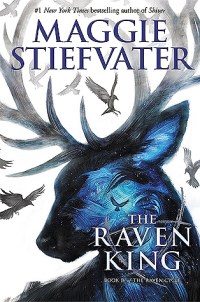
Joint Review: “The Raven King”

17378527This week we’re bringing to you a special, all-week review series of Maggie Steiefvater’s “Raven Cycle” books. Containing both fantasy and horror elements, we’ve both been independently reading this series, and with the release of the fourth and final book earlier this spring, we thought it was about time to share our thoughts! So each day check in to read our thoughts on the next in the series. To round out the week, on Friday we’ll be posting a more extensive list of other books/series that we recommend if you enjoyed the “Raven Cycle.” Today we review the fourth and final book in the series, “The Raven King.”
Book: “The Raven King” by Maggie Stiefvater

Publishing Info: Scholastic Press, April 2016

Where Did We Get This Book: Both got the audiobook from the library!

Book Description: Nothing living is safe. Nothing dead is to be trusted.

For years, Gansey has been on a quest to find a lost king. One by one, he’s drawn others into this quest: Ronan, who steals from dreams; Adam, whose life is no longer his own; Noah, whose life is no longer a lie; and Blue, who loves Gansey… and is certain she is destined to kill him.

Now the endgame has begun. Dreams and nightmares are converging. Love and loss are inseparable. And the quest refuses to be pinned to a path.

Kate’s Thoughts:

I waited long and not totally patiently to get to this, the conclusion to “The Raven Cycle”. The book version taunted me on the shelf at work, because I was determined to hear Will Patton give life to these characters one last time, and that is what I did. And boy was it worth the wait. When early in the story some strange, ethereal beings that looked just like Blue Sargent came walking through the woods saying ‘make way for the Raven King’, in a weird, strange way, I knew that I was going to enjoy the end of all things. And all of our Raven Boys (and Blue) are so completely burdened during this book that the way that this all shakes out is going to be very, very important and consequence filled.

I was mostly happy and satisfied with how it did, which is the good news! Stiefvater had a lot of plots to wrap up, but I feel like she addressed most of them and gave them closure. The reality of their situation has started to take it’s toll on The Raven Boys and Blue. Blue is coping with the prophecy that has haunted her her entire life, now that she has found a true love in Gansey. Gansey knows that he’s doomed to die in a sacrifice, and is trying to make peace with this. Ronan is still creating things and creatures and pulling them out of his dreams (including a little girl with hooves he calls Orphan Girl), but the responsibilities with this gift are weighing on him. Adam is a powerful scryer, but the loss of Persephone in “Blue Lily, Lily Blue” is still haunting him, as is his abuse filled past. And Noah seems to be wasting away before their eyes. Seeing all of this was both very sad, but very good in the sense that it was a good reminder that they are all teenagers. If they weren’t as affected by these things as they were, it would seem very disingenuous on Stiefvater’s part. It felt appropriate that they were all in their own little angst bubbles in this book.

It was also fun seeing Piper Greenmantle again, newly teamed up with Neve and a really disgusting demon that looks like a giant wasp. The demon always felt like a serious threat, and Stiefvater’s descriptions of it and the hell that it wreaked upon the characters in this book were very scary and made me squirm. But I think that this could tie into one of the weaknesses of this book. While Stiefvater did a good job of wrapping up most of the storylines, there were a few that felt very rushed to wrap up. I don’t want to give spoilers away, necessarily, but there were a couple characters who were brought back just to be thrown to the side. I went in thinking that these characters were going to be there for the remains of the book, especially the ones that have been gone since early in the series, to give them a large send off. But then they would be over and done with after, like, a chapter. I didn’t like how rushed that felt, and I think that sometimes it was done to make room for the new characters, which didn’t seem too fair.

That said, I LOVED a few of the new characters, Henry Cheng especially. We hadn’t seen very much of him in the previous “Raven Cycle” books, but he was given a prominent role in this book as he gets closer to Gansey and Blue. His friendship with Blue was especially nice, since in the previous book he highly offended her without meaning to and it caused a lot of tension between her and Gansey. By the end of this he kind of felt like Carol Cleveland’s role in the “Monty Python” group: not officially a part of the gang, but important enough and there enough that he was totally a part of the gang all things considered. I also liked the introduction of his mother, Sun, a dealer in magical and antique items, a fact that manages to tie a lot of the realties of this world and the conflict that is in it together.

There was another thing that I was worried about in this book, and that was Gansey’s ultimate demise. I, of course, hoped that there would be a way to make this prophecy not so, as I love Gansey, I love his relationship with his friends, and I love his relationship with Blue. But at the same time, this Death Kiss had been so hyped and so matter of fact, that if Stiefvater did some sort of cheap cop out or cliched solution, I would only be disappointed. I was worried and very skeptical that she would muck it up in some way. I’m not going to say much else on the matter, except that this was NOT the case at all, and that she was able to reconcile everything together in a way that I really, really enjoyed.

And Adam and Ronan. Oh my gosh, Adam and Ronan. I love everything about their relationship, and there were absolutely beautiful descriptions about each of them through the other’s eyes that felt so achingly romantic and tender that I got choked up a few times. You wouldn’t think that describing someone as an oil spill would be breathtaking in this regard, and yet Stiefvater managed to do it. Both of these characters are filled with so much anguish and pain, and they understand each other so well and so fully that it always hits the mark in the exact way that it should.

Overall I enjoyed “The Raven King”. I’m going to miss all of these characters and this world that Stiefvater has created, but I am so happy that she ended it the way that she did. Fantasy fans need to check this one out..

Serena’s Thoughts:

And so it ends. I was so nervous for this book. For one, sticking the landing is notably difficult for any series. And for two, Stiefvater had seemingly dug herself quite the hole to dig her way out of. Beyond the obvious prediction of Gansey’s death that has hung over the series as a whole from the very first chapter of the first book, none of these characters have had an easy time of it.

Blue, with her struggles to find a place for herself in a world that she doesn’t seem to fit within all while carrying this heavy burden with regards to love and death tangled in such a way that would break most adults. Ronan, so powerful and yet so trodden down with the burdens of his gift and the losses that just seem to keep coming. Adam, who has come so far, but still carries the scars of his home life, and the internal struggle to accept the gifts of friendship that he has been given, and now has to contend with the full extent to which his promise to be Cabeswater’s hands and eyes will affect his life. And Gansey, now aware of his doom, who can feel the end coming but doesn’t know how to get there or even what role he is to play, now surrounded by such supernaturally powerful friends as Ronan, Blue, and Adam have become. How does to end all of these stories in a way that is true to the tone of the book?

It will be very hard to review this story without spoilers, but I will say that I was immensely satisfied with the ending. These are incredible challenges to face, and I think that Stiefvater handled them all with aplomb. Further, and I really shouldn’t even be surprised any more by this, she adds another character, Henry, who comes with his own baggage and gifts and was slotted in so seamlessly that by the end of the story, I was just as invested in his outcome as the others. Seriously, how does she do this??

The horror in this book also reaches its peak. There were pieces of imagery that were incredibly disconcerting, and often the scene-setting even played hand-in-hand with the type of story-telling you will find in the best horror/thriller novels. At one point, a scene is described through a character’s perspective who cannot see what is happening around him. In many ways, the scene was exactly like one you would come across in a horror movie, when suddenly a room is plunged into darkness and all you have to go on is scuffling and the random shout of dialogue to piece together what is happening. Stiefvater, just like a director of a film scene like this, understands perfectly that sometimes our imagination will make the unseen a million times more terrifying than anything actually presented. It was excellent.

creeped_out_the_office
(source)

And, while I was satisfied with the ending, Stiefvater doesn’t fall into the trap of happily-ever-after. The villain in this story is a demon, and if that’s what you’ve got to fight against, a story can’t end with only rainbows and butterflies. A few villains from previous books make surprise appearances, and the background into Mr. Grey’s life as a hitman hired by an underground network of magical art dealers, essentially, is more fully fleshed out in a very creative manner. Sacrifices are made and there were times were I was definitely crying.

But like I said, it did end perfectly. The paths that are lain before the remaining characters were believable and true to the types of people they had all grown into by the end of the series. There was the possibility lain down for future stories for the characters, but I’m not sure how I would feel about a return to this series. This all felt wrapped up so neatly, and I am more than content imagining their future adventures without needing actual follow-up novels. But, at the same time, I’ve started out skeptical about how Stiefvater could pull of this series and live up to the hype, and she’s completely surpassed my expectations. Maybe I should be more trusting! Either way, this was a fantastic conclusion, and I highly, highly recommend this entire series to fans of young adult fantasy and horror.

Kate’s Rating 8: Some of the plot points are hastily tied up, but overall the characterization is spot on and the ending is very satisfying.

Serena’s Rating 9: Practically perfect ending.

Reader’s Advisory:

We’ll include a detailed Reader’s Advisory post for the whole series on Friday!

Find “The Raven King” at your local library using WorldCat!

Previous Reviews: “The Raven Boys,” “The Dream Thieves” and “Blue Lily, Lily Blue.”

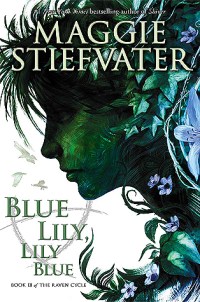
Joint Review: “Blue Lily, Lily Blue”

17378508This week we’re bringing to you a special, all-week review series of Maggie Steiefvater’s “Raven Cycle” books. Containing both fantasy and horror elements, we’ve both been independently reading this series, and with the release of the fourth and final book earlier this spring, we thought it was about time to share our thoughts! So each day check in to read our thoughts on the next in the series. To round out the week, on Friday we’ll be posting a more extensive list of other books/series that we recommend if you enjoyed the “Raven Cycle.” Today we review the third in the series, “Blue Lily, Lily Blue.”
Book: “Blue Lily, Lily Blue” by Maggie Stiefvater

Publishing Info: Scholastic Press, October 2014

Where Did We Get This Book: We both got an audiobook from the library

Book Description: There is danger in dreaming. But there is even more danger in waking up.

Blue Sargent has found things. For the first time in her life, she has friends she can trust, a group to which she can belong. The Raven Boys have taken her in as one of their own. Their problems have become hers, and her problems have become theirs.

The trick with found things though, is how easily they can be lost.

Friends can betray.
Mothers can disappear.
Visions can mislead.
Certainties can unravel.

Kate’s Thoughts:

And it is finally in this, “Blue Lily, Lily Blue,” that “The Raven Cycle” taps into its dark fantasy potential and runs crazy with it. I had been waiting, SO EAGERLY, for this book to become creepy and unsettling, and when things started getting real and  eerie stuff started happening I rejoiced. And then pathos set in, and my rejoicing turned to almost crying. Maggie Stiefvater ran me through the ringer with this book, and Will Patton was an accomplice. And I want to ask both of them, how dare you?

giphy4
(source)

When the story begins, Maura, Blue’s Mom and ringleader of the psychics at Fox Way, has disappeared from the house, leaving nothing but a vague note. Blue, understandably worried about her mother, isn’t one to sit around waiting for her to come back, and she enlists her Raven Boys to help her out. The power of friendship is so very strong with this group, and Stiefvater writes them all so believably and gently and tenderly that I can’t help but love every moment of it. Poor Blue is in a situation where she has the most friends that she has ever had in her life, but now her mother has left with little explanation and may never come back. This horrible situation takes it’s toll on Blue throughout the novel, and her desperation is an undercurrent in this story. But along with being afraid for her mother, this is the book where Blue and Gansey finally (kind of) start up a romantic relationship between the two of them. There is, of course, the problem that Blue cannot kiss him, as she is, according to prophecy, doomed to kill her true love after she kisses him. But this kind of works out for the better, as Stiefvater has to portray great sexual chemistry between these two without going to the obvious kissing and make out sessions. The result is incredibly romantic.

Speaking of romance, as a firm shipper of Ronan and Adam, this book was a feast of delightful implications when it comes to those two and their relationship. While part of me was definitely like ‘JUST GET TO THE KISSING!’, I really appreciated how slowly and meticulously Stiefvater decided to build their relationship. Because of this choice, it felt very natural and not unrealistic for Adam and Ronan to start gravitating towards each other. Had Adam just fallen in head over heels, especially with everything going on and his comparatively recent break-up with Blue, it would have rung quite false and come off as patronizing. Adam is starting to understand the way that Ronan feels about him, but he still has aways to go to understand how he feels about Ronan. Seeing them work these things out for themselves is a good way to build to a very satisfying and realistic pay out, and Adam and Ronan are well on their way there.

And then there’s the horror elements that I really, really liked. There were scenes that involved possession (poor Noah, things just keep getting worse and worse for him), and very claustrophobic scenes in caves and forests and darkness. It was in these parts that we met one of very very favorite new characters of this series, Gwenllian. Gwenllian is the daughter of Glendower, and a very potent psychic who tied up and left in a cave beneath Henrietta, where she remained for thousands of years under magical influence. And boy oh boy, is she both super creepy and a super hoot. She has her own abilities, abilities that are similar to Blue’s, though that isn’t one hundred percent made clear in this story. Gwenllian merely says that she and Blue and both mirrors of sorts, and that because of this Blue is safe to stand between the magical (and dangerous) mirrors in the house that made Neve, Maura’s sister, disappear. And Gwenllian comes at just the right time, there to fill the void when shit gets super real and we lose one of the women at the Fox Way house. I won’t tell you which one, but I will say that it’s absolutely heartbreaking, and it was the first time that I felt like the stakes in this series were, indeed, very high. The moment that a recurring character is killed in a series like this, that’s when you know that no one is really safe.

Serena’s Thoughts:

Whew! I felt like I had been put through the ringer when I finished this book! The first two stories slowly built to their climax points towards the end of the novel, but this book was ON the whole time. Throughout it all was the feeling that they were always on the cusp of something, that just around the next corner, on the next page, something even more fantastical was going to appear. And given that we had thousands of cars and nightmare-griffons being pulled out of dreams in the last book, topping herself in the fantasy department seemed like it would be too great a challenge for the author. Nope!

What was notable about the fantasy elements in this story as compared to the first two, perhaps, was the tinges of darkness that prevailed throughout it all. I’m sure Kate was pleased with the increased horror, and speaking for the more casual (read: more easily freaked out) horror reader, the darkness was at just the right level to give chills without veering fully into horror with a capital “H.”

The villains in this book were my favorites so far. Piper and Colin Greenmantle were the exact sort of people you live next to for years, then it comes out that they were psychopathic serial killers, and you’re just like, what? They did yoga! Even better was seeing their bizarre relationship dynamic from within. Their own casual approach to villainy right alongside quaint discussions of domesticity was almost just as disconcerting as all the fantasy horror elements.

Kate’s Rating 8: The stakes for all of our characters are raised exponentially as “The Raven Cycle” takes its darkest turn yet. I was immersed in the story progression, sufficiently eeked out by the horror elements, and I had my heart pummeled. Bring on the end, Stiefvater! I’m ready.

Serena’s Rating 8:

Reader’s Advisory:

We’ll include a detailed Reader’s Advisory post for the whole series on Friday!

Find “Blue Lily, Lily Blue” at your local library using WorldCat!

Previous Reviews: “The Raven Boys” and “The Dream Thieves.”

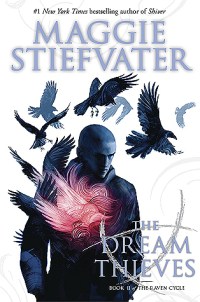
Joint Review: “The Dream Thieves”

17347389

This week we’re bringing to you a special, all-week review series of Maggie Steiefvater’s “Raven Cycle” books. Containing both fantasy and horror elements, we’ve both been independently reading this series, and with the release of the fourth and final book earlier this spring, we thought it was about time to share our thoughts! So each day check in to read our thoughts on the next in the series. To round out the week, on Friday we’ll be posting a more extensive list of other books/series that we recommend if you enjoyed the “Raven Cycle.” Today we review the second in the series, “The Dream Thieves.”

Book: “The Dream Thieves” by Maggie Stiefvater

Publishing Info: Scholastic Press, September 2013

Where Did We Get This Book: Both got the audiobook from the library!

Book Description: If you could steal things from dreams, what would you take?

Ronan Lynch has secrets. Some he keeps from others. Some he keeps from himself.

One secret: Ronan can bring things out of his dreams.

And sometimes he’s not the only one who wants those things.

Ronan is one of the raven boys—a group of friends, practically brothers, searching for a dead king named Glendower, who they think is hidden somewhere in the hills by their elite private school, Aglionby Academy. The path to Glendower has long lived as an undercurrent beneath town. But now, like Ronan’s secrets, it is beginning to rise to the surface—changing everything in its wake.

Of The Raven Boys, Entertainment Weekly wrote, “Maggie Stiefvater’s can’t-put-it-down paranormal adventure will leave you clamoring for book two.” Now the second book is here, with the same wild imagination, dark romance, and heart-stopping twists that only Maggie Stiefvater can conjure.

Kate’s Thoughts:

After reading “The Raven Boys” I wasn’t in the biggest rush to read “The Dream Thieves”. It wasn’t that I didn’t like “The Raven Boys”, because I did. But I wasn’t absolutely entranced by it, as while it was supernatural and supposed to be creepy, it didn’t quite live up to my probably unfair and impossible standards. But then I was looking at the audiobook selection from the library, and I saw that “The Dream Thieves” was available. And not only was “The Dream Thieves” available, my absolutely favorite audiobook reader, Will Patton, was the one who was reading it. So that clinched it. It was on.

So I don’t know if it was the Patton factor or what, but I ended up enjoying “The Dream Thieves” more than I did “The Raven Boys”. Okay, no, I take that back. It wasn’t the Patton factor, as potent and aggressive as that may be. It was because this book focused on Ronan Lynch, my favorite Raven Boy. Ronan is angry and brooding and emotionally unstable, so of COURSE I can’t help but love him to bits. And in this book not only is he given the spotlight, his personality and back story is explored quite a bit, so we get to see why he is so volatile and angry. We find out more about Ronan’s abilities in this book specifically the fact that he can pull objects and beings out of his dreams. Now that Cabeswater’s ley lines have been fully awakened, this ability has become more powerful. He’s taking not only objects out of his dreams, but creatures as well, creatures that aren’t exactly friendly. Along with this he is still affected and traumatized by the murder of his father, a tragedy that has connections to the present day situation with Glendower and the ley line, and to the fact that his mother has been comatose since. So as far as I’m concerned, Ronan has earned any and all of the angst that he’s showing. Along with the angst we got to see a softer side of him as well, not only with his younger brother Matthew, but also with Adam Parrish. Because Ronan is secretly in love with Adam. Which, of course, made me squee like an idiot. Seeing Ronan struggle with his past, his feelings, and his abilities were wonderful explorations.

Ronan wasn’t the only character to be explored more in depth in this book. We also got to see more of Adam and his own connection to the Ley Line and Cabeswater. Adam has always felt inferior to his group of friends because of their wealth and privilege, a fact that has never really been made easier by Gansey, whose good intentions are received as condescending more than kind. Adam is convinced that Gansey pities him and will hold his generosity over his head, and their relationship is heavily strained because of this. And to heap on the baggage afforded to Adam this time around, Blue, realizing she doesn’t share his feelings, dumps him. Sad for Adam. But AWESOME for me! I was worried that we were going to be subjected to this tired and annoying trope for the entire series, but NOT SO!

giphy3
Words cannot express the joy. (source)

But Adam’s worth, perhaps unseen by him, becomes far more clear in this book. Noah is a ghost. Ronan is a Dream Weaver. And Adam seems to be a little bit psychic. Which super, super intrigued me going further into this series. That, and the feelings that Ronan has for him. Really for me, “The Dream Thieves” was all about Ronan and Adam.

AHHH, and the psychic women that live with Blue, but I feel like I’ve rambled enough. Just know that Maura, Calla, Persephone, and Orla also get stuff to do in this book, and that they also get depth. Noah gets depth too, and his relationship with Blue gets a very sweet aspect to it. Let’s just say that ghosts don’t need to worry about dying if a girl whose kiss is prophetically deadly kisses them. I loved it. I loved so much about this book.

“The Dream Thieves” was the book that got me fully invested in “The Raven Cycle.” It’s blend of fantasy, the supernatural, and teenage suds makes it a super fun book and really gave the series the oomph I was looking for.

Serena’s Thoughts:

I second everything that Kate said, so I will try and discuss different points than the ones that she has already covered.

First off, the fantasy element is given a big injection of adrenaline in this book. While bits were sprinkled around quite nicely in the first book, that initial groundwork pays off big in this book. Magic is suddenly more than just a mysterious forest that appeared in the countryside. It’s alive and walking around in both Ronan and Adam. Ronan’s dreamer-abilities are so astounding and seemingly limitless. While also completely terrifying, which saves it from feeling like a magical “get out of jail free” card for any future problems. And Adam’s connection with Cabeswater is more complicated than it had at first seemed.

I’ll discuss Adam mostly, since Kate covered Ronan for the both of us. Oh, poor sweet Adam. Nothing is easy for him in this book. His hasty deal with Cabeswater comes with more strings attached then he had expected. And I loved the parallels that were drawn between the darkness that was imposed on this connection because of a lack of understanding on Adam’s part of what exactly it was that he agreed to. Looking life in the eye, looking one’s own flaws in the eye, and finding that clear-eyed honesty, while terrifying, is important to growth. Adam’s personal history is tragic, and I appreciated the honesty with regards to the effects that this would have on Adam’s life and ability to form healthy relationships around himself. His friendship with Gansey is pushed right to the breaking point and made me want to cry for them both. They were both just TRYING SO HARD and still not able to truly communicate their feelings.

And, importantly, while it is noted that nothing that had happened in Adam’s family life was his own fault or deserved or in any way not awful, I appreciated the fact that Adam wasn’t let off the hook for his own bad behavior. It’s completely understandable why he is the way he is, but Blue’s reaction to him behaving very poorly was so appropriate and something that Adam needed to go through to really gain self acceptance (not that he’s there yet, but there were steps).

This tied into my concern from the first book about the love triangle. There is no love triangle! Thank heavens. Just a natural, teen romance where you can fall equally out of interest as you did in, and that’s all ok. Blue is sad that she doesn’t feel as Adam does, but she’s honest with herself and, eventually, with him as well. There’s no dramatics, other than usual heartbreak, and both determine that their short lived romance can be turned into friendship with a little work. And Blue doesn’t suddenly fall head over heels for Gansey either. It is clear that they are both becoming more aware of their own feelings, and, in Blue’s case at least, this comes with a lot of adjustment needing to be made to her original judgements.

I also can’t end this review without mentioning Kavinski. Want to talk about a complicated, heart breaking story? Ronan’s angst and inner struggles are so perfectly paired against this completely new character (can I just say how impressed I am by Stiefvater’s abilities to manage so many characters and give them all so much depth in so few pages??). Kavinski is what Ronan could so easily have been without his friends and it is heartbreaking. Even as Kavinski spirals out of control, you can’t help but feel a deep ache for him.

I was already enjoying this series with “The Raven Boys,” but this book really sealed the deal for me!

Kate’s Rating 8: All of the characters are back and better than ever, and Ronan gets some back story and some delicious brooding time and cool magic. A great fantasy read.

Serena’s Rating 8: Very strong second showing. The fantasy elements were great, and the increased focus on complicated character like Ronan and Adam was appreciated.

Reader’s Advisory:

We’ll include a detailed Reader’s Advisory post for the whole series on Friday!

Find “The Dream Thieves” at your local library using WorldCat!

Previous Reviews: “The Raven Boys”