
Serena’s Review: “Woven in Moonlight”

40877706._sy475_Book: “Woven in Moonlight” by Isabel Ibnez

Publishing Info: Page Street Books, January 2020

Where Did I Get this Book: BookishFirst

Book Description: Ximena is the decoy Condesa, a stand-in for the last remaining Illustrian royal. Her people lost everything when the usurper, Atoc, used an ancient relic to summon ghosts and drive the Illustrians from La Ciudad. Now Ximena’s motivated by her insatiable thirst for revenge, and her rare ability to spin thread from moonlight.

When Atoc demands the real Condesa’s hand in marriage, it’s Ximena’s duty to go in her stead. She relishes the chance, as Illustrian spies have reported that Atoc’s no longer carrying his deadly relic. If Ximena can find it, she can return the true aristócrata to their rightful place.

She hunts for the relic, using her weaving ability to hide messages in tapestries for the resistance. But when a masked vigilante, a warm-hearted princess, and a thoughtful healer challenge Ximena, her mission becomes more complicated. There could be a way to overthrow the usurper without starting another war, but only if Ximena turns her back on revenge—and her Condesa.

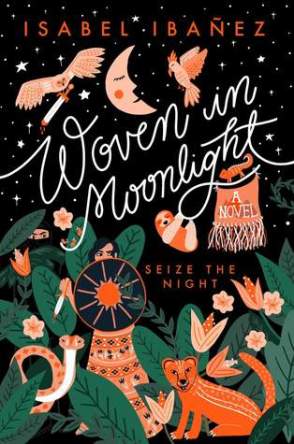
Review: This book was a no-brainer for me to request. I mean, look at that gorgeous cover? I’m not sure I can remember a book with a cover like that; it immediately stands out and I’m sure the book will benefit from many a spur-of-the-moment pick-up while on the shelves at stores. The book description itself was also incredibly unique-sounding and dealing with a people, place, and culture that I am only passingly familiar. In many ways, the cover and description reminded me greatly of “Gods of Jade and Shadow” which I read last summer and loved. Unfortunately, this comparison didn’t hold true in the actual reading experience…

Ximena has lived most of her life pretending to be someone else, a queen, the Condesa. But mostly a queen under siege: managing dwindling supplies, sending out scouting parties, and dreaming of one day returning her people to their homeland and the city that is now occupied by the cruel king Atoc. Now, with a demanded-marriage between the two leaders of these divided peoples, Ximena has the greatest of all performances before her. She must marry the usurper and serve as an embedded spy, searching for that crack that can benefit her people and her sister-friend, the true Condesa.

Even typing up that description makes me excited about the story this could have been. Yet, alas, could have been, but wasn’t. This is one of those strange books where I question whether I read the same story others read. Currently, it’s rated over 4 on Goodreads, so many people are loving it. Perhaps I can see elements of what all of these other readers are latching on to, but it all seems like too little, too familiar, and too inexplicable to really earn those 4 stars.

The biggest strength this book has going for it is the unique setting, the unique culture (what little we really get of it), and the descriptions of Ximena’s weavings. There are some truly lovely depictions of these detailed creations, and having a mother who is an avid weaver, I could see the magic in her abilities here, even without the actual magic involved. What descriptions we received of the countryside and the city itself were intriguing, but this is also where the bare minimums began to show. I had just enough to form loose images, but I have to admit that many of these were probably drawing from stereotypical images of South American culture (there isn’t even such a thing, hence the extreme stereotype of my mental images that were just drawing from random images from other books and movies set in South American countries). I wish there had been a more detailed look into the daily life of the people, a clearer image drawn of their lives and the world they lived in. Half of the reason I picked up this book was because of the uniqueness to be had here. Finally not another European fantasy novel! But then it felt like the author only went halfway, and I was left wanting.

From the “too little” we move to the “too familiar.” Most of this plot will read as incredibly predictable to anyone who reads a lot of YA fantasy. I could quickly guess who El Lobo was as well as predict several of the other major plot points of the story. Perhaps for readers who aren’t as well versed in current YA fantasy tropes this would read better. Or even age it down to middle grade readers who simply haven’t had the time to build up these stores of memory that make stories like this feel rote and tired. There’s nothing inherently wrong with it; I’ve just read it too many times before. And when the surprise has been taken out of most of the twists, there’s not a lot of drive behind speeding through the rest of the story.

And lastly, the “too inexplicable.” I really struggled with Ximena herself. The love story was, again, predictable. And she kept referring to said characters as “the boy” which I just found cringe-worthy. I get that typing out “young man” seems kind of silly and obviously “guy” is anachronistic and has its own issues. But given the situation we’re meant to be in (she’s there to marry a king), I think we can just stick with “man” and be done with it. Regardless of age, this is an adult situation, and she’s been an adult for many years, making decisions as a ruler and now serving as a spy meant to marry the enemy. Referring to someone as “a boy” can only be a demeaning comment in these circumstances. But she uses it as a bland, seemingly objective description, and it bothered the heck out of me. If he’s “a boy,” he’s a kid and my mind will neatly file him away in the “non-love-interest” section.

Beyond that small nit-pick that I blew out of proportion with my own annoyance, it was hard to understand Ximena. We’re meant to believe that she’s been training, and acting, as the Condesa for almost all of her grown life. Not only would the real Condesa have to be well-versed in self-control, cool thinking, and precise speaking/acting, someone who grew up to serve as a decoy in this role would have to be all of that twice over. But Ximena routinely and regularly loses all self-control. It’s hard to believe that she wasn’t immediately seen through. Or, if not that, it would seem that all respect would be quickly lost for “the Condesa” as a leader since she can’t stop behaving like a rash, easily provoked youth. Ximena spends way too much time caught up in her own personal angst and far too little behaving as a true Condesa would. Sure, she always comments after the fact on how that was really “un-Condesa-like,” but that doesn’t do away with the fact that had she been trained to do this her entire life, there should be nowhere near as many outbursts as there are in the first place.

A book is always going to be a hard sell for me if I can’t connect with the POV character. I found Ximena unbelievable at best and incredibly annoying at worst. From there, the predictable story just lowered it further. I’m really sad that this wasn’t a great read for me. So many people are enjoying it, and I really wish I had read whatever book they’re loving so much. There are many great elements of this story, particularly with the snippets of the world, culture, and history we get. Unfortunately, there’s not enough of any of those things to counteract the weak main character and tired story. But, like I said, lots of people are liking it, so if you’re looking for an ownvoice, Latinx story, it might still be worth a shot.

I didn’t love this one, but a lot of people do. So I’d like to share it with someone who will appreciate it more than I was able. If this sounds like something you would enjoy, make sure to enter the giveaway for a hardback copy!

Rating 6: A really confusing read where I’m not sure what I’m missing that so many other people are loving.

Reader’s Advisory:

“Woven in Moonlight” is on these Goodreads lists: “Latina Leads in YA and Middle Grade Fiction” and “Upcoming 2020 SFF Books with Female Leads or Co-Leads.”

Find“Woven in Moonlight” in your library using WorldCat!
Giveaway: “Woven in Moonlight”

40877706._sy475_Book: “Woven in Moonlight” by Isabel Ibnez
Publishing Info: Page Street Books, January 2020

Where Did I Get this Book: BookishFirst

Book Description: Ximena is the decoy Condesa, a stand-in for the last remaining Illustrian royal. Her people lost everything when the usurper, Atoc, used an ancient relic to summon ghosts and drive the Illustrians from La Ciudad. Now Ximena’s motivated by her insatiable thirst for revenge, and her rare ability to spin thread from moonlight.

When Atoc demands the real Condesa’s hand in marriage, it’s Ximena’s duty to go in her stead. She relishes the chance, as Illustrian spies have reported that Atoc’s no longer carrying his deadly relic. If Ximena can find it, she can return the true aristócrata to their rightful place.

She hunts for the relic, using her weaving ability to hide messages in tapestries for the resistance. But when a masked vigilante, a warm-hearted princess, and a thoughtful healer challenge Ximena, her mission becomes more complicated. There could be a way to overthrow the usurper without starting another war, but only if Ximena turns her back on revenge—and her Condesa.

Giveaway Details: Though it did take me until February to get around to it, I was excited enough about this book to include it as one of the three titles I was most looking forward to in January. And now the time has come! My full review comes up on Friday, so I won’t go into any spoilers as to my opinions here.

I will say that the concept is an intriguing one, intertwining a unique magic system with the political upheaval and history of Bolivia. It’s an ownvoices work, so the author brings much vibrancy to her story and world. And here, the cover artist really upped the ante creating a cover image that perfectly communicates the heart of the story and is sure to draw readers in. I know it worked well on me!

It’s always great to see young adult fantasy escape from the often overwhelming European-centered stories that are everywhere. And this one presents an area of the world and history that I’m sure many readers are only passably familiar with. For myself, I knew very little and, while this book is still clearly fictional and, you know, magic, it did inspire me to do some research of my own into the country’s history.

So, for those of you who still haven’t gotten around to this book, or for those of you who have already read it and loved it (according to Goodreads, there are many of you!), here’s your chance to get your hands on a hardback copy! The giveaway is open to U.S. residents only and closes on February 12.

Enter now!

Kate’s Review: “Foul is Fair”

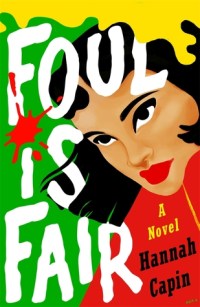
42595554Book: “Foul is Fair” by Hannah Capin

Publishing Info: Wednesday Books, February 2020

Where Did I Get This Book: I received an eARC from the publisher via NetGalley.

Book Description: Elle and her friends Mads, Jenny, and Summer rule their glittering LA circle. Untouchable, they have the kind of power other girls only dream of. Every party is theirs and the world is at their feet. Until the night of Elle’s sweet sixteen, when they crash a St. Andrew’s Prep party. The night the golden boys choose Elle as their next target.

They picked the wrong girl.

Sworn to vengeance, Elle transfers to St. Andrew’s. She plots to destroy each boy, one by one. She’ll take their power, their lives, and their control of the prep school’s hierarchy. And she and her coven have the perfect way in: a boy named Mack, whose ambition could turn deadly.

Foul is Fair is a bloody, thrilling revenge fantasy for the girls who have had enough. Golden boys beware: something wicked this way comes.

Review: Thanks to Wednesday Books and NetGalley for providing me with an eARC of this novel!

When I was in ninth grade my English class read “MacBeth”, the Shakespearean tragedy involving assassination, witches, torment, and revenge. I loved it from the very start, from reading the book itself to when our teacher showed a group of fourteen and fifteen year olds the Roman Polanski film adaptation, which is horrendously bloody and disturbing. I remember turning to my friend Blake at one point and both of us clearly thinking ‘whaaat the fuuuuuck?’ By the time my younger sister got to that class they’d replaced Polanski’s version with the offbeat “Scotland, PA”, a retelling of the classic story set in the world of fast food. It’s hilarious and dark, and I had been waiting for a long time to see another retelling of my favorite Shakespeare play. You can imagine how excited I was when “Foul is Fair” by Hannah Capin was in my email box. A YA retelling of “MacBeth”, from the female point of view, as a revenge story? On paper, this seems like everything that I would want for the Scottish Play. And yet, it became pretty clear pretty early that this wasn’t really going to work for me as much as I’d hoped it would.

giphy
I had certain expectations when I opened up this eARC, and I’m incredulous that basically none of them were met. (source)

Okay, let’s start with the good. Frankly, these days given the repeated reminders of the misogynistic and sexist culture that we live in, and the prevalent stories of abuse and trauma that have been exposed due to the #MeToo movement and powerful abusers falling from grace, I am all for a story that wants to tackle these issues with unrelenting rage. Catharsis is important, especially when it feels like some things never change and that privileged abusers will never see any true consequences (or sometimes hold high places of power, be it a Supreme Court seat or the Oval Office). So the fact that “Foul is Fair” is a power fantasy in which a rape victim is taking out all of her rage  and revenge against her rapists and taking her power back does give it lots of points. Especially since justice in the real world can be so hard to come by. Plus, I really did like the writing itself, as it’s vivid and visceral with a raw power that makes it almost burn off the page.

But when it comes to the characters within this book, I was supremely disappointed. One of the things about “MacBeth” is that while there are clear heroes and villains, each hero and villain has some complexity and nuance to them. MacBeth and Lady MacBeth in particular have moments of ruthlessness and vulnerability, and you understand the motivations for both of them even if you don’t necessarily agree with them, like the whole regicide thing. In “Foul is Fair”, all of the characters feel like two dimensional beings that aren’t defined by much else beyond their scumminess, or their unrelenting rage, or their weirdness. Can this be entertaining? Sure. But I didn’t feel like I really got to know our protagonist, Elle/Jade, outside of her understandable anger about what the golden boys at St. Andrews did to her. Effective plot? Absolutely. But it does not characterization make. Her interactions with her ‘coven’ (I’m also a little confused here, as she is clearly the stand in for Lady MacBeth, but she’s hanging out with Jenny, Summer, and Mads, who are the stand ins for the Weird Sisters. I don’t want to be a purist to the original material, but why was this a choice?) always felt a little ‘2edgy4me’ as they always, ALWAYS talk with coolness and malevolence, and even when they start turning on each other it still comes off as trying way too hard to be badass when all I wanted was to see some relatability amidst the badassness. And on top of all that, sure, there are some “MacBeth” aspects to it, but it definitely felt like it picked and chose the themes that would work best for the story at hand as opposed to actually trying to make it a “MacBeth” retelling. You take away the character names that reference the characters they’re based upon, and it’s not so easy to find the “MacBeth” aspects, it was shifted and changed so much. You can definitely adapt old texts to modern times and do it in ways that still give the original intent and feel of the source material (one of the best moments of this is in “Clueless” where Josh gives summation of Knightley’s dressing down and scolding of Emma with ‘you’re such a brat’. PERFECT!). “Foul is Fair” did not achieve this.

(and as a side note, poor Lady MacDuff gets thrown under the bus in this ‘reimagining’. The poor woman and all of her children are brutally slaughtered because MacDuff is a threat to MacBeth. In this she’s turned into a bitchy queen bee who is complicit in rape. It’s like ya didn’t even TRY to adapt that character! There were other instances of pick and choose feminism, but whatever, I don’t need to get on a soap box.)

There is something to be said for the ultimate rage message of standing up against violent misogyny, and that maybe it needs to be beaten over the head to get the point across. But I had hoped for a little more vicious and biting satire with Shakespearean flair.

Rating 5: The beat down of misogyny and the overall power fantasy was cathartic, but “Foul is Fair” had two dimensional characters and a grasp on the source material only when it suited.

Reader’s Advisory:

“Foul is Fair” is included on the Goodreads lists “YA Shakespeare Retellings”, and “ANGRY LADIES’ BOOK CLUB”.

Find “Foul is Fair” at your library using WorldCat!

Serena’s Review: “City of Stone and Silence”

34640582._sy475_Book: “City of Stone and Silence” by Django Wexler

Publishing Info: Tor Teen, January 2020

Where Did I Get this Book: NetGalley

Book Description: After surviving the Vile Rot, Isoka, Meroe, and the rest of Soliton’s crew finally arrive at Soliton’s mysterious destination, the Harbor―a city of great stone ziggurats, enshrouded in a ghostly veil of Eddica magic. And they’re not alone.

Royalty, monks, and madmen live in a precarious balance, and by night take shelter from monstrous living corpses. None know how to leave the Harbor, but if Isoka can’t find a way to capture Soliton and return it to the Emperor’s spymaster before a year is up, her sister’s Tori’s life will be forfeit.

But there’s more to Tori’s life back in Kahnzoka than the comfortable luxury Isoka intended for her. By night, she visits the lower wards, risking danger to help run a sanctuary for mage-bloods fleeing the Emperor’s iron fist. When she discovers that Isoka is missing, her search takes her deep in the mires of intrigue and revolution. And she has her own secret―the power of Kindre, the Well of Mind, which can bend others to its will. Though she’s spent her life denying this brutal magic, Tori will use whatever means she has to with Isoka’s fate on the line…

Review: After blowing through the first book in this trilogy in about two days, I immediately nabbed a copy from NetGalley. What a joy to find a new series that you absolutely love and have the second book come out the very month you finish the first! While I think the first book stills ranks ahead of this, I was quite pleased with the direction the series seems to be headed in and the surprises that were in store here!

It seems that the ghost ship, Soliton, has finally reached its port. But answers here are as illusive as they were on the mysterious ship. In a land riddled with the walking dead, Isoka must untangle the complicated history of the ship and its makers if she has any hope of returning to her beloved sister, Tori. Back in her home city, Tori has been getting out and about much more than Isoka knew or would have wanted. She spends much of this time volunteering at a hospital for the poor, but her own street instincts have not been lost or forgotten either. With her eyes constantly on an exit strategy, Tori has been carefully cultivating her own connections. But when the city begins to teeter on the bring of revolt, Tori finds herself thrust into the spotlight in a way that may expose secrets that she’s kept even from her own sister.

The introduction of Tori was quite the shift for this book, with the chapters now alternating between the two sisters and their experiences. I enjoyed the addition of this new character quite a lot, though I will also admit that Isoka was still by far my favorite character and I found her story here the more intriguing of the two. But it’s a brave choice to make, and I think it was pulled off well. Tori’s story lays a lot of groundwork for the final confrontation in the third book and brings some complicated themes into a story that, before, was pretty solidly a fun adventure fantasy.

Isoka is still as brilliant as ever. Brave, straight-forward, but with a hard shell that she is only beginning to shed. In the first book we saw her confront her own ability to care for others, both in the immediate and personal, as well as in the whole, as she leads the other Soliton residents to the last remaining safe space on the ship. In this book, she confronts the challenge of lasting leadership when the goal is not so obvious or so black and white in what needs to be done to achieve it. More than anything, she learns what it means to trust others to help her. She’s just the sort of prickly, gruff, super competent hero I like.

The mystery of the port of Soliton is also incredibly intriguing. In the first book, we really only scraped the surface of the ghost ship, knowing just enough to know that we didn’t know anything. This book takes that one ship and now explodes it out to an entire lost city with mysteries that reach back thousands of years. There are answers here to more than just the strange ship and its solitary mission to collected young people with access to magical Wells. There were a lot a lot of legitimately creepy elements. The crabs from the first book read like the type of exciting monsters that one finds in Japanese monster flicks. But here an element of horror is painted over top it all. And I’ll just say this…dinosaurs. Take from that what you will.

As I said above, while I still enjoyed the adventure of Isoka’s story and her own character arc best, Tori was overall an excellent addition. It becomes clear early on that Tori’s own experiences of life on the street were not so effectively wiped away as Isoka had hoped. But, being a very different girl than Isoka with very different gifts, Tori has taken her own route in building up a life for herself, one that is still always prepared for the worst. Through her story, we get a much deeper look into the geo-political state of the Empire Isoka left behind. And the story of growing unrest, a tipping point, and the uprising of the common people against an Empire that has pushed too far is very compelling.

Tori’s own role in this revolution was a very interesting contrast to Isoka. Both have been thrust into leadership roles that they feel ill equipped to manage. Both have incredible power that others can both admire and fear (though Tori’s is kept under wraps from those around her for much of the book). The classic “with great power come great responsibility” motif is explored thoroughly from both angles. But the book takes an interesting approach to the idea. The power itself isn’t in question, it’s more what does responsibility actually look like when one has power? The story explores how power can bring out both the best and worst of people. And that similar experiences of having power, and more importantly here, responsibility thrust upon a person can have very different outcomes, depending on the person. Power alone does not good or evil make.

Overall, I thoroughly enjoyed this sequel. Tori was a fantastic addition, adding new themes into the story as well as creating more shades of grey to the ones already being covered. The world-building and magical history seemed to multiply in this book, and what had been contained to a strange ship, expands out to provide insights into the entire world and magical system itself. And, of course, I love Isoka. I have no filter for this type of powerful, yet emotionally walled off, heroines it seems. If you enjoyed the first book, be ready to kick into the next gear!

Rating 8: A fantastic second outing that highlights the author’s meticulous story-telling techniques, leaving so many goodies and reveals for the second book that one can only wonder at what will come in the third!

Reader’s Advisory:

“City of Stone and Silence” is a newer title so it isn’t on many relevant Goodreads lists, but it is on “Can’t Wait Sci-Fi/Fantasy of 2020.”

Find “City of Stone and Silence” at your library using WorldCat!

Kate’s Review: “One of Us Is Next”

One of Us is Next FINAL cover.inddBook: “One of Us Is Next” by Karen M. McManus
Publishing Info: Delacorte Press for Young Readers, January 2020

Where Did I Get This Book: The library!

Book Description: The highly anticipated sequel to the New York Times bestselling thriller everyone is talking about, One of Us Is Lying! There’s a new mystery to solve at Bayview High, and there’s a whole new set of rules.

Come on, Bayview, you know you’ve missed this.

A ton of copycat gossip apps have popped up since Simon died, but in the year since the Bayview four were cleared of his shocking death, no one’s been able to fill the gossip void quite like he could. The problem is no one has the facts. Until now. This time it’s not an app, though—it’s a game.

Truth or Dare.

Phoebe’s the first target. If you choose not to play, it’s a truth. And hers is dark. Then comes Maeve and she should know better—always choose the dare. But by the time Knox is about to be tagged, things have gotten dangerous. The dares have become deadly, and if Maeve learned anything from Bronwyn last year, it’s that they can’t count on the police for help. Or protection.

Simon’s gone, but someone’s determined to keep his legacy at Bayview High alive. And this time, there’s a whole new set of rules.

Review: Back in 2017, I was super impressed by Karen M. McManus’s debut YA thriller “One of Us Is Lying”. It felt like “The Breakfast Club” was mashed up with a soapy murder mystery, and had interesting and complex characters to boot. Because of this I was stoked to find out that McManus had written a sequel called “One of Us Is Next”, which takes the original premise, twists it up, and brings in some new and some familiar faces. It took a little while for my library to get it, but as soon as it was in my hands I set a day aside and basically devoured it in one go.

“One of Us Is Next” is a semi-direct sequel in that it takes place at the same school but has a mixed bag of characters. The Original Bayview Four, as the protagonists from the first book are called, are definitely around, but the focus is not on them. Rather, we have a few brand new characters, and a few former supporting characters turned leads. I really liked this choice, as it gave us a little bit of familiarity while still giving us fresh faces and new possibilities along with a new tech based threat. In this case the threat is a Truth or Dare game, in which if you are chosen you have to pick one or the other. If you pick Dare, you have to do something based on the person in control’s whims. If you ignore it or pick truth, something humiliating will be exposed. I LOVED this new game, as McManus gave a similar premise completely new stakes. The three main character focuses are Maeve, Bronwyn’s sister who played a very important role in the first book; Phoebe, a semi popular girl who is the first target of the Truth or Dare game; and Knox, a geeky theater kid who is Maeve’s best friend. Once again McManus is great at making these characters all have their own secrets and insecurities while showing their vulnerabilities when they could easily fall into stereotypes. Of the three I was the most enamored with Phoebe, which caught me by surprise given that she is almost right off the bat painted in a light that’s less than flattering (no spoilers here though!). While she has made bad and selfish decisions in the past, once her bad decisions are exposed we get to see into her mind, her thought process, and what she’s been dealing with at home (recently deceased father, downsized living situation, a formerly close relationship with her sister in shambles). I ended up really loving Phoebe, rough edges and all, as she (like Nate and Addy in the previous book) had so much depth and so much heart it was impossible not to root for her. And Maeve has her own issues that felt very heavy and weighted, and McManus was able to give it the serious tone that it needed without making it feel like it was overshadowing everything else.

Kind of like the first book, the mystery itself left a little bit to be desired in the sense that I figured it out pretty quickly, at least part of it. But, also like the first book, that didn’t really matter, as I was more than happy to go along for the ride of building up to the endgame solution. Our cast of characters is immensely likable, and I liked seeing how the Truth or Dare game escalated to the breaking point AND how it all came together in the end. Like, ALL of it. McManus does know how to weave multiple strands, and even if I saw one of the bigger threads from a ways away it was still well done. And I also liked how she incorporated the characters from the previous books into said mystery, without leaning too much upon them. I loved seeing what Bronwyn, Nate, Addy, and Cooper have been doing, and it was nice getting reassurance that they are all still doing well (for the most part. There has to be a LITTLE drama, after all).

Fans of “One of Us Is Lying” will not be disappointed with “One of Us Is Next”! If McManus wanted to continue the soapy and twisty adventures of Bayview High, I would happily follow her wherever she takes it!

Rating 8: A gripping mystery and worthy follow up to a runaway hit, “One of Us Is Next” is a twisty tale that kept me guessing, and gave us a new set of characters that were easy to root for.

Reader’s Advisory:

“One of Us Is Next” is included on the Goodreads lists “YA Thrillers and Mysteries 2019-2020″, and “Popsugar 2020 – A Book That Passes the Bechdel Test”.

Find “One of Us Is Next” at your library using WorldCat!

Previously reviewed: “One of Us Is Lying”

Kate’s Review: “A Line in the Dark”

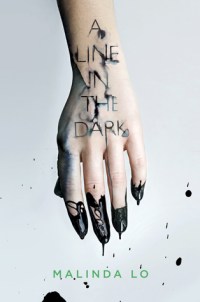
28096526Book: “A Line in the Dark” by Malinda Lo

Publishing Info: Dutton Books for Young Readers

Where Did I Get This Book: I own it!

Book Description: The most important thing is that Jess Wong is Angie Redmond’s best friend, even if Angie can’t see how she truly feels. It’s okay that Jess is the girl on the sidelines that nobody notices. That means she’s free to watch everyone else and be at Angie’s side. But when Angie starts falling for Margot, a girl from the nearby boarding school, Jess can already see what’s going to happen. And suddenly her gift for observation is a curse.

As Angie drags Jess further into Margot’s circle, Jess finds more than her friend’s growing crush. Secrets lie just beneath the carefree surface of this world, and when they come out, Jess knows Angie won’t be able to handle the consequences. When the inevitable darkness finally descends, Angie will need her best friend.

Review: A couple years ago Serena and I went to the Twin Cities Book Festival, and given that neither of us have any will power we both left with a few books in tow. One of the books that I brought with me was “A Line in the Dark” by Malinda Lo, which had been on my Highlights list in October 2017. Suffice to say, it languished on my shelf for awhile. Like, two years and a fourth years awhile. Definitely my bad. But since I’m trying to read books that I’ve been putting off as of late, I decided the time had come for “A Line in the Dark”.

It takes a little while to get there, but ultimately “A Line in the Dark” is a mystery. But the bigger themes involve friendship, loyalty, privilege, and jealousy. Jess and Angie are best friends, but the tension that exists between them is almost immediate, and prevalent throughout the narrative. Jess is infatuated with Angie, and her devotion to her best friend is exacerbated even more so because of her attraction for her. So when Angie starts dating the privileged and potentially toxic Margot from the local boarding school, Jess’s jealously starts to fester and stir. It’s hard to know much about Margot, as this book spends a lot of the time in Jess’s head, and her opinion is skewed because of her jealousy. We don’t know if Jess is an unreliable narrator, which adds to the mystery that appears when Margot’s friend Ryan (another mean girl from the boarding school) goes missing after a party that all of the girls attend. Ryan’s disappearance and it’s aftermath is told through Jess’s POV, transcripts of police interviews, and a sudden shift in perspective as the narrative turns to third person. While the first person POV and transcripts worked well together, the sudden shift to third person felt a little forced, especially since it happens later in the book as opposed to being established right away. That said, I did like the mystery and how the clues unfolded, as well as how we eventually got to the solution through these three devices. Even if the third device wasn’t as strong, in my opinion.

That said, I did have a problem with how the characters were presented. There were already some limitations due to the majority of the novel being in the first person, but I do believe that a first person POV doesn’t necessarily hinder an author from character development. I’ve read a number of books in the first person where I still got a really good sense of the surrounding characters, but “A Line in the Dark” didn’t have that. I never really got a good sense for what Angie was like outside of being an object of affection for Jess. We’re told that Jess’s parents think she’s a bad influence, but I never could really figure out why that was. Margot gets a little more to work with, but that isn’t clear until we’re basically done with the story. And even though we have Jess’s first person perspective throughout a lot of the narrative, I felt like the only thing I really knew about her was her love of art and her devotion to Angie. I did like that Lo does comment on classism and racism within this book, as Jess is Chinese American and has to deal with privileged and racist wealthy kids during her art program and when she hangs out with Angie and Margot and Margot’s group. I thought that while it was subtle commentary, it packed a punch.

Not so compelling characters aside, I enjoyed “A Line in the Dark” for it’s mystery. I will definitely be looking into reading more works by Lo, as it’s undeniable that she knows how to craft a tense story.

Rating 6: A solid mystery that keeps the tension taut, “A Line in the Dark” kept me interested, even if the characters weren’t as drawn out as I’d hoped they would be.

Reader’s Advisory:

“A Line in the Dark” is included on the Goodreads lists “Bi and Lesbian Psychological Thrillers”, and “Sapphic Boarding School Books”.

Find “A Line in the Dark” at your library using WorldCat!

Serena’s Review: “Ship of Smoke and Steel”

34618380Book: “Ship of Smoke and Steel” by Django Wexler
Publishing Info: Tor Teen, January 2019

Where Did I Get this Book: own it!

Book Description: In the lower wards of Kahnzoka, the great port city of the Blessed Empire, eighteen-year-old ward boss Isoka comes to collect when there’s money owing. When her ability to access the Well of Combat is discovered by the Empire—an ability she should have declared and placed at His Imperial Majesty’s service—she’s sent on an impossible mission: steal Soliton, a legendary ghost ship—a ship from which no one has ever returned. If she fails, her sister’s life is forfeit.

Review: Our bookclub has been doing a Secret Santa book exchange for the last several years (have we mentioned how awesome our bookclub is recently??). It’s great because A.)more books! and B.) having librarians as friends means you’re sure to get a great new read that has been careful tailored to your own reading preferences. I’d seen the sequel for this book coming up on “most anticipated” lists for a few months now and am not sure how I missed this first one when it came out last year. But this has now been rectified, and I’m now halfway through said sequel. So, spoiler alert, I loved this book.

Reigning as a crime lord on the streets of Kahnzoka may not be an ideal life, but it’s a living, and one that Isoka is particularly skilled at. With her Well of Combat, she can be as brutal as she is efficient. But behind her cold exterior, her true purpose is one of love, the protection and future of her beloved younger sister Tori. But it all goes awry when she is captured and sentenced to an almost sure death on the mythical ship Soliton. There, she realizes that what once had seemed only a fable is all too real, and the powers that had made her almost legendary on the streets may be only a drop in the bucket against the new foes that await her.

I’ve only read one other book by Wexler, a military fantasy fiction novel which I quite enjoyed. This was the author’s first foray into YA fantasy fiction, and I have to say, I think this might be the key to it. Having been an adult fantasy author first, there seems a decent chance that Wexler was less influenced by the pervasive YA tropes that all too often undercut many potentially good YA fantasies these days. This book has all of the originality, spunk, diversity and grimness that one would find in an adult novel. The only thing that makes it YA is the age of our main characters. And that’s what makes it so good.

Isoka may be a teen, but she is completely believable as young woman who grew up on the streets and whose sense of morality and survival have been worn down to just the basics. This book doesn’t shy away from the grim reality that would take over a character who has had to fight for her own, and her much younger sister’s, very survival almost from infancy. Isoka is a bringer of death, and while over the course of this book she learns to take others under her wing as well, her lack of angst over the harshness of her life was incredibly refreshing. She may not be a “good” person by the standards a modern individual would set, but she’s a survivor and doesn’t apologize for doing what she thinks is necessary to protect those she loves.

The magic system was also very compelling. It’s simple enough to be understood easily, with a variety of Wells that users can pull from that grant them different abilities. But as the story progresses, we learn that not all is fully understood about these Wells. And even by the end of the story, there are mysteries still to be unraveled here. Isoka’s own power, the Well of Combat, is an excellent choice for our main character. The action is riveting, feeling almost cinematic as Isoka battles monstrous beasts with her twin power blades and armor. There are also those with powers such as speed, fire, and shadow, and the greater battle scenes paint an epic-feeling picture of these incredible individuals battling alongside one another.

Most of the action takes place on board the mysterious ship Soliton. I don’t want to spoil anything, as discovering the horrors and wonders of this ship was half the fun of the book. Just as you feel you understand one layer of this creepy place, another unfolds. Again, like the magic system itself, by the end of the book the reader feels as if they have only scraped the surface of what is really going on behind this secretive ship.

This was an excellent read. I blew through it in only two days. It’s a fast read, full of action and creepy fantasy elements. There’s also a lovely romance between Isoka and her friend Meroe, a girl with her own barely understood abilities. I already have the second book loaded up on my Kindle, so expect a review for that one up soon. If you’re looking for a fun new fantasy series, definitely check this one out!

Rating 9: Epic, action-packed, and best of all, the start of what promises to be an exciting trilogy!

Reader’s Advisory:

“Ship of Smoke and Steel” is on these Goodreads lists: “2019 Queer SFF” and “Best Fantasy 2019.”

Find “Ship of Smoke and Steel” at your library using WorldCat!

Kate’s Review: “Containment”

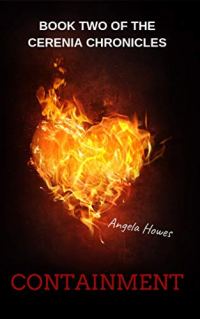
41xlqrp7yslBook: “Containment” (The Cerenia Chronicles Book 2) by Angela Howes

Publishing Info: Fine Tuned Editing, January 2020

Where Did I Get This Book: The author provided me with a PDF copy.

Book Description: She made her choice. Now, she must live with the consequences. As Phoebe’s family and friends fight for their lives, she finds herself drawn further into the enigmatic world of the Council, caught in a struggle between lying low and inciting war. But as more allies emerge from the shadows, Phoebe must decide whether she has what it takes to lead a rebellion … especially when it could mean losing everything and everyone that matters to her.

Review: First I want to extend a special thank you to Angela Howes for reaching out and sending me a copy of this book!

YA dystopia seems to be mostly out of style, at least in the circles of YA enthusiasts that I associate with or follow. But given that I haven’t lost my interest in it, I was pretty excited when Angela Howes reached out to me with news that her second book in the Cerenia Chronicles, “Containment”, was coming out! Given that I enjoyed the first in the series, “Assignment”, I was eager to see where things were going to go for our protagonist Phoebe, her two suitors Sky and Noah, and the rest of the mild dictatorship of Cerenia. Especially since we left it on such a cliffhanger.

When we left off, Phoebe, Sky, and Noah had all achieved freedom by making it to The Jungle, where defectors and former prisoners of Cerenia have been building a rebellion. Phoebe decided to infiltrate the Cerenia Council in hopes of overthrowing the corruption. Unfortunately, Noah and Sky have ended up in captivity because of this, with Noah in prison and Sky in a Box, an almost guaranteed death sentence. The book flip flops between these three perspectives, with Phoebe hoping to outwit and influence the Council members, Sky hoping to escape his death sentence (and I mean, of course he does, mild spoiler alert but it happens pretty quick), and Noah hoping to get out of jail. Of all three perspectives, Phoebe’s was by far the most interesting. I liked watching her have to play 3D chess and having to make really difficult decisions, sometimes decisions that would be life or death, all to try and fit in in hopes of taking down corruption from the inside. I thought that her inner struggles and her ruthlessness meshed well together, and thought that it was a huge benefit to her characterization. Sometimes her calculations were cold and unnerving, and yet I believed that she would be making them. I also liked getting into Sky’s head as he has to rally the rebellion on the outside, all without knowing if he would ever see Phoebe, the love of his life again. Team Sky, all the way. His voice is fun and snarky, but he has enough sprinkles of vulnerability and self doubt that he doesn’t come off as an obnoxious trope.

But that leaves Noah’s narrative, which to me felt a bit superfluous if only because we don’t really have a reason to care about Noah. Or at least, I don’t have a reason to care about him. I mentioned before that I don’t like love triangles, but this particular point on this love triangle really doesn’t work for me, especially now. At this point, Phoebe has made her choice, and that choice is Sky. It’s also hard for me to let go of the fact that Noah was such a goddamn chickenshit in the first book that he was perfectly happy stringing along the girl he’d been matched with Darya, while having an affair with Phoebe, which put not only himself but Darya in danger. To me it feels like the love triangle has been resolved, and his backstory and characterization hasn’t been developed or built up enough for him to be a character we need to care about. Unless we’re going to get another love triangle plot in the third book, and boy oh boy am I hoping that isn’t the case.

There is indeed going to be a third book, as “Containment” ended on a cliffhanger. But with the way things ended this time, I’m even more interested to see where this goes this time around than I was last time around. I think we’re building to something that could be really unique, and I can’t wait to see what that may be.

Rating 7: The political intrigue and maneuvering is upped and the stakes continue to rise. “Containment” continues a solid dystopian narrative and explores the difficult decisions a person has to make for the greater good.

Reader’s Advisory:

“Containment” isn’t on any Goodreads lists as of yet, but if you like books like “Divergent”“Matched”, or “The Testing” you will probably find this one fun as well!

“Containment” isn’t in very many libraries as of now, but you can find it on Amazon.

Previously reviewed: “Assignment”


Kate’s Review: “Jane Anonymous”

37650881._sy475_Book: “Jane Anonymous” by Laurie Faria Stolarz

Publishing Info: Wednesday Books, January 2020

Where Did I Get This Book: I was sent an eARC by the publisher via NetGalley

Book Description: Bestselling author Laurie Faria Stolarz returns with Jane Anonymous, a gripping tale of a seventeen-year-old girl’s kidnapping and her struggle to fit back into her life after she escapes.

Then, “Jane” was just your typical 17-year-old in a typical New England suburb getting ready to start her senior year. She had a part-time job she enjoyed, an awesome best friend, overbearing but loving parents, and a crush on a boy who was taking her to see her favorite band. She never would’ve imagined that in her town where nothing ever happens, a series of small coincidences would lead to a devastating turn of events that would forever change her life.

Now, it’s been three months since “Jane” escaped captivity and returned home. Three months of being that girl who was kidnapped, the girl who was held by a “monster.” Three months of writing down everything she remembered from those seven months locked up in that stark white room. But, what if everything you thought you knew―everything you thought you experienced―turned out to be a lie?

Review: Thanks to Wednesday Books and NetGalley for providing me with an eARC of this novel!

In so many books the involve missing people or missing women, if the missing person is found alive and is able to return home that is usually the end of the book. The investigator is a hero, the victim gets to return to their life, and the story is considered to be happy, or at least positive. But the truth of the matter is that in real life, anyone who survives a harrowing and violent experience such as that has a lot more story to live and tell after they are rescued or recovered. And “Jane Anonymous” ventures to examine that concept, that the ‘happy ending’ isn’t necessarily guaranteed, and that the fallout of the trauma isn’t easily reconciled with the joy of returning to one’s life. Is it a rough book because of it? Hell yes. But it’s a theme that I haven’t encountered as much as I have the ‘happily ever after’ conclusion in stories like these.

“Jane Anonymous” is told through two timelines. The first is Jane’s time directly before and during captivity. The second is Jane’s life in the weeks and months after she escapes, and how she is coping after her trauma. Both of them create an entire story labeled as ‘Then” and “Now”, and it’s told as though Jane is writing down her experiences as a way to try to make sense of everything. Stolarz is vague about the details of setting, as Jane not only refers to herself as Jane Anonymous, but she also says that she’s living in ‘New England Town’ so the reader can feel like this could be a number of places. We juxtapose what happened to her in captivity along with how she is functioning back in her life with the trauma of it, and it’s honest and raw and very tense. Stolarz does a very effective and believable job of conveying just how the trauma would effect a person who was held in a small room all alone for seven months, and how coming back to her old life is going to be incredibly difficult. I thought that coping mechanisms and panic attacks and PTSD symptoms were portrayed convincingly, and also thought that the strain on not only Jane’s experiences but also the experiences of those that love her was also very well done. The ‘Now’ sections were almost harder to read because the idea of being ‘home’ is so dismantled and examined, and Jane and her family are still in such turmoil. It reminded me of the book “Room”, but tackled more head on since it wasn’t through the eyes of a little kid who can’t comprehend what happened. Jane comprehends. And therefore we are forced to.

The ‘Then’ sections read more like a traditional thriller, and while it was indeed suspenseful there were parts of it that were predictable. While it’s a foregone conclusion that Jane is going to escape, Stolarz does attempt to create a tension about how she is going to do it. The thing that sustains her is Mason, the voice in the vents who says he’s also been captured by the same lunatic. As Jane and Mason cling to each other and their relationship is all that can sustain her, you see how having one person there gives Jane the strength that she needs, and seeing he determination to survive is definitely a compelling part of these sections. That said, there are a couple of twists that I called pretty early on, and I’m not sure if that’s because they weren’t hidden particularly well, or because I have just read so many books like this that I know what to look for, trope wise. That said, it wasn’t like that ruined anything for me when it came to the story. It may have been the weaker of the two time frames, but it was still highly enjoyable.

“Jane Anonymous” doesn’t pull any punches when it comes to showing the fallout of trauma. It’s honest and upsetting, but also pulls at the heartstrings as you see a girl try to begin to heal, as hard as it may be.

Rating 7: An emotional and at times a little predictable thriller about having to rebuild your life after a horrible trauma, “Jane Anonymous” was both suspenseful and moving.

Reader’s Advisory:

“Jane Anonymous” is new and not on many relevant Goodreads lists, but I think it would fit in on “Kidnapped!”.

Find “Jane Anonymous” at your library using WorldCat!

Serena’s Review: “Reverie”

46299614Book: “Reverie” by Ryan La Sala

Publishing Info: Sourcebooks Fire, December 2019

Where Did I Get this Book: NetGalley

Book Description: All Kane Montgomery knows for certain is that the police found him half-dead in the river. He can’t remember how he got there, what happened after, and why his life seems so different now. And it’s not just Kane who’s different, the world feels off, reality itself seems different.

As Kane pieces together clues, three almost-strangers claim to be his friends and the only people who can truly tell him what’s going on. But as he and the others are dragged into unimaginable worlds that materialize out of nowhere—the gym warps into a subterranean temple, a historical home nearby blooms into a Victorian romance rife with scandal and sorcery—Kane realizes that nothing in his life is an accident. And when a sinister force threatens to alter reality for good, they will have to do everything they can to stop it before it unravels everything they know.

Review: Another gorgeous cover, another intriguing book description! To be honest, I really had very little to go on when requesting this book. Part of it may have spoken to my withdrawals from “The Starless Sea” with some of the similar-sounding descriptions of mystical worlds each with their own story. December always seems to be a bit thin in the pickings, too, so anything that sparks interest is usually a go around now. Alas, even no expectations were too many for this book.

Kane knows very little about himself or his life. Found half dead on the side of a river, he only feels a sense of…difference. About him?About the world? About the mystery behind what happened to him? So when three others show up claiming to be his friends, he jumps at the opportunity to learn more. But he quickly realizes that this mystery is much greater than a near-drowning. Now, worlds are opening in the middle of the ordinary places in the world, each with their own stories and histories. How does his own experience connect with these mysteries? And is that even the biggest problem Kane faces now?

Ah, too bad. Another story that falls into the too simple and too common box of “missed potential.” These types of books are almost the hardest to review because there is nothing overtly wrong or offensive about the book, and, more often than not, they still have good qualities that hold them together. But by the final page, I’m left with an overwhelming sense of indifference and a fixation on the hours spent reading this book instead of some other book.

Amnesia stories, to start with, are very hard to pull off. The main character of the story is a necessary blank, having no point of reference of history, prior relationships, ongoing emotional struggles to draw upon. This leaves their observations and reactions feeling hollow. It’s hard to feel connected to a character who isn’t connected himself. This is the problem with Kane in a big way. Through the entire book, I just never really cared about him. He was instead mostly just a blank slate around which to build this story and magical world.

The world-building and writing was both a hit and a miss for me as well. On one hand, several of the descriptions of events and places were beautiful and new. But on the other hand, they weren’t the type of descriptions that read easily. I’m not sure how to put my finger on this. But I found myself having to re-read several lines to really put together how a particular metaphor was being used or what was being described. Perhaps having just read “Starless Sea” made this particular misstep hit home a bit harder than it would have at other times. That book, too, used very unique language to describe strange and new imagery. But there, somehow, the words flowed in a way that wasn’t distracting and didn’t throw me out of the story quite as badly as a similar style did here.

I also struggled to fully understand the rules of the world. How exactly do reveries work? What are their boundaries? There was definitely an interesting idea to be found here, but between the blank that was Kane and the distracting writing, I was already too out of this story to be able to turn my brain off and just go with the flow.

All of that being said, I did like Kane’s love interest, and in many ways, he had a lot more character building given to him than Kane himself did. And, while the writing style did kick me out of the flow of things every once in a while, there were also some legitimately lovely pieces of word play. But, in the end, my main takeaway was that this book didn’t accomplish all that it set out to. It was too bad. Others, however, might still enjoy this story. If you’re looking for a unique, LGBT fantasy, this does do well on all of those counts. Just not really my cup of tea, I guess.

Rating 6: Nothing terrible, but amnesia strikes again at taking down its main character and the unique word play hurts the flow of the story more often than it helps.

Reader’s Advisory:

“Reverie” is on these Goodreads lists: “2020 Queer Sci-Fi Fantasy” and “Oooh Shiny! December 2019.”

Find “Reverie” at your library using WorldCat!