Kate’s Review: “Those Who Prey”

Book: “Those Who Prey” by Jennifer Moffett

Publishing Info: Atheneum, Simon & Schuster, November 2020

Where Did I Get This Book: I received an eARC from NetGalley.

Book Description: Sadie meets The Girls in this riveting debut psychological thriller about a lonely college freshman seduced into joining a cult—and her desperate attempt to escape before it’s too late.

College life isn’t what Emily expected. She expected to spend freshman year strolling through the ivy-covered campus with new friends, finally feeling like she belonged. Instead, she walks the campus alone, still not having found her place or her people so far away from home. But then the Kingdom finds her.

The Kingdom, an exclusive on-campus group, offers everything Emily expected of college and more: acceptance, friends, a potential boyfriend, and a chance to spend the summer in Italy on a mission trip. But the trip is not what she thought it would be. Emily and the others are stripped of their passports and money. They’re cut off from their families back home. The Kingdom’s practices become increasingly manipulative and dangerous.

And someone ends up dead.

At times unsettling and always riveting, Those Who Prey looks at the allure of cult life, while questioning just how far we’re willing to go to find where we belong.

Review: Thank you to NetGalley for providing me with an eARC of this novel!

Back when I was at the University of Minnesota for my undergrad, between classes I’d spend time in the student union, usually getting a bagel for lunch in the food area where a number of student groups had set up tables trying to find new members. The table that always made me uncomfortable was a far right Evangelical Christian group whose name I can’t remember, as they always had the same rotation of about five people who had interesting signs and information on display. Around Halloween it was about devil worship. At Christmas it was how Santa=Satan. Sometimes it would be pamphlets on the sins of homosexuality or sex. I never saw them talking to anyone, but I did think about how they could probably influence a lonely student or two who hadn’t adjusted to college life yet, who just wanted a connection as they sought out a bagel. As I read “Those Who Prey” by Jennifer Moffett, I kept having flashbacks to that table, and one specific girl with whom I made eye contact on more than one occasion, and how my disgust at the time didn’t see the blatant predatory behavior of the group I was constantly passing as I went for my lunch.

So creepy as I looked back. (source)

“Those Who Prey” is part coming of age story, part thriller, and Moffett is able to pull out the best of both genres to make a genuinely disturbing tale about identity and manipulation. Our protagonist, Emily, reads like a very realistic college freshman who has found herself in a new environment, and who hasn’t quite found her place. Moffett slowly reveals aspects of her background and personality that make her ripe for the picking when it comes to Kingdom, an on campus Christian group that brings her into their organization with promise of friendhip and salvation (and love, as it is the charming Josh who first compels her). I thought that Moffett really did her due diligence to show how the average student who may be isolated and lonely could be so easily taken in with a group like this, and really demonstrated the frog in the boiling water aspect of how Kingdom, and real life campus cult groups, depend upon.

By the time Emily gets to Italy on her ‘mission’, and things really take a turn, the groundwork has been laid out seamlessly. Moffett clearly did her homework about these groups and what they do to get their members, and what they then put them through. While most of the other characters weren’t really given deep dives, as it’s through Emily’s perspective, you still got a sense as to how many of them, especially the ones you wouldn’t expect, would be trapped in this situation. It felt real, and therefore VERY unsettling. We also start to see a mystery unfold involving Kara, the member who has been assigned to Emily, who doesn’t seem as invested in the program as other people are. Kara’s plot line is what gave this story a mystery element to throw in with the creepy cult vibe, and while I kind of guessed what her deal was pretty early on, there were still plenty of puzzle pieces that I wasn’t working out until Moffett was ready for me to do so. I needed to know what Kara’s deal was, I needed to know what Kingdom had in store for their members, and I NEEDED to know if Emily was going to get out. All of this kept me totally ensnared, which was great.

“Those Who Prey” is creepy and all too realistic. I heard that some of these groups have rebranded a bit in hopes of still bringing in members. Hopefully some people who read this book will see the similarities and steer clear, no matter how lonely they may feel while living on campus.

Rating 8: A suspenseful coming of age thriller, “Those Who Prey” kept me on the edge of my seat.

Reader’s Advisory:

“Those Who Prey” is included on the Goodreads lists “Cults and Communes in Fiction”, and “Going to College”.

Find “Those Who Prey” at your library using WorldCat, or a local independent bookstore using IndieBound!

Serena’s Review: “My Calamity Jane”

Book: “My Calamity Jane” by Cynthia Hand, Brodi Ashton, and Jodi Meadows

Publishing Info: HarperTeen, June 2020

Where Did I Get this Book: the library!

Book Description:

Welcome ​to 1876 and a rootin’-tootin’ America bursting with gunslingers, outlaws, and garou.

JANE (a genuine hero-eene)

Calamity’s her name, and garou hunting’s her game—when she’s not starring in Wild Bill’s Traveling Show, that is. She reckons that if a girl wants to be a legend, she should just go ahead and be one.

FRANK (*wolf whistle*)
Frank “the Pistol Prince” Butler is the Wild West’s #1 bachelor. He’s also the best sharpshooter on both sides of the Mississippi, but he’s about to meet his match. . . .

ANNIE (get your gun!)
Annie Oakley (yep, that Annie) is lookin’ for a job, not a romance, but she can’t deny there’s something about Frank she likes. Really likes. Still, she’s pretty sure that anything he can do, she can do better.

A HAIRY SITUATION
After a garou hunt goes south and Jane finds a suspicious-like bite on her arm, she turns tail for Deadwood, where there’s been talk of a garou cure. But things ain’t always what they seem—meaning the gang better hightail it after her before they’re a day late and a Jane short.

Previously Reviewed: “My Lady Jane” and “My Plain Jane”

Review: I’ve really been enjoying these strange little tales. The authors take familiar characters or historical figures named “Jane” and then just go to town with wild imaginings of alternatives to their stories. We’ve had shape-shifters, ghosts, supernatural detectives, you name it! So, really, other than knowing that this story is tackling the Wild West and some of the familiar figures we associate with it, I had really no idea what I was getting into. It was a rip-roaring good time, of course, but I did find that I was less enthralled with this story than the two others.

In this version of the story, our famous trio work for a Wild West show that is only half show business. The other side of their profession includes hunting garou, or werewolves. All that sharp-shooting has to be good for something, after all! But on a hunt for the Alpha, things go wrong for our titular character and she ends up with a suspicious bite and on the run herself. Her friends, Annie and Frank, won’t let her go so fast, and soon enough the three find themselves on their own wild adventure!

So, while this book did have some of the classic elements I’ve come to expect from this series and these authors (good characters, romance, wack-a-doodle comedy), I did struggle with it a bit more. To start with the good things, the characters, like always, were all super strong. I liked that we got POV chapters for all three of the main characters, Jane, Annie, and Frank. They each had some interesting arcs and perspectives on the goings-on around them. I think I probably liked Annie the best, though Frank was a close second. Strangely, for all that she is the title character, of the three, Jane seemed to fade the most into the background of the story. I think this was somewhat similar to my feelings about the Jane character in the second book, where she, too, was secondary to the other main character.

The comedy was just ok in this one. For some reason, it all seemed to be trying a bit too hard and came across as more forced and unnatural than it did in the first two books. It might just be a combination of genres. “My Lady Jane” is trying to adapt a tragic bit of history and “My Plain Jane” is re-telling a gothic romance. Each of those stories are working from a more serious foundation and layering comedy and nonsense on top of it. Westerns, however, especially Wild West stories, already have an inherent performative sense to them. So between the over-the-top nature of the original tall tales, the comedy just heaped on more of the same, leaving the entire thing feeling a bit over-worked.

There were also some strange moments of social commentary that seemed to be sporadically dropped in. I have no problem with fantasy books tackling social issues. In fact, I think sometimes the nature of fantasy allows authors to get at thoughts and ideas in a way that really elaborates on the bigger issues without getting too caught up in a modern, political statement. But they sat oddly in this book. A bit too preachy. A bit too on the nose. A bit too out of place.

Part of my struggle may just be that I don’t typically care for westerns. Sure, I know the tall tales and characters that are used in this book, but the genre as a whole doesn’t hold a lot of appeal to me. Overall, it just felt like a bit of a let down when compared to the two books that came before, which I really enjoyed. If you’re a fan of the series so far, and especially if you enjoy westerns, this is probably worth checking out. But for me it was the weakest of the three.

Rating 6: The shine has worn off just a little on this particular formula.

Reader’s Advisory:

“My Calamity Jane” is on these Goodreads lists: 2020 YA Historical Fiction and Jane Titles.

Find “My Calamity Jane” at your library using WorldCat!

Kate’s Review: “I Hope You’re Listening”

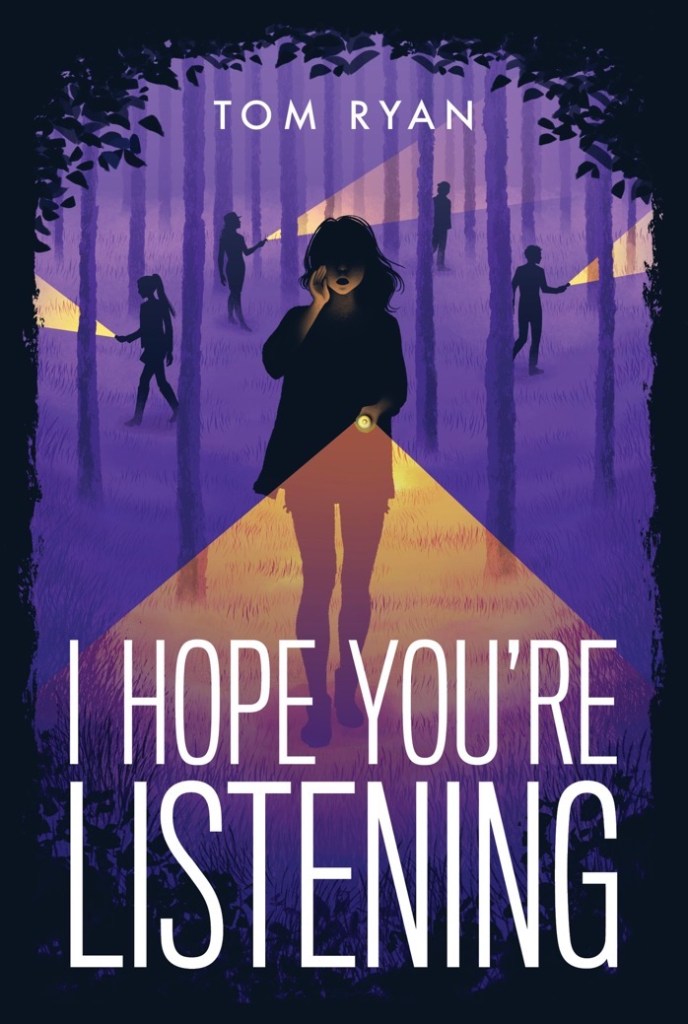
Book: “I Hope You’re Listening” by Tom Ryan

Publishing Info: Aw Teen, October 2020

Where Did I Get This Book: I received an eARC of this novel from NetGalley.

Book Description: In her small town, seventeen year-old Delia “Dee” Skinner is known as the girl who wasn’t taken. Ten years ago, she witnessed the abduction of her best friend, Sibby. And though she told the police everything she remembered, it wasn’t enough. Sibby was never seen again. At night, Dee deals with her guilt by becoming someone else: the Seeker, the voice behind the popular true crime podcast Radio Silent, which features missing persons cases and works with online sleuths to solve them. Nobody knows Dee’s the Seeker, and she plans to keep it that way.When another little girl goes missing, and the case is linked to Sibby’s disappearance, Dee has a chance to get answers, with the help of her virtual detectives and the intriguing new girl at school. But how much is she willing to reveal about herself in order to uncover the truth? Dee’s about to find out what’s really at stake in unraveling the mystery of the little girls who vanished. 

Review: Thank you to NetGalley for providing me with an eARC of this novel!

In the early stages of quarantine, I fell off listening to some of the true crime podcasts that I loved to listen to before. I don’t know why it was, but outside of “Last Podcast on the Left”, I just wasn’t feeling up for anything else. But one day I decided to try and pick up “My Favorite Murder” again, and started on the unsolved case of the Delphi Murders, in which two teenage girls were found dead after being on a daytime hike. While I liked getting back into the groove of podcasts as I went for a walk with my kid, that particular case is, like the other cases like it, very sad because we don’t know what happened. It just so happened that I was listening to this as I was reading “I Hope You’re Listening” by Tom Ryan, and the chaotic synergy of the universe kind of fell into place. And it made me appreciate “I Hope You’re Listening” all the more.

There are a couple of mysteries running around in the narrative of “I Hope You’re Listening”. The first is what happened to Dee’s best friend Sybil, who was taken when they were children and right in front of Dee’s eyes. Dee is the kind of protagonist that you see a fair amount in thrillers these days; she’s traumatized, she’s not very personable, and she has unpacked baggage regarding her trauma that affects her in many ways. But Ryan does a great job of making her feel realistic in her trauma without feeling like she has to be unlikable or ‘broken’. She has started running an anonymous podcast that tackles missing person cases, in hopes of solving mysteries to help cope with the mystery in her life that was never solved, and I think this device works perfectly for her plot line. I liked that Ryan doesn’t try to make her into a completely self destructive individual, but does show how her experiences has made her more ‘rough around the edges’ when it comes to dealing with other people.

The other mystery is a new child disappearance, this time of a girl named Layla, whose potential kidnapping brings a media frenzy to town and threatens to expose Dee to more reminders of her connection to Sybil, as well as expose her as the anonymous host of her popular podcast. As Dee tries to help solve Layla’s disappearance, she is pulled back into Sybil’s, and her obsession starts up again. Both mysteries are compelling as all get out, and seeing Dee try her hand at actual hands on detective work leads to many suspenseful moments of high stakes action.

There were a couple of things that kind of took me out of the story a bit. The first is merely a pacing issue, and I’m going to get a little spoiler here, so here is your warning:

So one of the biggest strengths of this book is Dee’s bourgeoning romance with new neighbor Sarah. I liked Dee and Sarah together, I thought that they had great chemistry and I was deeply invested in them as a couple. But the timeline on this book isn’t very long, and Sarah figures out that Dee is ‘The Seeker’, aka the host for the podcast. When she confronts Dee, Dee basically confirms it right away, and then they are suddenly passionately making out. It’s not so much them hooking up that I had a problem with, but Dee revealing her secret identity that only ONE other person knows (her best friend Burke) when she has kept it so secret and has been so paranoid about it for so long. It’s especially hard to swallow because a Nancy Grace-esque tabloid crime reporter is in town on the Layla case and wants to expose The Seeker, so for Dee to let her guard down on a girl she has just started to get to know when this dangerous woman is so close just felt unrealistic to Dee’s character. But hey, if that’s the worst thing I can find about this, that’s pretty good.

Overall, “I Hope You’re Listening” is a really engrossing mystery thriller, and I am thinking of gong back to read more of Ryan’s stuff. Pick this one up if you like thrillers AND true crime podcasts!

Rating 8: A page turner of a mystery that pulls you in, “I Hope You’re Listening” is sure to entertain fans of thrillers and true crime podcasts alike!

Reader’s Advisory:

“I Hope You’re Listening” is included on the Goodreads lists “

Find “I Hope You’re Listening” at your library using WorldCat, or a local independent bookstore using IndieBound!
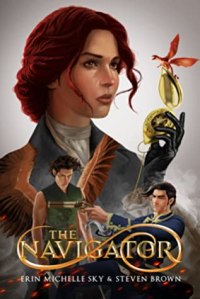
Serena’s Review: “The Navigator”

Book: “The Navigator” by Erin Michelle Sky and Steven Brown

Publishing Info:  Trash Dogs Media, LLC, October 2019

Where Did I Get this Book: NetGalley

Book Description: Wendy’s troubles are far from over. Hook wants her in irons, the crew wants to throw her overboard, and Pan’s magical compass is the only thing standing in their way. But Pan himself is nowhere to be found.

When a new everlost captain appears on the horizon, it will take everything Wendy has to survive.

Previously Reviewed: “The Wendy”

Review: This is definitely an “under the radar” little fantasy series. I pretty much only strayed upon it after scrolling way, way into the backfiles on NetGalley. But man, I’m glad I did! I, obviously, love re-tellings, and “Peter Pan” is definitely one of the more rare ones, mostly because of how hard it is to get right, I think. But the first book definitely proved that the authors had a new take on the story, so I was really excited to pick up this sequel and see where things went from there!

Wendy has finally made it: she’s the navigator of a ship. Of course, no one but herself is very pleased about this fact and without the magical compass that only she can read, she’s fairly certain they would all toss her overboard at their first chance. But still. Challenges are still ahead, however. Not only must she continue to try to prove herself to this new crew, but loss and uncertainty await on the horizon as a war brews around her.

So, overall, most everything that I enjoyed from the first book continued on here. I love the twists and turns that the authors are bringing to a well-known story. There were several that took me quite by surprise. I was also pleased to see variations on other familiar characters make an appearance, like Tigerlija. It’s always fun to see new takes on characters like this, especially ones that had fairly minor roles in the original story (not to mention…um…questionable ones at that).

I also still really enjoy Wendy herself. Her story tackles a lot of emotional legwork with her struggles to gain the respect of her male crew. But she also doesn’t fall into all of the trope-y “strong woman” moments that can be seen everywhere. Instead, we see her have to become more vulnerable when confronted with unexpected losses that strike her where it hurts. She’s dealing with a war, after all, so I’m glad the authors didn’t shy away from the dangers and realities that that would present.

Hook and Pan, of course, are also still great characters. Hook’s POV chapters were especially interesting. It’s definitely a challenge to write chapters from the perspective of the villain of the story, but if done right, it can add many additional layers to the story and the interactions between characters. It’s hard not to like Hook, frankly.

Overall, I really liked this book. If you’ve read the first one, this is pretty much more of the same. Which, in this case, is not a criticism but a bonus! And if you haven’t read this series yet, but like “Peter Pan,” then I definitely recommend checking out these books. They deserve more attention than they’re getting!

Rating 8: Still a rollicking good time to be had here!

Reader’s Advisory:

“The Navigator” isn’t on many Goodreads lists, but it is on this strange, little list Clean Peter Pan Retellings.

Find “The Navigator” at your library using WorldCat!

Book Club Review: “Sorcerer to the Crown”

We are part of a group of librarian friends who have had an ongoing bookclub running for the last several years. Each “season” (we’re nerds) we pick a theme and each of us chooses a book within that theme for us all to read. Our current theme is “Around the World”, in which we each picked a continent and had to match a book that takes place there and/or is written by an author from that continent or of that continent’s descent.

For this blog, we will post a joint review of each book we read for book club. We’ll also post the next book coming up in book club. So feel free to read along with us or use our book selections and questions in your own book club!

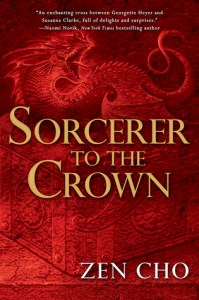
Book: “Sorcerer to the Crown” by Zen Cho

Publishing Info: Ace, September 2015

Where Did We Get This Book: Serena owns it, Kate got it at the library!

Continent: Europe

Book Description: At his wit’s end, Zacharias Wythe, freed slave, eminently proficient magician, and Sorcerer Royal of the Unnatural Philosophers—one of the most respected organizations throughout all of Britain—ventures to the border of Fairyland to discover why England’s magical stocks are drying up.

But when his adventure brings him in contact with a most unusual comrade, a woman with immense power and an unfathomable gift, he sets on a path which will alter the nature of sorcery in all of Britain—and the world at large…

Serena’s Thoughts

I’m currently in the last few months of the “My Year with Jane Austen” review series, so when I drew Europe for the continent choice, my mind was naturally in a Regency-era place. (Not to mention, Europe is the kind of choice that’s almost too wide-open with possibilities!) I had been gifted this book several years ago, but for whatever reason, hadn’t gotten around to reading it. I think I just never really spent the time figuring out what it was about. But I was pleased to find that it perfectly matched what I was looking for in a bookclub choice this go around: historical fiction, plus fantasy, plus a diverse cast, plus a plot that tackles social commentary in a time period that is often very white and very gender-role specific.

There was a lot to like about this book for me. For one thing, I’ve always enjoyed this type of mannered, historical writing style that seems to relish the use of long sentences and overly proper grammar. It’s not for everyone, but it’s definitely my cup of tea. It’s also a tricky style of writing to master and can often read as unnatural with strange breaks or anachronisms thrown in that break the entire thing up. Sherry Thomas comes to mind as a current author who has really nailed this style of writing. So I was super excited to see that Zen Cho could hold her own in this respect. The writing was confident, clever, and perfectly fit the type of story she was trying to tell.

I also really liked our main two characters, Zacharias and Prunella. Each are struggling against the prejudices and restrictions that are being placed on them for being who they are. Zacharias is a freed slave who has been raised up in magic as a prodigy of the previous Sorcerer to the Crown. His entire life has been made up of being an example for an entire continent’s worth of people. Along with that comes the awkward balance of his love for his teacher and father figure and the struggle that the previous Sorcerer to the Crown, for all his reforming ways, was still never fully able to comprehend Zacharias’s position and life experience. It perfectly illustrated the kind of passive racism that we all must work against.

As for Prunella, she’s not only a half-Indian young woman, but she’s been orphaned and raised in a girls’ school. In the version of Regency England, magic in women is so feared and distrusted that entire schools are devoted to teaching young women how to repress their abilities, sometimes at great risk to their own health. A strong magic user herself, Prunella has always struggled against the limitations of the life being set out before her. I really loved this character. She was bold, self-assured, and not willing to be held back by the preconceptions of those around her. And it wasn’t just the obvious ones, like women shouldn’t do magic. She also sees the practical side of being a woman of the times and argues with Zacharias about the economy of the marriage business for women, even magical women.

So, yep, I really liked this book. It was definitely the kind of thing that fit in my general reading preferences, and I was pleasantly surprised by how much it engaged with several topics. There’s a sequel out it seems, so I’ll be adding that to my TBR list.

Kate’s Thoughts

While my reaction towards fantasy novels of the YA persuasion is usually skepticism, followed by ‘eh’, the big ol’ dragon on the cover of “Sorcerer to the Crown” was enough to get me on board. And while dragons didn’t play a large role in the story, I was still tickled and happy by a few aspects of this book, even if the genre had me a little nervous.

As Serena mentioned, I thought that Cho was really wise in taking a genre and a setting that can sometimes fall into being very white and giving voice to two non-white characters who function in a society that is constantly Other-ing them. Zacharias especially had a lot of moments of inner conflict regarding his place as Socerer Royal, and while I was worried that his relationship with Sir Stephen would be a strange paternalistic one that negates the clear power dynamic, Cho isn’t afraid to point out that while Zacharias was taken from slavery, Sir Stephen left his parents behind and took their son away from them. While it isn’t a focal point to the tale, this moment was hit home as the travesty and violence that it was. And we also had moments of people commenting on Prunella’s parentage, with reflections of English colonialism towards India and the people who lived there before imperialism took hold.

Also, Prunella. I really loved Prunella. For one, if you give me a book about witches, I will immediately have an affection for it, and while this witch aspect wasn’t the usual kind that I find myself reading, Prunella was a hoot. She, too, has societal roadblocks due to her being biracial AND a woman, and seeing her fight against that and stay true to herself was quite satisfying. I also loved the chemistry between her and Zacharias, and it did feel a lot like reading an Austen romance at times, especially when they would bicker. Serena also brought up the writing style, which was such a breath of fresh air! I was thinking back to “The Parasol Protectorate” series in terms of the tongue in cheek wit and stylization, which I also enjoy quite a bit.

At the end of the day, it did feel a little long for me and weighed down by the fantasy aspects (witches or not), and I probably won’t go on in the series. But, all of that said, I did find “Sorcerer to the Crown” to be engaging and outside the box of my experiences with the genre, and had a fun time reading it!

Serena’s Rating 8: A great balance of strong writing, enjoyable characters, and a plot that explores social justice topics in a fantasy setting.

Kate’s Rating 7: An entertaining and charming fantasy tale with likable characters and some good comments on race, class, and gender.

Book Club Questions

  1. This book is written in the style of a Regency era novel (like a Jane Austen book, for example). How do you think the style or writing impacted the story? What did it add to the story? Or take away?
  2. Both Zacharias and Prunella face challenges based on their race and gender. How well do you think the story engaged with these topics?
  3. How did you feel about the way that this book dealt with the topic of slavery, particularly through Zacharias’s experiences with his mentor and father figure?
  4. This is a fantasy novel as well as a historical fiction story. What did you think about the magical elements and the way they were fitted into the traditional Regency story?
  5. Prunella and Zacharias must both make some tough choices near the end of the story. How did you like the ending?

Reader’s Advisory

“Sorcerer to the Crown” is on these Goodreads lists: Fantasy of Manners and Non-Caucasian Protagonists in Science Fiction, Fantasy, Horror, and Paranormal Romance.

Find “Sorcerer to the Crown” at your library using WorldCat, or a local independent bookstore using IndieBound!

Next Book Club Book: “I Will Always Write Back: How One Letter Changed Two Lives”

Serena’s Review: “The Court of Miracles”

Book: “The Court of Miracles” by Kester Grant

Publishing Info: Knopf Children’s, June 2020

Where Did I Get this Book: Edelweiss+

Book Description: In the violent urban jungle of an alternate 1828 Paris, the French Revolution has failed and the city is divided between merciless royalty and nine underworld criminal guilds, known as the Court of Miracles. Eponine (Nina) Thénardier is a talented cat burglar and member of the Thieves Guild. Nina’s life is midnight robberies, avoiding her father’s fists, and watching over her naïve adopted sister, Cosette (Ettie).

When Ettie attracts the eye of the Tiger–the ruthless lord of the Guild of Flesh–Nina is caught in a desperate race to keep the younger girl safe. Her vow takes her from the city’s dark underbelly to the glittering court of Louis XVII. And it also forces Nina to make a terrible choice–protect Ettie and set off a brutal war between the guilds, or forever lose her sister to the Tiger.

Review: Like every YA fantasy that has came out in the last couple of years or so, this book was marketed for fans of “Six of Crows.” Now, typically, that’s almost a warning off sign for me these days, as it seems this strategy almost always leads to disappointment when the book either turns out to be nothing like that one or, perhaps worse, way too similar. But this was also listed as an alternative history of the French Revolution and a retelling of “Les Miserables,” so I thought it was worth checking out.

After the failure of the French Revolution, the divide between the nobility and commoners has only gotten worse. In in the wake of much disorder, new points of power have risen in the form of nine crim guilds. Nina, a talented thief, works for the Thieves Guild, scraping together a life for herself and her adopted sister. But no one can stay hidden forever, even a master thief, and soon enough Nina finds herself thrust out of the comforts of her criminal underworld life and instead in a glittering and even more dangerous royal court.

Just to get it out of the way right away, I didn’t enjoy this book. I’m sure there are readers who will, but for me, it failed to deliver on any of the promises it set out for itself: It had no connection to “Six of Crows” that I could identify (other than ridiculously broad strokes in that they both deal with criminal underworlds); As a retelling of “Les Mirables” it pick and chose to such an extent that I’m not sure I would have made the connection between the two stories on my own; And as an alternative history, I found it to be wildly anachronistic and shallow in its world-building. So, yeah.

These were all issues on their own, of course, but the book isn’t helped by weak characterization and chopping storytelling. Many of the characters who were pulled from “Les Miserables” can be reduced to one trait descriptions that seem to serve as the entire foundation for their character. We’re given very little more than “This person is a revolutionary!” “This person is a thief!” Readers are either supposed to be satisfied with these bare minimums or superimpose more characterization onto these individuals from their comparative characters in the original story.

And the story itself is very choppy and includes several large time jumps. And during those time jumps, you guessed it, all the necessary character development has already occurred! Readers are just informed of the improvements in main characters without seeing any progression or natural development for themselves. Motivations are laid down in a clinical, info-dumping manner, and the story continues on.

Lastly, I really hated the “romance” in this book. I add the quotes because tehre really is no actual romance laid out. But there are so many possibilities of it that it began to feel ridiculous. I counted at least three love interests that were introduced over the course of this book. And while Nina didn’t devote any crazy amount of time towards any of them, it was still pretty annoying to be given the impression that everyone/anyone who came into contact with her was immediately attracted to her and has the potential of becoming a more serious love interest in the future. I’m so tired of this trope, and while it does seem to be slowing down in general, I’m always still disappointed when I see it pop up again.

I’m unclear who to really recommend this book to. It’s not like it was absolutely abysmal, but I also don’t think that it’s the kind of book that would appeal to the people it most seems to be trying to attract. Super fans of “Les Miserables” for sure will be disappointed. And fans of “Six of Crows” at this point know to be wary of most books that promote themselves as readalikes. I guess if you’re at all intrigued by the alternative history angle and have a fairly flexible approach to what history means, this may be worth checking out?

Rating 5: Not for me. It fails to live up to its own promotional tactics and fell into the trap of introducing too many love interests all at once.

Reader’s Advisory:

“The Court of Miracles” is on these Goodreads lists: 2020 YA Historical Fiction and Glittering Glamorous Fantasies.

Find “The Court of Miracles” at your library using WorldCat!

Kate’s Review: “Clown in a Cornfield”

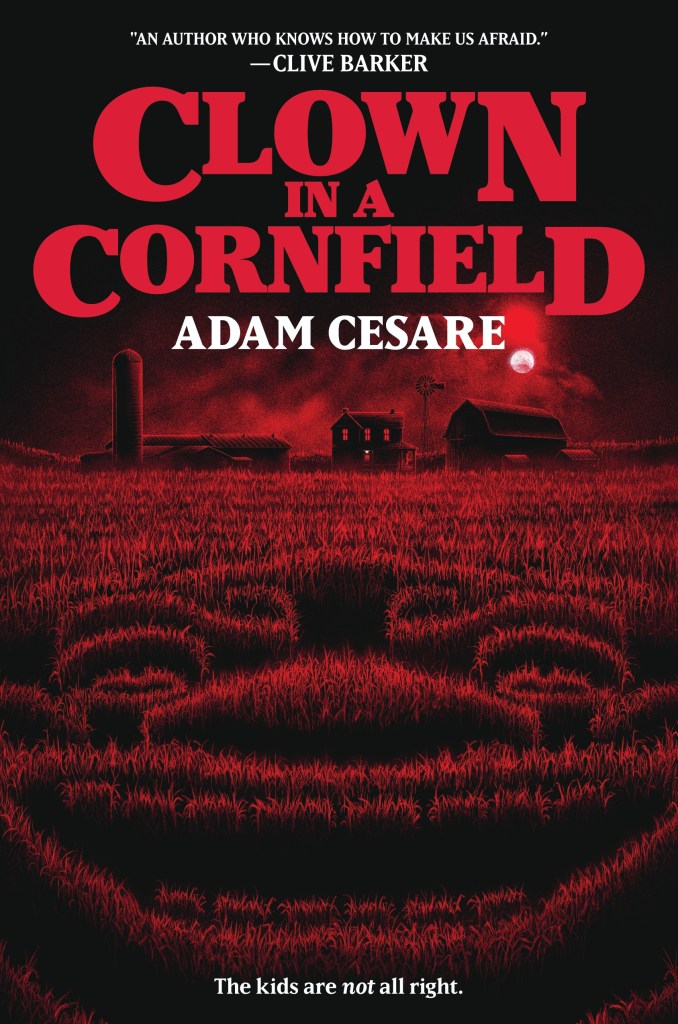
Book: “Clown in a Cornfield” by Adam Cesare

Publishing Info: HarperTeen, August 2020

Where Did I Get This Book: I own it.

Book Description: Quinn Maybrook just wants to make it until graduation. She might not make it to morning.

Quinn and her father moved to tiny, boring Kettle Springs to find a fresh start. But ever since the Baypen Corn Syrup Factory shut down, Kettle Springs has cracked in half. On one side are the adults, who are desperate to make Kettle Springs great again, and on the other are the kids, who want to have fun, make prank videos, and get out of Kettle Springs as quick as they can.

Kettle Springs is caught in a battle between old and new, tradition and progress. It’s a fight that looks like it will destroy the town. Until Frendo, the Baypen mascot, a creepy clown in a pork-pie hat, goes homicidal and decides that the only way for Kettle Springs to grow back is to cull the rotten crop of kids who live there now.

Review: I am not afraid of clowns. I have friends who are, but I myself don’t really have much beef with them outside of sometimes finding them a little pointless. Even the likes of Pennywise of John Wayne Gacy’s Pogo just don’t really make me tap into my inner coulrophobic. But I do like a book that reads like a slasher story, and reading the description of “Clown in a Cornfield” by Adam Cesare felt like exactly that. Throw in some Millennial resentment towards older generations that don’t quite get the road we’ve had to travel, and I was eager to dive in and see what Cesare was going to do with all of it.

“Clown in a Cornfield” is a bit of a slasher story, a bit of small town secrets story, and some ‘okay, Boomer’ memes all mixed together to create a YA horror tale. On a few levels, this works out pretty well and makes for fun reading. The very concept of a bunch of teens being slaughtered by someone wearing a clown mask is great horror fodder, but “Clown in a Cornfield” takes it a few steps further than that and works through some generational angst that is playing out in the real world. The town of Kettle Springs, the setting of this book, is having a bit of a reckoning when it comes to the older people in town versus the teenagers. The older people want Kettle Springs to stay the same, living off of good family values, hard work, and the corn syrup factory that has given the town jobs and prosperity, until recently, that is. The younger generation, specifically the teens, just want to live their lives and then move on. Cesare takes a pretty realistic conflict and pumps it full of blood and guts, and it works pretty well, with those with traditional values blaming inevitable changes in values for all the ills within the town. It could have been heavy handed, but Cesare keeps his tongue planted in cheek firmly enough that it’s a rather effective satire. I also liked a few of our main characters, namely Quinn, the new girl in town who is trying to fit in. Quinn has enough tragic backstory to give her a little bit of pathos, but also stands on her own two feet well enough that she is likable and endearing.

But that said, some of the executions of the plot points didn’t work as well for me. Besides Quinn and a couple other characters, we don’t really get to know enough about a number of the people we’re following so that it doesn’t feel like the stakes are too high when the clown Frendo (“No Country for Old Men” reference?) comes a knocking with weaponry and murderous intent. I don’t really care too much when a slasher film just has a bunch of stereotypes to act as machete fodder for a masked killer, but I think that on the page you have a little more wiggle room to give us some insight into your characters, even if it’s just a little bit. Along with that, the pacing was a little off at times, feeling a bit rushed in some places but kind of draggy in others. I bought the plot overall, as it really is just a slasher story and I know what I’m getting into there. But I think that had there been a little more focus on fleshing out some other characters and less on making super cool kills happen, it probably would have worked a little better. Especially since the satire was pretty well thought out.

Inevitable progress to traditionalists everywhere. (source)

“Clown in a Cornfield” is a pretty fun read. I think that it would have worked better as a gory limited series, but Cesare left room for a sequel, and it was good enough that I would definitely read it. If you don’t like clowns, maybe skip it? But if you’re like me, this could be a fun read for this time of year.

Rating 6: A sly premise and some fun characters keep this story afloat, though the plot is a little hasty at times and the scares feel like they’d work better on screen than on the page.

Reader’s Advisory:

“Clown in a Cornfield” isn’t included on many relevant Goodreads lists, but it would fit in on “Clown Horror”. Obviously.

Find “Clown in a Cornfield” at your library using WorldCat, or a local independent bookstore using IndieBound!
Serena’s Review: “Blood & Honey”

40550366

Book: “Blood & Honey” by Shelby Mahurin

Publishing Info: HarperTeen, September 2020

Where Did I Get this Book: Edelweiss+

Book Description: After narrowly escaping death at the hands of the Dames Blanches, Lou, Reid, Coco, and Ansel are on the run from coven, kingdom, and church—fugitives with nowhere to hide.

To elude the scores of witches and throngs of chasseurs at their heels, Lou and Reid need allies. Strong ones. But protection comes at a price, and the group is forced to embark on separate quests to build their forces. As Lou and Reid try to close the widening rift between them, the dastardly Morgane baits them in a lethal game of cat and mouse that threatens to destroy something worth more than any coven.

Previously Reviewed: “Serpent & Dove”

Review: Well, after enjoying the first book well enough this summer, it was kind of a given that I’d include it in my fall reading schedule. After all, I’d had a lot of success this summer with reading books that had been very popular last year and then were followed up by equally good, if not better, sequels (“The Merciful Crow” and its sequel, for example!). And, while the first book in this duology (ugh trilogy) wasn’t as strong as that one, it still caught my interest, and I had hopes the trend would continue. Alas, no. Not only did the trend decidedly not  continue, but I actively disliked this book and am probably out on this (again, ugh ) dulogy-turned- trilogy.

After the dramatic events at the end of “Serpent & Dove,” Reid, Lou and their friends find themselves on the run and in need of allies. Their search is a long and arduous one, pushing them all to the limits. On top of this all, Reid and Lou are still managing the new waters of their marriage after secrets on both of their sides have now been revealed. Will they all be able to stand strong together and will they be able to outwit the powerful force amassing against them?

So, that’s a pretty junky book summary that I just wrote. And that’s because…this is a pretty junky book? Seems harsh, but I really am having  a hard time coming up with any positive to say about this book. The problems start right away when I can’t write a good summary of this book because nothing happens in it. And it’s over 500 pages long! Instead of any plot to speak of, it’s made up of angst, drama, out of character actions/thoughts, and the worst case of “middle book syndrome” that I’ve ever seen. Part of the blame for this is, of course, because either the publisher or author (I’m guessing this was pushed by the publisher after the success of the first book) decided to stretch what originally envisioned as a duology into an unnecessary trilogy. And it shows. In a bad, bad way.

There is practically no action in this book until the last 40 pages. It’s just Lou, Reid and the others looking for allies, and with not much success. It’s not so much a story plot as a story plot point…a small one, at that. Definitely not one that justifies this book’s extreme length either. I mean, on one hand, it was always going to be a hard sell changing what was meant to be a duology into a trilogy kind of late in the game. But then to make the now-added middle book into a massively long middle book? The plot can’t support it. The character arcs (if there are any to speak of) can’t support it. It’s just not good storytelling.

The other major problem for me was in in the character arena and the romance. As I pointed out, this book was clearly stretched too thin on plot, and it feels the same with the characters. Their arcs no longer felt natural, but instead each character felt, at best, wildly out of character at times, and at worst, like they had been made into totally unlikable, totally different characters altogether. I struggled with Reid’s likablity in the first book. He was downright unpleasant in this one. His overly protective attitude towards Lou was in no way endearing and was often aggressively sexist in its portrayal. When he wasn’t caught up in that, it was internal angst and indecision all the live long day. Lou was a bit better, but still less likable than she was in the first. For her, much of her “arc,” such as it was, was more confusing than anything. She seemed to lose much of the personality she had in the first book and was at times almost unrecognizable.

To top a bad situation off, the book ends on a massive cliffhanger. And at this point, given how bad the rest of the book had been, this did not have the desired affect of cajoling last minute interest out of me, but instead just pissed me off more. It’s almost as if the publisher/author knew the book on its own wasn’t enough to keep most fans around, so they added this final twist as a last ditch effort. Really, the entire book seems to serve an example of publishing greed gone to far. If it had remained as a duology, with this the second and final portion, I’m sure we would have had a lot more actual plot and a lot less unnecessary character drama. The tone of the entire series could have remained consistent, and fans would have been satisfied. Instead, out of a need to squeeze the last drops out of the golden goose that was the first book, the series was stretched to a breaking point that is now losing fans. At least, they’ve lost me.

Rating 4: Supremely disappointing and barely recognizable as having come from the same author as the first book.

Reader’s Advisory:

“Blood & Honey” is on these Goodreads lists: “2020 YA Sequels” and “Can’t Wait Sci-Fi/Fantasy of 2020.”

Find “Blood & Honey” at your library using WorldCat!

Serena’s Review: “The Silvered Serpents”

45044785Book: “The Silvered Serpents”  by Roshani Chokshi

Publishing Info: Wednesday Books, September 2020

Where Did I Get this Book: NetGalley

Book Description: Séverin and his team members might have successfully thwarted the Fallen House, but victory came at a terrible cost — one that still haunts all of them. Desperate to make amends, Séverin pursues a dangerous lead to find a long lost artifact rumored to grant its possessor the power of God.

Their hunt lures them far from Paris, and into the icy heart of Russia where crystalline ice animals stalk forgotten mansions, broken goddesses carry deadly secrets, and a string of unsolved murders makes the crew question whether an ancient myth is a myth after all.

As hidden secrets come to the light and the ghosts of the past catch up to them, the crew will discover new dimensions of themselves. But what they find out may lead them down paths they never imagined.

A tale of love and betrayal as the crew risks their lives for one last job.

Previously Reviewed: “The Gilded Wolves”

Review: I wasn’t blown away by “The Gilded Wolves,” the first in this YA fantasy trilogy. But as I liked it more than Chokshi’s other books I’ve read and the cast of characters was compelling, I decided to keep going with the series. Well, I have, and…I don’t think I liked this one any better? Maybe worse? And yet I still will probably read the third? I’m not sure what this says about me as a reader or about the trilogy itself. Me, probably a completionist. The trilogy, something about it must be intriguing enough to keep me invested.

Things have kind of fallen apart for our crew after the dramatic events at the end of “The Gilded Wolves.” Each on their own, each has been trying to make their own way in the world, feeling cut-off from the rest. But when a lead on “The Divine Lyrics,” the magical book at the heart of Severin’s (and Laila’s) quest, finally comes to light, Severin brings them back together for one last adventure. Into the heart of the north and through mysteries new and astounding, the crew must once again bring each of their unique skill sets to hand in order to pull of this last job. But, of course, nothing goes as planned and a darker price is waiting than any of them could have imagined.

So, a lot of the problems I had with the first book (and with this author in general) were still present here, unfortunately. There’s something about her style of writing that I struggle with. On one hand, there’s the turns of phrase that seem to be written more because they sound beautiful and poetic rather than the fact they convey any actual image. The titles, for example, of both of these books doesn’t seem to really connect directly to much in the story. But they sure sound pretty! Most of the time it didn’t bother me too much, but there were definitely other times when I would re-read a sentence and be like “Sure…sounds nice…but…what?” And that confusion carries over to my second struggle with the writing.

While the author does a good job with characterization for the most part and clearly has a bunch of unique fantasy ideas. She’s not lacking in imagination on either front. But when it comes to the actual description of locations, objects, and how they interact with each other…it’s just not good. There were entire locations (where the book spent a significant amount of time) that I couldn’t describe to you. There was an entire action scene that was a blur of movement, and by the end, again, I couldn’t tell you what exactly had happened. The writing looks pretty on the front of things, but it too often failed at its most basic requirement: conveying ideas clearly.

I also struggled with the plot itself. The mystery was both at times not clear at all (Severin and his cohort would jump through leaps of logic that were either impossible to follow or just totally unbelievable that anyone would connect those dots). And at other times so bizarrely obvious that I couldn’t be less impressed when AHA! the reveal finally came and Severin and his crew were just oh, so clever for putting it together.

And, sadly, on top of all of this, my favorite part of the first book, the characters, was a let-down here as well. They’re all still interesting enough, but man, this was a glum book. Severin was practically unrecognizable, and his decisions were, again, hard to buy at times. As for the rest, they all seemed to become more and more caught up with unnecessary secret keeping that served no other purpose than to stir up more drama. It was just all kind of sad and tiring.

And yet…I’m probably going to finish out the story. For one thing, this book mostly felt like a place hold and necessary vehicle for the author to get from point A to point B. So while this middle portion of the trip was a let down, I can still be hopeful that it was all to the purpose of getting us somewhere more interesting. I’m not really holding out much hope for the writing to clear up and suddenly become my cup of tea, but I do have hopes that the characters themselves will go interesting places and resolve their own story lines in compelling ways. Fans of the first book are sure to like this one. But if you were on the fence there, you’ll probably have similar feelings here. I leave it to you whether it’s worth going through it based on only the hope of a well-executed landing.

Rating 6: Fairly glum and mired in its own “middle-ness” in the trilogy.

Reader’s Advisory:

“The Silvered Serpents” is on these Goodreads lists: “Asian MG/YA 2020” and “2020 YA Sequels.”

Find “The Silvered Serpents” at your library using WorldCat!

Serena’s Review: “A Deadly Education”

50548197._sy475_Book: “A Deadly Education” by Naomi Novik

Publishing Info: Del Rey Books, September 2020

Where Did I Get this Book: Edelweiss+

Book Description: Learning has never been this deadly

“A Deadly Education” is set at Scholomance, a school for the magically gifted where failure means certain death (for real) — until one girl, El, begins to unlock its many secrets. There are no teachers, no holidays, and no friendships, save strategic ones. Survival is more important than any letter grade, for the school won’t allow its students to leave until they graduate… or die! The rules are deceptively simple: Don’t walk the halls alone. And beware of the monsters who lurk everywhere. El is uniquely prepared for the school’s dangers. She may be without allies, but she possesses a dark power strong enough to level mountains and wipe out millions. It would be easy enough for El to defeat the monsters that prowl the school. The problem? Her powerful dark magic might also kill all the other students.

Review: Naomi Novik has quickly become a must-read author for me. After this book, she’s pretty much a must-buy author (I only have maybe 5 of those, so that says something, I think!). But, still, when requesting this book, what I’d read from her had been both of her fairytale retellings and the first several of her Napoleonic wars/dragon historical fantasy series. This didn’t sound remotely like either of those, instead being billed as a modern, more grim, “Harry Potter” style boarding school story. But man, Novik can do anything, and my trust is now fully earned, no matter how strange the book description is!

Scholomance is technically a school. There are no teachers and students are on their own to make classes and finish homework, sure. But that’s only half, and arguably the less important half, of what this school provides. Instead, it offers magical kids the best chance they have of surviving their juvenile years. Sure, their odds are still pretty darn bad in the school, but better than the next to nothing they have outside. El’s chances have been even worse from the start. Yeah, she has the raw power, but she seems to repel people for some reason. And in a place where forming alliances is a necessary survival tactic, that’s not good. But here, in her second to last year at the school, staring down the barrel of a final year full of even more likely death, El begins to uncover secrets about not only the school, but herself, and the boy who has been roaming around annoyingly playing savior to all this entire time.

I adored everything about this book, so it’s kind of hard to think of where to start when reviewing it. It’s also so totally unique, interesting, and complicated that it’s hard to find the middle ground between reviewing important aspects of the story and not spoiling the fun for new readers. There’s just so much good stuff to unpack!

I guess I’ll start with the world-building itself. The book description has a tough job trying to describe what Scholomance really is, and, as you can see, I probably struggled too in my own summary. That’s because it’s so complicated and well-constructed that it’s almost impossible to really give a broad overview. Novik seems to have thought out every intricate detail for this magical place, from how the cafeteria works, to the menacing library, to the simplest of things, like how the school assigns and monitors homework and what happens if students fall behind. And it’s all just so creative! I can’t think of a single other fantasy story that has anything like the place Novik has thought up here. And that’s saying something, I think, in a genre that is becoming more crowded by the day (especially YA that has a tendency to become trope-ridden and bogged down in certain themes every few years).

One of the most impressive aspects of all of this that, being as complicated and detailed as it all is, our narrator is given a heavy load of information to be handing off to readers. There’s a significant portion of the first half of the book that is largely devoted to detailing all of these little aspects. It would have been so easy for it to have felt like info-dumping or to have dragged down the pacing and plot of the story. But, for one thing, the information being provided is just too interesting on its own to feel bored by. And secondly, our narrator had a fantastic voice from the start that is strong enough to carry this type of detail-ridden load.

El is everything I like in a narrator: snarky, consistently characterized, yet vulnerable in ways that we (and she) discover throughout the story. From the book description, I was kind of expecting some type of tired anti-hero story or quasi-villain plot line for her, but it’s really nothing like that. Sure, her powers are destructive and there’s this pesky doomsday-esque prophesy lingering around her, but she’s just as skeptical of all that nonsense as the reader wants to be. El’s story, here, is not only finding acceptance with some key friends around her, but in accepting what she has to offer. On one hand, she can be overly confident, but on the other, we see her realize her own values and where her personal lines are between survival and standing up for some moral greater good.

And to balance her out, of course, we have a “Chosen One.” This friendship was everything! Both El and Orion’s characters play perfectly off each other. She, stand-offish, uninterested, and, again, snarky. He, bumbling, clueless of his affect on people, and obnoxiously heroic. I loved everything about this friendship and the slow build to sort of romance that it comes to towards the end.

It’s also clear, here, where the comparisons to “Harry Potter” are coming from. Orion Lake is definitely a response to Harry Potter and all of the other “chosen” heroes we see in fantasy fiction. Novik has said that “Spinning Silver” was essentially her “yelling” at the “Rumpelstiltskin” fairytale, and that this would be her yelling at “Harry Potter.” Comparisons to “Harry Potter always make me nervous. For one thing, I love Harry Potter so, for me, a book being compared to it is either going to be a massive let-down of trying to copy something that shouldn’t be copied. Or it’s going to be some type of “response” piece that spends more time criticizing another book series than in being its own thing. Luckily, this falls right in the middle and does it perfectly.

You can definitely see where Novik is making a point about the type of “chosen one” story that Harry Potter tells, but, while she does touch on some of the obvious themes, she also deep dives into a lot of aspects of this type of storyline that one doesn’t often think about. There’s a strong focus on inequality and injustice, but it’s approached through angles and perspectives that are unique to this world. The themes, of course, carry over, but it stays true to the fantasy world it is and the types of justice and injustice that would be inherent to it. It’s left to the reader to transcribe these thoughts onto our own world and our own experiences of injustice within society.

This review has already gotten pretty long, and I could go on and on. But, in this case, I almost feel like the less said the better! There’s so much great stuff to discover here that I don’t want to spoil any more of it! Needless to be said, my copy is already pre-ordered, and I highly recommend any and all fantasy fans to get their hands on this book ASAP!

Rating 10:Breaking fantasy walls that I didn’t know even exited! Simply fantastic!

Reader’s Advisory:

“A Deadly Education” is a new title, so it isn’t on many Goodreads lists. But it is on “Non JKR Magic School Novels.”

Find “A Deadly Education” at your library using WorldCat!