Serena’s Review: “Fireheart Tiger”

Book: “Fireheart Tiger” by Aliette De Bodard

Publishing Info: Tor.com, February 2021

Where Did I get this Book: Edelweiss+

Book Description: Quiet, thoughtful princess Thanh was sent away as a hostage to the powerful faraway country of Ephteria as a child. Now she’s returned to her mother’s imperial court, haunted not only by memories of her first romance, but by worrying magical echoes of a fire that devastated Ephteria’s royal palace.

Thanh’s new role as a diplomat places her once again in the path of her first love, the powerful and magnetic Eldris of Ephteria, who knows exactly what she wants: romance from Thanh and much more from Thanh’s home. Eldris won’t take no for an answer, on either front. But the fire that burned down one palace is tempting Thanh with the possibility of making her own dangerous decisions.

Can Thanh find the freedom to shape her country’s fate—and her own?

Review: I’ll admit that this was another book that pulled me in on the strength of the cover art alone. I mean, that’s just a gorgeous cover, and there’s no second opinion about it! The description comparing it to “Howl’s Moving Castle” and “The Goblin Emperor” couldn’t help but add more intrigue. Plus, it’s a novella, which I haven’t read one of for quite a while. Unfortunately, it didn’t quite live up to all of those expectations!

Life as a political hostage is not easy, but then no one ever expects it to be. More surprising for Thanh, a princess returning home at long last, is that her homecoming proves to have its own set of challenges. Haunted by a first love now thrown back in her path who sees her own path forward, Thanh begins to understand that she will need to evolve. As a passive hostage, her life had been simple. But as princess, wielding great power and responsibility, she has choices, some of which could impact the future of her entire country.

While I can think of several good examples of novellas that I’ve read in the past (Seanan McGuire’s entire “Wayward Children” series, for example), unfortunately, this book highlights much of how to do them wrong. With the strict word count limit imposed on writing a shorter story, the author has to be incredibly efficient with world-building and character development. And even then, you can’t spend too much time on it, necessitating that both the world, story, and character are fairly interesting and compelling on their own from the very start. And in these key areas, this book fails the test.

Particularly, Thanh herself is a fairly paper-thin character. She doesn’t stand out in any bad ways, but she’s also not very interesting and lacks the charisma needed to drive a short story like this. Her lack of a strong voice makes the necessary info-dumping portions of the story stand out more than they should. Beyond that, I found the character to be a bit unlikable, seeming to wallow in self-pity more often than not and easily distracted by her own personal dramas over the larger state of affairs going on around her.

I also was very uninvested in the love interest and romance of this story. We simply aren’t given enough here to care. Ephteria’s attraction is almost entirely contained in the author’s telling rather than showing style. She has blue eyes…that’s about all we get. But Thanh spends pages upon pages obsessing over her, and the readers are stuck there with her, just not understanding why. The thin depiction of this relationship is mirrored in Thanh’s other relationships as well, with her mother, and with another young girl she befriends.

Beyond this, the writing didn’t work for me. I found it often to be jarring and uninspired, pulling out cliches when you’d most expect them and not helping to build any tension as the story worked its way through its plot points. The dialogue was at times particularly egregious, with some of the villains just one mustache-twirl away from being comical.

There may have been a good story here somewhere if the author had had more word-count to work on. But I’m also not convinced that the characters, world, or overall plot could have supported an increased page count. It’s kind of a chicken or the egg thing: did the page count limit the creativity of the characters and flow of the writing, or were these aspects weak on their own and would have just struggled more in a full-length novel?

Rating 6: Pretty disappointing overall. Though the cover is still one of the best I’ve seen in a while.

Reader’s Advisory:

“Fireheart Tiger” is a new title so it isn’t on too many Goodreads list, but it is on Upcoming 2021 SFF Books With Female Leads or Co-Leads.

Find “Fireheart Tiger” at your library using WorldCat!

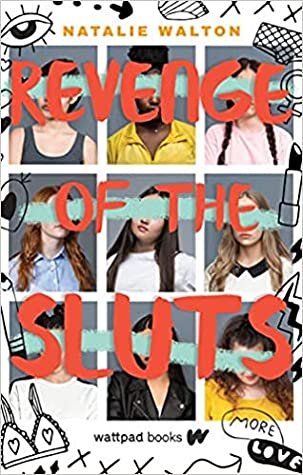
Kate’s Review: “Revenge of the Sluts”

Book: “Revenge of the Sluts” by Natalie Walton

Publishing Info: Wattpad Books, February 2021

Where Did I Get This Book: I received an eARC from NetGalley.

Book Description: Double standards are about to get singled out.

In this stunning debut, author Natalie Walton tackles privacy and relationships in the digital age.

As a lead reporter for The Warrior Weekly, Eden has covered her fair share of stories at St. Joseph’s High School. And when intimate pictures of seven female students are anonymously emailed to the entire school, Eden is determined to get to the bottom of it.

In tracking down leads, Eden is shocked to discover not everyone agrees the students are victims. Some people feel the girls “brought it on themselves.” Even worse, the school’s administration seems more concerned about protecting its reputation than its students.

With the anonymous sender threatening more emails, Eden finds an unlikely ally: the seven young women themselves. Banding together to find the perpetrator, the tables are about to be turned. The Slut Squad is fighting back!

Review: Thank you to NetGalley for providing me with an eARC of this novel!

I thank my lucky stars that I got out of high school before social media became a huge thing, because my GOD I don’t know if I would have survived it all. I went to a prestigious and rigorous prep school, and as someone who was a bit of a weirdo who, for some time, bore the brunt of my meaner classmates, I can’t even imagine what might have happened if Snapchat, Tik Tok, or the like were available (I’m old, are those still popular with the youths?). “Revenge of the Sluts” by Natalie Walton addresses a number of the things that make my heart hurt when it comes to stories of teenage bullying and cruelty, specifically that of girls who send nudes to people they think they can trust, only to find their trust broken and their bodies exposed for laughs, revenge, or what have you. When I saw this book on NetGalley, I knew that I had to read it.

“The Revenge of the Sluts” is a VERY fast read that kept me interested, as I pretty much read it in one day during a long weekend. The mystery of who leaked the nudes of seven high school girls is technically the heart of this book, but it felt more like an examination of the difficulties of high school life for girls in modern society. I really enjoyed Eden, our protagonist and intrepid student reporter who is investigating the invasive and cruel leak of nude selfies of seven of her classmates. While Eden wasn’t a target herself, she and co-journalist/editor in chief Ronnie not only see a huge story, but a number of girls who deserve justice and deserve to have their voices heard. Eden has a few more layers to it as well, as she too has sent nude photos of herself in the past to her ex boyfriend, and while he never shared them so that they could potentially be leaked, she knows that she was just as vulnerable.

I liked that Walton brings up all of the complicated messy issues about teen dating and sex. Such things include the pressures that some may feel do do things that they may not want to do, and the self autonomy that others have to be comfortable in their sexuality which can lead to stigma and punishment from others when that is put on display. The victims are a wide variety, with some enjoying casual hook ups and sexual exploration, and others being in monogamous relationships with people they are supposed to be able to trust. Walton never frames any of these girls as anything but victims, and I really liked that we get to explore double standards when it comes to boy vs girl sexuality and the expectations that is foisted on the two, many times unfairly. I also liked the frustrating but probably pretty realistic subplot of the mishandling of the scandal by the school and the greater community, as the girls are treated less as victims and more as, well, ‘sluts’, like in the title.

Therein, however, lies some of the weaknesses in this book as well. These messages and themes are absolutely important, especially for teen readers who may have to navigate such things in their lives. But some of the lessons were presented in really awkward and clunky ways. Many times we would have these teachable moments with characters going into long lectures or diatribes about consent, bodily autonomy, double standards, and misogyny which felt like they were lifted from educational or resource materials. There would be debates between characters that go the way that one would expect from an after school special as opposed to an actual conversation between classmates or friends. It ended up making things feel a bit canned and packaged, and while I know that the YA audience may like things a bit more straight forward, I think that authors need to give teens a little more credit in how they can process the messages being conveyed.

All in all, I thought that “Revenge of the Sluts” had a few hiccups here and there in execution, but the themes and statements behind that are too important for me to write it off completely. It’s quick and engaging, and I hope that it can help people who may be going through the bad things it addresses.

Rating 7: A quick and entertaining read that often treads towards clunky monologues and lecturing, “Revenge of the Sluts” has good messages about bodily autonomy, consent, and rape culture, even if it felt a little canned.

Reader’s Advisory:

“Revenge of the Sluts” is included on the Goodreads lists “YA Girls Take on the Patriarchy”, and “Best Books to Read When You Need a Reminder of Why Feminism Is Important”.

Find “Revenge of the Sluts” at your library using WorldCat, or at a local independent bookstore using IndieBound!

Kate’s Review: “The Witch Hunt”

Book: “The Witch Hunt” (Jonny Roberts #3) by Alexander Lound

Publishing Info: Self Published, February 2021

Where Did I Get This Book: I received an eARC from the author.

Book Description: Two months on from the tragedy of the burned house, and Jonny has spent most of the long summer days in bed, hiding from the miserable rain. Ghost-hunting is in his past. After all, it has proved to be little more than a curse.

However, when his dad reaches out to him after an eighteen-month absence, Jonny can’t hide his fury. He also can’t say no when his father asks him to stay at his new home in the quaint, little village of Peene. Maybe it will heal the hurt between them. At the very least, it will take his mind off Grantford, and his haunting nightmares.

But, when he realizes ‒ feels ‒ that all isn’t quite right with his dad’s new partner, Bella, he has no choice but to turn back to his ability. To uncover a grisly murder of years past. Even if it means risking another date with death…

Review: Thank you to Alexander Lound for approaching our blog and sending me an eARC of this book!

It’s always a nice day when I get a notification from an author I’ve highlighted in the past that they have a new book coming out. Earlier this year it was “Atonement”, which saw the end of the Cerenia Chronicles, and now we finally get a new story from Alexander Lound’s Jonny Roberts Series, “The Witch Hunt”. I was already thoroughly invested in the stories about teenage medium Jonny, and when you throw the mere idea of witches into that, well, you officially have me snared.

I will never not be super interested in all things witch. (source)

When we left Jonny at the end of “The Burned House”, things had taken a turn for the worse for our teenage medium. His best friend Stephen was dead, his girlfriend Cassy had broken up with him because of the dangers of his ghost talking abilities, and Jonny was all around feeling lost. “The Witch Hunt” doesn’t walk any of that back, and in fact puts him in an even more precarious place in that his father, who abandoned him and his mother a year and a half prior, now wants Jonny to come visit him and his new lady friend, Bella. What is supposed to be an awkward reunion turns into another supernatural adventure, as it becomes clear that there is something wrong with Bella and the local historic site that was the location of witch hunts and burnings centuries ago may have a key. I liked getting Jonny out of his usual routine for this book, as it gave him more space to explore and a different approach, given that now the case is actually personal to him. Another change is that Lound doesn’t walk back the separation from Cassy, at least not yet. I was wondering if we were going to have a tug of war of feelings, and then just a reconciliation to get things back to ‘normal’, but it’s not as simple as all that, as it is made clear that Cassy’s hesitancy and fear is perfectly understandable. This also gives Jonny a little leeway to just be on his own for this story (well, outside of his mentor/friend Aaron, who does come in, which is fine by me because I really like Aaron!), and not have to continue an complex teen relationship on top of everything else.

I also didn’t expect, but really enjoyed, the approach that was taken towards Jonny’s father’s new partner, Bella. I think that it would have been super easy for her to be the unlikable home wrecker trope. I mean, I probably would have accepted that without any questions. But instead she is a very likable person who you care about, especially when it’s clear that something is very wrong with her that is putting her, and her loved ones, in danger. While I DO think that there could have been a little more ‘responsibility’ taken on her part when it comes to getting involved with a married man, just insomuch that it’s definitely mostly on Jonny’s Dad, Bella did have a part to play in a lot of pain caused to Jonny and his mother. But that said, I liked that she wasn’t what I expected her to be, and that she was, in fact, overall a decent person.

As for the mystery itself about what is ailing Bella and where the Witch Hunt site comes into it, it was pretty solid. I don’t want to give too much away, but Lound takes the opportunity to explore misogyny, violence towards women, and makes connections between the medieval witch hunts and modern day victims of what people think women should be, and what women owe men. And while it may be true that witches as characters weren’t really a part of this as much as I had hoped, the themes of witches and witchcraft and what they have represented throughout history is definitely a HUGE piece of the story. And I really liked that.

“The Witch Hunt” is another fun ghost story from Alexander Lound! I’m so happy this series has continued and cannot wait to see where it goes next!

Rating 8: Another tense and suspenseful YA paranormal thriller from Alexander Lound, and a new focus for teenage medium Jonny Roberts.

Reader’s Advisory:

“The Burned House” isn’t on any Goodreads lists, but I think that it would fit in on “YA Novels and Psychic Abilities”, and “Young Adult Ghost Stories”.

“The Burned House” isn’t available on WorldCat as of now, but it will be available for purchase this week. For more information, go to Alexander Lound’s WEBSITE.

Previously Reviewed:

Kate’s Review: “The Project”

Book: “The Project” by Courtney Summers

Publishing Info: Wednesday Books, February 2021

Where Did I Get This Book: I received an eARC from NetGalley.

Book Description: Lo Denham is used to being on her own. After her parents died, Lo’s sister, Bea, joined The Unity Project, leaving Lo in the care of their great aunt. Thanks to its extensive charitable work and community outreach, The Unity Project has won the hearts and minds of most in the Upstate New York region, but Lo knows there’s more to the group than meets the eye. She’s spent the last six years of her life trying—and failing—to prove it.

“The Unity Project murdered my son.”

When a man shows up at the magazine Lo works for claiming The Unity Project killed his son, Lo sees the perfect opportunity to expose the group and reunite with Bea once and for all. When her investigation puts her in the direct path of its charismatic and mysterious leader, Lev Warren, he proposes a deal: if she can prove the worst of her suspicions about The Unity Project, she may expose them. If she can’t, she must finally leave them alone.

But as Lo delves deeper into The Project, the lives of its members, and spends more time with Lev, it upends everything she thought she knew about her sister, herself, cults, and the world around her—to the point she can no longer tell what’s real or true. Lo never thought she could afford to believe in Lev Warren . . . but now she doesn’t know if she can afford not to.

Welcome to The Unity Project.

Review: Thank you to NetGalley for providing me with an eARC of this novel!

Given how much I loved Courtney Summers’s previous novel “Sadie”, when I saw that her next book was going to be about a cult I was freakin’ stoked. The dark grittiness of “Sadie” kept me unsettled and on edge for a long while after finishing that book, and I figured that “The Project” would be almost darker, if only because of the root of the conflict (and because it sounded like it took a lot of inspiration from NXIVM from the summary, which is all kinds of yikes as more and more details come out about that group).

Once again we have a sister relationship that serves as the beating heart of this novel, a theme that Summers has used before and done very well. I had been a bit worried we’d get a bit more of the same because of it, but the relationship between Lo and Bea is very different from what I had imagined. I thought that Summers did a fantastic job of capturing the trauma and regret of both women, be it of Bea, who left her younger sister in a time of need, or Lo, who has resented the hole that Bea left behind but is also obsessed with finding her. You get both sisters perspectives, it it Lo’s journey as she goes deeper and deeper into The Unity Project, or Bea as she too finds herself drawn in more and more in a different time than Lo. The complexities of their relationship are there, and while we don’t see much interaction between them be it in the present or in flashbacks, you do get a good solid sense for the love and pain they share through their memories and feelings towards each other. It is also interesting seeing them take similar journeys when it comes to the mysterious, and perhaps deeply malevolent, Unity Project, and how they both parallel and yet invert each other. The suspense builds as Lo learns more and more about Bea’s time with Lev and other members, and by the time Lo is making some pretty drastic decisions (some of which I don’t think were QUITE built up to enough, but that’s all I will say because we’re keeping this generally spoiler free), you have been turned about and messed with as a reader about as much as she has as a character because she’s so easy to connect to. And while Bea is more mysterious, you still get a pretty good sense about other aspects of her personality, and how she could get caught up in something like The Project. While you know that things won’t be happily ever after for these sisters by the time the book is done, Summers still makes you ache for both of them on the journeys they are taking in trying to find, or trying to run from, each other.

Now let’s talk about The Project itself. As touched upon above, we are given so much information about them from inside sources, outside sources, and reliable and unreliable threads, that Summers effectively binds a reader up in becoming disoriented. I will say that given that I could see the NXIVM influences (the upstate New York setting, the beverage heiress who is a high ranking member, some of the more violent aspects of the group), there wasn’t really much question in my mind about what this group was ultimately going to be like, but had I not had that context I do think that Summers throws in a lot of things that could question that. She does a good job of showing how predatory cult leaders slowly lull their members into a sense of security, love, and faith, and then twist them and meld them into doing some really disturbing things. Lev is one of the more unsettling antagonists that I’ve encountered in YA literature in awhile, as his charisma and visage of kindness is rarely cracked as the book goes on, unless you know what to look for, just like psychopathic cult leaders in real life. There are Raniere influences here, but also shades of David Koresh and Charles Dederich, though Lev still stands on his own without being too much of a stand in for any one cult leader.

“The Project” is definitely a tragic and unsettling book, but it’s another strong narrative from an author who isn’t afraid to go dark. And it also has little bright spots of potential hope that are much appreciated in tales like this. Summers has a knack for balancing all of this out, and I think this will be another hit for her.

Rating 8: Intense, tragic, and unsettling as heck, “The Project” gets into the cult mentality and shows the power a charismatic leader can have.

Reader’s Advisory:

“The Project” is included on the Goodreads lists “Cults and Communes in Fiction”, and “Cults, Mind Control, and Spiritual Abuse”.

Find “The Project” at your library using WorldCat, or a local independent bookstore using IndieBound!

Kate’s Review: “Burn Our Bodies Down”

Book: “Burn Our Bodies Down” by Rory Power

Publishing Info: Delacorte Press, July 2020

Where Did I Get This Book: I own it.

Book Description: From the author of the New York Times bestseller Wilder Girls comes a new twisty thriller about a girl whose past has always been a mystery—until she decides to return to her mother’s hometown . . . where history has a tendency to repeat itself.

Ever since Margot was born, it’s been just her and her mother. No answers to Margot’s questions about what came before. No history to hold on to. No relative to speak of. Just the two of them, stuck in their run-down apartment, struggling to get along.

But that’s not enough for Margot. She wants family. She wants a past. And she just found the key she needs to get it: A photograph, pointing her to a town called Phalene. Pointing her home. Only, when Margot gets there, it’s not what she bargained for.

Margot’s mother left for a reason. But was it to hide her past? Or was it to protect Margot from what’s still there? The only thing Margot knows for sure is there’s poison in their family tree, and their roots are dug so deeply into Phalene that now that she’s there, she might never escape.

Review: After I read “Wilder Girls” I was left a little cold. Which was odd, because Rory Power’s debut novel had all the elements of something I thought I’d love: a boarding school, a post-apocalyptic event, sapphic characters, a mystery, the list goes on. I was thinking that maybe it was just me, and given that I liked her writing style a lot (the atmosphere! The world building!), I wanted to give her another go. Enter “Burn Our Bodies Down”, a YA horror story with a gorgeous cover, a strange small town setting, and family secrets. Again, things that I love in a story, whatever the genre. I gave it a go, hoping that it would click. But, once again, I was left a bit cold.

I wil start with what I did like, however. Power really has a skill at creating atmosphere and setting, and once again I was sucked into the world building of Phalene, the small town our protagonist Margot runs to in hopes of connecting with her estranged grandmother. Phalene feels like the kind of rural town that I remember passing through in my childhood, with familiar characters and places, as well as familiar hardships and hurdles. I could practically see the cornfields, and the town area, as well as the vast farmscapes and openness. Phalene itself felt like its own character that Margot was getting to know. I also will be the first to say that, without giving too much away, the big mystery that Margot’s grandmother is trying to hide, and that has affected Margot’s mother so profoundly that it has damaged her relationship with her daughter, is pretty unique and an interesting concept. I had a feeling that I knew what it was (once it became clear that this was, indeed, a horror story with fantastical elements, but I will talk about that in a bit), but it was still an angle that felt fresh and not like many others that I’ve seen before. Power had some of that going for her story in “Wilder Girls” as well, there is no denying that she has some really cool ideas!

But there were too many things that didn’t work for me. My biggest gripe was that it took a long time for the actual horror elements to arrive within the plot. I honestly went into this with very little knowledge as to what the general tropes and themes were, and while I was reading I was wondering if Power had decided to forgo her past horror genre foray and go into more of a family secrets thriller. And I guess that this could kind of be considered that as well, but by the time the actual can’t be argued as anything else horror elements popped up it was about half way through the book. That seems a little long to me. I understand that we had to have some set up of Margot’s family dysfunction before we could really explore the other issues, given that the dysfunction and the issues tie in together very tightly. But the dragging of feet didn’t really build up suspense, it just felt like it took too long. Along with that, I didn’t feel like we got to really know Margot as the story progressed, at least not past a kind of superficial level. There was so much potential for us to peel back layers of her, and hints to who she was outside of a teen who has a fraught relationship with her mom, but none of that really gets explored. Which, in turn, made it harder for me to care about her and what the deal was with her and her weird family.

I gave Rory Power another shot, but I think that this may be the end of the road for me and her books. “Burn Our Bodies Down” shines bright in the ideas department, but the execution was lacking.

Rating 5: Lots of solid ideas, but none of them fully execute in time for the big reveal for me to have investment in them.

Reader’s Advisory:

“Burn Our Bodies Down” is included on the Goodreads lists “Corn Books”, and “2020 Horror to Scream For”.

Find “Burn Our Bodies Down” at your library using WorldCat, or a local independent bookstore using IndieBound!

Serena’s Review: “Winterkeep”

Book: “Winterkeep” by Kristin Cashore

Publishing Info: Dial Books For Young Readers, January 2021

Where Did I Get this Book: Edelweiss+

Book Description: Four years after “Bitterblue” left off, a new land has been discovered to the east: Torla; and the closest nation to Monsea is Winterkeep. Winterkeep is a land of miracles, a democratic republic run by people who like each other, where people speak to telepathic sea creatures, adopt telepathic foxes as pets, and fly across the sky in ships attached to balloons.

But when Bitterblue’s envoys to Winterkeep drown under suspicious circumstances, she and Giddon and her half sister, Hava, set off to discover the truth–putting both Bitterblue’s life and Giddon’s heart to the test when Bitterbue is kidnapped. Giddon believes she has drowned, leaving him and Hava to solve the mystery of what’s wrong in Winterkeep.

Lovisa Cavenda is the teenage daughter of a powerful Scholar and Industrialist (the opposing governing parties) with a fire inside her that is always hungry, always just nearly about to make something happen. She is the key to everything, but only if she can figure out what’s going on before anyone else, and only if she’s willing to transcend the person she’s been all her life.

Review: Well, we’ve finally arrived at the long-awaited (really, was anyone actually waiting on this? I think it took most fans by surprise!) fourth book in the “Gracely Realm” series. I’ve enjoyed my re-read so far, though the high of the first two has definitely been dampened by what I felt was a lackluster showing in “Bitterblue”. But given that it has been almost a decade since that book was published, I was curious to see which version of the author’s writing we’d get here: the fast-action, heartstring- pulling story that we saw in the first two, or the more slow, somewhat bloated story that was last one?

It’s been four years since the events of “Bitterblue” and the world has once again expanded. Winterkeep is a distant land whose society is largely focused on politics and industry. With fantastical airships and the knowledge of powerful resources, Winterkeep’s society is at an impasse over the progression of its industry over the environmental effects of some of the resources needed to power those advancements. When two of her envoys die under mysterious circumstances, Bitterblue takes it upon herself to visit this distant land. Things quickly go wrong, and she and her party are left to unravel the mystery at the heart of Winterkeep alongside a local teenage girl, Lovisa, whose parents are somehow connected to it all.

So, I’ll just get it out of the way early: this, sadly, fell much more into the “Bitterblue” school of book than the “Graceling” type which in turn means it was a bit of a disappointment for me. But I’ll start with what I did like. In many ways, I feel like the writing was stronger in this book than in “Bitterblue.” That book was almost oppressively gloomy and serious, whereas here, while the story still tackled serious topics and had darker moments, there were also several funny lines and observations throw in. Bitterblue herself was a much more likable character for having some of these funnier lines/thoughts early in the book which immediately endeared her to me.

I also liked Giddon’s chapters. He was a strong point in “Bitterblue,” so it was great to see Cashore recognize his potential and make him a POV character here. His relationship with Bitterblue was also much more interesting in that book than her romance with Saf, so I was happy to see their friendship/romance take precedence. We also get chapters from a telepathic fox, a special type of animal that is common in Winterkeep and bonds with humans, as well as chapters from a mysterious ocean monster.

But I struggled to connect to Lovisa, and that proved to be a fairly large failing for my enjoyment of the story. As the only native human character we have for Winterkeep, much of the world-building and deeper insight into this world comes through this character. I think there are a few problems here. For one thing, Lovisa simply didn’t have a strong inner voice or particularly compelling character. Those funny lines I mentioned with Bitterblue? None to be found with Lovisa. I’m not asking for a joke a minute, but her voice simply didn’t have any particular aspect to it that made it stand out, which leads to my second problem.

Much of Lovisa’s chapters and inner thoughts are devoted to long reflections on Winterkeep’s political situation and the challenges of balancing industry and environmentalism. Fairly early in the book, I read one of her chapters that devoted almost half of her page count to long paragraphs on these topics. And there simply wasn’t much there! The entire “debate” about environmentalism is a very thinly veiled depiction of our own struggles in this world. And the politics involved are just the same, a very watered down version of the U.S. two party system with entrenched viewpoints on both sides. There are plenty of good ways of using a fantasy novel to get out modern debates, but these were so washed out and thin that they didn’t actually get at any new ideas or add anything of value to the overall conversation. Plus it’s a fantasy novel which usually gives authors a lot of creative leeway to present these ideas in unique and interesting ways. Not so here, unfortunately. The two parties are called the Scholars and Industrialists, for heaven’s sake! And poor Lovisa’s chapters are just full of this stuff, going on and on.

Which gets to my final complaint: this book is way too long. Just like “Bitterblue,” the story begins to feel like a slog fairly early into the first third of the book. The action dies down, the mystery drags on and on, and then finally we get to the resolution, only to find that there’s a significant page count left to get through. In which, again, nothing much happens and the whole thing could have been wrapped up in half the time. This book seriously needed the firm hand of an editor who wasn’t afraid to make great big slashes through some of this.

By this point, it’s clear that Cashore is the type of author who likes to write about issues. Unfortunately, I feel like the books in which she focuses on this the most are her weakest. “Graceling” and “Fire” both touched on some pretty important topics about self-acceptance and the responsibility and dangers of great power. But when the stories delved into more broad topics like they did in “Bitterbue” and here, these issues seemed to consume the book, its characters, and any attempts to build up tension. Fans who enjoyed “Bitterblue” will probably be more pleased with this entry than those who struggled with that book.

Rating 6: Overall, pretty disappointing and bogged down by uninteresting takes on social and political statement pieces.

Reader’s Advisory:

“Winterkeep” is a newer book so it isn’t on many Goodreads lists, but it is on YA Novels of 2021.

Find “Winterkeep” at your library using WorldCat!

Serena’s Rev-Up Review: “Bitterblue”

Book: “Bitterblue” by Kristin Cashore

Publishing Info: Dial, May 2012

Where Did I Get this Book: own it!

Book Description: Eight years have passed since the young Princess Bitterblue, and her country, were saved from the vicious King Leck. Now Bitterblue is the queen of Monsea, and her land is at peace.

But the influence of her father, a violent psychopath with mind-altering abilities, lives on. Her advisers, who have run the country on her behalf since Leck’s death, believe in a forward-thinking plan: to pardon all of those who committed terrible acts during Leck’s reign; and to forget every dark event that ever happened. Monsea’s past has become shrouded in mystery, and it’s only when Bitterblue begins sneaking out of her castle – curious, disguised and alone – to walk the streets of her own city, that she begins to realise the truth. Her kingdom has been under the thirty-five-year long spell of a madman, and now their only chance to move forward is to revisit the past.

Whatever that past holds.

Two thieves, who have sworn only to steal what has already been stolen, change her life forever. They hold a key to the truth of Leck’s reign. And one of them, who possesses an unidentified Grace, may also hold a key to her heart . . .

Previously Reviewed: “Graceling” and “Fire”

Review: So this re-read has been one of discoveries so far. I discovered first that “Graceling” held up really well in the ten plus years since it was first published, even given the boom of similar YA fantasies novels that have come out since. I discovered that while I still prefer “Graceling” overall, I actually liked the romance in “Fire” better. And with “Bitterblue” I discovered…I actually hadn’t read this one before?? I own a copy, and I think I must have skimmed through it at some point, but a full, cover-to-cover read? Nope! Given my takeaway at the end of this read, I suspect I may have skimmed some Goodreads reviews when this came out and put it on the back-burner, being a bit wary. Because, yes, for me, this was quite the step down from the highs of “Graceling” and “Fire.”

Bitterblue has been queen of Monsea since she was ten and her sociopathic father was killed at the hands of Bitterblue’s strongest protector, Katsa. In the years since, Bitterblue has struggled to put her broken country back together. But with endless paperwork and little contact with her actual people, Bitterblue begins to suspect that her efforts aren’t accomplishing much. She takes matters into her own hands and sneaks out to wander the streets of her city and see the state of things for herself. What she discovers opens the floodgates and she is suddenly overwhelmed with all of the mysteries and secrets that have lurked from the time of her cruel father’s reign.

So, overall, I really didn’t love this book. It was so surprising and disappointing to have a reaction like this after just loving both books that came before! But, unfortunately, I think there were several things that worked against it. Not least of which is the fact that I think that even its strengths ultimately work against it when compared to the books that came before. Namely that Cashore’s strengths for creating interesting new worlds and great fantastical elements weren’t allowed any room to grow here. We’ve already been introduced to Monsea, and while the story does show us around the city itself and has some new things to add here, the world itself is largely familiar. The magic, too, is familiar. We may meet a few new Gracelings, but their abilities and their place in the world are already understood. So, too, we already know about the Seven Realms and, largely, how they differ from one another and interact with each other. All of this works to undercut much of what made the first two books so great: Cashore’s deeply imaginative new worlds and magic systems.

And while both of the first two books were slower reads overall, this one really seemed to drag on. It’s much longer than the first two, and nothing in the story really justifies this length. Bitterblue is constantly beset with new mysteries and new roadblocks on any progress she’s making on the ones that came before. More than once she simply gives up and returns to her paperwork in her tower. This is just as boring and anti-climatic for the reader as it’s said to be for her. What’s more, many of the mysteries are built around the seemingly crazy actions of many of the characters around her. But they are so random and so off-the-wall that with the lack of understanding around them comes also the lack of caring. Unlike the books before where it felt like clues were being laid down that reader’s could begin to piece together for themselves (part of what kept the pacing better in those books), here, it all feels too disconnected to any logic or overall plan to really engage the reader.

I also really, really disliked the romance in this book. This was truly shocking as the other books in this series had two of my favorite romances ever. But here, nothing really works about it. Saf is a terrible romantic hero. When he’s not annoyingly immature (it’s never a good sign when you’re heroine herself calls the hero this and she’s completely right!), he’s outright rude and mean to Bitterblue. And all of this is when he’s even on the page at all, for there are large chunks of the story where he’s nowhere to be seen. From a personal reading perspective, his absence isn’t missed as when he was around I was mostly frustrated by him. But from the perspective of trying to build a compelling romance, it’s hard to do when you’re romantic hero is nowhere to be found for the last half of the book. And the end was only satisfying because it was ultimately unsatisfying, essentially!

I did like Bitterblue as a character, but I think the romance and the plodding storyline both did her a massive disserve. It was also confusing trying to understand why Bitterblue was suddenly noticing all of these things around her. Presumably she’s been acting as queen for the last 8 years, and while she was too young initially to take notice, it’s hard to understand what was distracting her from it all for the last few years. There’s no obvious impetus for any of it, really. “Winterkeep” will also feature Bitterblue, so I’m excited to see how the character fares when put in a different (hopefully better!) story. We’ll find out next week when we finally get to “Winterkeep” itself!

Rating 6: Very disappointing. It has some serious weaknesses on its own, but it’s definitely not helped by the fact that the two before it were such hits for me.

Reader’s Advisory:

“Bitterblue” is on these Goodreads lists: YA Second World Fantasy and Best Kick-Ass Female Characters From YA and Children’s Fantasy and Science Fiction.

Find “Bitterblue” at your library using WorldCat!

Serena’s Rev-Up Review: “Fire”

Book: “Fire” by Kristin Cashore

Publish: Dial Books, 2009

Where Did I Get this Book: own it!

Book Description: It is not a peaceful time in the Dells. The young King Nash clings to his throne while rebel lords in the north and south build armies to unseat him. The mountains and forests are filled with spies and thieves and lawless men.

This is where Fire lives. With a wild, irresistible appearance and hair the color of flame, Fire is the last remaining human monster. Equally hated and adored, she had the unique ability to control minds, but she guards her power, unwilling to steal the secrets of innocent people. Especially when she has so many of her own.

Then Prince Brigan comes to bring her to King City. The royal family needs her help to uncover the plot against the king. Far away from home, Fire begins to realize there’s more to her power than she ever dreamed. Her power could save the kingdom.

If only she weren’t afraid of becoming the monster her father was.

Previously Reviewed: “Graceling”

Review: Unlike “Graceling,” I never got around to re-reading “Fire” closer to when I read it the first time. Not that I didn’t really enjoy it then, just that, like I said, the TBR list was just starting to get out of control around this time. So going into this re-read, I remembered even less about this book than that. That made it lots of fun to read now as it almost felt like an entirely new book, but one that I already knew I’d enjoy! Win win!

The Dells is a colorful land, marked by the bright, over-powering beauty of its monsters: blue horses, purple raptors, pink mice. But Fire is the only human monster after the death of her cruel father several years prior. Her extreme beauty inspires both wonder and hatred from those around her, so Fire’s life world has been small to stay safe. She also greatly fears the mind control abilities that come alongside her beauty. But when a prince arrives on her doorstep requesting her aide to save the king, Fire is obligated to venture out and put her abilities to the test.

While this is technically a prequel to “Graceling,” it most ways it stands a lone. We have one character (albeit an important one!) who crosses over, but their page time is limited so even there we’re left with mostly new material. I really loved the world-building that went into the Dells and the creativity around the native monsters and how their powers worked. The animals themselves are quite terrifying, especially the monster raptors that seem to constantly lurk in the sky. Though this was also the one point where I was confused. Are these regular raptors, like hawks and falcons that aren’t that big? Or are these some type of unique bird of prey that is bigger? They seemed to be discussed and treated as pretty severe threats to people which was confusing if we’re talking about smaller birds of prey. Not really a big deal, but it was something I kept getting caught up on throughout the story.

Fire herself is an incredible creation. It makes complete sense that extreme beauty would inspire both love and hatred, and seeing how this plays out in Fire’s every day existence was really intriguing. She has some strong abilities, but we also see how very vulnerable her monster looks are to her. She attracts monster animals who want to eat her, and humans aren’t much better, either becoming obsessed with her (often in the grabby, forceful kissing manner) or essentially go mad and want to kill her. Her life seems very challenging, full of fear and tension. This makes it all the more touching to see her begin to form real relationships with the other characters in this book, because we’ve been prepped to understand just how many challenges there are in this for Fire.

I really liked the romance in this book, perhaps even more than I did the one in “Graceling.” Everyone loves a good “enemies to lovers” romantic plot line, and as much as I liked Po, Brigan checked off more on my romantic hero wish list, like steady and a bit solemn. While Katsa and Po were all about the fiery drama, Fire and Brigan have a slow build that is beautiful to watch unfold.

This book was a bit slower than “Graceling,” and the villain(s) were also a bit underwhelming. We see the return of one evil character, and they’re good for the small amount of page time we get from them. But what accounts for the main antagonist and challenge was a bit to removed from the story to feel too invested in it. By the nature of her being, Fire’s work is mostly done from the safety of the castle and is largely passive with most of the action taking place off-page.

I really enjoyed re-reading this book. I really remembered very little of it, and I was pleased to find the romance, in particular, even better than I had remembered. Next up is “Bitterblue!”

Rating 9: A quieter, more introspective book than “Graceling,” but also a bit more heart-breaking (in a good way!) overall.

Reader’s Advisory:

“Fire” is on these Goodreads lists: Original Stories . . . a Breath of Fresh Air and Princes, Other Worlds and Future Lands.

Find “Fire” at your library using WorldCat!

Kate’s Review: “Flamer”

Book: “Flamer” by Mike Curato

Publishing Info: Henry Holt and Co. BYR-Paperbacks, September 2020

Where Did I Get This Book: I own it.

Book Description: Award-winning author and artist Mike Curato draws on his own experiences in Flamer, his debut graphic novel, telling a difficult story with humor, compassion, and love.

I know I’m not gay. Gay boys like other boys. I hate boys. They’re mean, and scary, and they’re always destroying something or saying something dumb or both.

I hate that word. Gay. It makes me feel . . . unsafe.

It’s the summer between middle school and high school, and Aiden Navarro is away at camp. Everyone’s going through changes—but for Aiden, the stakes feel higher. As he navigates friendships, deals with bullies, and spends time with Elias (a boy he can’t stop thinking about), he finds himself on a path of self-discovery and acceptance.

Review: I never did the whole summer camp thing as a kid. As far as I got was the YMCA Day camp program, but I was such an anxious kid with separation anxiety issues like whoa, overnight sleep away camp was NEVER going to work. I do feel like I missed something, especially since my sister did do one and really enjoyed it. So I do like reading stories that take place at summer camp. I stumbled upon “Flamer” by Mike Curato on Goodreads, and the themes sounded very much in my wheelhouse.

In some ways, “Flamer” feels a bit like the graphic memoir “Honor Girl” in that it has a teenager at camp struggling with their sexuality in the mid 90s. But for me the difference is that Aiden, our main character and fictionalized portrayal of Curato, has a lot more self loathing and and a lot more fear about his sexuality. Aiden is an outsider already, in that he’s bi-racial, he’s on the chubbier side, and he’s an easy target at his middle school, as well as for his emotionally abusive father. So while he has usually felt like he fits in at Scout Camp, his burgeoning sexuality starts to drive his anxiety up, especially as the micro aggressions and flat out bigotry of the time start to become more and more apparent. The story is mostly the last week at Scout Camp, as his safe space starts to feel less safe, and he moves towards an unknown future of high school and self discovery. Curato doesn’t shy away from the ugliness that Aiden has to deal with, be it because of his heritage, because of how he presents as more femme than his fellow Scouts, and how these stresses and the bullying is taking a toll on him and driving him to dark places. Aiden could be a mirror for many kids who are dealing with their own identity discoveries, and how the world around them can make those discoveries hard. The cruelty isn’t limited to fellow Scouts, but also pops up with Leaders who seem supportive, but have their own prejudices that they are harboring and that aren’t as hidden as they may think.

There is also a prevalent theme about Aiden’s Catholic Faith, and how he has always been drawn to certain aspects of the religion and the rituals. I know VERY little about Catholicism, but I thought that Curato really evoked the appreciation that Aiden has, from being an Alter Boy to having a favorite Saint that he relates to, to the struggles he has with his sexuality because of what he believes his religion says about LGBTQIA people. It’s a really fine line that Curato walks in that he definitely condemns the bigotry of those who may practice the religion, but never points fingers at the religion itself, nor does he say that the religion is ‘bad’ in this situation. I think that it would be easy to either condemn the religion as a whole, or to let it and all of its adherents off. but Curato finds a balance in the middle, and it works very well, and makes some of the moments near the end of the story all the more heartbreaking and powerful.

Along with those aspects, Curato also has a great author’s note in the back, as well as a list of resources for kids who may be dealign with the same things that Aiden is dealing with. I love it when books do this, and it feels like a really great resource to have in this story in particular.

And finally, the art work. LOVED it. It’s black and white, but there are splashes of color, specifically those of reds, oranges, and yellows. All of those work for passion, for fire, for anger, for love, and it makes the moments they are used pop and all the more powerful.

“Flamer” is a bittersweet and hopeful graphic novel that I hope people get in kids hands. You never know who is going to need a story like this.

Rating 8: Evocative, emotional, and necessary reading, “Flamer” is a touching and hopeful story about learning to love and accept yourself.

Reader’s Advisory:

“Flamer” is included on the Goodreads lists “Summer Camp Teens”, and “Guides and Scouts”.

Find “Flamer” at your library using WorldCat, or a local independent bookstore using IndieBound!

Kate’s Review: “Concrete Rose”

Book: “Concrete Rose” by Angie Thomas

Publishing Info: Balzer + Bray, January 2021

Where Did I Get This Book: I received an eARC from NetGalley.

Book Description: International phenomenon Angie Thomas revisits Garden Heights seventeen years before the events of The Hate U Give in this searing and poignant exploration of Black boyhood and manhood.

If there’s one thing seventeen-year-old Maverick Carter knows, it’s that a real man takes care of his family. As the son of a former gang legend, Mav does that the only way he knows how: dealing for the King Lords. With this money he can help his mom, who works two jobs while his dad’s in prison.

Life’s not perfect, but with a fly girlfriend and a cousin who always has his back, Mav’s got everything under control. Until, that is, Maverick finds out he’s a father.

Suddenly he has a baby, Seven, who depends on him for everything. But it’s not so easy to sling dope, finish school, and raise a child. So when he’s offered the chance to go straight, he takes it. In a world where he’s expected to amount to nothing, maybe Mav can prove he’s different.

When King Lord blood runs through your veins, though, you can’t just walk away. Loyalty, revenge, and responsibility threaten to tear Mav apart, especially after the brutal murder of a loved one. He’ll have to figure out for himself what it really means to be a man.

Review: Thank you to NetGalley for providing me with an eARC of this novel!

Back in 2019 when Angie Thomas’s “On The Come Up” made my Favorite Read list for the year, I promised myself that even though her genre isn’t usually one I cover, I would make exception for her books. Both that one and “The Hate U Give” made my lists, so when “Concrete Rose”, her newest novel, was announced I knew that it would be the first to keep the promise. I was STUNNED when I saw that it was available for request on NetGalley, but took advantage of that and downloaded it. We were finally going to get the backstory for Maverick Carter, Starr’s compelling father in “The Hate U Give”. And I was very interested to see where that backstory went.

While her previous works have tackled social justice themes and Black girlhood, “Concrete Rose” now has a focus on that of Black boyhood, and the difficulties it can entail in a racist society. When we met Maverick in “The Hate U Give”, he is a loving father and very well respected member in his community of Garden Heights. In “Concrete Rose” he’s seventeen, he’s a member of the King Lords (the gang his father was a high ranking member of), and he’s just found out that he’s the father of a three month old baby that had previously been believed to be his best friend’s (you may remember King from THUG). It’s a lot of change and a lot of pressure, and Maverick doesn’t know how to tell his girlfriend Lisa about the baby, and doesn’t want to sell weed anymore now that he is a father who needs to be there. Thomas, unsurprisingly, captures Maverick’s voice very well, as he feels like an authentic teenager who can make bad decisions, but has a lot of heart and determination. We also see the barriers that he has to face due to systemic and societal racism and the poverty that his community is dealing with. He wants to support his son, and stay in school, AND go straight so that he doesn’t end up like his own incarcerated father, but there are few opportunities, and dealing, though dangerous, feels like the only way to be successful. It’s a very empathetic look at why decisions are made to join gangs and to deal, as for Maverick, when things get really hard, it feels like the only support system he has. While I don’t think that it connected with me as much as THUG and “On the Come Up”, I do think that “Concrete Rose” will connect with other readers, especially boys who see themselves in Maverick.

In terms of being a prequel to “The Hate U Give”, “Concrete Rose” does stand well enough on its own. There are certainly a couple of references to the other book with characters and some other plot points that are mentioned, but if you go into this one without any knowledge you aren’t going to feel like you’re missing anything. I really like that Thomas decided to look more at Maverick, as he was definitely one of my favorite characters in THUG. I loved seeing Mav and Lisa’s relationship as well, as in THUG they are Starr’s parents, but in “Concrete Rose” they are a burgeoning teenage couple with ups and downs. As someone who used to dabble in fiction writing, and as someone who ALSO found herself wanting to go back and explore characters that were supposed to be supporting characters only, I definitely LOVE that we got to see Mav and Lisa go through these ups and downs with the spotlight on the two of them. Some reviews I’ve seen has questioned whether this love story needed to be explored, but so what if it didn’t ‘need’ to be? It’s a great story regardless of ‘need’.

“Concrete Rose” is another well done book by Angie Thomas, whose voice and skills are undeniable and so, so important to YA fiction right now. I’ll be curious to see what comes next. While I wouldn’t mind a whole new tale, this book proves that she could go back and explore other characters and give them rich and emotional back stories.

Rating 8: A heartfelt and emotional prequel to one of the most important YA novels of the 21st Century, “Concrete Rose” gives a great backstory to a compelling character.

Reader’s Advisory:

“Concrete Rose” is included on the Goodreads lists “YA Books for BLM Movement”, and “Contemporary Books with Black Leads”.

Find “Concrete Rose” at your library using WorldCat, or at a local independent bookstore using IndieBound!