Kate’s Review: “Tiny Pretty Things”

18710209Book: “Tiny Pretty Things” by Sona Charaipotra and Dhonielle Clayton
Publishing Info: HarperTeen, May 2015

Where Did I Get This Book: The library!

Book Description: Gigi, Bette, and June, three top students at an exclusive Manhattan ballet school, have seen their fair share of drama. Free-spirited new girl Gigi just wants to dance—but the very act might kill her. Privileged New Yorker Bette’s desire to escape the shadow of her ballet star sister brings out a dangerous edge in her. And perfectionist June needs to land a lead role this year or her controlling mother will put an end to her dancing dreams forever. When every dancer is both friend and foe, the girls will sacrifice, manipulate, and backstab to be the best of the best.

Review: I honestly couldn’t tell you what it is, but there is something about the “Drama and mean girl bitchery happening at a boarding school/organization for some kind of art form” trope that I am a complete and total sucker for. It doesn’t necessarily HAVE to be about ballet (after all the movie “Fame” isn’t strictly about that art form and I LOVE it), but it’s just an added bonus if it is. “Center Stage” is by no means a good movie, but if I stumble upon it on the TV I am guaranteed to watch it. “Black Swan” messed me up real good and I could have taken even MORE mental anguish and paranoia from it. Because the competition of being the best within the strict and narrow world of ballet makes people do AWFUL THINGS, according to this trope, and I live for it.

giphy12
HERE. FOR. THIS. (source)

So of course “Tiny Pretty Things” was going to appeal to me. The fact that it has an underlying mystery is really just a bonus, I would have picked it up regardless. But “Tiny Pretty Things” also surprised me in a lot of pleasant ways. In a book that could have easily been about a bunch of spoiled and rich white girls (as the ballet world and culture is disproportionately white), authors Sona Charaipotra and Dhonielle Clayton instead represented a rather diverse cast of characters, and the struggles they all face trying to fit into the ballet box. And they do this seamlessly, weaving these everyday moments of frustration or microaggressions against them into the bigger picture, so their struggles are just a natural, and yet exposed, part of their day to day realities. And there are a LOT of themes here, and since I want to break them all down, we’re going to have a lot to talk about.

One of the themes this book talks about is discrimination in the ballet world, both racial and sexual orientation. Gigi, being the only black student at the school, is always being put in the ‘Other’ role by those around her, be it fellow dancers or even the administrators. Her talents and merits are always being picked apart by those around her, and there is always a question of how much she deserves the roles that she’s getting. June, too, isn’t immune to such treatment, even if it’s to a different extent. Her biracial ethnicity has left her without a group, and since she has never known who her father is she is feeling even more like she has never known her true identity. And while they aren’t given many perspective moments, it’s mentioned that there are a number of the Korean dancers at this school who are absolutely fantastic at dance… but never get lead roles, and rarely get solos, because they just don’t ‘fit’ the part. Not only are racial biases spoken of, but so are those of sexuality and the idea of masculine and feminine ideals. There are two LGBTQIA+ characters in this book, and while neither of them have perspective chapters, you do get to learn a bit about them through the other girls eyes. William is gay, and is definitely one of the best male dancers at the school. But again, because he doesn’t meet the physical (and yes, sexual preference) ideal of how a male ballerina should be, he too is denied lead roles. And Sei-Jin, June’s enemy, is a closeted lesbian. She torments June but is also terrified that June will tell the world that she’s a lesbian, therein ruining her chances, in her mind, at stardom. I really appreciated that this was touched on in this book when it easily could have just been ignored.

Along with discrimination there is the obsession with perfection and how far you go to achieve it. Be it the eating disorders that June and another girl named Liz are living with, or the Adderall addiction that Bette has, the competition runs all of these girls completely ragged. And this is why even Bette, mean awful HORRIBLE Bette, is a character that I can’t completely hate. She is certainly entitled and spoiled and bordering on psychopathic, but it is because this is all she has been raised to know, even since she was a little girl. She has seen her perfect older sister rise into prominency in the ballet world, and now their emotionally abusive and alcoholic mother wants both of her daughters to be stars. So Bette, who has been raised to be a star, is driven to the extremes beyond her Adderall addiction to achieve this perfection, and starts to spiral into madness when it just can’t quite be achieved. I really liked that this story addresses the fact that these CHILDREN are being completely put through the ringer, and that most of them aren’t going to make it in the ways that they are being pushed to do so.

Which leads us into the mystery of this book (as yes, there is indeed a mystery). Since Gigi is new and black and doing phenomenally well, someone starts harassing her and tormenting her. And while it very well could be Bette (and some of it is Bette because she’s the worst), some of these pranks and taunts are downright violent. While I may have a pretty good idea as to who it is (this is the first in a duology, so it hasn’t been revealed yet), I’m not quite certain. And I love the fact that I’m not quite certain! There are other little mysteries in this book that are a bit more obvious(such as the identity of June’s father, which I won’t spoil here, but it’s really not too hard to figure out), and while that’s fine, the mystery in itself is pretty run of the mill. The joy and power of this book isn’t in the mystery, though there are lots of pretty amazingly over the top moments of drama that surround it. The joy is definitely in the complex issues that Charaipotra and Clayton put in here, as well as, yes, the juicy juicy drama. Whenever a book about ballerinas ends up with one of said ballerinas getting glass shards left in her ballet shoes, you KNOW that I’m going to be a total sucker for it.

I really really enjoyed “Tiny Pretty Things” and will certainly be picking up “Shiny Broken Pieces” as soon as possible. It’s definitely soapy and dramatic, but it uses this premise to talk about other, very relevant problems within the ballet culture. So it’s a double win for me. Definitely pick it up if you want something fun, light, but thoughtful.

Rating 9: Steeped with soapy and sudsy drama, but also taking on some pretty relevant issues within the ballet world, “Tiny Pretty Things” is both a trashy mystery romp and a relevant commentary. A perfect quick read.

Reader’s Advisory:

“Tiny Pretty Things” is included on the Goodreads lists “Diverse Books by Diverse Authors”, and “Hell Is A Teenage Girl”.

Find “Tiny Pretty Things” at your library using WorldCat!

Serena’s Review: “Wintersong”

24763621Book: “Wintersong” by S. Jae-Jones

Publishing Info: Thomas Dunne, February 2017

Where Did I Get this Book: ebook ARC from NetGalley

Book Description: All her life, nineteen-year-old Liesl has heard tales of the beautiful, mysterious Goblin King. He is the Lord of Mischief, the Ruler Underground, and the muse around which her music is composed. Yet, as Liesl helps shoulder the burden of running her family’s inn, her dreams of composition and childish fancies about the Goblin King must be set aside in favor of more practical concerns.

But when her sister Käthe is taken by the goblins, Liesl journeys to their realm to rescue her sister and return her to the world above. The Goblin King agrees to let Käthe go—for a price. The life of a maiden must be given to the land, in accordance with the old laws. A life for a life, he says. Without sacrifice, nothing good can grow. Without death, there can be no rebirth. In exchange for her sister’s freedom, Liesl offers her hand in marriage to the Goblin King. He accepts.

Down in the Underground, Liesl discovers that the Goblin King still inspires her—musically, physically, emotionally. Yet even as her talent blossoms, Liesl’s life is slowly fading away, the price she paid for becoming the Goblin King’s bride. As the two of them grow closer, they must learn just what it is they are each willing to sacrifice: her life, her music, or the end of the world.

Review: This book has been marketed as a good read for fans of “Labyrinth,” and while I’m familiar with the movie, I wouldn’t say that I’m a die hard fan by any means. I think I’ve only seen it once? But from what I remember, this book description does seems very close to that story. Perhaps too close? I have read several iterations of the “Goblin King” fairytale, however, and have had a hit or miss run of them. But I’m always intrigued by the basic arc and curious to see what new twists each author will bring to a fairly established story. However, while “Wintersong” is written beautifully, after reading it I wouldn’t list it as one of my top choices for this type of story.

Basically, this story can be split into two halves. The first deals with Liesl’s mission to save her beloved sister Kathe from the clutches of the Goblin King who has stolen her away. For the most part, I very much enjoyed this first half of the book. Liesl’s relationship with her sister is realistically complicated, based in both deep familial love but also challenged by Liesl’s jealously of the perfection she attributes to her sister based on her beauty. While this strained relationship could at times leave Liesl looking a bit selfish and self-centered, I felt like it also tapped into the true undercurrents that develop in many sibling relationships. And the fact that beneath it all Liesl would do anything, even sacrifice herself, to save her sister properly orients both her character and the sisters’ relationship as a positive one.

The second half of the story is where it goes a bit off the rails for me. This is kind of surprising, because as much as I loved the first half, I always knew where the meat of this story would lie: Liesl’s time spent as the wife of the Goblin King. And typically, this is the part of these types of stories that I enjoy the most. That said, it is also the most challenging to write as now the Goblin King must be developed to have more layers beyond villainy and the complicated relationship between him and his stolen bride must be more fully fleshed out.

And while there were elements of this half of the story I did enjoy, I also felt like the novel became a bit confused about what it was trying to do and say. Honestly, it almost feels as if this book would have done better if it had been marketed as an adult fantasy novel. Being pushed into YA territory leaves the physical aspects of the two’s relationship rather strained and almost working against the author’s arc of self-discovery for Liesl. It just felt odd at times.

The Goblin King’s transformation into a tragic, romantic hero also felt like something we have seen too often before. And while that isn’t always a fault (as I said, I’ve read many of these types of novels), this book’s descriptions of him at times seem to take its own angst and oh so tragic beauty too seriously. The lyricism of the novel that serves the story so well in its world building and descriptions of music, begins to feel a bit empty and cliche when it comes to their romantic relationship.

At this point in the review, I would say the book was coming in at a solid 5. I liked the first half, didn’t really like the second half, so a very middle of the road read. However, I won’t spoil it, but I was very disappointed with the end of the novel. I understand what the author was trying to do. However, there are too many questions left unanswered, and, again, the beautiful tragedy of it all seemed to be taking itself too seriously for the type of book this is. I hear there is a sequel in the works, and I do not appreciate books that leave cliff hangers that require readers to continue to get any sense of resolution. Sure, leave the door open and set the stage, but end it in a way that is still satisfying if readers don’t want to continue. So yes, I was unhappy with the end of the book. It may work for some, but it didn’t for me, hence the extra drop in my rating of it.

A Revisit to Fear Street: “The Surprise Party” (Fear Street #2)

176637Book: “The Surprise Party” (Fear Street #2) by R.L. Stine

Publishing Info: Simon Pulse, 1989

Where Did I Get This Book: Interlibrary Loan from the Library!

Book Description: It’s been a year since Evan died in the Fear Street woods. A year since Ellen moved away, and “the gang” split up. Meg Dalton felt as if she’d lost her best friends. Everyone changed. Even her boyfriend Tony was acting moody, strange. But when she heard that Ellen was returning for a visit, Meg had the answer: she’d bring them all together again with a surprise party for Ellen!

That’s when the terror began…the phone calls…the threats…the bizarre acts of violence. “Cancel the party—or else,” the whispered voice on the phone told her. Meg was scared, and with good reason. Whoever wanted the party stopped would try anything—even murder! But why? The dark Fear Street woods held the answer…if Meg dared to discover the truth!

Had I Read This Before: Yes

The Plot: And it was with “The Surprise Party” that I not only got back on track with going through the “Fear Street” series in order, but also having a full understanding of what my devotion to finding the originals would entail. The ILL copy I got of this book was pretty gross and disgusting, guys. I found a long faded and nasty remnant of an M&M within it’s pages. The candy shell does NOT melt in your hand, but if cracked, the chocolate seeps into all the pages. But it was worth it, because the dreckitude of this book’s condition was far outweighed by how nostalgic it was to hold it in my hands.

Meg Dalton and her group of friends are living normal lives in Shadyside. Well, pretty normal, outside of the fact that the summer before the horrible death of their friend Evan kind of tore a big hole down the middle of their clique. Evan shot himself in the Fear Street Woods, and no one knows why. His girlfriend Ellen moved away she was in such shock and grief. Meg misses her friends, and her bestie Shannon and her boyfriend Tony just don’t quite fill that void. But then she hears from Lisa (of Lisa and Cory from “The New Girl”) that Ellen is coming back to town for a visit after all these months of being away. Meg has a scintillating idea when she hears that: Let’s throw this traumatized and potentially still in mourning girl a surprise party! Shannon seems down for it, while Tony is visibly shaken. Meg goes home and starts to plan her perfect little party….. Until she gets a scary phone call, with the person saying that she better not have a party for Ellen… OR ELSE.

Meg, not to be deterred by a little light stalking, continues to plan the shindig. Shannon even makes some nice invitations that they can pass around. Meg goes to study hall with her friends, and notices that her weirdo cousin Brian is there too. Brian is SUCH A WEIRDO because he likes to play Dungeons and Dra-, no, excuse me, Wizards and Dungeons, with his actually awful friend Dwayne ‘Date Rapist’ Colligan (who has been aggressively trying to get Shannon to go out with him). Brian was also in the woods the day that Evan killed himself, as he heard a shot and went running, only to find dead Evan and a frazzled Ellen. After Meg turns her attentions away from the invites for just one moment, she returns to find that they’ve been cut up! How dare someone try and stop this totally fun and wicked party idea?!

Meg decides she needs to make a list of suspects of attempted party pooping. There’s Brian, because he’s a weirdo. There’s Shannon, because she may blame Ellen for Evan’s death. And then maybe Ellen could be a suspect too, because ‘she never liked parties’, and someone could have tipped her off. Brilliant. She writes down Dwayne for good measure because she doesn’t like him. She decides to call Tony to see what he thinks. He thinks that someone was following him, and he also thinks that she’s nuts for still going through with this in spite of the blatant threats against her. Meg can’t understand why he’s so upset, and guarantees that she’ll find out who is behind this. She then calls Ellen, just to see how she is (and maybe to try and get a feel for her knowledge re: her shindig). Ellen sounds very happy to see her and excited about coming home… Maybe TOO happy and excited…

As Meg manages to isolate herself from everyone on her mad quest for fun, she visits Shannon and thinks about how impulsive- no, wait, what’s the word- volatile and violent Evan was when he was alive. From throwing things to hitting Tony with a pool cue. Meg notes that Shannon’s older half brother, Mike, looks so much like Evan, which surely won’t come into play later. Shannon and Meg think maybe Brian could have something to do with all of this craziness. And he’s been SO OBSESSED with Wizards and Dungeons since he found Evan dead in the woods, that has to mean something, right? When she’s about to go confront Brian, someone tries to run her down in their car!!! Though she jumps out of the way, she runs home and mulls her next move? Call the police? Nah, call Tony!… Who doesn’t answer (because he’s out for a run, and is having a confrontation with Dwayne). The next night Meg actually drops by, but he’s not home. And then, around 4am, Tony’s drunk of a father calls Meg and tells her that Tony has disappeared with Brian!

Meg decides to go into the Fear Street Woods to look for them, as they were supposedly going to play a game of W&D. When Meg is looking for them, she’s thrown down a ravine by an unknown assailant. She finds Brian all beaten up, and Tony soon appears, saying Brian fell down the ravine and he went for help. After they are all taken out of the woods, Meg goes to visit Brian, who seems standoffish (and not just because he’s in severe pain). He seems like he’s about to confess SOMETHING to her… but then ELLEN is there, and they’re both surprised to see each other. Meg leaves, and calls Tony. He asks if Brian confessed, and Meg says yes, thinking he meant to the phone calls… BUT TONY ACTUALLY MEANT TO KNOWING THAT TONY WAS THE ONE WHO KILLED EVAN A YEAR AGO, AND HE’S THE ONE MAKING THE PHONE CALLS! And now Tony thinks that he’s going to have to ‘take care’ of Meg!!!

Meg and Shannon go to visit Ellen. After an awkward and forced conversation about their favorite childhood game ‘eek a mouse!’ (in which you randomly scream as loud as you can), they go to an unsupervised party at their classmate David’s house. Dwayne basically tries to molest Shannon, but Meg rescues her and they both downplay the situation. When Tony arrives he and Meg go off to talk alone. Tony is planning to kill Meg, but then realizes that she hasn’t actually put two and two together about his involvement. You get to live for now, Meg.

The night of the surprise party arrives! Meg brings Ellen to the old Haley house in Fear Street woods under pretense of Shannon being there for some reason. They surprise Ellen, who actually seems to be pretty excited to be dragged to the woods where her greatest trauma occurred. Everyone is having a good time, except Tony, who is on edge…. Until Brian shows up…. AND IN WITH HIM WALKS EVAN!!! Except no, it’s NOT Evan, it’s Shannon’s half brother Mike, who looks like Evan, remember?! Regardless, Tony freaks out, and starts to confess to what he did… But then the lights go out and a gunshot rings out!! When they come back on, Tony has been SHOT (by the gun he brought to the party) and it was DWAYNE who did it!!! Dwayne takes Meg and Ellen hostage and they leave the party, and go into the basement to ‘hide’. Ellen confesses that the day Evan was killed, she had just dumped him for Tony (yeah, sorry Meg). Evan ran into Fear Street woods with his father’s gun, and Ellen went after him, Tony not far behind. Soon Evan and Tony were fighting over the rifle, and then Evan ended up shot. Brian heard the gunshot and came to the woods, finding the scene. Tony said he would make it look like suicide, and if they told, he’d kill them. They all ran off at that point… BUT DWAYNE REVEALS THAT NO, IT WAS HE! Because he came looking for Brian (as they had been playing W&D), and found a very much alive, but weak, Evan, who hadn’t been shot but hit his head on a rock. So Dwayne decided to get rid of this guy because Evan never let him go out with Shannon. After he confesses he says he’s going to kill them… But then Meg decides to play ‘eek, a mouse’ (like Chekov says, if you introduce ‘eek a mouse’…). She distracts Dwayne, Ellen hits him in the head with a frying pan, and they make their escape…. No word on if Dwayne was killed, though it sounds like maybe he was.

It all wraps up at the end. Tony gets therapy, Ellen goes home, Brian says that he and Ellen had planned to try and get Tony to confess by bringing Mike to the party. No word on Dwayne’s status. As Ellen and Shannon wrap it up in a neat little bow, Mike asks Meg out on a date. She agrees… but says in a flirty way “Please… no parties!”. The End.

giphy14
I guess that’s one way to react to this whole thing… (source)

Body Count: Well I know for sure that Evan is dead, though he died off page. I don’t know if Dwayne died though, so we’ll say 2.

Romance Rating: 2. Given that Tony was lying and threatening Meg for most of the story and all other couples were generally dysfunctional that may be generous. But Mike seems fine.

Bonkers Rating: 7. From the dated evils of Dungeons and Dragons to the whiplash inducing twists at the end, this one was up there on the bonkers scale.

Fear Street Relevance: 9. There was a lot of action taking place on Fear Street and in the Fear Street Woods, including the most important moments of the book.

Silliest End of Chapter Cliffhanger:

“It’s blood!” she cried. “My lunch bag is filled with BLOOD!”

….. and then it turns out it’s red paint.

That’s So Dated! Moment: Thank God that this was written in 1989 and this copy was the original publication! Because of that we got this gem:

“With her coppery hair, blue eyes, and full pouty lips, Meg thought, Shannon looked just like that actress in the movies, Molly Ringwald.”

giphy13
But I have brown eyes… (source)

Best Quote:

“Quick – crank up some music!:” Shannon shouted, startling Meg from behind once again. “And crank it all the way up! This party is okay!”

A ringing endorsement if there ever was one.

I remembered a few things about this book from my childhood, but reading it with an adult’s perspective kind of hit home how ridiculous this series was. And how it shows a weird and warped version of teen dating and love. I was especially horrified by the portrayals of Dwayne before his big reveal. His behavior towards Shannon was downright predatory, so it’s good that he was the villain or else I would have had a serious problem with downplaying his violent misogyny as ‘harmless’.

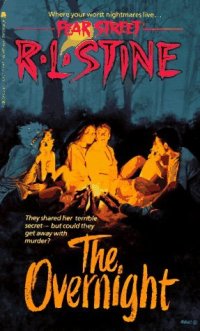
Next up is “The Overnight”! “Fear Steet” goes camping and I can’ wait!

Serena’s Review: “RoseBlood”

While I make an effort to complete most books I read, every once in a while I come upon one  that I just can’t get through. When I find myself repeatedly putting down a book to the point that attempting to finish it is taking up weeks of my time, I sometimes come to the conclusion that a book is a book, not a life and death contract to read until completion. There are too many books in the world that I will never get to to spends days on end trying to finish a book that I already know will not be my cup of tea. Sadly, one such of these books came across my desk recently.

28818314Books: “RoseBlood” by A.G. Howard

Publishing Info: Amulet Books, January 2017

Where Did I Get these Books: the library!

Book Description: In this modern day spin on Leroux’s gothic tale of unrequited love turned to madness, seventeen-year-old Rune Germain has a mysterious affliction linked to her operatic talent, and a horrifying mistake she’s trying to hide. Hoping creative direction will help her, Rune’s mother sends her to a French arts conservatory for her senior year, located in an opera house rumored to have ties to The Phantom of the Opera.

At RoseBlood, Rune secretly befriends the masked Thorn—an elusive violinist who not only guides her musical transformation through dreams that seem more real than reality itself, but somehow knows who she is behind her own masks. As the two discover an otherworldly connection and a soul-deep romance blossoms, Thorn’s dark agenda comes to light and he’s forced to make a deadly choice: lead Rune to her destruction, or face the wrath of the phantom who has haunted the opera house for a century, and is the only father he’s ever known.

There will be spoilers in this post!

Review: I included this book as one of my highlights in January’s post and even there I expressed nervousness going in. The expectation game plays a large part in books like this. I love everything “Phantom of the Opera,” so this being the case I have a critical eye for stories related to it. And while this was definitely part of my struggle with “RoseBlood,” it was combined with some other flaws to the point that I put it down about two thirds of the way through.

This book tries to do two things with “Phantom of the Opera:” present a sequel while also re-telling the classic tale in the modern day featuring our two teen protagonists. As a sequel, nothing about this book worked for me. Perhaps if had simply been a retelling I could have gotten on board, but as a sequel, the author wrote herself into a corner where she had to re-create and “modernize” the Phantom himself while also providing backstory into the original story that would make it fit with her new version. So the Phantom, Erik, becomes a…wait for it…psychic vampire whose method of feeding is siphoning off the emotions of others. And the way he does that is…wait for it…owning a rave where he shows the audience his face nightly and feeds off their fear. Yes. This is a real thing the book does. I can barely take it seriously enough to type it out.

Next, the author creates a paranormal “soulmates” device (but she calls them “twin flames” because apparently she can’t take the term “soulmate” seriously, but somehow “twin flames” is a more acceptable term?) where not only are our main characters “twin flames,” but so were Erik and Christine in the original story. Only she wasn’t “mature” enough to understand the deep love and soul connection she shared with the Phantom. So, now beyond the ridiculousness factor of psychic vampires who own raves, we’ve got a backstory that completely misses the message of deep tragedy in the original and throws Christine under the bus. The relationship between Christine and the Phantom was never a healthy one, and that was the whole point. Erik’s life was one of such deep tragedy that he was broken as a person, not knowing how to express real love for another or how to exist in society. At no point should Christine have ever stayed with him, and to paint her as an immature character who threw away true love does a huge disservice to the character and to the message of the original story.

So those were my concerns with this book as far as it goes as an adaptation of “Phantom of the Opera.” While I can’t say whether or not I would have continued reading had these been my only stumbling blocks, the fact that the novel as a whole reads as a “paint by numbers” YA fantasy was the final nail in the coffin of my ability to complete it.

In other reviews I’ve discussed some of the over-used tropes that can be found in YA fantasy that now feel so tired that they need to be shelved immediately. But this book manages to hit every single one of them, reading almost like a “Twilight” rip-off with only the aforementioned “Phantom” tie-ins differentiating it.

We have a main character with a ridiculous name who is gorgeous and has a special talent that she was born with but can’t control. She goes to a school that she hates (though it’s in Paris and full of rich, beautiful people), and immediately, through no effort of her own, becomes friends with everyone. The popular girls of school also immediately dislike her because they envy her beauty and talent. She meets a mysterious boy who wears a mask even though he, too, is incredibly good looking (this also felt like a very poor use of a “Phantom” tie-in, again missing the point of original that beauty is found beyond one’s face). She discovers they are soulmates, and they immediately fall in love (no stakes in the relationship, no growing to know, appreciate, and love each other, they’re just “destined”). Powers, magic, an attempt on her life. The end. There was just nothing there.

The unique aspects of this story were the connections to the original, and after they were used so poorly, there was nothing left to grab on to. The fact that the book was also over-written and overwrought with pages upon pages of flowery, descriptive language just really killed any interest I had in the story.

Now look, we here at The Library Ladies try to always include positives. And the positive for this is if you are a reader who truly enjoys the formula I described above, then this book will be great for you. And that’s fine! But, for me, nothing about this story worked. And while there are clearly readers who still enjoy this type of story, I also sincerely hope that we begin to move beyond these overly tired YA fantasy staples. They have been so over-used that they almost feel like a parody of themselves at this point. YA fantasy can do (and be) better.

Rating: DNF

Reader’s Advisory:

“RoseBlood” is included on these Goodreads lists: “Retellings of Classic Novels for Children and YA”and “Phantom of the Opera.”

Find “RoseBlood” at your library using Worldcat!


Serena’s Review: “Beastly Bones”

24001095Book: “Beastly Bones” by William Ritter

Publishing Info: Algonquin Young Readers, September 2015

Where Did I Get this Book: audiobook from the library!

Book Description: In 1892, New Fiddleham, New England, things are never quite what they seem, especially when Abigail Rook and her eccentric employer, R. F. Jackaby, are called upon to investigate the supernatural. First, members of a particularly vicious species of shape-shifters disguise themselves as a litter of kittens. A day later, their owner is found murdered, with a single mysterious puncture wound to her neck. Then, in nearby Gad’s Valley, dinosaur bones from a recent dig go missing, and an unidentifiable beast attacks animals and people, leaving their mangled bodies behind. Policeman Charlie Cane, exiled from New Fiddleham to the valley, calls on Abigail for help, and soon Abigail and Jackaby are on the hunt for a thief, a monster, and a murderer.

Review: While I didn’t fall in love with “Jackaby,” the first novel in this series, I was still intrigued enough by the things it had done right (an interesting protagonist, less known supernatural beings, and strong writing) to wish to continue on with the series. Granted, it took a while to get around to this, but I’m glad I finally did! This book brought the same strengths as the last and improved on some of my complaints and concerns as well.

Not long after the events of the first novel, Abigail is still feeling unsure about her role as an apprentice to the paranormal detective Jackaby. She has an established place in the household and has made good friends with the local ghost, Jenny, but she still feels like a failure in many regards, simply not having the necessary wealth of expertise to prove herself a useful assistant to Jackaby. So, when a case pops up in the nearby Gad’s Valley concerning a prehistoric dig, Abigail is excited to join up seeing this as an opportunity to put to use her knowledge of and passion for archeology and prove that she does have something to contribute to the team. Of course, it doesn’t hurt that Charlie, the handsome  policeman/shape-shifter also happens to now live in this area.

As I said, this book doubles down on the strengths it had shown in the first. Many new and fantastic creatures are introduced in this book, some that have a basis in known mythology, but also several others that seem completely new. The shape-shifter kittens, for example, seem to be a unique creation of Ritter’s and one that he fully makes use of. This, too, is something that I very much appreciate about the fantasy elements in this series. Ritter doesn’t simply play lip service to the genre. Even with new creatures like these shape-shifters, Ritter takes the time to develop and extensive history for the beings and to tie them into known history (here we have ties to Darwin and Queen Victoria!) in new and interesting ways. It is clear that while Jackaby has a wealth of knowledge in the paranormal, he is by no means the only person in the world who understands that we walk the earth alongside fantastic beasts.

Another thing I enjoyed from the first book was the supporting characters. We don’t spend as much time at Jackaby’s home in this one as we did in the first, so Jenny’s page time is similarly limited. However, it is clear that Ritter is setting her, and the mystery of her death, up as a focal point for future stories. But in this book we get a whole new set of fun characters. Including a trapper who will hunt anything and who also has a fascination with the supernatural, two dueling archeologists whose snippy interactions were some of the most amusing in the entire book, and the unstoppable Nellie, an independent lady reporter who marches onto the page with her own plan and with no apologies.

The book also improved on the last in a few ways. First, one of my struggles from the first book was with Jackaby himself who I felt came across as a bit “aggressively wacky” and thus not believable as an actual person. Ritter combats this perception in a few ways. For one, Jackaby simply has a bit less page time than he did in the first and I think this was a wise choice. As a character, Jackaby is best served in brief, yet potent, doses. This method still highlights his strengths and interesting quirks, while not distracting from the story itself. Secondly, I enjoyed the more humorous take on Jackaby’s and Abilgail’s relationship,  most notably his horror at being drawn into discussions about her romantic entanglements with Charlie.

While the first book did not shy away from the darker aspects of this paranormal world, I felt like the stakes were raised in this book. In the first book, Jenny was introduced as a rather one-dimensional ghost friend for Abigail. Here we begin to see beneath the surface to what must be the true horror of being stuck in the world after death without the ability to move on. Also, the central mystery is not resolved without serious consequences. I was surprised by some of the risks that Ritter took towards the end of the novel.

Lastly, the story sets the stage for an over-arching plot which I think is an excellent decision. It would be all too easy for these books to start to feel a bit procedural with a new paranormal case that is begun and wrapped up in each book. The potential for a “big bad” whose presence can be traced throughout the series is intriguing.

As a sequel, “Beastly Bones” did everything I asked of it: reinforced the series’ strengths and improved upon its weaknesses. I’m more invested in checking out the third than I was this second book, which is always a step in the right direction!

Rating 8: It’s always fun to see a series grow in strength from a shaky start, and this book bumps the series up as an all-around fantasy recommendation for me.

Reader’s Advisory:

“Beastly Bones” is included on these Goodreads lists: “YA & Middle Grade Historical Mysteries” and “YA Historical Fiction of 2015.”

Find “Beastly Bones” at your library using Worldcat!

Previously Reviewed: “Jackaby”

Kate’s Review & Giveaway: “Allegedly”

30037870Book: “Allegedly” by Tiffany D. Jackson

Publishing Info: Katherine Tegan Books, January 2017

Where Did I Get This Book: I own it!

Book Description: Mary B. Addison killed a baby.

Allegedly. She didn’t say much in that first interview with detectives, and the media filled in the only blanks that mattered: A white baby had died while under the care of a church-going black woman and her nine-year-old daughter. The public convicted Mary and the jury made it official. But did she do it? She wouldn’t say.

Mary survived six years in baby jail before being dumped in a group home. The house isn’t really “home”—no place where you fear for your life can be considered a home. Home is Ted, who she meets on assignment at a nursing home.

There wasn’t a point to setting the record straight before, but now she’s got Ted—and their unborn child—to think about. When the state threatens to take her baby, Mary must find the voice to fight her past. And her fate lies in the hands of the one person she distrusts the most: her Momma. No one knows the real Momma. But who really knows the real Mary?

In this gritty and haunting debut, Tiffany D. Jackson explores the grey areas in our understanding of justice, family, and truth, and acknowledges the light and darkness alive in all of us.

Review: Back in January I was in Miami, Florida for a wedding celebration. This also happened to be the same weekend that some crazy and awful shit was going down in this country constitution wise (though this could really mean anything at this point, so I’m specifically referring to the travel ban). During one of the days my husband and I were cooling our heels after family time, I was getting ramped up in an anxiety spiral, so he suggested that we try and find a book store so that I could calm my nerves a bit. We found one in walking distance from our hotel, and I went on a spree. One of the books I picked up was “Allegedly”, as I’d heard some buzz on it and was solidly intrigued by the concept. As bleak and dark as it may be. So I took it on the plane with me and tore threw a lot of it in one sitting.

I liked how unflinchingly honest and real this book was about a great deal of things. Jackson pulls no punches when describing how our criminal justice system treats those who are inside of it, and how it is especially biased against POC offenders. Mary was accused of and convicted of killing a baby, which is, yes, absolutely horrible. But it is made pretty clear from the get go that the attention and rage that is directed at her is based on a deep seated racism in our society. Mary is black, and baby Alyssa was white. Reading about crowds mobbing a NINE YEAR OLD outside a courthouse, demanding the death penalty was gut wrenching, and I was glad that it was put forth multiple times that had the races been reversed between perpetrator and victim, the media wouldn’t have caused such a storm around it. And there on Mary, a child herself, was from then on treated like an adult, an thrown into a legal system that especially punishes people who look like her. I had no doubt that Jackson is taking influence from real life instances, from a nine year old girl being held in solitary to the absolutely abysmal conditions at the group home Mary ends up at.

Not only did I feel that the portrayal of the criminal justice system was accurate, I really liked how Jackson tried to be accurate and fair to portrayals of mental illness in this book. Mary is pretty clearly suffering from some form of PTSD, as her time in prison/solitary confinement as a child has done irreparable damage to her psyche. Instead of going the route of stereotypical symptoms like flashbacks or uncontrollable rage, Mary is skittish, quick to anxiety attacks, and has a heightened sense of flight instead of fight. It’s a side of PTSD that not many people may know about, and I really appreciated that Jackson took such care in her portrayal of it. So, too, is Mary’s Momma portrayed in a pretty realistic way, as a narcissist who may be suffering from bi-polar disorder. We only get to see Momma through Mary’s eyes, but the hints and clues are there that there is definitely something off about her.

Mary herself is a wonderfully created and portrayed narrator (side note: I gotta shout out to the sly aside that one of Mary’s nicknames was Mary Bell… who was also a notorious child aged murderer in England). This book is in the first person, and since Mary has so clearly been stunted from her time in prison there are lots of bits of information that we don’t quite get. The mystery slowly starts to unfold, but you always kind of know that there are things that you are never really going to know about Mary, or her Momma, or the things that happened between them before, after, and even on the night that Alyssa died. You only get to see the various clues to this and the things going on with Ted and at the group home through this lens of a very unreliable narrator. While a lot of the time I think that sometimes this makes some things kind of obvious when it comes to twists, that by hiding certain things you make it obvious that these things are there, Jackson actually surprised me when it really counted. True, I was able to figure out a couple of things, but I feel like it was all one big magic trick that distracted me from the actual solution, so when the actual answers came I was totally knocked off my seat. To the point where I actually said “WAIT….. WHAT?!”

giphy1
BraVO. (source)

“Allegedly” is a fabulous book that I cannot recommend enough, both for the societal themes and for the well crafted mystery. Fans of YA should definitely read it, but I think that this is a GREAT example of how YA shouldn’t be dismissed. Go and get your hands on it ASAP.

Rating 9: A tense and VERY upsetting book about the modern justice system, mental illness, and attempted redemption. Though it’s definitely a hard read, “Allegedly” is an important one.

Reader’s Advisory:

“Allegedly” is included on these Goodreads lists: “Deliciously Dark”, and “YA Debuts 2017”.

Find “Allegedly” at your library using WorldCat!

But the fun doesn’t stop there! You could have your own copy of this book, as I am hosting a give-away for a hardcover copy! You know you want it. The giveaway will run until March 2nd, 2017. Please see the Terms and Conditions for more details.

Click Here To Enter The Give-away!

A Revisit to Fear Street: “The Prom Queen” (Fear Street #15)

656717Book: “The Prom Queen” (Fear Street #15) by R.L. Stine

Publishing Info: Simon Pulse, May 1992

Where Did I Get This Book: An Ebook from the Library!

Book Description:  Dance of death…

A spring night…soft moonlight…five beautiful Prom Queen candidates…dancing couples at the Shadyside High prom—these should be the ingredients for romance.

But stir in one brutal murder—then another, and another—and the recipe quickly turns to horror.

Lizzie McVay realizes that someone is murdering the five Prom Queen candidates one by one—and that she may be next on the list! Can she stop the murderer before the dance is over—for good?

Had I Read This Before: No

The Plot: Like I said last time during my review of “The New Girl”, I’m jumping forward just because “The Prom Queen” was available right away and I was itching to read something else from the “Fear Street” catalog. So keep in mind that this one is a bit more seasoned, as Stine kind of got into his groove more on how he was going to tackle this series.

Lizzy, Rachel, and Dawn are in the gym locker room right before the school assembly to announce the Prom Queen nominees. They are talking about a girl named Stacy whose body was found in Fear Street Woods. Lizzy, our first person protagonist, gives us insight into her friends personalities as they all gossip about the dead girl (Rachel is poor and lives on Fear Street, so she’s pretty shaken; Dawn couldn’t care less about the dead girl and wishes more attention was on her). They also talk about how Stacy’s death is similar to a girl named Tina who was killed out of town not too long ago, but no matter because it’s Prom Queen announcement time! At the assembly Lizzy, Rachel, and Dawn are all called as nominees, and rounding out the group are Simone, a vain drama nerd, and Elana, a smart and incredibly wealthy girl. They all go to pizza to celebrate, but Simone leaves pretty quickly when she sees her boyfriend Justin flirting with another girl. After she’s gone to give the lout what for, Dawn confesses that she’s going on a date with Justin behind Simone’s back. Oh that Dawn! Of course, then Rachel, who also has a boyfriend (Gideon) confesses that she too went out with Justin. So much for the bonds of sisterhood.

giphy8
(source)

That night at play rehearsal, Simone doesn’t show up. Lizzy goes looking, but cannot find her. So Lizzy goes to Simone’s house, and instead of finding Simone, she finds a trashed bedroom and a puddle of blood!!! And sees a man in a baseball jacket running into the night!

The cops question Lizzy and her friends the next day, but everyone had an alibi, so they are all free to go. Lizzy then runs afoul the neighborhood Creepazoid, a boy named Lucas who legitimately sounds like every stereotypical school shooter post-Columbine, in dress and manner. He used to date Simone (she used him to get to Justin, as they are both on the baseball team), but now he seems to have his wormy little sights on Lizzy. Lizzy declines and leaves him be.

Then time passes and no one is really thinking about Simone anymore. Besides Lizzy. But not enough to stop from going Prom shopping with Dawn and Rachel, especially since Lucas asked her to the Prom. She said no, because she DOES have a boyfriend, thank you very much, but even if she didn’t, Lucas is a creep. Kevin, her boyfriend, is an army brat and has moved away to Alabama. Lizzy holds out hope that he’ll be able to come back for Prom. So while they are at the mall, they see that Justin is on a date with yet another girl. He’s sure moving on from Simone fast! While at the movie Dawn is attacked by a strange man, getting punched and left on the floor. Dawn, ever the trooper, brushes it off, though now is a bit more concerned now that SHE could be in danger.

That night Lizzy gets a frantic call from Rachel, and Lizzy, thinking she’s in danger, speeds over to Rachel’s house on Fear Street. Turns out Rachel is upset because Gideon dumped her for Elana. Ouch. Lizzy comforts her as best she can, then returns home. There is good news at home, as a man thought to be the murderer has been caught!… Except a few moments later, a cop shows up on the doorstep to inform them that Rachel has been killed.

So a week later everyone is on edge, sort of, and Dawn is convinced that someone is trying to kill all the Prom Queen candidates. Lizzy wonders if maybe it’s Gideon who is murdering the Prom Queens, hoping to seduce Elana and then assure that she gets the $3000 scholarship for winning. That theory is shot when Elana not only says she isn’t going with Gideon, but also when Elana ends up dead from a fall. And in her hand is a maroon scrap of cloth, much like the ones the baseball team wears. Lucas? NOPE, Lizzy’s new theory is that it’s been JUSTIN THIS WHOLE TIME!

Well, Justin shows up at Lizzy’s house pretty late that night, but she manages to get him out the door when her father comes downstairs and finds them in the kitchen. She isn’t even safe as school, however, as Justin corners her again… But holy red herring, Batman, turns out the whole time he was just wanting to ask her to the Prom! Not without some shots and a clean bill of health, buddy. Lizzy says thanks but nah, and goes about her business….. until Dawn is attacked and stabbed by a guy in a baseball jacket.

EXCEPT IT’S NOT A GUY. IT’S SIMONE!!!!!! She’s killing her friends because Justin kept asking them out on dates!!!!!!

giphy9
(source)

After confessing, Simone tries to kill Lizzy, but LIzzy manages to pull a rope and drop a sandbag on her ass. Dawn, not dead, helps subdue her, and with the help of a conveniently placed janitor they get an ambulance to come take a look at Dawn and MAYBE help Simone, who’s been beaten up and possibly fatally stabbed? It’s unclear.

The book ends with Lizzy and Kevin at the Prom, Dawn surrounded by adoring boys, and a memorial scholarship set up for Elana and Rachel, may they rest in peace. Yay. Happy times, Stine.

Body Count: Stacy, Tina, Rachel, and Elana for sure. We don’t really know if Simone survived or not. So 4, maybe 5. That’s about average for “Fear Street”.

Romance Rating: 2. Kevin is MIA until the last chapter, and everyone else’s significant others are cheating on each other within the friend circle. Plus Lucas is sexually harassing Lizzy in every single interaction.

Bonkers Rating: 6. Honestly, it could have been crazier. Sure, Simone being the culprit was a little nuts, but kind of obvious.

Fear Street Relevance: Very little of the actual action takes place on Fear Street in this book. Rachel lives there, a body was discovered off page in the woods, and Prom happens at a refurbished mansion house in said woods. But it’s rather peripheral. So 5.

Silliest End of Chapter Cliffhanger:

“That bump. That horrifying bump. I knew that I had just run over someone.”

…. And then it turns out to be a raccoon. Puh-lease.

That’s So Dated! Moments: OH MAN, there were a few in this one because it’s one of the original printings. When Dawn is being showboat-y while trying on Prom dresses, Lizzy says “Okay, Madonna.” The dress she’s wearing is described as black spaghetti straps with a plunging neckline, pretty standard early 90s fare. But the best was when they were in line for the movie they were going to see, and the girl in front of them says

“‘I mean just think,’ Suki gushed. ‘A new Christian Slater movie. Wow.'”

giphy7
Oh yes, WOW, Suki. (source)

Best Quote: It’s a tie guys. First we have this:

“‘I was excited when we were first nominated. Now it looks like we’ve been nominated to- to DIE!'”

That’s courtesy of Dawn. The other one, however, is a bit more subtle.

“They buried her in the new section of the Fear Street Cemetery.”

Do you want to know why they have to have a new section at Fear Street Cemetery? BECAUSE EVERYONE IN THIS TOWN IS GETTING MURDERED.

“The Prom Queen” is a good example of what the “Fear Street” series kind of turned into as it kept going: more about murder, sex, and paranoia. And not necessarily any direct ties to the street known as Fear itself. Not as off the rails as “The New Girl” in it’s revelations, but still pretty out there.

Next up is “The Surprise Party”, Fear Street #2. I’m pretty certain this was one that I read as a kid, so I’m sure that the perspective will no doubt be RIVETING.

Book Club Review: “The Neverending Story”

27712We are part of a group of librarian friends who have had an ongoing bookclub running for the several years. Each “season” (we’re nerds) we pick a theme and each of us chooses a book within that theme for us all to read. Our current theme is “Book Challenge!” theme. This book comes from a “Pick a book that has been translated from a different language” challenge.

For this blog, we will post a joint review of each book we read for bookclub. We’ll also post the next book coming up in bookclub. So feel free to read along with us or use our book selections and questions in your own bookclub! 

Book: “The Neverending Story” by Michael Ende

Publishing Info: Thienemann Verlag, 1979

Where Did We Get This Book: Kate owns it,

Book Description: This epic work of the imagination has captured the hearts of millions of readers worldwide since it was first published more than a decade ago. Its special story within a story is an irresistible invitation for readers to become part of the book itself. And now this modern classic and bibliophile’s dream is available in hardcover again.

The story begins with a lonely boy named Bastian and the strange book that draws him into the beautiful but doomed world of Fantastica. Only a human can save this enchanted place–by giving its ruler, the Childlike Empress, a new name. But the journey to her tower leads through lands of dragons, giants, monsters, and magic–and once Bastian begins his quest, he may never return. As he is drawn deeper into Fantastica, he must find the courage to face unspeakable foes and the mysteries of his own heart.

Readers, too, can travel to the wondrous, unforgettable world of Fantastica if they will just turn the page….

Kate’s Thoughts

We are finally back to our book club, which means that we are finally back to our book club posts! This time around, the theme was pretty fun; we each came up with two themes that we put into a hat, and then whichever suggestions you drew, you had to pick what theme you wanted to do. One of the suggestions I got was “A book translated from another language.” It was in that moment that I knew exactly what I wanted to do: “The Neverending Story.” I had grown up watching the movie (and its first sequel, “Neverending Story 2”), and I’m pretty sure that I wore out the video cassette of it that we had. What can I say, eight year old Kate had a pretty serious thing for the movie’s version of Atreyu.

giphy15
To  girl me this was SO BADASS!!! (source)

But it took me awhile to actually read the book. The first time was when I was in middle school. I’ve re-read it a few times since then, but it had been awhile. And I knew that going into it I would probably expose myself to criticism and having to rethink one of my favorite books from childhood. But that was actually good for me, in the end.

There are a number of themes that can be found in this book. Sure, there is the usual ‘hero’s cycle’ theme that both Atreyu the warrior and Bastian Balthazar Bux go through. But along with that we get the themes of childhood, broken innocence, grief, and imagination. The book is split into two distinct parts: the first is Bastian acting as a (not actually) passive part of a fantasy story at hand, where the world of Fantastica is falling apart because their leader, the Childlike Empress, is dying. But it’s also because The Nothing is tearing apart the very fabric of its world. But then the second half is about how Bastian, seen as the savior of Fantastica, is taken to a world that is not his own, and is corrupted by the power he is given to save it. While they could easily read as two distinct books, as far as Bastian’s journey goes it comes full circle. I had forgotten that Bastian was such a little punk for the second half of the book, as most of my fond memories come from Atreyu’s journey. But I think that it was a very interesting choice for Ende to make the hero we’re meant to relate to and root for from the get go the one that we’re rooting against by the end. But along with that theme is the ever permeating spectre of grief that haunts the story. Fantastica is falling apart and losing itself, many of its inhabitants dying (including Atreyu’s faithful horse Artax, and don’t even think of telling me that this isn’t one of the saddest moments in movie history, jerks!). But along with that is the fact that Bastian’s mother has recently passed away, leaving Bastian feeling empty and his father lost in his own sadness, and unable to care for his child. Of course Bastian wants to run away from his life; a land of luck dragons and magic and Childlike Empresses has got to be better than the reality he’s living. Even if that land is hard and imperfect as we soon realize it is. Bastian learns that the strongest thing that a person can have is not power, but love, and that his love is needed in his own world, no matter how hard that world is. And Ende created a wonderful cast of characters to help the reader explore these themes, from the brave and loyal Atreyu to the kind and optimistic Falkor the Luck Dragon. God I love Falkor.

There are, of course, some things that left me feeling a bit cringy as I read it. As much as I really, really do love Atreyu, and think that he’s a great character and a wonderful hero for the first half of the book, it complete smacks of European cluelessness that he is clearly based on American Indian Indigenous cultures and merely in a superficial way. While he is himself a complex and well rounded character, the only things we really know about his people and culture is that 1) they hunt buffalo, and 2) they have mystical rights of passage that involve hunting these buffalo, as well as spiritual dreams/connections to said buffalo. It reeked of the ‘Indian as mystic’ trope that is far too prevalent in popular culture and literature. It’s also pretty disconcerting that there are very few women in this book, and the ones that are there are not terribly fleshed out. The Childlike Empress is wise and mysterious, but we know little about her outside of her purity and goodness. The various females Atreyu meets on his journey are just there to give him some info or advice. And then there’s Xayide. She is literally an evil sorceress who is just there to fuck things up for Bastian and turn him against his friends. Not exactly empowering.

All that said, however, I still really enjoyed going back and reading “The Neverending Story.” I think that as an old school fantasy novel it still holds up pretty well, the characters still very beloved and the story still entertaining and wondrous.

Serena’s Thoughts

I was excited when Kate picked this book as her bookclub choice. I feel like my experience of this story is the same as Kate’s which is the same as many girls our age: it all began with a strong crush on Atreyu from the movie. I mean, c’mon, let’s admit that we all loved him!

atreyu
(source)

However, I never made it past the movie version of the story (though I, too, wore out my VHS copy of the film). I did know that the movie only focused on the first half of the book and while I did watch the sequel film once (I remember that they re-cast Atreyu and I’m pretty sure kid!Serena saw that as an unforgivable crime and never looked back), I have no memory of the story. So I was especially curious to get the second half of the book.

But let’s start with the first half! Right off that bat I was horrified…by the fact that the magical land is called “Fantastica” and I’ve known it as “Fantasia” all along! What is this change?? Cuz now I’m all mixed up about it since I’ve known it as “Fantasia” my whole life only now to discover that this was a change from the original! This was a major internal conflict for me throughout the book. But on a more serious note, I very much enjoyed this first half and how true to the book the movie really did stay in this part. There were changes here and there, some that I preferred in the movie (I think the tension was greater in the movie with the First Gate sphynxs than the way they were described to work in the book) and some that I preferred in the book (man, somehow Artax’s death CAN be even more traumatic!)

I very much the extra insight (though its still very minimal) with regards to the relationship between the Childlike Empress and the land of Fantasia itself. While still confusing and never fully explained, I felt like the connection between her, The Nothing, and the land of Fantasia (I just now realized that I’ve been typing Fantasia instead of Fantastica this whole time! See?! It’s hard!) is a better lain out in the book. I also really liked the character of Atreyu. He was heroic in the movie, but here we see even more how impossible his task was when it was given to him and how brave he would have to be to move forward with so little hope of success.

Bastian on the other hand…Look, I never really liked him in the movie and I didn’t really like him here. Though, I will say that I liked him better in the first half of the book than I did in the movie that covered this portion. Here he’s a bit bumbling, but he picks up on what is going on in a more willing way. Maybe it was just the kid actor in the movie, but I never really liked Bastian there. Kid-me always got very annoyed by the way he reacted to the realization that he was in the book. He got angry instead of inspired, and as a kid who always wanted to live in a book, too, I was never impressed by him.

But then we get to the second half and now I feel completely justified in my initial dislike of him as a kid. Maybe that actor was just channeling this portion of the character all along and was simply done a diservice by only portraying the first half’s version who is supposed to be the more sympathetic of the two. I had a harder time with this portion and I can see why the movie stuck to the first half of the book. It’s just always going to be a bit of a hard sell when you main character turns into a real brat. As Kate mentioned, there are some lovely themes of grief and love throughout this all, but I’m still a bit biased towards the first half. Though this is honestly probably due to the movie’s lasting influence on me. Oh well!

Kate already covered a few of the problematic issues of the book, so I won’t go into them myself. They were distracting, but I wouldn’t say anything was overly offensive to a point that it affected my reading of the story. Just a bit unfortunate, ultimately.

All told, I very much enjoyed this book! While I enjoyed the first half more than the second, it was an interesting read altogether. I imagine especially for the time the “metaness” of the story itself was particularly interesting, and, even now when this approach has been explored in other books (“The Princess Bride” comes to mind a bit), it still has some fresh takes on a story-within-a-story.

Kate’s Rating 9: Though it is certainly not perfect and has some flaws that I had a hard time overlooking, “The Neverending Story” is still a fun and wondrous fantasy book with lots of deep and meaningful themes and lovely characters.

Serena’s Rating 8: I second what Kate said! One point lower for me as I did find myself struggling a bit at times with my increasing dislike of Bastian, but still a thoroughly enjoyable read!

Book Club Questions:

1) What do you think about the world of Fantastica and how it’s influenced by our world? Is the thought of readers having influence on stories a theme that you enjoyed?

2)Ende clearly took some influence from American Indian cultures/stereotypes when he created the character of Atreyu. How do you feel about him as a character throughout this story? What do you think of his portrayal?

3)Bastian starts out the story as a passive character who is merely reading a book, but finds out that he has the ability to influence the world of Fantastica. What did you think of his journey from the beginning of the story to the end?

4)In this book there is the constant spectre of devastation, grief, and loss, be it the destruction of Fantastica by the Nothing to the loss of Bastian’s mother. What do you think Ende was trying to say about these feelings of despair and grief within human nature?

5)There are many instances within this book where Ende would hint at other stories and adventures of certain characters, but would say ‘but that’s another story and shall be told another time’. Which of these stories would you most want to learn about?

Reader’s Advisory:

“The Neverending Story” is included on these Goodreads lists: “Doors, Portals, Gates”, and “Quests”.

Find “The Neverending Story” at your library using WorldCat!

The next book club book is “Escape from Mr. Lemoncello’s Library”!

Serena’s Review: “Jackaby”

20312462Book: “Jackaby” by William Ritter

Publishing Info: Algonquin Young Readers, September 2014

Where Did I Get this Book: the library!

Book Description: Newly arrived in New Fiddleham, New England, 1892, and in need of a job, Abigail Rook meets R. F. Jackaby, an investigator of the unexplained with a keen eye for the extraordinary–including the ability to see supernatural beings. Abigail has a gift for noticing ordinary but important details, which makes her perfect for the position of Jackaby’s assistant. On her first day, Abigail finds herself in the midst of a thrilling case: A serial killer is on the loose. The police are convinced it’s an ordinary villain, but Jackaby is certain it’s a nonhuman creature, whose existence the police–with the exception of a handsome young detective named Charlie Cane–deny.

Review: This was actually a book club book that I read a few years ago, but I wanted to review it here on the blog since I’m currently reading the sequel and I’m a librarian, so I’m naturally a completionist! Gotta have em all!

When this book showed up on our bookclub list, I was very excited. It was marketed as “Doctor Who” meets Sherlock Holmes, and while I’m not a complete nut for “Doctor Who” all told, I do love its wacky take on fantasy and science fiction. So combining that with “Sherlock Holmes” (my love of which has been well documented), seemed like it should be something that would be right up my alley! Ultimately, while I did like it, it was a bit more on the “meh” end of things than I would have liked.

Abigail Rook, fresh off the boat with dashed dreams of being an archaeologist like her father in hand, falls into a strange apprenticeship with an even stranger man: Jackaby, a paranormal investigator. Story aside (I’ll get to that a bit later on), this book lives and dies on these two main characters and right here is where we get into the general feeling of indifference.

Abigail herself is a likable character. Her personality, drive, and ability to make her way, even as ineptly as she does here, did feel a bit out of character for the time period. Yes, we’re on the cusp of the turn of the century, but there would still be some harsh realities facing her as a young woman alone in a new country. There’s nothing egregious going on as far as anachronisms or anything, but Abigail did feel a bit out of place for the time. That aside, I did enjoy her as a protagonist. She serves as our eyes into this new world, and her confusion is our confusion. As the story progresses, it becomes clear what role she will play as the Watson to Jackaby’s Holmes. Jackaby is nothing if not dense when it comes to social clues, and here is where Abigail fits in this puzzle. It’s not a super creative take, but it works for the story and she plays her part well.

I especially enjoyed the way Ritter approaches the small amount of romance in this story. Even that sentence is misleading as any romance that is seen here is strictly in the foreshadowing category. But what is most relieving is the fact that it is clear that this romantic angle will decidedly NOT focus on Abigail/Jackaby. I had definite concerns that this was going to be the romantic couple of the series, or *shudders* one corner of a love triangle. But, thankfully, we are introduced to a new character outside of the primary duo who seems to be set up to play this role going forward.

Jackaby himself was…ok? Honestly, I think some of my problems with the book had to do with him as a character. He was a bit too “preciously wacky,” if that makes sense? He’s obviously a creation based on  both Holmes and the Doctor, but the portrayal definitely falls more closely to the latter. It’s simply not unique enough. Jackaby could practically BE the Doctor, and it starts to feel derivative rather quickly.

To end on a good note, the world-building and the paranormal elements that were included were interesting and more unique. The villain character and several of the other beings were not the ones we’re used to seeing in this type of story, and I enjoyed diving into some of the history of these creatures. The supporting cast is also interesting, including the previously mentioned love interest who turns out to be more than he seems, as well as Jackaby’s current roommates, a ghost woman with unfinished business, and Jackaby’s previous apprentice who now lives an unfortunate, if still scholarly, life as a duck.

There were definitely strengths of the book, but it’s always going to be a struggle if the title character doesn’t live up to expectations. That said, if you enjoy “Doctor Who” and Sherlock Holmes this still might be a fun book to check out. Stay tuned for my upcoming review of the sequel “Beastly Bones.”

Rating 6: If I could, I’d give it a solid 6.5. Better than average, but rather underwhelming.

Reader’s Advisory:

“Jackaby” is included on these Goodreads lists: “YA & Middle Grade Sherlock Holmes” and “Victorian Spiritualism Fiction.”

Find “Jackaby” at your library using Worldcat!


Serena’s Review: “The FitzOsbornes in Exile”

7389741Book: “The FitzOsbornes in Exile” by Michelle Cooper

Publishing Info: Random House Australia, April 2010

Where Did I Get this Book: audiobook from the library!

Book Description: Forced to leave their island kingdom, Sophie FitzOsborne and her eccentric family take shelter in England. Sophie’s dreams of making her debut in shimmering ballgowns are finally coming true, but how can she enjoy her new life when they have all lost so much?

Aunt Charlotte is ruthless in her quest to see Sophie and Veronica married off by the end of the Season, Toby is as charming and lazy as ever, Henry is driving her governess to the brink of madness, and the battle of wills between Simon and Veronica continues. Can Sophie keep her family together, when everything seems to be falling apart?

An enticing glimpse into high society, the cut and thrust of politics as nations scramble to avert world war, and the hidden depths of a family in exile, struggling to find their place in the world.

Review: Kate and I read the first book in this young adult trilogy, “A Brief History of Montemaray,” for bookclub and as I was more enamored by it than she was, I decided to continue with the trilogy. Especially since the ending of the last book left a large, lingering question mark over the future of the FitzOsborne family and their small, island kingdom.

Driven away from their remote home, this book refocuses the story on more typical, historical fare: debutantes, dinner parties, and their poor Aunt Charlotte’s ever-long struggle to marry off her young charges. But, sprinkled within these more frivolous aspects, was a running commentary on the dramatic, and often tragic, historical happenings of the time.

While the first book took place over a few short months, was limited by its location, and was told from the perspective of a much younger character, this story expands itself in every way. The book takes place over the course of 2-3 years, leaving us with an 18-year-old Sophie by the end of it. Throughout the time, we see her mature as a narrator, and, even more interestingly, watch the slow shifts that went on throughout the world during this tumultuous time period.

Without going into a political rant, I was particularly fascinated by the slow, steady evolution of these events. As a reader, we know how these things turn out and have the perspective of time to influence our opinions. Through this book, we see how small concessions and small moments of willfully turning a blind eye to the plight of those we (as a country or as a smaller group) deem disconnected from us can lead to very negative events. There was also a particularly fascinating bit where Sophie and Simon discuss the appeal of these types of populists leaders, how their message can be so easily tuned to  the wishes and prejudices of each specific audience group, and how broad promises and the creations of “others” to blame can have massive appeal when people are desperate.

Beyond the political and historical aspects of the story, I enjoyed watching these characters change and grow throughout the story. The first book gives us such a brief glimpse into their lives, that, while I loved many of them, it was also easy for each to fall into stereotypes (even if I loved some of those stereotypes like bookworm!Veronica). But here, we see how Toby’s struggles with school more broadly reflect his confusion with his place in his family and the world. How Veronica’s political and historical interests stand up against the onslaught of British high society. How Sophie learns to see the strengths in her own, more quiet, personality.

I also loved the introduction of a few new characters. Aunt Charlotte was brilliant. Similar to the Dowager Countess from Downton Abbey, she is a character that is written in a way that while she spouts some rather unfeeling, aristocratic nonsense, she does it in such a comical way that the reader ends up loving her for it.

dowager-gif-1
(source)

There is also the introduction of Julia’s brother, Rupert, who seems to be set up as a potential love interest for Sophie. And, as he spends large portions of the book carrying around an injured doormouse in his pocket and feeding the squirrels, he seems quite suitably sweet for our lovely main character.

I very much enjoyed “The FitzOsbornes in Exile.” In fact, I would say that it was even better than the first, benefiting from a more extended timeline, a closer connection to historical happenings, and more mature characters.

Rating 9: An excellent, young adult historical fiction piece. Definitely recommended for fans of the WWII era who are interested in the quieter side and effects of the build up to the war.

Reader’s Advisory:

“The FitzOsbornes in Exile” can be found on the following Goodreads lists: “World War II England” and “YA Debutantes.”

Find “The FitzOsbornes in Exile” at your library using WorldCat!

Previously Reviewed: “A Brief History of Montmaray”