Kate’s Review: “The Family Plot”

Book: “The Family Plot” by Cherie Priest

Publishing Info: Tor Books, September 2016

Where Did I Get This Book: I own the audiobook.

Book Description: Music City Salvage is a family operation, owned and operated by Chuck Dutton: master stripper of doomed historic properties, and expert seller of all things old and crusty. But business is lean and times are tight, so he’s thrilled when the aged and esteemed Augusta Withrow appears in his office, bearing an offer he really ought to refuse. She has a massive family estate to unload – lock, stock, and barrel. For a check and a handshake, it’s all his. It’s a big check. It’s a firm handshake. And it’s enough of a gold mine that he assigns his daughter Dahlia to personally oversee the project.

Dahlia preps a couple of trucks, takes a small crew, and they caravan down to Chattanooga, Tennessee, where the ancient Withrow house is waiting – and so is a barn, a carriage house, and a small, overgrown cemetery that Augusta Withrow left out of the paperwork.

Augusta Withrow left out a lot of things.

The property is in unusually great shape for a condemned building. It’s empty, but it isn’t abandoned. Something in the Withrow mansion is angry and lost. This is its last chance to raise hell before the house is gone forever, and there’s still plenty of room in the strange little family plot.

Review: I’m always on the hunt for a haunted house read, as Gothic horror almost always sends shivers up my spine. If the story involves a ghost or two, all the better! I was perusing a book list of such things, and I saw “The Family Plot” by Cherie Priest was one of the selections. I had never heard of this book, and decided that I would add it to my audiobook list to have going while walking around the neighborhood or running weekend errands. And almost immediately I knew that I was in for a fun ride. A Southern Gothic haunted house story that takes full aim at the secrets that the wealthy keep? Hell yes.

“The Family Plot” is a ghost story that hits a lot of the things I love about the sub-genre. The first is that the setting just felt so real and well explored. Withrow Mansion was incredibly well described and detailed, and as I listened to the book I felt like I could see the rooms, the remnants of the life it had within, every aspect of the grounds and the house that was built there. It was also a really cool concept to have the people being haunted NOT being a new owner, or a descendant, or someone who has come to the mansion to live there, but a salvage crew that is there to gut it and make a buck. As Dahlia and her crew interact in the house, and as things get more and more dire, the reason they stay is very believable: if this job doesn’t work out, they will almost certainly be out of business. It makes the stakes a bit higher, and feels like a more tangible reason to not turn tail and run (though to be fair, homeowners almost always have sunk everything into a new house and leaving may not be much of an option for them either). Dahlia also has a well explained backstory, and as we slowly find out the backstory to the house and the spirits that are within in, we can draw parallels between her and the aggrieved spirits that I thought made it feel even scarier as the story went on.

And yes, this is a well done ghost story to boot. The dread builds and the scares are done in varying ways, from subtle shifts in scenery to full on jump scares as written on the page. But Priest also manages to avoid a few overdone tropes. Instead of Dahlia and her crew being stubborn nonbelievers, for the most part they all accept the fact that there are, in fact, ghosts in the house they are working on. One of the most frustrating themes in stories like this is that the person who knows that something is seriously wrong is usually pooh-poohed by those around them, and frankly, it’s usually a woman being told she’s being hysterical by the man in her life. But in “The Family Plot”, Dahlia is never seen as crazy, and is never treated as such by her colleagues. That said, there is tension between her and her cousin Bobby, which just adds a whole other level of intensity to the story, especially as the situation worsens. On top of all of this, our narrator did a great job with all of the characters, and her reading of it set the mood just perfectly.

But then, the goodwill that I had toward this story soured a bit at the end. I’m going to try not to spoil anything, as ultimately I think that this is worth the read if you’re looking for a solid haunted house story. But we get a final twist right at the end, like the VERY end, that just felt a bit like a cheat. As someone who LOVES horror, like loves loves loves it, I’m a bit of an outlier perhaps in that I’m not a fan of a last moment about face in regards to the resolution of the plot. Like, say that your protagonist escapes the pit of the psycho killer, only to stumble upon one of the psycho killer’s henchmen they didn’t know was a henchman while they’re escaping, then they get thrown back into the pit and we get a smash cut to the credits. That kind of sudden turn around doesn’t work for me on screen or on page, and any whiff of such just turns me off. And unfortunately, we get one of those twists here, and I’m just never going to like that kind of thing, and it tainted my overall enjoyment.

Frustrating end moment aside, I genuinely had a good time listening to “The Family Plot”. Halloween season isn’t so far away, so add this one to your pile of creepy reads you may be saving for that time of year!

Rating 7: A genuinely spooky haunted house story that is a bit derailed in the last couple of paragraphs, “The Family Plot” was a bit frustrating at the end, but was overall a fun horror experience.

Reader’s Advisory:

“The Family Plot” is included on the Goodreads lists “Haunted Houses”, and “Eerie Fictions Written by Women”.

Find “The Family Plot” at your library using WorldCat, or a local independent bookstore using IndieBound!

A Revisit To Fear Street: “Fear Street Part One: 1994”

Given that I did a re-read of R.L. Stine’s original “Fear Street” series, as well as a few “Super Chillers” and a couple special Trilogies within the Universe, when I saw that Netflix was going to make some “Fear Street” movies I knew I was game. And because that re-read series was chronicled on this blog, I figured that I ought to give my thoughts on these new movies as well, as nostalgia bombs and a new way for people to connect with a classic series in YA horror literature! So let’s see what the Netflix “Fear Street” Trilogy does for the series when introducing it to a new generation!

Film: “Fear Street Part One: 1994”

I sat down to watch “Fear Street Part One: 1994” at the end of the July 4th long weekend. The kid was asleep, the husband was out for the night, I had some mac and cheese and the TV all to myself. And almost immediately it was clear that this was not going to be the “Fear Street” of my youth, given that right in the first few minutes we had some pretty heavy swears and a blow up sex doll. But after I got over the fact that this movie, based on a series that had mostly off page violence and very LIGHT implications of teenage sexuality, was going to be balls to the wall slasher gore, I bought in but fast!

A quick description: In the town of Shadyside in 1994, a massacre at the local mall has upended the town, once again making people talk about how it feels cursed. It seems that ever couple of decades or so, something terrible happens and a slasher killer of some sort commits some kind of terrible murder spree. When a group of teens from Shadyside and the neighboring (and rival) town Sunnyvale unexpectedly awaken an ancient evil that has been pulling the strings, they have to figure out how to stop it, before it takes them all out.

The first thing that struck me about “Fear Street Part One: 1994” is the oozing nostalgia that it presents right off the bat. Our first scene takes place at a B. Daltons book store (RIP, B. Daltons), in which someone is buying “The Wrong Number”, one of the earlier “Fear Street” books. The soundtrack throughout the movie transported me back to my grade school years, ranging from the obvious like “Creep” by Radiohead to the more salacious “Closer” by Nine Inch Nails (I may have nearly spit out my beverage at this moment). It’s a nod to the time that these books were being written and were popular, but it also means that our characters can be put in perilous situations like in the books where a cell phone can’t come in handy to help save the day. Oh, and the fashions! I loved seeing the fashions! These kinds of nostalgia moments were highlighted in each of my “Fear Street” recaps, so seeing the movie makers really lean in was a lot of fun.

I also really liked the characters, as while they are definitely a bit more foul mouthed and prone to more sex and gory endings (all of this is fine by me), they all feel like “Fear Street” teens. Our main character Deena (that’s gotta be another nod to “The Wrong Number”, right? Deena Martinson?) is a bit of a loner with a geeky younger sibling named Josh. She runs with a couple of rebels, Simon and Kate, who peddle drugs on the side, Simon to support his family and Kate to make enough money to get out of Shadyside as fast as she can. And Deena is also pining for her ex, Sam, but unlike in the books of the past, Sam is a girl. LOVE the sapphic romance in this movie, just as I loved how diverse the cast is in many other ways. In the original books it was a lot of heteronormative white kids, but this “Fear Street” has had some much needed updating and it is for the better to be sure. They all have great chemistry with each other, and unlike in the books when you probably don’t have much attachment because of how cardboard they are, I really loved all of them, which made a few of the outcomes more weighted, even if they were splattery fun at the same time.

And how about the “Fear Street” connections and feel? Honestly, it does a good job of both paying homage and lifting from the source material, as well as creating new mythos and backgrounds for Shadyside and the people who live there. In terms of nods to the classic tales, we have characters who are named after those from the books, as well as references to Sarah Fear, and the Goode family as well. And next movie mostly takes place at Camp Nightwing, the summer camp in the original series! There is also the origins of the curse that Shadyside has upon it, with a teenage girl being executed for Witchcraft, though it’s changed a bit as of now. But that said, there are hints that the third movie in this trilogy, with the year 1666 as the time period, will probably take a lot of origin from the “Fear Street Saga”. After all, the Goode Family is popping up here and there. But a lot of the new stuff works really well, and makes the Shadyside lore (albeit original to the movie) come to life and all converge into a really fun horror movie. I’m thinking that we are going to see more backstories for the various baddies that pop up in this movie, as well as why Shadyside and Sunnyvale have a deep seated rivalry, as the series goes on, and I am absolutely stoked to see how this all came to be.

All in all, “Fear Street Part One: 1994” is a really fun slasher movie with a lot of love for the source material. Given that the “Fear Street” series was one of my personal horror building blocks, it was wonderful seeing it get an R-rated slasher treatment!

In two weeks I will review the next film in the series, “Fear Street Part Two: 1978”.

Book Club Review: “The Dark Descent of Elizabeth Frankenstein”

We are part of a group of librarian friends who have had an ongoing bookclub running for the last several years. Each “season” (we’re nerds) we pick a theme and each of us chooses a book within that theme for us all to read. Our current theme is “Award Winners”, in which we each picked a book that has won an award of some kind.

For this blog, we will post a joint review of each book we read for book club. We’ll also post the next book coming up in book club. So feel free to read along with us or use our book selections and questions in your own book club!

Book: “The Dark Descent of Elizabeth Frankenstein” by Kiersten White

Publishing Info: Delacorte Press, September 2018

Where Did We Get This Book: The library!

Award: Bram Stoker Award for a Young Adult Novel

Book Description: Elizabeth Lavenza hasn’t had a proper meal in weeks. Her thin arms are covered with bruises from her “caregiver,” and she is on the verge of being thrown into the streets . . . until she is brought to the home of Victor Frankenstein, an unsmiling, solitary boy who has everything–except a friend.

Victor is her escape from misery. Elizabeth does everything she can to make herself indispensable–and it works. She is taken in by the Frankenstein family and rewarded with a warm bed, delicious food, and dresses of the finest silk. Soon she and Victor are inseparable.

But her new life comes at a price. As the years pass, Elizabeth’s survival depends on managing Victor’s dangerous temper and entertaining his every whim, no matter how depraved. Behind her blue eyes and sweet smile lies the calculating heart of a girl determined to stay alive no matter the cost . . . as the world she knows is consumed by darkness. 

Kate’s Thoughts

This isn’t the first time that I’ve read “The Dark Descent of Elizabeth Frankenstein” by Kiersten White, as I read and reviewed it when it first came out a couple years ago. But I knew that for an Award Winner book I wanted to pick something that was a Bram Stoker Winner, but also wasn’t super terrifying since I know a lot of my book club friends aren’t as into horror as I am. This book seemed to be a good meet in the middle kind of compromise, as it isn’t terribly scary, but also won the Young Adult award the year it came out. So reading it again was perfectly acceptable, as I enjoyed it so much the first time!

And I enjoyed it again this time too. I don’t think that my opinion has really changed too much since the last time I read it (here is the original review if you want context). I was once again struck by how White made comment on gender in English society and culture at the time, and how Elizabeth has sacrificed a lot, including a good deal of her morals, to keep herself safe and secure lest she fall through the cracks. I also liked seeing White compare and contrast three different women characters in this story, as Elizabeth, Justine the governess, and Mary the book seller/amateur scientist all, to me, are three different facets of female protagonist tropes that all have a little bit of exploration and deconstruction. And of course it’s always interesting to look at the character of Victor Frankenstein and to ponder upon who is truly ‘the monster’ within the original story, and let me tell you, White does a really good job of making the case for a VERY clear choice (even if it does still come off a bit two dimensional at times). I think that the only change I had from my initial read was, upon re-reading, I didn’t think that enough was done with The Monster in this retelling. I still like what White did with The Monster in terms of making it feel like a unique take, but I found myself wanting more this time around.

Overall, I still really like “The Dark Descent of Elizabeth Frankenstein”! Nice to give women a voice in a book by a pioneering woman in the horror and Sci-Fi genres!

Serena’s Thoughts

I was super excited when Kate selected this book for her choice for book club. Not only am I a fan of Kiersten White in general, but I really like the original “Frankenstein.” Really like, as in I’ve read it probably three or four times. Kind of a strange choice, I know, for someone who doesn’t count horror as one of her favorite genres! But I’m a sucker for exactly that sort of use of supernatural aspects to delve into the ugliness (and beauty) at the heart of humanity. I also just love the style of writing in that time period with the long, drawn out sentences and extensive vocabulary.

And man did White excel or what! I really liked what she did with this retelling. It was great reading this book as a fan of the original, to see all of the little nods and winks she gives to readers who are familiar with that story. Her use of the classic characters was also on point, reading as familiar enough to their original versions, but also clearly uniquely reimagined for her own take on the story. Elizabeth, of course, is the biggest chance as this is now her story (rather than her fairly unfortunate experience in the original story…).

Not only did White use Elizabeth to expound on the impossible choices faced by women in this time, unable to create their own futures without tying themselves to men, but she also used the character to further explore the same themes of the original “Frankenstein.” Elizabeth is by no means a “good” character. She’s not “bad” either, but her choices are definitely walking a pretty stark moral line. Anyone with even a passing knowledge of the story knows that it is meant to highlight the true villainous nature of Victor as the monster rather than his creation. So it was an interesting take to not simply focus on that tired ground (Victor is pretty obviously evil here) but to instead use Elizabeth as the character to exist in shades of grey.

Like Kate said, I do wish there had been a bit more of the Monster here. I liked what we had from him, but that was clearly not the focus of White’s story. I also had a bit of a struggle with the end of the story. A few things felt rather sudden, and, strangely for my own usual preference, I almost wish the very last chapter hadn’t existed and the initial ending at stuck. But that’s just me! Overall, I thought this was a clever, imaginative re-imaging of a beloved classic.

Kate’s Rating 9: Still a fun and feminist retelling of a horror classic!

Serena’s Rating 9: Definitely worthy of the award it received and an excellent read for fans of horror and supernatural books alike!

Book Club Questions

  1. How familiar are you with the original “Frankenstein” story? Do you think that this retelling complements that story? Why or why not?
  2. Elizabeth’s characterization has gone from passive side player to Victor’s protector and enabler. What did you think of this change?
  3. Why do you think Elizabeth was so attached to Justine? What did you think of their friendship?
  4. What do you think White was trying to say about gender expectations and society in this book? How did Elizabeth, Justine, and Mary represent different angles of ‘womanhood’?
  5. Does Elizabeth bear any responsibility on how Victor turned out? How much? What about others around him? Or is Victor solely to blame?
  6. Do you think the Monster played a big enough role in this story? Why or why not?
  7. What did you make of the ending?

Reader’s Advisory

“The Dark Descent of Elizabeth Frankenstein” is included on the Goodreads lists “YA Gothic Retellings”, and “Homages to Mary Shelley and Frankenstein”.

Find “The Dark Descent of Elizabeth Frankenstein” at your library using WorldCat, or at a local independent bookstore using IndieBound!!

Next Book Club Book: “Black Sun” by Rebecca Roanhorse

Kate’s Review: “When the Reckoning Comes”

Book: “When the Reckoning Comes” by LaTanya McQueen

Publishing Info: Harper Perennial, August 2021

Where Did I Get This Book: I received an eARC from NetGalley.

Book Description: A haunting novel about a black woman who returns to her hometown for a plantation wedding and the horror that ensues as she reconnects with the blood-soaked history of the land and the best friends she left behind.

More than a decade ago, Mira fled her small, segregated hometown in the south to forget. With every mile she traveled, she distanced herself from her past: from her best friend Celine, mocked by their town as the only white girl with black friends; from her old neighborhood; from the eerie Woodsman plantation rumored to be haunted by the spirits of slaves; from the terrifying memory of a ghost she saw that terrible day when a dare-gone-wrong almost got Jesse—the boy she secretly loved—arrested for murder.

But now Mira is back in Kipsen to attend Celine’s wedding at the plantation, which has been transformed into a lush vacation resort. Mira hopes to reconnect with her friends, and especially, Jesse, to finally tell him the truth about her feelings and the events of that devastating long-ago day.

But for all its fancy renovations, the Woodsman remains a monument to its oppressive racist history. The bar serves antebellum drinks, entertainments include horrifying reenactments, and the service staff is nearly all black. Yet the darkest elements of the plantation’s past have been carefully erased—rumors that slaves were tortured mercilessly and that ghosts roam the lands, seeking vengeance on the descendants of those who tormented them, which includes most of the wedding guests. As the weekend unfolds, Mira, Jesse, and Celine are forced to acknowledge their history together, and to save themselves from what is to come.

Review: Thank you to NetGalley for providing me with an eARC of this novel!

One of my favorite places to visit on a semi-regular basis (at least in the beforetimes) is Savannah, Georgia. It’s such a funky historic town, and I really enjoy staying in the historic area, walking around the squares, and doing haunted pub crawls and ghost tours. I also try to go on historic house tours, as there is a lot of interesting history there, but I almost always found it hard to really enjoy because so many of the tours would completely white wash the slavery aspect of said history. That isn’t to say that doesn’t happen in Northern historical institutions: as someone who has worked at historic sites before, one of which had a significant tie to Dred Scott, it happens up North too (admittedly, the sites I worked at did try to start the conversations, they just also didn’t give us tools to handle the visitors who would meet those conversations with either derision or flat out hostility. THE STORIES I HAVE.). Horrors of some of our historic sites can get lost, and a lot of the time it’s because of the fact America hasn’t really faced those horrors yet. “When the Reckoning Comes” by LaTanya McQueen takes this idea, and makes it into a full blown vengeful ghost story, and boy does it work.

In terms of ghostly plots, we have a little bit of everything. Childhood friends Mira and Celine have grown apart, but Mira returns home for Celine’s wedding at a rural plantation house that may or may not be haunted. We see this story unfold in a few ways. The first is the present, as Mira attends the wedding celebrations in spite of her very understandable discomfort. But that discomfort isn’t just because of the terrible things that happened to Black people on that land (and Celine deciding to have a lavish party there in spite of that), but also because of another timeline we see: when they were kids, Mira and hers and Celine’s friend Jesse went onto the land when it was run down and abandoned, as the rumors of ghosts were intriguing. But what they both saw and experienced on that visit changed their lives. For Mira, she saw things that she couldn’t explain, but for Jesse, the mysterious death of a white local on the property led to him being suspected of murder due to his proximity, but mostly his race. All of these things come to a head during Celine’s wedding celebrations, but there is also the aspect of the vengeful ghosts that want to take out any descendants of those who brutalized them in life… who happen to be a lot of the wedding guests and wedding party members. The ghost aspects of this book hit all the marks I wanted them to hit: they have VERY legitimate reasons for being angry, there are a lot of creepy moments with imagery and pacing, and we have Mira who just can’t quite believe that she is seeing something supernatural, even as it becomes more and more clear that something strange is happening. McQueen knows the beats to hit for an effective ghost story, and she hits them pretty well.

But this ghost story, while absolutely having creepy ghost moments, is also about the way that history and trauma can haunt for generations. The metaphors are rich in this book, the ghosts of America’s sins being a huge theme, and characters like Mira and Jesse who have to reckon with them, while characters like Celine don’t feel like they have to. Mira and Jesse bear the brunt of American racism in different ways, be it Jesse being accused of a crime he didn’t commit because of his race, or Mira internalizing that racism and trying to be an ‘ideal’ Black woman in a society that is fueled by white ideals and supremacy. For them to be invited by white childhood friend Celine to her LITERAL plantation wedding, and for her to not see what the problem is with it and to dismiss how fucked up it is, is truly a perfect set up for this kind of story. Celine is a bit more than the caricature that she could have been, in that you do see her complex friendship with Mira for both the bad and the good. You do see how she, too, had a hard time growing up in their community as someone who was poor. But you also see that she always, ALWAYS, falls on the side of her whiteness, even when it is on the side of those who mistreated her for other things, and how insidious whiteness can be because of that. It’s heavy stuff, and McQueen lays it all out expertly. And really, the true horror story moments are moments of interlude that are from the generalized POV of the ghosts of the slaves, who tell their experiences in all of their devastating truths. It is so hard to read, but it is very important to do so. We have so much reckoning to do still.

“When the Reckoning Comes” is certainly a horror story, but it’s the horror story of the disgusting legacy of chattel slavery in America. And it’s long past time we face that horror head on.

Rating 9: Lots of suspense and scares, as well as on point commentary, “When the Reckoning Comes” is a seething and scary horror story!

Reader’s Advisory:

“When the Reckoning Comes” is new and not on many Goodreads lists, but I think it would fit in on “Diverse Horror”.

Find “When the Reckoning Comes” at your library using WorldCat, or at a local independent bookstore using IndieBound!

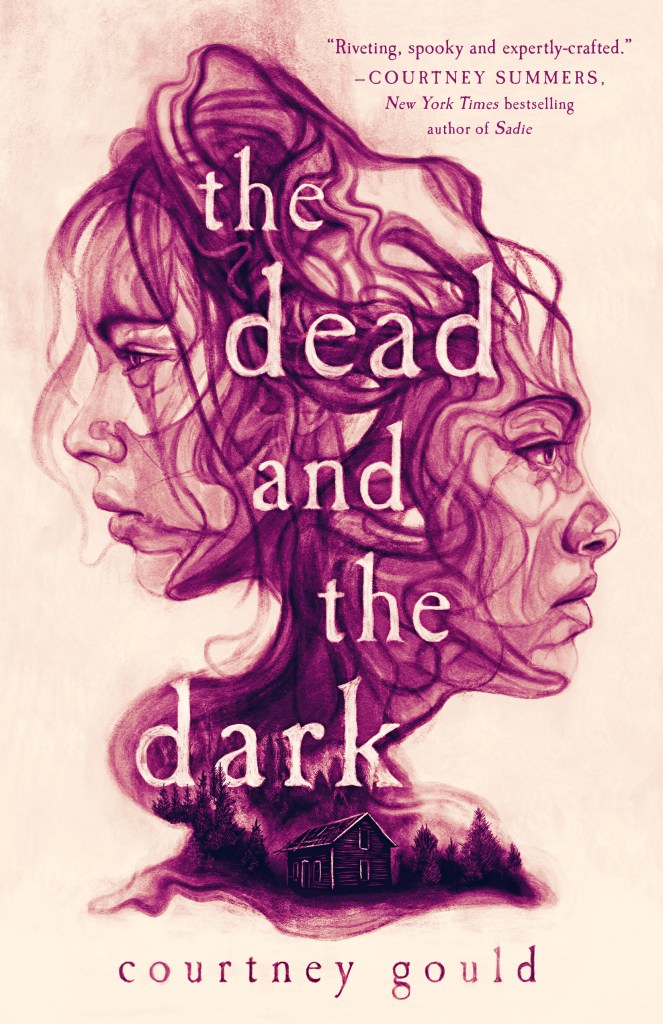
Kate’s Review: “The Dead and the Dark”

Book: “The Dead and the Dark” by Courtney Gould

Publishing Info: Wednesday Books, August 2021

Where Did I Get This Book: I received an eARC from NetGalley.

Book Description: Courtney Gould’s thrilling debut The Dead and the Dark is about the things that lurk in dark corners, the parts of you that can’t remain hidden, and about finding home in places―and people―you didn’t expect

The Dark has been waiting for far too long, and it won’t stay hidden any longer.

Something is wrong in Snakebite, Oregon. Teenagers are disappearing, some turning up dead, the weather isn’t normal, and all fingers seem to point to TV’s most popular ghost hunters who have just returned to town. Logan Ortiz-Woodley, daughter of TV’s ParaSpectors, has never been to Snakebite before, but the moment she and her dads arrive, she starts to get the feeling that there’s more secrets buried here than they originally let on.

Ashley Barton’s boyfriend was the first teen to go missing, and she’s felt his presence ever since. But now that the Ortiz-Woodleys are in town, his ghost is following her and the only person Ashley can trust is the mysterious Logan. When Ashley and Logan team up to figure out who—or what—is haunting Snakebite, their investigation reveals truths about the town, their families, and themselves that neither of them are ready for. As the danger intensifies, they realize that their growing feelings for each other could be a light in the darkness.

Review: Thank you to NetGalley for sending me an eARC of this novel!

Given that I am a HUGE sucker for the ‘small town with terrible secrets’ trope, I am always on the lookout for books and stories that showcase it, and showcase it well. In the past few years there have been books that have hit the mark and missed the mark, and when I requested “The Dead and the Dark” by Courtney Gould I didn’t really know what to expect. All I knew was that it was a YA horror novel that not only had that highly enjoyable theme, but it also had a sapphic romance to go with the scares. Since I was a bit let down by a previously hyped book with these themes, I was hoping that this one would give me what I wanted, and for the most part it did!

“The Dead and the Dark” is told through two third person perspectives. The first is that of Logan, a teenage daughter of Brandon and Alejo, the hosts of the ghost hunting show “Paraspectors”. Her Dads were raised in Snakebite but never fit in, and Logan has a strained relationship with Brandon that she hasn’t been able to really figure out. Ashley, on the other hand, is a local teenager who is basically a member of Snakebite royalty, but ever since her boyfriend Tristan disappeared she’s felt like something is off. When Logan’s dads are suddenly suspects in Tristan’s disappearance, Logan and Ashley have to work together to try and figure out what happened, and what secrets the town is hiding. Both characters were well explored and given depth, and I found myself eager to get to each perspective as the book went on. They are both good characters on their own, but Gould is sure to make their interactions as they become allies, then friends, then maybe something more, enjoyable. But Gould doesn’t stop there, as the supporting characters are also interesting and do more than just furthering the plot that Logan and Ashley work within. I liked getting to know Brandon and Alejo, as well as the other teens in the town who range from helpful to downright hostile. Snakebite as a town is also well explored, as the small town with a secret theme has layers of small town angst and pain for outsiders that come to the surface.

As for the plot and the horror elements, “The Dead and the Dark” did some new things that I really liked. I don’t want to give too much away, as there are definitely things here that I want readers to discover without the potential for being spoiled. But, like many good horror stories, there is thought and purpose behind the dark fantasy and horror elements. As Logan and Ashley start to find clues to the evil that is hurting local teens, they also start seeing the every day rot, be it due to sexism, or homophobia, or just plain resentment of anything different from what is known. This ties into the big reveal as to what is going on, and then another reveal within that reveal that legitimately caught me off guard. And it was done in a way that built it up, made it believable, AND socked me right in the feels. So much so that I found myself crying a bit, and I’m not really used to crying while reading YA horror novels.

I had a really good time reading “The Dead and the Dark”. The horror elements were creepy, the sapphic elements were very satisfying, and I will definitely be checking out what Courtney Gould has to offer the genre in the future!

Rating 8: A creepy and suspenseful YA horror story with enjoyable characters and a small town with secrets setting, “The Dead and the Dark” is a fun read with a nice romance to boot.

Reader’s Advisory:

“The Dead and the Dark” is included on the Goodreads lists “2021 Sapphic Releases”, and “Monsters and Magic Society”.

Find “The Dead and the Dark” at your library using WorldCat, or at a local independent bookstore using IndieBound!

Kate’s Review: “The Book of Accidents”

Book: “The Book of Accidents” by Chuck Wendig

Publishing Info: Del Rey, July 2021

Where Did I Get This Book: I received an eARC from NetGalley.

Book Description: A family returns to their hometown—and to the dark past that haunts them still—in this masterpiece of literary horror by the New York Times bestselling author of Wanderers.

Long ago, Nathan lived in a house in the country with his abusive father—and has never told his family what happened there.

Long ago, Maddie was a little girl making dolls in her bedroom when she saw something she shouldn’t have—and is trying to remember that lost trauma by making haunting sculptures.

Long ago, something sinister, something hungry, walked in the tunnels and the mountains and the coal mines of their hometown in rural Pennsylvania.

Now, Nate and Maddie Graves are married, and they have moved back to their hometown with their son, Oliver. And now what happened long ago is happening again . . . and it is happening to Oliver. He meets a strange boy who becomes his best friend, a boy with secrets of his own and a taste for dark magic. This dark magic puts them at the heart of a battle of good versus evil and a fight for the soul of the family—and perhaps for all of the world. But the Graves family has a secret weapon in this battle: their love for one another

Review: Thank you to NetGalley for providing me with an eARC of this novel!

After reading Chuck Wendig’s post-apocalyptic tome “Wanderers” back in 2019, I told myself that I wanted to give him another go, even if there were bits of that book that didn’t work for me so well. After all, while I had my issues with the book, I ultimately liked the writing style that Wendig has, as well as a few of the characters that he created. So when I found out that his next novel, “The Book of Accidents”, was being touted as straight horror with a creepy house on the cover, I was absolutely game to hop right back into one of his stories. Sure, I was a little nervous about having issues with the story overall again, but definitely was willing to take the risk. And hey, as it turns out, that risk mostly reaped rewards this time around!

“The Book of Accidents” is touted as a horror novel by a lot of people, and while it definitely has horror elements, I would say that it’s also a bit of a dark fantasy. These genres can happily coexist, and Wendig combines them into something pretty unique. While there are elements of a haunted house story to be sure, we also have magic, inter-dimensional timelines, and a little bit of cosmic horror to top it all off. It’s a lot to cover, thematically, and you can see that in the length of the novel. It’s a bit of a double edged sword, because while I do think that Wendig did a good job of balancing all of it, it also made the read to be a little long at times. But a slight case of bloat aside, I found “The Book of Accidents” to be rewarding in all of the marks that it hits, and it still felt like a fast read overall when I got past some of the laggy parts. Wendig has a good sense for intricate plotting and build up, and he lays out clues that come to fruition and make sense when joined together. He also knows how to create a creepy scene, be it because you know that someone has ulterior, dangerous motives, or because he is putting you in the shoes of someone who has experienced something that is unsettling, or simply unexplainable, even if it isn’t immediately horrifying. It was moments like these that hit hardest as I was reading, and I found them to be pretty darn effective.

But what I liked most about “The Book of Accidents” is the family at the heart of it, Nate, Maddie, and Oliver. I felt that Wendig really developed all of these characters with care and meticulousness, and I found myself adoring all of them in similar amounts, something that doesn’t happen too often for me in books with multiple perspectives. Sure, I could like all of them, but there would be one stand out, and yet Nate, Oliver, and Maddie all had sections and moments that I was always chomping at the bit to get to. Wendig makes you care for all of them, and while he makes sure that they all have their flaws or bits that are rough around the edges, it’s easy to relate to all three. It’s easy to invest in this family, so when they find themselves in grave danger, the stakes for all of them are high and you need to know what happens to them. There were supporting characters who also stood out (I’m thinking mostly of Fig, Nate’s partner in the Fish and Wildlife Department, who is no nonsense and really enjoyable), but the heart is definitely the Graves family. The villainous characters are a little less drawn out (I found Oliver’s friend/foe Jake in particular to be a little cartoony), but in the case of this book I wasn’t too put off by that if only because so many of the others were well done.

“The Book of Accidents” is enjoyable and creepy! It’s a great choice if you are looking for horror with some kind of unique elements to the genre. Chuck Wendig has officially landed on my ‘gotta read what he comes out with next’ list with this one.

Rating 8: An entertaining horror/dark fantasy novel with enjoyable characters, “The Book of Accidents” is a quick read with some great unsettling scares.

Reader’s Advisory:

“The Book of Accidents” is included on the Goodreads lists “Horror To Look Forward To In 2021”, and “Celebrate Horror 2021”.

Find “The Book of Accidents” at your library using WorldCat, or at a local independent bookstore using IndieBound!
Giveaway: Omnium Gatherum Mini Reviews/Prize Package

Hello horror fans! It’s been awhile since I’ve run a giveaway on the blog, and I am coming back to the giveaway game with a very fun prize package! Omnium Gatherum is an indie press that has a focus on horror and dark fantasy stories, and they were kind enough to send me a few titles that have lots of scares and bumps in the night! And not only that, I want to share them with a lucky winner! So let’s talk about the titles for the Omnium Gatherum Prize Package!

Book: “Bergdorf & Associates” by Thomas C. Mavroudis

After a suicide attempt, Abe has been working for Bergdorf & Associates, beings that are otherworldly and similar to djinn. They ask him to retrieve items or to complete tasks, and he doesn’t pry too deeply. But when a fellow contractor named Rayne manipulates him, takes his quarry, and puts him in serious danger, Abe has to find a way to complete his task. So he turns to the help of his twin nieces who seem to be telepathic, and a friend named Cruz who knows a little magic of his own. This novella is unique and strange, but Abe is a fun character to follow and his nieces are both adorable and a little creepy! Also, while Rayne is absolutely an antagonist, she has a very fun personality and at one point wears a delightfully geeky geology shirt that I won’t spoil here. It’s a quick and fun read, and one that dark fantasy fans will probably enjoy.

Book: “Entangled Soul & Other Stories” by Gene O’Neill and Chris Marrs

This is a bit of a hybrid collection, in that it features short stories from authors Gene O’Neill and Chris Marrs, as well as a novella collaboration that is the title piece. My favorite story by O’Neill is “Surfing Is My Life: Fear and Loathing on the Northern California Coast”. A reporter tags along with a surfer girl who is planning on entering a competition, and hopes to write a gonzo column about it for Rolling Stone. But while he has seen a lot of strange things during his writing, nothing can prepare him for what he encounters on this assignment. As someone who LOVES Hunter S. Thompson, this homage to one of my favorite writers is both well done, as well as unsettling in a way that sneaks up on you. For Marrs, I enjoyed “Paper and Pencil Skin and Ink”. A woman in an abusive relationship meets a mysterious man with strange tattoos all over his body, and she realizes that the tattoos aren’t just normal tattoos. The dark fantasy elements with ties to historical mysteries really worked for me, and I thought that it was properly mysterious and strange. And their collaborative novella, “Entangled Soul”, tells the story of a down and out boxer and an agoraphobic woman who are separated in many ways, but realize that their souls and consciousnesses are overlapping. They blend their voices together very well to tell this story, which feels part Sci Fi ‘what if’, and possession tale. I got a good feel for both their styles in this collection, and the collaboration is a nice way to finish it off.

Book: “Night Terrors & Other Tales” by Lisa Morton

This collection of short stories by Stoker Award Winner Lisa Morton span decades in her career, and were personally picked by her. From monsters to medical horror settings to magic, there is a little something for every horror fan. The two stories that really stood out for me were “Sparks Fly Upward”, a dystopian tale of a woman living in a Colony with limited resources. When she finds herself pregnant, she knows that she has to have an abortion, as a second child would tax the community. But when she and a party venture out to the abandoned clinic, zombies of former anti-abortion protestors still roam the property. This story is both a cathartic tale about the lingering obsession of the anti-abortion crowd, but also a bittersweet story about a person who may want another child at some point, but at the moment literally cannot afford to have one. I really, really loved it. The second story that grabbed my attention was “Black Mill Cove”, the tale of a man who goes searching for abalone and other creatures in tide pools, leaving his wife behind. But then he finds a human arm…. And realizes that this isn’t just a hunting ground, but a dumping ground as well, for a different kind of hunter. The tension in this one really builds, and I will definitely say that the end had me saying ‘oh SHIT’. I will say that there are definitely some stories in here that need content warnings, specifically “Poppi’s Monster”, which has depictions of child sexual abuse.

And here is a chance for you to get your hands on these fun books from Omnium Gatherum! It may be a little ways before Halloween season, but these books will give you a lot of spooky material in the mean time! Thanks again to Omnium Gatherum for sending these books my way!

The giveaway is open only to U.S. residents and ends on July 26, 2021.

Enter The Giveaway Here

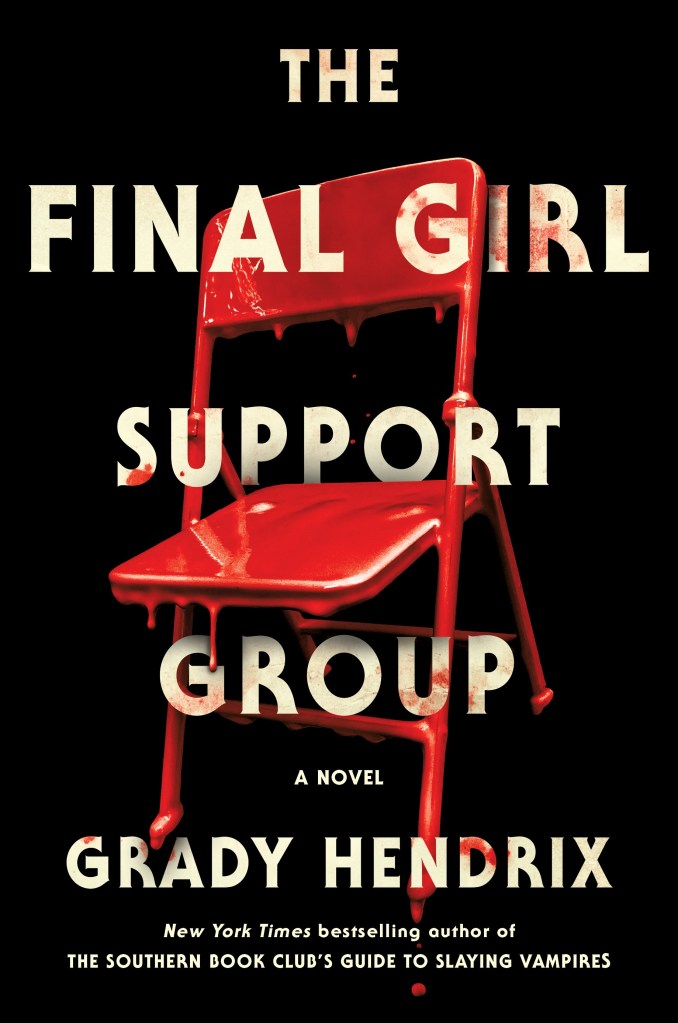
Kate’s Review: “The Final Girl Support Group”

Book: “The Final Girl Support Group” by Grady Hendrix

Publishing Info: Berkley Books, July 2021

Where Did I Get This Book: I received an eARC from NetGalley.

Book Description: A fast-paced, thrilling horror novel that follows a group of heroines to die for, from the brilliant New York Times bestselling author of The Southern Book Club’s Guide to Slaying Vampires.

In horror movies, the final girl is the one who’s left standing when the credits roll. The one who fought back, defeated the killer, and avenged her friends. The one who emerges bloodied but victorious. But after the sirens fade and the audience moves on, what happens to her?

Lynnette Tarkington is a real-life final girl who survived a massacre twenty-two years ago, and it has defined every day of her life since. And she’s not alone. For more than a decade she’s been meeting with five other actual final girls and their therapist in a support group for those who survived the unthinkable, putting their lives back together, piece by piece. That is until one of the women misses a meeting and Lynnette’s worst fears are realized–someone knows about the group and is determined to take their lives apart again, piece by piece.

But the thing about these final girls is that they have each other now, and no matter how bad the odds, how dark the night, how sharp the knife, they will never, ever give up.

Review: Thank you to NetGalley for providing me with an eARC of this novel!

I’ve mentioned it many a time before, but I really enjoy slasher movies. They’ve been my jam since I was a middle schooler who was way into the likes of “Scream”, “Friday the 13th”, and “Halloween”, and as time has gone on I’ve explored many a franchise, many a slasher killer, and many a Final Girl. It’s a trope that’s a bit rooted in sexism and misogyny, as the virginal ‘good’ girl is usually the one to live to the end, though that’s been subverted a number of times in the past couple decades (“Scream” was probably the first to really do it right). Problematic or not, I do love a good Final Girl. A few books in the past few years have decided to explore what life would be like for a character like this after the monster movie has ended, and the newest foray into such exploration is Grady Hendrix’s “The Final Girl Support Group”. Because no one can deny that any Final Girl who survives a slasher killer, sometimes over multiple movies, would undoubtedly need therapy.

So much therapy…(source)

“The Final Girl Support Group” has a number of members, all of whom are middle aged women who have survived horrific, traumatic attempted murders that were then turned into film franchises. While the characters are technically original characters by Hendrix, all of them are clear analogs for some of the most popular Final Girls ever seen on screen (and their first names are usually the same as the actresses that portrayed these characters, with a couple subversions. It’s super, super fun). Marilyn (the “Texas Chainsaw Massacre” analog) has married rich and dove into charity work; Dani (the “Halloween” analog, though a reference to Danielle Harris in later movies as ‘Jamie’ would probably be too on the nose) has become a gun hoarding hermit whose only companion is her wife, Michelle; Heather (“Nightmare on Elm Street”) has dived deep into conspiracy theories and addiction, as no one believes that her monster is, indeed, supernatural; Julie (“Scream”- another name change but her last name is Campbell) is wheelchair bound and now an activist; and Adrienne (“Friday the 13th”) has turned the summer camp of her trauma into a mental health wellness organization for women who have been affected by violence. But our first person protagonist is Lynette, who survived an attempted murder by a man whose dark obsession with Santa Claus drove him to kill people while wearing a Santa Suit (a la “Silent Night, Deadly Night”), and she is the one who probably needs the group more than the other members. When the other group members are wanting to disband, Lynette clings to the group, and when Adrienne is murdered she immediately believes that they are all in danger. It was an interesting choice to have our protagonist be Linnea Quigley’s character from “Silent Night, Deadly Night”, as technically, she isn’t a final girl- in the movie, she doesn’t survive, much less fight back against her would be killer. So in this, as a ‘real world’ version, Lynette has been kind of thrown to the wayside since she was too incapacitated to earn her Final Girl stripes. But it opens up a wealth of possibilities, and it makes Lynette somehow more vulnerable than the others in her insecurities and need to belong since she isn’t seen as a ‘fighter’. And in turn, that makes the story and the desperate choices she makes as they all try to survive once again compelling and frustrating, as well as very, very sad in some ways. While I think that Hendrix could have done more with her, and perhaps it would have been more interesting to follow another of the Final Girls (honestly, I want an entire book about Marilyn. I LOVED her), it felt correct that Lynette was the one we got, because she’s almost the one we could trust the least (outside of Heather. DAMN, poor Heather).

In terms of the plot as Lynette tries to figure out how to keep herself and her group mates alive, and to figure out who is targeting them, I was able to predict a few things here and there. I wasn’t as invested in that aspect of the story, as it’s pretty run of the mill. What makes this book work is that Hendrix has penned both a love letter to slasher movies, and found a way to deconstruct them and take them down a few notches without being smug about it. The slasher genre absolutely has problems with sexism and exploitation, and Hendrix makes us confront that by seeing just how incredibly messed up and traumatized these women are. Final Girls are seen as heroic in the movies because of their resilience and ‘goodness’, but in this book all of these women were basically brutalized by men, and then their lives were ruined because of it. However, that point doesn’t make it any less fun to see him play with these characters, and leave in all the fun easter eggs and treasures for readers who love the movies that their characterizations come from. I was grinning ear to ear throughout a lot of this book. And Hendrix, while making our Final Girls a little tragic and traumatized, also makes a few of them VERY funny. Marilyn had me in stitches half the time, and Heather has some hilarious snipes and sarcastic moments. Hendrix is still having fun, and the reader knows that you are allowed to have fun as well as confronting what the actual fallout of this kind of character would have be face.

“The Final Girl Support Group” was a really fun read for this slasher movie fan! It’s horror with heart and humor, and fans of the genre really need to check it out.

Rating 8: A fun love letter to one of my favorite horror movie genres, “The Final Girl Support Group” will be a blast for fans of slasher movies everywhere!

Reader’s Advisory:

“The Final Girl Support Group” is included on the Goodreads lists “Slasher Fiction”, and “Horror To Look Forward To in 2021”.

Find “The Final Girl Support Group” at your library using WorldCat, or a local independent bookstore using IndieBound!

Kate’s Review: “Children of Chicago”

Book: “Children of Chicago” by Cynthia Pelayo

Publishing Info: Agora Books, February 2021

Where Did I Get This Book: The library!

Book Description: This horrifying retelling of the Pied Piper fairytale set in present-day Chicago is an edge of your seat, chills up the spine, thrill ride. ‪ When Detective Lauren Medina sees the calling card at a murder scene in Chicago’s Humboldt Park neighborhood, she knows the Pied Piper has returned. When another teenager is brutally murdered at the same lagoon where her sister’s body was found floating years before, she is certain that the Pied Piper is not just back, he’s looking for payment he’s owed from her. Lauren’s torn between protecting the city she has sworn to keep safe, and keeping a promise she made long ago with her sister’s murderer. She may have to ruin her life by exposing her secrets and lies to stop the Pied Piper before he collects.

Review: There were, of course, many disappointments that came with the pandemic, and one of the biggest sub groups for me was of the cinematic variety. Not only do I really miss going to the Alamo Drafthouse for throwback movie nights, there were a number of movies I was very excited to see in the theater, that either had to be released on demand, or were bumped back by a year. One of those movies was the reboot of “Candyman”. For the unfamiliar, the premise is that if you say ‘Candyman’ into a mirror five times, he will come out of it and brutally murder you. I really enjoy the original, as not only does it tick my boxes of urban legend based horror and social commentary, it’s also an awesome deep dive into the city of Chicago and all of its darker realities (and seeing that I’m vaxxed now, if the numbers are looking good by the time this new movie comes out, maybe that will be my triumphant return to the movies…. fingers crossed?). Lucky for me, I randomly stumbled upon “Children of Chicago” by Cynthia Pelayo on Twitter, and after looking into it, lo and behold: it’s a horror story in Chicago, involving a mysterious game and the fairy tale of the Pied Piper, the man who steals children away when he isn’t compensated. OH MAN, THIS IS WHAT I WANT IN MY HORROR STORIES!

“You were not content with the stories, so I was obliged to come.” (source)

There are certainly comparisons to be drawn between “Children of Chicago” and “Candyman”, but Pelayo has created a horror story that feels wholly unique because of the themes and twists that she throws into it. The Pied Piper story turned urban legend is a great premise, as the fairy tale on its own is horrifying. When you bring it into a modern setting, and add in elements of “Bloody Mary” like kids games and Slenderman stabbings, it becomes something new and even more sinister. As our protagonist Detective Lauren Medina investigates the deaths of kids in Chicago, we find ourselves in a modern fairy tale with elements that suit both the horror genre and the genre it’s paying homage to. Pelayo has a stellar mystery of what the Pied Piper is, how he connects to Lauren, and how he’s involved in not only the deaths of teens in her jurisdiction, but also that of her younger sister, who was found drowned in a lagoon in Humboldt Park when Lauren was a child. As she investigates and starts to piece together what is going on, the tension builds and the terror creeps up. I loved how Pelayo took the original story and applied it to the present, bringing in modern horrors and anxieties to create something twisted and new. Sometimes things got a bit muddled, or I would feel like it was lagging a bit in terms of pacing, but mostly I was hooked and wanted to keep going.

Pelayo also has a lot of really fun tidbits about Chicago’s history, both that of the innovative and joyful city, and that of the darkness and violence that has plagued it since its inception. I know a little bit about Chicago, given that I’m from the Midwest and it is the biggest city in our region, but I feel like I learned more about it and its history as I read this book. Pelayo has a special focus on the systemic racism that has caused so many problems and damaged so many lives, and how Chicago has a lot of death surrounding it because of its history and because of the ills that still plague it. You get the sense that Pelayo loves Chicago, and wants it to be the best that it can be, while still acknowledging how dark it is in some ways.

But what struck me most about “Children of Chicago” is that our protagonist, Lauren Medina, is not exactly a hero. She carries a lot of baggage from her past, from the disappearance of her mother to the death of her sister, to trying to live up to the Medina name as her father was a highly respected police officer in his own right. There is also the very pesky fact that Lauren has a pretty serious pattern of discharging her weapon on suspects, and while in one case it’s possibly justifiable, in a number of other cases it isn’t. I feel like in cop stories where a cop or detective or what have you is trying to hunt down someone monstrous, more often than not if they ARE a ‘renegade’, it’s portrayed in a way that makes their behavior seem justified (though recently we saw a bit of a challenge to this in Stephen King’s “Later”). Not so in “Children of Chicago”. Lauren is a renegade and it is a serious problem, in that it damages her credibility, it damages the credibility of her department, and it causes damage to innocent peoples lives. It’s just one more layer of darkness to this tale, and getting into the mind of Lauren and peeling back the elements of her character is just as disturbing as some of the other aspects of this book.

Horror fans, you should definitely go read “Children of Chicago”. And I’m on board with whatever Pelayo comes out with next.

Rating 8: Dark and twisted, as well as a biting character study, “Children of Chicago” is a love letter to a complicated city, and an urban legend scary story sure to delight horror fans.

Reader’s Advisory:

“Children of Chicago” is included on the Goodreads list “2021 Horror Releases”.

Find “Children of Chicago” at your library using WorldCat, or a local independent bookstore using IndieBound!

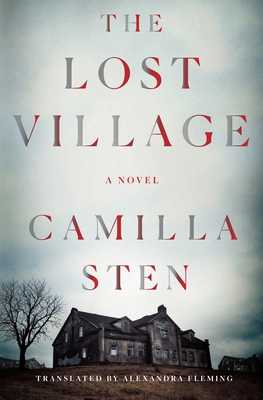
Kate’s Review: “The Lost Village”

Book: “The Lost Village” by Camilla Sten

Publishing Info: Minotaur Books, April 2021

Where Did I Get This Book: I own it.

Book Description: The Blair Witch Project meets Midsommar in this brilliantly disturbing thriller from Camilla Sten, an electrifying new voice in suspense.

Documentary filmmaker Alice Lindstedt has been obsessed with the vanishing residents of the old mining town, dubbed “The Lost Village,” since she was a little girl. In 1959, her grandmother’s entire family disappeared in this mysterious tragedy, and ever since, the unanswered questions surrounding the only two people who were left—a woman stoned to death in the town center and an abandoned newborn—have plagued her. She’s gathered a small crew of friends in the remote village to make a film about what really happened. But there will be no turning back.

Not long after they’ve set up camp, mysterious things begin to happen. Equipment is destroyed. People go missing. As doubt breeds fear and their very minds begin to crack, one thing becomes startlingly clear to Alice: They are not alone. They’re looking for the truth… But what if it finds them first?

Review: Awhile back I was perusing the titles on NetGalley, and I kept stumbling upon a book called “The Lost Village” by Camilla Sten. Every time I would see it I’d ask myself ‘why haven’t I looked into that?’, but then I’d look again and the description was the key. You have me at “Blair Witch Project”, but you lose me at “Midsommar” (sacrilege? Maybe. I just didn’t like that movie). But eventually I decided that I needed to give it a go. So I bought it, and as soon as I started it I never should have waited as long as I did.

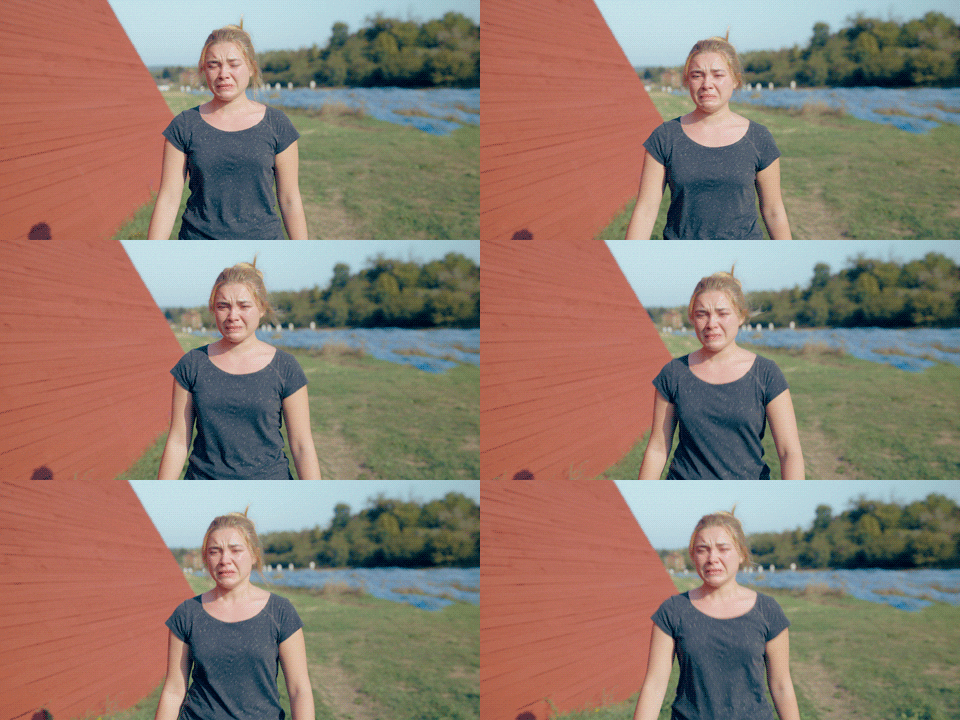
Me contemplating the time I wasted. I dislike the movie, but love this meme! (source)

“The Lost Village” is a slow burn horror story that (absolutely) has similar elements to “The Blair Witch Project” and “Midsommar”, but stands very well on its own. The story is told through various channels. The first and most prominent follows Alice and her film crew in the modern day, as they start to explore the abandoned village of Silvertjärn. Alice’s grandmother was a resident who had left before the disappearance, and who lost her entire family. Alice is obsessed and determined to make a documentary about the town in hopes of getting answers, but there is tension in her crew due to messy histories and secrets. In this timeline strange things start happening, and the crew slowly starts finding themselves in danger. The second channel follows Elsa, Alice’s great grandmother who is seeing her town slowly become seduced by a new pastor, whose zealotry is manipulating everyone and leading them down a dangerous path. The third is through letters between Elsa’s daughters Margareta and Aina, which slowly shows Aina becoming more and more entranced with the new leader. All of these pieces come together to tell a well thought out horror story that slowly builds the dread and terror. I liked the back and forth through the narrative, as each storyline contained clues about the others, and the ultimate fate of Silvertjärn. The strongest was the modern day perspective, as not only did it have some of the scariest moments, it also had the most interesting characters. Alice is a flawed but interesting protagonist, and her interactions with her compatriots (particularly with Emmy, an ex-friend that Alice harbors some bitter resentment towards) are realistic as the situation turns from intriguing to dire. I found myself invested in them, so when the stakes are raised, the fallout has true weight. Sten makes you care about these characters, and that ultimately amps up the horror aspects.

And let’s talk about the horror aspects. Because they are spot on and very, very disturbing. The more obvious is that of the feeling that the crew is being watched in the abandoned town, and the slow build of paranoia as strange things start to happen, and one of the members of the crew starts acting strange as well. Some of the images that Sten brings forth in the narrative really messed with me in this regard, from descriptions of a corpse on a post to a shadowed silhouette staring towards Alice and her crew in the dark. The other horror, of course, is set firmly in the past storyline, as a town of generally decent people start to form a cultish devotion to a sociopathic con artist who twists religious fervor to suit his own needs. You eventually kind of see where this is all going, knowing that eventually Silvertjärn’s population just vanishes without a trace, but it still made me tense and completely horrified as people fell under his spell and terrible things came about because of it. The horrors of real life are put on perfect display here, and boy oh boy does it pack a wallop.

Fans of horror stories absolutely need to read “The Lost Village”. I cannot, CANNOT wait to see what Camilla Sten comes out with next.

Rating 9: Tense and ultimately horrifying, “The Lost Village” is sure to disturb any avid fans of horror in all the best ways.

Reader’s Advisory:

“The Lost Village” is included on the Goodreads lists “Haunting Reads”, and “Books Set in Sweden”.

Find “The Lost Village” at your library using WorldCat, or at a local independent bookstore using IndieBound!