Book Description:Disgusted when he is denied access to the pyramids of Dahshoor and assigned to a “rubble heap,” Emerson finds his curiosity piqued when an antiquities dealer is murdered and a mummy case disappears.
Review: First off…what is this book description? No mention of Amelia at all? I got it off Goodreads and I have to imagine that it was re-written for a later re-print of the series, but whomever is responsible for it should be ashamed for so badly misrepresenting this book and the series as a whole!
So, with no build up whatsoever, I loved this book even more than the last one! Many of my favorite elements were still present, and the added characters were stronger than in the last, as well as the mystery and action being upped.
Amelia and Emerson are off on another dig, though much to their disappointment, they will be at a much less illustrious location than their fellow egyptologists who have managed to snag the much-desired pyramids of Dahshoor site. But perhaps this is for the best, since Amelia and Emerson must not only balance their dig, as well as the inevitable mysteries and deaths that Emerson claims that Amelia attracts to herself, but also their precocious son, Ramses, who is accompanying them for the first time on this trip.
Amelia remains, as ever, the darling of my reader heart and one of my favorite narrators to date. Her wit, practicality, and scathing observations of those around her are as strong as ever. And the relationship (battle?) between her and her husband is as fun as ever. So, full marks in those as carry over elements.
I have to admit that I was a bit concerned when I picked up this novel and realized that Ramses had grown to an age where he was going to be featured more strongly in the series. In the last book, he made a brief appearance in the beginning but was absent for much of the rest of the story. I was a bit worried that the humor that lies in his character (his sharp tongue, unbreakable “reasoning” for his misbehavior, etc) wouldn’t hold up under increased page time. Much to my surprise, I really enjoyed Ramses as a character! Peters struck the perfect balance between featuring him as a new element, both in the series as well as his effect on the dynamic between Amelia and Emerson, and retaining familiar aspects of the story. He doesn’t overwhelm other characters, but instead draws out some my favorite aspects from before.
I also really enjoyed the side characters in this book. Unlike the last book which heavily featured original characters (to varying levels of success), many of the characters in this book are famous archeologists of the time. It was fun reading about familiar names, especially through the lens of Amelia’s and Emerson’s views of them. I’m sure there is a lot of creative leave that was taken, but it’s fun to imagine the real life individuals with some of the bizarre traits and habits that Peters ascribes for them here.
All in all, this was a great third book in a series. While I still very much enjoyed the second book, it was exciting to pick up this one and see that it had corrected many of my few quibbles from the last and was heading in a strong direction: no longer am I concerned about Ramses’ portion of the plot! Bring on the child antics! If you enjoy historical mysteries, and especially comedic writing, I recommend this entire series. It’s not strictly necessary that you read the first two, but why not when they’re this good?
Rating 9: An excellent continuation and proof that I should be less snobby about kid characters!
We are part of a group of librarian friends who have had an ongoing bookclub running for the last year and a half. Each “season” (we’re nerds) we pick a theme and each of us chooses a book within that theme for us all to read. Our current theme is “Across the Decades,” we each drew a decade and had to select a book that was either published or set in that decade.
For this blog, we will post a joint review of each book we read for bookclub. We’ll also post the next book coming up in bookclub. So feel free to read along with us or use our book selections and questions in your own bookclub!
Book: “Revolution” by Deborah Wiles
Publishing Info: Scholastic Press, May 2014
Where Did We Get This Book: The library!
Book Description:It’s 1964, and Sunny’s town is being invaded. Or at least that’s what the adults of Greenwood, Mississippi, are saying. All Sunny knows is that people from up north are coming to help people register to vote. They’re calling it Freedom Summer. Meanwhile, Sunny can’t help but feel like her house is being invaded, too. She has a new stepmother, a new brother, and a new sister crowding her life, giving her little room to breathe. And things get even trickier when Sunny and her brother are caught sneaking into the local swimming pool — where they bump into a mystery boy whose life is going to become tangled up in theirs. As she did in her groundbreaking documentary novel COUNTDOWN, award-winning author Deborah Wiles uses stories and images to tell the riveting story of a certain time and place — and of kids who, in a world where everyone is choosing sides, must figure out how to stand up for themselves and fight for what’s right.
Kate’s Thoughts
So “Revolution” is part of a series called the “Sixties Trilogy”. A chunk of our bookclub read the first in the series, “Countdown”, in our Children’s Literature class in grad school, and I was wondering if “Revolution” was going to need “Countdown” to serve as a context and foundation. But I was pleasantly surprised to see that a reader could easily skip over “Countdown” and read “Revolution” first if they so chose. While I did enjoy “Countdown” (which is about a girl living on an army base during the Cuban Missile Crisis), I actually enjoyed “Revolution” a bit more. “Revolution” takes on one of the most important and tumultuous times from the 1960s, Freedom Summer in Mississippi. Like “Countdown” this book is both a novel and a documentation of the time period through photos, quotes, and documents. There are many photos of African Americans in Mississippi and the SNCC volunteers, along with biopic sections and influential quotes and song lyrics from civil rights leaders and activists. Being able to juxtapose the actual people in the movement along with the characters in the story and their progressions was incredibly powerful, and I think that this book would be very good to use in tandem with history classes when studying this time period and the Civil Rights Act of 1964.
The characters are fictional, but portray two different experiences of teenagers at this time. The first, and most prominent, perspective is that of Sunny. She’s about to turn thirteen, adjusting to a new stepmom and two new step siblings, and is becoming more aware of her surroundings, specifically the tensions in her community. She yearns for adventure and to learn, and is drawn to the Freedom Righters and activists that are ‘invading’ her hometown of Greenwood, Mississippi. I felt that Sunny was a well written and believable tween girl, who thinks that she knows everything and that she knows what the world is like. She is close to her step brother Gillette, but resents her stepmother Annabelle, still holding out hope that her mother will eventually come back for her, even though she left her and her father Jamie when she was just a baby. This book is from Sunny’s perspective, so we explored the opinions of those around her through her eyes. We see her Meemaw who just can’t understand why the ‘negroes’ are being so ‘uppity’ when they were so ‘happy’ up until now. We see her great Uncle Vivian, who is a jolly older man who loves his grand niece, but harbors serious racist views. And we see Annabelle, who is seen as meek and weak by Sunny (or at least unapproachable), but is in actuality an activist with deep convictions and devotion to the Student Nonviolent Coordinating Committee (SNCC) and the Civil Rights Movement. Our other perspective is that of Raymond, a fourteen year old African American boy who is inspired by the galvanization of his community and the Freedom Righters who have come to his part of town. He goes from covert acts of defiance (like sneaking into the segregated swimming pool after hours) to blatant acts of rebellion, standing up for his rights in light of the Civil Rights Act, and facing violence from angry whites in the community.
I liked both of these perspectives, but I think that it’s a damn shame that the dominant perspective was that of the white girl. While Raymond did gets sections of his POV, this book was very much about Sunny and her discovering the evils of racism in 1964 Mississippi. It’s a story that’s been told before, over and over again, and I had gone in hoping that this was going to be more about the African American perspective. I was glad to see that the documentary sections of this book did have a lot of that POV, but even then there were three well drawn out bio sections of various important figures in the Civil Rights Movement, and two of them were of white people. Like, really?
Overall, though, I did really like “Revolution”. I think that it’s a valuable resource and I feel that it was well written. I am also really really REALLY intrigued by what the final book in the trilogy will be about. I’m thinking it’s gonna be ‘Nam. Which is going to hurt like a bitch.
Serena’s Thoughts
As one of the aforementioned classmates in the Children’s Literature class that read the first book in this series, “Countdown,” I had a good understanding of what I was getting into with this book. While I liked “Countdown” well enough, what sold me on the book was the slick way the author incorporated real news articles, ads, and images from the time, creating a fictional story and a documentary style narrative side-by-side. While I wasn’t blown away by the story in that book, I was truly impressed by this take on historical novels, especially for middle grade readers.
I think here, in “Revolution,” she really comes into her own with this style. Even more so than “Countdown,” I feel like the historical documents and articles really added to the story. I was fascinated by what she chose to include, how the placement of certain items aligned with the facts of the fictional narrative, and just by the stylistic choices that were made in how, and what, was presented.
I also was more invested in the fictional story as well. I thought Sunny was a brilliant character and witnessing the events of Freedom Summer through her eyes was a very interesting choice. I especially appreciated seeing the many adults’ reactions to events as seen through Sunny’s perspective, both her stepmother who she initially dismisses but learns to appreciate, as well as her Uncle Vivian who’s love of her is unquestionable but has opinions and views that are less than praise-worthy.
I also very much enjoyed Raymond’s sections and the voice and perspective that he offered. While Sunny did get the majority of the narrative, Raymond’s portions were equally important when fleshing out the full story.
While I agree with Kate that it would have been preferable to have more from Raymond’s character, I’m going to play a bit of a devil’s advocate role here. I don’t remember if this came up with regards to this particular series and “Countdown,” but in the same Children’s Literature class, we discussed writers of different racial/cultural backgrounds writing across racial/cultural lines. There can not, and I believe, should not, be any right or wrong answer to this question, nor a hard and fast rule with regards to this. But I would surmise that the reason Sunny’s perspective was given more weight might have to do with, perhaps, a sense of imposition that could have arisen from Deborah Wiles, a white woman, writing this story primarily from the perspective of a young African American boy. I have no idea whether or not this was the case. Just goes to show how challenging it can be to be an author and write about tough subjects like these! All the more power to her, though, for tackling the subject, and discussions like this are always important.
Overall, I, too, found myself enjoying this book even more than I did the first in the series. The documentary style elements were even stronger I felt, and I was more connected to the characters in the fictional story.
Serena’s Rating 8: A really great combination of fiction and documentary. I would strongly recommend this to any middle grader with an interest in history (or to a classroom teacher who’s looking to pair some fiction with a lesson plan on this time period).
Kate’s Rating 8: Though I feel like there weren’t enough voices or perspectives from the African American POV, I did like the story and found the historical content incredibly fascinating and valuable.
Bookclub Questions:
1.) There are a lot of images/documents/quotes included in this story. Did any stand out to you? Why?
2.) Did you connect with the characters of Sunny and Raymond? With one more than the other?
3.) This book would pair well with a class that is learning about this era in time. Are there any particular issues/scenes/thoughts that are expressed that would perhaps be more challenging and need discussion when reading with children? How would you approach these discussions? Are there things that weren’t addressed?
4) What did you think of Sunny’s relationship with her stepmother Annabelle? Did Annabelle’s characterization surprise you in any way? What about her relationship with her father Jamie?
5) Did you learn anything new about Freedom Summer in this book that you hadn’t known before? Do you think that “Revolution” did a good job of bringing up new issues that some of us may not be as familiar with?
Book: “The Curse of the Pharaohs” by Elizabeth Peters
Publishing Info: Dodd, Mead and Company, 1991
Where Did I Get this Book: the library!
Book Description:Victorian Amelia Peabody continues to journal her Egypt adventures, toddler Ramses left in England. Husband Radcliffe Emerson’s old friend Lady Baskerville fears a curse killed her husband Sir Henry, and soon engages the attentions of American Cyrus. The will funds continued excavation. But a lady dressed in white floats, flutters, spreads fear, and more death.
Review: Now that I’ve discovered these books, I can’t stop myself! On to the next Amelia Peabody adventure, where we learn that nothing, not home, not baby, not grumpy husbands, is too much for Amelia!
This book picks up a few years after the first. Amelia and Emerson are home in England with their toddler son, Ramses (cuz, of course, that’s his name!). Right off the bat, I loved what Peters does with this new family dynamic. It is clear that Amelia loves her son dearly, but her practical, acerbic wit holds for no man or baby! I love the no-nonsense approach to parenthood that she brings to her interactions with Ramses, especially when paired with Emerson’s own approach. It’s kind of a traditional gender-swap, with Emerson cooing over the infant, while Amelia lovingly scoffs at his failures to recognize Ramses’ toddler faults. It’s all very adorable.
But, of course, disturbance must intrude on this domestic affair, and it comes with the death of Sir Henry while on a dig in Egypt. Amelia and Emerson are appealed to take over the dig and to stamp out the rumors of curses that now threatened to overrun the exhibition. Honestly, a lot of the elements in the mystery itself were similar to those found in the first book in this series: the setting, the growing body count, and the ever-present superstitious fears of the locals. Amelia and Emerson’s reactions to these elements are also similar, though in this book, they do develop a very fun competitive approach to the whole ordeal, which is as amusing as it sounds.
The cast of characters is also very expansive, which serves both as a benefit and a detriment to the story at various times. We have cartoon-ish characters (like an elderly lady who dresses up as ancient Egyptians and is convinced that Emerson is her reincarnated pharaoh lover), as well as side character with no less than three love interests! Some of these characters were fun, while others…I just couldn’t keep track of! The love interests, specifically, seemed to merge in my head and I often found myself flipping back pages trying to remember which gentleman was which. There was one, however, who is American and his overblown “American-isms” were pretty humorous, I must say. I did find myself missing Evelyn and Walter, but if this novel serves as a reference going forward, I think I must come to accept the fact that other than Amelia, Emerson, and now, likely Ramses, the supporting cast is likely to be a rotating door. Ah well.
Ultimately, I breezed through this book as quickly as the first! I was curious to see how Peters had Amelia approach the vast difference in her life, now being a wife and a mother (so many stories can struggle with these types of transitions), but overall, I was impressed and look forward to many, many more adventures with Amelia Peabody!
Rating 8: Strong follow up novel. Rated a bit less due to repeated elements in the mystery and weaker supporting characters, but still a very fun read.
Book Description:Nora Lopez is seventeen during the infamous year 1977 in New York.
After a freezing winter, a boiling hot summer explodes with arson, a blackout, and a serial killer named Son of Sam, who is shooting young people on the streets seemingly at random.
Not only is the city a disaster, but Nora has troubles of her own: her brother, Hector, is growing more uncontrollable by the day, her mother is helpless to stop him, and her father is so busy with his new family that he only calls on holidays.
And it doesn’t stop there. The super’s after her mother to pay their overdue rent, and her teachers are pushing her to apply for college, but all Nora wants is to turn eighteen and be on her own. There is a cute guy who started working with her at the deli, but is dating even worth the risk when the killer especially likes picking off couples who stay out too late?
Award-winning author Meg Medina transports readers to a time when New York seemed about to explode, with temperatures and tempers running high, to discover how one young woman faces her fears as everything self-destructs around her.
Review: So, okay, I may be kind of cheating with this one, as I know that I am usually here to review horror, thrillers, and graphic novels. “Burn Baby Burn” is KIND OF a thriller, but at it’s heart it’s a historical fiction that focuses on family strife and societal tensions. Whatever, I don’t care, because this book did set me on edge and that’s what thrillers do. So it counts. Plus, Meg Medina is a fabulous YA author, whose wonderful “Yaqui Delgado Wants To Kick Your Ass” won the Pura Belpré Award in 2014, and I have been keeping my eye on her. While that book had it’s moments of suspense, “Burn Baby Burn” is constantly walking on a line of intensity that is about to explode. And given the year and the setting (1977 in Queens, New York), it’s no wonder.
The scariest part of this story, where most of the suspense comes from, is not the Son of Sam cloud that is constantly hanging over these characters (more on that in a bit). Instead, it is the fact that Nora is sharing an apartment with her brother Hector, who is turning more and more into a violent psychopath as every day goes by. When he isn’t lashing out at his mother or kicking the neighborhood mutt in the ribs (poor Tripod!!! Once you kick an animal you are DEAD TO ME), Hector is stealing pills to sell with the neighborhood drug dealer, and threatening his sister’s life. I was kind of worried that Hector was going to just be a crazed, violent antagonist without purpose, but Medina makes it pretty clear from the get go that Hector has had serious issues ever since he was a child, and that a racist and disenfranchised community he has to live in hasn’t made things better. She doesn’t not excuse his behavior, but she does make the reader see more layers to him, which makes Nora’s home life all the more tragic.
Nora is a protagonist who is both super easy to root for, but also realistic enough that she makes big, teenage mistakes that make you want to shake her. She thinks that since she’s almost eighteen that she can handle everything that is thrown her way, but it’s very clear that this is not the case. Of course, her parents haven’t made things any easier for her. Her father can’t be bothered with his first family, and her mother flips between making excuses for Hector’s sociopathy, ignoring outright, and blaming Nora. While Nora finds solace an safety with her best friend Kathleen and her family, there is always a socioeconomic and racial divide between them, unspoken as it may be, and Medina does a good job of addressing that without casting any kind of judgment towards either girl. Nora is also in a league of her own in her goals. She isn’t interested in college or academia, but does have a passion in woodworking, and is more interested in going to a trade school to master that craft. In a world where so many of the YA girl protagonists we see are writers, artists, or poets at heart, it was delightfully surprising to see one who is interested in a nontraditional vocation (one that is disappearing from our schools). And I say that as one of those artsy writer girls. Nora was a breath of fresh air on all levels.
Time and place is phenomenal in this book. 1977 Queens was filled with lots of tension, from racial tensions in the community to Son of Sam stalking couples in cars. Having this backdrop for Nora’s coming of age story was incredibly original and also very appropriate. The specter of violence and bloodshed that haunted the entire city is a fabulous juxtaposition to the specter of violence that is haunting Nora’s own home. She is more afraid of a serial killer that she is her abusive brother, or tells herself she is. And with the nods to pop culture of the time really tied this story together. Nora is into disco, she and her boyfriend Pedro go see “Star Wars: A New Hope” in the theater, and Hector wants to go to CBGBs to see The Ramones. Medina really captured 1977 without hitting us over the head with it. Though this is probably due in part to the fact that some of the themes from then (systematic racism, frustrated youth, misogyny) are just as relevant today as they were back in 1977. And as everything started to come to a boil, even though I knew what was coming, when it happened it was still incredibly nerve wracking.
“Burn Baby Burn” is probably one of the best YA novels I’ve read this year, and Meg Medina once again has written a story about a situation many of us may not think about in our day to day lives. I was tied up in knots as I read it, and think that it deserves some serious recognition and a wider audience. The nostalgia and ferocity come off of it in waves, and Nora Lopez has a great tale to tell. Seek it out!
Rating 9: Both an intense story about familial strife, and a coming of age tale during a tumultuous and frightening time. Nora Lopez is the YA protagonist we need to see more of.
Book Description:No one expects a princess to be brutal. And Lada Dragwlya likes it that way. Ever since she and her gentle younger brother, Radu, were wrenched from their homeland of Wallachia and abandoned by their father to be raised in the Ottoman courts, Lada has known that being ruthless is the key to survival. She and Radu are doomed to act as pawns in a vicious game, an unseen sword hovering over their every move. For the lineage that makes them special also makes them targets.
Lada despises the Ottomans and bides her time, planning her vengeance for the day when she can return to Wallachia and claim her birthright. Radu longs only for a place where he feels safe. And when they meet Mehmed, the defiant and lonely son of the sultan, Radu feels that he’s made a true friend—and Lada wonders if she’s finally found someone worthy of her passion.
But Mehmed is heir to the very empire that Lada has sworn to fight against—and that Radu now considers home. Together, Lada, Radu, and Mehmed form a toxic triangle that strains the bonds of love and loyalty to the breaking point.
Review: I stumbled across this book when researching new titles for our “Highlights” post for June. I think I almost did a double take with this one: a re-imaging….of Vlad the Impaler…as a brutal, hard-edged young woman. Ooookkk, then. Color me fascinated! Well, I picked it up this week, not knowing what to expect, and was blown away!
First off, I feel that this book description is misleading, this is as much Radu’s story as it is Lada’s. The chapters alternate perspectives between the two, and each brings such a different and fascinating angle/interpretation to the events they are both experiencing.
I’ll start with Lada. Now THIS is what I’m talking about when it comes to writing a compelling anti-hero! When they bill Lada as “brutal” in the first line of the book description, I was picturing the typical “faux fierceness” that is fairly common in YA protagonists (or maybe I’m still smarting after the disappointment that was “The Young Elites). But Lada is not this; she’s mean-spirited, viscous, self-centered, and completely sympathetic. A half-wild girl who yearns for the approval of a father who can’t get past the fact that she’s not the son he wanted, Lada’s arc is as heartbreaking as it is inspiring. Not only are the facts of her life tragic, the powerlessness and helplessness that comes with being a woman who has been thrown into the grips of a foreign power as a royal hostage with only the limited options of a forced marriage before her, but her inner struggle is so honest, frank, and, again, heartbreaking. Her love for her brother Radu, that she can only show by ignoring him to protect him, her growing feelings for Mehmed, her friend but also the man who would prevent her from re-claiming her homeland. This is good stuff, guys!
And Radu, I had zero idea what to expect with his story! And wow, did I love his story, too! His voice is almost the complete opposite of Lada’s. He, too, struggles to find his place in the world, both admiring and loving his strong sister, but also fearing and, at times, hating her for being what he cannot. It was so hard flitting from one character to the other and seeing how each sibling made choices that seemed right to them, but would be misunderstood and hurtful to the other. Radu also brings voice to a completely separate set of struggles and conflicts, both in his conversion to Islam as well as his burgeoning feelings for Mehmed.
I loved the details of this world, the intricacies of the Ottoman Empire and its relationship to the other world powers at the time. The setting was also refreshing for not being the typical medieval European setting that is more commonly chosen. The court of the sultan, the politics, the religion, all were explored with rich detail and woven neatly into the story. This is a massive book, and yet it never dragged.There is court intrigue, assassination attempts, sieges, first loves, marriage, the list goes on! And yet, I would say this book is largely a reflective story, leaning most heavily on the characterization of its two protagonists and their complicated relationship with each other and their mutual friend, Mehmed.
For a book that I just stumbled upon, and for one with such a bizarre concept at its core, “As I Darken” was a complete surprise. It was serious, reflective, tragic story, and one that ends with a great set-up for the continued saga. I strongly recommend this book if you enjoy historical fiction and are comfortable with some tampering (small things…like making Vlad a woman!)
Rating 9: I really loved this book. Lada and Radu were such compelling characters and the setting was refreshingly new and vibrant.
Book: “DC Comics: Bombshells (Vol.2): Allies” by Marguerite Bennett, Mirka Andolfo (ill.), and (Laura Braga (ill.).
Publication Info: DC Comics, July 2016
Where Did I Get This Book: The library!
Book Description:The shadow of WWII looms ever larger as the Bombshells battle the Axis Powers across the globe.
In Gotham City, a quartet of copycat Batgirls are doing their part to protect the home front.
In Greece, Wonder Woman faces a battalion of the undead, led by the villainous Baroness Paula von Gunther.
In London, Stargirl and Supergirl learn a shocking-and dangerous-family secret, while Mera encounters a monstrous threat from the sea that not even she can control.
And in Berlin, Zatanna attempts to thwart the evil magic that’s been released into the world, while the Catwoman and Huntress rescue a captured Batwoman from the clutches of the Third Reich.
But the paths of these superheroines will converge as they face their greatest challenge yet. To defeat the undead tenebrae soldiers overtaking London, they’ll have to form a Justice League of their own!
Inspired by the popular DC Collectibles line, DC COMICS: BOMBSHELLS VOL. 2: ALLIES throws the world’s finest heroines into one of the greatest battles in history!
Review: When I originally looked into the second collection of “Bombshells” comics, it was said that it wouldn’t be published until September of this year. Which left me to have to muster up a lot of patience for it, as I loved the first collection of the series (I will link to my review of it at the end). But I put myself on the list at the library, and told myself that I was willing to wait for it. So imagine my unbound joy when, in AUGUST, I got a notification that it was ‘in transit’ to my library. August is NOT September and I don’t think I’ve ever been so happy of this fact as I was at that moment.
Now I had a feeling going in that perhaps it wasn’t going to live up to the first collection. And how could it, really? The first one laid out all of the characters, set up their stories, and gave them all a lot to do, yet not so much that they were overshadowing each other. Unfortunately this time around, we got less characters, and of those characters the focus was uneven. I am VERY sad to say that there was no Harley or Ivy whatsoever!!! Given that their shenanigans in France was one of my personal highlights from the first collection, I was pretty darn disappointed. And other characters like Batwoman and Zatanna really had few things to do this time around. A lot of the attention was on Supergirl, Stargirl, Wonder Woman, and the rise of the Tenebrae Undead Army that the Axis has unleashed.
Which is still admittedly pretty damn cool.
Nazi zombies are always a fun villain to hate, and seeing them controlled by the rotten Baroness Paula von Gunther (aka one of Wonder Woman’s recurring enemies) was a DELIGHTFUL treat. I imagine that it would have been tempting to have one of DC’s more popular, MALE villains to be in charge of them, but instead Bennett went with von Gunther and I was pretty pleased by that. There are some great moments for Diana and Steve Trevor too, as poor Steve is very clearly suffering from PTSD (and a fairly sensitive and accurate depiction of it to boot) and she is his protector. But the most important character arc was that of Stargirl (whose name is Kortni in this timeline, the Russian equivalent to Courtney), a superheroine I was not terribly familiar with before these comics, but who became one of my favorites in this series. Stargirl is dealing with the insecurity of her power being relegated to her staff, and not within herself, unlike her adopted sister, Supergirl. In an effort to find out more about herself, Kortni goes to find her biological father, which in turn makes Kara feel like she too is out of place. She doesn’t know what her background is. It’s a lovely way of showing both girls feeling the same isolation in spite of each having what the other longs for. There was also a lot of really nice homages to their Russian origins, with their flashbacks being drawn in a similar style to a lot of Russian Artwork, the kind that my Mom is obsessed with and insists on having coffee table book after coffee table book on. And you can see Swamp Thing in one of these drawings. DELIGHTFUL.
We also got to see a fun new side group back in Gotham, with the rise of the Batgirls! They are a group of (pretty diverse!) teen girls who have decided to take on Batwoman’s ‘cowl’ and take out corruption back on the home front. While it sort of felt like a weird thing to shoehorn in when there were lots of other characters to see, I did enjoy that it gave us glimpses of something a bit more light hearted. Also, Tim Drake showed up in this storyline. I’m okay with this male DC character showing up, as he’s still pretty relegated to sidekick status. Love the dudes, but this is a comic to showcase the ladies!
And then, tragedy. I won’t spoil the tragedy here, but it marked the end of one large story arc, and along with that end came the loss of a character. Given my love for all of these girls, I knew that I was going to be a mess regardless of who kicked the bucket first, but by the time I got to that plot point I was pretty much a weeping mess on the couch, in awe of how bittersweet, touching, and sorrowful it was. These stories are so well written, you guys. I love all of the Bombshells and everything hurts now. I didn’t want to say goodbye. AND WHY DID THE SEND OFF HAVE TO BE SO BEAUTIFUL AND DEVASTATING?????
Why must you hurt me in this way, Marguerite Bennett? (source)
So while “DC Bombshells (Vol.2): Allies” wasn’t as strong as “Enlisted!”, it was still pretty damn good and filled with a lot of feelings and emotions and great plot lines. It’s probably gonna be a long wait until the next trade comes out, but I have a feeling that it will be worth it. The Bombshells are hands down my favorite comic characters out there today. And it’s filled with more Girl Power than a Spice Girls Video
Rating 9: Not as strong as it’s predecessor, and it’s too bad that some characters were absent, but “DC Bombshells: Allies” was a very good follow up. Lots of great storylines wrapping up, and lots of emotions and tears on my part.
Reader’s Advisory:
“DC Bombshells (Vol 2): Allies” is not on any Goodreads lists yet. BUT, if you like the “Ms. Marvel” comics this could be for you. Also, for more fun female superhero stuff, check out “The Supergirls” by Mike Madrid. It’s a great history on female superheroes.
Book: “Crocodile on the Sandbank” by Elizabeth Peters
Publishing Info: Mead Dodd, 1975
Where Did I Get this Book: the library!
Book Description:Set in 1884. At thirty-two, strong-willed Amelia Peabody, a self-proclaimed spinster, decides to use her ample inheritance to indulge her passion, Egyptology. On her way to Egypt, Amelia encounters a young woman named Evelyn Barton-Forbes. The two become fast friends and travel on together, encountering mysteries, missing mummies, and Radcliffe Emerson, a dashing and opinionated archaeologist who doesn’t need a woman’s help — or so he thinks.
Review: I am on a constant search for new historical mystery series! There are so many of them, and yet, as my last foray into “The Anatomist’s Wife” proved, there is also a lot of variety in whats out there when balancing the mystery itself alongside any adventure/historical/romance genre elements. The “Amelia Peabody” series is one that I have heard a lot about, but have never gotten around to. I freely admit that the covers have always put me off, as well as the title of this first book which didn’t exactly spark my fancy. But, after my latest failures in this genre, I was ready to finally give it a go! Wow. Talk about cover snobbery leading me wrong! I absolutely adored this book!
Before I start raving about the characters in this book, most notably, of course, Amelia herself, I will try and get through the standard parts of a review. For one, this book started out on a strong foot simply be being set in Egypt and featuring archaeology at the heart of its mystery. I greatly enjoyed the setting itself, and specifically Amelia’s no-nonsense, practical approach to most everything, never flustered by such things as sandy dunes and donkeys. No suitable housing situation? Why, she’ll make her abode in an emptied out tomb, nothing to worry about there!
The mystery itself was fun, if fairly ridiculous at times. But don’t take this as a negative, I laughed out lout many, many times in this book, and the romp, adventure, and questionably supernatural elements only added to what could have been a stuffy Victorian novel. But Amelia Peabody can never be stuffy, and so the mystery is not!
Amelia herself is everything I love in a narrator, witty, sarcastic, straight-forward, and, you have to imagine, slightly unreliable. She always knows best; she will take care of everything; if you don’t step in line, then you aren’t needed. All this wrapped up in a character who is, at her heart, a very caring individual, though she would never admit it! She takes in poor Evelyn under her wing, much to Evelyn’s own gratitude and, perhaps, dismay! Evelyn, herself, wasn’t a particularly interesting character, but I did enjoy the different parts of Amelia’s character that Evelyn brought out. And I always appreciate a strong female friendship in novels like these.
The romance was also lovely, being a very slow-burn, lightly emphasized affair. Emerson and Amelia are exasperated with the other right up to the point where…they’re not. But one has to imagine that with two such strong personalities, flare ups will always be inevitable.
As I mentioned earlier, I laughed more in this book than I have in quite a long time. I am so excited to pick up the next and see what adventures and villains lie in wait for Amelia next! I almost feel sorry for them, not seeing her coming!
Rating 10: I’m so excited to have found a new favorite mystery series! Amelia is amazing and I will follow her anywhere!
Where Did I Get this Book: audiobook from the library!
Book Description:Scotland, 1830. Following the death of her husband, Lady Darby has taken refuge at her sister’s estate, finding solace in her passion for painting. But when her hosts throw a house party for the cream of London society, Kiera is unable to hide from the ire of those who believe her to be as unnatural as her husband, an anatomist who used her artistic talents to suit his own macabre purposes.
Kiera wants to put her past aside, but when one of the house guests is murdered, her brother-in-law asks her to utilize her knowledge of human anatomy to aid the insufferable Sebastian Gage–a fellow guest with some experience as an inquiry agent. While Gage is clearly more competent than she first assumed, Kiera isn’t about to let her guard down as accusations and rumors swirl.
When Kiera and Gage’s search leads them to even more gruesome discoveries, a series of disturbing notes urges Lady Darby to give up the inquiry. But Kiera is determined to both protect her family and prove her innocence, even as she risks becoming the next victim…
Review: Well, I guess it was coming. I had been on a historical binge for the last few weeks, mostly to great success, so there was bound to be a come-down heading my way, and sadly that come-down arrived in the form of “The Anatomist’s Wife.” Really, I should have been skeptical at the title alone considering that “The [insert occupation here]’s Wife” has been the working title of every new work wanting to make a name for itself in the historical fiction world for the last 5 years at least. But the cover was so beautiful! And what if it was another great historical woman detective series that I could just dig my teeth into for the next few months! And look at how pretty! Alas, this book suffered from failings in writing, narrative, and characterization, as well as fell into a few tropes that are particular pet peeves of mine.
For the good, on the whole the writing is fairly strong. The author wasn’t pulling any narrative marvels out of her hat, but it was clear and concise, and for the most part, the dialogue was believable and interesting. Unfortunately, there were also a few distractions. The story is set in Scotland, and while it is explained that many of the characters are from London and thus devoid of a Scottish accent, the author chooses to sprinkle bits of the dialect into the story in such a way that is very distracting. Kiera’s brother-in-law, for example, is originally from Scotland but has apparently lost much of his accent due to schooling. Fine, sounds believable. But then at bizarre intervals throughout the story, he suddenly starts speaking in a deep brogue.
The other sticking point I found with the writing was the author’s choice to write from first person. I’ve long held the view that first person narration is much more difficult to write than third person, and there’s a reason many readers don’t prefer it due to these challenges. For example, in this story, Kiera refers to her own hair as “chestnut tresses” at least twice. No one thinks of themselves like that! Or, if they do, they are a thoroughly strange and probably unsavory character. There were also several anachronisms in the way that Kiera thought/behaved. I’m all for the strong, independent woman character in historical mysteries like this, but there were at least 12 too many eye rolls for even my taste.
Which leads into one of my biggest criticisms of the story: Kiera herself. It felt like the author wasn’t sure whether she wanted to write a historical mystery or a romance novel. And this indecision resulted in very inconsistent characterization for Kiera. She would wildly vacillate from one extreme to another. First as a competent, confident, and independent-minded widow who has seen the nasty parts of the world and has chosen to use the skills she has gained from this to solve a horrendous murder. And next as a weepy, weak, irrational, love-stricken lady who literally clings to the men around her. I’m all for fully rounded out characters, as that’s just a true portrayal of people. We all can be competent one minute and irrational the next, but there’s usually a good explanation for the change. Definitely a better one than “she needs to have an emotional breakdown so that when the love interest sweeps in it’s romantic!” which is often what it felt like here.
Further, there were two tropes of romance novels (at this point, I’m pretty convinced that that was what the author should have written and just left off the whole mystery to begin with) that I absolutely can’t stand. First, while most romance novels have a progression of feelings between the heroine and the hero that can often start with some level of dislike, this book took this idea and would speed the process up one minute and rewind it the next. Kiera hates Gage, he’s a rake! Gage pays her a very small compliment and Kiera’s heart is fluttering and she doesn’t know why! Kiera really doesn’t like him, look at all that flirting! But her stomach swoops when he walks in the door! What can that be about? She definitely doesn’t like him. Sigh. It was exhausting and undermined Kiera as a person. She came across as completely unaware of herself and those around her, which is not a good trait in a want-to-be detective.
Second, Kiera was constantly criticizing the women around her for being shallow and silly. Even worse, she was constantly being told by one man or another how unique and special she was because she “wasn’t like other women.” In general, if the only way a book/author can make the main female character worthy of praise is by tearing down all the women around her, maybe the main female character just isn’t that special to begin with? Like I said, I’m all for the strong, independent women character, but you don’t get there by implying that any other type of woman whose interests might align with the more traditional roles women have played is somehow lesser.
The mystery was adequate. I was able to predict the killer fairly early on, which is always disappointing, but there was a good trail of clues to follow and things tied together nicely. The secondary characters were also interesting, especially Kiera’s sister Alanna who had much more spunk and fire than Kiera herself, sadly.
All in all, I was pretty disappointed by this book. If you are more interested in a historical romance novel with a dash of a mystery, I might recommend this. But not the other way around.
Where Did I Get this Book: audiobook from the library!
Book Description:After the Russian revolution turns her world topsy-turvy, Anna, a young Russian Countess, has no choice but to flee to England. Penniless, Anna hides her aristocratic background and takes a job as servant in the household of the esteemed Westerholme family, armed only with an outdated housekeeping manual and sheer determination.
Desperate to keep her past a secret, Anna is nearly overwhelmed by her new duties—not to mention her instant attraction to Rupert, the handsome Earl of Westerholme. To make matters worse, Rupert appears to be falling for her as well. As their attraction grows stronger, Anna finds it more and more difficult to keep her most dearly held secrets from unraveling. And then there’s the small matter of Rupert’s beautiful and nasty fiancée…
Review: I am on a bit of a historical fiction kick currently, it seems. And this story, with its mixture of “Downton Abbey” themes and motifs combined with a main character who survived the Russian revolution, sounded just about perfect right now. While there were definite strengths and weaknesses of this story, I ultimately very much enjoyed it.
Anna, whose family lead an idealic life in the Russian aristocracy before the revolution overcome their country, has now fled to England with the remaining members of her family, and is broke and facing a new life for which she is completely unprepared. Luckily, she finds a place as a housemaid in the household of the Earl of Westerholme. I say “luckily” because, while the book description leads readers to believe that Anna struggles with this transition, she manages to find herself in one of the best households one could imagine. Her co-workers are hardworking and, while initially very skeptical of her clearly inexperienced background (though they only think she is untrained, unaware of her high born status), they are supportive and recognize her hard work and effort. And the family all end up loving her immediately as well, even the family dog!
This speaks to one of my largest criticisms of the book. Reading the book description, I was looking forward to a story about struggle, hope, and the ability to overcome the tough hand life had dealt Anna. But ultimately? She seemed to glide through it all with barely a misstep! Her childhood, before the revolution, is described in rosy hues and she’s pretty much the perfect child, notably never spoiled, always humble and cheerful. And then, thrown into a position as a maid, she seems to adjust instantly and everyone love her! The dog, the eccentric uncle (they bond over classical music), the senile mother of the butler (Anna gives her something to do!), Ollie, the young neighbor girl who struggles with her health (Anna never makes her feel like an outsider!). Anna was bit of a “special snowflake,” I guess is what I’m saying.
While this aspect of her characterization was a bit much, there were also very funny bits. For example, to learn to be a housemaid, Anna reads a 3 volume tome about the do’s and don’ts of service and is eternally quoting it at the other workers, much to their chagrin. She also curtsies elaborately to everyone, like so:
I was pretty much picturing “Anastasia”throughout this whole book…(source)
Ultimately, it was the villain character that made this book so fun. I found myself wanting to rush through the story just to get to the parts where Rupert would realize how completely terrible his fiancee really was. And she’s not villainized in the typical way (I was concerned that this was going to be a bit of a “evil for being popular” trope). Instead, Muriel has a keen interest in eugenics and “perfecting” the human race. So, you can guess where that was going! She was delightfully horrible.
My second criticism of the book was the ending and how it was resolved. Rupert is a rather bland leading man, and I was waiting for him to actually make some choices and stand up for his family and household whom he had exposed to the workings of his cruel fiancee. Instead, things are wrapped up in a way that seemed a bit out of left field, and by periphery characters. I feel that this could have been handled a bit better.
I listened to the audiobook version of this and very much enjoyed the narrator. She had a very “Dowager Countess of Grantham” type style which was lovely. The quality of the recording was a bit lacking, but I generally enjoyed it.
If you want a short, sweet historical story and can tolerate a bit of a “Mary Sue” type leading lady, definitely check this book out! Like I said, the villain is lovely to hate.
Rating 6: Solid story with a unique addition of the Russian revolution, but the leading lady was a bit too perfect and the ending a bit too much of an “easy out.”
Book: “My Lady Jane” by Cynthia Hand, Brodi Ashton, and Jodi Meadows
Publishing Info: HarperTeen, June 2016
Where Did I Get this Book: the library!
Book description:The comical, fantastical, romantical, (not) entirely true story of Lady Jane Grey. In “My Lady Jane,” coauthors Cynthia Hand, Brodi Ashton, and Jodi Meadows have created a one-of-a-kind fantasy in the tradition of “The Princess Bride,” featuring a reluctant king, an even more reluctant queen, a noble steed, and only a passing resemblance to actual history—because sometimes history needs a little help.
At sixteen, Lady Jane Grey is about to be married off to a stranger and caught up in a conspiracy to rob her cousin, King Edward, of his throne. But those trifling problems aren’t for Jane to worry about. Jane gets to be Queen of England.
Review: I listed this book as one of my picks for June Highlights without any real knowledge of what it would be. A comedy of the definitely-tragic life of Lady Jane Grey? Something about a horse? But the comparison to “The Princess Bride” is what truly sold me on it, and I immediately requested it from the library. And it was a blast!
King Edward is dying. Or so he’s been told. And in a brilliant scheme of his (not) own making, he decides to line up his best friend and cousin Lady Jane Grey to inherit the throne behind him. But to do so, she should really be married so the male heirs can take over eventually, because women are questionable leaders, Edward has to believe. And so enters Lord Gifford, or “G” who has a bit of a “horse” problem. That is, he becomes a horse from dawn to dusk every day. So now, poor Jane must mourn Edward (or does she?), become queen, and deal with a husband who prefers apples. It’s all quite lovely.
I am generally hit-and-miss on the concept of duel protagonists, even more skeptical of three. But this book pulls it off! We have chapters from Edward, G, and, of course, Jane, to tell us their story. Naturally, it would be easy for Edward’s chapters to fall to the wayside in a story that is largely about Jane’s queenship and her burgeoning relationship with G, her husband/horse. But I was surprised to find myself truly enjoying Edwards contributions and his journey to self-awareness. Yes, Edward, maybe women can rule…maybe, your half-sister, even, Ness (also known as Elizabeth…)?
G and Jane, however, were the true heart of the story and I enjoyed them both immensely. Jane loves books, so there was a natural kinship between us there.
At one point, in the early more rocky stages of their relationship, Jane builds a wall of books between herself and G in the carriage because there was not enough room in the trunks. This is my kind of girl. G, too, had a great voice and sense of humor. His perspective from his “horse self” was hilarious.
Really, the humor is what made this book. The dialogue was witty, and the authors fully embraced the ridiculousness of their concept, and it as almost impossible to not feel their own laughter emanating from the pages.
And yes, the comparisons to “The Princess Bride” were on point. The use of a narrator inserting thoughts and opinions throughout the story was used in the same way, and there definite nods to the story itself. In one scene, G refers to a large bear by some long acronym and proclaimed he didn’t believe it existed (ala “ROUSs? I don’t believe they exist!”) However, while I enjoyed these nods and the style in general, there were points where I felt like it was leaning too heavily on elements from that story. A nod here and there, sure, but there were a few too many, especially with the parenthetical narration bits that struck a bit too closely to “The Princess Bride.” It’s one thing to follow a format, it’s another to almost copy an idea. Parts of this made me uncomfortable.
I also really liked the twisting of history. Instead of the actual struggle between Catholics and Protestants that was going on during this time period (and lead to the conflict in rulers with Mary and Elizabeth fighting for different national religions, essentially), this book changes it to a conflict between the Verities (people who stay people and believe this is the RIGHT way to be) and the Ethians (those who can turn into nifty creatures like horses/dogs/etc). It was fun seeing what was actually a very serious conflict be turned into such a creative fantasy adventure.
Which speaks to tone over all. Like I said, this is definitely a comedy story. If you’re looking for anything regarding a serious, historical book, this is not for you. The story/characters/narrator consistently make fun of elements of the time period (see: sexism regarding women rulers), and the dialogue is full of anachronisms. But, if you’re in the mood for a quirky, fun, romantic comedy, this book is definitely for you!
Rating 8: Super fun story, with three great leads. If you liked “The Princess Bride,” you’ll like this. But was also a bit too close to this original, at times.
Reader’s Advisory:
“My Lady Jane” is a very new book, so it’s not on many lists. Obviously, if you liked this and haven’t read “The Princess Bride,” go do that now! And another great comedy fantasy series I love is called the “Hero” series by Moira J. Moore and starts with “Resenting the Hero.”

 Book: “The Mummy Case” by Elizabeth Peters

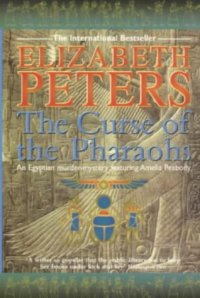 Book: “The Curse of the Pharaohs” by Elizabeth Peters
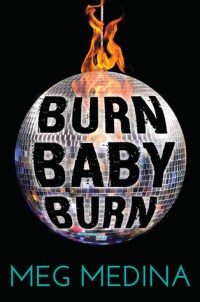 Book: “Burn Baby Burn” by Meg Medina
 Book: “As I Darken” by Kiersten White
 Book: “DC Comics: Bombshells (Vol.2): Allies” by Marguerite Bennett, Mirka Andolfo (ill.), and (Laura Braga (ill.).

 Book: “Crocodile on the Sandbank” by Elizabeth Peters
 Book: “The Anatomist’s Wife” by Anna Lee Huber
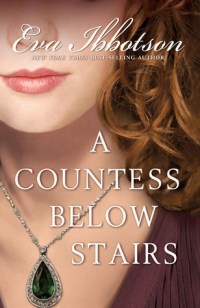 Book:“A Countess Below Stairs” by Eva Ibbotson
 Book: “My Lady Jane” by Cynthia Hand, Brodi Ashton, and Jodi Meadows
 The Library Ladies