Serena’s Review: “Longshadow”

This post may contain affiliate links for books we recommend.  Read the full disclosure here.
Book: “Longshadow” by Olivia Atwater

Publishing Info: Orbit, August 2022

Where Did I Get this Book: from the publisher!

Where Can You Get this Book: Amazon | IndieBound | WorldCat

Book Description: The marriageable young ladies of London are dying mysteriously, and Abigail Wilder intends to discover why. Abigail’s father, the Lord Sorcier of England, believes that a dark lord of faerie is involved – but while Abigail is willing to match her magic against Lord Longshadow, neither her father nor high society believe that she is capable of doing so.

Thankfully, Abigail is not the only one investigating the terrible events in London. Mercy, a street rat and self-taught magician, insists on joining Abigail to unravel the mystery. But while Mercy’s own magic is strange and foreboding, she may well post an even greater danger to Abigail’s heart.

Review: I’ve been having a blast this summer working my way through Atwater’s historical fantasy romances. I was so blown away by “Half a Soul,” and then the follow-up, “Ten Thousand Stitches,” was just as fun. That being the case, I wasted no time in picking up this book once my ARC arrived. And, while it probably is my least favorite of the three, it was still a solid, fun read.

Abigail has never felt a keen interest in dancing with the gentlemen at the various balls and parties she attends with her family. However, she recognizes that it holds appeal for many of the other marriable young ladies. But then those same ladies begin to mysteriously die, and Abigail discovers that while dancing may not be her thing, solving a murder mystery sure seems to be. When she teams up with self-taught magician who comes from a very different rung of society, Abigail begins to understand that she may not know herself as well as she thought.

Much of the appeal from the first two books was present again here. The writing was fun, clear, and fast moving (even if the plot was less so at times). In a word, these books have all been very “readable.” It was also a blast getting to see several of the characters from the first two books as well. I love it when authors manage to write stand alone stories but then weave in familiar faces in follow-up works. You get the returning-faces-appeal of sequels without having to forfeit a new main character and new overall story. It was nice to see these characters, but the balance was also appropriate, as it remained Abigail and Mercy’s story throughout.

However, didn’t find myself quite as attached to either of these characters as I did the ones in the first two books. I think in some ways this was just my own preference for the type of characters/romances that I most enjoy. The first book, especially, had the exact sort of romance I love. Here, while I enjoyed the uniqueness of Mercy and Abigail’s story, I didn’t find myself swept away by their romantic arc. Mercy had a few reveals later on that added to her story, but overall, she wasn’t the sort of love interest that I most enjoy.

I did like the murder mystery, overall. This definitely falls over several of my preferred genres. But again, here, I found the pacing of the story and mystery to be a bit more off than in the first two books. The story takes a decent amount of time to really get going. And by the time we get to the reveals around the mystery, it begins to highlight the fact that for the reader, the mystery was pretty much unsolvable. Again, there’s a delicate balance to be found between making a mystery so obvious that the reader immediately guesses the solution before the sleuth themselves does, and going to far the other way, where the mystery is totally unsolvable on its own.

Overall, this book delivered on much of what I expected from it: a fun story, a slow-burn romance, and a lovely balance of fantasy and history. That said, it’s probably my least favorite of the three. But fans of the first two will likely still enjoy this one and should definitely give it a go!

Rating 8: A bit slower than the first two books, but still a fun beach read that is sure to be a hit, especially for those looking for a sapphic love story in historical fiction.

Reader’s Advisory:

“Longshadow” isn’t on any Goodreads lists yet, but, like the others, it should be on Regency Fantasy Books.

Book Club Review: “We Are Not Free”


This post may contain affiliate links for books we recommend.  
Read the full disclosure here.

We are part of a group of librarian friends who have had an ongoing book club running for the last several years. Each “season” (we’re nerds) we pick a theme and each of us chooses a book within that theme for us all to read. Our current theme is “Book Bingo” where we drew reading challenges commonly found on book bingo cards from a hat and chose a book based on that.  For this blog, we will post a joint review of each book we read for book club. We’ll also post the next book coming up in book club. So feel free to read along with us or use our book selections and questions in your own book club!

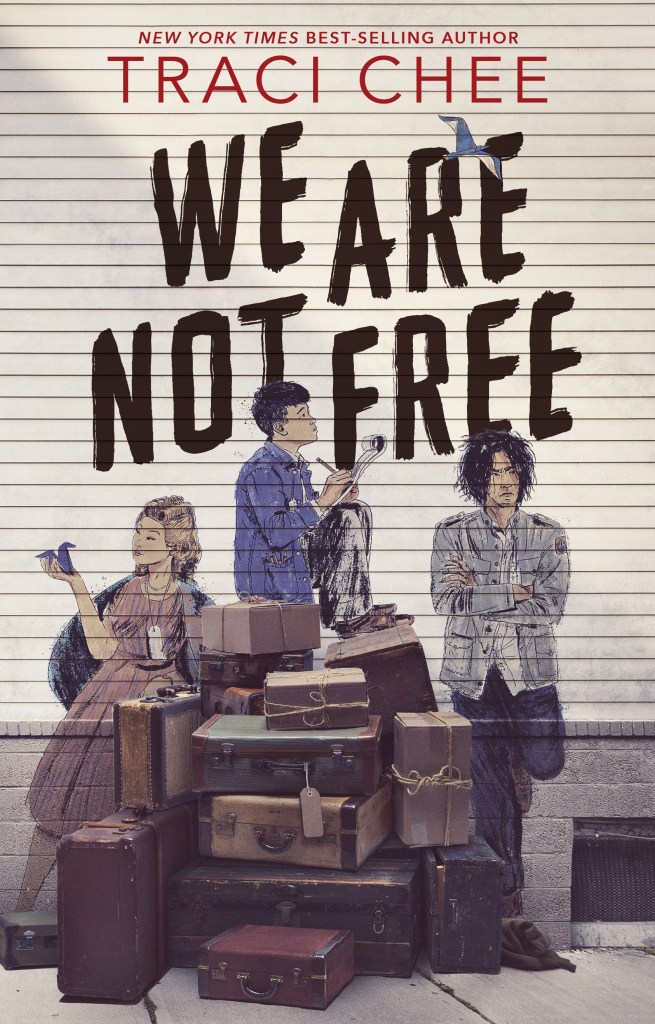
Book: “We Are Not Free” by Traci Chee

Publishing Info: HMH Books For Young Readers, September 2020

Where Did I Get This Book: The library!

Where You Can Get This Book: WorldCat | Amazon | Indiebound

Book Bingo Prompt: A book that takes place during a war.

Book Description: “All around me, my friends are talking, joking, laughing. Outside is the camp, the barbed wire, the guard towers, the city, the country that hates us. We are not free. But we are not alone.” 

We Are Not Free, is the collective account of a tight-knit group of young Nisei, second-generation Japanese American citizens, whose lives are irrevocably changed by the mass U.S. incarcerations of World War II.

Fourteen teens who have grown up together in Japantown, San Francisco. Fourteen teens who form a community and a family, as interconnected as they are conflicted. Fourteen teens whose lives are turned upside down when over 100,000 people of Japanese ancestry are removed from their homes and forced into desolate incarceration camps. In a world that seems determined to hate them, these young Nisei must rally together as racism and injustice threaten to pull them apart.

Kate’s Thoughts

This was actually my Book Bingo prompt, and I wanted to think a little bit outside of the box when it came to picking a book that took place during a war. Partially because I’m not super interested in military themed fiction, and partially because I wanted to kind of wanted to stay away from pro-militaristic themes. It quickly occurred to me that I hadn’t yet read Traci Chee’s YA historical fiction “We Are Not Free”, a book about a number of Japanese-American teens who are incarcerated during World War II because of the United States Government’s despicable Executive Order 9066. I’ve reviewed a lot of recent novels about the Japanese American Incarceration on this blog, and found this to be the perfect opportunity. And boy, what a book, and what a great book club discussion.

Chee approaches this story through the eyes of numerous characters, each one getting their own chapter with different perspectives and sometimes writing styles, and each character engages with a different fact or theme of the Incarceration. At first I was a little daunted by the idea of so many characters, but Chee does a really good job of not only letting us get into their heads and get to know them, but also touches on so many aspects of the Incarceration this way. Instead of finding the characters to be maybe less complex due to the one chapter approach, I ended up really caring for all of them as they mention each other and as we get into their heads, allowing us to see how they are perceived by others, but also how they see themselves. They all feel very authentic in their voices, either in how they are reacting to their ordeal and their trauma, or even just in moments of them having very relatable teenage moments that go beyond the Incarceration, like teen love, or school issues, or moments of joy that can still be found in spite of everything.

But we also are able to explore a number of aspects of the Incarceration through these characters that may have been a bit overstuffed had it just been one or two. Chee skillfully tackles things like having to leave everything behind, the cultural divide between the non-Amercain (by force of the government) Issei vs their American Citizen children Nisei, the loyalty oath that was given as a choice to sign or not to sign (and why some may sign and others may not), and the experience of those who enlisted in the war to try and prove their loyalty to their country. And many more. The book doesn’t shy away from any of it, and finds the nuance and complexity in some things while being unflinchingly honest about others. It is such a valuable book in that way for anyone who wants to learn about the Incarceration, as it has relatable and enjoyable characters whom the reader will attach to, and will therein learn through. Our book club had some awesome conversations about this book, and I have no doubt that classrooms would as well.

I’m glad I finally read “We Are Not Free”, and glad that this cycle’s theme got me off my butt to finally do so. It’s highly recommended, and necessary, historical fiction.

Kate’s Review 9: Powerful, engrossing, enraging, and hopeful, “We Are Not Free” is a valuable tool to learn about the Japanese American Incarceration that is must read for those interested in the subject.

Book Club Questions

  1. What did you think of the structure of this novel? Did you like all the different perspectives? Why or why not?
  2. When did you first learn about the Incarceration? How was it approached when you did learn about it?
  3. Chee has an author’s note about the use of modern language sensibilities in this book? What were your thoughts on this choice?
  4. Did you have a chapter you liked best or that stood out from the others? What was it about that chapter that spoke to you?
  5. What were you thoughts on the way Chee portrayed the conflict between Nisei vs Issei in how they dealt with their ordeal?
  6. Do you think this would be a useful tool to teach the Incarceration to teenagers? Why or why not?

Reader’s Advisory

“We Are Not Free” is included on the Goodreads lists “Japanese American Internment in YA & Middle Grade Fiction”, and “Surviving in the Japanese Relocation Centers of WW2”.

Next Book Club Book: “The Ten Thousand Doors of January” by Alix E. Harrow

Kate’s Review: “Mademoiselle Revolution”

This post may contain affiliate links for books we recommend.  Read the full disclosure here.

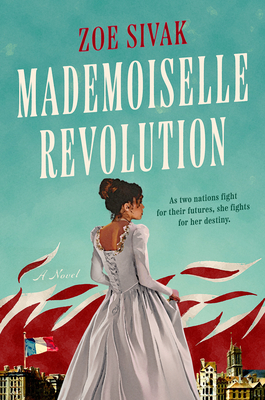
Book: “Mademoiselle Revolution” by Zoe Sivak

Publishing Info: Berkley Books, August 2022

Where Did I Get This Book: I received an eARC from the publisher via NetGalley.

Where You Can Get This Book: WorldCat | Amazon | Indiebound

Book Description: A powerful, engrossing story of a biracial heiress who escapes to Paris when the Haitian Revolution burns across her island home. But as she works her way into the inner circle of Robespierre and his mistress, she learns that not even oceans can stop the flames of revolution.

Sylvie de Rosiers, as the daughter of a rich planter and an enslaved woman, enjoys the comforts of a lady in 1791 Saint-Domingue society. But while she was born to privilege, she was never fully accepted by island elites. After a violent rebellion begins the Haitian Revolution, Sylvie and her brother leave their family and old lives behind to flee unwittingly into another uprising–in austere and radical Paris. Sylvie quickly becomes enamored with the aims of the Revolution, as well as with the revolutionaries themselves–most notably Maximilien Robespierre and his mistress, Cornélie Duplay.

As a rising leader and abolitionist, Robespierre sees an opportunity to exploit Sylvie’s race and abandonment of her aristocratic roots as an example of his ideals, while the strong-willed Cornélie offers Sylvie safe harbor and guidance in free thought. Sylvie battles with her past complicity in a slave society and her future within this new world order as she finds herself increasingly torn between Robespierre’s ideology and Cornélie’s love.

When the Reign of Terror descends, Sylvie must decide whether to become an accomplice while a new empire rises on the bones of innocents…or risk losing her head

Review: Thank you to Berkley Books for sending me access to an eARC of this novel via NetGalley!

I remember a few years ago I was at a party that was thrown by a former work colleague, and I was sitting on the couch with my friend Scott as we played introverts and talked to each other for almost two hours as we caught up and enjoyed each other’s company. We ended up talking about the ills of society, and he made some comment about guillotines and the French Revolution, and as I sipped my mixed drink I said ‘yeah, but then you get Robespierre. I don’t want Robespierre!’ I’ve had a chip on my shoulder about Robespierre ever since we learned about the French Revolution in tenth grade. Like, what a dick! A timeless tale of someone who had good intentions but then was completely corrupted by power and then turned into a goddamn blood soaked monster in an effort to hold onto his power.

It’s a weird angry fixation I have, but it’s mine all the same. (source)

Needless to say, when I found an email from Berkley Books in my folder tempting me with “Mademoiselle Revolution”, a story about a biracial woman who fled Haiti during their Revolution only to find herself cozying up to Robespierre during the French Revolution, I was immediately on board. BRING ON THE ROBESPIERRE DISSECTION AND HOPEFULLY SLANDER!

But even better, “Mademoiselle Revolution” is a story that has a deeply resonant heart, centered by its protagonist Sylvie de Rosiers, a biracial woman who grew up in privilege due to her father’s status as a plantation owner, though her mother was one of the enslaved women he owned whom he raped and exploited. Sylvie was raised in her father’s home and treated like family, though her lineage and the color of her skin made it so she never truly belonged, even as she got to live in lavish luxury while other people who looked like her were being subjected to daily brutality and dehumanization. It is when the Haitian Revolution is at her doorstep and her family flees that Sylvie starts to grapple with the Otherness she has always dealt with, and her complicity to a system that she had the privilege to be mostly removed from. It makes for a complex and nuanced character from the jump, and it sets up to make all of her choices, once she and her loving brother Gaspard end up in Paris, make perfect sense. I really loved seeing Sylvie evolve in this story as she tries to make up for her complicity, and how she dives head first into the romanticism and justice seeking angles of the rumbling French Revolution as she gets close to Robespierre and his lover Cornélie, and how her guilt and optimism and naïveté send her into dangerous waters. Sivak tackles the racial politics and racism of the time and the cultures at hand with deftness, and shows the seeming contradictions of Sylvie’s experiences with ease and in a way that makes it very understandable. She is also that really well done main character who interacts with historical figures without feeling like it’s overdone or unrealistic. Sylvie’s role is well conceived enough that I totally bought into all of the scenarios and relationships that Sivak put her in, and that says a lot. Because Sylvie does a LOT.

I also really liked how Sivak shows that complexities of a group of true believers whose hearts start in the right place, and then become corrupted as time goes on. That’s my biggest issue with Robespierre at the end of the day; he wasn’t wrong about the corruption and the violence of the French Aristocracy. But when you start cutting the heads off of anyone you please because you THINK they may disagree with you, that’s when you become a whole other problem. And Sivak has a lot of horrifying moments in this book that really hit home how off point the message became, which led to a lot of suffering and then Napoleon friggin’ Bonaparte. There is one scene in particular that involved a severed head being put on display around town, specifically in a cafe, and used in a way that is SO dehumanizing and disgusting that it made my blood run cold. Sivak does a fantastic job of showing just how horrific the Reign of Terror, and the violence leading up to it, was, and how people like Robespierre are more than willing to exploit and use people like Sylvie to get what they want. It is intense and it makes for some very suspenseful moments, and that is why I am classifying this as a thriller as well as an historical fiction title. It’s absolutely harrowing at times, watching the walls close in on the circle of revolutionaries as they turn on each other.

I really enjoyed “Mademoiselle Revolution”. It is sure to wow fans of political thrillers and historical fiction alike. Go out and get your hands on this book!

Rating 9: Engaging, intense, and harrowing, “Mademoiselle Revolution” is a historical political thriller that explores identity, race, revolution, and the dangers of fanaticism.

Reader’s Advisory:

“Mademoiselle Revolution” is included on the Goodreads lists “Historical Fiction – The Caribbean”, and “Historical Fiction – France”.

Serena’s Review: “The Book of Gothel”

This post may contain affiliate links for books we recommend.  Read the full disclosure here.

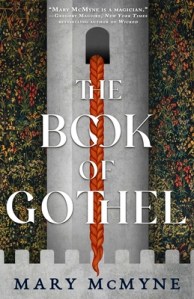
Book: “The Book of Gothel” by Mary McMyne

Publishing Info: Redhook, July 2022

Where Did I Get this Book: from the publisher!

Where Can You Get this Book: Amazon | IndieBound | WorldCat

Book Description: Haelewise has always lived under the shadow of her mother, Hedda—a woman who will do anything to keep her daughter protected. For with her strange black eyes and even stranger fainting spells, Haelewise is shunned by her medieval village, and her only solace lies in the stories her mother tells of child-stealing witches, of princes in wolf-skins, of an ancient tower cloaked in mist, where women will find shelter if they are brave enough to seek it.

Then, Hedda dies, and Haelewise is left unmoored. With nothing left for her in her village, she sets out to find the legendary tower her mother used to speak of—a place called Gothel, where Haelewise meets a wise woman willing to take her under her wing.

But Haelewise is not the only woman to seek refuge at Gothel. It’s also a haven for a girl named Rika, who carries with her a secret the Church strives to keep hidden. A secret that unlocks a dark world of ancient spells and murderous nobles behind the world Haelewise has always known…

Review: I always love fairytale retellings, so it was pretty much a given that I would get my hands on this book somehow this summer. It also just happened that bookclub had finished up reading “Circe” (which I loved), so when I saw that this was also being compared to that plus “Wicked,” I knew this was going to jump my order of reading for July releases. It’s always so interesting to see what authors manage to dream up for characters who are not only “wicked,” but also only feature very briefly in someone else’s tale. Not only do these bare bones characters need to be fleshed out, but you have to imagine an entire history and world that will weave into a tale that must remain somewhat familiar to readers. It’s a challenge, for sure, but there are also a number of ways to go with it. Let’s dive in!

In medieval Germany, almost anything can get a woman labeled “witch.” So, between her strange fainting spells and her powerful, midwife mother, Haelewise is doomed to a childhood of side-eyes and whispers. When tragedy strikes her small family and what stability she has managed to find for herself is shaken beneath her feet, Haelewise sets off for a fabled tower her mother once spoke of. The mysterious Gothel is a refuge for women who do not fit into the narrow molds offered to them, and there Haelewise’s understanding of herself and the world explode outwards, as powerful forces clash and another strange girl, Rika, carries a secret that could change everything.

There was a lot to like about this retelling! For one thing, “Rapunzel” seems like a fresh beat in the fairytale retellings subgenre, so it immediately felt new and interesting. However, that’s not enough to make a story great. Right off the bat, it was clear the author had done her research into medieval Germany. The society, language, and culture all felt spot-on. Obviously, there was a good amount of magic, especially in the final bit of the book, but without that, it would have been easy to confuse oneself into thinking this was a historical fiction novel instead of fantasy at all. We even had a notable historical figure make an appearance, which I absolutely loved. Part of me wishes we had seen more of them, but then again, it wasn’t their story so we wouldn’t want them to steal the show.

Haelewise’s story feels achingly familiar to what we can imagine life for a strange woman in this time period would be. Her fainting fits would likely have an easily understandable medical diagnosis in our time, and it would barely affect her life. But in this time, even such a little thing as this is enough to get her marked as strange and make others leery of her. I really liked the way her character is worked into the classic fairytale, and even how “Rapunzel” herself has a tale that twists out in a unique way, though still familiar enough to be recognizable.

The book plays out over the entirety of Haelewise’s life, so we do get to see a decent amount of her childhood and youth, alongside her years as an adult. While I liked this in general, I did feel that the balance of the romance was slightly off. We got to see Haelewise and Matthuas a lot when they are younger, but the I didn’t feel like we got to see enough of them together as adults. Yes, the romance is definitely not the heart of the story, but for me, I can always do with a dash more!

Overall, I really liked this book. It’s well-researched and a fresh view of a less popular fairytale. Fans of fairytale re-tellings, especially those that focus on women who played only small roles in their original tales (ala “Circe” and “Wicked”) should definitely check this one out! Aldo, don’t forget to enter to win an ARC copy of this book!

Enter to win!

Rating 8: Right up my alley for a fairytale retelling from a “villain’s” perspective!

Reader’s Advisory:

“The Book of Gothel” is on this Goodreads list: Debuts in 2022

Giveaway: “The Book of Gothel”

This post may contain affiliate links for books we recommend.  Read the full disclosure here.

Book: “The Book of Gothel” by Mary McMyne

Publishing Info: Redhook, July 2022

Where Can You Get this Book: Amazon | IndieBound | WorldCat

Book Description: Haelewise has always lived under the shadow of her mother, Hedda—a woman who will do anything to keep her daughter protected. For with her strange black eyes and even stranger fainting spells, Haelewise is shunned by her medieval village, and her only solace lies in the stories her mother tells of child-stealing witches, of princes in wolf-skins, of an ancient tower cloaked in mist, where women will find shelter if they are brave enough to seek it.

Then, Hedda dies, and Haelewise is left unmoored. With nothing left for her in her village, she sets out to find the legendary tower her mother used to speak of—a place called Gothel, where Haelewise meets a wise woman willing to take her under her wing.

But Haelewise is not the only woman to seek refuge at Gothel. It’s also a haven for a girl named Rika, who carries with her a secret the Church strives to keep hidden. A secret that unlocks a dark world of ancient spells and murderous nobles behind the world Haelewise has always known…

Giveaway Details:

I always love fairytale retellings, so it was pretty much a given that I would get my hands on this book somehow this summer. It also just happened that bookclub had finished up reading “Circe” (which I loved), so when I saw that this was also being compared to that plus “Wicked,” I knew this was going to jump my order of reading for July releases. It’s always so interesting to see what authors manage to dream up for characters who are not only “wicked,” but also only feature very briefly in someone else’s tale. Not only do these bare bones characters need to be fleshed out, but you have to imagine an entire history and world that will weave into a tale that must remain somewhat familiar to readers. It’s a challenge, for sure, but there are also a number of ways to go with it. So half the fun is seeing what each author chooses to do. I can’t wait to see where we go with this retelling!

Per the usual, my review for this book will be up Friday. But don’t wait until then to get in on the chance to win a copy of this book! This giveaway is open to U.S. residents only and will end on August 2.

Enter to win!

Joint Review: “The Daughter of Doctor Moreau”

This post may contain affiliate links for books we recommend.  Read the full disclosure here.

Book: “The Daughter of Doctor Moreau” by Silvia Moreno-Garcia

Publishing Info: Del Rey, July 2022

Where Did We Get This Book: We received eARCs from NetGalley and Edelweiss+.

Where You Can Get This Book: WorldCat | Amazon | Indiebound

Book Description: From the New York Times bestselling author of Mexican Gothic and Velvet Was the Night comes a dreamy reimagining of The Island of Doctor Moreau set against the backdrop of nineteenth-century Mexico.

Carlota Moreau: a young woman, growing up in a distant and luxuriant estate, safe from the conflict and strife of the Yucatán peninsula. The only daughter of either a genius, or a madman.

Montgomery Laughton: a melancholic overseer with a tragic past and a propensity for alcohol. An outcast who assists Dr. Moreau with his scientific experiments, which are financed by the Lizaldes, owners of magnificent haciendas and plentiful coffers.

The hybrids: the fruits of the Doctor’s labor, destined to blindly obey their creator and remain in the shadows. A motley group of part human, part animal monstrosities.

All of them living in a perfectly balanced and static world, which is jolted by the abrupt arrival of Eduardo Lizalde, the charming and careless son of Doctor Moreau’s patron, who will unwittingly begin a dangerous chain reaction. For Moreau keeps secrets, Carlota has questions, and in the sweltering heat of the jungle, passions may ignite.

THE DAUGHTER OF DOCTOR MOREAU is both a dazzling historical novel and a daring science fiction journey.

Kate’s Thoughts

It is basically guaranteed at this point that if Silvia Moreno-Garcia has a book coming out, no matter what the genre, I am going to read it. I have enjoyed practically all of her books and her chameleon-like ability to merge into practically any genre as though she is a master of it. And while I haven’t read “The Island of Doctor Moreau”, I know enough about it that the idea of her taking it on was incredibly tantalizing. Especially since she decided to set it in the Yucatán during a volatile time in Mexican political history. And lo and behold, even though I wasn’t super familiar with the source material, and even though I’m not generally a Sci-Fi fan, “The Daughter of Doctor Moreau” worked wonders for me.

I think that it’s really the setting and the descriptions that gave it the extra kick for me. Moreno-Garcia has never been shy when it comes to addressing various social aspects of Mexican culture and history, and lord knows that Spanish colonialism and imperial oppression are themes that fit right into the original story of the Other and men who believe themselves to be able to play God. We have Dr. Moreau and his daughter Carlotta, who are living in isolation as Moreau creates ‘hybrids’, beings of combined animal and human genetics, which he does in pursuit of science. But funding has to come from somewhere, and therefore the wealthy Spanish descended benefactors intend to give Moreau money in exchange for laborers for their plantation. So we already have one central caste system with our main characters (as well as an outlier of Montgomery, an English doctor who is the overseer of the hybrids who is trying to escape his own dark past), one that reflects foreign influences, Spanish imperialism, and those perceived as less than. I liked seeing how Moreno-Garcia explored these themes, through the eyes of both Carlotta but also Montgomery as they have to face realities about their complicity, as well as things about their own identities. The historical aspects are on point, and Moreno-Garcia always has some great insights to explore through the genre conventions.

The streak continues for my love of Silvia Moreno-Garcia. Even if you are unfamiliar with the original tale, “The Daughter of Doctor Moreau” will have a lot to offer. Do yourself a favor and dive into Moreno-Garcia’s works if you haven’t yet, and here is as good a place as any to start!

Serena’s Thoughts

I think there are a few things you can now expect from a book authored by Silvia Moreno-Garcia. First, she’ll have stellar characters and the story will be told from the perspective of several of them (even more unique to her, the “villain” of many of her stories will also have a perspective point). Second, the story may be a slow-burn as far as the overall tempo of the story, but if you have faith, things will very much get moving before long. And third, you can never expect what genre you will find yourself in with this author. She has an uncanny ability of weaving together a variety of seemingly completely different concepts and themes and somehow…magic happens! We’ve already seen a mixture of the classic Gothic horror story with a Mexican setting and themes of colonialism. And here, we have a reimaging of the “The Island of Doctor Moreau” set in the Yucatan peninsula during the 1800s. It’s horror, it’s science fiction, it’s historical fiction. All at once!

I only knew the most broad points of the original tale, so I can only confirm that this story was approachable as new-comer. I was able to get a pretty decent understanding of that story, but having not read it myself, I can’t say what details may or may not match up. What I can say is that Moreno-Garcia uses the platform offered up by this story (a grieving doctor and his “monstrous” creations) as a platform to explore themes of identity and otherness, and the combination works really well. Our main character, the titular daughter of the doctor, brings a unique perspective to the story, as a young woman coming into her own in a very isolated and strange environment.

As I said, one of the best things about this story is how it blends the science fiction and horror elements with the historical backdrop of this region during this time period. Like the original story itself, I didn’t have a ton of knowledge of the politics and parties involved during this time period, but the book does an excellent job introducing readers. The author also includes a great note at the end of the story that speaks to her research into this period of history. I definitely recommend this book to science fiction/horror readers, and to anyone who has enjoyed Moreno-Garcia’s books in the past!

Kate’s Rating 8: A science fiction tale that steeps in literary description and a lush historical setting, “The Daughter of Doctor Moreau” is another enjoyable read from genre jumper Silvia Moreno-Garcia!

Serena’s Rating 8: Another unique entry by one of the most reliable (but genre unreliable) authors of the day. Should be a hit with a wide range of readers!

Reader’s Advisory

“The Daughter of Doctor Moreau” is included on the Goodreads lists “Latino Science Fiction”, and “Historical Fiction Set in Latin America”.

Serena’s Review: “Ten Thousand Stitches”

This post may contain affiliate links for books we recommend.  Read the full disclosure here.

Book: “Ten Thousand Stitches” by Olivia Atwater

Publishing Info: Orbit, July 2022

Where Did I Get this Book: from the publisher!

Where Can You Get this Book: Amazon | IndieBound | WorldCat

Book Description: Effie has most inconveniently fallen in love with the dashing Mr Benedict Ashbrooke. There’s only one problem; Effie is a housemaid, and a housemaid cannot marry a gentleman. It seems that Effie is out of luck until she stumbles into the faerie realm of Lord Blackthorn, who is only too eager to help Effie win Mr Ashbrooke’s heart. All he asks in return is that Effie sew ten thousand stitches onto his favourite jacket.

Effie has heard rumours about what happens to those who accept help from faeries, but life as a maid at Hartfield is so awful that she is willing to risk even her immortal soul for a chance at something better. Now, she has one hundred days – and ten thousand stitches – to make Mr Ashbrooke fall in love and propose. . . if Lord Blackthorn doesn’t wreck things by accident, that is. For Effie’s greatest obstacle might well prove to be Lord Blackthorn’s overwhelmingly good intentions.

Previously Reviewed: “Half a Soul”

Review: I really enjoyed “Half a Soul.” I think I read it in maybe two sittings? That made it all the sweeter being able to look ahead to the summer and see two more books of the same style by Atwater coming down the pike. Frankly, it was very difficult to even wait until now to read the second book! Of course, given the highs of the first book, there was a lingering question whether this book could live up to that first outing!

As a housemaid, Effie has resigned herself to a life of invisibility, only noticeable to the very few for her fine embroidery work. But one day, a young man of nobility smiles at her, and she’s lost. As luck would have it, she shortly thereafter runs into a faerie with mission: Lord Blackthorn wants to go forth and do good in the world. However, being a faerie, he’s still restricted to bargain -making and so he offers to help Effie marry her lord if she completes a stitching project for him, one stitch for every minute spent on her lord-marrying plot. Things are going along well (or as well as they can with a bumbling faerie who really doesn’t understand the first thing about humans), but soon enough Effie begins to question whether she’s really after the right man.

So far, we’re two for two! While I think I liked the first book a shade better than this one, it’s such a small distinction that it’s barely worth noting. I’ll get to that reason in a bit. But first, there are many things to praise about this book! For one thing, the author’s blend of fantasy, comedy, and class commentary is still excellent. I loved getting to explore more about the faeries of her world and the land of Faerie itself. We also got to see some familiar faces here, which was excellent. I don’t want to spoil it, but there was a character in the second book who only popped up in the final quarter but stole the show the moment they did. And they were back here in all of their glory!

And, again, the author has done an excellent job of using her magical elements to highlight and explore the injustices present in British society during this time period. The first book explored it from the view of nobility being forced to confront the underbelly of their glittering world. But this book focuses on Effie, a servant, and the constant anger and powerlessness she feels in the face of poor working standards and a lack of bargaining power. Through her experiences, we see how much of a servant’s life is dependent on the chance goodwill of the masters of the house. And in the face of a bad home owner, she sees practically no recourse for improvement. Even leaving the situation is impossible if you can’t get a good letter of recommendation. I also liked how the magical elements weren’t a simple wand-wave to make the conditions better. I won’t spoil how it all worked, but, again, it was a perfect marriage of fantasy alongside very real world dilemmas and solutions.

As someone who embroiders quite a lot myself, I always enjoy fantasy stories that focus on the magic of stitching and sewing. Again, no spoilers, but I was really surprised with the way that Effie’s sewing came into the story. From the description, I thought we were heading down much more of a “Rumpelstiltskin” path with an impossible task, but that really wasn’t the case.

I also really liked Effie and Lord Blackthorn. Effie’s anger and determination were both excellent, however foolish she may have been with falling in “love” with the first nobleman to smile at her. She endures through much, and slowly begins to learn more about herself and the role she wants to play in the world going forward. Lord Blackthorn was everything that is endearing, being a very good-hearted faerie but very ignorant of basic human facts. Their relationship was charismatic and adorable, especially the moments where we begin to see the tingling feelings of suspicion that they may each be barking up the wrong tree in their original arrangement.

However, my one qualm did come down to the romance. While overall I really loved it, it’s a hard balance to have your romantic hero also play the main comedy role. It was just a tough part to fit, with some of his bumbling playing for great laughs and “ah shucks” moments, but then those same aspects of his personality directly conflicted with the more typical romantic hero vibes you may be expecting. However, that’s not to say that all romantic interests must be the same. It was more that some of the more childish aspects of his faerie self played at conflict with the adult romance he was also supposed to be within. But, like I said, I still very much enjoyed this part of the book too, so it definitely wasn’t a deal breaker, just the reason I prefer the first book to this one.

All in all, this was a great second outing! Atwater has a strong writing voice and it meshes perfectly with her light-hearted, but important-issues-focused stories. I’m very excited to check out her third book this August!

Rating 8: While comic relief and romantic hero may be a hard combo, this story was just as sweet and fun as the first book!

Reader’s Advisory:

“Ten Thousand Stitches” can be found on these Goodreads lists: Stitchwitchery

Blog Tour: Excerpt of “To Kiss a Wallflower”

This post may contain affiliate links for books we recommend.  Read the full disclosure here.

Book: “To Kiss a Wallflower” by Jen Geigle Johnson, Heather B. Moore, & Anneka R. Walker

Publishing Info: Mirror Press, June 2022

Where Did I Get this Book: from the publicist!

Where Can You Get this Book: Amazon | IndieBound | WorldCat

Book Description: THE WALLFLOWER’S DANCE by Jen Geigle Johnson

Lottie Hughes likes people, as long as they aren’t too close. Does it bother her that no one asks her to dance? Yes, but she’s not sure how to drum up dance partners when she has almost no dowry, no title, and freezes up when anyone tries to talk to her. When she suddenly inherits a huge amount and is the new center of attention all over London, her secret dreams might come true but also her worst nightmares. Suddenly everyone wants to talk to her. Men ask her to dance. And she is inundated with interested suitors. She fights to stay close to the few friends she knows are true. One man saw her before her life changed forever. But does she want to accept his help when he, too, might be insincere?

LETTERS TO A WALLFLOWER by Heather B. Moore

Ellen might be beautiful and considered a diamond of the first water by Society, but she is so very tired of the pressure to marry a titled gentleman so that her beauty won’t go to waste. When her cousin Dinah dares Ellen to attend a ball with no frills and to stand with the wallflowers, Ellen takes on the dare. What’s in the wager for her? The prize cuttings of her aunt’s extraordinary roses. But what Ellen isn’t expecting is Lord Ravenshire to engage her in the most interesting conversation. When she confesses to him of her opposition in marrying for a title, he confesses his distaste of the London scene. They strike a bargain together, one which will either push them apart or lead to a future sweeter than either of them could have imagined.

TO MARRY A WALLFLOWER by Anneka R. Walker

Charlotte Winters is destined to spinsterhood until she turns down an unwanted proposal and everything changes. With gossip rampant, her father attempts to salvage her reputation by betrothing her to another. Soon she is sent off to her aunt’s to meet Lord Templeton, her intended. Anxiety-ridden, Charlotte begs her aunt to let her observe Lord Templeton from afar before their introduction. She never planned to pretend to be her fictional cousin to learn more about him, or to fall in love with Lord Templeton’s friend in the process. Lord Templeton dreads returning to the empty halls of Newcliff Manor. When his father’s old friend, Mr. Winters reaches out for assistance, Lord Templeton finds himself returning home engaged to a woman he has never met. Desperate to learn more about Miss Winters, he befriends her cousin. He wouldn’t have spoken to her, or lied about his identity, if he’d known the quiet woman would sneak into his heart.

Note: Thank you so much to Laurel Ann for reaching out to me with the opportunity to participate in this blog tour! I love working with other bloggers to help promote books that may not get as much attention on their own. It’s also a great way of meeting other bloggers out there who are doing some excellent work! Today, I’m going to feature an excerpt from this book. I’ll likely post a full review at a later date. Enjoy!

Excerpt:

The Wallflower’s Dance

by Jen Geigle Johnson

Chapter One

Despite Lottie’s mother, who wished to know and be known by all and sundry, Lottie was still of the opinion that few people were required for happiness. Three things were needed: her closest friends, a good book, and lovely walks in the park. 

And perhaps a husband. 

Someday. 

If he too preferred little company, books, and walks in the park. 

She brought her brush, thick with paint, over the wood of a new table. She’d found a particular shade of lavender and knew it would go well in her sitting room. The lovely rich color covered the white beneath it completely. 

Lottie smiled. Once this coat dried, she could add embellishments, flowers, a trailing vine of green, whatever she liked.

Her mother peeked her head in the door to her art room. “Lottie.” The higher-pitched energy that exuded from her mother any time of day only felt companionable when Lottie too was full of energy. Which was usually reserved for the late hours of a ball. Something about the middle of the night filled Lottie with adventure. By then, her mother was typically nodding off in a corner somewhere.

“I’m painting, Mother. Come see this shade of purple. It’s like nothing I’ve ever used before.”

To her credit, she stepped into the room and glanced at the painting. “Very nice. Now. If you could take a break, we need to be stunning, absolutely beautiful for a walk in the park.”

Lottie perked up at walk, but when the gleam in her mother’s eyes sharpened and Lottie paid attention to stunning and beautiful as requirements, she knew this was going to be less about walking and more about being seen. “Perhaps you and your friends could go without me this morning? I’m hoping to finish up this coat.” She knew her excuse sounded weak and her mother did too, judging by the dismissive wave of her fingers.

“Oh come, word has it that Prinny will make an appearance, which suddenly turns a casual walk in the park into a major event of the Season. This is your chance for more introductions, more doors opened to you. Who knows, you may even meet a duke!” The wide, hopeful eyes at the doorway were evidence that Lottie was not going to be able to avoid the park. She left her brush in water and stood, wiping fingers on her apron.

“Should I wear the violet?” 

Mother was about to give Lottie’s maid very detailed instructions as to her appearance anyway, so she might as well ask her before choosing a dress herself.

“No, too dark and bold for a walk in the park. Wear a pastel. But a colorful bonnet. Don’t worry, I’ve instructed Dorothea in all the particulars.”

Dorothea, Lottie’s maid, very obviously worked for her mother. She could never be convinced to alter the prearranged instructions on Lottie’s presentation. But no matter. Lottie moved obediently to her bedroom and the preparations began, starting with an intricate hairstyle that would be hidden underneath her bonnet. But Lottie knew better than to discuss her opinion on the particulars. She watched Dorothea in the mirror. Perhaps they would be able to have some entertainment to enliven them both. Entertainment in the form of another maid, reading aloud their latest favorite novel. Lottie’s eyes met Dorothea’s. “Will Penny be able to slip away?”

“I believe so, miss.” Dorothea smiled. She enjoyed the books as much as Lottie, and if Lottie was to be sitting in this chair for hours, they may as well be entertained.

Lottie had discovered the rare occurrence of a servant who knew how to read. Even though she sometimes stumbled, she did less so now that she’d been tasked with the very important assignment of reading to Lottie while she prepared for the day. Penny slipped in through the servants’ entrance. “I’ve just come from the kitchen.” Her mischievous smile made Lottie laugh.

“Are they missing you?”

She waved a hand. “Not at all. Cook has an army of people in there, helping. I’ve finished all my other chores.”

“Excellent and, of course, I called for you. That should help.”

Both servants shared a look, which she took to mean that she had little clout in the servants’ eyes. Well, no matter. “Please start at the beginning.”

Penny nodded, her eyes gleaming with the same hopeful expectation Lottie herself felt. And then she began to read. 

“The Family of Dashwood had long been settled in Sussex.”

Joint Review: “What Moves the Dead”

This post may contain affiliate links for books we recommend.  Read the full disclosure here.

Book: “What Moves the Dead” by T. Kingfisher

Publishing Info: Tor Nightfire, July 2022

Where Did I Get this Book: Edelweiss+; NetGalley

Where Can You Get this Book: Amazon | IndieBound | WorldCat

Book Description: When Alex Easton, a retired soldier, receives word that their childhood friend Madeline Usher is dying, they race to the ancestral home of the Ushers in the remote countryside of Ruritania.

What they find there is a nightmare of fungal growths and possessed wildlife, surrounding a dark, pulsing lake. Madeline sleepwalks and speaks in strange voices at night, and her brother Roderick is consumed with a mysterious malady of the nerves.

Aided by a redoubtable British mycologist and a baffled American doctor, Alex must unravel the secret of the House of Usher before it consumes them all.

Serena’s Thoughts:

As fans of this blog know, I’ve been on a bit of a T. Kingfisher kick lately, after discovering how much I liked her worked after reading “Nettle & Bone.” So when I saw that she was coming out with a horror novella this summer, I was all on board to read it. And of course we had to have our resident horror expert’s take as well, so I roped Kate into this one.

I haven’t read the original “The Fall of the House of Usher;” frankly, I have read very little Poe altogether. But it was easy enough to guess at the typic of gothic horror story it must have been. So, I can’t say how closely T. Kingfisher followed that story. What I do know is that the author took the liberty of not only creating an original narrating character, but an entire country and culture from which that character originated. With that came one of the most interesting takes on new pronouns that I’ve ever seen. What made it work for me was just how well-thought out the language decisions were. They all made sense in the realm of what we can see in other real languages. But beyond the pronouns, Kingfisher used this culture to highlight the limitations placed on women of the time. But, as the author tends to have a light touch on her prose, it was all done in a humorous, if not any less important, way.

I also really liked the horror aspect of this story. In the author’s note (always read the author’s note!), Kingfisher mentions that she was in the process of writing this book when Sylvia Moreno-Garcia put out her “Mexican Gothic,” another gothic horror with a focus on mushrooms and fungus. I’m glad that Kingfisher wasn’t put off of writing this book, however, because they are ultimately very different stories. The fungus, itself, was very different. Sure, it played for all the spooky horror moments. But it also drew on different emotions that I had definitely not expected. I don’t want to get into it further than that for spoiler reasons, but I was definitely having some surprising reactions to various twists and turns towards the end of the book.

Kate’s Thoughts:

Unlike Serena, I have read “The Fall of the House of Usher”, but it had been, oh… twenty five years since I last read it? I remembered the basics, though I did wonder if I would spot the parallels as well as I would have had it not been a quarter century. But good news! I remembered enough to make the comparisons! But even better news is that T. Kingfisher has made the story unique and able to stand on its own while still harkening to the spirit of the original! That is to say, I definitely enjoyed this book!

A lot of the things I found interesting and unique Serena touched upon, but as the resident horror person I will stick to that aspect of the book. Kingfisher does a really good job of sticking to the Gothic paranoia of isolation and slow mental and emotional decline, while also introducing a really gross and unsettling body horror aspect with the fungal themes. While body horror can be a sub genre that makes me incredibly uneasy, what I liked about Kingfisher’s take on it is that this book rarely goes for deliberate over the top gross outs, and instead relies on unsettling imagery like hares that are behaving oddly, or a sleepwalking woman that just seems off, or the eerie beauty of a lake that glows at night for reasons unknown. We never get to super high levels of horror in this book, as there are plenty of moments of levity as well as a matter of fact tone as the story goes on, but there are plenty of beats that are incredibly creepy that feel like moments in the original tale. It’s a very well done homage and retelling that made me squeamish for all the right reasons.

Fans of the original story should check this out, not only because it’s well done, but also because it’s a good introduction to an author who is doing creative things across genres.

Serena’s Rating 8: A short, spooky tale that introduces a new version of a classic tale, new character and culture included!

Kate’s Rating 8: Unsettling and unique, “What Moves the Dead” is a fun reimagining of a Poe staple.

Reader’s Advisory:

“What Moves the Dead” can be found on these Goodreads lists: Fungus Fiction and Summer of Speculative Reading

Serena’s Review: “Half a Soul”

This post may contain affiliate links for books we recommend.  Read the full disclosure here.

Book: “Half a Soul” by Olivia Atwater

Publishing Info: Orbit, June 2022

Where Did I Get this Book: ARC from the publisher!

Where Can You Get this Book: Amazon | IndieBound | WorldCat

Book Description: Ever since she was cursed by a faerie, Theodora Ettings has had no sense of fear or embarrassment – a condition which makes her prone to accidental scandal. Dora hopes to be a quiet, sensible wallflower during the London Season – but when the strange, handsome and utterly uncouth Lord Sorcier discovers her condition, she is instead drawn into dangerous and peculiar faerie affairs.

If Dora’s reputation can survive both her curse and her sudden connection with the least-liked man in all of high society, then she may yet reclaim her normal place in the world. . . but the longer Dora spends with Elias Wilder, the more she begins to suspect that one may indeed fall in love, even with only half a soul.

Review: I was so excited when I received an ARC of this book from Orbit (thank you!). The book description alone checks so many personal favorites of mine that it’s kind of ridiculous. It’s also been a while since I’ve read a good faerie story, so I was particularly excited to revisit this fantasy fan favorite topic.

As a young girl, Theodora Ettings, or Dora, fell prey to a malicious faerie curse. In the blink of an eye, she lost half of her soul and along with it all the sharper edges of emotion. As a young lady, while unconcerned herself with others’ dismay, Dora recognizes that her strange ways and habit of blurting out whatever she is thinking will likely prohibit her from every finding her own marriage match. She’s content, however, to simply help her beloved cousin and make a home with her as a slowly aging spinster. But life takes an unexpected turn when she stumbles into a strange mystery leaving children cursed in a comatose state. Also on the case is the prickly and antisocial Lord Sorcier. As they work closely together, each begins to question their pre-established views of their own futures.

In my opinion, the biggest question with any historical work, be it fantasy, mystery, what have you, is whether the author has a decent handle on the language of the time. Poor word choice, stuttered style, and anachronisms are the surest way to immediately lose me as a reader with this type of book. Immediately, I was relieved to find that not only did this author have a solid handled on this aspect of the story, but she was adept at inserting witty turns of phrase and leaning on some of the inherent ridiculousness of pairing faeries and magic with proper Regency language. This clever writing style was present across prose and dialogue, and there were several laugh-out-loud moments for me during this read.

I also really enjoyed Dora and the effect her curse has on her life and her interactions with the people around her. If you try and think to hard about how the curse truly works with limiting her emotions, you can likely run into a brick wall of confusion, as we do see Dora forming strong attachments to characters throughout the book. But given the explanation that Dora herself gives at one point, I thought it made enough sense for me. Plus, I was having too much fun with the way her curse was playing out on the page, as well as the slow-burn romance that was developing between her and Elias, the Lord Sorcier, to ever feel the need to question or complain.

The mystery around the children was interesting as well. Through this portion of the story, the author shines a clear light on the terrible working/living conditions of the poor living in London at this time. Not only did she highlight the challenges facing this population, but she neatly described the vast distance (partly physically, but mostly through intentional looking away) between the classes and the unwillingness of those living a comfortable life to turn their eyes to the despair surrounding them. There was also a pretty great twist towards the end of this mystery which really added to the story as a whole.

This was a light-hearted, fast-reading romantic fantasy. Fans of Regency romance are sure to enjoy it, as well as those who want a more playful look at faeries and faerie courts. I loved the heck out of this book, and now am even more excited to check out the next one coming out from this author later this summer!

Rating 9: A purely joyful reading experience all around!

Reader’s Advisory:

“Half a Soul” isn’t on any Goodreads lists yet, but it should be on Regency Fantasy Books.