Kate’s Review: “American Vampire (Vol. 4)”

This post may contain affiliate links for books we recommend.  Read the full disclosure here.
Book: “American Vampire (Vol.4)” by Scott Snyder, Rafael Albuquerque (Ill.), & Jordi Bernet (Ill.)

Publishing Info: Vertigo, September 2012

Where Did I Get This Book: I own it.

Where You Can Get This Book: WorldCat | Amazon | Indiebound

Book Description: American Vampire flashes back to two very distinct points in American history. The first tale comes from the early 1800’s with the “The Beast in the Cave” featuring art by the legendary Jordi Bernet (Torpedo, Jonah Hex). Learn about the original American Vampire, Skinner Sweet, and his involvement in the brutal Indian Wars, and an ancient evil hidden in the heart of the Old West. Plus, more about the man Skinner used to call his best friend – James Book!

The second tale comes straight from 1950s America, where American Vampire is terrorizing the suburbs with hot rods, teenyboppers and fangs! “Death Race” focuses on ferocious new vampire hunter Travis Kidd – but what is his connection to Skinner Sweet? As the story comes to a violent end, a sworn enemy’s identity is finally revealed, and lots of blood is spilled!

Writer Scott Snyder (Batman, Swamp Thing) and artist Rafael Albuquerque bring together even more threads to the complex tapestry that is the world of American Vampire.

Review: Admittedly as I was going about my read through of “American Vampire”, I picked up “Volume 4” and had an ‘I have no memory of this place’ moment. I had vivid recollections of the previous volume, just as I have recollections of what comes next. But this one didn’t stand out in my mind. So I was eager to dive in and remind myself what this volume had to offer. But as I was reading, I realized that there was probably reason I didn’t remember much. “American Vampire (Vol. 4)” is, unfortunately, the weakest part of the story yet.

But as always, let’s start with what I did like, and that was mostly the story “The Nocturnes”. We follow Calvin, one of the Vassals that was sent on the basically doomed Taipan mission during WWII, who we thought was dead, but actually was turned into a vampire when he was accidentally exposed to some of Pearl’s blood. The good news is he’s still working for the Vassals, and this standalone tale is following him and what he’s been up to. Mostly it’s taxonomy for the organization, categorizing different and new vampire subspecies, and in this story it isn’t a mission that has his interest, but a familial one: once he became a vampire he cut all ties to the living world outside of work, and he just wants to see his brother perform in his singing group. Unfortunately it’s in a sundown town, and also unfortunately, there are vampires afoot. I like Calvin as a character, and I liked seeing this exploration of what you have to give up as a Vassal, as those we have met up until now have been pretty solitary anyway. I also liked the way that it explores Jim Crow racism and sundown towns, and Calvin’s Othering because of his skin as well as his undead status. It’s a perspective we haven’t seen yet in the story and I enjoyed it.

BUT, that said, the other arcs in this collection haven’t aged super well from when they were first published. For one, guess who has once again been relegated to the sidelines: Pearl. She is barely in this book. Felicia Book isn’t in it at all. And we are STILL dwelling on Skinner Sweet, and while I KNEW that he wasn’t actually dead, it’s still frustrating that we didn’t get any kind of breather from him as a character who gets a huge friggin’ spotlight. This story takes us back to when he wasn’t yet a vampire, and we find out that he was actually good friends with James Book of all people, and they fought together during the Indian Wars, and oh boy. OH BOY. For one, the very complex and tragic subject matter at hand just doesn’t really sit well with me these days, given how the U.S. Government has consistently participated in a genocide against Indigenous peoples, and having that as a plot point in this story feels pretty grotesque. For another, we get into what is a well meaning story about the actual first American Vampire, an Indigenous woman named Mimiteh who was attacked by colonizer vampires and staked by the Vassals of the Morning Star as a precaution. After rising from the dead she is worshipped and feared by the Apache peoples that the U.S. Government is trying to overwhelm, and it just feels appropriative. It sure doesn’t help that Mimiteh is stark naked in nearly every encounter we see of her, which makes it feel all the more dehumanizing. And here’s a tip, making James Book, one of the pretty clear cut ‘good guys’ of this series, a participant in colonial driven genocide is probably not a good idea if you want him to remain clean nosed (creepy relationship with Felcia’s mother aside). The other story is about a vampire hunter for the Vassals named Travis Kidd, whose family was killed by a vampire and now he’s trying to take all vampires out. I did like some things about this story, namely that Travis kind of has a Charles Starkweather feel to him, in that when we first meet him he is killing his teenage girlfriend’s family, but they are vampires so it’s not the horrific spree that Starkweather had. It’s a wry reference to be sure. But, SURPRISE SURPRISE, do you know who it is that he ultimately wants his revenge against? You guessed it. SKINNER FREAKING SWEET. So we get very little Pearl in this collection, NO Felicia Book, and we get TWO HUGE STORIES WITH SWEET. SERIOUSLY?!

My feelings towards Skinner Sweet, and I MAY BE THE ONLY ONE?! (source)

Okay, so it was a bit of a stumble, but “American Vampire (Vol. 4)” does set up the next arc with a solid cliffhanger. I feel like Pearl and Felicia get more to do next time around, so onwards I go with higher hopes.

Rating 6: It just hasn’t aged super well. Also, while I knew we weren’t done with Skinner Sweet, I REALLY wish we were done with Skinner Sweet. That said, a story following Calvin is pretty good, and I liked some true crime connection and homages.

Reader’s Advisory:

“American Vampire (Vol. 4)” is included on the Goodreads list “Best Horror Comics/Graphic Novels”.

Previously Reviewed:

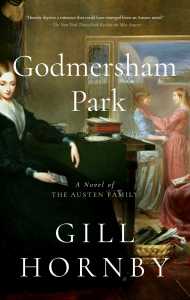
Blog Tour: “Godmersham Park: A Novel of the Austen Family”

This post may contain affiliate links for books we recommend.  Read the full disclosure here.

Book: “Godmersham Park: A Novel of the Austen Family” by Gill Hornby

Publishing Info: Pegasus Books, November 2022

Where Did I Get this Book: from the publicist!

Where Can You Get this Book: Amazon | IndieBound | WorldCat

Book Description: On January 21, 1804, Anne Sharpe arrives at Godmersham Park in Kent to take up the position of governess. At thirty-one years old, she has no previous experience of either teaching or fine country houses. Her mother has died, and she has nowhere else to go. Anne is left with no choice. For her new charge—twelve-year-old Fanny Austen—Anne’s arrival is all novelty and excitement.

The governess role is a uniquely awkward one. Anne is neither one of the servants, nor one of the family, and to balance a position between the “upstairs” and “downstairs” members of the household is a diplomatic chess game. One wrong move may result in instant dismissal. Anne knows that she must never let down her guard.

When Mr. Edward Austen’s family comes to stay, Anne forms an immediate attachment to Jane. They write plays together, and enjoy long discussions. However, in the process, Anne reveals herself as not merely pretty, charming, and competent; she is clever too. Even her sleepy, complacent, mistress can hardly fail to notice.

Meanwhile Jane’s brother, Henry, begins to take an unusually strong interest in the lovely young governess. And from now on, Anne’s days at Godmersham Park are numbered.

Review: Thank you so much to Laurel for reaching out to me about participating in this tour! As anyone who is familiar with this blog knows, I’m a huge Jane Austen fan. I even did an entire series devoted to re-reading her books and reviewing many of the major adaptions. So it was a no brainer to join this tour that features a book focusing on a woman who knew Jane Austen for only a brief period of time but who clearly made an impression (Austen sent her one of a very few editions of “Emma” that she had been given when the book was first published). Let’s dive in!

The world doesn’t know what to do with a husband-less and family-less woman. Where does she belong? What room can there be for her to create a future for herself? One of the few options remaining is that of a governess, and so this is the path that young Anne Sharpe finds herself on when she joins a newly-landed family. But even here, to be a governess to not have a place, being not a servant of a member of the family. Anne is careful and observant, however, and slowly makes her way through various pitfalls. And, soon enough, she meets the sister of her employer, Jane Austen, and a life-long friendship is born.

There was a lot to love about this story. For one thing, it was a comfortable balance of taking real-life people and histories and playing out their stories in a way that not only felt true to what we know of their lives, but also believable where things had to be embellished. Much of the strength of the story and writing comes in the descriptions of every day life (a very Austen-like quality indeed!). Like many other popular period pieces (think “Downton Abbey”), there is a lot of focus on the goings on in the running of an estate, both the behind-the-scenes lives of the staff as well as the intricate rules that govern the family and any visitors.

In her role as governess, Anne’s existence is perhaps the most uncomfortable of them all. Many governesses were themselves ladies of station before some life event required them to take up this path. As such, they do not fit naturally with the staff of an estate. But governesses are also not a member of the family, often relegated to the back of the room and all but forgotten. I really enjoyed reading about how Anne needed to navigate these various roles and the limits placed on what she could or could not do.

The romance, such that it is, plays into this neatly. This is not a “romance” book, and the dangers of this flirtation are made evident, giving the entire situation a sort of increased danger and worry (not typically what you’re looking for from a love story.) But unlike many novelizations of governesses who fall in love and are suddenly raised to prominence, this story deals with the very real challenges to this sort of situation.

I also very much appreciate the way Jane Austen was handled. Obviously, the entire premise of this story is built around the fact that Anne Sharpe was a close enough friend to Austen to warrant not only particular attention from the author while she was alive, but follow up attention from Austen’s sister after the author passed away. That being the case, however, it would be all too easy for a character like this to dominate the page and distract from Anne’s own story.

I will say, the book did have a melancholy feel to it. Anne has seen struggle and continues to face unique challenges in this book. But if you go into it focused more on the insights it provides into the life and times of the story and less on any real action, you’re likely to enjoy it more. The plotting is slow and steady, without any major conflicts or real excitement. But I think that works for what it is offering, and fans of Jane Austen especially will appreciate a look into a lesser known character in her life.

Rating 8: A lovely blending of fact and fiction, this historical fiction novel shines the light on a lesser known woman whose small touch on Jane Austen’s life left a lasting impression.

Reader’s Advisory:

“Godmersham Park” isn’t on any Goodreads lists, but it should be on Jane Austen Books, Sequels, Bios and more.
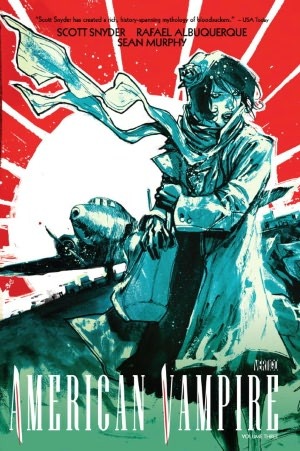
Kate’s Review: “American Vampire (Vol. 3)”

This post may contain affiliate links for books we recommend.  Read the full disclosure here.

Book: “American Vampire (Vol. 3)” by Scott Snyder, Rafael Albuquerque (Ill.), & Sean Murphy (Ill.)

Publishing Info: Vertigo, February 2012

Where Did I Get This Book: I own it.

Where You Can Get This Book: WorldCat | Amazon | Indiebound

Book Description: In the Pacific, Pearl’s husband Henry joins a clandestine group on a secret mission to Japan to hunt a new breed of bloodsucker. Meanwhile, Skinner Sweet has plans of his own…

And in Europe, vampire hunters Felicia Book and Cash McCogan go behind enemy lines in Nazi-occupied Romania in search of a rumored vampire cure. Blood and bullets abound in this new collection from the Eisner Award-winning series!

Review: After being (once again) a bit turned off by the previous volume of this series, I was pretty sure I remembered that “American Vampire (Vol. 3)” got back on track in terms of my ability to ‘gel’ with the story at hand. Which is interesting, because in general military stories aren’t REALLY my cup of tea, and hoo boy does this volume REALLY get into the military themes. After all, as we are traveling through American history with our vampires and vampire hunters, it is now World War II.

We have two story arcs that contend with two of the war fronts during this time. The first is a story surrounding Pearl, her husband Henry, and that fucking asshole Skinner Sweet. Henry, feeling old and a bit left behind by his ageless vampire wife, takes up the Vassal of the Morning Star when they recruit him for a military mission in the Pacific: there is the potential for a new vampire threat on an atoll that the group wants checked out and cleared. What he doesn’t realize is that one of the members of the team is an incognito Skinner Sweet who wants to not only cause chaos, but also to get Pearl all to himself. Side note: we do get a background story with Skinner and his old west girlfriend Kitty, who looks a LOT like Pearl, but honestly I don’t give a shit about him and his man pain.

I DON’T CARE, BUDDY. (source)

This arc was good in the sense that it is basically nonstop action, and it has a lot of new vampire mythology exploration that felt really unique and grotesque. I really love how Snyder is creating subgroups of vampires and how they are all different based upon various factors, and I thought that the cat and mouse game between Henry, Pearl, and Sweet was interesting and tense to watch unfold. Because you know that once Pearl gets a whiff of Skinner potentially threatening the love of her life, maker or not, she is not going to sit by and let it happen.

The other arc is a bit earlier in time, an it involves Felicia Book and Cash McCoogan, together again after the terrible conclusion to their previous mission together: in which Sweet injected Cash’s very pregnant wife Lily with vampire blood directly into her womb, causing her to die in childbirth with a very vampiric baby boy named Gus. Felicia blames herself for hesitating on taking Sweet out, and Cash is desperate to keep his child safe, even if he is a feral monster child. The Vassals of the Morning Star has heard of rumors of a vampire cure in Nazi Occupied Romania, and the two of them are recruited to go undercover and try to see what’s what. They both have their reasons beyond loyalty to the group; Felicia is part vampire herself (as she was conceived when her father was in the throes of turning into a vampire, and it has affected her), and Cash wants Gus to be cured. THIS arc was the one I liked better, as it has some suspenseful moments of espionage, it has some really cool vampire world building, and I loved the tense relationship between Felicia and Cash as they are working together in hostile Nazi circles and contending with unexpected revelations.

But the biggest step up from the past volume is that Pearl finally, FINALLY, gets a bit more to do, and Felicia has her own riveting storyline and character arc that jumps off the page. It’s true that the last volume had a lot of Felicia (who is probably my favorite character in the series), but there was VERY little Pearl, and not only do we get to see her in vampiric action again, we also get to see her kick serious ass and come to aid her husband Henry when he’s in far over his head. I really love both of these women, who are dealing with their various guilts and insecurities and baggage, and I love that they get to take a bit of control over their situations, be it Pearl finally confronting Skinner Sweet, or Felicia seeking out a vampire cure so she can perhaps live a more normal life. And I also love the chemistry between Pearl and Henry, and the chemistry between Felicia and Cash. What can I say? I do love a nice romance, even if some are more tragic than others.

“American Vampire (Vol. 3)” gets the series back on track for me, and it both concludes some story arcs while also opening up the possibilities for others. The vampire lore is still fun and original, and it keeps reminding me of how much I love this series as a whole.

Rating 8: Two solid war time stories and more action for my gals Pearl and Felicia gets our series back on track.

Reader’s Advisory:

“American Vampire (Vol.3)” is included on the Goodreads lists “Weird War”, and “Vertigo Titles: Must Read Comic Books A-E”.

Previously Reviewed:

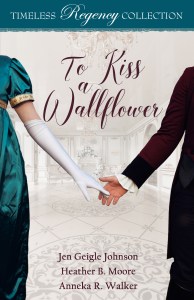
Serena’s Review: “To Kiss a Wallflower”

This post may contain affiliate links for books we recommend.  Read the full disclosure here.

Book: “To Kiss a Wallflower” by Jen Geigle Johnson, Heather B. Moore, & Anneka R. Walker

Publishing Info: Mirror Press, June 2022

Where Did I Get this Book: from the publicist!

Where Can You Get this Book: Amazon | IndieBound | WorldCat

Book Description: THE WALLFLOWER’S DANCE by Jen Geigle Johnson

Lottie Hughes likes people, as long as they aren’t too close. Does it bother her that no one asks her to dance? Yes, but she’s not sure how to drum up dance partners when she has almost no dowry, no title, and freezes up when anyone tries to talk to her. When she suddenly inherits a huge amount and is the new center of attention all over London, her secret dreams might come true but also her worst nightmares. Suddenly everyone wants to talk to her. Men ask her to dance. And she is inundated with interested suitors. She fights to stay close to the few friends she knows are true. One man saw her before her life changed forever. But does she want to accept his help when he, too, might be insincere?

LETTERS TO A WALLFLOWER by Heather B. Moore

Ellen might be beautiful and considered a diamond of the first water by Society, but she is so very tired of the pressure to marry a titled gentleman so that her beauty won’t go to waste. When her cousin Dinah dares Ellen to attend a ball with no frills and to stand with the wallflowers, Ellen takes on the dare. What’s in the wager for her? The prize cuttings of her aunt’s extraordinary roses. But what Ellen isn’t expecting is Lord Ravenshire to engage her in the most interesting conversation. When she confesses to him of her opposition in marrying for a title, he confesses his distaste of the London scene. They strike a bargain together, one which will either push them apart or lead to a future sweeter than either of them could have imagined.

TO MARRY A WALLFLOWER by Anneka R. Walker

Charlotte Winters is destined to spinsterhood until she turns down an unwanted proposal and everything changes. With gossip rampant, her father attempts to salvage her reputation by betrothing her to another. Soon she is sent off to her aunt’s to meet Lord Templeton, her intended. Anxiety-ridden, Charlotte begs her aunt to let her observe Lord Templeton from afar before their introduction. She never planned to pretend to be her fictional cousin to learn more about him, or to fall in love with Lord Templeton’s friend in the process. Lord Templeton dreads returning to the empty halls of Newcliff Manor. When his father’s old friend, Mr. Winters reaches out for assistance, Lord Templeton finds himself returning home engaged to a woman he has never met. Desperate to learn more about Miss Winters, he befriends her cousin. He wouldn’t have spoken to her, or lied about his identity, if he’d known the quiet woman would sneak into his heart.

Review: A few months ago, I participated in a blog tour for this book and posted an excerpt here on the blog. Well, today I’m back with my full review of the collection. Since there are three entirely separate stories contained within this book, I thought I’d split my review into three mini reviews, one for each story.

“The Wallflower’s Dance”

This is your classic friends-to-lovers romance, and it covered every base you want to see in this type of story. The friendship between the hero and the heroine was believable, as was the fact that it seemed understandable that each was so caught up in this type of interaction that it would take a certain sort of jolt to shock their systems into seeing each other in different ways.

I did struggle a bit towards the end of this story, however. It seemed that that solid foundation of friendship was easily undercut with doubts about the other’s intentions. This would have felt believable with other characters, but with two people who have known each other for so long, it was a bit hard to buy their sudden decision to believe complete strangers over a longtime friend. There was also one last shot of complete insanity on the heroine’s part after the truth was made known to her. It was only one paragraph, which honestly made it all the more frustrating. Just take that one bit out and nothing would change in the story, except a better opinion of your heroine!

That said, I still had a fun time reading this story.

“Letters to a Wallflower”

This was another classic romance trope: the fake dating/courtship romance. As is implied by the title, there’s a brief (luckily very brief!) period of time when our hero and heroine set-up a correspondence to get them each out of the eyes of pestering mothers and society and back to their beloved country abodes.

To be fair, this one plays fast and loose with the whole “wallflower” theme. Ellen is in fact a very beautiful, sought after young lady who tires of getting asked to dance too many times. So she makes a deal with her friend to try to hide as a wallflower and see if she is asked to dance at all. Unfortunately for her, Lord Ravenshire sets out with the purpose of dancing with all of the wallflowers. But through this mishap they hit on the idea to fake a relationship.

There were a few anachronisms early in this book (the word “hairdo” and an ordering of earl as one of the highest ranks, which is incorrect), but overall I think the writing in this book was the best. After I got past the first few errors, I really enjoyed this one, and it was probably my favorite of the three.

To Marry a Wallflower”

We wrap up our regency romances with the “secret identity” trope. For all that this is the trope I picked in our recent romance tropes bookclub theme, it’s probably one of my least favorite. All too often I have a hard time believing the essential lie at the heart of these kind of confusions wouldn’t do more lasting damage than they seem to. So, I was the most nervous going into this one of the three.

Honestly, I did struggle a bit with this story. There was a lot of terrible advice given out, and I thought the excuse to pose as different people was a bit weak for both Charlotte and Luke. Their interactions were sweet and I did become invested in their relationship as the story continued. But I could never fully get past the secret identity thing that tinged every moment. The reveal itself was a nice payoff, but I think I would have enjoyed this one more if it hadn’t been this trope to begin with. But that’s a purely subjective opinion, and fans of “secret identity” romances may love this one!

As a whole, I think this is a really solid compilation of clean, sweet Regency romances. This is part of a very long series of Regency romances made up of short stories, so fans of those are sure to enjoy this. Readers who are also looking for a low commitment, sweet romance read should also check this out. They’re the perfect reads for someone looking to whip through a romance story in one night’s time!

Rating 7: I was left wanting just a bit more from all three of these stories, but they were also fun and satisfying reads on their own which are sure to appeal to fans of clean historical romance stories!

Reader’s Advisory:

“To Kiss a Wallflower” is part of the Timeless Regency Collection Series.

Joint Review: “The Witch and the Tsar”

This post may contain affiliate links for books we recommend.  Read the full disclosure here.

Book: “The Witch and the Tsar” by Olesya Salnikova Gilmore

Publishing Info: Ace, September 2022

Where Did We Get This Book: We received eARCs from NetGalley and Edelweiss+.

Where You Can Get This Book: WorldCat | Amazon | Indiebound

Book Description: As a half-goddess possessing magic, Yaga is used to living on her own, her prior entanglements with mortals having led to heartbreak. She mostly keeps to her hut in the woods, where those in need of healing seek her out, even as they spread rumors about her supposed cruelty and wicked spells. But when her old friend Anastasia—now the wife of the tsar, and suffering from a mysterious illness—arrives in her forest desperate for her protection, Yaga realizes the fate of all of Russia is tied to Anastasia’s. Yaga must step out of the shadows to protect the land she loves.

As she travels to Moscow, Yaga witnesses a sixteenth century Russia on the brink of chaos. Tsar Ivan—soon to become Ivan the Terrible—grows more volatile and tyrannical by the day, and Yaga believes the tsaritsa is being poisoned by an unknown enemy. But what Yaga cannot know is that Ivan is being manipulated by powers far older and more fearsome than anyone can imagine.

Olesya Salnikova Gilmore weaves a rich tapestry of mythology and Russian history, reclaiming and reinventing the infamous Baba Yaga, and bringing to life a vibrant and tumultuous Russia, where old gods and new tyrants vie for power. This fierce and compelling novel draws from the timeless lore to create a heroine for the modern day, fighting to save her country and those she loves from oppression while also finding her true purpose as a goddess, a witch, and a woman

Kate’s Thoughts

This was a little bit of a gamble for me, as I knew that it was fantasy, and I knew that it was going to be pretty heavy on Russian mythology for inspiration. And given that I’m not a huge fantasy person, and my book of Russian myths and fairytales has sat on my shelf unopened for years, I was rolling the dice. BUT, it also follows Yaga, a witch, and I DO LOVE WITCHES. So I took a chance on this one, and the bag was… pretty mixed.

The positives are definitely ample! For one, I liked Yaga as our protagonist. She’s a healer who is half immortal and has done her best to keep people around her safe, including her old friend Anastasia who is the Tsar’s wife, and who is being poisoned. Yaga, unfortunately, has to learn that not everyone has the same noble heart, and most of this book is her trying to survive not only against a spiraling Ivan the Terrible (who is doing unthinkable things in Russia; what a time to be reading this, given the guy in charge of Russia right now), but also other immortals and gods and demi gods. I liked how Gilmore subverted some of the mythologies to reflect lies and propaganda that the Orthodox Russian Church was spewing to undercut the non-Christian theologies of the time. I know that the fact Yaga has been de-aged from crone to young woman has frustrated some readers, which I definitely get, but I kind of like the idea of her reputation of being a cruel crone is actually a lie to make people distrust a woman who is actually a midwife, healer, and powerful woman in a community.

But overall, I think that I didn’t have enough working knowledge of the mythology (and even the history! I don’t know much about Russian history, honestly), and that meant that I couldn’t fully appreciate what Gilmore was trying to do. I also thought that it was a little ambling at times as the story went on. It wasn’t really a slog, but I did sometimes find myself skimming a bit to get through specific scenes.

So overall, “The Witch and the Tsar” was an okay read, but I’m not sure I got everything I could have gotten from it. Maybe I need to go grab that unopened book of Russian folklore off my shelf.

Serena’s Thoughts

Me, I’m the reader frustrated by the aged-down Yaga! But before I get to that, let’s start with my general impression. Unlike Kate, everything about this book is directly up my alley, so it was a bit of a no-brainer that I was going to read it either way. But I was happy she suggested we joint review it, since I think that has left us in an interesting position now. Since…the very fact that this was up my alley might be why I wasn’t this book’s biggest fan? More precisely, I feel like I’ve read this book before and better versions of it.

For example, while I generally appreciate the commentary on wise women and healers and how these women were undercut by the incoming Christian church in its various forms, I’ve also read many, many fantasy novels that have covered this very thing. And in very similar, unfortunately better, ways. So for me, many aspects of this book just struck chords that were too familiar to other, better stories, leaving me in a constant state of comparison. A big one was “The Bear and the Nightingale” and that trilogy, a series that is also Russian history/folklore inspired and tackles these same conversion points between Christianity, old world religion, and the demonization of women who were healers or stood out in any other way.

Beyond that, I had a hard time connecting to Yaga. Yes, part of me was simply disappointed that she was a young woman because I’ve read a million and one novels about young women in fantasy and it’s always refreshing to read about different age groups (people over 30 exist! especially older women! things happen to them and there is a unique power and experience to be mined there!). But beyond that, Yaga, while still young-looking, is in fact meant to be quite old. And yet she routinely seemed to be quite naive in a way that I found hard to reconcile with the amount of lived experience she should have under her belt at this point.

I also wish we had gotten a bit more from the Russian folklore, as Kate mentioned. I’m pretty familiar with a lot of it, simply due to the fact that it’s had a bit of a run recently as a go-to in fantasy fiction. But there were certain elements that I felt were just plunked down into the story without much thought or creativity. Like the house with chicken legs just kind of appears? I’ve read some pretty interesting takes on this entire concept (Orson Scott Card’s “Enchantment” probably has the most creative one I’ve seen at this point), but this book just seemed to skip over some of these opportunities.

All in all, my conclusion is the same as Kate’s. This wasn’t a slog of a read by any means, but by the time I finished it, I realized I spent most of the book thinking about other, similar stories and wishing this was more like those.

Kate’s Rating 6: I liked Yaga as a protagonist and I liked the way Gilmore subverted Russian myth and folklore, but it felt ambling at times, and I think I would have gotten more if I were more familiar with the mythology.

Serena’s Rating 6: If you haven’t read much Russian fantasy folklore, this might appeal to you. But there are better examples out there that left this one feeling uncomfortably derivative at times.

Reader’s Advisory:

“The Witch and the Tsar” is included on the Goodreads lists “Mythological Re-Imaginings” and “Wise Women, Witches, Midwives, Healers, and Strong Girls”.

Kate’s Review: “Pīsim Finds Her Miskanaw” and “Amō’s Sapotawan”

This post may contain affiliate links for books we recommend.  Read the full disclosure here.

Books: “Pīsim Finds Her Miskanaw” and “Amō’s Sapotawan” (The Six Seasons Vol. 1 & 2) by William Dumas, Leonard Paul (Ill.), and Rhian Brynjolson

Publishing Info: HighWater Press, August 2020 (Vol.1) & September 2022 (Vol.2)

Where Did I Get These Books: I received eARCs from the publisher.

Where You Can Get These Books: WorldCat (1) (2) | Portage and Main Press (1) (2) | Indiebound (2)

Book Descriptions:

“Pīsim Finds Her Miskanaw”: In 1993, the remains of a young woman were discovered at Nagami Bay, South Indian Lake, Manitoba. Out of that important archeological discovery came this unique story about a week in the life of Pisim, a young Cree woman, who lived in the Mid 1600s. In the story, created by renowned storyteller William Dumas, Pisim begins to recognize her miskanow – her life’s journey – and to develop her gifts for fulfilling that path. The story is brought to life by the rich imagery of Leonard Paul, and is accompanied by sidebars on Cree language and culture, archaeology and history, maps, songs, and more.

“Amō’s Sapotawan”: Rocky Cree people understand that all children are born with four gifts or talents. When a child is old enough, they decide which gift, or mīthikowisiwin, they will seek to master. With her sapotawan ceremony fast approaching, Amō must choose her mīthikowisiwin. Her sister, Pīsim, became a midwife; others gather medicines or harvest fish. But none of those feel quite right.

Amō has always loved making things. Her uncle can show her how to make nipisiwata, willow baskets. Her grandmother can teach her how to make kwakwāywata, birchbark containers and plates. Her auntie has offered to begin Amō’s apprenticeship in making askihkwak, pottery.

What will Amō’s mīthikowisiwin be? Which skill should she choose? And how will she know what is right for her?

Reviews: Thank you so, so much to Lohit Jagwani from HighWater Press for sending me eARCs of these books!

We are on our second week of my month long HighWater Press Blog Series, and we shift from traditional graphic novel to look at the first two books of a Middle Grade historical fiction series called “The Six Seasons” by storyteller and asiniskaw īthiniw Knowledge Keeper William Dumas. These books are part of a greater project known as the Six Seasons of the Asiniskaw Īthiniwak, which hopes to work towards preserving Indigenous languages and knowledge bases of the Asiniskaw Īthiniwak, or Rocky Cree. Honestly it sounds like a fantastic project (read more HERE), and part of it is this series, with the first two books being “Pīsim Finds Her Miskanaw”, and the second being “Amō’s Sapotawan”. Both books follow teenage girls who are going on journeys of self discovery, while also teaching kids about life and culture of the Rocky Cree before significant European contact.

I’ll start with the first in the series, “Pīsim Finds Her Miskanaw”, which follows a teenage Rocky Cree girl who is learning the ways of becoming a midwife. As her family group an community is preparing to journey to a communal gathering, Pīsim is trying to determine if she has the skills and drive to be a midwife. As the community travels to the Spring Gathering, stories are shared, bonds are strengthened, and Pīsim finds herself having to use her skills and knowledge in an unexpected situation. I really loved watching this young woman connect with those around her and hear the various stories that everyone tells, and how she rises to the task of delivering a baby on her own when she and her uncle and pregnant aunt are separated from the rest of the group during a storm on the water. But what stands out the most in this book (and similarly in “Amō’s Sapotawan”) are the rich and intricate details about all types of aspects of Rocky Cree life and culture. We get translations of various vocabulary, maps of the water that Pīsim and her family are traveling upon for the Spring Gathering, and various facts about life for the Rocky Cree during this time period. I was very, very enthralled by the great information and how detailed it was, and my former historical society employee heart was all aflutter. There is such good information in this book, and it’s incredibly accessible to the audience it is catered towards. I really enjoyed seeing the story of Pīsim come into her own.

“Amō’s Sapotawan” is another story about a young girl, though this time it is in summer and this time we follow Pīsim’s sister Amo. In this story, Amō is a teenager who is trying to decide on her mīthikowisiwin, her craft that she wishes to hone, as her ceremony to celebrate that gift, or her sapotawan, is about to happen. Coinciding this is the berry picking that the community does in the summer, as well as an ever present threat of wild fires that tend to kick up during this time of year and that can drive a community to have to flee on a moment’s notice. As Amō contemplates what she wants to choose, she experiences fairly typical moments in what the culture and life was like for the Rocky Cree, though there are, admittedly, some significant beats that may help drive her to choose her ultimate gift. I liked this story a lot as well, and like Pīsim’s story before there were a lot of great notes and facts interspersed within the story.

In terms of the artwork, the stories are accompanied by two different artists and two different styles. Leonard Paul provided the art for Pīsim’s story, while Rhian Brynjolson did for Amō’s. I think that of the two I preferred that of Paul, as that kind of style just speaks to me more, but they are both aesthetics that match the tales at hand pretty well, and I think that they would both connect with a middle grade audience as they read these books.

The importance of knowing the life and culture for the Rocky Cree pre-significant European contact can’t be stressed enough given the genocide Indigenous and First Nations peoples were (and still are) subjected to, and I think that these books by William Dumas are such rich resources and tools to help preserve this knowledge, and very necessary. I greatly enjoyed both “Pīsim Finds Her Miskanaw” and “Amō’s Sapotawan” as great information resources and coming of age tales.

Rating 8: Incredibly rich in detail, historical notes, and culture, “Pīsim Finds Her Miskanaw” and “Amō’s Sapotawan” are both great introductions to Rocky Cree history and culture as well as gentle, heartwarming stories about finding oneself.

Reader’s Advisory:

“Pīsim Finds Her Miskanaw” and Amō’s Sapotawan” are not on many Goodreads lists, but I think they would fit in on “Indigenous Children’s Literature”.

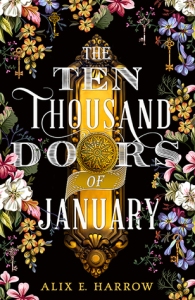
Book Club Review: “The Ten Thousand Doors of January”


This post may contain affiliate links for books we recommend.  
Read the full disclosure here.

We are part of a group of librarian friends who have had an ongoing book club running for the last several years. Each “season” (we’re nerds) we pick a theme and each of us chooses a book within that theme for us all to read. Our current theme is “Book Bingo” where we drew reading challenges commonly found on book bingo cards from a hat and chose a book based on that.  For this blog, we will post a joint review of each book we read for book club. We’ll also post the next book coming up in book club. So feel free to read along with us or use our book selections and questions in your own book club!

Book: “The Ten Thousand Doors of January” by Alix E. Harrow

Publishing Info: Redhook, September 2019

Where Did I Get This Book: The library!

Where You Can Get This Book: WorldCat | Amazon | Indiebound

Book Bingo Prompt: A book with a misleading title

Book Description: In a sprawling mansion filled with peculiar treasures, January Scaller is a curiosity herself. As the ward of the wealthy Mr. Locke, she feels little different from the artifacts that decorate the halls: carefully maintained, largely ignored, and utterly out of place.

Then she finds a strange book. A book that carries the scent of other worlds, and tells a tale of secret doors, of love, adventure and danger. Each page turn reveals impossible truths about the world and January discovers a story increasingly entwined with her own.

Kate’s Thoughts

We’re back to a familiar statement from me during a Book Club post and discussion: I am not really a fantasy reader outside of a few specific exceptions, be it titles (“The Lord of the Rings”; “The Neverending Story”) or sub-genres (dark fantasy). So going into my review of “The Ten Thousand Doors of January”, you need to take all of this with a grain of salt. Maybe a teaspoon or two. I am almost never going to be able to vet a fantasy title super well because as a genre it’s not my bag, baby (a phrase that was tossed around in book club during the discussion).

What I will say about this book that I did like was the way that Harrow incorporated social issues of the time period into the book. We see the struggles of life in Edwardian-era England for not only women, but also women of color within a certain social stature. While January is somewhat shielded from some of this because of her placement with Locke, she is still kept in a gilded cage, and eventually put in an asylum under guise of hysteria when in actuality she is more inconvenient for Locke and his contemporaries when she becomes a perceived threat. And then once she is more outside of Locke’s ‘protection’ (you can’t REALLY call it that), her race is suddenly something she also has to contend with in a more direct and overt fashion. I also liked the way that Harrow addresses aspects of Imperialism and Colonialism through the character of Jane, a woman born in Africa who was being subjected to a missionary school, and eventually finds a door that helps her find freedom. And really, her door, where she encounters a world with a matriarchal cheetah society, was SUPER interesting! But we didn’t really get to see much of that. We didn’t get to see as many doors as I anticipated.

So yeah, I liked the social aspects of this book, as it’s great to see fantasy address these themes. But it’s still fantasy, which just isn’t my genre. So this is very much a ‘your mileage may vary’ situation.

Serena’s Thoughts

Don’t worry fantasy lovers! As the resident fantasy reader, I am happy to step up to vet titles in this genre. And, all told, I found a lot to like in this book. This is definitely one of those fantasy novels that leans heavily on subgenres like historical and literary fiction. While there is definite magic involved in the story and it is surely a portal fantasy, the pacing and overall feel of the book falls more in line with literary fantasy and historical fiction than anything else. As Kate mentioned, the book focuses a lot on the realities of life in this time period for both women and people of color. Even though there are fantastical doorways into different worlds, there is no magic wand to wave away the very real challenges facing many during this time.

The pacing of this book is also on the slower side, spending much more time developing the overall feel of the story and the realities that January is facing. But to balance this slower pace, the story is broken up into two primary stories: one that of January herself, and the second following another young woman born a few decades before January who also found doorways and used them to redirect the pathway laid before her. I really enjoyed the way these two stories came together. I was also surprised by a few twists and turns that were given a long the way. For all the dire circumstances and reality that makes up so much of January’s life, the story includes a hefty dose of hope right when things could begin to feel a bit too bleak.

Overall, I really liked this book. It’s definitely on the slower side and errs towards the lyrical over the action-packed. Like some book club members pointed out, for a book about a thousand doorways between worlds, the story spends most of its time in our old familiar world. But I think that worked for the balance that was being struck between fantasy story and a larger reflection on this period of history and its people.

Kate’s Review 6: It’s fantasy. I liked some of the social themes presented and the small tastes of some of the worlds. But it’s just not my genre.

Serena’s Review 8: A lyrical fantasy novel that makes up for its slower pacing with its lovely character work.

Book Club Questions

  1. What were your thoughts on January as a protagonist of this book? Did you connect with her as a main character?
  2. Did you find it to be a nice change of pace when the book would transition to the Adelaide story arc?
  3. Which side characters did you find the most compelling in this story? Were there any side worlds through the doors you liked reading about?
  4. What were your thoughts on how this book tackled and addressed various social aspects like imperialism, racism, and sexism?
  5. Were there any moments that stood out in particular in this novel?
  6. Who would you recommend this book to?

Reader’s Advisory

“The Ten Thousand Doors of January” is on these Goodreads lists: Portal Fantasy Books and Best Books with a Month in the Title.

Next Book Club Book: “Old Man’s War” by John Scalzi

Serena’s Review: “Death at the Manor”

This post may contain affiliate links for books we recommend.  Read the full disclosure here.

Book: “Death at the Manor” by Katharine Schellman

Publishing Info: Crooked Lane Books, August 2022

Where Did I Get this Book: Edelweiss+

Where Can You Get this Book: Amazon | IndieBound | WorldCat

Book Description: Regency widow Lily Adler is looking forward to spending the autumn away from the social whirl of London society. When she arrives in Hampshire with her friends, Lord and Lady Carroway, she doesn’t expect much more than a quiet country visit and the chance to spend time with her charming new acquaintance, Matthew Spencer.

But something odd is afoot in the small country village. A ghost has taken up residence in the Belleford manor, a lady in grey who wanders the halls at night, weeping and wailing. Half the servants have left in terror, but the family is delighted with the notoriety that their ghost provides. Piqued by this spectral guest, Lily and her party immediately make plans to visit Belleford.

They arrive at the manor the next morning ready to be entertained—but tragedy has struck. The matriarch of the family has just been found smothered to death in her bed.

There was no one else in her room, and the door was locked from the inside. The dead woman’s family is convinced that the ghost is responsible. The servants are keeping secrets. The local magistrate is flummoxed. Lily is determined to learn the truth before another victim turns up—but could she be next in line for the Great Beyond?

Previously Reviewed: “The Body in the Garden” and “Silence in the Library”

Review: I’ve really been enjoying this historical mystery series. There are a few others I’ve been reading recently, but they’ve all featured a heroine/hero combination that, while enjoyable, begins to feel familiar very quickly. This book stands out not only with Lily serving as the primary detective herself, but in the fact that her cast of supporting characters not only includes, yes, the hero character, but also some of her fellow lady friends. This has allowed the series to remain feeling fresh and unique as compared to contemporaries. So, of course, when I saw the new one coming out this summer, I was on top of things!

Lily Adler’s friend, Captain Jack, is heading back to sea. And while he is glad to be returning to his beloved ship, he worries that Lily has had quite the penchant for stumbling upon dead bodies recently. She, however, assures him that she will be heading to the country to spend time with her dear aunt. What body could possibly be found in these circumstances? Alas, Jack’s worries are all too astute. For Lily, accompanied by her friend Lady Carroway, not only stumbles upon another murder victim, but the primary suspect is none other than a manor house ghost. But when Lily stumbles upon some revelations she had never suspected, she begins to question her own abilities. Will she be able to solve yet another mystery?

So, unfortunately, this book didn’t quite live up to my expectations for it. Admittedly, they were quite high, so the book was by no means objectively bad. Just not as good as the two that came before. But first, there are a few things that definitely stood out in the positive category. For one, I liked Lily’s struggles with her own limitations. Up to this point, while Lily has struggled to garner the respect from her peers for her observational skills, she’s never suffered from any great crisis of faith in herself. Here, after a secret that has been sitting right under her nose for years finally comes to light, Lily must grapple with her own limitations and biases. It’s a great internal arch for the character, and one that you rarely see in detective mysteries such as this that rely on their main character’s almost supernatural ability to know all.

I also liked the addition of Lady Carroway. While we’ve seen the character quite a bit in other books, here, she is allowed a few of her own chapters and perspectives. These were excellent on their own, but also worked well as a balance point to Lily’s ongoing internal struggles. Lady Carroway has a very different view of society, both because of the challenges she faced as a biracial noblewoman, but also because of her differing temperament. Their friendship is not without its own ups and downs, and I liked this more honest depiction of female friendships, one where the waters are not always smooth.

I also liked the nods to the gothic novels that were popular during this period of time. This was a fun theme to explore in the story, and served as a nice change of pace from the more straight-forward murder mysteries at the heart of the previous two books.

That said, there are two major points where the book struggled, in my opinion. One of them is more subjective than the other, so let’s start with that one. One of the nice things about these books so far has been the very, very slow burn of any romance that may (or may not) be developing between Lily and Jack. On one hand, I very much like this. But on the other, when it became clear that Jack was going to cede his position in this book to Matthew Spencer, a gentleman who was introduced as a potential romantic interest in the previous book, I have to say I was a bit disappointed. I just couldn’t become invested in this character or this romance. It does seem like this might be setting the stage for Lily’s slow growth through her grief over her husband. And, objectively, the decision for her to not necessarily jump from one “great love” to another but instead have other interests between makes sense. But as a reader, I just spent most of the time missing Jack and rolling my eyes at Lily’s obtuseness (at least I had Lady Carroway right there with me on #TeamJack).

My second problem, sadly, came with the mystery itself. Because I don’t want to spoil it, there’s not a whole lot I can go into as far as details. It’s a closed-door mystery, so that lays out the stakes well enough right there. However, I found the way in which the murder took place incredibly obvious from the very first inspection of the murder scene. What’s worse, later in the book, Lily happens upon a particular happenstance in this same locked room that even more clearly illustrates the solution. And it still didn’t click! It was so blatantly obvious that it had the unfortunate effect of making Lily’s obliviousness increasingly at odds with her reputation for solving complicated mysteries. I also was able to identify the killer and a decent portion of their motivations fairly early, too. All in all, while I still enjoyed the process of reading about this mystery, it was incredibly anticlimactic given some of the obvious clues and red herrings.

However, I still very much enjoyed Lily as a character. And I particularly enjoyed the inclusion of viewpoints from Lady Harroway herself. So, in conclusion, this book was a bit hit and miss. I still think the writing is strong, and Lily’s long term arch holds a lot of potential. Fans of the previous books will likely enjoy this one, but be warned that the mystery was not as compelling as previous entries.

Rating 7: Has a bit of a “middle book” feel to it with a lackluster mystery at its heart, but Lily herself is still an interesting enough character on her own to carry the story.

Reader’s Advisory:

“Death at the Manor” can be found on this Goodreads list: Historical Mystery 2022

Serena’s Reivew: “The Monsters We Defy”

This post may contain affiliate links for books we recommend.  Read the full disclosure here.

Book: “The Monsters We Defy” by Leslye Penelope

Publishing Info: Orbit, August 2022

Where Can You Get this Book: Amazon | IndieBound | WorldCat

Book Description: Washington D. C., 1925

Clara Johnson talks to spirits, a gift that saved her during her darkest moments in a Washington D. C. jail. Now a curse that’s left her indebted to the cunning spirit world. So, when the Empress, the powerful spirit who holds her debt, offers her an opportunity to gain her freedom, a desperate Clara seizes the chance. The task: steal a magical ring from the wealthiest woman in the District.

Clara can’t pull off this daring heist alone. She’ll need help from an unlikely team, from a jazz musician capable of hypnotizing with a melody to an aging vaudeville actor who can change his face, to pull off the impossible. But as they encounter increasingly difficult obstacles, a dangerous spirit interferes at every turn. Conflict in the spirit world is leaking into the human one and along D.C’.s legendary Black Broadway, a mystery unfolds—one that not only has repercussions for Clara but all of the city’s residents.

Review: I was super excited when I received a copy of this book from the publisher. Not only is the cover very eye-catching, but it looks to be covering a unique time period and perspective for historical fantasy. I’ve read a million and one Regency fantasy novels (not that I’m complaining, I’ve read three excellent ones just this summer!), but it’s always refreshing to see authors pushing the boundaries on what we expect from this particular sub-genre. On the other hand, heists with a quirky group of people has also been done to death. So….I let’s see what this book had to offer!

Anyone pestered by spirits would be a little testy. And Clara, cursed/gifted with this ability for her entire life, has only barely begun to reign in her fiery temper. But she can’t stop herself from getting involved when people begin to act strangely and then go missing. Together with a band of other magically-afflicted individuals, Clara must work to pull off a heist to steal a magical ring. But the spirits won’t go easy, and they all will need to band together to pull of this feat!

I’ve read several other books by this author before, but they’ve all been second world fantasy, complete with magic systems and long, epic histories of warring gods. So I was curious to see how she would handle this change of pace. However, it is always a bit steadying to go into a new book knowing that, at the very least, the author has the writing chops to pull of her story. Whether this change in subgenre would work or not, I knew that Penelope would craft a well-told, descriptive story. And I was definitely right about that! I really enjoyed this version of Washington, D.C. in the 1920s that she imagined. There was enough recognizable history and culture to center the reader in the setting, but the introduction of magic and cultural folktales layered over it all to bring us something fresh and new.

Clara herself was an excellent character. I enjoyed her spirit (ha, bad pun) and determination to break through all of the barriers placed before her. But as this is a heist story, we, of course, also have a band of other players to follow as well. Penelope did a good job of laying out each of their histories and motivations in such a way that, for the most part, I felt invested in all of their individual outcomes. I will say, my initial reaction to large casts of characters is typically hesitance, as it’s not my preferred reading style. So while I personally wasn’t blown away by all of these characters, the author did a better job than most in introducing them and using them in such a way as to retain my interest.

The author includes an excellent note at the end about the history of the young woman who served as an inspiration for Clara (a young black woman who spent two years in prison for manslaughter after killing a policeman who enter her home and began shooting). She also explains her use of African American folktales through out the story. It was clear that this book was well-researched, and I think it was an exciting new entry of historical fantasy fiction, which, all too often, can begin to blend together with similar-sounding stories.

I’m running a giveaway for an ARC of this book, so don’t for get to enter! The giveaway is open to U.S. residents only and ends Aug. 31.

Enter to win!

Rating 8: A fresh, new historical fantasy story that introduces an excellent cast of characters and highlights African American folklore.

Reader’s Advisory:

“The Monsters We Defy” is on this Goodreads list: Can’t Wait Sci-Fi/Fantasy of 2022.

Giveaway: “The Monsters We Defy”

This post may contain affiliate links for books we recommend.  Read the full disclosure here.

Book: “The Monsters We Defy” by Leslye Penelope

Publishing Info: Orbit, August 2022

Where Can You Get this Book: Amazon | IndieBound | WorldCat

Book Description: Washington D. C., 1925

Clara Johnson talks to spirits, a gift that saved her during her darkest moments in a Washington D. C. jail. Now a curse that’s left her indebted to the cunning spirit world. So, when the Empress, the powerful spirit who holds her debt, offers her an opportunity to gain her freedom, a desperate Clara seizes the chance. The task: steal a magical ring from the wealthiest woman in the District.

Clara can’t pull off this daring heist alone. She’ll need help from an unlikely team, from a jazz musician capable of hypnotizing with a melody to an aging vaudeville actor who can change his face, to pull off the impossible. But as they encounter increasingly difficult obstacles, a dangerous spirit interferes at every turn. Conflict in the spirit world is leaking into the human one and along D.C’.s legendary Black Broadway, a mystery unfolds—one that not only has repercussions for Clara but all of the city’s residents.

Giveaway Details:

I was super excited when I received a copy of this book from the publisher. Not only is the cover very eye-catching, but it looks to be covering a unique time period and perspective for historical fantasy. I’ve read a million and one Regency fantasy novels (not that I’m complaining, I’ve read three excellent ones just this summer!), but it’s always refreshing to see authors pushing the boundaries on what we expect from this particular sub-genre. On the other hand, heists with a quirky group of people has also been done to death. So….I guess we’ll have to see what this book has to offer!

This is another pen name for the author L. Penelope. I’ve read a decent number of her books in the past, and have reviewed some of them here (“Song of Blood and Stone”, “Whispers of Shadow and Flame”, and “Cry of Metal and Bone”). She’s a solid fantasy author who also writes excellent romances into her stories. All of the books I’ve listed above were set in a fictional world, so I’m also excited to see what she can do with a historical book.

Per the usual, my review for this book will be up Friday. But don’t wait until then to get in on the chance to win a copy of this book! This giveaway is open to U.S. residents only and will end on August 31.

Enter to win!