Book Club Review: “Almost American Girl”

40030311._sy475_We are part of a group of librarian friends who have had an ongoing bookclub running for the last several years. Each “season” (we’re nerds) we pick a theme and each of us chooses a book within that theme for us all to read. Our current theme is “American Girl Readalikes”, in which we each pick an American Girl book and a book that can be connected to it, however tenuous as it may be.

For this blog, we will post a joint review of each book we read for book club. We’ll also post the next book coming up in book club. So feel free to read along with us or use our book selections and questions in your own book club!

Book: “Almost American Girl” by Robin Ha

Publishing Info: Balzer + Bray, January 2020

Where Did We Get This Book: The library!

American Girl Book: “Felicity Saves the Day” by Valerie Tripp

Book Description: A powerful and timely teen graphic novel memoir—perfect for fans of American Born Chinese and Hey, Kiddo—about a Korean-born, non-English-speaking girl who is abruptly transplanted from Seoul to Huntsville, Alabama, and struggles with extreme culture shock and isolation, until she discovers her passion for comic arts.

For as long as she can remember, it’s been Robin and her mom against the world. Growing up in the 1990s as the only child of a single mother in Seoul, Korea, wasn’t always easy, but it has bonded them fiercely together.

So when a vacation to visit friends in Huntsville, Alabama, unexpectedly becomes a permanent relocation—following her mother’s announcement that she’s getting married—Robin is devastated. Overnight, her life changes. She is dropped into a new school where she doesn’t understand the language and struggles to keep up. She is completely cut off from her friends at home and has no access to her beloved comics. At home, she doesn’t fit in with her new stepfamily. And worst of all, she is furious with the one person she is closest to—her mother.

Then one day Robin’s mother enrolls her in a local comic drawing class, which opens the window to a future Robin could never have imagined.

Kate’s Thoughts

I had not heard of this book before it was picked for our book club session in March, and therefore going into it was a bit of a blind dive in. I had heard of Robin Ha’s previous book, “Cook Korean! A Comic Book with Recipes” but I knew that this was going to be a bit different. I figured I’d read “Almost American Girl” over the course of a few days, but then I ended up devouring it in nearly one sitting. I loved it that much.

The first thing that struck me about this book was how gorgeous and unique the art was. The colors are a watercolor-esque aesthetic, and it had both a calming effect as well as really evoking the emotions that were coming off the page. Robin’s transition from her life in Korea to her sudden shift to America was emotional and very difficult, and Ha used the imagery in both the pictures themselves and the color schemes to portray all of the ups and downs of Robin’s feelings during that time. From stark reds or darkness during difficult times, or almost glowing and bright colors in times of happiness, Ha uses the artwork to her advantage in her storytelling, and I really liked it.

The story, too, was compelling and very readable. While I was absolutely interested in Robin’s story as a girl who has to completely shift from one culture to another, Ha also makes a point to show the point of view of her mother, who made the decision to take her daughter from her life in South Korea and move them to Alabama without any hint or forewarning. I thought that at first I was going to have a hard time with her mother (while still trying to recognize the cultural differences between my experience and hers), but, like Serena mentions below, Ha was very deliberate in wanting to give a full picture as to how hard she had it and why she would take such a huge risk. And, on a personal note, I think that now that I’m a mother to a daughter (who is still just a baby, mind you) I was especially moved by their relationship, through the good times and the bad.

Ha also did a very good job of showing the straddling of traditional cultural expectations, and the different expectations that the children of immigrants may have. Ha’s step family was a mixed bag of those who thought that Robin and her mother should be adhering to the traditional roles they would have had back in South Korea (even though Robin’s mother didn’t feel like she had a place in that society as an opinionated single mother), and those who wanted to just fit in in American society. That was a theme that I wasn’t really expecting from this story, and I thought Ha was very careful in making sure not to say whether these expectations were right or wrong. Well, except in the case of her step-cousin. That girl was just mean. But we also got to see Ha make connections to other Korean-American kids her age as time goes on, and how once you do find that place in a community that ‘gets it’ it can make a world of difference in one’s life.

“Almost American Girl” was a moving and wonderful graphic memoir. I am so, so glad that we read it.

Serena’s Thoughts

As I’ve said many times before, a big part of my appreciation for bookclub is how it challenges me to read outside of my typical genres. Unlike Kate, I rarely get around to graphic novels, even though I tend to enjoy them when I do  read them. I was excited, then, when I saw that we’d be reading this book next!

This book had a lot of great things going for it, from the excellent looks into a girl’s experience as an immigrant coming to the U.S., to the exploration of her mother’s life and choices, to the beautiful use of the artwork to display the myriad of emotions that Robin experiences as she adjust to her new life. I’ve read a handful of other “immigrant experience” novels and they have all had something unique to offer as no “experience” will be the same, obviously. One thing that I think this story really highlighted were the challenges of language for Robin and the impact this had on her adjustment to life in the U.S. The use of the graphic novel format was cleverly used in this instance to replace speech bubbles with nonsense jargon to highlight how difficult it was for Robin to follow along in conversations, especially when the speaker was talking quickly.

I also really liked the inclusion of the mother’s story. From the beginning, seen through Robin’s eyes, it is challenging to understand the choices Robin’s mother has made that has lead to the complete upheaval of their lives. But as the story continues, we learn more and more about Robin’s mother’s past, the challenges she faced living in Korea as a single mother, and the values she saw in coming to raise her daughter in a completely foreign and new country. And even after that one major choice was made, we see the struggle and the myriad of choices, both good and bad, that Robin’s mother faces in the U.S. while trying to make a new life here.

Lastly, I really enjoyed the last portion of the story that shows Robin briefly returning to Seoul when she’s in college and finding that she no longer fits there either. It’s an interesting look again at the differences between Korean and American culture, and touches on a side of the immigrant experience that is often skipped over. How, on returning to one’s nation of origin, many can find that they no longer fit in within that culture either.

I really enjoyed this book. I think the artwork was beautiful, and I loved the story itself. I highly recommend it to pretty much everyone!

Kate’s Rating 9: An emotional and personal memoir that tackles culture, the immigrant experience, identity, and the importance of community, “Almost American Girl” was a heartfelt and moving read.

Serena’s Rating 9: Through beautiful artwork, “Almost American Girl” presents a moving story of the immigrant experience full of challenges, sorrows, and joys

Book Club Questions

  1. How does “Almost American Girl” compare to other “immigrant experience” novels that you have read?
  2. What did you think of the artwork in this book? Was there anything in particular that stood out to you?
  3. How did you react to Robin’s mother’s parts of this book? Did you feel like you understood the choices that she made?
  4. How did you find Robin’s step family and the way that they treated her and her mother?
  5. Do you think that today Robin would have had the same experience when coming to a completely new culture and country? Why or why not?
  6. How did you feel about where she ended the story in terms of where she was in her life at the time? Did that seem like a good way to wrap the story up?

Reader’s Advisory

“Almost American Girl” is included on the Goodreads list “Great Graphic Novels Released in 2020”, and would fit in on “Books and Boba Reading List”.

Find “Almost American Girl” at your library using WorldCat!

Next Book Club Book: “This Place: 150 Years Retold” by  Kateri Akiwenzie-Damm, Sonny Assu, et al.
Kate’s Review: “Transmetropolitan (Vol.9): The Cure”

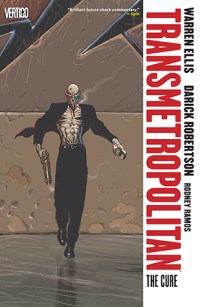
8733231Book: “Transmetropolitan (Vol. 9): The Cure” by Warren Ellis & Darick Robertson (Ill.)
Publishing Info: Vertigo, November 2003

Where Did I Get This Book: I own it.

Book Description: The forces of darkness are closing in on outlaw journalist Spider Jerusalem and his merry, filthy band, but now they’ve got their own rope around the neck of corrupt President Callahan, and it’s time to start tightening the noose. TRANSMETROPOLITAN: THE CURE is the ninth volume reprinting the acclaimed series written by Warren Ellis (PLANETARY, RED) with art by Darick Robertson (The Boys). Jerusalem and his cohorts step up their investigation into Callahan’s misdeeds and turn up some startling evidence…not to mention a sole surviving witness to the President’s depravity. The problem, as always, will be getting the word out before the massive forces of the Executive Branch black out everything, and everyone, involved.

Review: I can’t believe that my re-read of “Transmetropolitan” took me this long, but I also can’t believe that it’s almost over. I’ve been reminded during my revisit that Spider Jerusalem is one of the best comic characters of the past twenty years, and that while this story is outlandish and crude it still has so much to say about the world we live in. I opened up “The Cure”, the penultimate volume, ready to be blown away by how it all turned out and totally ready to move on to the last volume, hyped and pumped up. And that didn’t QUITE happen. I am definitely ready to move on to the last and to enjoy wrapping up this series for a second time. But it didn’t hit me the way that I’d hoped it would, but honestly, that isn’t any fault of this story. It’s more the fault of the world we live in now. Somehow, “Transmetropolitan” feels, dare I say, naive.

giphy-5
I don’t understand how we ended up here. (source)

Overall I am still totally loving this story, though, so we’re definitely going to start with The Good and save the spoilery Not So Good for a bit. I like how Ellis is pulling the final threads all together as the starts to wrap up his story. Spider, Yelena, and Channon are outlaw journalists now, and as they are starting to finish up their final gambit in an effort to take down The Smiler, we’re revisiting old characters and seeing how they still have roles to play in this story. We get to see Fred Christ, the despicable and wormy leader of the Transient movement, and how this character from way back when is connected to our final storyline (and boy, was it really cathartic seeing how Spider finally got to take him down). I loved seeing Royce again, the somewhat cowardly but ultimately loyal former Editor that Spider used to work for. And what I really loved about this volume is that we once again got to see Spider at his very best, trying to protect a source, trying to make her feel comfortable, and showing the empathy that he has deep down, as any good journalist should have when it comes to some of the more complicated and sensitive stories. Channon and Yelena didn’t shine as much in this one, but since Spider’s health is really deteriorating and therefore his downfall is inevitable I am okay with letting the spotlight be on him this time around as he tries to pull out all the stops to bring down The Smiler.

So here is that part that didn’t work for me as much, and since I need to talk about nitty gritty plot points to really address it, consider this your

tenor
(source)

We end this volume with the first strike of the final battle between Spider and The Smiler, in which Spider gets the goods on The Smiler and brings out information that will start the snowball that will theoretically lead to his downfall. I’ve talked about how “Transmetropolitan” has managed to stay relevant in spite of the fact that it’s been out for almost twenty years, and that Ellis has been able to make it feel timeless in regards to our political climate. But what was that first blow of the final takedown? Spider reveals that The Smiler has been having sex with Transient sex workers. It’s used as a HUGE moment and for the first time you see The Smiler’s facade crack, and that he looks genuinely scared that this is going to be the scandal that will take his power away. There are two problems with this for me. The first is that in a world where we are to believe that society has become so degenerative and scummy, I have a hard time believing that a sex scandal like this, even if it involves people who have purposely hybrided (that’s not a word but I can’t think of better way to describe it) themselves with Alien DNA, would actually affect the greater opinion of this culture. I think it would have been more effective if the Big Reveal was somehow getting evidence that The Smiler had set up the murder of martyred Vita Severn, or even that of his own immediate family. And the next thing is that, as we now know, in our CURRENT society the President being revealed to have an affair with a sex worker DIDN’T MEAN JACK SHIT. It kind of takes away the timelessness. That isn’t “Transmetropolitan”‘s fault, and shame on me for projecting my frustrations in this regard to this book, but it did take me out of it.

That aside, I’m very excited to go on to the next and final volume of “Transmetropolitan”. I kind of remember how it ends, but the details are fuzzy. No matter how it susses out, Warren Ellis has created a fantastic world that is still relatable when you look past the very outlandish aspects of it.

Rating 7: We start to wrap up the story of Spider Jerusalem, his filthy assistants, and The City, and while the pieces of the puzzle are seamlessly coming together, it doesn’t hold up as well anymore.

Reader’s Advisory:

“Transmetropolitan (Vol.9): The Cure” is included on the Goodreads lists “Best of Cyberpunk”, and “Best of Vertigo Comics”.

Find “Transmetropolitan (Vol.9): The Cure” at your library using WorldCat!

Previously Reviewed:

Kate’s Review: “Black Canary: Ignite”

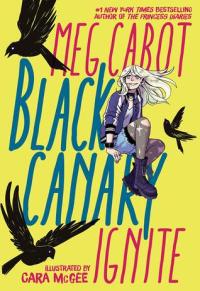
44433717Book: “Black Canary: Ignite” by Meg Cabot and Cara McGee (Ill.)
Publishing Info: DC Zoom, October 2019

Where Did I Get This Book: The library!

Book Description: Thirteen-year-old Dinah Lance knows exactly what she wants, who she is, and where she’s going. First, she’ll win the battle of the bands with her two best friends, then she’ll join the Gotham City Junior Police Academy so she can solve crimes just like her dad. Who knows, her rock star group of friends may even save the world, but first they’ll need to agree on a band name.

When a mysterious figure keeps getting in the way of Dinah’s goals and threatens her friends and family, she’ll learn more about herself, her mother’s secret past, and navigating the various power chords of life.

Review: While it’s hard to rate my favorite DC ladies in a specific order (as there are so many who are wonderful in their own unique ways!), I can say that Dinah “Black Canary” Lance is very high up on the list, like assuredly Top 5. Dinah has been given a lot of attention in the New 52 and DC Rebirth, and her back story has almost always been bleak and dark and indicative of how hardass she can be at times. When I stumbled upon “Black Canary: Ignite” by Meg Cabot, I was a little surprised that the woman who wrote “The Princess Diaries” took on a Black Canary origin story. But then, given that this is a graphic novel written for tweens, I did expect it to be far less dark than some of the stories Dinah has had in the past. Since I’m always looking for more Black Canary content, I checked it out. And what a good decision that was, because Meg Cabot gave Dinah a delightful and plucky storyline that I greatly enjoyed!

We meet Dinah as a rambunctious and snarky thirteen year old. She is in a band with her friends Kat and Vee, she wants to join the Gotham City Junior Police Academy, and tends to butt heads with her parents, as most thirteen year olds do. What struck me the most from the get go is that her life is functional, and she’s surrounded by people who love her and support her. Given that the most recent Black Canary storyline I read involved some serious Mom angst for Dina, thank you Meg Cabot for letting her live a happy early teenagehood! Dinah is funny and awkward, and she is flawed with her temper but cares for her friends. She is also perplexed by the fact that when she yells, things around her tend to break. Cabot was awesome in how she approached this, as Dinah, again, like most teenagers, just wants to be normal, and this crazy scream is hindering that. The situations when this arises are rather innocuous, but still hold pretty high stakes for a kid in middle school. As Dinah has to contend with his, she also has to contend with a strict principal who seems to be out to get her, and with her Dad, Detective Lance, who doesn’t want her to join the Junior Police Academy but won’t really tell her why. Dinah’s relationships are definitely the strongest aspects of this story, as I loved seeing how she interacts with her best friends Kat and Vee (even when things aren’t going great between all of them), and how she both loves but is frustrated by her parents, unaware of the secrets that they have that may shed light on her abilities. By the time she does have to reckon with her parents identities and what that means for her, Cabot had created a great coming of age story to go along with the origin theme.

Cabot’s dialogue is witty and snappy, which is what I’ve come to expect from her. She gives Dinah and those in her circle authentic voices, and had me laughing out loud multiple times as I read. The mystery, however, as to who is following Dinah and what they want with her, isn’t as compelling, if only because it’s pretty straight forward and then ends with a semi-interesting twist that wasn’t terribly surprising. While I was fine with the mystery taking backseat to what was going on with Dinah’s personal discovery of her Canary Cry, I’m not certain that it was supposed to be taking back seat. But it’s also important to keep in mind that this is written for an audience that is quite a bit younger than I am, so the way that I received and parsed out the mystery isn’t necessarily how it would be received by tweens. Therefore, I can’t really speak to its effectiveness.

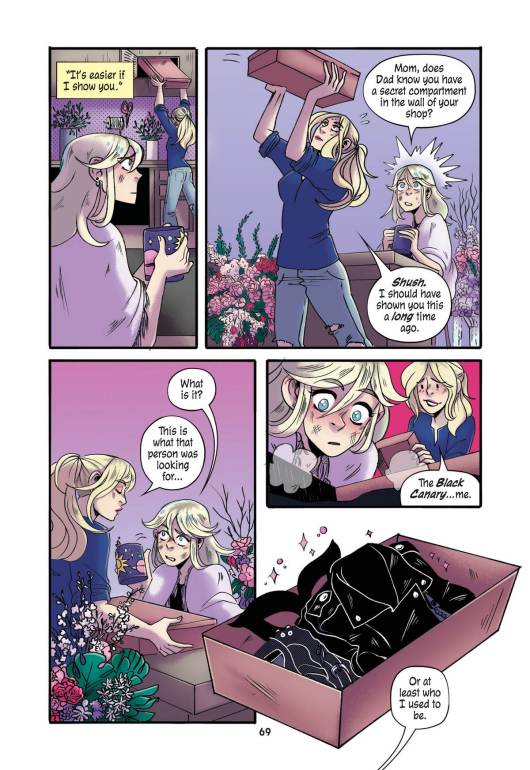
And finally, the artwork by Cara McGee is so on point and charming. I loved the facial expressions, I loved that she would put hearts around Dinah’s parents when they were feeling loving towards each other or Dinah, and I loved the action moments. It’s the perfect accompaniment to the story at hand.

cw059
(source)

“Black Canary: Ignite” is a charming as hell origin story for one of my favorite DC ladies. If you’re like me and love Dinah Lance, definitely find this story and read it.

Rating 8: A fun and clever origin story for Dinah “Black Canary” Lance with the Meg Cabot wit, “Black Canary: Ignite” does justice to one of my favorite super ladies!

Reader’s Advisory:

“Black Canary: Ignite” is included on the Goodreads lists “Strong Female Protagonist”, and “DC Comics by Women”.

Find “Black Canary: Ignite” at your library using WorldCat!

Kate’s Review: “Cheshire Crossing”

42583942Book: “Cheshire Crossing” by Andy Weir and Sarah Andersen (Ill.)

Publishing Info: Ten Speed Press, July 2019

Where Did I Get This Book: The library!

Book Description: The three meet here, at Cheshire Crossing–a boarding school where girls like them learn how to cope with their supernatural experiences and harness their magical world-crossing powers.

But the trio–now teenagers, who’ve had their fill of meddling authority figures–aren’t content to sit still in a classroom. Soon they’re dashing from one universe to the next, leaving havoc in their wake–and, inadvertently, bringing the Wicked Witch and Hook together in a deadly supervillain love match.

To stop them, the girls will have to draw on all of their powers . . . and marshal a team of unlikely allies from across the magical multiverse.

Review: I recently went back to work after taking my maternity leave, and one of my first tasks was to weed the children’s graphic novel section. I love a good weeding project, and whenever I go through graphics I usually find a few that I want to read, and by checking them out I spare them from being culled from the collection. This was how I stumbled upon “Cheshire Crossing” by Andy “The Martian” Weir. Was I surprised that the guy known for science fiction with hard science themes and snarky humor had written a graphic novel for kids/teens? For sure. But the fact that it starred Wendy Darling, Dorothy Gale, and Alice was incredibly fascinating to me (especially since these three have been brought together in graphic form before in Alan Moore’s, erm, shall we say ‘controversial’ “Lost Girls”.).

“Cheshire Crossing” is a cute and witty mash up of three well loved characters who played rather passive roles in their initial stories. While it’s true that Wendy, Dorothy, and Alice are all important figures within the stories they are from, and have become absolutely and rightfully beloved, they all kind of have things happen to them while the people and worlds around them do the ‘doing’. They wander through Wonderland, Oz, and Neverland acting as surrogates for the reader to explore, which is perfectly understandable. But in “Cheshire Crossing”, Weir gives them a lot to actually do, special powers that they bring to their initial visits, and explores what the consequences would be if three girls came back to their usual lives after going to magical places. It’s not too surprising that they are all seen as ‘crazy’ or ‘hysterical’, and have had to spend time in asylums before coming to Cheshire Crossing, which knows that they are portals to other worlds. The idea of hysterical women, especially at the time that these books were originally written, was very common, and I really enjoyed that Weir explored how our world would have no doubt marginalized and taken any kind of agency from these girls (and something I noticed was that there was no mention of Michael or Peter Darling, which makes me think that the two boys haven’t been institutionalized). Alice especially has a lot to contend with, as her time in Wonderland wasn’t exactly ‘pleasant’. She is by far the most traumatized, and dour, of the girls, and the most interesting because of it.

The one criticism I had about this story is that not very much time was spent at Cheshire Academy itself. While I appreciated that Alice, Wendy, and Dorothy very well may be sick and tired of being taken from place and place and poked and prodded, I had hoped that we would be able to see a little bit more of the motivation of Cheshire Crossing, as the idea of a school that is teaching these girls to harness the powers that they have inside of them (as opposed to the powers that have been lent to them at their various magical visits) is really appealing to me. Instead the three girls hop from world to world, getting into more trouble and inadvertently hooking up Captain Hook and the Wicked Witch of the West. Which is, admittedly, kind of the perfect pairing. Their nanny from Cheshire Crossing does follow them and try to keep them out of trouble (and it’s very heavily implied that this woman is Mary Poppins, though she isn’t called that by name), but she was cleaning up their messes as opposed to actively teaching them how to use their powers. Was it fun visiting Oz, Neverland, and Wonderland in this context? Sure! But I also wanted the grounding of the school so that the three girls could harness their powers even more. That said, this ended on something of a cliffhanger, and therefore there may be more stories in the future.

And finally, the illustrations are absolutely charming. They are done by Sarah Andersen of “Sarah’s Scribbles” fame, and the style is dreamy and pleasing to the eye.

cheshirecrossing-1
(source)

“Cheshire Crossing” is a fun exploration of three girls who deserve a little more credit and an expansion of three well loved fantasy stories. People who love Oz, Wonderland, and Neverland will find a lot to like!

Rating 7: A very cute mash up of three beloved children’s lit heroines, “Cheshire Crossing” has some good commentary on female marginalization during the time the original books were written.

Reader’s Advisory:

“Cheshire Crossing” isn’t on many relevant Goodreads lists, but I think that it would fit in on “Women Kicking Ass (Graphic Novels/Comics)”, and “Curiouser and Curiouser”.

Find “Cheshire Crossing” at your library using WordCat!

Book Club Review: “Persepolis: The Story of a Childhood”

9516We are part of a group of librarian friends who have had an ongoing bookclub running for the last several years. Each “season” (we’re nerds) we pick a theme and each of us chooses a book within that theme for us all to read. Our current theme is “American Girl Readalikes”, in which we each pick an American Girl book and a book that can be connected to it, however tenuous as it may be.

For this blog, we will post a joint review of each book we read for book club. We’ll also post the next book coming up in book club. So feel free to read along with us or use our book selections and questions in your own book club!

Book: “Persepolis: The Story of a Childhood” by Marjane Satrapi

Publishing Info: Pantheon, June 2004

Where Did We Get This Book: The library!

American Girl Book: “Samantha Learns a Lesson” by Susan S. Adler

Book Description: Wise, funny, and heartbreaking, Persepolis is Marjane Satrapi’s memoir of growing up in Iran during the Islamic Revolution. In powerful black-and-white comic strip images, Satrapi tells the story of her life in Tehran from ages six to fourteen, years that saw the overthrow of the Shah’s regime, the triumph of the Islamic Revolution, and the devastating effects of war with Iraq. The intelligent and outspoken only child of committed Marxists and the great-granddaughter of one of Iran’s last emperors, Marjane bears witness to a childhood uniquely entwined with the history of her country.

Persepolis paints an unforgettable portrait of daily life in Iran and of the bewildering contradictions between home life and public life. Marjane’s child’s-eye view of dethroned emperors, state-sanctioned whippings, and heroes of the revolution allows us to learn as she does the history of this fascinating country and of her own extraordinary family. Intensely personal, profoundly political, and wholly original, Persepolis is at once a story of growing up and a reminder of the human cost of war and political repression. It shows how we carry on, with laughter and tears, in the face of absurdity. And, finally, it introduces us to an irresistible little girl with whom we cannot help but fall in love. 

Kate’s Thoughts

While it’s true that I read and reviewed “The Complete Persepolis” a couple years back, I really wanted to read it for book club. It was my turn for the American Girl theme, and I knew that I wanted to do “Samantha Learns a Lesson” (as Samantha has always been my favorite American Girl). So I decided that “Persepolis: The Story of a Childhood” would be the match up, as both are about girls from upper classes who have to learn hard social justice lessons about the lower classes in the society in which they are living.

My opinion of “Persepolis” hasn’t changed since I last addressed it here. It’s still one of my favorite graphic novels of all time, like top ten no question. But with the focus specifically on Satrapi’s childhood for this reading, mixed with the lens I had on social class, AND the current tensions the U.S. is having with Iran, this reading was all the more meaningful for me. Satrapi does a very good job of disseminating how Iran changed so fundamentally as a society in the aftermath of the fall of the Shah, and addresses the complexities of those changes, showing how it isn’t a black and white, right or wrong situation. She also points out her own privileges within Iran during the Cultural Revolution. While she was a girl and her family wasn’t as socially favored as some, they had enough wealth and means that not only could she carefully rebel against societal norms with little repercussions (though some of this was pure luck), she also wasn’t part of the social class that was being used as cannon fodder during the war with Iraq. Along with all that, she also had the means to be sent away for school in Austria when it was becoming clear that being a teenage girl was becoming more and more unsafe.

I’m so pleased that we read “Persepolis: The Story of a Childhood” for book club! It fostered a lot of good conversation, and I will take any excuse to revisit this stunning memoir.

Serena’s Thoughts

My only previous familiarity with this book was through reading Kate’s glowing review of the complete collection. But with that strong recommendation, I was excited to finally get the excuse (more like the push, but “excuse” sounds better) to finally read it myself. And, put simply, like always, Kate was spot-on in her stamp of approval for this title!

I will admit to having only the barest understanding of the events that happened during Iran’s Cultural Revolution. I knew the end result, of course, but had very little clarity on the progression of events. In that way, this book does a fantastic job at bringing reader’s down to the street level of a topic that is often discussed, at least here in the U.S., at very global levels. Her life also offers an interesting window, coming from an educated and modern family who have many privileges at their finger tips that can help mitigate the experience.But, with those privileges, we also see the increased strain of a change that is felt quite acutely, especially for a young girl growing into her teenage years. We see the burgeoning of the obligations towards social justice weighed against the practicalities of safety and one’s own welfare.

I also loved the illustration style of this book. The choice to use only black and white colors not only parallels the movement of a society towards a more black and white way of thinking about life, but leaves the readers to focus largely on the content before them. It is not “prettied up” in anyway that could distract from the fact that this is based upon a woman’s real life experience. That said, the style of drawing is also very approachable to young readers and nicely balances out the stark color palette.

I really enjoyed this book and am so glad Kate picked it for bookclub. Like the broken record I often am, I’m yet again thankful to be part of a group of readers who expose me to books that I would likely not get around to reading on my own.

Kate’s Rating 10: An all time favorite of mine that I will happily revisit over and over.

Serena’s Rating 10: A must read for fans of graphic novels and those looking for more insights into life growing up in Iran during the Cultural Revolution.

Book Club Questions

  1. What did you think of the choice to tell her personal story in graphic form? How do you think it would have been different had it been written in a traditional narrative structure?
  2. “Persepolis: A Story of a Childhoold” is set before, during and after the Cultural Revolution in Iran. How much did you know about this historical period before reading this book?
  3. Like Samantha, Marjane is a child who has to learn some hard truths about the society she’s living in as a child. Are there any obvious differences between how Marjane experienced this period vs other Iranian children from other backgrounds may have?
  4. In an interview Satrapi said that she wanted “Persepolis” to show that Iran wasn’t only the society and culture that is shown through western lenses (that of a fundamentalist culture). Do you think she succeeded? Why or why not?
  5. Captivity and freedom are themes that are prevalent throughout the narrative. What are some of the ways they are presented within the story?
  6. How does a persons personal history interact with the history of a society or a culture they live within? How do you think your own personal history ties with the history of your country?

Reader’s Advisory

“Persepolis: The Story of a Childhood” can be found on the Goodreads lists “Best Memoir Graphic Novels”, and “Reading Recommendations for a Young Feminist”.

Find “Persepolis: The Story of a Childhood” at your library using WorldCat!

Next Book Club book: “It’s Not The End of the World” by Judy Blume

Kate’s Review: “Transmetropolitan (Vol.8): Dirge”

7784056Book: “Transmetropolitan (Vol. 8): Dirge” by Warren Ellis, Darick Robertson (Ill.), & Rodney Ramons (Ill.)

Publishing Info: Vertigo, January 2003

Where Did I Get This Book: I own it!

Book Description: After the events of TRANSMETROPOLITAN: SPIDER’S THRASH, outlaw journalist Spider Jerusalem has lost his press credentials and has been forced underground by the President of the United States. Now with a sniper loose in the Print District, Spider is the only man who can expose the conspiracy behind the destruction of the City and the simultaneous disappearance of its police force. Unfortunately, Spider is currently suffering through blackouts and episodes of mental confusion and may never bring the truth to the masses again.

Review: As 2020 continues on and my anxiety about the upcoming election skyrockets into the stratosphere, Spider Jerusalem is giving me solace. I’m going to be wrapping up my series re-read of “Transmetropolitan” soon, given that after this volume we only have two left. Which means that the stakes are on the rise, as the final confrontation between Spider and The Smiler (and possibly Spider and his own mortality) is going to be here before we know it. And, like most epic stories, it had to get darker before the dawn. “Dirge” goes dark.

It starts with a case of Blue Flu, in which the police in The City have all called in under guise of illness. It just so happens that this occurs the day that a sniper starts to murder people in the Print District. Spider, Yelena, and Channon, down and out without press credentials but still eager to catch the story, are on the case, but find themselves in the middle of a conspiracy that, at this point, the reader saw coming from a mile away. But that doesn’t matter, because the important point that “Dirge” is trying to make is that of COURSE the establishment has become entrenched in these kinds of tactics. These are the tactics that The Smiler thrives upon and uses to consolidate his power. This is what Spider has known for awhile now, ever since Vita Severn was murdered by her own campaign colleagues to boost the approval ratings of her boss. The issue now isn’t that this is what The Smiler does. I feel like at this point, Ellis wants the reader to be completely overwhelmed with the lack of hope, and to feel that The Smiler (who in this volume takes his Vita Severn tactic and does something even more horrific) is so unstoppable that the apathy and despair is the only way a society would be able to react as he slowly destroys everything just to make himself all powerful. God DAMMIT does this continue to feel all too real.

But the biggest blow in this volume is the reveal about Spider’s memory lapses and health issues, and how his role as the voice of truth to the people is almost assuredly coming to an end sooner rather than later. Spoilers here, but it doesn’t really ruin anything and it’s going to come to my larger point: Spider has been exposed to an agent that is eating away at his cognitive functions. His mind is slowly slipping away, and in the end he will be a vessel ravaged by dementia before he ultimately dies from it. Spider has always been the beacon of hope in this series, the one who will bring the truth in any way, shape, of form, and can be the one to spell it all out for the masses so that they can see the ways they are being lied to. And that’s about to come to an end. Reading it the first time I was definitely bummed out. But reading it now, in the context of a press under attack and a time of misinformation, or in some cases people who just don’t care to know the truth, this plot point is devastating. Ellis is taking a risk here, as it’s always a bit ballsy to hobble a character with something debilitating. But that just gives more time for Yelena and Channon to shine, as they are determined to help Spider carry on his work, no matter what. Their identity as a team has come to full bloom, and seeing their character development get to this point is incredibly satisfying.

Warren Ellis is sure to bring the hope to this story, as while Spider, Yelena, and Channon are all hot messes and incredibly crude and rude, you know that they have the greater good in their intentions. And while Spider may be dying, he is still determined and ready to expose The Smiler and his violent, horrendous bullshit so that good can triumph over evil. These days I wonder if this is a naive fantasy. But “Transmetropolitan” is so earnest and dripping with the hope that this can be achieved, that I still want to believe in Spider. I want to believe that information and truth will shine a light on lies, and deception, and that the corrupt will lose in the end. “Dirge” is the point that I feel we are at. We can all take a lesson from Spider. He’s the hero we need. And I hope, I REALLY hope, that we can follow in his footsteps and not give up.

IMG-3638
Source: Vertigo Comics

Up next is the penultimate collection: “The Cure”.

Rating 8: One of the darker entires to this fantastic comic, “Transmetropolitan (Vol. 8): Dirge” goes bleak, but once again lets a little bit of hope shine through.

Reader’s Advisory:

“Transmetropolitan (Vol. 8): Dirge” is included on the Goodreads lists “Bibles for the Revolution”, and “Best of Cyberpunk”.

Find “Transmetropolitan (Vol. 8): Dirge” at your library using WorldCat!

Previously Reviewed:

Kate’s Review: “Stargazing”

40864836Book: “Stargazing” by Jen Wang

Publishing Info: First Second, September 2019

Where Did I Get This Book: The library!

Book Description: Moon is everything Christine isn’t. She’s confident, impulsive, artistic . . . and though they both grew up in the same Chinese-American suburb, Moon is somehow unlike anyone Christine has ever known.

When Moon’s family moves in next door to Christine’s, Moon goes from unlikely friend to best friend―maybe even the perfect friend. The girls share their favorite music videos, paint their toenails when Christine’s strict parents aren’t around, and make plans to enter the school talent show together. Moon even tells Christine her deepest secret: that she sometimes has visions of celestial beings who speak to her from the stars. Who reassure her that earth isn’t where she really belongs.

But when they’re least expecting it, catastrophe strikes. After relying on Moon for everything, can Christine find it in herself to be the friend Moon needs?

New York Times–bestselling author-illustrator Jen Wang draws on her childhood to paint a deeply personal yet wholly relatable friendship story that’s at turns joyful, heart-wrenching, and full of hope.

Review: Back in 2018 I read the incredibly sweet graphic novel “The Prince and the Dressmaker” by Jen Wang. It was one of my Valentine’s Day ready books, and I was very eager to see what Wang was going to come out with next. Though I was a little late to the party with “Stargazing”, Wang’s newest graphic novel, once I did manage to get a copy to read I was eager to start. Much like her previous book, I devoured “Stargazing” in an afternoon, completely taken in by another sweet, gentle, and sometimes bittersweet story about identity and friendship.

Our main characters are Christine and Moon, unlikely friends who are both Chinese American girls with very different personalities and experiences. Christine is diligent and reserved, and feels the pressure to excel at her schoolwork and extracurriculars. Her parents are loving and supportive, and also want Christine to be connected to her culture, be it through Chinese language classes or through the church community. So it’s not terribly surprising that Christine is drawn to Moon, who is more of a free spirit and whose mother is doing her best to raise Moon on her own. Moon and Christine are perfectly suited foils for each other, as Moon loosens Christine up and Christine helps Moon adjust to a new community. Wang is very talented at showing how their friendship blossoms, and how it becomes multi-faceted and complex as time goes on. Christine envies Moon for her joyful and gregarious personality, but it’s clear that not everything is perfect for Moon and that she has some issues that go beyond usual childhood ups and downs. Eventually we get a reveal as to what is going on with her, which was a little out of left field and probably could have used a little more time dedicated to it if I’m being honest, but that isn’t really the main focus of the story. The focus is the two girls and how they change each other’s lives, and how great true friendship can be, even if it’s a little difficult to navigate when things get complicated. I liked both Christine and Moon a lot, for their strengths and weaknesses, and found them both relatable in a lot of ways, from Moon’s artistic bent to Christine’s nervousness about what others may think about her. She also does a really good job of showing the small rebellions that kids that age like to partake in, from Christine sneaking nail polish to Moon sneaking out of Chinese language class to make faces in the window. It was little things like that that I thought made this story all the more charming.

But the less obvious yet really on point (at least to me) theme of this book was that of identity, and how there isn’t one way to be part of a culture. Both Christine and Moon are Chinese American, but come from very different experiences. Christine’s parents are deeply involved in her life, and very focused on Christine’s academic and extracurricular schedules, thinking that she should leave distractions behind in order to succeed. Moon is a latchkey kid due to her mother’s need to work to support the two of them, and she doesn’t speak Chinese or have as much deep experience with various aspects of that part of her identity. But Wang doesn’t show either of these as ‘right’ or ‘wrong’ in regards to how these girls grow up and live their lives. If anything, the message is clear that both Christine and Moon are examples of what it’s like to be Chinese American girls, and that both experiences are perfectly normal.

On top of that, I’m still totally tickled by Wang’s drawing style. Her characters and panels are still seemingly influenced by manga or other similar styles, and yet the overall style is unique to Wang. I loved the little details that she puts in there, from a mild change of facial expression to the incredibly tantalizing images of food to the celestial beings that Moon is convinced she is seeing in her day to day life.

054181a441750af17510258f06e2076e3bd523a7
(source)

“Stargazing” is a quick and cute graphic novel that is aimed towards kids, but can be enjoyed by adults as well. If you’re looking for something fast and sweet and a little bittersweet as well, this might be a good fit!

Rating 8: A cute and pathos filled examination of friendship, culture, and childhood, “Stargazing” is a sweet graphic novel that shows the power of childhood relationships and all the ups and downs that come with them.

Readers Advisory:

“Stargazing” is included on the Goodreads lists “Asian MG/YA 2019”, and “NPR’s Favorite Books of 2019”.

Find “Stargazing” at your library using WorldCat!

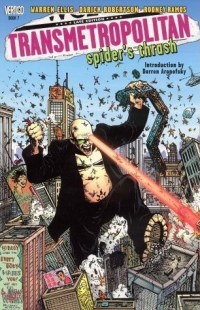
Kate’s Review: “Transmetropolitan (Vol.7): Spider’s Thrash”

22426Book: “Transmetropolitan (Vol.7): Spider’s Thrash” by Warren Ellis, Darick Robertson (Ill.), and Rodney Ramos (Ill.)

Publishing Info: Vertigo, November 2002

Where Did I Get This Book: I own it!

Book Description: The hammer has come down on him but outlaw journalist Spider Jerusalem has managed to stay one step ahead of his detractors – I.e. the President of the United States and his authoritarian lackeys in publishing and law enforcement.
After losing his byline, bank account, and apartment, Jerusalem and his Filthy Assistants have legged it underground, the better to implement his plan. What plan, you say? Why, the plan to bring down the President of course!

Review: Back in 2016, in the wake of the devastation of the Presidential election I decided to start a re-read of “Transmetropolitan”, the dystopian cyberpunk comic about corruption in Government and society and the tenacious and bonkers reporter who wants to take it all down. Then I let it fall to the wayside for reasons I can’t really figure out, outside of having so much to read and so little time. But now it’s 2020, our Government keeps pulling awful bullshit, and I’m getting very scared about what the next Presidential election could possibly bring. So, I decided to pick back up with Spider Jerusalem, his filthy assistants, and The City.

Spider Jerusalem had made a quasi comeback after being silenced by the incredibly evil President Callahan, aka The Smiler in Volume 6. In Volume 7, he has moved beyond his own personal voice and has once again found a publication that will take him on, even if it’s a small press with perhaps not as much reach as before. But once Spider has a platform again (which is the first part of this volume), he starts to use his voice for causes that until now we haven’t seen much of within these pages. True, Warren Ellis has always been very political in the “Transmetropolitan” stories, but in “Spider’s Thrash” we get to see direct parallels to our own grievous political decisions in the late 20th century, laid out in The City and a cyberpunk dystopia. Spider’s aim isn’t directly at The Smiler and his administration, rather it’s at the callous policies it has quietly started implementing. One of the most glaring is that more and more mentally ill people have started ending up on the streets, and have become more and more relegated to dangerous and impoverished areas. The Smiler has decided that spending money on mental health social services isn’t his problem and that he trusts citizens to take care of the less fortunate rather than having any social safety nets in place for them through the Government. Gee, where have we heard this before?

giphy-2
OH THAT’S RIGHT. (source)

But along with the upsetting and biting social commentary that is reflective of past and present political quagmires (as the press is still being stifled and vilified, with Spider having a target on his head), “Spider’s Thrash” also starts to peel back some character truths that are harbingers of more issues down the line. Most importantly, Yelena, Spider’s personal assistant and reluctant confidant, has started to notice that Spider may not be doing well, physically. This is when the series takes a heartbreaking turn, for multiple reasons. The first is that Yelena (and Channon to a lesser extent) has always acted as though her affiliation with Spider is burdensome and frustrating, and that she’s there just to make sure he doesn’t totally fuck up and/or kill himself and her in the process. But when there is the possibility that he could be sick or dying it becomes clear that they mean so much to each other. Channon, too, is worried about Spider, but right now this is Yelena’s beast of burden, as the possibility of losing Spider is too much for her to think about. The other reason that this is a bit sad in hindsight is because Spider Jerusalem is very clearly based on Hunter S. Thompson, whose own ailing health and medical problems are thought to have played a role in his suicide in 2005.

But Spider can’t be kept down. And by the end of this volume, we have started hurtling towards a final showdown between Spider and The Smiler. 2020 is the year that this country is going to have to once again choose who is going to run our country, and what direction we want that choice to take us. God I wish we had Spider here to help us. I’m not leaving him by the wayside again, because he may be the only thing that gets me through this uncertain and terrifying future.

Rating 8: After a far too long break I’ve once again been reminded that Spider Jerusalem is incredibly relevant to today’s society.

Reader’s Advisory:

“Transmetropolitan (Vol. 7): Spider’s Thrash” is included on the Goodreads lists “Best of Cyberpunk”, and “Bibles for the Revolution”.

Find “Transmetropolitan (Vol.7): Spider’s Thrash” at your library using WorlCat!

Previously reviewed:

Kate’s Review: “Giant Days (Vol.1)”

25785993Book: “Giant Days (Vol.1)” by John Allison & Lissa Treiman (Ill.)

Publishing Info: BOOM! Box, December 2015

Where Did I Get This Book: The library!

Book Description: Susan, Esther, and Daisy started at university three weeks ago and became fast friends. Now, away from home for the first time, all three want to reinvent themselves. But in the face of handwringing boys, “personal experimentation,” influenza, mystery-mold, nu-chauvinism, and the willful, unwanted intrusion of “academia,” they may be lucky just to make it to spring alive. Going off to university is always a time of change and growth, but for Esther, Susan, and Daisy, things are about to get a little weird.

Review: I’m sure I’m not alone in this, but I look back at my time in college and get overwhelmed with a massive wave of nostalgia. I really came into my own in college, I made friendships that I cherish to this day, and I have lots of fond memories of the various misadventures my friend group and I got into while on and around campus. When my friend and fellow librarian Jenny told me about “Giant Days”, I looked into it and knew that it was something I definitely wanted to check out. A university setting starring quirky and snarky girls could be a bit of a gamble for me (given that TOO quirky can put me off), but I trusted Jenny, and requested the first volume of the series. And boy oh boy, did I immediately miss college.

giphy-6
Let me take this moment to say GO GOPHERS! (source)

“Giant Days (Vol.1)” is more of a collection of vignettes as opposed to a large, overarching plot at this point, and said vignettes focus on three unlikely friends just starting out at University. There’s Susan, an ill tempered and cynical tomboy who puts on a tough facade even though she’s actually fairly sensitive. There’s Esther, a dramatic and emotional beauty who is goth to the core and rather impetuous. And finally there’s Daisy, the sweet and somewhat naive kind soul who is loyal and hard working. They all share a dorm, and while they seem like they wouldn’t get along, it’s their differences that make them totally suited for each other. They find themselves dealing with a new home, the flu, perverted boys, and the ups and downs of romance, usually with very snide and hilarious results. Author John Allison is certain to make all three of the characters flawed and awkward as they try to navigate their new path, and is never unkind towards them, even when putting their sometimes bad behavior on display. Their banter and their interactions made me smile and laugh a large number of times, and it felt refreshing to see a college story focusing on predominantly women characters and the foolish shenanigans that they get into. I feel like that’s afforded far more often to dudes, and seeing some of the bullshit that Susan, Esther, and Daisy get into made me think of the lady friends I had in college and some of the dumb things we did. All of them are relatable and fun to follow, and super easy to root for even when they’re being ridiculous.

As I mentioned above, as of now “Giant Days” is mostly separate vignettes, though the stories have had some overlap between each other. One segment would focus on a specific arc, then the next segment would be a different arc that might have been hinted at in segment one. I liked that it meant that they could stand on their own, and then we could go into a fresh story with new possibilities and stakes. It also meant that each of our three main characters got to deal with the conflict of the segment in their own ways, and got basically equal time to navigate the plot (the only example I can think of where this wasn’t necessarily the case was when Esther ended up on a ‘hot or not’ website run by a bunch of cretins, but even then we saw how Susan and Daisy reacted as well). I am curious to see if this format continues into the later volumes, or if larger plot starts to form. As of now, I like the vignettes, but I don’t know how long my investment would hold if it continued.

Finally, I really REALLY love the artwork by Lissa Treiman! She has done work for a number of recent Disney movies, and you can definitely see the similarities between those styles and the ones you see in this. It makes for very vibrant and expressive faces and designs, and part of the humor comes from the imagery.

aacff0f8894f304ec12dd7f3b844a72e
(source)

“Giant Days (Vol.1)” is a fun and humorous read, and those of you who are feeling extra nostalgic for friendships from your formative years will find so much to like here. I’m definitely going to continue on with this series, because I can’t get enough of Susan, Esther, and Daisy.

Rating 8: A snarky and witty graphic novel involving three irreverent college women, “Giant Days (Vol.1)” will make you nostalgic for college, and will remind you of the joys of friendships in your young adult years.

Reader’s Advisory: 

“Giant Days (Vol.1)” is included on the Goodreads lists “Girls Read Comics”, and “Female Power Comics”.

Find “Giant Days (Vol.1)” at your library using WorldCat!

Kate’s Review: “Pumpkinheads”

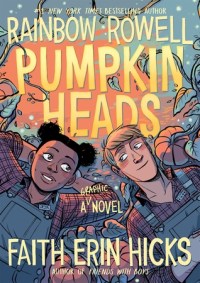
40864790Book: “Pumpkinheads” by Rainbow Rowell and Faith Erin Hicks (Ill.)
Publishing Info: First Second, August 2019

Where Did I Get This Book: The library!

Book Description: Deja and Josiah are seasonal best friends.

Every autumn, all through high school, they’ve worked together at the best pumpkin patch in the whole wide world. (Not many people know that the best pumpkin patch in the whole wide world is in Omaha, Nebraska, but it definitely is.) They say good-bye every Halloween, and they’re reunited every September 1.
But this Halloween is different—Josiah and Deja are finally seniors, and this is their last season at the pumpkin patch. Their last shift together. Their last good-bye.

Josiah’s ready to spend the whole night feeling melancholy about it. Deja isn’t ready to let him. She’s got a plan: What if—instead of moping and the usual slinging lima beans down at the Succotash Hut—they went out with a bang? They could see all the sights! Taste all the snacks! And Josiah could finally talk to that cute girl he’s been mooning over for three years . . .

What if their last shift was an adventure?

Beloved writer Rainbow Rowell and Eisner Award–winning artist Faith Erin Hicks have teamed up to create this tender and hilarious story about two irresistible teens discovering what it means to leave behind a place—and a person—with no regrets.

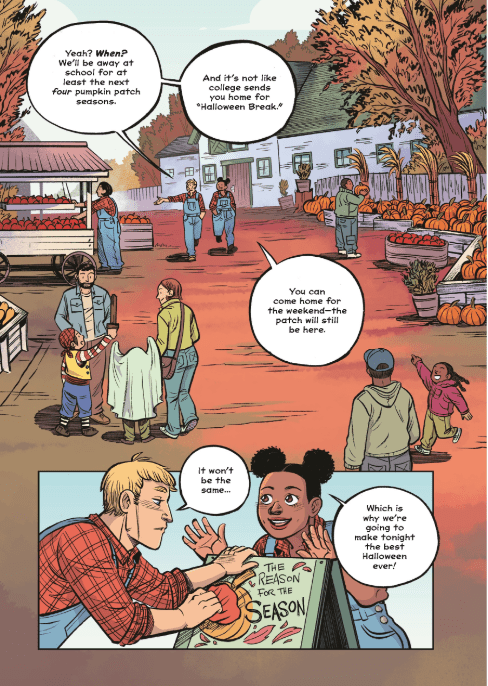
Review: Halloween has come and gone (pardon me while I sigh deeply over this fact), but it’s still technically Fall, even if in Minnesota our weather starts to trend towards Winter a bit earlier than other places. Given that Fall is such a short season here, I cherish it as long as we get to experience it. “Pumpkinheads” is the perfect Autumn story. It has a pumpkin patch, it takes place on Halloween, and it brings to life all of the best Autumn sights, games, and treats. Rainbow Rowell has always been great at creating charming and relatable characters and settings, and therefore she was probably the perfect person to create a story about two pumpkin patch workers on their last shift ever. Highjinx, nostalgia, and candy apples galore ensue!

Josiah (or Josie) and Deja are our seasonal BFF protagonists, coworkers who only interact when they are working at DeKnock’s World Famous Pumpkin Patch & Autumn Jamboree. Josiah is shy and pragmatic, while Deja is effervescent and free spirited. They work at the succotash stand together (this concept alone was so ridiculously endearing) and are besties until the season ends. This is their last night working at the patch, as it’s Halloween and they are both graduating in the spring and moving on. Their friendship was the beating heart of this book, and Rowell is superb at showing why they are such a good friend match through one night of misadventures. It reminded me of the classic film “American Graffiti”, as both in that film and in this book we really get a sense of these two people based on one seemingly random night. But we get to see through the happenings of that night so much about both of these characters that I felt like I knew everything about them by the time I was finished and their last shift had come to an end. I loved both of them for different reasons, and found them both to have lots of layers that were well explored. Josiah is sweet and shy, but also filled with hesitation that has prevented him from talking to his crush Marcy for three years. Deja is kind and adventurous, but she also can be capricious and impulsive. They balance each other out and their relationship is fun to see as she drags him around the patch in hopes of making his romantic dreams come true (and in hopes of finding all the delicious food to munch on. SO relatable). There is also the always looming bittersweet reality that once their night is done, they aren’t sure if they will ever see each other again. It’s light hearted and yet bittersweet.

Rowell also nails the joys of the Autumn season. This is certainly a kinder and gentler way to spend one’s Halloween, but the pumpkin patch is filled with all the fun things you want from this kind of thing: hayrides, candied apples, pumpkin picking, a corn maze, you name it, this place has it. I could practically smell the hay and the apple cider, and it felt like I was seeing a number of my favorite Autumn festivals come to life on the page. I WANTED TO VISIT DEKNOCK’S WORLD FAMOUS PUMPKIN PATCH & AUTUMN JAMBOREE!

giphy-5
And I can’t guarantee I would leave unless I was dragged away. (source)

And the icing on this pumpkin cake is that the illustrations by Faith Erin Hicks perfectly complement Rowell’s story. They are expressive and detailed, but also have this coziness to them that just evokes feelings of Autumnal nostalgia.

Screen Shot 2019-09-23 at 6.10.23 PM
(source)

I really enjoyed reading “Pumpkinheads”. Rainbow Rowell is such a delightful author who always writes such pleasing stories. Keep that Fall spirit alive and grab this one to read over some hot apple cider and something pumpkin-y!

Rating 8: A very cute seasonal story with fun characters, a cheerful setting, and an adorable plot.

Reader’s Advisory:

“Pumpkinheads” isn’t on very specific Goodreads lists as of yet, but it would fit in on “Best Books to Read in Autumn”, and “Black Girl Comics”.

Find “Pumpkinheads” at your library using WorldCat!