Valentine’s Day Giveaway: “City of Brass”

Happy Valentine’s Day (week!) everyone! While Hallmark would have you believe that this holiday is meant to celebrate romantic love, we see it as yet another excuse to share our love of books and reading! And to do that, we’re hosting another giveaway!

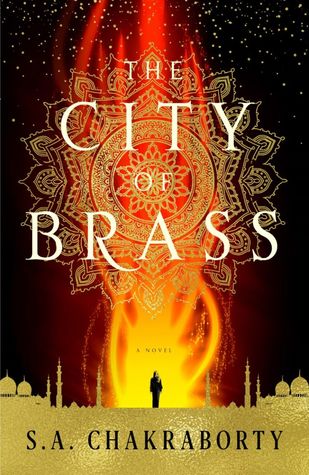
32718027Book: “City of Brass” by S. A. Chakraborty

Publishing Info: Harper Voyager, November 2017

Book Description: Nahri has never believed in magic. Certainly, she has power; on the streets of 18th century Cairo, she’s a con woman of unsurpassed talent. But she knows better than anyone that the trade she uses to get by—palm readings, zars, healings—are all tricks, sleights of hand, learned skills; a means to the delightful end of swindling Ottoman nobles.

But when Nahri accidentally summons an equally sly, darkly mysterious djinn warrior to her side during one of her cons, she’s forced to accept that the magical world she thought only existed in childhood stories is real. For the warrior tells her a new tale: across hot, windswept sands teeming with creatures of fire, and rivers where the mythical marid sleep; past ruins of once-magnificent human metropolises, and mountains where the circling hawks are not what they seem, lies Daevabad, the legendary city of brass–a city to which Nahri is irrevocably bound.

In that city, behind gilded brass walls laced with enchantments, behind the six gates of the six djinn tribes, old resentments are simmering. And when Nahri decides to enter this world, she learns that true power is fierce and brutal. That magic cannot shield her from the dangerous web of court politics. That even the cleverest of schemes can have deadly consequences.

After all, there is a reason they say be careful what you wish for . . .

Giveaway Details: I absolutely LOVED this book, guys! It was the perfect mix of a fresh new fantasy world, a unique setting drawing on the history and geography of the Middle Easy, and, most importantly, two amazing lead characters. Beyond that, given that this is, in fact, a Valentine’s Day giveaway, it does have a romantic subplot.

But really, the main reason I’m wanting to share it with your guys is based on my own absolute love of this book. It was #4 on my yearly Top Ten list and I’m pretty much stalking the author on Twitter for updates on the next book. Plus, I recommend following her and checking out her thread on the original story from 1001 Nights that this book was based on! For your reading convenience, here is a link to that thread! You can also check out my full review to read the entirety of my gushing about this book. So, without further ado, on to the giveaway! It’s open to US entrants only and will run until February 19. Good luck and happy reading!

Click here to enter!


“Rebel of the Sands” Blog Tour & Review

unnamed

24934065Book: “Rebel of the Sands” by Alwyn Hamiton

Publishing Info: Viking Books for Young Readers, March 2016

Where Did I Get this Book: from the publisher!

Book Description: Arabian Nights” meets “Mockingjay” in a world unlike any you’ve ever seen before!

Mortals rule the desert nation of Miraji, but mystical beasts still roam the wild and remote areas, and rumor has it that somewhere, djinni still perform their magic. But there’s nothing mystical or magical about Dustwalk, the dead-end town that Amani can’t wait to escape from. When the gunslinging girl meets Jin, a mysterious and devastatingly handsome foreigner, in a shooting contest, she sees him as the perfect escape route. But in all her years spent dreaming of leaving Dustwalk, she never imagined she’d gallop away on a mythical horse, fleeing the murderous Sultan’s army, with a fugitive who’s part of the secret rebel movement plotting to overthrow the Sultan. And she’d never have predicted she’d fall in love with him . . . or that he’d help her unlock the truth about who–and what–she is. Debut author Alwyn Hamilton weaves this spellbinding story of treason, passion, and magic.
unnamed-authorAuthor’s Bio: Alwyn Hamilton was born in Toronto and lived between Canada, France, and Italy until the was three, when her family settled in the small French town of Beaune. She studied History of Art at King’s College, Cambridge, graduated in 2009, and lives in London.

Review: I am so excited to participate in this blog tour! Not only because I simply love blog tours (following them, being in them, whatever!), but because of the book that I got to read for this one. “Rebel of Sands” is one of those stories that has been on my TBR pile forrrevveer. And I really have no excuse as to why I haven’t gotten to it before. But now I can just smugly feel that my procrastination was just divine providence for my being able to review it now with fellow bloggers.

There was a lot to love about this book, and the story wastes no time in laying it all out before you. If there is one word that I would use to describe this book it would be “fast-paced” (hyphens make it one word!). The story starts out with us quickly meeting our heroine, Amani, and getting a brief overview of the life she’s been leading, one that has been restricted by her gender, her status as an orphan, and her complete lack of funds to get herself the heck out of dodge. Wham, bam, a few pages later, Amani has gotten herself caught up in things over her head and found herself in the company of the roguish, Jin, who is now her best bet out into the wide world. From there, the adventure is just getting started, with mythical beasts and action around every corner.

I very much enjoyed Amani as a leading character. Her narration is witty, but believable, never falling into any of the too-easy cliches for smart-mouthed heroines. Further, her banter with Jin also walked this line well. Their romance was a nice addition to the story, but didn’t overwhelm the action or Amani’s character arc on her own.

I also loved the Persian setting for this story. I’ve been on a bit of a kick of this kind (along with the rest of the YA community it seems), and have enjoyed other books with a similar setting to this (“Wrath of Dawn” & “City of Brass” come to mind). The desert setting and the mythology of the region are always appealing, and I enjoyed them just as much in this version as I have in others. This story was also more action packed than some of the others, which I thought played well laid upon this desert setting.

My one critique comes in the middle of two positive aspects. I liked the setting, as I’ve said, and I like Amani’s special skill of being a sharp shooter. My only problem was the combination of the two sometimes lead the book towards feeling more like a Western than anything else, which I felt like took away from the Persian culture and setting. It almost managed to re-focus the story back to the more common Euro-centric fantasy books that are so predominant. This was a bit unfortunate as it ended up shooting (ha!) itself in the foot, taking out one of its own creative strengths a bit.

But, other than that, I very much enjoyed reading “Rebel of the Sands!” It was a quick read, full of action and adventure, and featuring a relatable heroine whose story I’m eager to continue following.

Rating 8: A action-packed romp with strong country Western themes and a witty heroine!

Next Stop on the Blog Tour: I Fangirl About Books

HERO AT THE FALL TOUR SCHEDULE
REBEL OF THE SANDS SCHEDULE
WEEK ONE
1/30 – Spinatale Reviews – Review
1/31 – Library Ladies – Review
2/1 – I Fangirl about books – Review
2/2 – Aimee, Always – Quote Wallpaper
WEEK TWO
2/5 – Opalsbookjems – Review
2/6 – Mundie Moms – Review
2/7 – As Told By Michelle – Review
TRAITOR OF THE THRONE SCHEDULE
WEEK THREE
2/12 – YA and Wine – Review
2/13 – Adventures of a Book Junkie – “5 Reasons to Read the Series”
2/14 – ReadingAnyone – Review
2/15 – The Clockwork Bibliophile – Booklook + Photo Feature
WEEK FOUR
2/20 – The Lovely Books – Review
2/21 – Never Too Many To Read – Creative
2/22 – Sisters Who Read – Creative Post
HERO AT THE FALL SCHEDULE
WEEK FIVE
2/26 – Writing is Hard – Review + Social Media Promo
2/27 – Mike the Fanboy – Fun Recap of Series
2/28 – My Friends are Fiction – Review
3/1 – The Young Folks – Review
3/2 – Lisa’s Lost in Lit – Creative
WEEK SIX
3/5 – The Reader Bee – Review + Bookstagram Post
3/6 – Seeing Double in Neverland – Review + Creative Insta Post
3/7 – A  Book and A Cup of Coffee – Playlist
3/8 – Fiction Fare – Moodboard
WEEK SEVEN
3/12 – The Eater of Books – Moodboard
3/13 – Love Is Not a Triangle – Review + Bookstagram Picture
3/14 – Tales of the Ravenous Reader – Creative Content
3/15 – Forever Young Adult – Review

Serena’s Review & Giveaway: “Shadowsong”

30694168Book: “Shadowsong” by S. Jae-Jones

Publishing Info: Wednesday Books, February 2018

Where Did I Get this Book: ARC from the publisher

Book Description: Six months after the end of Wintersong, Liesl is working toward furthering both her brother’s and her own musical careers. Although she is determined to look forward and not behind, life in the world above is not as easy as Liesl had hoped. Her younger brother Josef is cold, distant, and withdrawn, while Liesl can’t forget the austere young man she left beneath the earth, and the music he inspired in her.

When troubling signs arise that the barrier between worlds is crumbling, Liesl must return to the Underground to unravel the mystery of life, death, and the Goblin King—who he was, who he is, and who he will be. What will it take to break the old laws once and for all? What is the true meaning of sacrifice when the fate of the world—or the ones Liesl loves—is in her hands?

Previously Reviewed: “Wintersong”

Review: I’ll be honest, the only reason I decided to pick this series back up after my lackluster response to “Wintersong” was the fact that the publisher was kind enough to send me an ARC. But, while I still didn’t love this series as much as others have, this book was an improvement on the first, and I found myself enjoying more of it as I went along. As a whole, I can also see why this duology is as popular as it is, even if it wasn’t my cup of tea.

Set six months after the events of the first book, Liesl is trying to set her mind and action on her and her brother’s music. But this is easier said than done and she can never quite shake the memory of her time spent below with the enigmatic Goblin King. Shocking no reader ever, events occur that once again lead Liesl down into the Underground and back into the presence of the Goblin King. Now the stakes are even higher, and Liesl must once again try to puzzle out the truth of her mysterious beau.

First off, I have to give props to the designer of the cover art for both this book and “Wintersong.” Both of these covers are gorgeous, and these are exactly the types of covers that would stop me short in a bookstore and get me to pick up a book. So well done on that front!

As I said, I did end up enjoying this book more than the first and I think this largely has to do with my connecting to the darker tone and topic that was introduced in this book. I still have an ongoing issue with the writing style which I find to be overly dramatic and taking itself too seriously, but at least here, in this book, that style of writing seems to better fit with the tale that is being told. The events and themes are dark and dramatic, so a verging-on-melodramatic tone doesn’t grate up against the story that is being told, but instead can work to support it.

I also appreciated the shift in focus that this book takes, away from Liesl’s relationship with the Golblin King and towards her relationship with her brother. I love a romance as much as the next person (perhaps more, if I’m honest), but these two’s romance wasn’t something I loved the first go around, so for me, a shift to a sibling relationship, something that I often adore in my books, was a welcome surprise. I especially liked the complications in their relationship, the fact that while they could not particularly like each other at times, they were still willing to sacrifice whatever was necessary on the other’s behalf it if was necessary.

However, I still felt that the story moved too slowly, dragging at point. And this was made worse by the lengthy time spent in Liesl’s head as she pined over the Goblin King. But the world building was excellent, and, again, I felt that the author was better able to leverage her strengths in this area this time around to balance out portions of the story that didn’t connect with me as much. There were some nice subtle touches with reoccurring elements throughout the book that did help bring the story to another level.

In the end, I have mixed feelings about this book. For me, it is definitely an improvement on the first story, dealing more fully with some tough subjects, creating a more consistent storyline, and shifting the focus off the romance and onto a sibling relationship. However, some of the issues I had with the writing style are still there, but I know that this is a very preferential opinion and that others enjoy this type of writing more than I do. There’s also the fact that because the story is a departure from the first, I’m not sure how it will be received? Will others who didn’t enjoy the first also find themselves liking this one more because of the changes (will they even read it if they didn’t enjoy the first)? Or will readers who loved the first one be turned off by the shifts in this story? I’m not sure!

But you can decide for yourself because I’m giving away a copy of “Shadowsong!” The giveaway is open to U.S. residents only, and will be running until January 31st!

Click here to enter!

Rating 6: A welcome change for a reader who didn’t love the first book. A darker and more serious story that better matches the dramatic style of writing.

Reader’s Advisory:

“Shadowsong” is a newer book so isn’t on any relevant Goodreads lists, but it should be on “Best Goblin Books.”

Find “Shadowsong” at your library using WorldCat!


Bookclub Review: “Book of a Thousand Days”

248484

We are part of a group of librarian friends who have had an ongoing bookclub running for the last several years. Each “season” (we’re nerds) we pick a theme and each of us chooses a book within that theme for us all to read. Our current theme is a “Dewey Call Number” theme. This book comes from a Dewey Decimal Call Number range, and has to fit the theme of that range.

For this blog, we will post a joint review of each book we read for bookclub. We’ll also post the next book coming up in bookclub. So feel free to read along with us or use our book selections and questions in your own bookclub!

Book: “Book of a Thousand Days” by Shannon Hale

Publishing Info: Bloomsbury Children’s Books, September 2007

Where Did We Get this Book: the library!

Book Description: When Dashti, a maid, and Lady Saren, her mistress, are shut in a tower for seven years because of Saren’s refusal to marry a man she despises, the two prepare for a very long and dark imprisonment.

As food runs low and the days go from broiling hot to freezing cold, it is all Dashti can do to keep them fed and comfortable. With the arrival outside the tower of Saren’s two suitors–one welcome, the other decidedly less so–the girls are confronted with both hope and great danger, and Dashti must make the desperate choices of a girl whose life is worth more than she knows.

Serena’s Thoughts

I have read a good number of Shannon’s Hale’s books. Not only the Princess Academy trilogy that I reviewed for this blog, but a few of her other YA stories like “The Goose Girl” and such. I’ve always loved her simple, yet beautiful, writing style, and as a fan of fairytale retellings, her work is always a hit for me. However, I don’t particularly love epistolary stories, which was the reason I held back on this one. I always have a hard time turning off my brain and not thinking about how incredibly unrealistic it is that anyone would write out entire conversations in their journal. But, I admit, I have been proven wrong in the past, and there are several books I can think of (“A Brief History of Montmoray,” for example) that I have enjoyed despite of this.

For the first third of the trilogy, I didn’t even need to bother with this concern. Dashti and the Lady Saren have been locked in a tower. There isn’t much else to do other than write extensive entries in ones journal! While some readers might feel this section is slow, I particularly enjoyed this section of the book. Not only do we have tons of character development for Dashti that builds up a good foundation for her character which goes on to drive important decisions she makes later in the story, but I enjoyed the fact that the threat wasn’t really any sort of villain. The threat was simply the looming dark, isolation, and dwindling food that came with their imprisonment. Throughout this ongoing challenge, Dashti’s strengths are apparent. She is resourceful, optimistic, hard-working, and willing to find joys in small things.

As the story progress, we move beyond the tower. I also enjoyed these segments, but I do think they were made better by what we had learned of Dashti and the Lady Saren as characters from their time in the tower. Further, as the story progressed readers are given more opportunities to fully immerse themselves in this world. I particularly appreciated the setting that Hale chose for this story, placing it in a kingdom that is similar to Mongolia. After reading a million and one European-set fairytale retellings, this choice was a breath of fresh air.

This story is also a bit more dark than some of Hale’s other works. I thought this was another big point in its favor. While Dashti herself is an optimistic character, the challenges that she face are by no means simple or easy. The villain is truly terrifying, and the sacrifices that Dashti makes throughout the book are at times heart-breaking. This layer of darkness and seriousness provided a nice balance to Hale’s simple and clear storytelling.

Beyond Dashti, the characters were excellent. As I said, the villain was worthy of the story and quite creepy. And Lady Saren was the type of character you could enjoy disliking. This was made even better by the fact that she was also a realistic character whom you couldn’t help but sympathize with. She is what she was made to be, and while that was frustrating, it also portrayed a very honest take on a character. There was also a cat, My Lord, whom we all at bookclub probably obsessed about more than is healthy.

Kate’s Thoughts

“Book of a Thousand Days” was my first foray into Shannon Hale, and as an introduction to her work I found it to be pretty good! Though fantasy of this sort isn’t really my cup of tea, I was immediately taken in by the medieval Mongolia-like setting. Like Serena, I found it to be a nice change from the Euro-centric fairy tales and fairy tale re-tellings that the genre is kind of inundated with, at least in our culture and collective consciousness. I had never heard of the fairy tale that this was based off of, so I didn’t have the context of comparison, but ultimately that didn’t matter. Hale made this story her own, and she made the characters interesting in their own right.

Character wise, I really liked Dashti. Perhaps it was because of her first person perspective vis a vis diary entries, but the way that her character changed and progressed was a really nice story to follow. She goes from being absolutely and completely devoted to Lady Saren, to a well rounded and independent person in her own right who can stand on her two feet. The choices she made, while sometimes frustrating and upsetting, were within the realm of her character. And then there’s Lady Saren, who I found to be incredibly unlikable and obnoxious. But even that characterization was wholly believable based on the way that she had been raised, and based on the dark stuff that she had gone through. They both came from various kinds of hardship and trauma in their lives, and Hale did a good job of showing different ways that we cope (without casting judgement).

I did think that the tower part was a bit stronger than the time after. I will admit that I was kind of taken by surprise that they left the tower at all. That isn’t to say that the second part of the book didn’t have well done moments or was poorly written, I just liked spending a claustrophobic and tense time as Dashti and Saren started to wonder if their food supply was going to dwindle to nothing.

And don’t even get me started about My Lord the cat.

All in all I think that “Book of a Thousand Days” was a nice fairy tale retelling, and I see why Shannon Hale has the following that she does. I don’t know when or if I’ll pick up more of her stuff, but I’m glad that I can say that I have read her work.

Serena’s Rating 9: A bit darker than some of Hale’s other works, but better for it. An excellent re-telling of a lesser known fairytale and one that features an excellent leading lady in a unique location.

Kate’s Rating 7: The great location and the awesome protagonist made this book a worthwhile read. Even though fantasy of this type isn’t really my thing, I had a fun time reading this book and give props to Hale for creating this world.

Bookclub Questions:

  1. This book is divided into three sections. How did you feel about each of these sections? Did you have a favorite? A less favorite?
  2. This book is set in a world based on Mongolia. What aspects of the world-building and the cultures of Dashti’s world spoke to you?
  3. Towards the middle of the book, Dashti makes a decision with regards to My Lord, how did you feel about this? (Like I said, we at bookclub were a bit fixated on this question!)
  4. What did you think of Khan Tegus as a character? How did his relationship with Dashti compare to romances you usually see in fairy tales?
  5. What did you think of the mucker vs gentry dynamic?
  6. What did you think of the end? Did it feel believable? Should it feel believable as a fairy tale retelling?

Reader’s Advisory:

“Book of a Thousand Days” is on these Goodreads lists: “Best Lesser-Known Books” and “Best Princess Tales.”

Find “Book of a Thousand Days” at your library using WorldCat

Next Book Club Pick: “The Golden Compass” by Philip Pullman


Kate’s Review: “Haunting The Deep”

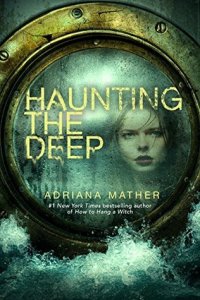
33977969Book: “Haunting the Deep” by Adriana Mather

Publishing Info: Knopf Books for Young Readers, October 2017

Where Did I Get This Book: The library!

Book Description: The Titanic meets the delicious horror of Ransom Riggs and the sass of Mean Girls in this follow-up to the #1 New York Times bestseller How to Hang a Witch, in which a contemporary teen finds herself a passenger on the famous “ship of dreams”—a story made all the more fascinating because the author’s own relatives survived the doomed voyage.

Samantha Mather knew her family’s connection to the infamous Salem Witch Trials might pose obstacles to an active social life. But having survived one curse, she never thought she’d find herself at the center of a new one. 

This time, Sam is having recurring dreams about the Titanic . . . where she’s been walking the deck with first-class passengers, like her aunt and uncle. Meanwhile, in Sam’s waking life, strange missives from the Titanic have been finding their way to her, along with haunting visions of people who went down with the ship. 

Ultimately, Sam and the Descendants, along with some help from heartthrob Elijah, must unravel who is behind the spell that is drawing her ever further into the dream ship . . . and closer to sharing the same grim fate as its ghostly passengers.

Review: Never in my wildest dreams did I think that I would have a deep and obsessive attachment to a YA paranormal romance series, and yet here we are. It’s a bit more than a year since I read the bananas kooky and super awesome “How To Hang A Witch”, and I was waiting with bated breath to finally get my hands on book two of the series. I knew that it was going be a series, and that I’d be able to gallivant with my beloved witch Samantha and her ghost boyfriend Elijah once again. The moment that I found out it was finally coming out, I was excited. And when I found out that the main plot point involved The Titanic, oh man….

giphy4
SEVENTH GRADE KATE IS FREAKING OUT!! (source)

If I were more cynical or less inclined to give this series all the passes because of my affection for it, I’d probably call out Mather for taking another part of her personal family history to fuel this book (if the next one takes place during another significant event that her family happened to be a part of I will start to really question). But as of now I’m just happy to be along for the ride. Mather has really fallen into a strong stride with her characters now, as Sam no longer feels like she’s trying to hard to be cynical and her friendship with The Descendants is on easy and natural footing. I was worried that bringing her Dad into the dynamic might make things a bit tricky, especially since he doesn’t know about his ex-wife Vivian being a witch who tried to curse him and Samantha, only foiled because of Samantha’s own dabbling in magic. But luckily, he adds a new foil for Sam to interact with, another skeptic who she is trying to hide herself from.

The Titanic theme was a little harder for me to swallow, though I did overall enjoy it enough. I think that my reticence is less because of how Mather approached it and more because I worked in an exhibit that was all about the Titanic during my museum days and I’ve been pretty burned out on the topic ever since. It also made some of the inaccuracies more glaring than they would have been otherwise. For example, there is mention of the Steerage passengers being locked behind gates so that First and Second Class had access to the lifeboats first. Yeah, that didn’t happen, so it was a little disheartening that that ‘fact’ was kept in, especially since I was under the impression that Mather did the research before writing. Plus, yeah, I have the skeleton in my closet that I did indeed see “Titanic” in the movie theater four times, and so my lingering embarrassment paints my judgment. It wasn’t even because of Leo and I don’t really want to talk about it…

But hey, let’s be real. I’m not here for the Titanic plot line. I’m mostly here for Elijah, the handsome and mysterious ghost who had to leave his lady love Sam behind when he crossed over at the end of “How To Hang A Witch”. Or did he? Spoiler alert, he did not.

giphy5
This must be what “Twilight” fans felt like. (source)

I really like Elijah and Sam as a couple, mostly because while Elijah does have his old world ideas of chivalry and protecting her, Sam shuts that shit down and he respects her and her decisions. He isn’t in this one as much as he was in the first book, but when he is there it’s really great and romantic. Plus, that kind of lets Sam show off that she is more than her love life, and given that some of the more popular paranormal romances stumble in this regard, it’s refreshing to see her have her own agency and personality. True, there’s a bit of a kerfuffle regarding Jaxon, the boy next door who is also keen on Sam (damn love triangles), but the good news is that Sam doesn’t really waffle or question where her heart is. She knows exactly who she wants, and so this love triangle is basically defunct, which is the best kind of love triangle. True, it adds for needless tension that I just kind of skipped over, but it made it easier to hate Jaxon, which I was down for.

OH, and the female friendships are in full swing in this book! In “How To Hang A Witch” there was an enemy situation between Sam and the Descendants, but now that the conflict has been resolved Sam, Alice, Susanna, and Mary are BFFs for life and it’s good seeing positive female friendships in a YA novel. We also are getting to know each of them a bit more, and I can only hope that this continues because I need to know more about all of them. Especially Alice, that sassy and snarky Queen Bee!

Overall, “Haunting The Deep” continues a series that I’m still totally invested in. I hope I don’t have to wait long for the next one, as I’m not sure I can go for another year without another Elijah fix.

Rating 8: A fun and soapy sequel to one of my favorite not so guilty pleasure books, “Haunting The Deep” brings us back to the delightful bitchcraft of the Descendants, the plucky Sam, and the swoon-worthy Elijah.

Reader’s Advisory

“Haunting the Deep” is a newer book and isn’t on many relevant Goodreads lists, but it’s included on “2017 YA Horror”, and I think that it would fit in on “Wise Women, Witches, Midwives, Healers, and Strong Girls!”.

Find “Haunting the Deep” at your library using WorldCat!

Previously Reviewed:


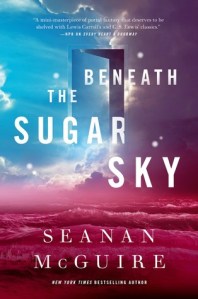
Serena’s Review: “Beneath the Sugar Sky”

27366528Book: “Beneath the Sugar Sky” by Seanan McGuire

Publishing Info: Tor, January 2018

Where Did I Get this Book: NetGalley

Book Description: Beneath the Sugar Sky” returns to Eleanor West’s Home for Wayward Children. At this magical boarding school, children who have experienced fantasy adventures are reintroduced to the “real” world.

Sumi died years before her prophesied daughter Rini could be born. Rini was born anyway, and now she’s trying to bring her mother back from a world without magic.

Previously Reviewed: “Every Heart a Doorway” and “Down Among the Sticks and Bones”

Review: I read and loved the first book in this series of novellas, had complicated feelings about the second, though still largely enjoyed it, and was counting down the days until I could get my hands on this one (even better, I got it early so I was able to do away with my “counting calendar” before the madness really took over).

“Beneath the Sugar Sky” introduces us to Cora, yet another girl who has been unwillingly returned to a world where she feels she no longer belongs. New to the Home for Wayward Children, she is just beginning to make friends with the others around her and beginning to understand the far-reaching and complicated network of other worlds that children have traveled to and from for years. But, like them all, she wants only to find her door and return as soon as possible. Instead, what she finds, is a girl who has traveled to this “regular world” with one goal and one goal only: to resurrect her mother, Sumi, who died so tragically way back in the first book.

First off, I loved the combination of introducing a completely new character and world through Cora, but also directly tying the plot to the action from the very first book in the series, and using this contrivance to more naturally bring in characters from the first two books with whom we are familiar and enjoy. I particularly loved the surprise appearance of a past main character and exploring more fully the world she loves.

And that was another great thing! We got to visit multiple fantastical worlds in this book! I always love adventure/quest stories, and that it was lovely following our band of strange heroes through various worlds and seeing how they reacted/experienced each of these worlds. We know that the worlds choose children who are natural fits for those worlds, so seeing those characters out of place in a strange new world was very interesting, highlighting how “high nonsense” worlds would have a negative impact on characters who are more aligned to “logical” worlds. And how the world itself could actively resist those rules being pushed upon it.

Alongside some returning characters, the two new faces are Cora and Rini. Cora, our main character, was an excellent addition to a ever-growing pantheon of characters who push against conformative exceptions of society that make quick judgements of who a person is. In this particular story, we see Cora dealing with the judgements based on her weight. Her athleticism, particularly in the water, was continuously dismissed before she finds her own door that leads to a water world where she goes on adventures as a mermaid. There, in the freezing depths, her extra layers and strong, poweful body are an asset. So, here, returned to a world that sees only a “fat girl,” Cora is struggling to re-assert the powerful self within her.

While I did like the exploration of the judgements and insecurities that Cora deals with in this aspect, I was also a little underwhelmed with its resolution. Namely, there never was much of a resolution to speak of. Throughout the story Cora remains insecure about the judgements she assumes others are making about her. At the same time, she knows her own strength and begins to see how truly in-tune her own world was to her particular strengths. But she also finds ways to use those same strengths in other environments. However, I felt that this particular thread was left a bit hanging in the end. The plot itself was resolved, but this arc seemed to just peter out without any true revelations, either on Cora’s part or on other’s.

Rini was very fun, being the first “native” other world character we’ve seen. It was fun watching her character travel through the book with a “nonsense” perspective on everything. So far, we’ve only seen children from our world who, while particularly attuned for one world or another, understand that strangeness of it when compared to our “real world.” Through Rini, we see a character who has grown up in one of these strange lands and understands its rules and history (there was some great stuff with a creation story here) as as “obvious” as we consider our own world’s rules and history.

This was an excellent third story to McQuire’s Wayward Children series. While some of the internal conflicts weren’t resolved to the extent that I wish they had been, I very much enjoyed her combination of new worlds and characters with familiar faces. Further, each book seems to build upon the last as far as the mythology and connection between all of these various worlds. Even more fun, the characters themselves are learning right along side us! For fans of this series, definitely check this one out. And for those of you not on this train yet, get on, but start with the first as it’s a “must read” to fully appreciate this on.

Rating 8: Whimsical and dark, but coming up just short on a few of its character arcs.

Reader’s Advisory:

“Beneath the Sugar Sky” is a newer book, but it is on this Goodreads list: “2018 Queer SFF Releases.”

Find “Beneath the Sugar Sky” at your library using WorldCat!

Serena’s Review: “The Hazel Wood”

34275232Book: “The Hazel Wood” by Melissa Albert
Publishing Info: Flatiron Books, January 2018

Where Did I Get this Book: NetGalley

Book Description: Seventeen-year-old Alice and her mother have spent most of Alice’s life on the road, always a step ahead of the uncanny bad luck biting at their heels. But when Alice’s grandmother, the reclusive author of a cult-classic book of pitch-dark fairy tales, dies alone on her estate, the Hazel Wood, Alice learns how bad her luck can really get: Her mother is stolen away―by a figure who claims to come from the Hinterland, the cruel supernatural world where her grandmother’s stories are set. Alice’s only lead is the message her mother left behind: “Stay away from the Hazel Wood.”

Alice has long steered clear of her grandmother’s cultish fans. But now she has no choice but to ally with classmate Ellery Finch, a Hinterland superfan who may have his own reasons for wanting to help her. To retrieve her mother, Alice must venture first to the Hazel Wood, then into the world where her grandmother’s tales began―and where she might find out how her own story went so wrong.

Review: I judged the book by its cover. And the cover is beautiful, so I picked it up. Also, dark fairytales, a mysterious family history, travel between worlds, and this book sounded right up my alley. And while pieces taken outside of the whole were enjoyable, I found myself not as enamored by this one as I had hoped.

Alice and her mother have been running their entire lives, pursed by nameless, faceless, bad luck. That, and from the mystery and cultish fervor that swirls around Alice’s grandmother who is best known for writing an obscure book of fairytales. Other than flee when bad luck arrives on your door, Alice knows there is one rule: don’t interact with fans of her gradnmother’s book. But when her mother disappears, Alice has no choice but to turn to a fan and fellow classmate, the only one who will believe the strangeness involved. And neither are fully prepared for what they get: perhaps those fairytales weren’t fiction after all.

Part of my struggle with this book was due to the fact that it was simply incredibly slow for the first half of the book. It’s not a monstrously long title by any means, but half of a book is still too long to take to get to the meat of the story. There’s quite a lot of build up to Alice’s mom’s disappearance, and then, afterwards, it takes even longer somehow for Alice and Finch to get into the actual magical aspects of the story. This was even more frustrating because it didn’t seem that this extra time was spent building anything. Alice and Finch, early in the story, have already bought into the concept that there are magical elements at play, so it’s not character development that necessitates the slow movement. Further, there are about three or four mini adventures that they go through before even getting out of the city which felt like three or four more than were needed.

This slow beginning also had the unfortunate effect of making me begin to dislike Alice herself. Since the story goes some interesting places with her character in the second half of the book, the fact that the slowness of the first half had already damaged my enjoyment of her was pretty unfortunate. Yes, Alice had a non-traditional childhood and one that was made up largely of isolation and instability. And the author lays the groundwork for her anger early in the story. But all of that given, she’s just kind of a mean person a lot of the time which made it hard for me to become invested in her emotional arc. Like I said, there’s a payoff for some of this in the end. But I do think the slowness of the first half is directly responsible for the fact that damage control had to be done at all. Had we more quickly gotten into the actual story itself, there might have been less time for me to wallow around thinking that Alice was just kind of being a bitch to a bunch of people most of the time.

In the second half, things do pick up, and it was here that I found much of my enjoyment of the story. I loved the fact that the author fully embraced the darker side of fairytales. Throughout the story,  we get to hear some of the stories that were in Alice’s grandmother’s collection, and they are perfectly pitched as darkly creepy and strange, without any clear moral or predictable pattern. This just makes it all the more shivery when the characters and worlds themselves begin to come to life.

Readers’ mileage for this part of the story could also vary. There’s a lot of mystery and obfuscation. Characters withhold information simply because they can. There are definite elements of “Alice in Wonderland” with the strangeness, nonsense, and bizarre mini scenes that Alice travels through. I enjoy nonsense fairytales, and I especially liked the darker aspects of this one. However, I can see how it could read as disjointed and, again, hard to connect to for some readers. Even I struggled a few times with the strange juxtaposition of classical dark magical elements with other very modern references. It was definitely jarring at times, but by this point I was so relieved to have the story picking up that I didn’t mind.

This book was very hit and miss for me. There were parts of it that I absolutely loved (the fairytales themselves, most of the action in the second half, and the nice twist at the end), but I also very much struggled to get into the story. It starts slow and there were certain writing choices, just the way certain sentences were strung together, that were confusing and required me to read through twice, something I never love doing. I also wasn’t sold on Alice as a character, though I did enjoy the later reveals with her. If you like dark fantasy stories and can handle a slow start and a healthy dose of the strange, I’d recommend giving “The Hazel Wood” a go!

Rating 6:  A dark “Alice in Wonderland” where Alice is kind of a brat. But the fairytales themselves were on point!

Reader’s Advisory:

“The Hazel Wood” is a newer book and so not on many Goodreads lists. I’m not sure whether I agree with this classification or not, but it is included on “2018 YA Horror.”

Find “The Hazel Wood” at your library using WorldCat!

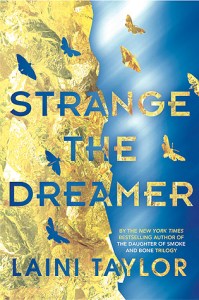
Serena’s Review: “Strange the Dreamer”

28449207Book: “Strange the Dreamer” by Laini Taylor

Publishing Info: Little, Brown Books for Young Readers, March 2017

Where Did I Get this Book: audiobook from the library!

Book Description: The dream chooses the dreamer, not the other way around—and Lazlo Strange, war orphan and junior librarian, has always feared that his dream chose poorly. Since he was five years old he’s been obsessed with the mythic lost city of Weep, but it would take someone bolder than he to cross half the world in search of it. Then a stunning opportunity presents itself, in the person of a hero called the Godslayer and a band of legendary warriors, and he has to seize his chance or lose his dream forever.

What happened in Weep two hundred years ago to cut it off from the rest of the world? What exactly did the Godslayer slay that went by the name of god? And what is the mysterious problem he now seeks help in solving?

The answers await in Weep, but so do more mysteries—including the blue-skinned goddess who appears in Lazlo’s dreams. How did he dream her before he knew she existed? And if all the gods are dead, why does she seem so real?

Review: This books if full of dreams and mystery. Moths and monsters. Poems painted onto a page leaving stardust in its wake, and images leaping from page to mind in a way that pulls you further in. And, while the audiobook version of this story was incredible, I spent much of my time while listening wishing and dreading that the story would unfurl faster. And, by the end, this combination of joy and dread was the perfect explanation of this book.

Lazlo Strange is a boy who grew up without a name. He has one, but it is similar to the “Jon Snows” of the world, and his childhood was that of an orphan raised among monks who finds his true home in books, and then later, in a library. (Obviously the librarian in my loved the fact that Lazlo was a librarian and that this fact, combined with his love of dreams, fairytales, and curiosity (traits that ring true for librarians everywhere, I’m sure we’d all agree) was repeatedly referenced and critical to the story.) And when he’s given the opportunity to visit the mysterious city of Weep that had suddenly cut off contact with the rest of the world years ago, Lazlo, armed with his dreams, is quick to take up the call. What he finds is much more mysterious, wonderful, and terrible than he ever imagined.

Beyond this basic plot, it’s hard to discuss much of this book due to many of the mysteries at the core of this story. I will say that I was surprised to find, about a third of the way into the book, that we were given another viewpoint character. One who was completely shocking and tremendously important to the story. But one whose history, motives, and role in this book would spoil much of it if I dug in too deep.

Lazlo, himself, was a fantastic character. It is easy to see how he falls into the roles he does and becomes generally beloved by those around him. He’s endlessly optimistic, creative, and sees the world in a way that is new and, most importantly, beautiful. And, like Jon Snow, Lazlo is much more than he seems. I was able to guess where the story was going with his character, but given the many other mysteries that took me completely by surprise, and the ones that are still remaining, this is hardly much to pat myself on the back over.

Thematically, this story covers a lot of pretty dark and grim ground. I was surprised by the levels of brutality the author brought to play, but it became clear that nothing else would do to fully realize the true horrors and terrible choices that were before all the characters involved. Both “villains” on either side of the conflict were terrible and terribly tragic. It was easy to see how each ended up where they did, and to feel the brokenness of their characters, and question what one would have done differently in their positions.

Beyond this more individual level, the story explored systematic oppression and trauma. And, the other side of the coin, the ugly side of hatred and fear, even if those feelings are based in truths. There was one line in the book about good people being just as capable of committing atrocities as the bad ones, only in the good people’s case they call those atrocities “justice.” I loved this, and it’s just one of a million examples of the careful handling of difficult subjects that Taylor covers in this story.

But, to balance all of this darkness, there is the sheer beauty of Taylor’s writing and storytelling. I’ve read other books by her, but it’s been a while and I had forgotten just how creative and poetic her writing style is. It walks right up to the edge of purple prose, looks at it, and walks forward, fully confident that it is beautiful and that that accusation won’t stick. There’s not a single falter in the entire book in this aspect. And the style of writing is just half of it. The sheer expanse of creative and lovely imagery is staggering. Taylor creates worlds within worlds and then invites readers to immerse themselves alongside her characters.

The only point that knocks this down from a “10” rating is the fact that it ends on a cliffhanger. I didn’t know going in that this was part of a trilogy, so that’s on me. But I also feel that it is possible to write trilogies without cliffhangers, and I’ve just never personally cared for them. This, however, may not be as off-putting for other readers (especially for those who know about it, or at least the fact that this is the first in a series, going in). Even with it, I highly recommend this book for fantasy readers everywhere. I think this has been marketed as young adult, but I feel like it falls pretty firmly into “new adult” (whatever that really means in the larger scheme of things). Who cares! Any fantasy fan should check out this book!

Rating 9: Dark and mysterious, full of wonder and wonderful terror. A must read for fantasy fans!

Reader’s Advisory:

“Strange the Dreamer” is included on the Goodreads lists: “Emotion Overload in Fantasy/Paranormal” and “Original Stories . . . a Breath of Fresh Air.”

Find “Strange the Dreamer” at your library using WorldCat!

Serena’s Review: “Before She Ignites”

285240581Book: “Before She Ignites” by Jodi Meadows

Publishing Info: Katherine Tegen Books, September 2017

Where Did I Get this Book: the library!

Book Description: Before

Mira Minkoba is the Hopebearer. Since the day she was born, she’s been told she’s special. Important. Perfect. She’s known across the Fallen Isles not just for her beauty, but for the Mira Treaty named after her, a peace agreement which united the seven islands against their enemies on the mainland.

But Mira has never felt as perfect as everyone says. She counts compulsively. She struggles with crippling anxiety. And she’s far too interested in dragons for a girl of her station.

After

Then Mira discovers an explosive secret that challenges everything she and the Treaty stand for. Betrayed by the very people she spent her life serving, Mira is sentenced to the Pit–the deadliest prison in the Fallen Isles. There, a cruel guard would do anything to discover the secret she would die to protect.

No longer beholden to those who betrayed her, Mira must learn to survive on her own and unearth the dark truths about the Fallen Isles–and herself–before her very world begins to collapse.

Review: This book made its way on to my TBR pile for a few different reasons. First of all, I was intrigued by the inclusion of a fantasy heroine who struggles with her mental health. I’ve also read a few of Jodi Meadows’ books in the past and have mostly enjoyed them. And lastly, dragons. Enough said. For those three interest points, the book does deliver. However, the execution and pacing of the story was off and there simply weren’t enough dragons.

Mira’s life has been one lived upon a stage as the living representative of a treaty that brought several island nations together under a peace and trade agreement. But Mira herself has never felt like the fabled Hopebringer that she is meant to represent. For one, she suffers from anxiety and panic attacks and uses a counting system in her mind to keep her fears at bay. For two, she has an unseemly obsession with dragons, always running off to spend time on the reservation with her two friends and these fantastical beasts. But when she stumbles across a secret betrayal and reports it to her countrymen, she’s not rewarded, but thrown in prison.

I have complicated feelings and thoughts about this book. Many of the things I enjoyed were also parts that I later had criticisms of, which makes it hard to write this review. To start with some of the things I remained “all in” on throughout the book, I guess.

I very much enjoyed the world-building in this story. The islands that have joined together in the Mira Treaty all are based around one of the gods in a shared pantheon. These gods, and the religions practiced in their name, greatly shape the culture and priorities of each unique island nation. Mira is from a pair of twin islands that devote themselves to a pair of gods, a god and goddess of love. Through this lens, we get some insight not only into Mira herself and her struggles in her role as a public figure, but also into her reactions to the betrayal committed against her when she reports wrongdoing.

Part of Mira’s anxiety and insecurities are based on the fact that she sees herself as not perfectly matching the preferred and seemingly often inherent skill sets that make up her island’s culture. The people of her home are known for the social skills, to befriend others easily, to converse freely, and to generally thrive in social interactions. Thus, for Mira, a young woman whose role would require the most of these inherent skills, she sees her own struggles and inabilities in these roles as failures and a sign that there is something wrong with her. Further, her naivety when reporting on the betrayal she uncovers is explained through her perception of her homeland. For a country that’s focus is on love and care, it simply never occurs to her that power dynamics and political maneuvering could lead even her own country’s leaders down some treacherous paths.

As the story unrolls, we see various other island nation’s differing cultures and religions. There is an island nation devoted to Silence, and this is reflected in the power they associate with not speaking (a lesson Mira much needs), and an alternative language that they have developed to communicate without noise. There is also a nation focused on warfare and fighting prowess. A nation whose inhabitants are skillful healers and agriculturalists. A nation that worships shadows. All of these cultures are masterfully woven in throughout the story, and I very much appreciated the non-info-dumpy manner that Meadows worked them into Mira’s journey.

Mira herself was an interesting protagonist. I very much enjoyed the exploration of her anxiety, the strategies she has developed to deal with her panic attacks, her counting method (I don’t believe it is meant to represent an OCD habit, but it’s still incorporated well).  Further, Mira is not demonized for missing the beautiful parts of her life when she finds herself in prison. She’s always been clean and been surrounded by lovely things. It’s believable and refreshing that she would miss these things and relish in them when she finds them again, even now knowing the underworkings behind her privileged life. I very much liked that she was written as a believable young woman in this way. And, again, while she sees things through new lens, her character isn’t punished for still loving these creature comforts or presented as superficial for caring that her hair is dry and broken from long days in a prison.

However, while I appreciated these aspects of her character, I never felt truly invested in Mira. I’m not quite sure what the problem was. Perhaps, while I liked the realism that was given to her character, that same realism read as…dull? The story has several action scenes and jumps from one location to another, but Mira was often a passive player in all of this. And that’s what the story requires, I understand that. But that still doesn’t make me enjoy it any more. So, yes, it’s complicated. I see what the author was trying to do, and I think she largely accomplished it, but the downside of that same success is that this goal makes Mira not the most engaging character to follow.

Further, the pacing of the story was strange. In the beginning, her time in prison was broken up with flashbacks to the events that lead up to her ending up where she does. There’s nothing wrong with this approach, but it was hard not to find myself skimming through the flashbacks, eager to get back to the prison plotline that I felt was much more compelling. Part of this is due to the fact that Mira’s fellow inmates were much stronger characters than her two friends back in the outside world. So with a fairly bland leading lady, these variations in strength of supporting characters really drove my appreciation of one plotline over the other.

Further, about halfway through the story, Mira’s experiences take a sudden shift and, again, due to the change of location and supporting characters, it was all just kind of “meh.” This whole section left something wanting in my opinion, and again, I was eager to get back to the prison action.

Lastly, the dragons serve an important role within the story, and yet, somehow, I still felt like there wasn’t enough of them in the story itself. At the point we were at in this book, I almost wish there had been even less? We were right at the teetering point with what was given here, and I feel like committing to one side of the other would have been an improvement. Either make the dragons a more active portion of the story, or keep them more fully on the peripheral as chess pieces in a larger game.

Ultimately, while there were things that I very much enjoyed about this story, I left it feel rather indifferent. I wasn’t “in love” with anything presented here, but I also didn’t actively dislike it. I give tons of credit to Meadows for giving us yet another example of a YA protagonist who isn’t a special snowflake. And the world-building is very interesting. As I recently discovered with “A Poison Dark and Drowning,” sometimes the second book in a trilogy is better having gotten all of the set up out of the way with the first book. That would be my hope with this trilogy.

Rating 6: Doing good work introducing a YA heroine who struggles with her mental health, but lacking in strong pacing.

Reader’s Advisory:

“Before She Ignites” can be found on these Goodreads lists: “Girls with Dragons” and “2017 YA/MG Books With POC Leads.”

Find “Before She Ignites” at your library using WorldCat!

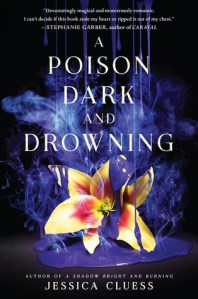
Serena’s Review: “A Poison Dark and Drowning”

33629245Book: “A Poison Dark and Drowning” by Jessica Cluess

Publishing Info: Random House Books for Young Readers, September 2017

Where Did I Get this Book: Blogging for Books

Book Description: Henrietta doesn’t need a prophecy to know that she’s in danger. She came to London to be named the chosen one, the first female sorcerer in centuries, the one who would defeat the bloodthirsty Ancients. Instead, she discovered a city ruled by secrets. And the biggest secret of all: Henrietta is not the chosen one.

Still, she must play the role in order to keep herself and Rook, her best friend and childhood love, safe. But can she truly save him? The poison in Rook’s system is transforming him into something monstrous as he begins to master dark powers of his own.

So when Henrietta finds a clue to the Ancients’ past that could turn the tide of the war, she persuades Blackwood, the mysterious Earl of Sorrow-Fell, to travel up the coast to seek out strange new weapons. And Magnus, the brave, reckless flirt who wants to win back her favor, is assigned to their mission. Together, they will face monsters, meet powerful new allies, and uncover the most devastating weapon of all: the truth.

Previously Reviewed: “A Shadow Bright and Burning”

Review: I wasn’t a huge fan of “A Shadow Bright and Burning.” It wasn’t the worst thing ever, but I had a few distinct issues with it and, perhaps worse, after reading it, I pretty much forgot about it and the fact that it was the first in a trilogy. But then “A Poison Dark and Drowning” popped up on Blogging for Books, and I thought “why the heck not?” I also requested an audiobook version from the library, since we all know how I am about needing my multiple formats. And, in this case particularly, I’m very glad I did! While this wasn’t a perfect book and several of my concerns from the first came to fruition here, this sequel is definitely an improvement on the first, increasing the stakes, expanding the setting, and, for the audiobook, read by an awesome narrator who added much needed depth and tone to Henrietta’s voice.

Opening shortly after the end of the first novel, Henrietta has settled into her new life as a sorcerer. As well as she can, that is, knowing that she is being asked to live a lie and pose as the prophesied savior. London is in a precarious point in the war against the almost all-powerful Ancients, lead by the horrifying Skinned Man, Relim. Yes, at the end of the last book they struck a crucial blow, killing one of the Ancients for the first time ever. But the protective ward around the city fell as a result, and now they all wait, exposed, wondering why Relim hasn’t yet struck. Throughout all of this, Henrietta’s focus is also drawn more close to home as her childhood friend and love, Rook, begins to succumb to the darkness that has poisoned him after being attacked in the last book.

It is clear that Cluess felt much more freed up, as it were, when she wrote this novel. It’s not even that surprising. She had a lot of ground to cover in the first book including world-building, the mysteries surrounding Henrietta’s family, and setting up not one but two magic systems. Here, with all of these factors already in place, it feels like the author was finally able to open her wings. The pacing of this story was much more active, and the magical elements fit more naturally into the storyline. Henrietta’s tale takes outside of London, onto the treacherous ocean, ruled by a monstrous spider Ancient, to a misty moor hiding a monster hunter’s house, down into the land of fairy that is ruled by the capricious and cruel Queen Mab, and through many different battles, with the Ancients themselves, as well as their creepy familiars.

Henrietta herself is also more fully fleshed out in this novel. While she still had a tendency to withhold information and lie more often than is likely wise (a pet peeve of mine with YA heroines), she’s also more sure of herself and of her own powers, specifically her magicians magic. She also barely avoids the typical “martyr complex” also all too familiar for YA heroines, and still maintains a practical head on her shoulder, even when atrocities are being committed simply to lure her out. Part of my increased appreciated for Henrietta is due to the clever and nuanced voice that the audiobook narrator managed to give the character. There were moments where she added tones of humor, exasperation, and sense to dialogue that may have read more melodramatic simply from the page. It’s one of those tricky things, in cases like this. I honestly can’t tell how much of my improved attitude towards this character comes from the way she was written (was the characterization actually stronger?) or from simply enjoying this narrator quite a bit (would I have appreciated the first book’s version of Henrietta more had I listened to the audiobook version of that one too?).  Ultimately, I do think that Henrietta’s storyline was much stronger in this book, largely freed from the angst and drama from the first book.

We also delved more deeply into Henrietta’s history and into the mystery surrounding how and why the portal that let the Ancients into this world was open 17 years ago. While I found some of this to be fairly predictable, there were enough twists and turns added to still make the reveals feel new and interesting.

The stakes were also much higher in this story. The ward is down, London is in danger, and the odds are not good. And these things aren’t simply left as passive threats. There are battles, soldiers die. Towns are destroyed, and civilians suffer. Beyond this, there are consequences, real and terrible consequences, to the choices that characters make. I was surprised and impressed by the author’s commitment to “going there” with some of these decisions. This added seriousness of tone did a lot to balance out my major, and predictable criticism of this book: a love square.

As I mentioned in my review of the first book, the story is set up with Henrietta surrounded by a bunch of young men, all potential love interests in some manner or another. In that book we had Rook, Henrietta’s childhood love, and Magnus, the charming rogue. The story ended with Henrietta choosing Rook, in no little part due to the fact that Magnus turned into a jerk who was not only already engaged but let loose that he thought Henrietta was beneath him. But here, not only does Magnus get freed back up, breaking his engagement, but somehow is retconned into being much more regretful about his previous behavior. Henrietta’s heart is with Rook, however his descent into darkness and the unknowable future make their relationship challenge. And now we also add in Blackwood, the dark and brooding magicain who was slow to warn to Henrietta in the first book, but looks to be being slotted into a sort of “Mr. Darcy/bad boy” role where he’s made better by his close friendship with Henrietta, a relationship that, at first only on his side but slowly on hers as well, begins to blossom into something more.

The worst part of all of this was the fact that the book was clipping along until about halfway through with barely a reference to any romance, other than a few thoughts and concerns shot Rook’s way. And then BAM, right in the middle of the story and the action the brakes were thrown on and the story became stuck in love-triangle/square-melodrama. Thankfully, the story did kick back into the action eventually, but there were times in the middle of this section where I almost put the book down. I really don’t understand why this is considered to be necessary in YA fantasy. The story was so strong without it, and sure a dash of romance is often appreciated, but tonally, the book takes a massive swerve when it suddenly commits so much page time to these silly romantic flounderings. And ultimately, this middle section soured my opinion on all the characters involved: Henrietta, Blackwood, Rook. Magnus, bizarrely, probably comes out of all of this in the best light. And in the end, I’m not sure how I’m supposed to feel about where things stand. Who exactly am I supposed to be rooting for? The fact that I can’t tell is the biggest problem, and ultimately, I wish Henrietta would just kick them all to the side and go have awesome adventures with Maria.

To end on a good note, Maria, a Scottish witch they pick up on their travels, was probably my favorite part of this story. Not only does she add the much needed female companion to Henrietta, but as a character herself, she’s excellent. Through her we see the horrors that the witches have suffered, alongside the magicians who we’ve heard about through Henrietta’s story, during the systematized persecution put in place after the portal was opened years ago. She has a powerful magical ability, and she wields an ax. And, best of all, the story sets her up in a pivotal role going forward. Again, Henrietta, girl, throw those boys away and hang with Maria. Rook = no personality. Blackwood = kind of a jerk with controlling tendencies. Magnus = already showed his cards as a player. Maria = besty who is the only one Henrietta is comfortable being completely truthful with. Seems pretty obvious to me.

Ultimately, I did enjoy “A Poison Dark and Drowning” more than the first. The story is given increased depth and danger, and while some of my predictions regarding the plethora of love interests did come to icky fruition, the added character of Maria makes up for it. If you like audiobooks, I do recommend checking out that version of the story as some of my increased opinion could be due to the narrator’s skillful reading.

Rating 7: Full of action and dark twisty magic, if unfortunately interrupted by silly romantic entanglements at times.

Reader’s Advisory: 

“A Poison Dark and Drowning” is fairly new and isn’t on any very relevant Goodreads lists, but it should be on “Victorian YA Novels.”

Find “A Poison Dark and Drowning”  at your library using WorldCat.