Serena’s Review: “Black Water Sister”

Book: “Black Water Sister” by Zen Cho

Publishing Info: Ace Books, May 2021

Where Did I Get this Book: Edelweiss+

Book Description: Jessamyn Teoh is closeted, broke and moving back to Malaysia, a country she left when she was a toddler. So when Jess starts hearing voices, she chalks it up to stress. But there’s only one voice in her head, and it claims to be the ghost of her estranged grandmother, Ah Ma. In life Ah Ma was a spirit medium, the avatar of a mysterious deity called the Black Water Sister. Now she’s determined to settle a score against a gang boss who has offended the god–and she’s decided Jess is going to help her do it.

Drawn into a world of gods, ghosts, and family secrets, Jess finds that making deals with capricious spirits is a dangerous business. As Jess fights for retribution for Ah Ma, she’ll also need to regain control of her body and destiny. If she fails, the Black Water Sister may finish her off for good.

Review: I was obviously on a bit of a Zen Cho kick recently. In reality, I had requested this one from Edelweiss+ thinking it was part of her “Sorcerer Royal” series. And with that in mind, thought to myself “Oh, shoot! I need to read the second one before this one comes out!” So, off I went to read/review that book. Only to get to this one and discover that this is not, in fact, part of the series and is instead a modern, stand-alone fantasy. Little peak behind the oh, so exciting review process, and my own inability to properly research the books I request!

Sometimes the voices in your head are real. Sure, Jess figured it was just the stress of moving back to a homeland she doesn’t remember, not having two cents to rub together, and feeling locked away from her true self. But when mediums run in your family, there just might be another cause to strange voices. When Jess’s deceased grandmother begins speaking to her about feuds and powerful deities, Jess finds that uncovering her true identity may be much more complicated than she had thought.

First off, props to the cover artist. It’s a beautiful work of art, and it fits the overall feel of the book perfectly. Silly me should really have been able to pick up on the fact that of course this wasn’t in the “Sorcerer Royal” series just based on that, but…yeah, I have no excuses here.

It’s hard to evaluate this book because I was honestly a bit disappointed that it wasn’t part of her historical fantasy series. But that’s on me and not the book. I also don’t typically read a lot of contemporary fantasy. However, the story of a young woman getting tangled up in a feud between gang leaders and a centuries-old deity? Heck yeah! Like Cho’s work in her other series, the magical elements in this book were excellent. I particularly liked the god-like being at the heart, the titular Black Water Sister. I also liked the ghosts and how they were described/used in the story.

However, the characters and writing, two aspects of Cho’s “Sorcerer” series that I found particularly compelling, were less strong here. The tone and style used in that series, the type of “historical” writing that you see in Jane Austen novels and other books of that time, is incredibly challenging. It relies on long, drawn-out sentences and an extensive vocabulary. It’s hard to master, but Cho excelled. So, here, with the much more straight-forward style of writing found in any old contemporary book…it all kind of just fell flat. There were a few lines of dialogue that were witty and clever, but the descriptions, actions, general prose didn’t really stand out or capture me in any way.

I also had a really hard time liking Jess herself. There’s a reason I don’t typically read contemporary books. I’m not very interested in family dramas or the coming-of-age stories you often find in these types of stories. Jess is definitely going through one of these “needs to find herself” moments, and I really struggled to care. As a character, she didn’t feel very distinct or unique, and any actions she took were often forced upon her. Her relationship with her secret girlfriend flounders because of this very thing: Jess’s inability to take action in her own life and come out to her parents. That on its own is understandable, as it’s a very tough thing for those in the LGBT community. But when it is just one example of an ongoing, central trait for the main character in this book? It made for some dull reading.

In the end, this book wasn’t really my thing. Fans of contemporary fantasy will likely enjoy it more. The real strength to be found here was in Cho’s descriptions of Malaysia, and Jess’s experiences returning to a homeland she didn’t recognize. But the characters and writing felt a bit flat. Those looking for a book that is similar to Cho’s “Sorcerer” series should be warned that that is definitely not what’s in store here. Take it or leave it as to whether that’s a good thing for you or not!

Rating 6: An interesting look into Malaysia with a unique fantasy overlay, but the main character was too frustrating for me to fully enjoy this read.

Reader’s Advisory:

“Black Water Sister” can be found on these Goodreads lists: 2021 Books by Women of Color and 2021 Queer SFF.

Find “Black Water Sister” at your library using WorldCat!
Serena’s review: “The True Queen”

Book: “The True Queen” by Zen Cho

Publishing Info: Ace, March 2019

Where Did I Get this Book: from the library!

Book Description: When sisters Muna and Sakti wake up on the peaceful beach of the island of Janda Baik, they can’t remember anything, except that they are bound as only sisters can be. They have been cursed by an unknown enchanter, and slowly Sakti starts to fade away. The only hope of saving her is to go to distant Britain, where the Sorceress Royal has established an academy to train women in magic.

If Muna is to save her sister, she must learn to navigate high society, and trick the English magicians into believing she is a magical prodigy. As she’s drawn into their intrigues, she must uncover the secrets of her past, and journey into a world with more magic than she had ever dreamed. 

Previously Reviewed: “Sorcerer to the Crown”

Review: Kate and I both read “Sorcerer to the Crown” for bookclub a few months ago. It had been my pick, a book that had been sitting on my shelf inexplicably unread for years. Boy could I have kicked myself for that after getting through with it! I loved the fantasy of manners feel of the book, and the main characters were incredibly compelling. I also liked how the book tackled complicated issues surrounding race, identity, and sexism all within a book that, overall, still felt light0hearted and fun. With all that to recommend it, I was fully committed to continuing on with the series as soon as possible. And, while I didn’t enjoy this one quite as much of as the first, I still had a blast reading this second entry.

Muna and her sister Sakti wake up on a beach with no memory of who they are or where they came from. They know they are sisters, but nothing else. Muna is satisfied to lead a quiet life, but when Sakti begins to succumb to a curse that sees her slowly disappearing, Muna must venture forth to save her sister. But with no magic to her name, Muna’s task is a perilous one. In a foreign country, and with the aide of the powerful Sorcerer to the Crown, Prunella, Muna must convince everyone that she is in fact a powerful magical force in her own right. Soon, she is more steeped in magic and magical beings than she ever would have wished. But to save her sister, Muna will brave most anything.

One of the main things that still stands out to me when now reading this second book by Cho is the perfect marriage of old-fashioned-style writing and unique, fantasy elements. If there weren’t dragons and talk of the land of Fae in every other sentence, it would be easy to imagine one is simply reading a good Jane Austen novel or any other historical fiction story written in that time. Now, the mileage of that style of writing really varies from reader to reader as, indeed, it’s a style that lends itself towards long, drawn out sentences. But I love this type of verbose writing, so this kind of book is right up my alley.

10 Most Unforgettable JUSTIFIED Quotes | Movie TV Tech Geeks News
Regency authors and Boyd Crowder apparently have a lot in common.

I was also pleased to see that while Muna has the majority of the POV chapters, we also returned to Prunella as well. In fact, the contrast between the two almost made each stronger. Prunella was still her confident, action-oriented self. However, Muna was a much more reserved character. From the start, she is only pushed into this adventure in a desire to save her sister. For herself, she would have been happy with a quiet life, only faintly disturbed by her missing memories. She was an excellent foil to Prunella, and, while the two faced similar barriers to their roles in society (as women, and, worse, women with magical abilities), we see how Muna is affected by these forces and reacts differently than Prunella.

I also enjoyed the additional layers that were added to the fantasy elements in this story. Most especially, I enjoyed the deeper look into the world of Fae itself, with its strange habits and fearsome (and sometimes very funny!) cast of characters. It was also interesting seeing how various nations understood this magical world, and the different ways they approached their relationship with this powerful place and its people.

Once again, the book also delved into some social aspects and themes that aren’t often found in a historical work like this. I’m not quite sure if this was as successful as the first book was, however. The romance between the two women, for one things, feels very out of the blue and tacked on at the very end. It is definitely possible to read this as a building romance between the two the entire time, but when one character is in a straight relationship for almost the entire book only to suddenly switch at the end…it’s just not very deftly handled.

Overall, I really enjoyed this book. It contained much of what I enjoyed from the first book, and Muna was a fantastic new main character. I’m still very intrigued by this world and would love to re-visit it whenever Cho chooses! Fans of the first book should definitely check this one out!

Rating 8: A smart, Regency fantasy that continues to build on the excellent foundation of social commentary that the first book established.

Reader’s Advisory:

“The True Queen” is on these Goodreads lists: LGBT Scifi and Fantasy 2015-2020 and Asian Adult Fiction 2018.

Find “The True Queen” at your library using WorldCat!

Serena’s Review: “The Shadow in the Glass”

Book: “The Shadow in the Glass” by J.J.A. Harwood

Publishing Info: HarperVoyager, May 2021

Where Did I Get this Book: Edelweiss+

Book Description: Once upon a time Ella had wished for more than her life as a lowly maid.

Now forced to work hard under the unforgiving, lecherous gaze of the man she once called stepfather, Ella’s only refuge is in the books she reads by candlelight, secreted away in the library she isn’t permitted to enter.

One night, among her beloved books of far-off lands, Ella’s wishes are answered. At the stroke of midnight, a fairy godmother makes her an offer that will change her life: seven wishes, hers to make as she pleases. But each wish comes at a price and Ella must to decide whether it’s one she’s willing to pay it.

Review: I’m always up for a good fairy-tale retelling. The story of “Cinderella” is probably right up there with “Beauty and the Beast” as a favorite in the genre as well. There are a bunch of them out there, with some I like better than others. “Ella Enchanted” will probably always be my favorite, and I was alone in the crowd as being underwhelmed by “Cinder.” But it’d been a while since I’d read one, and the summary for this version seemed to indicate a darker take on the classic tale. The darkness delivered. The rest of the book….well.

Ella had once had a future. One filled with coming out balls, high society, and if she was fortunate, a wealthy marriage. But when her wealthy sponsor and the lady of the house dies, Ella finds herself in very different circumstances. Now, a lowly maid with no prospects, Ella spends her nights sneaking into the library and dreaming of what once was. When she triggers a magical event and a powerful fairy appears offering her a way out, Ella is quick to bargain. But as she wishes for more and more, will the price be more than she is willing to pay?

So, like always, I’ll try to start this review with the things that I liked. The biggest pro I have for this book unfortunately ties into a negative aspect as well, but we’ll go for the good side first. The story is definitely a darker re-imaging of the classic tale. There were moments that were legitimately creepy, and I enjoyed the way these darker portions of the story built one upon another, ramping up the tension and sense of inevitable doom as the story progressed. This is definitely not the floofy, Disney version of Cinderella, and it was refreshing to read a very different take on a well-covered story.

On the other hand, this darkness began to overwhelm the story. The deep dive into the psychological aspects of what having wishes that will grant you almost anything can do to one’s own moral compass began to feel a bit exhausting. Ella continues to make the same mistakes over and over again, seemingly learning very little from her previous errors. It also ends up making Ella a very unlikeable character much of the time. She quickly becomes incredibly greedy and self-centered. And while I thought this exploration of what wishes can do to a person was interesting enough, the actual reading experience of it was not very enjoyable.

As part of this dark feel to the book, the story delves into a few tougher issues. They weren’t botched by any means, but I also am not sure the author really covered them as well as I would have liked. The atmosphere of the story is very grim and it did begin to feel stifling at times, made all the harder by my dislike for the main character.

I appreciate that this story wasn’t like many other cookie-cutter versions of the “Cinderella” fairytale, and at times the Gothic feeling of the story was quite successful. The version of the fairy godmother, in particular, was striking. But between the almost oppressive tone of the story and unlikable main character, it wasn’t for me. Those you enjoy darker fairytales might enjoy this, but if you’re a reader who goes into books hanging most of your hopes of enjoyment on your main lead, this probably isn’t for you.

Rating 6: Not to my taste, but an interesting take on a darker version of “Cinderella.”

Reader’s Advisory:

“The Shadow in the Glass” is a new book, so it isn’t on many Goodreads lists, yet. But it is on 2021 Gothic.

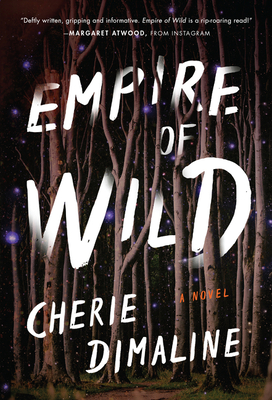
Kate’s Review: “Empire of Wild”

Book: “Empire of Wild” by Cherie Dimaline

Publishing Info: William Morrow, July 2020

Where Did I Get This Book: I own it.

Book Description: A bold and brilliant new indigenous voice in contemporary literature makes her American debut with this kinetic, imaginative, and sensuous fable inspired by the traditional Canadian Métis legend of the Rogarou—a werewolf-like creature that haunts the roads and woods of native people’s communities.

Joan has been searching for her missing husband, Victor, for nearly a year—ever since that terrible night they’d had their first serious argument hours before he mysteriously vanished. Her Métis family has lived in their tightly knit rural community for generations, but no one keeps the old ways . . . until they have to. That moment has arrived for Joan.

One morning, grieving and severely hungover, Joan hears a shocking sound coming from inside a revival tent in a gritty Walmart parking lot. It is the unmistakable voice of Victor. Drawn inside, she sees him. He has the same face, the same eyes, the same hands, though his hair is much shorter and he’s wearing a suit. But he doesn’t seem to recognize Joan at all. He insists his name is Eugene Wolff, and that he is a reverend whose mission is to spread the word of Jesus and grow His flock. Yet Joan suspects there is something dark and terrifying within this charismatic preacher who professes to be a man of God . . . something old and very dangerous.

Joan turns to Ajean, an elderly foul-mouthed card shark who is one of the few among her community steeped in the traditions of her people and knowledgeable about their ancient enemies. With the help of the old Métis and her peculiar Johnny-Cash-loving, twelve-year-old nephew Zeus, Joan must find a way to uncover the truth and remind Reverend Wolff who he really is . . . if he really is. Her life, and those of everyone she loves, depends upon it.

Review: I missed Cherie Demaline’s YA dystopia novel “The Marrow Thieves” when it first came out, and still haven’t really rectified that. Honestly, it’s on my list! But it took me a couple moments to realize and make the connection that “Empire of Wild”, a book I ordered during the height of the 2020 timeline of the pandemic and then let sit on my shelf for far too long, was by the same author. Having let another book of hers miss me again, I decided that it was time to fix at least part of my problem. “Empire of Wild” caught my eye because of the phrase ‘werewolf-like creature’ in the description. Feeling like I need to read more werewolf fiction, I went in excited to see what that could mean. But let me tell you, this isn’t your average werewolf story. The folklore, mythology, and symbolism go to more interesting and unique places than that.

The plot is both deep and yet very simple. Joan is a Métis woman who left her small, fractured town in Canada, and came back with a husband named Victor. He was the love of her life, but one night after a fight he left and disappeared. Joan has been mourning the loss for almost a year, and while everyone around her thinks he’s left her for another woman, she is convinced she can find him. So when she stumbles upon Victor one day, but he’s a Reverend of a Tent Revival group and says his name is Reverend Wolff and has no clue who she is, things get interesting. And then her grandmother, one of the elders in the town where there are few left, is killed by a wild dog. Or perhaps a wolf. What you think you’re going to read is not what you’re going to read. Dimaline finds layers of loss, grief, generational trauma, and love within this story, and you so desperately want Joan to find Victor, and when she does, but doesn’t, you are invested in how it’s going to turn out for her. It’s mostly following Joan on her journey, though we do get chapters interspersed in of others. The most significant are the chapters from Victor’s POV, as we slowly find out what happened to him in the woods the night he disappeared from her life, and it’s written in such eerie, surreal exposition that it slowly builds up the dread. There are also some chapters that follow various antagonistic forces, which never really get explored too much, but that’s okay. Because this is Joan and Victor’s story.

It’s also the story of a rogarou, a folk tale that has been seen in numerous cultures and can be compared to werewolf stories. A rogarou in the Métis lens in this story is a wolf like creature that haunts roads, searching for people to devour. From the get go we see that there is, indeed, some kind of threat like this, as Joan’s grandmother, Mere, is killed by some kind of canine early in the story. She also happened to be one of the few people who knew how to deal with rogarou. Joan eventually turns to another elder named Ajean for help, and Dimaline uses this opportunity to show aspects of the folklore and how it relates specifically to the Métis people. I really liked how this was woven into the story, and thought that it fit well.

But the most striking theme at the very heart of “Empire of Wild” is the insidiousness of colonialism, and the violence it has committed (and continues to commit) against Indigenous people. The fight between Joan and Victor that sent him into the unknown was based on him wanting to sell the land that she inherited from her father, as developers are constantly looking to buy Métis land, which has led to a fracturing of an already fractured community. The tent revival group that Joan finds Reverend Wolff leading has an explicit motivation to convert Indigenous people to Evangelical Christianity, and therein take more of their culture from them as well as taking them away from the devotion they have to their land (and therein allowing developers to take it and profit from it). The loss of culture and family is seen in many ways, from the land loss to the shrinking number of elders, to Joan’s nephew Zeus who is slowly losing his connection to his identity and turning his back on traditions as the story goes on. Even the Métis version of the rogarou myth has angles about people being devoured not just in body but also in spirit. If Victor has, indeed, been the victim of a rogarou, the focus is more on the mind and identity that has been erased as it takes on his body. All of this comes together in ways that directly challenge imperialist and colonialist motivations, and how Indigenous pain is profited upon over and over again. I loved this searing commentary.

“Empire of Wild” is unique and suspenseful, and filled with a lot of heart and ardor. If you want something a little different from your average werewolf story, this is where you should look for it.

Rating 8: A truly unique dark fantasy tale about love, loss, the violence of colonialism, and wolves, “Empire of Wild” is a haunting read.

Reader’s Advisory:

“Empire of Wild” is included on the Goodreads lists “Anticipated Literary Reads For Readers of Color 2020”.

Find “Empire of Wild” at your library using WorldCat, or at a local independent bookstore using IndieBound!

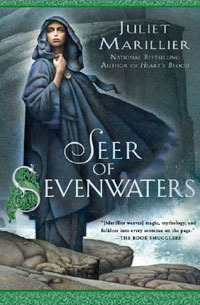
Monthly Marillier: “Seer of Sevenwaters”

“Monthly Marillier” is a review series that is, essentially, an excuse for me to go back and re-read one of my favorite author’s back catalog. Ever since I first discovered her work over fifteen years ago, Juliet Marillier has been one of my favorite authors. Her stories are the perfect mixture of so many things I love: strong heroines, beautiful romances, fairytale-like magic, and whimsical writing. Even better, Marillier is a prolific author and has regularly put out new books almost once a year since I began following her. I own almost all of them, and most of those I’ve read several times. Tor began re-releasing her original Sevenwaters trilogy, so that’s all the excuse I needed to begin a new series in which I indulge myself in a massive re-read of her books. I’ll be posting a new entry in this series on the first Friday of every month.

Book: “Seer of Sevenwaters” by Juliet Marillier

Publishing Info: Roc Hardcover, December 2010

Where Did I Get this Book: own it!

Book Description: The young seer Sibeal is visiting an island of elite warriors, prior to making her final pledge as a druid. It’s there she finds Felix, a survivor of a Viking shipwreck, who’s lost his memory. The scholarly Felix and Sibeal form a natural bond. He could even be her soul mate, but Sibeal’s vocation is her true calling, and her heart must answer.

As Felix fully regains his memory, Sibeal has a runic divination showing her that Felix must go on a perilous mission-and that she will join him. The rough waters and the sea creatures they will face are no match for Sibeal’s own inner turmoil. She must choose between the two things that tug at her soul-her spirituality and a chance at love…

Review: Unlike the first Sevenwaters trilogy which jumps generations with each book, the second trilogy remains focused on one generation: the daughters of Sean and Aisling. We’ve met, or heard reference to, them all before either in “Child of the Prophesy” or the previous book, so there’s an element of familiarity and expectation on each’s story from the start. Clodagh was a fantastic first pick for this new set of books, and it seemed only natural that Sibeal, her reserved, mystical younger sister would be the next choice. Unfortunately, for as much as I liked Sibeal’s character in “Heir to Sevenwaters,” her story has been one of my less favorite Marillier books, and so it remained with this re-read.

Even without the power of a seer, Sibeal believes she knows what will come of her life. She is soon to take her final vows to become a druid and join her brethren in the services they provide, that of wisdom, story-telling, and powerful, magical insight into the world around them. But this clear, straight path takes a sudden turn when Sibeal discovers a young man washed up on the shore with no memory of who he is. Suddenly, her life becomes much less clear and mysteries appear around every corner. For his part, Felix knows next to nothing about himself, with only dire hints at his own past and what paths he had been trodding before meeting Sibeal. Together, each must take on a perilous journey not only of self-discovery but to unlock wonders in the very world itself.

I really liked what we got from Sibeal in “Heir to Sevenwaters.” She didn’t have much page time, but she was a refreshing breath of fresh air in the midst of a family who was all treating Clodagh fairly poorly. Sibeal, alone, believed Clodagh and provided what support she could in the journey set out before her sister. Alas, as a main character, Sibeal wasn’t nearly as compelling. For one thing, her voice and perspective are not as distinct and unique as I had hoped. In too many ways, she seems similar to the other female protagonists we’ve seen in these stories and lacks the spark needed to make her stand out from the pack.

What’s worse, for the first time in this series, the narrative is split between Sibeal’s chapters and Felix’s, the romantic interest. And his are even worse than hers. Not only does the bare fact that splitting the narrative this way lesson the page time we have to get to know Sibeal as a character (perhaps this extended page count would have allowed for more development for her), but Felix himself brings next to nothing to the story. Amnesia stories are tough in this way, and Marillier falls into the same trap that many authors do with this type of arch: there’s just not enough to build upon when your character doesn’t know himself or his history. Beyond that, Felix’s chapters feel almost too similar to Sibeal’s. I’m not saying that there is a “male” and “female” way of thinking/speaking, but I definitely don’t want my two main characters to sound almost indistinguishable.

I also didn’t enjoy the overall story in this one as much as I have in Marillier’s previous Sevenwaters books. The mystery itself was fairly obvious, with numerous clues laid down well in advance of any characters piecing them together. It also all felt disconnected from the rest of the Sevenwaters story. In many ways, I feel like you could almost lift this book out of the series and no one would miss it.

Marillier’s writing remains strong, but with weaker characters and a weaker story overall, some of her tried and true go-toes become a bit more obvious as well. Some of her turns of phrase feel a bit tired and over-used, even. I did enjoy reading the final act of the story, where I felt like the pace picked up a bit more and my interested was piqued somewhat. But overall, it wasn’t enough to justify the rest of the story.

I remember being very disappointed when I read this book and wondering whether it might not be for the best that Marillier just hang up the Sevenwaters series altogether. Luckily (spoilers!), I did enjoy the last book in this series quite a bit, so that helped me recover from this reading experience. Luckily there are very few duds in her work, but this is definitely one of them.

Rating 6: The weakest Sevenwaters book of the lot with two main character, neither of whom are particularly interesting.

Reader’s Advisory:

“Seer of Sevenwaters” is on these Goodreads lists: Hidden Gems: YA-Fantasy Novels and Best Reconciliation Romance Books.

Find “Seer of Sevenwaters” at your library using WorldCat!

Kate’s Review: “The Sandman (Vol. 9): The Kindly Ones”

Book: “The Sandman (Vol.9): The Kindly Ones” by Neil Gaiman, Marc Hempel (Ill.), Richard Case (Ill.), D’Israeli (Ill.), Teddu Kristiansen (Ill.), Glyn Dillon (Ill.), Charlie Vess (Ill.), Dean Ormston (Ill.), & Kevin Nowlan (ill.).

Publishing Info: Vertigo, 1995

Where Did I Get This Book: I own it.

Book Description: The Penultimate volume to the phenomenal Sandman series: distraught by the kidnapping and presumed death of her son, and believing Morpheus to be responsible, Lyta Hall calls the ancient wrath of the Furies down upon him. A former superheroine blames Morpheus for the death of her child and summons an ancient curse of vengeance against the Lord of Dream. The “kindly ones” enter his realm and force a sacrifice that will change the Dreaming forever.

Review: If I’m being totally honest, as I was going through my “Sandman” re-read, “The Kindly Ones” was the issue that I was most dreading. For one, it’s long. It’s the longest of all the volumes. Normally length doesn’t daunt me, but knowing what was coming, added thickness just wasn’t getting me stoked for this part of my re-read. And the bigger reason, without spoiling too much, is that “The Kindly Ones” is really where the big, sad, frustrating and beautiful climax happens for this series. Yes, we have one more volume to go, but that’s all release and wrap up. “The Kindly Ones” is the action part of the finale, and it packs an emotional wallop.

Pardon me while I go stare aimlessly at a wall for a good long time. (source)

“The Kindly Ones” is the volume in which everything comes to a head. In “Worlds’ End” we saw a haunting funeral procession in the sky. In “Brief Lives”, Morpheus finally released Orpheus from his eternal life, though the consequences were sure to be dire. In the middle of the series, a faerie named Nuala stays in the Dreaming to live her life in a lonesome way. And way back, early in the series, we saw Morpheus tell Lyta Hall that her son Daniel would always belong to him in some way, as a child conceived in the Dreaming. All of these moments come together in “The Kindly Ones”, and lead to a huge consequence that destroyed me the first time I read this book. And knowing it was coming didn’t make it any less painful. But let’s move back a little bit.

“The Kindly Ones” is about vengeance, and retribution, and paying the Piper. It opens with an image of a ball of string, and ends with the image of a ball of string, symbolizing the circular events that this series has always been about, at least in part. Plot set up wise, Lyta Hall’s son Daniel is suddenly kidnapped. She assumes that not only is her only child, and last tie to her dead husband, dead, but it is at the hands of Dream because of what he told her about Daniel way back when, that he would always belong to Dream. Lyta, already a bit emotionally unstable because of her husband’s death, is basically destroyed, and hellbent on revenge. So she turns to The Furies (also known as The Kindly Ones), hoping that they will grant her vengeance against Dream and all he holds dear. It’s been building and simmering awhile, and now it has come to fruition: Lyta’s rage has serious consequences through the Furies, and characters that we met and have grown to love, or at least expect to be there, are victims to her wrath.

And it all feels inevitable, like the pages in Destiny’s book. Gaiman pulls out all the stops and spares nothing, and as we are reunited with some characters, we say goodbye to others. And all the while, we watch Dream as he has to meet with his own destiny, and has to do so in the same lonely, isolated way that he’s had to endure so much before this. My God, it just hurts as you read it. Through the entire series Dream has been about responsibility above most other things, sometimes to his detriment, and because of his responsibility to another character he made a promise to in this arc, it leads to a terrible fallout. It feels both devastating and incredibly in character for him. We also have a lovely and incredibly painful call back to the first time we saw Dream and Death interact, amongst a flock of pigeons, as they have their inevitable moment before everything changes. Gaiman, you monster!

I will say, however, that “The Kindly Ones” has probably my least favorite artwork of the entire series. I know some people who love it, and hey, to each their own, but it feels discordant when compared to what is going on in the narrative.

“The Kindly Ones” is arguably the most epic and consequential of “The Sandman” series. It was a hard read again, even knowing what was to come. Up next is the epilogue to this series, “The Wake”.

Rating 8: “The Kindly Ones” isn’t a story that I really ‘enjoy’ because it hurts so much, but it’s a really well done bit of storytelling from Gaiman.

Reader’s Advisory:

“The Sandman (Vol.9): The Kindly Ones” is included on the Goodreads lists “Death Gods and Reaper Protagonists”, and “Mythic Fantasy Comics”.

Find “The Sandman (Vol.9): The Kindly Ones” at your library using WorldCat, or at a local independent bookstore using IndieBound!

Previously Reviewed:

Serena’s Review: “The Princess Knight”

Book: “The Princess Knight” by G.A. Aiken

Publishing Info: Kensington, November 2020

Where Did I Get this Book: NetGalley!

Book Description: Gemma Smythe dedicated her life to the glory of battle. With her fellow War Monks, she worshipped the war gods, rained destruction on her enemies, and raised the dead when the fancy took her. Until her sister Keeley became the prophesied Blacksmith Queen, and Gemma broke faith with her order to journey to the Amichai Mountain and fight by Keeley’s side.

The Amichai warriors are an unruly, never-to-be-tamed lot, especially their leader-in-waiting, Quinn. But when the War Monks declare support for Gemma’s ruthless younger sister Beatrix, the immaturity of her key ally is the least of Gemma’s problems. She has to get to the grand masters, dispel their grudge against her, and persuade them to fight for Keeley and justice. If her conviction can’t sway them, perhaps Quinn’s irritating, irreverent, clearly unhinged, ferocity will win the day . . .

Previously Reviewed: “The Blacksmith Queen”

Review: I read “The Blacksmith Queen” a few years ago and enjoyed it well enough for the wacky thing it was: a fantasy, romance, kind of comedy, kind of urban fantasy, bizarre little story. I hadn’t read anything else by the author, so I really didn’t know what I was getting into. But I did like the main characters, especially Keely, and usually that’s enough for me to want to continue on with a series. I requested this sequel quite a while ago and only got around to it recently, however. I’m glad I finally did though, because I thought it was a lot of fun!

Gemma has always been a warrior, fighting her elite force of monks. But her loyalties are tested and refocused when her sister becomes the fabled Queen. But the War Monks don’t follow her, instead choosing her younger, and more brutal, younger sister. But Keely’s efforts need their support, and it is up to Gemma to persuade them back. Perhaps, she wonders, they will respond better to someone equally unhinged? Perhaps the infuriatingly handsome and unruly fighter, Quinn? With so much at stake, Gemma must find a way to bridge these divides and bring aid to her sister’s fight.

As I said, I hadn’t read this author’s previous series (same world), so I wasn’t familiar with out multiple books in the same story really operated. I was pleased to find that this one continued forward with having several POV characters and that, most importantly, Keely still featured heavily as a main character herself. I was excited to read about Gemma, of course, but I wasn’t looking forward to totally forgoing Keely who I’d liked so much in the first book and who, being queen, still had a large role to play going forward.

The characters, overall, still remain my favorite part of this story. I was particularly interested in reading Gemma’s story and her attempts to balance her loyalties between her sister, the queen, the fighting force of monks that she had been fully committed to prior to the last story. Her history around the worship of the death god that the warrior monks serve was also very interesting, as well as, of course, their practice of raising the dead. I did struggle a bit to become fully invested in Gemma’s story, however, because Keely was still such a presence in this book, and I knew her a bit better. But I did enjoy the fact that Gemma was distinctly her own character. She was much more wary and paranoid than her more trusting and accepting sister, something that I think works with her warrior’s background.

The romance also takes a back seat in this book. I enjoyed it well enough, but it was definitely not the most compelling part of the story. They had decent chemistry, but there wasn’t a lot of spark, more just a steady burn of comradery that turns into a relationship at one point. I like this kind of love arch, too, so I was ok with it. But, like I said, if you’re tuning in for a sparkling romance, this probably isn’t it. Instead, the story focuses much more heavily on the battles and political maneuvers that Keely and her force must employ to protect her queenship from the various other heirs who are still hoping to unseat her. These action-packed scenes were a blast, and the story really felt like it was on its most solid footing during these points.

Overall, I really enjoyed this book. Perhaps a bit more than the first, even, just because I knew a bit better what to expect from it. I was also pleased with Gemma as a new character, while also not having to give up my beloved Keely, which I took as a big win. Fans of this author and her work are sure to enjoy this one!

Rating 8: Light on the romance, but it compensates with a fast-moving, action-packed story.

Reader’s Advisory:

“The Princess Knight” isn’t on any Goodreads lists, but it should be on Badass Female Leads!

Find “The Princess Knight” at your library using WorldCat!
Serena’s Review: “Given”

Book: “Given” by Nandi Taylor

Publishing Info: Wattpad Books, January 2020

Where Did I Get this Book: Edelweiss+

Book Description: As a princess of the Yirba, Yenni is all-but-engaged to the prince of a neighboring tribe. She knows it’s her duty to ensure peace for her people, but as her father’s stubborn illness steadily worsens, she sets out on a sacred journey to the empire of Cresh, determined to find a way to save him at any cost, even though failure could mean the wrath of her gods and ruin for her people. One further complication? On the day she arrives at the Prevan Academy for Battle and Magical Arts, she meets an arrogant dragon-shifter named Weysh who claims she’s his “Given”, or destined mate. Muscular, beautiful (and completely infuriating), he’s exactly the kind of distraction Yenni can’t afford while her father’s life hangs in the balance.

But while Yenni would like nothing more than to toss Weysh the man into the nearest river, Weysh the dragon quickly becomes a much-needed friend in the confusing northern empire. Yet when her affection for the dragon starts to transfer to the man, Yenni must decide what is more important: her duty to her tribe, or the call of her own heart.

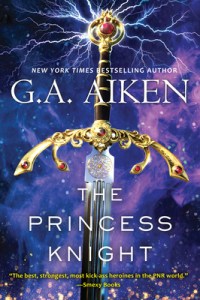
Review: This book had two things going for it immediately: first, the cover is so cool! There was an alternative cover that was much less compelling, but the one I highlighted here was the one I saw and the one that initially drew me in. And second, it’s a book about dragons. Lump me in with all the other unoriginal fantasy fans who love dragons, I don’t care! A good dragon story will always be right up my alley. A bad dragon story, however….

Yenni has always grown up with duty at the heart of her life. But when her father falls prey to a mysterious illness, this duty takes on a new form. Not only must she travel to a distant academy to follow through on her next steps to queendom, but while there, she desperately hopes to find a cure for her beloved father. The last thing she needs is distractions. Especially not distractions that show up in the form of infuriating, handsome, young men. And frankly, the only thing in this particular young man’s favor is his dragon form whom Yenni forms a close relationship. Sadly, one comes with the other. But as Yenni finds herself growing closer to man and dragon, the choices before her and the duties that call to her begin to blend and meld.

I probably should have known from the description that this probably wasn’t going to be a winner for me. YA books that describe their romantic heroes as “infuriating” and “arrogant” are almost always underselling it, with the terms “demeaning” and “borderline-abusive” often being the words I would substitute. Alas, so was the case here.

There were so many cringe-worthy lines (also to be expected from most fantasy romances that center around some sort of “mate bond”…can we just stop with this entire idea??). And what was worse was how quickly Yenni ultimately got over her first impression made by some of these rude interactions. Her initial reaction of dislike is completely justified. Her 180-turn like five pages later was….less so. And that’s all without touching the utter lack of romance involved in an insta-love connection. Or any of the other trope-ridden high school romance boxes that were dutifully checked off as the story progressed. All the worse in that these were supposedly more adult characters! Sadly, every aspect of this romance didn’t work for me and pretty much ruined my experience.

Perhaps it’s for the best, then, that I also didn’t feel like there was overly much to ruin in the first place. The writing was strong enough, but wasn’t accomplishing anything truly note-worthy. There was an over-reliance on the author telling readers how they should feel about things, rather than creating situations and dialogue that would resonate with readers and do the showing for her. And the world-building and magical school were incredibly predictable and unoriginal feeling. Sure, one can say that with “Harry Potter” looming large, it’s almost impossible to write a magical school book that doesn’t feel like either a straight-up copy attempt or a pale comparison. But in response, I will point you to Naomi Novik’s “A Deadly Education” and leave it at that. It definitely can be done. This one just doesn’t manage it.

Ultimately, I was really disappointed by this book. Not only did it not live up to the awesome, bad-ass heroine who seemed to be depicted on the cover, but it fell into every negative romance trope you can think of in recent years. I really wouldn’t recommend this book to anyone. There are better dragon stories out there. Better leading ladies. Better worlds. In a word, better books.

Rating 4: Not only did it not bring anything new to the table, but it highlighted another unhealthy romantic dynamic as some sort of wish-fulfillment.

Reader’s Advisory:

“Given” is on these Goodreads lists: 2020 Fantasy and Science Fiction Books by Black Authors and Fantasy That Isn’t Fantastic Straight White Men Doing Epic Things….

Find “Given” at your local library using WorldCat!

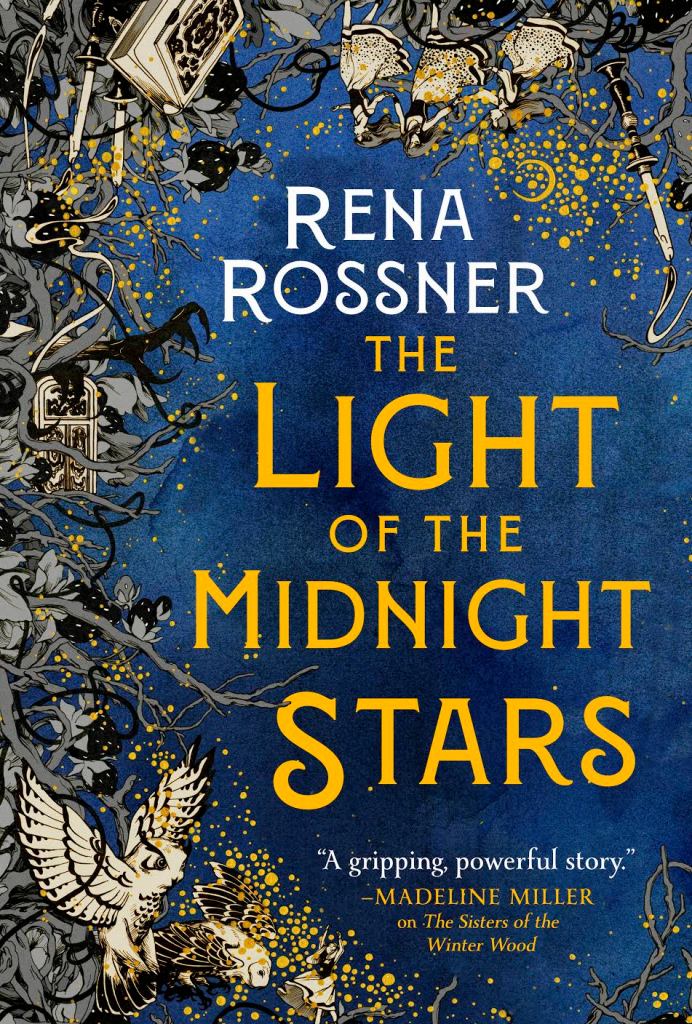
Serena’s Review: “The Light of the Midnight Stars”

Book: “The Light of Midnight Stars” by Rena Rossner

Publishing Info: Redhook, April 2021

Where Did I Get this Book: from the publisher!

Book Description: Deep in the Hungarian woods, the sacred magic of King Solomon lives on in his descendants. Gathering under the midnight stars, they pray, sing and perform small miracles – and none are more gifted than the great Rabbi Isaac and his three daughters. Each one is blessed with a unique talent – whether it be coaxing plants to grow, or predicting the future by reading the path of the stars.

When a fateful decision to help an outsider ends in an accusation of witchcraft, fire blazes through their village. Rabbi Isaac and his family are forced to flee, to abandon their magic and settle into a new way of life. But a dark fog is making its way across Europe and will, in the end, reach even those who thought they could run from it. Each of the sisters will have to make a choice – and change the future of their family forever.

Review: I really enjoyed the first book by this author I read. It was a similar tale of sisterhood, fairytale-like magic, all couched around the persecution the Jewish people have faced throughout history. On the surface, this book looks like it could be almost the exact same story, only add one more sister to the bunch. Am I complaining about that? Heck no!

Each possessed of their own natural, magical talent, three sisters have grown up performing minor miracles beneath the night skies of their forest home deep in Hungary. While wonderous and fantastical, not all view the abilities of the Solomandar sisters as signs of goodness. Instead, their faith and their practices attract dark forces to their once peaceful home. Each must contend with these evil workings intruding on their lives, and each must come to their own path forward, living in a world that is not as good as the believe it can or should be.

There are many things to like about this book. First, as I mentioned, there are a lot of similarities in themes and style of storytelling between this and the first book, so if you enjoyed that story, you probably don’t need to read much further in this review before picking this book up. But this is not a series, and this book does stand on its own with its own unique characters and arcs.

With three sisters’ stories now to tell, I was a bit concerned that I would find myself gravitating towards one more than other, thus rending large chunks of the story as less-interesting. Indeed, even with the ‘The Sisters of the Winter Wood,” I found myself becoming more invested in Liba’s story over Laya’s. Here, I think the author has improved on that and made each of the three sisters compelling in her own right. Each travelled very distinct paths and had to overcome their own specific challenges and experience their own growth. I could probably still pick a favorite if you forced it out of me, but as I don’t have to, I wont!

I also really liked the tone of this book. Last month, I wrote a post on “literary fantasy” and how hard a sub-genre that is to categorize and/or even find to read. But I think this book is a perfect example of a multi-faceted fantasy title that spans genres. Not only would I consider it a “literary fantasy” novel, but it could also be shelved under historical fantasy and fairytale fantasy. These are a lot of subgenres to balance, and I applaud the author for managing all three so well! I particularly enjoyed the intersections of historical events and the fairytale-like style of writing. The author includes an excellent note at the end detailing the various pieces of folklore she pulled from when writing this book. And it’s truly impressive how neatly she has lain these fantasy elements on top of a time and place in real history.

I continue to really enjoy books by this author. Fans of historical fiction who also enjoy a good fairytale are sure to enjoy it. The story is full of magic and wonder, all overlain across a darkly-real threat. It is sure to pull at your heartstrings.

If you’re interested in reading this book, don’t forget to check out the giveaway I’m hosting for an ARC copy!

Rating 8: Dark and beautiful, the woods and starlight feel almost real in and of themselves.

Reader’s Advisory:

“The Light of the Midnight Stars” is on these Goodreads lists: Midnight and Historical Fiction 2021.

Find “The Light of the Midnight Stars” at your library using WorldCat!

Giveaway: “The Light of Midnight Stars”

Book: “The Light of Midnight Stars” by Rena Rossner

Publishing Info: Redhook, April 2021

Book Description: Deep in the Hungarian woods, the sacred magic of King Solomon lives on in his descendants. Gathering under the midnight stars, they pray, sing and perform small miracles – and none are more gifted than the great Rabbi Isaac and his three daughters. Each one is blessed with a unique talent – whether it be coaxing plants to grow, or predicting the future by reading the path of the stars.

When a fateful decision to help an outsider ends in an accusation of witchcraft, fire blazes through their village. Rabbi Isaac and his family are forced to flee, to abandon their magic and settle into a new way of life. But a dark fog is making its way across Europe and will, in the end, reach even those who thought they could run from it. Each of the sisters will have to make a choice – and change the future of their family forever.

I really enjoyed Rena Rossner’s first book, “The Sisters of the Winter Wood”, when I read it in 2018. It was a lovely, fairytale-like story featuring two sisters, so pretty much right up my alley! The author also experimented with her style of writing, alternating between the more traditional prose for one sister, and a lyrical, poetic form for the other. Not only did this make the reading experience feel varied and alive, but the choice of each style of writing matched the aspects of each sister: the solid, grounded prose for the sister who can turn into a bear, and the more whimsical, flighty poems for the sister who can turn into a swan.

With that incredible first outing, I was excited to see that the author had another book coming out this spring. And even more excited when I received an ARC in the mail! In many ways this book sounds similar: a Jewish fairytale featuring sisters, this time three. Is this too similar to the first one? Or just more to like? I’ll post my full review this coming Friday. In the meantime, enter to win a copy! This giveaway is open to U.S. residents only and ends on April 28, 2021.

Enter to win!