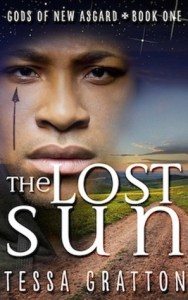
Serena’s Review: “The Lost Sun”

27230933Book: “The Lost Sun” by Tessa Gratton

Publishing Info: Createspace Independent Publishing Platform, October 2015

Where Did I Get this Book: audiobook from library!

Book Description: Fans of Neil Gaiman’s “American Gods” and Holly Black’s “The Curse Workers” will embrace this richly drawn, Norse-mythology-infused alternate world: the United States of Asgard. Seventeen-year-old Soren Bearskin is trying to escape the past. His father, a famed warrior, lost himself to the battle-frenzy and killed thirteen innocent people. Soren cannot deny that berserking is in his blood–the fevers, insomnia, and occasional feelings of uncontrollable rage haunt him. So he tries to remain calm and detached from everyone at Sanctus Sigurd’s Academy. But that’s hard to do when a popular, beautiful girl like Astrid Glyn tells Soren she dreams of him. That’s not all Astrid dreams of–the daughter of a renowned prophetess, Astrid is coming into her own inherited abilities.

When Baldur, son of Odin and one of the most popular gods in the country, goes missing, Astrid sees where he is and convinces Soren to join her on a road trip that will take them to find not only a lost god, but also who they are beyond the legacy of their parents and everything they’ve been told they have to be.

Review: This is another one of those mystery books that has been hanging out on my audiobook “to read” list at the library. I have no memory of where I heard of it originally or why I requested it specifically. I mean, looking at the description, it definitely seemed interesting, but there are also a million and one fantasy books out there, so why this one? Maybe I was going through a Thor/Loki moment when I stumbled on it and put it on here? Either way, it was available the other day when I was looking for my next book, so I checked it out! It was definitely an interesting read, but also not quite all I had hoped for.

Soren’s days have been largely devoted to training, both physically in the skills of a warrior, and mentally in the self-control needed to keep the beserking rage he inherited from his father in check. Often this means missing out on social activities with friends and keeping to himself. But when Astrid, the daughter of a famed seer, joins the school, she seeks him and begins to pry into his solitary existence. After a beloved god goes missing, Soren now finds himself on a roadtrip mission with Astrid in the hopes of finding this lost deity and returning him to where he belongs. But that’s only the beginning of a journey that will take them far and uncover much about themselves, their pasts, and their future.

What stood out the most in this book was the creative world-building. What we have here is an alternate version of the United States in which the Norse gods are very real and have a very real influence on every aspect of society: government structure, education, career paths, you name it. I really enjoyed how creative the author was with such a bizarre idea, and how seamless was the end result, considering how strange it is, overall.

This is Soren’s story, so much of the history and current state of the world is told through his point of view. Soren is a good narrator, in this respect, as all of these needed details to flesh out this type of world were delivered in a believable, non-exposition manner, something that is definitely a challenge for a book written in first person. Soren’s own history, that of having a father who gave in to the beserker madness and killed innocent people, is never far from his mind, and from the very beginning we see the limited future Soren sees for himself. He is constantly battling an inner war, and his fear of himself and his abilities stains almost every choice he makes.

The  main problem for me arrived in the form of the other main character, Astrid. Right from the start she struck me as very “manic pixie dream girl” in her behaviors and descriptions. I think the character had potential, but it was really hard to get behind her part of the story when that impression was so strong right off the bat. As the story started moving more, it was easier to be distracted from it. But it was still the sort of thing that popped up throughout and left me having a hard time feeling really too compelled or interested in her part of the story. And then, since so much of Soren’s story becomes tied up with hers, I also lost some interest in him.

Overall, I thought this was a really creative, fun book. My problem most centered around some of the characterization choices that made it hard for me to feel truly invested in the story’s main characters. But if you’re into Norse mythology and want to read a new take on the subject, this might be one worth checking out!

Rating 7: A fun, unique fantasy story set in a re-imagined United States, though the characters left something to be desired.

Reader’s Advisory: 

“The Lost Sun” is on these Goodreads lists: “Best Alternate History Novels and Stories” and “Books with Lost or Found in the Title.”

Find “The Lost Sun” at your library using WorldCat!
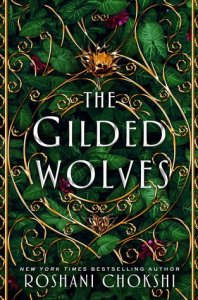
Serena’s Review: “The Gilded Wolves”

39863498Book: “The Gilded Wolves” by Roshani Chokshi
Publishing Info: Wednesday Books, January 2019

Where Did I Get this Book: ebook from the library!

Book Description: It’s 1889. The city is on the cusp of industry and power, and the Exposition Universelle has breathed new life into the streets and dredged up ancient secrets. Here, no one keeps tabs on dark truths better than treasure-hunter and wealthy hotelier Séverin Montagnet-Alarie. When the elite, ever-powerful Order of Babel coerces him to help them on a mission, Séverin is offered a treasure that he never imagined: his true inheritance.

To hunt down the ancient artifact the Order seeks, Séverin calls upon a band of unlikely experts: An engineer with a debt to pay. A historian banished from his home. A dancer with a sinister past. And a brother in arms if not blood.

Together, they will join Séverin as he explores the dark, glittering heart of Paris. What they find might change the course of history–but only if they can stay alive.

Review: I was a bit hesitant to pick this book for a few reasons. First, as readers of this blog know, the last year or so has been made up of a lot of middling reviews from me for books that I feel are WAY too similar to “Six of Crows” to be called much more than blatant cash grabs on the part of authors and publishers who want in on the lingering popularity of that duology. And secondly, I’ve tried to read Roshani Chokshi’s books in the past because she’s a fairly beloved YA author and…haven’t loved her work. But, I thought I’d give it one more go. And, in an improvement on my opinions on her other books, this one was…ok.

Severin had been on the cusp of entering into an inheritance that would establish him into one of the most exclusive and privileged circles in the nation, if not the world. But, in the eleventh hour, he is rejected and outcast. Ever since, Severin has worked to gather up a crew of other outcasts in an attempt to regain his birthright. Each with their own speckled past and hopes for the future, this ragtag group will now find themselves caught up in conspiracies grander than they could ever had expected. But with the potential riches, comes the equally dangerous perils.

So, to start with the pros of this book. One of my major complaints about Chokshi’s work in the past was my distaste for her overly flowery writing. It was of the type too often found in YA where it seems like the authors are just playing word spaghetti and hoping to string together sentences that sound pretty. Who cares if they don’t make any actual sense or the metaphors are pure nonsense if looked at for more than half a second? But luckily, here, there was less of it, especially of the flowery type. I still think the writing left something to be desired, however. No one can fault the author for her dialogue writing, as that was witty and fast. But the actual description of how the magic system worked or some of the actions scenes were confusing, and even after re-reading, I didn’t have a solid image in my mind for what exactly she was trying to describe.

I also enjoyed most of the characters, though this two is both a positive of the book and a negative. The author does a great job of peopling her story with a diverse cast of characters. They come from different cultures, religions, orientations, you name it. However, when you’re actually reading the chapters, many of their voices sound very similar, which seems to detract from the actual celebration of differences that she seems to be setting out to accomplish. Given the author’s note at the back and the author’s own story, I don’t believe she was just trying to check boxes, but I do think that, again, her writing itself let her down where these characters were concerned. And, of course, I can’t end a section on characters and not acknowledge the giant elephant/”Six of Crows” shadow in the room: several of these characters were disturbing similar to characters in that book. The story itself was very different, but the characters….the two “main” characters and their romances were especially disconcertingly similar to that of Kaz and Ines.

I was intrigued by the world-building and the history of the magic in this world and how it worked. There were a lot of creative ideas thrown around, and some of them were definitely unique and whimsical, fitting in perfectly with the author’s style and the story she was laying out with its tone and characters. There were times, however, where I felt like there was always some magical “out” or McGuffin that the team could use to solve almost every problem. It didn’t really seem like you had to be all that clever or skilled to pull of the things they were doing, and more just needed to have the right magical tools that did the job for them. And at the same time, the existence of all these magical get-arounds seemed to undermine the dangers or protections that the crew was setting out to get around. What good are all of these magical wards if they are so easily bypassed by some other magical tool or what not? I wish the story had been a bit more clever in these areas.

So, as you can see, I had a fairly middling experience with this book. It was a fast read, and the adventure and snappy dialogue kept things moving to the point that I never felt the need to put the book down (as I have with other books by this author in the past). But on deeper reflection, once I’d finished the book, a lot of the elements involved seemed to be wanting in some way. The story definitely ends with a set-up for the next, and I’m intrigued enough to continue. I’m hopeful that as this book seemed an improvement on some of the author’s works of the past, that things will continue in that direction and the second book will feel a bit more solid. If you’re not totally burned out on “Six of Crows” read-alikes, this one might be worth checking out. If you’re a fan of this author, than definitely.

Rating 7: Most of the pros had corresponding cons, but I’m in it enough to want to continue on to the next, which is a bigger compliment than I’ve paid the author’s books in the past.

Reader’s Advisory:

“The Gilded Wolves” is on these Goodreads lists: “Speculative Fiction Heist/Caper Stories” and “YA Fantasy by WOC.”

Find “The Gilded Wolves” at your library using WorldCat!

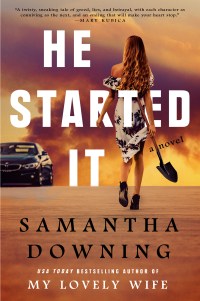
Kate’s Review: “He Started It”

51373979Book: “He Started It” by Samantha Downing
Publishing Info: Berkley, July 2020

Where Did I Get This Book: I was sent an eARC from the publisher via NetGalley.

Book Description: Beth, Portia, and Eddie Morgan haven’t all been together in years. And for very good reasons—we’ll get to those later. But when their wealthy grandfather dies and leaves a cryptic final message in his wake, the siblings and their respective partners must come together for a cross-country road trip to fulfill his final wish and—more importantly—secure their inheritance.

But time with your family can be tough. It is for everyone.

It’s even harder when you’re all keeping secrets and trying to forget a memory—a missing person, an act of revenge, the man in the black truck who won’t stop following your car—and especially when at least one of you is a killer and there’s a body in the trunk. Just to name a few reasons.

But money is a powerful motivator. It is for everyone.

Review: Thanks to Berkley and NetGalley for providing me with an eARC of this novel!

Even though it got a lot of hype when it came out, I never actually read “My Lovely Wife” by Samantha Downing. I’m not sure why it never made it to my hold list, but for whatever reason it just hasn’t been on my book stack. But given all the buzz it has, when Berkley sent me a link to Downing’s newest book, “He Started It”, I was pleasantly surprised and delighted. And the description alone was enough to get my hyped: feuding siblings, a missing person, family secrets, and a mysterious potential stalker? That just screams something that I would want to read about! As someone who used to go on family road trips all the time throughout her childhood, sometimes to the point where everyone in the car wanted to murder each other, that was the icing on the cake!

giphy-3
One of my shining moments was convincing my sister she had kidney problems because she had to stop and pee so often. Memories. (source)

“He Started It” is from the perspective of Beth, one of three dysfunctional siblings who are on a road trip in hopes of collecting an inheritance from their recently deceased grandfather. When we first meet these siblings, all we know are that 1) they aren’t really close to each other, and 2) this road trip is a re-creation of a trip they took with said grandfather when they were kids, and if they want to get their money, they have to do it. As we get to know Beth, siblings Eddie and Portia, and Beth and Eddie’s spouses Felix and Krista, we find we are following a group of very unlikable people who have a lot of secrets. And while the characters themselves are all pretty reprehensible, the road trip they take is incredibly fun, mostly because the secrets start coming out and you just have to know more. As Downing slowly shows us what happened on the childhood road trip, and slowly starts to reveal facts and details that are more and more salacious as time goes on, you find yourself completely hooked into what happened to these siblings and what motivates them in the present day. As mentioned, we are mostly getting into Beth’s head, so it’s hard to know how reliable she is and what kind of picture we’re getting, but all that is just part of the salacious fun as more well crafted twists come out of the woodwork. And almost all of the big reveals and shocks feel well earned too. And while none of the characters were enjoyable, I still wanted to know what happened to them because I wanted to know if they would all get what was coming to them. Suffice to say, I devoured this book in a very short time, and really had to force myself to put it down when I had other things to do.

In spite of how freakin’ addicted I was to this book, I will say that the ending threw a wrench into my overall experience of it. I’m not going to spoil anything for you guys, because up until that point I had a really fun time and I still think it’s worth the read. But what I will say is that it felt abrupt, it felt unresolved, and it felt a bit like a shocker just for the sake of being shocking. This isn’t necessarily a bad thing, per se, but it did mean that this book never really moved from ‘mindless fun thriller’ to ‘you gotta read this book, thriller fans of all ages!’ That’s not a bad thing when you want to bring a stack of books to your backyard escape. But it may not stand out too much from other stories in that stack.

“He Started It” was fun in the moment, and as someone who is trying to live more for the moment, I was thankful for it as I was reading it.

Rating 7: Though the ending kind of throws the whole thing off, “He Started It” is a fun and kind of salacious thriller that will take your attention and refuse to return it until you’ve finished.

Reader’s Advisory:

“He Started It” is included on the Goodreads lists “Psychological Suspense for 2020 (U.S. Publications Jan-July 2020)”, and “Books Featured on First Chapter Fun”.

Find “He Started It” at your library using WorldCat, or a local independent bookstore using IndieBound!

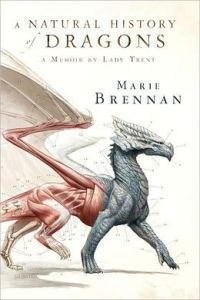
Serena’s Review: “A Natural History of Dragons”

12974372Book: “A Natural History of Dragons”by Marie Brennan

Publishing Info: Tor Books, February 2013

Where Did I Get this Book: audiobook from the library!

Book Description: Tor Books, February 2013

Book Description: All the world, from Scirland to the farthest reaches of Eriga, know Isabella, Lady Trent, to be the world’s preeminent dragon naturalist. She is the remarkable woman who brought the study of dragons out of the misty shadows of myth and misunderstanding into the clear light of modern science. But before she became the illustrious figure we know today, there was a bookish young woman whose passion for learning, natural history, and, yes, dragons defied the stifling conventions of her day.

Here at last, in her own words, is the true story of a pioneering spirit who risked her reputation, her prospects, and her fragile flesh and bone to satisfy her scientific curiosity; of how she sought true love and happiness despite her lamentable eccentricities; and of her thrilling expedition to the perilous mountains of Vystrana, where she made the first of many historic discoveries that would change the world forever.

Review: When I read “Turning Darkness into Light” a year or so ago, I didn’t realize that it was connected to Marie Brennan’s “Lady Trent” series. It was still an enjoyable read, however, and it inspired me to go back and put the original series on my list. Of course, that now makes reading this series, set quite a bit before “Turning Darkness,” into a very different reading experience than it would have been had I been approaching without any prior knowledge. But, overall, I really enjoyed this read!

Before she was the well-known adventurous, Lady Trent, Lady Isabella was just a young woman with an unladylike interest: dragons. But ever determined, she set out to make a life for herself where she could pursue this unlikely passion as far a a lady of her time could hope for. Instead, she got more than she ever wished for. Finding a marriage of true affection with a liberal minded man who eventually even concedes to allowing her to travel on expeditions alongside her. Never did he suspect that she, herself, would be the one to begin making the most extraordinary discoveries of their time!

This book was both what I expected and very different than I expected. On one hand, it’s kind of your staple historical fantasy story featuring an intrepid lady going and doing what no lady has done before. Lady Trent’s voice was very familiar, if a bit less bland than the likes of Amelia Peabody and Veronica Speedwell. But her story was unique enough to stand alone. For one thing, I appreciate the way the story is grounded in the realities of the “time” for a lady such as herself.

Her marriage is not made from wild romance, but from the practical choice of two individuals with unique interests to team up with another who can appreciate their eccentricities. It was a nice change of pace to read about this type of relationship and how their feelings towards each other change and grow over the years as they are put to different, unexpected tests. Her husband doesn’t simply jump onboard with her wanting to travel the world, but very realistically expresses concern that he will be judged for not protecting his wife as a proper husband should. Of course, he quickly sees reason and realizes that her wants and needs are more important than this judgement, but I appreciated that the challenge of living so far outside the norm was addressed.

The story was a bit slower to get started than I may have liked, but once Lady Isabella actually begins her explorations, I really enjoyed it. Even then, the dragons were much more often an idea or passing fear than ever being very present. This, of course, was part of the mystery of them, but it did leave the pacing of the story itself a bit stilted. Here, mostly, is where it was strange that I had read the companion book before this actual series. Many secrets and truths had been taken as common knowledge in that book, but here Lady Trent had yet to make any of these discoveries. It did add a strange, new layer of intrigue for me, personally, as I spent a lot of time trying to guess how all of these smaller clues would lead to the bigger reveals I knew were coming at some point. Even knowing some of the outcomes, I still wasn’t able to put much together beforehand.

I really liked the narrator for this audiobook, and I highly recommend reading the book that way if you like audiobooks at all. The slower pace and, at points, removed feeling one has from the characters themselves did knock this back a few points in my rating. But I plan on continuing the series and hopefully those aspects will pick up in the next one.

Rating 7: A fun historical fantasy story, if a bit plodding at times.

Reader’s Advisory:

“A Natural History of Dragons” is on these Goodreads lists: “Fantasy of Manners” and “Dragons/Serpents.”

Find “A Natural History of Dragons” at your library using WorldCat!

Kate’s Review: “These Women”

52218559Book: “These Women” by Ivy Pochoda

Publishing Info: Harperluxe, May 2020

Where Did I Get This Book: I own it.

Book Description: In West Adams, a rapidly changing part of South Los Angeles, they’re referred to as “these women.” These women on the corner … These women in the club … These women who won’t stop asking questions … These women who got what they deserved … 

In her masterful new novel, Ivy Pochoda creates a kaleidoscope of loss, power, and hope featuring five very different women whose lives are steeped in danger and anguish. They’re connected by one man and his deadly obsession, though not all of them know that yet. There’s Dorian, still adrift after her daughter’s murder remains unsolved; Julianna, a young dancer nicknamed Jujubee, who lives hard and fast, resisting anyone trying to slow her down; Essie, a brilliant vice cop who sees a crime pattern emerging where no one else does; Marella, a daring performance artist whose work has long pushed boundaries but now puts her in peril; and Anneke, a quiet woman who has turned a willfully blind eye to those around her for far too long. The careful existence they have built for themselves starts to crumble when two murders rock their neighborhood.

Written with beauty and grit, tension and grace, These Women is a glorious display of storytelling, a once-in-a-generation novel.

Review: I know that through my true crime reviews, and maybe even a thriller review or two, that I’ve mentioned the concept of ‘lesser dead’ on this blog. For those who may not have seen that, it’s basically the idea that law enforcement doesn’t prioritize certain victim groups when trying to solve cases. Groups included in this concept are POC, addicts, and sex workers. When I read a book review of “These Women” by Ivy Pochoda, the fact that it was emphasizing a literary thriller take on this concept, I knew that I really needed to read it. But as I read “These Women”, it became apparent that the narrative wasn’t only going to focus on forgotten sex workers who are the victims of a serial killer, but also on other women who are connected, if not directly affected.

We have multiple perspectives in “These Women” who represent a swath of women living different lives in South Central, Los Angeles. You have Feelia, a sex worker who narrowly survived being murdered. Dorian, whose daughter Lecia was a victim of the same murderer. Julianna, a sex worker who Lecia used to babysit for. Essie, a detective for the LAPD whose colleagues don’t take her insistence on paying attention to a potential serial killer seriously. Marcella, a neighbor to Julianna who finds a cell phone that sparks her creativity, no matter what that may mean for another person’s privacy. And Anneke, a judgmental woman who has certain opinions about other women in her community. On the surface a lot of these characters seem different from each other, but once you get really into the grit and meat of this book you realize that, while there are some differences and some privilege differences, all of these women are struggling in their own ways, usually because of societal expectations thrust upon them. I felt that Pochoda gave pretty good attention to most of them, though there were some that were more compelling than others. The pain was very real in a few of them, the rage in others, as well as perspectives that were more about privilege and superiority. They all worked well, and really brought on guttural responses at the various injustices that are feeling especially pertinent in this moment.

While this is definitely more a character study, or an examination of some aspects of the culture we live in, there is a mystery at hand, and that is who is killing these sex workers, and why. The mystery did take a back seat to the other aspects of the book, but for the most part I thought that it was well laid out and plotted so that I was taken by surprise by the reveal when it happened. I also found myself really enjoying how all the pieces eventually came together, both in terms of the mystery and in terms of how all of these characters are connected to one another. It also is a good way of showing that there is common ground between all of these women in a way, and how a society that looks down upon the gender as a whole makes victims of them all in different ways, and sometimes in ways that can be damaging to each other. All of that said, I did feel that the story ended a little abruptly, and I think that that is in part due to the structure of it as a whole, with no moment to tie all of the perspectives together. It doesn’t really matter at the end of the day because this is less about conclusions and more about concepts, but for me it just felt like it was cut off when there could have been a little more room to sink into an end.

Overall, “These Women” is dark, emotional, and gritty. Also very sad. But I think that it tackles a good number of themes and realities that many thrillers sometimes leave by the wayside. Ivy Pochoda has a very clear message, and while it’s hard to immerse oneself in, it’s necessary to do so.

Rating 7: A very powerful message about how society views the victimology of certain groups, “These Women” is a compelling literary thriller, even if it ends a bit abruptly.

Reader’s Advisory:

“These Women” is included on the Goodreads list “Can’t Wait Crime, Mystery, & Thrillers, 2020”.

Find “These Women” at your library using WorldCat, or a local independent bookstore using IndieBound!

Book Club Review: “Picnic At Hanging Rock”

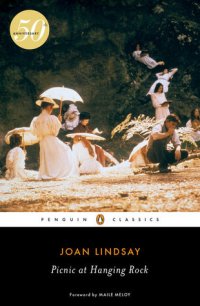
34785405._sy475_We are part of a group of librarian friends who have had an ongoing bookclub running for the last several years. Each “season” (we’re nerds) we pick a theme and each of us chooses a book within that theme for us all to read. Our current theme is “Around the World”, in which we each picked a continent and had to match a book that takes place there and/or is written by an author from that continent.
For this blog, we will post a joint review of each book we read for book club. We’ll also post the next book coming up in book club. So feel free to read along with us or use our book selections and questions in your own book club!

Book: “Picnic at Hanging Rock” by Joan Lindsay

Publishing Info: Penguin, 1967

Where Did I Get This Book: I own it.

Continent: Oceania

Book Description: It was a cloudless summer day in the year 1900. Everyone at Appleyard College for Young Ladies agreed it was just right for a picnic at Hanging Rock. After lunch, a group of three girls climbed into the blaze of the afternoon sun, pressing on through the scrub into the shadows of the secluded volcanic outcropping. Farther, higher, until at last they disappeared. They never returned. . . .

Mysterious and subtly erotic, Picnic at Hanging Rock inspired the iconic 1975 film of the same name by Peter Weir. A beguiling landmark of Australian literature, it stands with Shirley Jackson’s We Have Always Lived in the Castle, Daphne du Maurier’s Rebecca, and Jeffrey Eugenides’ The Virgin Suicides as a masterpiece of intrigue.

Kate’s Thoughts

Back when I first got my Netflix account where discs were the main platform, I went through a few months where I would request obscure-ish films that maybe I’d heard of, or maybe I stumbled upon. One of those films was “Picnic At Hanging Rock”, an Australian cult classic. When book club decided that our theme this time around was Continents, I was the only person who wanted to call dibs on a continent. That continent/region was Oceania. I eventually settled on “Picnic at Hanging Rock”, knowing full well it would probably be a controversial read as I’m one of the few people who like a good high strangeness thriller in the group. But did that stop me?

tenor
I’m sure they understood where I was coming from. (source)

Reading “Picnic at Hanging Rock” was a weird and dreamy experience, as author Joan Lindsay has created a story filled with frustrating ambiguity and an ethereal tone. Three star pupils and a chaperone disappear during a picnic in the Australian countryside at a rock formation called Hanging Rock, and while people go searching, mysteries and darkness seem to follow those involved. On its surface the book is a pretty compelling mystery with few answers, though perhaps that’s the point of it. But what struck me more as I was reading it, and this may not even be intentional, is how many themes involving sex, class, colonialism, and nature were just below the surface. In many ways, “Picnic at Hanging Rock” is very of its setting and of its time. The fact that it takes place in an upper class, white boarding school in the middle of the Australian wilderness just screams so many things. Privileged people thinking that nature is their playground, it’s very colonialist and it’s VERY Victorian, so when these women disappear, and most don’t reappear, the shock and disbelief feels very realistic. I’m sure that for these characters, wilderness picnics back in England were very safe, as the terrain and flora and fauna are well known and predictable. But when you apply that complacency to a totally different continent, a continent that is notoriously tricky and dangerous to those who are unfamiliar (or who take it for granted), disaster surely can follow.

On top of that I was deeply intrigued by the various relationships between the characters, and what was said or not said. You have the friendships between the adolescent girls, in particular Sara and Miranda, and how intense they can be (as Sara is deeply dependent on Miranda, so when Miranda goes missing Sara spirals). You have the relationships between the adults and the children, in particular Mrs. Appleyard who seems to loathe all the girls, lest they be wealthy and their families be benefactors. You have the upper class English boy Michael, who is infatuated with Miranda and who has a very macho (homoerotic?) friendship with the lowerclass Australian valet Albert. This was the relationship that was of most interest to me, as Michael doesn’t know shit about the world because of his privilege, and it’s Albert who is almost constantly bailing him out or bringing him back to reality.

And what of the ending? I like ambiguity myself, so I was a-okay with the fact that there are no real answers. At one point Joan Lindsay had a definitive end attached to the story, but was told to leave it out upon publishing. You can find the end if you want definitive answers, but honestly, not knowing, to me, is far more unsettling.

There were a few things that didn’t quite work for me in this book. It’s not a very long book, but it still felt a little extended beyond its means. There was a side plot involving another woman who worked at the school who ends up wanting to leave, and while I understand the point of it, in terms of adding to the tension and the mystery, it felt a little off the beaten path. And while it isn’t surprising, given the time period in which this was written and the setting itself, there was very little mention of the Indigenous Aborigines outside of an ‘abo tracker’ who is sent in to look for the missing girls. A real life tidbit that makes this all the more unsettling is that Hanging Rock is an actual place, its original name Ngannelong (possibly. There may have been a translation issue). It was originally a very important site to the local Aboriginal groups, and now it has basically been overrun by the popularity of this book and film, erasing the importance to the Indigenous people who were there first.

All this said, I mostly enjoyed “Picnic at Hanging Rock”, if only because I found so much hidden beneath the surface. Don’t read this if you want solid answers. But do if you want to be mystified.

Kate’s Rating 7: A dreamy and odd mystery filled with high strangeness and a lot of commentary (be it intentional or not), “Picnic at Hanging Rock”, while a little babbly and in some ways problematic, is still mysterious all these years later.

Book Club Questions

  1. This takes place at the end of the Victorian Era, during which the idea of Nature was very intriguing to Western cultures. What do you think this story was trying to say about human’s relationship to nature?
  2. The Appleyard College for  Young Ladies is an Upper Class attended boarding school in the Australian countryside. Why do you think having it take place at a wealthy boarding school was the choice Lindsay made?
  3. This book was chosen as a representation of Oceania, specifically Australia. Do you think that there was anything about this book that could be uniquely Australian?
  4. What were your thoughts on the relationships between the characters (between the students, between the students in relation to authority figures, friendships, potential romantic relationships – do you think that there were sapphic/romantic/homoerotic elements to this story?)?
  5. What do you think happened to the people who disappeared at Hanging Rock? Doe it matter? Was the ambiguity frustrating for you?
  6. There had at one time been an ending that had a solid answer and conclusion as to what happened to the missing women, but has since been left off of the book as it wasn’t part of the original story as published. Would you want to know what happened? Or do you prefer the open ended end?

Reader’s Advisory

“Picnic at Hanging Rock” is included on the Goodreads lists “Female Authored Weird Fiction”, and “Best Books Set in Australia”.

Find “Picnic at Hanging Rock” at your library using WorldCat, or a local independent bookstore using IndieBound!

Next Book Club Book: “A Thousand Beginnings and Endings” by Ellen Oh and Elise Chapman (eds.).

Kate’s Review: “Child Star”

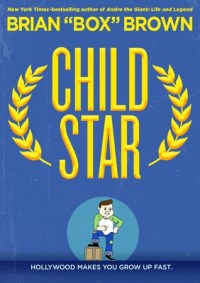
44280824Book: “Child Star” by Box Brown

Publishing Info: First Second, June 2020

Where Did I Get This Book: I received an eARC from NetGalley.

Book Description: Child Star is a fictional documentary-style graphic novel about how growing up in the spotlight robs young actors of a true childhood.

Child star Owen Eugene had it all: a hit sitcom on prime time, a Saturday morning cartoon, and a memoir on the bestseller list. The secret to his success was his talent for improvisation . . . and his small size. On screen he made the whole world laugh, but behind the scenes his life was falling apart. Hollywood ate him alive.

Inspired by real-life child stars, bestselling author Brian “Box” Brown created Owen Eugene, a composite character whose tragic life is an amalgam of 1980s pop culture.

Review: Thanks to NetGalley for sending me an eARC of this graphic novel!

My love for “The Lost Boys” meant that when Corey Haim died I sat down and cried very deeply. He (and his costar and friend Corey Feldman) were two child stars who were plagued by personal demons that were brought on by fame (and all the bad things and people that come with it), so his death by overdose was tragic, but not surprising. He was just one in a long line of child stars whose life turned to tragedy. I would be lying if I said that I wasn’t thinking of Corey Haim, Corey Feldman, Gary Coleman, and so many others as I read Box Brown’s new graphic novel “Child Star”. Which is, of course, the point.

giphy
My heart….. (source)

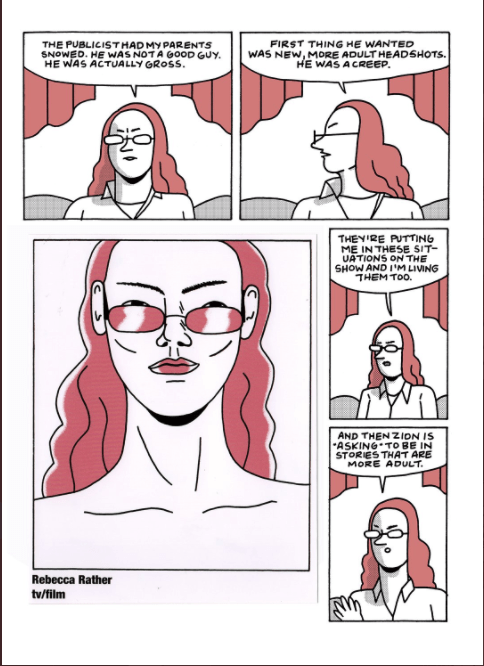
This is kind of new for Brown, as up until now his graphic novels have been non-fiction. “Child Star” is written in a faux documentary style, so the approach feels like a ‘True Hollywood Story’ kind of tale. I definitely found it interesting that even in a fictional take (though arguably this is the life of Gary Coleman, fictionalized) Brown approaches the content in a just the facts manner. We are told the story of Owen Eugene, a child actor whose popularity exploded due to a 1980s family sitcom, and his small stature as caused by a genetic disorder. We see Eugene’s rise and fall through the eyes of family, friends, and colleagues, and trace how his life in Hollywood changed, and ruined, his life. I really enjoyed the documentary style put on the page, and liked how it truly felt like I was watched a seedy VH1 TV show as I read it. From his parents who clearly took advantage of their son’s fame to the predatory higher ups in Hollywood to the people who knew Eugene due to personal and professional settings, Brown creates a very well thought out, and incredibly tragic, tale of a person all based on the perceptions of those around him, and the reliability and unreliability of their words. Owen Eugene as a character is always a bit of a mystery because of this secondary source template, but I think that we get a nuanced and complex characterization, even if it’s being told through the eyes of others. He has a lot of analogs in real life, and while Gary Coleman is clearly the main influence the sad truth is that so many child stars suffer similar paths and fates that you can see many others inside of this tale.

There is a certain nostalgia on these pages to go with the pathos, and that is for 1980s family sitcoms. I was a little too young to experience it in real time, though I saw my share of reruns of “Growing Pains” and “Who’s The Boss” thanks to syndication. “Child Star” taps into the feel for how these sitcoms would play out, their plots derivative and their casts charming if not a little generic. What struck me the most, however, was how Box worked in the whole way that politics and Nancy Reagan’s ideals would weasel their way into these shows and put forth ‘very special episodes’ about various societal ills. Looking back at those episodes through more modern lenses usually means that we see how cloying they are (especially the ‘don’t do drug’ episodes; I remember rewatching the “Growing Pains episode where frat boys offer Michael cocaine and then mock him when he says no. Coke is EXPENSIVE. No one is going to mock you for saying no, it’s more for them!). It also comments on how Owen was just used in a whole different way for other peoples motives, even if those other people were the President and First Lady.

I will say that while I haven’t had issues with Brown’s art style in the past, for some reason in “Child Star” it felt a little out of place and took away from the impact. I think that part of it is because in the other books I’ve read by him, the stories do have emotional aspects, but are also filled with hope and a little bit of whimsy. In “Child Star” it just feels like a tragedy, and therefore seeing the very cartoony illustrations was a little jarring.

Screen Shot 2020-06-17 at 5.34.03 PM
(source)

Overall, “Child Star” is another well done graphic novel by Box Brown. It’s a bummer to be sure, but also interesting to look at these issues that no doubt still haunt various celebrities.

Rating 7: A poignant and sad faux documentary graphic novel that explores the wrecked life of a child actor, “Child Star” makes you think about the dark side of fame, especially for those who are too young to handle it.

Reader’s Advisory:

“Child Star” isn’t included on many Goodreads lists, but honestly any memoirs by former child actors, like Corey Haim’s “Coreyography”, and Tatum O’Neal’s “A Paper Life”.

Find “Child Star” at your library using WorldCat, or at a local independent bookstore using IndieBound!

Kate’s Review: “I Killed Zoe Spanos”

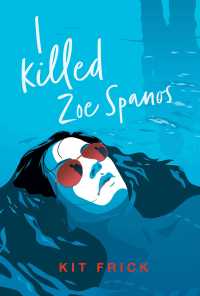
50202540Book: “I Killed Zoe Spanos” by Kit Frick
Publishing Info: Margaret K. McElderry Books, June 2020

Where Did I Get This Book: I received an eARC from NetGalley.

Book Description: This gripping thriller follows two teens whose lives become inextricably linked when one confesses to murder and the other becomes determined to uncover the real truth no matter the cost.

What happened to Zoe won’t stay buried…

When Anna Cicconi arrives to the small Hamptons village of Herron Mills for a summer nanny gig, she has high hopes for a fresh start. What she finds instead is a community on edge after the disappearance of Zoe Spanos, a local girl who has been missing since New Year’s Eve. Anna bears an eerie resemblance to Zoe, and her mere presence in town stirs up still-raw feelings about the unsolved case. As Anna delves deeper into the mystery, stepping further and further into Zoe’s life, she becomes increasingly convinced that she and Zoe are connected–and that she knows what happened to her.

Two months later, Zoe’s body is found in a nearby lake, and Anna is charged with manslaughter. But Anna’s confession is riddled with holes, and Martina Green, teen host of the Missing Zoe podcast, isn’t satisfied. Did Anna really kill Zoe? And if not, can Martina’s podcast uncover the truth?

Review: Thank you to NetGalley for sending me an eARC of this novel!

In case you were wondering, I’m still on my bullshit when it comes to True Crime podcasts. I haven’t really strayed into new territory outside of the old reliables, but if you have some recommendations, send them my way! More and more we’re seeing podcast themes making their way into mysteries, perhaps in part due to this true crime boom within the listening world. Sometimes it works, other times it doesn’t, but I’m always game to try that kind of book out. So of COURSE “I Killed Zoe Spanos” by Kit Frick caught my eye! It has elements that I greatly enjoy in my thrillers: a luxurious summer setting, a missing girl, secrets that the privileged and the non-privileged alike keep close to their vests. SO, you throw in a podcast angle and I am gonna be there! “I Killed Zoe Spanos” really hooked me in, and it was just the kind of read I could see myself reading on the beach. You know, if I was going to the beach this summer. Which I’m not.

giphy-1
Goddamn pandemic. (source)

“I Killed Zoe Spanos” follows two distinct perspectives. The first is of Anna Cicconi, a teenager who has come to the Hamptons town of Herron Mills to be a live in babysitter. Herron Mills has a lot of money, a lot of privilege, and is currently haunted by the fact that local girl Zoe Spanos has gone missing that past New Year’s. Eventually Anna confesses to killing Zoe, even though as far as anyone knows there is no connection between the two. The other perspective is that of Martina Green, a local teen who is best friends with Zoe’s sister Aster, and puts out a podcast about the case. Anna’s perspective is mostly in the past and in the first person, while Martina’s is in the present and in the third. Sometimes I have a hard time when there are two kinds of POV styles in a book unless I feel it’s warranted, and with “I Killed Zoe Spanos” I felt like it worked fairly well. It made it so that we could get both the unreliability of Anna’s perspective, given that we have no idea what her connection to Zoe is, even though there is clearly something going on, and also the outside third person lens that Martina has as she is trying to solve the mystery herself. Throw in the transcripts for Martina’s podcast, which adds a whole other layer of potential unreliability (or at least bias), and you have a lot of potential for looking at Zoe’s disappearance and death from all sides. I thought that these three views all complemented each other pretty well, and had enough potential for red herrings within them all to make the mystery interesting. I enjoyed a few of the twists and turns quite a bit, though I will admit that I think that there was a bit of an overreach that came up right at the end. You don’t have to overdo it is all I’m saying.

As far as the characters go, no one really stood out too much in terms of going beyond their templates. Anna is unreliable and mysterious, perhaps threatening but maybe not. Martina is tenacious and truth seeking. I think that there was some interesting potential in some of the side characters, particularly Zoe’s boyfriend Caden, a transracial adoptee whose skin Others him within a very wealthy, and white, insular community. But we didn’t really go looking too deeply into many of these side characters, no matter how interesting they might be.

“I Killed Zoe Spanos” is definitely the kind of book that will take you in this summer! If you are a thriller fan and do find yourself able to safely go to a beach, or sit by a pool, this would be a great read to accompany that kind of excursion!

Rating 7: A fun mystery with some interesting turns, “I Killed Zoe Spanos” is a reliable summer read for thriller fans and fans of true crime podcasts alike.

Reader’s Advisory:

“I Killed Zoe Spanos” is included on the Goodreads lists “What’s My YA Name Again”, and “Can’t Wait Crime, Mystery, & Thrillers 2020”.

Find “I Killed Zoe Spanos” at your library using WorldCat, or a local independent bookstore using IndieBound!

Serena’s Review: “The Merciful Crow”

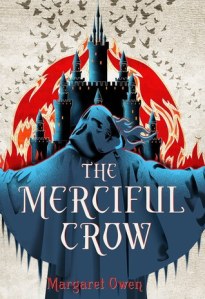
36483378._sx318_Book: “The Merciful Crow” by Margaret Own
Publishing Info: Henry Holt, July 2019

Where Did I Get this Book: audiobook from the library!

Book Description: A future chieftain.

Fie abides by one rule: look after your own. Her Crow caste of undertakers and mercy-killers takes more abuse than coin, but when they’re called to collect royal dead, she’s hoping they’ll find the payout of a lifetime.

A fugitive prince.

When Crown Prince Jasimir turns out to have faked his death, Fie’s ready to cut her losses—and perhaps his throat. But he offers a wager that she can’t refuse: protect him from a ruthless queen, and he’ll protect the Crows when he reigns.

A too-cunning bodyguard.

Hawk warrior Tavin has always put Jas’s life before his, magically assuming the prince’s appearance and shadowing his every step. But what happens when Tavin begins to want something to call his own?

Review: As with many popular YA fantasy series (there are just too many!), I often don’t get around to them until I see the sequel start popping up on early release sites. And then in a temporary lapse of judgement I request the sequel only to quickly realize that means, oh wait, I have to get my hands on the first one, get it read, and review it before I can even start the book I just so eagerly requested. I do this again and again, and do I ever learn? Nope! It’s even more frustrating when I read the first book and don’t care for it, knowing I’ve already committed myself to the sequel. Luckily, that’s not the case with this one!

Fie belongs to the lowest of the low, a caste of people whose only job is to care for the dead and dying of a deadly plague that sporadically grips various villages and townships. While completely necessary to the function of society, Crows are at best ignored and at worst hunted in the night. So, when one of their typical jobs caring for two dying young men ends up with Fie and her fellow caught up in a plan of an escaping prince and his comrade, Fie takes the opportunity for all its worth, bargaining for a better future for her and her people. But first, she must find a way to deliver these two to safety, despite everything set against them.

Every once in a while when I read an audiobook, I’m aware of how my reading experience is probably affecting my overall take on the book in hand. This can go two ways, of course, with a poor narrator sinking a book almost immediately, and a skilled one catching my in more quickly than I might have been had I been reading in the traditional manner. I think this is one of the latter experiences. The narrator for this book was excellent, giving many characters, especially Fie herself, unique accents and ways of speaking. The book was certainly written to suggest that Fie had a Scottish accent of sorts, so it was great that the narrator was able to fully capture this aspect of the story. She was also able to add a lot of understated tension and emotion to Fie, something that I think probably wasn’t as obvious just on the page itself.

The book obviously had certain things in its favor regardless of media format. I really liked the bird-based caste system and world-building that the author set up. There were interesting connections and powers that neatly aligned with the type of bird that was used to represent a certain caste. Crows, obviously, deal with the dead. Hawks are skilled hunters and warriors. And so on.

While overall I understood the role the Crows played in this society, I did question the vehemence at which they were often hated by those around them. They seem to perform a pretty essential task, dealing with the plague-ridden, and as the only caste that doesn’t suffer from this plague, they’re really the only options for people. We also learn that pretty dire things happen if a plague ridden body isn’t dealt with properly. Given all of this, I can get how a Caste like this might inspire wariness from the general public, but how do we get to the state where they’re literally hunted down and killed at times? Seems pretty backward for really the only Caste that is actually necessary to the ongoing survival of a people. There were bits and pieces of the world-building like this that I never felt were fully explained or lined up properly. It was often distracting when these questions came up, as I was usually able to sink into just enjoying the main character and her journey and was only jarred out of it when these moments arose.

Fie herself was an excellent main character. She’s rough and tumble and perfectly exemplifies the type of no-nonsense person that would survive and grow into a leadership position in this type of society. She’s seen things and has no time for the nonsense of others. Her very different relationships with Tavin and Jasimir are also very interesting. The romantic relationship was perhaps a bit too easy and obvious. But I enjoyed the struggles that she went through in understanding the prince and of them both coming to a place of mutual respect. Each had to learn of the restrictions placed on the other and how their own worldviews influenced how they saw change happening going forward.

While I was interested in Fie’s own personal story, the book did drag a bit in the middle. There’s a lot of traveling.  A lot. And often if felt like not much was really happening in between some of the bigger scenes. It’s also the type of book that, while I enjoyed it in the moment, it hasn’t stuck with me as much as I had hoped. Even now, only a week or so after I finished it, I’m struggling a bit to remember exactly how things lay in the set-up for book two. That said, however, I definitely enjoyed it enough to be looking forward to the sequel and conclusion of this story. It will be interesting to see how it does not in audio format as well.

Rating 7:  A bit forgettable with some questionable world-building, but a strong main character and audiobook narrator really sold this one for me.

Reader’s Advisory:

“The Merciful Crow” for some reason isn’t on many interesting Goodreads lists, but it is on “Crows and Ravens.”

Find “The Merciful Crow” at your library using WorldCat!


Kate’s Review: “Grace Is Gone”

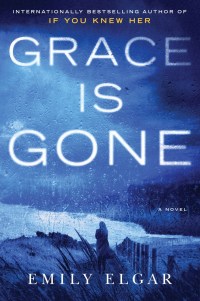
44890088Book: “Grace Is Gone” by Emily Elgar

Publishing Info: Harper Paperbacks, January 2020

Where Did I Get This Book: I received a paperback copy from Harper.

Book Description: From the bestselling author of If You Knew Her comes this harrowing tale of suspense—a story ripped from today’s headlines—of a tight-knit English community, who’s rocked by the murder of a mother and the mysterious disappearance of her daughter, and the secrets that lie concealed beneath a carefully constructed facade.

A small town’s beloved family.

A shocking, senseless crime—and the dark secret at the heart of it all.

Everyone in Ashford, Cornwall, knows Meg Nichols and her daughter, Grace. Meg has been selflessly caring for Grace for years, and Grace—smiling and optimistic in spite of her many illnesses—adores her mother. So when Meg is found brutally bludgeoned in her bed and her daughter missing, the community is rocked. Meg had lived in terror of her abusive, unstable ex, convinced that he would return to try and kidnap Grace…as he had once before. Now it appears her fear was justified.

Jon Katrin, a local journalist, knows he should avoid getting drawn back into this story. The article he wrote about Meg and Grace caused rifts within his marriage and the town. Perhaps if he can help find Grace, he can atone for previous lapses in judgment. The Nichols’ neighbor, Cara—contending with her own guilt over not being a better friend to Grace—becomes an unexpected ally. But in searching for Grace, Jon and Cara uncover anomalies that lead to more and more questions.

Through multiple viewpoints and diary entries, the truth about Grace emerges, revealing a tragedy more twisted than anyone could have ever imagined… 

Review: Thank you to Harper for sending me a paperback copy of this book!

I always love when I find surprise books, be they ARCs or otherwise, in my mailbox! I never expect it, and it feels like my birthday every time. So when “Grace Is Gone” arrived on my doorstep, I was tickled pink, and threw it on my ARC pile until it was time to take it on. I hadn’t heard of “Grace Is Gone” until that moment, and didn’t know what it was about until I started reading it. Well folks, we have another thriller about Munchausen’s By Proxy on our hands. Perhaps one might think I’d be bored with that by now, but I can assure you that I am absolutely not.

While I had read “Darling Rose Gold” in the past few months and while the parallels are there (given that Gypsy Rose and Dee Dee Blanchard once again seem to serve inspiration), “Grace Is Gone” not only came out first, but approaches the whole story in a different way. While “Darling Rose Gold” was from the perspectives of the mother and daughter duo, “Grace Is Gone” is from the outsiders who may have missed the signs that something was terribly wrong. The first perspective is Cara, the friend of Grace, the girl who has gone missing after her mother Meg was found murdered. Cara always thought that Grace was an ill and naive teenage girl, and she never questioned Meg’s love for her daughter. But now that Grace has disappeared, and things start coming out about Meg, Cara starts to blame herself for not seeing that her friend was in trouble. Along with Cara we get Jon, a journalist whose marriage is on the rocks and who wrote an unfavorable story about Meg and Grace in the months before the murder and disappearance. This story made him a target for the angry public, and now he’s wondering if his misgivings were worse than he thought. As we see these two people work together to try and find Grace, we get to see how abusers can present a certain face to those around them to hide their true selves. I really liked that we had two outsiders telling this story, as while I right away knew what this was based on, the mystery at the heart has good bones and a different way to explore a theme that we’ve seen before.

As characters, neither Cara nor Jon really break away from tropes that we’ve seen before. Cara is the sullen but curious young woman drawn into something bigger than she imagines, and feels like her unwitting complicity means she needs to do right by Grace. Jon, on the other hand, is the disgraced reporter who has something to prove, though his obsession with one story may cost him more than he imagines. While looking at the overall story through outsiders eyes is new to me, the outsiders themselves are pretty standard, and not as interesting as perhaps a focus on Grace and Meg may have been. But all of that said, the mystery at hand is compelling enough that I think it will keep the reader going just to see how it ends. Hell, even though I kind of knew where it was going to go, I was perfectly alright taking the journey to get to the destination.

“Grace Is Gone” is a decent thriller that kept me interested. If you want to explore a familiar story from another angle, it will suit you just fine.

Rating 7: A solid mystery thriller about small town secrets and uncovering disturbing truths, “Grace Is Gone” is a familiar theme with some interesting angles to explore it, even if the characters are some we’ve seen before.

Reader’s Advisory:

“Grace Is Gone” isn’t on many Goodreads lists as of yet, but it would fit in on “Intense Female Relationships”.

Find “Grace Is Gone” at your library using WorldCat, or at a local independent bookstore using IndieBound!