Serena’s Review: “Stormcaster”

33816845Book: “Stormcaster” by Cinda Williams Chima
Publishing Info: HarperTeen, April 2018

Where Did I Get this Book: audiobook from the library!

Book Description: The empress in the east—the unspeakably cruel ruler whose power grew in Flamecaster and Shadowcaster—tightens her grip in this chilling third installment in the series.

Vagabond seafarer Evan Strangward can move the ocean and the wind, but his magical abilities seem paltry in comparison to Empress Celestine’s. As Celestine’s bloodsworn armies grow, Evan travels to the Fells to warn the queendom of her imminent invasion. If he can’t convince the Gray Wolf queen to take a stand, he knows that the Seven Realms will fall. Among the dead will be the one person Evan can’t stand to lose.

Meanwhile, the queen’s formidable daughter, Princess Alyssa ana’Raisa, is already a prisoner aboard the empress’s ship. Lyss may be the last remaining hope of bringing down the empress from within her own tightly controlled territory.

Previously Reviewed: “Flamecaster” and “Shadowcaster”

Review: This book came out last spring, and yet I’m reviewing it almost six months later. Part of this is due to the way my library holds list played out, and the other part of it almost seems reflective about my attitude towards this series. I just don’t know what to expect anymore, and so, I delay. I loved the original series that was prequel to this one, but that love hasn’t translated well, at least not consistently or evenly. I wasn’t a huge fan of “Flamecaster,” and while “Shadowcaster” was an improvement, it still didn’t reach the highs of the originals. What makes these feelings all the more clear in hindsight is the fact that when I started this book, it took me forrrreeevveerr to remember the details of the story or who some of these characters even were. Not a good sign. And, while I did like this one more than the fist book in the series, I’m also starting to accept the fact that, as a whole, this series might just not be my jam.

Per the usual with the books in this series now, the story opens in the past, then catches up to events that were occurring to other characters during the present of the period that made up the first book and much of the second, and then finally catches up to the last portion of the second book and moves forward. Confusing? A bit. The timeline jumping didn’t help with my general disconnectedness from the larger narrative. Our newest member to the ever-growing cast of characters is the titular stormcaster, Evan Strangward, a character we met briefly in the first book as a pirate who delivered the dragon, Cas, that Jenna has paired up with. (Another example of my confusion and lack of memory of this series: I absolutely did not remember this at all until it was literally pointed out on the page much later in the book. I thought this was a completely new character for most of it. So…yeah, that says a lot, I think). Evan has his own motives and connections to the villainous Empress across the sea, and teams up with other familiar characters. Meanwhile, we check in briefly with our other main characters, including Jenna/Cas, Lyss, Adrian, Lila, Hal, etc etc.

Look, I’ll just say it: there are too many characters for this series to handle well. At this point, Jenna, our main character from the first book and a girl with a literal dragon best friend, has only gotten about 3-4 chapters in the last two books. Adrian, the son of Raisa, was almost gone completely from the second book, but gets a bit more here. Hal and Lila have their own roles to play, and Lyss finally shows up about halfway through the book, but it’s all just too little too late. For one, there are simply too many characters to feel equally invested in them all. This will inevitably lead readers to forming preferences and then facing disappointment in one book or another when those characters have to be pushed to the side to fit in all of the other characters that have been introduced. For two, trying to juggle this large cast while sticking with a reasonable page length leads to corners being cut as far as character development goes. Most particularly, the romance suffers.

This series insists on pairings all of its characters up, and so far I’ve only really been able to buy into one of these relationships, the between Lyss/Hal. And objectively, this is likely due to my preference for Lyss as a character rather than any particular strength of this relationship on its own. Adrian and Jenna suffered from an extreme case of instalove, and we saw another version of that here in the relationship formed between Evan and Destin. One of the biggest strengths of the first series was the slow-burn/development of its main romantic pairing that took place over four entire books. Because this series has so many characters and adds more in each book, every single romantic pairing suffers, if not in the beginning (like the cases of instalove), then as the story progresses (like Lyss and Hal who in this book spend the entire time on opposite sides of the world.)

The story itself also suffers for this large cast. The action often feels reduced and stunted because the book must jump around so often to cover what is happening to everyone in their own little corners. And then in this book in particular, the “big confrontation” that comes towards the end felt a bit subdued and predictable. There were a few exciting moments in it, but ultimately, in an epic fantasy series, it felt more like a small action scene that should have happened in the middle of some book, rather than the grand finale of the third in the series.

There were a few things that still intrigued me here. I still very much enjoy Lyss as a character and was very pleased when she finally turned up. It was good to hear (and see!) more from the Empress and what her motivations/plans are. There are also a few neat scenes where various characters meet up with each other for the first time, and that was particularly enjoyable.

However, ultimately this series is starting to fall prey to what I call “Game of Thrones” syndrome where the concept has started to kill what might have been good originally. Namely, too many characters and POV switches don’t always help a series and can often prove to be detrimental, especially as they continue to build and eventually start overwhelming the story itself. An author is so busy catching up with a million different people and POVs that the story itself begins to feel lost. At this point, I will still finish off this series, but I feel pretty confident that unless there’s a major turn-around in the last book, this won’t be going down as as much of a favorite as its predecessor series.

Rating 6: Stumbles under the weight of its own increasing cast size.

Reader’s Advisory:

“Stormcaster” isn’t on many relevant Goodreads lists for some reason, but it is on “2018 – Sequels.”

Find “Stormcaster” at your library using WorldCat.


Kate’s Review: “Limetown”

30363835Book: “Limetown” by Cote Smith, Zack Akers, and Skip Bronkie

Publishing Info: Simon & Schuster, November 2018

Where Did I Get This Book: I was given an eARC by the publisher via NetGalley.

Book Description: From the creators of the #1 podcast Limetown, an explosive prequel about a teenager who learns of a mysterious research facility where over three hundred people have disappeared—including her uncle—with clues that become the key to discovering the secrets of this strange town.

On a seemingly ordinary day, seventeen-year-old Lia Haddock hears news that will change her life forever: three hundred men, women, and children living at a research facility in Limetown, Tennessee, have disappeared without a trace. Among the missing is Emile Haddock, Lia’s uncle. 

What happened to the people of Limetown? It’s all anyone can talk about. Except Lia’s parents, who refuse to discuss what might have happened there. They refuse, even, to discuss anything to do with Emile.

As a student journalist, Lia begins an investigation that will take her far from her home, discovering clues about Emile’s past that lead to a shocking secret—one with unimaginable implications not only for the people of Limetown, but for Lia and her family. The only problem is…she’s not the only one looking for answers. 

Zack Akers and Skip Bronkie are first-rate storytellers, in every medium. Critics called their podcast Limetown “creepy and otherworldly” (The New York Times) and “endlessly fun” (Vox), and their novel goes back to where it all began. Working with Cote Smith, a PEN/Robert W. Bingham Prize Finalist, they’ve crafted an exhilarating mystery that asks big questions about what we owe to our families and what we owe to ourselves, about loss, discovery, and growth. Threaded throughout is Emile’s story—told in these pages for the first time ever.

Review: Thank you to NetGalley and Simon & Schuster for sending me an eARC of this book!

As the resident podcast junkie on this blog, it may be a bit surprising that until recently I hadn’t set aside time to listen to “Limetown”. For those unfamiliar, “Limetown” is a fictional thriller/supernatural podcast that is written in a “Serial”-esque format, following journalist Lia Haddock as she investigates the mysterious disappearance of an entire town population. Given that it’s totally up my alley, I don’t really know why I didn’t put it in the constant rotation of podcasts I listen to. But when I was given an invitation to read “Limetown”, the prequel novel, by Simon & Schuster via NetGalley, I decided that it was time to listen. I devoured the podcast in a couple days time, totally taken in by the mystery and the creepiness as Lia gets closer and closer to the solution, and the conspiracy, involving the town, the research it was doing, and the connection it had to her missing uncle Emile. And once I was done with that, I felt that it was time to finally read the prequel novel, hoping that it would expand upon the universe and give us some insight into the brand new Season 2.

I didn’t quite get that from “Limetown”, and I’m starting to wonder if the ever expanding media connections to podcasts is really necessary.

I’ll start with the good first, as I am wont to do. Given that the podcast “Limetown” is laid out in an investigative format, all we are seeing is what Lia Haddock, the host of the show, would have access to. Given that that narrative structure is only going to give us so much, I did like that we got to see a LOT more about Limetown within the novel. A lot of this comes from the storyline concerning Emile, Lia’s uncle who disappeared when the town population did. While the podcast does let us in on the true purpose of Limetown (spoilers: it’s a place that was being used as a research facility for psychic abilities in humans), getting to see Emile make his journey from outsider teenager to Limetown resident definitely shed some insight that we didn’t get to see otherwise. I liked Emile’s perspective and his somewhat tragic story, a person with abilities and feels on the outside of those around him. His connection to his brother Jacob (Lia’s father) is expanded upon, as is his relationship to Lia’s mother Alison. I definitely enjoyed his parts of the story. I had bigger problems with Lia’s parts. I like Lia as a character both in book and on the podcast, but within this prequel I feel like they retconned quite a bit about her character because of things she finds out in the book as opposed to what we THINK she knows in the podcast. There are certain moments and revelations within the narrative of the book that I would have THOUGHT that she would have addressed in the podcast just based on her character and her drive to find the truth, but as it is, in spite of the fact the book is definitely BEFORE the podcast, it seems that these truths either a) aren’t what they seem and the podcast is more unreliable than we thought, or b) don’t match up because of an unplanned prequel book. I’m inclined to believe the latter.

This isn’t a BAD book, and I think that fans of the podcast would definitely find things within it to like. But, much like “Welcome to Night Vale”, I’m not certain that it would stand on it’s own two feet to non-fans to intrigue them enough to bring them into the fold. Does it have to? No. But I do think that if the show wants to perhaps reach out to non-fans to build their fandom, their non-podcast media should be able to stand alone.

It’s not an unfamiliar story for a podcast to get expansions via other means of consumable content. “Welcome to Night Vale” has two books now. “Dirty John” is getting a TV adaptation with Connie Britton and Eric Bana. Julia Roberts is starring in an Amazon Prime Adaptation of “Homecoming”. And hell, even “Limetown” is getting a Facebook Watch adaptation starring Jessica Biel along with this book. It will be interesting to see how these various adaptations fare. But if they aren’t bringing in many reasons to expand, it may end up feeling a bit pointless. “Limetown” the book was fine, but I don’t see it as being essential reading.

Rating 6: While I enjoyed learning some new things about the mysterious Emile, “Limetown” didn’t feel like it expanded much on the universe at hand, and it didn’t feel like it could bring an unfamiliar person in.

Reader’s Advisory:

“Limetown” is included on the Goodreads lists “Books Based on Podcasts”, and “Podcast Books”.

Find “Limetown” at your library using WorldCat!

Serena’s Review: “Empire of Sand”

39714124Book: “Empire of Sand” by Tasha Suri

Publishing Info: Orbit, November 2018

Where Did I Get this Book: ARC from the publisher!

Book Description: The Amrithi are outcasts; nomads descended of desert spirits, they are coveted and persecuted throughout the Empire for the power in their blood. Mehr is the illegitimate daughter of an imperial governor and an exiled Amrithi mother she can barely remember, but whose face and magic she has inherited.

When Mehr’s power comes to the attention of the Emperor’s most feared mystics, she must use every ounce of will, subtlety, and power she possesses to resist their cruel agenda.

Should she fail, the gods themselves may awaken seeking vengeance…

Review: A big thanks to Orbit for sending me an ARC of this book! I’ve been on a bit of a roll lately with fantasy stories set in desert climates, so reading the description for this one, I was quick to place a request. Unfortunately for me, while not a bad book, this one didn’t quite do it for me. My streak had to end sometime, I guess, and it was unfortunate that it had to be with this book.

Mehr has grown up straddling two worlds. In one, she is the noble daughter of an imperial governor, raised in luxury and comfort and largely protected from any tumult going on in Empire at large. In the other world, she is the bastard daughter of a mother whose people have become outcasts in their own land and who are becoming increasingly persecuted by the Emperor. Of course, these two worlds will inevitably clash, Mehr must find a way to fight for not only her own future but that of her people.

While I already noted that this book wasn’t a win for me, there were a few things that played in its favor that I want to highlight. Firstly, the setting. I still love a good desert-based fantasy novel, and this one perfectly captures the wild nature of its location and plays with usual cast of fantasy characters often found there, such as daevas. I also enjoyed the descriptions of Mehr’s Amrithi culture and the intricate dances they perform as part of their power.

And lastly, Mehr herself is a strong enough character. She’s not one that will likely stand out in my memory, but she also didn’t commit any of the cardinal sins that get my hackles up with main characters. She’s practical and level-headed (though she does make a few confusing decisions early in the book, but no one’s perfect, I guess). She also has a lovely relationship with her much younger sister. Sadly, this character and a few others that we meet early in the book pretty much disappear from the story, which is too bad.

Ultimately, I think my biggest problems with this book had to do with pacing and the odd balance that was trying to be struck between YA fantasy fiction and adult fantasy. There are elements of each in the book, and yet they never mesh together well, and what may appeal to one set feels like exactly the points of note that would ring false with others. The pacing is quite slow and the world-building, history, and politics are quite detailed. These are elements that one is more often able to find in adult fantasy. However, on the other hand, character moments and the overall story arc largely follow a pretty familiar beat-by-beat YA story. Put together, I was never able to fully engage with the book. The detail that was given to the world and history combined with the very familiar order of events left many of the “reveals” feeling predictable and lacking the excitement and thrill that one would want. Even with a few more surprises, I think the pacing itself would still have been lacking. It was just slow. There was a lot of discussion and preparation and very little action for a book that is following the now very established “weapon floating on cover” book design.

As I said, there’s nothing objectively “wrong” with this book, perhaps other than its slow nature. But even that may appeal to some readers. For me, the other elements in the story were all just…fine. And “fine” characters, “fine” romance, and “fine” magical elements just weren’t enough to boost this one up my interest scale. But fantasy readers looking for a slower-moving story that plays to its strengths with its desert setting may still want to check this one out!

Rating 6: Just kind of meh, for me, unfortunately.

Reader’s Advisory:

“Empire of Sand” is a newer title, so it isn’t on many relevant Goodreads lists, but it is on “Diverse Books by Diverse Authors.”

Find “Empire of Sand” at your library using Worldcat!

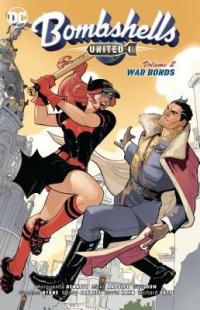
Kate’s Review: “Harley & Ivy Meet Betty & Veronica”

38369243Book: “Harley & Ivy Meet Betty & Veronica” by Paul Dini, Marc Andreyko, and Laura Braga (Ill.)
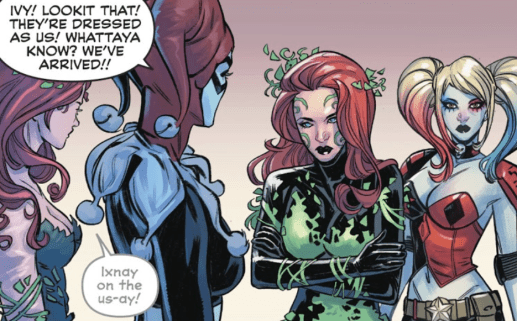
Publishing Info: DC Comics, September 2018

Where Did I Get This Book: The library!

Book Description: The bad girls of Gotham meet the good girls of Riverdale!

Hiram Lodge (Veronica’s father) wants to invest in the future by building a university with free tuition for Riverdale’s residents. His site is a protected swamp on the outskirts of town, and once news of the plan reaches Gotham City, a certain eco-warrior (a.k.a. Poison Ivy) is determined to prevent the dream from becoming reality.

However, once Poison Ivy and her bestie Harley Quinn arrive, they get mixed up in the sort of hijinks that can only happen in Riverdale. At a superhero-themed costume party, the night’s entertainment–Zatanna– manages to place the personas of the Gotham City Sirens into the bodies of the town’s notorious frenemies: Betty Cooper and Veronica Lodge. While Ivy (in Ronnie’s body) seeks to derail Lodge’s agenda from within, more than a few nefarious forces–from Jason and Cheryl Blossom to the Clown Prince of Crime himself–have their own foul plans.

This groundbreaking miniseries teams up two of fandom’s best-known duos, bringing the ladies of Gotham and Riverdale together for the first time! This madcap mayhem comes courtesy of Paul Dini (Harley Quinn) and Marc Andreyko (Wonder Woman ’77), with art by Laura Braga (DC Comics: Bombshells)! Collects Harley & Ivy Meet Betty & Veronica #1-6.

Review: I’ve been a long time fan of “Batman”, as you all are well aware. I also have a very special place in my heart for “Archie” comics, and not just the horror comics that have been so genius as of late. When I was a little girl I loved old school Archie adventures, and really liked following stories involving Betty and Veronica. When I saw that Paul Dini, a writer for “Batman: The Animated Series” AND one of the creators of Harley Quinn, had written a new Harley Quinn and Poison Ivy story with Marc Andreyko, I was already pretty on board. But when I saw that it was a crossover with Archie Comics, and it was ALSO going to star Betty Cooper and Veronica Lodge?

1518059684371
Two of my fandoms hi fiving each other in glee! (source)

Far be it from me to disparage goofy crossovers. As a former fan fiction author I have indulged in a number of crossover stories, some of which make absolutely no sense whatsoever, and I think that amusing and fun is one of the most important elements to do it successfully. But what makes the idea of Harley Quinn and Poison Ivy meeting up with Betty and Veronica so excellent is that they are all the epitome of gal pals, in positive and negative ways. While Harley and Ivy are definitely supportive and caring friends to each other, they are morally ambiguous if we are being generous (and if we aren’t they’re straight up criminals). And while Betty and Veronica are pretty normal and functional people, they are best known for their portrayal of being frenemies all because of a boy (who is a total DUD, I might add). So to give these two sets of friends a little wiggle room to explore the depths of where their personalities can go, and therein critique their base portrayals they are pigeonholed into, is kind of genius.

Deriving a plot that is part buddy crime comedy and part “Freaky Friday”, “Harley & Ivy Meet Betty & Veronica” is really just a comedy of errors and some fun fan service for people like me. I don’t know what a Venn Diagram of people who love Harley and Ivy vs people who love Betty and Veronica would look like, but I know that as someone in the overlap I found this to be an entertaining romp. Once the full body switch happened and we got to see Betty and Veronica dealing with the hot mess that is Gotham, and Harley and Ivy letting loose at Riverdale High, I just sat back and enjoyed the ride for what it is. I liked seeing Betty and Veronica completely aghast at Gotham and the ridiculous crime it harbors, just as I liked seeing Ivy and Harley have to contend with Cheryl and Jason Blossom, a whole different kind of enemy than they are used to. There is also something incredibly satisfying about seeing Ivy and Harley have NO interest in Archie WHAT. SO. EVER. The banter and situational comedy the two sets of gal pals get into while in the body swap is entertaining to be certain, and they bring a new zest to some of the tried and true tropes of both fandoms. There are also other fun little shout outs and meet ups for members of the “Batman” and “Archie” fan bases: Sabrina Spellman getting to hang out with Zatanna was a delight, and the idea of Smithers and Alfred Pennyworth being old friends was super sweet.

The art is fun and a nice mix of both worlds. Laura Braga of “Bombshells” art fame is at the helm this time, and she has a style that kind of suits both universes. It’s chic and stylistic, but it also lends itself to superhero situations, or perhaps supervillain situations is a better description.

h2wleriv4in41qf4dqdo
(source)

But I think that one of the weaker things about this collection was that it really does read like fan fiction. That isn’t to say that this is inherently a bad thing; like I said, I used to write that stuff and still dabble even if I don’t publish it anymore, and I do like a fun nutty crossover. What I mean by that is that sometimes I felt like plot points happened less because of the plot at hand, and more because Dini and Andreyko thought ‘wouldn’t it be cool if…?’. And that tended to make for a weaker story. I’m thinking mostly about this whole strange subplot with Reggie dressing up as Joker for a party, losing his memory, and then believing that he WAS Joker. I didn’t really understand what this did outside of ‘look, it’s like The Joker is here but he isn’t actually, isn’t that FUNNY?!’ As far as I’m concerned, Joker is a little played out these days, Mark Hamill excluded. Plus, why is it that we feel like whenever there is a Harley Quinn story Joker should show up in some capacity? I am willing to give Dini a little slack here since he is Harley’s creator, but honestly, it’s not necessary and I’m starting to get sick of it. ESPECIALLY since Harley and Ivy are pretty solidly a couple in the DC verse now, and that wasn’t very clear in this, now that I think about it, which ruffles my feathers a bit. Again, Dini can get a LITTLE leeway since he’s the creator, but COME ON.

So while “Harley & Ivy Meet Betty & Veronica” was definitely a bit of fluff and fun, I had hoped that it would be more than that. It gave me joy in the moment, but I wish that it had a little more substance.

Rating 6: A cute and fun mash up of two of my favorites, but it definitely could have gone further than it did.

Reader’s Advisory:

“Harley & Ivy Meet Betty & Veronica” isn’t on many Goodreads lists but I think it would fit in on “Crossover Fiction”.

Find “Harley & Ivy Meet Betty & Veronica” at your library using WorldCat!

Kate’s Review: “Gazelle in the Shadows”

39978906Book: “Gazelle in the Shadows” by Michelle Peach
Publishing Info: Michelle Peach, April 2018

Where Did I Get This Book: I was given a copy by Book Publicity Services

Book Description: In the mid 90s, Elizabeth Booth is a young British college student studying Arabic at Durham University. With some travel and work already under her belt, she excels at her studies and is sent to Damascus to immerse herself in the language. Taken aback by the generosity and kindness of the people there, she easy slips into a life in the ancient city. She has friends, her studies, and even a handsome boyfriend. But things aren’t always what they seem. Soon, in a world where mistrust and disloyalty are commonplace, Elizabeth finds herself navigating a web of lies, betrayals, and even murder involving MI6, deadly terrorist factions, and the shadowy Syrian secret police.

Review: Thank you to Book Publicity Services for sending me a copy of this book!

I have a distinct memory of being a child and my parents watching “The Hunt for Red October” in the family room. While I normally liked to try and watch whatever movie my parents were watching at the time (which led to them chasing me out of the room on more than one occasion), I remember feeling one distinct thing as they watched that movie: “This is boring”. And I can tell you, with a couple exceptions to this rule, in general I am not a huge fan of spy and espionage fiction and non-fiction. But I can be convinced to be a bit more open and to try new things, and that is why I said ‘yes’ to reading and reviewing “Gazelle in the Shadows”. For one, Syria has been at the center of many world conflicts and current events as of late, so I figured that reading up on it, albeit a fictionalized account set a couple decades ago, may do me some good. It definitely helped that the author, Michelle Peach, has experience as a diplomat and writer in this part of the world, as I figured that she knew what she would be talking about. So I dove in, hoping that I’d be able to break my apathy towards novels like this at least a little bit. Unfortunately, it didn’t quite work.

But first I want to start with what I did like about “Gazelle in the Shadows”. I found our protagonist, Elizabeth, to be a pretty relatable character throughout the narrative. I completely bought her passion for her studies in Arabic language and cultures, and I totally believed that she would want to pursue furthering her education in Syria in spite of the hesitations that her family had. I also found her character development to be pretty interesting and realistic, and thought that her change from wide eyed student to hardened survivor to be a narrative that was compelling. I also very much enjoyed Peach’s descriptions of various aspects of life in Syria, be it the bustling market squares, or the kind and strong people that Elizabeth met along the way (I particularly liked Fatima, a friend that Elizabeth confided in for a share of the story). I did get the sense that Peach had knowledge about the culture and the time frame that the story was working within, which makes sense given her background.

But there were also things in this story that didn’t quite work for me. First was the writing. At times the dialogue felt a little bit stilted, and while there were absolutely moments where descriptions and imagery flowed and worked, there were other moments that felt choppy. It wasn’t something that completely took me out of the story as I read it, but it did give me moments of pause before moving on. I also had a hard time with some of the characterizations of the non-Western characters within the narrative. Outside of Fatima, the Arab and Syrian characters ended up being either unexplored, or devious and untrustworthy in their intentions. Some ended up being flat out demonized, and while I understand that within the time and location that this story was taking place there certainly would be people who had ban intentions, I wasn’t comfortable with the theme of ‘Western People Saving Other Western People From The Dysfunctional Middle East”. It’s the same hesitations I’ve had with movies like “Argo” and “Zero Dark Thirty” (in spite of enjoying them for the most part), and why I haven’t been able to watch “Homeland”. And at the end of the day, it has the same issue that I had with “Hunt for Red October”: this really isn’t my genre. I think that people who do like espionage thrillers would have more things to like about “Gazelle in the Shadows”, but for someone like me it’s not really my cup of tea.

“Gazelle in the Shadows” had it’s ups and downs for me, but I think that people who like espionage thrillers would find a fair amount to like about it. I would tell people to be mindful about the optics of it, but Elizabeth is an interesting protagonist that may stand out from others in the genre.

Rating 6: While the descriptions were beautiful and the author has clear knowledge on the subject, the writing was a little clunky, espionage stories and I don’t mesh well, and some of the portrayals of the various characters made me uneasy.

Reader’s Advisory:

“Gazelle in the Shadows” is not on any Goodreads lists, but I think that it would fit in with the “Jack Ryan” books and books by John Le Carre.

“Gazelle in the Shadows” isn’t listed on WorldCat, but HERE is a link to it’s Amazon page.

Serena’s Review: “The Reluctant Queen”

32600602Book: “The Reluctant Queen” by Sarah Beth Durst

Publishing Info: Harper Voyager, July 2017

Where Did I Get this Book: audiobook from the library!

Book Description: Not long ago, Daleina used her strength and skill to survive those spirits and assume the royal throne. Since then, the new queen has kept the peace and protected the humans of her land. But now for all her power, she is hiding a terrible secret: she is dying. And if she leaves the world before a new heir is ready, the spirits that inhabit her beloved realm will run wild, destroying her cities and slaughtering her people.

Naelin is one such person, and she couldn’t be further removed from the Queen—and she wouldn’t have it any other way. Her world is her two children, her husband, and the remote village tucked deep in the forest that is her home, and that’s all she needs. But when Ven, the Queens champion, passes through the village, Naelin’s ambitious husband proudly tells him of his wife’s ability to control spirits—magic that Naelin fervently denies. She knows that if the truth of her abilities is known, it will bring only death and separation from those she loves.

But Ven has a single task: to find the best possible candidate to protect the people of Aratay. He did it once when he discovered Daleina, and he’s certain he’s done it again. Yet for all his appeals to duty, Naelin is a mother, and she knows her duty is to her children first and foremost. Only as the Queen’s power begins to wane and the spirits become emboldened—even as ominous rumors trickle down from the north—does she realize that the best way to keep her son and daughter safe is to risk everything.

Previously reviewed: “The Queen of Blood”

Review: “The Queen of Blood” was a book that seemed to be flying under the radar and much deserved a bigger notice. The story of Daleina’s tremulous rise to the queendom was full of action, pain, death, and triumph, and I loved every minute of it. Ending with her finally on the throne, I was so excited to see where her story went next, so I went into “The Reluctant Queen” with high expectations. Unfortunately, while it still had strong aspects that I liked, over all it didn’t quite live up to those expectations for me.

Daleina has only been on the throne for six months when she learns that she is dying, having contracted a disease that results in her falling into a death-like coma at random intervals, until, after a few short months, she finally doesn’t wake from one. This leaves the kingdom in a terrible state, having lost all of its heirs in the massacre that occurred when Daleina rose to power at the end of the last book. Frantic, she sends out her Champions to search for an heir, but secretly places all of her hope and trust into Ven, her own Champion. And luckily for everyone, he finds someone. But unluckily for everyone, she’s a happy family woman how has no interest in ambition or taking on the dangerous role of Queen.

While this book didn’t live up to my expectations based on the first one, several of the strengths that I so appreciated there were still used here. For one, the world-building remains on point. Renthia is not a safe place to live, and even with a Queen in power, we see that challenges that face the people of a world infested with malicious spirits who wish to do them harm. Like the first book, this one doesn’t shy away from the bloody and tragic results when the spirits gain even an ounce of freedom. And it isn’t only nameless deaths, but ones that our characters and us as readers feel ourselves. By leaning into these horrors, the stakes of this story are high from the beginning and we’re never given a chance to forget what it would really mean should our main characters not find a solution.

There is also a compelling mystery at the heart of the story that leaves readers and the characters questioning the loyalty of everyone around them. While I could guess the identity of the person ultimately pulling the strings fairly easily, the traitor at the heart of things did come as a surprise and had its own tragedy tied up with it.

I also enjoyed reading once again about some of the familiar characters. Ven, of course, was still his excellent grumpy, but dangerous, self. We saw our favorite clever wolf Bane back again. And most surprising of all, got to spend a good deal of time with Daleina’s younger sister as she worked to find a cure for her sister’s illness. Daleina, herself, was also still a joy to read, but this starts to get into my qualms as well. There simply wasn’t enough of her! After spending the entire first book reading about her story, it was tough coming into this one and finding her largely side-lined for most of it, seen through the eyes of others as a regal, powerful figure, while we, who have seen her inner struggles, know there is so much more going on there. I think it was a misstep to essentially bench a character like Daleina who had been given such a good amount of development and was now finally facing the challenges she had been working towards in the first book.

And then, of course, that leaves us with our other major new character, the reluctant heir Naelin. Look, I really, really wanted to like Naelin. For one thing, she’s another example of a middle aged woman serving as a lead in fantasy fiction, something that’s not seen very often. And, what’s more, she’s a mother who must balance her this role with every decision she makes.

I’m not a mother myself, so I can’t speak to the realities of this situation, and I get what the author was trying to do, presenting Naelin in a manner that reinforces that this is the part of herself that she values the most. But after reading an entire book from Daleina’s perspective, a girl who had suffered her own tragedies and left those she loved behind because she recognized the greater duty of protecting them using even her own limited powers, it just rankled to read about Naelin’s struggles here. Naelin who is immensely more powerful than Daleina and who is presented with an even more dire situation. And yet, for almost three quarters of the book, all we get from her is not just reluctance, as the title would suggest, but out right, irrational, refusal to step up.

And I want to highlight the “irrational” portion of that. Her fears are largely based in not wanting harm to come to her children and thinking her best avenue to protect them is staying with them constantly. Yes, in a vacuum this is correct. But she lives in a land plagued by spirits who are only held in check by the power of a queen. Without that queen, without heirs ready to take over should that queen fall at any  moment, everyone, including her children, will be exposed to not only danger but likely death. Again and again, Naelin’s actions were so short-sighted that it became harder and harder to like her. At a certain point, it started to even come across as selfishness. Did she think all of the others heirs and queens didn’t have families and loved ones of their own? And she’s even being allowed to keep her family with her!

She does come around in the end, and the last portion of the book has some really intense action and it is fun to watch Naelin’s power at work. But for me, it was a bit too little too late. On top of not connecting to Naelin’s character fully, as the story went on and she dug her heels more and more into incomprehensible refusals, I also began to resent the lost page time that we could have spent with Daleina.

Ultimately, while the story still retained much of what made me like the first book so much (the dark work, great side characters, and Daleina herself), my dislike of the new main character plagued the story too much for me to fully ever enjoy it. I’ll likely still read the next one, as, like I said, Naelin does get herself together at the end of the book, and the story was left with several big questions left open. But fans of the original story should definitely expect a change if they pick up this one.

Rating 6: A disappointing sequel due largely to an unlikable new main character, but not without merit as a whole.

Reader’s Advisory:

“The Reluctant Queen” isn’t on many relevant lists for some reason, but it is on “Queens.”

Find “The Reluctant Queen” at your library using WorldCat!

Kate’s Review: “Toil and Trouble: 15 Tales of Women and Witchcraft”

36426163Book: “Toil and Trouble: 15 Tales of Women and Witchcraft” by Tess Sharpe (Ed.), and Jessica Spotswood (Ed.)

Publishing Info: Harlequin Teen, August 2018

Where Did I Get This Book: I received an ARC from NetGalley.

Book Description: A young adult fiction anthology of 15 stories featuring contemporary, historical, and futuristic stories featuring witchy heroines who are diverse in race, class, sexuality, religion, geography, and era.

Are you a good witch or a bad witch?

Glinda the Good Witch. Elphaba the Wicked Witch. Willow. Sabrina. Gemma Doyle. The Mayfair Witches. Ursula the Sea Witch. Morgan le Fey. The three weird sisters from Macbeth.

History tells us women accused of witchcraft were often outsiders: educated, independent, unmarried, unwilling to fall in line with traditional societal expectations.

Bold. Powerful. Rebellious.

A bruja’s traditional love spell has unexpected results. A witch’s healing hands begin to take life instead of giving it when she ignores her attraction to a fellow witch. In a terrifying future, women are captured by a cabal of men crying witchcraft and the one true witch among them must fight to free them all. In a desolate past, three orphaned sisters prophesize for a murderous king. Somewhere in the present, a teen girl just wants to kiss a boy without causing a hurricane.

From good witches to bad witches, to witches who are a bit of both, this is an anthology of diverse witchy tales from a collection of diverse, feminist authors. The collective strength of women working together—magically or mundanely–has long frightened society, to the point that women’s rights are challenged, legislated against, and denied all over the world. Toil & Trouble delves deep into the truly diverse mythology of witchcraft from many cultures and feminist points of view, to create modern and unique tales of witchery that have yet to be explored.

Review: I want to thank NetGalley for providing me with an eARC of this book!

As I’ve made abundantly clear on this blog numerous times, I am a huge fan of witches and witchcraft in my stories. Basically, if there is a witch, I want to read it. So imagine how genuinely thrilled I was when I heard about “Toil and Trouble: 15 Tales of Women and Witchcraft”, a short stories collection edited by Tess Sharpe. Not only is it a collection of witch stories, it has a feminist centered theme of witchcraft. On top of THAT, there are also DIVERSE stories involving these witches, from authors like Zoraida Córdova, Robin Talley, Brandy Colbert, and more! My goodness did the description of this book get me in a witchy mood, and make me want to break out “The Craft”/relive my 8th grade Wicca phase.

giphy8
Hail to the guardians of the watchtowers of YA feminist witch fiction…. (source)

There are some really great stories in here, and I want to give them credit where credit is due. I will talk about my favorites and what it is about them that made them stand out.

(NOTE: Yes, this book originally had 16 stories in it, but after Tristina Wright was accused of sexual harassment her story was removed from the final product. My ARC had her story, but knowing that it wasn’t going to be in the final work I skipped it completely.)

“Starsong” by Tehlor Kay Mejia

A young witch named Luna has garnered a social media following because of her posts about star charts, fate, and magic. One evening she starts a conversation with a science minded girl who is very much a skeptic. As they start to chat over messages, Luna realizes that she’s starting to fall for her spirited intellectual nemesis. In terms of just sweet and calm stories, “Starsong” fit the bill. The first reason is that it feels very relatable with the social media bent that it had as it’s base. I liked the idea of a teen witch giving guidance to her followers and coming into herself in a medium she is comfortable with. And while I’m not so much into the romance genre in general, this one was super charming and didn’t feel overwrought or melodramatic as these two girls get to know each other and start to feel the first pangs of attraction. It’s just super cute, and since it’s the first story in the collection you get to ease into it with an upbeat first course.

“The Legend of Stone Mary” by Robin Talley

This one felt the most like the kind of witch story that I wanted from this collection, and it’s probably my favorite of the lot. A town has been long haunted by the urban legend of Stone Mary, a witch who was murdered a couple centuries prior and has supposedly put a curse on the town. Now there are legends and myths surrounding the gravesite of Stone Mary, a popular spot for teens to goof off at. Wendy is a descendent of Mary, and her family has long had an unspoken stigma about them because of the family line she is a part of. When she starts to start a romance with a new girl in town, she just wants to be seen as normal, but her lineage may have more of an effect on her relationship than she could have imagined. From the ghostly legend of Stone Mary to the actual real life consequences of small town small mindedness, Talley delivers a strong, somewhat bittersweet, story about what it’s like to be an outsider. The Mary legend is tragic and upsetting, and Wendy’s present day obstacles feel real and very much placed in Othering, be it because of her lineage, or because of her sexuality. There is also something of a twist that took me by surprise, and I think that it gave the story a little more depth. As someone who has memories of urban legends regarding graveyards (specifically the Black Angel in my aunt’s home of Iowa City), “The Legend of Stone Mary” was a treat in all regards.

“The One Who Stayed” by Nova Ren Suma

This is one of the darkest and saddest stories in the book (though just wait, we’ll be getting to the other one), but I didn’t expect any less from Nova Ren Suma. A coven of witches, brought together by trauma and pain, are preparing to bring in another member to their group as the same trauma is about to befall her. Suma is one of those authors who knows how to make the darkness in humanity twisted and blistering, but still present it in a bittersweet way. This story definitely has some strong implications in regards to sexual assault, so I have to give it a trigger warning, but the eeriness and the sadness is written in a flowing and haunting prose that I greatly enjoyed. While a large number of these books had very feminist roots, this one felt like a riot act towards those who do women wrong, and how victims can find their own voices and power by finding each other and coming together to support one another. This is also one of the shorter stories in the collection, though it packs a huge emotional punch that had me enthralled the entire time reading it.

“Why They Watch Us Burn” by Elizabeth May

This is the last story in the collection, and boy oh boy is it a strong note to end it on. Women accused of witchcraft are taken to a forest work camp and are made to ‘repent’ for their actions, though they are not witches, but victims of society. Shamed and silenced, abused and mistreated, a group of women come together to support, endure, and find their voices again. This story absolutely weaves together the idea of witch hunts and trials and applies it to modern social mores such as rape culture and misogyny, and it brings forth a powerful read that struck hard and hit home. Especially given the current social climate, where sexual abusers in the highest offices of Government get off without consequence and someone can be sentenced to THREE MONTHS for rape (AND STILL FEEL LIKE THE CONVICTION WAS TOO HARSH), “Why They Watch Us Burn” strikes a chord. It’s angry, it’s raw, but it’s also hopeful.

Another positive is this book is chock full of Own Voices authors and a lot of great diversity in it’s characters. Not only are a number of the witches in these stories LGBTQIA+, there is also a wide range of racial representation, with varying cultures having a huge influence on the types of witches that these characters are. The witches in our stories need not be wholly influenced by Anglo-Saxon mythology alone, and “Toil and Trouble” takes cues from all around the world.

And yet, if you take the collection’s stories as a whole, a large number of them didn’t really stand out to me. None of them were BAD, per se, but they were either a bit muddled, or a little too bland for my tastes. Some of the stories felt stilted and dragging, and with others I found my eyes glazing over (and I’ll admit it’s probably because of the high emphases on romance in those ones). So because of that, “Toil and Trouble” wasn’t the consistently satisfying collection that I expected it to be. The stories that were good were VERY good, but I wanted more of them to be as appealing to me as the four that I mentioned.

But in terms of important, diverse, and feminist anthologies, “Toil and Trouble” is absolutely noteworthy. The stories I mentioned are worth a look by themselves, and you may find more value in the ones I struggled with. And hey, Halloween isn’t too far away. This is the perfect read for the upcoming Season of the Witch.

Rating 6: While the strong stories in this collection are very strong and the representation is top notch, “Toil and Trouble” didn’t have the consistent strength across all of its tales of witches and witchery.

Reader’s Advisory:

“Toil and Trouble: 15 Tales of Women and Witchcraft” is included on the Goodreads lists “YA Anthologies”, and “2018 Queer Sci-Fi and Fantasy”.

Find “Toil and Trouble: 15 Tales of Women and Witchcraft” at your library using WorldCat!

Kate’s Review: “#Murdertrending”

34521785Book: “#Murdertrending” by Gretchen McNeil

Publishing Info: Freeform, August 2018

Where Did I Get This Book: I received an eARC from NetGalley.

Book Description: WELCOME TO THE NEAR FUTURE, where good and honest 8/18 citizens can enjoy watching the executions of society’s most infamous convicted felons, streaming live on The Postman app from the suburbanized prison island Alcatraz 2.0.

When eighteen-year-old Dee Guerrera wakes up in a haze, lying on the ground of a dimly lit warehouse, she realizes she’s about to be the next victim of the app. Knowing hardened criminals are getting a taste of their own medicine in this place is one thing, but Dee refuses to roll over and die for a heinous crime she didn’t commit. Can Dee and her newly formed posse, the Death Row Breakfast Club, prove she’s innocent before she ends up wrongfully murdered for the world to see? Or will The Postman’s cast of executioners kill them off one by one?

Review: Special thanks to NetGalley for providing me with an eARC of this book!

One of my cinematic weaknesses is Arnold Schwarzenegger movies from the 1980s. The best way to give me a great day is a glass of champagne and a marathon of movies like “The Terminator”, “Predator”, and “Commando” (and maybe toss in “Kindergarten Cop” just to lighten things up a bit). But if I had to pick the one that I like the most just based on cheese factor, it’s going to be “The Running Man”. For the uninitiated, the plot is that Arnold is a fugitive who gets roped into a reality show in which convicts are hunted down and killed by flamboyant ‘stalkers’, all in the name of entertainment. Richard “Family Feud” Dawson plays the nefarious TV show host Killian, and Minnesota’s own former Governor Jesse Ventura plays retired stalker turned Aerobics Coach Captain Freedom.

giphy3
Minnesota, hail to thee. (source)

“#Murdertrending” wants to be “The Running Man” with sprinkles of “The Breakfast Club” thrown in, and while it had the ambition to combine the two, it falls a little short.

But first I will start with the good. Given that I am a huge sucker for these deadly dystopian stories involving death as entertainment, “#Murdertrending” was going to always have the advantage right out of the gate. Honestly, if you have a story where people are being killed on a reality show and it stands in as a critique of society, I am going to be here for it. And McNeil has created a world that feels familiar enough so the reader can relate to it, but removed enough that it can definitely be considered future dystopia. Dee Guerrera is thrust into Alcatraz 2.0 at the beginning of the book, and it’s the perfect way to slowly reveal the world building in an organic way. One of my favorite aspects of this book was the social media bookends to each chapter, with viewers and ‘fans’ of the show chatting on message boards and Twitter-like sites. It was a good way to show how the world reacts to and perceives the show they are watching, and also shows how their perceptions start to change as Dee and her allies on Alcatraz 2.0 try to survive the island. The tech on the island was fun too, with cameras and drones being used in creepy and interesting ways. The stakes did feel fairly high, as McNeil did a good job of showing consequences and how deadly they could be if you made a wrong move on the island. In terms of plot and world building, “#Murdertrending” was an addictive and fun book.

But when it comes to the characters in this book, aka the Death Row Breakfast Club, I was left a bit underwhelmed overall. Dee was fine for the most part, but a lot of the time (given that it’s first person) she slips into the ‘I’m snarky and sarcastic, isn’t that cool?’ attitude that we see far too often in YA thrillers and horror. I wasn’t all that invested in her story, be it surviving the island or clearing her name in the murder of her stepsister, and while I liked how she interacted with some of her fellow prisoners (specifically Nyles, a British teen who is geeky as heck) I wasn’t worried about her well being. I also felt that some of her backstory involving a kidnapping didn’t quite mesh well with other parts of her character, and I wish that it had been integrated a bit better. The group mostly fit a bunch of familiar tropes: the jock, the bad girl, the nerdy boy, the weirdo, etc, and none of them felt like they were much more beyond their tropes. If I was pressed to pick a favorite character, I’d probably go for Griselda, the snarky and mean bad girl who is clearly the Bender of this Breakfast Club. But even that was more because I LOVE that character trope of ‘damaged bad boy/girl who is actually hurting’ and less because of who she was as a full person. Even when a big reveal came near the end of the book, while I didn’t necessarily see it coming I didn’t really have an “OH MY GOSH WHAT?!” moment from it either. And oh man, the ending. I hate endings like this one. I won’t spoil it, but just know that it was frustrating to get to the last page and have that tossed out there.

“#Murdertrending” had a lot of positives going for it and a couple negatives as well, but I did find it to be an entertaining read that kept me going. If you aren’t so worried about characterization and are just here for straight up thrills, it’s a good book to end the summer with!

Rating 6: An entertaining thriller that doesn’t rock any boats, “#Murdertrending” is a solid story that feels part “Running Man”, part “Breakfast Club”. I just wish that the characters had been a little more well rounded outside the usual tropes.

Reader’s Advisory:

“#Murdertrending” is new and isn’t on many specific Goodreads lists, but it is included on “Should Be Made Into a TV Show” , and would fit in on “Let the (Deadly) Games Begin!”

Find “#Murdertrending” at your library using WorldCat!

Book Club Review: “Deathless”

8694389We are part of a group of librarian friends who have had an ongoing bookclub running for the last several years. Each “season” (we’re nerds) we pick a theme and each of us chooses a book within that theme for us all to read. Our current theme is “B-Sides,” where we pick different books from previous authors that we read in the club.

For this blog, we will post a joint review of each book we read for book club. We’ll also post the next book coming up in book club. So feel free to read along with us or use our book selections and questions in your own book club!

Book: “Deathless” by Catherynne M. Valente

Publishing Info: Tor Books, March 2011

Where Did We Get This Book: Kate from the library, Serena owns it.

A-Side Book: “The Girl Who Circumnavigated Fairyland in a Ship of Her Own Making”

Book Description: Koschei the Deathless is to Russian folklore what devils or wicked witches are to European culture: a menacing, evil figure; the villain of countless stories which have been passed on through story and text for generations. But Koschei has never before been seen through the eyes of Catherynne Valente, whose modernized and transformed take on the legend brings the action to modern times, spanning many of the great developments of Russian history in the twentieth century.

Deathless, however, is no dry, historical tome: it lights up like fire as the young Marya Morevna transforms from a clever child of the revolution, to Koschei’s beautiful bride, to his eventual undoing. Along the way there are Stalinist house elves, magical quests, secrecy and bureaucracy, and games of lust and power. All told, Deathless is a collision of magical history and actual history, of revolution and mythology, of love and death, which will bring Russian myth back to life in a stunning new incarnation.

Serena’s Thoughts

This was my bookclub book choice. After reading and loving the entire “Fairyland” series, I was eager to see what Valente had to offered with a new fantasy setting and topic. How would her lyrical writing style and witty twists of nonsense translate to the seemingly much more dark and serious tone of a Russian fairytale?

As a young girl growing up, Marya sees more than most. She sees the bird-forms that her sisters’ husbands wore before changing into men and asking for their hands. She’s visited the small beings who run her house via committee. She knows there is magic in the world, and she is ready and waiting for her turn. But what she gets is Koschei, a dark being who has served as the nightmare in Russina folklore. However, Marya is no wilting flower herself, and over the years proves to be the challenging equal of even a being so great as Koschei.

This is the story of Marya, but it is also the story of Russia. And with that dual focus and the time period during which this is set, there is a darkness that permeates the story. There are some incredibly rough scenes that draw from historical events and Valente doesn’t back down from the tragedy of it all. It was quite the change from the up-beat and fuzzy tone of her other books, but not a change for the worse. I don’t have a strong foundation in Russian history, so there were various points where I had to put the book down out of curiosity about the real-life events that were being referred to. However, the book and fairytale aspects are also strong enough on their own that this type of extra research was by no means necessary.

I very much enjoyed Marya herself and the way she moved through her own fairytale. I also wasn’t familiar with the original folktale, so I read up on that as I went along, too. The story was slow to start, but once it gets into the truly fantastical elements and onto Marya’s own adventures and quests, I was able to zip along.

I did struggle a bit more with Valente’s flowery way of writing in this story. While she still had several very beautiful lines and highly quoatable sections, there were also portions that felt like they just dragged on just for the sake of lyrical lines. But those lines were actually adding anything to the story. It felt like an editor could have been used to really pair these sections down. This would have not only helped the pacing, which, like I said, could be slow at times, especially in the beginning. But it also would have left the remaining beautiful bits as stronger for being more rare.

Kate’s Thoughts

I was the person in book club who didn’t really care for “The Girl Who Circumnavigated Fairyland in a Ship of Her Own Making”, but when I heard the plot of “Deathless” I was game to give Valente another try. I don’t know much about Russian folklore outside of Baba Yaga, and my knowledge of Russian history is admittedly limited, but I thought that this could be a fun break from the usual fairy tale retellings that usually have a huge focus on Western European stories. And these aspects were the things that I liked best about this book.

I had never heard of the Marya and Koschei story, but found myself completely taken in by their admittedly problematic relationship. Yes, he kidnapped her as a child and there was certainly a fair amount of manipulation to begin with (very “V for Vendetta”, as we agreed in book club). But ultimately, like in “V for Vendetta”, Marya became more than Koschei, became an incredibly tough and strong protagonist who takes back her agency, and has a new kind of connection to Koschei. Sure, in real life this isn’t a good thing, but HEY GUESS WHAT I DON’T EVEN CARE!! I was one hundred percent invested in them and was rooting for them, even when Ivan showed up (as he does in the original story), because Ivan can’t POSSIBLY get Marya like Koschei does. I went back and looked up the original Marya and Koschei the Deathless fairy tale, and I liked how Valente subverted it to fit along with important, and sometimes dark as night, moments in Russian history.

But ultimately, I still have a very hard time with Valente’s writing style. While I liked the plot, I found myself slogging through this book because of how detailed and flowery her writing is, and also found myself having to skip back and re-read sections just to figure out what was going on. I don’t like having to do that repeatedly in a book, and I was doing that a fair amount in “Deathless”. I think that her writing style and the way that she likes to make her fantasy worlds (another thing I am not keen on) are just not conducive to how I like my stories.

I’m glad that we read “Deathless” if only because we stretched our reading muscles a bit and covered unknown folk tales from a not as familiar culture and history.

Serena’s Rating 7: I enjoyed this book, especially the darker fairytale aspects and the tie-ins to Russian history, however I felt that Valente’s writing style too often distracted from the story itself or needlessly dragged out sections of the plot.

Kate’s Rating 6: I’m still not really into fantasy and think that Valente’s style is a bit too flowery for me, but I liked the Russian fairy tale aspect, and I was deeply invested in the messed up romance between Marya and Koshchei.

Book Club Questions:

  1. This is a fairytale re-telling. How does it compare to other fairytales you’ve read? Were you familiar with the original fairytale this was based on? Or Russian fairytales in general?
  2. The story blends fairytales with historical fiction. How did this work for you? Were there parts you particularly intriguing or you felt could have been expanded upon more?
  3. There was also some subtle or not too subtle commentaries on politics and the Communist regime, like the committees of house imps and references to Party slogans. How did these work for you?
  4. Mixed with the topics of war and fear, the story explores love and marriage. Marya and Koschei have a tumultuous (to say the least) relationship. What did you think of the arc of their story? How did you feel about the character Ivan and his role in the story?
  5. Valente has a very unique writing style. Did this add or detract from the story in your opinion?

Reader’s Advisory:

“Deathless” is included on the Goodreads lists “Dark, Lyrical Fairytales”, and “Russian Motifs in Fantasy”.

Find “Deathless” at your library using WorldCat!

Next Book Club Book: “Moonshot: And Indigenous Comics Collection (Vol. 2)” by Hope Nicholson

Serena’s Review: “These Rebel Waves”

294220911Book: “These Rebel Waves” by Sara Raasch

Publishing Info: Balzer + Bray, August 2018

Where Did I Get this Book: Edelweiss!

Book Description: Adeluna is a soldier. Five years ago, she helped the magic-rich island of Grace Loray overthrow its oppressor, Argrid, a country ruled by religion. But adjusting to postwar life has not been easy. When an Argridian delegate vanishes during peace talks with Grace Loray’s new Council, Argrid demands brutal justice—but Lu suspects something more dangerous is at work.

Devereux is a pirate. As one of the outlaws called stream raiders who run rampant on Grace Loray, he pirates the island’s magic plants and sells them on the black market. But after Argrid accuses raiders of the diplomat’s abduction, Vex becomes a target. An expert navigator, he agrees to help Lu find the Argridian—but the truth they uncover could be deadlier than any war.

Benat is a heretic. The crown prince of Argrid, he harbors a secret obsession with Grace Loray’s forbidden magic. When Ben’s father, the king, gives him the shocking task of reversing Argrid’s fear of magic, Ben has to decide if one prince can change a devout country—or if he’s building his own pyre.

As conspiracies arise, Lu, Vex, and Ben will have to decide who they really are . . . and what they are willing to become for peace.

Review: After devouring “Song of the Current” and “Whisper on the Tide,” I felt a deep hankering for more fantasy/pirate good times. And, luckily for me, the topic seems to be a popular one right now in the YA fantasy world, as not only this book, but another “Seafire” (to be reviewed soon) were up and available on Edelweiss. I didn’t hesitate to request it. However, while the story was enjoyable enough, I think the unabashed joy and adventure that came from the “Song of the Current” series kind of left me feeling a bit cold about this more serious, political story.

The story is told from three perspectives: Adeluna, a young woman who grew up as the solider daughter of two revolutionary parents, fighting for the freedom of her island nation. She now finds herself transitioning into a role of politics, but is finding her fighting instincts harder to dismiss than she had thought. Deverux is the pirate of this story and is seemingly only for himself and his crew, collecting and selling the island’s magical plants. But all too soon, he finds himself caught up in intrigues that are way above his pay level. Benat is on the other side of things, quite literally growing up in another country and the one that fought on the other side of Adeluna’s revolution. The son of the king, Benat struggles to reconcile his own interest in magic with the teachings of his faith that draw any connection to magic as heresy.

Even in that brief description, you can see that this book is biting off a pretty big plot to chew upon. Not only do each of these three characters have very different histories, but they each represent a complicated group of individuals who are all operating against each other (openly and not so openly) in a nation-level tug of war over the future of the island and its valuable plant magic. I did like the complicated weave that the author put together here. None can say that she dumbed this story down for younger readers. However, I don’t necessarily think that she fully committed to the complexities of her world either, or, at the very least, explained them fully enough. I never really understood the religion that drove Benat’s nation, and as a major player in the series, this was a constant annoyance.

Further, the story was much more political than I had expected. This is one of those hard criticisms to diagnose. Is it really a fault with the story that readers went in expecting something else? Or is this simply a failure of marketing? Either way, I started this book hoping for more rollicking adventures on the high sea. What I got instead was a lot more political shenanigans. And I’m not against political stories as a whole, but I also don’t feel that this book pulled that aspect of the story off very well.

For example, we are told that Adeluna’s parents were both brilliant revolutionaries, able to successfully lead a group of guerilla soldiers against a much stronger nation and ultimately win freedom for their island. They came up with and planned intricate strikes. But in the very first few chapters, we see a political council meeting where both of Adeluna’s parents are apparently perplexed by the political maneuverings of a few of the other council members. But Adeluna, of course, sees right through this. And yes, I know this is a YA novel and that Adeluna needs to be the one to drive her portions of the story. But weird moments like this just make me roll my eyes. There are ways to make your teenage protagonist drive your story and come up with unique insights without directly undercutting the adults that you just spent some much time building up. I would recommend “The Tethered Mage” and “The Defiant Heir” as excellent examples of how to have powerful parental figures while not damaging the competence and leading force of your younger main character. This is only one example, but it was present throughout the book and I started having a hard time taking it seriously.

As for the main three characters, I did like them for the most part. The romance was completely predictable, however, and again, I didn’t feel like this book was really introducing anything new with either of these characters. I did appreciate the fact that it presented a gay main character and gave him a decent story. There have been some complaints that his wasn’t the main romance of the story, but I feel like, again, this was a disconnect between the way this book was marketed and what it turned out to be ultimately. I think a lot of readers were expecting “gay pirates” and that’s not this. I didn’t know much about this aspect of the story, so I didn’t have those expectations going in. So, from my perspective, it was still a good example of including diversity in your main cast. But, in the end, I still didn’t feel overly invested in any one of the three of these characters. They all felt familiar, but in a “been there, read that” type of way.

Ultimately, I didn’t love “These Rebel Waves.” There’s nothing objectively “bad” about the book, but it also wasn’t introducing anything truly new. Even the magic system, which on face value should have been points in the “new” column, turned out fairly bland. We never got any real look into how this work or any details: plants were just magic. Ok. I also feel like this book struggles against reader expectations. The story was much slower-moving and politically focused than I had expected. But even had I know this going in, I don’t think this is the strongest example of that type of story either. In the end, there have just been better books telling very similar stories.

Rating 6: Nothing terrible or anything, but pretty forgettable in my opinion.

Reader’s Advisory:

“These Rebel Waves” is newer, so it isn’t on many relevant Goodreads lists, but it is on “2018 Queer SFF Releases.”

Find “These Rebel Waves” at your library using WorldCat.