Serena’s Review: “The Apocalypse Seven”

Book: “The Apocalypse Seven” by Gene Doucette

Publishing Info: John Joseph Adams/Houghton Mifflin Harcourt, May 2021

Where Did I Get this Book: Edelweiss+

Book Description: This is the way the world ends. Not with a bang, but a whatever.

The whateverpocalypse. That’s what Touré, a twenty-something Cambridge coder, calls it after waking up one morning to find himself seemingly the only person left in the city. Once he finds Robbie and Carol, two equally disoriented Harvard freshmen, he realizes he isn’t alone, but the name sticks: Whateverpocalypse. But it doesn’t explain where everyone went. It doesn’t explain how the city became overgrown with vegetation in the space of a night. Or how wild animals with no fear of humans came to roam the streets.

Add freakish weather to the mix, swings of temperature that spawn tornadoes one minute and snowstorms the next, and it seems things can’t get much weirder. Yet even as a handful of new survivors appear—Paul, a preacher as quick with a gun as a Bible verse; Win, a young professional with a horse; Bethany, a thirteen-year-old juvenile delinquent; and Ananda, an MIT astrophysics adjunct—life in Cambridge, Massachusetts gets stranger and stranger.

The self-styled Apocalypse Seven are tired of questions with no answers. Tired of being hunted by things seen and unseen. Now, armed with curiosity, desperation, a shotgun, and a bow, they become the hunters. And that’s when things truly get weird.  

Review: There was definitely a phase for post-apocalyptic books a few years back. It seemed you couldn’t help but run into about five different ones the moment you stepped foot in a bookstore or library. No, however, the trends have seemed to move on. But that doesn’t mean readers who enjoy the genre have! So I was pleased to see this book pop up and read it straight away. Sadly, it didn’t quite hit the mark for me, though I think the concept was interesting enough.

Overnight, it happens. The world ends, nature runs wild, and people disappear. All but seven random individuals who wake up to find themselves seemingly alone on an almost unrecognizable planet. Vegetation has reclaimed the cities, and animals have climbed back to the top of the food chains. To say nothing about the bizarre weather. Slowly, these seven begin to run into each other, piecing together their own experiences and trying to make sense of their new reality. Where did everyone go? Why were they left behind? And what do they do next?

While this book didn’t really work for me, I did like the essential premise. The fact that the apocalypse happens suddenly, with no warning, and with no obvious explanations. I’ll also note that this is a handy little trick for an author who wants to just get down to the business of writing the immediate aftermath without needing to put much explanation out there. On one hand, this could be seen as lazy. On the other hand, it could leave open the door for an author to really dig into a more action-oriented story with mysteries that can build toward a resolution as the story progresses. Unfortunately, whichever was the original purpose of the choice, I don’t think the author really used it to its best advantage.

Instead of getting a head start on the story, it felt like sixty percent or so of the book itself was preamble. It takes forever for the seven characters to actually meet up and somehow, in a story full of wild animals and strange weather, everything seemed to kind of plod along. Definitely not what you want for a story with the type of stakes that are set up here, something that should lend itself towards quick action and swift pacing.

The story also didn’t seem to want to (or be able to) fully explore the philosophies and themes touched on in the story. Where does humanity go in the face of the loss of most of humankind itself? What role does religion play in one’s individual journey in these circumstances? Do people rise to the occasion or sink under existential hopelessness? There’s a lot of rich material to be explored with this type of book and, indeed, the story touches on many of these themes. However, it does nothing more than just touch on them. In many ways, it read like post-apocalyptic-lite, unable to settle on a lane between light and comedic or deep and thoughtful. Instead, the book seemed to try to both and thus failed at each.

In the end, I felt like this book was more of a good idea than it was an actual read. I’m not sure if the author just wasn’t sure of exactly what he was attempting to accomplish or just wasn’t up to the task, in the end. Those who are really hankering for a post-apocalyptic story might enjoy this. But, especially for those who don’t mind YA, I’d definitely point readers towards “Dustborn” instead.

Rating 6: Ultimately, the book was unable to fully amount to much, resting too hard on the concept itself and not providing enough fleshed-out story to support itself.

Reader’s Advisory:

“The Apocalypse Seven” is a newer title, so it isn’t on any Goodreads lists. But it should be on “Best Post-Apocalyptic Fiction.”

Find “The Apocalypse Seven” at your library using WorldCat.
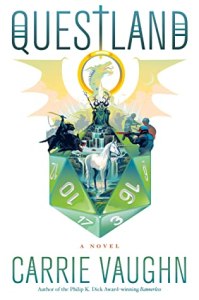
Serena’s Review: “Questland”

Book: “Questland” by Carrie Vaughn

Publishing Info: John Joseph Adams/Mariner Books, June 2021

Where Did I Get this Book: Edelweiss+

Book Description: Dr. Addie Cox is a literature professor living a happy, if sheltered, life in her ivory tower when Harris Lang, the famously eccentric billionaire tech genius, hires her to guide a mercenary strike team to his island retreat off the northwest coast of the United States. Cox is puzzled by their need for her, until she understands what Lang has built. It’s said that sufficiently advanced technology is indistinguishable from magic, and Lang wanted to prove it. On this distant outpost, he has created an enclave full of fantasy and gaming tropes made real, with magic rings that work via neurotransmitters, invisible cloaks made of nanotech smart fabric, and mythological creatures built from genetic engineering and bionics.

Unfortunately for Lang, the designers and engineers hired to construct his Questland have mutinied. Using an energy field, they’ve cut off any communications and are preventing any approach to the island. Lang must retake control before the U.S. military intervenes. The problem? The mutiny is being led by the project’s chief designer, Dominic Brand, who also happens to be Addie Cox’s ex-boyfriend. It’s up to her to quell the brewing tensions between the tech genius, the armed mercenaries, and her former lover before the island goes up in flames.

Review: This was an impulse read for me based purely on the fact that the description sounded sort of like “Jurassic Park but with magic.” Plus, how often do you get to see a literature professor be the hero of the story? As a literature major myself, not often, I’ll say! The concept altogether seemed just weird enough to work. Unfortunately, for me, it landed a bit flat. Which is the exact opposite of what you want from a story that should be a high octane romp!

Addie’s life, while not particularly thrilling, is stable and predictable. For example, one evening while in her office at work, it is completely predictable to be faced with a student who has not fully thought through their paper idea that sounds suspiciously like an excuse to just play a lot of video games. What is a surprise, however, is to be suddenly whisked away by mysterious players and informed that her unique skillsets have qualified her for a mission. Namely, she’s familiar with stories and an island that has been technically enhanced to play out these stories in real life has gone rogue. Now Addie and a team must venture into the wilds and make contact with Addie’s ex-boyfriend, the brilliant man at the heart of the dysfunctional island.

There were definitely some fun ideas in this book. For fantasy fans, spotting all of the references and similarities to classic fantasy works and tropes made for much of the enjoyment. “Lord of the Rings” got a heavy dose, so that in particular stood out. And the general character beats hit well. Addie is the survivor of a school shooting that left her boyfriend and best friend dead. Her struggles with PTSD have driven her life to a large extent and make her particularly uncomfortable working with the military task force who breach the island alongside her. I really enjoyed watching the mutual respect between these two forces come together, particularly the clear (to the reader, maybe not to Addie) understanding that the military characters had for Addie and how she was tackling a struggle that is so real for many in that field.

Ultimately, however, I struggled to really buy into the scenario at the heart of the book. In many ways, the concept (and goals) are similar to “Ready Player One.” Essentially, the author creates some sort of system that allows for their character and readers to revel in all the best-hits of whatever genre their focusing on. For “Ready Player One,” that was 80s pop culture. For this book, it’s classic fantasy and RPG tropes. However, the concept of the island was hard for me to really buy into. We’re meant to believe it has gone rogue for five months, that a team of military personnel have already died trying to reach it, and that, somehow, this is all still operating in secret and without the knowledge of the government.

From there, the decisions of Addie’s ex-boyfriend and the crew that worked with him were equally hard to understand. Their end goal seemed silly, that somehow cutting off contact to the island would result in them being given control of it from the tech billionaire who owned it and employed them. From a team of people who must be incredibly smart to build the island’s systems in the first place, they seemed remarkably dumb about real-world concepts and consequences. It made it really hard to take them, or their position, seriously.

To be fair, I don’t read a lot of the very small subgenre that is LitRPG. With this book, it seems that the author is attempting to merge that type of storytelling with more classic, and generally approachable, fantasy fare. I’m not sure it’s a success, however. I feel that many LitRPG readers would prefer books that simply went that route more fully, and that classic fantasy readers will struggle to accept the premise as its laid out. If you’re a fan of LitRPG, this might be worth checking out. But it’s a fairly lackluster fantasy novel at its bare bones.

Rating 6: I struggled to believe the basic concept at the heart of the story, and from there, even the best character work wasn’t enough to save it.

Reader’s Advisory:

“Questland” isn’t on any Goodreads lists yet, but it should be on a list like this Books About Video Games and Virtual Reality.

Find “Questland” at your library using WorldCat!

Serena’s Review: “The Midnight Bargain”


Book: “The Midnight Bargain” by C.L. Polk

Publishing Info: Erewhon, October 2020

Where Did I Get this Book: Edelweiss+

Book Description: Beatrice Clayborn is a sorceress who practices magic in secret, terrified of the day she will be locked into a marital collar that will cut off her powers to protect her unborn children. She dreams of becoming a full-fledged Magus and pursuing magic as her calling as men do, but her family has staked everything to equip her for Bargaining Season, when young men and women of means descend upon the city to negotiate the best marriages. The Clayborns are in severe debt, and only she can save them, by securing an advantageous match before their creditors come calling.

In a stroke of luck, Beatrice finds a grimoire that contains the key to becoming a Magus, but before she can purchase it, a rival sorceress swindles the book right out of her hands. Beatrice summons a spirit to help her get it back, but her new ally exacts a price: Beatrice’s first kiss . . . with her adversary’s brother, the handsome, compassionate, and fabulously wealthy Ianthe Lavan.

The more Beatrice is entangled with the Lavan siblings, the harder her decision becomes: If she casts the spell to become a Magus, she will devastate her family and lose the only man to ever see her for who she is; but if she marries—even for love—she will sacrifice her magic, her identity, and her dreams. But how can she choose just one, knowing she will forever regret the path not taken? 

Review: I requested this one last fall, mostly because I always like historical fantasy novels and because of the simple, but beautiful, cover art. Romance is always a plus too! But here we are in the spring of 2021 before I finally got around to it. Part of that is due to my own poor management of my TBR pile, of course. But my recent enjoyment of “Sorcerer to the Crown,” a title to which this one sounds similar, was really the kick in the pants I needed top finally pick this one up. Unfortunately, that same comparison that spurred my renewed interest is also the thing that ultimately hurt this book for me in the end.

For Beatrice, the life path laid out before her is as set-in-stone as it is unwanted. With a destitute family depending on her, she unhappily looks ahead to a life where she will be forced to give up her magic in order to marry well and restore her family’s prospects. In her efforts to avoid this life, Beatrice pursues a powerful, magical book that will unlock her abilities and make her a Magnus. But as she gets closer and closer to this opportunity, the choices before her become harder and harder. When she meets an intriguing young man, she begins to realize that she will have to lose one of her loves: a beloved husband or her magic.

While I didn’t love this book, there were a few things that stood out to me on the positive side. I thought the integration of the magical system and the Regency world-building was interesting and unique. It was fairly simplistic, but in some ways I think that worked well for this book that was trying to span at least three different genres: fantasy, historical fiction, and romance. And what included was interesting in its own right, with the grimoires and the summoning of spirits at the heart of the fantasy. I also thought the complication of the dangers magic posed to childbearing was an interesting, if a bit heavy-handed, wrinkle to throw in the fold.

However, there were a few too many things that got in the way of my enjoying those aspects of the story too much. Immediately, I struggled with the writing. There is a lot of telling and a distinct lack of showing in the style of the story. And this is especially tedious in the beginning of the story where many bits of information are rather inexpertly dumped on to readers with very little done to obscure this goal. This is a personal preference, of course, but I also found myself becoming increasingly distracted and annoyed by the use of exclamation points in the writing. Not simply in dialogue, but in the actual description of events. It made many of these passages read as juvenile and a bit ridiculous.

I also found the main character fairly unlikable, coming across more annoying than fierce. The love story was also very superficial. It’s pretty much your typical insta-love story, and from there all the “drama” feels artificial and contrived. None of which helps the main character’s likability in the least. The conflict between her (instant) love with the hero, who seemed like obviously a genuinely good guy right from the start, and retaining her magic began to lose its weight fairly early.

The story itself had strange pacing, seeming to drag for long periods in the middle only to pick up again, briefly, towards the end. This wasn’t helped by the fact that, all told, it’s a fairly straight-forward and predictable affair. I struggled quite a bit to maintain interest, which is always a fairly bad sign when I reflect back on my feelings on a book. Overall, I think there are likely better examples of books like this, “Sorcerer to the Crown” (obviously) and also “The Dark Days Club” and its sequels come to mind.

Rating 6: A unique idea falters under poor pacing and a plot that veers to closely to predictable tropes.

Reader’s Advisory:

“The Midnight Bargain” is on these Goodreads lists: Fantasy of Manners and Something Wicked This Way Comes.

Find “The Midnight Bargain” at your library using WorldCat!

Serena’s Review: “Black Water Sister”

Book: “Black Water Sister” by Zen Cho

Publishing Info: Ace Books, May 2021

Where Did I Get this Book: Edelweiss+

Book Description: Jessamyn Teoh is closeted, broke and moving back to Malaysia, a country she left when she was a toddler. So when Jess starts hearing voices, she chalks it up to stress. But there’s only one voice in her head, and it claims to be the ghost of her estranged grandmother, Ah Ma. In life Ah Ma was a spirit medium, the avatar of a mysterious deity called the Black Water Sister. Now she’s determined to settle a score against a gang boss who has offended the god–and she’s decided Jess is going to help her do it.

Drawn into a world of gods, ghosts, and family secrets, Jess finds that making deals with capricious spirits is a dangerous business. As Jess fights for retribution for Ah Ma, she’ll also need to regain control of her body and destiny. If she fails, the Black Water Sister may finish her off for good.

Review: I was obviously on a bit of a Zen Cho kick recently. In reality, I had requested this one from Edelweiss+ thinking it was part of her “Sorcerer Royal” series. And with that in mind, thought to myself “Oh, shoot! I need to read the second one before this one comes out!” So, off I went to read/review that book. Only to get to this one and discover that this is not, in fact, part of the series and is instead a modern, stand-alone fantasy. Little peak behind the oh, so exciting review process, and my own inability to properly research the books I request!

Sometimes the voices in your head are real. Sure, Jess figured it was just the stress of moving back to a homeland she doesn’t remember, not having two cents to rub together, and feeling locked away from her true self. But when mediums run in your family, there just might be another cause to strange voices. When Jess’s deceased grandmother begins speaking to her about feuds and powerful deities, Jess finds that uncovering her true identity may be much more complicated than she had thought.

First off, props to the cover artist. It’s a beautiful work of art, and it fits the overall feel of the book perfectly. Silly me should really have been able to pick up on the fact that of course this wasn’t in the “Sorcerer Royal” series just based on that, but…yeah, I have no excuses here.

It’s hard to evaluate this book because I was honestly a bit disappointed that it wasn’t part of her historical fantasy series. But that’s on me and not the book. I also don’t typically read a lot of contemporary fantasy. However, the story of a young woman getting tangled up in a feud between gang leaders and a centuries-old deity? Heck yeah! Like Cho’s work in her other series, the magical elements in this book were excellent. I particularly liked the god-like being at the heart, the titular Black Water Sister. I also liked the ghosts and how they were described/used in the story.

However, the characters and writing, two aspects of Cho’s “Sorcerer” series that I found particularly compelling, were less strong here. The tone and style used in that series, the type of “historical” writing that you see in Jane Austen novels and other books of that time, is incredibly challenging. It relies on long, drawn-out sentences and an extensive vocabulary. It’s hard to master, but Cho excelled. So, here, with the much more straight-forward style of writing found in any old contemporary book…it all kind of just fell flat. There were a few lines of dialogue that were witty and clever, but the descriptions, actions, general prose didn’t really stand out or capture me in any way.

I also had a really hard time liking Jess herself. There’s a reason I don’t typically read contemporary books. I’m not very interested in family dramas or the coming-of-age stories you often find in these types of stories. Jess is definitely going through one of these “needs to find herself” moments, and I really struggled to care. As a character, she didn’t feel very distinct or unique, and any actions she took were often forced upon her. Her relationship with her secret girlfriend flounders because of this very thing: Jess’s inability to take action in her own life and come out to her parents. That on its own is understandable, as it’s a very tough thing for those in the LGBT community. But when it is just one example of an ongoing, central trait for the main character in this book? It made for some dull reading.

In the end, this book wasn’t really my thing. Fans of contemporary fantasy will likely enjoy it more. The real strength to be found here was in Cho’s descriptions of Malaysia, and Jess’s experiences returning to a homeland she didn’t recognize. But the characters and writing felt a bit flat. Those looking for a book that is similar to Cho’s “Sorcerer” series should be warned that that is definitely not what’s in store here. Take it or leave it as to whether that’s a good thing for you or not!

Rating 6: An interesting look into Malaysia with a unique fantasy overlay, but the main character was too frustrating for me to fully enjoy this read.

Reader’s Advisory:

“Black Water Sister” can be found on these Goodreads lists: 2021 Books by Women of Color and 2021 Queer SFF.

Find “Black Water Sister” at your library using WorldCat!

Serena’s Review: “The Shadow in the Glass”

Book: “The Shadow in the Glass” by J.J.A. Harwood

Publishing Info: HarperVoyager, May 2021

Where Did I Get this Book: Edelweiss+

Book Description: Once upon a time Ella had wished for more than her life as a lowly maid.

Now forced to work hard under the unforgiving, lecherous gaze of the man she once called stepfather, Ella’s only refuge is in the books she reads by candlelight, secreted away in the library she isn’t permitted to enter.

One night, among her beloved books of far-off lands, Ella’s wishes are answered. At the stroke of midnight, a fairy godmother makes her an offer that will change her life: seven wishes, hers to make as she pleases. But each wish comes at a price and Ella must to decide whether it’s one she’s willing to pay it.

Review: I’m always up for a good fairy-tale retelling. The story of “Cinderella” is probably right up there with “Beauty and the Beast” as a favorite in the genre as well. There are a bunch of them out there, with some I like better than others. “Ella Enchanted” will probably always be my favorite, and I was alone in the crowd as being underwhelmed by “Cinder.” But it’d been a while since I’d read one, and the summary for this version seemed to indicate a darker take on the classic tale. The darkness delivered. The rest of the book….well.

Ella had once had a future. One filled with coming out balls, high society, and if she was fortunate, a wealthy marriage. But when her wealthy sponsor and the lady of the house dies, Ella finds herself in very different circumstances. Now, a lowly maid with no prospects, Ella spends her nights sneaking into the library and dreaming of what once was. When she triggers a magical event and a powerful fairy appears offering her a way out, Ella is quick to bargain. But as she wishes for more and more, will the price be more than she is willing to pay?

So, like always, I’ll try to start this review with the things that I liked. The biggest pro I have for this book unfortunately ties into a negative aspect as well, but we’ll go for the good side first. The story is definitely a darker re-imaging of the classic tale. There were moments that were legitimately creepy, and I enjoyed the way these darker portions of the story built one upon another, ramping up the tension and sense of inevitable doom as the story progressed. This is definitely not the floofy, Disney version of Cinderella, and it was refreshing to read a very different take on a well-covered story.

On the other hand, this darkness began to overwhelm the story. The deep dive into the psychological aspects of what having wishes that will grant you almost anything can do to one’s own moral compass began to feel a bit exhausting. Ella continues to make the same mistakes over and over again, seemingly learning very little from her previous errors. It also ends up making Ella a very unlikeable character much of the time. She quickly becomes incredibly greedy and self-centered. And while I thought this exploration of what wishes can do to a person was interesting enough, the actual reading experience of it was not very enjoyable.

As part of this dark feel to the book, the story delves into a few tougher issues. They weren’t botched by any means, but I also am not sure the author really covered them as well as I would have liked. The atmosphere of the story is very grim and it did begin to feel stifling at times, made all the harder by my dislike for the main character.

I appreciate that this story wasn’t like many other cookie-cutter versions of the “Cinderella” fairytale, and at times the Gothic feeling of the story was quite successful. The version of the fairy godmother, in particular, was striking. But between the almost oppressive tone of the story and unlikable main character, it wasn’t for me. Those you enjoy darker fairytales might enjoy this, but if you’re a reader who goes into books hanging most of your hopes of enjoyment on your main lead, this probably isn’t for you.

Rating 6: Not to my taste, but an interesting take on a darker version of “Cinderella.”

Reader’s Advisory:

“The Shadow in the Glass” is a new book, so it isn’t on many Goodreads lists, yet. But it is on 2021 Gothic.

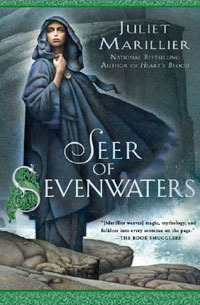
Monthly Marillier: “Seer of Sevenwaters”

“Monthly Marillier” is a review series that is, essentially, an excuse for me to go back and re-read one of my favorite author’s back catalog. Ever since I first discovered her work over fifteen years ago, Juliet Marillier has been one of my favorite authors. Her stories are the perfect mixture of so many things I love: strong heroines, beautiful romances, fairytale-like magic, and whimsical writing. Even better, Marillier is a prolific author and has regularly put out new books almost once a year since I began following her. I own almost all of them, and most of those I’ve read several times. Tor began re-releasing her original Sevenwaters trilogy, so that’s all the excuse I needed to begin a new series in which I indulge myself in a massive re-read of her books. I’ll be posting a new entry in this series on the first Friday of every month.

Book: “Seer of Sevenwaters” by Juliet Marillier

Publishing Info: Roc Hardcover, December 2010

Where Did I Get this Book: own it!

Book Description: The young seer Sibeal is visiting an island of elite warriors, prior to making her final pledge as a druid. It’s there she finds Felix, a survivor of a Viking shipwreck, who’s lost his memory. The scholarly Felix and Sibeal form a natural bond. He could even be her soul mate, but Sibeal’s vocation is her true calling, and her heart must answer.

As Felix fully regains his memory, Sibeal has a runic divination showing her that Felix must go on a perilous mission-and that she will join him. The rough waters and the sea creatures they will face are no match for Sibeal’s own inner turmoil. She must choose between the two things that tug at her soul-her spirituality and a chance at love…

Review: Unlike the first Sevenwaters trilogy which jumps generations with each book, the second trilogy remains focused on one generation: the daughters of Sean and Aisling. We’ve met, or heard reference to, them all before either in “Child of the Prophesy” or the previous book, so there’s an element of familiarity and expectation on each’s story from the start. Clodagh was a fantastic first pick for this new set of books, and it seemed only natural that Sibeal, her reserved, mystical younger sister would be the next choice. Unfortunately, for as much as I liked Sibeal’s character in “Heir to Sevenwaters,” her story has been one of my less favorite Marillier books, and so it remained with this re-read.

Even without the power of a seer, Sibeal believes she knows what will come of her life. She is soon to take her final vows to become a druid and join her brethren in the services they provide, that of wisdom, story-telling, and powerful, magical insight into the world around them. But this clear, straight path takes a sudden turn when Sibeal discovers a young man washed up on the shore with no memory of who he is. Suddenly, her life becomes much less clear and mysteries appear around every corner. For his part, Felix knows next to nothing about himself, with only dire hints at his own past and what paths he had been trodding before meeting Sibeal. Together, each must take on a perilous journey not only of self-discovery but to unlock wonders in the very world itself.

I really liked what we got from Sibeal in “Heir to Sevenwaters.” She didn’t have much page time, but she was a refreshing breath of fresh air in the midst of a family who was all treating Clodagh fairly poorly. Sibeal, alone, believed Clodagh and provided what support she could in the journey set out before her sister. Alas, as a main character, Sibeal wasn’t nearly as compelling. For one thing, her voice and perspective are not as distinct and unique as I had hoped. In too many ways, she seems similar to the other female protagonists we’ve seen in these stories and lacks the spark needed to make her stand out from the pack.

What’s worse, for the first time in this series, the narrative is split between Sibeal’s chapters and Felix’s, the romantic interest. And his are even worse than hers. Not only does the bare fact that splitting the narrative this way lesson the page time we have to get to know Sibeal as a character (perhaps this extended page count would have allowed for more development for her), but Felix himself brings next to nothing to the story. Amnesia stories are tough in this way, and Marillier falls into the same trap that many authors do with this type of arch: there’s just not enough to build upon when your character doesn’t know himself or his history. Beyond that, Felix’s chapters feel almost too similar to Sibeal’s. I’m not saying that there is a “male” and “female” way of thinking/speaking, but I definitely don’t want my two main characters to sound almost indistinguishable.

I also didn’t enjoy the overall story in this one as much as I have in Marillier’s previous Sevenwaters books. The mystery itself was fairly obvious, with numerous clues laid down well in advance of any characters piecing them together. It also all felt disconnected from the rest of the Sevenwaters story. In many ways, I feel like you could almost lift this book out of the series and no one would miss it.

Marillier’s writing remains strong, but with weaker characters and a weaker story overall, some of her tried and true go-toes become a bit more obvious as well. Some of her turns of phrase feel a bit tired and over-used, even. I did enjoy reading the final act of the story, where I felt like the pace picked up a bit more and my interested was piqued somewhat. But overall, it wasn’t enough to justify the rest of the story.

I remember being very disappointed when I read this book and wondering whether it might not be for the best that Marillier just hang up the Sevenwaters series altogether. Luckily (spoilers!), I did enjoy the last book in this series quite a bit, so that helped me recover from this reading experience. Luckily there are very few duds in her work, but this is definitely one of them.

Rating 6: The weakest Sevenwaters book of the lot with two main character, neither of whom are particularly interesting.

Reader’s Advisory:

“Seer of Sevenwaters” is on these Goodreads lists: Hidden Gems: YA-Fantasy Novels and Best Reconciliation Romance Books.

Find “Seer of Sevenwaters” at your library using WorldCat!

Serena’s Review: “The Bright and the Pale”

Book: “The Bright and the Pale” by Jessica Rubinkowski

Publishing Info: Quill Tree Books, March 2021

Where Did I Get this Book: Edelweiss+

Book Description: Seventeen-year-old Valeria is one of the only survivors of the freeze, a dark magical hold Knnot Mountain unleashed over her village. Everyone, including her family, is trapped in an unbreakable sheet of ice. Ever since, she’s been on the run from the Czar, who is determined to imprison any who managed to escape. Valeria finds refuge with the Thieves Guild, doing odd jobs with her best friend Alik, the only piece of home she has left.

That is, until he is brutally murdered.

A year later, she discovers Alik is alive and being held against his will. To buy his freedom, she must lead a group of cutthroats and thieves on a perilous expedition to the very mountain that claimed her family. Only something sinister slumbers in the heart of Knnot.

And it has waited years for release.

Review: Of course this new YA fantasy was marketed as similar to Leigh Bardugo’s work. If it’s not the Grisha series, it’s “Six of Crows. This nonsense has gotten completely out of hand. At this point, that comparison has been used so often (and so poorly) that it’s essentially meaningless. But, alongside the Leigh Bardugo comparison, this book was blurbed as being for fans of Katherine Arden’s “Winternight” trilogy, an all-time favorite series of mine recently. So that did the trick in getting me to pick this one up. Unfortunately, the book really doesn’t deserve either comparison…unless we’re back to the meaninglessness of the Leigh Bardugo spin where all it really signifies is that the book you’re about to pick up is a YA fantasy, which, then, yes.

To this point, Valeria’s life has been nothing but loss. First she lost her home and everyone she loved to a deep freeze. And later, after finding refuge in the Thieves Guild, she loses her best friend Alik to a brutal death. But she is also a survivor, eking out an existence beneath the very nose of the Czar who is out to silence anyone who has survived the freeze. Her life takes a turn, however, when she discovers that Alik is alive. Alive, but changed. To save him, she must venture back to the very place she fears most, the mountain that claimed her town to its cold power.

To get it out of the way from the start, this wasn’t a favorite read of mine. But the one thing I did enjoy, overall, was the world-building involved. Most especially, perhaps, the gods called the Bright and the Pale were very interesting. I liked the idea that neither is inherently good or bad, therefore choosing to follow one over the other doesn’t necessarily speak to any overall world-view or intent on an individual’s part. I also enjoyed the general world-building. It was easy to picture the frozen landscape and the ominous presence of the mountains and the magic that lurked there. The atmosphere itself worked very well for what the story was trying to accomplish.

However, I struggled to enjoy this book. The pacing was difficult, with a slow start that took quite a while to become engaging. This beginning was also hindered by a style of writing that too often veered into telling rather than showing, with information feeling squeezed into dialogue and in the narration in ways that felt unnatural and ponderous. The writing itself was rather clunky, and it took me several chapters to realize that part of the reason I was struggling with the book was the fact that I needed to re-read several sentences to try to piece together what the author was actually getting at. Hopefully, as I was reading an e-ARC, some of this will be cleaned up in edits (there were words missing from sentences even, though the sheer number of times this seemed to happen makes me think it might have just been a very poor writing style choice??).

Valeria was also not a character to write home about. There was nothing obviously wrong with her, and the attempts at giving her a dark back story with the loss of her home suited well enough. However, she still simply felt like every other YA heroine with “a past.” There wasn’t enough distinction to her voice or character to make her stand out from the increasingly crowded set of leading ladies in YA fantasy.

I also didn’t care for the romance or some of the twists in the story. I felt like most of the reveals were telegraphed way too early and too obviously to provide any sort of weight when they finally landed. And the romance struggled against some of the unlikable aspects of Alik’s character. There was too much time spent on him saying horrible things and then later apologizing for those same horrible things. From there, it just followed the typical YA romance arc without adding much or creating any real sizzle between these two.

Fans of Russian-inspired fairytales may enjoy this read, but I do think it has enough marks against it to not earn a strong recommendation. It definitely wasn’t for me, and I think there are likely better examples of similar works to read if one is looking for books like this. Katherine Arden’s “Winternight” series, for sure, and Naomi Novik’s “Spinning Silver,” come to mind.

Rating 6: A disappointing read that had promise but seemed to lack some of the writing proficiency needed to really pully it off.

Reader’s Advisory:

“The Bright and the Pale” are on these Goodreads lists: Monsters and Magic Society and 2021 Young Adult Debuts.

Find “The Bright and the Pale” at your library using WorldCat!

Kate’s Review: “Whisper Down the Lane”

Book: “Whisper Down the Lane” by Clay McLeod Chapman

Publishing Info: Quirk Books, April 2021

Where Did I Get This Book: I was sent an eARC by the publisher via NetGalley.

Book Description: Inspired by the McMartin preschool trials and the Satanic Panic of the ‘80s, the critically acclaimed author of The Remaking delivers another pulse pounding, true-crime-based horror novel.

Richard doesn’t have a past. For him, there is only the present: a new marriage to Tamara, a first chance at fatherhood to her son Elijah, and a quiet but pleasant life as an art teacher at Elijah’s elementary school in Danvers, Virginia. Then the body of a rabbit, ritualistically murdered, appears on the school grounds with a birthday card for Richard tucked beneath it. Richard doesn’t have a birthday—but Sean does . . .

Sean is a five-year-old boy who has just moved to Greenfield, Virginia, with his mother. Like most mothers of the 1980s, she’s worried about bills, childcare, putting food on the table . . . and an encroaching threat to American life that can take the face of anyone: a politician, a friendly neighbor, or even a teacher. When Sean’s school sends a letter to the parents revealing that Sean’s favorite teacher is under investigation, a white lie from Sean lights a fire that engulfs the entire nation—and Sean and his mother are left holding the match.

Now, thirty years later, someone is here to remind Richard that they remember what Sean did. And though Sean doesn’t exist anymore, someone needs to pay the price for his lies.

Review: Thank you to Quirk Books for sending me an eARC via NetGalley!

As a person who has very, shall we say, passionate feelings about certain topics, there are a few subjects that will send me off on rants, be they happy or angry or what have you. One of those topics that is of the ‘angry’ variety is that of Satanic Panic, a period in American History during the 1980s and early 1990s in which people started to believe that there were hidden Satanists all over who wanted nothing more than to molest children and sacrifice them and do other things horrible things all to please Satan. This led to a hysteria fueled by Evangelicals, unethical psychologists, manipulated testimonials, and daytime talk show hosts, and in turn led to a lot of people being unfairly accused of horrific things that didn’t happen, and it wrecked peoples lives. It is a subject that makes my blood boil (and it sure doesn’t help that with the rise of QAnon we are starting to see a new breed of secret Satan conspiracy theories in real time). This brings me to “Whisper Down the Lane” by Clay McLeod Chapman, which takes the infamous McMartin Preschool Trials and makes a novel about a man who, when he was a child, told lies about his Kindergarten teacher, and is now as an adult having lies told about him. I steeled myself, ready to be pissed as hell as I read. And reader, boy was I.

This very phrase uttered numerous times, but quieter as not to wake the sleeping husband beside me in bed. (source)

As “Whisper Down the Lane” is probably supposed to get you riled up, as a story it works. BOY does it work. We get to see a frustrating and also unsettling narrative about Richard, who has tried to forget that he is actually Sean, a boy who told many awful lies about his Kindergarten teacher Mr. Woodhouse, because he liked the attention and because he thought that he was doing what his mother wanted. The mystery of who has started stalking Richard as an adult and has started to try to ruin his life in the same way he ruined Mr. Woodhouse’s is a promising and enticing storyline, as the question is is someone after him, or is this a manifestation of his own repressed guilt? This in turn leads to some very creepy moments, and it also does a fantastic and cathartic dressing down of Satanic Panic and how it preyed upon the misguided fears of a lot of people, and in turn did a lot of damage. Instead of portraying Richard’s/Sean’s mom as a zealous true believer, we got to see a fairly normal single mother with understandable anxieties swept up into something that is untrue, as it take advantage of those anxieties. I didn’t LIKE her as a character, but I don’t think you are supposed to. But I also liked that Chapman gave her some grace, showing that it was this horror of something happening to her son, and then the horror realizing that something HADN’T, that had some tragic fallout. Chapman does draw some really insightful parallels to Satanic Panic of the 80s and the whackadoo and dangerous conspiracy theories that we are seeing today (not just Q shit but also School Shooting False Flag shit).

But there was a big issue I had with “Whisper Down the Lane”. The same grace that is afforded to his mother isn’t REALLY afforded to Richard/Sean. One of the really awful things about Satanic Panic (in a real soup of MANY AWFUL THINGS) is that this strange obsession with Satanists preying upon children in turn led to many children being manipulated to not only tell lies, but also to start believing the lies that some really HORRIFIC things happened to them. While Richard’s/Sean’s actions absolutely fueled what ultimately happens to Mr. Woodhouse, I don’t feel like enough attention and culpability was put upon the adults who fed him that narrative. Sure, that means his Mom, a bit anyway, but what about the authorities? What about the crackpot psychologist who bullies him into lying in the first place (these were the worst parts for me, the transcripts of the interviews)? What about the talk show host who propped him up AS A CHILD as an arbiter or truth and justice and added even more lies into it? While we feel a true amount of anger towards them, I felt that there was definitely too much of Richard blaming himself, with no pushback against that thinking whatsoever. I don’t need a long and winding speech about ‘you were just a child, Sean!’. But I also don’t want to see that perfectly reasonable ‘you were LITERALLY FIVE’ argument be tossed aside as not good enough. It just felt a little too much like ‘and now you’re getting some just desserts’ in a situation where just desserts shouldn’t be sent his way. At least not to the extent they are. And had I not been able to see where this entire thing was going from pretty early on, this may have been a little forgivable. But the mystery itself wasn’t that shocking or surprising. True, some red herrings get thrown in here and there, but they weren’t explored enough to make me feel like they were actual contenders for a solution.

In some ways “Whisper Down the Lane” missed the mark for me. It’s very possible it is because this is a topic that really touches a nerve for me, so I don’t necessarily want people to write it off. As an examination the horrible things Satanic Panic did, it’s very effective. I just wish it had been a little more discerning in where to place the lion’s share of blame, because as it it feels more like a morality tale than the multi layered tragedy it could have been.

Rating 6: A lot of promise, but a somewhat obvious solution and misdirected blame made “Whisper Down the Lane” a bit of let down for me.

Reader’s Advisory:

“Whisper Down the Lane” is included on the Goodreads list “2021 Horror Releases”, and it would fit in on “Satanic Panic”.

Find “Whisper Down the Lane” at your library using WorldCat, or at a local independent bookstore using IndieBound!

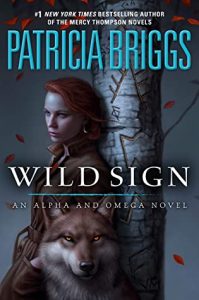
Serena’s Review: “Wild Sign”

Book: “Wild Sign” by Patricia Briggs

Publishing Info: Ace Books, March 2021

Where Did I Get this Book: NetGalley

Book Description: In the wilds of the Northern California mountains, all the inhabitants of a small town have gone missing. It’s as if the people picked up and left everything they owned behind. Fearing something supernatural might be going on, the FBI taps a source they’ve consulted in the past: the werewolves Charles Cornick and Anna Latham. But Charles and Anna soon find a deserted town is the least of the mysteries they face.

Death sings in the forest, and when it calls, Charles and Anna must answer. Something has awakened in the heart of the California mountains, something old and dangerous — and it has met werewolves before.

Previously Reviewed: “Burn Bright”

Review: If you go back and read my review of the previous book in the “Alpha and Omega” series, you’ll see that I was…less than thrilled with that entry. My concerns from that book spanned both this series as well as the “Mercy Thompson” books. But as my review earlier this week demonstrated, that series managed to sidestep the implications of the events in “Burn Bright.” But I was always a bit more concerned with how the next book in this series would do, given that Bran is more of a main character here. And, well, Briggs tries to walk it back a bit, I guess. But unfortunately the distraction offered in the main plot just introduces another frustration of mine.

Old things live in the dark wilds of the forest. And if you stay on the path, maybe you’ll miss the dangers lurking there. But when an entire town’s worth of people go missing, what lurks in the shades of the trees leaves a mark to big to ignore. Anna and Charles are called into action to track down the mystery. Where do you start, though, when all of the victims seem to have vanished into the air leaving behind no trace? Clues exist however in rumors of a powerful force that once lived there centuries before and may have faced werewolves before.

So, I did like this book overall. It’s hard, however, to write a review without taking up tons of wordcount on how this book deals with the fallout of the previous one. Or getting sucked into a long commentary piece on my frustrations with one particular aspect of it that I’m beginnig to struggle with more and more. So…I’ll try to write a fairly general bit before getting into any of that.

Overall, I liked the villain at the heart of this story. Its powers and backstory were very unique and interesting and left me guessing for much of the story. I was able to piece a few bits together early on, but there were a number of genuine surprises throughout that really helped build towards the final conflict. The action and threat-level felt high when it needed too, and there was a underlying sense of doom that pervaded the book in a really nice, creepy way.

I also liked what we got from Charles and Anna. Brother Wolf, the personified version of Charles’s wolf half was given more to say/do here and it was almost like having an entire third character. Might be a bit unfortunate, though, when your wolf character is more interesting than the two humans. Not that Charles and Anna are bad characters, but they still seem a bit dull and one-note, especially in comparison to the characters in the Mercy Thompson series.

The book also introduces a few chapters from Leah’s perspective. On the surface, this is a good thing. The story largely has to do with events in her history, and it’s great seeing inside the head of a character who has been at the heart of so much conflict earlier in the series and even in the “Mercy Thompson” series. It seems clear that by doing this Briggs is attempting to respond to the criticism of the previous book. Her history is such that Bran’s actions in her life are highly criticized by both Charles and Anna. Briggs also seems to try to build up a more true relationship between Leah and Bran with Bran needing to deal with his own past actions and open up to Leah more. It’s all well and good, I guess, but, really, it just makes the previous book’s “reveal” about Bran’s feelings for Mercy feel more about of place. This book not only doesn’t address that but seems to want to just paint over that with some alternative history in which Bran does care for Leah and that whole Mercy thing…never happened.

But when diving into Leah’s history, Briggs steps right into another big problem that I have. I’ve already struggled with the fact that both of Briggs’ leading ladies has a history of being a rape victim. Several SFF authors have written about how pervasive this particular trauma is within the genre and how unfortunate that fact is. Here are two of my favorite pieces, one by Seanan McGuire and one by Sarah Gailey. Each tackles the topic much more thoroughly and eloquently than I can.

Unfortunately, this book not only includes another rape attempt on our main character, but gives the only other POV female character we have a history of rape as well. Now all three POV female characters we’ve had in both series have experienced this particular trauma. Beyond that, the topic is placed firmly at the center of the conflict in this book. I wouldn’t have a problem with that fact on its own if it wasn’t for this established history of using it for our two other main characters. It not only begins to feel a bit much, but Briggs is falling into the exact trap that McGuire and Gailey discuss in their pieces: that somehow rape and sexual assault are almost necessary traumas that female heroes must go through in the ever-chased goal of “character development” and “added depth.” And in Leah’s case, particularly, it almost seems to be used as a way to excuse her abusive treatment of Mercy in the past. The entire thing reads as lazy and uninventive at best and as exploitative at worst.

So, there you go. Another book in this series that’s hard to evaluate based only on the merits of the story itself, but instead gets stuck in challenging topics that outweigh much of the rest. At this point, I’m sure I’ll still continue to read this series if there are more to come. But I’m on high alert now with this author and if these topics continue to come up in this manner, it might be time to throw in the towel.

Rating 6: A solid story is marred by the unfortunate, recurring use of sexual assault as a character-building tactic.

Reader’s Advisory:

“Wild Sign” isn’t on many relevant Goodreads lists, but it is on this funny-titled one: My Vampire Book Obsession Book Boyfriends

Find “Wild Sign” at your library using WorldCat!

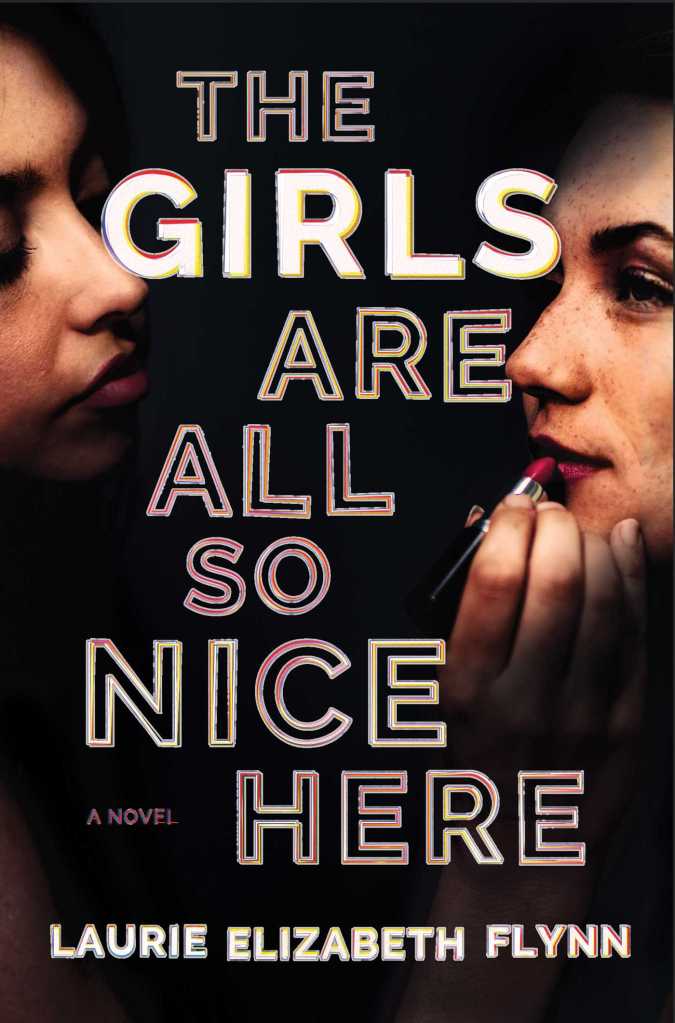
Kate’s Review: “The Girls Are All So Nice Here”

Book: “The Girls Are All So Nice Here” by Laurie Elizabeth Flynn

Publishing Info: Simon & Schuster, March 2021

Where Did I Get This Book: I received an eARC from NetGalley.

Book Description: Two former best friends return to their college reunion to find that they’re being circled by someone who wants revenge for what they did ten years before—and will stop at nothing to get it—in this shocking psychological thriller about ambition, toxic friendship, and deadly desire.

A lot has changed in the years since Ambrosia Wellington graduated from college, and she’s worked hard to create a new life for herself. But then an invitation to her ten-year reunion arrives in the mail, along with an anonymous note that reads “We need to talk about what we did that night.”

It seems that the secrets of Ambrosia’s past—and the people she thought she’d left there—aren’t as buried as she’d believed. Amb can’t stop fixating on what she did or who she did it with: larger-than-life Sloane “Sully” Sullivan, Amb’s former best friend, who could make anyone do anything.

At the reunion, Amb and Sully receive increasingly menacing messages, and it becomes clear that they’re being pursued by someone who wants more than just the truth of what happened that first semester. This person wants revenge for what they did and the damage they caused—the extent of which Amb is only now fully understanding. And it was all because of the game they played to get a boy who belonged to someone else, and the girl who paid the price.

Alternating between the reunion and Amb’s freshman year, The Girls Are All So Nice Here is a shocking novel about the brutal lengths girls can go to get what they think they’re owed, and what happens when the games we play in college become matters of life and death.

Review: Thank you to NetGalley for providing me with an eARC of this novel!

Having gone to a large public university (two, really, as I transferred after freshman year from one U of MN campus to another) and having only lived in the dorm for one year, I didn’t really find myself caught up in any dorm drama or scandals. Perhaps my dorm was just boring, or perhaps I wasn’t looking hard enough. The closest I got was having a roommate with whom I initially bumped heads (but even that doesn’t really count because now she’s one of my dearest friends). But I guess that I can believe that such things do happen. And “The Girls Are All So Nice Here” by Laurie Elizabeth Flynn is steeped, and I mean STEEPED, in the poisonous shenanigans that some college kids get up to while living on campus. I’ll admit that I was just picturing Danielle from “Happy Death Day” as I read the description. And while I wasn’t too far off, it didn’t rise to the occasion that I was anticipating.

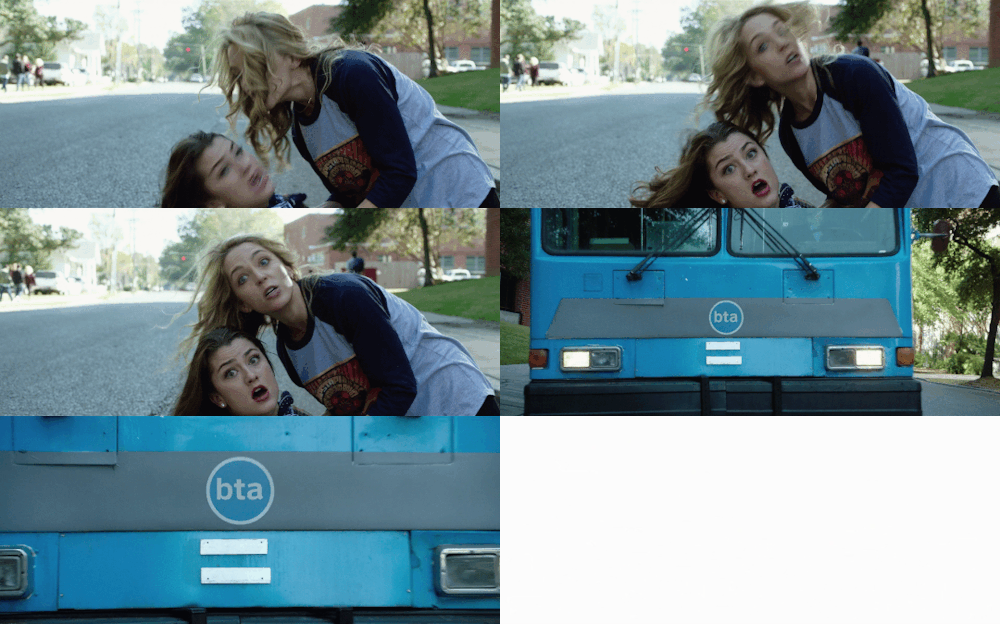
Danielle and Tree play my expectations when they’re smacked back to reality. (source)

“The Girls Are All So Nice Here” has some pretty good hits, and a few glaring misses. I’ll start with the hits, however, as there were definitely things that worked really well. We have ourselves a mystery at hand. Our narrator, Amb, has done her best to leave her college days behind and forget about them. She has a kind husband, lives in New York, and has cultivated a scandal free life. But when her college reunion looms, she starts getting strange messages from an anonymous person saying that they need to ‘talk about what they did that night’. The story is Amb going back to the school to find out who is sending the messages, and we as the readers slowly get to find out what it is she did, through flashbacks and the present day reunion weekend. It’s a device that we’ve seen before, but it works well here as Flynn carefully peels back the layers of Amb’s freshman year, and her relationships. Specifically those she had with her then best friend Sully, the resident mean girl, and Flora, Amb’s sweet and well loved roommate. I will say that what we find out is pretty damn upsetting, with mean girl bullshit spiraling out of control, jealousy and pettiness getting the best of people, and the entitlement thinking one deserves more than they have leading to very bad things. I’m being vague deliberately, because the plot itself is well done. When I thought a character couldn’t stoop lower, she did. When I thought that a twist was one thing, it ended up being something else. A couple reveals felt a bit convenient, but ultimately I was enjoying the ride enough that it didn’t put me too off.

What didn’t work as well for me were the characterizations of the various players in our toxic soup of a story. I definitely understand having garbage people being at the forefront in a story like this, and I don’t have a problem with following an unreliable narrator who is also an unlikable and nasty person. But I think that if you are going to do that, I would like a little bit of exploration as to what it is that makes them that way, or at least make them wickedly entertaining in their nastiness. With Amb, we get a lot of telling that she is insecure, that she is jealous of Flora and how easy it is for ‘girls like her’, but there wasn’t really much in Amb’s background that we see that made me fully see the complexities that go with this kind of dangerous coveting and jealousy that leads to very bad things. Sully, too, is just nasty with no reason or exploration into her nastiness. We just see she’s horrible and that’s all we get from her, and she isn’t interesting enough to even make it fun to hate her. Perhaps one would think that Flora may get a bit of depth here, given that she is the one who is hurt the most by Amb and Sully, but no. Flora is your two dimensional really nice girl that is there to be a martyr. Even when she talks with Amb or other characters talk about her with Amb in the past and the present, all we know about Flora is SUPER sweet which, sure, makes your blood boil when Amb and Sully treat her like crap. But that only gets me so far.

So while the plot was engrossing and had some genuine tricks up its sleeves, “The Girls Are All So Nice Here” was a fairly run of the mill thriller about women behaving badly. It gets the job done, but it probably could have done more.

Rating 6: A twisty thriller with some fun surprises, “The Girls Are All So Nice Here” will keep you guessing, but doesn’t have anyone to root for.

Reader’s Advisory:

“The Girls Are All So Nice Here” is included on the Goodreads list “Mystery & Thriller 2021”.

Find “The Girls Are All So Nice Here” at your library using WorldCat, or a local independent bookstore using IndieBound!