Serena’s Review: “A Curse So Dark and Lonely”

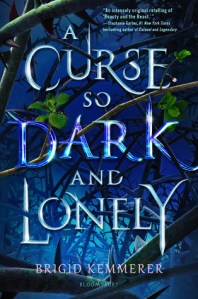
43204703Book: “A Curse So Dark and Lonely” by Brigid Kemmerer
Publishing Info: Bloomsbury YA, January 2019

Where Did I Get this Book: from the library!

Book Description: Fall in love, break the curse.

It once seemed so easy to Prince Rhen, the heir to Emberfall. Cursed by a powerful enchantress to repeat the autumn of his eighteenth year over and over, he knew he could be saved if a girl fell for him. But that was before he learned that at the end of each autumn, he would turn into a vicious beast hell-bent on destruction. That was before he destroyed his castle, his family, and every last shred of hope.

Nothing has ever been easy for Harper Lacy. With her father long gone, her mother dying, and her brother barely holding their family together while constantly underestimating her because of her cerebral palsy, she learned to be tough enough to survive. But when she tries to save someone else on the streets of Washington, DC, she’s instead somehow sucked into Rhen’s cursed world.

Break the curse, save the kingdom.

A prince? A monster? A curse? Harper doesn’t know where she is or what to believe. But as she spends time with Rhen in this enchanted land, she begins to understand what’s at stake. And as Rhen realizes Harper is not just another girl to charm, his hope comes flooding back. But powerful forces are standing against Emberfall . . . and it will take more than a broken curse to save Harper, Rhen, and his people from utter ruin.

Review: So, as always, another “Beauty and the Beast” retelling comes out and I line up obediently to read it. This, if anything, is proof that I am an eternal optimist, as I’ve had pretty poor luck with this particular fairytale and the versions I’ve read. Yes, “Beauty” is and likely will always be one of my absolute favorite fairytale retellings, and I loved “Uprooted.” But from there…maybe a few middling titles, but then it’s straight down to versions that I highly dislike.  So the scale is pretty heavily weighted on both sides of the extreme. Sadly, “A Curse So Dark and Lonely,” while not my least favorite version, joins the ever expanding ranks of disappointments for this story.

In the fairly standard layout of the story, Rhen is our cursed prince, doomed to relive one season over and over again, attempting to win over a new girl every three months. But, what’s worse, his failures don’t simply reset things, but end with his transformation into a terrible beast that kills all those in his path. Harper, a girl growing up in D.C. and with struggles of her own, suddenly finds herself pulled away from her life (one full of its own strife with her ill mother and a brother caught up in crime rings in an attempt to pay off the family debt) and thrust into the middle of this curse, the most recent would-be curse breaker. To make matters worse, this will be the last season and Rhen’s last chance to break the curse and avoid a life ever after as a monstrous beast.

This book has received a lot of positive reviews, so I just want to say right away that there’s a good chance much of what bothered me with this book wouldn’t hold true for others who enjoy YA fairytales. There have been comparison to “A Court of Thorns and Roses,” for example. Which, given the massive appeal of that series, means many will ultimately really like this. I hated ACOTAR, on the other hand, so that comparison might be even more apt. I didn’t hate this book, but it definitely wasn’t for me.

The good thing about this book is that it does what it sets out to do. We have a unique (ish) take on the “Beauty and the Beast” tale that leans into its darker elements (beast!Rhen is truly destructive and dangerous). A heroine who represents those with disabilities in a really great way (she has what seems to be a high functioning version of cerebral palsy). And a story that delivers both action and romance (eventually).

But, for me, it did all of these things in a very “meh” way. The world-building, for one, was an immediate let-down. Emberfall is simply “such and such, generic fantasy world with magic.” There is no real explanation or true creativity behind any of it. The castle itself has some of the standard magical elements that we expect to see (ooooh, musical instruments that play themselves) and even those that we are given are too few and far between. It’s just enough to set the stage as a fantasy land, but not enough to make it stand out in any way from the millions of other fantasy lands we’ve seen.

And when juxtaposed against the “real world,” this lack of world-building is made even more stark. It’s one thing to set a book entirely in a fairly bland fantasy world, but when you have the “real world” as an element in your book and characters from that world, it’s inevitable that the “hows” and “whys” of it all should come more to the forefront. If everyone lives in this fantasy world, there’s more of a “get out of jail free” card in that, naturally, everyone (and thus the reader) would take things at face value. That’s simply not the case when you have “real world” characters who should be asking these questions.

Beyond that, while there was nothing overtly objectionable with Rhen or Harper, neither of them were particularly intriguing either. Obviously, the inclusion of Harper’s disability is an interesting take and, not having any experience with this of my own, seems to be represented well. But that is not enough to make her a fully-fleshed out character. Rhen, too, was just kind of…fine. I just never felt fully invested in either of them, and there wasn’t enough given to either to make them feel like much more than the fairly standard “beauty” and “beast” cut-outs we’ve come to expect.

And, from the get-go, the story set off on the wrong foot. Pretty early in the book, right after Harper is kidnapped and brought to the castle, we start in on the “she’s so different than the other girls” lines of thought. I almost just put the book down at this point for how much I hate this way of writing. For one, it’s lazy. If you can’t make Harper look good without including negative comparisons to “other girls,” than you have a character problem on its own. Beyond that, Rhen is something like 300 years old at this point. So, how many seasons would that be? You’re telling me that in that entire time, girls have been kidnapped from the modern world and ALL of them have only ever been interested in dresses and NONE of them wanted anything to do with daggers or, I don’t know, trying to escape? Not only is this incredibly insulting (especially when it’s linked to another comment about how originally Rhen would ask for beautiful women in particular, so of course they’re also frivolous and, I don’t know, scared of weapons??), but it’s also beyond the point of belief. These women have been kidnapped. There is no way that they all simply got distracted by sparkles and sat around meekly adoring their wardrobes. It’s as if to say that, for women, the standard reaction to kidnapping is complacency, especially if your kidnapper is rich and handsome. And that Harper’s reaction of immediately trying to escape is somehow unique and note-worthy. I could go on and on with my frustrations with this, but I think I’ve made my point and any more would just be indulging myself in ranting.

So yes. This book wasn’t my favorite and sadly joins the list of “Beauty and the Beast” retellings that I won’t be recommending. Like I said, a lot of people have liked this book, so there is definitely an audience for it. But, for me, the world-building and characters were simply too bland to hold my interest and the early introduction of “other women shaming” into the story was an immediate turn-off.

Rating 5: Not for me, alas. Maybe check it out though if you liked ACOTAR?

Reader’s Advisory:

“A Curse So Dark and Lonely” is a newer book, so it isn’t on many relevant Goodreads lists. It is on this one (though I disagree about the “best” in this title): “Best retellings of Beauty and the Beast.”

Find “A Curse So Dark and Lonely” at your library using WorldCat!


Serena’s Review: “A Sorrow Fierce and Falling”

36443576Book: “A Sorrow Fierce and Falling” by Jessica Cluess

Publishing Info: Random House BFYR, October 2018

Where Did I Get this Book: audiobook from the library!

Book Description: It’s time for war.

After suffering terrible losses, Henrietta and Lord Blackwood have led their warriors to Sorrow-Fell, a vast estate where only those invited by a Blackwood may enter–and the ideal place to plan a final assault against the Ancients.

It’s time for a wedding.

Henrietta nervously awaits her marriage to Blackwood, but when the ritual to become his bride reveals a dark secret, she realizes that Sorrow-Fell is not a safe haven; it’s a trap. Convincing the sorcerers of this, however, is not easy. So with Maria, the true chosen one, and Magnus, the young man who once stole her heart, at her side, Henrietta plots a dangerous journey straight into the enemy’s lair. Some will live. Some will die. All will be tested.

In this stunning conclusion to the Kingdom on Fire series, Henrietta must choose between the love from her past, the love from her present, and a love that could define her future. While battles rage, the fate of the kingdom rests on her decision: Will she fall or rise up to become the woman who saves the realm?

It’s time for Henrietta to make her stand.

Previously reviewed: “A Shadow Bright and Burning” and “A Poison Dark and Drowning”

Review: This trilogy has traveled an odd trajectory as far as my feelings for a book series go. I was underwhelmed by the first book, a bit put off by the sheer number of love interests who were introduced. The second one fared better, expanding the world out by quite a bit, upping the ante with the villain, history, and Henrietta’s true role in all of this. And then this one…just kind of threw out a lot of different things and saw what stuck, essentially? I’m not even sure! I’m still experience a bit of whiplash from it all, but I don’t think I liked it, in the end.

Events had been coming to a head at the last book, not least of which saw Henrietta agree to marry Blackwood. However, now, as events continue to spin out of control, Henrietta is forced to re-examine all that she thought she knew about those around her. And with new revelations come new choices, each with their own prices to be paid. Surrounded by her friends and facing new and terrible dangers, Henrietta must face her final challenge.

So, as usual, I’ll try to start with some things I enjoyed about this book. The one consistent thing throughout this series that I have liked has been the general writing style. There’s a nice mixture of interesting turns of phrase alongside stark, to-the-point writing that solidly carries the story along. For the most part, purple prose, of the like that can all too often pop up in YA fantasy that has a strong emphasis on romance, is largely avoided. I also listened to this one on audiobook again (which I did for the second book, too) and enjoyed the narrator’s interpretation of characters. I remember thinking that my increased enjoyment of the second book could have something to do with this change of format. And I now have to think that continuing my read of this series using this format was a wise choice, as I’m not sure I would have made it through this one without the increased enjoyment of the audio narrator.

I also generally still enjoy the world-building. There have always been a plethora of creative ideas at the heart of this story. And I’ve also appreciated the way the author has walked right up to the horror line with many of her villains, making them truly horrible. Much of that still continues here, though it did start to feel overly crowded and muddled at times. It’s only been a year since I read the last book, but there were times where I was still struggling to remember how some of these elements worked together and what there histories were.

However, other than those points, I really had a hard time with this book. I’ve never loved Henrietta as a character, but I also didn’t have any overt issues with her. I was particularly intrigued by the second book where we were introduced to Maria, the “real” chosen one. But here, Henrietta went from blandly ok to outright unlikable. We’ve had three books now to witness her making mistakes as she discovers herself and her role in this conflict. And that’s fine. But by this point, we need to start seeing the growth that comes out of those mistakes. Instead, if anything, Henrietta becomes more indecisive and makes even more nonsensical choices than we’ve seen in the past, often to disastrous results. It makes her not only a frustrating character to read, leaving the reader feeling like the character hasn’t grown at all over two entire books, but this weakness of character was necessary to drive much of the plot, as it revolved around said poor decision making and the results therein.

And, lastly, the romance was a huge problem for me. This has been the biggest question mark for me throughout the entire series. From the very beginning I had huge red flags going up regarding the sheer number of love interests that were introduced. We were way past love triangle and into the realm of love square or even more. It was always too much. As the story progressed, I was mostly able to distract myself from my concerns in these areas. But not here. To finally resolve all of the dangling romantic threads, several characters had to be almost completely re-written. One in particular became almost unrecognizable and the change came out of left field. Beyond this, Henrietta’s reaction to this change was not appropriate, as the character essentially became abusive. There are so many layers of problems with this that I’m tired even thinking about it. Ultimately, it felt like the author didn’t know how to resolve (or even decide!) all of the romantic plotlines that were introduced. So instead of making her main character progress along a natural arc of self-discovery throughout the series that would result in her forming a realistic attachment to one character over the others, the author just got to the last book and decided to write off at least two of the choices, leaving Henrietta with only one viable option anyways. It felt lazy and like a slap in the face to readers. What exactly were we wasting our time on before this point if this is how it’s going to be ultimately resolved?

So, while the book did have some creative ideas with its world-building, in the end that’s all it felt like: a collection of ideas. Looking back over the trilogy as a whole, it looks like the work of an author badly in need of an editor. Everything and the kitchen sink went into this series and it shows worst of all in this last book when you can see the wheels coming off as the author frantically tries to resolve all of the elements that have been introduced (most poorly in the romance arena, perhaps). If you’ve enjoyed this series up to this point, I’m not sure how you’ll feel about this one really. It’s the kind of thing where some readers may really enjoy it and others will hate it, but it’s going to largely come down to what each reader was getting out of the series before and how they wanted things to turn out in the end. For me, it didn’t work and almost retroactively lowered the first two books as well, as it seemed to highlight that there was only ever a shaky overall plot from the very start.

Rating 5: A disappointing conclusion, most especially in the lazy resolution to the multiple love interests that had been introduced.

Reader’s Advisory:

“A Sorrow Fierce and Falling” is fairly new and isn’t on any very relevant Goodreads lists, but it is on “YA Releases of October, 2018.”

Find “A Sorrow Fierce and Falling” at your library using WorldCat.

Kate’s Review: “Will Haunt You”

42175979Book: “Will Haunt You” by Brian Kirk

Publishing Info: Flame Tree Press, March 2019

Where Did I Get This Book: I received an eARC from NetGalley.

Book Description: You don’t read the book. It reads you.

Rumors of a deadly book have been floating around the dark corners of the deep web. A disturbing tale about a mysterious figure who preys on those who read the book and subjects them to a world of personalized terror. Jesse Wheeler–former guitarist of the heavy metal group The Rising Dead–was quick to discount the ominous folklore associated with the book. It takes more than some urban legend to frighten him. Hell, reality is scary enough. Seven years ago his greatest responsibility was the nightly guitar solo. Then one night when Jesse was blackout drunk, he accidentally injured his son, leaving him permanently disabled. Dreams of being a rock star died when he destroyed his son’s future. Now he cuts radio jingles and fights to stay clean. But Jesse is wrong.

The legend is real–and tonight he will become the protagonist in an elaborate scheme specifically tailored to prey on his fears and resurrect the ghosts from his past. Jesse is not the only one in danger, however.

By reading the book, you have volunteered to participate in the author’s deadly game, with every page drawing you closer to your own personalized nightmare.

The real horror doesn’t begin until you reach the end. That’s when the evil comes for you.

Review: I want to extend a thank you to NetGalley for sending me an eARC of this book!

“Weird” horror is a genre that, when done right, I find completely engrossing and effective. The best example of this that comes to mind is, of course, the classic “House of Leaves” by Mark Z. Danielewski, in which a haunted house story is told through multiple layers of narration and formats. Weird horror ought to unsettle the reader in the same way the situation should be unsettling the protagonist, but it’s a fine line to walk. If you go too weird it can be confusing and frustrating. If you don’t go weird enough you may not have the intended impact. When I read about “Will Haunt You” by Brian Kirk, I was especially intrigued by the idea of a cursed Internet book that brings pain and suffering to those who read it. Frankly it sounds like a mix of “The Ring” and the amazing Creepypasta “Ben Drowned”, and with that amalgamation solidly in my mind I was every excited to read “Will Haunt You”. I wasn’t thinking about the trappings that can come with Weird horror, and perhaps I should have been.

The premise and ideas are absolutely solid. Jesse Wheeler is our main character, and his backstory and present are ripe for the picking when it comes to conflict. Once a metal musician on the rise, he is now married and has a son who is disabled. It was Jesse’s actions that led to the accident that caused the disability, and so Jesse’s guilt, mixed with the longing for his younger years, has turned him into a tormented former shell of himself. He is the perfect person to become victim to a devious book; he’s struggling to keep it together and has nothing to lose, so of course he isn’t daunted by internet folklore. That in and of itself is a solid premise to a novel, and Jesse’s flaws and strengths are on full display throughout the story to be explored and picked apart. As a character study, “Will Haunt You” is well done and interesting. If this was a book that was solely about an aging man who has to face his guilt and his culpability towards his family’s various struggles, I would be down.

But, as this is, it is a horror novel, and for me “Will Haunt You” fell squarely in the first of the two problems Weird horror can run into: It was very confusing for me and hard to follow. We are thrown into various scenarios and situations with very visceral and graphic moments, and we are introduced to characters who may or may not be reliable, but instead of feeling tight and on point it always felt like it never quite came together. I do wonder if this disorienting narrative was meant to make the reader feel the disorientation that Jesse felt, and therein made the reading experience all the more three dimensional, but instead of feeling scared in my confusion I just felt frustrated. Eventually I think I was able to get my mind wrapped around all of the pieces of the puzzle, but it took so long that it felt like it was too little, too late. I am considering going back and reading the tie in ‘haunted book’, “Obsidio”, because I feel like part of the fun of these ‘cursed media’ stories is the cursed media itself, and we didn’t really get that here, just the fallout from it. And yes, you can find it online. Given that I haven’t read it yet, I can’t say as to whether or not it’s inclusion would have made “Will Haunt You” more satisfying, but I can’t imagine that it would hurt.

All in all, “Will Haunt You” had some very well done moments when it came to character study, but the horror aspects didn’t do anything for me. As Weird fiction it didn’t work the way I wanted it to.

Rating 5: While the characterization was spot on and the protagonist was complex and interesting, the horror aspect of “Will Haunt You” didn’t work for me and left me confused and frustrated.

Reader’s Advisory:

“Will Haunt You” is new and not included on many Goodreads lists, but I think it would have a place on “Surreal Horror”.

Find “Will Haunt You” at your library using WorldCat (but as of now it appears limited).

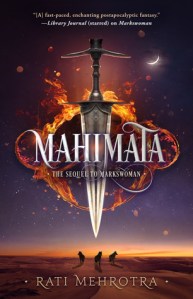
Serena’s Review: “Mahimata”

37868558Book: “Mahimata” by Rati Mehrotra

Publishing Details: Harper Voyager, March 2019

Where Did I Get this Book: Edelweiss +

Book Description: Kyra has returned to the caves of Kali, but her homecoming is bittersweet. Her beloved teacher is dead and her best friend Nineth is missing. And gone, too, is Rustan, the Marksman who helped her train for the duel with Tamsyn–and became far more than a teacher and friend.

Shaken by his feelings for Kyra and the truth about his parentage, Rustan has set off on a quest for answers. His odyssey leads him to the descendants of an ancient sect tied to the alien Ones–and the realization that the answers he seeks come with a price.

Yet fate has plans to bring Kyra and Rustan together again. Kai Tau, the man who slaughtered Kyra’s family, wages war on the Orders of Asiana. Hungering for justice, Kyra readies herself for battle, aided by her new companions: the wyr-wolves, who are so much more than what they seem. And determined to keep the woman he loves safe, Rustan joins the fight to ride by her side.

But will this final confrontation ultimately cost them their love…and their lives?

Previously Reviewed: “Markswoman”

Review: I had some mixed feelings about “Markswoman,” but I was particularly intrigued by the interesting mixture of sci-fi elements, a post apoplectic (?) world, fantasy and a region/religious order that pulled heavily from Indian influences. My hangs ups (as they often are) had largely to do with the characterization of the main protagonists and, to a certain extent, the secondary character as well. Unfortunately, this book didn’t raise the bar on my overall feelings and I was left reflecting back on the completed duology in much the same way that I viewed the first book alone.

Kyra and Rustan have been separated and the board, in many ways, has been re-set. Each on their own paths of self-discovery, larger events force them back together at last when the evil  Kai Tau begins a war on the Orders. As mysteries begin to unfold and new ones to be discovered, Kyra and Rustan must, again, fight for not only their love but for the future of all they hold dear.

The story started off on the wrong foot right off the bat by committing one of the cardinal sins of second books: recapping the entire first book. Yes, it’s important to re-establish a few basic things, but I don’t think there’s ever really any excuse for an info-dumping, all out recap of a previous book. Especially not in a series that is only a duology and only had one year between publishing dates for the book. This type of thing immediately sets the wrong tone, most especially in that it essentially cripples this book itself in lieu of trying to serve some imagined need of the first book to be recapped.

And then once the story starts, I was back to being reminded about all that troubled me with the first book. Most especially Kyra and the bizarre ways that those around her interact with her. In the first book, I couldn’t understand why she had been promoted to a Markswoman in the first place, and here, that same idea is taken to the next level with Kyra taking over as leader of her order. But…she’s a teenager! With very few years of experience! It’s hard to imagine that such a well-organized and long-lasting organization such as the Order of Kali would be set-up in such a way that a decision like this wouldn’t lead to extreme confusion and outright rebellion. Yes, yes, Kyra has to be “special” because she’s the protagonist. But there’s “special” and then there’s special to the point that you have to make every character around said special character operate in a completely unrealistic way to justify said special character’s specialness. If the special thing you want to do with your character doesn’t work without undercutting the believability of your established world norms and characters, then maybe you should look for a different way to make that character stand out, one that holds more in line with who they are and what they are, realistically, capable of.

I also had a hard time fully connecting to Rustan and his story line, once again. Again, I’m not sure that many of the choices we see him make in this book really align with the character that had been established in the first book.

Some of the mysteries in the world-building also came with distracting or confusing resolutions. I’m couldn’t quite understand how some of them even made much sense. At times, it felt like the book was suffering from its own restricted page count and some of these explanations felt truncated simply due to that. Again, if an author is going to put the effort into creating such a unique world as the one that was given to us in the first book, it’s really disappointing to get to the second and final one and find yourself marooned at the end feeling as if any explanations given just opened up even more questions.

So yes. This wasn’t the duology for me. Many of my struggles with the first book carried over to this one, and ultimately it’s not a series I would recommend. I know a lot of readers enjoyed the first one and early reviews seem to be positive for this one as well, but for me, the diversity and unique world-building isn’t enough to get past the failings in the more basic parts of writing: good characterization and strong plotting. If you enjoyed the first book, this one will probably hold up for you. But if you were on the fence with that one, as I was, this one’s probably not worth the time or effort.

Rating 5: This seems really low, but I was just that bored with it all.

Reader’s Advisory:

“Mahimata” is a newer title, so it isn’t on many Goodreads lists. It is on “YA Releases of March 2019.”

Find “Markswoman” at your library using WorldCat!


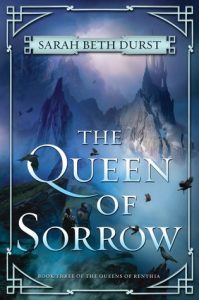
Serena’s Review: “The Queen of Sorrow”

36039814Book: “The Queen of Sorrow” by Sarah Beth Durst
Publishing Info: Harper Voyager, May 2018

Where Did I Get this Book: audiobook from the library!

Book Description: Queen Daleina has yearned to bring peace and prosperity to her beloved forest home—a hope that seemed doomed when neighboring forces invaded Aratay. Now, with the powerful Queen Naelin ruling by her side, Daleina believes that her dream of ushering in a new era can be realized, even in a land plagued by malevolent nature spirits who thirst for the end of human life.

And then Naelin’s children are kidnapped by spirits.

Nothing is more important to her than her family, and Naelin would rather watch the world burn than see her children harmed. Blaming the defeated Queen Merecot of Semo for the kidnapping, Naelin is ready to start a war—and has the power to do it.

But Merecot has grander plans than a bloody battle with her southern neighbors. Taking the children is merely one step in a plot to change the future of all Renthia, either by ending the threat of spirits once and for all . . . or plunging the world into chaos.

Previously Reviewed: “The Queen of Blood” and “The Reluctant Queen”

Review: I picked up this book purely on the strength of the first book in the trilogy, which I absolutely loved. The second book, on the other hand, held some pretty serious set-backs for me with the introduction of a new main character who not only distracted from the original main character who I was invested in but who also, in my opinion, was fairly unlikeable. But the unique world-building and the growing overall conflict that had been laid down between the first two books were enough to spur me on to pick up this one. Unfortunately, the book doubled down on the elements from the second one that I didn’t like and ended up muddling up the world-building that had been the element that was carrying me along so far. Alas.

Aratay should be stronger than ever. With an unprecedented situation of having two Queens at its head, each with her own strengths, it would seem that nothing could threaten them. However, the powerful Queen Merecot, whose schemes almost brought down the realm in the last book, is at work once again and this time she strikes at the heart of the matter: Naelin’s children. Now Queen Daleina must find a way to hold the world in order, with her fellow queen going mad with worry and her childhood friend threatening everything she’s worked so hard to create.

Oh man, this book. It was really disappointing, especially because I so clearly remember the high that was reading the first book. And many of those elements can still be glimpsed here, but then…I don’t know what happened? The world gets too bogged down introducing new elements and questions without resolving them. The great character of Daleina ends up taking a back seat once again, and it all was just not for me.

The world-building has always been one of the biggest draws for me to this series. The sheer maliciousness of the spirits and the way that humanity has built up a system for living in an environment that literally wants to kill them has been fascinating. We’ve gotten little peaks here and there behind the curtain to figure out that there is more to the spirit world than what we’re seeing, but it’s always been shrouded in the type of mystery that simply makes up any world and doesn’t necessarily need to be explained.

However, this book takes that world-building and completely turns it on its head. A bunch of new questions and additional layers (largely unnecessary in my opinion) were introduced that complicated so many elements the world and the way humanity functioned in it. What’s worse, most of these are then not even resolved by the end of the book. Instead, readers are now left with an upended understanding of the entire series because…why? Any potential that was gained by these additions was either squandered away with a return to the norm by the end of this book, in which case, why bother? Or left completely unanswered and only raising more confusion in their wake.

Beyond this, I have to again, go back to my dislike of the character of Naelin. Many of my problems in the last book centered around her characterization as a mother and a to-be Queen of this realm. By the end of the book, it felt like much of this had been resolved in a way that was satisfactory (if still annoying that it had taken an entire book to arrive at). But here, that same can of worms is torn open. Now fully a Queen and responsible for the lives of an entire nation, Naelin once again fails to behave in a way that garners any respect as a leader. She sounds like an excellent mother; but she shouldn’t be anywhere near a position where she holds an entire nation’s worth of lives in her hands.

Further, even Daleina begins to behave in a way that doesn’t hold with her own view of the responsibility of being a Queen in a country like this where the role is necessary to literally save the lives of the people. Both behave so sporadically and recklessly that it’s a wonder things don’t fall apart instantly. Daleina’s reunion with Merecot was also unsatisfactory, given up the very challenged history the two now have.

Overall, this book was the weakest of the entire trilogy for me. My known issues with the second book were just as prevalent here, and instead of being able to fall back on my interest in the world and magic system, that too was pulled out from under my feet with the introduction of a whole host of unnecessary and dead-ended additions to the mythology. If I was going to recommend this series, I would say just stop with the first one. It functions perfectly fine as a stand-alone novel and nothing the next two have to offer improves on that first story. In my opinion, they only detract from it.

Rating 5: A disappointment all around. I won’t be checking out the companion novel that is coming out soon.

Reader’s Advisory:

“The Queen of Sorrow” isn’t on many relevant lists, but it is on “Original Stories . . . a Breath of Fresh Air.”

Find “The Queen of Sorrow” at your library using WorldCat!

Serena’s Review: “Markswoman”

35008759Book: “Markswoman” by Rati Mehrotra

Publishing Info: Harper Voyager, January 2018

Where Did I Get this Book: audiobook from the library!

Book Description: Kyra is the youngest Markswoman in the Order of Kali, one of a handful of sisterhoods of highly trained elite warriors. Armed with blades whose metal is imbued with magic and guided by a strict code of conduct, the Orders are sworn to keep the peace and protect the people of Asiana. Kyra has pledged to do so—yet she secretly harbors a fierce desire to avenge her murdered family.

When Tamsyn, the powerful and dangerous Mistress of Mental Arts, assumes control of the Order, Kyra is forced on the run. She is certain that Tamsyn committed murder in a twisted bid for power, but she has no proof.

Kyra escapes through one of the strange Transport Hubs that are the remnants of Asiana’s long-lost past and finds herself in the unforgiving wilderness of a desert that is home to the Order of Khur, the only Order composed of men. Among them is Rustan, a disillusioned Marksman whose skill with a blade is unmatched. He understands the desperation of Kyra’s quest to prove Tamsyn’s guilt, and as the two grow closer, training daily on the windswept dunes of Khur, both begin to question their commitment to their Orders. But what they don’t yet realize is that the line between justice and vengeance is thin . . . as thin as the blade of a knife.

Review: As I was scrolling through upcoming releases, I happened upon a book that seemed intriguing. Once I looked into it a bit further, I realized that it was in fact a sequel to this book that came out last year and somehow missed my radar. Mission in hand, I set off to the library and was able to snag an aubiobook version of the story. I knew from a few other book reviewers I follow that this was a fairly popular title last year, so I had high hopes. Sadly, the hype machine let me down once again.

Ever since tragedy struck her village and family when she was young, Kyra has been raised by an order of all-female assassins, training to become a Markswoman herself. In this land, Markswomen (and the one order of men to also take on this calling, though there is much controversy over the legitimacy of their claim) are the sole arbitrators of justice, doling out death sentences when crimes have been committed. To do this, they use specially crafted blades that they have bonded with and hold unique powers. But soon after Kyra gains her role as  Markswoman, things go wrong in her order and she finds herself alone in the world and on the run from her own kind. She meets up with a young man from the male version of the assassin order, and together they must face the growing strife overtaking the land.

There is a lot to like about this story, and I can understand why it was popular for so many readers. Most notably, the world-building is incredibly unique. The story appears to be set in some version of India and there are various references to gods that come from the Hindu religion, most notably, Kali, the Markswoman’s patron goddess of death. But on top of this fantasy version of the region, we’re also quickly given hints to an even greater past. There are references to ancient beings who once walked the earth but retreated to the skies long ago. However, they left a series of doorways that operate using some type of technology that is not understood and that can quickly transport an individual from one place to another. This science fiction element was completely unexpected and probably one of the most intriguing aspects of the entire series. I was much more interested in the history of this world and this technology than in Kyra’s story itself, which, of course, is ultimately one of my problems with the book.

Frankly, I didn’t much care for Kyra or Rustan, each coming with their own unique frustrations. We’ll start with Kyra. We meet her during her first assignment that marks her as a fully-fledged Markswoman. She immediately hits with the expected hesitation and moral questioning I’ve now come to (sadly) expect from many assassin stories. Once back at the Order, she continues to flounder in her role, being easily provoked by another girl who is still at an apprentice level to the point where Kyra walks right up to a line of behavior that would see her immediately expelled. Lastly, in a discussion with her mentor, she seems to still be confused by her own order’s purpose, wishing to use her newly-gained role to go on a revenge quest against the people who attacked her family all those years ago. All together, only a few chapters in, we’ve seen literally ZERO evidence that Kyra has the maturity, responsibility, or thoughtfulness to have earned her this promotion. She doesn’t seem to have engaged at all with the greater meaning and purpose behind her own order; she questions authority at every opportunity; she is easily pushed into poor decision making by peers who are now her lessers; she’s not even particularly skilled in any of her lessons. I came away from these chapters with literally no idea what had made Kyra special enough to have been granted an early promotion other than, of course, the necessity of it for plot purposes, the WORST kind of story structure. I found it incredibly frustrating and it ultimately irreparably damaged the character in my mind early in the book. Even when the action picks up to the point that some of these flaws fade into the background, the damage was done.

Rustan, too, has similar character issues. He’s given fewer chapters than Kyra from the get-go, leaving the character with an uphill battle. And, again, we see another assassin who is really pretty terrible at being an assassin. He ultimately spends much of the first half of the book fretting over events in a way that was both repetitive and useless. Not to mention, again, at odds with the basic concepts of any assassin order that one could imagine.

Then the two get together and the inevitable romance begins. Here, too, the book flounders and this element of the story falls into many tropes and pitfalls. We’re never given any solid reasons why these two are drawn together and really, it seems to happen over night and out of nowhere. What starts as an antagonistic relationship literally upends itself for no good reason. I’d be more mad about it if I wasn’t quite so bored by how predictable it all was.

Ultimately, I was pretty disappointed by this book. The world-building and story at the heart of it had so much potential. But this just made it all the more frustrating to see those things being squandered and buried beneath poor characterization and an aggressively trope-ridden romance. I had already requested the sequel book for review when I picked up this one (this is what I get for blindly trusting in the hype machine), so we’ll see how that one turns out. Hopefully improvements will be made!

Rating 5: Having a lot of good things going for it just made it all the more painful to watch this one stumble its way through.

Reader’s Advisory: 

“Markswoman” is on these Goodreads lists: “South Asian YA/MG” and “Indian Science Fiction and Fantasy.”

Find “Markswoman” at your library using WorldCat!

Serena’s Review: “The Last Namsara”

32667458Book: “The Last Namsara” by Kristen Ciccarelli

Publishing Info: HarperTeen, October 2017

Where Did I Get this Book: audiobook from the library!

Book Description: In the beginning, there was the Namsara: the child of sky and spirit, who carried love and laughter wherever he went. But where there is light, there must be darkness—and so there was also the Iskari. The child of blood and moonlight. The destroyer. The death-bringer.

These are the legends that Asha, daughter of the king of Firgaard, has grown up learning in hushed whispers, drawn to the forbidden figures of the past. But it isn’t until she becomes the fiercest, most feared dragon slayer in the land that she takes on the role of the next Iskari—a lonely destiny that leaves her feeling more like a weapon than a girl.

Asha conquers each dragon and brings its head to the king, but no kill can free her from the shackles that await at home: her betrothal to the cruel commandant, a man who holds the truth about her nature in his palm. When she’s offered the chance to gain her freedom in exchange for the life of the most powerful dragon in Firgaard, she finds that there may be more truth to the ancient stories than she ever could have expected. With the help of a secret friend—a slave boy from her betrothed’s household—Asha must shed the layers of her Iskari bondage and open her heart to love, light, and a truth that has been kept from her.

Review: This book came out a bit ago, but it’s been lingering around on my audiobook holds list for a while. So when I was looking for a next book to listen to and saw that it was available, it seemed like fate had finally decreed that now was the time! And, really, a book about dragons? ANY time is THE time as far as I’m concerned! But, while the dragons themselves were, of course, awesome, I didn’t end up loving this book as much as I had hoped.

Asha has grown up as a princess, but one who has been shunned by the general public for an accident she caused when young. To make repayment for this error, she has made it her life’s mission to hunt down the dragons that, through breaking her trust, scarred her face and terrorized her city, killing many. With an unwanted wedding swiftly approaching, Asha begins to slowly uncover secrets at the heart of her society and its history that may change everything. But can a cursed girl still be a savior?

So, while this book ultimately wasn’t all that I hoped it would be, there were still some pretty cool elements involved. And first and foremost of those was the world-building and history at the heart of the story. This book doesn’t just plop you don’t in some generic fantasy setting with dragons and call it day. No, instead there is a detailed history that is carefully laid out before readers in interludes between chapters. Not only is this an actual history of events that lead to the society and cultural situation that Asha finds herself living in during this book, but there is folklore and legends incorporated as well, all neatly tying larger themes together. I think I ended up enjoying these interludes more than the actual story itself. They provided a lot of depth to the world itself and crucial layers to the complicated social dynamics taking place, but the writing style seemed also best served by this type of storytelling. Many of these sections had a certain fairytale-like ring to them that I truly enjoyed.

I also loved the dragons. It took a while for them to really show up, and, of course, I was happy when we inevitably got past the “dragons are evil and I must hunt them” stage of things, which we all saw coming from the start. There was a really nice connection again between storytelling and the dragons, and I thought this concept was both unique and played well to the author’s obvious strengths in this area.

But, while it did have those strengths, I had a hard time really connecting with the story and instead found myself becoming increasingly frustrated with Asha herself and the pacing of the story over all. We’re told quite a lot about how badass Asha is, but again and again, the story felt like it was building to a moment where we would actually SEE this badassery come out to play only to have the story pull back at the last minute. Not only did this damage Asha as a character (it became increasingly hard to believe what we were being sold as far as her abilities when she continuously chose the cautious and inactive route), but it really hurt the pacing of the story itself. The tension would be racketed up, all of the players would be in place for conflict, and then Asha would just give up, pass out, not engage, whatever and the whole thing would deflate like a sad balloon. This happened again and again and AGAIN.

Asha was never a driving force in this story. Instead, almost all of the action that takes place to move the plot ahead was done by the characters around her. There was truly only once instance in the very end where we saw her make an active choice, one that wasn’t forced upon her, and by that point it was too little too late. It also takes waaaaaay too long for Asha to figure out certain secrets and reveals that are made very obvious to readers from the beginning. This kind of drawn out “suspense” does nothing but annoy readers who have already guessed and make the protagonist seem like an idiot for not figuring it out, too.

But, again, the dragons were super cool. I also liked that the book was written as a stand alone story, so Asha’s tale is now complete. The author has a companion novel featuring a few of the other characters who were present in this book, so I might check that out. Like I said, the storytelling and writing were strong enough, it was just Asha herself and the pacing that failed. Perhaps with a new tale to tell and new characters at its heart, everything will click together in a second go-around. If you like stories with dragons, this might be worth checking out, but I recommend it with cautions due to the main character and the story’s struggle with pacing.

Rating 5: Half of a positive rating for the dragons/history/world-building and half of a negative rating for Asha/poor pacing.

Reader’s Advisory:

“The Last Namsara” is on these Goodreads lists: “Dragons” and “ADULT Fantasy books with stong female leads and a romantic SUBplot.”

Find “The Last Namsara” at your library using WorldCat.

Book Club Review: “The Shadow Cipher”

18806245We are part of a group of librarian friends who have had an ongoing bookclub running for the last several years. Each “season” (we’re nerds) we pick a theme and each of us chooses a book within that theme for us all to read. Our current theme is ‘genre mash-ups’, where we pick two random genres and try to find a book that fits both. 

For this blog, we will post a joint review of each book we read for book club. We’ll also post the next book coming up in book club. So feel free to read along with us or use our book selections and questions in your own book club!

Book: “The Shadow Cipher” by Laura Ruby

Publishing Info: Walden Pond Press, May 2017

Where Did We Get This Book: Audiobooks from the library!

Genre Mash-up: Science Fiction and Mystery

Book Description: It was 1798 when the Morningstarr twins arrived in New York with a vision for a magnificent city: towering skyscrapers, dazzling machines, and winding train lines, all running on technology no one had ever seen before. Fifty-seven years later, the enigmatic architects disappeared, leaving behind for the people of New York the Old York Cipher—a puzzle laid into the shining city they constructed, at the end of which was promised a treasure beyond all imagining. By the present day, however, the puzzle has never been solved, and the greatest mystery of the modern world is little more than a tourist attraction.

Tess and Theo Biedermann and their friend Jaime Cruz live in a Morningstarr apartment house—until a real estate developer announces that the city has agreed to sell him the five remaining Morningstarr buildings. Their likely destruction means the end of a dream long-held by the people of New York. And if Tess, Theo and Jaime want to save their home, they have to prove that the Old York Cipher is real. Which means they have to solve it.

From National Book Award Finalist Laura Ruby comes a visionary epic set in a New York City at once familiar and wholly unexpected.

Serena’s Thoughts

I don’t read much middle grade fiction. Yes, technically the Animorphs started out as a middle grade series, but I’m pretty sure most of us can agree that it pretty quickly veers into YA territory with the gruesome and serious nature of much of it. And there are a few examples of MG fiction (even some recently, like “A Flight of Swans”) that do appeal to me, but by and large, it’s just not my jam. With this in mind, it’s really hard for me to review this book objectively, since much of it simply didn’t connect with me as I’m just not the correct reader for this book. So, with the criticisms to come, keep in mind that this book may still very well appeal to many actual middle grade readers and plenty of adults who like to read this age level of fiction. I can definitely see how it might!

To start with some pros, however, I did like the general concept of the story, how simply adding two brilliant inventors into a time period could effect all of history that follows. It’s an extreme example of the butterfly effect. I was also very much into the opening chapter of the book that was set in the 1800s and seemed to be presenting a sort of “steam punk” like world. This portion of the story also featured adult protagonists, so that also probably had something to do with my preference for it.

I also liked the diversity of the main cast of characters and a look into what life would be like growing up in a huge city such as New York. I grew up in a tiny rural town, so the idea of running around a massive city on my own at age 13 is hard to comprehend.

But, those pros aside, this book just didn’t hit the mark for me. For one thing, I struggled with the mash up of science fiction technologies alongside other elements of the world that were unchanged. There seemed to be a really random assortment of new inventions that would simply pop up here and there. And yet, in other parts of life, that same advancement was no where to be seen. It made it feel less like a naturally developed world, but instead a collection of weird concepts, none connecting to another in any fundamental way.

I also thought the book was incredibly slow and the urgency was lacking. This is a long book for a middle grade title, and much of the middle of it just felt like a slog. Not only did it take a while to even get into solving the mysteries, but once there, the sense of urgency never seemed to connect with the actual situation. I was left feeling kind of cold and uninterested about it all. If you’re going to have a book that revolves around solving mysteries, it really needs to revolve around those things, and this just didn’t feel like that. I also really didn’t like that, going in, I knew the mystery wasn’t going to resolve, as this is the first book in a series. All of the mystery series that I read and enjoy will feature the same cast of characters, but the mysteries themselves are solved in each book, with maybe one or two other through-lines as far as the stories go. I just don’t like books where the mystery itself is left unresolved at the end.

So, yeah. This book wasn’t for me. That said, all of my complaints are very subjective and revolve around my own reading preferences. Nothing in the book is actually truly objectionable. The characters are solid, the world is interesting, and the mysteries are clever. If you like middle grade fiction, this book may very well work for you. But if middle grade books are more hit and miss for you, I would skip this one.

Kate’s Thoughts

I read Laura Ruby’s “Bone Gap” a few years back, and while I understood how people would love it as much as they did, I found it to be ‘pretty okay’ at best. So when “The Shadow Cipher” (not “York”; I’m going to touch on that in a bit) was our book club selection, I was hesitantly optimistic that I’d get another read that was ‘pretty okay’. The problem is, “The Shadow Cipher” had a number of things working against it for me, and because of that I didn’t enjoy it as much as I had hoped I would.

But first I want to address the things that I did like, because there were a few stand out aspects: The first is that, like Serena mentioned above, I liked the diversity of and the somewhat unique issues that faced our main characters. One of the biggest threats in this story is that Theo and Tessa Biedermann could lose their home because of a real estate developer’s greed. Gentrification is absolutely a huge problem in large urban cities, especially in our version of New York City, so I appreciated that Ruby brought this issue up within this story, and showed the faces of those who bear the negative brunt of ‘progress’. She addressed it in a way that felt tangible to a middle grade audience, and yet didn’t feel TOO heavy handed or spoon fed to them. What we see are children who are afraid of losing their home, which shows a very human cost to the ever changing landscape of real estate in regards to the less privileged. I also enjoyed the alternate world aspect of this book. I’m a huge sucker for stories that are KIND OF in our world, but wax poetic on how the world could have turned out if one thing had been different. While I’m not totally certain that Ruby completely reconciled the science fiction/steampunk concepts with her world, I liked seeing the effort made.

But, like Serena, I too had a hard time with the pacing and seeming lack of urgency within this story. In other similar tales like “The Westing Game,” the puzzle that the characters are trying to solve is usually at the forefront and very much the driven focus of the novel. When a new piece is solved, it is on to the next. In “The Shadow Cipher,” it felt like it was slowly flitting from place to place. I feel that with their home on the line these kids would be far more rushed (I think about “The Goonies” and how they are so scared about losing their homes that they go on a crazy whirlwind of a treasure hunt that always feels like it’s moving).

My final criticism is probably far more petty and pedantic than it needs to be, and has less to do with the story itself. Look at that cover, folks. If you saw that cover, what would YOU think the title of this book is? The confusing graphic design made me unreasonably annoyed. I know that doesn’t have much to do with the book itself, but it really frustrated me and we had a long discussion about it during book club.

Overall, “The Shadow Cipher” really wasn’t my kind of book, and while I don’t think that it should necessarily turn readers away if they think it sounds like their kind of book, be warned that it may be a long read.

Serena’s Rating 5: Not objectively bad, but definitely not for me. The world-building didn’t come together in the way I would have liked, and the story itself lacked a sense of urgency.

Kate’s Rating 5: Though the characters were fine and I liked the alternate universe angle, “The Shadow Cipher” was too slow for the kind of mystery it was and just didn’t appeal to me.

Book Club Questions

  1. Did you find the alternative timeline in this book believable and well conceived?
  2. In this alternate version of our world, there are small changes that are mentioned in the culture of society (such as the superhero movie “Storm 2”). What do you think about these small changes and do you think that Ruby was trying to say something with them?
  3. “The Shadow Cipher” is similar to other books with themes of kids trying to solve a puzzle such as “The Westing Game” and “Escape from Mr. Lemoncello’s Library.” How do you think that it compares to other books in the genre?
  4. This book is generally for older middle grade and YA readers, but it covers fairly topical social justice subjects like social disparity and gentrification. Do you think the target audience will make connections about what Ruby is trying to say?
  5. What did you think of Tess, Theo, and Jaime as our protagonists? Were they believable characters?
  6. This is the first in a series. Do you think you’ll move on to the next book? Why or why not?

Reader’s Advisory

“The Shadow Cipher” is included on the Goodreads lists “Books with Cityscapes”, and “Exploring YA Fantasy and Sci-Fi”.

Find “The Shadow Cipher” at your library using WorldCat!

Next Book Club Book: “The Haunting of Hill House” by Shirley Jackson

Serena’s Review: “The Witch of Willow Hall”

37007910Book: “The Witch of Willow Hall” by Hester Fox

Publishing Info: Graydon House, October 2018

Where Did I Get this Book: NetGalley

Book Description: New Oldbury, 1821

In the wake of a scandal, the Montrose family and their three daughters—Catherine, Lydia, and Emeline—flee Boston for their new country home, Willow Hall. The estate seems sleepy and idyllic. But a subtle menace creeps into the atmosphere, remnants of a dark history that call to Lydia, and to the youngest, Emeline.

All three daughters will be irrevocably changed by what follows, but none more than Lydia, who must draw on a power she never knew she possessed if she wants to protect those she loves. For Willow Hall’s secrets will rise, in the end…

Review: I picked up this book from NetGalley based on a promotional line comparing it to a spooky Jane Austen novel set in the U.S. Well, as we know, about 95% of the time, any comparison to Jane Austen will both A.) lead to me reading the book and B.) leave me massively disappointed. While I’ve definitely read books that fared worse (for one, for all I can tell the only reason this comparison was made was because of the time period and the “manners romance” aspect of it…which, just stop it. It’s a historical romance. There are plenty of those, and they don’t all need to be compared to Austen), this book was a disappointment to me. Maybe not a massive disappointment, but a disappointment all the same.

Lydia, the middle daughter, has always known there is something strange about herself, ever since she mildly blacked out as a child when fighting with a local bully and re-awakened to find him beaten on the street. But at this point, any concerns about scandal she may bring to the family pale in comparison to the mess that her sister, Catherine, has gotten them into. Fleeing to the country, the family now find themselves closed up in a mysterious house with many strange rumors surrounding it. But on the positive side, they have quite a charming neighbor, a gentleman named John.

There were a few strong points of this book that I want to start by highlighting. For one, I’m always going to love a good historical setting. While there were a few anachronisms here and there, nothing was too extreme to really throw me out of the book in any meaningful way. Instead, I still enjoyed the general rhythm of language, emphasis on social callings, and historical setting that were employed. As long as an author doesn’t greatly mess these basic features up, they’re always going to come away with at least a partial win under their belt as far as I’m concerned.

Secondly, as readers of this blog know, Kate is the horror fan. While I’ll read the heck out of dark fantasy novel any day of the week, I tend to steer clear of straight-up horror. And this is probably one of the closest reads to that genre that I’ve wandered into for a while. Don’t get me wrong, horror fans will likely be underwhelmed by this book, since, let’s be real, this is definitely a historical romance at its heart. But I will say that there were elements of the story that legitimately creeped me out. It didn’t help that I was reading this book the one night my husband was out of town. But I think either way, there would have been some shivers.

The other positive note is that, alongside with these legitimately creepy scenes, the book didn’t shy away from going to some pretty grim places with the story. It starts out with a pretty rough scene dealing with animal cruelty and then continues in a story that insists that even main characters aren’t safe from harsh consequences. There was one scene in particular that was lead up to and the entire time I was partially rolling my eyes, expecting the author to pull back at the last minute. Instead, she went full throttle into it and I was honestly surprised and (in a very grim sort of way) pleased that she committed to this particularly story thread.

But, even with these positives in its favor, I still greatly struggled with the story. For one thing, there were a few twists that I found entirely predictable and the story took way too long to finally come out with the “mysterious” truth. And then when this secret does land, it didn’t really seem to have much of an impact. Not only did I already suspects this particular twist, but the revelation doesn’t greatly change the situation. The family is still disgraced; the mystery behind why doesn’t have much impact on the reality of that situation.

I also didn’t particularly enjoy Catherine as a character. As the focal point of said “twisty” family rumor, there was a lot of room to do something interesting with her arc. Instead, she is written as pretty much an awful person with no redeeming qualities. There are a few moments where I thought we would see some growth or some expanded depth of character revealed, but then in only a few short pages, she goes right back to just being plain terrible with very little else in the way of character development to support her. And with this being a fact of her character, many of Lydia’s own struggles are automatically undercut. I couldn’t sympathize with her indecision or naivete when everything that the reader has seen (and we’re only exposed to Catherine for a period of a few short months, when presumably Lydia has a lifetime of experience) would point to a relationship that has been not worth fighting for for quite a while. There were a few moments towards the last third, in particular, where Lydia’s choices are so incredibly stupid that I had to actually put the book down and take a deep breath before continuing.

This same problem, Lydia’s bizarre choices and fixations, lead to my not particularly enjoying the romance at the center of this story. And this is where the Austen comparisons are coming into play, as there is a lot of miscommunication and confusion at the heart of this romance to draw out the moment of happiness until the end. But the thing is, Austen created legitimate stumbling blocks and points of misdirection in her romances. We get why Elizabeth misunderstood Darcy. We understand why Emma didn’t recognize her feelings for Knightly. But here, we have a hero who is actually spelling it out for our heroine and she, instead, is choosing to believe the terrible sister who has mislead her and betrayed her at every turn. Or she simply gives in to crippling indecision and insecurity for no real reason whatsoever.

I have very little patience for these types of heroines or these types of plot points that aren’t based in anything other than an author’s need to follow a typical romance plot storyboard where the main characters can’t get together until the final scene. If you don’t have a legitimate, plot- or story-based reason for keeping your romance in suspense, you might just need to re-think the entire thing. Either flesh out your plot/characters, or just accept that your romance needs to follow a non-traditional path. This type of forced suspense not only kills any real suspense there might be, but also damages the characters at its heart.

In the end, I was ultimately let down by this book. I’m glad I got in at least one sort-of spooky book before Halloween, but it’s too bad that other than the creepiness and general historical setting, this book didn’t have a lot going for it. If you really love historical romances with a dash of creepiness, than you might enjoy this. But if you’re wanting any depth of character from your heroine, hero, and villain, you probably need to look elsewhere.

Rating 5: Some legitimate spooky scenes were let down by a plot and set of characters that were simply too weak to carry the story.

Reader’s Advisory:

“The Witch of Willow Hall” is included on these Goodreads lists: “Historical Ghost Fiction” and “Autumn Seasonal Reads.”

Find “The Witch of Willow Hall” at your library using WorldCat!


Bookclub Review: “A Thousand Nights”

21524446We are part of a group of librarian friends who have had an ongoing bookclub running for the last several years. Each “season” (we’re nerds) we pick a theme and each of us chooses a book within that theme for us all to read. Our current theme is “B-Sides,” where we pick different books from previous authors that we read in the club.

For this blog, we will post a joint review of each book we read for book club. We’ll also post the next book coming up in book club. So feel free to read along with us or use our book selections and questions in your own book club!

Book: “A Thousand Nights” by E. K. Johnston

Publishing Info: Disney Hyperion, 2015

Where Did We Get This Book: The library!

B-Side Book: “The Story of Owen: Dragon Slayer of Trondheim”

Book Description: Lo-Melkhiin killed three hundred girls before he came to her village, looking for a wife. When she sees the dust cloud on the horizon, she knows he has arrived. She knows he will want the loveliest girl: her sister. She vows she will not let her be next.

And so she is taken in her sister’s place, and she believes death will soon follow. Lo-Melkhiin’s court is a dangerous palace filled with pretty things: intricate statues with wretched eyes, exquisite threads to weave the most beautiful garments. She sees everything as if for the last time. But the first sun rises and sets, and she is not dead. Night after night, Lo-Melkhiin comes to her and listens to the stories she tells, and day after day she is awoken by the sunrise. Exploring the palace, she begins to unlock years of fear that have tormented and silenced a kingdom. Lo-Melkhiin was not always a cruel ruler. Something went wrong.

Far away, in their village, her sister is mourning. Through her pain, she calls upon the desert winds, conjuring a subtle unseen magic, and something besides death stirs the air.

Back at the palace, the words she speaks to Lo-Melkhiin every night are given a strange life of their own. Little things, at first: a dress from home, a vision of her sister. With each tale she spins, her power grows. Soon she dreams of bigger, more terrible magic: power enough to save a king, if she can put an end to the rule of a monster.

Serena’s Thoughts

Back when we were doing our “A-side” books, I was the one who picked Johnston’s “The Story of Owen: Dragon Slayer of Trondheim,” so I was already a bit predisposed to liking this title. On top of that, just based on the book description alone, the story checks off a lot of boxes for me: fairytale-retelling, non-Western setting, sisterhood, and magic. Is it any wonder that I very much enjoyed this book?

There have been a fair number of “1001 Arabian Nights” retellings to come out in the last few years, and I’ve had many mixed reactions to most of them. In its very nature, it’s a rather difficult story to tell. In the original version, our storyteller buys her life with a new story each night. And in the end, her reward is a continued marriage with a murderer. So, how do you twist that story into something worth cheering for? In this area, I think Johnston did several things right.

For one, the central relationship at the heart of this story is not one between our storyteller and her horrible husband. It is instead between her and her sister, the woman she sacrificed herself for and who remains behind in their small village faithfully supporting and working for her sister’s welfare from afar. This a much better focal point for the story itself and takes a lot of pressure off any “romance” that could have come to the forefront. The author’s choices as far as that “romance” goes were also very clever. The biggest challenge, how to make a monster not a monster, is dealt with in a satisfying way, and the biggest trope and pitfall of stories like this, having your heroine fall in love with a monster WHILE HE’S STILL A MONSTER, is avoided.

By also focusing on the relationship with the sister, Johnston centers her story around the role of women in this world, the type of work they do and the largely unnoticed position they hold in society. Through this lens we see how it could become acceptable for a king to go through so many wives without uproar. It’s a subtly feminist story that tackles a lot of bigger points without ever banging it over your head. And the value of typical women’s work is never undervalued in this as well, which is another pitfall that often occurs when trying to make some of these larger points.

I also very much liked the magic system in this book, if you can even call it a “magic system” at all. Like many fairytales, we are given very few explanations or descriptions of where this story is taking place (other than the desert) or how its magic works. Instead, we are allowed to simply immerse ourselves in what is without worrying overly much about the “hows.” There were also a few clever winks and nods to other classic fantasy components at the end of the book that I very much enjoyed.

It’s a quieter, slower moving story, but I think fans of fairytale fantasy will very much enjoy it.

Kate’s Thoughts

Going into “A Thousand Nights”, there were two truths about myself and perceptions in regards to it that I knew: 1) I have never actually read the “1001 Arabian Nights”, and 2) I have had a very mixed experience reading E.K. Johnston. I thought that “The Story of Owen: Dragonslayer of Trondheim” was fine, though I’m far more partial to raising and riding dragons as opposed to slaying them, and I thought that “Exit: Pursued by a Bear” had a good message, but a clunky execution of said message. So picking up “A Thousand Nights” was hard to predict. But I am kind of disappointed to say that it wasn’t really my favorite in terms of fairy tale re-tellings that I have read, and it kind of solidifies that Johnston isn’t an author I would seek out on my own.

I think that a majority of it is the fantasy aspect. As you all know, I have a hard time with that genre, and “A Thousand Nights” wasn’t added to my list of exceptions. There were certainly pros for me within the story itself, which I will try to focus on. The first is that I loved the descriptions of the desert and the different groups of people who lived within it. I am someone who, paradoxically, hates the heat but really loves deserts, so seeing the rich and colorful description of the setting was lovely. I felt like the desert was a character in and of itself, and I had a very clear idea of what it looked like in my mind’s eye. I also really enjoyed the commentary about how women are overlooked within this world, be it through repeated emphasis of women being sacrificed to Lo-Melkiin’s murderous whims because were he overthrown, the economy would destabilize and male traders would lose profits. I think that Johnston paid close attention to how to portray her female characters in an undercurrent lens of feminism, in while they were not named (as this world didn’t place value on them), they were always instrumental in plot points through all kinds of work, both through traditional ‘male’ and ‘female’ roles. And neither gender role was devalued.

All that said, I think that Johnston gets a bit wrapped up in flowery writing and descriptions, and the fantasy elements didn’t pull me in. I appreciate the fact that magic is just a part of this world, but I needed more concrete system behind it. I know that sometimes fantasy novels get TOO wrapped up in the descriptions and the logic of the way magic works, but I needed a bit more in this book beyond the vagueness. I know that Serena was totally fine with not worrying about the hows, and I get that, but as someone who already doesn’t care for the fantasy genre, I REALLY need those hows to explain to me why I should buy into the magic of a world as it is presented to me.

I think that fantasy fans would find a lot to like about this book. I, however, was underwhelmed.

Serena’s Rating 8: A nice fairytale retelling that leans into themes of sisterhood and inner strength.

Kate’s Rating 5: A genre that already doesn’t connect with me is encumbered by a writing and author style that I’ve never totally cared for. Good messages, but an execution I wasn’t fond of.

Book Club Questions

  1. This is a retelling of “1001 Arabian Nights” and features the same basic set up of a young bride trying to outlast a cruel husband. How does this retelling compare to the original or other versions that you have read?
  2. Other than Lo-Melkiin himself, all of the other characters remain nameless. How did this affect your reading of the story?
  3. The story is never clear on a time period or exact location. How did you imagine this land and time?
  4. There is strong emphasis on women and their often over-looked role in this world. What were your thoughts on how this book portrayed its female characters and their relationships with the men around them?
  5. There is a sequel to this book called “Spindle.” Are you interested in reading it and where do you imagine the story could go from here?

Reader’s Advisory

“A Thousand Nights” is on these Goodreads lists: “Scheherazade” and “Desert and Djinni.”

Find “A Thousand Nights” at your library using WorldCat.

Next Book Club Book: “S.T.A.G.S.” by M.A. Bennett