Publishing Info: Viking Books for Young Readers, March 2016
Where Did I Get this Book: from the publisher!
Book Description: “Arabian Nights” meets “Mockingjay” in a world unlike any you’ve ever seen before!
Mortals rule the desert nation of Miraji, but mystical beasts still roam the wild and remote areas, and rumor has it that somewhere, djinni still perform their magic. But there’s nothing mystical or magical about Dustwalk, the dead-end town that Amani can’t wait to escape from. When the gunslinging girl meets Jin, a mysterious and devastatingly handsome foreigner, in a shooting contest, she sees him as the perfect escape route. But in all her years spent dreaming of leaving Dustwalk, she never imagined she’d gallop away on a mythical horse, fleeing the murderous Sultan’s army, with a fugitive who’s part of the secret rebel movement plotting to overthrow the Sultan. And she’d never have predicted she’d fall in love with him . . . or that he’d help her unlock the truth about who–and what–she is. Debut author Alwyn Hamilton weaves this spellbinding story of treason, passion, and magic.
Author’s Bio: Alwyn Hamilton was born in Toronto and lived between Canada, France, and Italy until the was three, when her family settled in the small French town of Beaune. She studied History of Art at King’s College, Cambridge, graduated in 2009, and lives in London.
Review: I am so excited to participate in this blog tour! Not only because I simply love blog tours (following them, being in them, whatever!), but because of the book that I got to read for this one. “Rebel of Sands” is one of those stories that has been on my TBR pile forrrevveer. And I really have no excuse as to why I haven’t gotten to it before. But now I can just smugly feel that my procrastination was just divine providence for my being able to review it now with fellow bloggers.
There was a lot to love about this book, and the story wastes no time in laying it all out before you. If there is one word that I would use to describe this book it would be “fast-paced” (hyphens make it one word!). The story starts out with us quickly meeting our heroine, Amani, and getting a brief overview of the life she’s been leading, one that has been restricted by her gender, her status as an orphan, and her complete lack of funds to get herself the heck out of dodge. Wham, bam, a few pages later, Amani has gotten herself caught up in things over her head and found herself in the company of the roguish, Jin, who is now her best bet out into the wide world. From there, the adventure is just getting started, with mythical beasts and action around every corner.
I very much enjoyed Amani as a leading character. Her narration is witty, but believable, never falling into any of the too-easy cliches for smart-mouthed heroines. Further, her banter with Jin also walked this line well. Their romance was a nice addition to the story, but didn’t overwhelm the action or Amani’s character arc on her own.
I also loved the Persian setting for this story. I’ve been on a bit of a kick of this kind (along with the rest of the YA community it seems), and have enjoyed other books with a similar setting to this (“Wrath of Dawn” & “City of Brass” come to mind). The desert setting and the mythology of the region are always appealing, and I enjoyed them just as much in this version as I have in others. This story was also more action packed than some of the others, which I thought played well laid upon this desert setting.
My one critique comes in the middle of two positive aspects. I liked the setting, as I’ve said, and I like Amani’s special skill of being a sharp shooter. My only problem was the combination of the two sometimes lead the book towards feeling more like a Western than anything else, which I felt like took away from the Persian culture and setting. It almost managed to re-focus the story back to the more common Euro-centric fantasy books that are so predominant. This was a bit unfortunate as it ended up shooting (ha!) itself in the foot, taking out one of its own creative strengths a bit.
But, other than that, I very much enjoyed reading “Rebel of the Sands!” It was a quick read, full of action and adventure, and featuring a relatable heroine whose story I’m eager to continue following.
Rating 8: A action-packed romp with strong country Western themes and a witty heroine!
Where Did I Get this Book: Christmas present from Kate!
Book Description: With her inquisitive mind, Charlotte Holmes has never felt comfortable with the demureness expected of the fairer sex in upper class society. But even she never thought that she would become a social pariah, an outcast fending for herself on the mean streets of London.
When the city is struck by a trio of unexpected deaths and suspicion falls on her sister and her father, Charlotte is desperate to find the true culprits and clear the family name. She’ll have help from friends new and old—a kind-hearted widow, a police inspector, and a man who has long loved her.
But in the end, it will be up to Charlotte, under the assumed name Sherlock Holmes, to challenge society’s expectations and match wits against an unseen mastermind.
Review: While this has been on my TBR list for QUITE a while, I’ve also been incredibly nervous by the entire concept. I mean, let’s be honest, their is definitely “Sherlock exhaustion” in the air. I can think of several adaptations that came out in the last few years off the top of my head, all with “new” twists on the character. Many of these “new” twists are all very similar and have something to do with a female Sherlock, either a modern relation of him, or a modern relation of Watson who is a young woman, something! So, on the face of things, this book falls solidly in the same category. However, it has also been hugely popular and several reviewers whom I trust raved about it. But the credit in this case for me finally getting to reading it goes to Kate for getting it for me for Christmas. And man, suddenly all of my seemingly good reasons for being hesitant about this read went immediately out the window!
As stated, this is yet another re-imagining of Sherlock Holmes. In this version, Charlotte Holmes takes on the role of the brilliant detective, and the surrounding classic characters all get a revamp too. We have a newly imagined Watson, a new take on Mrs. Hudson, and a few references to the Myrcroft of this world. What’s particularly brilliant about them all is how much license the author gave herself to completely re-think these characters, their histories, and their relationships to each other. All too often, “unique” retellings only switch one basic fact and then try to simply re-tell the same story. Like, let’s just make Sherlock a woman, but change nothing else about the character, regardless of the massive impact that this one change would have on everything else. In a case like this, that change makes all the difference, given the very different worlds that men and women inhabited at this time. Often, this leaves these retellings feeling not only hollow, but anachronistic.
But Thomas takes it a step further: not only is Charolette a woman, but she is a woman who, while just as brilliant as Sherlock, is also distinctly her own person. We would expect a female Sherlock (indeed, we’ve seen this play out many times before) to be described as a thin, willowy woman, not only in an attempt to mimic the original character’s height and thinness, but because when wasn’t the young female lead thin and willowy? (but of course she’s insecure about it…) Charlotte is none of these things. A large focus of her day is spent thinking about food, and she has a strict number of chins that she’s decided are allowable before she much cut back. She’s blonde, cherubic, and society regularly uses the word “darling” to describe her. So right off the bat, this is a welcome change! At one point in the story, one character says something along the lines that it is God’s little joke that the most brilliant mind is housed in a body least likely to be suspected of having it. It’s awesome.
Further, Charlotte is written as a believable young woman would be, brilliant mind aside. Her intelligence is on display at all times (particularly her insights into people’s minds based on their clothes choices, as garish fashion is another of her pet loves), but she’s also a young woman who has been raised as a member of the gentry. She’s not automatically amazing at everything (a trope that is far too common for almost all Sherlock iterations nowadays). There are people in her life whom she respects who share with her these skill sets. I loved this attention to realism, and it helped make Charlotte feel like a more believable young woman. And it’s great fun to watch her build towards the “woman of all trades” that she will ultimately become.
Beyond Charlotte, the other characters were exceptional. As I said, their relationships with her and their own personal histories are much changed from the original, but somehow Thomas manages to perfectly capture the essence of each and re-create the roles they play in Charlotte’s story. There are little clues scattered throughout that were immensely fun to put together with my knowledge of the originals.
Further, Thomas introduces new characters, most notably, a beloved sister for Charlotte, Livia. Through Livia, we get an insight into Charlotte’s childhood and family life. Livia, too, serves the purpose of humanizing Charlotte. This was another aspect of this take on Sherlock Holmes that I loved. All too often, because he is brilliant, he’s simply allowed to treat others terribly and it seems as if he truly doesn’t care for anyone around him. Livia impresses upon Charlotte how important it is to learn how to function socially, and we never question Charlotte’s humanity due to her unfailing love for her sisters, particularly Livia.
All of this and I haven’t even covered the mystery! I can barely even sum it up, because, man, it was complicated. And this is one of the biggest compliments I can give it! I love mysteries that are challenging for the reader, and I loved piecing it all together after the reveals towards the end. But I can also see how this might be a turnoff for readers who don’t particularly enjoy mysteries. As I said, this one is pretty complicated, and with the huge cast of characters/suspects, I had to page back and forth a few times to make sure I was keeping track of everything. I didn’t mind this, but it may prove frustrating for other readers.
Beyond all of this, I loved the exploration of what it meant to be a woman in this time, and the underlying feminism at the heart of the story. Never does it bash you over the head, but instead, meticulously, carefully, and graciously, it lays out the case that women are just people, people who have their own thoughts, desires, ambitions, and loves. None of this taking away from the men around them, but simply existing alongside them. There was one scene, in particular, between Inspector Treadles (Charlotte/Sherlock’s connection in the police force) and his wife that really strikes upon this fact. Mrs. Watson, too, was a lovely force of will in this way. And, obviously, Charlotte herself who was ever practical about the limitations of her sex and how best to manage them towards her own goals.
I really could just rave about this book forever, but I’ll cut myself off here. I literally stopped reading about halfway through and ordered the sequel, so expect to see a review for that up soon!
Rating 9: A pure delight! THIS is the Sherlock Holmes re-imagining that I’ve been waiting for!
Book Description: Six months after the end of Wintersong, Liesl is working toward furthering both her brother’s and her own musical careers. Although she is determined to look forward and not behind, life in the world above is not as easy as Liesl had hoped. Her younger brother Josef is cold, distant, and withdrawn, while Liesl can’t forget the austere young man she left beneath the earth, and the music he inspired in her.
When troubling signs arise that the barrier between worlds is crumbling, Liesl must return to the Underground to unravel the mystery of life, death, and the Goblin King—who he was, who he is, and who he will be. What will it take to break the old laws once and for all? What is the true meaning of sacrifice when the fate of the world—or the ones Liesl loves—is in her hands?
Review: I’ll be honest, the only reason I decided to pick this series back up after my lackluster response to “Wintersong” was the fact that the publisher was kind enough to send me an ARC. But, while I still didn’t love this series as much as others have, this book was an improvement on the first, and I found myself enjoying more of it as I went along. As a whole, I can also see why this duology is as popular as it is, even if it wasn’t my cup of tea.
Set six months after the events of the first book, Liesl is trying to set her mind and action on her and her brother’s music. But this is easier said than done and she can never quite shake the memory of her time spent below with the enigmatic Goblin King. Shocking no reader ever, events occur that once again lead Liesl down into the Underground and back into the presence of the Goblin King. Now the stakes are even higher, and Liesl must once again try to puzzle out the truth of her mysterious beau.
First off, I have to give props to the designer of the cover art for both this book and “Wintersong.” Both of these covers are gorgeous, and these are exactly the types of covers that would stop me short in a bookstore and get me to pick up a book. So well done on that front!
As I said, I did end up enjoying this book more than the first and I think this largely has to do with my connecting to the darker tone and topic that was introduced in this book. I still have an ongoing issue with the writing style which I find to be overly dramatic and taking itself too seriously, but at least here, in this book, that style of writing seems to better fit with the tale that is being told. The events and themes are dark and dramatic, so a verging-on-melodramatic tone doesn’t grate up against the story that is being told, but instead can work to support it.
I also appreciated the shift in focus that this book takes, away from Liesl’s relationship with the Golblin King and towards her relationship with her brother. I love a romance as much as the next person (perhaps more, if I’m honest), but these two’s romance wasn’t something I loved the first go around, so for me, a shift to a sibling relationship, something that I often adore in my books, was a welcome surprise. I especially liked the complications in their relationship, the fact that while they could not particularly like each other at times, they were still willing to sacrifice whatever was necessary on the other’s behalf it if was necessary.
However, I still felt that the story moved too slowly, dragging at point. And this was made worse by the lengthy time spent in Liesl’s head as she pined over the Goblin King. But the world building was excellent, and, again, I felt that the author was better able to leverage her strengths in this area this time around to balance out portions of the story that didn’t connect with me as much. There were some nice subtle touches with reoccurring elements throughout the book that did help bring the story to another level.
In the end, I have mixed feelings about this book. For me, it is definitely an improvement on the first story, dealing more fully with some tough subjects, creating a more consistent storyline, and shifting the focus off the romance and onto a sibling relationship. However, some of the issues I had with the writing style are still there, but I know that this is a very preferential opinion and that others enjoy this type of writing more than I do. There’s also the fact that because the story is a departure from the first, I’m not sure how it will be received? Will others who didn’t enjoy the first also find themselves liking this one more because of the changes (will they even read it if they didn’t enjoy the first)? Or will readers who loved the first one be turned off by the shifts in this story? I’m not sure!
But you can decide for yourself because I’m giving away a copy of “Shadowsong!” The giveaway is open to U.S. residents only, and will be running until January 31st!
Rating 6: A welcome change for a reader who didn’t love the first book. A darker and more serious story that better matches the dramatic style of writing.
Reader’s Advisory:
“Shadowsong” is a newer book so isn’t on any relevant Goodreads lists, but it should be on “Best Goblin Books.”
Animorphs 22.5: “The Hork-Bajir Chronicles” by K.A. Applegate
Publishing Info: Scholastic Paperbacks, December 1998
Where Did I Get this Book: own it!
Book Description: Dak Hamee, born into the Hork-Bajir tribe, is something special from the start. “Strange,” says his mother. “A seer,” says the Old One, Tila Fashat. “A seer is one who is born to show a new way. Many, many seasons pass, then our father, the Deep, and our mother, the Sky, say, ‘Send a seer to the people. The people have need.’ And so one is born who is different.” When strange and different Dak meets Aldrea, the clever Andalite daughter of Prince Seerow, they learn together of the dangerous plot of the Yeerks, and of Esplin 9466, who will stop at nothing to build his empire. Learn more about Prince Seerow’s Kindness, find out how Andalites kiss, and plumb the mysteries of the Deep in this suspense-filled story of good, evil, and interspecies love.
Narrators: Dak Hamee, Aldrea, Esplin 9466
Plot: This story marks a departure from regular Animorphs books in several ways. For one, it is a story being told to Tobias by the freed Hork Bajir. It also features three narrators: Dak Hamee, a seer Hork Bajir, Aldrea, an young female Andalite and the daughter of the infamous Seerow, and Esplin 9466, an ambitious Yeerk. The story also jumps around through time, starting around 1966 (Earth time) when Seerow first releases the Yeerks onto the galaxy, and ending a few years later.
The story begins with Aldrea describing the moments after the Yeerks first show their true colors and attack the Andalites who have set up a base on their home world. Alloran (yes THAT Alloran) shows up and begins berating Seerow for the mistakes he has made with the Yeerks by giving them technology and a portable Kandrona.
<Stupidity,> Alloran said harshly. <The stupidity of kindness. Charity to potential enemies. You’re a fool, Seerow. A soft, sentimental, well-meaning fool. And now my men are dead and the Yeerks are loose in the galaxy. How many will die before we can bring this contagion under control? How many will die for Seerow’s kindness?>
Two years later!
Aldrea and her family (her father, mother, and brother) are traveling to far away planet that is known to have life to observe and make sure there is no Yeerk presence. It is not an esteemed mission and Aldrea likens it to be ongoing exile due to her father’s actions. The planet they land on is made up of deep valleys full of huge trees and are soon greeted by the Hork Bajir. They send Dak Hamee, a young Hork Bajir who has known he was difference since he was a child. He is what the Hork Bajir call a “seer,” a rare Hork Bajir that is born rarely and who is much more intelligent than the common Hork Bajir. He has been told that he will bring a “new way” to his people. After meeting the Andalites and forming a friendship with Aldrea, he thinks that this “new way” is simply learning the vastness of the universe and all of the secrets of life and technology that Aldrea is showing him.
In the meantime, Esplin 9466 has his first experience outside of the Yeerk pool. He reveals that many Yeerks are perfectly satisfied with their lives in the pool, and that some, even after infesting a host body, find the prefer that life, finding the infestation experience too frightening and overwhelming. Esplin, however, becomes immediately addicted, especially to the sense of sight. He quickly understands that he must make himself useful if he is to earn the privileged of gaining a permanent host body (which are in high demand), so he sets out to become an expert on their enemies, the Andalites, with the hopes that his knowledge will be called upon in the future.
Three months pass.
Aldrea and Dak have become friends, and Aldrea is continuously surprised by how quickly Dak is absorbing all of the information she is presenting him. But she is also beginning to feel bad about spying on the Hork Bajir, having not explained to Dak the truth of why they are on his planet or anything about the Yeerk threat. Her parents are too caught up in their own things to pay much attention to what she is doing. They both question the fact that Dak is truly as intelligent as Aldrea reports.
One day as Aldrea and Dak are exploring (Aldrea has acquired a local animal called a Chadoo that she uses to travel through the trees alongside Dak), Dak hears a message being sent from another valley. The Hork Bajir use the trees and a system of strung vines to communicate across the distances. He says they are confused by a strange new alien creature that has come and taken away some of their own. Aldrea quickly realizes that they are describing the Gedd and that the Yeerks have arrived. Even worse, she realizes that her father will be sending out his nightly report and that the message is sure to be intercepted by the Yeerks in orbit if she doesn’t stop him. She arrives just in time to see her father send the message.
Meanwhile, Esplin has gained a Hork Bajir host body and is reveling in its power and the possibilities that this new species will give the Yeerks in their fight against the Andalites. The Yeerks intercept Seerow’s message and quickly locate the Andalites’ camp, and see three of the four Andalites nearby. Esplin warns them to wait until the fourth Andalite appears before shooting, using his knowledge of Andalites to deduce that the fourth wouldn’t be inside the scoop, as the other Yeerks theorized, as Andalites do not like to be cooped up if they have a choice. The Yeerk leaders ignore him and fire on the camp.
Aldrea watches her family and her home explode. Dak, confused by the violence and what is happening, has to drag her away from the scene. The Yeerks land and Hork Bajir Controllers immediately go after Aldrea. This is the first time Dak sees his own and his people’s blades as weapons, and manages to cripple one of the Controllers before he could kill Aldrea. They flee.
Aldrea swears vengeance for the death of her family and looks to Dak to inspire his people to fight. Suddenly realizes that the Hork Bajir aren’t peaceable by choice but that they literally don’t understand the concepts of fighting and battle. Dak insists that she explain everything; she tells the story of her father’s mistake. Dak quickly realizes the heart of the matter: the Yeerks were content on their own, but once they saw what they didn’t have, they wanted more. Aldrea, in her arrogance, assumes this insight is simply because now, too, the Hork Bajir are going to be jealous of the almighty Andalites.
Aldrea is insistence that the Hork Bajir must become killers to avoid being slaves. Dak sees this for what it is: both a death for his people and their ways. Aldrea sees Dak begin to look at her in a strange, new way, his face filled with contempt. As the Yeerks continue to chase them, Aldrea and Dak flee to the Deep, one of the deeper crevices on the planet’s surface that is known to contain monsters that have killed all Hork Bajir who have wandered their in the past. They have no choice, however, and run down. The Yeerks follow, but Dak and Aldrea are saved when one of those very monsters, a huge Jubba Jubba creature, attacks them and kills the Yeerks. Aldrea manages to lob off its hand and they flea deeper.
Further down they find a sheer cliff, and in the cliff an intricate city of windows, bridges and balconies. They hide in one of the rooms that has been built into the wall. There they discover a new species, the Arn who look very similar to the Chadoo animal that Aldrea morphed. The Arn, however, are an intelligent species and, while trying to get Dak and Aldrea to leave, they explain their own history and that of the Hork Bajir planet. The Arn had been there first when the planet was lush and beautiful. However, there was an asteroid that had an unstable orbit around them. The Arn know that one day it would hit, however, being biologists, they couldn’t manage to create space ships that could get them past their own moon. Eventually the asteroid did hit, and only a few Arn who had been frozen and left on the moon survived. When the woke up they found their home world much changed, now covered in deep valleys and with an atmosphere that was barely stable. To manage this they created the vast trees. And to manage the trees, the created the Hork Bajir. They also made the monsters to serve as a barrier between the Hork Bajir and their own civilization further below.
The Arn want nothing to do with the war, but Aldrea and Dak manage to convince them that the Yeerks’ threat to the Hork Bajir will result in the Arns’ loss of their gardeners. The Arn teach them how to use the mind control system they have in place for controlling the monsters.
Meanwhile, Esplin and the Yeerks have been busy acquiring more Hork Bajir, around 100 a day. They cut down one of the massive trees and turn it into an impromptu Yeerk pool to aide in the infestation process. However, Esplin knows they must still find the Andalite. But Aldrea and Dak find him first, leading an army of monsters. Aldrea also calls to the Hork Bajir watching saying “Do as he does! Do as he does!” to get them to mimic’s Dak’s fighting. While Dak and the Hork Bajir fight, Aldrea sneaks on one of the Yeerk ships and manages to send out a message to the Andalites, calling for aide and saying the Yeerks have arrived. Hork Bajir!Esplin shows up and tries to capture Aldrea to infest her. She morphs a Jubba Jubba and escapes after using the fighter to blow up the tree Yeerk pool.
Seven months pass.
Dak and Aldrea lead a guerilla war against the Yeerks, but they are taking huge losses. Aldrea can’t understand why the Andalites haven’t shown up; it should have only taken two months. Finally, they do arrive. Immediately they call Aldrea to come speak with Prince Alloran, but dismiss Dak. Dak insists that this war is taking place on his planet and being fought by his people: Alloran can come to him. Once the Andalite higher ups land, Dak finally manages to get their attention by giving a detailed report on the terrible conditions on the planet. Not only are the Yeerks infesting thousands of Hork Bajir, but they are also building new ships and will soon be able to travel the galaxy in huge numbers. They’re even creating a massive ship called a Blade ship.
They learn that the Andalites only showed up in small numbers, having not taken Aldrea’s warning seriously. After all, she was only a young female and the daughter of Seerow at that. The entire fleet is in another sector altogether and can’t arrive for another year. Dak knows that the Andalites will only use the Hork Bajir in this ongoing war. Aldrea doesn’t want to believe it, saying that Andalites aren’t like that.
We had been created by one brilliant species, invaded and enslaved by another. And now a third was using us.
Esplin has been promoted to Sub Visser 12. He leads an attack on the newly arrived Andalites and reduces their number substantially.
Six more months pass.
The fight is not going well. Two thousand Andalites have been reduced to four hundred and the Hork Bajir are down to only 12 fighters. There are now one hundred thousand Hork Bajir Controllers. Dak, Aldrea, and the Andalites are holed up alongside the Arn (the Arn have adapted their bodies so that if they are infested they die, however the Yeerks have simply turned them into slaves in other valleys). Dak notices that there is a section that the Andalites are guarding. He points it out to Aldrea. She is skeptical of it being anything of note, and tried to defend the Andalites. However, the two have grown much closer throughout all of this and she tells Dak that if the choice is between him or her people, she’ll choose him. After all of the Andalite arrogance and even Aldrea’s own lies to him, Dak doesn’t believe this, though he feels good to hear her say it. Aldrea manages to acquire Alloran. When Dak is confused by how she managed to pull this off, she says that morphing is a new technology and acquiring can be quite subtle. She simply took Alloran’s hand and gained his DNA without him noticing the drowsiness. She demonstrates how easy it is by acquiring a nearby female Hork Bajir.
She morphs Alloran and she and Dak gain entrance to the guarded room. There they find a computer lab and learn that Alloran has been creating a virus that is targeted to kill Hork Bajir. Dak is enraged, but not surprised, saying that this is the obvious next step for the ruthless Andalites who know a lost battle when they see one. Aldrea, equally horrified, insists that this is beyond the pale, even for Andalites, and that Alloran has clearly gone insane. They nab the canister containing the virus and destroy the lab. Dak is impressed and touched that Aldrea is willing to stand by her word, choosing him over her own people. Aldrea morphs a Hork Bajir to escape. This draws the attention of the rest of the Andalites. They only manage to escape because the Yeerks choose this very moment to attack the valley.
Dak and Aldrea managed to leap from a high bridge onto the passing Blade ship below. However, when the leap off, they are immediately captured by Yeerk Controllers and Esplin. Esplin immediately announces his plans to infest Aldrea, but Aldrea says that in two hours she will be trapped in this body forever (this is news to the Yeerks who don’t understand morphing technology). To prevent this, Esplin abandons his current Hork Bajir host body and attempts to infest Aldrea. Just before he fully gains control, the now freed Hork Bajir kills the Controllers around them and tugs Esplin back out from Hork Bajir!Aldrea’s ear. However, a nearby Andalite ship attacks the Yeerk ship they are in and they all go down.
Later, they wake up crashed on the valley floor. Aldrea has been trapped in Hork Bajir morph. As they search for Esplin (they theorize that he may have escaped into a nearby stream), the freed Hork Bajir swings down from the tree carrying the canister that he knows must be important. It’s open. The freed Hork Bajir immediately begins showing symptoms. Aldrea and Dak flee, hoping that the fact that the wind is against them will prevent their being infected. Right when they reach the Arn valley, they see the remaining Andalite ships leaving the planet.
They know the fight is lost. The virus is loose. And the Andalites have abandoned the planet. Aldrea and Dak reflect that there are valley far away that won’t be reached by the virus for quite a long time. And at least they have each other.
The book ends with Jara Hamee concluding his tale. Tobias says that now he’s even more depressed. Jara is confused by this and Tobias says he wishes he knew what happened to Aldrea and Dak, and even Esplin. Jara explains, as if to a small child, that Aldrea and Dak had a son whom they named Seerow, who had a son named Jara Hamee. And that Tobias already knows Esplin: Visser Three. As Tobias gets ready to leave, Jara introduces him to his daughter, Toby, named after Tobias. He says that Toby is special, and Tobias realizes that she, too, is a seer.
Dak Hamee & the Hork Bajir: Dak is a great character. I love everything about him. And it is clear that he is set up as the most wise of all the characters in this book, even the almighty Andalites. Really, looking at his character, this is what Cassie should be. He is peaceful by nature, incredibly talented at reading the underlying messages in people’s behavior, easily able to predict how those same people will act, and, importantly, willing to fight, even if he hates it. Yes, Cassie gets there too. But Daks’ anger and sadness never overcome him, he never puts others at risk to save his own conscience. His relationship with Aldrea is also great. Especially given the deeper understanding he has of some of her less positive qualities. But his ability to forgive is probably his strongest asset.
As for the Hork Bajir, I had forgotten much of their history. Especially their creation story, so that was a fun bit to re-experience. And man, the Arn are kind of the worst! I think they rival even the Andalites for arrogance! And are much more self-centered at that. They could care less what happens to everyone else, as long as they’re left alone. Their plan to adapt their bodies so that they’re uninfestable is clever, but they’re so self-focused that they don’t listen to the wisdom of others when they’re warned that the Yeerks won’t care about that and will find a way to destroy them anyways. Which they do by enslaving them and putting them to work mining for resource to be used to build more space ships. However, it’s not quite clear what their ultimate fate would be. After the virus was released, the Yeerks would flea the planet to avoid their hosts dying. But would the virus wouldn’t affect the Arn. So maybe their “outlast” plan worked after all. Even if they were little jerks the entire time.
Aldrea & the Andalites: Aldrea is also a great character. Most importantly because she is by no means a perfect character. Whereas Dak learns technical things about space, science, art, etc., he’s already a wise person. Aldrea is book smart, but she is naive about her own people and exhibits many of the flaws of her species right from the beginning. She lies to Dak repeatedly; tries to downplay the Yeerk threat as long as she can; after her parents die, she becomes obsessed with revenge, not caring that the people who will be dying in this fight aren’t her own; when the Andalites arrive she fails to anticipate just how badly they will treat the Hork Bajir, and even at the end, struggles to believe Dak when he suggests that they are hiding things. For all of this, however, her arc of growth is clear. In the end, she stands by her statement to support Dak over her own people. And of all the characters we’ve seen become stuck in a morph, Aldrea expresses the least regret. Obviously this allows her to be with Dak, but I have to also think that by this point, she’s not a huge fan of her own species. Her father let loose the Yeerks on the world and then her commander tried to commit mass genocide. Maybe being a Hork Bajir is better, even if it’s short-lived.
As for the Andalites as a whole, you can’t say that Applegate ever gets “precious” about her “hero” alien species. If anything, the Andalites are getting a rougher and rougher history. They’re just kind of…all dicks. And sexist ones at that! Alloran says they pretty much dismissed Aldrea’s first call for help not only because she was Seerow’s daughter, but she was just a young female, so probably just foolish. It looks more and more like Elfangor and Ax are outliers, rather than examples of the Andalites as a whole. Even Ax struggles quite a lot to overcome his people’s arrogance and condescension towards other species. As always, Dak says it best:
I laughed. “You almighty Andalites. There is no limit to your arrogance, is there? Well, let me tell you something: We may be simple people. But we don’t use biology to invent monsters. And we don’t enslave other species. And we don’t unleash a plague of parasites on the galaxy, endangering every other free species, and then go swaggering around like the lords of the universe. No, we’re too simple for all that. We’re too stupid to lie and manipulate. We’re too stupid to be ruthless. We’re too stupid to know how to build powerful weapons designed to annihilate our enemies. Until you came, Andalite, we were too stupid to know how to kill.”
Esplin 9466 & the Yeerks: Esplin’s story was a very interesting one. My first thought as I started reading his chapters was that he sounded nothing like the Visser Three we know and love (?). For one, he seems pretty darn smart. He very quickly understands that he needs to make himself useful to be earn a permanent host body. And he also realizes, more than any of the other Yeerks, that to win they must understand the enemy. In this case, the Andalites. The interesting thing about this is that this plan is ultimately what also becomes his downfall. He learns everything about the Andalites, but then seems to become obsessed with them, and with the idea of infesting one.
In the main books’ arcs, this obsession has become a problem. His obsession with the Andalites has translated into a conclusion that they are the only worthy enemy in the universe. He immediately dismisses humans as a threat, thus leaving him with the inaccurate conclusion that he’s fighting Andalite bandits. Not only does he then misunderstand their tactics, motivations, and methods, but he fails to do the due diligence on the enemy he’s currently facing. The guy knows practically nothing about humans and the Earth, something that Visser One mocks him for. So the guy who began his career because he knew that it was important to fully know those whom you are fighting, is now losing because he got to caught up in his obsession over this first enemy. He’s no longer using what once was his best weapon, and thus losing this fight.
Beyond Esplin, we got some interesting facts about the Yeerks. Most notably, not all Yeerks enjoy infesting a host body. And, as Dak realizes early in the book, the Andalites failed to realize that a species might be content with the lives they lead and that introducing more is not necessarily helping. The Andalites’ huge failure is to under appreciate the difference cultures and priorities of the aliens the encounter. They believe they are the ideal, and therefore either dismiss (the Hork Bajir) or try to “help” (the Yeerks) the “lesser” species they encounter.
We also learn that the Yeerks already had a Council of Thirteen system when they lived in their pools, but the Visser/Sub Visser ranking only came after they attacked the Andalites. Esplin is also one of the first to realize that the type of host body you have reflects your own importance. Another reason for his obsession to become the first Yeerk with an Andalite host body.
A Hawk’s Life: As I’ve said before, a case can definitely be made for Tobias being the main character of this entire series. We now have both Chronicles books tying back to our main characters and storyline through Tobias. In the first, obviously, we learn that he is Elfangor’s son. Here, Toby, the new seer of the Hork Bajir, is named after Tobias in honor of the role he played in helping free the Hork Bajir now living in the hidden valley. For his own bits, the few scenes we have for Tobias are fairly depressing. He ends up at the valley because he’s feeling sad and lonely, and then it’s not like this story is the most uplifting thing ever either, so he’s pretty bummed at the end of it too. Obviously, the pay off and optimism comes with the introduction of Toby.
“I Get that Reference!”: There were a few bits in this book that clearly touched on information that we as readers can connect to other bits of the story. One of the monsters from the Deep is one of the strange alien morphs that Visser Three uses (the vine-tentacle monster that took out all of the Animorphs back in the alternate timeline jungle story in book #11). There’s a reference to Dak and Aldrea theorizing that Esplin escaped in a nearby creek, something that must be kind of his move, since we saw him pull the same trick on Ax back in book #8.
Best (?) Body Horror Moment: There wasn’t a lot of body horror in this book. For one, Aldrea is the only one to morph and she doesn’t fixate on the process all that much. It was interesting learning that morphing was a very new technology at this time. Which means that in the grand scheme of things, morphing is very, very new for Andalites, even by the time we get to our main storyline back on Earth. I always thought of it as something the Andalites must have had for quite awhile. Aldrea also mentions that she is more skilled at morphing than others, and theorizes that females might have a better affinity for this technology, which is supported by the fact that Cassie is so good at morphing herself.
Couples Watch!: These Chronicles books are also turning out to be the most romantic of the entire series, and yet again we have a cross-species relationship forming. While I love the sweetness and humor of Elfangor and Lauren’s relationship, their storyline takes place over a short period of time, so it feels a bit less fleshed out. And then we miss the years in between when they truly form a romantic relationship. Here, with Dak and Aldrea, their romantic relationship grows in a much more realistic, and more painful, manner. The differences that they carry with them simply due to their species (Aldrea: arrogant, supremely confident, a tendency to think she knows best and look down on others. Dak: optimistic, has wisdom that could be seen as simplistic, but is actually more honest) are apparent from the beginning and are something they have to spend months working through.
Their relationship also forms through a much harder set of circumstances. Aldrea’s grief and anger over the loss of her family. Dak’s grief and anger over the loss of his entire people. And the fact that 90% of their time together is spent fighting a hopeless war. It’s dark, but it also makes their relationship feel that much more true and earned in the end.
We also get to see a Hork Bajir “kiss” when Dak presses his head blades to Aldrea’s in a moment of tenderness after she’s morphed Hork Bajir. She then compares it to an Andalite “kiss” which is when an Andalite strokes another Andalite’s face with their palm.
Adult Ugly Crying at a Middle Grade Book: Um, the entire book?? While I do love this book, it’s also one of the more challenging reads for me. It’s probably the most serious book in the series so far, and even at the beginning, the reader knows that things aren’t going to end well. We know the outcome of this war. We know the depth of betrayal the Andalites commit. We know that ultimately the Hork Bajir, and Aldrea and Dak, are doomed. So while the story does an excellent job of exploring some really important and challenging stuff (the price of violence on a peaceful people, the value placed on individuals based on intelligence, the lines that can be crossed in warfare), it’s still a tough book to feel pumped about reading from the start.
On a specific note, in this re-read, towards the very end of the book there is this quote:
It was Gah [the recently freed Hork Bajir whom Esplin had abandoned]. He was in the tree above us, in the high branches. He was swinging down to meet us. He was carrying the canister. He had retrieved it from the branches above. He had known that it was important. He was bringing it to us. It was open.
I don’t know why, but the sad, simple, sweetness of this small moment just crushed me. It perfectly illustrates the sadness behind the Hork Bajir people and the loss that was their ultimate fate. Here is Gah, just trying to help his friends, not understanding any of the complexities of the situation. Just bringing something he knows they found important. And dying for it.
Favorite Quote:
This really gets at the heart of the tragedy that is the fate of the Hork Bajir. And Dak understands this really early in the story, after only his fist encounter with the Yeerks:
<We can save your people, if they will learn to fight! They don’t have to be destroyed.>
“Yes, they do,” he said quietly. “Either they will learn to fight and hurt and kill, or they will learn to be slaves. Both will destroy them. Killers or slaves. They will be one or the other. Killers or slaves.”
Scorecard: Yeerks 3, Animorphs 6
No change!
Rating: As I said above, I think this is one of the more serious books in the series and the one that tackles big topics most head-on. Dak is an incredible character, and Aldrea is a great example of creating a flawed character who experiences a life-changing story arc. It’s also incredibly depressing. Unlike the “Andalite Chronicles,” we know how this story will mostly go. So while there are surprises (most notably the history of the Hork Bajir), it’s hard not to read it with an ever-present sense of dread. I have a hard time with sad stories, so that always make this book one of the ones that I have to talk myself into more when considering a re-read. But I’m also always glad that I did re-read it. After this book, it’s hard to read the battles between the Animorphs and the Yeerks without thinking about the tragedy that are all of the Hork Bajir hosts who are dying in these fights, confused and alone.
Note: I’m not going to rate these books since I can’t be objective at all! But I’ll give a one sentence conclusion and you can take from that what you will!
Book Description: A decade ago, Darrow was the hero of the revolution he believed would break the chains of the Society. But the Rising has shattered everything: Instead of peace and freedom, it has brought endless war. Now he must risk everything he has fought for on one last desperate mission. Darrow still believes he can save everyone, but can he save himself?
And throughout the worlds, other destinies entwine with Darrow’s to change his fate forever:
A young Red girl flees tragedy in her refugee camp and achieves for herself a new life she could never have imagined.
An ex-soldier broken by grief is forced to steal the most valuable thing in the galaxy—or pay with his life.
And Lysander au Lune, the heir in exile to the sovereign, wanders the stars with his mentor, Cassius, haunted by the loss of the world that Darrow transformed, and dreaming of what will rise from its ashes.
Review: I absolutely loved the “Red Rising trilogy. It was epic in every sense of the word: a sweeping landscape that sprawls across the entire galaxy. An intimidatingly large cast of characters whose political machinations were challenging (in a good way!) to keep track of. And a story driven by one man’s quest to begin a revolution that would shake an entire world order. But in Darrow’s success, and the trilogy’s success, where is left to go? Many, many places it turns out!
From the get go, “Iron Gold” sets out to be its own story. It’s been ten years since Darrow’s revolution, and yet he, his comrades, and his civilization are still at war, both with the remnants of the old system who seek to bring back their own ways and privileges, as well as with those in their own fledgling government who struggle to direct this new world order from within a different political and societal perspective.
The narrative is also split between four characters. Alongside Darrow, we have Lyria, a Red girl who grew up on a “freed” Mars where all is not as well as they had been promised when her family and their colony were brought up to the surface from the mines below. Back on Luna, an ex-solider-turned-thief struggles to find meaning in an existence void of his fiance who died years ago and finds himself caught up in an underbelly mafia that might be more than he can handle. And far on the out reaches of the galaxy, Lysander, the exiled heir apparent, drifts along until he unexpectedly finds himself pulled into a revolution of its own.
Both of these tactics, the expanded POV cast and the time jump, were managed extremely well. Not only was it a great choice to set the story 10 years later, but by splitting the narrative, “Iron Gold” was freed up from some of the constraints that were beginning to niggle at me back in “Morning Star” when Darrow’s hero complex and habit of speechifying was just beginning to annoy me.
Here, not only do we have the three other characters, but Darrow is very much a changed man from the hopeful, conquering hero that we saw at the close of “Morning Star.” Through him, Brown tackles complicated issues surrounding ongoing warfare, the effects to the psyche on career soldiers, and the simple truth that winning a revolution doesn’t magically deliver up a new world freed of the systemic social classism that was at the heart of the old one. Darrow doesn’t know how to come home, and his discomfort while there, surrounded by friends, his wife, and his son, is palpable. Further, Brown gives us a more complicated Darrow. No longer is the reader assured that however morally grey Darrow’s decisions may be, that of course he is on the right side of this issue, he’s going to save the day! This Darrow is operating in a world where the black and white issue, upending the Gold class system, has already happened. But Darrow’s own legend has become a burden and throughout this story I often found myself questioning not only his actions but his justifications. Darrow almost becomes an unreliable narrator, and I loved it all.
This discomfort and moral greyness carried over throughout much of the series. While the first trilogy was in many ways a simple mission with the good guys saving the world, this book challenges much of what we took for granted before. Through Lysander, we see a young man who was torn from the only life he had been trained to and cast out into the wilderness. Alongside him, we see the fallout of decisions that were made years ago to support Darrow’s revolution, but had their own catastrophic consequences on other parts of the galaxy and felt by other people. I enjoyed Lysander for the most part, but I also struggled with his decisions towards the end. While I understood them and why he, specifically, would choose as he does, this discomfort of both rooting for AND against a character at the same time was challenging.
Lyria, growing up in the slums on Mars, highlights the fact that winning a war isn’t all that is needed to save a downtrodden people. She and her family are essentially refugees on their own planet, forgotten by the very people who set out to save them who are now caught up in the “bigger picture.” Yes, that big picture is important, but through Lyria, we see the very real image of a revolution that is still actively failing the vulnerable. Lyria was the one character who was entirely sympathetic, and I loved all of her chapters.
Ephraim, the Grey solider-turned-thief, was almost the most “Darrow-esque” character of the whole lot, at least as far as you can judge from the original trilogy. Which is funny, since of the four, he’s also the one most in the wrong throughout the book. But through him we had much of the action and adventure we had in the first series. More jokes, less brooding.
There was also, of course, the return of many characters from the first book. Most notably, Sevro is right along Darrow for much of this ride. I loved that for all of his craziness, of the two, Sevro was by far the more balanced individual, able to carry the trials of war more lightly, and, most importantly, still able to retain a healthy, loving relationship with his wife and children. His wife, Victra, was probably my favorite character in the book for the simple fact that she had a battle suit fitted for her 8 month pregnant body and didn’t let it slow her down one bit.
The biggest disappointment, however, was Mustang. Not in anything she does, but by the simple fact that she has very little page time in this book. It’s not unexpected, considering her role as Sovereign, but I still wish we had more from her. I did enjoy the conflict that arose between her and Darrow. They are on the same side, obviously, but Brown masterfully illustrated the fact that a ruling Sovereign and a general on the front lines might still find themselves in very different places and making very different decisions, even when reaching for the same goal.
This is clearly the first book in a trilogy (?), and while many of the storylines are wrapped up well enough for the book itself, there are just as many ongoing challenges that are only made worse in this first book. Things go pretty badly for almost everyone involved and it definitely seems to be heading towards a “darkest before the dawn” type place. Further, given this book’s willingness to confront the moral quandaries and grey zones of warfare, it feels like less of a given that all will end well for our heroes. As we’ve seen here, winning the battle doesn’t get you very far if you don’t know how to live without fighting. And what’s more, what is the line in a war to save a galaxy? And are you even saving it to begin with? This book challenges its readers in ways that the original trilogy did not, and that is one of the highest marks in its favor. If you’re a fan of the first series, definitely get your hands on this one soon! But make sure to browse through those first few books again first, cuz, man, there are A LOT of characters and connections that I had to try and remember as I went along!
Rating 9: Darker and more complicated than the first, but just as excellent, especially with its expanded POV character cast.
Reader’s Advisory:
“Iron Gold” is a new book and isn’t on any relevant Goodreads lists, but it should be on “Sword and Laser Sci-Fi.”.
Book Description: “Beneath the Sugar Sky” returns to Eleanor West’s Home for Wayward Children. At this magical boarding school, children who have experienced fantasy adventures are reintroduced to the “real” world.
Sumi died years before her prophesied daughter Rini could be born. Rini was born anyway, and now she’s trying to bring her mother back from a world without magic.
Review: I read and loved the first book in this series of novellas, had complicated feelings about the second, though still largely enjoyed it, and was counting down the days until I could get my hands on this one (even better, I got it early so I was able to do away with my “counting calendar” before the madness really took over).
“Beneath the Sugar Sky” introduces us to Cora, yet another girl who has been unwillingly returned to a world where she feels she no longer belongs. New to the Home for Wayward Children, she is just beginning to make friends with the others around her and beginning to understand the far-reaching and complicated network of other worlds that children have traveled to and from for years. But, like them all, she wants only to find her door and return as soon as possible. Instead, what she finds, is a girl who has traveled to this “regular world” with one goal and one goal only: to resurrect her mother, Sumi, who died so tragically way back in the first book.
First off, I loved the combination of introducing a completely new character and world through Cora, but also directly tying the plot to the action from the very first book in the series, and using this contrivance to more naturally bring in characters from the first two books with whom we are familiar and enjoy. I particularly loved the surprise appearance of a past main character and exploring more fully the world she loves.
And that was another great thing! We got to visit multiple fantastical worlds in this book! I always love adventure/quest stories, and that it was lovely following our band of strange heroes through various worlds and seeing how they reacted/experienced each of these worlds. We know that the worlds choose children who are natural fits for those worlds, so seeing those characters out of place in a strange new world was very interesting, highlighting how “high nonsense” worlds would have a negative impact on characters who are more aligned to “logical” worlds. And how the world itself could actively resist those rules being pushed upon it.
Alongside some returning characters, the two new faces are Cora and Rini. Cora, our main character, was an excellent addition to a ever-growing pantheon of characters who push against conformative exceptions of society that make quick judgements of who a person is. In this particular story, we see Cora dealing with the judgements based on her weight. Her athleticism, particularly in the water, was continuously dismissed before she finds her own door that leads to a water world where she goes on adventures as a mermaid. There, in the freezing depths, her extra layers and strong, poweful body are an asset. So, here, returned to a world that sees only a “fat girl,” Cora is struggling to re-assert the powerful self within her.
While I did like the exploration of the judgements and insecurities that Cora deals with in this aspect, I was also a little underwhelmed with its resolution. Namely, there never was much of a resolution to speak of. Throughout the story Cora remains insecure about the judgements she assumes others are making about her. At the same time, she knows her own strength and begins to see how truly in-tune her own world was to her particular strengths. But she also finds ways to use those same strengths in other environments. However, I felt that this particular thread was left a bit hanging in the end. The plot itself was resolved, but this arc seemed to just peter out without any true revelations, either on Cora’s part or on other’s.
Rini was very fun, being the first “native” other world character we’ve seen. It was fun watching her character travel through the book with a “nonsense” perspective on everything. So far, we’ve only seen children from our world who, while particularly attuned for one world or another, understand that strangeness of it when compared to our “real world.” Through Rini, we see a character who has grown up in one of these strange lands and understands its rules and history (there was some great stuff with a creation story here) as as “obvious” as we consider our own world’s rules and history.
This was an excellent third story to McQuire’s Wayward Children series. While some of the internal conflicts weren’t resolved to the extent that I wish they had been, I very much enjoyed her combination of new worlds and characters with familiar faces. Further, each book seems to build upon the last as far as the mythology and connection between all of these various worlds. Even more fun, the characters themselves are learning right along side us! For fans of this series, definitely check this one out. And for those of you not on this train yet, get on, but start with the first as it’s a “must read” to fully appreciate this on.
Rating 8: Whimsical and dark, but coming up just short on a few of its character arcs.
Book Description: Seventeen-year-old Alice and her mother have spent most of Alice’s life on the road, always a step ahead of the uncanny bad luck biting at their heels. But when Alice’s grandmother, the reclusive author of a cult-classic book of pitch-dark fairy tales, dies alone on her estate, the Hazel Wood, Alice learns how bad her luck can really get: Her mother is stolen away―by a figure who claims to come from the Hinterland, the cruel supernatural world where her grandmother’s stories are set. Alice’s only lead is the message her mother left behind: “Stay away from the Hazel Wood.”
Alice has long steered clear of her grandmother’s cultish fans. But now she has no choice but to ally with classmate Ellery Finch, a Hinterland superfan who may have his own reasons for wanting to help her. To retrieve her mother, Alice must venture first to the Hazel Wood, then into the world where her grandmother’s tales began―and where she might find out how her own story went so wrong.
Review: I judged the book by its cover. And the cover is beautiful, so I picked it up. Also, dark fairytales, a mysterious family history, travel between worlds, and this book sounded right up my alley. And while pieces taken outside of the whole were enjoyable, I found myself not as enamored by this one as I had hoped.
Alice and her mother have been running their entire lives, pursed by nameless, faceless, bad luck. That, and from the mystery and cultish fervor that swirls around Alice’s grandmother who is best known for writing an obscure book of fairytales. Other than flee when bad luck arrives on your door, Alice knows there is one rule: don’t interact with fans of her gradnmother’s book. But when her mother disappears, Alice has no choice but to turn to a fan and fellow classmate, the only one who will believe the strangeness involved. And neither are fully prepared for what they get: perhaps those fairytales weren’t fiction after all.
Part of my struggle with this book was due to the fact that it was simply incredibly slow for the first half of the book. It’s not a monstrously long title by any means, but half of a book is still too long to take to get to the meat of the story. There’s quite a lot of build up to Alice’s mom’s disappearance, and then, afterwards, it takes even longer somehow for Alice and Finch to get into the actual magical aspects of the story. This was even more frustrating because it didn’t seem that this extra time was spent building anything. Alice and Finch, early in the story, have already bought into the concept that there are magical elements at play, so it’s not character development that necessitates the slow movement. Further, there are about three or four mini adventures that they go through before even getting out of the city which felt like three or four more than were needed.
This slow beginning also had the unfortunate effect of making me begin to dislike Alice herself. Since the story goes some interesting places with her character in the second half of the book, the fact that the slowness of the first half had already damaged my enjoyment of her was pretty unfortunate. Yes, Alice had a non-traditional childhood and one that was made up largely of isolation and instability. And the author lays the groundwork for her anger early in the story. But all of that given, she’s just kind of a mean person a lot of the time which made it hard for me to become invested in her emotional arc. Like I said, there’s a payoff for some of this in the end. But I do think the slowness of the first half is directly responsible for the fact that damage control had to be done at all. Had we more quickly gotten into the actual story itself, there might have been less time for me to wallow around thinking that Alice was just kind of being a bitch to a bunch of people most of the time.
In the second half, things do pick up, and it was here that I found much of my enjoyment of the story. I loved the fact that the author fully embraced the darker side of fairytales. Throughout the story, we get to hear some of the stories that were in Alice’s grandmother’s collection, and they are perfectly pitched as darkly creepy and strange, without any clear moral or predictable pattern. This just makes it all the more shivery when the characters and worlds themselves begin to come to life.
Readers’ mileage for this part of the story could also vary. There’s a lot of mystery and obfuscation. Characters withhold information simply because they can. There are definite elements of “Alice in Wonderland” with the strangeness, nonsense, and bizarre mini scenes that Alice travels through. I enjoy nonsense fairytales, and I especially liked the darker aspects of this one. However, I can see how it could read as disjointed and, again, hard to connect to for some readers. Even I struggled a few times with the strange juxtaposition of classical dark magical elements with other very modern references. It was definitely jarring at times, but by this point I was so relieved to have the story picking up that I didn’t mind.
This book was very hit and miss for me. There were parts of it that I absolutely loved (the fairytales themselves, most of the action in the second half, and the nice twist at the end), but I also very much struggled to get into the story. It starts slow and there were certain writing choices, just the way certain sentences were strung together, that were confusing and required me to read through twice, something I never love doing. I also wasn’t sold on Alice as a character, though I did enjoy the later reveals with her. If you like dark fantasy stories and can handle a slow start and a healthy dose of the strange, I’d recommend giving “The Hazel Wood” a go!
Rating 6: A dark “Alice in Wonderland” where Alice is kind of a brat. But the fairytales themselves were on point!
Reader’s Advisory:
“The Hazel Wood” is a newer book and so not on many Goodreads lists. I’m not sure whether I agree with this classification or not, but it is included on “2018 YA Horror.”
Publishing Info: Scholastic Paperbacks, October 1998
Where Did I Get this Book: own it!
Book Description:David, the newest Animorph, is not what he appears. His need to control the other Animorphs and Ax is all he thinks about. And the things he does are starting to break up the group.
Narrator: Rachel
Plot: Part two was where things got real. Part three is where things get dark. Real dark. And I retreat to a hole of my own making and cry forever.
Ax shows up in the middle of the night, waking up Rachel with messages of doom. David has truly gone off the deep end, Tobias is likely dead, and Jake is MIA after sending Ax to get her. They are able to figure out that David and Jake are at the mall and rush there only to find tiger!Jake unconscious and bleeding on the floor. Knowing David must be lurking nearby, Rachel takes charge and has Ax demorph to look around. Lion!David attacks her, but with some fancy gymnastic skills, Rachel is able to avoid him. In the process, David shares, again, his gross little philosophy about not murdering humans only “animals.”
The police show up and David takes off. Cassie’s parents show up as the local animal experts. Cassie’s mom, in particular, is confused since she recognizes the tiger as one from the zoo (Jake’s tiger morph original). Cassie shows up too and they are all concerned about not only Jake’s recovering but about needing him to wake up to demorph before the two hour limit. With Jake in Cassie’s (and her parents’) hands, Ax and Rachel fly to Marco’s to gather the troops, essentially. On the way there, Rachel thinks about how challenging this is all going to be, and even empathizes a bit with the frustration that Visser Three must feel: with the morphing ability, David could be anything and anywhere.
They arrive at Marco’s to find him sleeping in his bed, but as they fly in, Marco smashes Ax with a bat. It’s David in morph. He quickly demorphs and remorphs a golden eagle and chases owl!Rachel. Behind her, she is relieved to see Ax demorphing.
As David chases Rachel, he begins taunting her about killing Tobias. Up to this point, Rachel had been in a state of confusion, but with his words, she goes cold and knows what she has to do. She takes advantage of her better knowledge of her owl morph and manages to just stay ahead of David, leading him towards some power lines that he won’t be able to see with his daytime bird eyes. But just as she nears it, David manages to attack her. Just in the nick of time, David is attacked by a red tailed hawk. Tobias to the rescue! Not liking the odds anymore, David runs off. (How does David not put two and two together with this? Throughout this book, the fact that Tobias is still alive is a huge secret. Maybe David didn’t pay much attention to what kind of bird attacked him here).
Later, the group are back together. Cassie managed to jab tiger!Jake with a syringe and wake him up so that he could demorph and walk out of the vet’s office (Cassie’s mom was super freaked by the whole thing, discovering later that the tiger was somehow magically back in its cage at the Gardens and free of any injury). Marco had woken up to find David standing over him with a bat and had been tied up in a closet
They go to school, all exhausted and scared. Marco!David shows up and Cassie rushes to get the real Marco to hide. He sits with them and is his usual blowhard self, going on and on about how they should just give up now as he has their same abilities and is oh, so much smarter than them all.
He wants them to hand over the blue box to. They refuse and David gets up to go, issuing more threats. Rachel follows, cafeteria fork in hand. Outside, she catches up with Marco!David and warns him that if he tries to rat them out to the Yeerks that they’ll know. David doesn’t know about the Chee, so Rachel is able to convince him that the Animorphs have a source within the Yeerk organization since how else would they have known about the world summit meeting. She goes further to say that if he did rat on them, they’d still have time to retaliate and would go after his parents.
“You know, maybe you forget this sometimes, but you are a girl, Rachel.”
“And you’re a worm,” I shot back. “Want to see who wins that fight?”
He swings at her and she neatly avoids it and jams the fork in his ear, getting her point across. After he leaves, Rachel is shocked by her own actions, especially her threat against his parents. Further, she finds herself becoming more and more angry at Jake. For sending for her in the first place, and all the implications that come with that. And the fact that he let her go after David here too, knowing what she would do, but also making her feel judged for being the one to do it.
What made me feel stupid was that I hadn’t realized I was changing. But everyone else obviously did. Jake did. When he knew it was coming down to kill-or-be-killed with David, he’d sent Ax to get me. Not Marco. Not Cassie. “Get Rachel.”
After school, the group meets back at the barn. After grilling Marco to make sure it’s really him, the group begin planning what to do about the world summit, since they still need to deal with that. Ax privately thought speaks Rachel telling her that they are putting on a show, assuming David is in the barn listening. After they all morph birds, they discuss the real plan. Rachel compares the new plan to a game of chess where you know you’re going to lose so instead you simply throw the board across the room.
They go to the Gardens to get morphs and then head to the ocean. There’s a huge storm rolling in, so the transition from bird to dolphin in the middle of the ocean is a difficult one. Cassie’s skill with morphing helps them all make the change safely. They swim to the beach outside the resort and then put their plan in motion: morphing big animals. Rachel, Cassie, Tobias, and Ax go elephant. Jake and Marco go rhino. The security at the resort was pretty unprepared for a bunch of huge animals to barge out of the ocean, so the plan to wreak havoc is pulled off well. Once the big guns show up, including Visser Three, the group retreat back to the ocean. Ultimately, the storm plays in their favor, hiding them and preventing the boats from getting in close.
But as they swim away, killer whale!David shows up (a question mark here: it seems fairly unlikely that David would have been able to anticipate all of this and have a killer whale morph on hand. He also wouldn’t know what ocean animal morphs the Animrophs would use. They could have all had killer whales themselves.) David, again, starts taunting them and tells the group about Rachel’s threat to his parents. The others are silent, infuriating Rachel, especially with Jake whom she thinks is a hypocrite for letting her go after David and then seemingly judging those same actions later.
David goes after Ax, but Rachel calls attention to herself and gets him to switch to her. Just in time, Cassie shows up in humpback whale morph (she manages to slip away during all of the taunting) and scares David off.
When Rachel gets home, she hears that her cousin Saddler is likely going to die. Rachel comforts her younger sister, Jordan. Back in her room, she hears David, talking to her in morph, hidden somewhere in her room, demanding the blue box again. Rachel asks what he’s going to do with it, make new Animorphs who can do to him what he’s doing to them? He’s silenced, but she doesn’t know if he’s left or not. She avoids the shower.
With her family, she heads to Jake’s house where they’re meeting to travel together to the hospital to see Saddler. Rachel tells Jake about David’s invasion of her room and that it’s gotten personal between her and David. She also confronts him about the hypocrisy of his actions, sending her to do his dirty work and then judging her later.
They travel to the hospital where a miracle has occurred: Saddler simply woke up, completely healed. Rachel and Jake realize the sick joke that this is: David has done away with Saddler and morphed him in his place. They go to the hall to try and frantically plan, since it’s one of the few times when they’ll know where David his. But Rachel is still angry about Jake’s hypocrisy.
“Look, Rachel, every one of us has his strengths and his weaknesses.”
“And my strength is being some kind of crazy killer?” I practically shrieked.
“Okay, fine, Rachel. You want to do this, fine. I think you’re the bravest member of the group. I think in a bad fight I’d rather have you with me than anyone else. But yeah, Rachel, I think there’s something pretty dark down inside you. I think you’re the only one of us who would be disappointed if all this ended tomorrow. Cassie hates all this, Marco has personal reasons for being in this war, Ax just wants to go home and fight Yeerks with his own people, Tobias . . . who knows what Tobias wants anymore? But you, Rachel, you love it. It’s what makes you so brave. It’s what makes you so dangerous to the Yeerks. I thought you’d scare David. I thought you’d say the things it took to scare him. I thought you’d say whatever you had to. And I thought that of any of us, David would be most likely to fear you.”
Rachel responds by saying that she has a line, and she knows where it is. Jake says he has his own line, but he learned here and now that it wasn’t where he thought it was: he was willing to use his friend and cousin to do his dirty work, and apologizes.
Back in the barn, the group put on a masterclass performance for David whom they know is lurking around inside spying on them. Everyone plays their roles, with Cassie upset about Saddler. Marco taunting Rachel about being beaten, Tobias not being there and them all referencing the fact that David killed him. Cassie tells a tall tale about having Ax break the blue box down into pieces and “slips,” mentioning that Rachel was the one to hide it with her. They all go home, poor Jake returning to his house where now Saddler!David is in residence.
The next day they arrange to meet with David at a Taco Bell. David swaggers in and Rachel forces herself to not smack him, but play the humiliated and defeated role that they all figured David would want to see. David announces that he wants Rachel to lead him to the box because he was (surprise!) spying on them in the barn and heard everything. (Again, it’s so shocking how stupid David thinks they are. Even the brief amount of time he had with them, you’d think he’d have a better read on their abilities, but guess not). They head to the construction site.
Rachel morphs rat, and then snake!David threatens to bite her unless the group all morph cockroach and climb into a jar he found lying nearby. He seals them in, knowing that they can’t demorph without crushing each other. He then morphs rat and Rachel leads him into the maze.
They get one piece (a blue lego block, but the rat’s poor eye sight can’t see that), but as they head for the second one, Rachel realizes that she can small fresh air and hear a jet plane, belying the fact that they are supposed to be deep underground. David begins to put things together, and Rachel makes a dash towards the exit pipe. They wrestle and Rachel privately thoughts speaks to the others to be ready. She turns, chews off her own tail, and dashes out, just avoiding getting hit with the box lid slamming shut behind her, trapping rat!David within.
The group explain to David that they planned it all, that Tobias wasn’t dead, and then they sink into silence as David tries to talk his way out of it, saying they won, he’d just be going now.
“You tried to kill us,” Jake said. “You threatened to turn us over to Visser Three. Not to mention what you’ve done to Saddler’s family.”
<You can’t judge me!> David cried. <You’re not God!>
“David, we have fought the Yeerks for a long time now. It seems like forever,” Jake said wearily. “We are not going to let you beat us. We are going to save the human race if we can. There are larger issues . . . more important . . .”
They all leave, but Rachel and Ax. Ax to keep time. Rachel because she volunteers, saying that she can take it. After two hours, David is trapped in rat morph and they fly him out to a rock on the ocean that is known to have a thriving rat population. Later, they hear rumors that the rock is haunted and that passing boats have heard yells of “No!’ coming from the rock.
Xena, Warrior Princess: This is a huge book for Rachel. Some fans, myself included, have theorized that the action of this book (not only her own choices with regards to David, but her realizations about how the others, and particularly Jake, see her) are a tipping point in her arc and a direct point of reference for the further struggles her character goes through, particularly in the last few books of the series.
From the very beginning, it’s clear that Rachel is pretty messed up by the fact that Jake sent Ax to get her specifically. At the same time, she completely agrees with his decision. Not only because she is particularly close to Tobias, but after Marco!David tries to kill Ax and is chasing and taunting her in bird morph, she knows that she is capable of leading David to his death. Jake was right.
But what seems to be the killing blow is the fallout from her one-on-one with David where she threatens his parents. Jake allows her to go. She does her thing, knowing it needs to be done and that that’s what Jake “sent” her to do anyways, but still feeling sick about it. And then, worst of all, later when they’re all in the ocean and David begins taunting her once again and exposing what she said to the group, they all just….leave her hanging out to dry. It’s not a good look for any of them, but particularly not Jake.
I’m completely with Rachel on this. It’s one thing to send someone to do your dirty work, it’s another to leave them at the mercy of your enemy’s psychological mind games and let your silence serve as judgement. They completely abandon her in this moment. And while when Rachel and Jake are fighting at the hospital, Jake apologizes and even owns up to the hypocrisy of his actions, it’s still not enough, in my opinion.
He lays too much of it at Rachel’s own feet, and doesn’t acknowledge the fact that the entire group let her down here. Regardless of their opinions on her actions and threats, several of them (definitely Jake, and we’d assume Ax and Marco would likely agree with this too) essentially approved of what she did when she did it. And beyond that, even if they disagreed, not sticking together in this moment, letting David pick out one of them and letting it stand, is a huge breach of teamwork and mutual support. So, badly done, y’all.
Through this all, through being used and judged by her friends, Rachel still proves her own strength in several small scenes. When they are all dolphins, as is typical of her, she draws the attention of the threat away from another (this time Ax) and to herself. We’ve seen her do this countless times now, and it’s pretty unique to her character. In a very human moment, she comforts her younger sister as she grieves the imminent death of their cousin Saddler. And, most importantly, in the end, she volunteers to stay behind as David is trapped as a rat. This is the ultimate self-sacrificial move. Beyond simply staying, she tries to relieve the others’ guilt for not staying themselves, saying that it won’t bother her. She muses that some of them may actually believe that. But it’s hard to really think any of them would (Cassie is her best friend, Tobias is her…something, Jake definitely knows this isn’t true after their conversations in this book. Maybe Marco? But he seems too smart to fall for this line).
Our Fearless Leader: Another big book for Jake and his leadership skills. This book is a good look at how cold Jake has become when he begins evaluating situations and the assets in his arsenal. In this case, his assets are his friends and he’s beginning to see and use them like tools. He’s surgical, accurate, and, yes, cold. When he’s confronted by Rachel in the hospital, he seems to be almost surprised by his own actions. But, while he does apologize, it also seems pretty obvious that if he had to do it over again, he’d do the same thing. Because he didn’t make the wrong choice, even if it was one that almost broke his cousin.
His biggest mistake, I still think, was not standing up for Rachel to David when he begins coming after her while they’re in the ocean. It’s pretty unacceptable to leave a team member hanging there, vulnerable to an enemy’s jabs. Better to support her in the moment, and then, if he had qualms, confront her later. It’s even worse because the confrontation never comes, at least not on his part. He never expresses any regret that Rachel threatened David’s parents, so the judgemental silence is even worse in the moment.
In the end, Rachel also admires Jake’s leadership abilities when he makes the rest of them leave her and Ax with rat!David. She recognizes the fact that he knows he needs to spare as many of them as he can from the traumatizing scene that is about to unfold.
A Hawk’s Life: David is really terrible at counting (as is Visser Three in Jake’s book when he fails to see cobra!Marco). I mean, there are a bunch of times when David had to have been lingering around and Tobias was there in morph. Most notably, all the points during the world leaders summit mission. Flying there. As rhinos/elephants. As dolphins. Clearly David was around since he was so easily able to intercept them in his killer whale morph. So how did he not catch this? Highly questionable for some who is a self-proclaimed “genius.”
Tobias is pretty instrumental to the final plan in helping get them out of the jar. But, other than the moments when David should have spotted him, he makes himself scarce for much of the book to keep up the facade. I do wish there had been more Tobias/Rachel scenes in this book. Their reunion was nice, but too brief. And poor Rachel was left without all of her support systems it seems. Not only did she not have any scenes with him to talk through all of this, but she also doesn’t get any time with Cassie, her other primary support person.
Peace, Love, and Animals: Cassie is on top of her manipulation skills in this trilogy! Her biggest move came during the cafeteria scene when David showed up to threaten them. She pointedly sits right next to him, reminding him that they are, in fact, people and not animals. And then talks very clearly to him about what he’s doing and the realities of trying to bargain with the Yeerks. It’s pretty slick.
Her morphing abilities are also paramount to their success with all of their morphs in the ocean during the storm. Rachel is pretty clear about how dangerous the water is and Cassie’s ability to quickly morph is one of the only reasons they manage it, with her able to be in dolphin morph to help the others. She’s also able to quickly leave, morph out of dolphin and then morph back to humpback whale during the fight with David.
In the end, she’s very broken up about what they have to do to David. But she also was the one to come up with the plan (again, probably largely due to her knowledge of animals and what morphs would work, but mostly because she understands people and could predict what David would want/do).
The Comic Relief: Marco ends up being the one to get sidelined a few times in this book. First getting attacked and left in a closet (more on that below) by David in the beginning, and then also needing to be shuffled out of the cafeteria once David shows up at school in a Marco morph. Part of me wonders if part of the reason Applegate did this was an attempt to work around the fact largely it was Marco, not Rachel, who had been set up as David’s primary rival (not only in his POV book, but Jake references the particular animosity between David and Marco several times in his book).
E.T./Ax Phone Home: Ax doesn’t have much in this book, other than being the second Animorph to stay behind with Rachel and rat!David. Supposedly this is because of his ability to track time. But…there are such things as watches, so I’m not sure I buy this reasoning for why Ax gets burdened with this.
Best (?) Body Horror Moment: There aren’t so much “body horror” moments in this book as simply “horror” moments. David’s psychotic philosophy with the supposed non-humanity of the Animorphs while in morph is just so incredibly messed up. The bat to the face that Ax takes is particularly vicious and it’s pretty surprising that he even survives it.
And the the sheer, traumatizing horror that is what happens to David at the end of this book. It makes Tobias’s situation look like a walk in the park. But did the Animorphs have much of a choice? They had to pick an animal that couldn’t hurt them. They had to find one that they could easily contain while in morph, preventing him from demorphing. And they had to find one that the could take somewhere away from the general population (so that he wouldn’t just start thought-speaking at anyone and everyone telling them all of the Animorphs’ secrets). So, supposedly Cassie (it had to be her, right?) already knew about this rock out in the ocean that had a thriving rat population and…well, there you go. But man, it’s cold. Luckily, Applegate spares us a blow-by-blow description of the two hour time period that they’re waiting him out, but even the brief glimpses are bad enough. It’s hard to think of anything in the series that is more horrifying than this.
Couples Watch!: When Ax first shows up to get Rachel in the beginning of the book, she assumes he’s Tobias. Another indicator that Tobias probably is a regular visitor to her room. She also shares this observation after hearing about his “death.”
And yet, as I completed the morph to fly, I knew Jake had picked the right person. See, I cared for Tobias. I don’t think I even knew how much I cared till right then.
If Only Visser Three had Mustache to Twirl: There a brief moment in the beginning when Rachel and Ax are at the mall and overhear two Controllers discussing how they know that the hurt tiger must be an Andalite in morph but that they don’t have enough Controllers on the police force. They both wonder aloud how mad Visser Three would be if they didn’t do anything….and agree to just not say anything about the whole thing. Another instance when we get a glimpse into the thought process of Visser Three’s underlings, all of whom seem to have a pretty good read on their boss and know that avoiding any interaction with him is always best.
But, again, David is the villain of this trilogy.
His biggest downfall in this entire thing is that he forgets that he’s not fighting regular teenagers, but kids who have been fighting a real war for months now. Not only are they more skilled with their morphs and know how to construct and pull off complicated missions, but, physically, they are capable fighters. Rachel’s own battle abilities were on display in the exchange outside of the school. David’s small-minded, sexist opinions of her abilities (as evidenced in the quote earlier) get him in trouble not only in that scene, but in the entire ending of the story. If he hadn’t been so firmly entrenched in his own need to validate his ego and look down on the others, he would have known better than to be tricked by their act. His sheer inability to view Rachel as the powerful threat that she is leads to his doom.
Another example of this, his inability to realize he’s not fighting normal kids, is his failure to anticipate the fact that they would anticipate that he would spy on them and to not simply buy their whole scene they put on in the barn. But it played to his ego a bit too much, and, like all ego-maniacs, he couldn’t look beyond his own assurance that he was the smartest one in the room, to realize that the Animorphs, again, have been doing this for a while and could guess David’s actions.
“See, David,” Marco said, “we knew you were in the barn, listening to our every word. How did we know? Tobias. So we played out that whole pathetic scene for you about how disgraced Rachel was. We knew you’d get so much sick pleasure out of forcing her to obey you.”
<All of your actions, even your emotions, were anticipated,> Ax said. <We anticipated how you would respond. So we were able to manipulate you.>
It’s also worth noting that David’s issues with Rachel largely seem to stem from a fairly insecure, sexist viewpoint. She’s the one to call him a coward in Jake’s book after he tries to turn himself over to Visser Three, and he knows that she’s widely agreed to be the bravest and best fighter in the group. And we have the quote earlier in this post when he tries to wave off Rachel as being “just a girl” when she’s not in morph. She proves that to be the load of bullshit it is pretty quickly. But his kneejerk judgements and insecurities with women are yet more nasty elements to David’s personality that were likely always lurking there before any of this happened.
Adult Ugly Crying at a Middle Grade Book: Um, the whole book?! Rachel’s arc in this is just so sad and hard to read, especially knowing the mindjob it works on her that carries on throughout the series. But I won’t go into that all again, or the horror of David’s situation at the end.
Instead, we never see the fallout of David’s decision to morph Saddler and essentially bring him back to life. And now, suddenly, he’ll just disappear. It’s unclear what David did with the original Saddler’s body. He had a longterm plan to live Saddler’s life, so you’d think he somehow must have pretty thoroughly hidden/destroyed it. Not sure about the logistics there, but oh well. So now this family that was grieving the inevitable death of their son are miraculously spared, think they’re out of the woods, and then…he’s just gone. No signs where he went. No body. Nothing. Beyond the parents and family themselves who would be in mourning, shock, etc., this had to be terrible for Jake and Rachel. There had to have been a hunt for “Saddler” for months, and the family trauma would be ever present. And there sit Jake and Rachel, knowing the truth but not able to say anything.
What a Terrible Plan, Guys!: For the most part, their plans are very good in this book. For one, the way they cancel the summit was the obvious route to take from the beginning. I’ve already expressed my opinions on their whole “expose to alien invasion” plan in the last book/review. For two, all told, they fairly easily predict, manipulate, and capture David. For all of their concerns, they take him out in one day, essentially. And, while so, so cold, their plan to force him to be stuck in rat morph is a simple and effective way of handling a situation that could have easily gotten a much more dark, more murder-y route.
But there were a few things that didn’t make much sense. There were several instances in this book where David has to demorph/remoprh that you’d think would present golden opportunities to the group. In the beginning, when he’s in Marco’s room posing as Marco, he has to demoprh and the remorph golden eagle to chase Rachel. It’s supposed to take around 3 minutes either way. So, here, that’s six minutes for Rachel to either do the same and get into a more powerful morph. Or to easily get out of there and disappear. Doesn’t make much sense that he gets through these morphs so quickly without the Animorphs doing something about it.
And another big one is during this same scene when Marco is tied up in the closet. Why the heck wouldn’t he have simply morphed bug and gotten out of there? This is a huge flaw since he could have easily escaped and managed to either nab David himself (during one of his vulnerable in-between morph stages) or at the very least, warned Rachel and Ax.
Favorite Quote:
At points in the book, it was almost physically painful reading David’s gloating.
<You guys made a big mistake: You got me. See, I was smarter than any of you. That’s why you lost. I’ll be more careful. I’ll only choose the kind of guys who are too dumb to do anything except obey me.>
I rolled my little rat eyes. This guy’s ego just kept growing.
But on a more serious note, one of the last chapters about the two hours during which David is becoming trapped in morph…it’s rough.
It took two hours for David to become a nothlit. A person trapped in morph. Two hours. But that two hours of horror will last forever in my mind. If I live a hundred years, I will still hear his cries, his threats, his pleading, each night before sleep takes me. And beyond sleep, in my dreams.
Scorecard: Yeerks 6, Animorphs 10
I’m giving a point to the Animorphs. Partly because their plan to break up the summit meeting worked out in the end (though why they didn’t start with this is beyond me), but they managed to handle the David threat pretty quickly and efficiently, for all the inner drama of the situation. David posed the largest legitimate threat they’ve ever faced, knowing all of their secrets, but also being a human kid whom they would have a bunch of moral tangles about attacking. But they find a neat (as in “orderly”) solution to the problem and the execute their plan with exacting precision.
Rating: Simply excellent. The re-read just reminded me why I love this trilogy so much. It really highlights the very adult themes that a fairly wonky, middle grade sci fi series takes on and why these books are definitely more than they seem on the surface.
Note: I’m not going to rate these books since I can’t be objective at all! But I’ll give a one sentence conclusion and you can take from that what you will!
Publishing Info: Little, Brown Books for Young Readers, March 2017
Where Did I Get this Book: audiobook from the library!
Book Description: The dream chooses the dreamer, not the other way around—and Lazlo Strange, war orphan and junior librarian, has always feared that his dream chose poorly. Since he was five years old he’s been obsessed with the mythic lost city of Weep, but it would take someone bolder than he to cross half the world in search of it. Then a stunning opportunity presents itself, in the person of a hero called the Godslayer and a band of legendary warriors, and he has to seize his chance or lose his dream forever.
What happened in Weep two hundred years ago to cut it off from the rest of the world? What exactly did the Godslayer slay that went by the name of god? And what is the mysterious problem he now seeks help in solving?
The answers await in Weep, but so do more mysteries—including the blue-skinned goddess who appears in Lazlo’s dreams. How did he dream her before he knew she existed? And if all the gods are dead, why does she seem so real?
Review: This books if full of dreams and mystery. Moths and monsters. Poems painted onto a page leaving stardust in its wake, and images leaping from page to mind in a way that pulls you further in. And, while the audiobook version of this story was incredible, I spent much of my time while listening wishing and dreading that the story would unfurl faster. And, by the end, this combination of joy and dread was the perfect explanation of this book.
Lazlo Strange is a boy who grew up without a name. He has one, but it is similar to the “Jon Snows” of the world, and his childhood was that of an orphan raised among monks who finds his true home in books, and then later, in a library. (Obviously the librarian in my loved the fact that Lazlo was a librarian and that this fact, combined with his love of dreams, fairytales, and curiosity (traits that ring true for librarians everywhere, I’m sure we’d all agree) was repeatedly referenced and critical to the story.) And when he’s given the opportunity to visit the mysterious city of Weep that had suddenly cut off contact with the rest of the world years ago, Lazlo, armed with his dreams, is quick to take up the call. What he finds is much more mysterious, wonderful, and terrible than he ever imagined.
Beyond this basic plot, it’s hard to discuss much of this book due to many of the mysteries at the core of this story. I will say that I was surprised to find, about a third of the way into the book, that we were given another viewpoint character. One who was completely shocking and tremendously important to the story. But one whose history, motives, and role in this book would spoil much of it if I dug in too deep.
Lazlo, himself, was a fantastic character. It is easy to see how he falls into the roles he does and becomes generally beloved by those around him. He’s endlessly optimistic, creative, and sees the world in a way that is new and, most importantly, beautiful. And, like Jon Snow, Lazlo is much more than he seems. I was able to guess where the story was going with his character, but given the many other mysteries that took me completely by surprise, and the ones that are still remaining, this is hardly much to pat myself on the back over.
Thematically, this story covers a lot of pretty dark and grim ground. I was surprised by the levels of brutality the author brought to play, but it became clear that nothing else would do to fully realize the true horrors and terrible choices that were before all the characters involved. Both “villains” on either side of the conflict were terrible and terribly tragic. It was easy to see how each ended up where they did, and to feel the brokenness of their characters, and question what one would have done differently in their positions.
Beyond this more individual level, the story explored systematic oppression and trauma. And, the other side of the coin, the ugly side of hatred and fear, even if those feelings are based in truths. There was one line in the book about good people being just as capable of committing atrocities as the bad ones, only in the good people’s case they call those atrocities “justice.” I loved this, and it’s just one of a million examples of the careful handling of difficult subjects that Taylor covers in this story.
But, to balance all of this darkness, there is the sheer beauty of Taylor’s writing and storytelling. I’ve read other books by her, but it’s been a while and I had forgotten just how creative and poetic her writing style is. It walks right up to the edge of purple prose, looks at it, and walks forward, fully confident that it is beautiful and that that accusation won’t stick. There’s not a single falter in the entire book in this aspect. And the style of writing is just half of it. The sheer expanse of creative and lovely imagery is staggering. Taylor creates worlds within worlds and then invites readers to immerse themselves alongside her characters.
The only point that knocks this down from a “10” rating is the fact that it ends on a cliffhanger. I didn’t know going in that this was part of a trilogy, so that’s on me. But I also feel that it is possible to write trilogies without cliffhangers, and I’ve just never personally cared for them. This, however, may not be as off-putting for other readers (especially for those who know about it, or at least the fact that this is the first in a series, going in). Even with it, I highly recommend this book for fantasy readers everywhere. I think this has been marketed as young adult, but I feel like it falls pretty firmly into “new adult” (whatever that really means in the larger scheme of things). Who cares! Any fantasy fan should check out this book!
Rating 9: Dark and mysterious, full of wonder and wonderful terror. A must read for fantasy fans!
Another a year, another almost impossible task trying to each choose our Top 10 Reads of the year! And don’t forget to check out our “12 Days of Christmas” giveaway that may even features a few books from these very same lists! Today I’m going to countdown my favorites reads, five to 1.
Pick Number 5: “City of Blades” by Robert Jackson Bennett
This is the special snowflake of a pick because it’s the middle book of a trilogy. And that’s when you know you have something special. Without the crutches of introducing a new world or wrapping up a complete series, a middle story must stand on its own. “City of Blades” capitalizes in all of the strengths of world-building and creative magic systems given to us in the first book. But it expands on them with a deep look at the cost of war and what it means to be a solider. Add to that the fact that we have a middle aged veteran woman as the leading lady who turns into my favorite character in the entire series, and “City of Blades” is a must for this list.
Pick Number 4: “City of Brass” by S. A. Chakraborty
“The City of Brass” has been compared to “The Golem and the Jinni,” and as someone who loved the latter, it’s quite something for me to now report that this book is even better! Especially for those looking for more magic, more action, and more complicated political and religious maneuverings ala “Game of Thrones.” I completely loved the lush descriptions of the cities (both real and magical) in the historical Middle East, as well as the brilliantly-drawn characters each exposing a new, and deeper, version of a history that is still playing out as the story progresses. I love books where I can’t decide who is right or really have any clue how this whole mess will be resolved.
Pick Number 3: “The Broken Earth” trilogy by N. K. Jemisin
The first of what, as you will see, is a cheaty pattern of mine in these reviews: the entire series pick! But really, it’s just a way of saving you all from hearing me blather on about multiple books in a series/by an author over and over again as they fill up the entire list. But especially in this case, I feel justified. In many ways, this trilogy reads as one long book that has simply been cut into three parts. If you had the wrist strength, you could mash all the books together and read it that way and probably not notice a thing. The story takes places in a diverse world where power and privilege don’t necessarily go hand in hand, where one woman unwilling finds herself in a battle for the future, with allies who were enemies and an enemy who may too have been a victim in its own time. These books are winning all the awards and they are all deserved.
Pick Number 2: “The Bear and the Nightingale” & “The Girl in the Tower” by Katherine Arden
It’s hard to believe that “The Bear and the Nightingale” technically came out in 2017, but it did, thus dooming me to a second (but not last) multiple-book-entry. But really, how can you ask me to choose? With both of these books, I absolutely adored the beautiful fairytale-like quality of the storytelling, the unique setting of Medieval Russia, and the haunting story of a young woman who doesn’t fit into the role the world wants of her. The first book was dark, quiet, and dangerous like a winter’s night. The second was moving, pushing, willing itself forward and through,like its young protagonist and her magical horse. They are both exquisite reads and I confident that the third book will make its way on next year’s list as well.
Pick Number 1: “Shades of Magic” trilogy by V. E. Schwab
I don’t know why it took me so long to pick up the first book in this trilogy! And while I have tons of side-eye for my past self’s decision making process, I also was lucky enough to blow through the first two books in this trilogy mere weeks before the third, so that dreaded cliffhanger was barely a blip for me. This trilogy had everything I could ever ask for: action, magic, world-hopping, romance, an awesome hero and an even more awesome heroine. Lila Bard is everything. Just typing out this mini synopsis is making me hanker for a re-read; maybe this will be my late Christmas present to myself! Gift yourself as well and check these books out immediately!
So there’s my complete list! What were your top five reads of 2017?

 Book: “Rebel of the Sands” by Alwyn Hamiton
 Author’s Bio: Alwyn Hamilton was born in Toronto and lived between Canada, France, and Italy until the was three, when her family settled in the small French town of Beaune. She studied History of Art at King’s College, Cambridge, graduated in 2009, and lives in London.


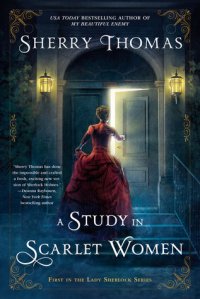 Book: “A Study in Scarlet Women” by Sherry Thomas
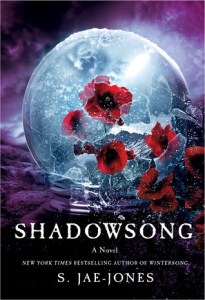 Book: “Shadowsong” by S. Jae-Jones
 Animorphs 22.5: “The Hork-Bajir Chronicles” by K.A. Applegate
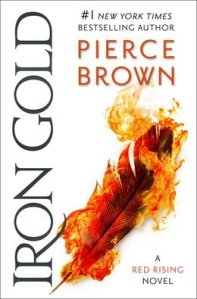 Book: “Iron Gold” by Pierce Brown
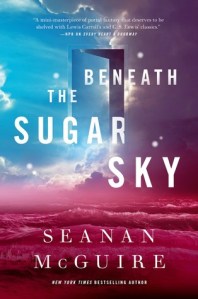 Book: “Beneath the Sugar Sky” by Seanan McGuire
 Book: “The Hazel Wood” by Melissa Albert
 Animorphs #22: “The Solution” by K.A. Applegate

 Book: “Strange the Dreamer” by Laini Taylor
 Pick Number 5: “City of Blades” by Robert Jackson Bennett
 Pick Number 4: “City of Brass” by S. A. Chakraborty
 Pick Number 3: “The Broken Earth” trilogy by N. K. Jemisin
 Pick Number 2: “The Bear and the Nightingale” & “The Girl in the Tower” by Katherine Arden
 Pick Number 1: “Shades of Magic” trilogy by V. E. Schwab
 The Library Ladies