Book Description:Greta Helsing inherited the family’s highly specialized, and highly peculiar, medical practice. In her consulting rooms, Dr. Helsing treats the undead for a host of ills – vocal strain in banshees, arthritis in barrow-wights, and entropy in mummies. Although barely making ends meet, this is just the quiet, supernatural-adjacent life Greta’s been groomed for since childhood.
Until a sect of murderous monks emerges, killing human and undead Londoners alike. As terror takes hold of the city, Greta must use her unusual skills to stop the cult if she hopes to save her practice, and her life.
Review: First off, thanks to Orbit for providing me with an ARC of this book in exchange for a review! I read the description for it, and was pretty much like “Yep, gotta read that!” As a lover of urban fantasy, it’s been a distressing few years recently. Many of my favorite series (“Mercy Thompson” and “Kate Daniels”) are beginning to show their age and are likely (perhaps hopefully) going to wrap up soon. Beyond these, many of my other forays into the genre have yielded middling returns. Either these books stray too closely to tropes already well-established in staple series in the genre to trigger any sense of originality and interest, or…they’re just kind of bland? Not so with “Strange Practice!” Shaw has expertly introduced a new leading lady with a unique perspective on her urban fantasy world and lifestyle, and I was digging it the entire way.
Greta Helsing is a doctor for the strange and unusual, the monstrous and the arcane. It is a family practice after her family decided to turn away from the hunting business and re-focus in on the helping side of things. Right here we have such a unique take on urban fantasy that I was immediately completely sold on. Not only is Greta a great character on her own, but her perspective as a doctor presented readers with an entirely new lens through which to view the supernatural world. How do mummies get by with their rotting bodies? What about sunburns for vampires? Do any of these creatures suffer from mental illnesses? Cuz living forever could have some major psychological implications. Not only was there a plethora of creativity in this area, but Greta remained true to this focus throughout the story, even when the evil monks showed up and the action really got started.
A big frustration of mine with urban fantasy is when the heroes or heroines sillyly jump beyond their own abilities, somehow thinking (and for plot convenience, accurately thinking) that they can play on the same field as magical beings who have million times the magical power as they. Suddenly the author is forced to create loop hole after loop hole to keep their protagonist up and moving instead of simply being hand-swiped away in the first minute. With this in mind, it was refreshing that Greta’s entire perspective on her situation was always rooted firmly in her position as a doctor. Even more so, in that she realizes the unique service she provides to her clients and understands the importance of staying safe, not only for her own sake, but for those who would suffer without access to medical care. As I said, refreshing, and when she does end up in the action (cuz of course, she must), she plays a believable, yet important, role. See?! It is possible to keep your heroine grounded while also staying true to the action of your story!!
Beyond Greta, I was surprised to discover that we had several other point of view characters as well. I always wish there was some way for these book descriptions to hint at this possibility, as it always feels like a bit of a side-swipe to be set up as if the book is from one protagonist’s point of view, and then end up with a handful of others. But alas. With this story, it is of no matter since I thoroughly enjoyed the perspectives these other creatures brought. We had a vampire and a vampyre (the distinction having to do with the type of blood they require), a demon, and even a few chapters from the viewpoint of the nefarious schemers. There was quite a lot of unique world-building and monster “history” that was brought in with all of these characters, and the many other supernatural beings who made appearances.
I particularly liked the tone of the story. Dark, witty, and full of literary allusions that were great fun to spot. There as a nice balance struck between the horror aspects and the vampire-friendship-fluff. On one page there would be murder and mayhem, and on the next, a vampire shopping spree! And never once does the story get swept away by its own concept. It would have been all too easy for the humor of the story to have veered into the silly, but Shaw walks the perfect line. Lastly, the setting of London for this story gave it an extra dash of depth, as, like the city itself, the timeless aspects of these creatures that are steeped in history and meaning must now adapt to exist alongside the speed and change of the modern world.
If you enjoy urban fantasy, and are hankering for a new series to follow, I can’t recommend enough that you check out “Strange Practice!”
Rating 9: An excellent new entry into what was beginning to feel like a tired genre.
Publishing Info: G.P. Putnam’s Sons Books for Young Readers, May 2016
Where Did I Get this Book: e-ARC from NetGalley!
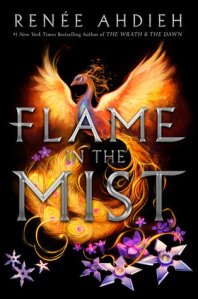
Book Description:The only daughter of a prominent samurai, Mariko has always known she’d been raised for one purpose and one purpose only: to marry. Never mind her cunning, which rivals that of her twin brother, Kenshin, or her skills as an accomplished alchemist. Since Mariko was not born a boy, her fate was sealed the moment she drew her first breath.
So, at just seventeen years old, Mariko is sent to the imperial palace to meet her betrothed, a man she did not choose, for the very first time. But the journey is cut short when Mariko’s convoy is viciously attacked by the Black Clan, a dangerous group of bandits who’ve been hired to kill Mariko before she reaches the palace.
The lone survivor, Mariko narrowly escapes to the woods, where she plots her revenge. Dressed as a peasant boy, she sets out to infiltrate the Black Clan and hunt down those responsible for the target on her back. Once she’s within their ranks, though, Mariko finds for the first time she’s appreciated for her intellect and abilities. She even finds herself falling in love—a love that will force her to question everything she’s ever known about her family, her purpose, and her deepest desires.
Review: Right off the bat, there were several things going for this book when I first saw that it was coming out. First and foremost, I had very much liked Abdieh’s previous YA fantasy duology, a re-telling of “One Thousand and One Nights, “The Wrath and the Dawn” and “The Rose and the Dagger.” Together they made up a unique re-telling of one of the few remaining fairytales that hasn’t been beaten into the ground (this coming from an avid fan of fairytale re-tellings), and the style of writing appealed to me with its lyrical quality. “Flame in the Mist” had the same elements. To its detriment.
I want to applaud the author, however, for sticking to her guns in choosing lesser known stories and focusing her world-building and characters on non-European/western settings and cultures. Here we have what is essentially a “Mulan” re-telling set in a proto-Asian setting. I don’t have a wealth of knowledge of Chinese/Japanese/etc cultures, so I can’t speak to those aspects of the book (similar to my lack of knowledge of the “realism” of the Middle Eastern setting used in her previous duology). However, both that series and this are set in fantasy worlds, for all their similarities, so outside of blatant issues (which there were none that I could tell), there was a lot of free reign to build a completely new world order/culture with this story. This was one aspect of the story that I really enjoyed. It was refreshing to read a fantasy story that takes place in an eastern setting. This left not only the fantasy elements to learn and to explore, but also the immersive quality of being quite outside my own culture, while still having threads to tie back to what little I do already know of the regions of the world that this story draws from. Full marks for world building.
Unfortunately, that leads me to the rest of the story, all of which I had more issues with. First off, I feel that, as a reader, I would have been better served having this book not presented to me as a “Mulan” re-telling. For better or worse, my knowledge of that story is pretty well tied up with the Disney version. I know the story is based on a traditional Chinese fairytale of a young woman who dresses and fights as a man, but I haven’t read it and couldn’t even speak to the accuracy of Mulan. So…Disney’s all I’ve got with this one. And as far as this book goes I got far too little of this:
And far too much of this:
One of the things that made Disney!Mulan’s story appealing were the noble and, most importantly in this case, understandable reasons for why she does what she does. Her hand is quite literally forced, for love of her father and nothing more. Sure, she feels out of place in her own skin and that she is letting her family down, but she never contemplates abandoning home until the situation with her father being called to war comes to play. Not so with Mariko.
For all intents and purposes, Mariko is quite acceptable as a daughter. Sure she’s frustrated and angered by the fact that she is being traded away in marriage, but alas, such is the life she was born to lead. In the short introduction we are given to her character before the action sets in, we are given every reason to think that Mariko is above all a practical and dutiful daughter. These are traits she prides herself in. But then her caravan is attacked, her guards and maid killed, and she finds herself wandering around in the woods alone. And this is where I first knew there were going to be issues for me with this book. Mariko rightly worries that her situation is going to be problematic for her family to explain; when/if she returns home, her virtue could be called into question due to this, and through this, her family’s honor. What is to be done? Obviously, running away, disguising herself as a boy, and tracking down those who attacked her so that she can save her virtue. Somehow.
I’m a fantasy reader, I’m more than happy to turn my brain off and go on many an adventure where implausible things happen. But only so far as the world allows. This type of blatant, plot-serving faulty logic drives me bonkers. How in the world could dressing up as a boy and hanging out with a bunch of (male!) thieves improve her chances of retaining her family’s honor and her own virtue? Nothing about it makes sense. And unfortunately, this type of backwards thinking continues for Mariko throughout the story. She sometimes even made the right decision, but made it for such the wrong reason that I couldn’t even give her credit for it.
Beyond this, I’ve found that in this, the third book I’ve read by this author, the writing is starting to get on my nerves. What came off as lyrical and appropriate in the previous duology, read as strained and forced here. Perhaps the focus on storytelling that was at the center of the other two books simply lent itself better to this type of writing, and now, removed from that topic, it simply felt awkward. It’s hard to even describe, really, as sentence-by-sentence there’s nothing wrong with the writing. But as I kept reading, it just kind of built up as an annoyance, and enough of one that I repeatedly found myself putting the book down.
“The Flame in the Mist” was not for me. I could never get behind Mariko as a main character with her blatantly contradictory thought process and decision making, and the more dramatic and lyrical writing style seemed to rub uncomfortably with this more action-oriented tale. For those looking for a good woman/warrior story, pull out the classic “Alanna” series instead. Or, hey, check out the “Bloodbond” series that I recently finished up and loved.
Rating 4: My expectations were too high for this wanna-be-Mulan story.
Where Did I Get this Book: audiobook from the library!
Book Description:Julia has the unusual ability to be . . . unseen. Not invisible, exactly. Just beyond most people’s senses.
It’s a dangerous trait in a city that has banned all forms of magic and drowns witches in public Cleansings. But it’s a useful trait for a thief and a spy. And Julia has learned–crime pays.
Her latest job is paying very well indeed. Julia is posing as a housemaid in the grand house of Mrs. Och, where an odd assortment of characters live and work: A disgraced professor who sends her to fetch parcels containing bullets, spiders, and poison. An aristocratic houseguest who is locked in the basement each night. And a mysterious young woman who is clearly in hiding–though from what or whom?
Worse, Julia suspects that there’s a connection between these people and the killer leaving a trail of bodies across the frozen city.
The more she learns, the more she wants to be done with this unnatural job. To go back to the safety of her friends and fellow thieves. But Julia is entangled in a struggle between forces more powerful than she’d ever imagined. Escape will come at a terrible price.
Review: This book is a strange combination of a million and one elements that shouldn’t work together, but somehow, do! We’ve got an “Ocean’s Eleven” style thieves guild, essentially, operating in a world that is similar to our own, but at an undefined period of time (there are carriages, but also “electric” carriages, people use swords, but there are also muskets, at one point they use an elevator in a building, but they also sail their boats…), There is an inquisition-style hunt going on for witches, but there are also other magical beings that are thought only to exist in folklore. And in the middle of the story we’re presented with an entire new level of world-building with the introduction of a new set of beings with a god-like relation to history and current events.
Throughout this all, what holds things together is Julia, her narrative style and individual character arc. Julia, and her brother Dek (the spelling of character names/places is always confusing when you listen to an audiobook and never see the name spelled out! Ah, the challenges of book reviews!), are the orphaned children of a father who drank and then abandoned what remained of his family when their mother is convicted and executed as a witch. They are taken in by Esme, a woman who runs a successful thieves underground system, and grow up working jobs for this new family. Which all leads to the current circumstance that places Julia, requested by the client for her unique ability to go “unseen” by others when she chooses, as a spy in the household of Mrs. Och and thus caught up in complicated mystery that surrounds the young woman and her toddler son who are taking refuge there.
Julia’s growth through the story was one of its strongest appeals. Not only does she not understand her own abilities, especially when she discovers there is more to them then simply becoming invisible for a bit, but her own world views, and her understanding of her place in it, are consistently challenged. I particularly enjoyed the parallel that is drawn between Julia and another character, Pia, and the example they each set for the consequences that come from making the choices we do in life. Julia, at first, has a very pragmatic approach to her life and her work. She does the job, she gets paid. And this is a comfortable arrangement, allowing her to morally set herself back from her own actions. But when this approach comes to a head in the middle of the book, Julia must question her own definition of “living.”
While Julia’s is obviously the main arc of the story, I also appreciated the other views into poverty and the choices that are available to those struggling to get by that are presented by the other characters. Her brother, Dek, is a talented inventor, but due to their status as orphans and thieves, and his own deformities from a childhood illness, he worries about every being financially compensated if he came forward in an attempt to sell his goods. Another character, Wyn, hopes to be an artist, but struggles to get his foot in the door with an apprenticeship or a place in an art program. Again and again, we see these characters have doors shut in their faces and can understand the comfort that comes from the stability found in their role in this thieves guild, even if the work itself is morally questionable.
As for the story itself and the world-building, I was very surprised when about halfway through the book the plot suddenly expanded massively to include world-changing characters and events. Before it had been a rather simple murder mystery with a strange monster and a mysterious woman with a past. Suddenly these were all small pieces in a much larger moving plot machine. While I liked these expanded elements, they did seem to come out of the blue, forcing the entire story to shift completely, resolving some of the initial elements suddenly in the middle of the story while introducing new ones at the same time. It almost felt like two completely different books. I think this was simply a matter of pacing and of a few info-dumpy passages that were overwhelming. Ultimately, things did become clear, but there was a bit in the middle where I was honestly confused about who was after who and why.
The story does resolve itself for the most part in this book, however the door is clearly left open for sequels. Now that the cards are shown, per se, about the grander conflict going on in the series, I have hopes that any future books would be more settled in their own skin with what story they are wanting to tell. I was also given just enough of Julia’s abilities and origins to keep me coming back for the second book to find more answers alongside her. “Julia Defiant” will be up shortly, I suspect!
Rating 7: A great main character and interesting new world. But it felt like two books mashed together at times, with one focused on a simple monster story and the other setting up larger-than-life characters and plots.
Publishing Info: Scholastic Paperbacks, November 1997
Where Did I Get this Book: own it!
Book Description:Rachel’s got some pretty strange stuff happening. She can’t control her morphing. One minute, she’s doing homework. The next, she’s morphing a full-grown crocodile, and — without returning to human form — she becomes an elephant. That’s when the floor gives way and Rachel finds herself looking up at what used to be the kitchen ceiling.
What’s going on? No one’s sure, but Rachel and the other Animorphs have to figure it out — quickly. Because if someone sees Rachel’s out-of-control morphing, the other Animorphs and Ax are in some serious trouble…
Narrator: Rachel
Plot: The story starts out in typical Rachel-fashion: jumping into a crocodile pit at the zoo! To be fair, she does it to save a small boy who has fallen in, and this is exactly what she tells Jake when he rants at her later at Cassie’s farm about “exposing them all” when the “friendly crocodile” gave the kid a ride out and drew notice. And in a book full of Rachel making really rash decisions, this one is pretty understandable! Pretty sure they all would have done it, but Rachel has a history of rashness (morphing elephant at both a used car lot and at the zoo, to make animal rights points), so the hammer always seems to come down on her a bit more for this type of stuff.
All of it seems to be mostly put to bed, until Rachel gets home and suddenly, unwillingly, starts morphing elephant in her own room. This, unsurprisingly, brings down the house and she is only just able to get control of herself and morph back before her sisters and mom show up. Between this and the crocodile escapade (people thought she also fell in), she gets quite a lot of local news attention. Rachel, being Rachel, decides that this is just some strange one-off and keeps the whole weird morphing to herself.
The main plot of the story gets tied in when the Animorphs discover that the Yeerks are quite interested in a certain teenage boy actor, one Jeremy Jason McCole. So, I haven’t talked much about the dated aspects of the book, because for the most part they’re just random mentions of VCRs and such, but this is a big one. Teenage super stars are no thing specific to any decade. I mean, we have Beiber and the Jonas Brothers and all that, now-ish. But this one’s pretty hilarious for anyone who grew up in the 90s, as it is a clear and direct reference to Jonathan Taylor Thomas. I mean, you’ve got the name with the rhyming ring to it, and past that, they even discuss the show he is on which has to do with family and, you guessed it, construction. This is such a direct and obvious call out that I couldn’t help but laugh out loud every time I read about it. Which was a lot, since it was the main focus of the story. So, sure, this will read fine to new readers picking up the books today, but without the 90s memories of “Home Improvement” and the JTT madness, much of the humor of this will be lost. But I got it all! And love it.
Jeremy Jason, for all intents and purposes.
Anyways, Cassie and Rachel are the only ones who truly understand how bad it would be if Jeremy Jason was to be made a Controller and started promoting The Sharing. After they very strictly made this point to poor, clueless Jake and Marco (while throwing in the fact that boy, wouldn’t it be fun to scout out this situation anyways!), the team decide to morph seagulls, fly out to Jeremy’s yacht (cuz of course he has a yacht), and see what’s what. Turns out that Visser Three himself is there wooing Jeremy Jason to become a willing Controller. Much of the love for Jeremy Jason is thus instantly evaporated for poor Rachel and Cassie.
With perfect timing, Rachel’s morphing issue strikes again and she falls from the air, somehow morphing directly from seagull to other animals (luckily, conveniently, so that the Controllers don’t find out they’re all human). After escaping from another of Visser Three’s freaky morphs (some type of javelin-throwing sea creature that Rachel is able to “pop” by biting it in her croc morph), Rachel’s little problem is outed. Ax, of course, knows a bit about it and it turns out that Rachel is allergic to crocodiles, and will continue to have this morphing issue until she somehow mysteriously “expels” the DNA.
Now knowing that the Jeremy Jason thing is a serious problem, Rachel decides to take advantage of her moment of stardom as “disaster girl” and get on the same local TV program that will be featuring Jeremy Jason. They will then…somehow stop him from promoting The Sharing?? To do this, however, she lies to her friends and says that the whole allergy thing was taken care of, DNA expelled, she’s ready to go.
So, of course, while they’re all at the TV studio, Rachel’s croc problem goes live and she begins growing a crocodile out of her back (apparently what Ax meant by “expel DNA” was grow a full, live crocodile out of oneself that will detach and then just…be there). This leads to much mania and confusion (Marco morphs a llama, Cassie morphs Rachel, a wild croc is loose), and they are only saved from complete discovery by the fact that there also happened to be a zoologist scheduled for the show and the wild animals running everywhere are thought to be his. Through this all, the Yeerk (bizarrely) decides to bail out of Jeremy Jason, and Rachel steps on it accidentally. Jeremy Jason than flees to Asia after deciding that this whole Controller thing wasn’t quite what it was cracked up to be. The end!
Xena, Warriar Princess: Rachel’s strengths and weaknesses are fully shown in this book. Like a wounded animal, she doesn’t like to let others see when she’s hurting or confused, which leads to much of the craziness from her not asking for help with her morphing issue right away. Later, when she also lies about having expelled the DNA, we see another example of her hiding things from the others. This time, however, we can also see that this is tied up with the fact that she understands her role in the group. She’s the brave one, the one who often helps push the others into action, and to do what they hesitate to do. She, partly rightly I think, worries that without her, the others would struggle with this, and many, missions.
She’s also incredibly brave. When Visser Three is coming after them in the ocean, she plays dead and attacks him when he gets close, giving the others time to flee. She often puts herself in these roles where her own survival is called into question to save her friends.
The other notable feature of this book was the direct tie between her reaction to her croc allergy and her ability to keep control of her emotions, specifically anger. I know that this is a recurring theme in the Rachel books: her anger is what makes her powerful and brave, but it can also really hurt her. Some of the later books get quite silly with this, I think, almost jumping the shark with her character. But this was a good look at this issue as it begins to play a bigger role in Rachel’s character and arc throughout the series.
Our Fearless Leader:Poor, poor Jake. After the last book which focused on the tough realities of being a leader, here we have this one where the poor guy has to deal with crazies like Rachel who just go ahead and don’t tell the whole group relevant information that then leads to even worse scenarios, that he then has to make a call on, mid-mission. All cuz of Rachel’s bad decision making.
<No, it’s much better to find out this way, Rachel. You know – when you
could get us all killed,> Jake said.
Other than this, it was funny reading about Jake and Marco’s endless discomfort with the girls’ infatuation with Jeremy Jason McCole. When they first decide to scout out the yacht more closely, this is Jake’s original plan:
<Marco and I will go in close, land on the boat like any ordinary
seagulls, see what we overhear,> Jake went on. <Rachel and Cassie, you
can be backup. Stay ->
<Yeah, right,> I jeered. <You and Marco go. Me and Cassie stay away.
Yeah, that’s really going to happen. Come on, Cassie, we’re going in.>
A Hawk’s Life: Was Tobias even in this book?? Thank god his book is coming up next and SPOILER this problem gets mostly solved. But not too solved, gotta keep a hold on the massive corner of the teenage tragedy market that is Tobias’s life.
Peace, Love, and Animals: Why Cassie?! Why are you such a fun character in Rachel books, but then become the most stick-ish of sticks in the mud during your own books?? It drives me nuts. Cassie was actually a blast in this book, and her friendship with Rachel is definitely me favorite platonic relationship (others being Marco/Jake and Tobias/Ax). They had a lot of good moments just being girls about Jeremy Jason, and it was fun to read. Cassie was also quick to always correct any mistaken identification of the crocodile as an alligator, too, thus fulfilling her “animal facts” quota for the book.
A fun example of their thoughts on the boys’ reaction to Jeremy Jason:
<It’s so sad to hear so much jealousy, don’t you agree, Cassie?>
<It is sad, Rachel. Terribly sad.>
<This is the worst mission we’ve ever been on,> Marco said.
The Comic Relief: Marco gets some good comedic moments in this one (what’s new), when he decides to abandon Jake with the whole “morph a bug” plan while scouting out the TV studio and just morph a convenient llama that was wandering around from the zoologist’s program. I mean, any excuse not to go bug, ammiright? Lots of quips about llama fur and llama spit and llama behavior ensued and it was great. Most impressive, however, was when things went south with the now-detached croc, Marco, in llama morph, did a mad rush at it. For all of his comedy moments, Marco is one of the bravest members of the group and my love for him only grows! He also has a fun moment in the end of the book with Rachel and some more “Xena” nods.
E.T./Ax Phone Home: Ax, too, plays a significant role in handling the loose croc situation and essentially takes it out of play all on his own. Rachel makes some pretty clear comments about how she’s been impressed by Ax in the past, but this moment really highlighted the strength and speed of Andalites, raising him to a new level in her eyes.
Best (?) Body Horror Moment: Hands down, the “expelling” of the crocodile DNA. I mean, there were pages and pages of descriptions of the very slow process that was the crocodile growing its way out of Rachel’s back and finally dropping off, fully formed. I mean, just think about that whole experience. Or, better yet, don’t.
Couples Watch!: Man, for a book told from the perspective of one of the four characters involved in a couple-ish situation, there was very little to go on here! Maybe a few private asides from Tobias, but we got zero, ZERO, bedroom visits by hawk!Tobias, something that I remember clearly associating with this couple and as happening fairly often in their books. But nope! Nothing! Very disappointing. But the next book is his, so hopefully we’ll see an improvement there. For this book, I just had to fall back on my secondary Marco/Rachel fixation.
If Only Visser Three had Mustache to Twirl: It was strange having Visser Three sucking up to Jeremy Jason McCole, essentially. Didn’t really seem like his usual style of “do first, ask never.” I guess the idea was to highlight how much easier it is on the Yeerks, especially the one controlling someone, if the host is willing? But still, there are more than enough examples of forced-Controllers and in a situation like this where this one, very specific person is needed, it seems like Visser Three wouldn’t have given a hoot what the potential host wanted. But at least he had a relevant morph for chasing the Animorphs again! The javelin-shooting beast (Ax wasn’t paying attention in school to know all about it. Typical.) was a pretty good adversary, all told. Except for that “burst balloon” action there at the end.
The fact that they Yeerks then just let Jeremy Jason run off to Asia to hide also seems highly unlikely. I guess they figured that he wasn’t likely to say anything about it without sounding like a crazy person. But why not just re-capture him and go on with the original plan of using him as a spokesperson for The Sharing?
Adult Ugly Crying at a Middle Grade Book: This didn’t have a whole lot in the “feels” department. It was a pretty wacky story, bookended by an even wackier morphing allergy. Even the side plot with Rachel’s family seemed fine. It’s clear that she still has a good relationship with her father, and the brief moments with her sisters, especially her fear that they may have been hurt when the house collapses, were nice. All in all, just a kind of fun adventure!
What a Terrible Plan, Guys!: I mean, I’m pretty sure Rachel just straight up admits that they have no plan whatsoever when it comes to trying to mess up the Jeremy Jason TV spot. Beyond the lack of plan there, Rachel herself knows there is even less of a plan since she was the only one who know that the crocodile allergy hadn’t exactly been taken care of. All of the luck, all of the time!
Favorite Quote:
Rachel sums up her own character:
But the thing about fear is you can’t be afraid of it. I know that sounds confusing. I guess what I mean is, be afraid if you have to, right? Fear is like this vicious little worm that lives inside you and eats you alive. You have to fight it. You have to know it’s there. You have to accept that you’ll never get rid of it, but fight it just the same. Brave isn’t about not being afraid. It’s about being scared to death and still not giving in.
Scorecard: Yeerks 3, Animorphs 5
No points awarded! I guess the Animorphs technically pulled off their plan of stopping Jeremy Jason from being taken. But really, if I was going to award points for their success in that, it would be 1 point for the crocodile.
Rating: Pretty good! Lacking in much sustenance, but a fun read none the less. I can excuse wackiness when it leads to a fun story. But when wackiness is combined with dramatic nonsense *cough”The Secret”cough*…
Note: I’m not going to rate these books since I can’t be objective at all! But I’ll give a one sentence conclusion and you can take from that what you will!
Publication Info: Simon and Schuster, December 2013
Where Did I Get this Book: audiobook from the library!
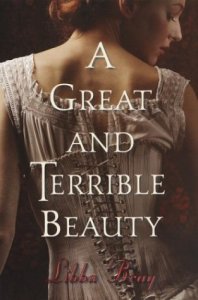
Book Description:A Victorian boarding school story, a Gothic mansion mystery, a gossipy romp about a clique of girlfriends, and a dark other-worldly fantasy—jumble them all together and you have this complicated and unusual first novel.
Sixteen-year-old Gemma has had an unconventional upbringing in India, until the day she foresees her mother’s death in a black, swirling vision that turns out to be true. Sent back to England, she is enrolled at Spence, a girls’ academy with a mysterious burned-out East Wing. There Gemma is snubbed by powerful Felicity, beautiful Pippa, and even her own dumpy roommate Ann, until she blackmails herself and Ann into the treacherous clique. Gemma is distressed to find that she has been followed from India by Kartik, a beautiful young man who warns her to fight off the visions. Nevertheless, they continue, and one night she is led by a child-spirit to find a diary that reveals the secrets of a mystical Order. The clique soon finds a way to accompany Gemma to the other-world realms of her visions “for a bit of fun” and to taste the power they will never have as Victorian wives, but they discover that the delights of the realms are overwhelmed by a menace they cannot control. Gemma is left with the knowledge that her role as the link between worlds leaves her with a mission to seek out the “others” and rebuild the Order.
Review: You may be wondering…a book about snarky popular girls? Why is Serena reviewing this and not Kate, the keeper of snarky girls’ clubs? Well, after I started this book, I found out that Kate did in fact read this book before we started this blog, and I’m now just playing catch up. But, in many ways, this book also sounded like something that would be up my alley. I love historical books, and especially those that fall into the very specific “fantasy of manners” category that often mixes Regency/Victorian fiction with magical worlds and systems. So, while the snarky girls did get on my nerves at points, these other elements that are more typical of my usual reading wares were definitely working in its favor.
The story starts out with us meeting Gemma, a spoiled and rather bratty teenage girl living in India with her parents and dreaming of London. After tragedy strikes and her mother dies in the midst of some strange dark magic, Gemma finds her “dreams” coming true, but not in the ways she would expect. Yes, she’s now in England. But being the new girl isn’t all that she thought it would be, and not only is she set apart by this status, but she’s hiding a dark secret of her burgeoning magical abilities. All too quickly, things begin to spiral out of control and now Gemma needs to not only manage learning her own powers, but finding a way to keep her new friends safe in the process.
While I found myself wanting to smack each of these girls up side the head at one point or another, I loved the clear-eyed look at the harsh realities that were forced upon Victorian young ladies. Each girl has her own struggles to overcome. The beauty who is being essentially sold to the highest bidder in a marriage of convenience. The powerful, popular girl whose charm and magnetic personality allows her to reign over the school but whose control over her self and her decisions doesn’t translate to a life where she has been abandoned by her mother and ignored by her father. The orphan, attending school on a scholarship and whose dreams of beauty and singing are being squashed beneath the realities of an almost unavoidable future as a governess. And Gemma, herself, who is being told again and again by the men around her to keep her head down, be a good girl, and definitely don’t learn anything more about her own magical abilities.
Each of these girls was distinct, and each responded differently to the sudden power and freedom they discover in Gemma’s abilities and the mystical Order, a group of magical women that existed for centuries before coming to a mysterious and tragic end a few decades ago. I loved the slow reveal of the Order and the truth behind the girls who had been at the center of its downfall. There were plenty of surprises, and some that, while I was able to guess the result, were just as delicious in the telling.
I was pretty much picturing scenes from “Practical Magic” throughout this entire book. (source)
My few qualms with the story are purely personal preference. There’s a reason why Kate is the queen of the snarky girls groups and I’m not. At various points in the story, but especially towards the last third, I would get increasingly frustrated with the nonsense of these girls. While the tenuous balance of their friendships read as true of teenage girls, even if I found it annoying at times, it was the complete lack of thought that went into some of their actions towards the end that really got to me. The author did a good job of building up the desperation, frustration, and fear of the future that drove these actions, but I still had a hard time with the complete idiocy that made up some of these decisions, given the information they had about past events. However, this last third was saved by some good action sequences, and a realistic bout of consequences for everything that occurred.
My last point will be that there was the seemingly required romance sub plot in this story. And when I say sub plot, I mean sub sub plot. It was barely there to the point that whenever it was referenced, it almost felt like it was coming out of the blue. The boy in question was rarely involved in the action of the story, would be absent for large chunks of time, and really had no relationship building with Gemma, leaving any feelings she had for him based purely on physical appearance. Luckily, the relationship doesn’t develop much, which felt on par with the above mentioned limitations, but I was left wondering whether it needed to be included at all. I’m guessing that more will come of this in the next few books, which may, in retrospect, make this element read better a second go-around.
All in all, I very much enjoyed this book. I loved the setting of a Victorian boarding school, with the strict boundaries set before these girls as the force upon which the freedoms and power of the magical elements worked against. While I can only hope that in future books the girls wisen up a bit, and maybe snap at each other a bit less, I’m definitely interested enough to continue with the series.
Rating 8: While my tolerance for bratty girls may be rather low, I still loved the magic and the Victorian setting.
Book Description:Pyrre Lakatur doesn’t like the word skullsworn. It fails to capture the faith and grace, the peace and beauty of her devotion to the God of Death. She is not, to her mind, an assassin, not a murderer–she is a priestess. At least, she will be a priestess if she manages to pass her final trial.
The problem isn’t the killing. Pyrre has been killing and training to kill, studying with some of the most deadly men and women in the world, since she was eight. The problem, strangely, is love. To pass her Trial, Pyrre has ten days to kill the ten people enumerated in an ancient song, including “the one you love / who will not come again.”
Pyrre is not sure she’s ever been in love. If she were a member of a different religious order, a less devoted, disciplined order, she might cheat. The Priests of Ananshael, however, don’t look kindly on cheaters. If Pyrre fails to find someone to love, or fails to kill that someone, they will give her to the god.
Pyrre’s not afraid to die, but she hates to quit, hates to fail, and so, with a month before her trial begins, she returns to the city of her birth, the place where she long ago offered an abusive father to the god and abandoned a battered brother—in the hope of finding love…and ending it on the edge of her sword.
Review: Readers first met Pyrre in Staveley’s debut trilogy, “Chronicle of the Unhewn Throne,” the badass assassin whose religious order, the Skullsworn, worship the deity of death, Anashael. When I heard that he was writing a spin-off (prequel?) that centered around this character’s origin story, essentially, I was a bit skeptical. Sure, Pyrre was great in her supporting role, but she at times came across as unbeatable, and thus having no conflict, and, while we got into a few of the details of her religion in those first books, it also seemed like its seemingly callous philosophy would present a challenge to creating a sympathetic main character. But, lo and behold, this book blew me away, setting all of those concerns to rest and reminding me just how much I’ve been craving good, standalone fantasy fiction.
Death is at the center of the story. And if that sounds morbid, well, Pyrre, and Staveley, have much to say on the subject. We meet Pyrre at the cusp of her journey to become a full priestess of Anashael, wherein she must complete her final trial, killing ten types of individuals all listed in an ancient song of the order. She has a specific number of days to complete this, all overseen by two witnesses, the grumbly, but deadly Kossal, and the bright, complicated Ela. To do this, she returns to her childhood home of Dumbang.
Having already been introduced to this world, I was particularly thrilled with the setting of Dumbang for this story, a confusing maze of swamp, floating islands, and deadly creatures. The culture, history, and city itself all tied neatly into the greater world we are already familiar with, but were so unique that they stood alone as a completely new slice of this world. Reading this story, I could almost feel the heavy presence of this city, its beauty, its mystery, and the foreboding sense that people are treading where they should not. It perfectly mirrors the philosophy that Pyrre and the Skullsworn abide by: that death is inevitable and, in many ways, the most merciful part of life. Not something to be feared, but to be lived alongside.
The story itself is so compelling, mixing action with adventure, comedy with heartbreak, and neatly tying together the pieces of Pyrre’s life to perfectly illustrate how she came to be who she is and how she will continue to grow into the woman we meet in later stories. Kossal and Ela are great characters off whom Pyrre bounces, challenging her, and the reader, to expand her thinking on what it means to worship Anashael and to live a full life. Ela, specifically, was brilliant, jumping off the page and stealing every scene she was in. At first I was concerned that she was going to fall into a fairly established character type, all smooth sexuality and arrogant charm. But as the story continued, I began to have greater and greater hopes for her as a character and her ultimate role in the story. All of which were ultimately met, much to my joy and relief.
Bizarrely, Run Lan Lac, the man who Pyrre seeks out with the goal to love and to kill, was one of the weaker characters for me. But, given the overall commentary on love and death, upon further reflection, I’ve almost come to feel that this might have been intentional? He plays his role, and I was glad to see that his character remained true throughout all the revelations of the story.
Towards the end, the plot takes a massive leap out into the greater mythology of the world. And, while I have read the original trilogy which lent these reveals some interesting added perspectives, the story itself remained contained within its own pages, and I feel that it is still approachable for new readers even with this more expansive later plotline.
I can’t say enough about the strength of Staveley’s writing. As I said earlier, there were so many challenges he gave himself with the premise of this story. A main character who worships death and kills people with few qualms who must be made into a sympathetic and appealing leading lady. A new setting with a complex history that must still fit within the constraints of a previously built world. Multiple religions with a variety of gods, some familiar from previous books, some new. All while trying to create a standalone novel that is approachable to new readers, but also familiar and appropriately laying the groundwork for a character known to readers of the original series. He not only does all of this, but the book was laugh-out-loud funny at parts and had me on the brink of tears at others. Staveley is quickly climbing the ranks of “must read” fantasy authors.
Rating 9: The epitome of setting tough writing goals and then blowing them all out of the water!
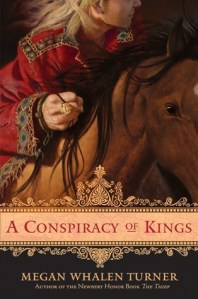
Book: “A Conspiracy of Kings” by Megan Whalen Turner
Publishing Info: Greenwillow Books/HarperCollins Publishers, March 2010
Where Did I Get this Book: audiobook from the library!
Book Description:Sophos, under the guidance of yet another tutor, practices his swordplay and strategizes escape scenarios should his father’s villa come under attack. How would he save his mother? His sisters? Himself? Could he reach the horses in time? Where would he go? But nothing prepares him for the day armed men, silent as thieves, swarm the villa courtyard ready to kill, to capture, to kidnap. Sophos, the heir to the throne of Sounis, disappears without a trace.
In Attolia, Eugenides, the new and unlikely king, has never stopped wondering what happened to Sophos. Nor has the Queen of Eddis. They send spies. They pay informants. They appeal to the gods. But as time goes by, it becomes less and less certain that they will ever see their friend alive again.
Across the small peninsula battles are fought, bribes are offered, and conspiracies are set in motion. Darkening the horizon, the Mede Empire threatens, always, from across the sea. And Sophos, anonymous and alone, bides his time. Sophos, drawing on his memories of Gen, Pol, the Magus and Eddis, sets out on an adventure that will change all of their lives forever.
Review: After blazing through the first three books in this series last fall, I decided I needed to pump the brakes so I could stand the wait until the fifth book’s publication this spring. Delayed gratification and all of that. But by now the next book has dropped, I’m on the waiting list at my library, and it’s time to finally catch up with the last book in the series to this point.
One thing that I have commented about in all of the previous books in this series, is the way the author plays where her narrator and narrative method. For a series that has such a strong character as Gen, it’s a brave choice to focus the story on periphery characters and leave your star player benched, essentially, for large chunks of the story. Here, she takes an even bolder risk by throwing the story into the hands of Sophos, a character who played a large role in the plot of the first book “The Thief” but has been entirely absent, apart from random asides, throughout the rest of the series. He was an interesting enough character there, but it is always hard to tell how truly compelling any character is on their own when they’re working of the character of Gen who seems to draw out the best parts of many characters. So if you’d asked me whether I was interested in an entire book seen through his eyes and regarding his struggles with family and kingship, I’d probably have been like “…meh?” But, as usual, I should never have doubted!
One of the few things I remembered about Sophos as a character was his crippling insecurity. Here, after the events of “The Thief” and back in his home country under a new tutor, we can see why he struggles with this. His father is completely disappointed in him as a son and heir and never misses an opportunity to rub this fact in. So in many ways this is a story of self-discovery and self-confidence, all wrapped beneath an action packed plot. After Sophos’ family is attacked and he is sold into slavery, he finds himself completely alone in the world, and, for the first time, anonymous. How can he escape his current situation and re-claim his throne? And, more importantly, does he even want to?
As I mentioned earlier, Whalen Turned doesn’t just change up narrators between books, but she also changes the way she tells the story. Here, very early on, it is clear that Sophos is relating his experience to a listener, but it is not clear who that listener was. This plot device was both interesting and endlessly frustrating as I kept coming up with guesses for who he was talking to and the purpose of telling the story the way he was.
I don’t think it’s a spoiler to say that yes, he eventually does meet up with Gen, Attolia, and, most importantly Eddis again. As leaders of their own countries, each are valuable allies for the displaced Sophos. But much has happened since he last left them, most importantly the upstart theif Gen is now King of Attolia. And Eddis…he’s not quite sure where he stands with her. I loved seeing all of these characters through the eyes of Sophos who has been gone for much of the series and missed the progression of change that we the readers have had time to come to terms with. Further, all three rulers have different approaches to what it means to lead a country and how they go about it. I loved the insights they each provided Sophos as he began to realize the depth of the decisions before him.
The only thing that knocks this book down from a perfect score is the complicated politics of the regions. And I even hesitate to mention it because this aspect of the series is also one that makes it stand out and has been one of the draws for me as a reader. And it still is here. However, there were times when the plans and actions of the characters were confusing to me and I had to re-read portions to fully understand how everyone knew what when. But, like I said, I’d rather things be more complicated than be spoon-fed the plot, so take this “criticism” how you will.
Surprising no one, I loved this book. And surprising no one, all the doubts I had going in where laid fully to rest. I will now go back to obsessively refreshing my library hold account page to see if the line of people before me is dwindling for the next book “Thick as Thieves.”
Publishing Info: Scholastic Paperbacks, October 1997
Where Did I Get this Book: own it!
Book Description:There’s been an accident. Someone crashed-landed a Yeerk Bug fighter. And the Yeerks have been trying to cover it up – quickly. But not before Tobias spots it. So the Animorphs and Ax decide to steal the ship to show the world that Earth has been invaded. That’s when things go terribly wrong. Before they know it, Jake, the other Animorphs, and Ax find themselves in another place. Another time. And there’s no way home…
Narrator: Jake
Plot: Jake is having bizarre flashes of scenes involving him and the others in the rain forest of all places. Thinking he’s going insane, he must plow forward in spite of it all as the faithful leader of the group when Tobias notifies them all of a downed Bug fighter being hidden and worked on in an empty strip mall. The Animorphs decide to go check it out and, in a bizarre and rapid-fire sequence of terrible decision making, sneak aboard and fly off with the hopes of landing it at the White House and outing the Yeerk invasion once and for all. Surprising no one, this plan fails and fails big.
Losing control of the ship, they end up in outer space participating in a space battle with the Yeerks’ Blade ship. They cross laser fire and both ships end up damaged and plummet to earth, landing in the Brazilian rain forest. But not only are they now miles and miles from home with a broken space ship and Visser Three and his minions sweeping the forest looking for them, but they realize that they’ve traveled back in time several hours.
Ax, of course, wasn’t paying attention in school that day, but he theorizes that the space battle/laser intersection created a Saario Rip, a break in the space time continuum resulting in there now being two Jakes, two Cassies, etc etc all existing at once in different locations. And if they don’t re-set the whole thing in time, both groups will be wiped out. This portion of the plot was just as confusing as most time travel plotlines are and at a certain point I just threw up my hands and went with it.
Ultimately, the group spends a ridiculous amount of time acquiring jungle morphs (monkeys and jaguars) and generally getting a thorough lesson on why the rain forest is deadly. Rachel (of course it’s Rachel) almost gets eaten alive by a colony of ants. They’re almost poisoned by a variety of frogs and snakes. And they make friends with the local people who aren’t too thrilled with the Hork Bajir and other aliens now wandering around on their turf.
Jake and co. come to the obvious conclusion that they must return to the ship and hope to sneak on and hop a ride with Visser Three back to the U.S. and their own time period. Unfortunately for them, Visser Three seems to be smarter in this time period than he usually is and anticipates this move. He morphs some strange tree tentacle creature (how is that he has all of these super specific morphs ready at hand that seemingly would only work in these exact scenarios?) and captures and eats them all when they show up. Jake’s death then snaps his consciousness back to before they stole the Bug Fighter and he quickly calls off the whole thing, leaving him as the only member of the group remembering any of it.
I still don’t quite understand how Jake is the only one to remember all of this and why any one of the Animorph’s deaths wouldn’t have done the same. Maybe the others who were eaten weren’t dead yet? So Jake technically dies first and then stops the whole thing? I dunno, it was all quite confusing, but a blast anyways! I loved the changed setting of having the story take place in the rain forest, and it was fun seeing Visser Three not be a complete idiot. After the nonsense in Cassie’s book with his reaction to the skunk spray, he had begun to lose some of his fear factor and validity as a legitimate threat, so it was nice to see him back on form, even if it all gets wiped away anyways.
Our Fearless Leader: Jake’s books are always interesting due to his unique position as leader of the group. Through the others’ eyes and narratives, we always hear about how much they all respect and appreciate the fact that he takes on this role. But it’s only through his POV books that we truly understand how crushing this load must be in every single book. This whole story essentially revolved around the types of life and death calls that Jake has to make at every moment and how easily any one decision could go terribly wrong. He’s not operating with any more information than the rest of them, but it’s still up to him to choose whether to risk the safety of the group or of individuals.
At multiple points in this story, Jake has to send individuals into dangerous situations on their own (leaving Ax to retrieve a piece of the Bug fighter while they’re in the rain forest to prevent Visser Three and the rest of the Yeerks from leaving without them, and then later leaving Rachel behind as she struggles to navigate the paths through the forest in her bulky bear morph). Not only does he have to make these decisions, but he has to live with the anger and fear of the others for doing it at all. Tobias is angry that Ax is being left to fend for himself, and the whole group struggles with the close call Rachel has with her bear morph being almost eaten alive by ants.
Towards the end of the book, it is clear that Jake has made all of the wrong decisions that lead to their “deaths.” But, as we’ve seen through his eyes, at the time, he made the best decisions he could, which just makes their ultimate “fate” all the harder for Jake. This book is a good look at how easily things could go wrong for the group, even when making the best decisions they can. And man, poor Jake. He has to be the strongest member of the group to deal with this type of pressure every day.
Xena, Warriar Princess: Other than the horrifying ant scene, there were a few moments with Rachel that I found notable. One was the opening scene which was a comedic little bit where Jake and Rachel are square dancing. It’s always fun when we get moments like this between Jake and Rachel when we’re reminded that they’re related and have a unique relationship to and knowledge of the other. Secondly, Jake has a very astute understanding of Rachel. After she’s almost killed by the ants, Jake notes that whenever she’s scared she reacts by getting mad, and that this anger can often express itself in recklessness. It’s a nice reminder of how completely Jake must know and navigate the different personalities that make up the Animorphs so that he can best lead the group.
A Hawk’s Life: As usual, Tobias is the one that starts off this mission as he has nothing but time to fly around and notice strange things like downed Bug fighters. But, for once, he actually gets to come along on this trip. Obviously a hawk doesn’t do well in the rain forest, especially not a rain forest full of Controllers who are on the look out for animals that don’t belong. Jake also notes that an extra challenge with Tobias is that hawks don’t deal with hunger as well as humans, so Tobias’ situation is even more perilous the longer they are there.
Peace, Love, and Animals: Cassie’s animal knowledge is, of course, useful. She is able to identify where they are in the world by recognizing the types of monkeys swinging in the trees. I just don’t get it. Cassie is so much more sane and likable in other character’s books! It’s almost like she’s out-of-character in her own when she reacts so ridiculously to things. For example, in this book the Yeerks end up killing a lot of the local animals and trees in their attempts to flush the Animorphs out. When she’s asked if she’s upset about this she says that of course she is, but the best way for her to save the planet is to not die, get back to their own timeline, and beat the Yeerks. Not get bogged down in trying to save some specific trees. This! This makes sense! But we just got done seeing her have the completely opposite thought process in her own book when she essentially prioritized a small bit of forest, a nest of baby skunks, and a termite colony above the safety of the group! I don’t get it. She’s so much more relatable, rational, and sympathetic in books like this than her own.
The Comic Relief: Marco doesn’t do much in this book. He’s good for his quips, as always, but his usual contributions (smarts and planning) aren’t used much in this book.
E.T./Ax Phone Home: As always now it seems, the group wouldn’t get far without Ax’s knowledge of technology. But I think Applegate made a very good decision with his re-occuring “I wasn’t paying attention in school that day” routine. Obviously he’s way more technologically advanced than the rest, allowing them to even think about trying to fly the Bug fighter. But it’s good that he doesn’t have a complete understanding of things like Saario Rips and so forth, otherwise he’d be a bit too close to a deus ex machina in all of these stories.
Best (?) Body Horror Moment: The ants! The ants! Why is it always ants?!?! The whole scene where Rachel is being eaten alive in bear morph by an ant colony was probably one of the most horrifying scenes in the series to date, and that’s really saying something. There were unnecessarily vivid descriptions of ants carrying off pieces of flesh and crawling into mouths and eyes and..,.nope, just nope.
Couples Watch!: There’s a cute scene in the beginning when Cassie comes to watch Jake and Rachel square dance and Jake is super embarrassed by it all. But at least he has a healthy outlook on it and is relieved to see that she’s laughing her head off at him, rather than pitying him.
If Only Visser Three had Mustache to Twirl: Visser Three has a smart plan! He has a smart plan, guys! He also has a couple good snarky lines that were pretty funny, especially when his underlings went crazy and started shooting up the forest and he questioned the thought process that lead them to destroying the trees…cuz obviously the “Andalite bandits” morphed trees…
Adult Ugly Crying at a Middle Grade Book: There really wasn’t anything too soul crushing in this book. Lots of action, less feels. I mean, I guess I should have gotten upset about then all “dying” and everything…but we all knew that wasn’t going to happen so I couldn’t get too worked up about it.
What a Terrible Plan, Guys!: The whole thesis statement of this book was “Jake has terrible plans and it sucks to be the leader.” I really feel that the whole “let’s steal the Bug fighter and fly it to the White House” had some glaring flaws from the start. Beyond the fact that none of them knew how to fly it, Ax’s techy knowledge aside, the whole thing was a massive gamble that was going to get their cover blown with them having no control of the actual outcome beyond the point where they landed. Not only would the Yeerks be trying to shoot them down, but I’m pretty sure the U.S. government would have something to say about an alien aircraft approaching the White House.
Favorite Quote:
More proof for my “Marco follows (loves??) Rachel” theory!
“We didn’t vote,” Rachel said. “But if we had, you’d have voted yes.””How do you know how I’d have voted?” Marco demanded. Rachel smiled. “Because I’d have voted yes.”
And a good Marco quip about their terrible planning:
<Oh, good,> Marco said sarcastically. <Another rushed, unplanned, last-minute mission. Those always turn out so well.>
Scorecard: Yeerks 3, Animorphs 5
I’m giving this one to the Yeerks, since if it weren’t for convenient timey-whimey tricks, Visser Three pulled off 1.) an actually well-thought out plan, 2.) a useful and appropriate morph, and 3.) killed all of the Animorphs. Further, even after Jake closes the Saario Rip, the Animorphs still fail to take advantage of the massive opportunity that was the downed Bug ship.
Rating: It’s not furthering the overall plot at all, but it was a great stand alone story! The change of scenery to the rain forest added for a lot of unique fun!
Note: I’m not going to rate these books since I can’t be objective at all! But I’ll give a one sentence conclusion and you can take from that what you will!
Where Did I Get this Book: audiobook from the library!
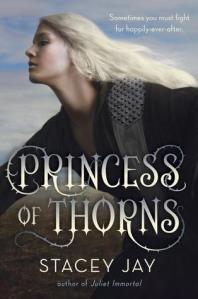
Book Description:Though she looks like a mere mortal, Princess Aurora is a fairy blessed with enhanced strength, bravery, and mercy yet cursed to destroy the free will of any male who kisses her. Disguised as a boy, she enlists the help of the handsome but also cursed Prince Niklaas to fight legions of evil and free her brother from the ogre queen who stole Aurora’s throne ten years ago.
Will Aurora triumph over evil and reach her brother before it’s too late? Can Aurora and Niklaas break the curses that will otherwise forever keep them from finding their one true love?
Review: I picked up this audiobook in a spur of the moment panic brought about by previously requested audiobooks not being ready at the library and a long, traffic-filled commute staring me down. This book had been hanging out for so long on my to-read list that I have completely forgotten how it go there and (an even worse habit!) I had begun to assume that because I hadn’t gotten to it in so long, I must not really have been that interested in the first place. Reading the description, some type of bizarre fairytale re-telling about the Sleeping Beauty’s daughter it sounded like something that would be right up my alley, so why hadn’t I gotten to it?! Ah, the mysteries of life, and one that burned me in the end here for ignoring such a delightful story for so long.
Just as the description suggests, this is indeed a fairytale type re-telling, if by “re-telling” you mean “tragic post script to the ‘Sleeping Beauty’ story that, depending on the translation, is already pretty horrifying.” The prince who wakes up the Sleeping Beauty is indeed a jerkwad of the “hide your multiple wives” variety. And things only get worse when an Ogre prophesy puts her two children at risk, leading to her imprisonment and some truly terrible forced choices. The story then picks up 17 years later following Aurora who is now working off a tight deadline to rescue her brother from the Ogre Queen and raise an army to save her kingdom. All with the help of Niklaas, a seemingly shallow prince who is hell-bent on marrying a princess.
Niklaas was one of the most surprising elements of this story. Based on the cover, the book description, and, let’s be honest, the tons of YA fairytales that have come before it, I went into this assuming that Aurora would be our one and only POV character. So color me surprised when Niklaas shows up and steals away half the story for his own! And I couldn’t be more happy about it. Niklaas brings his own fairytale to the book, this time a twisted version of the “Seven Swans” story, and his own personality to the page. His is one of my favorite character types to stumble upon. Witty, but flawed. Self-aware, but delusional about how he comes across to others. He’s the type of character you should hate (as Aurora first does as well) for all of his egotism and blatantly stereotypical and demeaning opinions about women. But he’s so charming and hilarious that you end up loving him anyways, gleefully waiting for the inevitable slap to the face that will knock him out of his narrow way of thinking. He was a perfect foil to the more impulsive (reckless!) Aurora, and a humorous balance to her own more straight-laced approach to the trials and tribulations they find themselves in.
Aurora, herself, was also a great character. Not only did we have Niklaas showing up as one of my favorite types of romantic leads (the kind that exist as more than a romantic lead in the first place), but with Aurora I had another favorite trope: girls disguised as boys. The biggest challenge with this approach is balancing the friendship/romance between the two main characters in a believable way. For Aurora’s perspective, it is easier, as she is in on the sham the entire time. So for her, it was most enjoyable simply watching her slowly realize that for all of his foibles, Niklaas might be a good guy. But for Niklaas, it’s harder. His relationships with Aurora starts out purely platonic, with him believing that she is her younger brother. Their friendship and camaraderie during this period was great, and I was beyond pleased with the way the author transitioned this relationship once the secret comes out (this is NOT a spoiler, cuz…obviously). Particularly, I loved that the challenges of this reveal weren’t hand-waved away. Not only does Niklaas have to come to terms with the new reality he’s living, but also that he’s been actively lied to for weeks. Full points for the author in her handling of this entire storyline.
Beyond these two, the most surprising part of this story was the inclusion of a handful of story chapters from the POV of the Ogre Queen herself. Initially I was rather put off by this as I had been having a grand ole time romping around in the woods with Niklaas and boy!Aurora. But the Ogre Queen’s chapters, and the character herself, brought a necessary level of severity to a story that could have easily slipped into pure silly escapism (though there’s a healthy dose of that, for which I was glad as well). For the few number of pages she’s allotted, the Ogre Queen’s transformation and story arc was probably the most compelling. Her story was unique and completely unexpected, probably bring the only truly “new” portions to this fairytale from the long lists of marks that are almost always hit in these types of books.
My only frustrations came towards the end. Throughout the story, Aurora’s character is pushed to grow and adapt from her particular brand of bravery that often revealed itself in foolhardy decision making with results that could have been prevented if a bit more thought had gone into them. With all of the build up, I went into the final act ready for her to complete this arc. And…in a way she does? But not really. She ultimately makes all the wrong choices and is only saved by the courage and sacrifice of those around her. There’s a very brief moment where she does confront this reality and make one good decision that does have major ramifications. But only after making ALL OF THE WRONG decisions up to that point, with only luck leaving her this one last opportunity to make it right. She does pay a steep price, but I ultimately felt that her arc was left rather incomplete in this area. Did she really learn a lesson here? Was it really satisfying that everything ended up aces for her out of pure luck? I wasn’t completely satisfied on either account.
But let’s not end on that note! Even with those frustrations, this book was completely and utterly a joy to read! It may have hit me at just the right moment when I needed a bit of humor, romance, and adventure without too many complicated strings attached. But as a beach read, I think it’s perfect, so make sure to grab a copy before you head off on vacay this summer!
Rating 8: Pure fun! If only brought down a few points by a bit too much luck in the end for my taste.
Book Description:In the anticipated sequel to “Silver on the Road,” Isobel is riding circuit through the Territory as the Devil’s Left Hand. But when she responds to a natural disaster, she learns the limits of her power and the growing danger of something mysterious that is threatening not just her life, but the whole Territory.
Isobel is the left hand of the old man of the Territory, the Boss—better known as the Devil. Along with her mentor, Gabriel, she is traveling circuit through Flood to represent the power of the Devil and uphold the agreement he made with the people to protect them. Here in the Territory, magic exists—sometimes wild and perilous.
But there is a growing danger in the bones of the land that is killing livestock, threatening souls, and weakening the power of magic. In the next installment of the Devil’s West series, Isobel and Gabriel are in over their heads as they find what’s happening and try to stop the people behind it before it unravels the Territory.
Review: After reading and loving “Silver on the Road,” I was excited to pick up this prequel. In the first book we were introduced to the unique, re-imagined West that is ruled by the enigmatic Devil who has sent out 16-year-old Isobel to travel the territory as his own brand of magical justice. In many ways, this book simply doubled-down on the same elements readers were presented with in the first novel, in some ways to its benefit and in others, less so. But ultimately, the “freshness” of the story/world/characters pulled through, leaving me with favorable impression of this second book in the series.
As before, the atmospheric world of the West was one of the biggest appeals with this book. The story starts out with Isobel traveling alone, and through her eyes we once again get to experience this strange, untamed landscape that effortlessly blends the ruthlessness of nature (with some added teeth from the magical elements) alongside the stark beauty of the rolling plains. Of course, there would be no story if something wasn’t amiss, and Isobel’s “sixth sense” leads her down a path of darkness and mystery.
While I enjoyed Isobel’s independent moments in the story, I was also very happy when she was reunited with Gabriel, as their friendship/mentorship was one of my favorite parts of the first book. I was pleasantly surprised to find that this book also continued down these relationship paths without any addition of romance. Each respects and admires the other, but, if anything, they read as siblings on the page. It is refreshing to read a story about a 16-year-old female protagonist that proves you can draw an interesting tale and create viable and intriguing relationships without the need to insert romance into the equation. Believe it or not, teenage girls are capable of forming other types of relationships with those around them.
I did have a few frustrations with the story, however. And, like the pros to the tale which all built upon elements I loved from the first book, the negative aspects came from the same quibbles I had with the first as well. Namely, the pacing and the magical system. While the slow and meandering travels allow readers to fully immerse themselves in the world that has been built, it can also deflate the story from the brief action sequences that can be found, leaving readers wondering just how many descriptions of dusty saddles are really necessary. The last third of the book involves some high stakes and challenging moral considerations (of the kind that really make you wonder about the Devil’s thinking in sending out an untrained, teenage girl to deal with the forces at work in the Territory), but it takes a long time to get to this point, and I wish there had been a way to tighten up some of the storytelling of the first two-thirds.
And lastly, the magical system. I love the uniqueness of the magic that is set up in this book, especially that which is connected to the animals (the buffalo’s herd magic, and the speaking snakes). But as far as Isobel’s own particular brand of power, it is just as frustrating as it was in the first book. She does things, but never knows how she is doing what she is doing. And more often than not just lead into an action by an undefined “feeling.” I understand that she is learning what her role is as the Left Hand, but that means she must actually learn. Just discovering that something worked without any explanation or knowledge of how/when/in what circumstance she could hope to repeat the process, at a certain point simply feels like lazy writing. And a bit boring.
But, as I said, at this point in the series, the uniqueness of the world and the appealing nature of Isobel and Gabriel and their friendship is enough to keep me interested. But don’t take my word for it! Check it out for yourself and enter to win a hardcover copy of “The Cold Hand!”

 Book: “Strange Practice” by Vivian Shaw
 Book: “Flame in the Mist” by Renee Andieh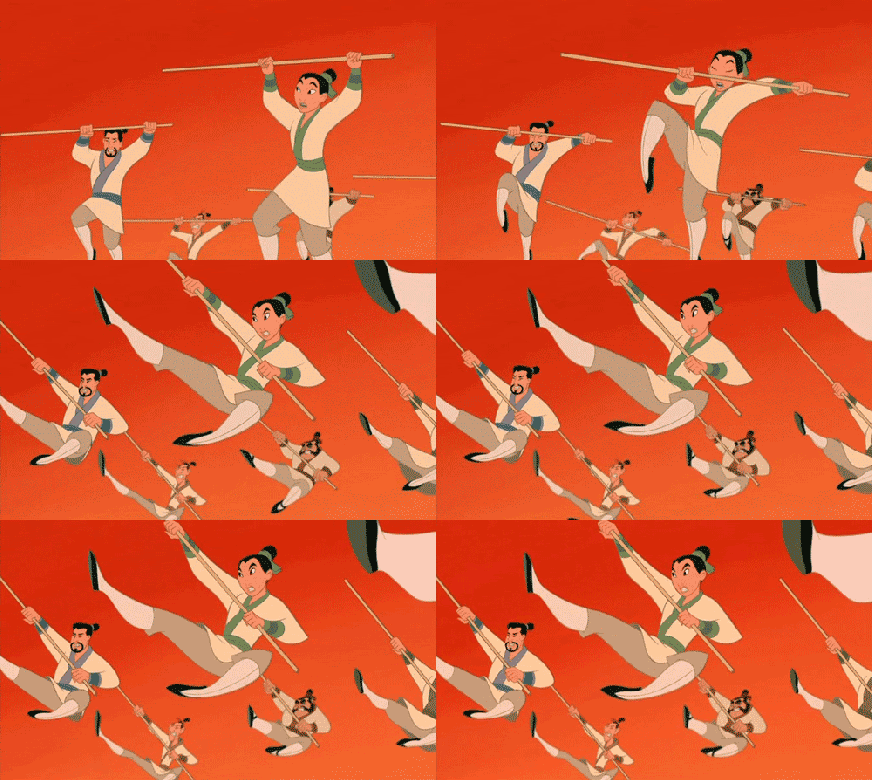

 Book: “Julia Vanishes” by Catherine Egan
 Animorphs #12: “The Reaction” by K.A. Applegate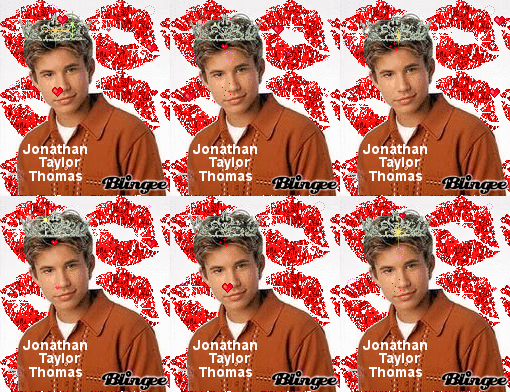
 Book: “A Great and Terrible Beauty” by Libba Bray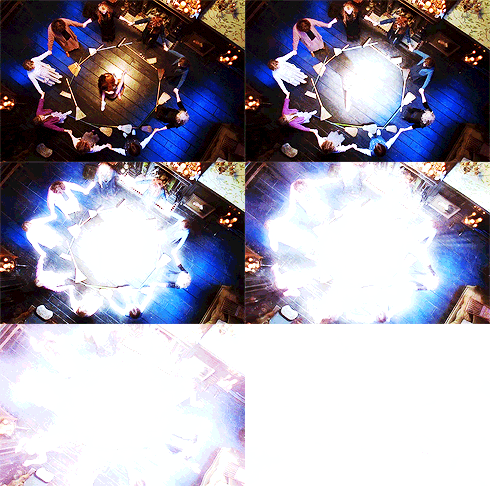
 Book: “Skullsworn” by Brian Staveley
 Book: “A Conspiracy of Kings” by Megan Whalen Turner
 Animorphs #11: “The Forgotten”
 Book: “Princess of Thorns” by Stacey Jay
 Book: “The Cold Eye” by Laura Anne Gilman
 The Library Ladies