Serena’s Review: “The Ape Who Guards the Balance”

64255Book: “The Ape Who Guards the Balance” by Elizabeth Peters

Publishing Info: William Morrow, September 1998

Where Did I Get this Book: audiobook from the library!

Book Description: The prospects for the 1907 archaeological season in Egypt seem fairly dull to Amelia Peabody. Despite her adored husband’s brilliant reputation in his field, his dashing-yet-less-than-diplomatic behavior has Professor Radcliffe Emerson ignominiously demoted to examining only the most boring tombs in the Valley of the Kings — mere leftovers, really. All the Peabody Emersons profess stiff upper lips and intend to make the best of a bad situation, but this year the legendary land of the pharaohs will yield more than priceless artifacts for the Emerson expedition. For the desert guards even deeper mysteries that are wrapped in greed — and sealed by murder.

In a seedy section of Cairo, the youngest members of the expedition purchase a mint-condition papyrus of the famed Book of the Dead, the collection of magical spells and prayers designed to ward off the perils of the underworld and lead the deceased into everlasting life. But for as long as there have been graves, there have also been grave robbers — as well as those who believe tomb violators risk the wrath of gods like Thoth, the little baboon who protects the scales used to weigh such precious commodities as hearts and souls.

Previously Reviewed: “The Crocodile on the Sandbank” and “The Curse of the Pharaohs” and “The Mummy Case” and “Lion in the Valley” and “Deeds of the Disturber” and “The Last Camel Died at Noon” and “The Snake, the Crocodile, and the Dog.” and “The Hippopotamus Pool”

Review: It’s been a while, but we’re back with another Amelia Peabody novel. I usually turn to these when I find myself in a reading slump, but luckily I’ve had a pretty good run on books recently. But I still found myself with a hankering for my favorite female sleuth, and so here we are!

Back in Egypt, Amelia and her family find themselves looking forward to what will likely be a long, boring season. They have been “banished,” essentially, to some of the lesser tombs in the Valley and aren’t likely to make any grand discoveries. However, adventure is sure to find them, this time in the appearance of a priceless artifact that is recovered by Ramses, Nefret, and David. But following the artifact is a wake of mayhem and murder. Determined to find out who is behind these disturbances, Amelia and co. are on the case! Matters are only muddied, however, when their extended family (Walter, Evelyn, and their daughter, Lia) arrive and previously unknown attachments are revealed.

Many of the tried and true aspects of this series that I have always enjoyed are still present. While the narration is now more broken up, with the introduction of manuscripts and letters written from the perspectives of Ramses and Nefret, we still spend much of our time with our familiar and beloved Amelia. Here, however, the story really does take a new turn with regards to our heroine and her role in these stories. Up to this point, Amelia has been a solid point of reason, sound thinking, humorous commentary, and an adventurous spirit. All of these aspects of her personality remain here, however we are also exposed to a new reality: even Amelia herself has flaws and falls prey to certain prejudices that she wasn’t even aware of in herself. While it is difficult to see our reliable main character clash up against points of view that the modern reader immediately recognizes as traps of prejudices, I loved the full exploration of how this type of latent viewpoint could exist even within the most modern and intellectual beings of the time. And, be assured, even this challenge, as unexpected as it may have been for our heroine, is one that she is up to conquering!

As these books have continued, readers become more and more invested in the goings ons and thoughts/feelings of the younger group of the Emerson party. And this is probably the first book where I felt like these sections truly came into their own. Ramses continues to struggle with his repressed feelings for Nefret. Nefret, herself, continues to run into the barriers that are set against her due to her age and sex (even by members of her own family). And David struggles to find his role in a world that would often judge him first by the color of his skin, even when strong connections exist between him and those who might judge.

The mystery itself was also enjoyable. While I was able to predict certain twists and turns, the romp was still worth the ride. Many familiar faces play a role in this mystery, wandering in and out of scenes in some unexpected ways. I was particularly pleased to see the return of a certain villain who often creates many disturbances in the Emerson clan. What’s more, the stakes in this mystery are much higher than they have been in the past. While the book is still a “feel good” mystery, there was much more darkness and tragedy than I have come to expect. I never love crying over a book, but in this instance, I felt like the sadder moments were not only well-earned but a necessary send-off to certain storylines.

The archeological portions of the story were also quite compelling. We’ve gotten so used to our meticulous and studious main characters, that reading this book and its descriptions of the mishandling of a tomb found by another excavation team, I found myself almost getting as emotionally worked up as Emerson himself!

As I’ve said, many portions of this book felt familiar, but in the best way. There are significant strides made in advancing the storylines of the younger generation, which I’m sure we’ll see continue to play out in books to come. It also takes a new approach to examining Amelia’s own character, forcing her to confront some weaknesses in her own perceptions, an aspect of the story that I particularly enjoyed. As always, for fans of this series, keeping plugging along! You won’t be disappointed!

Rating 8: Continues the series’ long line of success, but adds new layers with an exploration of Amelia’s own flaws and an extra focus on the lives of Ramses, Nefret, and David.

Reader’s Advisory:

“The Ape Who Guards the Balance” is on these Goodreads lists: “Best Archaeology Thriller Books” and “Strong Female Characters Written by Female Authors.”

Find “The Ape Who Guards the Balance” at your library using WorldCat!


Serena’s Review: “Damsel”

36260155Book: “Damsel” by Elana K. Arnold

Publishing Info: Balzer + Bray, October 2018

Where Did I Get this Book: Edelweiss

Book Description: The rite has existed for as long as anyone can remember: when the prince-who-will-be-king comes of age, he must venture out into the gray lands, slay a fierce dragon, and rescue a damsel to be his bride. This is the way things have always been.

When Ama wakes in the arms of Prince Emory, however, she knows none of this. She has no memory of what came before she was captured by the dragon, or what horrors she has faced in its lair. She knows only this handsome prince, the story he tells of her rescue, and her destiny to sit on the throne beside him. Ama comes with Emory back to the kingdom of Harding, hailed as the new princess, welcomed to the court.

However, as soon as her first night falls, she begins to realize that not all is as it seems, that there is more to the legends of the dragons and the damsels than anyone knows–and that the greatest threats to her life may not be behind her, but here, in front of her.

Review: Oof, this is going to be a tricky one. Even now, starting out this review, I’m not really sure if my thoughts and feelings on this book are fully formed. I guess we’ll just see where the words take me!

The description of this book lays out a fairly typically fantasy story: a princess is rescued from a dragon by a handsome prince. But something is not right. She doesn’t remember her time before the rescue and the prince may not be what he seems. However, this is as it always has been. Damsels being rescued, going on to be Queens and mothers of princes themselves.

Between the book description that, while fairly typical, does lay the groundwork for some type of subversion of this typical fairtyale storyline, and the beautiful, flowery cover art, I went into this book with a certain set of expectations. While I didn’t expect it to play out along typical lines (I was fairly sure that she wouldn’t end up with said prince, for example), I wasn’t prepared for the level of darkness that was introduced in this book and I do have some qualms about certain topics’ sudden appearances.

But the book did have some steady points in its favor, and I want to cover those before I get into the parts that gave me pause. For one, the writing is excellent and I immediately felt drawn into the story. Ama herself doesn’t even show up for the first few chapters and yet I was still fully invested, which speaks again to the strength of the writing. And once Ama is introduced, she was a very cheer-worthy heroine. I was immediately drawn to her story and felt the same fears, confusion, and bewilderment that she experiences. The reader, too, doesn’t know her history, so while she looks for answers, we’re right there with her. But this same attachment to her made other parts of the book incredibly hard to read.

As I said, the description sets the story up to be a subversion of the traditional tale, however, I was not prepared for how completely dark and mature some of the themes and topics became in this book. The beautiful cover, light and fluffy, also belied these dark and heavy themes. I could probably write an entire post on its own discussing my complicated feelings about trigger warnings for books (I generally feel that this idea has been taken too far given the obviousness of the fact that there are a million people out there with a million life experiences and no novel can anticipate all of their reactions to any given story), but this book does serve as an example of why some type of warning might be necessary for certain topics.

Nothing about the description, cover, or classification (YA) of this book would give an indication that this book would dive so heavily into topics that can be very hard for many readers, regardless of their age. Specifically for this book, the topic of sexual assault. And this is by no means the only dark subject matter introduced. There are some tough scenes dealing with animal cruelty and a weird moment in the end that verges on bestiality? I’m not even sure how to qualify that scene. I’m a librarian, so I am by no means saying that these topics shouldn’t appear in books or even that there is a reading level that should be maintained for exposure to them (that is between any given reader and his/her parents, depending). But I do think that more needs to be done to prep readers in what they are picking up. With its cover and light description, I could see middle grade readers thinking this would be a good read for them and then being very taken off guard with the graphic nature of the tale.

I also struggled with the ending of the story. While Ama’s own tale comes to a satisfying conclusion, it is a very brief scene that I’m not convinced fully balances out all of the awfulness that happened before. What’s more, the world that is set up is one where this type of abuse has been happening forever and is by no means limited to the Damsels, though theirs is a unique version of it. So while Ama gets her revenge in the end, there is really no resolution for the world itself and the other women living in it. This heavily dampened any feelings of satisfaction that came from her act of defiance.

In the end, while I did enjoy aspects of the book, I’m not convinced that the darker topics were completely earned or necessary (at least not as the many times they’re repeated throughout the story). And my larger concern is that the book does nothing to warn readers what they are getting when they pick it up. We all know I love dark fairytales, but if a story is going to get this dark, more needs to be done with the marketing to prep unsuspecting readers. I’m not sure what the real answer to that is, but I know that this book was shocking for me to read, and I’d hesitate to recommend it to others without giving them some fair warnings of its subject matter.

Rating 5: I have to give this book a middle-of-the-road rating. I liked Ama and the writing was strong, but the book was incredibly dark and I’m not sure its graphic nature was either necessary or resolved in the end.

Reader’s Advisory:

“Damsel” is a newer title and isn’t on any relevant Goodreads lists, but it should be on “Dark Fairy Tales.”

Find “The Reluctant Queen” at your library using WorldCat!

Serena’s Review: “The Hollow of Fear”

363423301Book: “The Hollow of Fear” by Sherry Thomas

Publishing Info: Berkley, October 2018

Where Did I Get this Book: Edelweiss

Book Description: Under the cover of “Sherlock Holmes, consulting detective,” Charlotte Holmes puts her extraordinary powers of deduction to good use. Aided by the capable Mrs. Watson, Charlotte draws those in need to her and makes it her business to know what other people don’t.

Moriarty’s shadow looms large. First, Charlotte’s half brother disappears. Then, Lady Ingram, the estranged wife of Charlotte’s close friend Lord Ingram, turns up dead on his estate. And all signs point to Lord Ingram as the murderer.

With Scotland Yard closing in, Charlotte goes under disguise to seek out the truth. But uncovering the truth could mean getting too close to Lord Ingram—and a number of malevolent forces…

Previously Reviewed: “A Study in Scarlet Women” and “A Conspiracy in Belgravia”

Review: I warned you in our “Highlights” post that a review was coming quickly! Thanks to the lovely Edelweiss, I’ve had access to this title for a while but had been trying to resist reading it until closer to its publication date. Torture indeed. And at this point, after three amazing books (spoiler: I loved this one), it’s such a pleasure to find another series that I can now put full faith into the fact that I’m sure to love future titles as well. Why can’t they all just be out now though?? They should defy space and time and arrive ala Netflix binging. But enough of that, on with the review!

The fallout of the events that took place in “A Conspiracy in Belgravia” are still being felt, most largely by Lord Ingram himself whose world has crumbled after the discovery of his wife’s involvement with the criminal mastermind Moriarty. But a bad situation can always get worse and very much does with the discovery of Lady Ingram’s body on his own property. Of course, Charlotte Holmes would never watch idly as disaster befell her dear friend. But still banished from society and with a gossip-worthy connection with Lord Ingram himself, how can she involve herself in the case in a useful manner? In disguise, of course!

Oh where, oh where to start my crazed ranting! I think part of my love still comes down to the very fact that this series exists and exists as well as it does. I’ve recommended it to a few people lately, including my husband, and his and many other’s responses have often been the same. Something like “…really? but…why?” For some, this is simply because they see no reason to adapt the character once again at all and for others there is a general distrust that a series could effectively gender swap the character while also maintaining its historical setting. And really, these are both legit concerns. In the last several years, though it has been waning a bit recently, it seems the entire world was under a certain “Sherlock” fever, with a new adaptation, either written or on some screen or another, announced every other day. But to these skeptics I say a loud and resounding “nay!” There is always room for another adaptation if and when an author is truly capable of bending these classic characters into something truly new without losing the essence of said characters and stories. And that is what makes Sherry Thomas’s books so amazing.

“The Hollow of Fear” is no exception. By this point, we know that Thomas has tackled the biggest challenge: creating a new version of Sherlock that both rings true to the original but also has enough novel factors to stand alone among other adaptations. And from there, it’s just a matter of releasing said character into another plot and seeing what happens. I think what makes this story stand out in particular is the fact that it is more of a direct sequel to its predecessor than the original. The first two definitely had connected through lines, but could perhaps be read individually. Here, this story directly pulls from the events of the last and is stronger for having a more robust mystery built upon information and puzzles that have been laid down through both books now.

I also enjoyed that the story largely takes place in a small space, Lord Ingram’s estate. We jump here and there to a few places in the surrounding community, but in many ways it reads like a classic mansion mystery where a large group gathers, a murder is committed, and the culprit and method must be sought out amidst the question of how such an event could occur with so many witnesses around.

All of our favorite characters make an appearance though the amount of page time for each is switched around a bit. Here, we spend a lot more time with Charlotte’s sister, Livia and got to see her come a bit into her own, building confidence as she went. We also spend a good amount of time with Detective Treadles, and I particularly enjoyed his storyline here. In the last few books, he’s been a bit unlikable due to his feelings and prejudices about his wife, but here we see him truly have to confront these aspects of himself. In retrospect, I very much enjoy this slow transformation. I think it reads as a much more honest version of this type of change and the moments that lead him to real inner reflection in this book also ring true for what would open one’s eyes about one’s own behaviors and thoughts with regards to these types of prejudices.

Charlotte herself is of course amazing. I very much enjoyed her undercover work, and it was a fun twist to see her more fully interacting with the mystery as the story unfolded. Due to her gender and outcast status, she always had to operate a bit on the sidelines in the past books, and while that lead to some really great moments too, this was a nice change of pace from what could have become a predictable set of events.

Her relationship with Lord Ingram was also further explored, and while I still very much enjoy this building relationship, there were a few things at the end that were particular to this couple that lead me to drop my rating from a full 10. Some of the explanations for past actions I’m not sure truly made sense or were necessary in the grand scheme of things. Instead, they almost read as excuses to include certain parts of the story that were hard to work in otherwise. And then were largely reset again at the end of this book. I’m curious where things will go from here, however, as I don’t think this type of bait-and-switch will work twice, so at some point this complicated relationship is going to need to be dealt with in another way.

The mystery itself was also very good and remains one of the strongest pros of the entire series. Here there were a few moments where I thought I had guessed at crucial information and was feeling quite smug about it only to later discover that, nope, that wasn’t right at all. And while there were a few very satisfying scenes at the end where Charlotte was able to put some self-important police investigators in their place, part of that reveal also relied on one concept that felt a bit too convenient. But, again, that’s a very nit-picky criticism. Because overall, for fans of historical mysteries, this series is turning out to be a must read!

Rating 9: Sherry Thomas continues to make the difficult task of writing a new version of Sherlock Holmes seem “elementary” indeed!

Reader’s Advisory:

“The Hollow of Fear” is a newer title and isn’t on many relevant Goodreads list, but it is on “Historical Mystery 2018.”

Find “The Hollow of Fear” at your library using WorldCat!


The Great Animorphs Re-Read #38: “The Arrival”

363404Animorphs #38: “The Arrival”

Publishing Info: Scholastic Paperbacks, February 2000

Where Did I Get this Book: own it!

Book Description: Ax’s people have arrived on Earth, and they want Ax back on board with them. Ax is torn. Should he join his fellow Andalites? Can he desert the Animorphs?

Narrator: Ax

Plot: Oh thank god, a return to sanity as far as these books go. Not only is our narrator blessedly in character, but we once again have a team that is capable of rational thought and pulling off complicated (and, importantly, NECESSARY) plans.

tumblr_m7hx4t5n461qew1kc
Ok, maybe this is an overreaction. But after that last book?!? I’m not so sure…

The story starts off with the Animorphs already in the midst of a mission: rescuing Mr. King from where he’s being held by the Yeerks. In their battle morphs, they succeed in breaking in to where he is being held and fending off the few Controllers there. But before they can leave, things get bad. This is a trap and Hork Bajir warriors begin pouring out of all the doors into the room and even falling in through the ceiling. Of course, Visser Three is there as well. Very beaten up, the Animorphs struggle to escape. It doesn’t look good until suddenly a small troop of Andalites show up and start kicking butt. Ax ends up fighting alongside a young female warrior who he immediately admires. As they escape, she tells Ax that her name is Estrid and that they will find him.

Back in the barn, they all meet up to discuss what’s happened. Ax is thrilled to see his people again, but the others are skeptical, given that their last experience with the Andalites resulted in Ax’s abandonment to a traitor Andalite on Leera. Ax reassures them that he knows who is Prince is.

The next day, Tobias and Ax decide to go to the mall to get some tasty food. Once there, they realize a commotion is going on in the food court: some woman has gone crazy and is eating all of the jelly beans. They quickly realize that this is one of the new Andalites in morph. They nab her and manage to get her out of the mall and arrange a time to meet with her leader.

Jake and Ax make their way to the designated meeting place. Once there, they are introduced to the other Andalites: the commander of the mission, Gonrod, an assassin named Aloth, and a high-up intelligence officer named Arbat who also reveals that he is the brother of Alloran, the Andalite host body of Visser Three. Gonrod blusters about leadership, but Jake doesn’t flinch, stating that he is in charge on Earth and he and his team don’t take order from them. Ax agrees and remains with Jake. Enraged, Gonrod orders the others to fire on Ax but before they can get off a shot, they realize that cobra!Marco and snake!Cassie are poised to strike and poison each of them. Everyone calms down a bit, and they reveal that the larger Andalite forces are not coming, that they are away in another sector dealing with problems there. This small group has only come to assassinate Visser Three, as his remaining in control of an Andalite body is a shame the Andalites can no longer tolerate.

Back in the barn, the team discuss what they have learned. They are all disheartened and demoralized to learn that the Andalites aren’t coming. One by one they begin falling apart under this new reality. Marco takes one of his cynical jokes too far and Rachel gets in a fight with him. Tobias announces that he is out of the fight and flies off. Rachel says that she’s going to take out as many as she can before she dies and leaves as well. Cassie agrees that if there is no hope of winning without Andalite reinforcements, there’s no excuse for killing innocent Hork Bajir hosts. Marco throws his hands in the air and decides to spend his remaining time on the beach. Alone, Jake releases Ax from his vow to follow him as it looks like the Animorphs are through. After they are all gone, Ax calls out to Estrid and points out that Earth rabbits don’t typically follow larger animals into barns full of yelling humans, but that it’s ok, he’s decided to join the Andalites.

On the Andalite ship, Ax begins to notice strange things about these Andalites. Estrid doesn’t seem to follow orders from the leader. And, in many ways, it seems as if Arbat is calling the shots more than Gonrod. They ask Ax where Visser Three is most likely to be found and Ax points them to the Sharing, then the Community Center, and as a last resort, the Yeerk pool. While the first are more obvious choices, Arbat presses about how to get to the Yeerk pool, but Gonrod insists that the Sharing meeting will suffice.

Later Ax and Estrid go on a “date” to the Gardens where they morph humans and eat more candy and practice the odd human custom of kissing. As birds, they begin to fly back but Ax says he wants to see his friends once more. As they pass a McDonalds they see grizzly!Rachel destroying the parking lot. They see owl!Cassie fly off and follow her back to the barn. There, they watch as Cassie tries to convince Jake and Marco to do something about Rachel. But Marco is supremely uninterested in getting involved and Jake is too busy hiding from Tom who has been picking on him. Sadly, Ax says he has seen enough and they leave. Estrid crows that Andalites would never behave so poorly in defeat. As they fly back, Estrid points out that she’s seen a certain fierce looking bird near them before. Ax waves it away saying that there are many such birds.

Back at the ship, Ax takes the first shift to stand guard. He tries to access the computer files, but is denied access. Aloth catches him at it, but Ax talks his way out of it. Aloth then reveals that he and Gonrod were each in prison before this mission. Aloth for illegal organ sales from dead soldiers and Gonrod for cowardice on the battlefield. They were each chosen for their unique skills as an assassin and a skilled pilot, respectively.

The next day, they attack the Sharing meeting. Visser Three is there in human morph. They manage to get in quickly, but Arbat, who insisted that he would be the one to take the shot on his “brother” (another weird question for Ax who thought Aloth was there as the assassin), misses an easy shot. Ax and Gonrod also take shots and miss, but by this time Hork Bajir are pouring into the building. As they flee, Aloth is hit and injured. Ax tries to help carry him out, knowing he could survive, but Arbat shoots and kills him. They run out and find Gonrod already at the helm of the ship; he had fled.

Arbat hastens through any mourning and insists that now their only option is the Yeerk pool. Gonrod resists, and Arbat takes over leadership and locks Gonrod away. They all decide to rest before their next mission. Ax sneaks out and returns with Mr. King. Again, they break into the computer, but are successful due to Mr. King’s better tech abilities. There they discover the truth: in the records, Aloth, Gonrod, and Arbat are already listed as having died on their ship in some other sector and Estrid isn’t listed at all. This is a suicide mission.

Ax sneaks off to find Estrid and confront her. He discovers her in a new part of the ship and sees her conducting some type of science experiment. He grabs the vial she is holding and she panics. He forces her to tell him the truth or he will drop it. She reveals that she is not an aristh, but a science student who was recruited by Arbat. She has developed a virus that is deadly to Yeerks. However, it also mutates and can become deadly to humans as well. Ax realizes that Gonrod and Aloth were dupes and that Arbat was in charge the whole time. He doesn’t care about taking out Visser Three but instead wants to release this virus in the Yeerk pool. Arbat arrives and confirms this all.

Arbat admits that he was looking for a science student, any science student, to pull of this mission and Estrid can’t live to confirm what’s been done here. Only high level intelligence will ever know of this mission. He pushes a button, and Ax and Estrid become trapped in a laser cage. Arbat leaves with the virus to complete the mission, and Estrid despairs, regretting that she allowed Arbat to convince her that the humans were a sacrifice worth making because they are weak and easy to give up. She reveals that Arbat was also in the barn that day when the Animorphs broke up.

Ax replies that they knew that just as Marco walks in. Around the room, the rest of the Animorphs demorph from bugs. Estrid accuses him of lying to his people, but Ax replies that the Animorphs are his people.

They make their way to the Community Center and down into the Yeerk pool. Their they all morph/demorph to human and spread out trying to find human!Arbat. Ax realizes that Arbat has little experience with a human morph, so he is able to spot him just as he reaches the pool due to the fact that he turns his head often, not used to not having an extra set of eyes. Arbat spots them and fires a Dracon beam at them, creating chaos. The others all morph battle morphs and Estrid and Ax return to their regular forms.

The battle quickly goes badly with many Hork Bajir converging around them. Estrid begins to panic and starts to think that maybe just using the virus is better. But they continue to fight, with Ax making his way towards Arbat. He realizes that he is not going to make it, but Estrid manages to fire a Dracon beam and destroy Arbat’s hand and the vial. But the Animorphs are still losing and Ax prepares to die in battle. At the last minute, Gonrod shows up in his ship, having blown a hole down through the roof of the McDonalds (Tobias had seen things going south for his friends and retrieved Gonrod and the ship). They all run for the ship and Arbat calls for them to take him with them. They do not, and he becomes the Taxxons’ dinner.

The next day, Estrid and Gonrod prepare to leave. Estrid tries to convince Ax to join them, but he refuses, and they leave. Ax and the Animorphs go to get burgers, but only Cassie realizes how hard this has been for Ax and holds his hand as they walk.

E.T./Ax Phone Home: This is the kind of book that is again almost so full of action that we miss out on some of the character building beats. I mean, we get a lot of “fake” character building that is exploring how Ax is feeling about all of the fake scenes that he and the Animorphs are putting on. But we don’t get to see the real scene where he agrees that the Andalites aren’t to be trusted initially and that this whole plan is worth trying. Here and there we get a few insights into how he is coping with the continued steep descent of the morality of his people, but I have to imagine it hits harder than we see here.

I do like the fallout with his crush with Estrid. That entire storyline felt very real the entire time, from his initial crush, to their date where he wishes they could just fly away (he doesn’t say it here, but part of this has to be because he’s putting on a whole show that inherently speaks to the fact that he can’t trust his own people. No wonder he’d want to escape before getting any real confirmations either way), to his reaction when he finds out that she was playing at least a partially willing role in the planned genocide on Earth. He tells her in the end that she is beautiful but that he doesn’t think he likes her very much. I’m sure she makes up for it some with her shot on Arbat, but probably not fully.

We also get a few references early on to the fact that Ax still feels terrible for abandoning his friends on the escapade in Leera. So it’s also nice seeing him here so fully loyal to his human friends and Jake as his Prince.

Our Fearless Leader: Jake’s showdown with Gonrod in the very beginning is a really great scene. It’s awesome seeing him in these types of scenes where he has fully embraced his leadership role and is facing down someone else.

“Now we stop playing games. You’re not the Andalite fleet. And I’m not going to snap a salute and say ‘yes, sir!’ We deal as equals. Which, to be honest, is generous of us under the circumstances.” 

The clearest giveaway that something is up is when we see Jake “hiding” from Tom in Cassie’s barn because Tom is picking on him. Every part of it is ridiculous for those who know Jake. He’s not only hiding in the barn, but is actually crouched down in a horse stall as if Tom is going to appear at any moment on Cassie’s farm to bully him. Right.

Xena, Warrior Princess: In the fake scene, Rachel’s response is pretty accurate to what we’d expect. She’s clearly stressed and a stressed Rachel is an angry Rachel so when Marco pushes it too far, she goes after him. It also makes sense that her approach would then be to go out fighting. Probably the most honorable of them all if this was a real scene, as the rest of them seem to be “out” in the sense that they’re going to just wait around for the end. But her destroying the McDonalds in the second scene was also kind of a give-away as it doesn’t seem like that’d be what she’d choose to do, go after one little Controller at a fast food place, when she could go out in a blaze of glory at the Yeerk pool trying to get to Visser Three or something.

A Hawk’s Life: In the fake scene, Tobias is the first to quit and really gives no reason for it, he’s just out of there. Probably the first sign that something’s off as Tobias has always been the most gung-ho about sticking with the fight and is the only one who is continually sacrificing himself (remaining a bird) to do it because it matters that much to him. He also follows around Estrid and Ax, getting spotted by Estrid at one point. And then in the end, he’s the one to fetch Gonrod and get him to bring in the ship to rescue the rest of them.

Peace, Love, and Animals: As it was all a fake scene, we can’t really take anything that any of them said here at face value. But at one point, Cassie is going on and on about how immoral it is for the Andalites to be there to take revenge on Visser Three because “revenge is wrong.” But wait, wasn’t it literally just two books ago that Cassie’s whole motivation for going after the Yeerks was in revenge for what they did to the Hork Bajir and Marco had to actually call her out on it? We’re just going to have to assume that this was part of the act, but a small part of me also wouldn’t have been surprised if this was her actual outlook, again conveniently adjusted for how others should behave vs. herself. But that scene at the end where she holds Ax’s hand is quite sweet, showing the one consistent strength of hers: to understand when others are feeling pain and to try to comfort them.

The Comic Relief: Marco has some good lines in this book, especially in the barn scene when he’s highlighting just how hopeless the whole scenario is if the Andalites aren’t coming. Makes me want to see the real scene where they discuss the fallout of this new situation. But Marco’s reaction is also out of character for where he is at this point in the series. Sure, the early version of Marco would have been all for beach days while you wait for the end of the world. But this version of Marco has been coming up against some of the hardest scenarios in the entire series with the interactions with his mom/Visser One. I think at this point that he’d likely follow a similar track to Rachel in going out swinging rather than waiting. Of course, his “going out” would likely be better planned than hers and have a greater chance of success, too. I could even see the two of them ganging up for something like this, though.

Best (?) Body Horror Moment: There really weren’t many in this book. At one point Ax describes morphing human and how the flesh “flowed down to cover the bones” which is a pretty icky way of thinking of it. He also talks a bit about the non-pain of morphing and how knowing that it should hurt is its own kind of pain anyways.

Couples Watch!:  Awww, Ax goes on a date. I had completely forgotten this bit of the series and had been fully prepared to never really have much to include for Ax in these sections. But he goes on a full-on date here, more than we’ve seen from the other two couples really. There’s an event/location with the Gardens. There’s food with the candy. And there’s kissing. Of course, Ax and Estrid are just “practicing” a “strange human custom.” But alas, it all goes south fairly quickly and Ax ends up disliking Estrid quite a bit for a while there due to her role in things. He does come around a bit in the end, but I think his tears at the end were more for the loss of his people once again than Estrid specifically.

If Only Visser Three had  Mustache to Twirl: Visser Three only makes a few brief appearances in this book, though Ax does note that he seems to be learning that bigger is not always better. When the Andalites attack at the Sharing meeting and begin shooting at him, he wisely chooses to morph something small and hard to hit.

In many ways, the Andalites themselves are the villains of this story. At what point do you have to start fully questioning their whole “moral leaders of the universe” claim? The Animorphs’ initial skepticism of them is completely and utterly justified, and I’m sure it turned out even worse than they had suspected. At this point, other than Elfangor and Ax, the Animorphs’ knowledge/experience of the Andalites has been finding out about the genocide of the Hork Bajir, being betrayed by a high up Andalite traitor on Leera, and then here, watching the Andalites seemingly go all-in on genocide 2.0, this time taking out the humans. As readers we’re taught that the Andalites are the good guys, but at this point…The story never really gets back around to the Animorphs’ true feelings about the Andalite fleet not arriving, but, I mean, after all of this, it doesn’t necessarily seem like them showing up is much better than them not. If anything, the Yeerks are a known and understood enemy with clear motives and goals.

Adult Ugly Crying at a Middle Grade Book: You have to feel bad for Ax. Not only did his first crush turn out to be a willing participant in plans to commit genocide, but as a whole, the Andalites are really not putting a good face forward. Not only does this make it hard to face his friends, but the story never really gets into the existential crisis that must be going on to realize how low your people have really sunk. And really, they’ve already killed off one species and planned on a second. Who knows what other atrocities they’ve done? Kind of seems like a regular thing for them. All of this makes that last scene where they’re walking to get food and Cassie is hold Ax’s hand while he cries a pretty dark experience.

What  a Terrible Plan, Guys!: Hurrah for a return to the smart Animorphs who can spot a con early and pull off complicated plans of deception! I mean, after the David incident, they’re kind of old hands at this whole “put on a scene for the spies in the barn” thing. The one bit I do question is the necessity of the second little scene they put on, where Rachel is destroying things, Marco is supremely lazy, and Jake is bizarrely hiding from his brother. It’s the kind of things that just reads funny. For readers, we know something is up by several parts of this, but mostly the whole “Jake hiding from Tom because he’s being picked on.” Clearly, that’s not a thing. But, from a logical stand point, I’m not sure what the value was in putting on this performance. It seemed like none of the Andalites were questioning the original “break up” at all and Ax could have reported that that was the case. As it was, we later learn that Estrid had needed further convincing by Arbat that killing off the humans along with the Yeerks was ok. And he was able to do this by convincing her of how weak, pathetic, and easy to give up humans are. If anything, this extra little scene just reinforced this perspective and perhaps pushed Estrid even further over the edge on this thinking. The Animorphs couldn’t have know this, of course, but still, like I said, the Andalites seemed to already buy the first scene, so this was never necessary anyways.

Favorite Quote:

Not to beat a dead horse, but I think this quote shows some good insights into the problems of the last book too:

“Until we figure these guys out, let’s just hang loose,” Prince Jake said.

“Yeah. Like maybe not change our minds about who is in charge and who isn’t,” Rachel said bluntly.

I felt myself flush. In the Leera incident I had changed my allegiance from Prince Jake to the Andalite officer who betrayed us. I was still ashamed of this.

Rachel was one of the ones who came down the hardest on Ax when he abandoned them on Leera, and it is clear here that she is still the one to hold the most of a grudge on this subject, because she sees Jake as their leader. Her loyalty to Jake as leader has been clear for a long time, and both here and then she was the one to be most insulted by someone giving up on that. None of that makes sense with the Rachel we saw in the last book who was chomping at the bit to overthrow Jake and be the “hero” and “king” herself. Ugh. Sorry, I’m still bitter.

And one of Marco’s many good lines:

“In a world where slugs can take over entire civilizations, anything is possible,” Marco reminded me.

Scorecard: Yeerks 9, Animorphs 15

I’m not going to change the score on this one. Yes, the Animorphs prevent a catastrophe, but the enemy in this case was really the Andalites, not the Yeerks.

Rating: I really, really liked this book. Other than a few picky issues about their second little performance, the Animorphs had a lot of really clever plans in this book. All of the characters sounded like themselves, and the scene in the barn where they “broke up” read very true for how that could really have played out. Ax, as always, is a great narrator with his quips about his confusion about humanity, and there was a really solid through-line exploring the Andalites as a people and some of the problems that exist within their culture.

I didn’t really get to it anywhere else, but there was a really neat scene in the Yeerk pool when the Animorphs were getting their butts kicked where the humans in the cages formed a body shield to protect them from the Hork Bajir who could have just shot at them. We don’t really think about it much, but the humans who are being Controlled are fully aware during past attacks by the Animorphs. They, too, recognize this team and for them, we have to imagine that they’re seen as heroes whom they are rooting for silently in their own heads even as their Yeerk Controllers force them to fight against them. So it’s a nice moment for them to actually have the freedom to throw their support behind these heroes, putting their own lives on the line to protect them. It’s pretty cool.

Overall, like I said before, this book was a big relief after the disaster that was the last one. And it was a fun read on its own, regardless of what came before it.

Note: I’m not going to rate these books since I can’t be objective at all! But I’ll give a one sentence conclusion and you can take from that what you will!
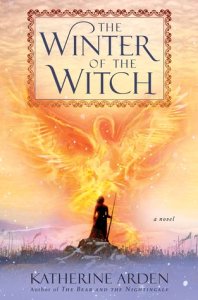
Serena’s Review: “The Sisters of the Winter Wood”

37854049Book: “The Sisters of the Winter Wood” by Rena Rossner

Publishing Info: Redhook, September 2018

Where Did I Get this Book: from the publisher!

Book Description: Raised in a small village surrounded by vast forests, Liba and Laya have lived a peaceful sheltered life – even if they’ve heard of troubling times for Jews elsewhere. When their parents travel to visit their dying grandfather, the sisters are left behind in their home in the woods.

But before they leave, Liba discovers the secret that their Tati can transform into a bear, and their Mami into a swan. Perhaps, Liba realizes, the old fairy tales are true. She must guard this secret carefully, even from her beloved sister.

Soon a troupe of mysterious men appear in town and Laya falls under their spell-despite their mother’s warning to be wary of strangers. And these are not the only dangers lurking in the woods…

The sisters will need each other if they are to become the women they need to be – and save their people from the dark forces that draw closer.

Review: The book description for this title reads like an itemized list of “what Serena looks for in fantasy fiction.” Fairytale-like? Check. Sisterhood? Check. Mysterious men? Check. Add to that a gorgeous cover and requesting this book really was a no brainer. And I’m definitely glad I did, as not only were the expectations raised by the description met, but the book offered up several other unexpected surprise delights.

Much of the main plot points are lain out in the book description itself. The two sisters who are suddenly thrust into a new reality, one filled with shape-shifters and magic. The sudden absence of beloved parents. The appearance of a strange group of men. And throughout it all, the looming fear of what it truly means to be these new, strange beings who can transform into bears and swans. Who are their people? Who is their family? And who will they be once they allow this power to emerge?

I very much enjoyed the fairytale feeling that was at the heart of this story. Many elements involved, the dark woods, mysterious stranger but oddly beautiful and compelling strangers who temp with delicious, rare fruits, animal transformations, and sibling relationships, all ring for the type of tale we expect. But what made it even more exciting to read was that together as a whole, this was a completely unique tale. Reading a bit of how the author read the book, it sounds like it is partially based on some Jewish folklore, so while there were familiar pieces (remnants of “The Goblin Market” story), it felt like a breath of fresh air into a genre often  bogged down in the same stories told a million different ways.

The writing in this book completely supported this fairytale medium, deftly laid down in beautiful and lyrical strokes. On top of this, the author included a good amount of the Yiddish language within the story and dialogue. Not familiar with the language myself, I often had to take advantage of the definitions at the end of the book, but I truly appreciate the added authenticity these language choices gave the book. Rossner did not pull back and dumb down any of these choices for the unfamiliar reader and added to the feeling of immersion in this world and culture.

Further on the writing, going in, I was unaware that half of the book was written in verse. The story alternates chapters between Liba and Laya, and Laya’s portions are told through poetry. This was an interesting choice to not only diversity the type of writing but to further examine the differences between Liba and Laya. Liba, the older sister and, rather stereotypically, more responsible sister is written in very straightforward prose. She presents her experiences, thoughts and emotions clearly and without much embellishment. This further ties together towards her animal form, the bear, an Earth bound creatures that is strong and steady. Laya, on the other hand, is a being of the air and has the ability to transform into a swan, so her bits flow wildly to and fro and benefit from the stylistic choices available through poetic style.

While I liked the overall choices behind writing these characters this way, it did ultimately present a bit of a problem with how I connected with each character. I was likely always going to gravitate towards the more pragmatic Liba, but Laya was also slightly damaged for both her storyline (she’s the one to get into trouble with the mysterious strangers after, something that is obviously a terrible idea from the get go) and the fact that she simply  had much less page time being written from a poetic form. But overall, stories of sisterly bonds are always going to pull together for me, so even while I was always anxious to return to Liba’s portions of the story, Laya pulled her own weight as far as valuing her sister which ultimately endeared her to me.

There is also a good deal of history woven through the text, especially regarding the tensions that can so quickly build and the anti-semitism that can lurk below the surface even in seemingly happy secular and Jewish communities. Some of the portions of this book were rather hard to read with the challenges that Liba, Laya and her people face, but it was also a good exploration of how easily prejudices can be used to outcast an entire group of people from a home they’ve loved and built for years.

From the book description, and the fact that it is targeted towards adult audiences, I had some assumptions about this being a darker fairytale. And while there are dark elements in it, I’m not sure that that is truly the genre (or audience) that this story is geared towards. Instead, it read much more like a fantasy romance and I think would greatly appeal to YA readers, especially those who like reading poetry. But that being said, I do think all fantasy fans, especially fairytale fantasy fans, will enjoy this book.

Rating 8: A strong new entry in fairytale fiction, especially for those looking for unique tales with a heavy dose of sisterhood and romance.

Reader’s Advisory:

“The Sisters of the Winter Wood” is a new title so isn’t on many relevant Goodreads lists, but it is on “Atmospheric Woods.”

Find “The Sisters of the Winter Wood” at your library using WorldCat!

Serena’s Review: “The Reluctant Queen”

32600602Book: “The Reluctant Queen” by Sarah Beth Durst

Publishing Info: Harper Voyager, July 2017

Where Did I Get this Book: audiobook from the library!

Book Description: Not long ago, Daleina used her strength and skill to survive those spirits and assume the royal throne. Since then, the new queen has kept the peace and protected the humans of her land. But now for all her power, she is hiding a terrible secret: she is dying. And if she leaves the world before a new heir is ready, the spirits that inhabit her beloved realm will run wild, destroying her cities and slaughtering her people.

Naelin is one such person, and she couldn’t be further removed from the Queen—and she wouldn’t have it any other way. Her world is her two children, her husband, and the remote village tucked deep in the forest that is her home, and that’s all she needs. But when Ven, the Queens champion, passes through the village, Naelin’s ambitious husband proudly tells him of his wife’s ability to control spirits—magic that Naelin fervently denies. She knows that if the truth of her abilities is known, it will bring only death and separation from those she loves.

But Ven has a single task: to find the best possible candidate to protect the people of Aratay. He did it once when he discovered Daleina, and he’s certain he’s done it again. Yet for all his appeals to duty, Naelin is a mother, and she knows her duty is to her children first and foremost. Only as the Queen’s power begins to wane and the spirits become emboldened—even as ominous rumors trickle down from the north—does she realize that the best way to keep her son and daughter safe is to risk everything.

Previously reviewed: “The Queen of Blood”

Review: “The Queen of Blood” was a book that seemed to be flying under the radar and much deserved a bigger notice. The story of Daleina’s tremulous rise to the queendom was full of action, pain, death, and triumph, and I loved every minute of it. Ending with her finally on the throne, I was so excited to see where her story went next, so I went into “The Reluctant Queen” with high expectations. Unfortunately, while it still had strong aspects that I liked, over all it didn’t quite live up to those expectations for me.

Daleina has only been on the throne for six months when she learns that she is dying, having contracted a disease that results in her falling into a death-like coma at random intervals, until, after a few short months, she finally doesn’t wake from one. This leaves the kingdom in a terrible state, having lost all of its heirs in the massacre that occurred when Daleina rose to power at the end of the last book. Frantic, she sends out her Champions to search for an heir, but secretly places all of her hope and trust into Ven, her own Champion. And luckily for everyone, he finds someone. But unluckily for everyone, she’s a happy family woman how has no interest in ambition or taking on the dangerous role of Queen.

While this book didn’t live up to my expectations based on the first one, several of the strengths that I so appreciated there were still used here. For one, the world-building remains on point. Renthia is not a safe place to live, and even with a Queen in power, we see that challenges that face the people of a world infested with malicious spirits who wish to do them harm. Like the first book, this one doesn’t shy away from the bloody and tragic results when the spirits gain even an ounce of freedom. And it isn’t only nameless deaths, but ones that our characters and us as readers feel ourselves. By leaning into these horrors, the stakes of this story are high from the beginning and we’re never given a chance to forget what it would really mean should our main characters not find a solution.

There is also a compelling mystery at the heart of the story that leaves readers and the characters questioning the loyalty of everyone around them. While I could guess the identity of the person ultimately pulling the strings fairly easily, the traitor at the heart of things did come as a surprise and had its own tragedy tied up with it.

I also enjoyed reading once again about some of the familiar characters. Ven, of course, was still his excellent grumpy, but dangerous, self. We saw our favorite clever wolf Bane back again. And most surprising of all, got to spend a good deal of time with Daleina’s younger sister as she worked to find a cure for her sister’s illness. Daleina, herself, was also still a joy to read, but this starts to get into my qualms as well. There simply wasn’t enough of her! After spending the entire first book reading about her story, it was tough coming into this one and finding her largely side-lined for most of it, seen through the eyes of others as a regal, powerful figure, while we, who have seen her inner struggles, know there is so much more going on there. I think it was a misstep to essentially bench a character like Daleina who had been given such a good amount of development and was now finally facing the challenges she had been working towards in the first book.

And then, of course, that leaves us with our other major new character, the reluctant heir Naelin. Look, I really, really wanted to like Naelin. For one thing, she’s another example of a middle aged woman serving as a lead in fantasy fiction, something that’s not seen very often. And, what’s more, she’s a mother who must balance her this role with every decision she makes.

I’m not a mother myself, so I can’t speak to the realities of this situation, and I get what the author was trying to do, presenting Naelin in a manner that reinforces that this is the part of herself that she values the most. But after reading an entire book from Daleina’s perspective, a girl who had suffered her own tragedies and left those she loved behind because she recognized the greater duty of protecting them using even her own limited powers, it just rankled to read about Naelin’s struggles here. Naelin who is immensely more powerful than Daleina and who is presented with an even more dire situation. And yet, for almost three quarters of the book, all we get from her is not just reluctance, as the title would suggest, but out right, irrational, refusal to step up.

And I want to highlight the “irrational” portion of that. Her fears are largely based in not wanting harm to come to her children and thinking her best avenue to protect them is staying with them constantly. Yes, in a vacuum this is correct. But she lives in a land plagued by spirits who are only held in check by the power of a queen. Without that queen, without heirs ready to take over should that queen fall at any  moment, everyone, including her children, will be exposed to not only danger but likely death. Again and again, Naelin’s actions were so short-sighted that it became harder and harder to like her. At a certain point, it started to even come across as selfishness. Did she think all of the others heirs and queens didn’t have families and loved ones of their own? And she’s even being allowed to keep her family with her!

She does come around in the end, and the last portion of the book has some really intense action and it is fun to watch Naelin’s power at work. But for me, it was a bit too little too late. On top of not connecting to Naelin’s character fully, as the story went on and she dug her heels more and more into incomprehensible refusals, I also began to resent the lost page time that we could have spent with Daleina.

Ultimately, while the story still retained much of what made me like the first book so much (the dark work, great side characters, and Daleina herself), my dislike of the new main character plagued the story too much for me to fully ever enjoy it. I’ll likely still read the next one, as, like I said, Naelin does get herself together at the end of the book, and the story was left with several big questions left open. But fans of the original story should definitely expect a change if they pick up this one.

Rating 6: A disappointing sequel due largely to an unlikable new main character, but not without merit as a whole.

Reader’s Advisory:

“The Reluctant Queen” isn’t on many relevant lists for some reason, but it is on “Queens.”

Find “The Reluctant Queen” at your library using WorldCat!

Serena’s Review: “Dreadful Company”

36518517Book: “Dreadful Company” by Vivian Shaw

Publishing Info: Orbit, July 2018

Where Did I Get this Book: from the publisher!

Book Description: When Greta Helsing, doctor to the undead, is unexpectedly called to Paris to present at a medical conference, she expects nothing more exciting than professional discourse on zombie reconstructive surgery and skin disease in bogeymen — and hopefully at least one uneventful night at the Opera.

Unfortunately for Greta, Paris happens to be infested with a coven of vampires — and not the civilized kind. If she hopes to survive, Greta must navigate the darkest corners of the City of Lights, the maze of ancient catacombs and mine-tunnels underneath the streets, where there is more to find than simply dead men’s bones.

Previously reviewed: “Strange Practice”

Review: I loved the brilliantly odd “Strange Practice” and blazed through it in a single summer day last year. So there was no question that I would get my hands on its sequel, “Dreadful Company” as soon as possible. And the quirkiness, strong characters, and unique world-building came through for me again!

Though a doctor to the undead, Greta Helsing’s responsibilities are very similar to those you’d find for any medical professional, up to and including attending conferences and presenting on obscure topics of medical interest. While at such a conference in Paris, however, things go astray when Greta starts noticing strange (but adorable!) little monsters popping up at her hotel room. Where did they come from? Why are they here? What starts out as innocent questions quickly leads Greta down a path that leads to a nasty group of vampires who read a few too many Anne Rice novels for anyone’s tastes. But even this may be just the beginning of a much more serious threat looming over the entire city.

One of the biggest strengths of the first book was its world building and the clever manipulation of classic monsters into new, often very suave, beings. And here that strength is just as evident. In a new city, we are introduced to several new creatures ranging from the adorable well monsters and hair monsters that lurk in Greta’s hotel room to the bigger power players such as a werewolf who has been the guardian of the city for centuries and two undying ghost experts who are just in town to handle a local haunting. They are all expertly crafted and incorporate interesting twists on the traditional lore associated with these types of supernatural creatures.

Of course, the vampire coven itself is one big mockery of many of the tropes found in vampire fiction. You’ve got leather, you’ve got glitter, you’ve got bones used to decorate gothic, blood orgies. And while they serve as menacing villains on their own, half of the fun is enjoying Greta and her friends scathing judgement of the silliness of this group.

Of course, among the new faces, we also have the familiar ones of our favorite vampires, Rutheven and Varney who must come to Paris when they discover that Greta may be in over her head (but is she really, guys? It’s Greta! Girl can get it done!). In the first book, there were several fun asides having to do with the classic vampire fiction which was derived from these two real vampires’ lives. Here, we have even more classic monster tales making an appearance, even if the monsters themselves remain in the shadows. Probably one of the most fun pieces of this story, for me, was watching how these classic tales were worked into the story on hand, and I was particularly thrilled when one in particular became a much larger focus than I had originally thought!

Greta, of course, is her usual excellent self as the heroine of the tale. While this book incorporated even more characters, which meant even more page time that needed to be shared between their stories that twisted in and out of Greta’s own, I still found myself preferring her story specifically. Not only is she a fun character to follow, but it was great seeing her in action in this story, winning over her foes with her competence and sympathy. She may not be up to fighting any battles with supernatural beings, but here she proves why she doesn’t have to.

The story was slower in the beginning, so it did take a bit for me to become fully invested in events. As I said, Greta is sharing the stage not only with the familiar characters from the first book, but with an entirely new cast of characters, friends and foes alike. And while all of their various plot lines tie together neatly in the end, in the beginning it was a bit tough reading some of the slower storylines while wanting to anxiously get back to the action with Greta. It all pays off in the end, however.

For fans of the first book, I definitely recommend continuing with this series! In many ways, it’s even stronger than the first.

Rating 8: A solid second showing proves that the clever concept and compelling characters weren’t a one-off!

Reader’s Advisory:

“Dreadful Company” is a newer book so isn’t on any relevant lists, but it should be on “Magic Punk.”

Find “Dreadful Company” at your library using WorldCat!

The Great Animorphs Re-Read #37: “The Weakness”

125336Animorphs #37: “The Weakness”

Publishing Info: Scholastic Paperbacks, January 200

Where Did I Get this Book: own it!

Book Description: While Jake is away at an out-of-town wedding, Tobias discovers the place where Visser Three feeds. There is a unanimous decision to acquire cheetah morphs and run him down. But which Animorph will lead the mission in Jake’s absence?

Narrator: Rachel

Plot: Ugh, I don’t want to. I don’t want to! This is probably the first time I’ve been truly uninspired to write up one of these recaps. The closest other instance was probably…also a Rachel book back with the split personality thing. And given her characterization in this book, I guess it’s hardly surprising that I’d find this one to be torture. It’s as if the ghost writer only read the megalomaniac!Rachel chapters from that one book and then went straight into writing this one. It’s truly, truly awful. So, with those bright thoughts, here we go!

Pour yourself a nice big glass cuz semi-drunkness is the only explanation for how this even got written in the first place.

Jake is out of town and the Animorphs have discovered the location of Visser Three’s new feeding ground. Knowing that he regularly changes this location, they decide they need to strike now and strike fast. They also decide to go with a new morph, the fastest mammal on the earth, the cheetah. Conveniently, the Gardens just got a pair. They acquire the morph (don’t ask how! details like this don’t matter!) and head off to the meadow. There, with no plan whatsoever, they morph cheetahs and take off after the Visser. Of course, things don’t go as they planned and the HUGELY OBVIOUS downside of their morphs, the very limited endurance of the cheetah, quickly becomes a problem as they fail to capture the Visser and begin getting taken down by some new super speedy creature. When it finally stops, they discover a new species that looks vaguely similar to Andalites and which has fallen to the control of the Yeerks. This particular one is infested by a Yeerk who identifies himself as Councilor Thirteen, an up-and-comer who is on Earth to monitor Visser Three’s progress with the Andalite bandits and who aspires to a position on the Council itself.

After the Animorphs manage to drag themselves away, they gather back in the barn to discuss what to do with this new information. They all decide that this opportunity is too good to resist (is it?? is it really??) and that they should do something to further discredit Visser Three. But without Jake as a leader, the group worries that they will not be able to effectively make decisions as they go along. They need to elect someone temporarily. Rachel is super gung-ho for the job. For reasons. Mostly having to do with mentally calling herself an unconquerable hero and other bizarre ego-maniacal terms. Marco puts up a brief resistance, but it never goes to a vote as he figures Cassie and Tobias would both vote Rachel and Ax, as always, has taken himself out of the equation.

Rachel comes up with the “brilliant” plan (one of many the group has in this book!) that the best way to discredit Visser Three is to out-right attack and terrorize known Controllers in their places of work, causing general mayhem and destruction and convincing the Inspector that there are more Andalite bandits than they had suspected. They move forward with this plan, starting with a TV studio that they completely trash while terrifying a group of tourists who happen to be stopping by, one of whom is an elderly man who collapses from the shock. They locate the Controller, Rachel delivers their “threat,” and they all bounce. The team continues this tactic all around town, destroying businesses and “threatening” the one Controller who works there. Rachel revels in all of the action and is generally riding high throughout it all (I mean, like, actually “high.” She seriously read as if she was one on some type if stimulant or in the middle of a manic episode).

And here they would have Hork-Bajir shock troops. A very different proposition from scaring off civilians and roughing up human-Controllers. I wasn’t sure exactly what we’d do once we got there. But I knew I’d figure out something. I was Rachel! Hero warrior and interim king!

(Seriously, this is just one of the many quotes I highlighted where Rachel reads as truly insane. This could have easily fit in the mean!Rachel chapters in the starfish book without any adjustment needed. And here, we’re supposed to buy that this is just normal Rachel…)

As they go, the remaining members of the team begin to feel more and more unsure about this plan, especially worrying about the elderly gentleman who collapsed at the TV studio. But Rachel disregards their concerns, and they save the biggest priority hit for last: the community center that The Sharing built and where Tobias was captured and tortured several books ago. Rachel has another brilliant idea for this attack specifically: they should all forego their comfortable, secure battle morphs and instead all morph their relatively under-used polar bear morphs. More power, more better! (Sure, Rachel never actually said that, but seriously, it wouldn’t be out of place with the rest of the nonsense she was spewing in this book.) The group pushes to investigate before barging in, but Rachel will have none of it.

The group powers in in their polar bear morphs. Unsurprisingly, the community center is much more equipped than the other human-operated places they had hit before. Not only is Visser Three himself there, but there are a bunch of Hork Bajir and the terrifyingly fast Councilor Thirteen himself. Visser Three inexplicably morphs some disgusting alien creature and then just as inexplicably demorphs said creature. The polar bear morphs quickly begin to fade, not able to cope with the extra heat in the building. They struggle to retreat, with Rachel staying behind to cover their backs. They finally make it out, but realize that Cassie is not with them, she’s been captured by the Yeerks. Around this time, they also overhear some local news that the older man at the TV studio died of a heart attack, and while he had suffered from this ailment for a long time and could have went “at any time,” the group, and specifically Rachel, still feel responsible.

Back in safety, the group gathers together and begins to fall apart. Marco is enraged. Tobias is silently judgemental. And Rachel breaks down crying, feeling like an utter failure (cuz duh, girl, you were). Marco is particularly harsh on her, accusing her of using her tears to garner sympathy and saying that she fought him for leadership and look where it go them. Defeated, she gives up, saying she will no longer be the leader, and that she alone will go into the Yeerk pool to somehow save Cassie. Marco follows her and says that while his analytical skills could have been used back at the community center, right now the group needed her, the reckless one who would suggest a crazy enough plot that might actually work in a situation as dire as this one. Rachel has another plan.

In their human form (!!!), the group climbs a fence at an airbase and steals a jet. With Ax at the wheel, they take off, barely making it when Ax decides to swerve a bit to miss a deer that just happened to stray into their path. Once in the air, the truly crazy part of the plan comes into action. The team has decided that the best path into the Yeerk pool is simply straight down through the roof of a building that the Yeerks have constructed directly above the pool. One by one, members of the Animorphs bail as birds (why were Tobias and Marco even on this part of the mission if they just had to get on and off??) until only Rachel is left to direct the plane in its crash. She hits the building, but is only partially morphed to bald eagle as the plane crashes through. Somehow, she completes her morph and escapes the plane just as the wreckage crashes into the Yeerk pool.

Mayhem ensues as the Yeerks rush to lock up all of the host bodies. In the midst of it all, eagle!Rachel spots polarbear!Cassie being held captive and brazenly attacks the Hork Bajir holding her. Together, they manage to break free, but before they can escape, Visser Three and the Inspector show up. Instead of quickly taking the two of them out, Visser Three poses a challenge to the Inspector, daring him to take out these two Andalite bandits right now, proving that he can do what Visser Three cannot. The Inspector attacks, and his speed quickly gives him the advantage over the two. As they fight, Tobias and harrier!Ax carrying cobra!Marco swoop down from the hole in the ceiling. Visser Three continues to taunt the Inspector, telling him that now is his opportunity to take out not two, but an entire group of Andalite warriors, that he will gladly give all credit to the Inspector and immediately resign as Visser if he pulls it off. Harrier!Ax drops cobra!Marco and begins demorphing to his Andalite form. From there, he engages the Inspector one-on-one. As they fight (Ax only barely managing to hold off the Inspector), cobra!Marco slithers up and strikes. As birds, one carrying Marco, the group flies away. Visser Three gloats over the dying Inspector and allows the group to leave.

On her own, Rachel visits the grandson of the man who died at the TV studio. She claims to have been in the studio when he died, and apologizes to the kid. He’s confused, but she quickly leaves. She runs into Jake on the way out and he explains that he talked to Cassie and Marco who filled him in. He reassures her that as long as the number of Animorphs alive is the same, she did OK. He also says the rest of the group said she did alright (what??). Rachel asks how Jake deals with it, being leader. She briefly glimpses his own terror at the task, but he quickly puts up his mask and claims that he just doesn’t think about it. Rachel tells him to never leave again.

Xena, Warrior Princess: Oh, god, it’s so terrible. For all my whining about the lack of character development for Jake in the last book…I take it back! I TAKE IT BACK!! That was sooo much better than the complete abuse that has been done to Rachel’s character in this book. I was truly serious when I said that this book reads as if the author had read zero, ZERO, of Rachel’s previous books other than the mean!Rachel chapters from the starfish book. It’d be laughable if it wasn’t so infuriating. She repeatedly refers to herself as the hero and the king, seemingly in all seriousness. Her behavior is off-the-wall crazy and she is power-hungry from the get-go. Gone is any of the careful consideration that was put into developing Rachel’s fears of what she is becoming. Oh no, instead she is sure that she is the absolute baddest most awesome hero ever. Again, she is seemingly sane and serious when she is thinking these things.

Her fight for leadership is also completely bizarre. Throughout the series we’ve seen some good interactions between Rachel and Jake specifically, and in none of them did it seem that Rachel coveted his role as leader. So it’s absolutely asinine to see her fighting so strongly for the role here. Further, her “plans” are absolutely ridiculous, to the point that it’s crazy to believe that any of the others would follow her on them. While Rachel is brave and reckless, this has most often manifested itself as based on her own fears of appearing cowardly or not upholding her role on the team. She knows that she is seen as the brave one, thus she has to be the brave one, and often we see the enormous burden that this puts on her. But nope! Here that recklessness and bravery just manifest as literal insanity and, frankly, stupidity.

She gets mildly better towards the end with the action down in the Yeerk pool, making decisions from the viewpoint that if someone was going to die or be left behind, it would be her. But even there, amidst even the better moments, she still refers to herself as the king. Ugh.

The scenes where she apologizes to the grandson and talks with Jake are also so truncated that they provide next to nothing. We don’t see any reflection, especially with the brief two paragraphs that we get with the grandson, and even her conversation with Jake never gets past the surface level. There is absolutely no pay off or explanation for the complete butchery that has happened to her character up to this point.

At one point we get this line from Marco, and honestly, he can’t be more right:

“Are you on medication?” Marco put his hands to his head. “No, I really want to know. Seriously. ‘Cause I think your dosage needs to be adjusted.”

Our Fearless Leader: Jake is gone for most of this book. When he does return, the conversation with Rachel is probably one of the stronger (??) parts of the book, but as I said above, even that was a big let-down. The Animorphs had just destroyed tons of businesses filled with regular people going about their lives and then topped it off by crashing a plane into a building. There is no way that A.) the others would have ever said that anything about this was “OK” and B.) that Jake wouldn’t flip out. I don’t care if he is trying to comfort Rachel about them all being alive in the end; this thing was such a complete shit show that if you actually stop and think about the repercussions, it has to be one of the biggest disasters the Animorphs have caused so far (other than the David incident, and arguably worse than that, considering the effects on innocents left by this). There’s no way Jake would just be patting her on the back about it all.

A Hawk’s Life: Most of Tobias’s role in this book is silently judging Rachel. Seriously, he uses the silent treatment on her repeatedly throughout the story and it was honestly one of the few times I actually felt bad for what Rachel was going through. In the past, we’ve seen the good influence that Tobias has had on Rachel and their ability to lean on each other to get through the tougher aspects of both of their ongoing struggles in the series. Here, it is acknowledged that Tobias and Rachel are together, but we see none of that support or care from him. Instead, like I said, there’s just a lot of silence and emotional abandonment. Sure, this version of Rachel also isn’t the one that we’ve seen before either, so I guess it makes sense that their relationship wouldn’t translate. But Tobias is kind of just a jerk here, too.

Peace, Love, and Animals: Cassie, on the other hand, is her usual supportive self of Rachel. While she again gets captured and ends up  in the Yeerk pool (this is a bit of a trend with her, and I think it might say something about the character that she’s the easiest to leave out of big chunks of the story when the author is looking to have a character captured), she quickly teams up with eagle!Rachel and seemingly the two could have made their escape on their own had Visser Three and the Inspector not conveniently shown up. She also had one of the more fun lines from the book right after eagle!Rachel shows up in the Yeerk Pool:

<Surprised to see me?> I asked.

<Sky falling in, flames everywhere, Yeerks running for cover? Who else would it be but you?>

The Comic Relief: March is harsh. Truly mean at times. Yeah, this version of Rachel completely deserves it, but it’s still tough to read. In a long, LONG, list of questions that arose from this book, why Marco wasn’t immediately considered the leader is one of the first ones that popped up in my mind. For one, we’ve seen him successfully lead the group at least twice before. This alone would make him the obvious candidate. Beyond that, the entire group has, at one time or another in their own narrated books, pointed to Marco as the most strategic of the group. Plus, the idea that Cassie and Tobias would automatically vote for Rachel is beyond stupid. We’ve hardly ever seen any previous votes be affected by relationships like this, so to think that that would have been the case here is pretty silly. Marco does have a nice speech to Rachel towards the end about needing her reckless bravery to pull off a rescue of Cassie, but given that that plan itself was so truly terrible, one has to partly blame Marco as well for not being his usual brainy self and helping out here.

E.T./Ax Phone Home: I don’t know if it’s just because I’m grumpy at this book, but I’m also starting to feel like the whole “Ax removes himself from the decision making process” trope is getting super old. By this point in the series, Ax has been on Earth for close to two years or something. The period of time when he was not around is so brief that it hardly bares mentioning. Regardless of how he himself feels about his role in the group, I have to imagine the others would push  back against this type of behavior. They’re all in this together, and that includes Ax. That is especially true of these challenging, voting situations. None of the rest have the privilege of just taking themselves out of the process, and it’s increasingly strange that it’s considered normal for Ax to do this.

Beyond that, there’s a very brief discussion about the resemblance of the Inspector’s host body to the anatomy of Andalites. There might have been something interesting to this, but nope! It’s completely dropped, and I honestly have no idea why the author even bothered to include it at all.

Best (?) Body Horror Moment: Visser Three’s morph in the community center is described as being really disgusting, just a stinky blob essentially. Again, among the many questionable things in this book is this morphing sequence all together. The morph itself really seems to be nothing more than folds of stinking fat. Sure, he’s pretty inpenetrable when polarbear!Rachel attacks, but he’s also not very mobile and we’ve seen a bunch of more successful morphs in the past that would have worked much better here. The stink of the alien does prove hard for the polar bear morphs to handle, but given the level of ignorance we’ve seen from Visser Three in the past as far as Earth creatures go, there’s zero chance he would have known that this would be the effect on these morphs. And then, like I said in the recap, after he throws Rachel at the wall one time, he just as strangely chooses to demorph.

Couples Watch!: Other than Cassie being referred to as Jake’s girlfriend, there’s really not much. Tobias and Rachel’s relationship is terrible here, mostly due to the poor characterization of Rachel herself. The Tobias we know would never even WANT to be in a relationship with this headcase, so it’s not surprising that the author struggled to write any believable moments between these two.

If Only Visser Three had  Mustache to Twirl: Probably the best part of the book is the Yeerk politics, especially the moments we get in the Yeerk Pool as Visser Three gleefully watches the Inspector fail to kill/capture the Andalite bandits. Not only is his dialogue pretty funny, but it’s a gratifying look into how much respect Visser Three has unwillingly built for the Animorphs. The Inspector’s host body seems pretty unbeatable with his speed, but even against only two of the Animorphs, Visser Three is supremely confident that he will fail. It’s also always fun to see the Yeerks shoot themselves in the foot with their own politics. The Animorphs would have been done for way back in book #5 if the Yeerks’ power struggles weren’t out of control. And here, the Animorphs escape multiple times because Visser Three and the Inspector are more caught up in show-boating than anything else.

Adult Ugly Crying at a Middle Grade Book: Again, I cry over the remains of what used to be the incredible character work put into Rachel.

What  a Terrible Plan, Guys!: There are so many! I mean, the entire book is made up of terrible plans! Let me list a few of them:

1.) Attacking business where a maximum of ONE known Controller works. Up to this point, the Animorphs have always operated very carefully in areas filled with regular people. But nope! That doesn’t matter now! Here, they destroy tons of businesses and terrorize countless people, all to deliver a very meaningless “threat” to one Controller at each location.

2.) Using the same morphs in all of these attacks. Seemingly the whole point of this was to have a show of force to impress the Inspector with what Visser Three is up against. They seem to think that this will make the Yeerks think that there are more Andalite bandits than previously assumed. But…how?? It’s common knowledge now that the Andalite bandits always attack in a group of six and all in the same morphs each time. And here, the same six, in the same morphs, attack place after place in sequential order, never at the same time as a larger group would do. Clearly it’s just the same group over and over again. It’s beyond stupid.

3.) They break onto an airbase IN THEIR HUMAN FORMS and steal a plane and then crash said plane into the Yeerk pool. Why?? Why are they human when they do this? Nice, identifiable-by-camera, humans. Not only would the Yeerks be able to easily trace this whole incident back to them using the tons of cameras that would be all over an airbases, but human law enforcement itself would be able to identify them and sure as heck send them to prison for this disaster.

4.) Ax swerves the plane for a freaking deer. That’s right people! Cassie’s life, and the entire future of their resistance and the planet, are on the line, but Ax can’t run over a deer. For one, I’m pretty sure most airbases have systems in place to prevent wildlife from casually ambling onto an airstrip. But beyond this, Ax of all people would be the last one to swerve for a deer. He’s probably one of the least emotionally-driven of them all and has even less connection to Earth animals than the others. It’s just ridiculous all around and a blatant attempt to  build two seconds of increased suspense that is completely unnecessary given the already action-packed scenario.

5.) THEY CRASH A PLANE INTO A BUILDING IN THE MIDDLE OF A CITY. Ok, sure, this book was written before 9/11, but even the least imaginative person out there would see the huge issues with this plan. There is no way that this wouldn’t kill innocents. But hey, that doesn’t matter. At least they missed the deer.

Favorite Quote:

Like I said, Visser Three gloating over the Inspector was probably the best part of this entire mess:

<Inspector!> he cried. <Look! The Andalite bandits are getting away! You must go after them!>

<I … I cannot… move …> the inspector responded weakly, haltingly.

<Yes, and very, very soon you will not be able to breathe,> Visser Three said matter-of-factly. <I will be sure to pass along your farewells to the Council.>

Scorecard: Yeerks 9, Animorphs 15

I’m giving another point to the Yeerks out of sheer fury at the stupidity of this book. The Animorphs sure do a good job for them, destroying human businesses and killing innocent people (the old man for sure, and the others who had to have died from that plane stunt).

Rating: I would give this book negative points if I could. It’s so awful it’s almost beyond words. Rachel’s characterization makes absolutely zero sense; it honestly feels like the ghost writer didn’t read any of the previous books for her. Their actions throughout the story are shockingly bad and stupid. And the book just glazes right over important scenes as if it’s no big deal.(How the heck did they acquire those cheetah morphs, for one thing? But nah, let’s not include that.) I really hated this book. Not much more to say.

Note: I’m not going to rate these books since I can’t be objective at all! But I’ll give a one sentence conclusion and you can take from that what you will!

Serena’s Review: “Age of Myth”

26863057Book: “Age of Myth” by Michael J. Sullivan

Publishing Info: Del Rey, June 2016

Where Did I Get this Book: audiobook from the library!

Book Description: Since time immemorial, humans have worshipped the gods they call Fhrey, truly a race apart: invincible in battle, masters of magic, and seemingly immortal. But when a god falls to a human blade, the balance of power between humans and those they thought were gods changes forever.

Now only a few stand between humankind and annihilation: Raithe, reluctant to embrace his destiny as the God Killer; Suri, a young seer burdened by signs of impending doom; and Persephone, who must overcome personal tragedy to lead her people. The Age of Myth is over. The time of rebellion has begun.

Review: I’m not sure how I’ve missed Michael J. Sullivan for so long. My only excuse is that sometimes I get too mired in YA fantasy specifically (because, c’mon, keeping up with that stuff is a full time job and I’m failing at even that!!). But on a whim I saw that this was available through my audiobook service at the library and decided to check it out. And boy, am I glad I did! It’s like discovering an entirely new shelf (yes, SHELF!!) of good books.

It all began in an instant, when, in a moment of panic and anger, Raithe killed the unkillable, a Fhrey whom he and his people had worshiped as gods for as long as history could be remembered. The domino effects of this decision now lead the human world into a bold new era, one that Raithe himself is reluctant to enter. But others have no choice, like a chieftain’s wife, Persephone, who finds this fight brought to her own door. And a young seer named Suri who only wants to live in the woods with her wise wolf, Mina. Others, too, both in the land of the humans and the land of the Fhrey, begin to feel the ripples of this shocking change to the world order, and suddenly so many find their lives heading in frighteningly new directions.

Wow, I was just blown away by this book. I don’t even know where to begin my gushing! The characters? The story? The world? The amazing audio book narrator? THE FACT THAT THE ENTIRE SERIES IS ALREADY WRITTEN AND SCHEDULED TO RELEASE REGULARLY?

The characters. There are a lot of them. As I’ve mentioned (again and again and, annoyingly, again), I typically prefer stories where we follow one, maybe two, main characters through a story. I often find my level of investment greatly fluctuating between characters when the cast of POVs is much larger, leading me to feel varying levels of interest and tending to skim sections as books go along. Not so, here. While we are originally introduced to Raithe and then Persephone, and while they do likely have the majority of the chapters, the book also introduces several other key characters such as Suri and even a few members of the Fhrey. These last couple of characters, the Fhrey, were the ones I was most concerned about. Were they all going to be enemies? How would their stories actually tie in with the events going on out in the human world? But I shouldn’t have been concerned. While one of these perspectives is essentially that of the villain, both provide important context clues into the cultural dynamics of both peoples and play major roles in the story, especially towards the end.

I particularly enjoyed Persephone’s story, however. Not only was she an interesting character in her own right, she was a rare exception to the type of female perspective we’re used to seeing in fantasy fiction. She’s not a young twenty something who is set up as the perfect romantic interest for the hero or who has unique magical powers. Instead, she’s in her upper 30s, about ten years older than Raithe himself, a wife and a mother. But while these roles are important to her, they do not define her or limit her storyline. Instead, in many ways, Persephone is the driving force of this rodeo and proves to be one of the more competent players in the game. I also super dig the fact that there looks to be the beginnings of some type of romance being set up between her and Raithe and the fact that this is a gender swap as far as the age gap goes.

The story itself is action packed. It’s the very beginning of a 6-7 book series, so we know that this book will mostly be setting the stage for a larger conflict. It also has a lot of world-building and character-introducing to do. So with all of that, it’s truly impressive how many cool action scenes are set throughout the book. We have politics, we have betrayals, we have sword fights, we have magical battles. It’s all there and it’s all great. What’s even better, these action sequences aren’t limited to some grand stand off at the end of the book (though there is that as well, actually multiple even there!). The story is peppered with these little skirmishes, and the book never feels like it is being mired down too much under its own weight of world creation.

The world itself is also very interesting. When I started this book, as I said, I had never read anything by this author. I was also unaware that this is essentially an ancient history prequel to the author’s other large series. (This is now its own problem since I feel like I can’t read those until I finish this one as there might be some spoilers there as to how this all plays out…but this series isn’t even all released yet so that’s even more delay in getting to those!!) But as the groundwork is being laid out in this book, I never felt like this lack of prior knowledge was a hindrance. Some of this is due to the fact that many aspects of this story are familiar to fantasy readers. We essentially have the classic trio of beings: humans, elves, and dwarfs. The magic system itself, while so far only briefly discussed, is also fairly simple and approachable. This familiarity makes it easy to quickly feel connected with the world presented and allows the story devote more time to its characters and plot. While some readers may find these similarities as almost too familiar, not providing enough unique elements to make the series stand out on its own, I, for one, wasn’t bothered by it. If the story is strong, you have solid characters, and it’s clear the author is enjoying the world they built, I say there’s nothing wrong with sticking with the tried and true classic aspects of fantasy fiction.

As I referenced above, one of the unique aspects of Sullivan’s style of writing is that he completes an entire series before beginning to release them. This is so, so refreshing in epic fantasy fiction. I don’t even need to name names or point fingers, we all know the examples. All too often, beginning a new fantasy series feels a bit like rolling the dice. Will this series have massive breaks between books? How many total years am I looking at until I get some resolution? Will the author even FINISH this series? Here, those questions are answered, and I’m so thankful for it. There are a few other authors out there, like Brandon Sanderson, who you can count on to release their books quickly and efficiently, even if they write them one by one. But it’s a whole new level of reassurance to know that a series is already finished when you start. Not only will books come out on a regular schedule, but there’s some satisfaction in knowing the author has already thought through all the various plot points, and that he will not write himself into any corners.

Lastly, this book was read by Tim Gerard Reynolds, who, as always, was absolutely brilliant. He primarily reads for fantasy fiction, and I believe he’s narrated all of Sullivan’s prior books. I look forward to continuing on with this series through the audiobooks.

Whew! A long review for this one, but well worth it given how much I had to praise! If you, like me, have somehow been living under a rock as far as Sullivan’s writing goes, I definitely encourage you to check it out. While I’m loving this series, you may want to avoid the trap I now find myself in and start with his other series that have already been published. Who knows, I may break down and skip to one of those early anyways!

Rating 9: Near perfect! Why bother saying more here when I’ve already raved on forever above?

Reader’s Advisory:

“Age of Myth” is on these Goodreads lists: “High Fantasy Books That AREN’T The Lord of The Rings Or George R. Martin” and “Epic/Heroic fantasy with kick-butt heroes AND heroines.”

Find “Age of Myth” at your library using WorldCat!


Serena’s Review: “Strange Grace”

32824058Book: “Strange Grace” by Tessa Gratton

Publishing Info: Margaret McElderry Books, September 2018

Where Did I Get this Book: Edelweiss

Book Description: Long ago, a village made a bargain with the devil: to ensure their prosperity, when the Slaughter Moon rises, the village must sacrifice a young man into the depths of the Devil’s Forest.

Only this year, the Slaughter Moon has risen early.

Bound by duty, secrets, and the love they share for one another, Mairwen, a spirited witch; Rhun, the expected saint; and Arthur, a restless outcast, will each have a role to play as the devil demands a body to fill the bargain. But the devil these friends find is not the one they expect, and the lies they uncover will turn their town—and their hearts—inside out.

Review: I requested this book a whim based on the book description and, frankly, the beautiful cover art. I mean, c’mon, that’s one attractive book cover! But the description also appealed to me, seeming to follow some standard fairytale modes of storytelling as well as focusing on the love and friendship between three characters. While I did feel there were a few stumbling blocks and surprises along the way, I think “Strange Grace” will be a sure fire hit for many audiences.

A small village has existed in a state of semi-paradise for many, many years. No one is ever injured or killed. But this idealic life is bough with a steep price. Every seven years, the town folk must sacrifice a boy to the dark woods to buy themselves another period of safety. But this year is different, falling only a few years after the last sacrifice, a new boy is already being demanded. Three friends find themselves searching for an answer to what seems like an impossible choice, and they and their town will never be the same again.

The strongest aspect of this book for me was the writing and the tone. While I don’t typically read straight up horror novels, I like dark fantasies. A few that come to mind as similar to this are “The Beast is an Animal” and the “Raven Cycle” series. Each delve into magical elements, but instead of fairies and unicorns, there’s a lot more dark shadows and tree branches shaped like fingers scraping at our heroes’ backs. So, too, here. ‘”Strange Magic” fully embraces its own dark themes and doesn’t pull back from exploring some fairly graphic body horror. While I enjoyed most of the creepiness here, there were bits that were a stretch for me, so go in with that warning.

So, too, this story also aligns similarly to those previously mentioned fantasy novels in writing style. The writing is lyrical, whimsical, and edged with unexpected sharp points at times. For those looking for straight forward writing this might be a bit off-putting, but if you are a fan of the writing found in books like the “Raven Cycle,” this is very well might appeal to you. I for one found it lovely and was immediately caught up in the weave of the story.

What did hold me up, however, was the pacing. While the writing was beautiful, it didn’t do quite enough to distract me from the fact that the first 40-50% of the story was very slow-moving. What’s worse, that slowly built arc was never fully resolved. The story moved as if a climax of sorts was coming, but instead the author chose to use some odd time jumps that leap-frogged right over some of the parts of the story that I had been most looking forward to experiencing. It was an odd choice that made the story feel choppy and unresolved.

The other stumbling block was the characterization of our main trio. There is a lot of diversity to be found in this group of individuals, and if you’re looking for a fantasy story that features non-binary leads, than this is a great book to find that. But other than representation alone, I never felt fully invested in any of the three characters. I understood their individual motivations and histories, but as the story unfolded, I could never quite latch on to how they were processing their own experiences. There was a lot of “telling” and not much “showing” as far the relationships between them all went. One relationship is already established when the book begins, and not much is done to expand that much further, even though events occur that would at the very least warrant a re-evaluation of how each members is experience said relationship. Instead, we are simply told that characters feel a certain way and don’t see much internal dialogue about how they are processing these changes. Another relationship between another two is established with only a few brief conversations, but based on that, we are meant to understand that they, too, have deep feelings. In the end, as far as characters go, I was simply left wanting more.

Overall, I like much of the writing and fantasy/horror aspects of the book, but I struggled more with the pacing/structure and the characters themselves. However, if you like dark fantasies and are looking for a diverse cast of characters, “Strange Magic” is definitely worth a look!

Rating 7: Beautiful writing and truly creepy dark fantasy was a bit hindered by a clunky plot and characters who never felt like they quite connected with reader or with what was happening around them.

Reader’s Advisory:

“Strange Grace” is a new title so it isn’t on many Goodreads lists, but it is on “2018 YA Books with LGBT Themes.”

Find “Strange Grace” at your library using WorldCat!