My Year with Jane Austen: “Sense and Sensibility” Part II

14935._sy475_Book: “Sense and Sensibility”

Publication Year: 1811

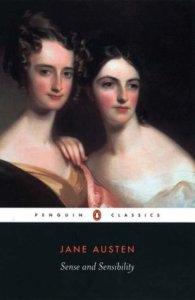
Book Description: Marianne Dashwood wears her heart on her sleeve, and when she falls in love with the dashing but unsuitable John Willoughby she ignores her sister Elinor’s warning that her impulsive behaviour leaves her open to gossip and innuendo. Meanwhile Elinor, always sensitive to social convention, is struggling to conceal her own romantic disappointment, even from those closest to her. Through their parallel experience of love—and its threatened loss—the sisters learn that sense must mix with sensibility if they are to find personal happiness in a society where status and money govern the rules of love.

Part II – Chapters 32 – End

Story – “The person, be it gentleman or lady, who has not pleasure in a good novel, must be intolerably stupid.”

Elinor relates Colonel Brandon’s tale to Marianne, and while it does shine more light on Willoughby’s character, she is still greatly affected. The Willoughby’s marry and leave town and Marianne can be convinced to begin returning to the world. Around this time, the Miss Steele’s and Mr. Dashwood and Fanny all arrive in town as well, greatly expanding their social groups. While out and about, the Miss Dashwoods run across the younger Mr. Ferrars who does not recommend himself by being rather vain and full of himself; he aligns perfectly with what they know of the rest of the family (barring Edward), however.

The Middletons, Steeles, Dashwoods, and Ferrars all begin to mix and mingle forming various opinions on each other. Elinor is caught up in it all and ends up being present when Lucy Steele first meets her future (unbeknownst to her) mother-in-law. The Ferrars, however, are so busy subtly, or not so subtly, slighting Elinor, that Lucy ends up with a good deal of praise and attention. Mariannne, still out of sorts, finds this intolerable and has a few break-downs while in company.

Later, Lucy crows to Elinor over how well-received she was. Elinor makes an effort to temper her enthusiasm, but gives up eventually. Edward arrives and they are all awkward together. From there, the days continue with Elinor and Marianne being thrown routinely into the company of various Steeles and Ferrars. The younger Mr. Ferrars only further proves himself to be ridiculous and Lucy Steele takes every opportunity to throw more barbs Elinor’s way.

Eventually, the Miss Steeles recommend themselves so much to the Ferrars and Mr. Dashwood/Fanny Dashwood that they are asked to come stay with the family. While there, however, the elder Miss Steele lets it slip that her sister is engaged to Edward. The sisters are immediately banished from the premise, but Edward stands by Lucy, losing his own family fortune in the process. With this shocking truth, Marianne finally realizes what Elinor has been suffering  through the last several months. Mr. Dashwood visits and drops several hints that as much as the Ferrars family might have disapproved of other prospective wives for Edward, they would have much preferred that person to Lucy Steele.

Colonel Brandon hears of Edward’s plight, and knowing him to be friend of Elinor and Marianne’s, he offers him a small estate from which Edward can go into work with the church. Elinor is tasked with delivering this news to Edward, which she does, knowing that it will be the final nail in the coffin of what could have been between her and Edward.

Finally, Marianne and Elinor begin their trip home. On the way, they stop at the Middletons and while there Marianne comes down with a bad fever. Over the next few days the fever worsens to the point that Colonel Brandon rushes off to fetch Mrs. Dashwood, in case the worst should happen. Over the night, Marianne’s fever finally breaks. And in the early morning, Elinor receives an unwelcome visitor: Mr. Willoughby. He heard of Marianne’s illness and traveled through the night to check on her. He explains his side of the story, that knowing his own selfishness and after being cut off by his wealthy aunt (after she heard of the incident with Colonel Brandon’s ward), he immediately set off to marry an heiress. He claims that his true love will always be for Marianne, however. And now that his aunt has forgiven him and restored his wealth, he lives in even more regret for not remaining faithful to her. Elinor tells him that none of this does any good for Colonel Brandon’s ward and that Marianne is lost to him forever, though Elinor does now pity him more than she had before.

Later, Mrs. Dashwood arrives and is relived to find Marianne recovering. Eventually, they make their way back home. Elinor relates what Mr. Willoughby told her, and Marianne acknowledges it all in a much more calm manner. From that point, Marianne makes a conscious effort to settle herself and try to emulate Elinor’s approach to life more fully.

One day, they hear from one of their servants that a Mrs. Lucy Ferrars has been spotted in town nearby with her husband. This seems to settle the matter until not long after, Edward himself arrives. After some confusion, it becomes clear that Lucy had broken her engagement with Edward once he lost his fortune and instead attached herself to the younger Mr. Ferrars who now, conveniently, has all of said fortune to himself. Thus, Mrs. Ferrars ends up with Lucy as a daughter-in-law either way. Edward proposes to Elinor, they marry, and move into the small estate near Colonel Brandon’s home. Marianne, eventually, comes to recognize the more important points of character in Colonel Brandon’s person, though less overtly romantic they may be, and they, too, marry.

Heroines – “I hate to hear you talk about all women as if they were fine ladies instead of rational creatures.”

The first half of this half is really torturous for poor Elinor. She first has to contend with an onslaught of jabs from Lucy, all while caring for a despondent Marianne. And then when the truth finally comes out, she’s the one tasked with delivering the news that through Colonel Brandon’s generosity, Edward and Lucy will be able to marry immediately. Marianne finally knowing the truth turns out to also not be as helpful as one would suspect, as she seems to at first think the only way Elinor could have managed to keep this all a secret was if she didn’t truly love Edward anyways, so there wasn’t much real loss. Not one of Marianne’s finer moments. It is, of course, gratifying to see Elinor rewarded in the end. However, I will say that all the traits that make her such an upstanding woman, do, unfortunately, also make her one of the less exciting Austen heroines. She reads more like a commentary from Austen on how women should behave (with Marianne serving as a not-too-subtle example of some of the worst flaws of the women of that time), than as a true character herself.

Marianne, for all of her ridiculousness, is definitely the more entertaining read of the two. Some have reviewed this book and commented that perhaps Marianne’s punishment for giving way to the full onslaught of sensibility common to teenage girls is a bit harsh. She’s smacked down fairly publicly with the Willoughby situation, and then ends up on death’s doorstep to boot. And, as I’ll discuss a bit later, her “romance” with Colonel Brandon reads more as a reward for him being a good person than as anything truly for Marianne herself. There is perhaps also some humor to be found in Marianne’s endeavors to make herself more like Elanor. With the same dogged pursuit that she gave romanticism, we see her here tackling a reading list and strictly minding her own temper. There’s not too much of the book left after her illness, and plot points are being covered quickly one after another. So there isn’t a lot of time devoted to how Marianne ultimately turns out. One can hope that she still retains some of her liveliness and wit, if a bit more evened out by a better sense of reality and calm. If given that, I think she could turn out similar to Emma Woodhouse in some ways. Both are clever and driven by extreme emotions, sometimes to the point of foolishness, but both are also clearly good women who love those in their lives fully.

Heroes – “What are men to rocks and mountains?”

I didn’t really remember this fact as well, since it had been several years since I had read this book before this re-read, but Colonel Brandon is by far the more fully fleshed out character. Not only are we given many more insights into his own history, he simply has at least twice the amount of page time as Edward. I feel like if I went back through the book, I could count on two hands the number of pages that have actual dialogue from Edward on them. I’ll have to keep my eye on it in future books, but I seem to think this is one of the only examples of a primary romantic hero suffering from “tell instead of show” writing. It’s not a common flaw on Austen’s part in general, and definitely not of her main characters. But here, Edward is less of a main character than a plot device, really. We’re simply told of many of his good qualities and, like Colonel Brandon, really, we form most of our opinion on him based on the fact that we know Elinor and she has good judgement. So if she says he’s good, then he must be good.

Colonel Brandon, on the other hand, is given much more room to shine. Not only do we have a better understanding of his character when he lays out his own history prior to meeting the Dashwoods, but we see several examples of his innate goodness. His offering of the rectory to Edward and Lucy is an act of kindness that is almost hard to believe. Again, he doesn’t know this man at all and is doing this purely based on the Dashwoods’ good opinion and his sympathy for a plight that reminds of his own early life. Beyond that, we see the devotion he had for his former love and the care he has taken of her daughter. And, of course, his extreme agitation at Marianne’s illness and how he takes it upon himself personally to fetch her mother. He is definitely deserving of happiness, and it’s gratifying to see Marianne acknowledge the true nobility of his actions.

Villains – “I do not want people to be very agreeable, as it saves me the trouble of liking them a great deal.” 

The Ferrars family takes center stage in this second half, putting on full display why, while Edward may be a loss to Elinor, being part of their family more than she already is, is not. Lucy is also in rare form. She continues to gloat over Elinor and, while we’re told she has some sense, she still seems unable to grasp the bigger story going on: that her seeming easy acceptance by the Ferrars family is meant more as a dig against Elinor than as praise of herself. We’re meant to feel bad for Edward when their engagement is discovered, but I have to admit part of me always revels in Lucy’s take-down, short-lived as it is. I think the biggest tell, however, as far as her character goes, is that even after she’s married the younger Mr. Ferrars, she goes out of her way to send her good wishes to Elinor as “Mrs. Ferrars.” There is no point to this action other than being one last petty dig to a woman who was nothing but tolerant and understanding of her and who had done her no personal wrong. Lucy is a small, small woman.

Willoughy’s explanation to Elinor always read as a bit odd to me. I’m not quite sure I really see the point of his apology. Perhaps in so far as it lets Marianne better understand his character and that in his own selfish way he was in love with her at one point and thus she is able to get full closure? But as a modern reader, I’m even less sympathetic to his plight than Elinor is. She seems to come away from the conversation with some pity for him, but still firm in her censure over the way he treated Colonel Brandon’s ward. But between that action and the pure self-centeredness, lack of empathy, and flagrant pursuit of wealth at all costs, I have a hard time pitying him as Elinor and Marianne do. If he is unhappy, he has brought it on himself. There is no pity from me for someone who treated others as poorly as he did, with eyes wide open about his own actions and priorities.

Romance – “A lady’s imagination is very rapid: it jumps from admiration to love, from love to matrimony in a moment.”

Again, the romance is very muted in this last half, even when the happily-ever-afters start rolling in. Edward and Elinor’s actual proposal and acceptance aren’t included, and the story moves quickly to the facts of their new life with them moved into the rectory. Marianne’s story is even more hastily wrapped up, with her “romance” with Colonel Brandon probably reading as one of the least romantic pairings for a heroine in all of Austen’s work. Indeed, it is almost implied that she marries Colonel Brandon with the expectation of coming to love him fully, rather than actually being in love at the moment. It makes sense for the larger points about sense and sensibility that are being made in the book, but purely from a romance satisfaction stand-point, it leaves a lot to be desired. If anything, I’m more disappointed on Colonel Brandon’s part than anything. I’m sure Marianne comes to love him as he deserves, but it doesn’t quite sit right with a modern reader to think of her as “settling” for him based purely on his merits rather than actually feelings.

Comedy – “For what do we live, but to make sport for our neighbors, and laugh at them in our turn?”

There is mostly dark comedy to be found in this second half, specifically in the round-about way the snobby Mrs. Ferrars ends up with Lucy as a daughter-in-law in the end anyways. Between the serious nature of Edward’s future, the continued fall-out of Willoughby’s actions, and Marianne’s life-threatening illness, it’s rather a serious second half. Mrs. Jennings, in fact, one of the primary comedic characters in the first half, really rises to her own and we the steadfast loyalty and real concern she has for the Miss Dashwoods, even if some improper comments still slip out. It’s gratifying to see Marianne finally acknowledge all that Mrs. Jennings has done for them, even if she has her moments of crassness.

Favorite quotes – “What did she say? Just what she ought, of course. A lady always does.”

“Elinor agreed to it all, for she did not think he deserved the compliment of rational opposition.”

The put-down we all wish we could think of in the moment.

“Always resignation and acceptance. Always prudence and honour and duty. Elinor, where is your heart?”

To some extent, I agree with Marianne here. This is probably why Elizabeth, Emma, and Anne stand out more to me as Austen heroines. All (with the exception of Emma at times) are respected and proper ladies of their time, but they also seem to have more heart to them. Their emotions are better understood and conveyed to the reader. Perhaps the simple fact that each in their way has a more apparent flaw than Elinor makes them read more fully as people and thus easier to become attached to and root for.

“Elinor could sit still no longer. She almost ran out of the room, and as soon as the door was closed, burst into tears of joy, which at first she thought would never cease.”

Finally. And we’ll see that the movies all have fun with this moment of final release for Elinor.

Final thoughts – “I declare after all there is no enjoyment like reading!”

Here at the end of the first book in this re-read, I’m already thinking of some type of summary post I’ll have to do at the end of it all. Mostly because re-reading this one made me fully realize how much of my memory of some of the books has been impacted by my more frequent watching of movie adaptations. I had forgotten just how little page time was devoted to the men in this book and even more so the specifics of how Marianne/Colonel Brandon’s romance played (or didn’t play) out. That’s just one example, but I caught myself doing comparisons many times.

I’m also curious to see how my memory does with each of the heroines of the other books. I’ve re-read “Pride and Prejudice” and “Emma” more than the others, so I feel fairly confident there. But this re-read also highlighted just how little I remembered of how Elinor and Marianne are described on page. In this read through, I really found myself focusing, almost to the point of distraction, more on what Austen was trying to say through her very different depictions of Elinor and Marianne. In some ways, it made this book feel more like “Northanger Abbey” than her other books. Both that book and this seem to be making a fairly distinct commentary on a particular subject rather than reading as a simple story.

Here, Austen is really laying it on thick with her opinions on women who give way to flights of romanticism to the point that they lose sight of reality and perspective. Knowing Austen’s own life, particularly the fact that she never married, it’s easy to see how she might condemn this type of overly-sentimental approach to life. Marianne routinely makes grand pronouncements that anyone who has lived in the world would know won’t hold up. Instead, Elinor is a constant presence as a reminder of all that is good, reserved, and true. She may not be flashy, but she’s clearly Austen’s response to the type of flighty, unmitigated sentimentality that she must have been seeing around herself and that she reflected in Marianne.

I found myself stopping and thinking about passages in this book fairly often as I was reading. While the story was lacking much of the comedy and romance that I think we often expect from Austen’s work, I think this book was tackling an important topic for Austen. Much as “Northnager Abbey” was her attempt to poke fun at the type of silly Gothic romances that were so popular at the time, this was her call to arms for women to give credence to their own self-control and sense. I think it’s also fairly interesting that these were two of her earlier written books. Perhaps, in some sense, she was able to get these larger points “out of her system” (that phrase implies it was a bad thing, but that’s not really it) in these early books, and thus allowed herself more leeway to fully indulge in her storytelling in her later books. We’ll see if my memory holds more true for those when I get there!

In two weeks, I’ll review the 1995 movie of “Sense and Sensibility.”

Serena’s Review: “Ship of Smoke and Steel”

34618380Book: “Ship of Smoke and Steel” by Django Wexler
Publishing Info: Tor Teen, January 2019

Where Did I Get this Book: own it!

Book Description: In the lower wards of Kahnzoka, the great port city of the Blessed Empire, eighteen-year-old ward boss Isoka comes to collect when there’s money owing. When her ability to access the Well of Combat is discovered by the Empire—an ability she should have declared and placed at His Imperial Majesty’s service—she’s sent on an impossible mission: steal Soliton, a legendary ghost ship—a ship from which no one has ever returned. If she fails, her sister’s life is forfeit.

Review: Our bookclub has been doing a Secret Santa book exchange for the last several years (have we mentioned how awesome our bookclub is recently??). It’s great because A.)more books! and B.) having librarians as friends means you’re sure to get a great new read that has been careful tailored to your own reading preferences. I’d seen the sequel for this book coming up on “most anticipated” lists for a few months now and am not sure how I missed this first one when it came out last year. But this has now been rectified, and I’m now halfway through said sequel. So, spoiler alert, I loved this book.

Reigning as a crime lord on the streets of Kahnzoka may not be an ideal life, but it’s a living, and one that Isoka is particularly skilled at. With her Well of Combat, she can be as brutal as she is efficient. But behind her cold exterior, her true purpose is one of love, the protection and future of her beloved younger sister Tori. But it all goes awry when she is captured and sentenced to an almost sure death on the mythical ship Soliton. There, she realizes that what once had seemed only a fable is all too real, and the powers that had made her almost legendary on the streets may be only a drop in the bucket against the new foes that await her.

I’ve only read one other book by Wexler, a military fantasy fiction novel which I quite enjoyed. This was the author’s first foray into YA fantasy fiction, and I have to say, I think this might be the key to it. Having been an adult fantasy author first, there seems a decent chance that Wexler was less influenced by the pervasive YA tropes that all too often undercut many potentially good YA fantasies these days. This book has all of the originality, spunk, diversity and grimness that one would find in an adult novel. The only thing that makes it YA is the age of our main characters. And that’s what makes it so good.

Isoka may be a teen, but she is completely believable as young woman who grew up on the streets and whose sense of morality and survival have been worn down to just the basics. This book doesn’t shy away from the grim reality that would take over a character who has had to fight for her own, and her much younger sister’s, very survival almost from infancy. Isoka is a bringer of death, and while over the course of this book she learns to take others under her wing as well, her lack of angst over the harshness of her life was incredibly refreshing. She may not be a “good” person by the standards a modern individual would set, but she’s a survivor and doesn’t apologize for doing what she thinks is necessary to protect those she loves.

The magic system was also very compelling. It’s simple enough to be understood easily, with a variety of Wells that users can pull from that grant them different abilities. But as the story progresses, we learn that not all is fully understood about these Wells. And even by the end of the story, there are mysteries still to be unraveled here. Isoka’s own power, the Well of Combat, is an excellent choice for our main character. The action is riveting, feeling almost cinematic as Isoka battles monstrous beasts with her twin power blades and armor. There are also those with powers such as speed, fire, and shadow, and the greater battle scenes paint an epic-feeling picture of these incredible individuals battling alongside one another.

Most of the action takes place on board the mysterious ship Soliton. I don’t want to spoil anything, as discovering the horrors and wonders of this ship was half the fun of the book. Just as you feel you understand one layer of this creepy place, another unfolds. Again, like the magic system itself, by the end of the book the reader feels as if they have only scraped the surface of what is really going on behind this secretive ship.

This was an excellent read. I blew through it in only two days. It’s a fast read, full of action and creepy fantasy elements. There’s also a lovely romance between Isoka and her friend Meroe, a girl with her own barely understood abilities. I already have the second book loaded up on my Kindle, so expect a review for that one up soon. If you’re looking for a fun new fantasy series, definitely check this one out!

Rating 9: Epic, action-packed, and best of all, the start of what promises to be an exciting trilogy!

Reader’s Advisory:

“Ship of Smoke and Steel” is on these Goodreads lists: “2019 Queer SFF” and “Best Fantasy 2019.”

Find “Ship of Smoke and Steel” at your library using WorldCat!

Serena’s Review: “The Bard’s Blade”

45046604Book: “The Bard’s Blade” by Brian D. Anderson

Publishing Info: Tor Books, January 2020

Where Did I Get this Book: NetGalley

Book Description: Mariyah enjoys a simple life in Vylari, a land magically sealed off from the outside world, where fear and hatred are all but unknown. There she’s a renowned wine maker and her betrothed, Lem, is a musician of rare talent. Their destiny has never been in question. Whatever life brings, they will face it together.

But destiny has a way of choosing its own path, and when a stranger crosses the wards into Vylari for the first time in centuries, the two are faced with a terrible prophecy. For beyond the borders, an ancient evil is returning, its age-old prison shattered.

The two must leave their home behind, and in doing so will face sorcerers and thieves, con-men and assassins, treachery and greed. How far down this path will they have to go to stop the rising darkness and save their home? And how much of themselves will they have to give up along the way?

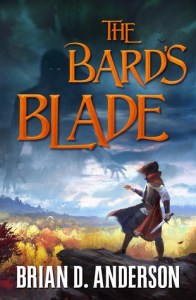
Review: I requested this book based mostly on the super cool cover art. It’s walking some line between hokey 70s pulp fantasy art and the neat modern covers you see on some of Brandon Sanderson’s books. Either way, I love it. The book description itself sounded kind of meh and familiar. In some ways, it surpassed these expectations, and in other ways…the cover’s still cool.

Vylari is an idyllic land full of happy people going about simple lives. Here, Mariyah and Lem have grown up each able to focus on their own particular skills (Mariyah’s business savvy with her family’s wine business and Lem’s amazing musical talents) while focusing on the future they will soon have together as a married couple. All of this falls apart, however, when a stranger arrives and brings news of an evil that is coming, an evil that not even the magical barrier protecting Vylari can stave off, and somehow they are connected to it. Now, out in a dangerous new world, Lem and Mariyah must not only learn how to exist in a place so different than their peaceful home, but they must also discover the secrets in Lem’s past and how to prevent the evil that is coming.

This book was kind of hit and miss for me. While I did read it quickly and it was enjoyable enough, looking back on it, there’s not a lot that stands out as super unique. It checked all of the right boxes: world-building, strong characters, a good balance of action and reflection. But there was never much more given to any of these aspects to make the book really rise above the mediocre.

For me, the strongest aspect was its two main characters. Lem and Mariyah are both compelling and interesting, each approaching their time in the strange new world they find themselves in with bravery and cunning. It was particularly interesting seeing them come across aspects of life that we would take for granted but are clearly new to them. We spend only a limited amount of time in Vylari, only enough to get a general idea of how peaceful and simple it is. It’s only once we enter the greater world that readers begin to realize just how limited Vylari was. Yes, conflict and violence are almost unheard of there, but also, horses? As a reader, I just assumed things like that exist until we come across Lem, when first entering a village in the outside world, describing some strange beast with a long neck pulling a cart. From there, I always had my eyes open for other things that one would take for granted but might be new to our main characters.

I was also intrigued by the religious institution that forcibly runs much of the world outside of Vylari. Through the innocent eyes of Lem and Mariyah, we see how shocking some of the choices are that people who are ruled by ruthless leaders would make. The people in this world expect darkness and deceit. Lem and Mariyah are completely out of their element when first experiencing it.

However, while these aspects of the story were interesting enough, I was never able to become fully invested in the story. I wasn’t able to sink into it and instead was very aware of the process of reading it. It’s always hard to pin down in a review the quality in some books that leads to a reading experience like this. This makes it doubly unfortunate: I don’t have an exciting read and then I struggle to explain why the book was a bit of a miss for me. Like I mentioned earlier, I think much of the problem was simply that nothing felt super new. Lem and Mariyah, while strong enough characters, didn’t really stand out in any particular way. They weren’t annoying or problematic, they just were…people. And the idea of a world kept magically away from another was a concept I’ve run across several times in other fantasy works, and there wasn’t a whole lot here that differentiated this book from those. It’s a fine read. But not much more than that, unfortunately.

Rating 7: Nothing made me super excited. Nothing made me angry. Ultimately, nothing made me really care that much.

Reader’s Advisory:

“The Bard’s Blade” is a newer title, so it isn’t on many Goodreads lists, but it is on “Best Books 2020.”

Find“The Bard’s Blade” at your library using WorldCat!


Serena’s Review: “Jade City”

43587154._sy475_Book: “Jade City” by Fonda Lee

Publishing Info: Orbit, June 2018

Where Did I Get this Book: from the publisher!

Book Description: The Kaul family is one of two crime syndicates that control the island of Kekon. It’s the only place in the world that produces rare magical jade, which grants those with the right training and heritage superhuman abilities.

The Green Bone clans of honorable jade-wearing warriors once protected the island from foreign invasion–but nowadays, in a bustling post-war metropolis full of fast cars and foreign money, Green Bone families like the Kauls are primarily involved in commerce, construction, and the everyday upkeep of the districts under their protection.

When the simmering tension between the Kauls and their greatest rivals erupts into open violence in the streets, the outcome of this clan war will determine the fate of all Green Bones and the future of Kekon itself.

Review: This book has been on my TBR list for quite a long time. It received tons of praise when it first came out, but somehow I still missed the action. But when I saw that its sequel had come out recently, I knew that now was the time to get on board. So off to the audiobook library I went, and here we go! Another great fantasy trilogy to get caught up in!

Jade is what makes Kekon special, but also dangerous. Granting incredible abilities to those trained and predisposed to use it, controlling and possessing jade has forged the future of the small island nation. Now, run by several gangs made up of jade-enhanced warriors, Kekon sits in a precarious place in a world that wants what it has. To determine this future, however, each gang must continually prove its strength. The Kaul family, the head of one such gang, finds itself at an important crossroads as the reigns of power have been handed down to the next generation. Each of the three Kaul siblings have chosen very different paths, but each will soon learn that they all have an important role to play if the future of their family, gang, and nation are to be secured.

Having not read any  books that feature gangs prominently (at least that I can think of off the top of my head), most of my mental comparisons for this book came from movies like “The Godfather” and “Gangs of New York.” Which, again, each of which I’ve only seen once. All of this clearly highlights my lack of familiarly with the genre. But that aside, I think this was an exemplary take on a gang drama featuring a unique fantasy world that flowed together seamlessly.

The world-building was thorough and detailed, laying out a complete history of Kekon and how the abilities of jade warriors have shaped its trajectory. Now, in the modern world, we see how this power influences economic and political decisions, all while still being steeped in ancient tradition and rituals that weave their way throughout the country’s society and culture. The gangs themselves that primarily use and manage this jade are much more than the criminal enterprises we often associate with that term. Instead, they are acknowledged players on the world stage, even if their operations on the ground level still incorporate many of the aspects of crime lords: rigid territories, monitored petty crime, and a tightrope walk between peace and violence breaking out on the streets.

To make a story about a gang family really work you have to have strong main characters at the heart, and that’s definitely one of the biggest strengths of this book. The story centers around the three Kaul children, Lan, Hilo, and Shae. We also get several chapters from an adopted son, Anden, who is still in training to be a Green bone (a jade warrior). Each had their strengths, but I particularly enjoyed Hilo and Shae, together and separately. Hilo, as Horn of the gang, is essentially the enforcer, a role that suits him well with his charming personality disguising a brutal strength as a fighter. Shae, on the other hand, is the family member who got away, starting a new life for herself in a foreign country. But slowly, throughout this book, she realizes that one can’t simply cut family out of one’s life, and we see her clever mind and knowledge of politics and economics come more into play. She and Hilo naturally clash with their very different approaches to problem solving, and it’s the kind of fraught relationship that’s thrilling to follow. The reader is privy to both of their thoughts, so depending on whose mind you’re in currently, it’s easy to sympathize with one position over another. Until you switch, and then oh yes, maybe this one of the two has the rights of it.

This a detailed and thoughtful story, taking its time to fully develop its world, the players, and the various histories that were at play to create the situation the Kaul clan currently find themselves in. There were a couple of surprises along the way and some good action scenes towards the end, but go into it expecting an immersive, slow read. It was very clear that this was the first book in a series, and that it was setting the stage for larger conflicts to come. I already have my copy of “Jade War” on hand, so I’m excited to see where things go from here! If you enjoy urban fantasy, specifically ones set in unique worlds with political maneuverings at their heart, this is definitely the book for you!

Rating 8: A fully realized urban fantasy that feels like one is only scraping the tip of the iceberg on what is sure to be an excellent series.

Reader’s Advisory:

“Jade City” is on these Goodreads lists: “Diverse Fantasy and Science Fiction Settings” and “2018 Sci-Fi Award Nominees.”

Find “Jade City” at your library using WorldCat!

My Year with Jane Austen: “Sense and Sensibility” Part I

14935._sy475_Book: “Sense and Sensibility”

Publication Year: 1811

Book Description: Marianne Dashwood wears her heart on her sleeve, and when she falls in love with the dashing but unsuitable John Willoughby she ignores her sister Elinor’s warning that her impulsive behaviour leaves her open to gossip and innuendo. Meanwhile Elinor, always sensitive to social convention, is struggling to conceal her own romantic disappointment, even from those closest to her. Through their parallel experience of love—and its threatened loss—the sisters learn that sense must mix with sensibility if they are to find personal happiness in a society where status and money govern the rules of love.

History – “I read it a little as duty, but it tells me nothing that does not either vex or weary me.”

“Sense and Sensibility” was Jane Austen’s first published work, but it was a long time in the making. It is thought that work was likely started on this book when Austen was only 19 in 1975. The manuscript was originally titled “Elinor and Marianne” and went through several re-writes, including likely a major change from an epistolary format to the current form, before settling as the book we now know. Austen self-published the book with its author only listed as “a Lady.” Over the next two years, the entire first run of the novel was sold out and Austen was able to publish a second run and collect earnings on it for several years. (source)

“I am never too busy to think of S & S.  I can no more forget it, than a mother can forget her sucking child; & I am much obliged to you for your enquiries.”

 —Jane Austen, letter to Cassandra Austen, April 25, 1811

Part I – Chapters 1 – 31

Story – “The person, be it gentleman or lady, who has not pleasure in a good novel, must be intolerably stupid.”

In this first half of the book we meet the Dashwoods, a family consisting of Mrs. Dashwood and her three daughters, Elinor, Marianne, and Margaret. They are left without a fortune of their own after Mrs. Dashwood’s husband dies. Their half brother and his wife move into their home bringing with them Mrs. Fanny Dashwood’s brother, Mr. Ferrars. Elinor and Mr. Ferrars form an attachment. Seeing the match as unsuitable, Fanny Dashwood puts pressure on the Dashwoods to leave and find an establishment of their own. Thinking it for the best that Elinor and Mr. Ferrars continue their relationship out of sight of his meddling sister, Mrs. Dashwood and her three daughters move to the countryside into a cottage rented to them by a distant cousin, a Sir John Middleton.

Sir John and his family are all oddities, though mostly harmless. The Dashwoods also meet a family friend, Colonel Brandon, who, in his upper 30s, is seen as an established bachelor. It is quickly noticed, however, that he seems to have an interest in Marianne. She, however, quickly dismisses him as both too old and too reserved. Instead, through a romantic first introduction, she forms a fast, strong, and apparent to all attachment to a Mr. Willoughby. The two are incredibly open and frank about their attachment, but no formal engagement is ever mentioned. Elinor warns Marianne to curb her enthusiasm and behave in a more reserved manner as her and Willoughby’s current level of attachment is drawing the eyes and gossip of those around them.

Willoughby and Marianne’s attachment reaches a point where her family and friends cannot but assume they are secretly engaged. More questions are raised however when Willoughby suddenly quits the neighborhood and returns to town; Marianne is devastated, but still sure of his attachment. Presently, Mr. Ferrars does appear, though he is out of spirits. The family notes a new ring on his finger that looks to have a lock of hair the same color as Elinor’s. There is speculation, but Elinor says she never gave him any of her hair.

Eventually, a new party of two young women, the Ms. Steeles, join the party. Through the endless jokes of Mrs. Jennings, Sir John’s mother in law, the younger sister, Lucy Steele, guesses that at some point Elinor and Mr. Ferrars might have been speculated to have an attachment. She privately shares with Elinor that she, Lucy, has been in a secret engagement with Mr. Ferrars for several years, only kept secret due to the sure disapproval of his family; it is revealed that it was her hair in the ring. Elinor is hurt, but understands that Mr. Ferrars never made any promises or outright overtures to herself. Instead, she grieves at the poor match between the sensible Mr. Ferrars and the conniving Lucy Steele.

Mrs. Jennings asks Elinor and Marianne to join her in London. They agree, with Marianne becoming increasingly excited by the likelihood of meeting again with Mr. Willoughby. When there, she writes him several times and waits for him daily to make an appearance; he does not. Eventually, they meet at a ball and it becomes clear that Willoughby has broken with her and is now only days away from being engaged to a wealthy young woman. He writes a cruel letter to Marianne, apologizing for her “having been mislead” and returns Marianne’s letters. Marianne confides in Elinor that they were never engaged formally. Marianne sinks into a deep depression, confused and inconsolable.

Colonel Brandon appears, and still attached to Marianne and concerned for her welfare, shares his own personal history. He lost his first love when she was forced to marry his brother. The marriage went poorly and she ended up bereft. Colonel Brandon only rediscovered her when she was on her deathbed with a young girl child. Brandon took the girl under his wing. Early in this year, the girl disappeared from her keepers. When Brandon rediscovered her, she was pregnant and had been abandoned by her lover, Willoughby. Elinor is shocked and agrees that this news must be made known to Marianne.

Heroines – “I hate to hear you talk about all women as if they were fine ladies instead of rational creatures.”

First off, I think that book description is very misleading. For one thing, it represents Marianne as the primary sister of the two, where the book reads very much from Elinor’s perspective (the reader is in on the same secrets she knows, is unclear on the same information she is, and is privy for private conversations between her and other characters). I also think the last line is misleading about the overarching conclusion that Austen leads readers towards in this book, but I’ll go more into that in my concluding thoughts in the second part of this review in a few weeks.

It’s hard to be objective about Elinor and Marianne because of this greater focus on Elinor and said conclusion at the end. We are told that Marianne is sensible, clever, and a fine lady but we see her behave fairly poorly in this first half. But really, she mostly behaves the way most seventeen year old girls would. We are simply used to our young historical fiction leading ladies often doing better. But, of all Austen’s heroines, other than perhaps Catherine in “Northanger Abbey” (who also behaves poorly and like a teenage girl at times), Marianne is the youngest heroine we get. It’s a testament to Austen’s strength as an author that she is able to walk the fine line when creating a character such as Marianne that the reader is never pushed too far over the edge into dismissing her as romantically foolish and not worth rooting for. From the beginning, given that we are seeing things through Elinor’s eyes, the reader understands that Marianne’s actions are not ideal. Beyond that, the reader on their own can read her grandiose statements and see in them the naivety of youth.

Elinor, of course, is our solid rock. Throughout the entire book, we never see her make a misstep. At times, however, this leaves her as reading a bit more dull than some of Austen’s other ladies. She definitely falls on the Fanny Price side of the spectrum, being more reserved and providing most insight through personal reflection rather than witty dialogue. She’s not the most exciting heroine, but there’s a certain comfort in knowing that the story is safe in her hands, and, because it’s Austen, she’ll be rewarded in the end. Her handling of Lucy Steele is probably her at her finest. Here she almost takes her sense of propriety too far! Yes, Lucy told her a secret. But it’s hard to imagine taking that so to heart that you don’t even tell your beloved sister. Marianne, however, while not a blabber mouth, is also not the most discreet in her actions, so I do understand to some extent. However, it is never specified that this is a factor in Elinor’s thought process. Had she had Jane Bennett for a sister, one of the most demure and trust-worthy characters in all of Austen’s books, we can only assume that Elinor would still keep it to herself. Perhaps it is technically the right and honorable choice, but it is also one that almost stretches the believability of Elinor’s character to the breaking point. Is anyone really that dedicated?

Heroes – “What are men to rocks and mountains?”

We will get into this more when I review one of the movie adaptations for this book, because I think it’s the director who addresses this same thought in a commentary section, but the heroes of this book are, in my opinion, the weakest offerings Austen has to offer. Mr. Ferrars and Colonel Brandon are both decent characters and good men. But as romantic heroes, they are lacking. Mostly this because we are given next to nothing as far as interactions between them and our two ladies.

In this first half, Edward and Elinor’s burgeoning relationship happens entirely off page. We get zero examples of their interactions together and only hear about their relationship through the eyes of others and through Elinor’s modest, restrained discussions of her views on him. When he does finally appear again, we are once again limited to few interactions and zero between only Elinor and Edward. Indeed, I think it’s fair to say we hear more dialogue between Marianne and Edward debating various points on appreciation of art. And from there, we are mostly left with a man who is described as being withdrawn and moody. We later learn why, but compelling it does not make him.

Colonel Brandon fairs better as we do get to see more from him. To a certain extent, we can see his admiration for Marianne grow. And through his later communications with Elinor about his past and the comparisons he sees with Marianne, we get real insights into the emotional depth he has. But, again, there is very little to no interactions between him and Marianne herself. We hear their feelings on each other as communicated to Elinor, and very little else.

In this first half, it is clear who the heroes are, but frankly, they don’t feel very heroic. Brandon will ultimately fit this description much better than Edward, but as far as romantic plots lines goes, this first half clearly illustrates why this book fell lower on my preferences when I was looking for a swoon-worthy read.

Villains – “I do not want people to be very agreeable, as it saves me the trouble of liking them a great deal.” 

There are two main villains in this first half, Fanny Dashwood and Willoughby. Mr. Dashwood is also a villain, but mostly from being weak-willed and lead by his wife. In many instances, this plays more for comedic value than as a villainous depiction.

We get more from Fanny in the second half of the book, but the beginning scenes of the book with her talking Mr. Dashwood out of giving his sisters anything are a masterclass in despicable manipulation. That, and her snide comments to Mrs. Dashwood about Elinor and what does/does not belong with the house really cement readers’ feelings towards her early on. Through her, we’re set up pretty well to hate on the rest of the Ferrars family, Edward aside, when we later meet them.

Willoughby is a classic Austen villain. He shows up on the scene under mysterious, romantic circumstance, is charming and charismatic, attracting not only our main ladies, but the general esteem of the neighborhood, and while maybe not the absolute best prospect (Willoughby at least seems more financially secure than other similar characters in other books), would still be an agreeable match. Fans of Austen all know to beware of this type of character, but as we also see him and his courtship of Marianne through the sensible Elinor’s eyes, readers are immediately clued in to all not being well in this arena. While criticism is also thrown at Marianne for her behavior, Willoughby’s independence and control over his destiny, as a man, makes his actions much more reprehensible and Elinor quickly notes the dishonor in what she believes must be partially, if not all, his insistence that the assumed engagement remain secret.

We see most of his villainy laid out in this book, and in many ways he is one of the worst of the men presented in Austen’s books. He does become more pitiable in the second half when he can make his own case, but there is no ignoring the way he treats Colonel Brandon’s ward, a girl whose life has now been upended, her reputation beyond repairing, and at best has a future of quiet isolation in the country to look forward to. Marianne fairs better for being better protected and Willoughby’s own regard seeming to be stronger. But in the end, he makes the selfish decision to give her up for a fortune that has been lost to him (he at least thinks forever) due to his own reprehensible prior actions. Even in his affair with Marianne we see signs of his lack of regard for her reputation, bringing her to his future home and asking for a lock of her hair, all while knowing they are not engaged and these are not appropriate actions.

Romance – “A lady’s imagination is very rapid: it jumps from admiration to love, from love to matrimony in a moment.”

As I said above in the heroes section, this book is particularly light on the romance. The biggest romance we see on page is between Marianne and Willoughby, which is obviously not meant as an enjoyable love story so much as a cautionary tale. Elinor reflects quite a lot on both that relationship and that of the one between Lucy Steele and Edward. Lucy, while also perhaps fitting under the villain category, is an interesting character and I had forgotten just how manipulative and cleverly snide she was in her interactions with Elinor. To her credit, Elinor doesn’t downplay any of Lucy’s wits, but is given ample opportunity in personal reflection to list out Lucy’s flaws in case any reader remains unclear. With what little we have of Edward, it’s hard to fully picture how these two came together, but in many ways I see their future together, had it happened, to be somewhat similar to that of Mr. and Mrs. Bennett: a marriage where neither partner can love or respect the other.

We see several other flawed marriages as well. Mrs. Fanny Dashwood clearly manipulates her husband much of the time and he is too weak-willed to hold firm judgments himself. Sir John and his wife seem content enough, though they are painted as two individuals who take pleasure in very different things. And we have Mrs. Jennings’ other daughter and her husband, a marriage that Elinor reflects on with bewilderment. The wife is all smiles and laughs, tittering away about how silly her husband is. For his part, he is rude and dismissive of her and those around her. Elinor wonders at how a woman can be so happy with a husband who is so consistently saying unhappy things about and to her. But, as Austen often notes, marriage is peculiar thing.

Comedy – “For what do we live, but to make sport for our neighbors, and laugh at them in our turn?”

I’ll have to reflect on this more as I go through this re-read, but I think this book might be one of the less humerous of the bunch. Sir John and Mrs. Jennings are clearly the main comedic figures who don’t also have an element of villainy to their characters. Mrs. Jennings is a familiar neighborhood great lady who often appears in Austen’s works and due to her age and position can get away with saying all kinds of ridiculous things. While many of these are funny to the reader, we also see how it can be very painful for others to be around her. Elinor in particular ends up suffering for Mrs. Jennings essentially cluing Lucy in to Elinor’s past with Edward. But in the second half we see much more of the good of Mrs. Jennings that makes up for some of this.

The elder Miss Steele is also a good comedic figure. She doesn’t get a whole lot of page time, but what she does have is probably some of the funniest parts of the story. Her obsession with “beau” and her constant attempts to get others to ask her about them. She has some great lines of dialogue and there are even several good lines from the narrative itself that really go to town with the silliness of this character. With a page-time to laughs ratio, I think she wins hands down.

Favorite quotes – “What did she say? Just what she ought, of course. A lady always does.”

“If I could but know his heart, everything would become easy.”

I’m sure most of us can sympathize with this thought.

“It is not everyone,’ said Elinor, ‘who has your passion for dead leaves.”

Simple, but a lovely illustration of Austen’s clever writing even in small moments. Plus, one of Elinor’s few funny lines of dialogue.

“She [Marianne] expected from other people the same opinions and feelings as her own, and she judged of their motives by the immediate effect of their actions on herself.”

This is a spot-on observation about people in general. I think most all of us fall in this category at one point or another. These are the type of lines that are just casually inserted in a larger scene that make you do a double-take as you realize that some tidbit of profound wisdom and insight has just been dropped on your lap.

In two weeks, I’ll review the last half of “Sense and Sensibility” and share my final thoughts on the book as a whole.

Introducing “My Year with Jane Austen” Re-read

13944922484_a15743949f_b

It has been several months since my beloved “Great Animorphs Re-Read” ended, and I have since felt a certain void in my reviews on the blog. I love reviewing the books I am currently reading, but I will admit that sometimes the standard book review format, be the book good or bad, does start to feel a bit rote at times. Over the last several years, my “Animorphs” re-read was a lovely break of format and a pretty straight forward opportunity for self-indulgence (be it nostalgia or ranting).  So, now that we are in a new year, I felt it was time to start up a new re-read series. And what could be more different than a middle-grade sci-fi story that focuses on aliens taking over earth and the shape-shifting teens who fight them off than Jane Austen and her lovely historical romances?

mv5bmdm0mjflogytntg2zc00mmrkltg5otqtm2u5zjuyytgxzthixkeyxkfqcgdeqxvyntayodkwoq4040._v1_I am, and always have been, a reader of multitudes. While I do tend to stay pretty well within certain genres (fantasy, sci-fi, history, mysteries) and avoid others (contemporary, thrillers, etc.), I do usually enjoy the full extent of said genres. This is how, at age 12 or around about there, I was equally immersed in reading all of Jane Austen’s works while also still blazing through my favorite “Animorphs” series.

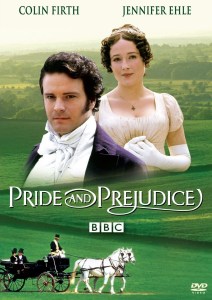
I was first introduced to Jane Austen through my mother and her (deserved) obsession with the 90s BBC mini series “Pride and Prejudice.” My dad was out of town for the weekend, and my mom, my little sister and I rented all 6 VHS tapes of this mini series from the library. We then proceeded to binge watch it , before binging was even a thing. I’m pretty sure we started it on a Saturday morning and got through the whole thing in one day. With sadness, we watched the credits roll on the last tape. We sat in silence. And then my mom said, “So, should we watch it again?” And we literally stuck the first tape right back in and started all over again. This is where I get it, to my husband’s endless confusion as I re-watch TV shows and movies over and over.

jane_austen_coloured_versionAfter the weekend of watching was over, I immediately began reading “Pride and Prejudice.” And then, like a good little binge reader, I read all the other books, too. Since then, I’ve re-read the entire series in fits and starts, with favorites getting more read-throughs than others (though I love them all). I took a very disappointing college class on Jane Austen (the professor had us take an actual test on plot points from “Pride and Prejudice”…again, this was in college). I wrote a few papers on her books, one focusing on romantic heroes in her books and the heroes in their contemporaries, and what makes Darcy stand out to modern readers. And, as always, I continued to devour every new iteration of the stories, from new movies, to new mini-series, to YouTube versions.

From this long history of disorderly Austen obsession came my idea for this read-through. I obviously can’t review every version of all of her books, as that would take over all of my blog posts for years, probably. But I intend to try and get a decent representation of the most popular (by my own made up metrics, of course) versions.

I will review each book, typically in two parts. The first part of each book review will include a brief history of the book and Jane Austen’s work on it. The second part of each review will include my overall thoughts on the book as a whole. And then I will review a few movies/mini-series/other versions of the story. Each book should end up with around 4-6 posts devoted to it, and I hope to complete my read through in the next year. Posts should come out every other Friday following a similar format to that of the “Animorphs” re-read. It’s a big project, and very different from my “Animorphs” re-read, but I’m excited to dive in! If you’re an Austen fan, I hope you’ll have as much fun as I will revisiting these stories. And if you’re not an Austen fan already, you sure better be by the time I’m done brainwashing you over this next year!

Serena’s Favorite Reads of 2019: Picks 5 through 1

Another a year, another almost impossible task trying to each choose our Top 10 Reads of the year! For me, the word “favorite” is an important part of this list. As I go through the last year’s worth of reading, I often found that some books would strike particular chords within me more deeply than others, even if, quality-wise, another book might be stronger. Of course, this just makes it all that much harder to put them in any order. But here it goes! Today I’m going to countdown my favorites reads, ten to six. And since it’s the end of the reading year, don’t forget to enter our “12 Days of Christmas Giveaway!”

36510722#5: “Gods of Jade and Shadow” by Silvia Moreno-Garcia

“Gods of Jade and Shadow” Review

I’ve only read two books by Moreno-Garcia, but both have made my top reads list. And yet, they are completely different stories! It’s truly impressive how versatile of an author she is, combining beautiful imagery, new magical systems, and jumping between cultures and time periods. This fairy-tale like story is set in the Jazz Age and travels from a small village in southern Mexico up through the country. One thing that really stands out about Moreno-Garcia’s work is the page time she devotes to her villains who are just as fun to hate (while also somehow still sympathizing with?) as her protagonists are to love. This book was gorgeously written and so unique and fresh with its setting. Definitely check it out if you’re looking for an original, non-European fairytale fantasy.

40698027#4: “A Boy and His Dog at the End of the World” by C. A. Fletcher
“A Boy and His Dog at the End of the World” Review

This book wins the award for “most recommended” read of 2019. I’ve given it as a gift to numerous people and recommended it to countless more. Not only is it a quality book in its own right, but its the perfect blend of so many genres that I think it appeals in some way to almost any reader. Thus, perfect gift book. It’s a post-apocalyptic tale but focuses much more heavily on the personal journey of the main character in search of a beloved, stolen away dog. Throughout the journey, more comes to light about the world itself, what went wrong, and how people are living now. But at its heart, it’s a very human tale and not so bleak as to be gut-wrenching or hopeless feeling, as many post-apocalyptic stories tend to be. If you have a reader in your family and you’re looking for a great Christmas book gift, this is a good option!

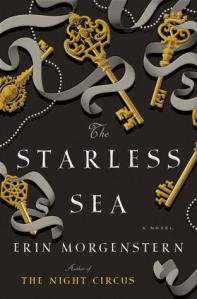
43575115._sy475_#3: “The Starless Sea” by Erin Morgenstern

“The Starless Sea” Review

I think this is the most recently read book on this list, so it’s also one of the ones that’s still the most on my mind as I write. A couple of weeks past my first read now, I can remember fewer of the details of the exact plot of this story, other than it being a young man’s adventure into whimsy, sparkles, and shadow. More clearly, I remember the overpowering feeling of want that this book imparted. I wanted to be in this world so badly, wanted it to be real, even if I never went there. Beautiful rooms devoted to reading and stories. A magical kitchen that knows your every whim. And cats winding in between your legs as you traverse. Morgenstern’s return to writing was a triumph and this book was a masterclass.

36621586#2: “The Winter of the Witch” by Katherine Arden

“The Winter of the Witch” Review

It’s always particularly satisfying when a trilogy or series finishes and you now can rest assured that no, nothing will be irreparably screwed up or simply fall flat on its face there at the end. Even better are those series that seem to only gain steam as the go along, and that’s what I feel happened with this trilogy. “The Winter of the Witch” picks up immediately where the last book left off and yet, somehow, none of the predictions I had then turned out to be right. Maybe some vague ideas, but the paths that were traveled and the ultimate destination were completely unexpected. I love this series so much. I now own the complete set and will likely read them again soon as they are perfect winter reading material, in my opinion. If you’ve been reading this series so far and somehow missed this one (or were a bit gun shy about endings, I understand that!), never fear, this one was completely satisfying!

42201395#1: “Sorcery of Thorns” by Margaret Rogerson

“Sorcery of Thorns” Review

And lastly, this lovely book. For me, “Sorcery of Thorns” was the complete package. In every way, this is the exact type of book I most love. The main character was spunky, a bit foolish, loved books, and followed the call to adventure. The love interest was quippy but flawed, and, most importantly, only slowly developed into even being a love interest. The magic and world were uncomplicated, yet fully realized and detailed. There was adventure around every corner, action, female friendships. And, oh yes, warrior librarians and sentient books. As I was going through some of my top-rated books from this year, I always kept flipping back to this one based purely on the enjoyment I took in reading it. And really, there is no higher praise for a book than that: bringing sheer, unadulterated joy to its reader.

So there’s my complete list! What were your top five reads of 2019?


Serena’s Favorite Reads of 2019: Picks 10 through 6

Another a year, another almost impossible task trying to each choose our Top 10 Reads of the year! For me, the word “favorite” is an important part of this list. As I go through the last year’s worth of reading, I often found that some books would strike particular chords within me more deeply than others, even if, quality-wise, another book might be stronger. Of course, this just makes it all that much harder to put them in any order. But here it goes! Today I’m going to countdown my favorites reads, ten to six. And since it’s the end of the reading year, don’t forget to enter our “12 Days of Christmas Giveaway!”

39603796#10: “The Wolf in the Whale” by Jordanna Max Brodsky

“The Wolf in the Whale” Review

This was one of a few books to make this list that were complete surprises for me. It was the debut book for the author and one that had very little buzz when I first received an early copy. But boy, did it blow me away. With its unique setting of early civilization in the North American Arctic region, its compelling and complicated leading character, and the sparse, but fantastic, use of mythology and fantasy elements, this book was firing on all cylinders the entire time. The story definitely had some dark themes, and it handles a love interest with a controversial past in what I thought was a smart manner. There was a lot of crying on my part, but this unique, confident fantasy novel definitely stuck out to me when looking back over the year.

44059557._sy475_-1#9: “The Magnolia Sword: A Ballad of Mulan” by Sherry Thomas

“The Magnolia Sword: A Ballad of Mulan” Review

I love fairytale retellings. This is a mixed blessing, as I see it. On one hand, there are a ton of them, especially recently. On the other hand, because I feel compelled to read them all, I end up being disappointed quite a bit. And “Mulan” has been one of those stories that has served up nothing but disappointment for a while now. And then this book came out and did every. single. thing. I wanted. It takes enough elements from my limited knowledge of the original tale to remain familiar, but also brings in new portions of the story that make it feel refreshing. It’s definitely not Disney’s “Mulan,” but that’s also a good thing in this case. The love story is sweet, the action is exciting, and the story addresses a wide range of themes including bravery, honor, and family. If you’re looking for a good fairytale retelling, or, like me, had been waiting for THE “Mulan” version that would really hit home, definitely check this one out!

35839460#8: “The Kingdom of Copper” by S.A. Chakraborty

“The Kingdom of Copper” Review

This book came out in the early part of this year, way back in January. And I’ve been waiting this whole, long time for the next one! And it’s still not here! But I shall work on patience and maybe just go re-read this one in the mean time. The first book in this trilogy impressed with its complicated world-building and engaging main characters who must tread almost impossible lines of grey. Here, all that was excellent from the first book was simply expanded upon. It was also one of the smartest uses of a time jump between books that I’ve read in a long time. I was truly surprised by the direction the book went and the very real ways our main characters had both changed and stayed the same between one book and another. It also ended on one heck of a cliff-hanger, so, yeah. Back to the fretting until…oof, June.

28876#7: “Temeraire” series by Naomi Novik

“His Majesty’s Dragon” and “Throne of Jade” and “Black Powder War” and “Empire of Ivory” Reviews

It seems like every year I end up with at least one favorite that isn’t just one book but a series of books that I’ve blown through over the year. And this year it was Naomi Novik’s “Temeraire” series about dragons during the Napoleonic Wars. I’ve been a fan of Novik’s for a while (in fact, I think her most recent novel, “Spinning Silver” was my top pick last year), but I’d always held back on reading this book because of its weird premise. I mean…dragons in the Napoleonic Wars. But silly me! It’s been awesome so far. I’ve been blowing through the series way too fast for my own good, but I find everything about them so engaging that its hard to stop myself! I love the language of the books, reading like great historical fiction. The action is exciting, new, and shockingly, incredibly believable. And on top of all of that, the characters of Temeraire and his captain, William Lawrence, are an incredible duo whom you can’t help but fall in love with. I’ve already read the next in the series, so that review should be up soon! But if you, like me, love Novik’s other books but haven’t checked this series out yet, definitely give it a try!

36524503._sy475_#6: “The Bones Houses” by Emily Lloyd-Jones

“The Bones Houses” Review

I love books like this. Not only this story in particular, but books that come out of complete nowhere and blow me away. I literally knew nothing about this story when I requested In fact, looking at the cover, I was suspicious that this was going to more a “Kate book” than one for me, so if anything, my expectations were on the negative side. Oops! I loved this lovely fairytale story (sort of a retelling of “The Black Cauldron”??). For one thing, it’s a standalone, which automatically shoots it forward in my rankings. But on top of that, it perfectly mixes whimsy and horror, all while exploring topics like loss, grief, and family. The romance is sweet, and the two main characters are each strong and compelling. There’s also a fantastic goat. If you haven’t heard of this one (it seems to be flying below radar, sadly), get thee to the library or bookstore!

So that’s ten through six. Next time I will give a countdown of my top five. What have been some of your favorite reads of 2019?

Serena’s Review: “Reverie”

46299614Book: “Reverie” by Ryan La Sala

Publishing Info: Sourcebooks Fire, December 2019

Where Did I Get this Book: NetGalley

Book Description: All Kane Montgomery knows for certain is that the police found him half-dead in the river. He can’t remember how he got there, what happened after, and why his life seems so different now. And it’s not just Kane who’s different, the world feels off, reality itself seems different.

As Kane pieces together clues, three almost-strangers claim to be his friends and the only people who can truly tell him what’s going on. But as he and the others are dragged into unimaginable worlds that materialize out of nowhere—the gym warps into a subterranean temple, a historical home nearby blooms into a Victorian romance rife with scandal and sorcery—Kane realizes that nothing in his life is an accident. And when a sinister force threatens to alter reality for good, they will have to do everything they can to stop it before it unravels everything they know.

Review: Another gorgeous cover, another intriguing book description! To be honest, I really had very little to go on when requesting this book. Part of it may have spoken to my withdrawals from “The Starless Sea” with some of the similar-sounding descriptions of mystical worlds each with their own story. December always seems to be a bit thin in the pickings, too, so anything that sparks interest is usually a go around now. Alas, even no expectations were too many for this book.

Kane knows very little about himself or his life. Found half dead on the side of a river, he only feels a sense of…difference. About him?About the world? About the mystery behind what happened to him? So when three others show up claiming to be his friends, he jumps at the opportunity to learn more. But he quickly realizes that this mystery is much greater than a near-drowning. Now, worlds are opening in the middle of the ordinary places in the world, each with their own stories and histories. How does his own experience connect with these mysteries? And is that even the biggest problem Kane faces now?

Ah, too bad. Another story that falls into the too simple and too common box of “missed potential.” These types of books are almost the hardest to review because there is nothing overtly wrong or offensive about the book, and, more often than not, they still have good qualities that hold them together. But by the final page, I’m left with an overwhelming sense of indifference and a fixation on the hours spent reading this book instead of some other book.

Amnesia stories, to start with, are very hard to pull off. The main character of the story is a necessary blank, having no point of reference of history, prior relationships, ongoing emotional struggles to draw upon. This leaves their observations and reactions feeling hollow. It’s hard to feel connected to a character who isn’t connected himself. This is the problem with Kane in a big way. Through the entire book, I just never really cared about him. He was instead mostly just a blank slate around which to build this story and magical world.

The world-building and writing was both a hit and a miss for me as well. On one hand, several of the descriptions of events and places were beautiful and new. But on the other hand, they weren’t the type of descriptions that read easily. I’m not sure how to put my finger on this. But I found myself having to re-read several lines to really put together how a particular metaphor was being used or what was being described. Perhaps having just read “Starless Sea” made this particular misstep hit home a bit harder than it would have at other times. That book, too, used very unique language to describe strange and new imagery. But there, somehow, the words flowed in a way that wasn’t distracting and didn’t throw me out of the story quite as badly as a similar style did here.

I also struggled to fully understand the rules of the world. How exactly do reveries work? What are their boundaries? There was definitely an interesting idea to be found here, but between the blank that was Kane and the distracting writing, I was already too out of this story to be able to turn my brain off and just go with the flow.

All of that being said, I did like Kane’s love interest, and in many ways, he had a lot more character building given to him than Kane himself did. And, while the writing style did kick me out of the flow of things every once in a while, there were also some legitimately lovely pieces of word play. But, in the end, my main takeaway was that this book didn’t accomplish all that it set out to. It was too bad. Others, however, might still enjoy this story. If you’re looking for a unique, LGBT fantasy, this does do well on all of those counts. Just not really my cup of tea, I guess.

Rating 6: Nothing terrible, but amnesia strikes again at taking down its main character and the unique word play hurts the flow of the story more often than it helps.

Reader’s Advisory:

“Reverie” is on these Goodreads lists: “2020 Queer Sci-Fi Fantasy” and “Oooh Shiny! December 2019.”

Find “Reverie” at your library using WorldCat!

Serena’s Review: “The Weight of a Soul”

43517326Book: “The Weight of a Soul” by Elizabeth Tammi

Publishing Info: Flux, December 2019

Where Did I Get this Book: NetGalley

Book Description: When Lena’s younger sister Fressa is found dead, their whole Viking clan mourns—but it is Lena alone who never recovers. Fressa is the sister that should’ve lived, and Lena cannot rest until she knows exactly what killed Fressa and why—and how to bring her back. She strikes a dark deal with Hela, the Norse goddess of death, and begins a new double life to save her sister.

But as Lena gets closer to bringing Fressa back, she dredges up dangerous discoveries about her own family, and finds herself in the middle of a devastating plan to spur Ragnarök –a deadly chain of events leading to total world destruction.

Still, with her sister’s life in the balance, Lena is willing to risk it all. She’s willing to kill. How far will she go before the darkness consumes her?

Review: I’ve read a few Vikings stories in the past year or so and largely enjoyed them all. Mythology is always a win for me, so it’s been fun to see Norse mythology getting its day in the sun after Roman and Greek had staked out the genre for so long. Combine those things with a story about sisters and this book was a no brainer for me to request. Sadly, all of those things together still somehow didn’t prove to be enough for me to really enjoy this book.

Lena and Fressa have grown up together to be as close as sisters can be. But while Lena is set out to lead a quiet, predictable life as a healer, it is Fressa who draws people to her with the sheer force of her vitality. So it is a shock when Fressa is suddenly found dead. But the life of a Viking is one of violence and sudden endings, so life moves on, for everyone but Lena. Driven to discover not only what happened to Fressa but to bring her beloved sister back, Lena sets out on a mission that will test the boundaries of life and death and draw her into the dark places of the world and herself.

So, as I said, this book wasn’t a hit for me. Even the things I liked are couched between things I disliked. For example, I liked the sisterly relationship. However, the story jumps through plot elements so quickly in the beginning that I was never able to feel fully connected to Fressa, thus lessening the impact of her death and my own commitment to the lengths (some pretty bad) that Lena went to in her attempts to bring her sister back.

I also enjoyed the mythology aspect of the story. However, again, there was really very little of it and only two god characters played a part and even then were more plot devices than anything else. The goddess, in particular, I felt was underwhelming and non-threatening, not something you want from an all-powerful being.

The pacing of the story also felt very off. As I said, the beginning of the book rushes through many important plot points. It’s attempting to not only set up the relationship between the sisters, but between them both and Fressa’s fiance, the girls’ parents, and  a few of the other village members as well. Between this and the brief attempts at history and world-building, the story feels like it’s simply jumping from one plot point to another. And then, suddenly, when Lena begins her journey, the brakes are pumped, hard. The rest of the book felt plodding, meandering, and frankly, rather boring. This left the overall pacing of the story feeling jarring and mismatched.

Beyond this, Lena was simply not a very likable character. The story is all set up to explore some deeper themes with regards to grief and the morality of choosing who lives and dies. And Lena, being a young woman presumably studying to be a healer, seems like a character primed to interact with these tough situations and choices in a compelling manner. Not so. While her descriptions of grief were at times beautiful and touching on some good ideas, the morality of her decisions was pretty terrible. And, even worse, she seems to think nothing of the terrible things she does.

It’s all well and good to have a character get so caught up in their own sorrow that their worldview becomes myopic to the point of a loss of their own morality, but the interesting part there is having the character explore this topic in some meaningful way. Or simply be from there after written as a villain. But Lena is unquestionably the hero of the story and yet she never seems to really care about the things that she does. As I said, it seems even more questionable when paired together with the empathy that it would have taken to be a healer. I was also not a fan of the romance of this story. It felt unnecessary at best and at worst it made Lena even more unlikable.

The idea of balancing a lost soul with the “weight” of another equal soul is a very interesting idea (though the end result is fairly predictable for fans of the genre), but much its potential was wasted behind choppy pacing and an unlikeable main character. Frustratingly, it seems like only a few minor tweaks could have really improved the story. Flashbacks, for example, would have worked better for the scenes before Fressa’s death and would have broken up some of the more plodding bits of the last half of the book. Ah well, what could have been alas was not! Fans of Norse mythology may like this book, but I think in the end it doesn’t live up to its own potential.

Rating 5: The unlikable main character was the last nail in the coffin for a book that unfortunately wasted several good aspects.

Reader’s Advisory:

“The Weight of a Soul” is on these Goodreads lists: “YA & Middle-Grade Norse Mythology” and “YA Vikings.”

Find “The Weight of a Soul” at your library using WorldCat!