Serena’s Review: “The School of Good and Evil”

16248113Book: “The School of Good and Evil” by Soman Chainani

Publication Info: HarperCollins, May 2013

Where Did I Get this Book: audiobook from the library!

Book Description: The first kidnappings happened two hundred years before. Some years it was two boys taken, some years two girls, sometimes one of each. But if at first the choices seemed random, soon the pattern became clear. One was always beautiful and good, the child every parent wanted as their own. The other was homely and odd, an outcast from birth. An opposing pair, plucked from youth and spirited away.

This year, best friends Sophie and Agatha are about to discover where all the lost children go: the fabled School for Good & Evil, where ordinary boys and girls are trained to be fairy tale heroes and villains. As the most beautiful girl in Gavaldon, Sophie has dreamed of being kidnapped into an enchanted world her whole life. With her pink dresses, glass slippers, and devotion to good deeds, she knows she’ll earn top marks at the School for Good and graduate a storybook princess. Meanwhile Agatha, with her shapeless black frocks, wicked pet cat, and dislike of nearly everyone, seems a natural fit for the School for Evil.

But when the two girls are swept into the Endless Woods, they find their fortunes reversed—Sophie’s dumped in the School for Evil to take Uglification, Death Curses, and Henchmen Training, while Agatha finds herself in the School For Good, thrust amongst handsome princes and fair maidens for classes in Princess Etiquette and Animal Communication.. But what if the mistake is actually the first clue to discovering who Sophie and Agatha really are…?

Review: This book seemed to hit a peak a few years ago with everyone raving about it, and finally now, years later, I’ve finally gotten to it. I don’t read a lot of middle grade fiction, but this one, with its fun premises and, I’ll admit, very catchy cover seemed worth checking out!

This book is a bit tricky to review, now that I’m getting to it. I finished reading the book about a week ago and am only now writing the review. And that one week, I think, has made an impact on my opinion of the book. Either way, ultimately, I did very much enjoy the story. But with the extra time, I feel there are a few things that were a bit clunky and problematic about it.

I breezed through this story, guys. I mean, fast. Its biggest strengths are the exact things that particularly appeal to me: very creative world building, character-based stories, and a strong dash of wit. I loved all the ties to fairytales in this book, both the direct reference to Snow White, Jack and the Beanstalk, Beauty and the Beast and others, as well the way it poked fun at the generalities of these stories. In the school of Good, princesses must learn how to speak to animals and wait patiently for their princes to save them. In the school of Evil, witches must learn how to curse household items like apples and hairpins and uglify themselves to scare off heroes and heroines. The schools and their history and connection to fairytales were so much fun. Much of it was parody, but parody with heart.

There were also a lot of great characters in this story, other than just Agatha and Sophie, who I’ll get to in a moment. There was Tedros, the most popular prince in school, and son of the famed Arthur and Guenevere who struggles with his mother’s legacy and its impact on his relationship with the women around him. Sophie’s witch roommates, Hester, Dot, and Anadil are each great, particularly Hester whose badassery knows no bounds. The teachers for both school reminded me a lot of the professors from the Harry Potter novels. They are all quirky and teach particular classes. This is one area of the story that I wish there had been more of. The few classroom scenes we had were some of my favorites in the whole story.

And then there are Agatha and Sophie. There was so much I loved about these two. Their friendship is complicated not only by the fact that they are in different schools, but by the very nature of their own beings and their struggles to define themselves. Poor Agatha with her broken down self-esteem. And poor Sophie, trying so hard without realizing the huge mistakes she’s making at almost every step. Neither are simple characters, and I appreciated the time that the author gave to these two and the attention to the difficulties of growing up and recognizing the power we all hold to mold who we want to be.

Packed into this romp of a fairytale are a lot of messages, and some of them are handled better than others. As I said before, there is a lot of parody going on here. This, of course, opens the door for the parody to go unrecognized and for the more harmful aspects of some of these messages to stand as true. The author does a lot of work to speak to the fact that actions speak louder than looks, to the power of goodness and love, and many other very important points. But due to binary set-up of the story and the parallels placed between goodness/beauty and villainy/ugliness, it’s possible for some unwanted aspects to slip through. Ultimately, I feel that if the story is read in the tone that it is meant, much of this comes through very clearly. But this book might not be for everyone, due to this.

While I was able to get on board with many of these points, there was one that was a sticking point, even for me. I love stories about girls’ friendships, and at its core, that it was this is. There is a lot to be said for forgiveness and understanding in friendship, but there were a few too many times where this line was crossed far to completely to be simplified in this way. It is the same as romantic relationships, in this way: at a certain point, if you are being actively hurt by another person, that person is not your friend, even if they truly do have good feelings toward you. So, while I love the message of Agatha saving her friend through sheer will, forgiveness, and kindness, the story also, unfortunately, sets up a bad example of friendships in general. Through large portions of this story, this is not a healthy friendship. And, while we can sympathize for Sophie, it should not stand as an example that just because we (or Agatha) love a friend/boyfriend, that we should tolerate bad treatment with the hope that they will get better.

This last point is what has stuck with me through this last week of building up to this review. I sped through this book and it was wildly entertaining as I was reading. But with distance comes more clarity, and there were problematic aspects of it, as I mentioned. That said, I will definitely continue on with the series. However, I will keep my eyes open for how some parts of it are handled in the future, most notably, this friendship.

Rating 7: Really great world-building and a lot of great lessons about self-worth and self-esteem; unfortunately, lessened by some questionable portrayals of healthy friendships.

Reader’s Advisory:

“The School of Good and Evil” is included on these Goodreads lists: “Best Books About Special Schools” and “Fairy Tales in All Their Ways.”

Find “The School of Good and Evil” at your library using Worldcat!
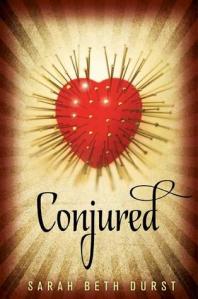
 

Serena’s Review: “Conjured”

17286817Book: “Conjured” by Sarah Beth Durst

Publication Info: Walker Childrens, September 2013

Where Did I Get this Book: the library!

Book Description: Eve has a new home, a new face, and a new name—but no memories of her past. She’s been told that she’s in a witness protection program. That she escaped a dangerous magic-wielding serial killer who still hunts her. The only thing she knows for sure is that there is something horrifying in her memories the people hiding her want to access—and there is nothing they won’t say—or do—to her to get her to remember.

At night she dreams of a tattered carnival tent and buttons being sewn into her skin. But during the day, she shelves books at the local library, trying to not let anyone know that she can do things—things like change the color of her eyes or walk through walls. When she does use her strange powers, she blacks out and is drawn into terrifying visions, returning to find that days or weeks have passed—and she’s lost all short-term memories. Eve must find out who and what she really is before the killer finds her—but the truth may be more dangerous than anyone could have ever imagined.

Review: I’ve read several of Sarah Beth Durst’s books in the past, and they are if anything, always unique. So when I discovered this one, with its creepy carnival imagery, amnesia, and serial killer nemesis, I knew that the story would be in the hands of an author capable of fully taking advantage of these elements.

The story started off slowly for me, to be honest. While Eve’s amnesia is an important part of the story, it also leaves the reader in an awkward place being equally (perhaps even more so!) in the dark as she is. We’re pretty much plopped down into a situation with no background information and a narrator who doesn’t know anymore than we do, but who is clearly involved in something nefarious, with hints being thrown every direction by other characters. Durst also wasn’t in a rush to resolve this. I was about a third of the way into the book before I started feeling truly invested in the story. And while this is a rather large hurdle to leap for many readers, I would say the later pay off is definitely worth it.

Eve herself is such a unique narrator. Her voice is so strange and it speaks to the deftness of Durst’s abilities that she can show Eve’s growth through even the most minute of changes in Eve’s outlook on what goes on around her. When the reveal comes towards the end of the story, I actually found myself paging back through the book trying to spot these change points, many of which I missed in my initial read through.

As for the twist itself, parts of it I was able to guess, but others came completely out of the blue. The motivation of the villain, Eve’s true back story in relation to the villain, was both heart breaking and distinctly chilling. I particularly appreciated the fact that the story is not quickly wrapped up once some of these twists become clear and we get to fully explore the reality of these developments and spend time in this new world order.

Further, the confusion and distrust that leads to these reveals were excellent. Eve has been told everything, she remembers/knows none of it for herself. So as she begins to question those around her, so do we, the reader. Her bouts of amnesia were both frustrating and refreshingly new to this type of story. She isn’t just a narrator who doesn’t remember her past but whose stories unfolds neatly from there on out. Eve keeps forgetting. Between chapters even! Like I said, frustrating, but also very interesting.

As for supporting characters, these were a bit more hit and miss. I loved Malcom from the get go, and grew to love his partner as well. However, I was less thrilled with the three other teens Eve meets: Aiden, Victoria, and Topher. They seemed like a neat idea, but ultimately, I feel like they didn’t even need to be in the story. Very little of the outcome would have been changed, and they were often so unlikable that I found myself wanting to skim read through their portions.

And as for the love interest, Zack…I just don’t know. There are elements of his character that I liked, but he never fully recovered for me from his introductory line of dialogue when first meeting Eve:“I think it’s a shame that it’s customary to shake hands upon greeting when what I really want to do is kiss your lips and see if you taste like strawberries.”

5371895_orig
(source)

Personally, if a guy introduced himself to me that way the door would be slammed on the chance of us even be acquaintances, let alone romantically involved, right then and there. It’s supposed to be twisted together with Zack’s defining characteristic: he does not tell lies. And while this plays an important role later in the story, I think there is an obvious miss between “not telling lies” and “not spewing out every ridiculous-bordering-on-creepy thought that comes into your head to a complete stranger.”

Slow start and creepy Zack aside, once pieces of the mystery started fitting together, I couldn’t put this book down. If you like dark, fantasy stories and can be patient with unreliable narrators and a slow start, definitely check this one out!

Rating 8: Slow build to an awesome resolution.

Reader’s Advisory:

“Conjured” is included on these Goodreads lists: “Fairy Tales for Grown Children” and “YA & Middle Grade Circus/Carnivals/Amusement Parks.”

Find “Conjured” at your library using WorldCat.


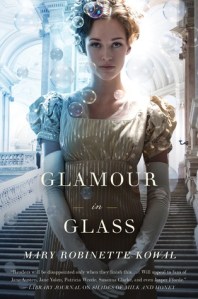
Serena’s Review: “Glamour in Glass”

12160890Book: “Glamour in Glass” by Mary Robinette Kowal
Publishing Info: Tor, April 2012

Where Did I Get this Book: the library!

Book Description: In the tumultuous months after Napoleon abdicates his throne, Jane and Vincent go to Belgium for their honeymoon. While there, the deposed emperor escapes his exile in Elba, throwing the continent into turmoil. With no easy way back to England, Jane and Vincent’s concerns turn from enjoying their honeymoon…to escaping it. Left with no outward salvation, Jane must persevere over her trying personal circumstances and use her glamour to rescue her husband from prison…and hopefully prevent her newly built marriage from getting stranded on the shoals of another country’s war.

Review: The second in the “Glamourist Histories” sereis, “Glamour in Glass” resolved many of the issues I had with the first book and introduced an expanded world and magic system.

While the appeal of the first book lay largely in its comparisons to a Jane Austen novel with magic, this aspect was also its biggest downfall. Let’s face it: more often than not, being compared to a Jane Austen novel is a kiss of death for many historical books since it will only raise expectations to impossible heights. While “Shades of Milk and Honey” wasn’t sunk by the comparison, it didn’t do the story any favors either. The plot devices or characters who struck to closely to aspects of “Emma,” “Sense and Sensibility,” or “Pride and Prejudice” were at best distractions and at worst lacking the heart and wit that lies at the core of these originals. However, this book, taking place after the marriage of Jane and Vincent, is freed from these comparisons as it ventures into unknown territory to Jane Austen stories: Life after the wedding.

I enjoyed reading about Jane and Vincent’s struggles learning to adjust to married life. While very much in love, the reality is that they still have much to learn about each other, both in regards to their own personal relationship, and with how they balance their “professional” lives as gifted glamourists, each in their own way.

The expanded descriptions and explanations for this magic system were particularly interesting. It is a very unique take on magical and I enjoyed discovering more about how it work and the varying ways it can be adapted for different uses. I remember noting in my last review that this type of magic seemed as if it would have more important applications than simply as an art form, and this book explores this concept, much to my delight. Particularly, the book dives into the ways that glamour magic is used as strategy in military maneuvering.

As the description highlights, there is much more action in this story, particularly for Jane. I enjoyed watching her make proactive choices, rather than simply react to the circumstances presented to her.

My only complaint was the decreased role that some of the original characters played in this story. While the setting places some obvious constraints on the involvement of these characters (obviously Melody would not be on their honeymoon with them!), I still missed them.

All in all, this book improved on both of my complaints of the original: freeing itself from comparisons and expanding the use of its magic system. If you were only half-sold on the first book, definitely check this one out as I see it as a great improvement in the series.

Rating 8: A step in the right direction for the series as a whole!

Reader’s Advisory:

“Glamour in Glass” is included on these Goodreads lists: :Regency Fantasy” and “Historical Paranormal Romance.”

Find “Glamour in Glass” at your library using WorldCat.

Previously Reviewed:“Shades of Milk and Honey”

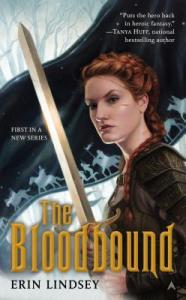
Serena’s Review: “The Bloodbound”

20949421Book: “The Bloodbound” by Erin Lindsey

Publishing Info: Ace, September 2014

Where Did I Get this Book: audiobook from the library!

Book Description: A cunning and impetuous scout, Alix only wishes to serve quietly on the edges of the action. But when the king is betrayed by his own brother and left to die at the hands of attacking Oridian forces, she winds up single-handedly saving her sovereign.

Suddenly, she is head of the king’s personal guard, an honor made all the more dubious by the king’s exile from his own court. Surrounded by enemies, Alix must help him reclaim his crown, all the while attempting to repel the relentless tide of invaders led by the Priest, most feared of Oridia’s lords.

But while Alix’s king commands her duty, both he and a fellow scout lay claim to her heart. And when the time comes, she may need to choose between the two men who need her most…

Review: Another book that landed on my to-read pile quite a while ago that now I have no memory of selecting. But, luckily for me, my past self must have been on top of things, because this lesser known fantasy novel hit just the spot!

I’m going to whip through the basic review portions to devote the rest of this post to two things that I feel make this book noteworthy in the long list of fantasy fiction being published currently.

General worldbuilding: pretty typical European-centric, medieval fantasy world. The bloodbinding magic used to create super weapons is interesting, but isn’t breaking any hugely new ground. I was fairly well into the book when I started questioning whether this even was a fantasy novel given how little these magical elements were mentioned. Later, however, it did play a bigger role, but if you’re interested in complex magical systems, this is not that book.

Characters: Alix is great. She’s a competent, funny, independent character whose abilities and intelligence are never questioned. She makes mistakes and is flawed, but her character arc takes her through these struggles smoothly, never undermining the stronger aspects of her character. The dialogue, both her own and those around her, was witty and I caught myself laughing out loud several times.

So, all of that aside there were two things that I found notable about this story. First, I was dismayed to find a love triangle smack dab in the middle of my adult fantasy novel.

giphy9
What? No! (source)

As we all know, I do not appreciate most love triangles. I find them unrealistic, and they often seem to bring out the worst in all characters involved (selfish heroines, ridiculous-verging-on-abusive love interests). Now, I won’t say that I loved the inclusion of a love triangle even here. I’ve just never really been too entertained by the drama of multiple love interests. Seems like it would be stressful and, for me, it is the exact opposite of wish fulfillment. That said, this one righted many of the wrongs I’m used to seeing with love triangles. Perhaps the simple fact that the author is writing about adults and for adults makes the difference here. There are real consequences to the choices that are made. Hearts are broken. Confusion is unpleasant, not thrilling. And the relationships between all characters involved are real and priorities are rightly placed beyond the romance of it all. I still struggled with some of Alix’s internal musings about the situation, as it still seems unrealistic to me to be equally drawn to two different people. However, the author provided a decent explanation for this, if one that I still somewhat questioned in reality. Further, the reaction of the two men involved was a highlight. No silly posturing. No abusive possessiveness. Actual hurt and confusion. They are people who have real feelings involved. Further, they have lives, relationships, friendships, duties, and families outside of Alix that they rightly keep in perspective throughout all of this. I was particularly pleased with the way this love triangle resolved itself. So, all of that said, while I still don’t find love triangles particularly entertaining, this book proves that they can be told from a more realistic and appealing angle.

My second notable aspect of the story was its treatment of women. I am continually frustrated by stories that justify the maltreatment of its women characters (or, frankly, the glorification of very objectionable material) and the creation of generally very traditionally sexist societies by hand-waving it all under the claim that this is somehow “more realistic.” You’re writing a damn fantasy novel with magic, unicorns, and zombies for heaven’s sake. You’ve left “realistic” far behind, so why is this one aspect somehow imperative to the “reality” of your story? This book highlights how to create a fairly typical medieval fantasy world while leaving that all behind. It’s not preaching “woman power.” It’s not bashing anyone over the head with A MESSAGE. It’s just telling a story in a world where women simply are there in the army, are there in politics, are there representing the head of their family. No big deal. Sure, it’s mentioned that as women are not as physically strong, they’re often found as archers in the military. But this is by no means a rule, with the doors to others roles left wide open. And no one blinks an eye at any of this. This book is a perfect example and response to the aforementioned narrative that it is somehow impossible to balance this type of typical fantasy world with a more inclusive approach to women’s roles.

All said, I very much enjoyed this book. It’s not breaking any walls as far as plot, following a pretty simple plot structure. But the strong characters, entertaining dialogue, and well-represented world recommend it to anyone who enjoys traditional fantasy fare with a dash of romance.

Rating 7: A fun fantasy story, notable for a not-gag-worthy love triangle and a strong representation of a more inclusive fantasy world.

Reader’s Advisory:

“The Bloodbound” is included on these Goodreads lists: “Female Bodyguards” and “High Fantasy” with Female Leads / protoganists.”

Find “The Bloodbound” at your library using WorldCat!


Serena’s Review: “The King of Attolia”

40159Book: “The King of Attolia” by Megan Whalen Turner

Publishing Info: Greenwillow Books, January 2006

Where Did I Get this Book: the library!

Book Description: By scheming and theft, the Thief of Eddis has become King of Attolia. Eugenides wanted the queen, not the crown, but he finds himself trapped in a web of his own making.

Then he drags a naive young guard into the center of the political maelstrom. Poor Costis knows he is the victim of the king’s caprice, but his contempt for Eugenides slowly turns to grudging respect. Though struggling against his fate, the newly crowned king is much more than he appears. Soon the corrupt Attolian court will learn that its subtle and dangerous intrigue is no match for Eugenides.

Review: We’re back for some more of Eugendides’ hi-jinks and even more fantasy political drama. After the shake-up with narrative style that came with the previous book (going from a first person narrative from Gen’s perspective in the first book, to a third person POV with multiple characters in the second), I wasn’t sure what to expect with this one. How can an author keep her main character so tricky when readers are on to the cons after two books? Well, without spoiling it, Whalen Turner is definitely up to the task!

Our story starts with poor Gen exactly where he never wanted to be: ruling a country. Further, he’s now the King in a land ruled by a clear-headed, hard-handed Queen who rules over a land that was often at odds with his own native Eddis. I very much enjoyed the exploration of this relationship. This is by no means the happy, fluffy, “ever after” story that one is used to seeing after a royal wedding. Gen and Attolia have a complicated relationship, both in regards to their own rather, ahem, strife-ridden history, but also due to the aforementioned political power posturing that comes with a foreigner gaining a position of authority in a new land. Attolia is not the easiest woman to understand, as is made clear in the last book. And Gen plays his own thoughts and feelings close, for all that he seems so lackadaisical about everything. The exploration of this relationship was excellent.

Further, while the third person POV style was kept for this book, we are introduced to a new character, Costis, a guard in Attolia’s court. Costis is our eyes and ears representing both the feelings of many in the land of Attolia after Gen’s ascension to the throne, but also the necessary fop to be conned by Gen’s playacting. And while it is, of course, immensely enjoyable watching Costis’s eyes be opened to the true genius that is Gen, I continue to be impressed by how effectively Whalen Turner can still con the reader, as well. From the last two books, it is clear that Gen is the type of character who would chafe under the restrictions of royal life. This being the case, even I had a hard time knowing what was or was not an act on his part.

Other than Gen’s struggles at court, the larger plot of this story deals with the continued political turmoil going on in this region between the three main power houses: Attolia, Eddis, and the often-aggressive, Sunnis. Between this and the corruption in Attolia’s own court, the book’s plot is mainly political strategy and lighter on the action than both previous books (though after the action-packed “The Thief,” the previous book’s action was also much lighter). With this, the third in the series, it increasingly feels as if the first book stood alone in many ways, both in style, tone, and the type of story it was telling. These last two books seem represent the true direction that Whalen Turner is wanting to take this series. While I very much enjoyed “The Thief,” I’m loving these last two. If you’re looking for a series that doesn’t fall into any of the tropes or familiar storylines that are often present in fantasy series, definitely check out this series!

Rating 9: Excellent. I continue to be impressed with the author’s ability to retain Gen’s “trickiness!”

Reader’s Advisory:

“The King of Attolia” is on these Goodreads lists: “Political themed YA fiction” and “Jesters, Fools, and tricksters.”

Find “The King of Attolia” at your library using WorldCat!

Previously Reviewed: “The Thief” and “The Queen of Attolia”

Serena’s Review: “Vassa in the Night”

28220892Review: “Vassa in the Night” by Sarah Porter

Publishing Info: Tor, September 2016

Where Did I Get this Book: the library!

Book Description: In the enchanted kingdom of Brooklyn, the fashionable people put on cute shoes, go to parties in warehouses, drink on rooftops at sunset, and tell themselves they’ve arrived. A whole lot of Brooklyn is like that now—but not Vassa’s working-class neighborhood.

In Vassa’s neighborhood, where she lives with her stepmother and bickering stepsisters, one might stumble onto magic, but stumbling away again could become an issue. Babs Yagg, the owner of the local convenience store, has a policy of beheading shoplifters—and sometimes innocent shoppers as well. So when Vassa’s stepsister sends her out for light bulbs in the middle of night, she knows it could easily become a suicide mission.

But Vassa has a bit of luck hidden in her pocket, a gift from her dead mother. Erg is a tough-talking wooden doll with sticky fingers, a bottomless stomach, and a ferocious cunning. With Erg’s help, Vassa just might be able to break the witch’s curse and free her Brooklyn neighborhood. But Babs won’t be playing fair…

Review: Another book that I had on my highlights post for Septmeber that finally showed up a week or so ago! I wasn’t familiar with the original Russian fairytale that inspired this book, so I came into it with very little idea of what it was going to be. Magic in Brooklyn and a Baba Yagga villain. Sounded awesome.

And large parts of it were! The general worldbuilding was very interesting. Your mileage with this will largely depend on how willing you are as a reader to “just go with it” as far as explanations and magic systems. There’s really no explanation for why and how magic exists in this area of the world. Further, the type of magic that is presented is much closer to the nonsense magic seen in “Alice in Wonderland” than to a more outlined and rule-bound magic like “Harry Potter.” That being the case, there is a lot of things popping up here and there with no rhyme or reason and then disappearing just as quickly. Some of these things I particularly enjoyed, like a group of swans that Vassa befriends, and a pair of sinister hands that operate as Babs’ henchmen, essentially.

Other parts felt a bit contrived, however, and as if Porter was simply trying too hard. Particularly some of her efforts to involve nonsense word-play (similar to the Fairyland books I had just read). And maybe having just come off those which were almost the perfect example of nailing this writing style, I was a bit biased against Porter’s attempts here. But I also feel that it was simply not executed well. While nonsense writing can be very insightful, this was clunky and actually confusing. At several points I had to re-read section to try and understand them and then, more often than not, came away with the conclusion that this was just another unexplained element. And while some of these unexplained magical oddities were enjoyable, it didn’t translate here. Dialogue and descriptions needs to be clear, regardless of how little you as an author are providing insights into other magical elements.

Vassa was a very strong protagonist. Her voice was unique and interesting, and I especially enjoyed her relationship with her sisters, especially her elder sister. As I’ve said, I always like sister stories! And, of course, Vassa’s primary partner in crime: Erg, the animated doll. I was both creeped out by and intrigued by Erg. I don’t think I was supposed to be as creeped out as I was, but there were certain elements of her and Vassa’s relationship that was confusing to me. Erg is definitely an intelligent individual with her own opinions, motives, and outlooks on life. So it was very strange switching from her and Vassa debating what do do about some problem or another to Vassa petting and nuzzling her the way you would a kitten. It was strange. But, as I’ve said, so was the whole book.

Ultimately, this book was stronger as a concept than it was as an actual story. There were almost too many weird things thrown in at every moment which prevented me from ever becoming fully invested in the story. I was too busy being confused by some of the writing choices and bouncing from one thing to another to really be able to draw a connecting line throughout the book or form real attachments to characters. There were random chapters inserted here or there attempting to provide some background information that only opened up more doors and left more dangling plot lines (Vassa’s father’s storyline was one of these). While this book is probably the closest thing I’ve seen to an actual dark fairytale set in an urban setting (vs. most urban fantasy which often is the usual, generic, vampires and witches and such in an in every other way normal city), it was too weighed down by its own concept to every really take off.

Rating 6: A unique concept and interesting worldbuilding places too much burden on a confusing plot.

Reader’s Advisory:

“Vassa in the Night” is a new book and isn’t included on many Goodreads lists. However, it should be on “Dark Fairy Tales.”

Find “Vassa in the Night” at your library using Worldcat!


Serena’s Review: “Shades of Milk and Honey”

8697507Book: “Shades of Milk and Honey” by Mary Robinette Kowal
Publishing Info: Tor Book, August 2010

Where Did I Get this Book: the library!

Book Description: Shades of Milk and Honey” is exactly what we could expect from Jane Austen if she had been a fantasy writer: “Pride and Prejudice” meets “Jonathan Strange & Mr. Norrell.” It is an intimate portrait of a woman, Jane, and her quest for love in a world where the manipulation of glamour is considered an essential skill for a lady of quality.

Jane and her sister Melody vie for the attentions of eligible men, and while Jane’s skill with glamour is remarkable, it is her sister who is fair of face. When Jane realizes that one of Melody’s suitors is set on taking advantage of her sister for the sake of her dowry, she pushes her skills to the limit of what her body can withstand in order to set things right—and, in the process, accidentally wanders into a love story of her own.

Review: As a fan of Jane Austen, I routinely find myself picking up books that have any hint of similarities. And as the description with this one promised a mix of Jane Austen PLUS fantasy, I knew I would have to read it immediately.

In many ways,  Jane lives in typical Regency England. Manners, gentlemen and ladies, balls, and lots of sitting in breakfast rooms gossiping about one’s neighbors. Except, to be a proper, accomplished lady, alongside skills in embroidery, painting, and music, one must also master the art of glamour. Described as folding and weaving light, a glamourist is able to create magical scenes and movement, often for the purposes of impressing one’s neighbors at dinner parties. It seems equivalent with hiring a master painter to create unique portraits for one’s family, essentially. And while Jane’s sister Melody received the looks and charm of the family, Jane is the sister skilled in this specific art.

I really enjoyed the descriptions of this glamour magic. It is such a unique idea and seems to have endless applications. It’s curious seeing it primarily as an art form, as I would imagine there would have to be many other more practical uses for something like this, other than just decorating rich people’s houses. But, like many historical “manners” stories, we are mostly focused on the very privileged lives of our gentry main characters, so I guess seeing it mainly as a form of art makes sense. The whole idea is fascinating and the descriptions of the process of weaving light and the end results were engaging.

As for characters, they were fairly typical fare for a book that is purporting itself as a “Jane Austen read-alike.” It was an interesting mix of storylines and character types from both “Pride and Prejudice” and “Sense and Sensibility.” For fans of Jane Austen’s work and those two books specifically, it was fun spotting the tie-ins. Jane, herself, was a likeable heroine, if perhaps lacking some of Elizabeth Bennet’s spunk. Vincent, too, plays the role of the broody leading man effectively. His backstory was interesting and I enjoyed learning more about his character and motivations.

There were a few problems with the writing itself. For the most part, the language is descriptive and elegant. However, there were times where it seemed that the author couldn’t decide how fully to commit to the language of the time. Words would go back and forth from being spelled in the traditional manner to the modern. And there were even a few words of the time that it seemed the author didn’t fully understand. She used the word “droll” in place of the word “dour” it seemed, several times using “droll” to describe a character who was behaving in a gloomy and stern manner. This was frustrating to see in what was otherwise a very competent novel.

All in all, language quibbles aside, I very much enjoyed this book and will be checking out the next one. As all of Jane Austen’s stories were one-offs, it will be interesting to see what the author does with this story, now that we are beyond the point that any of those books cover.

Rating 7: A very unique magic system, if only marked down for some peculiar language mistakes.

Reader’s Advisory:

“Shades of Milk and Honey” is included on these Goodreads lists: “Fantasy of Manners” and ““Sister” Novels.”

Find “Shades of Milk and Honey” at your library using WorldCat.


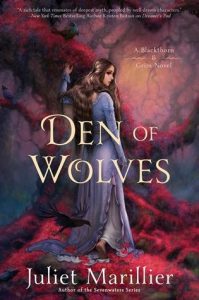
Serena’s Review: “Den of Wolves”

22567184Book: “Den of Wolves” by Juliet Marillier

Publishing Info: Roc, November 2016

Where Did I Get this Book: I bought it!

Book Description: Healer Blackthorn knows all too well the rules of her bond to the fey: seek no vengeance, help any who ask, do only good. But after the recent ordeal she and her companion, Grim, have suffered, she knows she cannot let go of her quest to bring justice to the man who ruined her life.

Despite her personal struggles, Blackthorn agrees to help the princess of Dalriada in taking care of a troubled young girl who has recently been brought to court, while Grim is sent to the girl’s home at Wolf Glen to aid her wealthy father with a strange task—repairing a broken-down house deep in the woods. It doesn’t take Grim long to realize that everything in Wolf Glen is not as it seems—the place is full of perilous secrets and deadly lies…

Back at Winterfalls, the evil touch of Blackthorn’s sworn enemy reopens old wounds and fuels her long-simmering passion for justice. With danger on two fronts, Blackthorn and Grim are faced with a heartbreaking choice—to stand once again by each other’s side or to fight their battles alone…

Review: I had this book pre-ordered on Amazon, so it showed up the day after it was released, and I was ready. Door closed. Husband, I’ll see you later. I’m going to READ THIS BOOK NOW.

Per the usual, Blackthorn and Grim’s lives are once again caught up in the mysteries of their neighbors. These two never get any peace! This time it comes in the form of a neighboring landholder, Tola, his daughter, a mysterious stranger, and a fantastical heartwood house that Grim is recruited to help build. After befriending the outcast and half-crazed builder, Bardan, Grim begins to suspect a dark secret lingering between the builder and the lord Tola. Blackthorn, for her part, befriends Tola’s daughter, Cara, whose fears of failure and disapproval severely impact her ability to speak to others, but who has a fey-like connection to the woods of her home in Wolf Glen and the birds that inhabit it.

This book follows the established format laid out in the first two stories. Chapters alternate between Blackthorn and Grim’s perspectives, as well as that of a third party character. Here, we have both Cara and Bardan’s perspectives, though Cara is given more page time than Bardan. His own narrative being one filled with confusion, amnesia, and a prevailing madness, Bardan’s chapters only begin to become clear as the story and mystery unfolds, making this uneven allotment more understandable. Cara’s chapters were very enjoyable, over all. Her character is one who is crippled by anxiety, and she represents a unique voice in a story like this, providing insight into challenges that many people face outside of a fantasy setting.

In the first two books, my main criticism (not that it was a strong one or that there were many to begin with) was with these side narrators. Oran was, quite simply, rather boring in the first book. And in “Tower of Thorns,” Geiléis revealed herself as a slightly unsavory character right from the beginning. With both of these, their chapters often felt frustrating, leaving me wanting to rush through to get back to Blackthorn and Grim. Here, Bardan, but especially Cara, are much more enjoyable characters on their own, alleviating some of this tension between page time given to their own stories and that of our main characters.

The mystery itself was a bit easy to guess. I’ve read a lot of Marillier’s books, so this could be simply due to the fact that I am very familiar with her storytelling and the ties she creates between the tale being told in the book itself and the mini folktales often sprinkled within. That being said, I still very much enjoyed watching things unfold, and there were still a few unexpected twists thrown in at the end.

Blackthorn and Grim are, of course, the main selling point of this entire series and that remains true in this book. I didn’t go through and count pages, but I felt that Grim’s narrative was more prominent than  Blackthorn’s in this story. At the very least, he’s closer to the action. But given the events of the last book, most notably the emotional revelations that came through on Grim’s part, I felt like this book needed to give Blackthorn more space from the action to reflect on herself and her own feelings and relationship with Grim. So, while this may have left her a bit more disconnected from solving the mystery itself (though she definitely plays a large role, don’t get me wrong), I was very satisfied to follow her more introspective story arc.

My one criticism of this book comes down to outside factors beyond the story itself. Marillier’s publisher only signed a contract for a three book series, though the author set up the books to be a longer-running series. With that in mind, she needed to write this book in a way that it could stand either as the end of a trilogy or as a middle point in an ongoing series should the publisher decide to pick it up for more. This created a very awkward position for the book to inhabit. Parts of the story felt rushed, particularly with regards to Blackthorn’s ongoing vendetta against the high lord who did her such wrong in the past. And, even, the progression of her relationship with Grim, while still very satisfying, did at times also feel that it might have benefited from an additional book to properly complete the slow-burn approach laid out in the first two novels.

The ending does its job though. It can serve as the final part of a trilogy, but does leave the door open for sequels, should the publisher so choose. Obviously, I would love to read more of this series. Blackthorn and Grim are both very unique narrators to the genre, both being older, more broken individuals than are commonly seen. Either way, however, this book did not disappoint, and I will happily shelve it right next to all of the other Marillier books I have bought (which is all of them).

Rating 9: Loved it! The only mark against it is its need to serve as two things as once, both the final third of a trilogy or the middle book of a series.

Reader’s Advisory:

“Den of Wolves” is a new book and isn’t on many Goodreads lists yet, but it should be on “Irish Myth and Folklore.”

Find “Den of Wolves” at your library using WorldCat.

Previously Reviewed: “Dreamer’s Pool” and “Tower of Thorns”


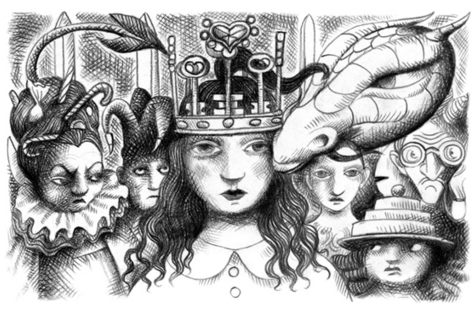
Serena’s Review: “The Girl Who Raced Fairyland All the Way Home”

18961360Book: “The Girl Who Raced Fairyland All the Way Home” by Catherynne M. Valente
Publishing Info: Feiwell and Friends, March 2016

Where Did I Get this Book: the library!

Book Description: Quite by accident, September has been crowned as Queen of Fairyland – but she inherits a Kingdom in chaos. The magic of a Dodo’s egg has brought every King, Queen, or Marquess of Fairyland back to life, each with a fair and good claim on the throne, each with their own schemes and plots and horrible, hilarious, hungry histories. In order to make sense of it all, and to save their friend from a job she doesn’t want, A-Through-L and Saturday devise a Royal Race, a Monarckical Marathon, in which every outlandish would-be ruler of Fairyland will chase the Stoat of Arms across the whole of the nation – and the first to seize the poor beast will seize the crown. Caught up in the madness are the changelings Hawthorn and Tamburlaine, the combat wombat Blunderbuss, the gramophone Scratch, the Green Wind, and September’s parents, who have crossed the universe to find their daughter…

Review: I delayed it for a few months, but here we are at last, woefully at the last book in the “Fairyland” series. But there are two things bolstering my spirits after finishing this series. 1.) It ended on such a great note! Always a concern that somehow something so good will be bungled and tarnished forever by a whiff on the ending. And 2.) now that it has been finished, and finished so well, I can happily go out and purchase the entire series and re-read them to my heart’s content!

Per my usual review method for this series, I’m going to include some of my favorite quotes from the book. If I’ve said it once, I’ve said it a million times: the writing in this series is so beautiful and has to be its biggest selling point.

“One of the awful secrets of seventeen is that it still has seven hiding inside it. Sometimes seven comes tumbling out, even when seventeen wants to be Grown-Up and proud. This is also one of the awful secrets of seventy.”

We’ve watched September grow up throughout these books. If the theme of the entire series could be summed up, it would be: growing up is a terrible, onerous process and then once you get there, you realize it was all kind of a hoax to begin with. Throughout all of the books, I very much enjoyed Valente’s razor sharp views on childhood. It’s all too easy to let childhood morph into a time and place of wildflowers and carefree days, and as adults forget the truly awful parts about it. The helplessness, the lack of freedom, the unassuredness, the constant changes both in yourself and in how the world see/treats you.

“We have all of us got it jumbled up. You never feel so grown up as when you are eleven, and never so young and unsure as when you are forty. That is why time is a rotten jokester and no one ought to let him in to dinner.”

New to this book, we meet Septemeber’s parents and her Aunt more fully! The interlude chapters document their journey. It was particularly enjoyable reading about their experiences, both in Fairyland and as the ones who were left behind by a wandering September. We always hear about the kids who get swept off to magical lands, but nothing about the poor parents who are left missing their children. Further, the reminder that these same parents and adults were once children and had adventures of their own.

“The Land of Parents is strange and full of peril.”

While Hawthorne and Tamburlaine do play a role in this story, it was again September’s story and her friends that we follow throughout the book. However, Blunderbuss, the combat wombat, plays a much larger role than I had expected and it was awesome. She is by far the best new addition to group from the last few books. Her acerbic wit and blunt way of speaking often provided the most hilarious bits of the story. And her contribution to the ending was as surprising as it was welcome.

“You gotta be nice to strangers even when they are the worst, because they don’t know you well enough to understand how shut your big face can mean I’ve missed you more than the whole world can know.”

And, finally, I cannot end this review without talking a bit about my darling pairing of September and Saturday. I have to say, this was my biggest concern about the story and one of the reasons I held off reading this book for so long. How could this be resolved in a way that wasn’t going to be heart breaking somehow? And, while the ending wasn’t anything like I could have expected, it was so, so satisfactory. So, go forth dear readers without fear on this account!

“The tales lovers tell each other about how they met are hushed and secret things. They change year by year, for we all meet many times as we grow up and become different and new and exciting people–and this never stops, even for a minute, even when we are ninety.”

I really can’t rave enough about this book. While “The Boy Who Lost Fairyland” was very good, it did feel like a step away from the Fairyland books that I had come to love. So I was a bit concerned when starting this one that maybe the magic had worn off just a little. But this book comes roaring back, and I would say it most closely rivals my love of the first book in the series. When/if I have children, this series will definitely be making an appearance on the must-read-aloud list. If you like fantasy, especially of the sweet and nonsensical kind, ala “Alice in Wonderland,” don’t miss out on this series!

And with that…

“Endings are rubbish. No such thing. Never has been, never will be. There is only the place where you choose to stop talking. Everything else goes on forever.”

19312407

Rating 9: An amazing story on its own, but also an unexpected and poignant ending to the series as a whole.

Reader’s Advisory:

“The Girl Who Raced Fairyland All the Way Home” is included on this Goodreads list: “own the Rabbit Hole in Children’s Fantasy” and Best Chapter Books for Young Girls

Find “The Girl Who Raced Fairyland All the Way Home” at your library using Worldcat!

Previous Reviews: “The Girl Who Circumnavigated Fairyland in a Ship of Her Own Making” and “The Girl Who Fell Beneath Fairyland and Led the Revels There,” and “The Girl Who Soared Over Fairyland and Cut the Moon in Two” and “The Boy Who Lost Fairyland”

Serena’s Review: “The Copper Promise” Part 4: “Upon the Ashen Blade”

19858251Book: “Upon the Ashen Blade” by Jen Williams
Publishing Info: Headline, January 2014

Where Did I Get this Book: the library!

Book Description: Demons and gods, revenge and lies, and still the dragon moves slowly north. Wydrin, Sebastian and Frith now have the tools that could end the destruction, but a vast army lies between them and victory, and time is running out. The race is on to stop Y’Ruen before all of Ede is under her flame.

Review: We’ve arrived at the the fourth and final novella that makes up “The Copper Promise” and our heroes have a lot to do. Wydrin: save her brother’s life. Sebastian: figure himself out and deal with the pesky little demon he’s sold his soul to. Frith: complete his journey to not being an unlikable, arrogant, ass while escaping a crow god. All: deal with the dragon bent on destroying the world with her fire and brood army. So, you know, a reasonable task for about 110 pages of story!

As mentioned in the last review, we were left on cliffhangers in all three stories. But not to fear, these were wrapped up fairly quickly at the beginning of this. So, too, our merry band were speedily re-united. While I enjoyed the three separate storylines for each that we got in the last book (a bit to my surprise!), I was very happy to have our heroes back together. It has become more and more clear that Wydrin is who has been holding things together for her and Sebastian for the last few years. Not only does he make very bad decisions without her (as we saw last time), but the guy is just too serious for his own good and has some major self-esteem issues to work through. Wydrin’s sense of humor, and sense of support, were badly needed by both him and Frith.

Frith’s cliffhanger was solved a bit too easily for my taste, but, due to the page count and long list of tasks mentioned above, this wasn’t all that surprising. It did lead to another mini adventure for the group that I very much enjoyed. The settings and magic systems that these novellas use have a very “classic high fantasy” feel to them that is refreshing in this day and age. All too often, fantasy now reads very dark, grim, and full of anti-heroes and political maneuvering.

giphy2
Yes, yes, but sometimes can’t we just have fantasy fun?? (source)

I particularly enjoyed the pieces of this story that came together through connections to the previous three novellas. The added chapter perspectives from the point of view of the members of the brood army paid off in a great way, particularly in bits where there were clever nudges to the reader that weren’t picked up on by our unknowing heroes. And Frith’s backstory was resolved in a satisfactory manner. I wasn’t quite sure where the author was going with this for a while, as the storyline seemed sprinkled in amidst the larger plot conflict of the dragon in strange ways at times.

I really only have two complaints. The first is completely unsurprising and expected: this section was too short to do justice to the many dangling storylines left to be wrapped up. Especially, I would have liked more time with Sebastian and the brood army since the relationship between the two was built up quite a lot in the second and third story. My second complaint has to do with a portion of Wydrin’s story that I felt was ultimately taking up page time that could have been used elsewhere (in the aforementioned Sebastian/brood army bits, or in the epic battle at the end, or simply in giving more time to the evolving relationship between Wydrin and Frith). Really, there were plenty of places that could have used the page time, and I had largely forgotten about this antagonist already. There were elements here that tied into the resolution of the entire story, but I wish there had been a way to deal with this in a manner that didn’t take up as much time. Or maybe just make the whole section longer, and I wouldn’t have cared as much about the pages devoted to this section if they had no impact on the other story components.

Struggles with the limited page time allotted to ending this novella series aside, I very much enjoyed this last entry in the series. I would guess that to read this oneself, you are most likely to come across “The Copper Cat” edition that includes all four novellas. As I mentioned in my first post, I’m not sure how successful this story would be if approached as a traditional fantasy novel in one pieces. The pacing would be strange throughout the entire book, and the changes in storytelling would be very jarring (having the brood army chapters in there for 100 pages without any explanation and then suddenly disappearing, then having another 100 page section told with the three different plots lines, etc). I think the author/publisher would have done themselves a favor if it had been marketed more clearly as a compilation of four novellas. As it stands, without doing extra research and discovering this for oneself, many readers could be left with a bad taste in their mouth simply due to these pacing challenges. It’s really too bad. A simple note on the cover along with marked section titles would have done the trick. But, especially if one goes in knowing this to begin with, I would highly recommend this to readers who enjoy more traditional, slightly campy fantasy adventure stories.

Rating 8: A good ending, though too short to fully do the many plot points justice.

Reader’s Advisory: 

“Upon the Ashen Blade” isn’t included on any lists on its own, but the compilation “The Copper Promise” is on this list “Books You Wish More People Knew About.”

Find “Upon the Ashen Blade” at your library using WorldCat!

Previously Reviewed:Ghosts of the Citadel” and “Children of Fog” and “Prince of Wounds”