Kate’s Review: “The Natural Way of Things”

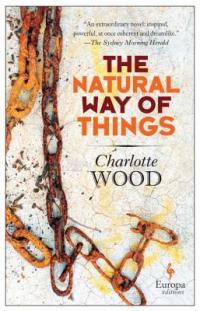
28251422Book: “The Natural Way of Things” by Charlotte Wood

Publishing Info: Europa Editions, June 2016 (originally Allen & Unwin, October 2015)

Where Did I Get This Book: The library!

Book Description: Two women awaken from a drugged sleep to find themselves imprisoned in an abandoned property in the middle of a desert in a story of two friends, sisterly love and courage – a gripping, starkly imaginative exploration of contemporary misogyny and corporate control, and of what it means to hunt and be hunted.

Strangers to each other, they have no idea where they are or how they came to be there with eight other girls, forced to wear strange uniforms, their heads shaved, guarded by two inept yet vicious armed jailers and a ‘nurse’. The girls all have something in common, but what is it? What crime has brought them here from the city? Who is the mysterious security company responsible for this desolate place with its brutal rules, its total isolation from the contemporary world? Doing hard labour under a sweltering sun, the prisoners soon learn what links them: in each girl’s past is a sexual scandal with a powerful man. They pray for rescue – but when the food starts running out it becomes clear that the jailers have also become the jailed. The girls can only rescue themselves.

The Natural Way of Things is a gripping, starkly imaginative exploration of contemporary misogyny and corporate control, and of what it means to hunt and be hunted. Most of all, it is the story of two friends, their sisterly love and courage.

With extraordinary echoes of The Handmaid’s Tale and Lord of the Flies, The Natural Way of Things is a compulsively readable, scarifying and deeply moving contemporary novel. It confirms Charlotte Wood’s position as one of our most thoughtful, provocative and fearless truth-tellers, as she unflinchingly reveals us and our world to ourselves.

Review: Have you ever wondered what it would be like to read a version of “The Handmaid’s Tale” that was amped up on steroids? Well “The Natural Way of Things” takes it a few steps further and puts it on PCP. This is one of the books that I heard about through a description my mother sent me via email. She knows what I like. Set in a desolate Outback wasteland, I also got hints of “Mad Max: Fury Road” from this book, as it’s a violent tale of misogyny run amok. Unfortunately in this one the imprisoned women don’t have an Imperator Furiosa or Max Rockatansky there to whisk them away in a tanker truck. These women, their crimes getting caught in a sex scandal with a man or men with a considerable amount of power, are trapped in a desert complex with sadistic guards and a dwindling food supply. Rough, rough stuff. Thanks for sending it my way, Mom. This is the same woman who sent me a review of the awesome “What Belongs To You”, a book that starts with a gay hook-up in a public bathroom in Bulgaria.

giphy2
Probably my Mom whenever she shoots me an edgy book recommendation. (source)

But I’m glad that it’s rough stuff. I like that Charlotte Wood takes a hideous thing and doesn’t make it titillating, doesn’t gloss it over. There are descriptions in this book, from wounds to violence to homemade tampons with gross supplies, that made me cringe and flinch. The crime these women committed was the crime of being sexual beings whose sexuality threatened male power structures. Is it a little on the nose? Sure. But that doesn’t make it any less effective.

We mainly follow two women in particular. There’s the young and fierce Yolanda, who had sex with a number of players on a sports team (though the consent of this was, to me, questionable at best). Then there’s Verla, a bit more mild mannered and caught in an affair with a high powered politician. They cope in different ways with their capture. Yolanda becomes obsessed with trapping and skinning rabbits for food, while Verla hunts ceaselessly for mushrooms. Their routines and their deep friendship is what keeps them going, but their circumstances are so horrific you kind of wonder why they would want to. I loved both of them in their own ways, Yolanda for her ferocity and Verla for her cunning. They are strong in very different ways, being two examples of well written and tough female characters who are still realistic within their circumstances. The other women are also given a lot of depth, with a lot of them having their own unique personalities. Some of them are kind, others are not, but they are all victims and Wood makes it clear that none of them deserve what is being heaped upon them.

Wood’s writing is literary and her prose is haunting. There are passages and phrases in this book that flow effortlessly and evoke vivid imagery. She portrayed this camp so well that I could see the dust in the air, feel the heat, smell the stenches. It was a hard read, but in it’s horror and devastation there was a beauty in her words and a poetry in her writing. Her characters are also well drawn out, from the prisoners to the guards as well. There are a couple of guards we focus on, and while they do have their moments of extreme violence towards women, their disdain for women in general adds to the violence in another way. One of the guards is described as a hippie type who loves yoga, but his poisonous bile he spews about his ex girlfriend goes to show that words can also reduce women to animals, almost as much as leashes and prisons can. I almost had a harder time reading these horrible words he was saying about a woman who wasn’t even present, just because who knows how many women are spoken of in such a dehumanizing and objectifying way every minute of every day. This was the realest part of the book, and it was a punch in the gut.

I think that the only part of this book I had an actual critical hard time with (because I mean, I had a hard time with a lot of it) was that I wasn’t totally certain if this was supposed to be set in the present, real Australia, or a fictional dystopian Australia. Lots of people have listed it as Sci-Fi and Speculative fiction, but I didn’t really see much that would imply that this was the case. Well, outside of the whole ‘women rounded up and sent to a prison camp for being involved in sex scandals’ thing. I guess that to me it didn’t really scream Sci-Fi as a whole with just that aspect of it.

In a time where rape culture and misogyny is being spoken of more and more, I think that a book like “The Natural Way of Things” is an important work to showcase and talk about. “Mad Max: Fury Road” brought up these themes and attracted the ire of angry misogynists all over the Internet. “The Natural Way of Things” pushes these themes further, and flat out spits in the faces of those same creeps. It wasn’t an easy book to read, but it’s scathing take down of societal hypocrisy and violent chauvinism makes it a must read.

Rating 8: A scathing and well written novel about dangerous misogyny and rebellion. This should probably be on Women’s Studies reading lists everywhere, and that’s not snark.

Reader’s Advisory: 

“The Natural Way of Things” is included on the following Goodreads lists: “Best Feminist Fiction”, and “Australian Speculative Fiction”.

Find “The Natural Way of Things” at your library using WorldCat!

Kate’s Review: “The Woman in Cabin 10”

28187230Book: “The Woman in Cabin 10” by Ruth Ware
Publishing Info: Gallery/Scout Press, July 2016 (first published in June 2016)

Where Did I Get This Book: The library!

Book Description: From New York Times bestselling author of the “twisty-mystery” (Vulture) novel In a Dark, Dark Wood, comes The Woman in Cabin 10, an equally suspenseful novel from Ruth Ware—this time, set at sea.

In this tightly wound story, Lo Blacklock, a journalist who writes for a travel magazine, has just been given the assignment of a lifetime: a week on a luxury cruise with only a handful of cabins. At first, Lo’s stay is nothing but pleasant: the cabins are plush, the dinner parties are sparkling, and the guests are elegant. But as the week wears on, frigid winds whip the deck, gray skies fall, and Lo witnesses what she can only describe as a nightmare: a woman being thrown overboard. The problem? All passengers remain accounted for—and so, the ship sails on as if nothing has happened, despite Lo’s desperate attempts to convey that something (or someone) has gone terribly, terribly wrong…

With surprising twists and a setting that proves as uncomfortably claustrophobic as it is eerily beautiful, Ruth Ware offers up another intense read.

Review: Earlier this year I reviewed the book “In a Dark, Dark Wood” by Ruth Ware, and if you recall I greatly enjoyed it. Ware created a very creepy and tense thriller, with some very fun and interesting characters. When I found out that she had written another book that was coming out this summer, I was pretty stoked! I had a feeling that it was going to be difficult to follow up “In a Dark, Dark Wood”, at least in my eyes, but I was hoping that Ware would be able to prove that she has what it takes to stick around and become a pillar in the grit-lit writing community. Suffice to say, I was very, very hopeful that it would be good…. okay, I was nervous. PLEASE let it be good.

giphy3
Please please please please. (source)

I was a little nervous at first as I started reading too. Lo Blacklock starts out and seems like a typical Grit Lit mess. Since I am not fond of that trope and since I had recently come off another book that had that trope as the main character, I was feeling quite a bit sensitive to it. The good news, though, is that Ware is very, very conscientious about how she writes her main characters. While she may appear typical, Lo has a very well plotted out backstory, one that gives every reason for her to be this way, and not because of any one specific life changing incident. The PTSD she is suffering post-break in is just another layer to it, and I really liked that it wasn’t the one thing that totally messed her up for ever and always. But all that said, since it is first person and since she does have a number of problems, the reader does sort of question everything, and you do wonder if she is just imagining things and losing it, or if something really did happen on this ship. There were many shades of grey in this book, and it could have very easily been one circumstance over the other. It was written believably for multiple outcomes.

The setting of a cruise ship was also absolutely perfect. I already am totally not on board with cruise ships. Between the horror stories you hear about illness and malfunction, or the fact that it is, indeed, very social (introvert’s nightmare), there have been instances of people just disappearing off of ships. So not only is it claustrophobic, it’s also an expansive void. If you are in the middle of the ocean and fall off the side and no one sees, you are probably going to die and no one will ever know what happened to you.

giphy4
(source)

So the claustrophobic atmosphere in conjunction with Lo’s paranoia and unreliable first person POV really made a creepy and tense story. Everyone on this damn boat is a suspect, but then maybe there are no suspects! But ultimately, I did kind of guess at least part of the puzzle that was presented to us in this book. Not all of it, but some of it. That isn’t saying much, because I am usually pretty good at guessing these things, so don’t take this as me condemning the mystery. There are plenty of red herrings to go around.

There was one aspect of the book that kind of caught me off guard and seemed very awkward, out of place, and kind of upsetting. It’s just one scene, but I did want to address it because, wow. So Lo’s ex boyfriend Ben is on the ship as well, as he’s a writer too. The night of the possible murder, before all that, Lo drinks a lot, as does Ben, and then he corners her and grabs her breast. Which she is pretty clearly not cool with. She does push him off and he stops right away, realizing that he was misreading her signals (WHAT SIGNALS, I couldn’t tell you, as she sure seemed not interested), but it wasn’t treated like the sexual assault that it was! It was more brushed off and seen as inconsequential, more like a cherry on top to an already not great night. That didn’t sit well with me, personally, as it wasn’t really given the weight that it should have been given. Which was all the more frustrating because outside of that Ben wasn’t exactly a terrible character or meant to be a bad guy. Kind of a prick but certainly not predatory. From that moment on every scene with him just felt off, and he never recovered in my eyes. Odd choice and not a great one.

“The Woman in Cabin 10”, however, did almost live up to “In a Dark, Dark Wood”, and I am happy that Ruth Ware has managed to solidify herself as a major talent in this genre! Grit-lit fans rejoice! We have Ruth Ware and it seems like she is here to stay!

Rating 8: A twisty and well plotted out mystery with a well written main character. Some strange choices were made, but overall this thriller is sufficiently creepy and tense!

Reader’s Advisory:

“The Woman in Cabin 10” is included on these Goodreads lists: “If You Enjoyed Gone Girl, You Might Also Like…”, and “Booklist Best Mystery Fiction 2016 (part 2)”.

Find “The Woman in Cabin 10” at your library using WorldCat!

Kate’s Review: “All the Missing Girls”

23212667Book: “All the Missing Girls” by Megan Miranda

Publication Info: Simon & Schuster, June 2016

Where Did I Get This Book: The library!

Book DescriptionLike the spellbinding psychological suspense in The Girl on the Train and Luckiest Girl Alive, Megan Miranda’s novel is a nail-biting, breathtaking story about the disappearances of two young women—a decade apart—told in reverse.

It’s been ten years since Nicolette Farrell left her rural hometown after her best friend, Corinne, disappeared from Cooley Ridge without a trace. Back again to tie up loose ends and care for her ailing father, Nic is soon plunged into a shocking drama that reawakens Corinne’s case and breaks open old wounds long since stitched.

The decade-old investigation focused on Nic, her brother Daniel, boyfriend Tyler, and Corinne’s boyfriend Jackson. Since then, only Nic has left Cooley Ridge. Daniel and his wife, Laura, are expecting a baby; Jackson works at the town bar; and Tyler is dating Annaleise Carter, Nic’s younger neighbor and the group’s alibi the night Corinne disappeared. Then, within days of Nic’s return, Annaleise goes missing.

Told backwards—Day 15 to Day 1—from the time Annaleise goes missing, Nic works to unravel the truth about her younger neighbor’s disappearance, revealing shocking truths about her friends, her family, and what really happened to Corinne that night ten years ago.

Like nothing you’ve ever read before, All the Missing Girls delivers in all the right ways. With twists and turns that lead down dark alleys and dead ends, you may think you’re walking a familiar path, but then Megan Miranda turns it all upside down and inside out and leaves us wondering just how far we would be willing to go to protect those we love.

Review: Oh look, ANOTHER book that involves a missing person or persons! The good news is that once this is done we’ll kind of move away from that theme, at least for awhile. Because let’s be fair, this theme is totally a no brainer for the thriller and grit lit genre. So our most recent missing person story is “All the Missing Girls” by Megan Miranda. This one almost made my highlights list in June, and even though it was eeked out at the last minute I still put it on request, because the buzz is that this could become another huge runaway hit. And yeah, I guess I agree with that. But unfortunately, it fell short of other grit lit books that I have read. Yes, it has a very cool frame in how it’s told, as Miranda decides to tell the main arc of the story backwards. We start at Day 15 of Annaleise’s disappearance, and work out way back to Day 1, peppering flashbacks to Corinne’s disappearance as well. A pretty strong gimmick, but the problem with gimmicks is that sometimes that is all a product has going for it. And sadly, I think that if “All the Missing Girls” was told in linear order, it wouldn’t stand out.

Nic is the standard main character in this genre: she’s emotionally a mess, she is stuck in a past that she tries to escape, and she can’t see past her current, bad situation, which them causes harm to those in her new life. It’s a character archetype in these stories that is getting a little old. I mean, the moment that she said that she had a handsome, smart, wonderful fiance named Everett I knew that poor Everett was going to be run through the ringer thanks to her shenanigans. I don’t know what rule has been written that says that these damaged women need to treat everyone who cares about them like crap, but Nic holds fast to it. Sometimes it’s done well and you can see the flaws in their loved ones who just don’t (or won’t) understand them, but in this one I just felt bad for Everett because Nic is a trainwreck. She has a strained relationship with her brother, she is still hung up on her ex boyfriend Tyler (who is ALSO a walking trope as the puppy eyed ex boyfriend whose candle still burns bright for his lost lady love), and she misses her frenemy Corinne in spite of the fact that Corinne was just the worst. Protagonists like this are so hard for me to like, because while I like that these women aren’t perfect and are complex and can be complete messes a la the guys in “True Detective” or something, it’s getting a little old.

giphy1
And honestly, “True Detective” had gotten a little old by season 2. (source)

But as far as the structure go, gimmicky as it may be, it did make the story more intriguing. I kind of had to wrap my head around it, as going backwards but revealing the truths about Corinne in a forward time was kind of a mind twister, but once I got the hang of it I did enjoy this creative choice. It also allowed us to find out the past after we got to see the present and future, and in doing so it did give some of the revelations a stronger reveal and emotional punch. It also was fun seeing that you think that you know what the solution is because you started at the end, but then as you move backwards you realize that no, you’re totally off base and so wrong. I am kind of curious if Miranda wrote it out in order first, or if she always started at the end and worked her way back to the beginning. It couldn’t have been easy, and so I do have to give her props for sticking the landing. I just wish that the story itself was stronger, to match the strong storytelling choices.

There was also a lot to explore when it came to Nic and her relationship with her father. Her Dad is suffering from dementia, and Miranda did a very good job of portraying someone who loves her father and hates to see him that way, but also gets easily frustrated and upset with him even though she knows that he can’t control his lapses. As someone who watched her mother and aunts have to deal with their dementia-ridden mother, and how hard it was, I really appreciated that Miranda showed multiple sides to how this can affect family members. While the dementia could have just been used as a plot device (and it was to an extent), it was handled with enough care that it didn’t feel cynical or clunky.

“All the Missing Girls” serves mostly more of the same, but the plot structure was pretty neat. I don’t know if I’d pick up another book by Miranda, but who knows how I will feel if another one comes out and it sounds promising. Give this a whirl if you want a new way of reading a mystery, but don’t be shocked if it feels all too familiar.

Rating 7: The way the story is framed is definitely cool and intriguing, but with weaker characters it feels like the story relies too heavily on the gimmick.

Reader’s Advisory:

“All the Missing Girls” is included on these Goodreads lists: “Women with Moxie”, and “Great Discussion Starters”.

Find “All the Missing Girls” at your library using WorldCat.


Kate’s Review: “What She Knew”

25817531Book: “What She Knew” by Gilly Macmillan

Publishing Info: William Morrow, December 2015

Where Did I Get This Book: On audiobook from the library!

Book Description: In her enthralling debut, Gilly Macmillan explores a mother’s search for her missing son, weaving a taut psychological thriller as gripping and skillful as The Girl on the Train and The Guilty One.

In a heartbeat, everything changes…

Rachel Jenner is walking in a Bristol park with her eight-year-old son, Ben, when he asks if he can run ahead. It’s an ordinary request on an ordinary Sunday afternoon, and Rachel has no reason to worry—until Ben vanishes.  

Police are called, search parties go out, and Rachel, already insecure after her recent divorce, feels herself coming undone. As hours and then days pass without a sign of Ben, everyone who knew him is called into question, from Rachel’s newly married ex-husband to her mother-of-the-year sister. Inevitably, media attention focuses on Rachel too, and the public’s attitude toward her begins to shift from sympathy to suspicion.

As she desperately pieces together the threadbare clues, Rachel realizes that nothing is quite as she imagined it to be, not even her own judgment. And the greatest dangers may lie not in the anonymous strangers of every parent’s nightmares, but behind the familiar smiles of those she trusts the most.

Where is Ben? The clock is ticking…

Review: Yeesh, as I started listening to this book I noticed something of a theme in the books I’ve been taking on lately. So many missing people and/or children! I think that had it been one or two books that had this theme I would have been less likely to notice it, but given “What She Knew” (and another one I will be reviewing at a later date), my total number of missing persons/children books in the past month will be at five. Grim, grim stuff. So the theme continues with this book, one that I had on my list for awhile and just so happened to find on audiobook download at my library. But the difference between this book and the other ones I’ve read is that this one not only deals with a missing child, but the toxic shame culture that has risen when it comes to how we perceive other’s parenting and how we express our displeasure about it. Specifically, via the Internet. Why this summer alone there have been two very high profile cases of tragedies involving children, those of Harambe the Gorilla and the Walt Disney World alligator attack. In one instance an animal was killed when a child fell into it’s enclosure, and in another instance a child was taken and killed by an alligator, which led to Disney killing more alligators in the search for the culprit. And boy oh boy did people take to the Internet to blame the parents, saying that if they had just been paying closer attention, all of this could have been avoided. I kept thinking about these cases and others as I listened to this book, as one of the most villainous culprits in this book is parent-shaming. Macmillan pulls no punches when she shows the insidious cruelty of the shame centered Internet.

The mystery to this book was pretty stellar, even though it occasionally treaded a bit towards the unhinged. There was twist after twist after twist, and since I was listening to it it wasn’t as easy to keep up with it. I couldn’t really skip back that easily, so I would just have to say ‘okay, I guess I remember this stuff’ and hope that I actually did. I think that sometimes when trying to throw out red herrings, Macmillan just went a bit overboard. First the person who did it would be Person A, then it would be Person B, then it would be Person A again, but then no wait, it’s Person C! Just a few too many flip flops for my taste. The benefit of the flip flops, though, is that I was taken by surprise as to how it all shook out, which is always a good thing when it comes to my reading materials.

The characters in this book ran the gamut from run of the mill to pretty complex. I really liked Rachel, the harried and terrified mother of the missing Ben. She was a well done picture of someone who is terrified that she has lost her child forever, and yet is willing to pull out all of the stops and kick down all of the doors in London to find him. At times I wanted to shake her and tell her to, for the love of GOD, listen to the professionals who are trying to bring your child back to you, but I am pretty sure that was the whole point. Her relationship with her older, controlling sister Nicky was one of the strongest things about this book, as they blatantly love each other fiercely, but lock horns over under the surface conflicts that aren’t apparent until later. That said, these under the surface conflicts are the product of a very out there plot twist that didn’t feel necessary. I know that it was supposed to instill doubt in the reality of their relationship (and I will leave it at that), but there were a lot of less ridiculous ways that Macmillan could maintained the doubt, in my opinion. It kind of baffled me.

I also found the parts that centered on Detective Inspector Clemo to be a bit superfluous. I liked him enough as a character, and it was nice seeing the police side of the investigation and the hindrances that they faced in this situation (probably pretty realistic hindrances), but the troubles in his personal life and his emotional problems just didn’t quite do it for me. I know that the way that it was told (as sometimes therapy transcripts were used to tell his side of the story) was just another way to make the reader wonder what was happening, but I found myself hoping that these parts of the story would go faster. It was a good dichotomy to show the police approach versus the proactive approach Rachel wanted to take, so that aspect was appreciated.

I listened to this on audiobook, and both a male and female narrator were used depending on whose side of the story was being told. Penelope Rawlings covered the Rachel parts, and Dugald Bruce-Lockhart covered Clemo. Sometimes they kind of had different cadence and voice styles for the same character, which was a little distracting, but overall I thought that they both did a good job. Rawlings especially conveyed Rachel’s desperation very well.

“What She Knew” was a good book to listen to in the car, and I enjoyed it for what it was. It’s a good story to add to the lady centered thrillers that have exploded in popularity, and I think that fans of the grit-lit genre should definitely give it a try!

Rating 7: This was a pretty tight thriller with a lot of good twists, but there were so many that it almost gave me whiplash. The narrators did a good job, and the story was satisfying, though some parts were stronger than others.

Reader’s Advisory:

“What She Knew” is included on these Goodreads lists: “Female Psychological Thrillers/Suspense”, and “Book of the Month Club Picks”.

Find “What She Knew” at your library using WorldCat!

Kate’s Review: “Disappearance at Devil’s Rock”

27064358Book: “Disappearance at Devil’s Rock” by Paul Tremblay
Publishing Info: William Morrow, June 2016

Where Did I Get This Book: The library!

Book Description: Late one summer night, Elizabeth Sanderson receives the devastating news that every mother fears: her fourteen-year-old son, Tommy, has vanished without a trace in the woods of a local park.

The search isn’t yielding any answers, and Elizabeth and her young daughter, Kate, struggle to comprehend his disappearance. Feeling helpless and alone, their sorrow is compounded by anger and frustration. The local and state police haven’t uncovered any leads. Josh and Luis, the friends who were with Tommy last, may not be telling the whole truth about that night in Borderland State Park, when they were supposedly hanging out a landmark the local teens have renamed Devil’s Rock— rumored to be cursed.

Living in an all-too-real nightmare, riddled with worry, pain, and guilt, Elizabeth is wholly unprepared for the strange series of events that follow. She believes a ghostly shadow of Tommy materializes in her bedroom, while Kate and other local residents claim to see a shadow peering through their own windows in the dead of night. Then, random pages torn from Tommy’s journal begin to mysteriously appear—entries that reveal an introverted teenager obsessed with the phantasmagoric; the loss of his father, killed in a drunk-driving accident a decade earlier; a folktale involving the devil and the woods of Borderland; and a horrific incident that Tommy believed connected them all and changes everything.

As the search grows more desperate, and the implications of what happened becomes more haunting and sinister, no one is prepared for the shocking truth about that night and Tommy’s disappearance at Devil’s Rock.

Review: So the other night, the moment finished “Disappearance at Devil’s Rock”, I closed the book, set it on my night stand, and thought to myself

efb3b3726eb37d9373b211f4eb19ae21
(source)

I knew that I would need to ruminate on it for a little bit and let it stew. Its interesting, because Tremblay’s other book I’ve read, “A Head Full Of Ghosts”, seemed pretty straight forward and clear cut to me. I devoured that one, made an opinion, and called it a day, even though I know that others contest my theory about it (my friend Hillary in particular). But with “Disappearance at Devil’s Rock” I found myself filled with questions. After going back and not only thinking about it, but re-reading parts of it as well, I have made up my mind about this book: I greatly enjoyed it. Part of that enjoyment comes from the fact that there isn’t really any clarity as to what really happened. We have about as much knowledge as the characters in this book, cobbled together from diary entries, hearsay, unreliable witness statements, and local legends and rumors. The big question is what happened to Tommy Sanderson? Is it supernatural, or just a regular, worldly evil? Tremblay is great at making you question the things that you read in his books, and boy was I questioning everything.

I first want to talk about the family that is holding out hope for Tommy. Tremblay writes the horror a parent feels when their child is missing in an honest and empathetic way, as Elizabeth is at times both completely panicked and anxiety driven, to numb and almost subdued. She has her moments of doubting everyone around her, even her other child, Kate, and wondering if anyone is being one hundred percent honest with her and what they know. It doesn’t help matters that she is convinced that she saw a vision of Tommy in his room after his disappearance, a shadowy shape crouched down and looking distorted. She feels his presence, she sees him, she smells him, but questions if it’s Tommy, or a ghost, or an omen, or merely her faculties starting to fall apart. This isn’t the first horrific loss that the family has experienced, as the family patriarch left them and then was killed in a drunk driving accident, which raises more questions about Tommy as well. Is this something that has haunted him and affected him for all these years? Is this a trauma that he never really recovered from, and that has altered his state of emotional being? Is this why he’s obsessed with zombies and disaster? Elizabeth’s inability to know and the fact that it is driving her mad is so heartbreaking, but so real. It’s also very hard to read about how it’s all affecting Kate, her other child and Tommy’s little sister. Kate is also hurting and scared, but has this twelve year old girl need to be tough and a supportive, so much so that she makes some very bad decisions when she thinks that she is taking care of her Mom. Seeing the role reversal of a child caring for a parent in this way is always so sad, and Elizabeth and Kate are just another well done example of this dichotomy. I really liked Kate and how Tremblay wrote her, complications and all.

The only insight we get into Tommy’s state of mind is through a frenzied journal, and what his friends and loved ones say about him. His friends portray him as just one of the gang, part of a group that is still having their long summer adventures a la “Stand By Me” or “The Goonies”. But Tremblay slowly reveals that maybe this isn’t the case, and that maybe even their perceptions and depictions of him, even beyond the secrets they are keeping, aren’t quite true either. Those around him only see him through the lenses of a mother, a little sister, and his pals, until the strange and upsetting diary is found. And even that is unclear as to what is the truth and what isn’t. I think that by making Tommy so mysterious, even when so much of him is laid out in the open, is what makes this book all the more scary, and all the more tragic. The one thing that is clear from all of the misdirection and false fronts is that Tommy is lost in more ways than one, and seeing it all written out and pieced together was incredibly heartbreaking. He is searching for someone to really understand him, and unfortunately a rather cryptic and strange character realizes this, and decides to take advantage of it. In this way, the horror of the story is far more real than ghosts, or devils, or other things that go bump in the night. It became evident that, even though perhaps there are strange and supernatural things afoot, the real scary thing is that sometimes we don’t really know those that we care about the most, and if they disappear we will be left with a huge, gaping hole that is filled with far too many questions. And we ultimately may not be able to protect them from those who want to take advantage of them.

And since this is a horror book, and since Tremblay is a damn fine horror writer, I need to talk about the creepy and weird shit that goes down. I already have an abject fear of waking up in the night to see a strange shadow person in the window or in the corner of my room, so whenever this part of the story happened shivers ran up my spine. Shadow people are present in many different kinds of folklore, and the way that they were described in this book was so effective and upsetting that I still feel a bit disturbed by it, a few days after finishing it. I like that Tremblay gives different explanations, from mass hysteria to the Third Man Phenomenon to just plain out supernatural terror. There is one scene written out in transcript form, that describes a Shadow Being combined with a bit of Uncanny horror to top it off, and I was practically shaking I was so tense. I don’t want to give anything away, but my God, it was so unsettling that it’s really sticking with me. Ultimately, the concept of shadow figures and shadow doubles could be a metaphor for other things, or it could just be a flat out creepy entity to instill fear into the reader. But it doesn’t really matter. What does matter is that it scared the hell out of me, as unless it were a “Parent Trap” kind of situation I think that the thought of running into a Shadow Double or Doppelganger is just the very worst. Ugh. Thanks, Mr. Tremblay, for freaking me the hell out in that regard.

giphy8
More like ‘let’s stalk outside peoples’ windows together’, am I right?! (source)

I was left super disturbed by “Disappearance at Devil’s Rock”, and though it took a bit to build up and terrify me, terrify me it did. Paul Tremblay has continued to prove himself to be one of the best horror writers out there at the moment, filling his stories with scares and also a lot of emotions. And a whole lot of ambiguity, which I have accepted and come to really, really appreciate. If you read it at night, don’t do it by a window.

Rating 8: A slow burn horror story that is both terrifying and tragic, this newest book from the fabulous Paul Tremblay is another true winner. Ambiguity abound, but that can be the best thing about a horror story.

Reader’s Advisory:

Since “Disappearance at Devil’s Rock” is still fairly new, it isn’t on many Goodreads Lists at the moment. However, with the themes it has, I would say look at “Popular Missing Persons Books” and “Popular Coming of Age Books”. And hey, if you have Netflix, give “Stranger Things” a try because MAN are they similar in a lot of ways (and I mean that it absolutely the best way possible)!

Find “Disappearance at Devil’s Rock” at your library using WorldCat!


Kate’s Review: “Girl Last Seen”

27070146Book: “Girl Last Seen” by Heather Anastasiu and Anne Greenwood Brown

Publication Info: Aw Teen, March 2016

Where Did I Get This Book: The Library!

Book Description: Kadence Mulligan’s star was rising. She and her best friend, Lauren DeSanto, watched their songs go viral on YouTube, then she launched a solo career when a nasty throat infection paralyzed Lauren’s vocal chords. Everyone knows Lauren and Kadence had a major falling-out over Kady’s boyfriend. But Lauren knows how deceptive Kadence could be sometimes. And nobody believes Lauren when she claims she had nothing to do with the disappearance. Or the blood evidence As the town and local media condemns Lauren, she realizes the only way to clear her name is to discover the truth herself. Lauren slowly unravels the twisted life of Kadence Mulligan and sees that there was more to her than she ever knew. But will she realize she’s unknowingly playing a part in an elaborate game to cover up a crime before it’s too late?

Review:  Sometimes I take a chance on a book that I have never heard of. Working at a library means that I see a lot of books pass by me, so I get tempted to be spontaneous fairly often. “Girl Last Seen” is one of those books that I decided to take a chance on. I had a long plane trip ahead of me, and something fluffy and easy sounded really good to me. However, I didn’t want it to be THAT fluffy and easy. And unfortunately, “Girl Last Seen” fell very much into that camp. It was kind of like the idea was ‘what if we took “Gone Girl” and made it for teens?’ I have news for you. Teenagers could just read “Gone Girl”. And I didn’t like “Gone Girl” either. So you know that this isn’t looking good for this book.

First of all, none of the characters were very interesting. You have Lauren, a musician and lyricist who is part of a musical duo with her best friend Kadence. But of course the moment that Lauren lost her voice semi permanently due to a nasty infection she contracted, Kadence dropped her and went solo. Lauren is your typical victimized best friend, who did crappy things to become popular, like dropping her old best friend Nathan. Then there’s Nathan, who became a pariah after he lost Lauren, so much so that he left school for awhile. He’s back now, though, and conveniently hot. And he’s going by the name Jude. He’s also kind of stalkery and hell bent on revenge against Kadence and Lauren, but not really Lauren because he’s still madly in love with her. This is normally a trope that I’m on board with, but in this case he wasn’t sympathetic enough for me to pledge my alliance to him. Then there is Kadence’s boyfriend Mason, the guy who put another wedge between Kadence and Lauren by kissing Lauren in the heat of the moment. Which is just another reason that people in their community think that Lauren has something to do with Kadence’s disappearance. All tropes that we’ve seen before. I’m fine with tropes, but only if they are made into their own well rounded characters and plot points, and none of them are.

There was also a strange choice in writing with this book, in that it tried to take an epistolary approach for the chapters that concerned Kadence. But instead of using written things like texts, or emails, or instant messages (is that still a thing?), the authors try to write out what is happening on web videos or news reports. When trying to write out something that is so visual, it comes off as very stilted and strange. I didn’t understand why that choice was made, when it could have been something like a blog post or a bunch of tweets. Instead we got a lot of things like ‘she looks away from the camera and looks upset’, which is the EPITOME of telling and not showing!!! That is a huge pet peeve of mine. If this were an actual web series, sure, a girl looking away from a camera and looking upset may show instead of tell, but in this case it just was awkward and irritating.

And there wasn’t really any big mystery to this whole thing. I pretty much knew what was happening from the beginning, and while the authors tried to throw some red herrings in there, it didn’t really fool me. That said, there was one final big twist that I didn’t see coming, which I do have to give them props for. It was much better than what the initial explanation was, and I did take that at face value at first. So kudos in that regard, as not only was it surprising, but it did end up being the most satisfactory of endings that I could get from this book. But one small twist that shocked me didn’t make up for lots of other things that didn’t quite add up in my eyes.

Seriously, teens could just read “Gone Girl” and get basically the same gist. It’s a shame because the summary was intriguing and I like being spontaneous, but when my spontaneity isn’t rewarded I feel more of a need to stick to planning out what I’m going to read.

Rating 3: This one just didn’t do it for me. The characters were flat, the mystery has been done, and most of the twists were predictable.

Reader’s Advisory:

“Girl Last Seen” is included on these Goodreads lists: “YA Music Books”, and “2016 YA Contemporary”.

Find “Girl Last Seen” at your library using WorldCat!

Kate’s Review: “End of Watch”

25526965Book: “End of Watch” by Stephen King

Publishing Info: Scribner, June 2016

Where Did I Get This Book: The library!

Book Description: Brady Hartsfield, perpetrator of the Mercedes Massacre, where eight people were killed and many more were badly injured, has been in the Traumatic Brain Injury Clinic for five years, in a vegetative state. According to his doctors, anything approaching a complete recovery is unlikely. But behind the drool and stare, Brady is awake, and in possession of deadly new powers that allow him to wreak unimaginable havoc without ever leaving his hospital room.

Retired police detective Bill Hodges, the unlikely hero of Mr. Mercedes and Finders Keepers, now runs an investigation agency with his partner, Holly Gibney, who delivered the blow to Hartsfield’s head that put him on the brain injury ward. Brady also remembers that. When Bill and Holly are called to a murder-suicide with ties to the Mercedes Massacre, they find themselves pulled into their most dangerous case yet, one that will put not only their lives at risk, but those of Hodges’s friend Jerome Robinson and his teenage sister, Barbara. Because Brady Hartsfield is back, and planning revenge not just on Bill Hodges and his friends, but on an entire city.

In End of Watch, Stephen King brings the Hodges trilogy to a sublimely terrifying conclusion, combining the detective fiction of Mr. Mercedes and Finders Keepers with the supernatural suspense that has been his trademark. The result is an unnerving look at human vulnerability and up-all-night entertainment.

Review: You know that you are coming to the end of a good series when you are both racing through a book, and yet not wanting to finish it. This is the experience I had while reading “End of Watch”. On the airplane I realized that I had read half of the book, and decided that it was time to put it down, because I needed to savor it. I needed to hold onto the last Bill Hodges story for as long as I could. So when I did commit to sit down and finish it, it was both wonderful and awful. I wanted to know how it all ended, but I never wanted it to end.

It was definitely good to get back to the roots of this series, and those roots are Brady Hartsfield. As I mentioned in my review of “Finders Keepers”, it just isn’t quite the same without The Mercedes Killer himself. And he came back with all the malevolence that he had in the first book. But this time he is using a video game console and his newly acquired psychic powers to take out his victims. He gets them obsessed with this game, specifically trying to click on pink fish for points, and hypnotizes them into committing suicide. I’m sure it was meant to be a damning indictment of social media, but what’s even more accidentally relevant is that I started reading this right around the time that Pokemon Go had started taking the world by storm.

giphy6
This has not stopped my own quest for Dragon and Ghost types, however. (source)

So the idea of Brady now having psychic, body jumping powers is kind of… silly. I mean, it doesn’t really fit with the realism of the rest of this series, but I was willing to give it a pass because 1) it goes back to King’s roots of “Carrie”, “Firestarter”, and “The Shining”, and 2) it gave Hartsfield a way to come back in spite of the fact he’s nearly braindead thanks to Holly Gibney.

This is very much Hodges swan song, though, as his health is deteriorating. Given that the book is called “End of Watch”, it should as no surprise that this is, indeed, the end of Hodges’ times as a detective. That didn’t make it any less melancholy, however, and his connections to his friends, especially Holly, made it hurt all the more. Hodges has helped Holly adjust and acclimate to a life she never thought she would have, and while so much of that is because of her, her friendship with Hodges (and Jerome too) played a big factor in it. So knowing that Hodges’ health issues are very serious makes the reader ache for Holly just as much the ache is for Hodges. They have come so far from “Mr. Mercedes”, their relationship going above platonic and romantic, and being in a category of it’s own. I am also still very happy with how King has characterized Holly, as while she has become more comfortable with herself for the most part, she still has her problems and they are NEVER presented as a character weakness. They are just shown as a part of who she is, that it’s just fine. King has made efforts in his more recent works to include more diverse characters, and Holly is a great example of that. Jerome Robinson is too, but I feel like we didn’t really get to see enough of him in this last book. Granted, he’s off at school and has his own life now, but I would have loved to see a bit more of him and his sister Barbara. That said, the part that Barbara did have was another good way for King to take on issues of race in this country. It was momentary, but it was well done.

The thriller elements in this book were spot on, as I was on the edge of my seat the entire time. King manages to take themes from the noir genre and makes them feel modern and unique, and the rivalry between Hodges and Hartsfield reflect this perfectly. We are ready for them to finally have their showdown, a moment we’ve been waiting for since “Mr. Mercedes”. Once I got into the final climax of the book, I was completely tense and freaked out, ready to find out how it was all going to turn out, and I was LIVID when I got a text from the husband that it was time to come pick him up from his morning excursion on our trip right as it was all shaking out.

giphy7
Actual file footage from that day. (source)

Suffice to say, I didn’t want to put it down because it was just too damn addicting. And that is everything I want in a thriller novel.

“End of Watch” was an imperfect end to the Bill Hodges series, but it managed to hit all of the right notes and left me incredibly satisfied. I was very, very happy with how the Bill Hodges Trilogy wrapped itself up. Stephen King is a true master, who has proven that he can write many different stories of many different types, but he’ll probably always have a place in his original horror roots.

Rating 8: Though there were some moments that felt rushed and some characters who felt left behind, “End of Watch” was a solid and satisfying end to King’s Bill Hodges Trilogy.

Reader’s Advisory:

“End of Watch” is included on these Goodreads Lists: “Protagonists over 60”, and “Can’t Wait Reads of 2016”.

Find “End of Watch” at your library using WorldCat!

Previous reviews in the series: “Mr. Mercedes”, “Finders Keepers”

Kate’s Rev-Up Review: “Finders Keepers”

22453035Book: “Finders Keepers” by Stephen King

Publishing Info: Scribner, June 2015

Where Did I Get This Book: The Library!

Book Description: “Wake up, genius.” So begins King’s instantly riveting story about a vengeful reader. The genius is John Rothstein, an iconic author who created a famous character, Jimmy Gold, but who hasn’t published a book for decades. Morris Bellamy is livid, not just because Rothstein has stopped providing books, but because the nonconformist Jimmy Gold has sold out for a career in advertising. Morris kills Rothstein and empties his safe of cash, yes, but the real treasure is a trove of notebooks containing at least one more Gold novel.

Morris hides the money and the notebooks, and then he is locked away for another crime. Decades later, a boy named Pete Saubers finds the treasure, and now it is Pete and his family that Bill Hodges, Holly Gibney, and Jerome Robinson must rescue from the ever-more deranged and vengeful Morris when he’s released from prison after thirty-five years.

Not since Misery has King played with the notion of a reader whose obsession with a writer gets dangerous. Finders Keepers is spectacular, heart-pounding suspense, but it is also King writing about how literature shapes a life—for good, for bad, forever.

Review: The flashback to the “Bill Hodges Series” continues with the middle book, “Finders Keepers”. I got my grubby little paws on this book shortly after I had listened to “Mr. Mercedes” on audiobook, but couldn’t wait for the CDs to arrive so I just grabbed the print book. Sorry, Will Patton, I was just too anxious to dive right in. The upside with reading this book in print form was that I basically devoured it once I had it in my hand. I read faster than Will Patton speaks, after all. Eager was I to fall back into the world of Private Detective Bill Hodges and his assistants Jerome and Holly. Eager was I to revisit that horrible and evil Brady Hartsfield, who was left beaten and practically brain dead by Holly in an effort to stop him from blowing up a concert of teenage girls. Eager was I.

So it was too bad that “Finders Keepers” kind of let me down.

It certainly wasn’t the writing. King brings some more great suspense to this narrative, building layer upon layer of serious tension. He starts out with a horrific murder, and doesn’t let the action or intensity die down. Morris Bellamy is like a male and more expansive version of Annie Wilkes, his obsession with his favorite writer pushing him over the edge into violence and madness.He is a very clear threat, and I definitely felt a lot of fear for poor Pete Saubers, a boy whose family is falling into financial ruin and is looking for a miracle. So of course he’s going to take that money that he finds, any empathetic reader would understand it. Had this been any other Stephen King book, I probably would have loved this and bought into it 100%. The problem for me is that this is Book 2 in the Bill Hodges Trilogy. And Bill, Holly, and Jerome do not make an appearance in this book until about one third of the way, and to me that is just far too long to bring these characters back when it is supposed to be the middle part of a Bill Hodges Trilogy. It kind of felt like that King had a new fun idea, and then, knowing he wanted to write more Bill Hodges stuff, decided to throw both themes together to kill two birds with one stone. He did it in a believable way, even connecting the Saubers family to the Mr. Mercedes massacre (Mr. Saubers was one of the victims, left with a permanent limp and few job prospects because of it), but it still felt cobbled together. Perhaps this could be written off as a good way to show that Hodges and Holly and, to a lesser extent, Jerome have started their own detective business together (called Finders Keepers), but it still was a bit too long to keep them away for the sake of the new characters.

And plus, I feel that this story as a whole has just as much to do with Brady Hartsfield as it does with Bill Hodges. Hartsfield has a small role in this, but being something of a vegetable lying in a hospital bed makes it kind of difficult to give him much to do. Given all the weight he was given in the first one, I was expecting a bit more from him, especially since it was pretty clear from the get go that there was more to his story. I think that if this series was more than just three books I would have been a bit more forgiving with not focusing on him as much. I would have felt like there was plenty of time. But with three books in this series, to barely have Hodges’ nemesis, and to keep Hodges and his gang out of it for the first third as well, it just doesn’t feel right.

But there are things here that I really did like. Jerome’s sister Barbara, relegated to role of potential victim in “Mr. Mercedes” gets to do a bit more in “Finders Keepers”. She’s the friend of Pete Saubers’ sister, who is worried about her brother and her family. Barbara is the one who prompts her to go see Hodges about what’s going on in her life. I like the fact that King is trying to have more diverse people in his books as of late, and Jerome and Barabara Robinson work very well as characters and as helpers to Bill Hodges. Perhaps the greatest accomplishment of this book, however, is the progression of Holly Gibney. When we met Holly in “Mr. Mercedes” she was a nervous, unstable wreck who was conquered by her demons. But in “Finders Keepers”, her new found freedom and purpose (and friend group of Hodges and Jerome) has helped her bloom into a confident and savvy detective in her own right. True, she still has some of her hang ups, and her less extreme personality quirks are still quite present (being too literal and lacking any kind of filter), she is far more in control of her nerves and feels a lot better about herself and her life. I love Holly, and she brings her own bit of diversity to the story, being a character who has mental disabilities and may be on the spectrum. King still writes her tenderly and with a gentle touch, but never condescends to her as a character either. Her character development is really the best damn thing about this book, and her friendship with Hodges is very satisfying.

And then there is the fact that Brady Hartsfield seems to be gaining some strange powers…. I thought that this was a real world King story, not necessarily a supernatural one. That isn’t to say that I was irritated with this. I like that King decided to go back to his roots, ALL the way bak to his first book, “Carrie”.

“Finders Keepers” wasn’t as strong as “Mr. Mercedes”, and something of a disappointing distraction from the Hodges/Hartsfield story that is at the heart of this series. But distracted or not, my girl Holly Gibney got some time to shine in this one, and that was worth it. Up next I will take on the last of the trilogy, “End of Watch”.

Rating 7: A solid mystery on it’s own, but it feels like a strange, out of place add on to the overarching story of Bill Hodges. Frankly, it needs more Brady Hartsfield. But Holly Gibney really shined bright.

Reader’s Advisory: 

“Finders Keepers” is included on these Goodreads Lists: “Quirky Books”, and “Stephen King’s Non-Horror Books”.

Find “Finders Keepers” at your library using WorldCat!

Previous Reviews in this series: “Mr. Mercedes”

Kate’s Rev-Up Review: “Mr. Mercedes”

18775247Book: “Mr. Mercedes” by Stephen King

Publishing Info: Scribner, June 2014

Where Did I Get This Book?: Audiobook from the library!

Description: In the frigid pre-dawn hours, in a distressed Midwestern city, hundreds of desperate unemployed folks are lined up for a spot at a job fair. Without warning, a lone driver plows through the crowd in a stolen Mercedes, running over the innocent, backing up, and charging again. Eight people are killed; fifteen are wounded. The killer escapes.

In another part of town, months later, a retired cop named Bill Hodges is still haunted by the unsolved crime. When he gets a crazed letter from someone who self-identifies as the “perk” and threatens an even more diabolical attack, Hodges wakes up from his depressed and vacant retirement, hell-bent on preventing another tragedy.

Brady Hartsfield lives with his alcoholic mother in the house where he was born. He loved the feel of death under the wheels of the Mercedes, and he wants that rush again.

Only Bill Hodges, with a couple of highly unlikely allies, can apprehend the killer before he strikes again. And they have no time to lose, because Brady’s next mission, if it succeeds, will kill or maim thousands.

Mr. Mercedes is a war between good and evil, from the master of suspense whose insight into the mind of this obsessed, insane killer is chilling and unforgettable.

Review: One of the best things to take with me on vacation is a big ol’ stack of books. And even though I almost never get through as large a stack as I think I’m going to (what with vacation having lots of distractions), I usually get through at least two. This las vacation I brought “End of Watch”, the last in a trilogy by Stephen King, and given that it was a thriller I thought that I would just write up a review and call it a day. But then I remembered that I had read books 1 and 2 before Serena and I started this blog. So, taking a page out of the Book of Serena, I am going to review the first two books in the Bill Hodges Trilogy before I tackled the third (with spoilers abound). So that means we are going waaaaay back to when I read “Mr. Mercedes” last year.

scjyjan
And cue wavy lines, and flashback music, and…. (source)

When we start “Mr. Mercedes”, King paints a very bleak picture of a blue collar town in the midst of the most recent recession. King has always done a very good job of depicting the darker side of small town life, and while our setting isn’t exactly small, the feelings of class divides and suburban vs urban are in full swing, even though almost everyone is hurting financially. That is possibly just adding salt to the wound that is the Mr. Mercedes massacre that opens this book. A bunch of people are lined up outside of the town civic center, waiting for hte doors of a job fair to open. While there are a limited number of jobs to be found inside, hundreds upon hundreds of desperate people are hoping that this is their chance…. only to be mowed down by a maniac in a stolen Mercedes. Going into the book I thought that perhaps this was going to be like many other noir detective stories, with our private investigator (in this case retired detective Bill Hodges) solving the puzzle with us only seeing his perspective.

But then King went and overturned my expectations, because almost immediately we got to see into the life and mind of Mr. Mercedes himself, Brady Hartsfield. This is the kind of guy that kills a bunch of innocent people just for funsies, and then tries to goad a retired detective into suicide by sending him a nasty little letter mocking the fact that he never found him. He works at a floundering discount electronics store, and as an ice cream truck driver, using the latter occupation to spy on Hodges. He’s basically the worst, and he is also one of the best damn things about the book. I love that we got to see into the very nastiness and awfulness of his mind, and King presented his background and home life in such a vivid and horrific way that the reader gets to see why he was the way he was, but not once feels at all bad for him. Brady Hartsfield was certainly a created monstrosity, but that’s no excuse. He is a villain that makes your skin crawl and sets your teeth on edge, as only King can write them.

And then there is Bill Hodges. He’s overweight, he’s cynical as all get out, and he fits the hard boiled detective model pretty handily. He is working outside of the law in a way, he has a spunky sidekick (in that of Jerome Robinson, a neighborhood teen who mows Hodges’ lawn for him), and even gets to start up an affair with a comely client, Janey. Janey is the sister of Olivia Trelawney, whose Mercedes was stolen and used as a weapon. Olivia was hammered pretty hard by Hodges and his partner Pete while they were on the case (as they thought she must have left her car unlocked and made it available to the murderer), and Olivia eventually killed herself out of guilt. Janey hires Hodges in hopes of clearing her sister’s name. All pretty standard tropes, really….. But then King takes those tropes and tosses them out the window. Hodges is outside the law but maintains a pleasant relationship with his former partner, Pete. Jerome is not only young and spunky, he’s also incredibly computer savvy. And after tragedy befalls Janey, King paves the way for Holly Gibney to enter the fray, who is the true hero of this entire series, in my very honest opinion.

I need to gush about Holly and how much I love her. She is introduced as the cousin of Olivia and Janey, seen as perhaps just a strange and awkward relative who is just one of a number of strange and awkward relatives (though the others are certainly more on the unpleasant side). Holly is nervous, anxiety ridden, and it is implied that she is somewhere on the Autism/Asperger’s spectrum as well. But when her cousin is killed, she steps up to the plate and demands that she is allowed to help find the man who has brought so much pain to her family, and that of many families. King writes Holly in a sensitive and delicate way, not making her just the perfect ‘savant’ stereotype that may have been tempting. Holly is very skilled but she is also very troubled, and seeing Hodges and Jerome interact with her and come to understand her was one of the best character progressions that I have seen come out of a book by King.

Watching all these three of these neat characters try to piece together the clues and hunt for Brady, all while seeing Brady plan and plot a few steps ahead of them, made for a very tense and satisfying read. King sets out the clues and the evidence for Hodges to solve, lets the readers solve some of it first, but then keeps on surprising us just as much as Brady surprises Hodges. There were times in the car that I was yelling out in fear and nervousness over how things were going to play out, which to me shows that the writer has done his job. There were a few things that kind of felt a bit convenient in terms of how conclusions were drawn or how situations came out, which didn’t really surprise me because King has been known to be somewhat guilty of deus ex machinas in his stories. This is both frustrating in that I wish he would just stop it, but at the same time it’s just something I’ve come to accept of him and his stories.

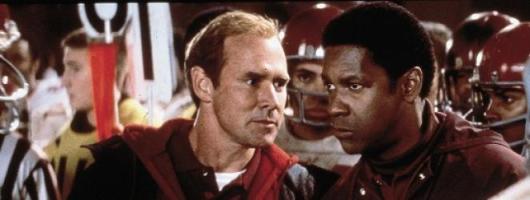
I should also mention that this is an audiobook that is read by the absolutely FABULOUS Will Patton, an actor whom you would recognize if you saw him but may not be familiar with by name only. You probably best know him as the Other Coach from “Remember the Titans”.

titans-patton-denzel
I mean Denzel outshines everyone but you know this guy. (source)

He is hands down my favorite audiobook narrator in the business, as he has this amazing knack for making his voice change ever so slightly for every character’s perspective. For having kind of a gruff voice, he’s great at voicing all characters. Will Patton is the best. It is known.

“Mr. Mercedes” is a very well written thriller. For thriller fans who may not like horror novels or scary stories, this may be a good way to see what King has to offer. It is a great start to a solid trilogy.

Rating 8: A very tense and creepy thriller, with lots of great characters. King takes the noir novel and makes it his own.

Reader’s Advisory:

“Mr. Mercedes” is included on these Goodreads lists: “Best of Stephen King from the 21st Century”, and “Books that Make You Stay Up Too Late”.

Find “Mr. Mercedes” at your library using WorldCat!

Kate’s Reviews: “Ink and Bone”

27276336Book: “Ink and Bone” by Lisa Unger

Publishing Info: Touchstone, June 2016

Where Did I Get This Book: The library!

Book Description: Twenty-year-old Finley Montgomery is rarely alone. Visited by people whom others can’t see and haunted by prophetic dreams, she has never been able to control or understand the things that happen to her. When Finley’s abilities start to become too strong for her to handle – and even the roar of her motorcycle or another dazzling tattoo can’t drown out the voices – she turns to the only person she knows who can help her: her grandmother Eloise Montgomery, a renowned psychic living in The Hollows, New York.

Merri Gleason is a woman at the end of her tether after a ten-month-long search for her missing daughter, Abbey. With almost every hope exhausted, she resorts to hiring Jones Cooper, a detective who sometimes works with psychic Eloise Montgomery. Merri’s not a believer, but she’s just desperate enough to go down that road, praying that she’s not too late. Time, she knows, is running out.

As a harsh white winter moves into The Hollows, Finley and Eloise are drawn into the investigation, which proves to have much more at stake than even the fate of a missing girl. As Finley digs deeper into the town and its endless layers, she is forced to examine the past, even as she tries to look into the future. Only one thing is clear: The Hollows gets what it wants, no matter what.

Review: I had originally put “Ink and Bone” as one of my highlighted books for the month of June, but then it got bumped off in favor of “The Girls” by Emma Cline. But in an ironic twist of fate, I got to “Ink and Bone” before I got to “The Girls”. I do like a good mystery, and I do like themes of psychic consultants and procedural dramas that center around missing or kidnapped people. Perhaps that makes me morbid, but meh, I’ll own it. So I was pretty excited to actually get my hands on “Ink and Bone” when it came in at my library. But I think that what was ultimately the downfall of this situation was that as far as grit-lit thrillers go, I’ve read quite a few really good ones as of late. And “Ink and Bone” just didn’t quite live up to those.

I will start with the good, though. The opening prologue, in which Abbey is kidnapped, was very well written and did suck me in. Unger did a very good job with how she set up the scene, how she laid clues to later plot twists inside of it, and how she put the reader in Abbey’s shoes, so profoundly that I was on edge throughout the whole segment. It definitely started the story off with a serious bang, and I was very interested in finding out what happened. It started at such a high and tension filled level that I was thinking that it could only go up from there. Unfortunately, at least for me, the rest of the book never quite reached the same levels of intensity and suspense that the first few pages did. And for a thriller novel, that is quite the no-no.

I really did like Finley, our main character and tormented psychic. I liked that she wasn’t perfect, and wasn’t exactly the trope that many of these psychics in stories like this fall into: the serene, calm, almost ethereal enigma. Finley doesn’t have the temperament for that. She is young, and a bit insecure with herself, and hasn’t quite come to terms with her gifts. Her grandmother, Eloise, is trying to guide her in hopes that she will be able to hone her craft, but Finley, at first, isn’t quite sure that she has what it takes. After all, Eloise is basically the go-to psychic for cops and investigations that are at the end of their ropes. It was fun seeing a young psychic trying to get her sea legs, as so many in pop culture (like Alison DuBois in “Medium” or Billie Dean in “American Horror Story”) are already in tune with what they can and cannot do. I also liked her relationship with her tattoo artist on-again off-again lover, Ranier. Their relationship isn’t exactly the healthiest, but I could understand why she was drawn to him, and how he is both good and not so go for her. Her need to get tattoos all over her body as a coping mechanism to her visions was a very fascinating character trait, and gave her a bit more of an edge without seeming cloying.

Most of the other characters, however, were fairly predictable. Eloise definitely fell into the role of serene and wise psychic grandmother, and while she was perfectly nice it didn’t exactly do anything new for the old chestnut of a trope. I felt the same way about Merri and Wolf, the parents of Abbey, the kidnapped girl. Wolf is, of course, a shitty human being who has been sleeping with other women throughout his entire marriage. Of course he is. And Merri is the woman who stands by her man in spite of it all. I think that perhaps she was meant to be a bit more well rounded because she fully knows what he’s doing and has a certain amount of disdain for him and his actions, but it just felt odd to me. I know that they were both dealing with shared grief, but I just couldn’t quite get on board with them as a couple. Maybe I wasn’t meant to. The kidnappers were also the usual suspects: a crazed man who is also a pedophile (at least implied), and his naive wife who is trying to replace their dead daughter with other girls, who happen to be psychic as well (or at least highly sensitive). It felt a little “Doctor Sleep” to me in that regard, as while they weren’t eating the psychic girls’ life forces they were forcing them to speak to the ghost of their dead daughter in hopes of keeping a part of her with them, and therein sucking the life out of them that way. I couldn’t tell if we were meant to feel sympathy for the mother or not. Their mentally disabled son, Bobo, is another story. He bonds with the present ‘Penny’ (the name that all the kidnapped girls take on, after the dead daughter) and doesn’t want to hurt her, as he didn’t want to hurt the others, but is domineered by his mother and his need to please her.

Again, pretty standard tropes for a thriller.

I even guessed the twist pretty early on, which never gives a book any points. Doesn’t take away points, mind you, but in this case, other problems couldn’t quite save this book for me. It isn’t a bad book by any means, it just wasn’t really what I was looking for.

Rating 5: I really wanted to like this book more than I did, but it didn’t draw me in as much as I had hoped it would. I liked Finley enough, but other characters are pretty familiar tropes and the story hasn’t added much to the genre.

Reader’s Advisory: 

“Ink and Bone” is included on these Goodreads lists: “Most Anticipated Mysteries of 2016”, and “2016: What the Over-35s Are Reading”.

Find “Ink and Bone” at your local library using WorldCat!