Kate’s Review: “The Most Dangerous Place on Earth”

28561926Book: “The Most Dangerous Place on Earth” by Lindsey Lee Johnson

Publishing Info: Random House, January 2017 (upcoming)

Where Did I Get This Book: An ARC through Random House (won on LibraryThing), for which I will give an honest review. Thank you, Random House and LibraryThing!

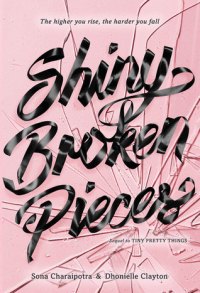
Book Description: In an idyllic community of wealthy California families, new teacher Molly Nicoll becomes intrigued by the hidden lives of her privileged students. Unknown to Molly, a middle school tragedy in which they were all complicit continues to reverberate for her kids: Nick, the brilliant scam artist; Emma, the gifted dancer and party girl; Dave, the B student who strives to meet his parents expectations; Calista, the hippie outcast who hides her intelligence for reasons of her own. Theirs is a world in which every action may become public postable, shareable, indelible. With the rare talent that transforms teenage dramas into compelling and urgent fiction, Lindsey Lee Johnson makes vivid a modern adolescence lived in the gleam of the virtual, but rich with the sorrow, passion, and beauty of life in any time, and at any age.

Review: I can hear it now. When “The Most Dangerous Place on Earth” is officially published, I’m going to bet that there are going to be people who grouse that it’s either unrealistic, or an unfair portrayal of teenagers. But let me tell you. I knew these kids in high school. I basically went to this high school, though mine was in the Midwest and not on the West Coast. I knew kids who were vicious and mean to those who were different to the point that it became sadistic. I knew kids who were under incredible pressure to get into good schools because it was expected of them, and that it nearly broke them. I knew kids with serious drug problems who were shielded by their wealthy parents and faced few repercussions, while kids from less advantaged backgrounds were facing expulsion for not having good enough grades. It wasn’t wealthy enough for “Cruel Intentions’… but it was a Minnesota version of ‘Cruel Intentions’.

giphy4
All Kathryn needs is a winter parka and a toque. (source)

Suffice to say, this book was kind of like a walk down memory lane, the only difference being that in MY day there was no social media to make things that much worse. Thank God. So yes. While it may not reflect the experiences of all teenagers, it sure reflects the experiences of some.

What struck me hardest about “The Most Dangerous Place on Earth” was that, while it was kind of a soapy thriller grit lit novel in some ways, it really read more like a character study of a number of privileged kids, and who they turn into after one terrible, avoidable tragedy. I liked that we were given a framework, a moment that has changed the lives of a number of kids (some tragic, some sympathetic, many horrible), and we get to see how this moment has predetermined how they are going to end up, in a way. This character study is seen through the eyes of a new, young, teacher named Miss Nichols. I think that it was a good idea to have her be the thread throughout this novel, a Greek Chorus to tie all of these other stories together, to show how they connect to each other and how they affect each other. But at the same time, much of my frustration was aimed at Miss Nichols, whose decision making skills and naïveté were a bit hard to fathom at times. It was as if her desire to understand and sympathize with these kids was being punished, which felt pretty cynical. But at the same time, it was kind of refreshing that this wasn’t just another ‘how do I reach these kids?!’ kind of moment, and that these kids can’t be reached because they don’t want to be reached, and the world has convinced them that they don’t have to be. That said, GOSH I wanted to smack Miss Nichols upside the head a few times.

I was far more interested in the perspectives of the kids, because we did get to see how their various lives were being shaped and destroyed by parental coddling/expectations, their wealth, and their seeming ability to be completely untouchable. For me the two most interesting characters we examined were Abigail and Elisabeth, both struggling with their own problems of teenage girlhood. Abigail is an honors student striving for good grades so she can go to a good school, but she has also found herself tangled up in an illicit romance with a teacher, Mr. Ellison. But Abigail was also one of the main instigators of a horrendous bullying episode in eighth grade, whose participation and needling led to the overarching tragedy of the story, and the end of her most important friendship. It was pretty fascinating to get to see all these different angles of Abigail, and while I definitely felt terrible for her in some ways (she is, after all, being manipulated by a sexual predator), she is also absolutely terrible in other ways in how she treats others. Her multifaceted personality was realistic, and a bit more in depth than some of the other awful kids she surrounded herself with. Elisabeth, however, was a surprising character altogether. So much of what we saw of her at first was from the perspective of those around her, from a moment of compassion towards a bullied classmate (with a sad face emoji in the group chat he was being harassed on), to others, including adults, thinking of her as a beautiful girl who is a sex object to all the men and boys around her. But then we find out that her aloofness is hiding her painfully shy personality, and a troubled home life that has pushed her to dark places. Her perspective chapter was the one that hurt the most to read, but in turn she was also the student that I was rooting for the most. It was just so interesting that I as the reader went in with certain expectations about her based on what other characters said, only to find someone completely different, but only when I actually had to listen to/ read about her from her perspective. It was very well played.

So in all, this is an upsetting book, but I do think that there is quite a bit of truth to it. While it shows the dark and disturbing places that high schools, especially those with unlimited access to money and little consequences to their actions, it also shows that things do go on, and that life will keep going after it for those who just hang in there, and learn from their mistakes. And again, as someone who went to a school like this, I found it to be one of the most relatable books about teenagers that I’ve read this year.

Rating 8: An entertaining and addictive look into the dangers of privilege and how bad teenagers can be to each other, and how they can blindly hurt themselves as well.

Reader’s Advisory:

“The Most Dangerous Place on Earth” is not on any lists on Goodreads yet, but I think that it would be a good fit on “The Best of Prep” and “High School Experiences”.

“The Most Dangerous Place on Earth” is not out yet and not available on WorldCat. It is expected to be published on January 10th, 2017. Thanks again to Random House and LibraryThing for providing this ARC!

Kate’s Review: “Altamont”

28435534Book: “Altamont: The Rolling Stones, The Hells Angels, and Rock’s Darkest Day” by Joel Selvin

Publishing Info: Dey Street Books, August 2016

Where Did I Get This Book: The library!

Book Description: In this breathtaking cultural history filled with exclusive, never-before-revealed details, celebrated rock journalist Joel Selvin tells the definitive story of the Rolling Stones’ infamous Altamont concert in San Francisco, the disastrous historic event that marked the end of the idealistic 1960s.

In the annals of rock history, the Altamont Speedway Free Festival on December 6, 1969, has long been seen as the distorted twin of Woodstock—the day that shattered the Sixties’ promise of peace and love when a concertgoer was killed by a member of the Hells Angels, the notorious biker club acting as security. While most people know of the events from the film Gimme Shelter, the whole story has remained buried in varied accounts, rumor, and myth—until now.

Altamont explores rock’s darkest day, a fiasco that began well before the climactic death of Meredith Hunter and continued beyond that infamous December night. Joel Selvin probes every aspect of the show—from the Stones’ hastily planned tour preceding the concert to the bad acid that swept through the audience to other deaths that also occurred that evening—to capture the full scope of the tragedy and its aftermath. He also provides an in-depth look at the Grateful Dead’s role in the events leading to Altamont, examining the band’s behind-the-scenes presence in both arranging the show and hiring the Hells Angels as security.

The product of twenty years of exhaustive research and dozens of interviews with many key players, including medical staff, Hells Angels members, the stage crew, and the musicians who were there, and featuring sixteen pages of color photos, Altamont is the ultimate account of the final event in rock’s formative and most turbulent decade.

Review: I’m going to take on a new responsibility here, guys! I’ve decided that I’m going to start reviewing the occasional non-fiction book as well as the other genres that I’m tackling. I don’t read non-fiction as much as fiction, but I have been reading enough pretty good stuff that I want to share it with you guys! So I’m starting this off with “Altamont: The Rolling Stones, The Hells Angels, and Rock’s Darkest Day” by Joel Selvin. I went through a phase in high school where I listened to a lot of rock and roll from the mid to late 1960s, and went so far as to try and dress up like a hippie when I went to school (though admittedly I probably was more akin to an anti-war protester, as my Mom was my inspiration and I went off old photos of her as my template). Hell, my first ever concert was CSNY in 9th grade (also because of my folks). I had heard of the Altamont Concert in passing by my parents and the cultural impression it left, but didn’t know much beyond the Hells Angels stabbing Meredith Hunter to death while the Rolling Stones played. But that’s where Selvin comes in. Because he taught me quite a bit.

What I liked about this book is that it didn’t just cover the concert: it covered events that influenced the decision to have the concert, and the days leading up to it. I had not realized that by the time Altamont rolled around, The Rolling Stones were practically broke. I’ve never lived in a world where The Stones weren’t legends, so to think that at one point they were having monetary problems was mind blowing. They were still kind of living off the image of being a tour that packed in teenage girls, even though they had started to experiment with harder and edgier sounds like ‘Sympathy for the Devil’. They hadn’t toured in awhile, and the tour that Altamont was part of was going to be a quick effort to make some cash. I also hadn’t realized that Altamont was basically thrown together in a short period of time, and moved locations in even shorter time. The information that was provided in this book really opened my eyes to how the poor planning happened, and why everything was so haphazard.

Selvin also did a lot of good research about the people who attended this concert, from Meredith Hunter (the victim of the stabbing), to his girlfriend, to other people in the audience who were injured or killed during or right after Altamont. Everyone hears about Hunter’s death, but I had no idea that some drugged out people jumped into ravines, off bridges, and had terrible car accidents. Not only that, a member of Jefferson Airplane was knocked out by an Angel, and poor Stephen Stills was repeatedly gouged with a bike spoke by another one WHILE HE WAS ON STAGE SINGING.  It all seems like such a contrast to Woodstock, which has gone down in legend as a peace, love, rock and roll fest…when in reality, it sounds like it really just got lucky that it didn’t have the same awful stuff that Altamont had. Though admittedly, the Hells Angels played a part in that. But even the Angels Selvin really looked into. While it would certainly be easy to chalk it all up to these guys being violent thugs (and hey, they were), he also makes sure to point out that they too got pretty screwed over in a way here. They were not prepared to work security for such a huge show, and their own biker culture was in direct conflict with the druggie hippie culture, with neither side trying to understand the other (I too would be pissed if I had a motorcycle that a bunch of drugged out kids kept touching and knocking over).

My one qualm that I had with this book is that Selvin, while trying to ease blame off of the usual suspects and showing it as a perfect storm of nonsense, kind of throws the Stones under the bus a little bit. Do I think that the Stones were idiots to agree to this entire thing given how shoddily planned it was? Totally. Do I think that Jagger was disingenuous in his dealings with the press when asked about pricing for their tickets? Yes indeed. But Jagger was twenty six. Richards was twenty five. Grown men, yes, but young, and they had been surrounded by yes men for a few years whose jobs were to shield them from this stuff. It’s not fair to humanize the Hells Angels, who were stabbing, beating, and roughing up concertgoers, and then imply that the Stones were to blame for all the violence. I call bullshit on that. And I also wonder how witnessing this traumatic event, liability in question or not, affected the members of the band. After all, shortly thereafter at least Richards starting doing heavier drugs than he usually experimented with. It may not be connected but it did raise some questions.

Overall, this was an engrossing book that intrigued and disturbed me. I appreciated learning more about this notorious rock concert, and looking into how things can, and will, go wrong, to the point where there’s no turning back.

Rating 8: A very well researched book about a shitshow of a rock concert that has become notorious. Selvin gave more info than I expected, and told me many new things about Altamont, all messed up and disturbing.

Reader’s Advisory:

“Altamont” is not on many lists yet, as it’s a fairly new book. But I think it would fit in on “Best Books on Rock and Roll”, and “The Rolling Stones”

Find “Altamont” at your library using WorldCat!.


Kate’s Review: “Conversion”

18667792Book: “Conversion” by Katherine Howe

Publishing Info: G.P. Putnam’s Sons Books for Young Readers, July 2014

Where Did I Get This Book: Audiobook from the library!

Book Description: It’s senior year at St. Joan’s Academy, and school is a pressure cooker. College applications, the battle for valedictorian, deciphering boys’ texts: Through it all, Colleen Rowley and her friends are expected to keep it together. Until they can’t.
 
First it’s the school’s queen bee, Clara Rutherford, who suddenly falls into uncontrollable tics in the middle of class. Her mystery illness quickly spreads to her closest clique of friends, then more students and symptoms follow: seizures, hair loss, violent coughing fits. St. Joan’s buzzes with rumor; rumor blossoms into full-blown panic.
 
Soon the media descends on Danvers, Massachusetts, as everyone scrambles to find something, or someone, to blame. Pollution? Stress? Or are the girls faking? Only Colleen—who’s been reading The Crucible for extra credit—comes to realize what nobody else has: Danvers was once Salem Village, where another group of girls suffered from a similarly bizarre epidemic three centuries ago . . .
 
Inspired by true events—from seventeenth-century colonial life to the halls of a modern-day high school—Conversion casts a spell. With her signature wit and passion, New York Times bestselling author Katherine Howe delivers an exciting and suspenseful novel, a chilling mystery that raises the question, what’s really happening to the girls at St. Joan’s?

Review: So I was one of those kids who went to a private prep school in St. Paul from Kindergarten up through Senior Year. Gotta say, while it definitely more than adequately prepared me for college and graduate school, at the time I was under immense, immense pressure. So when I started listening to “Conversion” by Katherine Howe, there were a lot of things that were familiar to me. An ‘Upper School’ building for upper classmen. Homeroom being called ‘advisory’. A Dean of Students. I will say, however, that while I was under stress, I wasn’t going to school in a town that had a notorious history of people being falsely accused of witchcraft and then hanged. So yeah, I couldn’t say that I could totally relate to the tale that was told. In fact, I would say that beyond having the occasional moment of ‘ha, we had that too’, I didn’t really relate to the characters in “Conversion”, even if I was probably supposed to to a certain degree. While Howe definitely put in a good effort at writing teenage girls, a lot of the time it fell pretty darn flat.

I think that the first problem was Colleen herself. While I understand where Howe was trying to go with her, I found her to be incredibly naive and dense, far more dense that someone who is supposedly a legitimate contender for Harvard and neck in neck for Valedictorian at this prestigious prep school. I don’t really want to go into any spoilers here, but there are a few plot points that I feel would have been pretty damn obvious for a number of people who would have been in the situation and experiencing it first hand. I understand that to draw out suspense and story line she would have to be, but it felt like her intelligence was in conflict with the plot. And while I didn’t have as many problems with Colleen’s personality as others have, I didn’t find her to be terribly compelling as a narrator. Neither are her friends. Usually I can find a side character that keeps me going even if the protagonist isn’t too interesting, but in this one we didn’t even really get that. They are all pretty privileged girls whose problems, while mostly relatable given my high school experience, just didn’t connect to me.

Our other narrator is Anne Putnam, one of the girls in Salem Village who accused her neighbors of bewitching her. Far less sympathetic than Colleen (someone who isn’t really all that sympathetic to begin with), Anne tells her story from two perspectives: the time she was accusing people, and the time where she is gearing up to confess her sins to the rest of the town, long after the trials have finished and the fallout has left a mark. While I liked the fact that Howe clearly did a lot of research into the trials and the people involved, making them as realistic and historically accurate as possible. Sure, she took license with motivation, as we don’t know why these girls accused all of these innocent people of crimes that sealed their deaths, but I think that her theories in this story make sense. They definitely have more weight behind them than Arthur Miller’s “The Crucible”, though in his defense that wasn’t really about Salem. We all know that. Howe really committed to telling an accurate story. The problem is, while it is meant to serve as a juxtaposition to what is going on in Danvers in 2012, it doesn’t quite work.

And let me tell you why it doesn’t work. Howe has two stories that have similar themes (mass ‘hysteria’), but they ultimately don’t line up. Outside of being two groups of teen girls in the same geographical region, Howe throws in a couple of twists that ultimately undermine the juxtaposition that she put out there in the first place (side note: one of the solutions IS up to interpretation, I will give you that, but boy is it laid on pretty, and supernaturally, thick). I suppose that one could argue that one other connection may be a feeling of powerlessness for adolescent girls, which manifests in puritan times to the modern age, but again…. It’s undermined. I won’t say how, but it is, and that irritated me to no end.

Something that does work, though, is the modern analogs for the Witch Trials, in the form of a trial by media as opposed to a puritanical court room. The press is, of course, whipped into a frenzy about this ‘mysterious illness’ that has fallen upon these girls, and their attention on the school and the students just feeds into it and makes things much, much worse. Adding into that is the factor of rich, entitled, nasty parents who are rightfully afraid for their children, but then lash out when answers aren’t readily apparent. And then, of course, love the media attention, both for awareness an for their own egos. A few people definitely end up on the other end of their fury, and on the other end of the fallout of the mysterious illness. This was both the most interesting, and angering, plot point. Howe wrote this SO well, she has her fingers on the pulse of the nastiest parts of human nature, both in the modern time line and the past time line. These parts made me the angriest, and hey, that was a serious emotional reaction that she no doubt wanted. So she did her job. I did find myself frustrated that sometimes I think she wanted me to feel sympathy for the girls in Salem, as a being a Puritan was very hard, and being a female Puritan was even harder. The lack of power and the lack of agency was apparent. But nope. These girls condemned a number of innocent people to their deaths. I have no sympathy for that.

Finally, this was an audiobook, and the narrator was pretty good! I thought that she did a good job of making her voice sound like a teenage girl when she needed to, but also an adult when the character called for it. Her accents seemed pretty good to me, though I admittedly don’t know much about the linguistics of the Puritan era in America. Overall, I think it was more her that kept me going. Had I been reading this in print form I may have struggled.

So “Conversion” has its moments, but I didn’t like it as much as I thought I would. Though now I’m definitely interested to learn more about the actual people of Salem beyond what was told to me in “The Crucible”.

Rating 6: Though the historical accuracy and research was spot on, “Conversion” had too few interesting characters and too many missed opportunities.

Reader’s Advisory:

“Conversion” is included on these Goodreads lists: “Prep School Mysteries”, and “Salem”.

Find “Conversion” at your library using WorldCat!

Kate’s Review: “Only the Dead Know Burbank”

28694501Book: “Only the Dead Know Burbank” by Bradford Tatum

Publishing Info: Harper Perennial, October 2016

Where Did I Get This Book: The library!

Book Description: With Lon Cheney and Boris Karloff among its characters, this sweeping and stylish love letter to the golden age of horror cinema tells the wonderful, tragic story of Maddy Ulm. It takes readers through her rise from the complicated shadows of Berlin’s first experiments with expressionist cinema to the glamorous deserts of Hollywood. For Maddy has a secret. A secret that has given her incredible insight into the soul of horror. A secret that has a terrible price as well.

A young girl awakens in a hastily dug grave—vague memories of blood and fever, her mother performing a mysterious ceremony before the world went away. Germany has lost the first great war and Europe has lost millions more to the Spanish Flu epidemic. But Maddy has not only survived, she has changed. No longer does she eat, sleep, or age. No longer can she die. After taking up with a pair of street performers, she shocks and fascinates the crowds with her ability to survive outrageous traumas. But at a studio in Berlin, Maddy discovers her true calling: film.

With her intimate knowledge of fear, death, and realms beyond the living, she practically invents the modern horror genre on the spot. Before long, she travels to California and insinuates herself in Hollywood as the genius secretly behind The Phantom of the Opera, Dracula, and Frankenstein. And yet she must remain in the shadows—a chilling apparition suspended eternally between worlds.

Clever, tragic, and thoroughly entertaining, Only the Dead Know Burbank introduces readers to one of the most unique, unforgettable characters in fiction.

Review: This past Halloween weekend, I was attending a bonfire gathering of former coworkers. Me and my friend Scott were the first to arrive, and as we build the bonfire and chatted he told me about a book that he had heard of and was interested in. When he told me it was about a girl in Germany is some kind of immortal state who takes an interest in movie making and moves to Hollywood, having a hand in making the Golden Age of Horror movies that define the time… I too was interested. As someone who likes horror, someone who likes vampire(?) lore, and someone who really likes the Golden Age of Horror Films, this should have been a home run right out of the park.

The bad news is that it didn’t quite even get a double.

The good news is, Boris Karloff is a treasure.

giphy3
I spent a majority of this book wanting to keep him safe and loved. (source)

I stand by my assertion that this plot does have a lot of serious potential and promise. Madchen, or Maddy, is a very well rounded and relatable protagonist, a girl who is trapped in stasis and has ambitions that are beyond  a world she does not fit into anymore. She is a tragic figure who never asked for this eternal life, the ‘victim’ of a ritual performed by her negligent and narcissistic mother who, in a rare moment of love for her daughter, tried to save her from the Spanish Flu. Maddy is haunted by her immortality, and also haunted by the spirit of a cruel man named Volker, who may or may not be her father, and fell victim to murder at the hands of her mother. Unfortunately, the tangles and drama in Weimar Germany and Austria really dragged the narrative down, and while I appreciated the references to German Expressionism and the undoubted influence it had on Maddy, and therefore the films she would influence, I just kind of wanted for her to go west, young vampire(?).

By the time we did get to Hollywood, things picked up, and it was lots of fun seeing Maddy interact with familiar icons of the Universal Horror circuit. From Lon Chaney to Tod Browning to a superb and sweet Boris Karloff, Maddy interacts with legends of old and her unique perspective on death and existential crises helps create the masterpieces of cinema that are still heralded today. And yet the song is still the same, as she is influential and instrumental, but as a young woman she gets absolutely no credit and is never taken seriously. These parts were the best parts of the book for me, and her friendships with Chaney and Karloff (especially Karloff, whom she affectionately called “Billy”) gave her that much more heart and rounded out two real life giants who had flaws, dreams, and spirit. Karloff is such a gentle and thoughtful soul in this book, and for whatever reason that just plucked at all my heartstrings.

But Maddy’s greatest relationship is the one she has with Mutter, a gentle giant she meets while still in Europe, who was wounded in WWI and permanently maimed both physically and mentally. Mutter is the other great tragedy of this book, as while he is so unattached from others around him for being different and special needs, his affection for and connection to Maddy is one of those tenuous threads that does connect her to humans. Maddy’s fondness for him is absolutely touching, and it leads to many moments where the two of them, defined and limited by their Otherness, are in this together, and against the world. True, one of his storylines felt awkward and superfluous (he ends up living with a number of the Native American actors who live on the studio lot, on call for roles as disposable extras, and the view and description of them made me uncomfortable because they too were so Othered), but their final bit together really, really hit me right in the gut. Because Maddy and Mutter find themselves being shipped back to Germany, right when Hitler has taken power…

Unfortunately, while I liked these really well done nuggets of characterization and mythology, the pacing was very slow, almost to the point where I was close to giving up on it. Whenever Maddy was back in Germany, the odd storyline with Volker and the baggage that comes with Maddy and her mother weighed down the narrative. It wasn’t as bad the second time, but it definitely hurt the tone to the point where I couldn’t really get past it. I also feel like it probably went on a bit longer than it had to, as the extended adventures with her mother in Hollywood were just not what I was here for. I was here for Boris Karloff. I wanted more Boris Karloff.

There were moments of “Only the Dead Know Burbank” that were absolutely beautiful in their power, tenderness, and despair. I lived for those moments. I just wish that it hadn’t taken so long to get there, and that we didn’t get slogged in parental angst. Overall, Maddy was a lovely and fascinating creature, and I will no doubt think of her whenever I rewatch an old monster movie from the 1930s.

Rating 6: Though it had moments of beautiful pathos and super fun and moving portrayals of classic movie stars, the slow start and disjointed focus in certain plot points made the book a bit harder to swallow than I had hoped for.

Reader’s Advisory:

“Only the Dead Know Burbank” is still relatively new and is on few Goodreads lists. But it would feel right at home on “Best Books on Old Hollywood”, and “Hollywood Historical Fiction”.

Find “Only the Dead Know Burbank” at your library using Worldcat!

Kate’s Re-Visit Review: “Transmetropolitan (Vol.2): Lust for Life”

22417Book: “Transmetropolitan (Vol.2): Lust for Life” by Warren Ellis and Darick Robertson (Ill.).

Publishing Info: Vertigo, February 1999

Where Did I Get This Book: I own it!

Book Description: Outlaw journalist Spider Jerusalem has become a household name in the future City he calls home. This latest collection of twisted tales showcases Spider’s horrific yet funny screeds on subjects as diverse as religion, politics, and his ex-wife’s cryogenically frozen head (which has been stolen). “Transmetropolitan” has been called “brilliant future-shock commentary” (Spin), and this new volume shows why.

Review: It boggles my mind, the things that I remember about “Transmetropolitan” and the things that I forgot. I definitely remember Spider and his ways, how couldn’t one? I remembered The Cat, the two faced feline, and Channon, and other characters that have yet to show up. But various plot points completely left my mind, and I Think that those plot points had more to do with the vignettes that you find in the comics every once in awhile. Because while “Transmetropolitan” has it’s overall progression and story arc, it also has stories that stand alone, even if they sometimes affect the broader plot. “Lust for Life” is one of those collections, where none of the stories really apply to The Beast, or the campaign, or Spider’s role in the political climate of The City or the world he inhabits. This collection is really there to give more depth to the characters and the world that they live in, and I forgot how filled with pathos this series could be until I picked this one up.

The stories in this collection do have some absurd moments (the frozen head of Spider’s ex-wife going missing, for example, and the romp that ensues). But there were two storylines that really stood out as heart felt and just plain sad. The sadness that comes in this collection really gives all the more strength to the series as a whole, to show that it’s not just one big cyber punk filth and cynicism festival. The first involves Channon, my favorite character in the whole series, and her inability to come to terms with letting her degenerate boyfriend out of her life. Channon is strong and she has the patience of a saint to put up with Spider, but you can tell that she’s also very lonely, and looking for validation. She never falls into a trope, but she has a turning point as a character when her boyfriend decides that he wants to leave his body and transfer his consciousness into a gaseous vapor. Sounds oddball, and it is, but Ellis does a great job of making this story more about letting go of loved ones, no matter how much it hurts, and how necessary it is. The entire sequence is both tragic and beautiful, and seeing Channon in this new, vulnerable role is incredibly rewarding.

The second storyline that really punched me in the gut was that of Mary. Mary is a subject of one of Spider’s columns, a woman who lived a vibrant and exciting life in the 20th century. She was a photographer who travelled the world and was present at a number of historic events. When she was older, she and her husband decided to go through cryogenesis so they could wake up in the future…. Except, her husband died before he could be frozen. And when Mary wakes up in the world of Spider Jerusalem and The City, she is in the body of a twentysomething… And completely alone in a place that she cannot comprehend. It’s a story about wanting to live beyond your time, and taking a chance on it only to find yourself all the more isolated within a world that is already incredibly isolating. It was a story that reminded me that Ellis can write snide and cynical and crude stories, but he can also write some seriously existential and pathos ridden stuff. The City is already claustrophobic for the people who live there and are used to it. But to bring in a person who is, by and large, an analog for the reader and the time frame that we are more comfortable with, it makes you really think about what the hell it would be like to live there instead of just reading about it from the outside. And for me, damn was it lonely and really, really scary. I remember once one of my classes asked me if I would take a chance on being frozen to be awakened at a future date. While a number of classmates said yes, I was a solid ‘no’. And I wonder if in the back of my mind I was remembering the story of Mary, and how she goes from a formidable and thriving woman to a scared and lost stranger in an alien land.

I do wish that more actual plot line had happened in this book, but overall I did enjoy “Transmetropolitan: Lust for Life”. It’s nice to see that Spider does cover more than just the crazy campaign that is going to be a huge part of this story as a whole.

Rating 9: Though it isn’t as focused on the main storyline, “Transmetropolitan (Vol.2): Lust for Life” does a good job of examining philosophical issues that could apply to it’s world, as well as our world.

Reader’s Advisory:

“Transmetropolitan (Vol.2): Lust for Life” can be found on the following Goodreads lists: “Best Gonzo Books”, and “Bibles for the Revolution”.

Find “Transmetropolitan (Vol.2): Lust for Life” at your library using WorldCat!

Previously reviewed: “Transmetropolitan (Vol.1): Back on the Street”.

Kate’s Review: “Dear Amy”

26244587Book: “Dear Amy” by Helen Callaghan

Publishing Info: Harper Paperbacks, October 2016

Where Did I Get This Book: The library!

Book Description: As a thirty-something Classics and English literature teacher, working at a school in Cambridge, Margot Lewis leads a quiet life. In her spare time, she writes an advice column for the local newspaper. But she can’t help feeling that she’s the last person who should be doling out advice, because her marriage has failed.

When one of Margot’s students, fifteen-year-old Katie Browne, disappears, the police immediately suspect she’s been kidnapped. Then, not long after Katie goes missing, Margot receives a disturbing letter at the newspaper offices. The letter is supposedly from Bethan Avery, a fifteen-year-old girl who was abducted from the local area twenty years ago…and never found. In the letter, Bethan states that she is being held captive and is in terrible danger. The letter ends with a desperate plea for her rescue.

The police analyze the letter and find it matches a sample of Bethan’s handwriting which they’ve kept on file since her disappearance. This shocking development in an infamous cold case catches the attention of Martin Forrester, a criminologist who has been researching Bethan Avery’s puzzling disappearance all those years ago. Spurred on by her concern for both Katie and the mysterious Bethan, Margot sets out—with Martin’s help—to discover if the two cases are connected. But then Margot herself becomes a target…will she be next?

Riveting to the final page, this is a masterful, sophisticated, and electrifying debut.

Review: Oh Grit Lit, I wish I could quit you. Well, maybe that’s a bit harsh. When it’s good, it’s really quite entertaining, a genre that keeps me interested and on my toes. When it’s bad, well……

giphy6
(source)

Given the pendulous possible outcomes, I definitely go in treading lightly, and try to keep my expectations low enough that I’m not terribly disappointed, but high enough that I don’t just give up on it. Sometimes this works. Other times it kind of just a was from the get go and I can see it from a mile away. And this is what happened with “Dear Amy” by Helen Callaghan. I found myself charging through it not so much because I wanted to know what was going to happen, but because I just wanted to get it over with. Which is never really a resounding cheer for a book. Now it wasn’t “Gone Girl” levels of hot boiling rage on my part, but I did have just a few too many qualms with it as a whole that left me less than enthused about it. So let’s just kind of unpack it, shall we? I think there are going to be spoilers here, guys. I need to talk about them to really show you why I’m irritated.

So first of all, Margot just punches every single Bingo square for stereotypical Grit Lit Heroine. She has been betrayed by her rat bastard husband (Eddy left her for another woman). She is outwardly pretty together as a teacher and advice columnist, but is afraid that if her dark past were to come out (heroin addiction being the worst part of it in her mind) everything would be ruined. And she is, of course, mentally unstable, with moments of questioning her sanity and the things that she is seeing in front of her. Old hat stuff, to be sure. But that’s not all. Oh no. Because in trope-y fashion, there of course has to be a huge twist, and this one was a doozy. Okay, here come the spoilers, folks. Get ready. Skip ahead if you really don’t want to be spoiled.

Margot is Bethan. Bethan is Margot. Margot has been in a dissociative fugue state all this time in regards to her trauma, and has been writing the letters to herself, as the Katie kidnapping set her off.

giphy8
Of course she is. (source)

Okay, look, I like a good twist as much as the next person, but this one was a bit too ludicrous for me to swallow. I’m all for unreliable narrators, but when you have to work really hard to make them unreliable, going to ludicrous lengths to do it, that’s when I start to have a hard time with it. I think I actually said ‘what?’ when it was revealed, and then it felt like just a way to say ‘what is real and what is a lie?!’. Come off it. And given that this is the second thriller novel I’ve read in the past couple of months that has ‘dissociative fugue!’ as one of the ‘what a twist’ moments, it’s already starting to feel played out as well as totally random and unnecessary. That said, there is one more twist that I did like, involving Margot and a friend of hers named Angelique from when she was in a halfway house as a teenager. This was a plot point that I did enjoy, and while I saw it coming as well, it was still more believable than the huge Bethan Avery twist. Hell, had this twist I did like been the only curveball, I probably would have liked it more.

Overall I was more interested in the Katie parts of the book, but even they felt a bit out of place because while Margot’s were in the first person, we’d jump to Katie’s chapters in the third person just so we could see what was going on with her. I think that it may have worked better if she had been in the first person as well, just because the way that it jumped into a different perspective made it feel almost like a cheat instead of a literary device to tell both stories in a consistent and interesting way. If this book had been from Katie’s POV I probably would have liked it more, even if it would have had the potential to get a BIT exploitative.

So while I liked parts of this book, “Dear Amy” ultimately didn’t really do much for me. I think that Helen Callaghan definitely has writing skills, and I think that I could see myself giving her another shot, this one was a little too far on the Billy Eichner side of the pendulum.

Rating 5: “Dear Amy” had promise but then it fell into far too many familiar traps of the Grit Lit genre. Some parts were interesting, but overall it wasn’t my thing.

Reader’s Advisory:

“Dear Amy” is not on any Goodreads lists yet. But it will fit in on “Female Psychological Thrillers/Suspense”, and “If You Enjoyed “Gone Girl” You Might Also Like…”.

Find “Dear Amy” at your library using WorldCat!

Kate’s Review: The “March” Trilogy

Book: The “March” Trilogy by John Lewis, Andrew Aydin, and Nate Powell (Ill.)

Publishing Info: Top Shelf Production, August 2013 (1), January 2015 (2), and August 2016 (3).

Where Did I Get These Books: The library!

Book Description: Congressman John Lewis (GA-5) is an American icon, one of the key figures of the civil rights movement. His commitment to justice and nonviolence has taken him from an Alabama sharecropper’s farm to the halls of Congress, from a segregated schoolroom to the 1963 March on Washington, and from receiving beatings from state troopers to receiving the Medal of Freedom from the first African-American president.

Now, to share his remarkable story with new generations, Lewis presents March, a graphic novel trilogy, in collaboration with co-writer Andrew Aydin and New York Times best-selling artist Nate Powell (winner of the Eisner Award and LA Times Book Prize finalist for Swallow Me Whole).

March is a vivid first-hand account of John Lewis’ lifelong struggle for civil and human rights, meditating in the modern age on the distance traveled since the days of Jim Crow and segregation. Rooted in Lewis’ personal story, it also reflects on the highs and lows of the broader civil rights movement. 

Review: John Lewis, noted Civil Rights Activist and Georgia Congressman, can now add another fabulous moniker to his name: National Book Award Winner. On November 16th, 2016, he won the National Book Award (in the Young Readers category) for his book “March: Book 3”, the conclusion to his autobiographical graphic novel series about his time during the Civil Rights Movement. I caught his acceptance speech, and like many other people, cried deeply because I was so happy for him, and it clearly meant so so much on so many levels. By total coincidence, I had just read “March: Book 2” that morning. It had been awhile since I read “Book 1”, and was playing catch up. So then all I had to do was wait for “Book 3” to come in, vowing that once it did I was going to review the entire work as a whole. Because that’s what the “March” Trilogy is: it’s one large story about a remarkable man during a tumultuous time, a story about a movement that changed the nation and a movement that seems all the more relevant today. So I waited. And “Book 3” finally came in for me. So now, let me tell you about this fabulous series.

“March: Book 1” starts with Lewis’s childhood as the son of a sharecropper in rural Alabama and goes through the Lunch Counter Protests in Nashville. From a young age Lewis had a drive and a passion to lead and learn, his early aspirations of being a preacher evolving into the leadership and commitment that he put forth while in the Nashville Student Movement, and then into the broader Civil Rights Movement as a whole. “March: Book 2” talks about his time with the Freedom Riders and the violence they faced during their non violent protests and demonstrations, all leading up to the March on Washington and Martin Luther King Jr.’s “I Have A Dream” speech. This book deals more with the growing aggression of the white citizens and government, as well as the Federal Government starting to waffle and teeter and struggle with the role that it should be playing. It’s also the book that shows Lewis and his own inner struggles, as while non violence is always the mission and the goal, his resentment and anger threatens to boil over. “March: Book 3” is the conclusion, and addresses Freedom Summer, Voting Rights, and Selma. And this story is told all within the frame of the Inauguration of President Barack Obama. Stunning framework, absolutely beautiful. There are multiple parallels between things in “Book 1” that come up again in “Book 3”, and there are themes that link all of them together not just with Lewis, but with other prominent figures as well. Lewis sets out to tell all of their stories as best he can, and the result is one of the best damn graphic novel series I have ever read.

This series is so powerful and personal, and it goes to show just how remarkable John Lewis is. He’s one of the ‘Big Six’, aka one of the most influential members of the Civil Rights Movement, and one of the only ones left, as he reminds us in “Book 1”. These books are very straight forward and simple, but they are so honest and personal that the power they have is immense. I found myself crying many times during my reads of all these books, but also laughing, and cheering, and seething. Lewis brought out so many emotions in me with his story, and his immense talent as a storyteller comes through, just as his charisma does. We get to see the story of the Civil Rights Movement through his eyes, and he tells us the stories of those involved within the movement and those who influenced it from the outside as well. Yes, at times these books are violent, and upsetting, but they need to be, because the horrors that fell upon many people during their non violent protests must never be forgotten. I think that the entirety is an accomplishment, but I understand why they gave the National Book Award to “Book 3”. After all, while it is probably symbolic of awarding the whole darn thing, I think that “Book 3” was the most powerful in terms of emotion being served, be it pride, fear, rage, or determination. It certainly was the one that had me weeping from the get go, as the very first moment was the bombing of the 16th Baptist Church that killed four little girls. The violence is absolutely horrifying, but it cannot be forgotten or glossed over. It absolutely cannot. “March: Book 3” also was the one to really address the differences of ideologies within the movement as a whole, not just between King and X, but Lewis and SNCC as well. And Lewis also has no qualms addressing the fact that LBJ, while he did ultimately get things going on a Federal level, was incredibly reluctant to do much in terms of help until he absolutely  HAD to. I think that realities get lost in the historical narratives that come in our educations, and that is absolutely why the “March” Trilogy is fundamental reading when it comes to the Civil Rights Movement in this country.

And, like other graphic novels before it, I want to address the artwork in this series. Because it is beautiful in it’s simplicity, and yet powerful in it’s design. It’s all black and white, and stark and striking on every page. Nate Powell brings the story to life on the page, and he did it both with bits of humor to go along with the hope, horror, and courage. There were bits of realism to accompany the distinct style, but it always felt very tangible and very authentic. As I mentioned before, the illustrations do not gloss over the violence that was prevalent during the time, and while it certainly is disturbing, it’s done in a way that could never be dismissed as exploitative or ‘over the top’. It is incredibly honest and upsetting, but it needs to be. The reader needs to be upset and outraged by it. Because it IS upsetting, and it is outrageous.

march3

I cannot stress enough how important the “March”Trilogy is in these uncertain and scary times. John Lewis is a treasure and an inspiration, and I feel that this is required reading. Get this in schools, get this in curriculums, get this in peoples hands. And you, you should likewise go out and get your hands on this series. You will not regret it. You will learn something. And you will be moved. Thank you, John Lewis. Thank you for so much.

Rating 10: A phenomenal and deeply personal series, John Lewis tells his story of activism through this astounding graphic novel trilogy. He speaks on the Civil Rights Movement from his perspective, and shows parallels to recent fights for rights and freedoms.

Reader’s Advisory:

The “March” Trilogy can be found on the following Goodreads lists: “Civil Rights Reading List”, “History Through Graphic Novels”, and “Activist Memoirs”.

Find The “March” Trilogy at your local library using WorldCat! Book 1; Book 2; Book 3.

Kate’s Review: “Outcast (Vol.3): This Little Light”

29277919Book: “Outcast (Vol.3): This Little Light” by Robert Kirkman and Paul Azaceta (Ill.)

Publishing Info: Image Comics, June 2016

Where Did I Get This Book: The library!

Book Description: Kyle is faced with the most emotional exorcism he’s performed yet… as he begins to learn more about his abilities and what’s really happening around him. Secrets are revealed that will change everything.

Review: If Volume 1 was set up and Volume 2 was getting the wheels into motion, “Outcast: This Little Light” is the pay off, and boy does it pay off and then some. Kirkman has always done a good job of taking a well worn trope (be it zombies in “The Walking Dead” or superheroes in “Invincible”) and breathing new, unique life into it, and “Outcast” is doing the same for the demonic possession story. I’ve said it before, I’m not as scared or disconcerted by demonic possession stories, but “Outcast” is exceeding my expectations.

When we left off in “A Vast and Unending Ruin”, Kyle and Anderson had the daunting and heart wrenching task of performing an exorcism on Kyle’s sister Megan. What could have been a frustrating and emotionally manipulative scene was actually done very well, as Megan’s danger didn’t feel like solely a way to get at our male protagonist. Given how these demons work, and given that this plot point is resolved pretty darn quickly and opens up some new plot paths, I was willing to give it a pass. Megan is a character that I am very fond of, as even though this happens to her, she bounces back and remains the tough and awesome sister that I really, really enjoy (yeah yeah, spoiler alert, but it needs to be said). It also opens up more for her to do because of some of the consequences of her temporary possession, especially in regards to her and her husband Mark. Mark is another really well done character, as while he could have easily been the skeptical and cruel brother in law who only serves to doubt Kyle, he’s taking an interesting turn as well. His and Megan’s relationship is one of the more well done and honest portrayals of marriage I’ve seen in a comic, and it serves as a nice counterbalance to the star crossed relationship between Allison and Kyle. While Kyle and Allison may be the couple that you are supposed to root for and invest in, with demons and misconceptions keeping them apart, I am far more invested in the one between Megan and Mark.

We also get a bit more insight into what exactly is going on with the demons regarding their motivations and their weaknesses. Kirkman continues to move the mythology out of the solely Judeo-Christian realm, giving us a bit more to chew on and getting a bit more creative. This, of course, is only adding more tension between Kyle and Anderson, as Kyle is pretty convinced that it has little to do with God, while Anderson is clinging to the belief that it has everything to do with that. It may be easy to say that I’m biased when it comes to this, as yes, I am an agnostic, but I think that by opening up the potential in demonic possession does a few positive things for the narrative. The first is that it makes it unique to other possession narratives. Adding your own spin to a classic story or device is going to make it stand out more, and “Outcast” is definitely standing out against other similar stories that I’ve seen in the past few years. It’s not just the demon mythology either, I am also very interested in what an ‘Outcast’, like Kyle, is, and how it all plays into this mythology. Another is that there’s lots to be said for being inclusive in stories like this, and by opening up more possibilities of explanation, Kirkman is speaking to a wider audience who may be reading this book and hoping for a more relatable evil to vanquish, and a more relatable way to combat it. And finally, at least for me, it’s scarier this way. Without going into specifics, I think that this kind of demonic force is hitting closer to my own personal fears. I like being scared, and this is giving me some serious willies.

“Outcast (Vol.3): This Little Light” left on a pretty hardcore cliffhanger, and now that I have fully succumbed to this comic I am definitely itching to see what happens next. Don’t keep me in suspense too long, Image Comics! When does Vol. 4 come out?

Rating 8: Now that the story is in full swing, “Outcast (Vol.3): This Little Light” is doing new and interesting things with the demonic possession trope. It’s still a bit weak in some areas (Kyle and Allison), but it’s thrilling in most others.

Reader’s Advisory:

“Outcast (Vol.3): This Little Light” is still not on any lists on Goodreads. Again, try “Hellblazer”, “Hellboy”, and “Chilling Adventures of Sabrina”. Oh, and for another intriguing take on possession, give “My Best Friend’s Exorcism” a whirl too!

Find “Outcast (Vol.3): This Little Light” at your library using WorldCat!

Previously reviewed: “Outcast (Vol. 1): A Darkness Surrounds Him”, “Outcast (Vol.2): A Vast and Unending Ruin”.

Kate’s Review: “Before The Fall”

26245850Book: “Before the Fall” by Noah Hawley

Publication Info: Grand Central Publishing, May 2016

Where Did I Get This Book: The library!

Book Description: On a foggy summer night, eleven people–ten privileged, one down-on-his-luck painter–depart Martha’s Vineyard headed for New York. Sixteen minutes later, the unthinkable happens: the passengers disappear into the ocean. The only survivors are Scott Burroughs–the painter–and a four-year-old boy, who is now the last remaining member of a wealthy and powerful media mogul’s family.

With chapters weaving between the aftermath of the tragedy and the backstories of the passengers and crew members–including a Wall Street titan and his wife, a Texan-born party boy just in from London, a young woman questioning her path in life, and a career pilot–the mystery surrounding the crash heightens. As the passengers’ intrigues unravel, odd coincidences point to a conspiracy: Was it merely dumb chance that so many influential people perished? Or was something far more sinister at work? Events soon threaten to spiral out of control in an escalating storm of media outrage and accusations–all while the reader draws closer and closer to uncovering the truth.

The fragile relationship between Scott and the young boy glows at the heart of this novel, raising questions of fate, human nature, and the inextricable ties that bind us together.

Review: For the past couple of years I have been OBSESSED with the FX show “Fargo”. I love the movie, but the show has knocked it out of the park the two seasons it has been on, with a third coming up in the nearish future. I seriously can’t wait because I LOVE this show, and I love how it portrays the deep and violent underbellies of Minnesota life. While still being so damn Minnesotan.

giphy5
(source)

Little did I realize that Noah Hawley, the showrunner for that series, is also an author. I didn’t realize this until after I had checked out his most recent novel “Before The Fall”, and once I did I was pretty damn excited and even more intrigued by it. Hawley has a skill for writing and creating complex and nuanced characters, as seen in Bear and Peggy and Molly and Lorne Malvo on the show he’s in charge of. It shouldn’t be much surprise that he brought that same skill and nuance to a number of his characters in “Before The Fall”. Well, a few of them anyway.

Since the cast is characters is pretty big and their fates sealed from the get go, Hawley only has to really show a little bit of motivation for how each person got on this ill fated plane, and what role, if any, they played in it’s crash. Much of the focus, however, is on former addict and down on his luck painter Scott, an artist with a need to try and understand tragedy and accidents even before he survives a plane crash. Scott is by far the most interesting character in this book, because it is mostly through his eyes that we see the aftermath of such a tragedy. I liked Scott as a character, a pretty good guy trying to figure himself out who finds himself the center of a tragedy, and the person that everyone is trying to get answers from. He wasn’t necessarily a hero in a stereotypical sense; he did what he could in an emergency and was able to save himself and J.J., the four year old lone survivor to a media fortune. But of course the fact he isn’t perfect or the ideal heroic figure, that works against him in the eyes of some, which was a fascinating angle to take. He is a wonderful foil to Eleanor, J.J.’s aunt through his mother, who has been thrust into motherhood while in intense grief. Both Scott and Eleanor care very deeply about J.J., but neither of them really know how to adjust to their new roles that have been heaped upon them, be it hero or mother. It seemed kind of on the nose that Eleanor’s husband Doug was just the worst, more interested in dollar signs than his wife or nephew as they navigate their grief, but he just goes to show that Eleanor is strong, and deep. Perhaps his two dimensional characterization is just there to bolster her when she can stand on her own two feet, but I liked having a clear person to hate, so that’s fine!

And along with that, we see how the world tries to make sense, and tries to point fingers towards blame, and how the media (especially media with vested interests in outcomes) can drive a narrative. The media has been accused of influencing people’s opinions a lot lately, especially in the sense of putting info out there that isn’t totally true, or is flat out false. “Before The Fall” focuses a lot on this plot point, as one of the victims, David Bateman, was the head of a Fox News-esque network that is very controversial because of how it spins things or emphasizes sensationalism over facts. The face of the network, Bill Cunningham, is both incredibly stereotypical and yet one of the more intriguing character in the book, as his need to know what happened to his friend and mentor completely clouds his already super cloudy professional judgement. This of course leads to a very bloodthirsty Witch Hunt that his viewers, and other media, partake in. On one hand you feel for him because he’s very clearly in mourning, but on the other he’s such a bastard for exploiting this tragedy for ratings that you can’t help but hate him as well. So yeah, a bit stereotypical, but at the same time you kind of have to wonder about him. He never really gets a full exploration like many of the other players, but isn’t just flat and boring in his wretchedness like Doug. Friggin’ Doug.

I enjoyed how this book slowly revealed the backstories of the victims of the plane crash, showing the things happening in their immediate lives right before their deaths, or in some cases the events that REALLY put them on this path. I do think that it was kind of a fizzle out in some ways, however, as while we get all this background, so much of it doesn’t really end up being totally relevant to the plot and the outcome. But then, that in and of itself is kind of perfect, because that’s the point. Sometimes things happen, randomly, coincidentally, and these things may not actually matter in the long run, at least at the end of all things. These things may just happen but other things outside of your control can change your destiny. That’s the problem Cunningham never quite figures out, and while some may find it to be pointless, I find it poignant as all get out. And so very “Fargo”.

So while it ended up taking me on a long chase and sometimes superfluously, I did end up really enjoying “Before The Fall”. The twists and turns were a fun ride, and I liked how it ended even if it wasn’t what I have come to expect from thriller mysteries such as these. I say check it out.

Rating 8: A well characterized thriller with a lot of interesting plot paths. Though some characters are flat and obvious, many are very intricate and fascinating, and the ideas the book explored were very good.

Reader’s Advisory:

“Before the Fall” is included on these Goodreads lists: “Best Books of Secrets”, and “What She’s Reading This Summer”.

Find “Before The Fall” at your library using WorldCat!

Kate Re-Visit Review: “Transmetropolitan (Vol.1): Back on the Street”

22416Book: “Transmetropolitan (Vol.1): Back on the Street” by Warren Ellis, Darick Robertson (Ill.)

Publishing Info: Vertigo, 1998

Where Did I Get This Book: I own it.

Book Description: After years of self-imposed exile from a civilization rife with degradation and indecency, cynical journalist Spider Jerusalem is forced to return to a job that he hates and a city that he loathes. Working as an investigative reporter for the newspaper The Word, Spider attacks the injustices of his surreal 23rd Century surroundings. Combining black humor, life-threatening situations, and moral ambiguity, this book is the first look into the mind of an outlaw journalist and the world he seeks to destroy.

Review: I’m going to be honest, readers. I was utterly dismayed and ashamed of the way that our Presidential Election ended up. And angry. And as I woke up the next morning and confirmed the news, on friend Kevin had a post on his Facebook wall involving “The Smiler” from the comic series “Transmetropolitan”. More on him as the series goes on. And in that moment, I knew that I needed to re-read that series. Be it inspiration, perfect timing, or personal therapy, I went to my book shelf and grabbed “Back on the Street”. I needed Spider Jerusalem in that moment. And re-discovering him and his strange, obscene, and digitized future that’s drenched in filth, insanity, greed, and cynicism, was a small comfort. Because God, did I miss Spider.

“Transmetropolitan (Vol.1): Back on the Street” throws us into a future scape where humans have evolved technologically, but have fallen into absolute indifference, moral squalor, and a very divided society. Spider Jerusalem is a journalist who is in self-imposed exile up in the mountains. And he doesn’t even come back because he wants to make the world a better place, or to bring the ethics and integrity of journalism back to the forefront in a corrupt society. Oh no. He comes back because he owes his publisher some books he hasn’t written and he doesn’t want to get sued. Boy is he resentful of this fact. And that is the heart of Spider Jerusalem. He hates the society that he has been forcefully thrown back into, and even though he is at his heart a good person, he is so cynical and bitter and pissed that he doesn’t even like the fact that he’s a good person. He has a drinking problem, he has a drug problem, and he has a foul mouth and a sour attitude. But he is by far one of the most endearing comic book characters I have ever encountered in all the years I’ve read comics. Though in Volume 1 we haven’t quite gotten into the heart of the series, it is already giving hints as to what to expect while still speaking for itself. “Back on the Street” is an arc that could easily stand on its own two feet, and give us a story and a moral that we could get behind and be comfortable with. I love Spider and I love how snarky and Hunter S. Thompson-y he is (I mean, it’s pretty common knowledge that he’s an homage to that amazing Gonzo journalist), and he makes me smile and laugh just as much as he makes me think. He is a hero that this world needs, a madman who is just mad enough to take on the madness of the world that he lives in. His shining moment is when he exposes the police violence towards a group of disenfranchised people called Transients, people who have taken on mutated Alien qualities who are trying to live their lives in peace in one small part of the city. As the police rain down violence upon them, Spider jumps in and broadcasts it to the world, speaking up and fighting for their right to exist, in his own brash and evocative Spider way. You cannot help but stand up and cheer as you read his musings against politics corruption, and the media. He is so well written and so well rounded, a flawed but inspirational character with a lot to say about the world he lives in and the world we live in too.

Spider aside, the setting that Ellis has created is so damn perfect and layered. The City (no further name given so that it can be any city) is filled with so many different and strange people, all of whom are frantic and overbearing. It’s dirty and anxious and you get a sense of unease being in it. Ellis’s City is really a character in and of itself, a personality that is basically unbearable within a place that I would never, ever want to live. Ellis has also made a number of really great supporting characters that manage to shine through past Spider and his grandiosity. You have his greedy and opportunistic boss, Royce, who takes Spider onto his team, albeit nervously. There’s Spider’s Cat, a two faced mutant feline with just as bad an attitude as Spider. But my very favorite this far is Channon, Spider’s assistant whom he met when he took shelter in a strip club while covering a volatile story. Channon could have easily been the butt of jokes at her expense, being a former sex worker and the straight man to Spider’s antics, but she is a force to be reckoned with who provides an anchor to him and a voice of reason he must listen to. Channon is the best and I love the balance she brings to the story. If it was just Spider being crazy, yeah, it would probably get a bit old. Channon humanizes him, but doesn’t neuter him. It’s a great dichotomy.

And finally I need to talk about the art. I LOVE the style that Darick Robertson brings to this story. His pictures of The City are so fraught with confusion and insane details, you can see so many different stories nad messages in just one frame.

x0paigw
(source)

I mean, holy crap. Just look at this. There is so much to see, and there is so much going on, but it never really crosses the line into too much. I love the style because it feels like it matches the content. Over the top and edgy, but filled with a lot of heart.

And I would be remiss if I didn’t talk about the introduction of our first main antagonist: The Beast, aka the President of the United States. Just one question for Warren Ellis: are you a soothsayer, sir?

spider
Too real. (Vertigo Comics)

So I bet you can understand why I felt a need to go back and re-read this book.

“Transmetropolitan (Vol.1): Back on the Street” is the beginning to an amazing series, and I had totally forgotten just how fun it right from the very start. It’s just what I needed. It’s vulgar and it’s brash and over the top, but it’s so darn therapeutic. And it’s a classic. Welcome back into my life, Spider Jerusalem.

Rating 10: A biting and hilarious satire of politics and journalism, “Transmetropolitan (Vol.1): Back on the Street” is a wonderful start to a classic and tremendous series. Spider Jerusalem endures.

Reader’s Advisory:

“Transmetropolitan (Vol.1): Back on the Street” can be found on the following Goodreads lists: “Best of Cyberpunk”, and “Bibles for the Revolution”.

Find “Transmetropolitan (Vol.1): Back on the Street” at your library using WorldCat!