Kate’s Review: “How To Hang a Witch”

27405351Book: “How To Hang a Witch” by Adriana Mather

Publishing Info: Knopf Books for Young Readers, July 2016

Where Did I Get This Book: The library!

Book Description: It’s the Salem Witch Trials meets Mean Girls in a debut novel from one of the descendants of Cotton Mather, where the trials of high school start to feel like a modern day witch hunt for a teen with all the wrong connections to Salem’s past.

Salem, Massachusetts is the site of the infamous witch trials and the new home of Samantha Mather. Recently transplanted from New York City, Sam and her stepmother are not exactly welcomed with open arms. Sam is the descendant of Cotton Mather, one of the men responsible for those trials and almost immediately, she becomes the enemy of a group of girls who call themselves The Descendants. And guess who their ancestors were?

If dealing with that weren’t enough, Sam also comes face to face with a real live (well technically dead) ghost. A handsome, angry ghost who wants Sam to stop touching his stuff. But soon Sam discovers she is at the center of a centuries old curse affecting anyone with ties to the trials. Sam must come to terms with the ghost and find a way to work with The Descendants to stop a deadly cycle that has been going on since the first accused witch was hanged. If any town should have learned its lesson, it’s Salem. But history may be about to repeat itself.

Review: I need you, readers, to go back and read that description. I will wait…

Okay, did you read it again? Does it not sound absolutely BANANAS?!?! If you said anything other than ‘yeah totally’, I want to know what your life is, because to me this is totally bonkers. Which is why I put it on my list, of course. Because you have a YA novel about teenage witches in Salem, Massachusetts, and the teenage girl descendent of Cotton Mather, written by an ACTUAL descendant of Cotton Mather, that has magic, bitchy teen girls, a Puritan era curse, and a ghost who is a partner in detection.

giphy
(s0urce)

Look, I’m going to be honest. There are many thing that I would criticize: The writing is clunky, Sam is very much a stereotypical ‘I’m so edgy and no one understands me!’ protagonist, the dialog borders on unbelievable, the metaphor of witch hunts as modern day bullying is kind of ham fisted, and there were so many cliches that I lost track of them. But guess what? I DID NOT CARE!!!  All these things aside, it pretty much met all the needs that I needed it to meet! “How To Hang A Witch” by Adriana Mather is a sanitized version of “The Craft” and “American Horror Story: Coven” and yes, it’s over the top and silly, but I’m not mad because I thoroughly enjoyed the time I spent with it.

Why, you ask? Well, lots of reasons. I like witch stories. I liked that Mather has clearly done a lot of actual research about the Salem Witch Trials and the history of the town, and her family. I like that she does manage to incorporate a lot of that history into the narrative, even if it’s forced in at times. And I was kind of left guessing about who the perpetrator of the curse was, as Mather does put in some good red herrings that did distract me here and there. What could have easily just been a gimmicky book written by a descendant of someone who was there turned out better than it could have. I also did ultimately like our main character, Sam Mather, even if she is close to falling into many a trope in YA literature. As a descendant of Cotton Mather, of COURSE she’s a target for bullying by The Descendants, who are descendants of accused witches. So I was able to forgive Sam’s dark sulking, because unlike other sulking protagonists in YA stories that shall go unnamed, her father is in a coma, her mother is dead, all of her friends have had terrible things happen to them, and now she’s being tormented by most everyone around her. EVEN THE TEACHERS, I kid you not. Because of all this I get her defensiveness and I’m more willing to forgive it, even if it all seemed a bit heaped on. True, when in the first paragraph she warned the reader that she’s super sarcastic I was skeptical, and her constant spats with most everyone in town were also worrisome and repetitive. But as the book went on that forced edginess eventually tapered off, and Sam became more natural in her interactions with those around her, so it didn’t feel as ridiculous. It would have been easy to make it her against the world and that’s it, but she grew and developed, and therein found more common ground with others, which made her more sympathetic and easy to swallow.

But we do need to talk about the love triangle. Because boy, is it a doozy in this one. First you have Jaxon, the nice boy next door type who believes in Sam and is kind and nice to her, if not a little flat and boring. He’s fine. He’s a pretty clear ‘best friend I don’t have feelings for or do I?’ contender. But then…. Then there’s Elijah. Elijah, the thoughtful, brooding, sarcastic, GHOST. A GHOST, GUYS.

giphy1
What even is this and why do I kind of love it? (source)

So yeah, that happened. Man, I really do hate love triangles, especially when there is seriously no reason for them. But I did like Elijah, because there was enough sarcastic and snarky personality to him that he wasn’t just an ‘awwwww, woe is meeeeee’ stereotype of the supernatural love interest. He and Sam always felt like they were on equal footing in their investigation of the mystery of the curse, and while he may not have totally adhered to a lot of Puritanical values for sake of storytelling, it was a pretty okay representation of parties equally giving and taking. His motivation was his own as well, with his backstory tied up in the curse and the tragedies of the Salem Witch Trials, so it didn’t feel like he was just thrown in for the love angle alone. He was at least justified in being there. Him being a ghost was a bit silly, sure, but it did add a tragic spin to his romance with Sam. I think that the friendship and intimacy between the two also emphasized that Sam has a harder time fitting in with her living peers (which is dangerous because she teeters towards ‘I’m not like the other girls’-dom). But Jaxon just felt unnecessary to me, and shoe horned in because there needed to be some extra drama in the romance department for whatever reason. True, he starts by serving as the one person who trusts and supports Sam, but then that is rendered unnecessary as time goes on. I’m wondering if he was just there to potentially set up more drama down the line, because looking at Goodreads it looks like this is considered the first in a series. Given how it ended, in kind of an ‘end of “District 9″‘ sort of way…. well, I’d probably read the next one if it does come to fruition.

So to recap: this book is cheesy, silly, and painted with a broad brush, but I found myself deeply entertained while reading it. Is it going to be something I’d point to if you are genuinely interested in reading about the Salem Witch Trials? Hell no. Is it something I’d point you to if you wanted a spot of fun and a quick read about teen witches? Hell yes. “How To Hang A Witch” was a doozy, and I just decided to buckle up and enjoy the ride, which worked in my favor. No regrets!

Rating 7: At times cheesy and predictable, but also very fun and a nice fluffy read, “How To Hang A Witch” was an entertaining book with characters I cared about and a sappy romance I enjoyed. It’s bananas and I loved that about it.

Reader’s Advisory: 

“How To Hang A Witch” can be found on the following Goodreads lists: “YA & Middle Grade: The Salem Witch Trials”, and “Horror Extravaganza: 31 Days of Halloween”.

Find “How To Hang a Witch” at your library using WorldCat!

Kate’s Review: “You Will Know Me”

25251757Book: “You Will Know Me” by Megan Abbott

Publishing Info: Little Brown, July 2016

Where Did I Get This Book: The library!

Book Description: Katie and Eric Knox have dedicated their lives to their fifteen-year-old daughter Devon, a gymnastics prodigy and Olympic hopeful. But when a violent death rocks their close-knit gymnastics community just weeks before an all-important competition, everything the Knoxes have worked so hard for feels suddenly at risk. As rumors swirl among the other parents, revealing hidden plots and allegiances, Katie tries frantically to hold her family together while also finding herself drawn, irresistibly, to the crime itself, and the dark corners it threatens to illuminate. From a writer with “exceptional gifts for making nerves jangle and skin crawl,” (Janet Maslin) You Will Know Me is a breathless rollercoaster of a novel about the desperate limits of desire, jealousy, and ambition.

Review: When I was a kid my parents signed me up for gymnastics classes at the local Y. They weren’t terribly hardcore or intense. I learned how to walk a balance beam, how to do proper somersaults, and cartwheels, and even how to do a pretty basic routine on the bars, i.e. how to flip around one bar and MAYBE shift your position from one direction to another. There were no delusions that this was just to give me something to do and round my childhood experiences out a bit more, but I did enjoy it for the two years that I did it. I was never going to be exceptional at it, even good at it. I was fine. And while maybe that would break some people’s hearts, it doesn’t break mine, because to be truly exceptional at something means you are investing all you have into it. I’m content watching the Women’s Gymnastics Team at the Olympics every four years, I never needed to be there with them. “You Will Know Me” takes that idea of exceptionalism and explores the darkest sides of devoting one’s life to sheer raw talent. It’s the sacrifice behind the glory, along with some soapy suds, lies, and murder. Aka, everything I ever wanted from a novel about gymnastics.

giphy7
Bela Karolyi’s rollercoaster of emotions is my love for soapy thriller novels about gymnastics personified. (source)

I’ve read two other Megan Abbott books about toxic girlhood. “Dare Me” was about high school cheerleading, and “The Fever” was about tenuous friendships. “You Will Know Me” is a bit different, because while it’s definitely about Devon, the very gifted and laser beam determined fifteen year old gymnast, it’s from the perspective of her mother Katie. Katie and Eric have put their entire life into Devon’s gymnastics, having put themselves into serious monetary and emotional debt so she could pursue her dream. Perhaps it’s out of pride, but you also get the sense that it’s out of guilt on both their parts, as a freak accident left Devon with a deformed foot at three years old, an accident that certainly could have been prevented. To see their negligence bloom into something phenomenal is the solace they can take from it, I suppose. Of course, it leaves their younger son Drew a bit neglected in his own right, as now everything, especially for Eric, is about Devon’s success and their collective dream of Olympic Gold. The pride mixed with the toxicity of the need for affirmation is one of the more disturbing things about this book, and Abbott does not hold back on showing how much damage is being done to this family. Even before the unexpected death of Ryan, a young handyman close to the team and their families, you can tell that the Knoxes are in a sedate, yet very real, turmoil. They have put 100% of their eggs into the Gymnastics Basket, and that’s a serious problem. Toxicity indeed.

Abbott does a pretty good job of showing the problems instead of telling them, slowly laying out the information across the story and its characters. The mystery of what happened to Ryan is the heart of the tale, but some of the more interesting parts to me were the family dynamics. You have Katie, a woman who got married young because she was pregnant, who is very much in love with her husband but knows all too well that youth is exciting and maddening. Perhaps that’s why she’s on board with Devon having all this structure in her life, since she herself didn’t have any. Then there’s Eric, a man who never thought he would be married and now his entire life is (one of) his children. And Devon, well…. She’s robotic and scary. The mystery is surrounding this family and the secrets that all of them have, but I do have to say that if you really think about it and the clues that are not so subtly dispersed throughout the story, you will probably be able to figure it out pretty quickly. Maybe you won’t be able to figure out the motive right away, but that too will become pretty obvious if you put some thought into it. So as I was reading I resolved myself to enjoying it for the character study as opposed to the mystery that was presented. And honestly, that was just fine. I devoured this book because I was just taken in by how dysfunctional and screwed up the Knox Family was. Seriously, I read this book in basically a night because even though I pretty much knew what was going to happen, I wanted to see it happen. That’s what I liked about Abbott’s book “The Fever”: it really pulled me in even if I couldn’t tell you much about the mystery now. I love it when a book can do that.

So I suppose that as a mystery and a thriller, “You Will Know Me” didn’t really have any surprises for me personally, but ultimately that didn’t really matter. Abbott does a good enough job of telling an entertaining surrounding story that it kept me going in spite of the lack of mystery.

Rating 7: Though the mystery wasn’t too hard to figure out, the portrayal of family tension and drama was spot on and engrossing.

Reader’s Advisory:

“You Will Know Me” can be found on the following Goodreads lists: “The Girl on the Train Readalikes”, and “Women Are Writing The Best Crime Novels”.

Find “You Will Know Me” at your library using WorldCat!

Kate’s Review: “Afterlife with Archie (Vol.1): Escape from Riverdale”

18339901Book: “Afterlife with Archie (Vol.1): Escape from Riverdale” by Roberto Aguirre-Sacasa, Francesco Francavilla (Ill.)

Publishing Info: Archie Comics, June 2014

Where Did I Get This Book: The library!

Book Description: When Jughead’s beloved pet Hot Dog is killed in a hit and run, Jughead turns to the only person he knows who can help bring back his canine companion—Sabrina the Teenage Witch. Using dark, forbidden magic, Sabrina is successful and Hot Dog returns to the land of the living. But he’s not the same… and soon, the darkness he brings back with him from beyond the grave begins to spread, forcing Archie and the gang to try to escape Riverdale! Collects issues 1-5 featuring the first storyline “Escape from Riverdale” from the new ongoing TEEN+ comic book horror series Afterlife with Archie.

Review: When I was fresh off finishing up “Chilling Adventures of Sabrina: The Crucible”, I was doing some research into Roberto Aguirre-Sacasa and the comics that he has done. I think he’s a really fun writer and that he has a great feel for horror along with tongue in cheek undertones. I had heard of “Afterlife with Archie” in passing, the first horror comic from Archie Comics, but hadn’t really thought about picking it up. When I found out that Aguirre-Sacasa wrote that one as well, it was a no brainer. Like his take on Sabrina, he takes the originally wholesome and All American comic tale with familiar characters and puts them in a horrific situation, pulling out all the stops and not holding back. In this comic, we see the beloved students of Riverdale High and the town of Riverdale itself besieged by a zombie apocalypse, led by everyone’s favorite slacker Jughead Jones. I mean, come on. It’s perfect.

I went through a phase where I read “Archie” comics, and I had the usual feelings for the characters that 90s Archie Comics wanted the reader to feel. I loved Betty, hated Veronica (though arguably it depends on the reader when it comes to your preference. For the record I quite like Veronica too now), and adored Jughead. I was ambivalent to Archie, because even as a third grader I knew that he wasn’t worth Betty OR Veronica’s time. But I read and liked the comics enough that I can attest that, like in “Chilling Adventures of Sabrina”, the hearts of the characters are all in the place they should be, never betraying their ultimate personalities in spite of the fact they aren’t in a typical “Archie” story. Aguirre-Sacasa is so talented that he still keeps them all in character, so it doesn’t read like a bad fan fiction at all, but part of the “Archie” canon, just maybe in an alternate universe. He also is able to expand upon the characters beyond the usual tropes that limit them otherwise. Betty is still the good girl next door, but she has tenacity as well as neuroses. Veronica is still the spoiled rich girl, but her backstory and her relationship with her father and her butler Smithers make her more well rounded and complex. Archie is still Archie at this point, but Archie is the one character (outside of Jughead, who is a zombie now) that I am fine with him staying his usual boring self. Because it’s never really been about Archie Andrews, but rather his friend group, and seeing them go beyond themselves in an effort to survive a zombie horde is genius and highly enjoyable.

That isn’t to say that it isn’t as twisted and messed up as “Chilling Adventures of Sabrina”. While I don’t think that it goes as far as that comic does, it did have it’s moments of me going ‘Oh my GOD’ with the paths he’s taken a few of his characters on. Specifically, the relationship between Cheryl and Jason Blossom, the snooty and scheming twins who serve as foils to the Riverdale High kids (or, in Cheryl’s case, as another love interest for Archie. SERIOUSLY, how does he have all these awesome ladies chasing after him?!).This was by far the most screwed up deviation from the regular storyline, as Cheryl and Jason seem to have a, uh, CLOSE relationship. I’m pretty much just waiting for them to start singing “The Rains of Castamere” and go full House Lannister on us.

blossoms
And so he spoke, and so he spoke, that Lord of Castamere… (source)

The other storyline that I’m very intrigued by is about two characters from the comics that I don’t even remember, Ginger and Nancy, friends in the usual gang who are having a secret relationship when everything goes down. I knew that “Archie” had introduced Kevin Keller as the first GLBT character that the comics had, and was met with a hugely positive reception (and Kevin is in this too, which I was happy to see as I never got to meet Kevin since he was introduced long after I was done with the series), so I think that it’s great that they’re just continuing to add more diversity with these characters. This is no longer the straight white “Archie” series that I remember, and I’m stoked about that. I’m hoping that Ginger and Nancy get some more focus too, even if I’m feeling like a creeper mentioning the incest twins first. Oops.

I also love the artwork in this series. Francisco Francavilla is channelling old school horror comics with his style, reminding me of “Swamp Thing” and “Tales from the Crypt”. I love the aesthetic, using shadow and vibrant colors alike to their full effects.

eatveronicajpg
(source)

I really, really liked “Afterlife with Archie (Vol.1): Escape from Riverdale”. I never thought in a million years that I would be revisiting “Archie” comics at age 31, but I’m all in with this series. It’s like “The Walking Dead” without the full on hopelessness. Because how can it be? It’s twisted and scary, but at the end of the day, the fact that it’s in the world of “Archie” makes it so damn delightful.

Rating 9: A terrific zombie narrative with familiar and well expanded upon characters makes “Afterlife with Archie (Vol.1): Escape from Riverdale” a very fun, and at times very scary, comic.

Reader’s Advisory:

“Afterlife with Archie (Vol.1): Escape from Riverdale” can be found on the following Goodreads lists: “Best Horror Comics/Graphic Novels!”, and “Archie Comics!”.

Find “Afterlife with Archie (Vol.1): Escape from Riverdale” at your library using WorldCat!

Kate’s Review: “Black Canary (Vol.1): Kicking and Screaming”

25810137Book: “Black Canary (Vol.1): Kicking and Screaming” by Brendan Fletcher, Annie Wu (Ill.), Pia Guerra (Ill.), and Sandy Jarrell (Ill.)

Publishing Info: DC Comics, March 2016

Where Did I Get This Book: The library!

Book Description: Dinah Lance hits the road! After years as a soldier and vigilante, the last place Dinah saw herself is on stage…but she’s quickly learning she’d die to protect the gang of misfits she’s fallen into. And she just might have to—for some reason, the newly rechristened band Black Canary seems to be a magnet for trouble…and Dinah’s not gonna believe it when she finds out the reason why!

From the pages of BATGIRL, Martial arts, super-spies, and rock ’n’ roll combine here in the superheroine’s solo series BLACK CANARY VOL. 1. Collects issues #1-7 of the red-hot new series, plus the sneak peek story from CONVERGENCE: BLUE BEETLE #2.

Review: I love many, MANY of the DC heroines, but I have a very special place in my heart for Dinah Lance, aka Black Canary. From “Birds of Prey” to “Justice League Unlimited” I’ve enjoyed just about every iteration I’ve seen of her. And honestly, her Canary Cry is probably one of the best powers one could have. If I could scream at people and totally defeat them, I’d be totally set. Lord knows I scream a lot no matter my mood. So when I saw that she got a makeover recently and was given a new, edgier title, I requested it and immediately fell in love with her new storyline. Dinah in a punk band?! YES PLEASE!!!

Like “The Batgirl of Burnside”, “Black Canary” is trying to give a hipper, edgier feel to one of DC’s heroines. I wouldn’t say most popular, as I would guess that many people don’t necessarily think of her like they think of Batgirl, but Black Canary actually makes sense to be given this kind of makeover. One, she isn’t as popular or well known as, say, Wonder Woman or Batgirl, so this will give her lots of room to grow and be redefined without bringing up inevitable gripings from the fans. Two, Dinah’s origin story has always been a little muddled and crazy, so a new and out there storyline is going to be old hat for her. I loved the idea of making her the lead singer of a band, even if it does seem like it wasn’t as much by the band’s choice as one would think. I also liked the bandmates themselves, as they are all pretty unique and intrepid (and diverse!) characters. Lord Byron the drummer is a hard as nails but incredibly empathetic blend of glam rock and Grace Jones, while Paloma Terrific the keyboardist is a bit more cynical and wary of Dinah. Given that the band is getting into pretty hardcore scuffles ever since Dinah joined, well, who can really blame her? All of these women combine to make a group of uneasy allies, though their common ground is a mysterious little girl named Ditto, the band’s guitarist who doesn’t speak. They all feel protective of this strange child (who gave me serious Eleven of “Stranger Things” fame vibes, albeit unintentional on the creators parts), and when it becomes clear that multiple groups want to get their hands on her, the band unites as one to keep her safe. I loved all of these kick ass women for their strengths and weaknesses alike.

Even one of the main antagonists is given her own thorough and complicated storyline. Bo Maeve, the former lead singer of the band (until she was replaced by Dinah) is out to settle the score with her former bandmates. Bo is portrayed as vain and volatile, who doesn’t take rejection well (she set things literally ablaze when the band kicked her out), and she sees Dinah as her nemesis, striving to rise to her level. But even this nutbag has her moments where I felt empathy for her. And she too cares very deeply about Ditto, even if she never wanted to, so seeing a villain given these complicated emotions is something that I like to see in a comic, especially one geared towards teenager girls and young women. I think that a lot of people could see a bit of themselves in all of these women, Bo included. The other antagonists are a bit more veiled as of now, though Amanda Waller, everyone’s favorite True Neutral character in the DC Universe, has made her presence known, so you know there’s going to be some crazy nonsense going on beyond the aliens we saw this time around. Given that the theme this time was music as power and music as weaponry, I have high hopes that we’ll get more of these theoretical and super neat storylines.

I also LOVE the artwork in this comic. It makes use of vibrant colors and very stark lines, playing special attention to the music scenes. The concerts look like they’re screaming in technicolor, with blues, pinks, reds, and yellows. The art also feels a bit messier but in the best way possible. It’s edgier and sharper, and it just adds to the punk rock feel of the band and the atmosphere. Annie Wu and Pia Guerra (of “Y: The Last Man” fame) did the artwork, and their collaboration mixes together perfectly for the music scenes and the narrative.

black-canary001-by-cameron-stewart-annie-wu-768x435
I feel like I’m at First Ave. just looking at the imagery. (source)

I hope that the comics continue with this schematic because I’m LIVING for it.

I’m totally digging “Black Canary” as of now!!! I have hopes that it will keep my interest up and that Dinah Lance gets the proper recognition that she has always deserved. And, uh, hey, maybe Oliver Queen could show up at some point? Please? PLEASE??????

Rating 8: I love Black Canary and so this new version of her has me really, REALLY stoked. The villains were a little on the weaker side this time around, but the characters more than made up for it.

Reader’s Advisory:

“Black Canary (Vol.1): Kicking and Screaming” is included on these Goodreads lists: “Ladies in Capes”, and “Diverse Heroes in Comics/Graphic Novels”.

Find “Black Canary (Vol.1): Kicking and Screaming” at your library using WorldCat!

Kate’s Review: “Ghostland: An American History in Haunted Places”

28815491Book: “Ghostland: An American History in Haunted Places” by Colin Dickey
Publishing Info: Viking, October 2016

Where Did I Get This Book: I bought it.

Book Description: An intellectual feast for fans of offbeat history, Ghostland takes readers on a road trip through some of the country’s most infamously haunted places–and deep into the dark side of our history.

Colin Dickey is on the trail of America’s ghosts. Crammed into old houses and hotels, abandoned prisons and empty hospitals, the spirits that linger continue to capture our collective imagination, but why? His own fascination piqued by a house hunt in Los Angeles that revealed derelict foreclosures and “zombie homes,” Dickey embarks on a journey across the continental United States to decode and unpack the American history repressed in our most famous haunted places. Some have established reputations as “the most haunted mansion in America,” or “the most haunted prison”; others, like the haunted Indian burial grounds in West Virginia, evoke memories from the past our collective nation tries to forget. With boundless curiosity, Dickey conjures the dead by focusing on questions of the living–how do we, the living, deal with stories about ghosts, and how do we inhabit and move through spaces that have been deemed, for whatever reason, haunted? Paying attention not only to the true facts behind a ghost story, but also to the ways in which changes to those facts are made–and why those changes are made–Dickey paints a version of American history left out of the textbooks, one of things left undone, crimes left unsolved. Spellbinding, scary, and wickedly insightful, Ghostland discovers the past we’re most afraid to speak of aloud in the bright light of day is the same past that tends to linger in the ghost stories we whisper in the dark.

Review: As a person who loves history and learning about our culture through a historical lens, finding a good book on America’s past is always an exciting thing for me. I’m also a huge fan of haunted places and scary stories, as I am a hardcore Fox Mulder in that I want to believe (even if the Scully side of me butts in and usually pulls me from the total brink of belief). So when I found out that there was a book that combined both of these topics, I was so excited I couldn’t wait for the library to get it, and bought it myself. “Ghostland: An American History in Haunted Places” by Colin Dickey is truly a perfect read for the month of October, and for Horrorpalooza. Because these are ‘true’ ghost stories! Sort of. It’s more trying to find out why certain places get haunted reputations, outside of a place actually being haunted by a restless spirit. Going into this book I thought that it was going to be a bit more about the latter with American history serving as a back drop, but what I got was a deeper exploration of our country’s past and all of the baggage that comes with it.
Dickey travelled from haunted place to haunted place in America, not only telling the reader about the story behind the place, but also telling an in depth exploration of the non haunted history of that place and the implications that surround it. While there were numerous stories in this book that I had at least heard of in passing (or in the cases of the Winchester Mystery House and the city of Savannah, Georgia, actually been to), the actual background of those places were almost always unfamiliar to me, either because I just never learned about it at all, or because I’d believed the ‘haunted’ history that time has elevated. This had two reactions from me as I read the book. The first reaction was from the history buff in me, which was

giphy4
(source)

But the second reaction was from the Fox Mulder in me, which was

giphy5
(source)

At one point in this book, Dickey speaks on the fact that the belief in the supernatural vs the disbelief in it are always going to be at odds with one another, because you aren’t going to convince a skeptic that ghosts exist, just as you aren’t going to convince a believer that they don’t. As I read this book, even though I had this in mind, I found myself falling into that exact trap. When Dickey would explain the actual history behind a haunted place, such as the Winchester Mystery House, I would write off the things that didn’t fit with my thoughts as sometimes dismiss them completely. No, I don’t necessarily believe that Sarah Winchester was told by a medium that she had to move west and keep building a house to trick the spirits from cursing her. BUT, I ALSO don’t believe that she built this strange house for years and years and years at a huge financial expense just because she was experimenting with architecture. Does a tourist site like the Winchester Mystery House have a vested interest in hyping it’s haunted reputation at the expense of the actual history of Sarah Winchester? Of course it does. But I wholly believe that there was something else going on beyond an enthusiastic woman enthralled by her design creativity. It was times like these that I felt that this book was a little less than thrilling for me. Just because there wasn’t a record of a mental problem going on doesn’t mean that there wasn’t one.

But Winchester Mystery House aside (and it’s good that Dickey didn’t go all in on Savannah outside of saying it’s a tourist city hoping to protect and promote it’s ‘brand’), I really enjoyed reading “Ghostland”, because Dickey did bring up a lot of good points about American history and culture, especially when it comes to how these places and hauntings reflect our value systems. I especially liked that he brought up the fact that so often, the ‘ghosts’ that haunt these places are very Western centric and white, except when it comes to mass tragedies that our country perpetuated and both feels guilty over while also ignoring them. Specifically, slavery and the genocide of the Indigenous Peoples. While there have been stories of Thomas Jefferson haunting Monticello, a ghost that the site can embrace, you very rarely hear about ghosts of slaves and those that Jefferson wronged wandering it’s halls. On the flip side of the coin, the idea of the “Ancient Indian Burial Ground” is a trope that has been used repeatedly in horror stories, but it serves as little more than a way to Other multiple distinct groups while assuaging our guilt that we don’t really like to think about. In our stories it’s a revenge that is understandable, and yet we are still predisposed to sympathize for those (usually non-Native) people being haunted rather than the reason the haunting is happening in the first place. I had never really thought about these things in depth before reading this book, and boy did it really make me think.

Dickey also did a fair amount of research going into this book, with a fair amount of source notes that tie it all together. He did a good job of presenting a lot of information without it ever dragging or seeming dry, which is a true talent when dealing with the complexities of American history. He has a serious penchant for storytelling and kept things interesting while keeping them solidly anchored in historical context. And I do appreciate that Dickey postulates that even if they are overblown, hyped, and in some cases patently untrue, these ‘true’ hauntings do serve a larger purpose beyond just entertaining the masses. Sometimes they help us cope, or serve as warnings, or just help us understand what we’re seeing before us.

While “Ghostland” may not have changed my mind about the possibility of ghosts (though that wasn’t the intention at the heart of it), I did really find it a fascinating read and completely perfect for this time of year. I can’t recommend this book to history buffs enough, especially those like me who love a good ghost story. So if you want to learn some potentially new ghost stories and get some context as to what functions they serve in modern society, pick it up!

Rating 8: Though it sometimes downplayed a bit too much, “Ghostland: An American History in Haunted Places” is a fascinating read with a lot of insight to American history and society and the ghosts that haunt us.

Reader’s Advisory:

“Ghostland: An American History in Haunted Places” isn’t on many Goodreads lists yet, but it would fit in on “Best Nonfiction Ghost Books”, and “Understanding History”.

Find “Ghostland: An American History in Haunted Places” at your library using WorldCat!

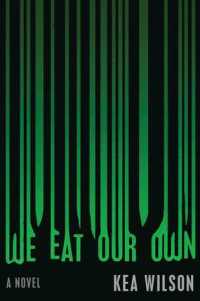
Kate’s Review: “We Eat Our Own”

27276249Book: “We Eat Our Own” by Kea Wilson

Publishing Info: Scribner, September 2016

Where Did I Get This Book: The library!

Book Description: An ambitious debut novel by an original young writer, We Eat Our Own blurs the lines between life and art with the story of a film director’s unthinkable experiment in the Amazon.

When a nameless, struggling actor in 1970s New York gets the call that an enigmatic director wants him for an art film set in the Amazon, he doesn’t hesitate: he flies to South America, no questions asked. He quickly realizes he’s made a mistake. He’s replacing another actor who quit after seeing the script—a script the director now claims doesn’t exist. The movie is over budget. The production team seems headed for a breakdown. The air is so wet that the celluloid film disintegrates.

But what the actor doesn’t realize is that the greatest threat might be the town itself, and the mysterious shadow economy that powers this remote jungle outpost. Entrepreneurial Americans, international drug traffickers, and M-19 guerillas are all fighting for South America’s future—and the groups aren’t as distinct as you might think. The actor thought this would be a role that would change his life. Now he’s worried if he’ll survive it.

Inspired by a true story from the annals of 1970s Italian horror film, and told in dazzlingly precise prose, We Eat Our Own is a resounding literary debut, a thrilling journey behind the scenes of a shocking film and a thoughtful commentary on violence and its repercussions.

Review: Has anyone out there heard of the movie “Cannibal Holocaust”? Let me give you a quick rundown of this movie and it’s notoriety. And I mean NOTORIETY. So “Cannibal Holocaust” is one of the first ‘found footage’ horror movies. It is about a group of people who go into the Amazonian rainforest to make a documentary about indigenous cannibal tribes, but then disappear. Their footage is found by a professor and the canisters contain many, many horrors including animal cruelty, arson, rape, and murder. When this movie was released, the director, Ruggero Deodato, told the main actors, largely unknown, to lay low for about a year so as to continue the illusion that they did actually disappear and meet terrible fates in the jungle. Which worked too well, as Deodato was arrested and charged with making a snuff film. The actors did come out of obscurity to clear him, but still. Yikes. So what is MY experience with this infamous horror movie? As a huge and avid horror fan, I wanted to show how edgy and hardcore I was and watched that movie a couple years ago. And let me say,  an hour and a half of gratuitous violence and multiple graphic rape scenes isn’t the best way to spend a day off, especially if you are feverish.

giphy3
I take it back, I’m neither edgy nor hardcore (source)

I was absolutely disgusted and repulsed by this movie. BUT, when my mother sent me an email about a new book called “We Eat Our Own”, it sounded very familiar. It sounded like the behind the scenes malarkey that went on during the filming of “Cannibal Holocaust”, but in the form of a horror novel. Okay, FINE, as much as that movie made me sick to my stomach, this premise had me TOTALLY SOLD!!!! A horror novel about the production of a “Cannibal Holocaust”-esque film? This clearly is going to be totally screwy and nasty and kind of fun and over the top, right?!

Well, not totally. Kea Wilson’s “We Eat Our Own” is very much based on the filming of “Cannibal Holocaust”, but it’s written in so many interesting ways that it felt less like a horror novel and more like an experimental literary one. For one thing, there are no quotation marks around the dialog, nor are there always indents when a new person is talking. But the most glaring experiment is that whenever the chapter is about the Unnamed American Actor, who is referred to by his character’s name (Richard), it is written in the second person (“You get a call from your agent, you go to pack your bags” etc), giving us an immersive experience for about half of the content of the book. While at first I thought that a second person perspective would limit the reader, Wilson worked around it by saying “you know this, but what you don’t know is that…”, and then tell us about the other characters in the scene or what’s going to happen to “Richard” in the future. I will admit that at first it was hard for me to wrap my mind around these devices. After all, I was kind of expecting a straight forward horror novel about a doomed production team (why I assumed everyone would actually die when that is not what happened in it’s real life inspiration, I couldn’t tell you). Instead I got a writing experiment that touched on more than just what was happening to the production team. I’m not ashamed to admit that it took me a little bit of time to really get into this book because of this style, but once I figured it out I actually really liked it, especially the parts where it would say “what you don’t know is that this extra is going to be running away and escaping her circumstances…”, because it found a really great way to learn more about these other characters without compromising the device.

The other chapters that aren’t “Richard’s”/the reader’s POV focus on other characters involved in the circumstances, be they that of crew members, the other actors, or the locals who are dealing with their own violent circumstances. Wilson takes the time to address not only the quagmire that is happening in the jungle at the time, but also the tenuous political situation that is simmering in Colombia. While an Italian filmmaker and his predominantly Western crew are trying to make a movie about cannibalistic and stereotypical tribal violence, there is unrest in the town that they are in, as a group of M-19 guerrillas are starting to boil over with tension, as they have a kidnapped Venezuelan attaché in their custody and are trying to plan an attack. An American who has set up shop in town has hooked them up with a cartel, and now things are on the brink of an explosion of violence. While it was great to see an acknowledgment of the ills going on in Colombia at the time, some of which were the result of remnants of Western colonialism and the drug trade that fueled Western noses at the time, these were the parts of the story that were the hardest for me to get into. The writing style is jumpy and at times haphazard enough, so to jump completely from one storyline to another was harder for me to follow. That being said, Wilson did a great job of showing how all of these characters are connected, and masterfully weaved them all together. There were times that we would get the conclusions to some storylines of other chapters through the eyes of another chapter and the character that it was following, which I really liked. It was also really biting to show an Italian filmmaker and his crew making a movie that perpetuates a brutal and dangerous stereotype about a group of people in Colombia (specifically the Yąnomamö), only to find themselves in a violent situation that has been built up by Western greed and entitlement.

Thinking about this book more and really dissecting it, I quite enjoyed “We Eat Our Own”. Don’t go in thinking that it’s your run of the mill horror novel. It’s definitely more complex than I expected it to be, and I think that Kea Wilson is definitely an author that I am going to be on the look out for as time goes on.

Rating 8: A complex and twisty exploration of both politics and a filmmaker’s obsession, “We Eat Our Own” is a compelling work of literary horror, and a love letter to one of horror’s most infamous movies.

Reader’s Advisory:

So the two Goodreads lists that “We Eat Our Own” is on are very broad and vague and have nothing to do with the story itself. That said, I think that it is quite reminiscent to “A Brief History of Seven Killings” by Marlon James in tone and political message, and I also think that the list “Amazon Rainforest” might have similar themed books on it.

Find “We Eat Our Own” at your library using WorldCat!

Kate’s Reviews: “Outcast (Vol.1): A Darkness Surrounds Him”

23043731Book: “Outcast (Vol.1): A Darkness Surrounds Him” by Robert Kirkman and Paul Azaceta (Ill.)

Publishing Info: Image Comics, January 2015

Where Did I Get This Book: The library!

Book Description: NEW HORROR SERIES FROM THE WALKING DEAD CREATOR ROBERT KIRKMAN! Kyle Barnes has been plagued by demonic possession all his life and now he needs answers. Unfortunately, what he uncovers along the way could bring about the end of life on Earth as we know it. Collects OUTCAST BY KIRKMAN & AZACETA #1-6.

Review: I guess I’m kind of on a Kirkman kick this week, huh? First we had “Rise of the Governor’ and now we’re going back to his comics roots with “Outcast (Vol.1): A Darkness Surrounds Him”. Perhaps you’ve heard that this comic series, which focuses on demonic possession as opposed to zombies, now has a television show as well. While I haven’t checked that one out, I did decide it was high time to check out the source material. Demonic possession stories are not as high on my list as zombies are when it comes to themes in horror stories. While I think there is a lot you can do with the zombie trope and while I think you have lots of room to experiment with it, demonic possession tends to be pretty rooted in religious mythology, almost always Judeo-Christian mythology at that. But I have faith in Kirkman, and so I went in with an open mind.

The story concerns Kyle, a down on his luck and severely depressed man who has seemingly lost everything. His mother is in a perpetual state of catatonia, his wife left him and took their daughter with her after she accused him of beating the girl up, and he spends most of his days cut off from the world except when his sister Megan visits. But soon he’s approached by a local clergyman named Anderson, who wants his help dealing with a possessed boy. After all, Kyle is no stranger to possession. Unlike “The Walking Dead”, a comic without many mysteries, “Outcast” takes it’ sweet time unveiling the pieces of the puzzle that make it up. Going in we know very little about Kyle, and Kirkman is more interested in showing rather than telling this time around. Kyle is a character that even after Volume 1 I feel like I don’t know much about him, but he’s being drawn out in such a meticulous way that I’m not in any hurry to know everything. Especially since there is clearly so much tragedy in his life that many of these revelations are going to be no doubt painful. But as of right now, we know that Kyle has seen people he loves taken over by demons, which ultimately results in him losing them one way or another. Kyle is a tragic character who wants the world to leave him be, but happenstance always yanks him back to demons one way or another.

My favorite character as of right now, though, is Megan, Kyle’s sister whom he met in foster care before he was permanently taken in by her family. Megan is loyal and stubborn, and she has a family of her own now that Kyle is too afraid to get close to (not to mention her husband Mark believes that Kyle is a monster because of what happened to Kyle’s daughter). She is no nonsense and has not, as of yet, willingly played the part of a madonna in need of protecting (like Kyle’s ex wife Allison), which I am always afraid of in stories like this. Kirkman has written some very strong ladies in his day, and I’m happy to say that as of now Megan is one of those ladies. The other women in the book are not as well focused, as Allison is a spectral figure who Kyle is watching over and pining for, and a mysterious woman named Mildred who has been exorcised once before, and can’t stand to be near Kyle for probably pretty obvious reasons if you really think about it.

So is “Outcast” scary? For me, not really. I’m never really scared by stories like this, but at this point the plot is very much in set up mode. We see a few demons, and we see what becomes of them after Kyle and Anderson are able to get rid of them. But for now all we know is that Kyle has a strange power that makes him a huge threat to them. We know little about their actual origins, if they are religious as Anderson thinks they are, or not. I think that once all of the foundation is in place for this series, the scares will be able to come out in fuller force. Until then, we are very much talking about a character study, from broken Kyle to zealous Anderson to empathetic Megan, and even volatile Mark. However, there is one character who is giving me some serious creeps, and that is Sidney, a strange old man who has been lurking around Kyle and Anderson. He is clearly much much more than he appears to be given the last we saw of him (no spoilers here), and I definitely want to see more of this weirdo. He’s a far more interesting villain than the random demons as of now, and lord knows they gotta be connected somehow. Plus, I guess Brent Spiner plays him on the television show, so now THAT association is going to be fixed in my mind as I go forward as I continuously ask myself ‘what would a possessed Data look like?’

giphy2
Good God, forget I asked. (source)

I would be a dope if I didn’t talk about the artwork in this book. Again, a wonderful illustrator has been chosen to give this comic it’s own tone and feel through design, and the colors (by colorist Elizabeth Breitweiser) add to the overall effect. The characters are all rather grim in their appearance, but they all have distinct looks and traits that separate them from each other. Lots of shadows are used to set a scene, from the darker images and saturations of Kyle’s home to the brighter but dull scenes of Anderson’s church. But the exception is the color red. Red always jumps off the page no matter what.

image-291
(source)

Vibrant colors and bold hues are seen throughout the pages, and I loved how different it all was from other Kirkman comics. The scenes are works of art.

“Outcast (Vol.1): A Darkness Surrounds Him” has some serious potential to be a great comic. It’s going slowly as it sets everything up, but I feel as though I’m willing to try and be patient just so I can see how it’s all going to play out. This is a different kind of horror comic from Robert Kirkman, and.I am ready to dive in.

Rating 7: Though it’s slow moving and I don’t have a complete feel for all the characters yet, “Outcast (Vol.1): A Darkness Surrounds Him” is setting itself up to be a very interesting comic about demons, the literal and the figurative kinds.

Reader’s Advisory:

“Outcast (Vol.1): A Darkness Surrounds Him” is, frankly, only on lists that don’t represent it’s themes at all. So let’s stick to horror comics and say that you should look at “Hellblazer”, “Hellboy”, and “Chilling Adventures of Sabrina” if you want comics in a similar vein.

Find “Outcast (Vol.1): A Darkness Surrounds Him” at your library using Worldcat!


Kate’s Review: “The Walking Dead: Rise of the Governor”

10869746Book: “The Walking Dead: Rise of the Governor” by Robert Kirkman and Jay Bonansinga

Publishing Info: Macmillam Audio, October 2011

Where Did I Get This Book: Audiobook from the library!

Book Description: Following in the footsteps of the New York Times best-selling graphic novels and the record-breaking new television show, this debut novel in a trilogy of original Walking Dead books chronicles the back story of the comic book series’ greatest villain, The Governor.
In the Walking Dead universe, there is no greater villain than The Governor. The despot who runs the walled-off town of Woodbury, he has his own sick sense of justice: whether it’s forcing prisoners to battle zombies in an arena for the townspeople’s amusement, or chopping off the appendages of those who cross him. The Governor was voted “Villain of the Year” by Wizard magazine the year he debuted, and his story arc was the most controversial arc in the history of The Walking Dead comic book series. Now, for the first time, fans of The Walking Dead will discover how The Governor became the man he is, and what drove him to such extremes.

Review: I am a casual fan of “The Walking Dead” television show, and I used to be a huge fan of the comics (that is, until I found that moment that just made me say ‘okay, this is far too depressing now, I’m done’). One of the most jarring, upsetting, and well thought out storylines from the comics, and probably the show too, was that of Woodbury and it’s despicable leader Philip Blake, aka The Governor. While he is an antagonist in both mediums, I would say that I probably prefer him on the show as opposed to the comics. In the comics, The Governor is supremely evil, but almost in an over the top kind of way and just there to shock and disgust you, without having any depth or dimension to him. On the show he was more complex and nuanced, so while he was still reprehensible in a lot of ways, he at least remained interesting. And plus, it helped that David Morrissey played him and made him super easy on the eyes.

02d5c5fffb9f64856bac3cb6c81e7d1f
Hottie alert. (source)

I’ve known about the prequel “Governor” trilogy for awhile, but I just decided to give it a go recently because it’s been awhile since I’ve read the comics, and I sort of wanted to see if Robert Kirkman was going to make him a bit more rounded by showing how he became the monster that he is. The first in this series is “Rise of the Governor”. Going into it I knew to expect something dark and nasty. I guess I just wasn’t prepared by how dark and nasty it was.

Kirkman achieves giving one of his most notorious villains a back story that both humanizes him and shows just how he could turn into the monster he becomes. And I mean a monster. In this book we follow Philip Blake, his brother Brian, and his daughter Penny right after the zombie infection has taken hold. So we get to see Philip turn from doting father with a sweet daughter into a blood thirsty murderer/rapist who is toting his zombified daughter around on a chain leash. How fun. But even though it’s incredibly depressing and incredibly dark, giving The Governor a back story ultimately does a service to the character. It’s not that we feel sorry for him after all of this has happened. I mean, we do, but that doesn’t excuse his actions. What it does do is show how even a normal guy like him can be so transformed and so mutated that you don’t even recognize him anymore. Philip’s relationships with his companions are all intricate and special in their own ways. Yes, he has a touching relationship with Penny (I will never, ever not be saddened by sweet innocent Penny), but I also liked the complexities and realism of the relationship he has with his older brother Brian. Brian is a very fascinating character as well, and his point of view is the other dominant one in the book. He’s a man who has always been seen as a loser and a black sheep before the world ends, outshined by and dependent on his little brother. And when he finds himself in a new world, he too starts to slowly transform from kind of a weenie, into a protector (as he is the one who cares after Penny the most), and finally into a hardened and cold person who is on a dark, dark path. The transformations of the two brothers are slow and agonizing, and I found myself aching for them both knowing what was coming. After all, The Governor has no brother to speak of in the comics, and you get attached to Brian as the voice of reason and the guy who is just trying to keep everything together. But even then, Kirkman manages to surprise his readers, as this story isn’t without it’s twists to keep us on our toes. I had an inkling that not all was as it seemed, but the fact that I could still just be gutted by the big reveal near the end (no spoilers) really goes to show how Kirkman relentlessly goes for the jugular.

giphy1
This was pretty much how I spent my last moments of this book. (source)

That said, while I did enjoy the background given to The Governor, and while it made me want to smother myself because of the feelings, this book sort of reminded me why I gave up on these comics when I did. I was able to get through some of the darker arcs in the series, The Governor included, but there were many times that I was so disgusted and upset that I had to pace myself through the panels lest I feel sick, until I just said ‘okay, that’s enough’ and just set it down for good. And this book was a grim reminder that Kirkman pushes boundaries and doesn’t hold back. So I have to give this book a lot of trigger warnings, not the least of which being graphic depictions of rape. There are two rape scenes in this book, both of which are brutal and very hard to listen to or read, depending on your medium. Like many people, I have a hard time when it comes to rape in storylines, and I am always very conscientious to try and disseminate to what end it is being used in regards to the story. While I know that these two separate scenes are important turning points in Philip’s arc, that’s just the problem: they are all about him and never about the women that he is victimizing. That isn’t to say that it isn’t absolutely horrible; I never felt that it was exploitative or titillating. But I did feel that Kirkman used rape as a way to show how horrible Phillip is, when there were PLENTY of other reasons to think that he was horrible. I don’t know. I have a hard time. It didn’t feel totally distasteful like some portrayals in recent pop culture. But it certainly didn’t feel necessary either.

Finally I should note the format. I did listen to this on audiobook, not sure what to expect, but I was pleasantly surprised by how it turned out. The narrator, Fred Berman, did an excellent job. His voice was malleable enough that he could change it effortlessly. All of the characters had distinct tones and voices, and he managed to believably play Penny, which I have to give him serious props for. Not all grown men can pull off the voice of an eight year old girl and not sound at least a little ridiculous.

This book isn’t for the faint of heart, but then again, what “Walking Dead” fan is faint of heart? “The Walking Dead: Rise of the Governor” is a great addition to the universe, and I think that all fans who enjoyed the Governor storyline should give it a go. Just be warned: it goes about as gruesomely as a Governor story could possibly go.

Rating 8: A well written backstory to a very dark character, “The Walking Dead: Rise of the Governor” is brutal and devastating. Though sometimes it piles on the violence in an unnecessary way, it is ultimately a great addition to “The Walking Dead” canon.

Reader’s Advisory:

“The Walking Dead: Rise of the Governor” can be found on the following Goodreads lists: “Zombiefied”, and “Adult Dystopian Books”.

Find “The Walking Dead: Rise of the Governor” at your library using WorldCat!

NerdCon Stories 2016!

Hey readers! Kate here! We’re shaking things up with the Monday blog post, as I was
presented with a rather unique opportunity this past weekend. Serena and I are based in Minnesota, as you all know, and the Second Annual NerdCon: Stories, occurred on Friday and Saturday in Minneapolis. Though Serena was unable to attend with me, as she was out of town, I went wi20161014_152656_hdrth our dear friend Alicia, a fellow librarian and former classmate of ours. So I thought that I would write about this convention and what Alicia and I did while we were there.
 

So what is NerdCon: Stories you may ask. John and Hank Green, two brothers (one of whom is an author, known for “Looking for Alaska” and “The Fault In Our Stars”, and both of whom run a podcast together) founded a convention based on the idea of storytelling. It gathers for two days and brings in authors, musicians, poets, and many other people from many walks of life to talk about the importance of storytelling. It was held in the Minneapolis Convention center, spread out across many rooms and event spaces. I will be honest, I didn’t really know what to expect. Alicia sent me her schedule asking if I’d put mine together, and I responded with ‘Uhhhh….?’ Content to just follow Alicia around, I let her take the wheel and let myself just float from place to place, taking it all in.

20161015_123307_hdr
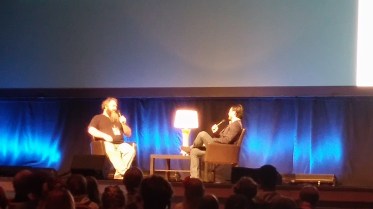
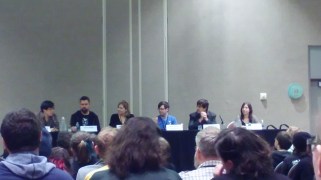
“Storytelling in Tabletop Gaming” panel.


One of the most prominent events of this convention was a large amount of panels. Many of them were about storytelling, though there were also panels where authors took the wheel, or panels about librarianship, or panels about different kinds of storytelling. I attended a few, and the ones that stood out for me were “Storytelling in Table Top Gaming”, and the two randomly generated panels “Lightning” and “Wild Cards”, where the audience came up with topics for various authors to speak on. As someone who just likes hearing authors talk about many different random things, I enjoyed hearing the likes of Paolo Bacigalupi, Patrick Rothfuss, Wesley Chu, and Mikki Kendall talk about foods they like, Halloween costumes, and childhood stories. But then in “Storytelling in Table Top Gaming” we had various gamers and storytellers (including John Darnielle, author of one of my fave books of last year “Wolf in White Van”) talking about how D&D and other role playing games can also tell stories, which is something that some may not think about. I’m a huge tabletop game fan, so this was my favorite panel of the convention.


20161015_110155_hdr-1There were also various opportunities to have social and networking moments. Alicia and I attended a library and librarian meet up group, where we ended up talking about different aspects of librarianship and what we do in our libraries. At the end of this group meet we were exchanging contact info with other librarians, connections that we may use in the future, or maybe not. But even if we don’t it was a rewarding little meet up group. Along with networking, we did have opportunities to meet different authors who attended the convention, and get them to sign their books. As an avid book lover and someone who has been collecting autographs since ALA 2014, this opportunity was an exciting one! I asked Cindy Pon to sign a book for me (“Silver Phoenix”, a YA fantasy novel with a BEAUTIFUL cover), and I asked John Scalzi to sign a copy of “Redshirts” for my husband (he gave him a very funny personal message too, which was very cool). The signings were well coordinated and I didn’t have to wait long at either signing, and both Pon and Scalzi were very kind and talkative when talking with the convention-goers.

20161016_160303_hdr
We do rock, Cindy! Thank you!

By and large, however, my favorite events were the Variety Shows that happened twice a day. Presenters could present on whatever they wanted to, so you could either get authors reading from their works (such as Daniel José Older, John Scalzi, and Cindy Pon), or giving presentations on topics of their choice (like Joe DeGeorge talking about “Mrs. Pac Man” or John Green talking about Mental Illness and Creativity), or having an author conversation

20161015_094802_hdr
Patrick Rothfuss and Wesley Chu.

on stage (like Patrick Rothfuss and Wesley Chu talking about video games). Or participating in a lip sync battle. Yeah. That did happen. These moments were fun and relaxing, and while it never felt totally cohesive it did showcase a lot of different and mostly interesting pieces that I enjoyed. One of the more powerful moments was a presentation on undocumented immigration and how undocumented immigrants are trying to tell their own stories now, and how important their stories are. I didn’t expect this kind of presentation, but I was really happy to see it.


And finally, one of the most important things of a convention, in my opinion, is the SWAG you can get! I love going to the expo and dealer rooms of conventions I go to so I can 1) get good information, 2) make connections with interesting people, and 3) get cool stuff to bring home and treasure! I’d be lying if I said that that I didn’t value point three higher than the rest. 20161015_152004_hdrNot only did we get signed books, we randomly met up with audiobook narrator Kate Rudd and she gave us signed copies of a few mp3 CDs of books she’s done, all because we did her a solid! The expo area at NerdCon was smaller than other conventions I’ve been to, but boy were there a lot of books for sale, sometimes by the authors themselves. There were also tables being manned by local book related organizations, from Ramsey County Library to the St. Catherine MLIS Program. I got myself a cute necklace that has a tiny little version of the book “Emma” on it, as Emma (well fine, Cher Horowitz) is my personal hero. Lots of really cute trinkets, though probably not as much to see as you might at other conventions.
So is NerdCon Stories coming back next year? That isn’t totally clear at the moment. Attendance was down and it seems that it wasn’t the success that the organizers really wanted it to be. I think that a few factors kind of conspired against it this year. One is that the Twin Cities Book Festival was going on this past weekend as well, which also has lots of books and really neat authors to meet. Plus, NerdCon did have a pretty pricey attendance fee, about one hundred dollars for two days (one of which is Friday, typically a work day). True, it’s two days of lots of cool things and opportunities, but one of the big local cons here is four days at about the same price, and quite a bit cheaper if you register at the early bird rate. I think that locals just may not be as willing to pay that much when there are other, cheaper opportunities.

All that said, I did enjoy myself greatly at this convention. I think that if you like stories and you want an experience that is a bit more interactive and in depth, NerdCon Stories is a fun way to spend part of a weekend. If it comes back next year, I say give it a chance! So thank you, NerdCon Stories! It was a nice way to spend a weekend with a good friend!

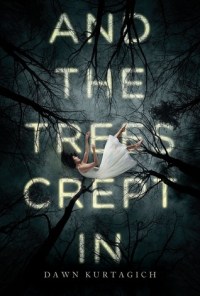
Kate’s Review: “And the Trees Crept In”

28449150Book: “And the Trees Crept In” by Dawn Kurtagich

Publishing Info: Little, Brown Books for Young Readers, September 2016

Where Did I Get This Book: The library!

Book Description: A stunning, terrifying novel about a house the color of blood and the two sisters who are trapped there, by The Dead Houseauthor Dawn Kurtagich

When Silla and Nori arrive at their aunt’s home, it’s immediately clear that the “blood manor” is cursed. The creaking of the house and the stillness of the woods surrounding them would be enough of a sign, but there are secrets too–the questions that Silla can’t ignore: Who is the beautiful boy that’s appeared from the woods? Who is the man that her little sister sees, but no one else? And why does it seem that, ever since they arrived, the trees have been creeping closer?

Filled with just as many twists and turns as The Dead House, and with achingly beautiful, chilling language that delivers haunting scenes, AND THE TREES CREPT IN is the perfect follow-up novel for master horror writer Dawn Kurtagich.

Review: What makes a good gothic horror story? There are many things that need to come together to really make a horror story a gothic one. You usually need a protagonist who is female, though really this isn’t a hard and fast rule anymore. It was just a very common protagonist type back in the Victorian era when these stories were super popular and remain classics. You also need a house or place of action that is isolated and generally creepy in ambiance, like a manor house or a hospital. And there usually has to be a question of what or who is actually causing the conflict of the story: is it something otherworldly, or is it just our poor isolated protagonist losing a grip on reality. “And the Trees Crept In” by Dawn Kurtagich is a pretty good representation of the gothic horror genre, and since it’s written for teens who may be more interested in something that’s more in your face than filled with nuance, I think that it’s a breath of fresh air, YA literary world wise. You have Silla and Nori, two sisters who have fled their abusive home life to live with their Aunt Cath, whose large blood red manor house is in the middle of a forest. From the get go things are strange for the sisters. There’s no technology in the house to be seen, Aunt Cath is both very happy to have them but filled with anxiety, and house seems to be in all kinds of disrepair. Soon Aunt Cath has locked herself in the attic and the trees in the woods seem to get closer and closer to the house. “I am ON BOARD!” I crowed to myself as I started this book, and given that there was talk of a Slenderman-like creepy thing in the woods (super tall, no eyes, huuuuge grin), I was even more elated to devour this book.

But then…. It became really weird, really fast.

giphy
…..Huh. (source)

While the Gothic genre is certainly supposed to be about isolation and questions of sanity, “And the Trees Crept In” kind of took it a little too far and into a realm that was beyond cohesive and more muddled. The story is told mostly from Silla’s point of view, though sometimes Nori’s random scribbles and notes do get some play as well. But mostly it’s a first person narrative from Silla, and diary entries from Silla, which lends perfectly to an unreliable narrator device. However, as Silla’s diary entries go on, they become more and more unclear as to what exactly is going on, just as her narration starts to fall to pieces as well. Normally this is fine in this genre, but I feel that Kurtagich almost took it too far, as by the time we got to the end of the book I was just lost and more frustrated than not. Writing a well done and believable descent into madness is hard to do, to be sure, and while a valiant effort was made here, it didn’t totally work. That being said, everything does eventually get explained in a narrative moment given by Silla’s love interest Gowan. While I appreciated that explanation was given, and while it did TOTALLY make sense, I think that it shouldn’t take a literal monologue of rundown and explanation to achieve that. And on TOP of that, there is a HUGE random twist at the end that just came completely out of left field! That was strange and I didn’t know how to feel about it. There wasn’t really any reason for it to go on top of the other twist that was revealed.

And let’s talk about Gowan and Silla a little bit. Silla’s characterization of a girl who is possibly losing her mind made it very hard for me to be like ‘oh yes, Silla and Gowan FOREVER’. While Gowan does serve a purpose in terms of wrapping things up for us readers in a tight little bow, I don’t quite buy into the romance that these two are supposed to have. I mean, after all is said and done I GET it, but I still don’t quite buy it. There wasn’t enough there before the end to make me really feel all that invested in it. I was far more interested in Silla’s relationship with her little sister Nori. The dynamic was not only interesting because of the age difference (Silla was ten when Nori was born and has always felt like a second mother to her), but because of the fact that Nori is mute. They can communicate with each other, and they have a strong love and bond through their clandestine communication, which gave a more desperate dynamic to both of them. In one sense it makes Silla more desperate to protect her since she seems to have that added layer of vulnerability, but it also makes a tension bubble up because Silla has a harder and harder time having her only company (outside of Gowan’s intermittent visits) be someone who has no voice and is different from her. And Nori’s fascination with the strange being in the woods adds even more tension still. I am admittedly pretty ignorant when it comes to what it is like to be a mute person, but I feel that Nori was portrayed in a sensitive manner.

At the end of the day, I did enjoy this confusing gothic tale of terror. I think that it definitely could have been a bit less convoluted while still maintaining it’s gothic aura. I would tell readers that it does all make sense. You just have to be willing to wait for it.

Rating 7: A pretty confusing and odd tale with a plot that needed explanation, but once it was clear what was going on I was pretty okay with it. There were some unsettling and creepy moments and the Slenderman-esque imagery was spooky.

Reader’s Advisory:

“And the Trees Crept In” is included on the following Goodreads lists: “Diverse Horror”,  and “New Speculative Fiction Stars”.

Find “And the Trees Crept In” at your library using WorldCat!