Kate’s Review: “You Are Not Alone”

45046742Book: “You Are Not Alone” by Greer Hendricks & Sarah Pekkanen

Publishing Info: St. Martin’s Press, March 2020

Where Did I Get This Book: I received an eARC from NetGalley.

Book Description: You probably know someone like Shay Miller. She wants to find love, but it eludes her. She wants to be fulfilled, but her job is a dead end. She wants to belong, but her life is so isolated.

You probably don’t know anyone like the Moore sisters. They have an unbreakable circle of friends. They live the most glamorous life. They always get what they desire.

Shay thinks she wants their life. But what they really want is hers.

Review: Thank you to NetGalley for providing me with an eARC of this novel!

Greer Hendricks and Sarah Pekkanen are a dynamic duo in the thriller writing world, as their previous novels “The Wife Between Us” and “Anonymous Girl” were both buzzworthy books that got a fair amount of attention. I enjoyed both of those books, enough so that I figure that any time they come out with another novel I’m going to be interested in picking it up. Hence, I requested “You Are Not Alone”, their newest thriller/mystery, from NetGalley. I expected an entertaining and very readable thriller, as that has what has been delivered in the past. I am happy to report that not only did it live up to those expectations, it is also their best work yet.

Like their other two novels, “You Are Not Alone” is told through multiple perspectives and multiple time periods. Our main focus is on Shay Miller, an insecure and high strung, lonely woman who witnesses another woman commit suicide by jumping in front of a moving subway. The other perspectives are generally from that of the Moore sisters, Cassandra and Jane, as well as the occasional chapter from the POVs of their friend group. The wide breadth of POVs gave us a very large and detailed picture of the story, and also of the various motivations that each character had that added to the mystery over all. We know that Cassandra and Jane want something from Shay, but we aren’t certain as to what that may be. I thought that all of the women had well done characterization, and that I got a good sense for all of them and why they were doing what they were doing. Shay is the kind of protagonist that we see in thrillers like this in that she’s incredibly flawed and neurotic, but she’s written in such a way that I really liked her and was genuinely concerned for what she was slowly being pulled into. And then there are the Moore Sisters, and how they are both incredibly engaging and gregarious, as well as being terrifying in how they know how to manipulate and insert themselves into Shay’s life without her knowing it.

The mystery was also very enticing, and it kept me guessing and completely enthralled the entire time. As I said, you know that the Moore Sisters want Shay for something, and Hendricks and Pekkanen slowly peel back all the layers, leaving breadcrumbs of clues within all of the perspective chapters. It was laid out and woven together intricately enough that I was genuinely surprised by almost every twist, and all of the twists were well earned by how they were set up sometimes hundreds of pages before. I found myself slowly building up in anxiety, my heart beginning to beat as I got closer to the end and the tension just kept building with little sign of release. By the time it had all come to a head, I felt the deep paranoia that Shay was feeling and completely believed it. I bought in to just about everything, and while I did feel like it wrapped up a little neater than it probably should have (as well as quickly; the ending felt hasty even if it came together well), overall I was definitely satisfied.

“You Are Not Alone” is the best story that Hendricks and Pekkanen have come up with yet, and they will remain a high reading priority for me in the future. If you haven’t read anything by them yet, this is where you should start.

Rating 8: An anxiety inducing and twisty thriller that barely lets up on the tension. “You Are Not Alone” will make you more than a little nervous about who may be keeping their eyes on you.

Reader’s Advisory:

“You Are Not Alone” is included on the Goodreads lists “Female Writing Teams”, and “Can’t Wait Crime, Mystery, & Thrillers 2020”.

Find “You Are Not Alone” at your library using WorldCat!

Kate’s Review: “Deathless Divide”

38124119._sy475_Book: “Deathless Divide” by Justina Ireland

Publishing Info: Balzer + Bray, February 2020

Where Did I Get This Book: The library!

Book Description: The sequel to Dread Nation is a journey of revenge and salvation across a divided America.

After the fall of Summerland, Jane McKeene hoped her life would get simpler: Get out of town, stay alive, and head west to California to find her mother.

But nothing is easy when you’re a girl trained in putting down the restless dead, and a devastating loss on the road to a protected village called Nicodermus has Jane questioning everything she thought she knew about surviving in 1880’s America.

What’s more, this safe haven is not what it appears – as Jane discovers when she sees familiar faces from Summerland amid this new society. Caught between mysteries and lies, the undead, and her own inner demons, Jane soon finds herself on a dark path of blood and violence that threatens to consume her.

But she won’t be in it alone.

Katherine Deveraux never expected to be allied with Jane McKeene. But after the hell she has endured, she knows friends are hard to come by – and that Jane needs her, too, whether Jane wants to admit it or not.

Watching Jane’s back, however, is more than she bargained for, and when they both reach a breaking point, it’s up to Katherine to keep hope alive – even as she begins to fear that there is no happily-ever-after for girls like her.

Review: A couple years ago, Justina Ireland wrote the YA horror/historical fiction book “Dread Nation”, a novel about the zombie uprising during Reconstruction in the U.S. Her main character, Jane, was a black teenage girl being trained to be a personal bodyguard for upper class white people, as after the zombies came Black and Indigenous people were recruited to protect the white people of society. It ended with an overrun town and Jane, her frenemy and fellow attendant Katherine, her old flame Jackson, and a group of refugees deciding to head West to California, as Jane was hoping to find her mother. When I heard about “Deathless Divide”, the sequel to “Dread Nation”, I was anticipating another zombie horror novel with the usual apocalypse themes. What I got was something completely different. This time, we get a horror historical fiction novel with distinct themes of a Western, and the lonesome redemptive attempts that come with that genre.

giphy-4
Spoiler Alert: It does. (source)

“Deathless Divide” picks up right after the end of “Dread Nation”, and almost immediately it gets turned on it’s head as to what I had expected from the narrative. For one thing, we are not only getting Jane’s POV, we also get the POV of Katherine, the high strung, prim, and incredibly talented classmate and sometimes friend of Jane. I wanted to know more about Katherine in “Dread Nation”, so when we got to get inside her head in “Deathless Divide” I was overjoyed. Katherine always intrigued me the most from the first book because I loved that she is unabashedly feminine, and is still an incredible fighter, perhaps the best in the book. Too often we see women characters who are made ‘strong’ at the expense of having their femininity stripped away. This is fine, of course, as there are lots of ways to write female characters, but women can fight and kick butt in a corset if they want to, dammit! I also liked getting a deeper exploration of Katherine and the issues that she has to contend with as a very attractive woman who is constantly underestimated, and who, as a woman who passes for white, doesn’t always feel like she has her identity all figured out. Getting to see more of Katherine was delightful. 

The other unexpected shift in the narrative was, as I mentioned before, the fact that it has a distinctly Western theme about it. Usually as a rule I am not a fan of Westerns, as the themes usually don’t grab me AND so many of the Westerns that I think of feel imperialistic. But in “Deathless Divide” Ireland does a really good job of taking the theme of the lone gunslinger and applying it to Jane as her journey progresses, especially since the usual trope of that is a white man. I loved the role for Jane, as she has endured so much trauma and loss and violence because of her race and the fact that Black and Native people have been used as protectors and bodies to protect the White people in a zombie ravaged society. It’s no wonder she would become morally ambiguous as she travels the west looking for revenge. It makes the idea incredibly tragic. And it’s just another of many ways that Ireland once again explores themes and issues of race and racism in America, and like in “Dread Nation” it works very well. From POC being used as guinea pigs to further scientific research to race and class relations in urban settings and capitalism to colorism, “Deathless Divide” shows that some times don’t really change much, and that we still have a long way to go. 

As for the zombies, not much has changed from the first book, and they aren’t as centered this time around. But that said, we do get to delve into the ideas of potential cures, and how different science experiments can bring different outcomes when it comes to the zombies and how they interact with their potential prey. I don’t want to spoil anything here, but just know that Ireland still manages to make the zombies feel fresh and interesting even when they aren’t at the forefront. After all, like in all good zombie stories, it’s the humans that are the bigger threat.

(note: As I mentioned in my review for “Dread Nation”, there had been criticism of the Native characters in that book. I’ve not seen anything in that regard about this book, and I don’t think that I as a white woman can say if Ireland has been more responsible this time around. We do get a more complex and deeper dive into the character of Daniel Redfern, however. If anything changes on this front I will update this post.)

“Deathless Divide” is the end of the road for this world and characters (at least for now; Ireland has said that it COULD happen that more gets written, maybe), and I think that it’s a great follow up and completion. I’ll miss Jane and Katherine.

Rating 8: A satisfying ending with a bold new genre take, “Deathless Divide” wraps up a world of zombies, racism, and empowerment for Black women.

Reader’s Advisory:

“Deathless Divide” is included on the Goodreads Lists “Black Heroines 2020”, and “LGBT SciFi and Fantasy 2015-2020”.

Find “Deathless Divide” at your library using WorldCat!


Kate’s Review: “Black Canary: Ignite”

44433717Book: “Black Canary: Ignite” by Meg Cabot and Cara McGee (Ill.)

Publishing Info: DC Zoom, October 2019

Where Did I Get This Book: The library!

Book Description: Thirteen-year-old Dinah Lance knows exactly what she wants, who she is, and where she’s going. First, she’ll win the battle of the bands with her two best friends, then she’ll join the Gotham City Junior Police Academy so she can solve crimes just like her dad. Who knows, her rock star group of friends may even save the world, but first they’ll need to agree on a band name.

When a mysterious figure keeps getting in the way of Dinah’s goals and threatens her friends and family, she’ll learn more about herself, her mother’s secret past, and navigating the various power chords of life.

Review: While it’s hard to rate my favorite DC ladies in a specific order (as there are so many who are wonderful in their own unique ways!), I can say that Dinah “Black Canary” Lance is very high up on the list, like assuredly Top 5. Dinah has been given a lot of attention in the New 52 and DC Rebirth, and her back story has almost always been bleak and dark and indicative of how hardass she can be at times. When I stumbled upon “Black Canary: Ignite” by Meg Cabot, I was a little surprised that the woman who wrote “The Princess Diaries” took on a Black Canary origin story. But then, given that this is a graphic novel written for tweens, I did expect it to be far less dark than some of the stories Dinah has had in the past. Since I’m always looking for more Black Canary content, I checked it out. And what a good decision that was, because Meg Cabot gave Dinah a delightful and plucky storyline that I greatly enjoyed!

We meet Dinah as a rambunctious and snarky thirteen year old. She is in a band with her friends Kat and Vee, she wants to join the Gotham City Junior Police Academy, and tends to butt heads with her parents, as most thirteen year olds do. What struck me the most from the get go is that her life is functional, and she’s surrounded by people who love her and support her. Given that the most recent Black Canary storyline I read involved some serious Mom angst for Dina, thank you Meg Cabot for letting her live a happy early teenagehood! Dinah is funny and awkward, and she is flawed with her temper but cares for her friends. She is also perplexed by the fact that when she yells, things around her tend to break. Cabot was awesome in how she approached this, as Dinah, again, like most teenagers, just wants to be normal, and this crazy scream is hindering that. The situations when this arises are rather innocuous, but still hold pretty high stakes for a kid in middle school. As Dinah has to contend with his, she also has to contend with a strict principal who seems to be out to get her, and with her Dad, Detective Lance, who doesn’t want her to join the Junior Police Academy but won’t really tell her why. Dinah’s relationships are definitely the strongest aspects of this story, as I loved seeing how she interacts with her best friends Kat and Vee (even when things aren’t going great between all of them), and how she both loves but is frustrated by her parents, unaware of the secrets that they have that may shed light on her abilities. By the time she does have to reckon with her parents identities and what that means for her, Cabot had created a great coming of age story to go along with the origin theme.

Cabot’s dialogue is witty and snappy, which is what I’ve come to expect from her. She gives Dinah and those in her circle authentic voices, and had me laughing out loud multiple times as I read. The mystery, however, as to who is following Dinah and what they want with her, isn’t as compelling, if only because it’s pretty straight forward and then ends with a semi-interesting twist that wasn’t terribly surprising. While I was fine with the mystery taking backseat to what was going on with Dinah’s personal discovery of her Canary Cry, I’m not certain that it was supposed to be taking back seat. But it’s also important to keep in mind that this is written for an audience that is quite a bit younger than I am, so the way that I received and parsed out the mystery isn’t necessarily how it would be received by tweens. Therefore, I can’t really speak to its effectiveness.

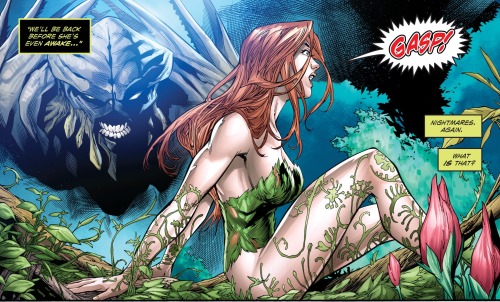
And finally, the artwork by Cara McGee is so on point and charming. I loved the facial expressions, I loved that she would put hearts around Dinah’s parents when they were feeling loving towards each other or Dinah, and I loved the action moments. It’s the perfect accompaniment to the story at hand.

cw059
(source)

“Black Canary: Ignite” is a charming as hell origin story for one of my favorite DC ladies. If you’re like me and love Dinah Lance, definitely find this story and read it.

Rating 8: A fun and clever origin story for Dinah “Black Canary” Lance with the Meg Cabot wit, “Black Canary: Ignite” does justice to one of my favorite super ladies!

Reader’s Advisory:

“Black Canary: Ignite” is included on the Goodreads lists “Strong Female Protagonist”, and “DC Comics by Women”.

Find “Black Canary: Ignite” at your library using WorldCat!

Kate’s Review: “Cirque Berserk”

04 Cirque Beserk CoverBook: “Cirque Berserk” by Jessica Guess

Publishing Info: Unnerving, February 2020

Where Did I Get This Book: I was sent an eARC by the author.

Book Description: The summer of 1989 brought terror to the town of Shadows Creek, Florida in the form of a massacre at the local carnival, Cirque Berserk. One fateful night, a group of teens killed a dozen people then disappeared into thin air. No one knows why they did it, where they went, or even how many of them there were, but legend has it they still roam the abandoned carnival, looking for blood to spill.

Thirty years later, best friends, Sam and Rochelle, are in the midst of a boring senior trip when they learn about the infamous Cirque Berserk. Seeking one last adventure, they and their friends journey to the nearby Shadows Creek to see if the urban legends about Cirque Berserk are true. But waiting for them beyond the carnival gates is a night of brutality, bloodshed, and betrayal.

Will they make they make it out alive, or will the carnival’s past demons extinguish their futures?

Review: Thanks to Jessica Guess for sending me an eARC of this novella!

If there are two things you should know about me and my pop culture affinities, I love slasher movies, and I love the 1980s (in terms of the art and music scene, NOT the political one). And if you give me slasher movies from the 1980s, I’m golden. When Jessica Guess contacted me asking if I would be willing to read her new novella “Cirque Berserk”, the description alone sucked me in. A haunted/evil carnival? Urban legends? A mention of the 1980s? And then, the cover had ROLLER SKATES?! I was IN!! If anything I figured it would be campy and entertaining, but “Cirque Berserk” was more than that. It achieved something I’ve seen a few horror novels fail: it felt like I was reading a slasher movie.

Guess creates a fun urban legend, some visceral gore and violence moments, and wicked characters that are easy to root for even when they are committing horrendous acts of violence. You assume that you’re going to be reading a novella that hits the usual slasher tropes and check boxes: the supernatural or unstoppable/ faceless killer, the final girl, the innocent but expendable teenagers, and on and on. But Guess takes those tropes and manages to subvert them in various ways that kept catching me by surprise. I thought I knew where certain characters or scenes were going, and then the rug would be yanked out from under me and I’d be genuinely surprised. I really don’t want to spoil anything about the plot’s big reveals, and I found them to be fun and effective, but I WILL say that Guess created not only a good mythology for Cirque Berserk and the horrifying things that go on there, she also gives the baddies some real motivation, motivation that the reader can, in some ways, relate to. She also gives the killers identities and backgrounds that aren’t generally seen as much in slasher stories, at least in the sense of how they are fully explored and given some actually tangible and relatable reasons for why they do what they do, at least at first. The focus is less on the expendable teenagers who’ve wandered into the fairgrounds, and more on the baddies, and how they got to where they are when we meet them.

And honestly? This novella is, pardon the bad pub, a scream to read. It opens with a classic slasher movie situation, and goes balls to the wall in terms of visceral horror violence as well as showing the stakes that we are dealing with. We get flashbacks to the fateful and dreadful night when Cirque Berserk went bad, we get some really gnarly kills right out of the Tom Savini playbook, and we get some pretty creepy moments and concepts AND a cameo from my favorite Biblical demon Lilith. On top of all that, it becomes quite clear, quite quickly that this candy coated fever dream of a slasher story is going to be accompanied by a bitchin’ 80s sound track, including tracks by Whitney Huston, Bonnie Tyler, and A-ha.

giphy-3
(source)

Honestly, if you like old school slasher movies that are dropping in day glo 80s nostalgia, “Cirque Berserk” is a novella that you should absolutely check out. It’s fun, it’s a quick read, and it has some great curveballs.

Rating 8: A hell of a fun ride that reads like a slasher movie on the page, “Cirque Berserk” was an entertaining read that I greatly enjoyed.

Reader’s Advisory:

“Cirque Berserk” isn’t on any Goodreads lists as of now, but for a similar read I would steer you towards “My Best Friend’s Exorcism”.

“Cirque Berserk” isn’t in WorldCat yet, but you can find it HERE at Unnerving Magazine.


Kate’s Review: “The Sun Down Motel”

45885644Book: “The Sun Down Motel” by Simone St. James

Publishing Info: Berkley, February 2020

Where Did I Get This Book: I received an eARC from the publisher via NetGalley

Book Description: The secrets lurking in a rundown roadside motel ensnare a young woman, just as they did her aunt thirty-five years before, in this new atmospheric suspense novel from the national bestselling and award-winning author of The Broken Girls.

Upstate NY, 1982. Every small town like Fell, New York, has a place like the Sun Down Motel. Some customers are from out of town, passing through on their way to someplace better. Some are locals, trying to hide their secrets. Viv Delaney works as the night clerk to pay for her move to New York City. But something isn’t right at the Sun Down, and before long she’s determined to uncover all of the secrets hidden…

Review: Thanks to Berkley and NetGalley for providing me with an eARC of this book!

I have memories of spending childhood road trips, be it out to Lake Superior or just visiting family down in Iowa, staying in motels. Eventually my mother had it and we were upgraded to hotels, but there was always something kinda fun about the rooms leading out to the parking lot, at least in my mind. It’s been a long while since having that kind of experience, but I thought about it a lot as I read “The Sun Down Motel” by Simone St. James. I greatly enjoyed her book “The Broken Girls”, and when this ended up in my inbox I was happy to see that she had a new book. And not just any old new book, but a new book involving a missing woman, a true crime obsessed amateur sleuth, AND a haunted motel!

giphy-4
It’s like this book was written with me in mind!! (source)

Our two stories/mysteries take place in two different timelines and POVs. The first is that of Viv, who left home in 1982 in hopes of going to New York City, but finds herself in Fell, a strange small town in upstate New York that has a lot of weird and violent baggage. Stranded and broke, she decides to take a job as the night clerk at the Sun Down Motel, a run down motel that’s seedy at best. She disappears without a trace. Then in 2017, her niece Carly, wanting to figure out what happened to her aunt, arrives in Fell, and takes the same job Viv had. Viv’s perspective is in the third person, and Carly’s is in the first, and both POV styles worked well for their parts of the story, and worked together to weave a complex and rich set of mysteries. The first mystery is what happened to Viv, and the second is the question of why the Sun Down Motel is so damn haunted, and I was fully invested in both. St. James was masterful at building upon both mysteries from each others foundations, and I was kept guessing for pretty much all of the book.

And then there are the haunting and ghost elements of this story. These too were incredibly well done and right up my alley. From strange noises, to the feeling of a presence near you even if you can’t see anyone, to lights going out one by one and doors opening on their own, St. James has taken a number of the best tropes from the haunted house genre and applied them effortlessly to a run down motel. The history of The Sun Down has the tragedy and scandal that is comparable to The Overlook in “The Shining”, and like King St. James has created a whole character for a place made of brick, mortar, and ectoplasm. The various ghosts range from the tragic to the intimidating, and all of them had sufficiently creepy moments. Both Viv and Carly have their run ins, and the first one we see was genuinely heart pounding and knocked my socks off. St. James makes it clear that she has not come to play, nor has she come to be ambiguous. There are ghosts at the Sun Down, and one of them is especially PISSED OFF.

But the thing that struck the most resonant chord with me as a reader was the undercurrent of the toxicities of misogyny within our culture, both in the 1980s and in modern times. Girls go missing or are murdered in Fell, and while it causes sensation and gossip, the women are completely forgotten soon thereafter, or objectified in the moment. A mother goes missing and ends up murdered, and the town mourns and turns her into a martyr. A girl with a bad reputation is murdered, and there are underpinnings of victim blaming. A warning is sent out about a strange man who is seemingly fixated and following a girl, and no one cares enough to investigate further. And a ghost who was the victim of misogynistic rage has a wrath and fury that was never afforded to her in life, and has turned her into an unsolved and salacious mystery in death. St. James both makes true crime aficionados plucky and useful in their quest for the truth, but also points out that their interest and arguably ‘hobby’ is based in actual people’s pain, and can cause damage in and of itself. I really, really liked how these themes were sprinkled throughout the story.

I highly recommend “The Sun Down Motel” for fans of thrillers and horror alike! And if you can, read it in a roadside motel, and don’t pay too much attention to the strange sounds you may hear outside. It’s probably nothing.

Rating 9: Eerie and suspenseful, and simmering with justifiable anger, “The Sun Down Motel” is a wonderful mystery with fantastic characters.

Reader’s Advisory:

“The Sun Down Motel” is included on the Goodreads lists “2020 Gothic”, and “Haunted House Books”.

Find “The Sun Down Motel” at your library using WorldCat!

Kate’s Review: “The Third Rainbow Girl”

37655694Book: “The Third Rainbow Girl: The Long Life of a Double Murder in Appalachia” by Emma Copley Eisenberg

Publishing Info: Hachette Books, January 2020

Where Did I Get This Book: The library!

Book Description: In the afternoon or early evening of June 25, 1980, two young women, Vicki Durian and Nancy Santomero, were killed in an isolated clearing in rural Pocahontas County West Virginia. They were hitchhiking to an outdoor peace festival known as the Rainbow Gathering, but never arrived. Their killings have been called “The Rainbow Murders.”

For thirteen years, no one was prosecuted, though suspicion was cast on a succession of local men. In 1993, the state of West Virginia convicted a local farmer named Jacob Beard and sentenced him to life imprisonment. Later, it emerged that a convicted serial killer and diagnosed schizophrenic named Joseph Paul Franklin had also confessed. With the passage of time, as the truth behind the Rainbow killings seemed to slip away, its toll on this Appalachian community became more concrete—the unsolved murders were a trauma, experienced on a community scale.

Emma Copley Eisenberg spent five years re-investigating these brutal acts, which once captured the national media’s imagination, only to fall into obscurity. A one-time New Yorker who came to live in Pocahontas Country, Eisenberg shows how that crime, a mysterious act of violence against a pair of middle-class outsiders, came to loom over several generations of struggling Appalachians, many of them
laborers who earned a living farming, hauling timber, cutting locust posts, or baling hay—and the investigators and lawyers for whom the case became a white whale.

Part “Serial”-like investigation, part Joan Didion-like meditation, the book follows the threads of this crime through the history of West Virginia, the Back-to-the-Land movement, and the complex reality contemporary Appalachia, forming a searing portrait of America and its divisions of gender and class, and its violence.

Review: I’ve mentioned this in the past about how my mother likes to send me book reviews from the New York Times or the Washington Post or what have you if she thinks that the book will be of interest to me. Such themes have included cults, murder, and a first scene which involved two men hooking up in a Bulgarian public restroom. Suffice to say, I’m always intrigued when a new review shows up in my inbox. So when she sent an article about “The Third Rainbow Girl” by Emma Copley Eisenberg, I knew that it was bound to be a spot on recommendation. And not only was it spot on, it was about a true crime cold case that I had never heard of until that moment! Mom comes through once again with the creepy and salacious reads!

giphy-1
Who knows what kind of story will arrive in my inbox next? (source)

“The Third Rainbow Girl” is a dual narrative. One is the examination and dissection of a cold case murder from 1980 in which two women were found murdered in Pocahontas County, West Virginia, and the woman who was their friend and narrowly missed being murdered herself. The other is a personal memoir by Eisenberg, who spent a few formative years working in Pocahontas county decades after the fact. These two narratives come together to paint a portrait of the community, the culture, and the various hardships and struggles the people have, as well as how the murders and the fallout affected those who live there. But they also tell the story of women trying to find their freedom in different ways, and how misogyny and violence can have a hefty price. The story of Nancy Santomero and Vicki Durian is a familiar one of women who meet a violent end, but the way that Eisenberg slowly peels back the layers of their story is haunting and depressing in how incomplete it feels, even if it’s kind of solved. From thrown out charges to an overturned conviction to the confession from notorious serial killer Joseph Paul Franklin (that ultimately was never pursued as charges because he was already on death row for two other murders), Santomero and Durian’s case has been a mystery, even if the case is technically closed. And the idea of the ‘hillbilly monster’ trope has been one that haunted it from the get go, as everyone in town was sure that it was someone local who was taking aggression out on the ‘hippie’ girls. And yet, if Franklin is to be believed, he was an outsider and certainly not the monster we’ve come to associate with pop culture depictions of Appalaichian predators, though far more dangerous than some “Deliverance” backwoods hick. For whatever reason, be it misogyny, or two victims who didn’t fit the ‘missing pretty white woman’ mold to a t (as while they were both white, neither Santomero nor Durian were seen as ‘pretty’ by media frenzy standards, and as hippie chicks had certain stigmas around them), or a community that had turned on itself, this murder is still incomplete, and still haunts Pocahontas County.

The other narrative, that of Eisenberg’s own experiences in Pocahontas County while working for VISTA, gives a little more context to the culture of the area, though it sometimes treads into ‘this could have been ME!’ territory. The title of the book refers to the Third Rainbow Girl, a woman named Elizabeth Johndrow who had been friends with Durian and Santomero but narrowly missed becoming a victim due to timing and sheer luck. You can see that Eisenberg relates to Johndrow, and on other levels Durian and Santomero, because of the need to explore the world and to find herself when she was young and living in the area, without knowing what would come of that need for adventuring. She experienced first hand the highest highs of living in Pocahontas County, and also saw the way that women are both taught to be tough while being cut down because of circumstance and the misogyny that is rampant in that culture, as it is in other American cultures, though Appalachia gets more scrutiny than some supposedly more progressive parts of the country. I thought that the memoir section of this book, along with the history lessons, definitely made me approach the subject matter with more compassion and a more open mind that I would have had it not been there. But that said, I did find some of the comparisons made between her life and the victims lives, even if not overtly, to feel a little self centered. Because of this, I wasn’t as connected to this part of the story, and wanted to get back to the case at hand as it unfolded and shifted.

Overall, “The Third Rainbow Girl” is a unique take on the true crime genre, and it examined themes that many true crime books don’t. I think that if you are looking for straight true crime it may not be the best fit, but if you want a little reflection and contextualization, you should definitely give it a whirl.

Rating 7: A cohesive and deep dive into a cold case that I was unfamiliar with, and while I liked the background provided to West Virginia, the memoir aspect felt a little shoehorned in.

Reader’s Advisory:

“The Third Rainbow Girl” is included on the Goodreads list “True Crime by Women and POC”.

Find “The Third Rainbow Girl” at your library using WorldCat!

Kate’s Review: “Cheshire Crossing”

42583942Book: “Cheshire Crossing” by Andy Weir and Sarah Andersen (Ill.)

Publishing Info: Ten Speed Press, July 2019

Where Did I Get This Book: The library!

Book Description: The three meet here, at Cheshire Crossing–a boarding school where girls like them learn how to cope with their supernatural experiences and harness their magical world-crossing powers.

But the trio–now teenagers, who’ve had their fill of meddling authority figures–aren’t content to sit still in a classroom. Soon they’re dashing from one universe to the next, leaving havoc in their wake–and, inadvertently, bringing the Wicked Witch and Hook together in a deadly supervillain love match.

To stop them, the girls will have to draw on all of their powers . . . and marshal a team of unlikely allies from across the magical multiverse.

Review: I recently went back to work after taking my maternity leave, and one of my first tasks was to weed the children’s graphic novel section. I love a good weeding project, and whenever I go through graphics I usually find a few that I want to read, and by checking them out I spare them from being culled from the collection. This was how I stumbled upon “Cheshire Crossing” by Andy “The Martian” Weir. Was I surprised that the guy known for science fiction with hard science themes and snarky humor had written a graphic novel for kids/teens? For sure. But the fact that it starred Wendy Darling, Dorothy Gale, and Alice was incredibly fascinating to me (especially since these three have been brought together in graphic form before in Alan Moore’s, erm, shall we say ‘controversial’ “Lost Girls”.).

“Cheshire Crossing” is a cute and witty mash up of three well loved characters who played rather passive roles in their initial stories. While it’s true that Wendy, Dorothy, and Alice are all important figures within the stories they are from, and have become absolutely and rightfully beloved, they all kind of have things happen to them while the people and worlds around them do the ‘doing’. They wander through Wonderland, Oz, and Neverland acting as surrogates for the reader to explore, which is perfectly understandable. But in “Cheshire Crossing”, Weir gives them a lot to actually do, special powers that they bring to their initial visits, and explores what the consequences would be if three girls came back to their usual lives after going to magical places. It’s not too surprising that they are all seen as ‘crazy’ or ‘hysterical’, and have had to spend time in asylums before coming to Cheshire Crossing, which knows that they are portals to other worlds. The idea of hysterical women, especially at the time that these books were originally written, was very common, and I really enjoyed that Weir explored how our world would have no doubt marginalized and taken any kind of agency from these girls (and something I noticed was that there was no mention of Michael or Peter Darling, which makes me think that the two boys haven’t been institutionalized). Alice especially has a lot to contend with, as her time in Wonderland wasn’t exactly ‘pleasant’. She is by far the most traumatized, and dour, of the girls, and the most interesting because of it.

The one criticism I had about this story is that not very much time was spent at Cheshire Academy itself. While I appreciated that Alice, Wendy, and Dorothy very well may be sick and tired of being taken from place and place and poked and prodded, I had hoped that we would be able to see a little bit more of the motivation of Cheshire Crossing, as the idea of a school that is teaching these girls to harness the powers that they have inside of them (as opposed to the powers that have been lent to them at their various magical visits) is really appealing to me. Instead the three girls hop from world to world, getting into more trouble and inadvertently hooking up Captain Hook and the Wicked Witch of the West. Which is, admittedly, kind of the perfect pairing. Their nanny from Cheshire Crossing does follow them and try to keep them out of trouble (and it’s very heavily implied that this woman is Mary Poppins, though she isn’t called that by name), but she was cleaning up their messes as opposed to actively teaching them how to use their powers. Was it fun visiting Oz, Neverland, and Wonderland in this context? Sure! But I also wanted the grounding of the school so that the three girls could harness their powers even more. That said, this ended on something of a cliffhanger, and therefore there may be more stories in the future.

And finally, the illustrations are absolutely charming. They are done by Sarah Andersen of “Sarah’s Scribbles” fame, and the style is dreamy and pleasing to the eye.

cheshirecrossing-1
(source)

“Cheshire Crossing” is a fun exploration of three girls who deserve a little more credit and an expansion of three well loved fantasy stories. People who love Oz, Wonderland, and Neverland will find a lot to like!

Rating 7: A very cute mash up of three beloved children’s lit heroines, “Cheshire Crossing” has some good commentary on female marginalization during the time the original books were written.

Reader’s Advisory:

“Cheshire Crossing” isn’t on many relevant Goodreads lists, but I think that it would fit in on “Women Kicking Ass (Graphic Novels/Comics)”, and “Curiouser and Curiouser”.

Find “Cheshire Crossing” at your library using WordCat!

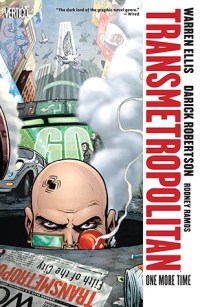
Kate’s Review: “Transmetropolitan (Vol.8): Dirge”

7784056Book: “Transmetropolitan (Vol. 8): Dirge” by Warren Ellis, Darick Robertson (Ill.), & Rodney Ramons (Ill.)

Publishing Info: Vertigo, January 2003

Where Did I Get This Book: I own it!

Book Description: After the events of TRANSMETROPOLITAN: SPIDER’S THRASH, outlaw journalist Spider Jerusalem has lost his press credentials and has been forced underground by the President of the United States. Now with a sniper loose in the Print District, Spider is the only man who can expose the conspiracy behind the destruction of the City and the simultaneous disappearance of its police force. Unfortunately, Spider is currently suffering through blackouts and episodes of mental confusion and may never bring the truth to the masses again.

Review: As 2020 continues on and my anxiety about the upcoming election skyrockets into the stratosphere, Spider Jerusalem is giving me solace. I’m going to be wrapping up my series re-read of “Transmetropolitan” soon, given that after this volume we only have two left. Which means that the stakes are on the rise, as the final confrontation between Spider and The Smiler (and possibly Spider and his own mortality) is going to be here before we know it. And, like most epic stories, it had to get darker before the dawn. “Dirge” goes dark.

It starts with a case of Blue Flu, in which the police in The City have all called in under guise of illness. It just so happens that this occurs the day that a sniper starts to murder people in the Print District. Spider, Yelena, and Channon, down and out without press credentials but still eager to catch the story, are on the case, but find themselves in the middle of a conspiracy that, at this point, the reader saw coming from a mile away. But that doesn’t matter, because the important point that “Dirge” is trying to make is that of COURSE the establishment has become entrenched in these kinds of tactics. These are the tactics that The Smiler thrives upon and uses to consolidate his power. This is what Spider has known for awhile now, ever since Vita Severn was murdered by her own campaign colleagues to boost the approval ratings of her boss. The issue now isn’t that this is what The Smiler does. I feel like at this point, Ellis wants the reader to be completely overwhelmed with the lack of hope, and to feel that The Smiler (who in this volume takes his Vita Severn tactic and does something even more horrific) is so unstoppable that the apathy and despair is the only way a society would be able to react as he slowly destroys everything just to make himself all powerful. God DAMMIT does this continue to feel all too real.

But the biggest blow in this volume is the reveal about Spider’s memory lapses and health issues, and how his role as the voice of truth to the people is almost assuredly coming to an end sooner rather than later. Spoilers here, but it doesn’t really ruin anything and it’s going to come to my larger point: Spider has been exposed to an agent that is eating away at his cognitive functions. His mind is slowly slipping away, and in the end he will be a vessel ravaged by dementia before he ultimately dies from it. Spider has always been the beacon of hope in this series, the one who will bring the truth in any way, shape, of form, and can be the one to spell it all out for the masses so that they can see the ways they are being lied to. And that’s about to come to an end. Reading it the first time I was definitely bummed out. But reading it now, in the context of a press under attack and a time of misinformation, or in some cases people who just don’t care to know the truth, this plot point is devastating. Ellis is taking a risk here, as it’s always a bit ballsy to hobble a character with something debilitating. But that just gives more time for Yelena and Channon to shine, as they are determined to help Spider carry on his work, no matter what. Their identity as a team has come to full bloom, and seeing their character development get to this point is incredibly satisfying.

Warren Ellis is sure to bring the hope to this story, as while Spider, Yelena, and Channon are all hot messes and incredibly crude and rude, you know that they have the greater good in their intentions. And while Spider may be dying, he is still determined and ready to expose The Smiler and his violent, horrendous bullshit so that good can triumph over evil. These days I wonder if this is a naive fantasy. But “Transmetropolitan” is so earnest and dripping with the hope that this can be achieved, that I still want to believe in Spider. I want to believe that information and truth will shine a light on lies, and deception, and that the corrupt will lose in the end. “Dirge” is the point that I feel we are at. We can all take a lesson from Spider. He’s the hero we need. And I hope, I REALLY hope, that we can follow in his footsteps and not give up.

IMG-3638
Source: Vertigo Comics

Up next is the penultimate collection: “The Cure”.

Rating 8: One of the darker entires to this fantastic comic, “Transmetropolitan (Vol. 8): Dirge” goes bleak, but once again lets a little bit of hope shine through.

Reader’s Advisory:

“Transmetropolitan (Vol. 8): Dirge” is included on the Goodreads lists “Bibles for the Revolution”, and “Best of Cyberpunk”.

Find “Transmetropolitan (Vol. 8): Dirge” at your library using WorldCat!

Previously Reviewed:

Kate’s Review: “Foul is Fair”

42595554Book: “Foul is Fair” by Hannah Capin

Publishing Info: Wednesday Books, February 2020

Where Did I Get This Book: I received an eARC from the publisher via NetGalley.

Book Description: Elle and her friends Mads, Jenny, and Summer rule their glittering LA circle. Untouchable, they have the kind of power other girls only dream of. Every party is theirs and the world is at their feet. Until the night of Elle’s sweet sixteen, when they crash a St. Andrew’s Prep party. The night the golden boys choose Elle as their next target.

They picked the wrong girl.

Sworn to vengeance, Elle transfers to St. Andrew’s. She plots to destroy each boy, one by one. She’ll take their power, their lives, and their control of the prep school’s hierarchy. And she and her coven have the perfect way in: a boy named Mack, whose ambition could turn deadly.

Foul is Fair is a bloody, thrilling revenge fantasy for the girls who have had enough. Golden boys beware: something wicked this way comes.

Review: Thanks to Wednesday Books and NetGalley for providing me with an eARC of this novel!

When I was in ninth grade my English class read “MacBeth”, the Shakespearean tragedy involving assassination, witches, torment, and revenge. I loved it from the very start, from reading the book itself to when our teacher showed a group of fourteen and fifteen year olds the Roman Polanski film adaptation, which is horrendously bloody and disturbing. I remember turning to my friend Blake at one point and both of us clearly thinking ‘whaaat the fuuuuuck?’ By the time my younger sister got to that class they’d replaced Polanski’s version with the offbeat “Scotland, PA”, a retelling of the classic story set in the world of fast food. It’s hilarious and dark, and I had been waiting for a long time to see another retelling of my favorite Shakespeare play. You can imagine how excited I was when “Foul is Fair” by Hannah Capin was in my email box. A YA retelling of “MacBeth”, from the female point of view, as a revenge story? On paper, this seems like everything that I would want for the Scottish Play. And yet, it became pretty clear pretty early that this wasn’t really going to work for me as much as I’d hoped it would.

giphy
I had certain expectations when I opened up this eARC, and I’m incredulous that basically none of them were met. (source)

Okay, let’s start with the good. Frankly, these days given the repeated reminders of the misogynistic and sexist culture that we live in, and the prevalent stories of abuse and trauma that have been exposed due to the #MeToo movement and powerful abusers falling from grace, I am all for a story that wants to tackle these issues with unrelenting rage. Catharsis is important, especially when it feels like some things never change and that privileged abusers will never see any true consequences (or sometimes hold high places of power, be it a Supreme Court seat or the Oval Office). So the fact that “Foul is Fair” is a power fantasy in which a rape victim is taking out all of her rage  and revenge against her rapists and taking her power back does give it lots of points. Especially since justice in the real world can be so hard to come by. Plus, I really did like the writing itself, as it’s vivid and visceral with a raw power that makes it almost burn off the page.

But when it comes to the characters within this book, I was supremely disappointed. One of the things about “MacBeth” is that while there are clear heroes and villains, each hero and villain has some complexity and nuance to them. MacBeth and Lady MacBeth in particular have moments of ruthlessness and vulnerability, and you understand the motivations for both of them even if you don’t necessarily agree with them, like the whole regicide thing. In “Foul is Fair”, all of the characters feel like two dimensional beings that aren’t defined by much else beyond their scumminess, or their unrelenting rage, or their weirdness. Can this be entertaining? Sure. But I didn’t feel like I really got to know our protagonist, Elle/Jade, outside of her understandable anger about what the golden boys at St. Andrews did to her. Effective plot? Absolutely. But it does not characterization make. Her interactions with her ‘coven’ (I’m also a little confused here, as she is clearly the stand in for Lady MacBeth, but she’s hanging out with Jenny, Summer, and Mads, who are the stand ins for the Weird Sisters. I don’t want to be a purist to the original material, but why was this a choice?) always felt a little ‘2edgy4me’ as they always, ALWAYS talk with coolness and malevolence, and even when they start turning on each other it still comes off as trying way too hard to be badass when all I wanted was to see some relatability amidst the badassness. And on top of all that, sure, there are some “MacBeth” aspects to it, but it definitely felt like it picked and chose the themes that would work best for the story at hand as opposed to actually trying to make it a “MacBeth” retelling. You take away the character names that reference the characters they’re based upon, and it’s not so easy to find the “MacBeth” aspects, it was shifted and changed so much. You can definitely adapt old texts to modern times and do it in ways that still give the original intent and feel of the source material (one of the best moments of this is in “Clueless” where Josh gives summation of Knightley’s dressing down and scolding of Emma with ‘you’re such a brat’. PERFECT!). “Foul is Fair” did not achieve this.

(and as a side note, poor Lady MacDuff gets thrown under the bus in this ‘reimagining’. The poor woman and all of her children are brutally slaughtered because MacDuff is a threat to MacBeth. In this she’s turned into a bitchy queen bee who is complicit in rape. It’s like ya didn’t even TRY to adapt that character! There were other instances of pick and choose feminism, but whatever, I don’t need to get on a soap box.)

There is something to be said for the ultimate rage message of standing up against violent misogyny, and that maybe it needs to be beaten over the head to get the point across. But I had hoped for a little more vicious and biting satire with Shakespearean flair.

Rating 5: The beat down of misogyny and the overall power fantasy was cathartic, but “Foul is Fair” had two dimensional characters and a grasp on the source material only when it suited.

Reader’s Advisory:

“Foul is Fair” is included on the Goodreads lists “YA Shakespeare Retellings”, and “ANGRY LADIES’ BOOK CLUB”.

Find “Foul is Fair” at your library using WorldCat!

Kate’s Review: “Disappearing Earth”

34563821._sy475_Book: “Disappearing Earth” by Julia Phillips

Publishing Info: Knopf, May 2019

Where Did I Get This Book: I borrowed it from my Mom

Book Description: Beautifully written, thought-provoking, intense and cleverly wrought, this is the most extraordinary first novel from a mesmerising new talent.

One August afternoon, on the shoreline of the north-eastern edge of Russia, two sisters are abducted. In the ensuing weeks, then months, the police investigation turns up nothing. Echoes of the disappearance reverberate across a tightly woven community, with the fear and loss felt most deeply among its women.

Set on the remote Siberian peninsula of Kamchatka, Disappearing Earth draws us into the world of an astonishing cast of characters, all connected by an unfathomable crime. We are transported to vistas of rugged beauty – densely wooded forests, open expanses of tundra, soaring volcanoes and the glassy seas that border Japan and Alaska – and into a region as complex as it is alluring, where social and ethnic tensions have long simmered, and where outsiders are often the first to be accused.

In a story as propulsive as it is emotionally engaging, and through a young writer’s virtuosic feat of empathy and imagination, this powerful novel provides a new understanding of the intricate bonds of family and community, in a Russia unlike any we have seen before.

Review: I was visiting my parents when I saw “Disappearing Earth” by Julia Phillips on their coffee table. I asked them who had read it, and my Dad said ‘Your Mom got it for me. I read it. I didn’t like it at all.’ Not the highest of praise, but I also knew that it was probably less a reflection of the quality of writing, and more of the kind of writing. I know my Dad, and I know that literary fiction isn’t really his style. Therefore, I was definitely interested in giving it a go, especially since it had so much praise from the book community. Because that’s what “Disappearing Earth” is at it’s heart: it has the plot of a thriller, but the foundation and bones of a literary novel.

While it’s true that “Disappearing Earth” starts with, and deeply connects, to the disappearance of Alonya and Sophia, two sisters who vanish in an isolated town in Kamchatka, Russia. But it’s definitely more about life in an isolated town in a country that is still feeling the effects of a fallen empire, and the people who live their lives there every day. Each chapter takes place in a different month after the disappearance, spanning over nearly a year, and has a different perspective of a member of the community, or the surrounding communities. Each character has their own connection to the missing girls, from their mother, to a police officer, to the only witness, to members of the Even community who had their own disappearance a few years prior (but more on that later). But focusing on the various people in the town and their own connection to the girls and their disappearance, as direct or indirect as it may be, we get a slice of life narrative that is steeped in sadness, resilience, and a little bit of hope. Can I understand why this perhaps wasn’t my Dad’s kind of book? Sure. It’s not your typical thriller/mystery, even though Alonya and Sophia’s disappearance is always at hand. It’s really more about how these girls went missing, how different people react to it (from disbelief to coldness to determination to know what happened).

The theme that really stood out to me, however, was that of the Even community and characters, specifically Alla Innokentevna, the mother of the missing Lilia, and Ksyusha, a University student who is torn between her community at home and the community she has at school, specifically her boyfriend, a white Russian named Ruslan. One of the big reveals of this book is the disappearance of Lilia, whose disappearance was like Alonya and Sophia’s, but went largely unnoticed by those outside of Esso and the natives who live there. I know so little about Russian society, and the little that I do know has very little to do with the rural communities and the relationships between the white Russians and the native communities. And like in other parts of the world, the non-white victim has gone largely forgotten while two white girls have their faces splashed all over town and beyond. It’s not a mystery what happened to Alonya and Sophia, as we see what happens to them in the very first chapter, but we do find ourselves wondering if Lilia did actually leave by her own volition, or if she fell victim to the same predator as the two younger girls. And Phillips does a very good job of making you fear the very worst, and wrings out some truly heart wrenching moments involving her family. Especially when Alla interacts with Martina, Alonya and Sophia’s mother.

And finally, Phillips completely captured what life is like in this village, making the village feel like a character in and of itself. I got a very good feel for not only the location and the people, but also the day to day emotions and experiences that the communities as a whole had, and how they were shaped by where they live. This was so well done, and I was a bit astounded by how real and evocative the place of this story was.

“Disappearing Earth” may not be the kind of thriller I usually cover, but it’s so damn good. Phillips has blended two genres to make a satisfying and compelling read. I’m no doubt going to have to have a long conversation with my Dad to try and plead its case!

Rating 9: Evocative and melancholy, “Disappearing Earth” is about life on an isolated peninsula, and the way lives change yet continue when a community is rocked by tragedy.

Reader’s Advisory:

“Disappearing Earth” is included on the Goodreads lists “Best Books on the North”, and “Russia Based Thrillers”.

Find “Disappearing Earth” at your library using WorldCat!