Kate’s Review: “The Good Girls”

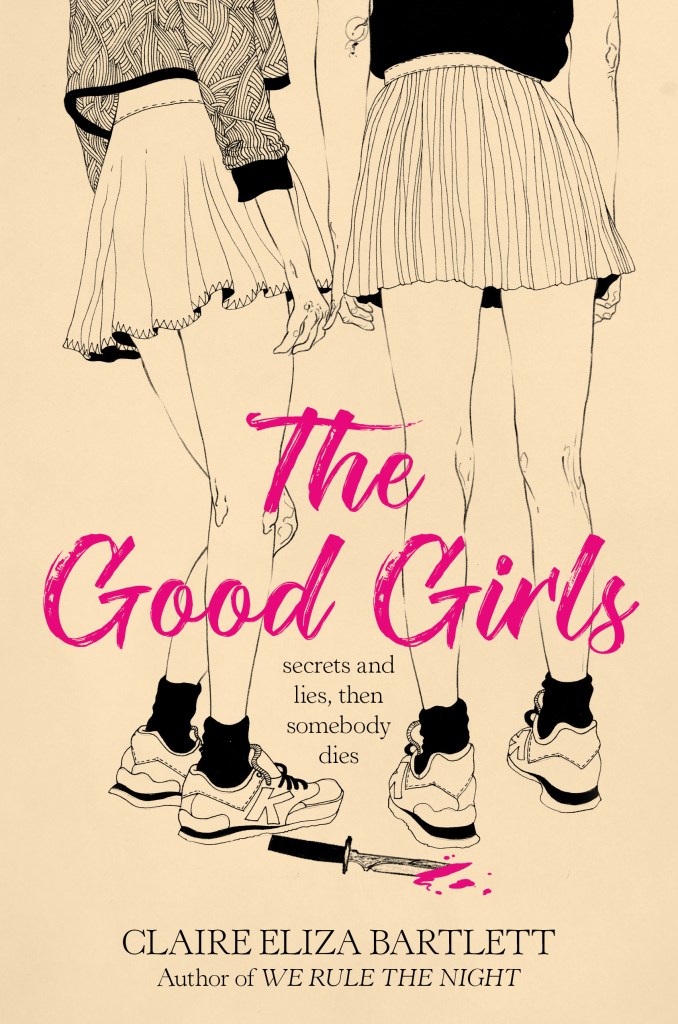
Book: “The Good Girls” by Claire Eliza Bartlett

Publishing Info: HarperTeen, December 2020

Where Did I Get This Book: I received an eARC from NetGalley.

Book Description: The troublemaker. The overachiever. The cheer captain. The dead girl.

Like every high school in America, Jefferson-Lorne High contains all of the above. After the shocking murder of senior Emma Baines, three of her classmates are at the top of the suspect list: Claude, the notorious partier; Avery, the head cheerleader; and Gwen, the would-be valedictorian. Everyone has a label, whether they like it or not–and Emma was always known as a good girl. But appearances are never what they seem. And the truth behind what really happened to Emma may just be lying in plain sight. As long-buried secrets come to light, the clock is ticking to find Emma’s killer–before another good girl goes down.

Review: Thanks to NetGalley for providing me with an eARC of this novel!

I am not too proud to admit that while I was an outcast and a weirdo in high school, I was not without my own faults when it came to judging other people, especially girls. It takes a lot of time and effort to try and unlearn the malignant lessons that society teaches you when it comes to how girls are supposed to be and act, and even as a woman in her mid thirties I’m STILL learning. I wish that I had read books at that age that would have helped the process along a bit. The good news is that girls these days can pick up books like “The Good Girls” and get some pretty good insight into how to reject internalized misogyny and rape culture! What I thought was going to be a YA thriller turned into something that had more value than I anticipated when it comes to theme and message.

The strongest aspect of “The Good Girls” is how Bartlett examines the damage that rape culture and misogyny wreaks upon young women no matter what their ‘social standing’ is, and how the damage can manifest in different ways. I think that one of the more popular ways to address it in teen fiction these days is to give a perspective to an ‘outcast’ character who is seen as promiscuous or ‘bad news’ in other ways. We do get that here with Claude the party girl and (deceased) Lizzy the addict, but we also see how it can still be damaging to girls who are seen as ‘good’ or ‘successful’, like cheer captain Avery and ‘good girl’ Emma. I think it’s especially important for this kind of ‘representation’ (for lack of a better term) in YA literature, as those who aren’t targeted in the more obvious ways may be less able to recognize it. I also liked that this book addresses that sometimes people in authority positions, because of their own biases, can stumble and fail when it comes to protecting those who are victimized. Or, even worse, use their position of authority to intimidate others into silence, or perpetuate abuse themselves. I thought that “The Good Girls” tackled these themes really well.

All of that said, in terms of mystery and thrills, “The Good Girls” missed the mark for me. While the characterizations were valuable and felt pretty realistic, they also managed to not work outside the box of the tropes that they fit into. I liked all of the main characters well enough, but none of them felt that different from other iterations of the boxes that they fell into. And when it comes to the mystery of who pushed Emma into the river, and what actually happened to Lizzy and how the two connect, I didn’t find myself raring to find the answer or terribly shocked by how it all played out. Even the smaller mysteries that add into the larger parts didn’t really surprise me, and I called a couple of the reveals pretty early on. Admittedly a couple caught me by surprise, but even then I wasn’t wowed. It just feels pretty run of the mill when it comes to the story itself. Not bad by any means. But also not unique. And at the end of the day, valuable message and explorations aside, I read “The Good Girls” because I was looking for a thriller, which it didn’t really provide.

I think that if you go into “The Good Girls” looking for a character study on the effect of misogyny and rape culture on girls from all kinds of labels, you will find something interesting, and certainly something with an important message that could help YA readers. But in terms of mystery and thrills, it isn’t really anything new.

Rating 6: I really liked the themes that take on rape culture and misogyny, but the story itself didn’t feel much different from other stories that have similar characters and plot points.

Reader’s Advisory:

“The Good Girls” is included on the Goodreads list “YA Mysteries and Thrillers”, and would fit in on “Small Towns with Secrets”.

Find “The Good Girls” at your library using WorldCat, or a local independent bookstore using IndieBound!
Kate’s Review: “Dragon Hoops”

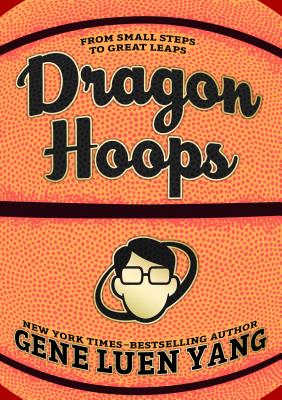
44280830Book: “Dragon Hoops” by Gene Luen Yang

Publishing Info: First Second, March 2020

Where Did I Get This Book: The library!

Book Description: In his latest graphic novel, New York Times bestselling author Gene Luen Yang turns the spotlight on his life, his family, and the high school where he teaches.

Gene understands stories—comic book stories, in particular. Big action. Bigger thrills. And the hero always wins.

But Gene doesn’t get sports. As a kid, his friends called him “Stick” and every basketball game he played ended in pain. He lost interest in basketball long ago, but at the high school where he now teaches, it’s all anyone can talk about. The men’s varsity team, the Dragons, is having a phenomenal season that’s been decades in the making. Each victory brings them closer to their ultimate goal: the California State Championships.

Once Gene gets to know these young all-stars, he realizes that their story is just as thrilling as anything he’s seen on a comic book page. He knows he has to follow this epic to its end. What he doesn’t know yet is that this season is not only going to change the Dragons’s lives, but his own life as well. 

Review: Though I’m not really a huge sports fan in general, if you asked me what my least favorite ‘mainstream’ sport to watch was, I’d undoubtedly say basketball. I can’t even tell you why that is, but I’ve never enjoyed it, even when I was playing on the basketball team in sixth grade. But given that Gene Luen Yang is one of my favorite comics writers, I knew that I was going to read his newest book “Dragon Hoops”, even if it was about basketball. Looking into it more, I realized that this wasn’t going to be a book that was just about basketball. And because of that, I was immediately hooked on this story that’s part memoir, part history, and part inspirational sports story.

We follow Yang as he’s following his school’s basketball team in it’s journey to hopefully win State, and he finds a lot of layers and depth and heart to put on display. While he could have had a structure that was purely factual, or perhaps a story that profiles just one player, or even a story that focuses on a coach’s deferred dreams that are possibly going to come true, he manages to take aspects of all these things and balance them into a combination. We get profiles of the various members of the team, from the players themselves and their varied backgrounds, to Coach Lou and his own personal connection as a former player, to Yang himself as he is thinking about his own dreams. I really enjoyed getting the context of the various team members, but I thought that Yang putting his own story in there was a nice touch, as it shows that even those who don’t have a specific sports connection can find commonality with these inspirational, and sometimes difficult, sports stories that we hear about ever so often. He uses devices and symbolism that repeats throughout the story, and it almost always landed. Yang has always been really good at showing the deeper meaning of what he’s trying to say without outright saying it, and it comes through in this non fiction story just as well as it does in his fictional stories. I also really enjoyed Yang’s way of toying with the fourth wall, as he would have have himself in comic form acknowledge things that were being done for story telling purposes, as well as toying with the other characters perceptions of things that were going on or had gone on. While the action of the basketball games still kind of lagged on the page for me, I do acknowledge that Yang really captured the action and the tension of the moments as the Dragons are trying to get to State.

But ironically enough, it was the introductions to each section which focused on different parts of the history of basketball that clicked with me the most. Yang would give us a pretty easy to follow but comprehensive moment of history of the game, and that moment would then provide context or connect with the focus on that chapter, which was usually another member of the team or support system. I’m a history buff to be sure, and the way that Yang grounded his story within the context of this history was really well done. Plus, it all connects to the fact that Coach Lou, after his dreams of basketball success ended prematurely, decided to focus his education on history because he knows that history can inform us in the present. LOVED that, and it’s exactly the kind of theme I would expect from Yang.

And, of course, I love Yang’s style of artwork. It’s definitely a bit cartoony, but that doesn’t make it any less resonant or emotional when it needs to be. There were multiple moments where the emotions being portrayed were so well done both in writing and in imagery that I was moved to tears. Yang’s style is unique and well known at this point, but it always works.

dragon-hoops-gene-meets-coach-lou_orig
(source)

“Dragon Hoops” is another triumph for Gene Luen Yang! And if you’re hesitant to read it because of the basketball thing, take it from me. It’s absolutely worth it.

Rating 8: A charming graphic novel about basketball dreams, and dreams of doing something great, “Dragon Hoops” is a personal and emotional story from one of my favorite comics writers.

Reader’s Advisory: 

“Dragon Hoops” is included on the Goodreads lists “Project LIT”, and “Asian American Pacific Islander Heritage Month Book List”.

Find “Dragon Hoops” at your library using WorldCat, or a local independent bookstore using IndieBound!

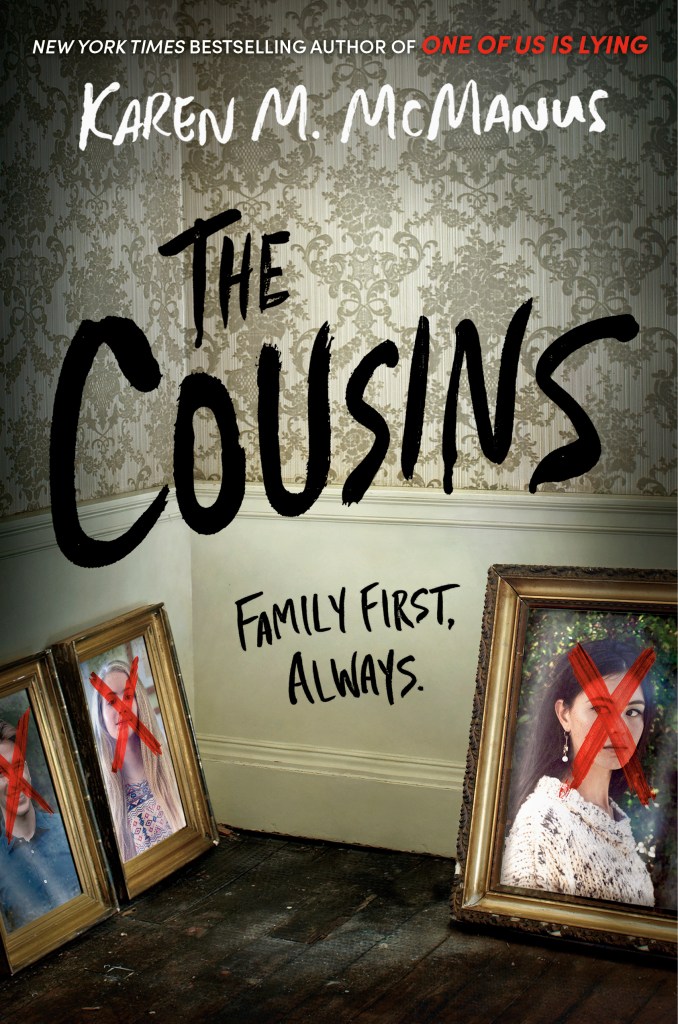
Kate’s Review: “The Cousins”

Book: “The Cousins” by Karen M. McManus

Publishing Info: Delacorte Press, December 2020

Where Did I Get This Book: I received an eARC from NetGalley.

Book Description: From the #1 New York Times bestselling author of One of Us Is Lying comes your next obsession. You’ll never feel the same about family again.

Milly, Aubrey, and Jonah Story are cousins, but they barely know each another, and they’ve never even met their grandmother. Rich and reclusive, she disinherited their parents before they were born. So when they each receive a letter inviting them to work at her island resort for the summer, they’re surprised . . . and curious.

Their parents are all clear on one point–not going is not an option. This could be the opportunity to get back into Grandmother’s good graces. But when the cousins arrive on the island, it’s immediately clear that she has different plans for them. And the longer they stay, the more they realize how mysterious–and dark–their family’s past is.

The entire Story family has secrets. Whatever pulled them apart years ago isn’t over–and this summer, the cousins will learn everything.

Review: Thank you to NetGalley for sending me an eARC of this novel!

I don’t know what we did to deserve it, but the book world gave us two YA thrillers by Karen M. McManus this year. Maybe it was to try to balance the scales of this year just a little bit? Whatever the case may be, it’s hard to deny that McManus is a hot commodity in YA thriller publishing, and “The Cousins” is her newest foray into the genre. Had this book come out a little later, it certainly would have been on my list in our upcoming Highlights Post. It wasn’t easy letting it sit on my Kindle as long as I did, but once I dove in I found myself pretty well ensnared.

Like a couple of McManus’s other stories, “The Cousins” involves a group of teenagers who are thrown together under strange circumstances, even though they are not alike in any way, shape, of form. Milly, Aubrey, and Jonah are cousins who never spent time together as kids, as their parents are generally estranged from each other and completely estranged from their grandmother Millicent. We get the perspectives of each cousin, who all have their own secrets, insecurities, and reasons that they want to get back in their grandmother’s good graces. Milly is desperate to know more about her family, if only because her mother has been so cold to her over the years that she wants to know what made her that way. Aubrey wants to please her father, as his indifference towards her that borders into disdain is a constant hurt that has only amplified as of late because of his escalating callousness. And Jonah, well, Jonah is a bit of a mystery. He wants to meet his grandmother, but he has ulterior motives that aren’t as clear as Milly’s and Aubrey’s. Each of these characters had a distinct voice and read like teens coming from the backgrounds that they do, and their authentic personalities were easy to latch on to, even as their various flaws and, in some cases, lies come to light. I wouldn’t say that any of them were super outside of the box from what I’ve come to expect from McManus, but that’s more than okay because I liked all of them. While I expected myself to like Milly the best (who doesn’t love a sarcastic and somewhat privileged protagonist?), it was Jonah whose voice stood out the most. His frustration, resentment, and ultimate softening towards Milly and Aubrey was a nice journey, and he does get a well set up and believable romance to boot. He was just so easy to care for, and I wasn’t expecting that at first. McManus really has a knack for writing characterizations that really click.

The mystery itself, and the sub mysteries within, were also fairly strong, though once again my jaded self was able to figure out a couple a few steps before I probably was supposed to. I wasn’t as interested in the answer as to why Millicent cut her children out, because as far as I was concerned they probably DID deserve it. But as things became to be not as they seemed my expectations shifted a bit, and I was more interested. Again, sometimes the clues to the various mysteries and secrets sprinkled throughout the story were a little obvious and therefore the solutions predictable. But the pace was fast and I was going through quick enough that I didn’t find myself hindered by my abilities to guess what was coming up. I think that there are still a good amount of surprises here that are, indeed, well set up but well shrouded as well. So even if you do find yourself predicting some things, I can almost be positive that you won’t get them all.

“The Cousins” is fun and quick, and should be on the lists of anyone who likes YA thrillers. Karen M. McManus has a lot of talent and I am very excited to see what she comes up with next!

Rating 8: Another fun mystery thriller from Karen M. McManus!

Reader’s Advisory:

“The Cousins” is included on the Goodreads lists “Best YA Mystery/Spy books”, and “YA Suspense/Thriller/Mystery”.

Find “The Cousins” at your library using WorldCat, or a local independent bookstore using IndieBound!

Kate’s Review: “These Violent Delights”

Book: “These Violent Delights” by Chloe Gong

Publishing Info: Margaret K. McElderry Books, November 2020

Where Did I Get This Book: I received an ARC from a librarian friend.

Book Description: Perfect for fans of The Last Magician and Descendant of the Crane, this heart-stopping debut is an imaginative Romeo and Juliet retelling set in 1920s Shanghai, with rival gangs and a monster in the depths of the Huangpu River.

The year is 1926, and Shanghai hums to the tune of debauchery. A blood feud between two gangs runs the streets red, leaving the city helpless in the grip of chaos. At the heart of it all is eighteen-year-old Juliette Cai, a former flapper who has returned to assume her role as the proud heir of the Scarlet Gang—a network of criminals far above the law. Their only rivals in power are the White Flowers, who have fought the Scarlets for generations. And behind every move is their heir, Roma Montagov, Juliette’s first love…and first betrayal.

But when gangsters on both sides show signs of instability culminating in clawing their own throats out, the people start to whisper. Of a contagion, a madness. Of a monster in the shadows. As the deaths stack up, Juliette and Roma must set their guns—and grudges—aside and work together, for if they can’t stop this mayhem, then there will be no city left for either to rule.

Review: Confession time! I don’t really care for Shakespeare’s classic tragedy “Romeo and Juliet”. Even as a teen when I was even more emotional than I am now (shocker!), it never really connected with me. Well, that’s not totally true. I do enjoy Baz Lurhmann’s take on the story, but that’s because it’s SO DAMN OVER THE TOP.

That and John Leguizamo as Tybalt. I mean my GOD. (source)

But I am someone who is open minded to tinkering with the classics, so when I heard about “These Violent Delights” by Chloe Gong it caught my eye. If you take the “Romeo and Juliet” story, set it in 1920s Shanghai, involve two gangs, and have a Juliet who is nobody’s fool, you will almost certainly get my attention. And if you toss a monster into it as well? YA GOT ME.

“These Violent Delights” follows Juliette Cai and Roma Montogrov, two young adults who are heirs to their family gangs, but have a tumultuous and star crossed past. While it’s third person, we do get to alternate between their third person perspectives, seeing their sides of their ultimate falling out, and how hurt, and angry, they both are about it. I was more invested in Juliet’s perspectives, mostly because I felt that Gong really fleshed out her characterization in fascinating ways, not just making her be a love lorn and somewhat passive character. This Juliette is a calculating higher up of a violent gang, and uses her knowledge of Shanghai and her culture along with her Western education to make chess moves in the ongoing conflicts. Through her we also got to see the colonial and imperialist issues that were facing Shanghai at the time, with Western interests establishing themselves via merchants after a number of treaties after warfare. Gong addresses a number of the issues of Western influence and manipulation within this narrative, and having Juliette there to parse it out for the reader was a great device (I was so ignorant about a lot of this that I found that to be the most intriguing aspect of this story). It was also pretty cool to see not just Juliette but her cousins Rosalind and Kathleen using their wits and their own strengths as women to try to keep the Scarlet Gang in control, especially after things in the main storyline go to hell (more on that in a bit).

Roma, however, is part of a Russian family that relocated to Shanghai and that has tried to claim its own stake in the power pie. His conflicts were more family based, and seeing him (and his heavies Marshall and Benedikt, who were GREAT and WONDERFUL and I would totally read a book just about them) try to reconcile his love for Juliette and his loyalty to his family (some of which is forced upon him) wasn’t as interesting as Juliette’s journey. But all of that said, because of these conflicts that both have, some known, some unspoken, their romance is far easier to invest in than their inspirations in the original play. The two characters (as well as the side characters) harken back enough to be adaptations, but stand on their own and breathe new life into the story.

As for the main conflict, that being a monster that is infecting people in Shanghai with an illness that makes them commit suicide, it was a bit out of left field but I liked it enough. I enjoyed watching Roma and Juliette try to solve the mystery, and how the story still followed beats of the original play in subtle ways. This is where more Imperialist issues come into play, and while a less skilled author may have stumbled into some heavy handed moments, for the most part Gong pulls it off that keeps the story flowing and making good points. It did go on a little long for my taste, but a lot had to be covered for world building, as this is the first in a series. Which I will definitely be following, as the cliffhanger was searing with DELICIOUS, DELICIOUS PAIN.

Let’s call this a visual hint on where we leave off. But it has some tweaking I loved. (source)

“These Violent Delights” is a creative and fun historical fiction fantasy romance thriller (whew!) , and has me fully invested in a “Romeo and Juliet” story. Can’t wait to see where we go next.

Rating 7: A creative and unique retelling of a classic tragedy, “These Violent Delights” goes on a LITTLE long, but breathes some new life into “Romeo and Juliet”.

Reader’s Advisory:

“These Violent Delights” is included on the Goodreads list “YA Fiction Set in the 1920s”, and would fit in on “Romeo and Juliet Retellings”.

Find “These Violent Delights” at your library using WorldCat, or a local independent bookstore using IndieBound!

Kate’s Review: “Surrender Your Sons”

45154800Book: “Surrender Your Sons” by Adam Sass

Publishing Info: Flux, September 2020

Where Did I Get This Book: I received an eARC from NetGalley.

Book Description: Connor Major’s summer break is turning into a nightmare.

His SAT scores bombed, the old man he delivers meals to died, and when he came out to his religious zealot mother, she had him kidnapped and shipped off to a secluded island. His final destination: Nightlight Ministries, a conversion therapy camp that will be his new home until he “changes.”

But Connor’s troubles are only beginning. At Nightlight, everyone has something to hide from the campers to the “converted” staff and cagey camp director, and it quickly becomes clear that no one is safe. Connor plans to escape and bring the other kidnapped teens with him. But first, he’s exposing the camp’s horrible truths for what they are— and taking this place down. 

Review: Thank you to NetGalley for sending me an eARC of this novel!

Let’s give some high praise to the 1990s cult lesbian dramedy “But I’m a Cheerleader” starring literal goddess on Earth Natasha Lyonne. Natasha plays Megan, a naive cheerleader who is sent to a conversion therapy camp because her parents are convinced she’s gay. There the very idea of conversion therapy is lampooned and satirized, and Lyonne is able to discover and accept herself, as well as her eventual love for camp bad girl Graham (played by 90s Goth Queen Clea Duvall). It’s great. It’s very 1990s. It has RuPaul as a counselor. It’s witty and big hearted. It makes fun of conversion therapy and how ridiculous the concept is, and hits that point home hard.

mqio7y
(source)

But I do think that one aspect that gets a little lost in this movie is just how truly horrifying and evil conversion therapy is. Children are traumatized, abused, and tortured because of their sexuality and/or gender identity, and parents willingly send their children to this kind of treatment that can be incredibly damaging. “Surrender Your Sons” by Adam Sass sends conversion therapy to another extreme (though honestly, probably not too unrealistic), and produces both a rightfully horrifying story…. as well as, ultimately, an uplifting one at its heart.

Adam Sass starts this book off with a content warning and contextualization of the content in this book, noting that while it very much is a story of queer pain, he isn’t promoting that kind of thing and is trying to handle it as best he can. Normally these kinds of spoon fed disclaimers rub me the wrong way, as I think that a work should speak for itself and a reader should have their own interpretations, but in the case of “Surrender Your Sons” I think that it’s probably a good idea. The “Bury Your Gays” trope is damaging and all too present, and this book could absolutely be triggering for the intended audience. But heavy and upsetting content is necessary in this tale as our protagonist, Connor Major, is kidnapped and taken to a conversion therapy camp in the Costa Rican jungle. The things that Connor and his ‘campmates’ go through are horrifying, ranging from physical abuse to mental abuse to emotional abuse, it really runs the gamut, and it is a VERY hard and emotional read. It really needs to be hit home that conversion therapy is torture, plain and simple. Connor is a very relatable, realistic, and in some ways incredibly funny main character, and his sharp wit helps make this story a little easier to handle in its unflinching portrayals of conversion therapy. I really loved Connor’s voice, and I also liked how Sass slowly built him up and fleshed him out as his life is thrown into turmoil. It never felt unrealistic or unearned, and his voice still felt true to him as he evolved. I also really appreciated that Sass points out that the act of ‘coming out’ is still very dangerous for some people. Connor is pressured to come out to his religious zealot of a mother by his boyfriend Ario, who says that coming out will set him free. I do think that there is a well intentioned belief that coming out means that you get to speak your truth, and that that in itself is the best thing that you can do for your own happiness. For some people that’s absolutely true. But for people like Connor, coming out puts a target on one’s back, and Sass did a really good job of bringing up how complicated it can be.

And with these themes we also get a well plotted and interesting mystery thriller! Connor soon discovers that the recently deceased man he was doing Meals on Wheels for, Ricky, has a connection to the Nightlight program, and to it’s leader, The Reverend. It never feels like this mystery is tossed in for good measure, as Sass lays out the clues in a deliberate and careful way. As Connor and his fellow campers begin to investigate, the stakes get higher and higher, and they may need to start plotting a revolt and escape not just because they are being tortured for their sexualities and gender identities, but because they may now know too much. Mixed in with the mystery are the backstories of some of the higher ups at the camp, and how some of them were campers there at one point, which therein leads to the very sad reality that sometimes people who suffer from trauma and abuse end up abusing and traumatizing others later in life. Sass is sure to never excuse the actions of these characters, he does grant them a little bit of empathy, and hammers the point that conversion therapy is truly horrendous because of many unforeseen consequences and outcomes even beyond the violent and abusive root of it.

“Surrender Your Sons” is by no means an easy read, but I think that it’s one that brings up very important conversations. After all, conversion therapy, while perhaps falling out of favor, is still legal in many states in the U.S. Hopefully the more light that is shed on the practice, the more states will ban it until it’s no longer legal anywhere.

Rating 8: An emotionally gut wrenching and suspenseful thriller, “Surrender Your Sons” explores the evils of conversion therapy, the dark side of families when they don’t accept their children for being themselves, and the strength we sometimes have to find within ourselves.

Reader’s Advisory:

“Surrender Your Sons” is included on the Goodreads lists “Queer Fiction Set on an Island”, and “2020 YA Books with LGBT Themes”.

Find “Surrender Your Sons” at your library using WorldCat, or at a local independent bookstore using IndieBound!

Kate’s Review: “The Sandman (Vol.5): A Game of You”

Book: “The Sandman (Vol.5): A Game of You” by Neil Gaiman, Shawn McManus (Ill.), Colleen Doran (Ill.), Bryan Talbot (Ill.), George Pratt (Ill.), Stan Woch (Ill.), & Dick Giordano (Ill.)

Publishing Info: Vertigo, 1992

Where Did I Get This Book: I own it.

Book Description: Volume Five of New York Times best selling author Neil Gaiman’s acclaimed creation THE SANDMAN collects one of the series’ most beloved storylines.Take an apartment house, add in a drag queen, a lesbian couple, some talking animals, a talking severed head, a confused heroine and the deadly Cuckoo. Stir vigorously with a hurricane and Morpheus himself and you get this fifth installment of the SANDMAN series. This story stars Barbie, who first makes an appearance in THE DOLL’S HOUSE and now finds herself a princess in a vivid dreamworld.

Review: Since “The Sandman” series has now slipped mostly into full fantasy, we got a small break from it during Horrorpalooza. But now we’re back in, and I have revisited “A Game of You”, a collection that has been both lauded as a fan favorite, and also been criticized in more recent years. I honestly had NO memory of this collection on this re-read, which didn’t really bode well for how well I connected to it the first time around. But I was happy to go back in, as it’s always kind of fun to see Gaiman tinker with other characters and build upon past stories and plot points that didn’t seem relevant in the moment. And oof. Going back was uncomfortable.

I will start with what I did like about “A Game of You”. In this story, instead of having a focus on Morpheus or any of the Endless, we focus on the character of Barbie, one of the side characters in “The Doll’s House”. She and Ken were other residents in the house that Rose Walker lived in, and functioned as a cheeky nod to Barbie dolls. By the end of that arc things weren’t going so well for them. Now Barbie is living in New York City in an apartment complex with a number of quirky neighbors, including a lesbian couple and a trans woman named Wanda (the description says ‘drag queen’, but that’s not accurate. Wanda is trans and we are going to talk about her a LOT in a bit). Barbie finds herself going into a dreamscape in which she is a princess of a kingdom that is being threatened by a malevolent entity known as The Cuckoo, and while she is unconscious, her neighbors want to help bring her back. Gaiman builds a whole new fantasy world, and even within the limited scope of this arc I felt like I got a sense of what kind of place this was. I liked seeing Barbie get a bit of her own agency in this tale, though I do admit that the severe lack of Morpheus outside of a couple moments was a little disappointing. I liked that Gaiman wanted to give other characters within his massive world some spotlight. But I thought that Morpheus really should have bad a bigger part to play. This could have been its own story very easily if you took Morpheus out.

The bigger issue is one of those moments where “The Sandman” hasn’t aged as well as time has gone on, and that is with the character of Wanda. It is clear that Gaiman wrote Wanda with the very best of intentions. For the early 90s, even having a trans character who has her own side plot, a multi faceted personality, and a sympathetic and very relatable characterization was HUGE for trans representation. Like, I can’t imagine that any other author, comics or not, with a big name project would have given Wanda the kind of story that Gaiman gives her. In 1993, Wanda is an important character. But in 2020, Wanda’s characterization is incredibly dated, with tropes, stereotypes, and harmful thematics galore. There was a lot of misgendering, there were many moments of ‘are you a boy or a girl’, and there was a fixation on her genitalia that really didn’t sit well with me. What was hardest to stomach was a moment regarding magic that undercut her identity (essentially there was moon magic that Wanda couldn’t participate in because, at the end of the day, she isn’t seen as a TRUE woman). Throw in some ‘bury your LGBTQIA’ things, and it just felt harmful and tone deaf for 2020. Again, I don’t believe that Gaiman’s intentions were anything other than good, given that just recently he signed his name to an open letter by authors in support of trans and non binary people. But as time has gone on, the portrayal is problematic at best, bordering on offensive.

I think that when I eventually re-read “The Sandman” in the future (as I’m sure I will), I probably will skip “A Game of You”. As of now, it doesn’t seem like later plot points will build upon it (that said I could be wrong; I just don’t remember), and the stereotypes were just too much.

Rating 5: With a complete side track of the story and some well intentioned representation feeling cringe in the decades after it was first written, “A Game of You” didn’t live up to the past collections.

Reader’s Advisory:

“The Sandman (Vol.5): A Game of You” is included on the Goodreads lists “Mythic Fiction Comics”, and “Best Books Concerning Dreams”.

Find “The Sandman (Vol.5): A Game of You” at your library using WorldCat, or at a local independent bookstore using IndieBound!

Previously Reviewed:

Kate’s Review: “Those Who Prey”

Book: “Those Who Prey” by Jennifer Moffett

Publishing Info: Atheneum, Simon & Schuster, November 2020

Where Did I Get This Book: I received an eARC from NetGalley.

Book Description: Sadie meets The Girls in this riveting debut psychological thriller about a lonely college freshman seduced into joining a cult—and her desperate attempt to escape before it’s too late.

College life isn’t what Emily expected. She expected to spend freshman year strolling through the ivy-covered campus with new friends, finally feeling like she belonged. Instead, she walks the campus alone, still not having found her place or her people so far away from home. But then the Kingdom finds her.

The Kingdom, an exclusive on-campus group, offers everything Emily expected of college and more: acceptance, friends, a potential boyfriend, and a chance to spend the summer in Italy on a mission trip. But the trip is not what she thought it would be. Emily and the others are stripped of their passports and money. They’re cut off from their families back home. The Kingdom’s practices become increasingly manipulative and dangerous.

And someone ends up dead.

At times unsettling and always riveting, Those Who Prey looks at the allure of cult life, while questioning just how far we’re willing to go to find where we belong.

Review: Thank you to NetGalley for providing me with an eARC of this novel!

Back when I was at the University of Minnesota for my undergrad, between classes I’d spend time in the student union, usually getting a bagel for lunch in the food area where a number of student groups had set up tables trying to find new members. The table that always made me uncomfortable was a far right Evangelical Christian group whose name I can’t remember, as they always had the same rotation of about five people who had interesting signs and information on display. Around Halloween it was about devil worship. At Christmas it was how Santa=Satan. Sometimes it would be pamphlets on the sins of homosexuality or sex. I never saw them talking to anyone, but I did think about how they could probably influence a lonely student or two who hadn’t adjusted to college life yet, who just wanted a connection as they sought out a bagel. As I read “Those Who Prey” by Jennifer Moffett, I kept having flashbacks to that table, and one specific girl with whom I made eye contact on more than one occasion, and how my disgust at the time didn’t see the blatant predatory behavior of the group I was constantly passing as I went for my lunch.

So creepy as I looked back. (source)

“Those Who Prey” is part coming of age story, part thriller, and Moffett is able to pull out the best of both genres to make a genuinely disturbing tale about identity and manipulation. Our protagonist, Emily, reads like a very realistic college freshman who has found herself in a new environment, and who hasn’t quite found her place. Moffett slowly reveals aspects of her background and personality that make her ripe for the picking when it comes to Kingdom, an on campus Christian group that brings her into their organization with promise of friendhip and salvation (and love, as it is the charming Josh who first compels her). I thought that Moffett really did her due diligence to show how the average student who may be isolated and lonely could be so easily taken in with a group like this, and really demonstrated the frog in the boiling water aspect of how Kingdom, and real life campus cult groups, depend upon.

By the time Emily gets to Italy on her ‘mission’, and things really take a turn, the groundwork has been laid out seamlessly. Moffett clearly did her homework about these groups and what they do to get their members, and what they then put them through. While most of the other characters weren’t really given deep dives, as it’s through Emily’s perspective, you still got a sense as to how many of them, especially the ones you wouldn’t expect, would be trapped in this situation. It felt real, and therefore VERY unsettling. We also start to see a mystery unfold involving Kara, the member who has been assigned to Emily, who doesn’t seem as invested in the program as other people are. Kara’s plot line is what gave this story a mystery element to throw in with the creepy cult vibe, and while I kind of guessed what her deal was pretty early on, there were still plenty of puzzle pieces that I wasn’t working out until Moffett was ready for me to do so. I needed to know what Kara’s deal was, I needed to know what Kingdom had in store for their members, and I NEEDED to know if Emily was going to get out. All of this kept me totally ensnared, which was great.

“Those Who Prey” is creepy and all too realistic. I heard that some of these groups have rebranded a bit in hopes of still bringing in members. Hopefully some people who read this book will see the similarities and steer clear, no matter how lonely they may feel while living on campus.

Rating 8: A suspenseful coming of age thriller, “Those Who Prey” kept me on the edge of my seat.

Reader’s Advisory:

“Those Who Prey” is included on the Goodreads lists “Cults and Communes in Fiction”, and “Going to College”.

Find “Those Who Prey” at your library using WorldCat, or a local independent bookstore using IndieBound!

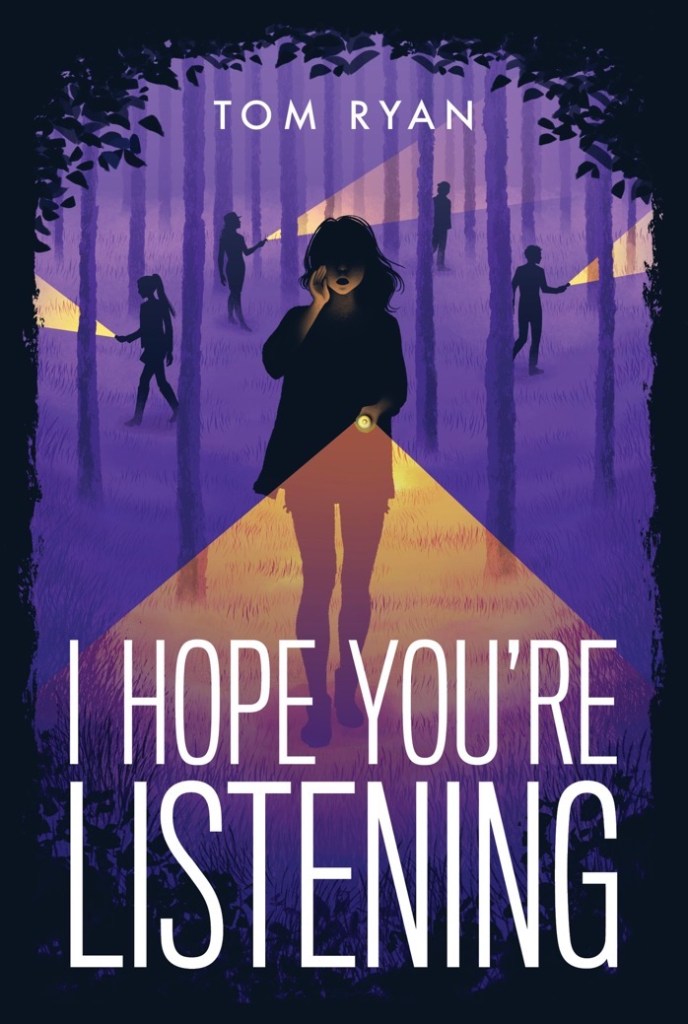
Kate’s Review: “I Hope You’re Listening”

Book: “I Hope You’re Listening” by Tom Ryan

Publishing Info: Aw Teen, October 2020

Where Did I Get This Book: I received an eARC of this novel from NetGalley.

Book Description: In her small town, seventeen year-old Delia “Dee” Skinner is known as the girl who wasn’t taken. Ten years ago, she witnessed the abduction of her best friend, Sibby. And though she told the police everything she remembered, it wasn’t enough. Sibby was never seen again. At night, Dee deals with her guilt by becoming someone else: the Seeker, the voice behind the popular true crime podcast Radio Silent, which features missing persons cases and works with online sleuths to solve them. Nobody knows Dee’s the Seeker, and she plans to keep it that way.When another little girl goes missing, and the case is linked to Sibby’s disappearance, Dee has a chance to get answers, with the help of her virtual detectives and the intriguing new girl at school. But how much is she willing to reveal about herself in order to uncover the truth? Dee’s about to find out what’s really at stake in unraveling the mystery of the little girls who vanished. 

Review: Thank you to NetGalley for providing me with an eARC of this novel!

In the early stages of quarantine, I fell off listening to some of the true crime podcasts that I loved to listen to before. I don’t know why it was, but outside of “Last Podcast on the Left”, I just wasn’t feeling up for anything else. But one day I decided to try and pick up “My Favorite Murder” again, and started on the unsolved case of the Delphi Murders, in which two teenage girls were found dead after being on a daytime hike. While I liked getting back into the groove of podcasts as I went for a walk with my kid, that particular case is, like the other cases like it, very sad because we don’t know what happened. It just so happened that I was listening to this as I was reading “I Hope You’re Listening” by Tom Ryan, and the chaotic synergy of the universe kind of fell into place. And it made me appreciate “I Hope You’re Listening” all the more.

There are a couple of mysteries running around in the narrative of “I Hope You’re Listening”. The first is what happened to Dee’s best friend Sybil, who was taken when they were children and right in front of Dee’s eyes. Dee is the kind of protagonist that you see a fair amount in thrillers these days; she’s traumatized, she’s not very personable, and she has unpacked baggage regarding her trauma that affects her in many ways. But Ryan does a great job of making her feel realistic in her trauma without feeling like she has to be unlikable or ‘broken’. She has started running an anonymous podcast that tackles missing person cases, in hopes of solving mysteries to help cope with the mystery in her life that was never solved, and I think this device works perfectly for her plot line. I liked that Ryan doesn’t try to make her into a completely self destructive individual, but does show how her experiences has made her more ‘rough around the edges’ when it comes to dealing with other people.

The other mystery is a new child disappearance, this time of a girl named Layla, whose potential kidnapping brings a media frenzy to town and threatens to expose Dee to more reminders of her connection to Sybil, as well as expose her as the anonymous host of her popular podcast. As Dee tries to help solve Layla’s disappearance, she is pulled back into Sybil’s, and her obsession starts up again. Both mysteries are compelling as all get out, and seeing Dee try her hand at actual hands on detective work leads to many suspenseful moments of high stakes action.

There were a couple of things that kind of took me out of the story a bit. The first is merely a pacing issue, and I’m going to get a little spoiler here, so here is your warning:

So one of the biggest strengths of this book is Dee’s bourgeoning romance with new neighbor Sarah. I liked Dee and Sarah together, I thought that they had great chemistry and I was deeply invested in them as a couple. But the timeline on this book isn’t very long, and Sarah figures out that Dee is ‘The Seeker’, aka the host for the podcast. When she confronts Dee, Dee basically confirms it right away, and then they are suddenly passionately making out. It’s not so much them hooking up that I had a problem with, but Dee revealing her secret identity that only ONE other person knows (her best friend Burke) when she has kept it so secret and has been so paranoid about it for so long. It’s especially hard to swallow because a Nancy Grace-esque tabloid crime reporter is in town on the Layla case and wants to expose The Seeker, so for Dee to let her guard down on a girl she has just started to get to know when this dangerous woman is so close just felt unrealistic to Dee’s character. But hey, if that’s the worst thing I can find about this, that’s pretty good.

Overall, “I Hope You’re Listening” is a really engrossing mystery thriller, and I am thinking of gong back to read more of Ryan’s stuff. Pick this one up if you like thrillers AND true crime podcasts!

Rating 8: A page turner of a mystery that pulls you in, “I Hope You’re Listening” is sure to entertain fans of thrillers and true crime podcasts alike!

Reader’s Advisory:

“I Hope You’re Listening” is included on the Goodreads lists “

Find “I Hope You’re Listening” at your library using WorldCat, or a local independent bookstore using IndieBound!

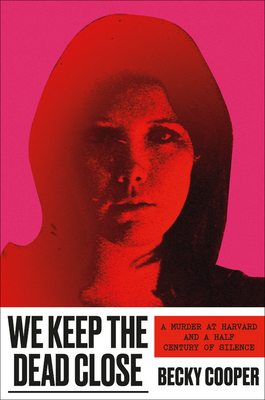
Kate’s Review: “We Keep The Dead Close”

200

Book: “We Keep the Dead Close: A Murder at Harvard and a Half Century of Silence” by Becky Cooper

Publishing Info: Grand Central Publishing, November 2020

Where Did I Get This Book: I received an eARC from NetGalley.

Book Description: You have to remember, he reminded me, that Harvard is older than the U.S. government. You have to remember because Harvard doesn’t let you forget.

1969: the height of counterculture and the year universities would seek to curb the unruly spectacle of student protest; the winter that Harvard University would begin the tumultuous process of merging with Radcliffe, its all-female sister school; and the year that Jane Britton, an ambitious 23-year-old graduate student in Harvard’s Anthropology Department and daughter of Radcliffe Vice President J. Boyd Britton, would be found bludgeoned to death in her Cambridge, Massachusetts apartment.

Forty years later, Becky Cooper, a curious undergrad, will hear the first whispers of the story. In the first telling the body was nameless. The story was this: a Harvard student had had an affair with her professor, and the professor had murdered her in the Peabody Museum of Archaeology and Ethnology because she’d threatened to talk about the affair. Though the rumor proves false, the story that unfolds, one that Cooper will follow for ten years, is even more complex: a tale of gender inequality in academia, a “cowboy culture” among empowered male elites, the silencing effect of institutions, and our compulsion to rewrite the stories of female victims.

We Keep the Dead Close is a memoir of mirrors, misogyny, and murder. It is at once a rumination on the violence and oppression that rules our revered institutions, a ghost story reflecting one young woman’s past onto another’s present, and a love story for a girl who was lost to history.

Review: Thanks to NetGalley for providing me with an eARC of this book!

During my college years at the U of MN I didn’t live on campus, so I wasn’t as in tune with the campus myths and rumors of the dorms and the community. I know that there were rumors that one of the dorms was haunted, and that the bridge that connects the campus across the Mississippi River was supposedly haunted as well (clearly I was into the ghost rumors). But nothing struck me as a college campus or community urban legend based in truth. “We Keep the Dead Close: A Murder at Harvard and a Half Century of Silence” by Becky Cooper examines a Harvard story that sounds like generalized campus lore, but is in fact a true, and until recently, unsolved murder.

“We Keep the Dead Close” is very much a true crime story, involving the murder of Jane Britton, a Harvard student who was found murdered in her apartment in the late 1960s. Over the years this unsolved tale spun into its own campus mythology, with details tweaked and added and the main facts blurred to serve as a cautionary tale for women students. I had never heard of this murder, and I felt that Cooper was very respectful in how she both examined her personal investigation, as well as the investigation and fallout during the time, and the life that Jane led up until her death. Cooper made it so Jane was centered, all sides of her, the student, the woman, the friend, the lover, the difficult but funny person. Cooper ties all of these threads together in a way that made for a compelling narrative that keeps you reading, wanting to know who could have possibly done this as more suspects, scenarios, and possibilities are given. There are former lovers, jealous colleagues, and the main antagonist in the campus lore, the flamboyant professor she supposedly had an affair with. Cooper does her due diligence to explore all angles, and to try and find answers. Cooper also never centers herself, as some of these true crime/memoir books can stumble in. While it also concerns her curiosity and her own insecurities and fears as a woman student in a revered, but still male dominated, institution, this never feels like a ‘this could have been ME’ screed.

But what most fascinated me about “We Keep the Dead Close” was how Cooper so effortlessly examined the toxic undertones of academia, with oppressive forces and misogyny run amok in the 1960s when Britton attended. Not to mention how some of these themes are still quite present in academia today, being exposed by women who have had to live with it. You really get to see how Harvard was such a boys club at the time, and it truly paints a picture of how a professor, whose rumored involvement in the death of a female student, could still not only retain his position at the school, but become a big wig therein. While it’s true that not all is as it seems when it comes to the lore of the case and the actual facts of it, the fact that a potential murderer retains his job in this story and you think ‘oh, yeah, maybe’ instead of ‘preposterous!’ says a lot about the culture there at the time, and into today.

On top of that, Cooper has very insightful gleams into how lore can change and evolve as time goes on, and how Britton’s story has turned into a cautionary tale for students, particularly the women. While it’s true it definitely has a victim blamey feel at its core (don’t sleep with your professor or he will kill you and you just may deserve it! Keep your legs closed, ladies), it feels like the old fairy tales and monster stories that have been used over time to try and keep kids safe. It’s deeply fascinating to me as a true crime enthusiast and someone who loves a good horror story cum morality tale to see that kind of thing happening in the 20th century and into the 21st.

“We Keep the Dead Close” is a must read for true crime fans and those who are interested in the origins of modern myths and lore. I greatly enjoyed it, and it exceeded my expectations.

Rating 9: A well researched, poignant, and disturbing true crime novel about myth, misogyny, and the dark sides of Academia, “We Keep the Dead Close” is a must for true crime fans.

Reader’s Advisory:

“We Keep the Dead Close” is included on the Goodreads lists “Non-Fiction Family Secrets”, and I think it would fit in on “Campus Days”.

Find “We Keep the Dead Close” at your library using WorldCat, or at a local independent bookstore using IndieBound!

Kate’s Review: “The Easton Falls Massacre: Bigfoot’s Revenge”

Book: “The Easton Falls Massacre: Bigfoot’s Revenge” by Holly Rae Garcia and Ryan Prentice Garcia

Publishing Info: Close to the Bone, October 2020

Where Did I Get This Book: I received an eARC from the authors.

Book Description: US Army Veteran Henry Miller embarks on a hunt at the edge of the Black Forest, but strays from the path and finds himself too close to the East Cascade Mountain Range.

Something lurks in the forest on the other side of those mountains. An ancient race of Bigfoot that have kept to themselves for centuries, until one of them defies the warnings and roams too far from the safety of their home.

When these two intersect, alliances are broken and events set in motion that will leave residents of the town of Easton Falls, Washington, fighting for their lives.

Review: Thank you to Holly Rae Garcia and Ryan Prentice Garcia for sending me an eARC of this novella!

Back when I was a kiddo, along with my supernatural and ghost obsession I was also very into cryptids and cryptozoology. I would check out books from my school library about The Loch Ness Monster, The Abominable Snowman, and, of course, Bigfoot. As time went on my fascination with such things waned, but I’m still game to talk about weird cryptic stories if anyone else is (especially if we are talking about my boi Mothman!). I haven’t really dabbled into much creature feature horror in my book repertoire. Enter Holly Rae Garcia reaching out to me asking if I would be interested in reading and reviewing the novella “The Easton Falls Massacre: Bigfoot’s Revenge”, which she wrote with her husband, Ryan Prentice Garcia. I was taken with the description, and said yes, yes I would. It’s been awhile since I last did a stint with some Bigfoot lore.

Nuff said. (source)

“The Easton Falls Massacre: Bigfoot’s Revenge” is a bloody, tense, fun horror novella in which humans have to contend with the wrath of Bigfoot, and let me tell you, I had a blast reading it. The authors do a fantastic job of fitting in relationship angst, small town drama, and a sense of foreboding and isolation, all while building up to a gory and unrepentant gore-a-thon where a couple Bigfoots enter a small town’s city limits and fuck shit up. There is a little background given to the area (being the Pacific Northwest, Bigfoot Central U.S.A.), as well as hints dropped about how the Indigenous people who had been there before connect to the Bigfoot lore. While I’m always a bit skittish when it comes to Indigenous belief systems and mythology being used in fantasy and/or horror media, I will say that in this book it wasn’t trotted out repeatedly or focused upon too much (that said, as a white woman, I can’t speak for Indigenous People). Along with a solid setting, we have some pretty solid characters too. Our protagonist, Henry, has a tough backstory which gives him a pall of sadness, and there are enough fraught and messy aspects to him and his relationship to his lover Kate that make you connect and feel for both of them. You also get a good sense about the town and how the people function within it, and how their relationships grow, change, and sometimes turn toxic. All of this is accomplished in a short novella, and I was impressed that so much was explored in the number of pages we had to work with.

And now the Bigfoot stuff. Fun as hell. I don’t want to give many spoilers, of course, but just know that the reasons behind the ‘revenge’ aspect that is promised in the title is pretty understandable. While I could sympathize with Henry, and certainly the townspeople that we encountered, ultimately I was here to see Bigfoots take out a bunch of humans, because humans are the WORST. And this book certainly delivers that. The descriptions of the various death scenes, and the aftermaths, are gruesome and over the top, and absolutely feel like they could be those you’d find in a B-schlock horror creature feature from Troma. Which makes the read super entertaining.

Halloween may be just behind us, but if you’re like me and always looking to extend the season by a hair, you should definitely consider picking up “The Easton Falls Massacre: Bigfoot’s Revenge”. And hey, if you live in the Pacific Northwest, just be careful when you wander into the woods. You never know what you could find!

Rating 8: A quick bit of creature feature horror for cryptid enthusiasts especially, “The Easton Falls Massacre: Bigfoot’s Revenge” reads like a cheesy horror movie in all the best ways possible!

Reader’s Advisory:

“The Easton Falls Massacre: Bigfoot’s Revenge” isn’t featured on any Goodreads lists as of now, but I think it would fit in on “Sasquatch Books”, and “Cryptids”.

Find “The Easton Falls Massacre: Bigfoot’s Revenge” at the authors’ website!