Publishing Info: Little, Brown Books for Young Readers, October 2018
Where Did I Get this Book: ARC from the publisher
Book Description:In the wake of tragedy, neither Lazlo nor Sarai are who they were before. One a god, the other a ghost, they struggle to grasp the new boundaries of their selves as dark-minded Minya holds them hostage, intent on vengeance against Weep.
Lazlo faces an unthinkable choice—save the woman he loves, or everyone else?—while Sarai feels more helpless than ever. But is she? Sometimes, only the direst need can teach us our own depths, and Sarai, the muse of nightmares, has not yet discovered what she’s capable of.
As humans and godspawn reel in the aftermath of the citadel’s near fall, a new foe shatters their fragile hopes, and the mysteries of the Mesarthim are resurrected: Where did the gods come from, and why? What was done with thousands of children born in the citadel nursery? And most important of all, as forgotten doors are opened and new worlds revealed: Must heroes always slay monsters, or is it possible to save them instead?
Review: While I loved “Strange the Dreamer” with its unique world, beautiful prose, and well-drawn characters, it did commit one of the biggest sins in the book: ending on a horrible cliff-hanger! Why?! Why would you do this?! But, unlike certain other books that Kate and I reviewed recently, cough”Career of Evil”cough, there was only a short, year-long wait before the follow up story was released. I guess that makes it ok. Doesn’t hurt that the sequel was a blast to read on its own, even after tackling the immediate issue left by the cliffhanger.
Lazlo has discovered that he is a God. And not only any ole God, but one of the most rare and powerful with the ability to manipulate the strange blue metal that makes up the godspawns’ home. But power isn’t everything, and Sarai is still dead, even if her being has mostly been saved in the form of one of Minya’s ghosts. And Minya has her own plans for life going forward, ones that distinctly feature revenge and the use of Lazlo’s abilities to achieve it. However, soon, thoughts of revenge begin to subside when all involved realize how small their scope of past events has really been and how much more is truly at stake.
One of the strongest points of all of Taylor’s books is her lyrical manner of writing. That talent is put to good use here and the beautiful imagery continues. However, the topic and storyline of this book is much more action-oriented and in many ways darker in theme. While the first book spent much of its time establishing Strange as a dreamer and exploring Sarai’s abilities, painting lush landscapes with words. Here, Taylor’s gorgeous prose instead speaks to the pain and heartache that is at the core of so many of our characters and how they approach the world they now find themselves in.
Lazlo and Sarai, our main characters from the first book, largely subside into the background in this one, which came as a complete surprise to me. I don’t want to misrepresent the book, as they still narrate a large portion of the story and their romance is still heavily focused upon. However, for me, I found other characters quickly rising to the forefront of my interest.
Minya, in particular, comes to mind. We briefly explored her experiences in the first book, but here we learn that we had only scraped the surface. Not only are past events expanded upon, but we learn more about her own motivations and the mysteries of her being. Why has she remained a child? What drives the seemingly bottomless well of darkness within her and how does her power truly work? There were several great reveals with this character and in many ways I think she has a greater depth of character built for her than Lazlo and Sarai who have a tendency to fall into the rather generic hero category. We know what to expect from them: they’re good people who want to do good things. Minya is much more complicated, and in that way, I found her much more interesting.
There are also two sisters whose stories are introduced. They live in a far away world, and it is only slowly revealed throughout the story how these disconnected bits make up the history of Lazlo and Sarai’s world. I, of course, love stories about sisterhood, so I was all over this arc of a deep bond that drives two sisters to achieve the impossible. And even here, nothing is made simple, easy, or predictable. There is tragedy, confusion, anger, and, of course, a boundless love and loyalty.
This takes me to a few of my criticisms for the book. As I said, other characters (Minya, the sisters, Thyon Fane, etc.) largely took over my interest in this book and while I still enjoyed Lazlo and Sarai, I was much less intrigued by their romance in this go-around. So much of the first book was devoted to establishing their connection that I guess I would have just been fine mostly leaving it at that. I’m guessing this will be an unpopular opinion, as I know many fans of Taylor’s work read her for the beautiful romances. And I still enjoyed it. But given the depth and scope of the larger topics at hand (topics such as revenge, forgiveness, self-identity and discovery), reading more scenes of their ongoing romance taking place in mystical dream-scapes just seemed to interrupt the flow and left me anxious to return to the more serious subjects at hand.
From there, I also continued to struggle to connect to the other godspawn. There were a few whiffs of dialogue here and there that rang a bit too “twee” or “pixy dream girl” esque from these areas. As a fan of Taylor’s writing, I could recognize some of these beats from characters who filled similar roles in her other books, but that recognition just made them fall all the more flat here, as I was never able to fully understand Ruby, Sparrow or Feral as unique characters in their own right.
But, to end on a positive note, for fans of Taylor’s “Daughter of Smoke and Bone” series, there are some really incredible tie-ins to be found in this book that took my completely by surprise. Readers by no means need to be familiar with that series, but it’s a great connection for those of us who have read those books.
I was lucky enough to snag an ARC of this book, and now I want to give it away to you! The giveaway ends on October 31 and is open to US residents only.
Rating 8: “Muse of Nightmares” expands upon its predecessor by leaps and bounds, exploring complicated and deep topics of revenge, loyalty, and self-created identity.
Book Description:Evil is invisible, and it is everywhere.
Tamsen Donner must be a witch. That is the only way to explain the series of misfortunes that have plagued the wagon train known as the Donner Party. Depleted rations, bitter quarrels, and the mysterious death of a little boy have driven the pioneers to the brink of madness. They cannot escape the feeling that someone–or something–is stalking them. Whether it was a curse from the beautiful Tamsen, the choice to follow a disastrous experimental route West, or just plain bad luck–the 90 men, women, and children of the Donner Party are at the brink of one of the deadliest and most disastrous western adventures in American history.
While the ill-fated group struggles to survive in the treacherous mountain conditions–searing heat that turns the sand into bubbling stew; snows that freeze the oxen where they stand–evil begins to grow around them, and within them. As members of the party begin to disappear, they must ask themselves “What if there is something waiting in the mountains? Something disturbing and diseased…and very hungry?”
Review:Back in college I took a super awesome Cultural Studies and Comparative Literature course called Monsters, Robots, and Cyborgs. In this class we would read horror and science fiction books and texts and then put them in the context of the time period and place that they were written. When we were focusing on stories about zombies and “Night of the Living Dead”, or historical comparison was that of The Donner Party. Having had a fascination with The Donner Party since grade school. My first encounter with it was a particular Far Side comic that my mother had to explain to me….
The next encounter was a TV movie called “One More Mountain”, which starred Meredith Baxter as Margaret Reed, one of the survivors of the whole ordeal. From then on I was hooked. So back to college: I remember going to that class the day we were learning about it with a whole lot of food to share with my classmates (and trying to troll my professor, who was my very favorite and was very tolerant of my edgy, and no doubt obnoxious, sense of humor). Had that class been taught today, I think that Alma Katsu’s “The Hunger” would be the perfect text for the syllabus. Not only does it cover some very solid ground within what actually happened to that tragic wagon train, it adds a whole new element of horror and suspense by throwing in a supernatural twist.
It should be noted first and foremost that Katsu did some extensive research to write this book, even going so far as to retracing the route the Donner Party took as best she could (as the road by car doesn’t take the exact path). So she knows what she is talking about when it comes to the ultimate fates and broad stroked experiences of the people within the group. Because of this, even had there not been a supernatural element, “The Hunger” is gripping, visceral, and feels very, very real. While she may take some liberties here and there to make some of the players more vibrant (and she addresses some of this within her author’s notes), the characters are very relatable to the modern reader, many of them experiencing problems and hardships that many people still face today. Just goes to show that some things like abuse, misogyny, racism, and Othering are timeless, sadly. The details that Katsu put into this book, from the cast of players to the setting itself, were meticulous, and I was sucked into the story easily and felt like I could clearly see everyone and the settings that they found themselves as they moved west. I could picture the prairie, the mountains, and all the problems of the environment that they came to face, especially when the snow began to fall. Along with a traditional narrative, the story is also slowly unfolded through flashbacks at the end of each chapter (usually focusing on a certain character), and then letters that are written mostly by Edwin Bryant, who had gone off ahead of the Party and has possibly discovered some dark realities. The way all of these pieces come together is deeply satisfying, and Kutsu is skilled at making sure they weave together in precise ways.
The unique part of this book that really grabbed me was the horror element. We don’t really know WHAT it is that is plaguing the Donner Party as they make their way, as Katsu is sure to be vague outside of the reveal as to what the origin is (but that would be a spoiler, so I won’t go into details beyond that). But that is part of the horror in and of itself. I loved the descriptions of figures moving in the woods, and the descriptions of the body horror that some of the members start to experience. Katsu derives the supernatural element from many different sources, from folklores from around the world, to superstitions, to implications about illness and madness. What we do know is that something is following The Donner Party as it goes up into the mountains, and that it’s wreaking havoc, sometimes unknowingly. And Katsu does play with some unreliable elements to the story: is this force doing the most damage, or are the people doing far more damage to themselves because of madness, greed, and desperation? What if the absolute and worst horrors in this book are the violent and merciless people, especially once they are driven into a corner.
But there is a whole other kind of horror in this book, and that horror is the truth of what happened to The Donner Party. It isn’t just the fact that the wilderness is dangerous, especially in high stakes situations, but the actual fate of this wagon train is frightening even without the supernatural element. This group took a bad trail based on bad information, hubris, and the entitlement of Manifest Destiny, and therein ended up stranded in the mountain wilderness during winter. Then, when they started to succumb to exposure, cannibalism became the only option for some to survive. That is unsettling without the help of outside forces. I remember being unsettled during that class back in college as I realized that I no longer had the appetite for the food I so gleefully brought with me. And Katsu captures it perfectly, because even though you know what is going to happen, you still dread it.
“The Hunger” is a superb horror novel that will stay with the reader long after the last page is turned. If you are feeling extra daring, save it for a cold winter night, perhaps when it is snowing outside and you might be able to see strange shadows in the trees…
Rating 9: A tense and detailed historical fiction/horror novel, “The Hunger” brings a creepy twist to the already creepy true story of the Donner Party.
We are part of a group of librarian friends who have had an ongoing bookclub running for the last several years. Each “season” (we’re nerds) we pick a theme and each of us chooses a book within that theme for us all to read. Our current theme is ‘genre mash-ups’, where we pick two random genres and try to find a book that fits both.
For this blog, we will post a joint review of each book we read for book club. We’ll also post the next book coming up in book club. So feel free to read along with us or use our book selections and questions in your own book club!
Book: “S.T.A.G.S.” by M.A. Bennett
Publishing Info: Penguin Teen, January 2018
Where Did We Get This Book: Kate received an ARC from NetGalley.
Genre Mash-Up: “Satire” and “School Story”
Book Description:Seventeen-year-old Greer, a scholarship girl at a prestigious private school, St Aidan the Great School (known as STAGS), soon realizes that the school is full of snobs and spoilt rich brats, many of whom come from aristocratic families who have attended the institute throughout the centuries. She’s immediately ignored by her classmates. All the teachers are referred to as Friars (even the female ones), but the real driving force behind the school is a group of prefects known as the Medievals, whose leader, Henry de Warlencourt, Greer finds both strangely intriguing as well as attractive. The Medievals are all good-looking, clever and everyone wants to be among their circle of friends. Greer is therefore surprised when she receives an invitation from Henry to spend a long weekend with him and his friends at his family house in the Lake District, especially when she learns that two other “outsiders” have also been invited: Shafeen and Chanel. As the weekend unfolds, Greer comes to the chilling realization that she and two other “losers” were invited only because they were chosen to become prey in a mad game of manhunt.
Kate’s Thoughts
Yes, I did read and review this back at the beginning of the year. But when my genre mash-up came up in our Book Club drawing, I thought that perhaps “S.T.A.G.S.” should get a revisit through the lens of pure satire as opposed to teenage thriller. I thought that it was really just going to meet the requirements for our book club, but then something happened that brought it into a new focus: Brett Kavanaugh was nominated and confirmed for the Supreme Court, in spite of the fact that he was accused of attempted rape by a classmate from high school (not to mention a whole slew of other issues), with many people saying that his Yale credentials and good background meant that he couldn’t POSSIBLY be a sexual predator. All of a sudden, a book about privileged wealthy kids at a private school stepping on the less fortunate, all because they CAN, felt incredibly, incredibly relevant, and it caused my opinions of this book to evolve a bit.
So re-reading “S.T.A.G.S.” with these events in mind made it a sobering experience. This time, seeing Greer, Chanel, and Shafeen have to contend with the Medievals and their cat and mouse nonsense made me look a bit deeper into how this could be satirical as opposed to straight up survival YA popcorn. Seeing the action unfold again with a different lens made it a more chilling read, and my eyes were more eager to spot the little moments, be it when Greer is more willing to believe her rich, white counterparts over Shafeen in spite of damning evidence of wrongdoing, or presumptions that both Greer AND Nel have about Shafeen based on his heritage.
As satire I do think that it can be heavy handed at times, but over all I think that it works effectively. High school is always ripe for the picking when it comes to satirical possibilities, though it’s not as often you see it unfold in full on violence, though that’s probably more due to actual violence in schools being far too prevalent as opposed to creators not thinking about it. “S.T.A.G.S.” manages to tread a good line in making the points it wants to make, while still managing to mostly punch up. I enjoyed reading it again with these themes in mind.
Serena’s Thoughts
I was excited to read this book when Kate said it would be our next bookclub pick. While not falling in my typical genre of reads, I had had it on my own personal reading list for a while. I like survival stories in general (though I’m often overtaken with judgement about plausibility and stupid choices, but that’s half the fun!) and I remember one of my favorite projects in highschool English had to do with re-creating scenes and a map (which I hand drew and was very proud of) for “The Most Dangerous Game.” So yes, in many ways this was right up my alley.
As Kate discussed, this also came at a pretty rough period in American politics so many of its themes struck a more somber note than they may have reading outside of the current environment. I liked a lot of the more up-front points being made about uber wealth and privilege as well as some of the more subtle comments that Kate alluded to. I would be curious to see how this story read in Great Britain which has a much longer history and different understanding of the type of class system on display here. American readers simply don’t have this type of background to layer onto our reading of this story and, even while I still was able to appreciate many of its larger point, I feel like some of these shades of criticism and even comprehension were lost on U.S. readers.
I very much liked our main character Greer. There were a few moments here and there where her plethora of cultural references could have been a bit much, but over all, I was so involved in the story and on-board with her character that I don’t think these distracted overly much. And there were a few key ones that really struck home with how a fan of media (movies, books, etc) would relate a new situation/scene to something they’ve read or seen in a film. And while there were definite moments where I wanted to shake her out of some of her more stupid decisions, overall she read as a very realistic protagonist. For the most part, she is clever and discerning, so her moments of weakness read as very believable. I mean, c’mon, it IS an unbelievable situation! Doubting their suspicions only makes sense.
My one criticism of the book had to do with the violence and introduction of the story. No, it wasn’t too much for a young adult novel. If anything, it felt too PG. I kept waiting for something truly terrible (in a life-ending way) to happen, but instead, all of the action and violence felt a bit toothless. In particular, there is one event that Greer references right in the beginning of the book, so the entire story is building towards it, supposedly. And then we get there and…it is not at all that thing. And even after the event, Greer insists on referring to it as her original concept, and I was just like “but…but…IT’S NOT THAT!” I don’t think this would have annoyed me so much if it hadn’t been for the fact that readers are teased about this event for the entire story. And then when this misdirection is combined with the relatively tame action of the story, it just felt like a bit of a let down.
But overall, I still very much enjoyed this book and it was a nice excuse to venture outside of my typical reading boundaries.
Kate’s Rating 8: “S.T.A.G.S.” held up pretty well the second time through, and reading it this time I was more in tune with the satirical elements about the haves subjugating the have nots, and how systems (as well as the compliance of other have nots) help them escape consequences.
Serena’s Rating 8: A stellar main character makes up for a few weaknesses as far as plotting and action.
Book Club Questions
I picked “S.T.A.G.S.” for this book club choice because my theme was satire meets a school story. Do you think that the satire (of the wealthy privileged literally hunting the less fortunate) is effective?
One of the biggest themes in this book is about privilege, and how those with it exploit and victimize those that don’t. How did Shafeen, Greer, and Nel’s interactions with the medievals and each other come off? So you think that these three had some privileges that others didn’t?
What do you think Bennett was trying to say with Greer’s hesitance to believe that the Medievals were up to no good in spite of the evidence presented to her? Why do you think that she was more susceptible to believe the best of them as opposed to Nel and Shafeen (outside of her crush on Henry, that is)?
Shafeen made up a story about feeding at a tiger’s tit to take the attention off of Nel, but tells Greer that he doesn’t live in a palace but is actually from a bustling city (though he does have royal roots). Why do you think he made up a story like that instead of telling a true story from his youth.
What did you make of the Medievals rejection of technology and their categories of Medieval vs Savage? Do you think that Henry had a point about the ills of the internet?
At the end it is revealed that even though Greer, Shafeen, and Nel have become the new prefects/medievals, the Abbot has been shielding and continuing the violence without their knowledge. What did you think of that revelation?
This week we’re bringing to you a special, all-week review series of Robert Galbraith’s (aka J.K. Rowling’s) “Cormoran Strike” books. As we both like mysteries, especially when they are combined with thriller-like components, we’ve each been avidly reading the series since the first book released in 2013. And like other fans, we’ve just been dying during the horrendous 3-year wait that has come between the last book and the most recent entry, “Lethal White,” which released this last September. This past week we’ve reviewed all four books in the series thus far, and now we move on to the BBC Show “Strike”. We’re going to review “The Cuckoo’s Calling”, “The Silkworm”, and “Career of Evil”. All three series can be found for purchase on Amazon, and in the U.S. “Strike” is known as “C.B. Strike” and is shown on Cinemax.
Series 1: “The Cuckoo’s Calling”
Kate’s Thoughts: I’ll admit that the first thing I noticed about this series was how damn gorgeous Tom Burke is. Cormoran Strike in the books is described as being kind of an awkward looking dude. I mean, his hair is described as ‘pube-like’ for God’s sake, and his gait is lumbering and he is a large guy. When you look at Tom Burke, he doesn’t really fit that, so perhaps the casting felt a little bit more on the “Hollywood Awkward” side. Am I complaining? Hell NO I’m not, because
But my thirst aside, I really was impressed by our first dive into a TV adaptation of the “Strike” books. “The Cuckoo’s Calling” is the one that not only has to pull together a mystery with all its twists and turns, it also has to introduce us as the audience to our main characters and get us to invest in them. And, just like in the book, you start to love the characters right away. Burke and Holliday Grainger, who plays Robin, have a sparkling chemistry right off the bat, with Strike and Robin quipping and bantering their way through the Lula Landry case. The mystery itself was well paced, and the additional third episode (as opposed to the seemingly usual two) made it so the mystery could be given the proper amount of screen time without butting into the exposition needed to flesh out the characters within this first foray into the world they live and operate in. Everyone did a fabulous job with their characters, and the tension was well placed without feeling overwrought.
Serena’s Thoughts: First things first: I completely agree on the hotness of Tom Burke not aligning with the character as described in the books; I also agree that I don’t care in the least. But as for our other main character, Holliday Grainger (can we take a moment to highlight the weirdness that it must be to be an actress with the last name of Grainger playing a character written by J.K. Rowling who has been compared to an adult Hermione?) is almost pitch-perfect for how I imagined Robin. Everything about her look and portrayal of the character line up perfectly with how I read Robin: beautiful, looks sweet enough that others easily underestimate her, all while masking hidden depths of smarts and capability. As Kate said, the two actors also have great chemistry, and it takes practically no time at all to be fully bought into following them as both a potential romantic couple and as crime-solving partners.
I also liked the way the mystery was lain out. This first series was given three full episodes, one more than the following two which must condense more complicated mysteries into a shorter run time. But I think it balances this extended time well with introducing our main characters and fleshing out the characters at the heart of the Lula Landry case.
Lastly, there’s also the fun game of “spot the British actor” to be played with this entire series. And now, knowing what we do about “Lethal White,” I think the pay off for their casting of Charlotte in particular with payoff well down the road.
Series 2: “The Silkworm”
Kate’s Thoughts: I was a bit worried when I saw that they had condensed the length of “The Silkworm” into two episodes as opposed to three, but my worries were immediately alleviated by the time we got into the nitty gritty of the story. This show did a good job of setting up the premise of the plot right in the very first scene, in which a suicide of a mystery woman plays out in a rather disturbing and upsetting way. This doesn’t become apparent as to its relevance until a little further into the story, but I really liked how it set the scene to tell us that we’re getting into something a bit more dour than “The Cuckoo’s Calling.”
We got to see a bit more of the interactions between various suspects and important players outside of their time with Cormoran and Robin, and what I liked the most about that was that it made it feel almost more sinister. We can see bitterness and sour grapes when their defenses are down, and it made for a more intriguing follow through. I will admit that I hadn’t re-read/skimmed the book before watching this adaptation, and while I KNEW who the culprit was, I still liked seeing all of the potential red herrings being laid out. It felt a bit like an Agatha Christie cast of characters, who all have motive but aren’t all guilty (“Murder on the Orient Express” notwithstanding). Each character was brought to life by fantastic performances especially from Lia Williams as Liz Tassel, Quine’s old friend and colleague.
And I’d be completely out of character to not mention the adorableness is that Cormoran and Robin. Burke and Grainger still have awesome chemistry, and their banter and interactions are really just the BEST. I also love that their body language exudes the friendly tension between them. Be it a knowing look from Cormoran or a glance to the side from Robin, they clearly are well matched in these roles. They really do bring the joy of these characters from page to screen. Plus, Kerr Logan plays Matthew like a complete lunkhead who is easy to hate, which is EXACTLY how I want to see him. All in all “The Silkworm” was well done even with the shortened adaptation, and it made for a truly enjoyable ‘whodunnit’.
Serena’s Thoughts: I, too, had my concerns when I saw the shortened run time. However, I was more concerned for how “Career of Evil” would fare, which we’ll get to shortly. As it turned out, I felt like the show did a good job of condensing a complicated mystery into only two hours without leaving the story feeling rushed or unrealized.
Instead, there was even the inclusion of some favorite scenes from the book that weren’t even strictly necessary for this story, like Robin’s badass driving skills. However, growing up in the country, I will say that the method they used to try and highlight her ability here was a bit lackluster since anyone who has driven off pavement even a little could recognize how little skill it really takes to pull off what she was doing here. Whereas, in the book, her quick reaction to a sudden crash ahead was much more visceral and true to the abilities of a very talented driver. That being said though, I liked that the show didn’t cut out moments like this that really help build up our characters as more than just your run-of-the-mill British detectives.
I, too, hadn’t re-read the book before watching this, so it was fun piecing together the clues presented on the show with my vague memories of who the killer was and how they pulled it off. I also very much enjoyed the scenes that dealt with Quine’s wife and daughter who has special needs. Amidst a large cast of suspects, all of whom are very unlikeable, and a murder victim who himself isn’t the best guy, it was nice to see this strong bond between mother and daughter. Some of the strongest emotions in the show dealt with the fallout and challenges that came with Quine’s wife being arrested as a suspect, leaving her daughter in the care of strangers.
Series 3: “Career of Evil”
Kate’s Thoughts: If I referred to “The Silkworm” as channeling Agatha Christie, “Career of Evil” goes into straight up Jo Nesbø territory: it’s bleak, it’s creepy, and it’s black as night. I was happy to see that the show didn’t shy away from the grim themes of the book, from sexual abuse to spousal abuse to child predators, but while it did tackle said themes it never made them feel seedy, and never made the viewer feel voyeuristic. I enjoyed seeing some of the parallels that the show drew between the Shacklewell Ripper and Jack the Ripper (it was especially eerie seeing the first victim lit up against a backdrop of an illuminated ‘Whitechapel’ sign. Shivers), and while the show couldn’t really do the perspective of the killer as much as the book could, there was still the tension of their ‘hunt’ through the moments we did get.
This was also very much Holliday Grainger’s time to shine. Robin goes through it in this book for many reasons, and boy did Grainger really portray the pain, determination, and near frenzy that Robin experiences within the narrative. I’m not like Serena in the sense that Grainger was exactly what I imagined when I first read Robin (not to say that she’s bad of course), but in “Career of Evil” she absolutely nails the character and claims her as her own. It also becomes quite clear in this performance that Robin is destined for so much more than what those around her expect of her, and I think that Grainger nailed that aspect of her character. I also MUST mention the casting decision for Shanker. Y’all, it’s Ben Crompton, aka Eddison Tollett, Lord Commander of The Night’s Watch on “Game of Thrones”, and he is EXCELLENT as the snarky and morally ambiguous pal of Strike and Robin.
“Career of Evil” was another great adaptation, and I have high hopes that “Lethal White” will be another exercise in excellence. So how long do we have to wait on that one, BBC?
Serena’s Thoughts: Like I said above, I was more concerned about the truncated length of this season because of the added portion of the killer’s perspective that we had in the book. And, as Kate said, while that had to be adjusted here, I was still, overall, pleased with how they managed to keep elements of that storyline intact.
This story was by far the most dark of all the mysteries so far. But I feel like the show did a good job of not shying away from the gruesome aspects of the crimes involved while avoiding reveling or glorifying in its own darkness. We still got a good look into the dark psyches of all the potential killers and their own terrible histories with violence towards women. And, as Kate said, Grainger really came into her own with her nuanced and layered portrayal of Robin’s reaction to these crimes.
My one criticism for this season (and kind of the entire run of series so far) is that without background knowledge of the books, there are a few scenes here and there that are ultimately left dangling. In this season, for example, we have a brief flashback to Charlotte mentioning a pregnancy to Cormoron. Fans of the book will recognize this moment as part of what lead to Cormoron’s eventual, final split with Charlotte. But if you’re only watching the show, this scene goes unexplained and disconnected to any of the events leading up to it or following it. Instead, it kind of just dangles there, weirdly out of sync with the rest of the plot.
Hopefully, whenever they get around to “Lethal White,” showrunners will again extend the run time so that some of these loose threads are given the proper attention. Not to mention, that book is almost twice as long as the others, so you sure as heck need more than two episodes to properly cover it! Never fear, Kate and I will be all over it the moment it drops and a review will be sure to follow!
This week we’re bringing to you a special, all-week review series of Robert Galbraith’s (aka J.K. Rowling’s) “Cormoran Strike” books. As we both like mysteries, especially when they are combined with thriller-like components, we’ve each been avidly reading the series since the first book released in 2013. And like other fans, we’ve just been dying during the horrendous 3-year wait that has come between the last book and the most recent entry, “Lethal White,” which released this last September. So this week, Monday through Thursday will be devoted to our joint reviews of all four books now released in the series. And to round out the week, on Friday we’ll be joint reviewing the BBC series “Strike” that has covered the first three books in the series so far. Today we review the recently released “Lethal White.”
Book: “Lethal White” by Robert Galbraith
Publishing Info: Mulholland Books, September 2018
Where Did We Get This Book: Serena owns it, Kate got it from the library.
Book Description:When Billy, a troubled young man, comes to private eye Cormoran Strike’s office to ask for his help investigating a crime he thinks he witnessed as a child, Strike is left deeply unsettled. While Billy is obviously mentally distressed, and cannot remember many concrete details, there is something sincere about him and his story. But before Strike can question him further, Billy bolts from his office in a panic.
Trying to get to the bottom of Billy’s story, Strike and Robin Ellacott—once his assistant, now a partner in the agency—set off on a twisting trail that leads them through the backstreets of London, into a secretive inner sanctum within Parliament, and to a beautiful but sinister manor house deep in the countryside.
And during this labyrinthine investigation, Strike’s own life is far from straightforward: his newfound fame as a private eye means he can no longer operate behind the scenes as he once did. Plus, his relationship with his former assistant is more fraught than it ever has been—Robin is now invaluable to Strike in the business, but their personal relationship is much, much trickier than that.
Serena’s Thoughts
I pre-ordered this book the second I saw that that was even an option. As much as I love the library, I’ve done my time on miles-long holds lists for popular titles, so for this one I said, NOT TODAY! And then the second it arrived on my doorstep, I informed my husband that I was going to take a bath (while reading) and then make dinner (while reading) and then sit on the couch the rest of the night (reading). No surprise, but he found other things to do that evening. And then I sped through this book in only a matter of days (which says something, since, like the Harry Potter series, book four came with a massive jump in word count.)
This book starts out with a time jump. After briefly touching on the events of the cliffhanger left in book three, we find ourselves one year later following Robin and Stirke as they go about their business. Largely disconnected from each other. Business is booming, however, so each are busy with cases. But all of these come to a stop when Strike is visited by a strange young man reporting a crime that took place long ago. From their, the mystery quickly spirals out to include a group of wealthy elitists and the political fields on which they now operate.
Here the mystery gives us a bit of a break from the darker tones seen in both the second and, even more so, the third book. But with this change comes the most complicated mystery and expansive list of players we’ve seen yet. Galbraith takes full advantage of the extended wordcount to introduce an intricate web of characters who all criss-cross with each other throughout lives full of dark corners and hidden secrets that none want to reveal to our two detectives. What’s more, the initial mystery that is given, that of a child’s potential murder years ago, is quickly padded out with several other mysteries, including even a new death that takes place in the present. I had no chance whatsoever to put all of these pieces together, so about halfway through the story I just gave up trying and let myself enjoy the ride.
Robin and Strike’s relationship also takes on a new role in this story. While leading up to this one, we’ve seen them build up their trust, friendship, and maybe even more, the events of the third book struck a blow and both are still reeling, not quite sure of the other or their partnership. Again, the extended wordcount allows Galbraith to devote a good chunk of time to each character’s perspectives on how they came to be where they are and how each is dealing with the challenges of their roles. Robin, especially, is still recovering from the events of the third book and her attack. I really appreciated the fact that her recovery and the on-going side-effects from something like this were not just swept under the rug, but instead presented as lasting and needing of attention to recover from.
Also, Matthew is the worst. It must be said once again and once again with feeling! MATTHEW IS THE WORST! And actually, this would probably be the one factor that holds me back from giving this book a full 10 star rating. At this point in the series, four books in, readers have a very clear idea of who Matthew is and what he is (and is not) capable of. With that being the case, his continuing presence in the story starts to verge away from “a character who is fun to hate” and more towards “a character whose ongoing involvement is starting to damage the characters around him.” Notably, Robin.
I love Robin; this has been well-documented. And I even have more reason than some to understand her ongoing difficulties with dislodging herself from a toxic person in her life. But at a certain point, this begins to feel like a bit too much and makes me question Robin’s own strength of character. I’m pleased to report that these concerns are calmed by the end, but I did find myself more frustrated with this aspect of the story than I have been in the past.
Kate’s Thoughts
Actual footage of me outside the library door on release day. (source)
It felt like forever, but the most recent Cormoran Strike book, “Lethal White”, finally arrived this year after a three year hiatus, and let me tell you, was I ever so ready for it. Hell, I went to my old library, you know, the one that has the ‘new items that don’t circulate’ wall, stalked outside the door before it opened, and grabbed it for myself the day it came out (much to my old boss’s chagrin: she is ALSO very invested in this series and hoped that she could get dibs at the required fifteen minute wait; I dashed that hope BUT WELL). Given that “Career of Evil” kind of ended on a cliffhanger of sorts, I was more than ready to pick up where we left off. Oh, and I was looking forward to the mystery as well, because while it may seem like I read this series solely for the relationship between Cormoran and Robin, that simply isn’t true. At least not totally.
Galbraith does a great job of jumping right into it, so great that it didn’t feel like it was a clunky return at all in spite of the gap. We drop right in at the end of the last book and see how that all susses out, and then there’s a time jump so we can put our focus on the mystery at hand. While the time jump was frustrating in the sense of trying to get some pay off for the emotional fallout of said cliffhanger, it makes sense so that the attention is on Cormoran and Robin’s next case. And once again, Galbraith has created a compelling mystery to try and untangle, this one focusing on political leaders in Parliament, blackmail, and the possibility of a murdered child. While I think that some authors may have had a hard time tying it all together, Galbraith makes it seem easy. The book is the longest yet, coming in at 650some pages, but the mystery itself doesn’t feel bloated or drawn out. Seeing Cormoran and Robin tackle a very complicated case with the idle and dysfunctional rich, aggrieved and angry leftists, and a mentally ill man kept me on the edge of my seat, and kept me guessing most of the time, and rarely did I call what twists and turns would be coming up next.
Okay, mild spoilers here now: It’s also fun following Cormoran and Robin, as their detective dynamic is always a treat. And while it is strained a bit at first given her marriage to Matthew (a marriage she STILL went through with in spite of his general awfulness AND a moment between Robin and Strike that was VERY heavy), they fall into step and remind me what I love about their partnership. Cormoran and Robin still trust each others judgment and work well with each other, even though things are a little awkward given their unresolved feelings and now complicated relationship.
And let’s talk about the various relationship complications in this book. While I am still very much for the slow burn agony and ecstasy of the Cormoran and Robin “will they or won’t they” dynamic, I’m starting to lose some patience with various obstacles thrown in their way. For the life of me, I was NOT sold on Robin going through with her marriage to Matthew after the revelations in previous books (god AWFUL revelations that show how toxic and manipulative he is). I don’t feel that Galbraith gave us enough of a reason for Robin to try and give the marriage a go, and felt that it was just kind of thrown in there to prolong the will they, won’t they tension between Cormoran and Robin. On top of that, if you guys remember Cormoran’s manipulative and spoiled ex Charlotte from other books, she makes her first drawn out in person appearance in “Lethal White.” This, too, concerns me, as I worry that Galbraith is starting to lay the dominoes that could potentially cause more unnecessary drama down the line. I understand not wanting to show your hand too soon for getting two characters together (and really, it WAS satisfying when Ron and Hermione did FINALLY get together in book seven), but Cormoran and Robin may be treading towards unbelievable character flaws if this keeps going in the way it seems to be. All that said, I STILL LOVE THEM AS A FRIENDSHIP AND I STILL ROOT FOR THEM AS A ROMANTIC COUPLE.
Overall, “Lethal White” is a triumphant return to a series that I greatly enjoy. I really hope that we don’t have to wait another three years for the next one. Put “Fantastic Beasts” on the back burner until you have this one all done, Galbraith!!
Serena’s Rating 9: The best in the series so far, benefiting from a more complicated mystery and extended time devoted to the development of our main characters.
Kate’s Rating 9: My favorite entry yet, “Lethal White” was a most triumphant return to an excellent series. Galbraith is in top form in this one, and hopefully we’ll see more of Cormoran and Robin soon.
Reader’s Advisory:
“Lethal White” is a newer title, so it isn’t on many Goodreads list. But it should be on “Best Crime & Mystery Books.”
This week we’re bringing to you a special, all-week review series of Robert Galbraith’s (aka J.K. Rowling’s) “Cormoran Strike” books. As we both like mysteries, especially when they are combined with thriller-like components, we’ve each been avidly reading the series since the first book released in 2013. And like other fans, we’ve just been dying during the horrendous 3-year wait that has come between the last book and the most recent entry, “Lethal White,” which released this last September. So this week, Monday through Thursday will be devoted to our joint reviews of all four books now released in the series. And to round out the week, on Friday we’ll be joint reviewing the BBC series “Strike” that has covered the first three books in the series so far. Today we review “Career of Evil.”
Book: “Career of Evil” by Robert Galbraith
Publishing Info: Mulholland Books, October 2015
Where Did We Get This Book: Serena owns it, Kate got it from the library.
Book Description:When a mysterious package is delivered to Robin Ellacott, she is horrified to discover that it contains a woman’s severed leg.
Her boss, private detective Cormoran Strike, is less surprised but no less alarmed. There are four people from his past who he thinks could be responsible – and Strike knows that any one of them is capable of sustained and unspeakable brutality.
With the police focusing on the one suspect Strike is increasingly sure is not the perpetrator, he and Robin take matters into their own hands, and delve into the dark and twisted worlds of the other three men. But as more horrendous acts occur, time is running out for the two of them…
Serena’s Thoughts
After the first two books, I felt like I had a solid handle on the series and some pretty high expectations for its continuing trend of greatness. So, a perfect time for Galbraith to throw readers a curve ball! (Thank god, not on the “greatness” side of things, since I still loved this book).
Turns out that fame and success have a downside and it comes in the form of a leg, packaged and delivered to Robin at Strike’s private detective firm. And so starts their next mystery, tracking down three suspects whom Strike suspects capable of A.) holding a grudge against him and B.) having some affinity for body horror. But while they are working one side of the case, the killer is working on another and slowly circles closer to the very people searching for him.
Well, if I thought the last book was a turn for the darker, I was ill prepared for this one! I mean, a disembodied leg is delivered by mail right there in the beginning, so readers have a good clue going in that this will be a more gruesome story than the first book and likely the second as well. However, that’s just the start of it. This book delves into a truly depraved side of humanity, focusing mostly on violence against women committed by the men in their lives. These scenes are graphic, uncomfortable, and I’ll be honest, hard enough that I had to put the book down at times. However, as hard as some pieces were to read, Galbraith handles these topics with clarity and conciseness, never falling into the trap of “torture porn,” but instead highlighting the challenges of these types of domestic assaults, not only in their brutal form but in the restrictions and limitations of systems to deal with these types of crisis.
While we have heard a lot of about Strike’s background, his family life and his time in the military, this book really focuses in on Robin and reveals many new aspects of the character. Some scenes are, again, very challenging to read, but altogether, Robin’s story is one of a survivor, giving countless women a great character to serve as an inspiration for picking up one’s life from ashes and making it one’s own once again. There are a few particular lines of dialogue and reasoning that Robin lays out with regards to this type of violence that I believe will speak to many and give voice to underlying emotions that are familiar to those who have suffered similar experiences.
The story also changes its format in this book, with chapters alternating between Robin and Strike’s investigation, and the actions of the killer. What makes this all the more incredible is the deft way in which Galbraith weaves in little details for all three suspects that would still apply even having the voice of the killer in one of our ears already. It’s truly masterful.
The last note I will say on this book is HOLY COW, cliffhanger warning! Now, three years later and with “Lethal White” comfortably in-hand, this warning is much lighter. But at the time, this was a killer.
Kate’s Thoughts
You all know how much I love darkness in my fiction, so when “Career of Evil” involved not only murder, but also a severed leg in the post addressed for Robin, I was pretty damn excited. Ghoulish? Maybe. But it’s not as if Galbraith’s previous series hadn’t escalated in darkness as the story arc progressed. Besides, “Career of Evil” ups the stakes for both Robin AND Cormoran within the narrative. Not only does Robin receive a leg in the mail from a madman, but Cormoran thinks that he is the real target, and has three people in mind. One of whom is from a very personal and sad part of Strike’s past.
As Serena said above, we not only get Cormoran’s POV in this, we get the an expanded POV of Robin, AND the POV of the killer. While the format is a bit different from the previous books, Galbraith balances all of it with ease. Being able to get into the mind of the killer was especially interesting, and it gave a bit of method to the madness, depraved as it may have been. It absolutely ups the creep factor of this book, and explores a more visceral horror kind of mystery as opposed to the less graphic (by comparison in “The Silkworm”‘s case) whodunnits of the previous books. And what a grand mystery it is. Galbraith kept me going and kept me on my toes with the twists and turns. Everything is laid out meticulously and with great care, and the red herrings are effectively distracting just as the actual clues are easy to miss while being in plain sight. I was completely thrown for a loop with this one, and when the solution did eventually arrive I remember being gobsmacked in the best way possible.
And this is almost assuredly a turning point book for Robin in a few ways. We not only get some more background for her, but we also learn about some dark things in her past. And it’s quite dark indeed, so dark that I had a hard time reading it. Her experiences make some of the investigating within the case she and Strike are pursuing somewhat personal for her, which in turn leads to some strife and conflict down the line in how she approaches her investigation. But it never comes off as a character flaw or anything like that; on the contrary, Galbraith makes it very clear that Robin’s response is completely understandable, and never makes her seem foolish. I appreciated seeing Robin’s story, and other stories of victimization that so many people, specifically women, face. Like Serena said above, I appreciated how Robin’s background gave voice to these darker things, and that her story is relatable to those who are familiar with it.
I also liked some of the things that we learned about Cormoran in this book, mainly in regards to his mother and her death. Cormoran is convinced that she was murdered by a former husband of hers, and his attention in this case turns back on this man, Jeff Whittaker. I found this to be a way to show the long standing effects of domestic abuse, not just against the parent, but also against the child. Cormoran’s own experiences contrast to Robin’s, and it was fascinating seeing the two laid out next to each other.
“Career of Evil” is assuredly dark and twisted in some ways, but the characters at the heart of it really keep it from going into full on despair. And I second the despondence over the cliffhanger ending!!! Luckily for you new readers the newest book, “Lethal White”, is out now! So your wait will not be as long and agonizing as mine was.
Serena’s Rating 8: A very dark entry, but one that speaks to the challenges of sexual and domestic assault and the failures of our society to handle these crimes and support victims.
Kate’s Rating 8: While the content is darker the messages are important, and “Career of Evil” never quite falls into full on bleakness thanks to the continued interactions between Cormoran and Robin. Learning more about them makes this all the more rewarding.
This week we’re bringing to you a special, all-week review series of Robert Galbraith’s (aka J.K. Rowling’s) “Cormoran Strike” books. As we both like mysteries, especially when they are combined with thriller-like components, we’ve each been avidly reading the series since the first book released in 2013. And like other fans, we’ve just been dying during the horrendous 3-year wait that has come between the last book and the most recent entry, “Lethal White,” which released this last September. So this week, Monday through Thursday will be devoted to our joint reviews of all four books now released in the series. And to round out the week, on Friday we’ll be joint reviewing the BBC series “Strike” that has covered the first three books in the series so far. Today we move to “The Silkworm.”
Book: “The Silkworm” by Robert Galbraith
Publishing Info: Mulholland Books, June 2014
Where Did We Get This Book: Serena owns it, Kate got it from the library.
Book Description:When novelist Owen Quine goes missing, his wife calls in private detective Cormoran Strike. At first, Mrs. Quine just thinks her husband has gone off by himself for a few days—as he has done before—and she wants Strike to find him and bring him home.
But as Strike investigates, it becomes clear that there is more to Quine’s disappearance than his wife realizes. The novelist has just completed a manuscript featuring poisonous pen-portraits of almost everyone he knows. If the novel were to be published, it would ruin lives—meaning that there are a lot of people who might want him silenced.
When Quine is found brutally murdered under bizarre circumstances, it becomes a race against time to understand the motivation of a ruthless killer, a killer unlike any Strike has encountered before…
Serena’s Thoughts
At the start of this book, my hopes were on an upward trajectory. The first book had taken me completely by surprise with how much I loved it, especially my immediate attachment to both Strike and Robin. But how would these relationships progress and would the quality of the mystery be sustained? Given that I routinely reference the fact that, regardless of anything else, it is truly a heroic feat that Rowling managed to maintain the quality of her Harry Potter series amidst a world gone Potter-mad, this was probably a silly worry.
After the success of the Lula Landry case, Strike’s private investigation firm has taken a turn for the positive. It is made even better by the burgeoning abilities of his receptionist Robin who has proven herself more than capable of taking on a few of the investigative aspects of a case herself. However, neither are prepared for the strangeness of the mystery that arrives on their door: a reclusive author, a poisonous book, a ritualized killing, and a whole mess of suspects.
Like the first book did with its behind-the-scenes look into celebrity life and the fashion industry, this mystery delves into the seedy underbelly of the publishing world: its challenges, rivalries, and the various roles that so many play in the creation of a work of art. Within this world, we meet a whole slew of potential suspects, all with their own creepy little ties to the victim and his work. But unlike Lula, even our victim has his own sleazy connections. While the first book’s crime was fairly straightforward, this book delves into the truly disturbing aspects of a ritualized death and highlights the dark and uncomfortable versions of art (this time in the written word) that can be found in the world.
With this darker tone, it is a relief to still have Robin and Strike at the heart of the story. Their histories and ongoing struggles are slowly continuing to be padded out, as is their strengthening friendship. We even get a tense little meeting between Strike and Robin’s horrid fiance, Matthew.
The mystery itself was excellent (though I did have a better guess as to who the perpetrator could be), but its the strength of the characters that really continued to sell this series to me. That and the strong writing: Galbraith has a particular talent with dialogue that is best exemplified in exchanges between Robin/Strike and when Strike is testing the waters with new suspects.
Kate’s Thoughts
After I enjoyed “The Cuckoo’s Calling” so much, I knew that “The Silkworm” was going to either dash my hopes for a good series, or solidify them. So when I picked it up and started reading, I was relieved to see that not only was Galbraith still going strong, but she had even taken it a few steps further in regards to complexity and darkness.
I loved the mystery at hand even more this time around for a few reasons. The first is the nature of it. What starts as a missing person’s case (when Owen Quine’s long suffering but still loyal wife approaches Strike) turns into something far darker, involving a ritualistic murder and the darker aspects of the publishing industry. Not only did I highly enjoy the fact that Galbraith had no qualms calling out a lot of the cutthroat and abusive aspects of the industry as a whole, I liked that, given how entrenched Galbraith has been in the business for a couple decades now, it felt like this portrayal had some teeth behind it. Many of the suspects are in the industry in various capacities, are skeevy in their own rights because of how they treat others and each other. Quine himself sounded like a real prick, and I liked that, unlike Lula Landry, Strike and Robin were investigating the death of someone who didn’t deserve it, per se, but was unlikable enough that it made the suspect pool that much larger since seemingly EVERYONE had a beef with him. Because of this, I was left questioning things a bit more. Plus, the murder itself was, while disturbing, incredibly creative and memorable. But it also didn’t feel like it was purely there for shock value; it manages to tie into the story at hand, and say a bit more about how others viewed Quine and the poison pen work they attributed to him. I also feel like Galbraith felt more at ease in terms of writing a full fledged mystery in “The Silkworm”. While I of course adore “The Cuckoo’s Calling”, “The Silkworm” felt like it came together more naturally with its clues and how they fit together.
And like Serena said, at the heart of this book is the friendship and working relationship between Cormoran and Robin. I loved that Robin has been given more to do since Strike has a more comfortable and trusting rapport with her, as while the ‘his girl Friday’ trope is a fun one, she really does go above and beyond it. Her passion for the work has really allowed her to grow as a person and a character, and now that she and Strike are both friends and on a more equal footing it means that their relationship just becomes all the better and more entertaining. Of course this story isn’t without some obstacles to this friendship, namely in Matthew, Robin’s sleaze of a fiancé. Matthew never quite manages to grow as a character and remains pretty two dimensional, and while sometimes I find that frustrating it actually works in this story for a couple of reasons. The first is that his inability to grow really highlights how much Robin DOES grow, which of course leads to tension between not only them, but also between Robin and Strike (though theirs is the far more enjoyable romantic type). And the second is that it is fun to have a character to hate, at least until a point, which I’m sure Serena and I will touch upon in the later books…
Overall, “The Silkworm” proves that “The Cuckoo’s Calling” wasn’t a fluke for Galbraith, and it also made it so this series became an absolute must read for me. It shows that, like the “Harry Potter” books before it, Galbraith is comfortable to push into more complex territories as her stories go on.
Serena’s Rating 8: A strong sequel that turns its darker tone on the underbelly of the publishing world and the disturbing nature of art.
Kate’s Rating 8: With more complexity and a comfortable descent into darker thematics, “The Silkworm” serves as proof that Galbraith knows how to write a solid mystery with excellent characters.
This week we’re bringing to you a special, all-week review series of Robert Galbraith’s (aka J.K. Rowling’s) “Cormoran Strike” books. As we both like mysteries, especially when they are combined with thriller-like components, we’ve each been avidly reading the series since the first book released in 2013. And like other fans, we’ve just been dying during the horrendous 3-year wait that has come between the last book and the most recent entry, “Lethal White,” which released this last September. So this week, Monday through Thursday will be devoted to our joint reviews of all four books now released in the series. And to round out the week, on Friday we’ll be joint reviewing the BBC series “Strike” that has covered the first three books in the series so far. Today we start with the first book in the series, “The Cuckoo’s Calling.”
Book: “The Cuckoo’s Calling” by Robert Galbraith
Publishing Info: Mulholland Books / Little, Brown and Company, April 2013
Where Did We Get this Book: Serena owns it, Kate borrowed it from the library.
Book Description: After losing his leg to a land mine in Afghanistan, Cormoran Strike is barely scraping by as a private investigator. Strike is down to one client, and creditors are calling. He has also just broken up with his longtime girlfriend and is living in his office.
Then John Bristow walks through his door with an amazing story: His sister, the legendary supermodel Lula Landry, known to her friends as the Cuckoo, famously fell to her death a few months earlier. The police ruled it a suicide, but John refuses to believe that. The case plunges Strike into the world of multimillionaire beauties, rock-star boyfriends, and desperate designers, and it introduces him to every variety of pleasure, enticement, seduction, and delusion known to man.
Serena’s Thoughts:
When I picked up this book, it was a few month’s after its release and the cat was already out of the bag about Rowling being the author behind the pen name of this new detective series. And I’ll admit, that was a factor in my picking it up originally. While I love mysteries, I typically find myself reading historical mysteries rather than contemporary detective stories. But past giving me the extra nudge to pick up this book, I can honestly say that the story and characters captured my attention immediately, in no way needing any latent HP nostalgia to keep me invested.
Though I will speak a little more to that point to say that none of us should really have been surprised to see Rowling go in this direction. There were many components that worked together to make the Harry Potter series special, but one of the ones that often gets swept aside in talks about the amazing fantasy world and the characters that captured the hearts of so many is just how clever Rowling was when stringing together detailed and complex mysteries. Not only did each book contain multitudes of false leads and little clues scattered where you wouldn’t think to look, but the series as a whole read as an even larger and more complex mystery of its own. But here in “The Cuckoo’s Calling,” free from the trappings of fantasy and YA/children’s literature (much love to ya!), we really get to see Rowling flex her muscles.
The mystery itself is so incredibly rich. Throughout the story, we explore a vast network of secrets and deceptions, wrapped in familial, professional, and personal trappings. Lula, a supermodel whose life was seemingly led in the public eye; why would she commit suicide? The other apartment renters in her buildings; were they connected and what did they see? And throughout it all, the smallest details remain important. I like to pride myself in being able to pick apart most plots and anticipate twists (most commonly in TV shows and movies, but also books) and here, every time I thought I was on to something, nope! As mystery readers, we’re trained to keep an eye for every little clue and yet somehow, things were still snuck right by me, under my nose. Like a well-trained magician, we’re all too often left watching the wrong hand during the trick itself.
So yes, the mystery was on point. But what really drew me into the series were the complicated main characters at its heart: Cormoran Strike and his temporary assistant, Robin. Re-reading this series now after following it for several books more, it really struck me the depths of character that was built into each even this early. Most importantly, we are given details that make both of these characters feel like real people, with real lives and real flaws. And yet, in this book, we’re only scratching the surface! And sue me, but I was all over the foundation for emotional drama that is laid out in this book, both with Strike’s ex and Robin’s fiance, and of course the partnership and friendship that builds between them both. Yes, my hatred of Matthew was established early, but look, giving us a guy to despise is just as key to sucking in devoted readers as giving us heroes to root for. I’m not just here to see what happens between Strike and Robin, but I want to see Matthew go down!
Kate’s Thoughts:
I missed the “Harry Potter” craze back when the books were first being published. I probably thought that I was too cool to be reading a ‘kids’ book when I was solidly in high school, and while I did eventually read the series, the anticipation of the next book coming out was never a feeling I experienced. But when it was leaked that J.K. Rowling was the actual name of Robert Galbraith, the author of a mystery series about a detective named Cormoran Strike, I decided to check it out. And now, a few years later, I’ve found myself waiting on pins and needles for the next Cormoran Strike book to come out. So good job, Rowling. You eventually got me. And it all started with “The Cuckoo’s Calling”.
The thing that I loved about this book the first time I read it was that while it was solidly dark, and absolutely a noir mystery, the main characters were so appealing and interesting that I was immediately invested in their lives even beyond the case at hand. Cormoran Strike is the first of these protagonists, a veteran turned private eye who lost his leg while deployed to Afghanistan. He’s a bit slovenly, a bit of a curmudgeon, and filled with snark and a little bit of angst. The second is Robin Ellacott, a woman who takes a temp position as Strike’s assistant, and then gets completely sucked into this job and the case of Lula Landry’s death. Robin is smart and kind, and also very much a go getter who has higher ambitions than those around her (particularly her dipshit fiancé Matthew) realize. And when you combine the two you get a nearly perfect team and perfect foils for each other. Cormoran treats Robin with the respect of an equal, while Robin brings in a fresh perspective when it comes to investigating the Lula Landry case. Their partnership and eventual friendship is charming and lovely, and I would happily just read a novel where they went on a non-crime related adventure.
The case of potentially murdered model Lula Landry is the main plot of this book, and Galbraith sets up a solid mystery with a lot of viable suspects. When I first read it I was kept guessing as to who the culprit could be, and Galbraith made it so that all of them had good motives and lots of questions in their backgrounds. But they also felt like real people as opposed to cardboard cut out distractions or red herrings. The way that Strike interacts with them, and the way that he and Robin slowly hunt for clues and piece together the mystery, was always interesting and never slogged or dragged. And I was genuinely shocked by the solution. I also thought that Galbraith did a good job of portraying the ins and outs and ups and downs of the fashion industry, and how elite, and dark, it can be. Lula was constantly objectified and molding herself into what an ad or a designer would want, and it’s only after her death that the world started to see just how being a blank canvas, in multiple ways, could be damaging.
I knew once I set down “The Cuckoo’s Calling” that this was a series that I was going to love. I was waiting on pins and needles for whatever Galbraith came up with next.
Serena’s Rating 8: An excellent start to a series! The mystery kept me guessing and my eternal love for Strike and Robin was cemented early and firmly.
Kate’s Rating 8: This is a very solid beginning to a great series! I was completely taken in by the mystery, just as I was taken in by the goodness that is Cormoran Strike and Robin Ellacott!
Publishing Info: Scholastic Paperbacks, March 2000
Where Did I Get this Book: own it!
Book Description: The Yeerks plan to use the Helmacron ship they have repaired to capture the Andalites and track down Elfangor’s blue cube–the cube that gives Cassie, and the other animorphs the ability to morph.
Narrator: Cassie
Plot: I had zero memory of this book when I picked it up again. I think if you had asked me whether there was an Animorphs cover with Cassie morphing a buffalo, I wouldn’t have been entirely sure you were even serious. That’s how fully I’d forgotten this book.
Except when I’m busy getting mad about the mechanics of the blue box and morphing being thrown out the window…
Erek shows up at Cassie’s barn with bad news: the Yeerks have discovered how to use the Helmacrons’ morphing tracker and are even now on their way towards the blue box that emits a low level morphing energy. Cassie quickly nabs the cube and hops a ride to The Gardens with her mother. There, the others in seagull morph show up and they try to decide what to do, since any morphing will draw the attention of the Yeerks. Before they can form a plan, helicopters begin circling the area and Cassie makes a break for it, hiding in a van that is exiting the park. Inside she confronts a cape buffalo. She acquires it to keep it calm, but chaos suddenly erupts when the van is intercepted by the Yeerks, including Chapman and Visser Three. She morphs the buffalo and barges out of the van. The real buffalo attacks the Controllers and head butts Chapman. Cassie is able to escape into the nearby woods, with the real buffalo trailing behind.
Back as a girl in the woods, she witnesses something horrific: the buffalo must have touched the blue box and acquired Chapman when he headbutted him. He wildly morphs and demorphs partially between his true buffalo body and the human Chapman form. By morphing the buffalo again herself, Cassie is able to get the buffalo to mimic her actions and return to its true form as well. The others arrive and are caught up to speed on the horror of the situation. What’s worse, the buffalo has now witnessed Cassie morphing, so if the Yeerks capture or infest it, the Animorphs’ secret will be out.
The helicopters are still circling, so they morph wolves and take off once again, leaving the buffalo behind. They hide in a cave and continue to discuss what to do not only about the tracker, but about the buffalo. They all know that the buffalo can’t be left alive, though Cassie is hesitant to kill it, now that it has human DNA in its system. As for the tracker, the challenge will be getting to it when it’s up in a helicopter. So they decide to go with the tried and true method of dropping something heavy on the bad guys over water. But before they can move on this plan, they hear the buffalo in distress. Knowing they can’t let the Yeerks capture it, they head off.
They find the buffalo surrounded by Controllers with Visser Three himself yelling at the “Andalite” to reveal himself and tell the Visser where the cube is. The buffalo manages to acquire the Visser and begins morphing him. The group uses this as a distraction to escape (sorry, but I just can’t help but interrupt myself…didn’t they JUST say they were there to rescue the buffalo? And then immediately ditch said buffalo to escape the situation they willingly put themselves in in the first place? Ugh.) As they run off, they see the Andalite!buffalo and Visser Three go at it with their tail blades. The Andalite!buffalo gets in a lucky shot and knocks out Visser Three and then comes running after them.
The group decides that the majority of them will continue on to the ocean, but that Cassie will stay behind with the buffalo to distract the following Yeerks. She manages to get the buffalo to again demorph into its natural state before the Yeerks show up once again. She takes off, buffalo following, and jumps off a minor cliff to escape. They both crash to the bottom and are horribly injured. Cassie demorphs and gets the buffalo to also morph human to heal its own injuries. She then catches up with the group again.
The others wonder at how the buffalo managed to survive the fall and Cassie tells a white lie that the buffalo simply mimicked her morphing, leaving out that she was actively trying to save it. In human form, the buffalo begins mimicking their speaking patterns. Cassie insists that it is learning, but the others push back saying that it is only mimicking and that she is making too much out of this. As they are talking, Cassie brushes an ant off of the cube that she is holding. She finally gets the buffalo to morph back to buffalo and then they have to leave it behind once again when they hear the helicopters approaching.
As the others continue forward, Cassie begins to demorph again to put the plan in action. But before she can get far, she sees something truly nightmare-inducing: an ant morphing into a version of Cassie herself. She realizes that the ant that had crawled on the box and her hand earlier must have acquired morphing abilities and her own DNA. The Cassie!ant goes crazy half way through morph and attacks her with gigantic pincers. The buffalo shows up and attacks the Cassie!ant, but the ant begins demorphing. Cassie rushes over and stomps everything in sight. She then quickly begins morphing the osprey, finally ready to put their plan into action. As she gets ready to leave, the Yeerks show up and kill the buffalo with a Dracon beam.
Osprey!Cassie flies out to sea where the Yeerks are now shooting down at the rest of the Animorphs in dolphin morph. Gaining altitude, Cassie positions herself directly above the helicopter and begins to demorph. But it goes wrong and she loses her wings too quickly and begins to fall too fast. She makes it back to human and is partially through her whale morph when she realizes that she won’t be big enough when she hits the helicopter and will likely be cut to pieces by the blades. What’s worse, the helicopter pilot looks up and spots her, veering out of her line of descent. Luckily for everyone, a rogue seagull gets sucked into the engine and the helicopter blows up, destroying the Helmacron sensor within it. Cassie is badly burnt, but wakes up again in the ocean in her human form and surrounded by her friends. They call it a success and head home.
Peace, Love, and Animals: This is one of the better Cassie books as far as characterization of Cassie herself goes. The book is a hot mess in every other way, but her sympathy and struggle with how to resolve the buffalo situation is a very sympathetic cause. Any animal lover would understand just how difficult this situation would be. Though, that being said, her nonsense about the human DNA part of it is just that: nonsense. And what makes that worse is not only does this line of thought just seem ridiculous and undermines Cassie’s character as a rational, thoughtful being, but it was completely unnecessary. As an animal lover myself, the idea of having to kill an innocent animal, especially one that has bounded with you and trusts you, is just agonizing. We don’t need any silly other justifications to explain Cassie’s hesitancy.
The one question I do have about her handling of this situation is the balance between her repeatedly saying that she understand the buffalo can’t be allowed to live but then her willingness to essentially draw out its torment. We’ve seen some really good examples in the past of Cassie knowing that sometimes the harder choice is the right one, specifically when she was trying to save the Hork Bajir the Yeerks had experimented on back in the Atlantis book and knows that in the end it is best to let him die then to keep trying to fix the unfixable. That was an excellent scene that highlighted that mercy some times comes in strange forms. But here, the poor buffalo is repeatedly being abandoned by the Animorphs, drawn into battles with the Yeerks to protect the Animorphs, lead of a cliff to plummet to a painful end, and then finally killed by the Yeerks. It’s a tough situation, but it would have been another good opportunity to highlight this particular strength of Cassie’s, had she realized that this ongoing torment was not actually better.
Our Fearless Leader: At one point in the story, Cassie is upset with Jake for “not trusting her to do what is right.” But….really? I mean, for better or worse, Cassie has a long history of not necessarily doing the “right” thing objectively, even if she feels it is right for herself and her moral code. From a team leader perspective, I can absolutely understand Jake not trusting Cassie to do the “right” thing. Girl let herself be infested by a Yeerk! She asked Jake to outright murder a Controller on her behalf! Just a few books ago, she was all set to go on a mission purely based on revenge! She lost the right to feel miffed about casual distrust like this quite a while ago. And really, at this point, after being in Jake’s head, we know that some level of casual distrust goes out to all of the Animorphs at various times, it’s just one of the struggles of being a leader. Jake knows the weaknesses of them all, and thus can’t always trust them to do the right thing in specific scenarios that play to those weaknesses.
Xena, Warrior Princess: Along with Marco, Rachel is quite clear from the very beginning that the buffalo will have to go. She also firmly tells Cassie to stop making more out of the human DNA thing than it deserves, which, thank you!
A Hawk’s Life: Tobias has practically nothing. I mean, you could probably count his lines of dialogue on one hand.
The Comic Relief: As expected, Marco is not very sentimental about the fact that the buffalo can’t be left alive. He and Rachel both team up on this position right away, and there’s really no arguing with their reasoning. The case could maybe be made for getting the buffalo to acquire some similar animal, morph that animal, and then get itself stuck in that form and then have Cassie “adopt” it at her farm. Seems like something that Cassie or even Tobias would think of, but we can say that they were all too frazzled from the constant running to really think of this solution.
E.T./Ax Phone Home: Ax has a running joke with Marco where he’s trying to still understand humor. He even joins in the fun with what he thinks are good jokes only to be met with silence and thus concluding that humor is over-rated. So there’s some good dialogue bits with that, but not much else for him in this book.
Best (?) Body Horror Moment: I mean, the entire concept of this book is pretty horrifying, but I will reserve the honor of this section for the Cassie!ant. It just had to be ants, didn’t it? It’s not like the poor Animorphs haven’t suffered enough trauma at the hands (pincers?) of ants already, but now one has to go and partially morph Cassie and then almost bite her arm off with its ginormous pincers. Then Cassie gets to watch the buffalo start tramping something that looks just like her to death. Though, I will note that apparently human DNA is only morally impactful in mammals, since she had zero concerns about stomping all over that ant once it was small again, human DNA or no human DNA.
Couples Watch!: Not much really. After Cassie’s fall from the sky, Jake remarks privately to her how glad he is that she is ok and since she’s in human form, she has to respond out loud, cluing in everyone as to what’s going on. Marco teases them some, but she says she doesn’t care since everyone knows how much Jake and Cassie “like” each other. This might just be my age speaking, but it gets more and more uncomfortable as the series progresses to hear about these relationships in terms of “liking” each other, especially when the “love” word has been thrown around. It just doesn’t ring true to the level of maturing and closeness that has built after fighting a war like this for as long as they have. I get that its done for the age-level of the audience, but I still find it weird. I honestly don’t think teens would have been weirded out if the writers had just gotten over it and said “love” already.
If Only Visser Three had Mustache to Twirl: So, Visser Three loses a tailblade fight to a buffalo….there’s just no getting around that fact. A mammal, in a completely foreign body, with a very low-level of intelligence, somehow managed to knock him out cold pretty quickly. I’m not sure who this is worse for, Visser Three and his ego, or all of the others (including Ax!) who have failed to take Visser Three down themselves in a fight! It’s not a good look for any of them that’s for sure. Also, I’ll add, this is yet another supremely unbelievable element of the book, so even talking about this in any verging-on-serious manner is pretty pointless. But the fact remains: it’s now canon that a buffalo is a better tailblade fighter than Ax.
Adult Ugly Crying at a Middle Grade Book: Ok, as dumb as the whole buffalo morphing plot was, I have to admit that there was a good amount of tearing up in this book for me. I’m a sucker for animals and I particularly have a hard time with descriptions of animals suffering and not understanding why. So all of the scenes of the Animorphs running off and the poor buffalo trying to follow behind just really got to me. And then it goes and saves them several times and just casually gets blown up, right after Cassie is saying goodbye and doesn’t know what else to do but tell it that it has been good, one of the few words it seems to understand.
<l have to go now,> I said, knowing it couldn’t understand me. <Thank you for saving my life.>
The buffalo’s ears twitched. And then I knew what to say.
<You are good,> I said softly. Its ears came forward and it made a soft, almost friendly sound.
So stupidity aside, they definitely got me invested in this buffalo storyline in the end and there may, MAY, have been some tears.
What a Terrible Plan, Guys!: Oh man, this entire book, again was full of terrible plans. But two big ones come to mind. 1.) They keep insisting that the buffalo can’t be allowed to be captured by the Yeerks, even going so far as to run back towards danger to “rescue” it at one point. And then they repeatedly abandon it and leave it behind to potentially be captured. And their “rescue” attempt was the worst example of it. They literally run back to it, find themselves surrounded, and then immediately use the buffalo itself as a distraction to bail, leaving it behind once again. What was the point of even going back if this was the plan?? And like I said, that was just the worst example. They leave the buffalo behind at least 4-5 times, any of which could have resulted in its capture by the Yeerks. 2.) The “anvil” plan with whale!Cassie. I mean, this was implausible enough the first time it showed up in Megamorphs #1 and in no way deserved a second showing. Not only am I getting sick and tired of this “wash and repeat” attitude towards past plot devices, but this one in particular was rather hard to swallow the first time and is even dumber here. At least it didn’t work, which is shouldn’t have for all the reason we saw here, mainly that it’s pretty easy for a helicopter pilot to become aware of a whale plummeting towards them and move out of the way. Luckily, a convenient sea gull was just where the author wanted it.
Favorite Quote:
<He should trust me to do the right thing,> I said. <He does, or he would’ve made somebody else carry the cube. That’s why he put me back here. While you do the right thing, I do the necessary thing. Get it?> [said Rachel]
(Inset long rant about the difference between doing the the right vs. necessary thing. It’s a nice distinction that Rachel is drawing here, but I’m pretty sure Jake’s version of it was not trusting Cassie to do the right OR necessary thing.)
Scorecard: Yeerks 10, Animorphs 15
I’m going to give a point to the Yeerks just because they were the only ones with the semblance of a clever plan here with the idea to use the Helmacron ship this way. The Animorphs only survived this out of sheer luck, with the Yeerks taking care of the buffalo and a random seagull sacrificing its life for the cause.
Rating: I liked this book as far as Cassie’s characterization goes. I hated this book for its bizarre ret-conning of the blue box. And I couldn’t care less about this book for the fact that I honestly couldn’t even remember the order of events during the middle third since all it was was running around randomly stopping/splitting up/getting attacked by Yeerks and repeat.
But man, that blue box thing. That’s pretty out of line as far as completely disregarding past precedent for a pretty important artifact. Not only does the box thing itself make zero sense (it’s not like David suddenly had morphing abilities after just touching the box), but the fact that animals would then be able to acquire DNA and morph?? In every book, EVERY BOOK, we hear the Animorphs talk about having to concentrate to both acquire DNA initially and then to morph. There is no way the buffalo, let alone the ant, would be able to do anything like this. It’s so stupid and there’s no getting around the fact that the majority of this book is hanging on this idiotic concept.
Then add in the fact that we have yet another repeated story that involves essentially just re-writing a previous book. The entire Megamorphs #1 book was about some Yeerk controlled thing tracking morphing and then ends with whale!Cassie crashing it into the sea. And here, YET AGAIN, we have the Yeerks tracking morphing and whale!Cassie trying to crash it into the sea. Like I said in the Marco book that did this, at least mix and match. At least TRY to pretend you’re doing something original. Or…maybe don’t, if what you consider original is ret-conning the blue box and pretending that ants/buffalo are capable of the intelligence required to morph.
Note: I’m not going to rate these books since I can’t be objective at all! But I’ll give a one sentence conclusion and you can take from that what you will!
Where Did I Get This Book: An audiobook from the library!
Book Description:When Johnny Smith was six-years-old, head trauma caused by a bad ice-skating accident left him with a nasty bruise on his forehead and, from time to time, those hunches…infrequent but accurate snippets of things to come. But it isn’t until Johnny’s a grown man—now having survived a horrifying auto injury that plunged him into a coma lasting four-and-a-half years—that his special abilities really push to the force. Johnny Smith comes back from the void with an extraordinary gift that becomes his life’s curse…presenting visions of what was and what will be for the innocent and guilty alike. But when he encounters a ruthlessly ambitious and amoral man who promises a terrifying fate for all humanity, Johnny must find a way to prevent a harrowing predestination from becoming reality.
Review:During the Great Stephen King Binge of Eighth Grade, I hit a lot of classic King stories that have endured the test of time. But interestingly enough, one of the titles I skipped during that time was “The Dead Zone”, King’s fifth book (not including a few he wrote under Richard Bachman), and therefore still SUPER early in his writing career. It’s also one of his first books in Castle Rock, now a staple setting for a lot of the King Mythology. Looking back I have no idea why I skipped it; it’s about a man who becomes a psychic after an accident and has to deal with having horrible visions as well as deal with how his new powers affects his relationships. Perhaps at the time it sounded too tame, but now I know that psychics are some of my favorite tropes in dark fantasy/horror/what have you. Suffice to say, I decided to give it a go, and now I am sorta kicking myself for waiting so long to pick it up. Because not only does “The Dead Zone” include one of my favorite tropes of all time, it also has a villain that feels incredibly relevant to today: a malignantly narcissistic politician who garners a fervent following in spite of (because of?) his brash, callous, and cruel nature and false promises.
That’s a political hellscape that sounds AWFULLY familiar… (source)
John Smith is our protagonist, a humble and serious school teacher who, after a car accident that leaves him in a coma for years, suddenly gains the power to touch someone or something, and get an impression about the past, or the future. King writes John in the way that I think most people would be if they gained this power: unhappy with the burden of it, but also unable to make himself ignore it should the consequences be grave and also potentially malleable. While this is a fairly standard recipe for modern ‘psychic who wants to be normal’ characters, John was probably one of the earlier iterations of the now familiar trope, and I enjoyed watching his character have to grapple with the responsibility. While it may feel a little old hat now, when this book was published in 1980 I wonder if the idea of ‘reluctant psychic’ was as prevalent as it is now. King really emphasizes the pitfalls of this gift, be it because of people who will harangue you as a fraud, or the people who will be desperate for you to give them answers to things that may not have easy, or wanted, solutions. Multiple times John has to weigh the pros and cons of telling people what he has seen, and King makes it clear that the emotional exhaustion and fallout oftentimes takes serious tolls on him. There are multiple moments in the story where I felt so badly for John, because he gains very little from this gift, even when it does positive things. In fact, if he does predict an outcome, usually those he helps are then completely terrified of him because of his supernatural abilities.
But I think that while John is a perfectly fine person to follow, I believe that the greatest strengths in this novel are the supporting cast of characters, in particular John’s old girlfriend Sarah, and the villain of the piece, Greg Stillson. Sarah and John are very tragic in a muted way, as while John survived the crash and eventually did wake up, Sarah, assuming he never would, moved on with her life. She has a husband and a child by the time John wakes up, and while she never stopped loving him she thought that she could never actually be with him. When confronted with the reality of what COULD have been is desperately sad. But at the same time, Sarah isn’t mired down by her sadness. I like that she takes the agency and little control she does have over the situation and is able to find closure in some ways (though admittedly I did roll my eyes a little bit at one aspect…. It felt weird and schmaltzy, but no spoilers here). She is a very steadfast character who feels deeper than just the old girlfriend who has lingering regrets. However, the strongest supporting character is assuredly Greg Stillson, the aforementioned politician whose power comes from a slowly growing cult of personality. Stillson and John spend much of the novel separate, but while we see John’s eventual rise as a reluctant psychic, we see Stillson’s rise in the political world (gains made mostly through violence, extortion, and intimidation). While I was at first wondering just where Stillson was going to come into all of this (as I went into this book with very little knowledge about it), King does a great job of carefully and slowly bringing them together at the most critical time in the novel. By the time John and Stillson do meet on the page, you have been given enough info about both of them that you know it’s the meeting of two powerhouses in their varying ways. Stillson scares the hell out of me, if only because Stillson feels like our reality…. Except there was no reluctant psychic to step in and stop his mad reign.
I listened to this on audio, and oddly enough it was read by James Franco. My guess is this was recorded around the time he was starring in “11/22/63” and the tie in was too good to pass up, but while it was odd to hear him at first he did a pretty okay job with the material. He varied his voices appropriately and emoted enough without feeling over the top. He’s no Will Patton, but I was overall satisfied with how he did (though, hilariously, one of the characters calls for a Polish accent, and so I just kept imagining Franco as Tommy Wiseau in “The Disaster Artist” whenever the Polish Neurologist was around).
“The Dead Zone” was a dark and unsettling novel, but it is SO classic King that my nostalgia meter was off the charts. While it felt a little too real at times, I greatly, greatly enjoyed finally reading it.
Rating 8: A classic King book with a newly relevant feel, “The Dead Zone” is an unsettling read.

 Book: “Muse of Nightmares” by Laini Taylor
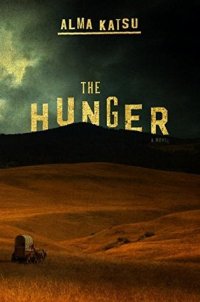 Book: “The Hunger” by Alma Katsu
 We are part of a group of librarian friends who have had an ongoing bookclub running for the last several years. Each “season” (we’re nerds) we pick a theme and each of us chooses a book within that theme for us all to read. Our current theme is ‘genre mash-ups’, where we pick two random genres and try to find a book that fits both.
 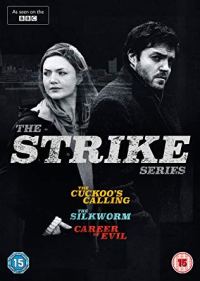 This week we’re bringing to you a special, all-week review series of Robert Galbraith’s (aka J.K. Rowling’s) “Cormoran Strike” books. As we both like mysteries, especially when they are combined with thriller-like components, we’ve each been avidly reading the series since the first book released in 2013. And like other fans, we’ve just been dying during the horrendous 3-year wait that has come between the last book and the most recent entry, “Lethal White,” which released this last September. This past week we’ve reviewed all four books in the series thus far, and now we move on to the BBC Show “Strike”. We’re going to review “The Cuckoo’s Calling”, “The Silkworm”, and “Career of Evil”. All three series can be found for purchase on Amazon, and in the U.S. “Strike” is known as “C.B. Strike” and is shown on Cinemax.
 Series 1: “The Cuckoo’s Calling”
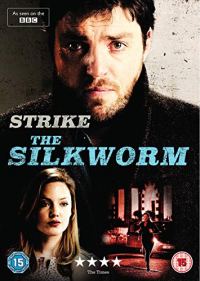 Series 2: “The Silkworm”
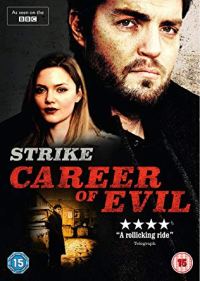 Series 3: “Career of Evil”
 This week we’re bringing to you a special, all-week review series of Robert Galbraith’s (aka J.K. Rowling’s) “Cormoran Strike” books. As we both like mysteries, especially when they are combined with thriller-like components, we’ve each been avidly reading the series since the first book released in 2013. And like other fans, we’ve just been dying during the horrendous 3-year wait that has come between the last book and the most recent entry, “Lethal White,” which released this last September. So this week, Monday through Thursday will be devoted to our joint reviews of all four books now released in the series. And to round out the week, on Friday we’ll be joint reviewing the BBC series “Strike” that has covered the first three books in the series so far. Today we review the recently released “Lethal White.”
 This week we’re bringing to you a special, all-week review series of Robert Galbraith’s (aka J.K. Rowling’s) “Cormoran Strike” books. As we both like mysteries, especially when they are combined with thriller-like components, we’ve each been avidly reading the series since the first book released in 2013. And like other fans, we’ve just been dying during the horrendous 3-year wait that has come between the last book and the most recent entry, “Lethal White,” which released this last September. So this week, Monday through Thursday will be devoted to our joint reviews of all four books now released in the series. And to round out the week, on Friday we’ll be joint reviewing the BBC series “Strike” that has covered the first three books in the series so far. Today we review “Career of Evil.”
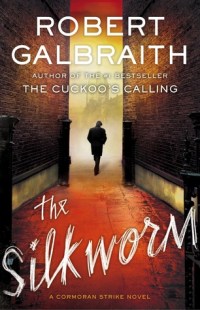 This week we’re bringing to you a special, all-week review series of Robert Galbraith’s (aka J.K. Rowling’s) “Cormoran Strike” books. As we both like mysteries, especially when they are combined with thriller-like components, we’ve each been avidly reading the series since the first book released in 2013. And like other fans, we’ve just been dying during the horrendous 3-year wait that has come between the last book and the most recent entry, “Lethal White,” which released this last September. So this week, Monday through Thursday will be devoted to our joint reviews of all four books now released in the series. And to round out the week, on Friday we’ll be joint reviewing the BBC series “Strike” that has covered the first three books in the series so far. Today we move to “The Silkworm.”
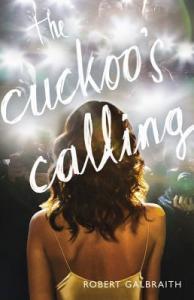 This week we’re bringing to you a special, all-week review series of Robert Galbraith’s (aka J.K. Rowling’s) “Cormoran Strike” books. As we both like mysteries, especially when they are combined with thriller-like components, we’ve each been avidly reading the series since the first book released in 2013. And like other fans, we’ve just been dying during the horrendous 3-year wait that has come between the last book and the most recent entry, “Lethal White,” which released this last September. So this week, Monday through Thursday will be devoted to our joint reviews of all four books now released in the series. And to round out the week, on Friday we’ll be joint reviewing the BBC series “Strike” that has covered the first three books in the series so far. Today we start with the first book in the series, “The Cuckoo’s Calling.”
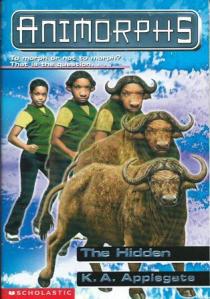 Animorphs #39: “The Hidden”
 Book: “The Dead Zone” by Stephen King
 The Library Ladies