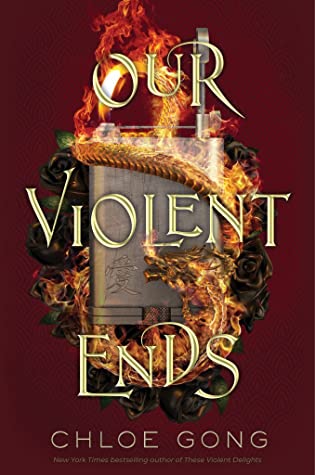
Kate’s Review: “Our Violent Ends”

Book: “Our Violent Ends” by Chloe Gong

Publishing Info: Margaret K McElderry Books, November 2021

Where Did I Get This Book: I received an eARC from NetGalley

Book Description: Shanghai is under siege in this captivating and searingly romantic sequel to These Violent Delights, which New York Times bestselling author Natasha Ngan calls “deliciously dark.”

The year is 1927, and Shanghai teeters on the edge of revolution. After sacrificing her relationship with Roma to protect him from the blood feud, Juliette has been a girl on the warpath. One wrong move, and her cousin will step in to usurp her place as the Scarlet Gang’s heir. The only way to save the boy she loves from the wrath of the Scarlets is to have him want her dead for murdering his best friend in cold blood. If Juliette were actually guilty of the crime Roma believes she committed, his rejection might sting less.

Roma is still reeling from Marshall’s death, and his cousin Benedikt will barely speak to him. Roma knows it’s his fault for letting the ruthless Juliette back into his life, and he’s determined to set things right—even if that means killing the girl he hates and loves with equal measure.

Then a new monstrous danger emerges in the city, and though secrets keep them apart, Juliette must secure Roma’s cooperation if they are to end this threat once and for all. Shanghai is already at a boiling point: The Nationalists are marching in, whispers of civil war brew louder every day, and gangster rule faces complete annihilation. Roma and Juliette must put aside their differences to combat monsters and politics, but they aren’t prepared for the biggest threat of all: protecting their hearts from each other.

Review: Thank you to NetGalley for providing me with an eARC of this novel!

Last year I took a bit of a chance on the book “These Violent Delights”, Chloe Gong’s historical fiction fantasy romance thriller retelling of “Romeo and Juliet”. That’s a true mouthful for a genre description, but it’s the only way to truly describe the wide breadth that this book had. I ended up enjoying it, and found myself waiting anxiously to find out what happened next. Well great news! The conclusion, “Our Violent Ends”, has been released, and let me tell you, the year long wait was worth it. Juliette and Roma are back, and I happily dove into the sweet, sweet agony that was sure to follow.

Me fully ready to watch things go horribly south for all my favorite characters in 1920s Shanghai. (source)

Just as a quick additional refresher, this “Romeo and Juliet” retelling takes place in 1920s Shanghai, as two rival gangs, the Scarlet Gang and the White Flowers, have a blood feud that has led to constant tension and violence. Juliette is the heir to the Scarlet Gang, Roma is the heir to the White Flowers, they had a passionate love affair and in the last book teamed up to try and stop a monster from wreaking pure havoc on the city they love. When we finished the first book, Juliette had just killed Roma’s best friend Marshall, though she hadn’t REALLY killed him, it was all a ruse to keep Roma safe vis a vis his hatred of her.

Plot wise, Gong balances the source material with a lot of new themes and plot points, as well as an update to the time and place that the story takes place. There are still threats from monsters in this one, which makes the Scarlet Gang and the White Flowers have an uneasy truce/team up in hopes that Juliette and Roma can find the vaccine that is rumored to stop the monsters (and of course the tension is off the charts in all kinds of ways). But there are also threats of the time period, like the simmering tensions between the Nationalists and the rising Communists. And we are still dealing with the two gangs having conflicts, which could be ceasing due to a common enemy of the monsters, but is always on the precipice. It’s a lot to cram in there, and while sometimes it felt like it was a little too much (and that we’d gloss over aspects of the plot because of it), overall Gong still managed to have a clear connection to the original play through things that would happen in the story. Even when she would twist some things around to better fit the story that she was telling. These moments were done in such a way that usually felt more true to the circumstances, however, and never like she was just trying to fit square pegs into round holes.

It is still the characters, however, that are the books greatest strengths. While the original cast of “Romeo and Juliet” has a kind of charisma to a degree (I mean, I don’t like the play but I recognize the appeal of the characters), Gong continues to draw far more complexity from her versions of the players. With Roma you have a brooding and brokenhearted Romeo, who is mourning the supposed death of his friend Marshall at the hand of his former lover. With Juliette you have a woman who is being torn up by her feeling of duty to her family as the heir to the Scarlet Gang, as well as her deep love for a man that she had to pretend to betray. And oh how I continued to love this version of Juliette. She gets shit done and isn’t given ANY credit for it, and I loved her inner turmoil even as she has to hold EVERYTHING together to be the strongest player in the whole damn story. It gives both the main characters FAR more pathos than the play did, and I really enjoyed how Gong gave both of them a lot more agency, smarts, and will than their inspirations were ever given. I was actively rooting for both of them, but especially Juliette, who is constantly trying to prove herself as worthy, though as a woman she is never going to be seen as such (and her psychopathic cousin Tyler is given more glory than she ever gets). But it’s also side players that are highly enjoyable, be it Juliette’s cousins Kathleen and Rosalind, or Roma’s younger sister Alisa. For me, though, I LOVED Marshall and Benedikt, the two lovers who have been separated due to Marshall faking his death, and Benedikt’s agony over it. Oh these two. You cannot help but root for them.

“Our Violent Ends” finished out the duology on a perhaps expected but still satisfying high note. Chloe Gong made me into a “Romeo and Juliet” fan, at least the way she tells it, and I definitely recommend checking it out if you want to see a really unique twist on the original tale!

Rating 8: A complex and satisfying end to a truly unique Shakespeare retelling.

Reader’s Advisory:

“Our Violent Ends” is new and not included on any Goodreads lists yet, but it would fit in on “Rewriting Shakespeare (YA Edition)”, and “YA Fiction Set in the 1920s”.

Find “Our Violent Ends” at your library using WorldCat, or at a local independent bookstore using IndieBound!

Previously Reviewed: “These Violent Delights”.

Kate’s Review: “The Keeper of Night”

Book: “The Keeper of Night” by Kylie Lee Baker

Publishing Info: Inkyard Press, October 2021

Where Did I Get This Book: I won an ARC in a contest run by the author.

Book Description: Death is her destiny.

Half British Reaper, half Japanese Shinigami, Ren Scarborough has been collecting souls in the London streets for centuries. Expected to obey the harsh hierarchy of the Reapers who despise her, Ren conceals her emotions and avoids her tormentors as best she can.

When her failure to control her Shinigami abilities drives Ren out of London, she flees to Japan to seek the acceptance she’s never gotten from her fellow Reapers. Accompanied by her younger brother, the only being on earth to care for her, Ren enters the Japanese underworld to serve the Goddess of Death… only to learn that here, too, she must prove herself worthy. Determined to earn respect, Ren accepts an impossible task—find and eliminate three dangerous Yokai demons—and learns how far she’ll go to claim her place at Death’s side.

Review: Thank you to Kylie Lee Baker for the ARC she sent me through a contest!

As well all know by now, for the most part fantasy as a genre isn’t my jam. There are a couple of exceptions to this rule: “The Lord of the Rings” is my favorite book series of all time, and if there are dark elements or things that have to do with creepy things in the story, I am definitely all in. And this brings me to “The Keeper of Night” by Kylie Lee Baker, a dark fantasy novel about demons, death collectors, and the trauma of being rejected due to one’s identity. When I read the description I knew that this would be one of my exceptions. And given that I had recently read another book that talks about Yokai and Japanese folk lore (and wanted more), “The Keeper of Night” was a great follow up to “Nothing But Blackened Teeth”.

First and foremost, I loved our main character Ren. Right from the start she’s a bit rougher around the edges than I was expecting. Since she grew up being targeted by other Reapers due to her Shinigami heritage, and since her father has merely tolerated her but favored her half brother Neven, Ren has dealt with constant Othering and emotional abuse. It makes sense that she is desperate to find a place where she fits in, so going to Japan in hopes of allying herself with the Shinigami is a logical choice. Of course, Ren soon realizes that in Japan she is also out of place due to her Reaper heritage. It makes for a protagonist who has to internalize a lot of self loathing, and as her journey to find acceptance goes on she makes harder and harder decisions, which push her more and more morally grey. I liked seeing this progression, and I felt that Baker was careful to show the reasons why someone who has dealt with so much oppression, pain, and harm could turn to violence and cruelty, without necessarily condoning some of the darker choices Ren made. And without spoiling anything, the place that she ended up not only set up for the sequel in a really well done manner, it also took me by surprise in where it went, I will DEFINITELY be picking up the next in the series to see where Ren is going to go next.

The one constant better angel with her is Neven, whose genuine goodness has two effects on Ren: the first is that she wants to be better, because she loves her brother and he’s the only person who has shown her true warmth and kindness. The other is that she resents him, because his naïveté is not only hard to deal with, but it also reflects the comparatively privileged existence he has had compared to her. Things become more complicated when they meet Hiro, a disgraced Shinigami who offers to help Ren prove her worth to the Goddess of Death to serve her. Ren feels connected to Hiro due to their heritage, and this causes tension between her and Neven, as he can’t understand some of the things Hiro, as a former Shinigami, does. And this of course, makes Ren feel judged by the one person who never judged her BECAUSE it’s based in cultural differences. It’s no surprise that a lot of this can serve as allegories to sexism, racism, and privilege, and while I think Neven probably could have used a bit more of a dressing down from Ren on occasion, overall the dynamic was enjoyable. And treaded towards heart wrenching in some moments.

As for the fantasy elements, Baker uses a lot of Japanese folk lore, exploring Death mythology as well as a litany of Yokai, from fox spirits to fish spirits to very disturbing and threatening creatures. We got to see these things act out within the story, as well as got some actual folk lore stories to give the various characters Ren meets along the way context. And a lot of it is very dark and creepy, which made it all the more enjoyable for me, as someone who does love dark fantasy within the fantasy realm.

I definitely enjoyed “The Keeper of Night”, and will be waiting on pins and needles for the next book. And if you like dark fantasy, you should definitely seek this one out.

Rating 8: A unique and dark fantasy that threw me for a loop by the end, and makes me excited for the next in the series!

Reader’s Advisory:

“The Keeper of Night” is included on the Goodreads lists “Monsters and Magic Society”, and “Awesome Swordswomen”.

Find “The Keeper of Night” at your library using WorldCat, or at a local independent bookstore using IndieBound!

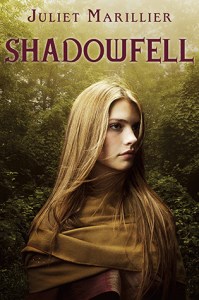
Monthly Marillier: “Shadowfell”

“Monthly Marillier” is a review series that is, essentially, an excuse for me to go back and re-read one of my favorite author’s back catalog. Ever since I first discovered her work over fifteen years ago, Juliet Marillier has been one of my favorite authors. Her stories are the perfect mixture of so many things I love: strong heroines, beautiful romances, fairytale-like magic, and whimsical writing. Even better, Marillier is a prolific author and has regularly put out new books almost once a year since I began following her. I own almost all of them, and most of those I’ve read several times. Tor began re-releasing her original Sevenwaters trilogy, so that’s all the excuse I needed to begin a new series in which I indulge myself in a massive re-read of her books. I’ll be posting a new entry in this series on the first Friday of every month.

Book: “Shadowfell” by Juliet Marillier

Publishing Info: Knopf Books for Young Readers, September 2012

Where Did I Get this Book: own it!

Book Description: Sixteen-year-old Neryn is alone in the land of Alban, where the oppressive king has ordered anyone with magical strengths captured and brought before him. Eager to hide her own canny skill–a uniquely powerful ability to communicate with the fairy-like Good Folk–Neryn sets out for the legendary Shadowfell, a home and training ground for a secret rebel group determined to overthrow the evil King Keldec.

During her dangerous journey, she receives aid from the Good Folk, who tell her she must pass a series of tests in order to recognize her full potential. She also finds help from a handsome young man, Flint, who rescues her from certain death–but whose motives in doing so remain unclear. Neryn struggles to trust her only allies. They both hint that she alone may be the key to Alban’s release from Keldec’s rule. Homeless, unsure of who to trust, and trapped in an empire determined to crush her, Neryn must make it to Shadowfell not only to save herself, but to save Alban.

Review: I remember being really excited when this book was slated to come out. I had mostly read Marillier’s “Sevenwaters” books at this point, so I was excited to see a new world molded under her hands. And I was curious to see how she would translate her work to a YA audience (many of the “Sevenwaters” books tackle some pretty serious subjects). And while it surprised me in many ways, it also fell a bit on middling ground as far as my overall rankings of Marillier’s work.

The land has become a dangerous place for those with anything resembling the uncanny. But there are rumors of those who still fight, hidden away in a place called Shadowfell. It’s there that Neryn sets off in search of, all the while trying to hide her own magical abilities. But as she travels, she gains aid from small, magical folk who are even more at risk than she and hint at a future much greater than one Neryn had ever imagined for herself. With this perilous task ahead of her, Neryn’s world is rocked. She finds herself even more unbalanced when she runs across a young man named Flint whose mysterious origins and loyalties keep her guessing at every turn. Will Neryn make it to Shadowfell? And will this place hold the answers to all of her questions?

“Shadowfell” demonstrates some of the standard strengths and weaknesses of her writing. Her world-building, evocative writing, and well-researched to folktales are just as effective and appealing here as they have been in her previous books. Alba felt unique from the Irish setting that we’ve seen so much of in the “Sevenwaters” series. The tales and songs, from what I could tell, were all based in historically accurate traditions of the area. As well, the magical creatures were distinct from the Fae we’ve seen in her other work. The small, creature-like animals and the land-based beings were all fascinating and immediately compelling. And, like always, her writing is lush and immersive, drawing the reader in to the point where you feel the mists and chills that Neryn so often travels through.

On the other hand, if there’s one complaint I’ve routinely had about Marillier’s work it has been the overwhelming “goodness” of her heroines. The extent to which I enjoy them often depends on whether this goodness is balanced out by other actions that they take on the world (often the more pro-active heroines get a bigger pass from me.) But Neryn ends up being one of the more passive heroines we’ve seen for a while. Not only does she fall into the trope of being essentially a “chosen one,” but she is routinely is incredibly naïve about the world she exists within. Her thoughts turn in what quickly becomes a tiresome circle of worries and renewed determination. On top of that, she spends a significant amount of time ill and needing help from others, effectively making her the most passive of passive characters.

I also struggled with the “romance,” such as it is. Flint’s attachment to Neryn seems to come out of nowhere and is based on next to nothing. For her part, Neryn’s naivete is incredibly frustrating with regards to Flint. He’s obviously an untrustworthy party when she first meets him, and yet she quickly seems to fall in love with him. From there we enter yet another circular train of actions between her distrusting and trusting Flint. It gets old fairly quickly.

This book was a struggle for me when I first read it and a struggle the second time around as well. I can see the strong story at the heart of it, but Neryn’s passive presence and the frustrating treadmill that is her thought process about her mission and/or her feelings towards Flint became very frustrating. But, that said, it’s still a nice YA fantasy and Marillier’s strong writing save it from itself for the most part.

Rating 7: Not the best, but not the worst, “Shadowfell” introduces an interesting new fantasy story but hobbles itself with a passive heroine.

Reader’s Advisory:

“Shadowfell” is on these Goodreads lists: YA Second World Fantasy and Everything Fae.

Find “Shadowfell” at your library using WorldCat, or at a local independent bookstore using IndieBound!

Serena’s Review: “Vespertine”

Book: “Vespertine” by Margaret Rogerson

Publishing Info: Margaret K. McElderry Books, October 2021

Where Did I Get this Book: Edelweiss+

Book Description: The dead of Loraille do not rest.

Artemisia is training to be a Gray Sister, a nun who cleanses the bodies of the deceased so that their souls can pass on; otherwise, they will rise as spirits with a ravenous hunger for the living. She would rather deal with the dead than the living, who trade whispers about her scarred hands and troubled past.

When her convent is attacked by possessed soldiers, Artemisia defends it by awakening an ancient spirit bound to a saint’s relic. It is a revenant, a malevolent being that threatens to possess her the moment she drops her guard. Wielding its extraordinary power almost consumes her—but death has come to Loraille, and only a vespertine, a priestess trained to wield a high relic, has any chance of stopping it. With all knowledge of vespertines lost to time, Artemisia turns to the last remaining expert for help: the revenant itself.

As she unravels a sinister mystery of saints, secrets, and dark magic, her bond with the revenant grows. And when a hidden evil begins to surface, she discovers that facing this enemy might require her to betray everything she has been taught to believe—if the revenant doesn’t betray her first.

Review: I have been Goodreads stalking Margaret Rogerson for years now. Awhile ago she mentioned she was working on a new project, but it hadn’t yet been picked by a publisher. So imagine my glee when I finally saw an ARC pop up on Edelweiss+? This has probably been one of my most anticipated reads this year, so you know I dove in immediately (regardless of the timing of this review…)

Tending to the dead, freeing their spirits to depart in peace, lingering in the shadows. This is all that Artemisia wants for her life. And with hundreds of years passing in relative peace, her path seems clear before her. But now the dead are on the move once more, gathering in groups and attacking in a coordinated effort. Some greater force must be at work. And when her home is attacked, Artemisia is forced to take up a greater spirit herself, wielding its power to save her home. But with this new power comes a new test: who can she trust? The revenant inside her, whispering of dark things in the past? Or he Clerisy itself, with priests who are tasked to protect this world seeming to now work against it?

So the question was never would I like this book or not. Instead, it was just how much would I love it! I was a bit concerned about reports that there was no romance included in the story. Not only do I like my fantasy paired with a nice romance, but Rogerson’s two previous books each featured an excellent romance, part of what made me like them so much to begin with! But I’m happy to report that Rogerson cleverly out-maneuvered me here. Yes, there isn’t a romance at its heart. But there still is a deep relationship at its heart, the one that slowly forms between the revenant and Artemisia. It’s not a romance, but it’s also hard to frame within the general confines of typical relationships.

For one thing, the revenant is so clearly not human. The witty banter and sharp criticism of “silly humans” not only kept this fact clear in the reader’s mind the entire time, but was also highly effective at creating a character who’s only real presence is that of a disembodied voice. There were also a number of mysteries surrounding this world’s past, the great war that saw the destruction of this and other revenants, and of this particular revenant itself. These details slowly came out bit by bit, and I was anxiously speed-reading the entire time trying to get to the next revelation.

Artemisia was also an excellent character. While human herself, her entire life was made up of “otherness” in some form or another. In this way, her growing closeness with a being considered by the rest of the world to be supremely evil is fairly natural. We see her struggles to participate in interactions with other people in ways that they understand, not knowing what to say and not reacting in the ways they expect. Given her troubled past, she also struggles with crowds and is quickly overwhelmed by people around her. These anxieties felt very real and I think were very relatable.

I also really liked the magic system and world that Rogerson created. All three of the books I’ve read from her now were very original in this way. But throughout them all, there was a level of detail and creativity that made it appear that she was equally comfortable in all three, never hindered by any specifics found in fantasy subgenres. Instead, its her strong character work and witty dialogue that is the true through-line of her work. As a character reader myself, that left this book with no where to go but straight into the “10 rating” column for me.

Rating 10: I absolutely adored it. Action-packed, fantasy-forward, and with a delightful odd-couple at its heart.

Reader’s Advisory:

“Vespertine” is on these Goodreads lists: Awesome Fantasy Heroines and YA Second World Fantasy.

Find “Vespertine” at your library using WorldCat, or at a local independent bookstore using IndieBound!

Serena’s Review: “The Grimrose Girls”

Book: “The Grimrose Girls” by Laura Pohl

Publishing Info: Sourebooks Fire, October 2021

Where Did I Get this Book: Edelweiss+

Book Description: Four troubled friends, One murdered girl… and a dark fate that may leave them all doomed.

After the mysterious death of their best friend, Ella, Yuki, and Rory are the talk of their elite school, Grimrose Académie. The police ruled it a suicide, but the trio are determined to find out what really happened.

When Nani Eszes arrives as their newest roommate, it sets into motion a series of events they couldn’t have imagined. As the girls retrace their friend’s last steps, they uncover dark secrets about themselves and their destinies, discovering they’re all cursed to repeat the brutal and gruesome endings to their stories until they can break the cycle.

This contemporary take on classic fairytales reimagines heroines as friends attending the same school. While investigating the murder of their best friend, they uncover connections to their ancient fairytale curses and attempt to forge their own fate before it’s too late.

Review: This book had a few things going for it that bumped it up my “to be requested” list fairly quickly. First, boarding school books. Blame “Harry Potter” if you will or some weird American obsession with the British (often) boarding schools in general. I also love, love, love this cover! It quickly conveys many aspects of the books without the reader even needing to read the summary. Fairytale like artwork, girl squad, diversity (at least from what we can see of different body shapes being featured.) Plus, it has a hint of creepiness that points to the murder mystery at the heart of the story. So, with all of that together, I dove right in with high hopes.

As close as friends and roommates can be, Ella, Yuki, and Rory are determined that the police have it wrong: their roommate didn’t kill herself and something more nefarious is at work. When they get a new roommate, things are kicked into another gear altogether. Now, they realize it’s not simply a matter of solving a potential murder, but they must unravel the world of fairtyales and magic that they are all caught up within. Turns out, each is destined to re-live a classic tale and fall prey to the dark curses that seem to always exist at the heart of such tales.

I’ll put it right out there, I didn’t enjoy this book as much as I wanted to. But it’s also one of those books that I do think will appeal to a bunch of different readers, so I fully expect opinions to vary quite a bit on this one. I will immediately give it props for tons of representation. But I will also side-eye that a bit with the fact that it did seem like the author was trying to cover literally every single base. And yes, I’m all for increasing diversity in books in every way. But I don’t think every book should be trying to cover every single angle itself. It not only is impossible, but it does a disservice to each individual character represented, as jamming a book too packed ultimately reduces page time for any one character, thus reducing that character to a few (often well-known and, if not harmful in anyway, still fairly stereotypical) key traits. Nothing raised my eyebrows at all, but while I give props to the author for the attempt, the sheer number of characters as a whole did significantly reduce my enjoyment of this book.

And this is part of the reason I think it will be a book with divided tastes. I’ve come to realize that I generally struggle with books that have more than two POVs. There are a few exceptions, like “Six of Crows,” but really, not many. Here I had the same problems I’ve always had. The story is so busy jumping from character to character that I never have the time to form any type of emotional investment in any one character. As a reader who enjoys books mostly due to characterization, this is a big problem for me. This many POVs also significantly hinders the pacing of a book. You have to spend so much time in the onset setting up each individual character, that the reader must get through a good number of pages before anything resembling a plot begins to unfold. Here, for example, we only had one chapter from each character really describing or even experience their grief over their lost friend. Because there are so many characters to get through, I could never feel the strength of that connection as just as quickly the story needed to move on with each of them.

I did enjoy the various fairytales and the ways they were threaded into the story. There were enough clues here and there that were fun to spot (they weren’t well-hidden or anything, but I enjoyed it all the same). The main mystery, however, again suffered from this over-abundance of plot and characters. There were so many things to get through that there were times when I felt like the death of their friend was almost forgotten. I’ll also say that by the end I didn’t feel as if I was given enough answers to any of the questions presented. All of the character kind of just took all of the magical elements in stride without batting an eyelash. And the revelations that did come were few and far between.

I’m starting to question my own selection process here. I think I need to start taking a second thought before diving into these large cast POV books. I’ll also say that my history with boarding school books is rather spotted, so maybe that too shouldn’t be as much of an “auto request.” Lastly, I don’t know what it is, but the publisher Sourcebooks Fire must have a great book description writer because they are always putting out books that I get super hyped about but then don’t end up enjoying that much. Which is too bad.

Rating 6: Too many things packed into one book reduced my enjoyment of all of them individually and as a whole.

Reader’s Advisory:

“The Grimrose Girls” is on these Goodreads lists: 2021 Queer SFF and Boarding School Mysteries.

Find “The Grimrose Girls” at your library using WorldCat, or at a local independent bookstore using IndieBound!

Book Club Review: “Furia”

We are part of a group of librarian friends who have had an ongoing bookclub running for the last several years. Each “season” (we’re nerds) we pick a theme and each of us chooses a book within that theme for us all to read. Our current theme is “Award Winners”, in which we each picked a book that has won an award of some kind.

For this blog, we will post a joint review of each book we read for book club. We’ll also post the next book coming up in book club. So feel free to read along with us or use our book selections and questions in your own book club!

Book: “Furia” by Yamile Saed Méndez

Publishing Info: Algonquin for Young Readers, September 2020

Where Did We Get This Book: The library!

Award: Pura Belpré

Book Description: In Rosario, Argentina, Camila Hassan lives a double life. At home, she is a careful daughter, living within her mother’s narrow expectations, in her rising-soccer-star brother’s shadow, and under the abusive rule of her short-tempered father.

On the field, she is La Furia, a powerhouse of skill and talent. When her team qualifies for the South American tournament, Camila gets the chance to see just how far those talents can take her. In her wildest dreams, she’d get an athletic scholarship to a North American university.

But the path ahead isn’t easy. Her parents don’t know about her passion. They wouldn’t allow a girl to play fútbol—and she needs their permission to go any farther. And the boy she once loved is back in town. Since he left, Diego has become an international star, playing in Italy for the renowned team Juventus. Camila doesn’t have time to be distracted by her feelings for him. Things aren’t the same as when he left: she has her own passions and ambitions now, and La Furia cannot be denied. As her life becomes more complicated, Camila is forced to face her secrets and make her way in a world with no place for the dreams and ambition of a girl like her.

Kate’s Thoughts

I am not really a sporty person, though accompanying friends and loved ones to games of most any sport can be fun. I probably go to more soccer games than other sports since my husband loves soccer, so when I saw that “Furia”, this month’s book club book, had a soccer theme I figured I would at least have a vague working knowledge of it. But lucky for me, “Furia”, while having a lot to do with soccer, also tackles other issues, like love, ambition, and misogyny. I thought that it was interesting seeing Camile, aka “Furia”, have to navigate the very narrow and defined expectations that Argentine society (and her mother) heap upon her. I enjoyed seeing the parts that had to do with Camile pushing against these norms, be it when she was trying to interact with her very conservative parents (on top of that her father, a former soccer star who is placing all of his lost dreams onto Camile’s soccer playing brother, is incredibly abusive), or when she is trying to determine if she can have a romance with her old flame Diego (ANOTHER rising soccer star), who has returned to town for a bit before he goes back on the road. I also really liked seeing how Méndez would weave in various realities of living in modern day Argentina, from the way the machismo could both bolster male soccer players and create really loyal ties between players and communities, to how the misogyny could lead to violence towards women (and a lot of society would think that these women deserved it one way or another). All of this worked.

There were some problems with the narrative for me as well. One, I go to soccer games on occasion, but I’m not super interested in it in general, and on the written page that isn’t much different. So the soccer moments I found myself speeding through pretty quickly. And on top of that, I didn’t feel like many of the characters were terribly complex. Camile was able to have depths and layers to her, given that she is the main character and we mostly get into her mind, but I do like seeing other supporting roles have a little more exploration and depth, and we didn’t really get that in this book.

Overall, I enjoyed “Furia” as a contemporary YA novel. It gave me a glimpse into a setting that I don’t see as much in YA books, and it had some emotional beats involving her family.

Serena’s Thoughts

I agree with everything Kate said. Her husband and mine share a love for soccer and have been splitting season tickets for as long as I can remember. What’s more, I probably do enjoy sports more than Kate, in general. But I’ll also say that I probably had a stronger negative reaction to this book’s sports elements than she did. So take from that what you will! While I really like watching sports live and even on TV sometimes, I really have a hard time caring about the “action” when it’s the description of movements of a ball and the players kicking it. It’s not even that I can’t picture it, I can! I just…couldn’t care. So that was a pretty big hinderance to my enjoyment of that aspect of the book.

That said, I agree with what Kate said that, lucky for both of us, there was much more to this book than the sports story. I mostly enjoyed the setting and description of every-day-life in Argentina. I don’t know a lot about this part of the world, and what I do know is mostly based in historical accounts rather than a contemporary look. All of the street-level windows into this culture and part of the world were fascinating. Even more so when we witness the uphill battle Furia faces in the face of the misogyny that still limits so much of what is expected for women. The story also touches on the tragedy of how easily women and young girls can go missing or have other violence inflicted upon them and it will be casually swept under the “she probably deserved it” rug.

Like Kate said, the characters themselves were fairly flat feeling. Even Furia herself, while more nuanced than any of the side characters, felt a bit one-note at times. However, I did like the romance that came into play. The challenges they faced felt natural and the ending was satisfying and heart-warming.

Overall, this wasn’t really the book for me. I think it’s so important, though, to have books that represent different parts of the world AND to have sports books for girls. Just cuz I’m not into them, doesn’t mean that I don’t think this is a wide open hole in YA literature. There’s a bunch of YA sports books for young men (perhaps at the detriment of other genres for them), but young women, on the other hand, don’t see tons of sports books directed towards them.

Kate’s Rating 7: While the soccer parts didn’t speak to me and some characters were flat, I liked the family drama as well as the look into Argentine life and what it’s like for women.

Serena’s Rating 7: I, too, enjoyed the Argentinian setting and the look into the culture, but sports books are never going to be my jam.

Book Club Questions

  1. Was there a character that you most identified with in this story? Was there a plot point that really stood out to you?
  2. What did you think about the themes of the Patriarchy in Camile’s life?
  3. What did you think of Camile’s nickname, La Furia? How does it apply to the story that she is living?
  4. How did you like the soccer parts in this book?
  5. The book sets up two paths for Camile: follow her soccer dreams, or follow the potential for romance. Do you think it has to be one or the other for her?
  6. What were your thoughts on the depictions of day to day life in Argentina?
  7. Did you feel like the ending was realistic? Why or why not?

Reader’s Advisory

“Furia” is included on the Goodreads lists “YA/Children’s Books in Latin America”, and “YA Girls Take On the Patriarchy”.

Find “Furia” at your library using WorldCat, or at a local independent bookstore using IndieBound!

Next Book Club Book: “Front Desk” by Kelly Yang

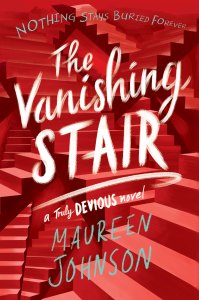
Serena’s Review: “The Vanishing Stair”

Book: “The Vanishing Stair” by Maureen Johnson

Publishing Info: Katherine Tegen Books, January 2012

Where Did I Get this Book: from the library!

Book Description: Just as Stevie feels she’s on the cusp of putting it together, her parents pull her out of Ellingham academy.

For her own safety they say. She must move past this obsession with crime. Now that Stevie’s away from the school of topiaries and secret tunnels, and her strange and endearing friends, she begins to feel disconnected from the rest of the world. At least she won’t have to see David anymore. David, who she kissed. David, who lied to her about his identity—son of despised politician Edward King. Then King himself arrives at her house to offer a deal: He will bring Stevie back to Ellingham immediately. In return, she must play nice with David. King is in the midst of a campaign and can’t afford his son stirring up trouble. If Stevie’s at school, David will stay put.

The tantalizing riddles behind the Ellingham murders are still waiting to be unraveled, and Stevie knows she’s so close. But the path to the truth has more twists and turns than she can imagine—and moving forward involves hurting someone she cares for.

Previously Reviewed: “Truly, Devious”

Review: While I do enjoy mystery novels, they’re typically of the historical mystery variant. That or adult forensic crime stories, ala the “Temperance Brennan” series and such. That being the case, “Truly, Devious,” a YA mystery was a new thing for me. I listened to it as an audiobook and ended up really enjoying it, even if I was able to predict a few of the twists and turns. And then…it ended on a cliffhanger. It took me a bit, but now I’m finally back to see what mysteries will be revealed here! Spoiler alert: not enough.

Things have not gone to plan. After Stevie pinned so many hopes on attempting to solve the mysteries at the heart of Ellingham academy, her parents pull her away. But all is not lost when David’s father, the reviled Edward King, arrives with a proposition: Stevie returns to Ellingham in order to placate his troublesome son. Stevie’s parents, big supporters and donators to King’s causes, are willing enough to agree to this and thus Stevie returns. But all is not right at Ellingham and the prices keep going up on the bars for entrance into the academy’s dark past.

I’m going to get this out of the way, I had a lot of problems with this book. I can essentially put them in two categories, however: problems I had with this book in general and problems that might be simply due to me being a 30-something woman reading a YA mystery novel. That being the case, take much of this with a grain of salt, especially if you’re a young adult who loves this type of book and series.

Because, yes, there are still some really solid things about it. Stevie herself is an interesting leading lady. The author excels especially at the portrayal of Stevie’s anxiety and how it affects her day-t0-day life. I thought this topic was handled in such an important, normalizing way, addressing the real challenges posed to those who live with anxiety like this. Most importantly, while Stevie lives with anxiety, it doesn’t define her and the book never treats it as some sort of shameful flaw. It’s all very well-done, and I think sends a powerful message to readers who also live with anxiety.

I also like the underlying mystery at the heart of the story. But this is also where I get into one of my biggest problems with this book, and one that I think I would have regardless of my age reading it. The Ellingham murder/disappearance story is so captivating that it starts to wash-out the events happening in the current setting of the story. What’s more, we again get very, very few answers and end on yet another cliffhanger. I don’t think there is anything in this book, or in this bigger mystery itself, that justified this being a trilogy rather than a duology. By doing this, every aspect of the book feels stretched thing and watered down. It’s the epitome of “second book syndrome.”

On top of that, by choosing to end on yet another cliffhanger, the author has lost all goodwill from me. One is bad enough, but a second just makes me start to feel like I’m being inexpertly manipulated. Had there been more substantial reveals or revelations offered up in the story as a whole, perhaps I would be more forgiving of this choice. As it is, it feels like a weak attempt to forcibly capture an audience and maneuver them into sticking around using a “sunk cost” approach: you’ve already read two entire books without really getting anywhere, gotta read the last!

I personally also struggled with the characters in this book. In the first story, we meet Stevie and the other odd characters who make up the student body at the school. By splitting that story between these necessary introductions, plus the small mystery at the heart of that book and the ongoing Ellingham mysteries, we never got much more than the broadest strokes of these other characters there. So I had expected to see more depth add to them in this second book. But no, they all still felt pretty one-dimensional. That said, again, I’m not the target audience for this book, so others may find more value in these characters than I did.

Ultimately, I was pretty disappointed by this book. I had really hoped for more and finished the last page firmly believing that this entire book was necessary to the story. Of course, I haven’t read the third one, but I have to imagine that things could have been neatly covered in a duology rather than a trilogy. I’m especially frustrated with the cliffhanger and lack of answers to the cold case of Ellingham. I’m not sure I’ll continue on, honestly. We’ll see how my mood takes me in the future!

Rating 6: A solid “second book” in the worst ways, but I’m also not the target audience for this, so take my rating with that in mind.

Reader’s Advisory:

“The Vanishing Stair” is also on these Goodreads lists: 2019 YA Mystery/Thrillers and YA Murder Mysteries.

Find “The Vanishing Stair” at your library using WorldCat or at a local independent bookstore using IndieBound!

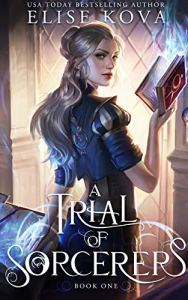
Serena’s Review: “A Trial of Sorcerers”

Book: “A Trial of Sorcerers” by Elise Kova

Publishing Info: Silver Wing Press, March 2021

Where Did I Get this Book: the library!

Book Description: Eighteen-year-old Waterrunner Eira Landan lives her life in the shadows — the shadow of her older brother, of her magic’s whispers, and of the person she accidentally killed. She’s the most unwanted apprentice in the Tower of Sorcerers until the day she decides to step out and compete for a spot in the Tournament of Five Kingdoms.

Pitted against the best sorcerers in the Empire, Eira fights to be one of four champions. Excelling in the trials has its rewards. She’s invited to the royal court with the “Prince of the Tower,” discovers her rare talent for forbidden magic, and at midnight, Eira meets with a handsome elfin ambassador.

But, Eira soon learns, no reward is without risk. As she comes into the spotlight, so too do the skeletons of a past she hadn’t even realized was haunting her.

Eira went into the trials ready for a fight. Ready to win. She wasn’t ready for what it would cost her. No one expected the candidates might not make it out with their lives.

Review: The cover art thing and really strike both ways. I just got down being blown away by “Daughter of the Salt King,” a book I had delayed reading due to the lackluster cover art. And here, on the hand, is a book that I requested from the library purely because I spotted the cover on Goodreads and was drawn in. But, while the book wasn’t offensive or bad in any true way, the cover still ended up being the best part of it for me.

No one knows much about Eira, and she prefers it that way. With dark secrets in her closet and a powerful brother’s shadow to hide within, Eira’s main goal has been to remain out of sight and mind by her fellow apprentices. That is until she joins the Tournament and her true skills begin to be seen at last. Soon enough, Eira’s quiet life explodes outwards, exposing secrets she didn’t know she had and opening doors she isn’t sure she wants to walk through. With new players on the board and a competition turning deadly, Eira’s way forward requires she step out of her comfortable shadows.

Alas, this book was not for me. I read a lot of YA, especially YA fantasy, but as I’ve gotten older I’ve come to realize that there is a certain type of YA fantasy that is just too young for me. This makes it hard to review these books on the blog, as I usually can see the appeal of the book for the target age range. But as I’m still the one reviewing the book and it didn’t work for me…it gets a lower rating than it perhaps deserves on its own.

In this particular case, however, I also think that there are better examples of this type of book even for the target age. It’s very “paint by numbers” for every trope there is in the book. What’s worse, it felt like many of these tropes were past their prime. For example, Eira must inevitably attend a ball. She is also, predictably, unprepared for this event, so the help love interest provides a “perfect” dress for her. I mean, we’re talking “Throne of Glass” circa almost ten years ago level tropey-ness here. Not to mention that I’ve always found it fairly creepy that the love interest just “happens” to know the heroine’s exact measurements. I could get into all of the mildly icky ways, but….nah.

Eira is also your fairly standard “I’m not special, except for the fact that I’m super duper special” heroine. She has a “dark past” and, while previous to this story starting was completely unknown, comes blasting onto the stage to blow everyone away with her skills. I will say, as a fairly standard heroine, she wasn’t annoying or obnoxious. Yes, I rolled my eyes a few times. But no, they didn’t roll out of my head, which has been the case with other books like this in the past.

The world-building and plotting was ok enough. I hadn’t read any of the author’s previous books, which I believe are set in the same world. But that being the case, I still felt like I was able to easily step into this story without feeling like I was missing much. It was very approachable, probably it’s biggest stand-out feature for interested readers.

So, yes, this book wasn’t my cup of tea, but I realize that I am also probably not the audience the author was trying to reach. I think that the romance was fairly lacking, which maybe would be a detractor for teen readers, but, as I said, the story was quick and easy to fall-into. Teenage YA fantasy readers might enjoy this, but adult YA fantasy readers might want to steer clear.

Rating 6: Paint-by-numbers fantasy tropes all over the place and oddly out of date ones at that.

Reader’s Advisory:

“A Trial of Sorcerers” is on these Goodreads lists: Beautiful Covers KU Paranormal, Dystopia, Sci-Fi and Epic High Fantasy/Romance/Mythology in 2021.

Find “A Trial of Sorcerers” at your library using WorldCat or at a local independent bookstore using IndieBound!

Serena’s Review: “Under the Whispering Door”

Book: “Under the Whispering Door” by TJ Klune

Publishing Info: Tor Books, September 2021

Where Did I Get this Book: Edelweiss+

Book Description: When a reaper comes to collect Wallace Price from his own funeral, Wallace suspects he really might be dead.

Instead of leading him directly to the afterlife, the reaper takes him to a small village. On the outskirts, off the path through the woods, tucked between mountains, is a particular tea shop, run by a man named Hugo. Hugo is the tea shop’s owner to locals and the ferryman to souls who need to cross over.

But Wallace isn’t ready to abandon the life he barely lived. With Hugo’s help he finally starts to learn about all the things he missed in life.

When the Manager, a curious and powerful being, arrives at the tea shop and gives Wallace one week to cross over, Wallace sets about living a lifetime in seven days.

Review: First off, props to the publisher for another awesome cover for one of Klune’s books. Does it subtly imply that it’s a sequel to the massively successful “House on the Cerulean Sea” with its similarities? Yes. Is it in fact that? No. However, as it’s still a neat cover in its own right, I’ll give it a pass. The fact that there are so few good standalone adult fantasy novels also supports that pass. Let’s dive in!

Young and successful, Wallace never dreamed the end could be so close. But when a reaper shows up for him, he realizes it must be so. Angry and confused, he meets Hugo, a magical being who helps ferry souls to the beyond. Soon Wallace begins to discover that the life he had thought was fulfilling had been an empty thing, bereft of all that makes life well-lived in the end. With only a few precious days remaining to him, Hugo and Wallace set out to give Wallace that last chance at discovering a true life and his true self.

There was a lot to like about this book, but it also wasn’t the high I had been expecting after enjoying Klune’s previous book so much. To begin with what did work, however, Klune’s flair for comedic moments was on point. In particular, the beginning of the story and the flames thrown towards corporate drones were hilarious and apt. As the book progressed, there were several other laugh-out-loud moments. However, as the story continued, even these sometimes began to feel a bit repetitive.

The characters were also quirky and compelling. This is largely a story of Wallace’s transformation from said corporate drone into an emotionally-realized individual, so nailing his character was key to the book working. And for the most part, this works. His interplay with Hugo is well done, and the two characters and their relationship is heartwarming.

However, as I went along, I kept wanting more. The characters were ok, but really just ok. The romance was sweet, but lacked the true heart that I was looking for. And most disappointingly, the message of the book, that of living one’s best life, felt at times trite and repetitive. There were a few times even when the moralizing fell completely flat, with Klune trotting out platitudes that have been overused many times before. Given the general set-up of the book, I knew what I was getting into. But I had hope that Klune would shine a new light on the topic. Or at least offer up some unique ways of looking at a common topic. Alas, not so.

Overall, the book was by no means bad. It just wasn’t what I had hoped to find. It’s perfectly acceptable in what it sets out to do, but knowing Klune’s previous work, I can’t help thinking he could have done better. There were parts of this book that almost felt phoned in, and the story started to drag towards the middling, struggling to keep up its pacing and momentum. Fans of Klune’s work will be pleased to see his trademark humor and strong characters, but he’s also had stronger outings in the past.

Rating 7: A bit disappointing, relying too heavily on tried and true platitudes instead of carving its own space.

Reader’s Advisory:

“Under the Whispering Door” is on these Goodreads lists: 2021 Queer SFF and 2021 Contemporary/Romance Releases.

Find “Under the Whispering Door” at your library using WorldCat or at a local independent bookstore using IndieBound!

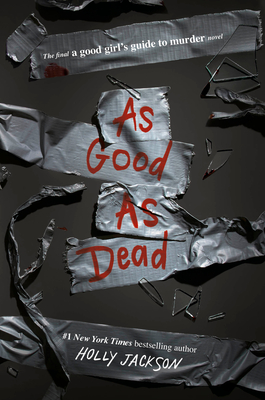
Kate’s Review: “As Good As Dead”

Book: “As Good As Dead” (A Good Girl’s Guide to Murder #3) by Holly Jackson

Publishing Info: Delacorte Press, September 2021

Where Did I Get This Book: I received an eARC from NetGalley.

Book Description: The highly anticipated, edge-of-your-seat conclusion to the addictive A Good Girl’s Guide to Murder series that reads like your favorite true crime podcast or show. By the end, you’ll never think the same of good girls again.

Pip’s good girl days are long behind her. After solving two murder cases and garnering internet fame from her crime podcast, she’s seen a lot.

But she’s still blindsided when it starts to feel like someone is watching her. It’s small things at first. A USB stick with footage recording her and the same anonymous source always asking her: who will look for you when you’re the one who disappears? It could be a harmless fan, but her gut is telling her danger is lurking.

When Pip starts to find connections between her possible stalker and a local serial killer, Pip knows that there is only one choice: find the person threatening her town including herself–or be as good as dead. Because maybe someone has been watching her all along

Review: Thank you to NetGalley for providing me with an eARC of this novel!

Whenever I get to a final book of a series I have genuinely enjoyed, I am torn between wanting to devour it to see how it all plays out, and savoring it to stave off the end as long as possible. When I saw that “As Good As Dead”, the last book in Holly Jackson’s “A Good Girl’s Guide To Murder” series was coming out, I was thrilled and saddened. I think part of me had hoped that perhaps Jackson would make Pippa Fitz-Amobi, true crime obsessive and amateur detective, a series a la Temperence Brennan or Amelia Peabody. But if this is truly the end for Pip, I have to say that, while I was sad to say goodbye, this goodbye was so satisfying that I have few regrets.

Me saying goodbye to this series (though all three books are on my shelf to revisit whenever). (source)

When we left Pip at the end of “Good Girl, Bad Blood”, she had just survived a house fire and witnessed the brutal murder of sometimes ally, sometimes thorn in her side Stanley, who had been revealed as the son of a notorious murderer and who was killed out of revenge though he himself was a child at the time of the murders. Pip has been downward spiraling ever since, as while she’s counting the days down until she leaves for college, she’s also been taking Xanax on the sly to help her sleep, having PTSD episodes in secret, and fighting back unbridled rage issues. Especially since serial rapist Max Hastings, whose actions had far reaching consequences for Pip and those she cares about, has gone free. I had a very clear idea of what I thought was going to happen with this book. Pip is very unwell, understandably so, and I figured that we were going to get an exploration of a detective on the edge, who is after one last case to try and absolve herself of her roles in past cases and tragedies that came from them. As well as trying to solve the newest case of who is stalking her before it is too late.

In terms of these things, Jackson soars. I completely believed Pip’s mental state, and I loved that Jackson decided to go in this direction. I also found the slowly escalating stalker events in her life to be very creepy and unsettling, and through a combination of narrative as well as pictures, graphs, and epistolary segments (much like the previous books), we have a new case of a long supposedly solved serial killer that Pip now has to attend to, lest she be the next victim. Did this seem a little out there? Sure. But I was totally willing to buy in. Mostly because Jackson really knows how to plot a thriller that has wonderful characters and good connections to previous books/cases in the series.

It was about halfway through this book that I realized that Jackson had something else in store for the reader, and when I realized where it was all going, I was both blown away and a little bit horrified. I’m not going to spoil anything here, as it’s definitely worth keeping close to the vest. But “As Good As Dead” does away with preconceived notions of where this final book could go, even more so than just making Pip a complete emotional wreck. At first I was skeptical and a little bit incredulous, but as the plot goes on, it becomes very clear that Jackson has plans for Pip, and they are probably a foregone conclusion for her storyline given how things have been building since the first book. It’s so well done, and so suspenseful, and it made this final book a serious firecracker of a thriller. And I found myself going back to the previous two books to look for clues to see just how far back Jackson was planning this whole thing. It’s very well done. As mentioned above, while the main issue that Pip is facing (being the target of a potential dormant serial killer) did feel a little bit much, Jackson tells that story and the whole new other story so well that I was just enjoying the hell out of the ride. As well as getting my emotions totally run through the wringer. Sweet, sweet agony.

“As Good As Dead” is a satisfying end to a very enjoyable series! I look forward to seeing what Jackson writes next, and I wouldn’t mind revisiting Pip and all her loved ones down the road.

Rating 9: A supremely satisfying (and at times very very bleak) conclusion to a YA series I love, “As Good As Dead” takes Pip on her darkest case yet.

Reader’s Advisory:

“As Good As Dead” is included on the Goodreads lists “Young Adult THRILLERS”, and “Can’t Wait Crime, Mystery, and Thrillers 2021”.

Find “As Good As Dead” at your library using WorldCat, or at a local independent bookstore using IndieBound!

Previously reviewed: