
Kate’s Review: “The Lady from the Black Lagoon”

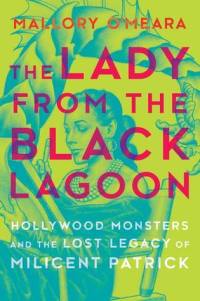
34993030Book: “The Lady from the Black Lagoon: Hollywood Monsters and the Lost Legacy of Milicent Patrick” by Mallory O’Meara

Publishing Info: Hanover Square Press, March 2019

Where Did I Get This Book: The library!

Book Description: The Lady from the Black Lagoon uncovers the life and work of Milicent Patrick—one of Disney’s first female animators and the only woman in history to create one of Hollywood’s classic movie monsters.

As a teenager, Mallory O’Meara was thrilled to discover that one of her favorite movies, The Creature from the Black Lagoon, featured a monster designed by a woman, Milicent Patrick. But for someone who should have been hailed as a pioneer in the genre there was little information available. For, as O’Meara soon discovered, Patrick’s contribution had been claimed by a jealous male colleague, her career had been cut short and she soon after had disappeared from film history. No one even knew if she was still alive.

As a young woman working in the horror film industry, O’Meara set out to right the wrong, and in the process discovered the full, fascinating story of an ambitious, artistic woman ahead of her time. Patrick’s contribution to special effects proved to be just the latest chapter in a remarkable, unconventional life, from her youth growing up in the shadow of Hearst Castle, to her career as one of Disney’s first female animators. And at last, O’Meara discovered what really had happened to Patrick after The Creature’s success, and where she went.

A true-life detective story and a celebration of a forgotten feminist trailblazer, Mallory O’Meara’s The Lady from the Black Lagoon establishes Patrick in her rightful place in film history while calling out a Hollywood culture where little has changed since.

Review: As someone who loves horror movies, I’m actually not very well versed in a lot of the Universal ‘Monster’ Flicks. Though we watched all of Karloff’s “Frankenstein” and parts of Lugosi’s “Dracula” in a college class, I am dreadfully uneducated when it comes to the lion’s share of the film canon. That said, I have seen “Creature from The Black Lagoon”, and it’s one that has a special place in my heart if only because The Creature, or Gill-man, or what have you, is such a tragic figure in this “Beauty and the Beast”-esque tale. As opposed to his Universal Monster counterparts, Gill-man looks more sad and lonely than frightening and foreboding. As the weird girl in middle and high school who had her fair share of crushes on more popular guys, I feel that longing and loneliness the Gill-man kind of has.

giphy
Not that I kidnapped the objects of my affection, however… (source)

What I hadn’t realized was that The Creature was designed by a woman named Milicent Patrick, so when “The Lady from the Black Lagoon” by Mallory O’Meara came upon my radar I was immediately interested in learning about her story. What I wasn’t ready for was how personal this part biography, part investigation story would be, for O’Meara AND for women in Hollywood AND horror.

O’Meara is the perfect person to tell Milicent’s story, in that not only has she been invested in Patrick’s life’s work since she was a teenager, but she herself has certain parallels to Patrick. Like Patrick, O’Meara is a young woman working in Hollywood, specifically as a producer of horror films. And like Patrick, O’Meara has faced rampant sexism and misogyny in her day to day life at her job, from people assuming she isn’t a producer based on her age and gender. So this story isn’t just an interesting biography of a woman whose contributions to horror have been lost, but also an investigation into her life led by another woman who still sees the same problems within the industry. While Patrick’s life is undoubtedly fun to read about (for example, she was one of the ink and color animators for the “Night on Bald Mountain” segment in Disney’s “Fantasia”, which has ALWAYS been my favorite sequence in one of my favorite Disney movies!), it’s also a familiar and frustrating look into how women were treated in show business during this time period… and how they still are treated today. Patrick was ultimately black balled from design after Bud Westmore, a famous designer who was  jealous of her success, insisted that she not be given credit for the monster that SHE CREATED. Even recently people still argue that she wasn’t the actual creative mind behind it, in spite of the evidence that she was. O’Meara successfully takes it upon herself to get her legacy out there, and the reader not only gets to read about the life of a pretty neat woman, but the time, effort, and experiences of what it took to uncover the story. From Hearst Castle to Hollywood to Las Vegas, Patrick’s life is laid out because of O’Meara’s hard work and diligence.

But the part of this story that I found I was the most invested in, and the most galling, was the sexism and misogyny aspects of this story, both experienced by Patrick AND O’Meara. It’s not a big secret that Hollywood can be incredibly toxic for the women who work there, but that doesn’t make both Patrick’s AND O’Meara’s experiences any less upsetting. Though O’Meara hasn’t lost her job due to jealous male colleagues, she has her own personal stories to tell of others mistreating her, the most glaring being a story about an actor working on one of her movies making sexual innuendos about her in a ‘does the carpet match the drapes’ kind of way (and I did a little digging and have a theory as to just who this actor was, as she left his name out out of fear of retaliation. Sadly, it doesn’t surprise me if I’m right). Given that women are STILL shut out of so many opportunities when it comes to film and television behind the scenes, especially genre films like horror and fantasy, hearing that those who ARE there get treated like this is very upsetting, especially as a lady horror fan. While O’Meara’s experiences certainly aren’t unique, that is the exact reason that these experiences need to be shared.

“The Lady from The Black Lagoon” was a very interesting and rewarding read for this horror fan. I definitely think that horror fans everywhere really ought to give it a go, if only so Milicent Patrick can continue to finally get her due long after it was stolen from her.

Rating 8: A thorough, eye opening, and emotional book that tells the story of a forgotten creative mind, and how the problems she faced in her industry are far from fixed.

Reader’s Advisory:

“The Lady from the Black Lagoon” is included on the Goodreads lists “Best of Old Hollywood”, and “Los Angeles (non-fiction)”.

Find “The Lady from the Black Lagoon” at your library using WorldCat!
Kate’s Review: “Stay Sexy and Don’t Get Murdered”

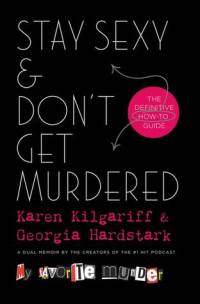
41068144Book: “Stay Sexy and Don’t Get Murdered: The Definitive How-To Guide” by Karen Kilgariff and Georgia Hardstark

Publishing Info: Forge Books, May 2018

Where Did I Get This Book: I own an Audible Audiobook/ was given a partial ARC by a friend.

Book Description: The highly anticipated first book by Karen Kilgariff and Georgia Hardstark, the voices behind the #1 hit podcast My Favorite Murder!

Sharing never-before-heard stories ranging from their struggles with depression, eating disorders, and addiction, Karen and Georgia irreverently recount their biggest mistakes and deepest fears, reflecting on the formative life events that shaped them into two of the most followed voices in the nation.

In Stay Sexy & Don’t Get Murdered, Karen and Georgia focus on the importance of self-advocating and valuing personal safety over being ‘nice’ or ‘helpful.’ They delve into their own pasts, true crime stories, and beyond to discuss meaningful cultural and societal issues with fierce empathy and unapologetic frankness.

Review: I’m a Murderino and have been a Murderino for about two years now. For those who may not be familiar, a ‘Murderino’ is the name for fans “My Favorite Murder”, a true crime comedy podcast hosted by Karen Kilgariff and Georgia Hardstark. I know I’ve spoken about it on this blog before, as I highlighted this book for the month of May, put the podcast in a “Not Just Books” post, and have referenced it on and off, here and there. I first discovered “My Favorite Murder” when I was going through a bit of a hard emotional time. I was feeling stagnant and unappreciated at one of my jobs, I was having anxiety about the future and big decisions that I knew needed to be made sooner rather than later, and one of my aunts (whom I had been close to) was dying of cancer, which sent a number of other family members into a turmoil. My friend Amanda recommended MFM to me, and I started it on the plane ride out to visit my ailing aunt/start preparing her house for hospice/getting other affairs in order. MFM became my comfort during that trip, as Kilgariff and Hardstark were able to talk about dark (yet eternally fascinating) topics with wit, empathy, and humor. I’ve been hooked ever since. And when I found out that Kilgariff and Hardstark were writing a book, I was PUMPED. I was very lucky to be given a partial ARC (thanks to my friend Carol! THANKS CAROL!), and read the first half of this book a couple months before it came out. But I knew that when the book came out in full, I had to get it on audiobook, as Kilgariff, Hardstark, and Paul Giamatti (it’s a long story) were the narrators. So I did a dual read/listen. And it mostly lived up to all I wanted it to be.

I will say, first and foremost, that if you are going into “Stay Sexy and Don’t Get Murdered” thinking that it’s going to be focused on true crime, you are mistaken. Whlie Kilgariff and Hardstark DO make references to various cases within it’s pages, and do share their own experiences that may have been close calls, this is definitely more essays/memoir about who they both are as people, and the various life experiences that shaped them into the true crime junkies that they are today. So if you are a fan of the podcast but consider yourself a ‘skipper’ (aka you skip the first third of the show where they are bantering and conversing to get to the cases), this book may not be what you’re looking for. But while this isn’t a book about true crime at its heart, what it does have to offer is a personal and relateable set of essays/memoirs that show the lives of two women who have come a long way and gone through a lot of hardship in their lives. Both women has struggled with their mental health, eating disorders, drug addiction, and various personal losses as time has gone on, and they are both very reflective on these things that they have had to endure and overcome as time has gone on. Both Kilgariff and Hardstark talk about their experiences with candor and grace, and while they definitely can find some humor in these things they never feel like they’re making light of these experiences, nor do they make them self-exploitative. While they touch on these issues here and there on the show, in this book their vulnerability is on full display, and I found it to be very relatable in a lot of ways. Given that both women have talked about putting up defenses, seeing them put it all out there was very admirable.

The book is also very funny at times. Both Kilgariff and Hardstark have fun senses of humor, but Kilgariff especially has a wry tone and a knack for making me laugh hysterically. She has always been my favorite of the two, and it’s no surprise that it was one of her sections, about a childhood memory involving her and her older sister in their latchkey kid days, that had me laughing so hard I was crying. Both women have a very conversational tone in the writing that works both in audiobook form AND in print form, and none of the humor felt out of place or forced. And the bonus with the audiobook is that you get to hear their voices, and their intonations of how they wanted their words and stories to sound. In some ways I felt that this was better than the print book, but honestly, you can’t go wrong with either of them.

I did have a couple of criticisms with the book, and though they may not be limited to this book specifically I do want to address them. The biggest one is that both Hardstark and Kilgariff fall into a familiar ‘self help’ trap of not thinking about how accessible their advice is for their readers. This comes out the most in their advice on how to tackle mental health, as both of them are huge proponents of therapy being a be all end all and something that everyone should do. As someone who has benefited from therapy greatly, I also believe that therapy is wonderful for those who have access to it. But the sad truth is that the ability to seek out therapists/therapy, and mental health care in general, is not something that everyone can do, be it because of financial reasons or other inhibitors. It’s very easy to say ‘everyone should go to therapy!’ when you have the financial means to do so, but sadly, that isn’t the case for many people, so to make it seem like it can be achieved by anyone is rather tone deaf, or at the very least reeks of privilege. Now this certainly isn’t something that is unique to Kilgariff and Hardstark, as MANY ‘self help’ books trot out solutions that fall into this trap. But given that the sometimes blindness to certain privileges is a common critique of this show and both authors, I was a little disappointed to see this advice, especially since in so many other ways they were quick to check other kinds of privilege blind spots that they have had in the past. And I do kind of wish that they’d done a little more with the true crime angle. What we did have was interesting and they certainly don’t HAVE to rehash cases we’ve heard time and time again, especially since they admittedly don’t do deep dive research. But a reference here and there felt more tacked on than anything else.

All of that said, I really did enjoy “Stay Sexy and Don’t Get Murdered”. Kilgariff and Hardstark are still a couple of my favorite podcasters out there, and I’m glad that they have come so far and have been able to overcome so much while still staying true to themselves. And remember everyone: Stay out of the forest, buy your own shit, and most importantly 

tenor
G’bye! (source)

Rating 8: A fun and enlightening memoir from two of my favorite true crime podcasters, “Stay Sexy and Don’t Get Murdered: The Definitive How-To Guide” is sure to delight MFM fans!

Reader’s Advisory: “Stay Sexy and Don’t Get Murdered: The Definitive How-to Guide” is included on the Goodreads lists “Murderino Reading List!”, and “Books of Podcasts”.

Find “Stay Sexy and Don’t Get Murdered: The Definitive How-To Guide” at your library using WorldCat!

Book Club Review: “Girl Squads: 20 Female Friendships That Changed History”

We are part of a group of librarian friends who have had an ongoing bookclub running for the last several years. Each “season” (we’re nerds) we pick a theme and each of us chooses a book within that theme for us all to read. Our current theme is ‘genre mash-ups’, where we pick two random genres and try to find a book that fits both. 

For this blog, we will post a joint review of each book we read for book club. We’ll also post the next book coming up in book club. So feel free to read along with us or use our book selections and questions in your own book club!

39873981Book: “Girl Squads: 20 Female Friendships that Changed History” by Sam Maggs
Publishing Info: Quirk Books, October 2018

Where Did We Get This Book: from the library!

Genre Mash-Up: Non-fiction and short stories

Book Description: A modern girl is nothing without her squad of besties. But don’t let all the hashtags fool you: the #girlsquad goes back a long, long time. In this hilarious and heartfelt book, geek girl Sam Maggs takes you on a tour of some of history’s most famous female BFFs, including:

• Anne Bonny and Mary Read, the infamous lady pirates who sailed the seven seas and plundered with the best of the men
• Jeanne Manon Roland and Sophie Grandchamp, Parisian socialites who landed front-row seats (from prison) to the French Revolution
• Sharon and Shirley Firth, the First Nations twin sisters who would go on to become Olympic skiers and break barriers in the sport
• The Edinburgh Seven, the band of pals who fought to become the first women admitted to medical school in the United Kingdom
• The Zohra Orchestra, the ensemble from Afghanistan who defied laws, danger, and threats to become the nation’s first all-female musical group

And many more! Spanning art, science, politics, activism, and even sports, these girl squads show just how essential female friendship has been throughout history and throughout the world. Sam Maggs brings her signature wit and warmth as she pays tribute to the enduring power of the girl squad. Fun, feisty, and delightful to read—with empowering illustrations by artist Jenn Woodall—it’s the perfect gift for your BFF. 

Serena’s Thoughts

This was my bookclub pick. I drew “nonfiction” and “short stories,” which on first glance was a pretty terrifying and unintuitive draw for me. I read very little nonfiction and only a handful of short story collection, all of which were decidedly NOT nonfiction and definitely were lots of fantasy/magic/aliens action that in no way could be pass off as “true to life.” But after thinking about it a bit more, short biographies seemed like the obvious choice and when I stumbled on this title when browsing around, it was an obvious pick.

Overall, I really enjoyed this story. Collections like this about women of history who have largely gone unnoticed have had a bit of a spotlight recently and our bookclub, when asked, could rattle off three or four similar titles off the top of their heads. But the interesting quirk that made this one stand out was its focus on female friendships and partnerships. All too often we hear stories about the one woman who stood out as unique (and often forgotten) among all of the men who surrounded her, so it was a breath of fresh air to read this book that focused on the fact that it wasn’t just one in a million women who was doing interesting things and chances were good that she surrounded herself by other like-minded women who are worth noting, not just a bunch of dudes.

Many of the stories were unfamiliar to me and I really liked that about the story. There were a few familiar ones as well, but even those felt as if they were providing new insights into the lives of these women. Overall, I enjoyed most of the choices provided. However, the book is broken up into section that have an over-arching theme with the women included in each, like “sports,” “science,” and “warriors.” I get the reasoning for this, but I do feel it might have worked against the book, as readers who are less interested in certain areas, like sports, perhaps, might go into a segment of stories prepared to be bored. And then, because they have similar focuses, the way each story plays out could begin to feel a bit predictable and repetitive. Had the stories been presented in a more random manner, this might have helped this aspect.

My only other complaint comes with annoyances with the writing style. At times, it can read as very dry and a bit pedantic. And then, in an obvious effort to counterbalance this very thing, the author would throw in some quirky, conversational-style line to try and “spice things up.” I found these one-liners very distracting and fairly eye-roll-worthy most of the time. Other than that, though, I really enjoyed this book and was glad that my bookclub pairings lead me to it!

Kate’s Thoughts

I, for one, am always going to be happy to see women’s history showcased, especially if they are stories that haven’t really been brought to the public’s attention on a large scale level in the past. So when Serena picked “Girl Squads” for her book club pick, I was definitely excited to learn some new things about some awesome ladies.

And new things did I find! While there are some familiar stories in this book, like the stories of the three present Women Supreme Court Justices or the ‘Hidden Figures’ of NASA, a lot of the tales of lady friendships and partnerships were new to me. I enjoyed the variety and range of the stories told, from sports and athletics, to warriors and battles, to innovators and creatives and more. It was both really empowering to read all these different tales, and also frustrating that so many of these tales have gone unnoticed or under-told for as long as they have, at least in terms of what I’ve been exposed to. My favorites included the Haenyo Divers on Jeju Island, South Korea, and the Japanese Women’s Olympic Volleyball team.

I also really liked that Maggs made a concerted effort to tell a variety of stories from all over the world, so as not to focus mostly on white, European narratives. Given that our educational system in this country is so Euro-centric, seeing stories from all over the world and many different experiences was really enlightening. Given that academia, like many other communities, has problems with diversity, I was happy to see that Maggs intended to write an intersectional book.

But like Serena I had similar problems with the structure of the book and the conversational tone it attempted to implement. By the time I reached the final fourth of the book, I found myself skimming and missing various sections of the chapters due to zoning out. It just got to be a little long, and, as Serena mentioned, the structure made it feel repetitive and lagging. And when it comes to the conversational commentaries that Maggs tried to drop in every once in awhile, I had very little patience for it. I think that this kind of creative choice CAN be done, as I’ve read a few books that manage to nail the fun quirky tone with the more ‘serious’ subject matter, but Maggs’s attempts felt more ‘how do you do, fellow kids?’, as opposed to natural or organic.

Those things aside, overall I enjoyed “Girl Squads” because of the stories that it told.

Serena Rating 7: Never quite felt like it found the writing style or organization that best fit it, but the stories were interesting and enlightening, none the less.

Kate Rating 7: With similar complaints about the writing style and structure, this book tended to take me out of the moment more often than not. That said, I liked learning new things about women I wasn’t familiar with.

Book Club Questions

  1. Which story was your favorite and why?
  2. Were there any stories that you want more information on or think could have been improved? Which one would you read a full-length biography on?
  3. Are there any women you would have like to see highlighted who weren’t included and what notable aspects of their life would you draw upon?
  4. How did you feel about the writing style and organization of the collection?
  5. Are there any other “themes” (like “girl squads”) that you would like to see be used to create a collection of short biographies? Who would you include in a collection like that?

Reader’s Advisory:

“Girl Squads: 20 Female Friendships that Changed History” is on these Goodreads lists: “Biographies of Women, by Women” and “Great Books For Young Girls.”

Find “Girl Squads: 20 Female Friendships that Changed History” at your library using WorldCat!

Next Book Club Book: “Northhanger Abbey” by Jane Austen.

Baby/Pregnancy Books: Part I

So, surprise! I had a baby last month! And in honor of my little one, and to acknowledge that alongside all the great fiction books I’ve read and reviewed over the last 10 months the fact that I’ve also been obsessively researching baby information, I’ve decided to dedicate my two posts for this week to four of my favorite pregnancy/baby-related reads. It really shouldn’t come as a surprise that, as a librarian, reading was/is my go-to coping method when the first-time mom anxiety hit(s) and there are a lot of resources out there. Some were ok, some seemed like a textbook for scare tactics (I’m looking at you “What to Expect” series), but these four were pretty solid for me specifically. Now, of course, pregnancy and parenting is all very indivualized to how people approach life and children, so massive warning that these fit what I was looking for and in no way reflect some type of be-all, end-all to the the vast, VAST expanse of resources and approaches on these topics. So, that out of the way, here are the first two I’m highlighting.

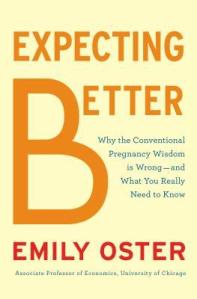
16158576Book: “Expecting Better: Why the Conventional Pregnancy Wisdom is Wrong – and What You Really Need to Know” by Emily Oster

Publishing Info: Penguin Press, August 2013

Where Did I Get this Book: own it!

Book Description: Pregnancy—unquestionably one of the most pro­found, meaningful experiences of adulthood—can reduce otherwise intelligent women to, well, babies. We’re told to avoid cold cuts, sushi, alcohol, and coffee, but aren’t told why these are forbidden. Rules for prenatal testing are hard and fast—and unexplained. Are these recommendations even correct? Are all of them right for every mom-to-be? In Expecting Better, award-winning economist Emily Oster proves that pregnancy rules are often misguided and sometimes flat-out wrong.

A mom-to-be herself, Oster debunks the myths of pregnancy using her particular mode of critical thinking: economics, the study of how we get what we want. Oster knows that the value of anything—a home, an amniocentesis—is in the eyes of the informed beholder, and like any compli­cated endeavor, pregnancy is not a one-size-fits-all affair. And yet medicine often treats it as such. Are doctors working from bad data? Are well-meaning friends and family perpetuating false myths and raising unfounded concerns? Oster’s answer is yes, and often.

Pregnant women face an endless stream of decisions, from the casual (Can I eat this?) to the frightening (Is it worth risking a miscarriage to test for genetic defects?). Expecting Better presents the hard facts and real-world advice you’ll never get at the doctor’s office or in the existing literature. Oster’s revelatory work identifies everything from the real effects of caffeine and tobacco to the surprising dangers of gardening.

Any expectant mother knows that the health of her baby is paramount, but she will be less anxious and better able to enjoy a healthy pregnancy if she is informed . . . and can have the occasional glass of wine. 

Mini-Review:  As a librarian, I feel like I have a lot in common with the author and her emphasis on research-based decision making. Working in an academic library, none the less, I spend a solid chunk of my time teaching students why it is important to find research to back up their own thoughts and opinions and how to distill that information into choices that are reflected in their work. This book has an incredible wealth of information from someone who has spent the time to really analyze what studies are really saying about pregnancy and decision-making, all presented through the lens that each expectant mother will need to ultimately make whatever decision feels right and most comfortable to her. For me personally, it really helped re-focus my attention on aspects of pregnant life that do require new approaches but also took a lot of fear out of the millions of warnings out there that make pregnant women feel like everything and anything is crazy dangerous for them and their growing baby. It’s all too easy to live the full 9 months feeling like every little thing could be the WORST THING EVER and you’re a BAD MOM if you do such and such thing. This book really helped me give myself a break from much of this. For others looking to know what the science is behind the general recommendations that “everyone knows to be true,” this is a great book to really dig deep. And yes, justify a glass of wine now and then!

16144855Book: “A Good Birth: Finding the Positive and Profound in Your Childbirth Experience” by Anne Lyerly

Publishing Info: Avery, August 2013

Where Did I Get this Book: own it!

Book Description: Most doctors are trained to think of a “good” birth only in terms of its medical success. But Dr. Anne Lyerly knows firsthand that there are many other important elements that often get overlooked. Her three-year study of a diverse group of over one hundred expectant moms asked what matters most to women during childbirth. The results, presented to the public for the first time in A Good Birth, show what really matters goes beyond the clinical outcome or even the usual questions of hospital versus birthing center, and reveal universal needs of women, like the importance of feeling connected, safe, and respected.

Bringing a new perspective to childbirth, the book’s wisdom is drawn from in-depth interviews with women with a wide variety of backgrounds and experiences, and whose birth stories range from quick and simple to complicated and frightening. Describing what went well, what didn’t, and what they’d do differently next time, these mothers give voice to the complete experience of childbirth, helping both women and their healthcare providers develop strategies to address the emotional needs of the mother, going beyond the standard birth plans and conversations. Transcending the “medical” versus “natural” childbirth debate, A Good Birth paves the entryway to motherhood, turning our attention to the deeper and more important question of what truly makes for the best birth possible.

Mini-Review: Yes, yes, again with the studies. But this was one big study conducted by a doctor on women’s experiences with labor, specifically. The author was recognizing that while medical professionals focused, rightly for the most part, only on the outcome of labor to establish whether a birth was “good,” many women, asked later would mention a variety of things that contributed to their feelings on their labor experience. The book is broken up into section that deal with these larger areas (like communication, safety, control, etc) and got into the different, smaller details that influenced how women felt about these larger topics and their birth. The really great thing about this book, I thought, was the way it always circled back to the idea that every woman is going to need different things to feel like she had a “good” birth, and that in a society that is largely fixated on the “right way” to have a baby, we are often losing focus on the fact that the whole idea of a “right way” is a fool’s errand to begin with. One that is often used to shame women about their choices, rather than support the variety of ways that work for the many, many different women (and births!) out there. After having my baby, this book seems even more valuable, as I can still find myself having the tendency to feel guilty about some of the aspects of my labor. But this read is a good reminder that there is no need for that.


Kate’s Review: “American Kingpin”

31920777Book: “American Kingpin: The Epic Hunt for the Criminal Mastermind Behind the Silk Road” by Nick Bilton

Publishing Info: Portfolio, May 2017

Where Did I Get This Book: I own it.

Book Description: In 2011, a twenty-six-year-old libertarian programmer named Ross Ulbricht launched the ultimate free market: the Silk Road, a clandestine Web site hosted on the Dark Web where anyone could trade anything–drugs, hacking software, forged passports, counterfeit cash, poisons–free of the government’s watchful eye.
It wasn’t long before the media got wind of the new Web site where anyone–not just teenagers and weed dealers but terrorists and black hat hackers–could buy and sell contraband detection-free. Spurred by a public outcry, the federal government launched an epic two-year manhunt for the site’s elusive proprietor, with no leads, no witnesses, and no clear jurisdiction. All the investigators knew was that whoever was running the site called himself the Dread Pirate Roberts.

The Silk Road quickly ballooned into $1.2 billion enterprise, and Ross embraced his new role as kingpin. He enlisted a loyal crew of allies in high and low places, all as addicted to the danger and thrill of running an illegal marketplace as their customers were to the heroin they sold. Through his network he got wind of the target on his back and took drastic steps to protect himself–including ordering a hit on a former employee. As Ross made plans to disappear forever, the Feds raced against the clock to catch a man they weren’t sure even existed, searching for a needle in the haystack of the global Internet.
Drawing on exclusive access to key players and two billion digital words and images Ross left behind, Vanity Fair correspondent and New York Times bestselling author Nick Bilton offers a tale filled with twists and turns, lucky breaks and unbelievable close calls. It’s a story of the boy next door’s ambition gone criminal, spurred on by the clash between the new world of libertarian-leaning, anonymous, decentralized Web advocates and the old world of government control, order, and the rule of law. Filled with unforgettable characters and capped by an astonishing climax, American Kingpin might be dismissed as too outrageous for fiction. But it’s all too real.

Review: There is a misconception about the true crime genre, and that is the thought that there are only books about blood, violence, murder, and serial killers to be had. While those are certainly some of the more popular topics in the scope of the genre, you can find a large number of books about less violent crimes. So for those of you who like the idea of reading up on something salacious and scandalous, but are squeamish when it comes to violence and death, I may have a good true crime fit for you. It involves a whole lot of the scandal and law breaking, and outlandish twists and turns that don’t seem real, but is, for the most part, low on body counts. And you may never look at “The Princess Bride” the same way again after reading it. Let me introduce you to “American Kingpin”.

“American Kingpin” is the story of the rise of The Silk Road, a website that acted as a black market for drugs that was hidden within the Dark Web. It was founded by a man named Ross Ulbricht, who initially saw it as a way for people to have access to illegal drugs, a value that lined up with his Libertarian beliefs. His internet handle was “The Dread Pirate Roberts”, and he remained fairly anonymous for years. As his website and fortune grew, so did his love of power, and his need to hold onto it by any means necessary. Along with his story are the stories of the various law enforcement officers who tracked him, and even got embroiled with him and The Silk Road, in hopes of catching him. And boy, is it a doozy. Nick Bilton does a very good job of keeping all of the complicated character threads straight, and slowly weaves them together to create an all encompassing big picture that reads like a thriller novel. He writes not so much sympathetic, but well laid out backgrounds of the people, and I think that seeing Ulbricht especially in a complex light was important. But it never took away from the fact that this guy was an entitled, privileged, single minded narcissist who thought he was untouchable, and went from drum circle college student to a man who was taking out hits on those who crossed him. While calling himself The Dread Pirate Roberts of all things!

The narrative itself moves at a fast pace, and given that the events are so outlandish that they read like fiction, it has a high entertainment factor. Like the cast of players, I felt like I was reading a thriller novel as opposed to a non fiction account, and it really speaks to how good of a narrative non fiction writer Bilton is. There were multiple moments I shouted out ‘ARE YOU KIDDING ME?!’ Specifically when it was noted that The Silk Road considered dabbling in human organs. HUMAN. ORGANS.

giphy
I had to set the book down and laugh in despondency. (source)

As Ulbricht’s scheming escalated the tension did as well. The book is very well researched, and it’s constructed in a way that gives a pretty evenly distributed amount between the players and the goings on in all of their lives, and how they connected to each other. I had a very hard time putting it down as I was reading, and even though I had a pretty basic working knowledge of the story thanks to the “Casefile” podcast series on it, there was still a lot of information at hand that never got bogged down by the sheer volume of it all. Bilton is also certain to push back against the idea of the Libertarian Utopia of the Silk Road being ‘victimless’ in its drug business, detailing one especially sad story about someone who was an unwitting purveyor of drugs from the site… and then suffered terrible consequences because of it. While Bilton never outright maligns the values that Ulbricht was striving to champion, he definitely makes a very compelling case for debating them. It never feels preachy; just matter of fact.

All in all, “American Kingpin” is a thrilling write up of a truly unbelievable crime. If you’ve been curious about the new true crime interest in our culture, but are wary when it comes to violence and murder, I would absolutely recommend this rollercoaster of a book.

Rating 8: A tense and VERY addictive true crime thriller, “American Kingpin” does a great job chronicling the rise and fall of a black market empire and the man who was behind it all.

Reader’s Advisory:

“American Kingpin” is included on the Goodreads lists “Scary Tech? Big Data, Surveillance, Information Overload, Tech Addiction, Propaganda, Dark Money..”, and “Murderino Reading List!”

Find “American Kingpin” at your library using WorldCat!

Kate’s Double Review: “The Real Lolita” and “Rust & Stardust”

Books: “The Real Lolita: The Kidnapping of Sally Horner and the Novel that Scandalized The World” by Sarah Weinman; “Rust & Stardust” by T. Greenwood

Publishing Info: Ecco, September 2018; St. Martin’s Press, August 2018

Where Did I Get These Books: The library; I was sent an ARC from the publisher

Book Descriptions: Vladimir Nabokov’s Lolita is one of the most beloved and notorious novels of all time. And yet very few of its readers know that the subject of the novel was inspired by a real-life case: the 1948 abduction of eleven-year-old Sally Horner.

Weaving together suspenseful crime narrative, cultural and social history, and literary investigation, The Real Lolita tells Sally Horner’s full story for the very first time. Drawing upon extensive investigations, legal documents, public records, and interviews with remaining relatives, Sarah Weinman uncovers how much Nabokov knew of the Sally Horner case and the efforts he took to disguise that knowledge during the process of writing and publishing Lolita.

Sally Horner’s story echoes the stories of countless girls and women who never had the chance to speak for themselves. By diving deeper in the publication history of Lolita and restoring Sally to her rightful place in the lore of the novel’s creation, The Real Lolita casts a new light on the dark inspiration for a modern classic.


When 11 year-old Sally Horner steals a notebook from the local Woolworth’s, she has no way of knowing that 52 year-old Frank LaSalle, fresh out of prison, is watching her, preparing to make his move. Accosting her outside the store, Frank convinces Sally that he’s an FBI agent who can have her arrested in a minute—unless she does as he says. 

This chilling novel traces the next two harrowing years as Frank mentally and physically assaults Sally while the two of them travel westward from Camden to San Jose, forever altering not only her life, but the lives of her family, friends, and those she meets along the way.

Review: I want to extend a special thank you to St. Martin’s Press for sending me an ARC of “Rust & Stardust”.

For someone who reads a whole lot for her profession and her pleasure, I have a pretty gaping hole in my literary experience when it comes to ‘the classics’. Between taking not so typical literature classes in high school and majoring in psychology, my exposure to classic books was limited, and while I’ve tried to pick up the pieces here and there I still have many left on the ‘theoretically to read’ list. So no, I have not read “Lolita” by Vladimir Nabokov, though the notoriety of the story means that I am pretty familiar with it as a whole. I’m in no rush to read it, not for any other reason than there are so many other books out there that interest me more. But when I got an ARC of the book “Rust & Stardust” by T. Greenwood, the fact that it was based on the very real story of Sally Horner, the girl who served as inspiration to Dolores Haze in Nabokov’s book, caught my attention. And then I heard that a nonfiction book about Sally Horner, called “The Real Lolita” by Sarah Weinman, was also soon to be available. So I decided to bide my time, and to read the two as a pair so that I could compare and contrast the two, which each tell the same story in very different ways.

And perhaps it’s implied, but just in case, I need to give some serious content warnings for both of these books. They do, after all, involve the kidnapping, rape, and abuse of a little girl.

“The Real Lolita” is a non fiction work that juxtaposes Sally Horner’s kidnapping at the hands of Frank La Salle with Vladimir Nabokov trying to write “Lolita”. Weinman surmises that Nabokov, who had been having stumbling block after literary stumbling block as he tried to write what would become his most famous work, heard the sensationalized news stories surrounding the case and used it in his work. Nabokov denied this again and again, but Weinman lays out the similarities between the two cases, and the timeline that he was working within and how it wa well within the highest media furor surrounding the case. It isn’t really a criticism of Nabokov’s decision to use this story as inspiration so much as it’s an indictment of him lifting a girl’s very real pain to profit from it without giving her any credit. I appreciated that she wasn’t going after the inspiration piece, because it isn’t uncommon for creatives to take inspiration from real life horrors and to make them into a fictional work. The issue is that Nabokov was too proud to admit that he in all probability did find inspiration in this trauma victim, which is deeply problematic in and of itself, and couldn’t be bothered to even acknowledge her pain and how successful of a novel it was. Her evidence is well researched and carefully laid out, and the details that she found regarding the Horner case and what her life was like before, during, and after the ordeal gives voice to a girl whose trauma was appropriated for a novel with the subject of her inspiration twisted and misinterpreted  into a nymph-like seductress (even if that wasn’t Nabokov’s intention). It’s a book that I had a hard time reading because of the awful manipulations and abuses La Salle did to Horner, though I appreciated how frank and ‘just the facts’ Weinman was because of the horrors of the case. I also liked that she wasn’t particularly fiery in her critiques of Nabokov, but that she simply presented the evidence as it was and let it speak for itself. Weinman’s book gives this girl a voice, a voice that wasn’t afforded to her in the moment, and that has been drowned out because of time and a novel that overshadowed it.

“Rust & Stardust” is also the Sally Horner story, but it has been adapted into a work of fiction. T. Greenwood  makes it very clear in a long author’s note that she approached this story through the eyes of a fiction author, but tried to keep a good number of the details, especially in regards to Sally’s experience, realistic and plausible. The prose flows neatly and succinctly, and while it is a longer book than “The Real Lolita” I found that it felt like a quicker read just because Greenwood paced it so well. The story is pretty much what you’d expect; Sally Horner is caught by Frank LaSalle as she’s stealing a notebook from the store, and what follows is the story of Sally’s kidnapping, captivity, and return, as well as the perspectives of those in her life during her absence. While it was definitely hard to read at times, Greenwood never made it feel lurid or exploitative. The emotions were there, but were able to remain untangled from bad taste. Greenwood also gave herself some creative plot leeway (though not in regards to Sally, which was good) so that she could highlight the problematic attitudes of the post-War American culture, specifically when it comes to abuse towards girls and women. Whenever someone would raise doubts about Sally’s relationship to Frank, almost every time they were told to be quiet because the very notion of bad intentions was disgusting and inappropriate. Frank is able to get away with his predation because the people around him and Sally don’t want to face that it’s happening. Which brings me back to the criticisms of “Lolita”, in that some people, be it Nabokov’s intent or not, have romanticized the story of Humbert Humbert and the ‘nymph’ he fixates on. Greenwood doesn’t give any leeway for that because the story is Sally’s, and those who care about her.

Reading “The Real Lolita” and “Rust & Stardust” has given me a larger picture of a tale I thought I knew, and in their own ways they tell the side that has been lost to time and literary critique and accolades. If you like “Lolita”, and even if you don’t like it, these books will give it more context, a context that it has probably always needed.

Ratings 8: Though the backstory to “Lolita” has been glossed over and outright ignored by some (and denied by others), “The Real Lolita” and “Rust & Stardust” strive to give Sally Horner the ability to tell her story.

Reader’s Advisory:

“The Real Lolita” is included on the Goodreads lists “Women’s Lives”, and “Best Crime Books of 2018”.

“Rust & Stardust” is included on the Goodreads lists “#MeToo”.

Find “The Real Lolita” and “Rust & Stardust” at your library using WorldCat!


Kate’s Review: “I’ll Be Gone in the Dark”

35068432Book: “I’ll Be Gone in the Dark: One Woman’s Obsessive Search for the Golden State Killer” by Michelle McNamara

Publishing Info: Harper, February 2018

Where Did I Get This Book: The library!

Book DescriptionA masterful true crime account of the Golden State Killer—the elusive serial rapist turned murderer who terrorized California for over a decade—from Michelle McNamara, the gifted journalist who died tragically while investigating the case.

“You’ll be silent forever, and I’ll be gone in the dark.”

For more than ten years, a mysterious and violent predator committed fifty sexual assaults in Northern California before moving south, where he perpetrated ten sadistic murders. Then he disappeared, eluding capture by multiple police forces and some of the best detectives in the area.

Three decades later, Michelle McNamara, a true crime journalist who created the popular website TrueCrimeDiary.com, was determined to find the violent psychopath she called “the Golden State Killer.” Michelle pored over police reports, interviewed victims, and embedded herself in the online communities that were as obsessed with the case as she was.

At the time of the crimes, the Golden State Killer was between the ages of eighteen and thirty, Caucasian, and athletic—capable of vaulting tall fences. He always wore a mask. After choosing a victim—he favored suburban couples—he often entered their home when no one was there, studying family pictures, mastering the layout. He attacked while they slept, using a flashlight to awaken and blind them. Though they could not recognize him, his victims recalled his voice: a guttural whisper through clenched teeth, abrupt and threatening.

I’ll Be Gone in the Dark—the masterpiece McNamara was writing at the time of her sudden death—offers an atmospheric snapshot of a moment in American history and a chilling account of a criminal mastermind and the wreckage he left behind. It is also a portrait of a woman’s obsession and her unflagging pursuit of the truth. Framed by an introduction by Gillian Flynn and an afterword by her husband, Patton Oswalt, the book was completed by Michelle’s lead researcher and a close colleague. Utterly original and compelling, it is destined to become a true crime classic—and may at last unmask the Golden State Killer.

Review: I woke up on April 25th to a story I never thought, but I had long hoped, to see: there was an arrest in the Golden State Killer case. The Golden State Killer (GSK), aka The East Area Rapist (EARS) or The Original Night Stalker (ONS), was suspected of fifty rapes, a dozen murders, and more than 100 burglaries, all committed in California over the course of a few decades, and it was long thought that he wouldn’t be caught. As a huge true crime fan, I knew this case fairly well, thanks two big factors. The first was the podcast “My Favorite Murder”, and that led to the second: the book “I’ll Be Gone In The Dark” by Michelle McNamara. McNamara was a true crime writer with the blog “True Crime Diary”, and had been doggedly pursuing The Golden State Killer (a phrase she created) at the time of her tragic death in 2016. Earlier this year “I’ll Be Gone In The Dark” was released, in part to Bill Jensen, a co-investigator and investigative journalist in his own right. So when an arrest was made, the news spread like wildfire, and while the police were reluctant to give McNamara any credit outside of raising awareness, many think that that very awareness (starting with her blog and various articles she wrote) was vital to putting pressure on, which in turn led to an arrest. I read “I’ll Be Gone In The Dark” before Joseph DeAngelo, a former police officer and seventy two year old man, was arrested for the crimes. But now that he has been, I want to shine a light on this great book, especially since the story has finally found some closure.

What stands out immediately about this book is how personal it is. While McNamara herself didn’t know anyone who was hurt or killed by GSK/EAR/ONS, an unsolved murder of a childhood neighbor always stuck with her throughout her life. As she started to learn about The Golden State Killer, she began to feel a deep sense of injustice for the victims that he left behind, and started to investigate it herself. She made connections with investigators, she dove into online groups of fellow armchair investigators, she visited locations and dug through box after box of evidence. Her almost obsessive commitment to this case is juxtaposed with the crimes themselves, and the horror that GSK/EAR/ONS brought upon his victims. But she is always sure to be respectful, and to keep the details vague enough to be respectful, but precise enough to paint a picture of just how awful these crimes were. She gives voice and context for the people that GSK/EAR/ONS raped or murdered, and always puts them at the forefront and the fact that justice eluded them and those they left behind for so long. In many true crime books (with a few exceptions, of course, like Ann Rule) the focus is primarily on the murderer, and the victims merely objects in a salacious story. But with McNamara, she wants the reader to know the victims and makes their voices the most important ones. Would this be different had DeAngelo been identified at publishing? Possibly. But I do get the sense that for McNamara, the identity was only important for justice purposes; this wouldn’t have been a story to give him any glory or to make his crimes entertainment.

As you read, McNamara instills actual terror into you. I had to stop reading this book after dark, because any noise and anything out of place sent me into a paranoid spiral. Her writing is that immersive, pulling you in and keeping you engaged. She also makes herself vulnerable by being fully aware and honest with her own obsession, and the toll that it takes on her life and her own mental health. Unlike the book that Robert Graysmith wrote about The Zodiac Killer, McNamara knew that she was treading towards obsession, and that it was deeply affecting her life. The sad fact of the matter is that when Michelle died unexpectedly in her sleep, she could have been seen as, in a way, GSK/EAR/ONS ‘s last victim. She had been having trouble sleeping, and her husband (comedian Patton Oswalt) had suggested she take some Xanax and just sleep until she woke up. And she didn’t wake up, because of an undiagnosed heart condition in tandem to the Xanax and other prescriptions. The tragedy of her death lingers on the page, as there are sections with editor’s notes that explain that they were originally unfinished, or that they were pieced together by her notes or previous articles. It’s so great to see that this book and story she was so dedicated to was finished by people close to her, but the loss is still palpable.

So how does the new information about John DeAngelo affect this book? If anything, it makes it more poignant, and it certainly doesn’t diminish it. I say this because of a specific moment in the epilogue, entitled “A Letter To An Old Man”. It’s a final moment that is essentially a letter from Michelle to GSK/EAR/ONS, and it works as a powerful cap off to a wonderful book. The final paragraph is all the more powerful now. I’m going to quote part of it here to show you what I mean, a quote that’s made the rounds on social media a lot in the days after DeAngelo’s capture.

“The doorbell rings. No side gates are left open. You’re long past leaping over a fence. Take one of your hyper, gulping breaths. Clench your teeth. Inch timidly towards the insistent bell. This is how it ends for you. ‘You’ll be silent forever, and I’ll be gone in the dark,’ you threatened a victim, once. Open the door. Show us your face. Walk into the light.”

And as Patton Oswalt and many others have pointed out, this is exactly what happened on April 25th, 2018.

“I’ll Be Gone in the Dark” is a stunning true crime book and an opus for a voice that left us far too soon. It will surely be considered one of the greats of the genre in the years to come, and Michelle McNamara will be remembered for all the good that she did in her help to bringing closure to the victims of a horrible monster. But it’s also just well written book about confronting darkness in life and in ourselves, and how to battle it as best we can.

Rating 9: A tense and well written true crime opus by a voice gone too soon, “I’ll Be Gone in the Dark” is a tribute to perseverance, and will stand the test of time as not only a true crime classic but as one that probably helped bring justice to the victims of a monster.

Reader’s Advisory:

“I’ll Be Gone In The Dark” is included on the Goodreads lists “My Favorite Murder Books”, and “Best True Crime”.

Find “I’ll Be Gone in the Dark” at your library using WorldCat!

Kate’s Reviews: “Is This Guy For Real?: The Unbelievable Andy Kaufman”

34506909Book: “Is This Guy For Real?: The Unbelievable Andy Kaufman” by Box Brown
Publishing Info: First Second, February 2018

Where Did I Get This Book: I received an ARC from NetGalley.

Book Description: Comedian and performer Andy Kaufman’s resume was impressive—a popular role on the beloved sitcom Taxi, a high-profile stand-up career, and a surprisingly successful stint in professional wrestling. Although he was by all accounts a sensitive and thoughtful person, he’s ironically best remembered for his various contemptible personas, which were so committed and so convincing that all but his closest family and friends were completely taken in.

Why would someone so gentle-natured and sensitive build an entire career seeking the hatred of his audience? What drives a performer to solicit that reaction? With the same nuance and sympathy with which he approached Andre the Giant in his 2014 biography, graphic novelist Box Brown takes on the complex and often hilarious life of Andy Kaufman.

Review: One of my favorite memories of going down to Iowa to visit my grandparents was what my sister and I would do after the rest of the house had gone to bed. We would lie on the pull out couch turned bed, turn on the TV (low so as to not disturb anyone), and watch “Nick at Nite” well into the wee hours of the morning. Sometimes our Mom would watch with us at least for a short while, and I remember the night that I first saw Andy Kaufman. “Taxi” was up next on the schedule, and my Mom was visibly excited for it. When an awkward mechanic came on screen and spoke in a strange and high pitched voice, she said to me “That’s Latke. He’s hilarious.” And he was. As I got older I learned a bit more about Andy Kaufman, his beloved characters as well as his not so beloved characters, and I wasn’t totally sure of what to think of him. I knew I thought he was funny. But I also knew I thought he was nuts. “Is This Guy For Real?” is a graphic biography that examines both aspects of Kaufman, from his childhood years until his untimely death from lung cancer.

Brown is probably most known for his graphic biography about Andre the Giant, and this book is kind of a similar set up: it tries to strip down the affectations and public persona that Kaufman had, and show what drove him. It mainly focuses on his wrestling career, in which he first started wrestling women and then eventually started a ‘feud’ with Jerry Lawler, a popular Tennessee wrestler. Kaufman was VERY MUCH a heel, or a villain character, saying sexist shit about women and playing up the ‘Hollywood Elitist’ persona that really pissed off the wrestling fandom, especially those in Tennessee. To the public he was a complete jerk who harassed and abused people for a laugh. It was kind of a pattern in a way, as one of his characters, Tony Clifton the obnoxious lounge singer, was also excessively cruel. But by all accounts from those he was closest to, this was not who he was in his personal life. I think that Brown does a good job of framing his performance art personality by juxtaposing his love for transcendental meditation and yoga. The other ‘well known’ take on Kaufman’s life is the movie “Man on the Moon”, a Milos Foreman biographical story starring Jim Carrey. “Is This Guy For Real” almost feels a bit more subdued, as it is less about the conflict that Kaufman created with his antics, and more about the drive and creativity behind it. When you see the thought process and the need to entertain and create that was behind it, it puts Kaufman in a new light, and makes his untimely death all the more poignant.

What struck me about this book is that it’s main focus is on Kaufman’s wrestling career, which was controversial in many ways. I actually had no idea that his ‘feud’ with Lawler went on for as long as it did, and that they had been hyping each other up from the beginning and all the way up until Kaufman’s illness. We got to see how Lawler started out as well, and how even though he was a heel himself he and Kaufman crafted a role switch for him. I, too, had no clue that Kaufman was so engrossed in wrestling that it probably could have become a second career for him had he not become ill. It doesn’t focus as much on his time on “Taxi”, nor does it touch on the fact he was banned from SNL, or that he had a very public meltdown on the show “Fridays” (the veracity of this meltdown is disputed, however: some say that it was all planned). This book definitely takes the position that while a lot of people, Lawler included, didn’t really ‘get’ Kaufman’s motivations and performances, or his need to perform in such a way, he was ultimately far more self aware and grounded than his reputation would imply, and his relationship with Lawler is evidence of this. I don’t know how I feel about Brown leaving that more controversial stuff out, though. It felt a little dishonest to omit these abrasive and unpleasant facts about him.

I do have to wonder, though, how much of that is actually the case. In the last few pages of this book Brown refers to a conversation he had with Michael Kaufman, Andy’s brother, in which Michael says that he didn’t like “Man on the Moon” because it portrayed Andy as a self centered buffoon who was lost in his own performances, and he didn’t agree with that. I do concede that that film, as much as I like it, definitely had to pull out a narrative of conflict, and that’s a popular angle to take when talking about Kaufman. But Bob Zmuda, Kaufman’s comedic partner and close friend, had a HUGE hand in that movie. It kind of hits home that perhaps neither Zmuda NOR Michael really had a grasp on who Kaufman was at his heart. There was also one little ‘fun fact’ that I had a problem with, and it’s only because I have deep feelings about it. Brown says that none of Kaufman’s “Taxi” co-stars were at his funeral, and that’s not true. While most of them didn’t go, thinking he was playing a cruel joke on them, Carol Kane did attend. She played opposite Kaufman on the show, and by all accounts they got along very well. So to erase her from his life like that, even if it was just a side note to make a point about how misunderstood he was, felt wrong.

The artwork is pretty cool too! While Brown’s style is kind of simplistic in some ways, I think that it’s very unique, and just kind of adds to the whimsy that is already abundant.

1500x1500_96dcc08b3013d180adaa516621ab732e61407b5030fb78cf8cad2d7c
(source)

All in all, “Is This Guy For Real?” was an enjoyable graphic biography about an entertainer that I really love. I feel like I learned more about him, and that perhaps I understand him a little bit better. Maybe. Because who knows with Andy Kaufman?

Rating 8: A poignant and well told biography about one of the strangest comedians of the 20th Century. While it left out some of his more notorious moments, it reveals a side that tends to get lost.

Reader’s Advisory:

“Is This Guy For Real?” is still new and not on any Goodreads lists yet, but I think it would fit in on “Non-Fiction Comics and Graphic Novels”, and “Best Eccentric Characters”.

Find “Is This Guy For Real?” at your library using WorldCat!


Kate’s Review: “The Disaster Artist”

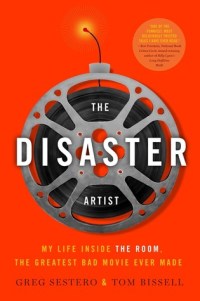
17404078Book: “The Disaster Artist: My Life Inside “The Room”, The Greatest Bad Movie Ever Made” by Greg Sestero, Tom Bissell
Publishing Info: Simon & Schuster, October 2013

Where Did I Get This Book: I own it on audiobook!

Book Description: From the actor who lived through the most improbable Hollywood success story, with an award-winning narrative nonfiction writer, comes the inspiring, fascinating and laugh-out-loud story of a mysteriously wealthy outsider who sundered every road block in the Hollywood system to achieve success on his own terms—the making of The Room, “the Citizen Kane of bad movies” (Entertainment Weekly).

In 2003, an independent film called The Room—written, produced, directed, and starring a very rich social misfit of indeterminate age and origin named Tommy Wiseau—made its disastrous debut in Los Angeles. Described by one reviewer as “like getting stabbed in the head,” the $6 million film earned a grand total of $1,800 at the box office and closed after two weeks. Now in its tenth anniversary year, The Room is an international phenomenon to rival The Rocky Horror Picture Show. Thousands of fans wait in line for hours to attend screenings complete with costumes, audience rituals, merchandising, and thousands of plastic spoons.

Readers need not have seen The Room to appreciate its costar Greg Sestero’s account of how Tommy Wiseau defied every law of artistry, business, and interpersonal relationships to achieve the dream only he could love. While it does unravel mysteries for fans, The Disaster Artist is more than just an hilarious story about cinematic hubris: It is ultimately a surprisingly inspiring tour de force that reads like a page-turning novel, an open-hearted portrait of a supremely enigmatic man who will capture your heart.

Review: As a bad movie connoisseur, it will probably come as a huge surprise to people that I have not actually seen “The Room” in it’s entirety. My first experience with “The Room” was while at a midnight showing of “The Rocky Horror Picture Show”, as they were advertising a special screening of this piece of cinematic napalm. I’ve seen plenty of clips online. I’ve seen lots of references to it, gifs, parodies. And I had heard of the book “The Disaster Artist”, written by Greg Sestero. Sestero was one of the stars in the movie, and decided to write a memoir about the making of it, as well of his friendship with Tommy Wiseau, the man behind the film. With the new movie out based on this book, I felt that before I saw it, I needed to read the original memoir to get the full effect. So I got my hands on the audiobook, read by Sestero himself.

And it was more surreal than I ever could have imagined in the history of surrealness.

giphy12
No, Mark, that’s a compliment!! (source)

Okay, for the super uninitiated, “The Room” is a nonsensical, poorly written, poorly directed, poorly acted vanity project written, directed by, and starring Tommy Wiseau. I would say go watch it, but… HERE, see some scenes for yourself. Greg Sestero, who plays Mark in the movie, had known Wiseau for some time before he was emotionally manipulated asked to appear in the film by him. The memoir he’s written takes two different timelines and juxtaposes them into the narrative: the actual making of “The Room”, and his strange friendship with Wiseau, from it’s inception in an acting class to the moment Wiseau decided he was going to make his own movie after success eluded him. I had heard plenty of stories about the bizarre antics of Tommy Wiseau on and off the set, but none of prepared me for the ‘what the FUCK’-ness that was this memoir. I walked away from it thinking that either Sestero has the patience of a saint, or has found himself totally within the clutches of an incredibly toxic friendship and doesn’t know up from down anymore. I really hope it’s the former.

So many of the stories in this book read like they should be fiction, and yet I have no doubt in my mind that they absolutely occurred the way that Sestero said they did. They are just too outlandish and random to have not. Be it a moment where Wiseau reads a key code to Sestero telling him it’s very complicated, only for it to be ‘1234’ (and written down because Wiseau ‘can never remember it’), to descriptions of Sestero coming home to find Wiseau hanging upside down from a pull up bar and just kind of lingering in stasis, to Wiseau telling Sestero to meet him in downtown San Francisco, only to surprise him by saying they are running The Bay to Breakers Race THAT VERY MOMENT (poor Sestero was only wearing sandals), the anecdotes are stranger than fiction. And laugh out loud funny. I had it on my phone as I was setting up for work one morning, and one of my coworkers needed to know why I was laughing so hard. And, of course, the descriptions of the antics on the set itself were mind boggling in their hilarity. Wiseau would take hours upon hours to get a seven second line correct; he would perform his suicide scene, and then writhe around and moan in spite of the fact his character had just eaten a gun; he would insist upon green screens for simple shots that end up looking out of place at best, ridiculous at worst. And he had a knack for getting the absolute worst performances from his players. In the moment it had to be absolutely maddening; but Sestero tells it in such a way that the humor is always there, and it is entertaining as hell.

giphy14
What a story indeed. (source)

But along with that, Sestero does a great job of capturing the darker and more poignant sides to Wiseau and their complicated friendship. Behind the oddities and eccentricities, there is definitely a dark side to Tommy, one that is hard to completely understand, if only because he is so private with his past and his personal life. He is desperate for friends, he is desperate to be loved and admired, and he latches onto Sestero out of what appears to be sheer loneliness. Unfortunately, like most of the time, this makes for a very tempestuous, and unhealthy, friendship. Wiseau could switch from being supportive and whimsical, to threatening and abusive should he think that Sestero, or anyone, was crossing him. Hell, “The Room” itself seems to be a reflection of how Wiseau sees himself in the world, as the one truly pure person who is taken advantage of by the people he loves. Wiseau insisted that Sestero play Mark, the best friend of Johnny (played by Wiseau), who betrays Johnny by having an affair with Lisa, Johnny’s fiancee. When you look at that in the context of a deep resentment that Wiseau potentially had for Sestero due to his perceived ‘success’ in Hollywood pre-“The Room” (booking a few roles here and there is success in this case), the casting makes perfect sense. There were moments where I felt deeply uncomfortable about the toxic nature of their friendship, as in some ways it hit a nerve. I’ve been in Sestero’s shoes before, as I’ve been in the position of having a friend who is so completely draining and yet you don’t know how to extricate yourself from them. One review I read thought that Sestero either had to be lying, or downplaying his own ‘leech’ status to Tommy (who provided him with an apartment at a reduced rate), because how could he continue to put up with the abusive nature of their friendship for so long if there wasn’t something in it for him? To that reviewer, I say that it is far more realistic than one would think. To Sestero’s credit, this could have been a complete hatchet job towards an unstable and narcissistic asshole. But instead, by giving some insight into what sort of (potential) experiences Wiseau went through in his early life, he writes of him in such a way that while you are repelled by some of his actions, you also understand why he acts in certain ways. I don’t feel that Sestero ever makes excuses for it, either, as he is VERY clear when Wiseau goes over the line against him and others. But he’s made peace with this relationship, and shows the good with the bad.

giphy13
Patience. Of. A. Saint. (source)

As mentioned previously, I listened to this book, and Sestero reads it himself. I HIGHLY recommend it. At first he sounded a little bit wooden and I wasn’t totally sure… but the moment that he started imitating Wiseau, well, that sold it for me. It’s pretty much the perfect imitation as only a friend can do.

“The Disaster Artist” was easily one of the most bizarre and entertaining books that I’ve read. It says a lot about the need for acceptance, the desperation for fame, and how sometimes being just off the wall wacko can pay off, even if it’s in ways you never intended.

Rating 10: A hilarious, outlandish, and at times incredibly pathos ridden and disturbing romp about dreaming of stardom, acceptance, and success… no matter how you define it or achieve it.

Reader’s Advisory:

“The Disaster Artist” is included on the Goodreads lists “Books ABOUT Movies”, and “Best Eccentric Characters”.

Find “The Disaster Artist” at your library using WorldCat! And here is the link to the Audiobook version because TRUST ME.

Book Club Review: “Word By Word: The Secret Life of Dictionaries”

30781490We are part of a group of librarian friends who have had an ongoing bookclub running for the last several years. Each “season” (we’re nerds) we pick a theme and each of us chooses a book within that theme for us all to read. Our current theme is a “Dewey Call Number” theme. This book comes from a Dewey Decimal Call Number range, and has to fit the theme of that range.

For this blog, we will post a joint review of each book we read for bookclub. We’ll also post the next book coming up in bookclub. So feel free to read along with us or use our book selections and questions in your own bookclub!

Book: “Word By Word: The Secret Life of Dictionaries” by Kory Stamper

Publishing Info: Pantheon Books, March 2017

Where Did We Get This Book: The library!

Dewey Decimal Call Number: 400s (Language)

Book Description: Do you have strong feelings about the word “irregardless”? Have you ever tried to define the word “is”? This account of how dictionaries are made is for you word mavens. 

Many of us take dictionaries for granted, and few may realize that the process of writing dictionaries is, in fact, as lively and dynamic as language itself. With sharp wit and irreverence, Kory Stamper cracks open the complex, obsessive world of lexicography, from the agonizing decisions about what to define and how to do it, to the knotty questions of usage in an ever-changing language. She explains why small words are the most difficult to define, how it can take nine months to define a single word, and how our biases about language and pronunciation can have tremendous social influence. And along the way, she reveals little-known surprises–for example, the fact that “OMG” was first used in a letter to Winston Churchill in 1917.

Word by Word brings to life the hallowed halls (and highly idiosyncratic cubicles) of Merriam-Webster, a startlingly rich world inhabited by quirky and erudite individuals who quietly shape the way we communicate.

Kate’s Thoughts

So it will surprise no one here that I love to read. What may surprise people is that even though I love reading and the words that ultimately come with it, I don’t have much interest in the history or said words. When this was picked for book club, I will totally own up to the fact that I basically groaned internally. I have a hard enough time with non fiction as it is (unless it’s narrative, memoir, or true crime), so I worried that this would be a terribly boring slog to get through. The good news is that I wasn’t totally correct in this. The bad news is, like the scorpion in that old folktale, it’s in my nature to have a hard time with this kind of book no matter how engaging it is.

But I’m going to focus mostly on the good since the bad isn’t any fault of Stamper’s. “Word By Word” was a well done, and at times quite funny, overview of what it’s like to work at Merriam-Webster, and the intricacies that go into adding words to and defining words for a dictionary. I guess that until I read this book it never occurred to me that there would be questions and consistently changing definitions to words, or that sometimes it can take months to settle on a most representative definition. Stamper not only talks about what it’s like to work at Merriam-Webster in this capacity, she also talks about how people like her have to take so many different variables into account just to function in the best way possible. For some, some of the most interesting concepts were focused on how society perceives dictionaries, and how they actually are supposed to function. Within this was the authority myth, in that if a word is defined one way in the dictionary, this is the bottom line because the dictionary said so. Stamper points out that this just isn’t the case; dictionaries are not supposed to be authorities on definitions, they are merely there to record and relay these definitions. Language is always changing, and therefore the meanings of words are changing too.

My reservations and hesitations about this book (aka why it was a slog) was going back to my nature: I am very picky about my non fiction. I merely want to reiterate that for my ultimate rating, because it was based on form, not substance. This book also gave our book club a LOT to talk about, which was really, really excellent. So while “Word By Word” wasn’t really my cup of tea, I can see it being very appealing to a lot of people who aren’t me.

Serena’s Thoughts

As evidenced by the content of this blog, neither Kate or I are big nonfiction readers. If anything, Kate is more of a nonfiction reader than I am, and as seen in her thoughts above, she’s still not that into it. At least she has true crime to back her up as not completely stuck in the “fiction only” section that I am. I don’t think I’ve reviewed a single nonficton book on this blog. I don’t say this out of pride or anything. I really wish I liked nonfiction more than I do. There are a few exceptions to this, but usually it’s when books are thrust upon me my trusted friends and family. So, while I would never have picked up this book on my own, I’m so glad that our fellow bookclub librarian, Katie, recommended it! I found myself very much enjoying it, and while it isn’t changing my mind on nonfiction as a whole, that’s too big of an ask for any book.

I’ll also confess that I didn’t read this book in the traditional front-to-back method, and I really think this is one of the reasons I enjoyed it more than I would have otherwise. Instead, I picked a chapter here and a chapter there, skipping forward and backward through the book based on my interests. For example, I started with the “irregardless” chapter, because, yes, that word and all the controversy around it does intrigue me! From there, I found myself in a chapter document acronyms and how rarely the much bandied explanations for words’ origins having to do with acronyms is true. We’ve all probably heard of some acronym for the “f” word, for example. The author does an excellent job exploring why acronyms are so rarely involved with a word’s definition.

As I read, I mostly found myself gather ammo for word-related conversations. As a librarian and book lover, these are the exact sorts of disagreements and discussions that I regularly find myself in, and I loved getting some more detailed background knowledge on my side going forward. As Kate said, for this reason, I’m sure, our bookclub probably had more to say with regards to this book than we’ve had for many other books recently. In this way, this book is an excellent choice for other bookclubs out there. Especially for those that have members who may not be totally bought into nonfiction. I recommend my reading strategy, specifically, for those folks. I think I had an easier time than Kate just because of this. By hopping around, picking it up to read a chapter here and a chapter there, I never had to confront the general dismay about the long slog ahead that results from starting in the beginning, especially starting with a non-enthralled position.

I also really think that had I not found my calling as a librarian that working on a dictionary like this like may have been another dream job. I had an assignment in a publishing class back in undergrad to create an index for a book, and similar to that, dictionary work seems appealing nit-picky and focused on organization. I also would have had a lot of fun writing snarky answers to the people who wrote in with complaints about the inclusion of the word “irregardless” in the dictionary. Really, could I just have that job? Answering dictionary-related complaint mail?

Kate’s Rating 6: An enlightening examination of how dictionaries are compiled and the role they play, as well as fascinating questions raised about language in modern society. It was a bit of a dry read for me at times, but overall a worthwhile one.

Serena’s Rating 8: I was shocked by how much I enjoyed this! There was a lot of history of words and details of dictionary work that I didn’t know, and by reading it one chapter at a time I was able to hold off my own non-fiction antipathy.

Book Club Questions

  1. Were you surprised about anything about this job? Would you want it?
  2. Grammar snobs: heroes or obnoxious?
  3. What do you think about the social justice implications of language/dialects?
  4. Does the history of words, or etymology, interest you? Why or why not?
  5. What words do you hope get added to future dictionaries?

Reader’s Advisory

“Word For Word: The Secret History of Dictionaries” is on the Goodreads lists “Microhistory: Social Histories of Just One Thing”, and “Best Non-Fiction Books About Books and Reading”.

Find “Word For Word: The Secret History of Dictionaries” at your library using WorldCat!