Serena’s Review: “Rosemarked”

29346927Book: “Rosemarked” by Livia Blackburne

Publishing Info: Disney-Hyperion, November 2017

Where Did I Get this Book: from the publisher!

Book Description: A healer who cannot be healed . . .

When Zivah falls prey to the deadly rose plague, she knows it’s only a matter of time before she fully succumbs. Now she’s destined to live her last days in isolation, cut off from her people and unable to practice her art—until a threat to her village creates a need that only she can fill.

A soldier shattered by war . . .

Broken by torture at the hands of the Amparan Empire, Dineas thirsts for revenge against his captors. Now escaped and reunited with his tribe, he’ll do anything to free them from Amparan rule—even if it means undertaking a plan that risks not only his life but his very self.

Thrust together on a high-stakes mission to spy on the capital, the two couldn’t be more different: Zivah, deeply committed to her vow of healing, and Dineas, yearning for vengeance. But as they grow closer, they must find common ground to protect those they love. And amidst the constant fear of discovery, the two grapple with a mutual attraction that could break both of their carefully guarded hearts.

Review: I was very excited to receive a copy of this book in the mail for review. I had seen it bouncing around on a few review sites, but generally it seemed to land fairly unnoticed. Which, now having read it, is quite a shame! “Rosemarked” is a powerfully simple story of invasion and colonization, hope in the face of loss, and the resilience of two characters who are set with an impossible task.

Zivah, a young healer, finds herself with the unwelcome task of caring for a troop of Amparan soldieres who fall ill with the dreaded rose plague while passing through her home. While her people have arranged a peaceful treaty with these forces, their lands is still regularly plundered and their people harmed. But Zivah knows her duty. She saves as many as she can, including the commander of the guard, but finds herself now cursed with the plague herself, doomed to die in a few years when the fever returns. But her life is not over. She finds herself drawn into a plan to infiltrate the Amparan capital to better learn what their plans are for her homeland. Now, alongside Dineas, a young solder who only recently escaped the dungeons of the city he now marches back towards and who still carries mental and emotional scars from this time, Zivah has a chance to use her knowledge of poisons and healing to save her people.

The story is told with alternating view points between Zivah and Dineas. This worked particularly well due to the vast differences in not only their personalities, but also in their life experiences and how these have shaped their worldviews. As a healer, Zivah struggles with her new reality, doomed to a short life in which even her vast knowledge cannot save her. Further, as she is highly contagious, her entire vocation has been lost to her. In this new mission, she is asked to bend and manipulate her own oaths as a healer to do no harm. What is “harm” when the balance is between individuals and nations? Where is the line when using her knowledge of herb lore and poisons?

Dineas, too, has a powerful arc throughout the story. After his time in prison, he is too broken to return to the capital as he is, not able to put on the performance necessary to convince the Amparan soldiers that he is one of them. Instead, Zivah uses a complicated potion to take away his memories. With this act, the story ultimately ends up with three characters: Zivah, original Dineas, and the Dineas who has no memory. This new Dineas, freed from his memories of torture and hatred, forms a close relationship with the healer who “saves” him. However, as their mission continues, the old Dineas must be brought forth routinely to report on what new Dineas has seen. This leads to much inner confusion and tension as he imposes his own memories, fears, and prejudices onto the actions and emotions of a self who has been freed of his difficult past. Both versions of Dineas’ are soldiers to the core. But through their two perspectives, one jaded and one naive, they each struggle with the harsh realities of warfare and the knowledge that soldiers on either side of any war are ultimately people themselves, with their own loves and lives.

The rose plague plays a large part in this story, not only through the massive impact it has on shaping Zivah’s now shortened life, but in the portrayal of this world as a whole. The plague kills the majority of those it touches. A small few recover but are doomed to live solitary lives in plague villages, waiting for the return of the fever that will claim them. And an even smaller number recover completely, the rose-colored marks on their skin browning, resulting in their being known as “umbertouched.” Through Zivah’s eyes, we see the half-life that those left with this in-between portion of life are forced to live. Cut off from society, the rosemarked are shuffled out of sight into grimy, lawless colonies, similar to a leper colony. They can not interact with loved ones, for fear of passing on the disease. And they have no future, living only on borrowed time. What’s worse, for the majority of them, society prefers to pretend they simply no longer exist. Zivah, and all the others she meets who are rosemarked, are living life in a very different want than the average person. They know their time is limited, and with this in mind, their mental calculus of risk and reward is very different.

Also, for a fantasy novel, there was practically no magic in this story. Really, other than the fact that it is set in a made-up world that is pestered by a fictional plague, this book could read as historical fiction. I quite enjoyed the lack of magic in this story, and the slow, methodical way the plot plays out. The story is simple and straightforward, relying heavily on the strength of its two central characters and their individual arcs throughout the book. For some readers, this may read as a bit slow and dull.  But for readers who enjoy character-focused stories and who can appreciate a fantasy novel with very little magic, “Rosemarked” is definitely a book worth checking out! It’s the first in a duology, with the second, “Umbertouched” set to release next fall.

Rating 7: A character-driven story that perhaps lacks depth, but still touches on important topics of vocation, one’s role in the world, and the horrible decisions that ongoing warfare brings upon a people.

Reader’s Advisory:

“Rosemarked” is a newer title and isn’t on many relevant Goodreads list, but it should be on “Best Fiction Books About Diseases or Viruses.”

Find “Rosemarked” at your library using WorldCat!

Serena’s Review: “The Cruel Prince”

26032825Book: “The Cruel Prince” by Holly Black

Publishing Info: Little, Brown Books for Young Readers, January 2018

Where Did I Get this Book: bought it!

Book Description: Jude was seven years old when her parents were murdered and she and her two sisters were stolen away to live in the treacherous High Court of Faerie. Ten years later, Jude wants nothing more than to belong there, despite her mortality. But many of the fey despise humans. Especially Prince Cardan, the youngest and wickedest son of the High King.

To win a place at the Court, she must defy him–and face the consequences.

In doing so, she becomes embroiled in palace intrigues and deceptions, discovering her own capacity for bloodshed. But as civil war threatens to drown the Courts of Faerie in violence, Jude will need to risk her life in a dangerous alliance to save her sisters, and Faerie itself.

Warning: This review contains a lot of ranting, and because it’s so popular on Goodreads and other places, I know this will be an unpopular opinion. But it’s mine. It doesn’t have to be yours and, while I think that even those who like this book deserve better, especially as far as the romantic interests go, everyone’s tastes run differently! And that’s ok! That’s why we have libraries packed full of options for everyone! But if it’s hard for you to read negative opinions on things you love (which I totally understand), it’s probably best to just pass on this review now.

Review: This was one of the few books that I broke down and bought without having read it before. Sadly, it is also further reinforcement for why I have that general policy to begin with. But I was beguiled by the beautiful cover and a book description that was right up my alley. Perhaps also the hype, which really should have been my warning sign, as I’ve found that very few books that are super hyped in the fantasy YA community these last couple of years actually turn out to be my cup of tea. Alas.

As I said, there is a lot to love in this book description. I’ve always loved stories about Faerie courts. I also love stories about sisterhood. And, of course, political intrigue. What should have been my warning was the concept of the cruel prince himself, Cardan. My bookclub comrade, Alicia, was also reading this book when I was and asked what I thought about this book when I was only 50 pages in or so. At the time, I said that I was enjoying it but that the main character had better not get together with the titular “cruel prince.” And Alicia just looked at me and laughed. Well…yeah…touche, I guess!

I like to try and say positive things about all books I review on here, and this book in particular seems to be getting a lot of raving reviews, so I know there must be things here that many people are liking. But honestly, I just don’t see it. The writing was technically good, I guess, and the Faerie court was appropriately capricious and beautiful, but that’s about all I have.

Though even with these aspects, Black wasn’t introducing anything we haven’t seen a million times before with fantasy like this! Yeah, yeah, beautiful food that is actually rotten. Faerie folk who have animal aspects like hooves and wings. Dancing. Mermaids. And this speaks to one of my first problems: the world-building and storytelling. If an author is going to write a Faerie court book, the fact that there a million others out there should serve as a motivation to put extra effort into plotting and characters. You already know you’re playing in a very full sandbox as far as the world itself, so you need to challenge norms in other areas. Unfortunately, Black does not. Instead we get a long checklist of YA tropes being ticked off one by one.

This book is a case study in “telling, not showing” writing. We are simply informed of most of the plot points with very little build up, no clear arc, and characters who behave and say things simply because they must, but without any written character support for their choices. We’re told that Jude wants to be a Fae Knight, and there is some hand service to her wanting to gain power, but none of this is set in any concrete character position that we are consistently shown throughout the story. At one point early in the book, we get to this grand tournament, an event she’s been training for her entire life and where she can exhibit her skills…and I’m pretty sure we get this exact line: “I fought harder than I ever had before.” End scene. Great. She’s a fighter whose been telling us for pages how important this all is and how much she’s trained (again, we’ve seen none of that) and then the moment comes! And we’re just told she fought hard.  How intriguing! I’m definitely invested now! It’s sheer laziness of writing and the kind of things that drives me crazy.

And this bland writing is paralleled in bland characterization. Throughout the entire book, I never understood Jude. What’s really important to her? Why did she do one thing here and another there? How is she growing, learning, and reacting to pretty big events happening around her? There was just nothing consistent going on with her character that readers could latch on to.

What’s more, most of her story is directly contrary to the message that I thought this book was going for, and the one thing that could have really given Jude depth as a character. She saw her parents murdered before her eyes and then was raised by the man who killed them and in a land where she and her sister are systematically abused and terrorized by those around them. This is the set up for a strong story of resilience and of reclaiming one’s own power. At its most basic level, you could get a pretty good revenge story out of this.

But no. Jude is every YA heroine we’ve ever read. We’re told she’s bad ass, despite never seeing it.  She makes horrible decisions with apparently no sense of self-preservation, and worse, no sense of the fact that her choices also result in harm to others. We’re told she’s terrified by those around her, but she still wants to be one of them. She’s thoughtless and impulsive, with no foundation to speak of that would explain why she does what she does when she does it.  Her thoughts on Faerie and its people are completely dependent on what the story needs her to do, or feel, next.

With all of this, Jude’s own Stockholm-syndrome-esque behavior and her sister’s passive victim hood, I thought the book was building up towards some sort of commentary on the effects of bullying, terror, and abuse. But nope. There’s nothing there: like the Faerie food, it looks beautiful and complex, but at its core, it’s nothing. It’s honestly confusing. Was this just a coincidence, that the author set up all of these factors around abuse and victim hood? Did she do it on accident while trying to write a fairly typical YA fantasy story? Because, as it stands, its as if she honestly didn’t realize that that’s what she had written for all of the attention its given.

And, worst of all, we have yet another YA love interest who is the epitome of abuse and bullying. And I am absolutely sick of this persistent and pernicious trope of authors creating a character who does despicable things, giving him “a past,” and then hand-waving away his own behavior (especially if he’s done it because secretly he’s kind of into the heroine). This is not a message we should be sending to young women. Yes, people can survive terrible things, and often those who commit them had darkness in their past. But they are still responsible for the terrible things they do, and while you can pity the circumstances that brought them to that point, they ARE NOT love interest material. They need help. Professional, practical, and ongoing help.

I’m completely fed up with this, and it is disheartening to see it continue in YA fantasy books and have those books receive rave reviews. In a year full of #metoo and terrible stories about women being subjected to horrendous behavior by men in power, the fact that we are still reading about YA heroes who outright abuse the heroine but are then presented as potential love interests just makes me sick. This is not ok. Even the final twist of the book doesn’t save this from what’s been set-up: multiple love triangles between victims and their bullies.

Ultimately, this goes down as my first major disappointment of the year. I’m not sure why this book is as hyped as it is or how it is receiving all of the positive reviews it is. At best, it’s presenting a pretty familiar story with all the elements we’ve come to expect: a story that is told to us, not shown; a heroine who has no clear characterization and whose decisions are nonsensical at best and outright stupid at worst; and a love interest who has no right being a love interest at all. I don’t recommend this book. Instead, if you want to read an amazing Faerie court book that’s come out recently, check out “An Enchantment of Ravens.”

Rating 2: A major disappointment. I expect more of YA fantasy. And, at this point, we have a responsibility to those who suffer from real life abuse and bullying to put away this notion that cruelty in any form, for any reason, can be “sexy” or “charming.”

Reader’s Advisory:

I’m not going to include the lists it is on, but if you’re looking for good Faerie court books, check out “An Enchantment of Ravens” and “Wildwood Dancing.”

Find “The Cruel Prince” at your library using WorldCat!


Serena’s Review: “The Bone Witch”

30095464Book: “The Bone Witch” by Rin Chupego

Publishing Info: Sourcebooks Fire, March 2017

Where Did I Get this Book: copy from the publisher

Book Description: Tea is different from the other witches in her family. Her gift for necromancy makes her a bone witch, who are feared and ostracized in the kingdom. For theirs is a powerful, elemental magic that can reach beyond the boundaries of the living—and of the human.

Great power comes at a price, forcing Tea to leave her homeland to train under the guidance of an older, wiser bone witch. There, Tea puts all of her energy into becoming an asha, learning to control her elemental magic and those beasts who will submit by no other force. And Tea must be strong—stronger than she even believes possible. Because war is brewing in the eight kingdoms, war that will threaten the sovereignty of her homeland…and threaten the very survival of those she loves.

Review: First off, thank you so much to the publisher for providing me with a copy of this book to read and review! It now has a loving spot on my bookshelf, so that should give readers a clue about my thoughts on this book!

A young Tea has just learned she is a Bone Witch, a rare Asha who can raise and control the dead. Her kind are especially needed for their abilities to raise and banish daeva, fearsome beasts who will escape their graves on given intervals and rampage the countryside if they are not put back to rest. But an older Tea is the one telling us this tale, and through her we see that life has not been what she had expected when she first was trained. The elder Tea is banished, living on a forlorn beach surrounded by monstrous beasts, and she has her own plans. With these dueling perspectives, Chupeco weaves together a world full of magic, mystery, and darkness, and one girl’s story that has already happened and is also about to begin.

My first point of praise goes to the narrative set-up of this book. I love stories that are told from a past/present point of view. Through the elder Tea, we get a sense that things have gone wrong, but we don’t know why, how, or what her plans are now in response to those events. The younger Tea, whose story takes up the majority of the book, is as new to much of this world as the reader and through her we see innocence, wonder, and fear of what her growing abilities really mean. Both narratives draw from the other, dropping little clues here and there that tie neatly between the two, but also raise more and more questions. The elder Tea is definitely not rushed in her story-telling, or willing to simply give the end away. There were excellent surprises planted throughout both storylines, and it was exciting seeing how they interconnected.

The world-building was probably the strongest point in this book’s favor. It’s been compared to a fantasy version of “Memories of a Geisha” and this is spot on. It did walk a very fine line of being almost a little too close to that book for my taste at times. Some of the characters involved, the miserly older woman who runs the house, the successful and beautiful older Asha who is in the prime of her abilities, and Tea’s own slow rise from servitude towards a spectacular debut. However, the magical elements and complicated history and politics of this world did enough to pull the story away and into its own place. I absolutely loved the magical system of this world, especially the way proficiency in these magical arts combined in a variety of ways. Asha are not only excellent performers who serve as entertainers (here’s where the geisha-like comparisons come into play), but they are also warriors, healers, and politicians.

Tea, as a Dark Asha, or Bone Witch, walks a slightly different path. Dark Asha are rare, and, while their abilities are the most necessary of them all, it is not surprising that the common people fear them. Through Tea’s experiences, and that of her mentor Mykaela, we see the fears and superstitions that they must deal with, all while performing the challenging and necessary work of the land.

So far we have a complicated past/present narration style, a magical system that has intricate workings and specific challenges for our main character, and a geisha-like system that incorporates entertaining, fighting, and politicking. On top of all this, there is also the world itself, made up of many different kingdoms each with their own cultures, ethnicities, and views on Asha and the ongoing fight with the daeva and the Faceless who control them. One of my biggest criticisms comes in this part. If ever a book needed a map, it was this one. There is simply too much to keep track of in this book to expect readers to navigate the terrain as well. Even by the end of the book, I was still confused about the layout of the world and how these various different kingdoms worked together.

With all of these details, this book is definitely heavy on descriptions and works with a slower pace. I love immersive writing like this, but I do think the book will have varied responses based on this fact. There is action, but in small bursts slotted between pages of the average day for Tea learning to be a Dark Asha. It’s not until the very last part of the book that the action really picks up, but when it does, man is it exciting!

And, since the second book is coming out shortly, you’ll have a safer time reading this one now than earlier, as the ending is a bit of a cliffhanger. By no means are all of the mysteries resolved; if anything, I had even more questions at the end than I did at the beginning, and it felt like the story was cut off right when things were really starting to get moving. I’m fine with that, since I can pick up the second one right away, but it’s something to keep in mind when you’re scheduling your reads (doesn’t everyone schedule their reading order??)

So, while all of the complicated elements of the world and story did leave me confused at times, the strong central character and the huge set up for book two were more than enough for me to thoroughly enjoy and recommend this book. If you’re a fan of fantasy with a darker twist, definitely check this one out.

Rating 8: Immersive and detailed, there is no loss for world-building in this book. If anything, it’s overwhelming!

Reader’s Advisory:

“The Bone Witch” can be found on these Goodreads lists: “Rag and bones – and skellies and skulls” and “Fairytales for wild girls.”

Find “The Bone Witch” at your library using WorldCat!

Joint Review: “The Belles”

23197837Book: “The Belles” by Dhonielle Clayton

Publishing Info: Disney-Hyperion, February 2018

Where Did I Get this Book: Bookish First; an ARC from NetGalley.

Book Description: Camellia Beauregard is a Belle. In the opulent world of Orléans, Belles are revered, for they control Beauty, and Beauty is a commodity coveted above all else. In Orléans, the people are born gray, they are born damned, and only with the help of a Belle and her talents can they transform and be made beautiful.

But it’s not enough for Camellia to be just a Belle. She wants to be the favorite—the Belle chosen by the Queen of Orléans to live in the royal palace, to tend to the royal family and their court, to be recognized as the most talented Belle in the land. But once Camellia and her Belle sisters arrive at court, it becomes clear that being the favorite is not everything she always dreamed it would be. Behind the gilded palace walls live dark secrets, and Camellia soon learns that the very essence of her existence is a lie—that her powers are far greater, and could be more dangerous, than she ever imagined. And when the queen asks Camellia to risk her own life and help the ailing princess by using Belle powers in unintended ways, Camellia now faces an impossible decision.

With the future of Orléans and its people at stake, Camellia must decide—save herself and her sisters and the way of the Belles—or resuscitate the princess, risk her own life, and change the ways of her world forever.

Kate’s Review:

Many thanks to NetGalley for sending me an ARC of this novel!

My first experience with Dhonielle Clayton was the sudsy and dramatic “Tiny Pretty Things” duology that she wrote with Sona Charaipotra. While I loved the first book in that series, I was left cold by the second. But when I heard that Clayton was writing a fantasy series on her own, I knew that I would absolutely need to get my hands on it. I know that I say that fantasy isn’t really my wheelhouse, I do have exceptions, and this kind of fantasy (other worldly dystopia/utopia) absolutely falls into that category. I sat down and read “The Belles” in one day, absolutely taken in by this amazing fantasy world that Clayton created.

And oh my gosh, so many FASHION DESCRIPTIONS. I have no style, but I love fashion.

giphy
Sashay shanté, bitches. (source)

Orléans  is unlike any other fantasy world that I have seen in a very long time. It has certain similarities with our world, feeling like a combination of French Revolution era societal castes and factions, and yet with magic and grand technologies dispersed throughout it. The Belles, women who have descended from the Goddess of Beauty, have magic flowing through them that allows them to create beauty with various tools and powers that they have. The mortals of Orléans have been cursed with a distinct lack of beauty and grace (the mythology is indeed explained), and the Belles are the only ones who can help them. I greatly enjoyed Camellia’s moral journey as a Belle. She starts wanting to be the very best, to be picked as the Favorite of the Royal Court and to live with them, just as her mother had. But as she starts to live that life, she starts to change, as realities that she has never seen start to become all too real. The way that she changed and met those changes was very fascinating, and hers was a complex and interesting perspective to follow.

The other characters in this book are all very well done as well. Though we only see the events through Camellia’s eyes, I feel like I got a good hold on the supporting ones too and what their motivations were. I greatly enjoyed one of the other Belles named Edel, whose inherent need to rebel and question her life as a Belle was a small, but telling, theme about how different people function within this opulent world. There are different ways that the characters in this book fit into the complicated society, and I was impressed and genuinely horrified by how willing Clayton was to go into disturbing and dark situations to show the dangerous side of a beauty obsessed and power imbalanced culture. Keep an eye out for Princess Sofia. If you want a really screwy and messed up villain in your YA fantasy, she is exactly what you’re looking for.

I really enjoyed “The Belles” and am waiting for the second book on pins and needles.

Serena’s Review:

I had never read any books by Dhonielle Clayton before this, but the intriguing book description alone was enough to convince me this was one to check out. The fact that Kate was also interested was also a plus, since she’s not a huge reader of fantasy, so when there’s one that appeals to her as well, than I’m usually pretty curious!

The thing that stands out about it the most to me was the world-building and descriptions of the beauty that make up the lives of those able to afford such luxuries. The fact that this beauty is also tied to the world’s creation story and is a tangible part of their lives further cemented it as an intriguing concept. What could have read as a fairly superficial fantasy world was instead fully realized and complex, using beauty as not only the primary aspect of the magical system itself but a commentary on what is important to the people in this world. But the simplistic moralizing that one would expect , obsession with physical beauty is superficial and bad, is complicated by the very real implication of the beings peopling this world. Not only do they become physically less beautiful, with grey skin and red eyes, but it is mentioned that insanity also comes for those who fall too far into this “natural” state. I loved the added layers given to this, as, like I said, this could have ended up with a very simple and trite message.

Instead, much of the arc was devoted to Camellia’s growth as a character. Yes, obsession with physical beauty is discussed. But for Camellia, much of her story is that of a young woman who is just beginning to live the life that she’s dreamed of and realizing that it might be very different than she had expected. She’s a typical teenage girl in many ways, struggling with jealousy, self-care, and establishing her own boundaries. Throughout the story, we see her fight with her instincts to please those around her versus do what she knows to be right. Further, this growth comes slowly and steadily, reading as a more natural progression and thus highly relatable to teenage girls. The pressure is real, as are the consequences, and remaining true to your own judgements is never a straight forward path.

I also loved how dark this book was, and I was surprised by the quality of the villain who was presented. The same detailed and extravagant writing that goes into illustrating all of the beauty that makes up this world was put to just as good of use when drawing up the truly terrifying future that now looms by the end of this book.

All in all, I was quite surprised by how much I enjoyed this book! It was easy to read the concept and dismiss it as a kind of silly fluff-fantasy that was going to preach an all too familiar message about the “beauty within.” But nope! This is definitely one worth checking out!

Kate’s Rating 8: A sumptuous and unique tale about a gilded society and the darkness behind, and cost of, outer beauty. The characters were all well done and the world Clayton built was wonderfully crafted.

Serena’s Rating 8: A surprising read that avoids the easy and expected messages while still focusing on what’s important. Strong characters, beautiful descriptions, and villain to give you the creeps! Everything you want from YA fantasy fiction!

Reader’s Advisory:

“The Belles” can be found on these Goodreads lists: “Fashion Dystopia” and “YA Heroines of Colour.”

Find “The Belles” at your library using WorldCat!

Serena’s Review: “Jane, Unlimited”

32991569Book: “Jane, Unlimited” by Kristin Cashore
Publishing Info: Kathy Dawson Books, September 2017

Where Did I Get this Book: ARC from the publisher

Book Description: If you could change your story, would you?

Jane has lived a mostly ordinary life, raised by her recently deceased aunt Magnolia, whom she counted on to turn life into an adventure. Without Aunt Magnolia, Jane is directionless. Then an old acquaintance, the glamorous and capricious Kiran Thrash, blows back into Jane’s life and invites her to a gala at the Thrashes’ extravagant island mansion called Tu Reviens. Jane remembers her aunt telling her: “If anyone ever invites you to Tu Reviens, promise me that you’ll go.”

What Jane doesn’t know is that at Tu Reviens her story will change; the house will offer her five choices that could ultimately determine the course of her untethered life. But every choice comes with a price. She might fall in love, she might lose her life, she might come face-to-face with herself. At Tu Reviens, anything is possible.

Review: I have a lot of thoughts on this book, on the book itself (which is of the sort that is probably best appreciated on re-reads) and on the reception of said book by the general reading public. But, without further ado: I, for one, absolutely loved the book and am absolutely baffled by the general reading public’s reception of it.

Jane parents died in an plane crash when she was a baby. They decided to sit on one side of the plane, and on that side, everyone died, On the other side, everyone lived. This choice changed Jane’s life, but led her to a happy childhood growing up with her Aunt Magnolia, a marine biologist with a general joie de vivre approach to life. Now tragedy has stuck again with the death of her beloved Aunt, and Jane finds herself aimless and alone, with only her love for umbrella-making to give her any purpose. That is until she is invited to Tu Revien, a house full of mysteries, and once again, there are important, life-changing choices ahead.

It’s hard for me to really get at this book and my reaction to it without wondering whether my prior knowledge of it affected my read. I’d like to think not, but I’m not sure. For one, I had the joy of getting to meet Kristin Cashore at ALA this last summer and hear her speak on a panel. During the panel, one librarian got up and asked if there were pages missing from her most recent book, as the librarian found it very confusing. Cashore said this was exactly what she had worried about when writing it, knowing that it was an experimental style. First, I was very embarrassed for everyone involved in this situation, as the panel was about a completely different topic and not the place for authors to be quizzed about their own works. Librarians should know better! But I won’t rant about that.

19429839_10154357686492757_3387062802618176631_n
Here I am getting my copy signed by the author! A definite highlight at ALA!

Cashore was gracious enough to explain that she started the book as a “choose your own adventure” story, which than morphed into a more traditional novel, in that it is meant to be read in a linear fashion. So, I had this information going in and to a certain extent knew what to expect. However, that aside, I do think that she did an amazing job setting up that this was where the story was headed, with no prior knowledge of this required. As I laid out in my brief plot description, the story starts out with the idea that Jane’s entire life was shaped around a completely arbitrary decision that her parents made, which side of the plane to sit on. Further, Jane and her friend, Kiran, a member of the family who owns the house and the one who invited Jane there, discuss the fact that choices can lead you to very different places in life, and you never know which choice will be the one to make the big difference.

With this premise, the story starts out slowly putting together a great cast of characters, and many mysteries for Jane to follow. This takes about 100 pages or so, which is where I’ve heard the most complaints about it being a slow read. For me, this was completely necessary work for laying a foundation for the rest of the book. In these pages, we get to know Jane, and those around her. We have mysterious disappearing art, rumors of a missing family and their children, a dog that is obsessed with a painting, and the family’s own strange history with the missing first and second wife of the father. From there, Jane chooses.

And yes, those choices have drastically different outcomes! I’m talking, genre-defying outcomes. I don’t know how I’ll categorize this book when I get to posting it, because it’s a bit of everything. We have mystery, we have intrigue, we have horror, we have sci-fi, we have fantasy. You name it! And what makes this even more excellent is the way the story reads, as, like I said, it is still laid out in a linear manner, meaning each section is meant to be read after the last. You aren’t supposed to “pick” which story to read, but go through them in the order they are presented. Through this method, you see the real genius of what Cashore has done: with each storyline, the reader has more knowledge of all the elements at play. We see characters move in and out of a scene and have more knowledge of what is going on than Jane herself, because we’ve seen that side of the story already, through a previous choice. It’s the kind of book that I’m sure is even better the second time, catching all the small details that are woven throughout all of these various outcomes. It’s simply brilliant.

Beyond this, each genre was compelling. I had my favorites, but I was impressed by Cashore’s ability at them all. The horror story line was particularly disturbing. And, not surprisingly, I enjoyed the sci-fi and fantasy plotlines the best. Most of all, I spent a ridiculous amount of timing wondering which choice I would have made, and then dissecting which plot line would be the best to choose in order to increase one’s chances of eventually encountering ALL of the mysteries, but still avoiding the horror one. Seriously, I’ve continued to think about this for like a week even after finishing the book.

And this is why I’m so baffled by the book’s general reception! Cashore’s writing is as strong as ever. Her characters are compelling, and anyone who’s read “Bitterblue,” specifically, shouldn’t be shocked by her more introspective character in Jane. And yet, on Goodreads, there are so many low stars! And look, I’m all for that everyone has their own opinion, and I’m not here to tell anyone that they’re wrong, but I do find it surprising. I think much of it is simply due to the fact that here we have an author who wrote a beloved fantasy trilogy years ago, and everyone’s been waiting with baited breath for her to re-emerge with her newest YA fantasy work, preferably in the same world. And then we got…this. Which is so completely different than the books we all loved from her before. But if an author is allowed only to write what we loved and were comfortable with before, how limiting would that be? If we only expect one kind of book from any given author simply because they wrote a good one in that mode in the past, we are doing not only them, but ourselves, a massive disservice.

I don’t particularly think this result was anyone’s fault. It’s definitely not Cashore’s, who is free to write whatever calls to her. And I can even understand fan disappointment from those who so loved “Graceling” and were wanting more of the same (for the record, I, too, loved “Graceling” and “Fire” and have my hardback copies stored lovingly on my shelves). But I do challenge readers to strive against the tendency to limit authors and our own reading habits to only the “known” and comfortable. You never know what you’re missing out on. And, let me say, had some of those DNF reviews managed to get past the first half of the book that was not the sword-and-sorcery fantasy they had expected, they might have found themselves choosing a path that included its own delightful fantasy world!

Rating 9: A criminally under-appreciated book and the answer to “what would an adult ‘chose your own adventure’ novel look like?”

Reader’s Advisory:

“Jane, Unlimited” can be found on these Goodreads lists: “Bisexual Fiction in YA” and “Derivatives of Jane Eyre.”

Find “Jane, Unlimited” at your library using WorldCat!


Valentine’s Day Giveaway: “City of Brass”

Happy Valentine’s Day (week!) everyone! While Hallmark would have you believe that this holiday is meant to celebrate romantic love, we see it as yet another excuse to share our love of books and reading! And to do that, we’re hosting another giveaway!

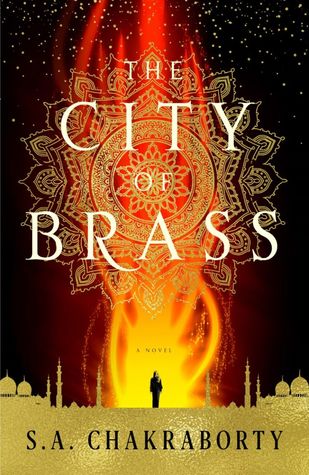
32718027Book: “City of Brass” by S. A. Chakraborty

Publishing Info: Harper Voyager, November 2017

Book Description: Nahri has never believed in magic. Certainly, she has power; on the streets of 18th century Cairo, she’s a con woman of unsurpassed talent. But she knows better than anyone that the trade she uses to get by—palm readings, zars, healings—are all tricks, sleights of hand, learned skills; a means to the delightful end of swindling Ottoman nobles.

But when Nahri accidentally summons an equally sly, darkly mysterious djinn warrior to her side during one of her cons, she’s forced to accept that the magical world she thought only existed in childhood stories is real. For the warrior tells her a new tale: across hot, windswept sands teeming with creatures of fire, and rivers where the mythical marid sleep; past ruins of once-magnificent human metropolises, and mountains where the circling hawks are not what they seem, lies Daevabad, the legendary city of brass–a city to which Nahri is irrevocably bound.

In that city, behind gilded brass walls laced with enchantments, behind the six gates of the six djinn tribes, old resentments are simmering. And when Nahri decides to enter this world, she learns that true power is fierce and brutal. That magic cannot shield her from the dangerous web of court politics. That even the cleverest of schemes can have deadly consequences.

After all, there is a reason they say be careful what you wish for . . .

Giveaway Details: I absolutely LOVED this book, guys! It was the perfect mix of a fresh new fantasy world, a unique setting drawing on the history and geography of the Middle Easy, and, most importantly, two amazing lead characters. Beyond that, given that this is, in fact, a Valentine’s Day giveaway, it does have a romantic subplot.

But really, the main reason I’m wanting to share it with your guys is based on my own absolute love of this book. It was #4 on my yearly Top Ten list and I’m pretty much stalking the author on Twitter for updates on the next book. Plus, I recommend following her and checking out her thread on the original story from 1001 Nights that this book was based on! For your reading convenience, here is a link to that thread! You can also check out my full review to read the entirety of my gushing about this book. So, without further ado, on to the giveaway! It’s open to US entrants only and will run until February 19. Good luck and happy reading!

Click here to enter!


“Rebel of the Sands” Blog Tour & Review

unnamed

24934065Book: “Rebel of the Sands” by Alwyn Hamiton

Publishing Info: Viking Books for Young Readers, March 2016

Where Did I Get this Book: from the publisher!

Book Description: Arabian Nights” meets “Mockingjay” in a world unlike any you’ve ever seen before!

Mortals rule the desert nation of Miraji, but mystical beasts still roam the wild and remote areas, and rumor has it that somewhere, djinni still perform their magic. But there’s nothing mystical or magical about Dustwalk, the dead-end town that Amani can’t wait to escape from. When the gunslinging girl meets Jin, a mysterious and devastatingly handsome foreigner, in a shooting contest, she sees him as the perfect escape route. But in all her years spent dreaming of leaving Dustwalk, she never imagined she’d gallop away on a mythical horse, fleeing the murderous Sultan’s army, with a fugitive who’s part of the secret rebel movement plotting to overthrow the Sultan. And she’d never have predicted she’d fall in love with him . . . or that he’d help her unlock the truth about who–and what–she is. Debut author Alwyn Hamilton weaves this spellbinding story of treason, passion, and magic.
unnamed-authorAuthor’s Bio: Alwyn Hamilton was born in Toronto and lived between Canada, France, and Italy until the was three, when her family settled in the small French town of Beaune. She studied History of Art at King’s College, Cambridge, graduated in 2009, and lives in London.

Review: I am so excited to participate in this blog tour! Not only because I simply love blog tours (following them, being in them, whatever!), but because of the book that I got to read for this one. “Rebel of Sands” is one of those stories that has been on my TBR pile forrrevveer. And I really have no excuse as to why I haven’t gotten to it before. But now I can just smugly feel that my procrastination was just divine providence for my being able to review it now with fellow bloggers.

There was a lot to love about this book, and the story wastes no time in laying it all out before you. If there is one word that I would use to describe this book it would be “fast-paced” (hyphens make it one word!). The story starts out with us quickly meeting our heroine, Amani, and getting a brief overview of the life she’s been leading, one that has been restricted by her gender, her status as an orphan, and her complete lack of funds to get herself the heck out of dodge. Wham, bam, a few pages later, Amani has gotten herself caught up in things over her head and found herself in the company of the roguish, Jin, who is now her best bet out into the wide world. From there, the adventure is just getting started, with mythical beasts and action around every corner.

I very much enjoyed Amani as a leading character. Her narration is witty, but believable, never falling into any of the too-easy cliches for smart-mouthed heroines. Further, her banter with Jin also walked this line well. Their romance was a nice addition to the story, but didn’t overwhelm the action or Amani’s character arc on her own.

I also loved the Persian setting for this story. I’ve been on a bit of a kick of this kind (along with the rest of the YA community it seems), and have enjoyed other books with a similar setting to this (“Wrath of Dawn” & “City of Brass” come to mind). The desert setting and the mythology of the region are always appealing, and I enjoyed them just as much in this version as I have in others. This story was also more action packed than some of the others, which I thought played well laid upon this desert setting.

My one critique comes in the middle of two positive aspects. I liked the setting, as I’ve said, and I like Amani’s special skill of being a sharp shooter. My only problem was the combination of the two sometimes lead the book towards feeling more like a Western than anything else, which I felt like took away from the Persian culture and setting. It almost managed to re-focus the story back to the more common Euro-centric fantasy books that are so predominant. This was a bit unfortunate as it ended up shooting (ha!) itself in the foot, taking out one of its own creative strengths a bit.

But, other than that, I very much enjoyed reading “Rebel of the Sands!” It was a quick read, full of action and adventure, and featuring a relatable heroine whose story I’m eager to continue following.

Rating 8: A action-packed romp with strong country Western themes and a witty heroine!

Next Stop on the Blog Tour: I Fangirl About Books

HERO AT THE FALL TOUR SCHEDULE
REBEL OF THE SANDS SCHEDULE
WEEK ONE
1/30 – Spinatale Reviews – Review
1/31 – Library Ladies – Review
2/1 – I Fangirl about books – Review
2/2 – Aimee, Always – Quote Wallpaper
WEEK TWO
2/5 – Opalsbookjems – Review
2/6 – Mundie Moms – Review
2/7 – As Told By Michelle – Review
TRAITOR OF THE THRONE SCHEDULE
WEEK THREE
2/12 – YA and Wine – Review
2/13 – Adventures of a Book Junkie – “5 Reasons to Read the Series”
2/14 – ReadingAnyone – Review
2/15 – The Clockwork Bibliophile – Booklook + Photo Feature
WEEK FOUR
2/20 – The Lovely Books – Review
2/21 – Never Too Many To Read – Creative
2/22 – Sisters Who Read – Creative Post
HERO AT THE FALL SCHEDULE
WEEK FIVE
2/26 – Writing is Hard – Review + Social Media Promo
2/27 – Mike the Fanboy – Fun Recap of Series
2/28 – My Friends are Fiction – Review
3/1 – The Young Folks – Review
3/2 – Lisa’s Lost in Lit – Creative
WEEK SIX
3/5 – The Reader Bee – Review + Bookstagram Post
3/6 – Seeing Double in Neverland – Review + Creative Insta Post
3/7 – A  Book and A Cup of Coffee – Playlist
3/8 – Fiction Fare – Moodboard
WEEK SEVEN
3/12 – The Eater of Books – Moodboard
3/13 – Love Is Not a Triangle – Review + Bookstagram Picture
3/14 – Tales of the Ravenous Reader – Creative Content
3/15 – Forever Young Adult – Review

Serena’s Review & Giveaway: “Shadowsong”

30694168Book: “Shadowsong” by S. Jae-Jones

Publishing Info: Wednesday Books, February 2018

Where Did I Get this Book: ARC from the publisher

Book Description: Six months after the end of Wintersong, Liesl is working toward furthering both her brother’s and her own musical careers. Although she is determined to look forward and not behind, life in the world above is not as easy as Liesl had hoped. Her younger brother Josef is cold, distant, and withdrawn, while Liesl can’t forget the austere young man she left beneath the earth, and the music he inspired in her.

When troubling signs arise that the barrier between worlds is crumbling, Liesl must return to the Underground to unravel the mystery of life, death, and the Goblin King—who he was, who he is, and who he will be. What will it take to break the old laws once and for all? What is the true meaning of sacrifice when the fate of the world—or the ones Liesl loves—is in her hands?

Previously Reviewed: “Wintersong”

Review: I’ll be honest, the only reason I decided to pick this series back up after my lackluster response to “Wintersong” was the fact that the publisher was kind enough to send me an ARC. But, while I still didn’t love this series as much as others have, this book was an improvement on the first, and I found myself enjoying more of it as I went along. As a whole, I can also see why this duology is as popular as it is, even if it wasn’t my cup of tea.

Set six months after the events of the first book, Liesl is trying to set her mind and action on her and her brother’s music. But this is easier said than done and she can never quite shake the memory of her time spent below with the enigmatic Goblin King. Shocking no reader ever, events occur that once again lead Liesl down into the Underground and back into the presence of the Goblin King. Now the stakes are even higher, and Liesl must once again try to puzzle out the truth of her mysterious beau.

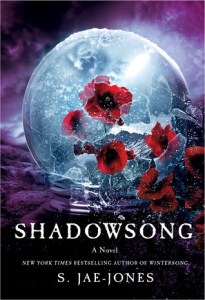
First off, I have to give props to the designer of the cover art for both this book and “Wintersong.” Both of these covers are gorgeous, and these are exactly the types of covers that would stop me short in a bookstore and get me to pick up a book. So well done on that front!

As I said, I did end up enjoying this book more than the first and I think this largely has to do with my connecting to the darker tone and topic that was introduced in this book. I still have an ongoing issue with the writing style which I find to be overly dramatic and taking itself too seriously, but at least here, in this book, that style of writing seems to better fit with the tale that is being told. The events and themes are dark and dramatic, so a verging-on-melodramatic tone doesn’t grate up against the story that is being told, but instead can work to support it.

I also appreciated the shift in focus that this book takes, away from Liesl’s relationship with the Golblin King and towards her relationship with her brother. I love a romance as much as the next person (perhaps more, if I’m honest), but these two’s romance wasn’t something I loved the first go around, so for me, a shift to a sibling relationship, something that I often adore in my books, was a welcome surprise. I especially liked the complications in their relationship, the fact that while they could not particularly like each other at times, they were still willing to sacrifice whatever was necessary on the other’s behalf it if was necessary.

However, I still felt that the story moved too slowly, dragging at point. And this was made worse by the lengthy time spent in Liesl’s head as she pined over the Goblin King. But the world building was excellent, and, again, I felt that the author was better able to leverage her strengths in this area this time around to balance out portions of the story that didn’t connect with me as much. There were some nice subtle touches with reoccurring elements throughout the book that did help bring the story to another level.

In the end, I have mixed feelings about this book. For me, it is definitely an improvement on the first story, dealing more fully with some tough subjects, creating a more consistent storyline, and shifting the focus off the romance and onto a sibling relationship. However, some of the issues I had with the writing style are still there, but I know that this is a very preferential opinion and that others enjoy this type of writing more than I do. There’s also the fact that because the story is a departure from the first, I’m not sure how it will be received? Will others who didn’t enjoy the first also find themselves liking this one more because of the changes (will they even read it if they didn’t enjoy the first)? Or will readers who loved the first one be turned off by the shifts in this story? I’m not sure!

But you can decide for yourself because I’m giving away a copy of “Shadowsong!” The giveaway is open to U.S. residents only, and will be running until January 31st!

Click here to enter!

Rating 6: A welcome change for a reader who didn’t love the first book. A darker and more serious story that better matches the dramatic style of writing.

Reader’s Advisory:

“Shadowsong” is a newer book so isn’t on any relevant Goodreads lists, but it should be on “Best Goblin Books.”

Find “Shadowsong” at your library using WorldCat!


Bookclub Review: “Book of a Thousand Days”

248484

We are part of a group of librarian friends who have had an ongoing bookclub running for the last several years. Each “season” (we’re nerds) we pick a theme and each of us chooses a book within that theme for us all to read. Our current theme is a “Dewey Call Number” theme. This book comes from a Dewey Decimal Call Number range, and has to fit the theme of that range.

For this blog, we will post a joint review of each book we read for bookclub. We’ll also post the next book coming up in bookclub. So feel free to read along with us or use our book selections and questions in your own bookclub!

Book: “Book of a Thousand Days” by Shannon Hale

Publishing Info: Bloomsbury Children’s Books, September 2007

Where Did We Get this Book: the library!

Book Description: When Dashti, a maid, and Lady Saren, her mistress, are shut in a tower for seven years because of Saren’s refusal to marry a man she despises, the two prepare for a very long and dark imprisonment.

As food runs low and the days go from broiling hot to freezing cold, it is all Dashti can do to keep them fed and comfortable. With the arrival outside the tower of Saren’s two suitors–one welcome, the other decidedly less so–the girls are confronted with both hope and great danger, and Dashti must make the desperate choices of a girl whose life is worth more than she knows.

Serena’s Thoughts

I have read a good number of Shannon’s Hale’s books. Not only the Princess Academy trilogy that I reviewed for this blog, but a few of her other YA stories like “The Goose Girl” and such. I’ve always loved her simple, yet beautiful, writing style, and as a fan of fairytale retellings, her work is always a hit for me. However, I don’t particularly love epistolary stories, which was the reason I held back on this one. I always have a hard time turning off my brain and not thinking about how incredibly unrealistic it is that anyone would write out entire conversations in their journal. But, I admit, I have been proven wrong in the past, and there are several books I can think of (“A Brief History of Montmoray,” for example) that I have enjoyed despite of this.

For the first third of the trilogy, I didn’t even need to bother with this concern. Dashti and the Lady Saren have been locked in a tower. There isn’t much else to do other than write extensive entries in ones journal! While some readers might feel this section is slow, I particularly enjoyed this section of the book. Not only do we have tons of character development for Dashti that builds up a good foundation for her character which goes on to drive important decisions she makes later in the story, but I enjoyed the fact that the threat wasn’t really any sort of villain. The threat was simply the looming dark, isolation, and dwindling food that came with their imprisonment. Throughout this ongoing challenge, Dashti’s strengths are apparent. She is resourceful, optimistic, hard-working, and willing to find joys in small things.

As the story progress, we move beyond the tower. I also enjoyed these segments, but I do think they were made better by what we had learned of Dashti and the Lady Saren as characters from their time in the tower. Further, as the story progressed readers are given more opportunities to fully immerse themselves in this world. I particularly appreciated the setting that Hale chose for this story, placing it in a kingdom that is similar to Mongolia. After reading a million and one European-set fairytale retellings, this choice was a breath of fresh air.

This story is also a bit more dark than some of Hale’s other works. I thought this was another big point in its favor. While Dashti herself is an optimistic character, the challenges that she face are by no means simple or easy. The villain is truly terrifying, and the sacrifices that Dashti makes throughout the book are at times heart-breaking. This layer of darkness and seriousness provided a nice balance to Hale’s simple and clear storytelling.

Beyond Dashti, the characters were excellent. As I said, the villain was worthy of the story and quite creepy. And Lady Saren was the type of character you could enjoy disliking. This was made even better by the fact that she was also a realistic character whom you couldn’t help but sympathize with. She is what she was made to be, and while that was frustrating, it also portrayed a very honest take on a character. There was also a cat, My Lord, whom we all at bookclub probably obsessed about more than is healthy.

Kate’s Thoughts

“Book of a Thousand Days” was my first foray into Shannon Hale, and as an introduction to her work I found it to be pretty good! Though fantasy of this sort isn’t really my cup of tea, I was immediately taken in by the medieval Mongolia-like setting. Like Serena, I found it to be a nice change from the Euro-centric fairy tales and fairy tale re-tellings that the genre is kind of inundated with, at least in our culture and collective consciousness. I had never heard of the fairy tale that this was based off of, so I didn’t have the context of comparison, but ultimately that didn’t matter. Hale made this story her own, and she made the characters interesting in their own right.

Character wise, I really liked Dashti. Perhaps it was because of her first person perspective vis a vis diary entries, but the way that her character changed and progressed was a really nice story to follow. She goes from being absolutely and completely devoted to Lady Saren, to a well rounded and independent person in her own right who can stand on her two feet. The choices she made, while sometimes frustrating and upsetting, were within the realm of her character. And then there’s Lady Saren, who I found to be incredibly unlikable and obnoxious. But even that characterization was wholly believable based on the way that she had been raised, and based on the dark stuff that she had gone through. They both came from various kinds of hardship and trauma in their lives, and Hale did a good job of showing different ways that we cope (without casting judgement).

I did think that the tower part was a bit stronger than the time after. I will admit that I was kind of taken by surprise that they left the tower at all. That isn’t to say that the second part of the book didn’t have well done moments or was poorly written, I just liked spending a claustrophobic and tense time as Dashti and Saren started to wonder if their food supply was going to dwindle to nothing.

And don’t even get me started about My Lord the cat.

All in all I think that “Book of a Thousand Days” was a nice fairy tale retelling, and I see why Shannon Hale has the following that she does. I don’t know when or if I’ll pick up more of her stuff, but I’m glad that I can say that I have read her work.

Serena’s Rating 9: A bit darker than some of Hale’s other works, but better for it. An excellent re-telling of a lesser known fairytale and one that features an excellent leading lady in a unique location.

Kate’s Rating 7: The great location and the awesome protagonist made this book a worthwhile read. Even though fantasy of this type isn’t really my thing, I had a fun time reading this book and give props to Hale for creating this world.

Bookclub Questions:

  1. This book is divided into three sections. How did you feel about each of these sections? Did you have a favorite? A less favorite?
  2. This book is set in a world based on Mongolia. What aspects of the world-building and the cultures of Dashti’s world spoke to you?
  3. Towards the middle of the book, Dashti makes a decision with regards to My Lord, how did you feel about this? (Like I said, we at bookclub were a bit fixated on this question!)
  4. What did you think of Khan Tegus as a character? How did his relationship with Dashti compare to romances you usually see in fairy tales?
  5. What did you think of the mucker vs gentry dynamic?
  6. What did you think of the end? Did it feel believable? Should it feel believable as a fairy tale retelling?

Reader’s Advisory:

“Book of a Thousand Days” is on these Goodreads lists: “Best Lesser-Known Books” and “Best Princess Tales.”

Find “Book of a Thousand Days” at your library using WorldCat

Next Book Club Pick: “The Golden Compass” by Philip Pullman


Kate’s Review: “Haunting The Deep”

33977969Book: “Haunting the Deep” by Adriana Mather

Publishing Info: Knopf Books for Young Readers, October 2017

Where Did I Get This Book: The library!

Book Description: The Titanic meets the delicious horror of Ransom Riggs and the sass of Mean Girls in this follow-up to the #1 New York Times bestseller How to Hang a Witch, in which a contemporary teen finds herself a passenger on the famous “ship of dreams”—a story made all the more fascinating because the author’s own relatives survived the doomed voyage.

Samantha Mather knew her family’s connection to the infamous Salem Witch Trials might pose obstacles to an active social life. But having survived one curse, she never thought she’d find herself at the center of a new one. 

This time, Sam is having recurring dreams about the Titanic . . . where she’s been walking the deck with first-class passengers, like her aunt and uncle. Meanwhile, in Sam’s waking life, strange missives from the Titanic have been finding their way to her, along with haunting visions of people who went down with the ship. 

Ultimately, Sam and the Descendants, along with some help from heartthrob Elijah, must unravel who is behind the spell that is drawing her ever further into the dream ship . . . and closer to sharing the same grim fate as its ghostly passengers.

Review: Never in my wildest dreams did I think that I would have a deep and obsessive attachment to a YA paranormal romance series, and yet here we are. It’s a bit more than a year since I read the bananas kooky and super awesome “How To Hang A Witch”, and I was waiting with bated breath to finally get my hands on book two of the series. I knew that it was going be a series, and that I’d be able to gallivant with my beloved witch Samantha and her ghost boyfriend Elijah once again. The moment that I found out it was finally coming out, I was excited. And when I found out that the main plot point involved The Titanic, oh man….

giphy4
SEVENTH GRADE KATE IS FREAKING OUT!! (source)

If I were more cynical or less inclined to give this series all the passes because of my affection for it, I’d probably call out Mather for taking another part of her personal family history to fuel this book (if the next one takes place during another significant event that her family happened to be a part of I will start to really question). But as of now I’m just happy to be along for the ride. Mather has really fallen into a strong stride with her characters now, as Sam no longer feels like she’s trying to hard to be cynical and her friendship with The Descendants is on easy and natural footing. I was worried that bringing her Dad into the dynamic might make things a bit tricky, especially since he doesn’t know about his ex-wife Vivian being a witch who tried to curse him and Samantha, only foiled because of Samantha’s own dabbling in magic. But luckily, he adds a new foil for Sam to interact with, another skeptic who she is trying to hide herself from.

The Titanic theme was a little harder for me to swallow, though I did overall enjoy it enough. I think that my reticence is less because of how Mather approached it and more because I worked in an exhibit that was all about the Titanic during my museum days and I’ve been pretty burned out on the topic ever since. It also made some of the inaccuracies more glaring than they would have been otherwise. For example, there is mention of the Steerage passengers being locked behind gates so that First and Second Class had access to the lifeboats first. Yeah, that didn’t happen, so it was a little disheartening that that ‘fact’ was kept in, especially since I was under the impression that Mather did the research before writing. Plus, yeah, I have the skeleton in my closet that I did indeed see “Titanic” in the movie theater four times, and so my lingering embarrassment paints my judgment. It wasn’t even because of Leo and I don’t really want to talk about it…

But hey, let’s be real. I’m not here for the Titanic plot line. I’m mostly here for Elijah, the handsome and mysterious ghost who had to leave his lady love Sam behind when he crossed over at the end of “How To Hang A Witch”. Or did he? Spoiler alert, he did not.

giphy5
This must be what “Twilight” fans felt like. (source)

I really like Elijah and Sam as a couple, mostly because while Elijah does have his old world ideas of chivalry and protecting her, Sam shuts that shit down and he respects her and her decisions. He isn’t in this one as much as he was in the first book, but when he is there it’s really great and romantic. Plus, that kind of lets Sam show off that she is more than her love life, and given that some of the more popular paranormal romances stumble in this regard, it’s refreshing to see her have her own agency and personality. True, there’s a bit of a kerfuffle regarding Jaxon, the boy next door who is also keen on Sam (damn love triangles), but the good news is that Sam doesn’t really waffle or question where her heart is. She knows exactly who she wants, and so this love triangle is basically defunct, which is the best kind of love triangle. True, it adds for needless tension that I just kind of skipped over, but it made it easier to hate Jaxon, which I was down for.

OH, and the female friendships are in full swing in this book! In “How To Hang A Witch” there was an enemy situation between Sam and the Descendants, but now that the conflict has been resolved Sam, Alice, Susanna, and Mary are BFFs for life and it’s good seeing positive female friendships in a YA novel. We also are getting to know each of them a bit more, and I can only hope that this continues because I need to know more about all of them. Especially Alice, that sassy and snarky Queen Bee!

Overall, “Haunting The Deep” continues a series that I’m still totally invested in. I hope I don’t have to wait long for the next one, as I’m not sure I can go for another year without another Elijah fix.

Rating 8: A fun and soapy sequel to one of my favorite not so guilty pleasure books, “Haunting The Deep” brings us back to the delightful bitchcraft of the Descendants, the plucky Sam, and the swoon-worthy Elijah.

Reader’s Advisory

“Haunting the Deep” is a newer book and isn’t on many relevant Goodreads lists, but it’s included on “2017 YA Horror”, and I think that it would fit in on “Wise Women, Witches, Midwives, Healers, and Strong Girls!”.

Find “Haunting the Deep” at your library using WorldCat!

Previously Reviewed: