Serena’s Review & Giveaway: “Furyborn”

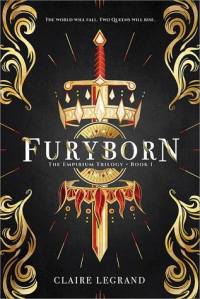
34323570Book: “Furyborn” by Claire Legrand

Publishing Info: Sourcebooks Fire, May 2018

Where Did I Get this Book: NetGalley and BookishFirst

Book Description: When assassins ambush her best friend, the crown prince, Rielle Dardenne risks everything to save him, exposing her ability to perform all seven kinds of elemental magic. The only people who should possess this extraordinary power are a pair of prophesied queens: a queen of light and salvation and a queen of blood and destruction. To prove she is the Sun Queen, Rielle must endure seven trials to test her magic. If she fails, she will be executed…unless the trials kill her first.

A thousand years later, the legend of Queen Rielle is a mere fairy tale to bounty hunter Eliana Ferracora. When the Undying Empire conquered her kingdom, she embraced violence to keep her family alive. Now, she believes herself untouchable–until her mother vanishes without a trace, along with countless other women in their city. To find her, Eliana joins a rebel captain on a dangerous mission and discovers that the evil at the heart of the empire is more terrible than she ever imagined.

As Rielle and Eliana fight in a cosmic war that spans millennia, their stories intersect, and the shocking connections between them ultimately determine the fate of their world–and of each other.

Review: I’m pretty sure “Furyborn” wins the competition for most hyped book this spring. Everywhere I look there are lists including it as most looked forward to, rave reviews, or options to get your hands on it early. So props to the marketing team for getting this one out there. However, as has become a bit of a habit for me with much-hyped books, I had some mixed feelings on this one. Mixed though! I did enjoy this more than “The Cruel Prince” which was my last big letdown from the hype machine.

Most of the things I enjoyed in this story were also directly tied to aspects that I did not. Unlike other books, the problems I had with this story weren’t connected as much to the actual characterizations we’re given or the overall story. Both were mostly strong. But there are writing choices throughout the story that frankly sabotaged the good efforts made elsewhere.

For example, to start out. Both Rielle and Eliana are strong enough characters on their own. They live in very different worlds, and while some of their struggles are similar (trying to find their place in the world & hiding/fighting against perceptions that might set others against them and those they love), they are distinct in their own right. They each have a unique voice, always an important element in shared POV books. I personally found myself a bit more drawn to Eliana. Her story has a bit more mystery (for reasons we’ll discuss later), and as a character, I enjoyed her more morally grey worldview. However, I didn’t dislike Rielle either.

The other side of this coin, though, is the fact that both of these characters feel cut off at the knees by the alternating POVs. It’s not even a complicated problem: each POV is simply too short. The reader is being constantly bounced back and forth between each girl’s story, that one can never really settle into either character or plotline. This results in me kind of just not caring, when all is said and done. Readers need a chance to settle into a character, to really come into their world and understand their motivations and challenges. But when we’re constantly bounced back and forth between two very different stories every few pages, there is never a chance to really get that moment where you become invested. It was a fine read, but it was just that, a read. I never felt like I was really in this world. I was always just reading about it.

This problem extends to the world-building. There’s a lot that needs to happen on this front for a story that is going to try to present two very different worlds, thousands of years apart. The author essentially has to do twice the world-building to successfully pull it off. But, again, because of the quick switches between one character and the other, I never felt like I had a clear understanding of either of these worlds. There are angels in one? But the details are foggy. The other world has a empire that is set on taking over the world, but why and how? These details are all interesting on their own, but it ultimately felt like the author had bit off more than she could chew. Or, at the very least, more than could be reasonably fit in one novel that also has a lot of other things going on.

The action was fun. There is no denying that this book moves, and it was this that got me through some of the failings in my full connection to either character or the world itself. What’s more, I enjoyed that the action was very different between each girl’s storylines. Rielle’s ongoing magical trials were exciting and fast-moving. Whereas Eliana’s were caught up in politics and the violent nature of what the world has become under this ambitious empire. But, again, this same fast-moving action was also part of the reason the world-building and character development felt stunted. There simply weren’t enough pages to fit in all of this action while also developing two fully-realized characters and two fully expanded worlds.

I did  also have one major criticism of this book. I read a good article recently that questioned whether a prologue is ever necessary for a book. The author of the essay mentioned that very talented authors could pull them off (like J.K. Rowling and her prologue in the first Harry Potter book), but even then, did you need them? This book serves as a perfect example where, for me, the prologue actively damaged my perception of the story right off the bat. It’s not long, but in even those few pages, the author managed to spoil almost every single reveal that was to come throughout the rest of the book. I already new the secrets that plagued some of our characters, thus making their confusion and ultimate surprise incredibly uninteresting to read about.

Further, I feel like this prologue was meant to inspire curiosity about how one character ended up where she did. But instead, I felt spoiled for her entire plot and thus her chapters held very little interest. There was no real threat behind any of the things she confronted because I knew where she ended up. If I hadn’t already been losing interest in characters because of the quick jumps back and forth due to the POV switches, this prologue alone did enough to pretty much kill off my interest and curiosity in at least one of these two.

All of that said, there book is still a fairly strong outing in a new fantasy world. There isn’t a lack of action or story, and the characters are interesting on their own. The problems I had were all down to stylistic choices (too short of chapters between switches, an uneven balance between action and world-building, and an unnecessary and ultimately harmful prologue). I’ll probably still stick around to read the next books in the series, however.

Want to judge for yourself? Get your hands on an ARC of “Furyborn” before it comes out! Giveaway is open to U.S. residents only and ends May 10, 2018.

Click here to enter!

Rating 6: Had some good things going for it, but the author made a few writing choices that seemed to shoot the book in the foot.

Reader’s Advisory:

“Furyborn” is an upcoming title, but it it is included on this Goodreads list: “Badass YA Heroines.”

Find “Furyborn” at your library using WorldCat!


Serena’s Review: “Song of Blood and Stone”

36347830Book: “Song of Blood and Stone” by L. Penelope

Publishing Info: St. Martin’s Press, May 2018

Where Did I Get this Book: ARC from the publisher

Book Description: Orphaned and alone, Jasminda lives in a land where cold whispers of invasion and war linger on the wind. Jasminda herself is an outcast in her homeland of Elsira, where her gift of Earthsong is feared. When ruthless soldiers seek refuge in her isolated cabin, they bring with them a captive–an injured spy who threatens to steal her heart.

Jack’s mission behind enemy lines to prove that the Mantle between Elsira and Lagamiri is about to fall nearly cost him his life, but he is saved by the healing Song of a mysterious young woman. Now he must do whatever it takes to save Elsira and it’s people from the True Father and he needs Jasminda’s Earthsong to do it. They escape their ruthless captors and together they embark on a perilous journey to save Elsira and to uncover the secrets of The Queen Who Sleeps.

Thrust into a hostile society, Jasminda and Jack must rely on one another even as secrets jeopardize their bond. As an ancient evil gains power, Jasminda races to unlock a mystery that promises salvation.

The fates of two nations hang in the balance as Jasminda and Jack must choose between love and duty to fulfill their destinies and end the war.

Review: I was super excited when I received this in the mail. For one, look at that gorgeous cover? I’m not usually a fan of covers with models, but I’ll make an exception for this one. Beyond that, I was intrigued by the premise and am always stoked when I can find fantasy fiction featuring a diverse cast of characters. And while there were some slower moments, overall, I really enjoyed this read!

The world is literally split in two by an impenetrable magic force field that has kept two warring civilizations separate for as long as anyone can remember, with only brief breaks of warfare every few centuries when the field falters. On one side, Elsira, a technologically advanced civilization has risen, longing for the day when their sleeping Queen will again awaken. On the other side, Lagamiri, a nation full of magic wielders who can control the elements, but who are ruled by a tyrannical and vicious God King. The prejudices are strong on each side. Jasminda, a daughter of both races, has grown up in a country where her skin marks her as the enemy, as an Earthsinger. She’s kept to herself these long years, finding isolation to be her best bet for a quiet life. That is until she meets Jack, an Elsiran soldier with his own secrets, but who also shows her that there are those out there who see her as more than just an “other.”

I loved the world-building in this story. The idea of magic users vs. technology isn’t anything new, but what really added to this take on it was combining it with other prejudices, on both sides, and the fear and ignorance that can come from these sorts of long-standing built up generalizations about people. Throughout the story, we are also given glimpses into the ancient history of this world, and this is really what solidified the concept for me. Through these, we see that the world wasn’t always this way, and in fact many things had been turned on their heads. The origin story was compelling and each chapter was intro’d with little parables from this almost forgotten time. I particularly enjoyed how each parable loosely connected to the happenings of each chapter.

Through this history and the current situation, Jasminda and Jack both portray different roles and experiences of segregation and prejudice. Jasminda has lived a life of not belonging. She’s grown up in a country that judges her for her skin color and her power, but it is her home. I enjoyed how much this fact was hit home. Just because she looked like those on the other side of the wall, didn’t mean she would be any more welcome there or that that should in any way be her place, based on only one part of her being. Jack, as an advocate and an example of a more tolerant and enlightened individual, still must learn to understand the true battles that those like Jasminda face. His idealism is often based in naivety. But through him, Jasminda, too, learns that not everyone is as they seem, and that there may be a way forward for both peoples together.

The story also had a strong through line on the experiences of refugees, and the terrible choices they face. Here, many Lagamiri secretly cross the border, hoping to escape the terror that is their homeland. This choice isn’t only leaving behind all they have known, but is to willing walk into a country knowing they will face a different kind of persecution there. They live in camps and face many injustices at the hands of a struggling nation looking for someone to blame. And yet, this is still a better choice than the horrors that wait back home.

For all of these positives, I did struggle with a few things. While the story took on some big concepts, giving detailed focus and attention to these challenges, I never quite felt connected to the story. Jasminda and Jack, while interesting protagonists, were each a little too perfect to feel real. They were just kind of…fine. I wasn’t hugely invested in their individual struggles, but happy to go along for the ride.

The story also isn’t helped out by a few strange choices with pacing and explanations for the magic system. The plot would zip through a few key moments, with very little clarity on what was actually taking place, and then suddenly move very slowly through other, more character-driven scenes. I think this is likely a show of where the author’s true interests and talents as a writer lie, but it makes for a rather bumpy reading experience.

Also, at different times, it felt like distances on the map changed drastically, or didn’t match with the expanse of the world that we’re told exists. It seemed, at times, that the entire country could be traveled in only a few hours, which doesn’t make sense given the references to geographical elements and the population that is hinted at. Further, while the magic system was interesting, I struggled to understand how it actually worked. For example, it was referenced several times that Earthsingers couldn’t kill with their magic, but could use the elements in every other way. But what does that actually look like? If they sent fire at someone, wouldn’t that still be killing with their magic? Or does it do nothing, and if that’s the case, then what power does that actually give them? I found it confusing, especially given the fact that this restriction was referenced more than once.

The romance, kind of like the two main characters, was also a bit too perfect. For all of theirs struggles, Jasminda and Jack’s love is never really the complicated or tragic “Romeo and Juliet” story that we’re promised. I enjoyed the romance, don’t get me wrong, but I think the misleading description played against it, in the end.

All in all, I very much enjoyed “Song of Blood and Stone.” It’s a great example of fantasy fiction tackling bigger topics like diversity, prejudice, and the challenges faced by refugees. However, there is a large focus on romance, so readers who don’t enjoy those elements might want to avoid this one, and the characters are also a bit flat.

Rating 7: Even with some missteps, would still recommend it based on the strengths of the challenges it addresses, especially set against an interesting fantasy backdrop.

Reader’s Advisory

“Song of Blood and Stone” can be found on these Goodreads lists: “Non-Caucasian Protagonists in Science Fiction, Fantasy, Horror, and Paranormal Romance” and “Fantasy Romance.”

Find “Song of Blood and Stone” at your library using WorldCat!

Serena’s Review & Giveaway: “The Queen of the Tearling”

22864842Book: “The Queen of the Tearling” by Erika Johansen

Publishing Info: Harper, July 2014

Where Did I Get this Book: bought it!

Book Description: An untested young princess must claim her throne, learn to become a queen, and combat a malevolent sorceress in an epic battle between light and darkness in this spectacular debut—the first novel in a trilogy.

Young Kelsea Raleigh was raised in hiding after the death of her mother, Queen Elyssa, far from the intrigues of the royal Keep and in the care of two devoted servants who pledged their lives to protect her. Growing up in a cottage deep in the woods, Kelsea knows little of her kingdom’s haunted past . . . or that its fate will soon rest in her hands.

Review: I know, I know. How have I not read this one already? But I’ve been burned by the hype machine before, so sometimes I just like to, you know, wait and see. And, also, I have a massive TBR list and some these slip on through! But while I was on vacation a few weeks ago, I was in the bookstore (cuz obviously this is what one does when one is on vacation: check out the Barnes and Noble in THIS new town!!). And while I was browsing I ran across this book and was like “why the heck not?” So here we are.

Kelsea has lived a remote life, kept away from all of society and trained up by a reclusive couple. But the day has come when all of that changes, and Kelsea must set out with stranger to reclaim her throne. But while she knows her goal, she doesn’t know the secrets of the past, her own or that of her kingdom’s. Now, not knowing who to trust, Kelsea must set a new course for herself and her kingdom.

So let’s just get it out there. I had very mixed feelings about this book. It started out, I was loving it. Then there were a couple of characterization bits that I hated with a passion. Then more story, liked that. Then BAM! Oops, didn’t know what was really going on the entire time, so dislike that. It was all over the place, really.

It’s hard even to say things that I liked because while I liked parts of them, there were other parts I very much didn’t like. But let’s start with the plot. I loved the beginning of this book and the mysteries that were set up for Kelsea. The logic behind why so much was kept from her never quite sat right, but as it wasn’t a new conceit, I was happy enough going with it (just don’t think too hard about how “prepared” someone could be if they’ve never even interacted with anyone but the couple who raised them..).

The writing was solid, and I, personally, can enjoy a slower moving plot, which this definitely was. Much of this book was essentially a travelogue, but I was all there for it. Give me an epic quest book any day of the week!

Kelsea herself was also a sympathetic character. Until she wasn’t. I really don’t understand why we keep getting characters like this, who have very unhealthy ideas about beauty standards. Here, Kelsea makes the terrible comment about the only thing worse than being ugly (Kelsea of course doesn’t think she is beautiful at all) is being ugly and thinking you’re beautiful. Cuz yes, how dare you have good self-esteem if you’re not conventionally beautiful! It was terrible. But again, this was one particularly bad moment within an entire book. Much of the rest of the time, I found Kelsea to be a compelling and interesting heroine.

The world building was where things got batty. For a good chunk of this book, the world is presented as a fairly standard other-world, Medieval Age, fantasy novel, of the type we’re all familiar with. But nope! Out of nowhere comes the reveal that this is actually some type of dystonian world set in the future after things went really wrong? This seems like it could be a cool idea on paper, but in reality, it kind of just pissed me off. For one, I didn’t like being caught by surprise by it. It wasn’t the type of reveal that added to the story, but instead made me start questioning all of the things I had been completely on board with before it happened. Now suddenly that Medieval Age type setting seems kind of dumb and how the heck would that even happen? Maybe if the author had introduced this concept at the beginning of the story, it would have been less jarring. But, for me, I didn’t appreciate the bait and switch of it all and it left a bad taste in my mouth.

I did enjoy the villain, and again, much of the story of Kelsea’s travels. But, as I said, I had some fairly big problems, too: the fixation on beauty (whether one has it or not, whether it leads to rape, etc) and, ultimately, the world-building itself after the reveal that this is in some future time. I’m betting that people’s appreciation of this book must have lived and died on how that switch was received. Given the general popularity of this book, I must be in the minority in finding it jarring. But I know that people love this book, so I’m looking to re-home my book with a giveaway! The giveaway is open to US residents only  and ends May 1.

Click here to enter!

Rating 6: Had some really good stuff going for it, but burned me a few too many times with weird character beats and an unappreciated bait and switch with the world itself.

Reader’s Advisory

“The Queen of the Tearling” is on these Goodreads lists: “NEW ADULT fantasy & paranormal romance” and “Best Dystopian and Post-Apocalyptic Fiction.”

Find “The Queen of the Tearling” at your library using WorldCat!


Serena’s Review: “Owl Eyes: A Fairy Tale”

38739033Book: “Owl Eyes: A Fairy Tale” by Molly Larzer

Publishing Info: Fire and Ice YA, March 2018

Where Did I Get this Book: NetGalley

Book Description: Nora knows three things: she is a servant, her parents are dead, and she lives in the kitchen house with her adoptive family. But her world is torn apart when she discovers that her birth father has always been right there, living in the house she serves.

This discovery leads Nora to more questions. Why was she thrown in an ash-covered room for asking about her father? Why is a silver-bladed knife the only inheritance from her birth mother? Why is magic forbidden in her household—and throughout the province of the Runes? The answers may not be the ones Nora hoped for, as they threaten a possible romance and her relationship with the adoptive family she loves.

With the announcement of a royal ball, Nora must decide what she is willing to give up in order to claim her stolen birthright, and whether this new life is worth losing her family—and herself.

Review: What? Another fairy tale retelling book review by me? Shocking, I know! It’s like I have some personal mission to read every single one that is ever published! (I don’t, but at this point, does it really make a difference?) As I have a particular fondness for fairy tales that lean in on the darkness that was inherent to many of the originals, I jumped all over this title when I saw it pop up on NetGalley. But, while the darkness and world building did deliver, I was overall left underwhelmed with this new entry to the vast world of Cinderella stories.

For the good: the story delivers on the essentials of what is laid out in the book description above. This is indeed a Cinderella story, but nicely twisted on its head so as to not simply be another rehashing of a very often rehashed story. I enjoyed the tension that was built throughout the story between Nora’s desire to uncover the truth about her family and herself alongside her realizations of the good things that have made up her life as is. As it’s mentioned in the description, the scene early in the book when she is thrown in the ash covered room plays for particularly good effect throughout, and her ongoing struggles with the fallout of this event are repeatedly hit home. She was, after all, a very young girl when it took place.

I also enjoyed much of the world-building, but here also is where my criticisms begin to come to play. The world of Colandaria sounds like an intriguing place, with an interesting magic system and a history of wars between it and its neighbors. However, none of this is fleshed out or explored in any meaningful way. Instead, details are sprinkled here and there on the periphery of Nora’s tale, but never quite enough to give me a solid sense of place or investment in the world’s effect on the plot line that was unfolding.

The plot was another stumbling block. While things do pick up towards the last third of the book, the action itself felt very stilted. It’s hard to really put my finger on what exactly the problem was. The writing is solid enough, but things seemed to simply progress from one event to another and I was just kind of…there. Every once in a while a few pages would grab me, like the aforementioned scene in the ash room, but then the book would fall back to mundane details for pages on end.

Most of my problem probably lies at the feet of Nora herself. She was simply not an engaging protagonist to follow through this story. Her arc is laid before her, but as she moved through it, her character itself wasn’t one whom I became invested in. She felt very flat, and I had a hard time pinning down any attributes to her as a person. Was she feisty? Reflective? Shy? Ambitious? I couldn’t tell you. Instead, she simply moves through the book, and we move with her. But, as we are seeing this story through her eyes, I was never sure how I felt about it because it was never clear what lens Nora was using herself.

This, in turn, colored my perceptions of the other characters. While some of them seemed to have interesting parts to them (Jack, in particular), because Nora read so flat herself, her views of these others also read as fairly flat. A story like this really lives and dies on the strength of its lead, and my lack of investment in Nora spread easily to those around her.

While I did like the twists and turns the story took, particularly the ball itself, I also wasn’t a huge fan of the romance in this. Simply put, there just wasn’t enough of it. This is a very subjective point of view, however, as I can also see how the lack of romance could be a plus for other readers. I, however, always like a solid romance plot line in my fantasy, particularly in my fairy tale retellings that are, often, inherently romantic tales on their own.

Overall, I was pretty disappointed with this read. There wasn’t anything bad about it, per se, but I just couldn’t seem to care. I found myself often putting the book down and having to force myself to pick it up again. If you absolutely love Cinderella stories, particularly ones with less of a romantic subplot, this may be the book for you. But, all in all, my recommendation is a solid “meh.”

Rating 5: A dull main character ultimately polluted what might have been an interesting retelling of “Cinderella.”

Reader’s Advisory:

“Owl Eyes: A Fairy Tale” is a newer title so isn’t on any Goodreads lists. It should be on “Cinderella Retellings.”

Find “Owl Eyes: A Fairy Tale” at your library using WorldCat!

Serena’s Review: “Torn”

35959724Book: “Torn” by Rowenna Miller

Publishing Info: Orbit, March 2018

Where Did I Get this Book: from the publisher!

Book Description: Sophie is a dressmaker who has managed to open her own shop and lift herself and her brother, Kristos, out of poverty. Her reputation for beautiful ball gowns and discreetly-embroidered charms for luck, love, and protection secures her a commission from the royal family itself — and the commission earns her the attentions of a dashing but entirely unattainable duke.

Meanwhile, Kristos rises to prominence in the growing anti-monarchist movement. Their worlds collide when the revolution’s shadow leader takes him hostage and demands that Sophie place a curse on the queen’s Midwinter costume — or Kristos will die at their hand.

As the proletariat uprising comes to a violent climax, Sophie is torn: between her brother and the community of her birth, and her lover and the life she’s striven to build.

Review: I love to cross-stitch, have loved it for years since I learned to stitch as a little girl. It’s also a handy hobby to support a very unhealthy Netflix binging habit. But it’s also a less common craft nowadays. I have a bunch of friends who knit, a couple of crocheters, but none of my friends embroider. So I was stoked when I saw this book coming this spring from Orbit. A fantasy novel where embroidery IS the magic? I immediately requested a copy and started reading when it arrived (though this then lead to mental confusion: should I READ about embroidery or actually DO my embroidery? Which will be more fun?!?!)

Sophie is a successful business woman, and in a land that is highly regulated with limited mobility for common folk, she is unique in her quick rise. But she possesses a special skill, the ability to sew charms into her elaborate garments. However, her clientele, the nobility of the city, put her in the awkward position of hovering between the wealthy aristocrats whom she serves and the poorer working class where she was born and still lives. Just as she begins to break into this upper class of clients (maybe even a dress commission for the princess and queen!), things begin to go sideways, starting with her brother, Kristos, who is leading a grassroots revolution. Tensions rise as Kristos and his ilk push against the restrictions of their current lives and Sophie tries to balance her ties to her brother, while also maintaining her relationship with her noble clients. But the situations is untenable, and eventually, something will fall…

I always love unique magic systems. There are far too many that simply say “and then magic!” But here, Miller has brilliantly mixed a subtle sort of magic in with a task that is often brushed aside as menial. It is a clever expansion on the “hedge witch” motif that so often appears in the background of other novels, women with barely understood abilities that they tie to the work of their gender, often in cooking and healing. It’s a clever way of taking a domestic task and imbuing it with power, all while acknowledging the value of the task itself, with or without magical elements. All along, Sophie’s success comes not only from her magical abilities, but from her acumen as a business woman and her sheer skill at constructing and predicting fashion.

Sophie also only has a limited understanding of how exactly her charms work, so as the book progresses, the reader gets to explore the inner workings and expanding possibilities of charms alongside her. But from the beginning, I enjoyed the small scenes of her sewing light into garments. It was such a peaceful, lovely image, especially for someone who sews herself.

Other than the magical elements, the majority of the story is devoted to the growing unrest between Kristos’s revolution and the nobility whom Sophie works with and befriends. Miller presents an excellent exploration of what it means to exist between the battle lines of a revolution such as this. When evaluating history, it’s too easy to slot everyone into one camp or the other, but to do so is to ignore what has to be the large number of individuals who just want to go about their lives, understanding the positions of both parties. Sophie has familial ties on one hand and a general sympathy to the plight of the less lucky commoner, but she also has faces to put to the nobility, and through her work with them, understands them to be individuals with their own worries and concerns. At its core, this is a story of the line where idealism meets pragmatism, and the truth of what revolt and revolution looks like for all involved.

The book isn’t perfect, however, and it was perhaps a bit long for my taste. The story begins to sag a bit towards the middle as Sophie struggles to find her role in this building conflict. It also focuses heavily on the ins and outs of her day-to-day life and work in the shop. I enjoyed many of these details, but it might be a struggle for others who are looking for a more action-packed story.

It also has a sweet romantic plot line. While I enjoyed Theodore, and thought that his and Sophie’s relationship was developed well, I also never became fully attached to it. I’m not sure why, really. I very much enjoyed Sophie as a character, but I think maybe Theodore was also a bit TOO perfect, which made him a bit less interesting. This is a minor quibble, however.

All in all, I really enjoyed “Torn.” It stands out as a unique in several ways, presenting a magical system built around a common, domestic task, as well as its close examination of what the middle ground could look like in the midst of a brewing revolution. For fans of classic fantasy, and those who are ok with a slower building read, definitely check out “Torn.”

Rating 7: Magical sewing and an introspective story of revolution make this a fun read, if a bit slower read.

Reader’s Advisory:

“Torn” is a newer book so isn’t on many Goodreads lists, but it is on “Crafty Magic.”

Find “Torn” at your library using WorldCat!

Book Club Review: “The Golden Compass”

119322We are part of a group of librarian friends who have had an ongoing bookclub running for the last several years. Each “season” (we’re nerds) we pick a theme and each of us chooses a book within that theme for us all to read. Our current theme is a “Dewey Call Number” theme. This book comes from a Dewey Decimal Call Number range, and has to fit the theme of that range.

For this blog, we will post a joint review of each book we read for bookclub. We’ll also post the next book coming up in bookclub. So feel free to read along with us or use our book selections and questions in your own bookclub!

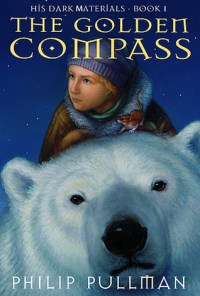
Book: “The Golden Compass” by Philip Pullman

Publishing Info: Alfred A Knopf Books for Young Readers, April 1996

Where Did We Get This Book: We both own in!

Dewey Decimal Call Number: 200 (Religion)

Book Description: Here lives an orphaned ward named Lyra Belacqua, whose carefree life among the scholars at Oxford’s Jordan College is shattered by the arrival of two powerful visitors. First, her fearsome uncle, Lord Asriel, appears with evidence of mystery and danger in the far North, including photographs of a mysterious celestial phenomenon called Dust and the dim outline of a city suspended in the Aurora Borealis that he suspects is part of an alternate universe. He leaves Lyra in the care of Mrs. Coulter, an enigmatic scholar and explorer who offers to give Lyra the attention her uncle has long refused her. In this multilayered narrative, however, nothing is as it seems. Lyra sets out for the top of the world in search of her kidnapped playmate, Roger, bearing a rare truth-telling instrument, the alethiometer. All around her children are disappearing—victims of so-called “Gobblers”—and being used as subjects in terrible experiments that separate humans from their daemons, creatures that reflect each person’s inner being. And somehow, both Lord Asriel and Mrs. Coulter are involved. 

Kate’s Thoughts

I first read “His Dark Materials” in college, at the insistence of my father, a huge fantasy nerd and book worm. I knew little to nothing about it when I opened the first pages of “The Golden Compass”, but was taken in almost immediately by the characters and the world that Philip Pullman created. And then my own personal copy (I have the whole series bound up in one) sat on my shelf, untouched until Anita picked “The Golden Compass” for book club. I was curious as to how I would view the book almost fifteen years after reading it the first time. But going back to “The Golden Compass” was worthwhile for me, even after all that time.

I will be honest, the stories of the entire series are so entwined in my mind that I can’t help but take influence from “The Subtle Knife” and “The Amber Spyglass” when I look back at “The Golden Compass”. So my opinions of “The Golden Compass” now are probably affected by works that aren’t within the text of the first book, which was an interesting quandary to be in. During Book Club when Anita would ask questions about the story, I realized that my opinions of various things took influence by the series as a whole (as well as the first prequel book “The Book of Dust”), and I haven’t quite been able to remove the two. But I will do my best here. I really, really love the world that Pullman has built, an alternate universe  that have the same locations in our world, but with various changes to make it unique to its own. When he describes Oxford, it sounds like the Oxford of our world, but there are differences that make it its own unique location. Within this world are daemons, beings that take on the form of an animal and are attached to all people, functioning as a soul outside of the body. It’s such a cool concept that Pullman made of having a huge and intricate part of you on the outside instead of within. This time around reading it I definitely felt it a bit more than I did in college, as my initial thought was ‘how cool to have an animal sidekick!’. Now I was more introspective about what that would actually mean for a person.

I also really like the way that Pullman completely trusts his readers to handle the complex and dark themes that he throws their way. This book is definitely YA, but it takes on religious fundamentalism, child torture, and institutional corruption without holding much back. While the philosophical meditations on religion and dogma play out a bit more in the later two books, with The Magesterium REALLY revving up into its quest for absolute power, there are moments, like with the Gobblers that want to separate children from their daemons because they feel it attracts Dust (aka Original Sin in this world). Pullman is not shy when it comes to his thoughts on organized religion, and he doesn’t mince words about it. Reading it again reminded me just how much faith he puts in his readers to be able to tackle some of this critical thinking he encourages them to tackle.

It was really great going back and re-reading “The Golden Compass”, and now I feel like I should continue with a re-read. I feel like it held up pretty well for me, and this classic series still remains a powerhouse in YA Fantasy.

Serena’s Thoughts

Well since Kate mentioned it, I will take this opportunity to propose joint reviewing the next two books as well! Yes? Yes?

As Kate mentioned, I too struggled separating my mind with this book as a single unit outside of the trilogy as a whole. Unlike Kate, I’ve OBSESSIVELY re-read this series throughout my entire life. My mom read the first book to my sister and I when we were little, and then I remember that the next two books were various Christmas presents the years they came out. And it’s been an ongoing love affair ever since. Reading a series this way was also a peculiar experience. As a kid, most of what I got from these books was the action and yeah, “wouldn’t it be fun to have an animal side kick??” But as I’ve re-read, each time a bit older, there’s always another level to find. This alone easily earns it a spot on my top 10 lists.

But yes, reading this book alone and then discussing it for bookclub was hard. So much of the groundwork that is laid in this one seems like major plot points here, but then as you continue, expand exponentially and you realize you only had the tip of the iceberg to start with. But here it goes.

“The Golden Compass” definitely reads as the most middle grade/young adult of the series. Lyra is the singular main character and her feelings and adventures are at the center of everything that takes. The story pretty much lives and dies on whether you are interested in her. And Lyra has to be one of the great child protagonists. What makes her special is the fact that, from the beginning, it’s clear that she’s not a “good” child. She’s precocious, meddlesome, and disobedient. And yet she’s never terribly punished for these traits. Instead, all of these aspects of her personality are crucial to not only her success in this story, but to her very survival. Lying, in particular, is a specific strength of hers, and it is always presented as such: a strength. But for all this, Lyra is also incredibly brave, loyal, and loves openly, taking in those who society might overlook. All together, she makes for an excellent child lead. Pantelemon, for his part, serves as a balance to her character, and their witty banter and the supports they offer each other were always at the basis of my desire for a daemon of my own.

The story does have a slow start. I remember as a child being fairly bored for a good bit in the beginning of this story. As Kate said, Pullman doesn’t pull his punches with big ideas, and he dives right into these within the first 20 pages of the book, before readers have had time to form any other ideas for themselves. But once the action does start, it’s all great. And everything he includes strikes the perfect balance of appealing to both children and adults. Child snatchers called Gobblers? Significantly creepy for kids, but wait, they are also connected to this high-level religious dogma for adult readers. A child concentration camp where the kids break out? Great for kids! Super creepy for adults reading about events that look scarily similar to historical happenings. Armored bears? Awesome for kids! Awesome for adults! It’s really a testament to Pullman’s talent that he so neatly balance an action-packed adventure for kids while also introducing huge topics of religion and what makes up humans themselves.

And that ending! How can you NOT want read the entire series after that? Again, no punches pulled. Children are reading this, and yet Pullman doesn’t hesitate to introduce some really tough and challenging topics. Even as a kid, shocked and dismayed by these events, I remember appreciating the fact that this story felt so real, regardless of all the talk of armored bears and daemons, and I think it was because of the fact that Pullman treated these topics as not only acceptable but necessary for kids to read about as well as adults.

So, in summary, obviously I loved this book. Always have, always will.

Kate’s Rating 9: A complex and wondrous world of philosophy and fantasy, “The Golden Compass” holds up for me after all these years of holding it in high regard.

Serena’s Rating 9: A fantasy novel that finds the perfect balance to appeal to both adults and children, never shying away from addressing big topis, all while flying around in a zeppelin chasing after armored bears.

Book Club Questions

  1. Okay, everyone wants to share this: What kind of animal do you think your daemon would be? And what do you think a daemon is in that world vs our world?
  2. What did you think of the characters in this book and how did your opinions of them change as the book progressed?
  3. In this book, usually the gender of your daemon is the opposite gender from yourself, but sometimes you see a person and their daemon sharing the same gender. What do you think that Pullman was trying to convey with this?
  4. There are many different communities and groups within this world, from Oxford to The Bears to The Gyptians. Where/with whom would you want to live in this world?
  5. What religious parallels do you see between Lyra’s world and our world?

Reader’s Advisory

“The Golden Compass” is included on the Goodreads lists “Most Interesting Magic System”, and “Best Feminist Young Adult Books”.

Find “The Golden Compass” at your library using WorldCat!

Next Book Club Pick: “Challenger Deep” by Neal Shusterman

Serena’s Review: “Walk on Earth a Stranger”

17564519Book: “Walk on Earth a Stranger” by Rae Carson

Publishing Info: Greenwillow Books, September 2015

Where Did I Get this Book: audiobook from the library!

Book Description: Lee Westfall has a strong, loving family. She has a home she loves and a loyal steed. She has a best friend—who might want to be something more.

She also has a secret.

Lee can sense gold in the world around her. Veins deep in the earth. Small nuggets in a stream. Even gold dust caught underneath a fingernail. She has kept her family safe and able to buy provisions, even through the harshest winters. But what would someone do to control a girl with that kind of power? A person might murder for it.

When everything Lee holds dear is ripped away, she flees west to California—where gold has just been discovered. Perhaps this will be the one place a magical girl can be herself. If she survives the journey.

Review: I always love it when I can find a book that crosses several of my preferred genres. This time it is fantasy and historical fiction. What’s more, the period of history is unique and I don’t think I’ve ever run across a book quite like this! There are a million and one fantasy novels set in Victorian England, a handful during the Regency period, and tons and tons set in some made-up world that pulls loosely from medieval history. But fantasy on the Oregon Trail? Haven’t heard of that! Let’s dive in!

Lee’s life isn’t perfect, but she has a loving family, a loyal friend, and a steady life filled with honest work. But she also has a secret, and one that she and her family have had to hide her entire life: she can sense gold. A gift that should make them rich, instead forces the small family to live in fear of their neighbors. And these fears are realized in the worst way when tragedy strikes. Now, disguised as a boy, Lee flees West, hoping that in a land said to be dripping in gold, her unique skill will go less noticed and she can lose those those who pursue her.

As I said, the book is set up to mix fantasy elements along with a historical setting. But let me just say now, the fantasy elements of this story are so minor that they might as well be non-existent. Lee’s gift serves as a driving force for much of the action, and motivation for her secrecy and the villain’s plots, but other than a few moments here or there, this “magic” plays almost no part in the story. Instead, what we get is essentially a novelized version of the game “The Oregon Trail.” This is not a complaint!

oregontrail
The dreaded screen of my childhood.

Once Lee is forced out of her home and onto the road, the story is very episodic in the way that it plays out. There are mini events (a robbery, a trip down the river on a raft, illness) all spaced between jumps in time during which she continues to travel. I very much enjoyed this style of writing, but I will warn that it could be read as slow and plodding for those less interested in the day-to-day life of a wagon trip such as this.

And when I compared it to “The Oregon Trail” I wasn’t exaggerating. The same locations are visited, like Independence Rock. There are the required discussions about provisions and wagon weight (should we bring that extra wagon axel??). There are measles attacks, complete with terrible characters leaving behind measles blankets. A stampede, as well as a show of the terrible over-hunting of bison that took place, wastefully leaving behind hundreds of carcasses that couldn’t be carried. I mean, all it needed was someone to die from a snake bite. Again, I enjoyed all of this as I haven’t really read many novels about traveling the Oregon Trail. But it definitely wasn’t providing anything unique in these areas, either, I will admit.

Lee’s own story is one of learning to balance maintaining her secret and also growing to trust those around her. I also always love stories where girls dress up as boys, and through Lee’s own experiences, it is starkly clear the differences in freedoms she is allowed traveling the trail in this guise. What’s more, we’re spared any of the silly “I have a crush on this guy but he doesn’t know I’m a girl!!” angst by the fact that her best friend, Jefferson knew her before she took up trouser-wearing. Jefferson is also half Native American, and between him and a freed African American shop owner Lee also befriends, the story does a good job of acknowledging and addressing the prejudices faced by these groups during this time.

For the most part, the other characters largely served in fairly stock roles. You have the leader of the wagon train, various families with different foibles, the doctor (who has his own secrets), and the family that Lee has signed on with as a helping hand. The wife in this family group was probably the most interesting secondary character presented (other than Jefferson). I really disliked her when she first showed up, but through out the story the author continued to reveal layers of her story that, by the end, left her as probably the most complex character in the party.

Like I said, the magical elements were pretty non-existent, so your enjoyment of this book solidly lies on how much you want to read a novel version of “The Oregon Trail.” But I do feel that Lee herself was a solid narrator, and if you can get by some of the distracting “old timey” elements of the way she’s written to speak/think, she’s a fun character to follow through a story like this. I’m also pretty intrigued by what will happen now that they’ve arrived in California (spoilers??) and the author will have done away with the Oregon trail happenings!

Rating 8: Light on the fantasy, but heavy on the Oregon Trail goodness!

Reader’s Advisory:

“Walk on Earth a Stranger” can be found on these Goodreads lists: “Girls disguised as Boys” and “California Gold Rush Fiction.”

Find “Walk the Earth a Stranger” at your library using WorldCat!

Kate’s Review: “School for Psychics”

35297405Book: “School for Psychics” by K.C. Archer

Publishing Info: Simon & Schuster, April 2018

Where Did I Get This Book: I was given an ARC from the publisher.

Book Description: An entrancing new series starring a funny, impulsive, and sometimes self-congratulatory young woman who discovers she has psychic abilities—and then must decide whether she will use her skills for good or…not.

Teddy Cannon isn’t your typical twenty-something woman. She’s resourceful. She’s bright. She’s scrappy. She can also read people with uncanny precision. What she doesn’t realize: she’s actually psychic.

When a series of bad decisions leads Teddy to a run-in with the police, a mysterious stranger intervenes. He invites her to apply to the School for Psychics, a facility hidden off the coast of San Francisco where students are trained like Delta Force operatives: it’s competitive, cutthroat, and highly secretive. They’ll learn telepathy, telekinesis, investigative skills, and SWAT tactics. And if students survive their training, they go on to serve at the highest levels of government, using their skills to protect America, and the world.

In class, Teddy befriends Lucas, a rebel without a cause who can start and manipulate fire; Jillian, a hipster who can mediate communication between animals and humans; and Molly, a hacker who can apprehend the emotional state of another individual. But just as Teddy feels like she’s found where she might belong, strange things begin to happen: break-ins, missing students, and more. It leads Teddy to accept a dangerous mission that will ultimately cause her to question everything—her teachers, her friends, her family, and even herself.

Set in a world very much like our own, School for Psychics is the first book in a stay-up-all night series.

Review: Thanks to Simon & Schuster for sending me an eARC of this book! It was a nice surprise to have in my email box, and I appreciate the generosity.

As I’ve established on this blog in previous posts in the past two years of it being a thing, I have certain weaknesses when it comes to my favorite fictional tropes. These include but are not limited to boarding school stories and psychic characters. So when I found out that “School for Psychics” by K.C. Archer combined both of these things, I was immediately fascinated with where this book was going to go. We’ve seen books involving kids/teenagers that go to a boarding school to hone certain powers (Uh, “Harry Potter”, anyone?), but I was pleasantly surprised to find out that this one involves young adults in their twenties and all the fun baggage that can go with it. And while I haven’t read nearly as much urban fantasy as Serena has, I’ve been meaning to try and get more into that subset of the overall genre. “School for Psychics” is definitely a good place to start for one as unfamiliar as I am.

The strongest aspect of “School for Psychics” is the psychic mythology and world building in and of itself. In fiction about psychic characters and systems you will often see a character having a litany of powers, from telekineses to ESP to seeing the dead. But one of the aspects of “School for Psychics” that really stood out to me was that each character has different psychic strengths that he or she has honed into their main talent. I can only think of one other story that decided to give different powers to different psychics, and that was Stephen King’s miniseries “Rose Red” (underrated AF, by the way). Teddy, our main character (who I’ll speak more in depth about later), kind of bucks this trend, but there are a slew of other characters who provide various types of psychic powers. These include Molly, an empath who can become overwhelmed by the feelings of those around her, Teddy’s roommate Jillian who can communicate with animals, and Pyro, who has (you guessed it) pyrokinetic skills that got him into trouble when he was on the police force. I also really like the concept of the U.S. Government having a vested interest in finding, training, and using psychics in espionage and various layers of the government and justice system. It’s a cynical trope that’s been done before, but hey, I’m not going to argue with it because it still works and feels relevant.

giphy11
Though if we go by “Firestarter”, things may not turn out the way Uncle Sam wants them to… (source)

I did have a harder time relating to Teddy, our protagonist within the story. She has some fairly standard and old hat facets to not only her personality, but also her background. She doesn’t know who her biological parents are, as she was orphaned as a baby and adopted by a loving couple. She has a troubled history and has a snarky attitude, but the reality of it is that she doesn’t like feeling vulnerable or letting anyone in lest they hurt her. She is super smart but has up until now been using her intelligence to only benefit herself. I mean, look at the description above: she’s literally ‘scrappy’ and atypical. Hell, she even finds herself in a, you guessed it, love triangle, sort of torn between the sexy (but shallow as of now) Pyro, and mysterious (and also her teacher) Nick. The good news is that this is a series, so I do have hope that Teddy is going to grow and evolve and become more three dimensional as it goes on. But as of right now, growth is something that she really needs to do, because she doesn’t stand out within a setting that has some serious promise. As of now the world building is outshining her, and I really hope that she catches up in book two.

“School for Psychics” was an entertaining read, and I do intend on picking up book two when it comes out. Hopefully I won’t have to wait too long!

Rating 7: A decent urban fantasy with a promising premise, “School for Psychics” has some good mythology and potential, but has an (as of right now) fairly run of the mill protagonist who has room to grow.

Reader’s Advisory:

“School for Psychics” is not on many Goodreads lists as of yet, but I think that it would fit in on “Boarding Schools, Camps, and Private Academies”, and  “Psychic/Paranormal”.

Find “School for Psychics” at your library using WorldCat!

Serena’s Review: “Snow City”

34300359Book: “Snow City” by G.A. Kathryns

Publishing Info: Sycamore Sky Books, February 2017

Where Did I Get this Book: from the publisher!

Book Description: Her name is Echo Japonica, and she lives in Snow City. But she was not always Echo, and she did not always live in Snow City. Somewhere else, she was someone else, and it was to Snow City that she fled in order to escape a place and a self that had at last become intolerable.
For Snow City is a dream — Echo’s dream — of a better place, an idealized place, a place of both anonymity and fulfillment. It is, for Echo, a haven of peace, a refuge, a sanctuary.
But Snow City remains, nonetheless, a dream, and dreams, being such fragile things, can so easily shade into nightmare…

Review: I hadn’t heard of this book until I was contacted by the publisher about reviewing it here on the blog. But given the general whimsy of the description, especially the focus on dreams, it sounded like a read that I’d quite enjoy! And, for the most part, I did!

Echo Japonica is enjoying her life. It’s quiet, peaceful, full of music as she play she guitar five days a week at a local coffee shop. She lives in Snow City, a place of her own imaginings, and one free of the violence and conflict that plagued the world she escaped from. Her memories only travel back the few months that she has been living in this conflict-free environment. Things change, however, when she runs into Charity, and discovers that she is a ghost, and now is lost and alone in the seeming utopia that is Snow City. After taking the  young girl in, Echo begins to see changes in her peaceful city, a darkness seeping up and threatening to overtake the life she’s been building for herself and now Charity.

I was very intrigued by entire concept of this story. Echo has created her own world, and thus everything in it is a direct response to what she struggled with in “reality.” But even if it is her own created world, the story takes quite the turn when she is forced to realize that even here she cannot control the actions of others nor should she take responsibility for their own choices. Echo’s journey is not only one of self-acceptance, coming to grips with her own influence, or that thereof, on others, but also on creating healthy relationships and boundaries with those around her. Those who may seem to easily fit on one box may surprise you. And those you care about may do things that you wouldn’t necessarily do yourself, potentially to their own detriment. I also enjoyed the relationship that was built up between Echo and Charity. It was a sweet mother/daughter bond that highlights the unique strengths of chosen families.

I was, however, a bit put off my the style of writing. For one thing, while I appreciate lyrical and poetic writing in some instances, books that are focused too much on the philosophical aspects of life, are never really my cup of tea. Further, Echo’s way of speaking was pretty off-putting. She is written to speak in a manner similar to characters set in a Jane Austen novel. And, while I love me a good Jane Austen novel and this manner of writing in that context, I found the juxtaposition very distracting in this book. I could never quite pin down a good answer for why they were speaking this way, especially when it seems that her prior life was lived in the modern time. Frankly, it felt a little gimicky to me, and I feel like I would have enjoyed the book more had it been written using modern language.

I also had mixed feelings about the exploration of music in this book. This is completely and utterly a personal preference, however. Again, this simply isn’t my favorite topic to read about in a fantasy novel, but I completely understand that this may be much more appealing to other readers who find this aspects more appealing.

In the end, however, I still enjoyed this book for the most part. It had a strong through-line of redemption, survival, and hope. aEspecially for readers looking for books that range further on the “speculative” side of fantasy fiction, I think “Snow City” has a lot to offer and is well worth checking out!

Rating 6: A solid and unique concept that is used as a support frame to explore bigger topics such as family and self-acceptance. The style of writing, however, wasn’t for me.

Reader’s Advisory:

“Snow City” is a lesser know title, so isn’t on any Goodreads lists. But it should be on “Music in Fantasy Fiction.”


Serena’s Review & Giveaway: “The Defiant Heir”

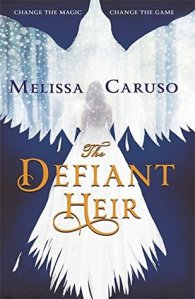
35921536Book: “The Defiant Heir” by Melissa Caruso

Publishing Info: Orbit, April 2018

Where Did I Get this Book: ARC from the publisher!

Book Description: Across the border, the Witch Lords of Vaskandar are preparing for war. But before an invasion can begin, they must call a rare gathering of all seventeen lords to decide a course of action. Lady Amalia Cornaro knows that this Conclave might be her only chance to stifle the growing flames of war, and she is ready to make any sacrifice if it means saving Raverra from destruction.

Amalia and Zaira must go behind enemy lines, using every ounce of wit and cunning they have, to sway Vaskandar from war. Or else it will all come down to swords and fire.

Previously reviewed: “The Tethered Mage”

Review: I was so excited when I received an ARC for this sequel! “The Tethered Mage” came out of nowhere last fall and quickly became one of my favorite reads for the year, so I was so excited to see what antics (troubles?) Amalia and Zaira would get themselves into this time. So much so, that I brought this book along with me on vacation, which was probably not the best choice since it actively distracted me from all of the “real vacationing” I was apparently supposed to be doing. It’s a lenghty book, and yet, somehow, I zipped right through it!

After the events of the last book, Amalia has proven herself a capable heir to her mother, La Contessa, and finds herself further enmeshed in the difficult and morally challenging workings of her country’s ongoing conflicts with their dangerous neighbors to the north. Zaira, too, while still straining against the restrictions of her new life, is also beginning to develop some type of feelings (oh no!) for the Falconers and Falcons around her. As the Witch Lords continue to make threatening moves against Raverra, Amalia and Zaira once again find themselves in the middle of the action. But this time they’re also in the middle of an enemy nation with only the hope of help from a Witch Lord himself who claims to be courting Amalia, but seems to also be hiding plans of his own.

This book does everything a good sequel should do. The stakes are raised in literally every aspect of the story. Plot and action? Well, not only is there a threatening volcano looming over the country ready to blow at any minute, but we get to meet the Witch Lords themselves in all of their terrifying glory! Magic? Said Witch Lords are super creepy with a complex magic system of their own that ties their powers to each other and the land they rule. Characters? Not only does Amalia’s and Zaira’s relationship remain the solid focus of character growth, but it continues to build, even when hindered by the morally challenging nature of their bond. Beyond their bond, both Amalia and Zaira have relationships of their own to deal with.

Zaira continues to struggle with vulnerability and trust, drawn to a fellow Falcon, but also lashing out in the way of a trapped animal who has been hurt too many times to recognize a kind hand being offered. I loved the exploration of Zaira’s growth. After the last book, we know the price that Zaira has paid with past experiences of becoming close to others and the tragic results that occurred. Her distrust is not only of others and their intentions, but mostly of herself. For all of this, she is not let off the hook by those around her when she takes it too far and truly hurts those who care for her. Zaira’s story was full of tenderness, heartbreak, and ultimately, hope.

For her own part, as the primary protagonist, Amalia’s own experiences and relationships are exponentially increased in this book. I still love the relationship that has been built between her and her powerful mother which is still a breath of fresh air in a book world full of orphans or evil step mothers. But in this book, the more important relationships are those driven by her relations from her father’s side, both her maternal grandmother who rules a vassal state in Raverra, as well as the line through her grandfather that reaches back to the Witch Lords themselves. Further, after deciding in the last book that she must remain single and detached in order to pursue political connections through courtship, there is an ongoing tension and struggle with her beloved Marcello. Especially when a certain charming and mysterious Witch Lord arrives on the scene and proposes a courtship, something that Amalia recognizes as incredibly powerful and useful in this time of trouble between their nations.

Amalia is not only the heart of these books, but her strong characterization is the glue that holds it all together. I keep using the word “refreshing” but it is truly how I feel about both of these books, mostly due to the way that Amalia is written. She has strong female friendships. She loves Marcello deeply, but is aware of her own role in the world and her duty. And while this pains her incredibly, she doesn’t shy away from the sacrifices that this life requires of her. Throughout this book, her realization of what it really means to be a Cornaro becomes strikingly clear. Through her, the story engages with many challenging topics, including sacrifice of individuals for the good of the whole, political compromise, and what it looks like to work within a system that is made up of people, with their own faults and agendas.

Beyond the characters, I loved the action of this book. Much of it takes place across the borer in the domain of the Witch Lords. In the last book, we only heard loosely about them and had only the horrid Ruven with his ability to control human flesh as an example of their abilities. Here, we are exposed to them all in their full power and we begin to realize the true challenge that Amalia and co. are up against. Further, (again, refreshing!) Amalia is still an unpowered young woman. Her strengths lie purely in her ability to maneuver through political situations, her bookworm-ish knowledge of magic, and her own ability to speak well and convincingly. And in a kingdom that values the ability to wield magic above all else, this skill set is even a harder one to put to use effectively.

The story doesn’t shy away from the gruesome and heartbreaking aspects of a looming war. There is a lot of death, and the Witch Lords and their power over their land is an effectively horrifying threat. I was a bit concerned with the entrance of said Witch Lord suitor, that we might be getting a love triangle. But I very much enjoyed the direction that this aspect of the story went. Again, Amalia as a character is written to handle the challenges and temptations of all of this in probably the most realistic manner I’ve read, as far as “love triangles lite” go.

I really loved the first book in this series, so it says a lot that I came away from this one knowing without a doubt that I loved it even more. Both of these books are must reads for any fan of fantasy fiction featuring strong women characters!

Now it your turn to get your hands on this brilliant sequel! I have an ARC copy up for grabs! Giveaway runs through March 27, 2018 and is open to US entrants only.

Click here to enter!

Rating 10: Absolutely brilliant! Heart-breaking and grounded, this series has given us not only one, but two new heroines to root for!

Reader’s Advisory:

“The Defiant Heir ” is a new book so isn’t on many Goodreads lists, but it is on “Best Fantasy World.”

Find “The Defiant Heir” at your library using WorldCat!