Serena’s Review: “The Dark Days Pact”

26061581Book: “The Dark Days Pact” by Alison Goodman

Publishing Info: Viking Books for Young Readers, January 2017

Where Did I Get this Book: from the library!

Book Description: June 1812. Just weeks after her catastrophic coming-out ball, Lady Helen Wrexhall—now disowned by her uncle—is a full member of the demon-hunting Dark Days Club. Her mentor, Lord Carlston, has arranged for Helen to spend the summer season in Brighton so that he can train her new Reclaimer powers. However, the long-term effects of Carlston’s Reclaimer work have taken hold, and his sanity is beginning to slip. At the same time, Carlston’s Dark Days Club colleague and nemesis will stop at nothing to bring Helen over to his side—and the Duke of Selburn is determined to marry her. The stakes are even higher for Helen as she struggles to become the warrior that everyone expects her to be.

Previously Reviewed: “The Dark Days Club”

Review: Ok, I haven’t ranted about a cover for a long time. But man. MAN! This one deserves a good rant. Not only is this cover truly awful on its own, but when you compare it to the first book’s cover, it just gets even worse.

15993203

That cover is good. It’s not doing anything super brilliant or unique, but it’s getting the job done. We know this is a historical novel, and we get that there is some darkness involved in the story, likely fantasy-related. And then we have this new cover…The model looks ridiculous. The weird magical sword is bizarre (and hard to connect with anything in the book). And the whole thing looks like the type of book you’d scoff at in an airport. We’d all like to think that we don’t judge books by their covers, but we do. And this series was already criminally underappreciated, and I can’t imagine this change to cover art helped anything. Also, spoiler alert, it definitely DOESN’T improve with the third book. *sigh*

Lady Helen has forgone the life of marriage and respectability she had previously seen as her future. Instead, she is now a full-fledged member of the Dark Days Club, a secretive society that fights against demonic beings that lurk among the unwary. More to the point, she and her colleagues suspect that the Grand Deceiver is on the move, one of the most powerful and evil beings the Club has ever faced. But Lady Helen is also still in training, with much to learn not only about her own unique abilities, but how she is to balance her responsibilities to the society as well as her loyalties to her friends. Especially Lord Carlston, whose erratic behavior has set him smack dab in the cross hairs of the leadership in the Dark Days Club.

While this book was a bit more wishy-washy for me (not really a surprise for the dreaded “second book” in a trilogy), there were still several aspects of the series that I greatly enjoyed. For one, the pitch perfect mixture of historical regency “manners” story, flitting through ballrooms and strolls through parks with parasols, and magical adventure featuring some legitimately dark villains. Lady Helen must be given full credit as a well-drawn character who is capable of reading as believable in both these very different scenarios. What’s more, both versions of herself, socialite and powerful Reclaimer, are not two suits that fit well together. Those who know her as a well-bred lady first and foremost, question her ability to exist in an action-packed and dangerous world. Here, she rises to the occasion by learning to fight and donning an alter-ego as a young man. On the other side, her Reclaimer friends don’t see the importance or value that Helen does in maintaining a grip on her role as a woman in society. And here, she proves that a well-timed conversation with the right person can be just as valuable as pulling out a sword.

I still also very much like the world that has been imagined here. Reclaiming is a dangerous business, and we see that though Helen has great power, she still has much to learn to survive in this world. Not only that, the most successful Reclaimer must still deal with the negative side-affects of their work, which we see in Lord Carlston’s quick spiral into violence and madness. We also see that the Deceivers themselves can come with a wide variety of motives and ways of living in the world, some more destructive than others. There are also more than a few humans who prove that you don’t have to be a demonic being to be evil.

While I liked all of these general aspects, I did find myself struggling with much of the book. For having so much action and adventure, the pacing also felt very slow. This is a long book, and towards the middle I was becoming more and more tempted to skim along. This is partly due to Helen’s arc itself within the story. Yes, she is new to this world and still trying to figure out who to trust and how to align herself. But she was just so indecisive, trying to play a middle field that anyone a mile away could see as a fool’s quest from the start. She also falls victim to the unfortunate and all too common martyr complex, choosing to make incredibly stupid decisions rather than, I don’t know, communicate with her friends. And for heaven’s sake, it seems all too clear who and what the Duke of Selbourn really is. Even the most naive lady of the time would be side-eyeing a man like this so determinedly not being put off by the repeated refusals and strange revelations about his lady love.

So, while I still liked much of the story, it ultimately felt a bit too long, a bit too predictable, and a bit too clumsy with its main character. But, that said, I’m still all in for the third and final book. At the very least, I can’t wait to read about Lady Helen finally waking the hell up about some things that I’m sure most readers have already guessed.

Rating 7: Falls victim to “second novel syndrome” a bit, but still has enough going for it to pull readers in for the final story.

Reader’s Advisory:

“The Dark Days Pact” is included on these Goodreads lists: “Fantasy of Manners” and “YA Historical Fantasy” (though I wouldn’t classify this as YA).

Find “The Dark Days Club” at your library using Worldcat!

Serena’s Review: “The Flight of Swans”

38397799Book: “The Flight of the Swans” by Sarah McGuire

Publishing Info: Carolrhoda Books, October 2018

Where Did I Get this Book: Edelweiss Plus

Book Description: Princess Andaryn’s six older brothers have always been her protectors–until her father takes a new Queen, a frightening, mysterious woman who enchants the men in the royal family. When Ryn’s attempt to break the enchantment fails, she makes a bitter bargain: the Queen will spare her brothers’ lives if Ryn remains silent for six years.

Ryn thinks she freed her brothers, but she never thought the Queen would turn her brothers into swans. She never thought she’d have to discover the secret to undoing the Queen’s spell while eluding the Otherworldly forces that hunt her. And she never thought she’d have to do it alone, without speaking a single word.

As months as years go by, Ryn learns there is more to courage than speech . . . and that she is stronger than the Queen could have ever imagined.

Review: Omg, I was so excited when I just randomly stumbled on this book on Edelweiss. I obviously love fairytale retellings. But I LOVE the “Six Swans” fairytale in particular. Juliet Marillier’s “Daughter of the Forest” is probably one of my favorite books ever and is the golden standard as far as I’m concerned for retelling this fairytale. And, frankly, in a world becoming chock-full of other fairytale retellings, there are still very few that tackle this particular tale. So, with those facts in mind, I went into this both very excited and very challenged to not simply do a comparison read with Marillier’s take.

The story follows the classic fairytale. Ryn is a young girl when the story starts out, the youngest of seven siblings with six beloved older brothers. When a sorceress bewitches the king, their father, these siblings rebel only to become caught in the crosshairs of a magical spell themselves. The brothers are all turned into swans, and Ryn is left with impossible task of remaining silent for six years while weaving six tunics out of painful nettles to free her brothers and restore their kingdom.

Long story short, I loved this  book. I loved our main character. I loved how true it remained to the original fairytale. I loved the ways that it expanded on the original fairytale. I loved the romance. I loved the magic. Review done now? Probably could be if I didn’t feel like I owed readers (and the book) at least a bit more detail.

Outside of my general love for the story, there were a few things that stood out in particular. For one, I loved the brothers in this book. Six brothers who spend most of a story as swans and off the page is always going to be a hard thing to tackle for an author. How do you make sure they each have personalities and can be differentiated from each other? While I won’t say that McGuire was completely successful here (there are still one or two brothers who I can only remember small details about), for the most part she does an excellent job of giving the brothers enough distinct traits to make each stand out. For one thing, the way the curse is laid out in this book, the brothers get to spend one night each month as humans. This gives them much more page time than other versions of the tale (Marillier’s swans only become human twice a year). With the addition of these scenes, we get to see much more of the brothers. I particularly loved Aiden, the oldest  brother, and his close relationship with Ryn. He’s probably the brother that is given the most throughout the book, and I just loved everything about him. Secondly, I very much liked Ryn’s twin brother who is the one who has the most of an arc in this book, going from a kind of bratty, young kid to a loyal brother who is the one who really understands the extent of Ryn’s sacrifice in the end.

I also loved the inclusion of particular elements of the fairytale that have been left out of other versions of the story. I always loved the part of the original tale that dealt with the swans carrying their sister across the sea to safety. This is the kind of fairytale scene that is pretty hard to adapt, being very whimsical and hard to actually picture in the real world. McGuire adapts the scene here, having the swans pull a raft carrying Ryn. It was thrilling to see this part of the tale included, and it was also one of the most shining moments for Aiden as a character, even in swan form.

I also loved the romance that builds up between Ryn and the foreign prince, Corbin. As this is a middle grade novel, I had to repeatedly remind myself to be happy with the romance I was getting. But as an example of middle grade romances, this one does very well. It’s another tough part of the story to adapt, what with the usual late entrance of the romantic interest in the fairytale itself. And the fact that our heroine can’t speak, so creating meaningful moments where readers can really buy this type of connection forming can be challenging. McGuire rises to the occasion with aplomb.

The only criticism of the book I have does have to do with my expectations and comparisons to Marillier’s version. Like I said, it was a huge challenge to not compare the two as there are so few examples of this fairytale and Marillier’s is superb. “Daughter of the Forest” is also an adult fantasy novel and has some very adult scenes in the book. It can be a tough read, but its darker moments are also what adds to the ultimate beauty and triumph of the story.

This book, as a middle grade novel, had to take a very different route. And while I can appreciate certain changes (the romance needing to be written in a different way, for one), there were also a few choices that I felt were unnecessary and needlessly removed some of the teeth from the story. For one, the aforementioned monthly transformation of the brothers. This lead to a lot of great development for these characters, but also made Ryn’s experience much easier as she regularly had the support of her brothers to tackle basic tasks, like shelter building. She was also limited to not speaking or writing, but was still able to tell others every bit of her tale as long as she mimed it or acted it out. This let her explain her situation to a lot more people, thus creating even more of a safety net for herself. Beyond this, the nettles themselves become less of a challenge. Ryn quickly finds a way of handling the viscous plants in a way that doesn’t injure her at all. Much of the power of the original story is the way the heroine perseveres through the awful trial that is this curse, and part of that trial is the combination of remaining silent while completely a very painful task. All of these choices, when put together, make Ryn’s story a bit too light, in my opinion. Yes, it is a middle grade novel, but I think the author took it a little too far here and could have kept a bit more of the original’s darkness.

But! I still absolutely loved this story. I was so pleased that is lived up to many of my expectations and even surpassed some of them. It’s also a nice alternative to point to for readers looking for a retelling of this fairytale. There are some younger readers to whom, before, I would have hesitated to hand “Daughter of the Forest” because of some of its adult themes. But now we have this! And put together, we have a version for younger readers AND a version for adults!

Rating 9: A beautiful take on a much-overlooked fairytale.

Reader’s Advisory:

“The Flight of Swans” is a newer title, so it isn’t on many Goodreads lists. But it is on “The Wild Swans/The Six Swans Retellings.”

Find “The Flight of Swans” at your library using WorldCat!

Serena’s Review and Giveaway: “Muse of Nightmares”

25446343Book: “Muse of Nightmares” by Laini Taylor

Publishing Info: Little, Brown Books for Young Readers, October 2018

Where Did I Get this Book: ARC from the publisher

Book Description: In the wake of tragedy, neither Lazlo nor Sarai are who they were before. One a god, the other a ghost, they struggle to grasp the new boundaries of their selves as dark-minded Minya holds them hostage, intent on vengeance against Weep.

Lazlo faces an unthinkable choice—save the woman he loves, or everyone else?—while Sarai feels more helpless than ever. But is she? Sometimes, only the direst need can teach us our own depths, and Sarai, the muse of nightmares, has not yet discovered what she’s capable of.

As humans and godspawn reel in the aftermath of the citadel’s near fall, a new foe shatters their fragile hopes, and the mysteries of the Mesarthim are resurrected: Where did the gods come from, and why? What was done with thousands of children born in the citadel nursery? And most important of all, as forgotten doors are opened and new worlds revealed: Must heroes always slay monsters, or is it possible to save them instead?

Previously Reviewed: “Strange the Dreamer”

Review: While I loved “Strange the Dreamer” with its unique world, beautiful prose, and well-drawn characters, it did commit one of the biggest sins in the book: ending on a horrible cliff-hanger! Why?! Why would you do this?! But, unlike certain other books that Kate and I reviewed recently, cough”Career of Evil”cough, there was only a short, year-long wait before the follow up story was released. I guess that makes it ok. Doesn’t hurt that the sequel was a blast to read on its own, even after tackling the immediate issue left by the cliffhanger.

Lazlo has discovered that he is a God. And not only any ole God, but one of the most rare and powerful with the ability to manipulate the strange blue metal that makes up the godspawns’ home. But power isn’t everything, and Sarai is still dead, even if her being has mostly been saved in the form of one of Minya’s ghosts. And Minya has her own plans for life going forward, ones that distinctly feature revenge and the use of Lazlo’s abilities to achieve it. However, soon, thoughts of revenge begin to subside when all involved realize how small their scope of past events has really been and how much more is truly at stake.

One of the strongest points of all of Taylor’s books is her lyrical manner of writing. That talent is put to good use here and the beautiful imagery continues. However, the topic and storyline of this book is much more action-oriented and in many ways darker in theme. While the first book spent much of its time establishing Strange as a dreamer and exploring Sarai’s abilities, painting lush landscapes with words. Here, Taylor’s gorgeous prose instead speaks to the pain and heartache that is at the core of so many of our characters and how they approach the world they now find themselves in.

Lazlo and Sarai, our main characters from the first book, largely subside into the background in this one, which came as a complete surprise to me. I don’t want to misrepresent the book, as they still narrate a large portion of the story and their romance is still heavily focused upon. However, for me, I found other characters quickly rising to the forefront of my interest.

Minya, in particular, comes to mind. We briefly explored her experiences in the first book, but here we learn that we had only scraped the surface. Not only are past events expanded upon, but we learn more about her own motivations and the mysteries of her being. Why has she remained a child? What drives the seemingly bottomless well of darkness within her and how does her power truly work? There were several great reveals with this character and in many ways I think she has a greater depth of character built for her than Lazlo and Sarai who have a tendency to fall into the rather generic hero category. We know what to expect from them: they’re good people who want to do good things. Minya is much more complicated, and in that way, I found her much more interesting.

There are also two sisters whose stories are introduced. They live in a far away world, and it is only slowly revealed throughout the story how these disconnected bits make up the history of Lazlo and Sarai’s world. I, of course, love stories about sisterhood, so I was all over this arc of a deep bond that drives two sisters to achieve the impossible. And even here, nothing is made simple, easy, or predictable. There is tragedy, confusion, anger, and, of course, a boundless love and loyalty.

This takes me to a few of my criticisms for the book. As I said, other characters (Minya, the sisters, Thyon Fane, etc.) largely took over my interest in this book and while I still enjoyed Lazlo and Sarai, I was much less intrigued by their romance in this go-around. So much of the first book was devoted to establishing their connection that I guess I would have just been fine mostly leaving it at that. I’m guessing this will be an unpopular opinion, as I know many fans of Taylor’s work read her for the beautiful romances. And I still enjoyed it. But given the depth and scope of the larger topics at hand (topics such as revenge, forgiveness, self-identity and discovery), reading more scenes of their ongoing romance taking place in mystical dream-scapes just seemed to interrupt the flow and left me anxious to return to the more serious subjects at hand.

From there, I also continued to struggle to connect to the other godspawn. There were a few whiffs of dialogue here and there that rang a bit too “twee” or “pixy dream girl” esque from these areas. As a fan of Taylor’s writing, I could recognize some of these beats from characters who filled similar roles in her other books, but that recognition just made them fall all the more flat here, as I was never able to fully understand Ruby, Sparrow or Feral as unique characters in their own right.

But, to end on a positive note, for fans of Taylor’s “Daughter of Smoke and Bone” series, there are some really incredible tie-ins to be found in this book that took my completely by surprise. Readers by no means need to be familiar with that series, but it’s a great connection for those of us who have read those books.

I was lucky enough to snag an ARC of this book, and now I want to give it away to you! The giveaway ends on October 31 and is open to US residents only.

Click here to enter the giveaway!

Rating 8: “Muse of Nightmares” expands upon its predecessor by leaps and bounds, exploring complicated and deep topics of revenge, loyalty, and self-created identity.

Reader’s Advisory:

“Muse of Nightmares” is included on the Goodreads lists: “Quality YA Paranormal Romance Novels” and “Consider it NA.”

Find “Muse of Nightmares” at your library using WorldCat!

Bookclub Review: “A Thousand Nights”

21524446We are part of a group of librarian friends who have had an ongoing bookclub running for the last several years. Each “season” (we’re nerds) we pick a theme and each of us chooses a book within that theme for us all to read. Our current theme is “B-Sides,” where we pick different books from previous authors that we read in the club.

For this blog, we will post a joint review of each book we read for book club. We’ll also post the next book coming up in book club. So feel free to read along with us or use our book selections and questions in your own book club!

Book: “A Thousand Nights” by E. K. Johnston

Publishing Info: Disney Hyperion, 2015

Where Did We Get This Book: The library!

B-Side Book: “The Story of Owen: Dragon Slayer of Trondheim”

Book Description: Lo-Melkhiin killed three hundred girls before he came to her village, looking for a wife. When she sees the dust cloud on the horizon, she knows he has arrived. She knows he will want the loveliest girl: her sister. She vows she will not let her be next.

And so she is taken in her sister’s place, and she believes death will soon follow. Lo-Melkhiin’s court is a dangerous palace filled with pretty things: intricate statues with wretched eyes, exquisite threads to weave the most beautiful garments. She sees everything as if for the last time. But the first sun rises and sets, and she is not dead. Night after night, Lo-Melkhiin comes to her and listens to the stories she tells, and day after day she is awoken by the sunrise. Exploring the palace, she begins to unlock years of fear that have tormented and silenced a kingdom. Lo-Melkhiin was not always a cruel ruler. Something went wrong.

Far away, in their village, her sister is mourning. Through her pain, she calls upon the desert winds, conjuring a subtle unseen magic, and something besides death stirs the air.

Back at the palace, the words she speaks to Lo-Melkhiin every night are given a strange life of their own. Little things, at first: a dress from home, a vision of her sister. With each tale she spins, her power grows. Soon she dreams of bigger, more terrible magic: power enough to save a king, if she can put an end to the rule of a monster.

Serena’s Thoughts

Back when we were doing our “A-side” books, I was the one who picked Johnston’s “The Story of Owen: Dragon Slayer of Trondheim,” so I was already a bit predisposed to liking this title. On top of that, just based on the book description alone, the story checks off a lot of boxes for me: fairytale-retelling, non-Western setting, sisterhood, and magic. Is it any wonder that I very much enjoyed this book?

There have been a fair number of “1001 Arabian Nights” retellings to come out in the last few years, and I’ve had many mixed reactions to most of them. In its very nature, it’s a rather difficult story to tell. In the original version, our storyteller buys her life with a new story each night. And in the end, her reward is a continued marriage with a murderer. So, how do you twist that story into something worth cheering for? In this area, I think Johnston did several things right.

For one, the central relationship at the heart of this story is not one between our storyteller and her horrible husband. It is instead between her and her sister, the woman she sacrificed herself for and who remains behind in their small village faithfully supporting and working for her sister’s welfare from afar. This a much better focal point for the story itself and takes a lot of pressure off any “romance” that could have come to the forefront. The author’s choices as far as that “romance” goes were also very clever. The biggest challenge, how to make a monster not a monster, is dealt with in a satisfying way, and the biggest trope and pitfall of stories like this, having your heroine fall in love with a monster WHILE HE’S STILL A MONSTER, is avoided.

By also focusing on the relationship with the sister, Johnston centers her story around the role of women in this world, the type of work they do and the largely unnoticed position they hold in society. Through this lens we see how it could become acceptable for a king to go through so many wives without uproar. It’s a subtly feminist story that tackles a lot of bigger points without ever banging it over your head. And the value of typical women’s work is never undervalued in this as well, which is another pitfall that often occurs when trying to make some of these larger points.

I also very much liked the magic system in this book, if you can even call it a “magic system” at all. Like many fairytales, we are given very few explanations or descriptions of where this story is taking place (other than the desert) or how its magic works. Instead, we are allowed to simply immerse ourselves in what is without worrying overly much about the “hows.” There were also a few clever winks and nods to other classic fantasy components at the end of the book that I very much enjoyed.

It’s a quieter, slower moving story, but I think fans of fairytale fantasy will very much enjoy it.

Kate’s Thoughts

Going into “A Thousand Nights”, there were two truths about myself and perceptions in regards to it that I knew: 1) I have never actually read the “1001 Arabian Nights”, and 2) I have had a very mixed experience reading E.K. Johnston. I thought that “The Story of Owen: Dragonslayer of Trondheim” was fine, though I’m far more partial to raising and riding dragons as opposed to slaying them, and I thought that “Exit: Pursued by a Bear” had a good message, but a clunky execution of said message. So picking up “A Thousand Nights” was hard to predict. But I am kind of disappointed to say that it wasn’t really my favorite in terms of fairy tale re-tellings that I have read, and it kind of solidifies that Johnston isn’t an author I would seek out on my own.

I think that a majority of it is the fantasy aspect. As you all know, I have a hard time with that genre, and “A Thousand Nights” wasn’t added to my list of exceptions. There were certainly pros for me within the story itself, which I will try to focus on. The first is that I loved the descriptions of the desert and the different groups of people who lived within it. I am someone who, paradoxically, hates the heat but really loves deserts, so seeing the rich and colorful description of the setting was lovely. I felt like the desert was a character in and of itself, and I had a very clear idea of what it looked like in my mind’s eye. I also really enjoyed the commentary about how women are overlooked within this world, be it through repeated emphasis of women being sacrificed to Lo-Melkiin’s murderous whims because were he overthrown, the economy would destabilize and male traders would lose profits. I think that Johnston paid close attention to how to portray her female characters in an undercurrent lens of feminism, in while they were not named (as this world didn’t place value on them), they were always instrumental in plot points through all kinds of work, both through traditional ‘male’ and ‘female’ roles. And neither gender role was devalued.

All that said, I think that Johnston gets a bit wrapped up in flowery writing and descriptions, and the fantasy elements didn’t pull me in. I appreciate the fact that magic is just a part of this world, but I needed more concrete system behind it. I know that sometimes fantasy novels get TOO wrapped up in the descriptions and the logic of the way magic works, but I needed a bit more in this book beyond the vagueness. I know that Serena was totally fine with not worrying about the hows, and I get that, but as someone who already doesn’t care for the fantasy genre, I REALLY need those hows to explain to me why I should buy into the magic of a world as it is presented to me.

I think that fantasy fans would find a lot to like about this book. I, however, was underwhelmed.

Serena’s Rating 8: A nice fairytale retelling that leans into themes of sisterhood and inner strength.

Kate’s Rating 5: A genre that already doesn’t connect with me is encumbered by a writing and author style that I’ve never totally cared for. Good messages, but an execution I wasn’t fond of.

Book Club Questions

  1. This is a retelling of “1001 Arabian Nights” and features the same basic set up of a young bride trying to outlast a cruel husband. How does this retelling compare to the original or other versions that you have read?
  2. Other than Lo-Melkiin himself, all of the other characters remain nameless. How did this affect your reading of the story?
  3. The story is never clear on a time period or exact location. How did you imagine this land and time?
  4. There is strong emphasis on women and their often over-looked role in this world. What were your thoughts on how this book portrayed its female characters and their relationships with the men around them?
  5. There is a sequel to this book called “Spindle.” Are you interested in reading it and where do you imagine the story could go from here?

Reader’s Advisory

“A Thousand Nights” is on these Goodreads lists: “Scheherazade” and “Desert and Djinni.”

Find “A Thousand Nights” at your library using WorldCat.

Next Book Club Book: “S.T.A.G.S.” by M.A. Bennett

Serena’s Review: “Damsel”

36260155Book: “Damsel” by Elana K. Arnold

Publishing Info: Balzer + Bray, October 2018

Where Did I Get this Book: Edelweiss

Book Description: The rite has existed for as long as anyone can remember: when the prince-who-will-be-king comes of age, he must venture out into the gray lands, slay a fierce dragon, and rescue a damsel to be his bride. This is the way things have always been.

When Ama wakes in the arms of Prince Emory, however, she knows none of this. She has no memory of what came before she was captured by the dragon, or what horrors she has faced in its lair. She knows only this handsome prince, the story he tells of her rescue, and her destiny to sit on the throne beside him. Ama comes with Emory back to the kingdom of Harding, hailed as the new princess, welcomed to the court.

However, as soon as her first night falls, she begins to realize that not all is as it seems, that there is more to the legends of the dragons and the damsels than anyone knows–and that the greatest threats to her life may not be behind her, but here, in front of her.

Review: Oof, this is going to be a tricky one. Even now, starting out this review, I’m not really sure if my thoughts and feelings on this book are fully formed. I guess we’ll just see where the words take me!

The description of this book lays out a fairly typically fantasy story: a princess is rescued from a dragon by a handsome prince. But something is not right. She doesn’t remember her time before the rescue and the prince may not be what he seems. However, this is as it always has been. Damsels being rescued, going on to be Queens and mothers of princes themselves.

Between the book description that, while fairly typical, does lay the groundwork for some type of subversion of this typical fairtyale storyline, and the beautiful, flowery cover art, I went into this book with a certain set of expectations. While I didn’t expect it to play out along typical lines (I was fairly sure that she wouldn’t end up with said prince, for example), I wasn’t prepared for the level of darkness that was introduced in this book and I do have some qualms about certain topics’ sudden appearances.

But the book did have some steady points in its favor, and I want to cover those before I get into the parts that gave me pause. For one, the writing is excellent and I immediately felt drawn into the story. Ama herself doesn’t even show up for the first few chapters and yet I was still fully invested, which speaks again to the strength of the writing. And once Ama is introduced, she was a very cheer-worthy heroine. I was immediately drawn to her story and felt the same fears, confusion, and bewilderment that she experiences. The reader, too, doesn’t know her history, so while she looks for answers, we’re right there with her. But this same attachment to her made other parts of the book incredibly hard to read.

As I said, the description sets the story up to be a subversion of the traditional tale, however, I was not prepared for how completely dark and mature some of the themes and topics became in this book. The beautiful cover, light and fluffy, also belied these dark and heavy themes. I could probably write an entire post on its own discussing my complicated feelings about trigger warnings for books (I generally feel that this idea has been taken too far given the obviousness of the fact that there are a million people out there with a million life experiences and no novel can anticipate all of their reactions to any given story), but this book does serve as an example of why some type of warning might be necessary for certain topics.

Nothing about the description, cover, or classification (YA) of this book would give an indication that this book would dive so heavily into topics that can be very hard for many readers, regardless of their age. Specifically for this book, the topic of sexual assault. And this is by no means the only dark subject matter introduced. There are some tough scenes dealing with animal cruelty and a weird moment in the end that verges on bestiality? I’m not even sure how to qualify that scene. I’m a librarian, so I am by no means saying that these topics shouldn’t appear in books or even that there is a reading level that should be maintained for exposure to them (that is between any given reader and his/her parents, depending). But I do think that more needs to be done to prep readers in what they are picking up. With its cover and light description, I could see middle grade readers thinking this would be a good read for them and then being very taken off guard with the graphic nature of the tale.

I also struggled with the ending of the story. While Ama’s own tale comes to a satisfying conclusion, it is a very brief scene that I’m not convinced fully balances out all of the awfulness that happened before. What’s more, the world that is set up is one where this type of abuse has been happening forever and is by no means limited to the Damsels, though theirs is a unique version of it. So while Ama gets her revenge in the end, there is really no resolution for the world itself and the other women living in it. This heavily dampened any feelings of satisfaction that came from her act of defiance.

In the end, while I did enjoy aspects of the book, I’m not convinced that the darker topics were completely earned or necessary (at least not as the many times they’re repeated throughout the story). And my larger concern is that the book does nothing to warn readers what they are getting when they pick it up. We all know I love dark fairytales, but if a story is going to get this dark, more needs to be done with the marketing to prep unsuspecting readers. I’m not sure what the real answer to that is, but I know that this book was shocking for me to read, and I’d hesitate to recommend it to others without giving them some fair warnings of its subject matter.

Rating 5: I have to give this book a middle-of-the-road rating. I liked Ama and the writing was strong, but the book was incredibly dark and I’m not sure its graphic nature was either necessary or resolved in the end.

Reader’s Advisory:

“Damsel” is a newer title and isn’t on any relevant Goodreads lists, but it should be on “Dark Fairy Tales.”

Find “The Reluctant Queen” at your library using WorldCat!

Serena’s Review: “The Sisters of the Winter Wood”

37854049Book: “The Sisters of the Winter Wood” by Rena Rossner

Publishing Info: Redhook, September 2018

Where Did I Get this Book: from the publisher!

Book Description: Raised in a small village surrounded by vast forests, Liba and Laya have lived a peaceful sheltered life – even if they’ve heard of troubling times for Jews elsewhere. When their parents travel to visit their dying grandfather, the sisters are left behind in their home in the woods.

But before they leave, Liba discovers the secret that their Tati can transform into a bear, and their Mami into a swan. Perhaps, Liba realizes, the old fairy tales are true. She must guard this secret carefully, even from her beloved sister.

Soon a troupe of mysterious men appear in town and Laya falls under their spell-despite their mother’s warning to be wary of strangers. And these are not the only dangers lurking in the woods…

The sisters will need each other if they are to become the women they need to be – and save their people from the dark forces that draw closer.

Review: The book description for this title reads like an itemized list of “what Serena looks for in fantasy fiction.” Fairytale-like? Check. Sisterhood? Check. Mysterious men? Check. Add to that a gorgeous cover and requesting this book really was a no brainer. And I’m definitely glad I did, as not only were the expectations raised by the description met, but the book offered up several other unexpected surprise delights.

Much of the main plot points are lain out in the book description itself. The two sisters who are suddenly thrust into a new reality, one filled with shape-shifters and magic. The sudden absence of beloved parents. The appearance of a strange group of men. And throughout it all, the looming fear of what it truly means to be these new, strange beings who can transform into bears and swans. Who are their people? Who is their family? And who will they be once they allow this power to emerge?

I very much enjoyed the fairytale feeling that was at the heart of this story. Many elements involved, the dark woods, mysterious stranger but oddly beautiful and compelling strangers who temp with delicious, rare fruits, animal transformations, and sibling relationships, all ring for the type of tale we expect. But what made it even more exciting to read was that together as a whole, this was a completely unique tale. Reading a bit of how the author read the book, it sounds like it is partially based on some Jewish folklore, so while there were familiar pieces (remnants of “The Goblin Market” story), it felt like a breath of fresh air into a genre often  bogged down in the same stories told a million different ways.

The writing in this book completely supported this fairytale medium, deftly laid down in beautiful and lyrical strokes. On top of this, the author included a good amount of the Yiddish language within the story and dialogue. Not familiar with the language myself, I often had to take advantage of the definitions at the end of the book, but I truly appreciate the added authenticity these language choices gave the book. Rossner did not pull back and dumb down any of these choices for the unfamiliar reader and added to the feeling of immersion in this world and culture.

Further on the writing, going in, I was unaware that half of the book was written in verse. The story alternates chapters between Liba and Laya, and Laya’s portions are told through poetry. This was an interesting choice to not only diversity the type of writing but to further examine the differences between Liba and Laya. Liba, the older sister and, rather stereotypically, more responsible sister is written in very straightforward prose. She presents her experiences, thoughts and emotions clearly and without much embellishment. This further ties together towards her animal form, the bear, an Earth bound creatures that is strong and steady. Laya, on the other hand, is a being of the air and has the ability to transform into a swan, so her bits flow wildly to and fro and benefit from the stylistic choices available through poetic style.

While I liked the overall choices behind writing these characters this way, it did ultimately present a bit of a problem with how I connected with each character. I was likely always going to gravitate towards the more pragmatic Liba, but Laya was also slightly damaged for both her storyline (she’s the one to get into trouble with the mysterious strangers after, something that is obviously a terrible idea from the get go) and the fact that she simply  had much less page time being written from a poetic form. But overall, stories of sisterly bonds are always going to pull together for me, so even while I was always anxious to return to Liba’s portions of the story, Laya pulled her own weight as far as valuing her sister which ultimately endeared her to me.

There is also a good deal of history woven through the text, especially regarding the tensions that can so quickly build and the anti-semitism that can lurk below the surface even in seemingly happy secular and Jewish communities. Some of the portions of this book were rather hard to read with the challenges that Liba, Laya and her people face, but it was also a good exploration of how easily prejudices can be used to outcast an entire group of people from a home they’ve loved and built for years.

From the book description, and the fact that it is targeted towards adult audiences, I had some assumptions about this being a darker fairytale. And while there are dark elements in it, I’m not sure that that is truly the genre (or audience) that this story is geared towards. Instead, it read much more like a fantasy romance and I think would greatly appeal to YA readers, especially those who like reading poetry. But that being said, I do think all fantasy fans, especially fairytale fantasy fans, will enjoy this book.

Rating 8: A strong new entry in fairytale fiction, especially for those looking for unique tales with a heavy dose of sisterhood and romance.

Reader’s Advisory:

“The Sisters of the Winter Wood” is a new title so isn’t on many relevant Goodreads lists, but it is on “Atmospheric Woods.”

Find “The Sisters of the Winter Wood” at your library using WorldCat!

Serena’s Review: “The Reluctant Queen”

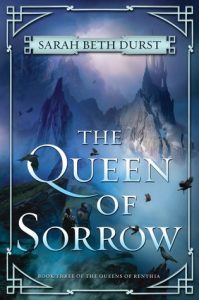
32600602Book: “The Reluctant Queen” by Sarah Beth Durst

Publishing Info: Harper Voyager, July 2017

Where Did I Get this Book: audiobook from the library!

Book Description: Not long ago, Daleina used her strength and skill to survive those spirits and assume the royal throne. Since then, the new queen has kept the peace and protected the humans of her land. But now for all her power, she is hiding a terrible secret: she is dying. And if she leaves the world before a new heir is ready, the spirits that inhabit her beloved realm will run wild, destroying her cities and slaughtering her people.

Naelin is one such person, and she couldn’t be further removed from the Queen—and she wouldn’t have it any other way. Her world is her two children, her husband, and the remote village tucked deep in the forest that is her home, and that’s all she needs. But when Ven, the Queens champion, passes through the village, Naelin’s ambitious husband proudly tells him of his wife’s ability to control spirits—magic that Naelin fervently denies. She knows that if the truth of her abilities is known, it will bring only death and separation from those she loves.

But Ven has a single task: to find the best possible candidate to protect the people of Aratay. He did it once when he discovered Daleina, and he’s certain he’s done it again. Yet for all his appeals to duty, Naelin is a mother, and she knows her duty is to her children first and foremost. Only as the Queen’s power begins to wane and the spirits become emboldened—even as ominous rumors trickle down from the north—does she realize that the best way to keep her son and daughter safe is to risk everything.

Previously reviewed: “The Queen of Blood”

Review: “The Queen of Blood” was a book that seemed to be flying under the radar and much deserved a bigger notice. The story of Daleina’s tremulous rise to the queendom was full of action, pain, death, and triumph, and I loved every minute of it. Ending with her finally on the throne, I was so excited to see where her story went next, so I went into “The Reluctant Queen” with high expectations. Unfortunately, while it still had strong aspects that I liked, over all it didn’t quite live up to those expectations for me.

Daleina has only been on the throne for six months when she learns that she is dying, having contracted a disease that results in her falling into a death-like coma at random intervals, until, after a few short months, she finally doesn’t wake from one. This leaves the kingdom in a terrible state, having lost all of its heirs in the massacre that occurred when Daleina rose to power at the end of the last book. Frantic, she sends out her Champions to search for an heir, but secretly places all of her hope and trust into Ven, her own Champion. And luckily for everyone, he finds someone. But unluckily for everyone, she’s a happy family woman how has no interest in ambition or taking on the dangerous role of Queen.

While this book didn’t live up to my expectations based on the first one, several of the strengths that I so appreciated there were still used here. For one, the world-building remains on point. Renthia is not a safe place to live, and even with a Queen in power, we see that challenges that face the people of a world infested with malicious spirits who wish to do them harm. Like the first book, this one doesn’t shy away from the bloody and tragic results when the spirits gain even an ounce of freedom. And it isn’t only nameless deaths, but ones that our characters and us as readers feel ourselves. By leaning into these horrors, the stakes of this story are high from the beginning and we’re never given a chance to forget what it would really mean should our main characters not find a solution.

There is also a compelling mystery at the heart of the story that leaves readers and the characters questioning the loyalty of everyone around them. While I could guess the identity of the person ultimately pulling the strings fairly easily, the traitor at the heart of things did come as a surprise and had its own tragedy tied up with it.

I also enjoyed reading once again about some of the familiar characters. Ven, of course, was still his excellent grumpy, but dangerous, self. We saw our favorite clever wolf Bane back again. And most surprising of all, got to spend a good deal of time with Daleina’s younger sister as she worked to find a cure for her sister’s illness. Daleina, herself, was also still a joy to read, but this starts to get into my qualms as well. There simply wasn’t enough of her! After spending the entire first book reading about her story, it was tough coming into this one and finding her largely side-lined for most of it, seen through the eyes of others as a regal, powerful figure, while we, who have seen her inner struggles, know there is so much more going on there. I think it was a misstep to essentially bench a character like Daleina who had been given such a good amount of development and was now finally facing the challenges she had been working towards in the first book.

And then, of course, that leaves us with our other major new character, the reluctant heir Naelin. Look, I really, really wanted to like Naelin. For one thing, she’s another example of a middle aged woman serving as a lead in fantasy fiction, something that’s not seen very often. And, what’s more, she’s a mother who must balance her this role with every decision she makes.

I’m not a mother myself, so I can’t speak to the realities of this situation, and I get what the author was trying to do, presenting Naelin in a manner that reinforces that this is the part of herself that she values the most. But after reading an entire book from Daleina’s perspective, a girl who had suffered her own tragedies and left those she loved behind because she recognized the greater duty of protecting them using even her own limited powers, it just rankled to read about Naelin’s struggles here. Naelin who is immensely more powerful than Daleina and who is presented with an even more dire situation. And yet, for almost three quarters of the book, all we get from her is not just reluctance, as the title would suggest, but out right, irrational, refusal to step up.

And I want to highlight the “irrational” portion of that. Her fears are largely based in not wanting harm to come to her children and thinking her best avenue to protect them is staying with them constantly. Yes, in a vacuum this is correct. But she lives in a land plagued by spirits who are only held in check by the power of a queen. Without that queen, without heirs ready to take over should that queen fall at any  moment, everyone, including her children, will be exposed to not only danger but likely death. Again and again, Naelin’s actions were so short-sighted that it became harder and harder to like her. At a certain point, it started to even come across as selfishness. Did she think all of the others heirs and queens didn’t have families and loved ones of their own? And she’s even being allowed to keep her family with her!

She does come around in the end, and the last portion of the book has some really intense action and it is fun to watch Naelin’s power at work. But for me, it was a bit too little too late. On top of not connecting to Naelin’s character fully, as the story went on and she dug her heels more and more into incomprehensible refusals, I also began to resent the lost page time that we could have spent with Daleina.

Ultimately, while the story still retained much of what made me like the first book so much (the dark work, great side characters, and Daleina herself), my dislike of the new main character plagued the story too much for me to fully ever enjoy it. I’ll likely still read the next one, as, like I said, Naelin does get herself together at the end of the book, and the story was left with several big questions left open. But fans of the original story should definitely expect a change if they pick up this one.

Rating 6: A disappointing sequel due largely to an unlikable new main character, but not without merit as a whole.

Reader’s Advisory:

“The Reluctant Queen” isn’t on many relevant lists for some reason, but it is on “Queens.”

Find “The Reluctant Queen” at your library using WorldCat!

Kate’s Review & Giveaway: “The Good Demon”

38945097Book: “The Good Demon” by Jimmy Cajoleas

Publishing Info: Amulet Books, September 2018

Where Did I Get This Book: I was sent an eARC from NetGalley and a printed ARC from Amulet Books.

Book Description: True Detective meets The Exorcist in this gripping YA mystery debut about one girl’s exorcism—and her desperate quest to reunite with her demon

Clare has been miserable since her exorcism. The preacher that rid her of evil didn’t understand that her demon—simply known as Her—was like a sister to Clare. Now, Clare will do almost anything to get Her back. After a chance encounter with the son of the preacher who exorcised her, Clare goes on an adventure through the dark underbelly of her small Southern town, discovering its deep-seated occult roots. As she searches for Her, she must question the fine lines between good and evil, love and hate, and religion and free will. Vivid and sharp, The Good Demon tells the unusual story of friendship amid dark Gothic horror.

Review: I want to extend a special thank you to both NetGalley and Amulet books for sending me an eARC and a print ARC of this book.

I know that Halloween Season isn’t QUITE here yet (though honestly, once Labor Day hits I’m thinking about ghosts and ghouls and all things horror), but I just couldn’t wait for Horrorpalooza to pick up “The Good Demon” by Jimmy Cajoleas. I was fortunate enough to get approved for a copy on NetGalley, but then imagine my extra delight when I was at Serena’s and she said that we’d received a print ARC of it as well.

giphy5
Me flailing in glee when I got this book. (source)

I’d been hearing about this novel since this past summer, when it was all over my twitter feed during BookExpo. While I’m not usually someone who is super into demonic possession/exorcism stories (with a FEW exceptions, as you guys probably remember), the idea of a girl wanting her exorcised demon BACK was one that piqued my interest. The demonic possession stories I like usually buck some of the familiar tropes that are associated with the genre, but ultimately they usually still maintain the demon=bad concept. “The Good Demon” sounded like it was going to take that down as well, so picking it up I went in with some lofty expectations.

What struck me most about “The Good Demon” was Clara, our main character who is desperate to find her demon, Her, again. In many demonic possession and exorcism stories, the person being possessed is usually passive, and a secondary character that the main character is trying to help. Clara defies these trends, as not only is she the main character, she is incredibly active and entrenched in ‘doing’ within the narrative. Her reasons for wanting Her back are understandable because of how Cajoleas has written her: her father’s death was a traumatic moment in her life, her mother is an addict who has effectively picked her new husband over her own daughter, and Clara has no other friends or support systems in her life now that Her has been exorcised. While there were ample opportunities for Clara to fall into stereotypical traps of a ‘bad girl’, Cajoleas always kept her from teetering, and kept her grounded in a realistic personality. She always felt like a realistic teenage girl who has seen some shit, and her voice was authentic and natural. As she uncovers the mysteries of the small, closed minded town that she is living in, you see her go up against obstacles that aren’t always because of supernatural or occult driven issues; many of the problems she faces are because of misogyny and prejudice that is entrenched within an Evangelical culture. I liked seeing her interact with basically all of the characters, be it within flashbacks to her friendship with Her, to the fraught and sad relationship with her mother, to the complicated and bittersweet relationship she takes up with Roy, the son of the preacher who performed the exorcism. Roy is a particularly interesting foil to her, as her sullenness is matched with his fundamentalist driven optimism, and her bitterness towards his father is in stark contrast to Roy’s submission to him. It was a relationship that felt very teenager-y, with both of them making decisions that feel right in the moment, but may have fallouts that they cannot see.

I had more mixed feelings about the actual possession story. I loved the flashbacks to Her, and I liked seeing Clara and Her interact, and have a complex relationship. It sets a groundwork that makes it very believable that Clara would go as far as she would go to get Her back. That was a very fresh take on possession, that perhaps this ‘demon’ wasn’t necessarily a ‘bad’ thing. But by the end, it becomes pretty clear that the full deconstruction of the ‘possession’ story isn’t going to happen. It gets part way there, I will give it that, but ultimately it didn’t take a bold stance on redefining ‘demons’, and why people like Roy’s Dad might conflate something that empowers or emotionally supports girls and women as ‘demonic’.  I appreciate that ultimately Cajoleas is promoting the idea that you should feel secure within yourself and to be able to stand on your own, but I think that this message ultimately undercuts the positive female friendship message that I was hoping we would get from it.

While it didn’t QUITE live up to my expectations, “The Good Demon” was a fast and fun read, and it’s absolutely one that dark fantasy and horror fans should pick up during the upcoming spooky season. And I have good news, because it’s your chance to own this new dark fantasy novel! We’re giving away the print ARC of “The Good Demon”! This giveaway is open to U.S. Residents only, other terms and conditions are within the giveaway information in the link below.

Enter the Giveaway Here!

Rating 7: An interesting take on the possession/exorcism story with an interesting protagonist, “The Good Demon” deconstructs common tropes to a point, but falls a little short in it’s deconstruction by the end.

Reader’s Advisory:

“The Good Demon” is coming out on Tuesday, September 18th, and isn’t on many relevant Goodreads lists yet. That said, I think it would fit in on “Demons, Mystics, and Black Magic”, and “Small Towns and Secrets”.

Find “The Good Demon” at your library using WorldCat!

Serena’s Review: “Age of Myth”

26863057Book: “Age of Myth” by Michael J. Sullivan

Publishing Info: Del Rey, June 2016

Where Did I Get this Book: audiobook from the library!

Book Description: Since time immemorial, humans have worshipped the gods they call Fhrey, truly a race apart: invincible in battle, masters of magic, and seemingly immortal. But when a god falls to a human blade, the balance of power between humans and those they thought were gods changes forever.

Now only a few stand between humankind and annihilation: Raithe, reluctant to embrace his destiny as the God Killer; Suri, a young seer burdened by signs of impending doom; and Persephone, who must overcome personal tragedy to lead her people. The Age of Myth is over. The time of rebellion has begun.

Review: I’m not sure how I’ve missed Michael J. Sullivan for so long. My only excuse is that sometimes I get too mired in YA fantasy specifically (because, c’mon, keeping up with that stuff is a full time job and I’m failing at even that!!). But on a whim I saw that this was available through my audiobook service at the library and decided to check it out. And boy, am I glad I did! It’s like discovering an entirely new shelf (yes, SHELF!!) of good books.

It all began in an instant, when, in a moment of panic and anger, Raithe killed the unkillable, a Fhrey whom he and his people had worshiped as gods for as long as history could be remembered. The domino effects of this decision now lead the human world into a bold new era, one that Raithe himself is reluctant to enter. But others have no choice, like a chieftain’s wife, Persephone, who finds this fight brought to her own door. And a young seer named Suri who only wants to live in the woods with her wise wolf, Mina. Others, too, both in the land of the humans and the land of the Fhrey, begin to feel the ripples of this shocking change to the world order, and suddenly so many find their lives heading in frighteningly new directions.

Wow, I was just blown away by this book. I don’t even know where to begin my gushing! The characters? The story? The world? The amazing audio book narrator? THE FACT THAT THE ENTIRE SERIES IS ALREADY WRITTEN AND SCHEDULED TO RELEASE REGULARLY?

The characters. There are a lot of them. As I’ve mentioned (again and again and, annoyingly, again), I typically prefer stories where we follow one, maybe two, main characters through a story. I often find my level of investment greatly fluctuating between characters when the cast of POVs is much larger, leading me to feel varying levels of interest and tending to skim sections as books go along. Not so, here. While we are originally introduced to Raithe and then Persephone, and while they do likely have the majority of the chapters, the book also introduces several other key characters such as Suri and even a few members of the Fhrey. These last couple of characters, the Fhrey, were the ones I was most concerned about. Were they all going to be enemies? How would their stories actually tie in with the events going on out in the human world? But I shouldn’t have been concerned. While one of these perspectives is essentially that of the villain, both provide important context clues into the cultural dynamics of both peoples and play major roles in the story, especially towards the end.

I particularly enjoyed Persephone’s story, however. Not only was she an interesting character in her own right, she was a rare exception to the type of female perspective we’re used to seeing in fantasy fiction. She’s not a young twenty something who is set up as the perfect romantic interest for the hero or who has unique magical powers. Instead, she’s in her upper 30s, about ten years older than Raithe himself, a wife and a mother. But while these roles are important to her, they do not define her or limit her storyline. Instead, in many ways, Persephone is the driving force of this rodeo and proves to be one of the more competent players in the game. I also super dig the fact that there looks to be the beginnings of some type of romance being set up between her and Raithe and the fact that this is a gender swap as far as the age gap goes.

The story itself is action packed. It’s the very beginning of a 6-7 book series, so we know that this book will mostly be setting the stage for a larger conflict. It also has a lot of world-building and character-introducing to do. So with all of that, it’s truly impressive how many cool action scenes are set throughout the book. We have politics, we have betrayals, we have sword fights, we have magical battles. It’s all there and it’s all great. What’s even better, these action sequences aren’t limited to some grand stand off at the end of the book (though there is that as well, actually multiple even there!). The story is peppered with these little skirmishes, and the book never feels like it is being mired down too much under its own weight of world creation.

The world itself is also very interesting. When I started this book, as I said, I had never read anything by this author. I was also unaware that this is essentially an ancient history prequel to the author’s other large series. (This is now its own problem since I feel like I can’t read those until I finish this one as there might be some spoilers there as to how this all plays out…but this series isn’t even all released yet so that’s even more delay in getting to those!!) But as the groundwork is being laid out in this book, I never felt like this lack of prior knowledge was a hindrance. Some of this is due to the fact that many aspects of this story are familiar to fantasy readers. We essentially have the classic trio of beings: humans, elves, and dwarfs. The magic system itself, while so far only briefly discussed, is also fairly simple and approachable. This familiarity makes it easy to quickly feel connected with the world presented and allows the story devote more time to its characters and plot. While some readers may find these similarities as almost too familiar, not providing enough unique elements to make the series stand out on its own, I, for one, wasn’t bothered by it. If the story is strong, you have solid characters, and it’s clear the author is enjoying the world they built, I say there’s nothing wrong with sticking with the tried and true classic aspects of fantasy fiction.

As I referenced above, one of the unique aspects of Sullivan’s style of writing is that he completes an entire series before beginning to release them. This is so, so refreshing in epic fantasy fiction. I don’t even need to name names or point fingers, we all know the examples. All too often, beginning a new fantasy series feels a bit like rolling the dice. Will this series have massive breaks between books? How many total years am I looking at until I get some resolution? Will the author even FINISH this series? Here, those questions are answered, and I’m so thankful for it. There are a few other authors out there, like Brandon Sanderson, who you can count on to release their books quickly and efficiently, even if they write them one by one. But it’s a whole new level of reassurance to know that a series is already finished when you start. Not only will books come out on a regular schedule, but there’s some satisfaction in knowing the author has already thought through all the various plot points, and that he will not write himself into any corners.

Lastly, this book was read by Tim Gerard Reynolds, who, as always, was absolutely brilliant. He primarily reads for fantasy fiction, and I believe he’s narrated all of Sullivan’s prior books. I look forward to continuing on with this series through the audiobooks.

Whew! A long review for this one, but well worth it given how much I had to praise! If you, like me, have somehow been living under a rock as far as Sullivan’s writing goes, I definitely encourage you to check it out. While I’m loving this series, you may want to avoid the trap I now find myself in and start with his other series that have already been published. Who knows, I may break down and skip to one of those early anyways!

Rating 9: Near perfect! Why bother saying more here when I’ve already raved on forever above?

Reader’s Advisory:

“Age of Myth” is on these Goodreads lists: “High Fantasy Books That AREN’T The Lord of The Rings Or George R. Martin” and “Epic/Heroic fantasy with kick-butt heroes AND heroines.”

Find “Age of Myth” at your library using WorldCat!


Serena’s Review: “Strange Grace”

32824058Book: “Strange Grace” by Tessa Gratton

Publishing Info: Margaret McElderry Books, September 2018

Where Did I Get this Book: Edelweiss

Book Description: Long ago, a village made a bargain with the devil: to ensure their prosperity, when the Slaughter Moon rises, the village must sacrifice a young man into the depths of the Devil’s Forest.

Only this year, the Slaughter Moon has risen early.

Bound by duty, secrets, and the love they share for one another, Mairwen, a spirited witch; Rhun, the expected saint; and Arthur, a restless outcast, will each have a role to play as the devil demands a body to fill the bargain. But the devil these friends find is not the one they expect, and the lies they uncover will turn their town—and their hearts—inside out.

Review: I requested this book a whim based on the book description and, frankly, the beautiful cover art. I mean, c’mon, that’s one attractive book cover! But the description also appealed to me, seeming to follow some standard fairytale modes of storytelling as well as focusing on the love and friendship between three characters. While I did feel there were a few stumbling blocks and surprises along the way, I think “Strange Grace” will be a sure fire hit for many audiences.

A small village has existed in a state of semi-paradise for many, many years. No one is ever injured or killed. But this idealic life is bough with a steep price. Every seven years, the town folk must sacrifice a boy to the dark woods to buy themselves another period of safety. But this year is different, falling only a few years after the last sacrifice, a new boy is already being demanded. Three friends find themselves searching for an answer to what seems like an impossible choice, and they and their town will never be the same again.

The strongest aspect of this book for me was the writing and the tone. While I don’t typically read straight up horror novels, I like dark fantasies. A few that come to mind as similar to this are “The Beast is an Animal” and the “Raven Cycle” series. Each delve into magical elements, but instead of fairies and unicorns, there’s a lot more dark shadows and tree branches shaped like fingers scraping at our heroes’ backs. So, too, here. ‘”Strange Magic” fully embraces its own dark themes and doesn’t pull back from exploring some fairly graphic body horror. While I enjoyed most of the creepiness here, there were bits that were a stretch for me, so go in with that warning.

So, too, this story also aligns similarly to those previously mentioned fantasy novels in writing style. The writing is lyrical, whimsical, and edged with unexpected sharp points at times. For those looking for straight forward writing this might be a bit off-putting, but if you are a fan of the writing found in books like the “Raven Cycle,” this is very well might appeal to you. I for one found it lovely and was immediately caught up in the weave of the story.

What did hold me up, however, was the pacing. While the writing was beautiful, it didn’t do quite enough to distract me from the fact that the first 40-50% of the story was very slow-moving. What’s worse, that slowly built arc was never fully resolved. The story moved as if a climax of sorts was coming, but instead the author chose to use some odd time jumps that leap-frogged right over some of the parts of the story that I had been most looking forward to experiencing. It was an odd choice that made the story feel choppy and unresolved.

The other stumbling block was the characterization of our main trio. There is a lot of diversity to be found in this group of individuals, and if you’re looking for a fantasy story that features non-binary leads, than this is a great book to find that. But other than representation alone, I never felt fully invested in any of the three characters. I understood their individual motivations and histories, but as the story unfolded, I could never quite latch on to how they were processing their own experiences. There was a lot of “telling” and not much “showing” as far the relationships between them all went. One relationship is already established when the book begins, and not much is done to expand that much further, even though events occur that would at the very least warrant a re-evaluation of how each members is experience said relationship. Instead, we are simply told that characters feel a certain way and don’t see much internal dialogue about how they are processing these changes. Another relationship between another two is established with only a few brief conversations, but based on that, we are meant to understand that they, too, have deep feelings. In the end, as far as characters go, I was simply left wanting more.

Overall, I like much of the writing and fantasy/horror aspects of the book, but I struggled more with the pacing/structure and the characters themselves. However, if you like dark fantasies and are looking for a diverse cast of characters, “Strange Magic” is definitely worth a look!

Rating 7: Beautiful writing and truly creepy dark fantasy was a bit hindered by a clunky plot and characters who never felt like they quite connected with reader or with what was happening around them.

Reader’s Advisory:

“Strange Grace” is a new title so it isn’t on many Goodreads lists, but it is on “2018 YA Books with LGBT Themes.”

Find “Strange Grace” at your library using WorldCat!