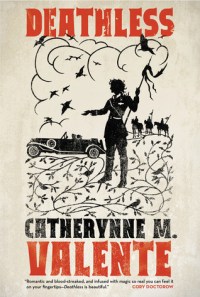
Book Club Review: “Deathless”

8694389We are part of a group of librarian friends who have had an ongoing bookclub running for the last several years. Each “season” (we’re nerds) we pick a theme and each of us chooses a book within that theme for us all to read. Our current theme is “B-Sides,” where we pick different books from previous authors that we read in the club.

For this blog, we will post a joint review of each book we read for book club. We’ll also post the next book coming up in book club. So feel free to read along with us or use our book selections and questions in your own book club!

Book: “Deathless” by Catherynne M. Valente

Publishing Info: Tor Books, March 2011

Where Did We Get This Book: Kate from the library, Serena owns it.

A-Side Book: “The Girl Who Circumnavigated Fairyland in a Ship of Her Own Making”

Book Description: Koschei the Deathless is to Russian folklore what devils or wicked witches are to European culture: a menacing, evil figure; the villain of countless stories which have been passed on through story and text for generations. But Koschei has never before been seen through the eyes of Catherynne Valente, whose modernized and transformed take on the legend brings the action to modern times, spanning many of the great developments of Russian history in the twentieth century.

Deathless, however, is no dry, historical tome: it lights up like fire as the young Marya Morevna transforms from a clever child of the revolution, to Koschei’s beautiful bride, to his eventual undoing. Along the way there are Stalinist house elves, magical quests, secrecy and bureaucracy, and games of lust and power. All told, Deathless is a collision of magical history and actual history, of revolution and mythology, of love and death, which will bring Russian myth back to life in a stunning new incarnation.

Serena’s Thoughts

This was my bookclub book choice. After reading and loving the entire “Fairyland” series, I was eager to see what Valente had to offered with a new fantasy setting and topic. How would her lyrical writing style and witty twists of nonsense translate to the seemingly much more dark and serious tone of a Russian fairytale?

As a young girl growing up, Marya sees more than most. She sees the bird-forms that her sisters’ husbands wore before changing into men and asking for their hands. She’s visited the small beings who run her house via committee. She knows there is magic in the world, and she is ready and waiting for her turn. But what she gets is Koschei, a dark being who has served as the nightmare in Russina folklore. However, Marya is no wilting flower herself, and over the years proves to be the challenging equal of even a being so great as Koschei.

This is the story of Marya, but it is also the story of Russia. And with that dual focus and the time period during which this is set, there is a darkness that permeates the story. There are some incredibly rough scenes that draw from historical events and Valente doesn’t back down from the tragedy of it all. It was quite the change from the up-beat and fuzzy tone of her other books, but not a change for the worse. I don’t have a strong foundation in Russian history, so there were various points where I had to put the book down out of curiosity about the real-life events that were being referred to. However, the book and fairytale aspects are also strong enough on their own that this type of extra research was by no means necessary.

I very much enjoyed Marya herself and the way she moved through her own fairytale. I also wasn’t familiar with the original folktale, so I read up on that as I went along, too. The story was slow to start, but once it gets into the truly fantastical elements and onto Marya’s own adventures and quests, I was able to zip along.

I did struggle a bit more with Valente’s flowery way of writing in this story. While she still had several very beautiful lines and highly quoatable sections, there were also portions that felt like they just dragged on just for the sake of lyrical lines. But those lines were actually adding anything to the story. It felt like an editor could have been used to really pair these sections down. This would have not only helped the pacing, which, like I said, could be slow at times, especially in the beginning. But it also would have left the remaining beautiful bits as stronger for being more rare.

Kate’s Thoughts

I was the person in book club who didn’t really care for “The Girl Who Circumnavigated Fairyland in a Ship of Her Own Making”, but when I heard the plot of “Deathless” I was game to give Valente another try. I don’t know much about Russian folklore outside of Baba Yaga, and my knowledge of Russian history is admittedly limited, but I thought that this could be a fun break from the usual fairy tale retellings that usually have a huge focus on Western European stories. And these aspects were the things that I liked best about this book.

I had never heard of the Marya and Koschei story, but found myself completely taken in by their admittedly problematic relationship. Yes, he kidnapped her as a child and there was certainly a fair amount of manipulation to begin with (very “V for Vendetta”, as we agreed in book club). But ultimately, like in “V for Vendetta”, Marya became more than Koschei, became an incredibly tough and strong protagonist who takes back her agency, and has a new kind of connection to Koschei. Sure, in real life this isn’t a good thing, but HEY GUESS WHAT I DON’T EVEN CARE!! I was one hundred percent invested in them and was rooting for them, even when Ivan showed up (as he does in the original story), because Ivan can’t POSSIBLY get Marya like Koschei does. I went back and looked up the original Marya and Koschei the Deathless fairy tale, and I liked how Valente subverted it to fit along with important, and sometimes dark as night, moments in Russian history.

But ultimately, I still have a very hard time with Valente’s writing style. While I liked the plot, I found myself slogging through this book because of how detailed and flowery her writing is, and also found myself having to skip back and re-read sections just to figure out what was going on. I don’t like having to do that repeatedly in a book, and I was doing that a fair amount in “Deathless”. I think that her writing style and the way that she likes to make her fantasy worlds (another thing I am not keen on) are just not conducive to how I like my stories.

I’m glad that we read “Deathless” if only because we stretched our reading muscles a bit and covered unknown folk tales from a not as familiar culture and history.

Serena’s Rating 7: I enjoyed this book, especially the darker fairytale aspects and the tie-ins to Russian history, however I felt that Valente’s writing style too often distracted from the story itself or needlessly dragged out sections of the plot.

Kate’s Rating 6: I’m still not really into fantasy and think that Valente’s style is a bit too flowery for me, but I liked the Russian fairy tale aspect, and I was deeply invested in the messed up romance between Marya and Koshchei.

Book Club Questions:

  1. This is a fairytale re-telling. How does it compare to other fairytales you’ve read? Were you familiar with the original fairytale this was based on? Or Russian fairytales in general?
  2. The story blends fairytales with historical fiction. How did this work for you? Were there parts you particularly intriguing or you felt could have been expanded upon more?
  3. There was also some subtle or not too subtle commentaries on politics and the Communist regime, like the committees of house imps and references to Party slogans. How did these work for you?
  4. Mixed with the topics of war and fear, the story explores love and marriage. Marya and Koschei have a tumultuous (to say the least) relationship. What did you think of the arc of their story? How did you feel about the character Ivan and his role in the story?
  5. Valente has a very unique writing style. Did this add or detract from the story in your opinion?

Reader’s Advisory:

“Deathless” is included on the Goodreads lists “Dark, Lyrical Fairytales”, and “Russian Motifs in Fantasy”.

Find “Deathless” at your library using WorldCat!

Next Book Club Book: “Moonshot: And Indigenous Comics Collection (Vol. 2)” by Hope Nicholson

Serena’s Review & Giveaway: “Spinning Silk”

39810065Book: “Spinning Silk” by T. Cook

Publishing Info: Amazon Publishing, May 2018

Where Did I Get this Book: provided for review

Book Description: A weaver’s genius ignites the jealousy of her peers, the possessiveness of her mill’s proprietress and the hopes of an unborn nation.

Furi knows she was born to create, but the fabric of her life otherwise weaves mysteries. These things are more than they appear:

Shin, the gardener, with his unlikely power over life and death;
A mysterious illness with a selective death route;
Kitsuke artist Madame Sato, who would fashion Furi into a reincarnation of her own dead daughter;
The princess of a puppet emperor, who has strange loyalties to a humble gardener; and
The vaporous rumor of a war with no apparent aggressor.

“Spinning Silk” is inspired by Japanese folklore including the love story of Orihime and Hikoboshi as well as a radical reimagining of the terrible tsuchigumo (spider spirits) and jorogumo demons.

Review: I was sent an excerpt of this book several months ago, and while reviewing it the strength of the author’s writing and the intriguing plot nabbed my attention. After receiving my copy, I blew through this story quickly. While it’s not without faults, “Spinning Silk” was a unique story, almost a fairytale-retelling but inspired by Japanese folklore instead of the Western-based fairytales that are all too common.

Furi is an orphan who has been raised as a slave. However, she has an incredible talent for weaving, a talent so great that it draws the eyes of some very important people. Her path soon crosses with several other unique characters, most importantly, perhaps, a gardener who has power of his own. Her journey is one filled with death and darkness, a mysterious illness that strikes in an unknowable way. But Furi persists through it all, discovering her own strengths within.

We all know how I feel about fairytale-retellings. That said, is is more and more difficulty to find truly intriguing stories. The basic fairytales have been told over and over in almost every way. So I’m always incredibly excited when I see a story like this that is not only drawing from folktales that I am not familiar with, but that is set in a place and culture that is A.) not my own and B.) one that is rarely called upon as a setting and foundation for a story such as this. All cultures have stories at their heart, and yet we’re only familiar with a very few.

I know very little about Japanese culture and folklore. I was not familiar at all with the story that serves as the basis for this book. But what made it so excellent was that this didn’t matter! While I can’t speak to the authenticity of these things (again, given my lack of prior knowledge of the subject), I will say that coming from a fairly ignorant standpoint, I felt that the world that Cook drew and the tale itself felt truly authentic. She avoided several of the pitfalls common to stories set in places/cultures that are not one’s own. Notably, her use of Japanese language. The book does has a helpful list of terms in the back for those of us who are not familiar, but the story itself is blessedly free of any in-text explanation for terms and words. Because, of course, why Furi explain words that are common to her?

I also liked the way the story wove together the fantastical elements and the historical parts. While I do wish there there had been a bit more lead up to the fantasy aspects (they come into play much more strongly towards the end), the historical portions of the story were spot on. I felt immediately immersed in this setting and became quickly invested in Furi’s story. The writing is excellent (again, this was one of the things that immediately drew me to the book), and while the story does unfold slowly, I felt that it was worth the payoff in the end.

However, this book definitely falls into the “dark” category, as far as fantasy fiction goes. The tone is often somber and bad things happen to good people. I like dark fantasies as a whole, so I was mostly fine with this. I did struggle a bit with the end, but I understood the point the author was making and, while a valid one, it simply isn’t my preferred reading experience. But that should in no way take away from the reading experience of others. This is just a very subjective preference of mine.

I also very much like Furi herself. The story is told from her perspective, but even being in her mind, all is not revealed. Not only do readers need to piece together the motivations and histories of other characters, but Furi herself doesn’t come out and tell you everything about herself. This also contributed to the slow-moving factor of the book, but I didn’t mind it. Instead, I felt like I was slowly learning who Furi truly was and this increased knowledge built alongside the stakes of the story as a whole.

Overall, I very much enjoyed this book. And I don’t think enough people have read it! To help with that, I’m offering a giveaway of my copy of “Spinning Silk.” The giveaway is open to US entrants only and runs  until August 16.

Click here to enter!

Rating 7: An exciting new fantasy fairytale set in a culture that is often not seen in these types of stories. A bit on the darker side, but worth the slower reading experience in the end.

Reader’s Advisory:

“Spinning Silk” isn’t on many Goodreads lists, but it should be on “Re-tellings of Little Known Fairy Tales.”

Find “Spinning Silk” on Amazon!

Serena’s Review: “These Rebel Waves”

294220911Book: “These Rebel Waves” by Sara Raasch

Publishing Info: Balzer + Bray, August 2018

Where Did I Get this Book: Edelweiss!

Book Description: Adeluna is a soldier. Five years ago, she helped the magic-rich island of Grace Loray overthrow its oppressor, Argrid, a country ruled by religion. But adjusting to postwar life has not been easy. When an Argridian delegate vanishes during peace talks with Grace Loray’s new Council, Argrid demands brutal justice—but Lu suspects something more dangerous is at work.

Devereux is a pirate. As one of the outlaws called stream raiders who run rampant on Grace Loray, he pirates the island’s magic plants and sells them on the black market. But after Argrid accuses raiders of the diplomat’s abduction, Vex becomes a target. An expert navigator, he agrees to help Lu find the Argridian—but the truth they uncover could be deadlier than any war.

Benat is a heretic. The crown prince of Argrid, he harbors a secret obsession with Grace Loray’s forbidden magic. When Ben’s father, the king, gives him the shocking task of reversing Argrid’s fear of magic, Ben has to decide if one prince can change a devout country—or if he’s building his own pyre.

As conspiracies arise, Lu, Vex, and Ben will have to decide who they really are . . . and what they are willing to become for peace.

Review: After devouring “Song of the Current” and “Whisper on the Tide,” I felt a deep hankering for more fantasy/pirate good times. And, luckily for me, the topic seems to be a popular one right now in the YA fantasy world, as not only this book, but another “Seafire” (to be reviewed soon) were up and available on Edelweiss. I didn’t hesitate to request it. However, while the story was enjoyable enough, I think the unabashed joy and adventure that came from the “Song of the Current” series kind of left me feeling a bit cold about this more serious, political story.

The story is told from three perspectives: Adeluna, a young woman who grew up as the solider daughter of two revolutionary parents, fighting for the freedom of her island nation. She now finds herself transitioning into a role of politics, but is finding her fighting instincts harder to dismiss than she had thought. Deverux is the pirate of this story and is seemingly only for himself and his crew, collecting and selling the island’s magical plants. But all too soon, he finds himself caught up in intrigues that are way above his pay level. Benat is on the other side of things, quite literally growing up in another country and the one that fought on the other side of Adeluna’s revolution. The son of the king, Benat struggles to reconcile his own interest in magic with the teachings of his faith that draw any connection to magic as heresy.

Even in that brief description, you can see that this book is biting off a pretty big plot to chew upon. Not only do each of these three characters have very different histories, but they each represent a complicated group of individuals who are all operating against each other (openly and not so openly) in a nation-level tug of war over the future of the island and its valuable plant magic. I did like the complicated weave that the author put together here. None can say that she dumbed this story down for younger readers. However, I don’t necessarily think that she fully committed to the complexities of her world either, or, at the very least, explained them fully enough. I never really understood the religion that drove Benat’s nation, and as a major player in the series, this was a constant annoyance.

Further, the story was much more political than I had expected. This is one of those hard criticisms to diagnose. Is it really a fault with the story that readers went in expecting something else? Or is this simply a failure of marketing? Either way, I started this book hoping for more rollicking adventures on the high sea. What I got instead was a lot more political shenanigans. And I’m not against political stories as a whole, but I also don’t feel that this book pulled that aspect of the story off very well.

For example, we are told that Adeluna’s parents were both brilliant revolutionaries, able to successfully lead a group of guerilla soldiers against a much stronger nation and ultimately win freedom for their island. They came up with and planned intricate strikes. But in the very first few chapters, we see a political council meeting where both of Adeluna’s parents are apparently perplexed by the political maneuverings of a few of the other council members. But Adeluna, of course, sees right through this. And yes, I know this is a YA novel and that Adeluna needs to be the one to drive her portions of the story. But weird moments like this just make me roll my eyes. There are ways to make your teenage protagonist drive your story and come up with unique insights without directly undercutting the adults that you just spent some much time building up. I would recommend “The Tethered Mage” and “The Defiant Heir” as excellent examples of how to have powerful parental figures while not damaging the competence and leading force of your younger main character. This is only one example, but it was present throughout the book and I started having a hard time taking it seriously.

As for the main three characters, I did like them for the most part. The romance was completely predictable, however, and again, I didn’t feel like this book was really introducing anything new with either of these characters. I did appreciate the fact that it presented a gay main character and gave him a decent story. There have been some complaints that his wasn’t the main romance of the story, but I feel like, again, this was a disconnect between the way this book was marketed and what it turned out to be ultimately. I think a lot of readers were expecting “gay pirates” and that’s not this. I didn’t know much about this aspect of the story, so I didn’t have those expectations going in. So, from my perspective, it was still a good example of including diversity in your main cast. But, in the end, I still didn’t feel overly invested in any one of the three of these characters. They all felt familiar, but in a “been there, read that” type of way.

Ultimately, I didn’t love “These Rebel Waves.” There’s nothing objectively “bad” about the book, but it also wasn’t introducing anything truly new. Even the magic system, which on face value should have been points in the “new” column, turned out fairly bland. We never got any real look into how this work or any details: plants were just magic. Ok. I also feel like this book struggles against reader expectations. The story was much slower-moving and politically focused than I had expected. But even had I know this going in, I don’t think this is the strongest example of that type of story either. In the end, there have just been better books telling very similar stories.

Rating 6: Nothing terrible or anything, but pretty forgettable in my opinion.

Reader’s Advisory:

“These Rebel Waves” is newer, so it isn’t on many relevant Goodreads lists, but it is on “2018 Queer SFF Releases.”

Find “These Rebel Waves” at your library using WorldCat.


Kate’s Review: “Scarlett Hart: Monster Hunter”

34499251Book: “Scarlett Hart: Monster Hunter” by Marcus Sedgwick and Thomas Taylor (Ill.)

Publishing Info: First Second, April 2018

Where Did I Get This Book: The library!

Book Description: Scarlett Hart, orphaned daughter of two legendary monster hunters, is determined to carry on in her parents’ footsteps—even if the Royal Academy for the Pursuit and Eradication of Zoological Eccentricities says she’s too young to fight perilous horrors. But whether it’s creepy mummies or a horrid hound, Scarlett won’t back down, and with the help of her loyal butler and a lot of monster-mashing gadgets, she’s on the case.

With her parent’s archrival, Count Stankovic, ratting her out to T.R.A.P.E.Z.E. and taking all the monster-catching rewards for himself, it’s getting hard for Scarlett to do what she was born to do. And when more monsters start mysteriously manifesting than ever before, Scarlett knows she has to get to the bottom of it and save the city… whatever the danger!

In his first adventure for middle-grade readers, acclaimed YA author Marcus Sedgwick teams up with Thomas Taylor (illustrator of the original edition of Harry Potter and the Philosopher’s Stone) to create a rip-roaring romp full of hairy horrors, villainous villains, and introducing the world’s toughest monster hunter—Scarlett Hart!

Review: Rarely can you find an author who can jump from genre to genre with ease. A lot stick within their strengths, which may  be limited to one or two genres. It’s true that sometimes you get some who can shift between them and be strong in all of them (Stephen King and J.K. Rowling come to mind for me), but I wouldn’t necessarily expect it of an author, great ones included. So Marcus Sedgwick just keeps completely surprising me. He has written dark fantasy (“Midwinterblood”), straight up horror (“White Crow”), speculative Science Fiction (“The Ghosts of Heaven”), and realistic crime fiction with a literary zest (“Saint Death”). And he does a good job in all of them. Now we can add children’s graphic fantasy to his already impressive list of genre jumping, with “Scarlett Hart: Monster Hunter”. Given that the last book I read by him was the brutal and violent and depressing “Saint Death”, I thought that he couldn’t POSSIBLY make a realistic shift to a fun fantasy for children.

And yet “Scarlett Hart: Monster Hunter” is exactly that. Scarlett is a mix of Anne Shirley and Buffy Summers, as she’s a plucky monster hunter with a lot of heart but also a bit of sad baggage. She is determined to follow in the footsteps of her parents, both renowned monster hunters in their own right who died in the line of duty, but is too young according to The Royal Academy for the Pursuit and Eradication of Zoological Eccentricities (T.R.A.P.E.Z.E.). With the help of her guardian/former servant Napoleon White she breaks the rules, wanting to make her parents proud. I loved Scarlett, for her tenacity and her recklessness, and I loved how she and Napoleon banter and work together in their monster hunting. Napoleon himself is a fun stereotype/send up of the stuffy Gilded Age British  butler, with his worry about the state of his car and restrained frustration with Scarlett’s antics. Their interactions are both funny and sweet, and you get a good sense of both their motivations and devotions to her late parents as well as his devotion to her because of a sort of surrogate parental instinct. It’s very Buffy and Giles.

giphy12
With all the father/daughter-esque joy and none of the angst. (source)

The monsters themselves are pretty standard villains, but they have some fun tweaks and twists added to them. We’ve all heard of the Hound of the Baskervilles Church Grims, and mummys and gargoyles. But while they are presented as menacing and definitely scary, the tone is lighthearted enough that kids who may not like scary things will probably be able to enjoy the monster hunts themselves. The true villains of this story are Count Stankovic, who was the arch rival of Scarlett’s parents and hates her just as much, and, in some ways, society. T.R.A.P.E.Z.E. is a very strict group, seeming to  be mirrored off of old Victorian secret societies that you might see in other books like this, and one of the rules is that Scarlett is too young to officially hunt, under threat of punishment if she is caught. But given that is her main source of income now that she has been orphaned, she has little choice, especially since women during this time period (Victorian? Edwardian? I’m not totally certain) really didn’t have many options if they were on their own. Seeing her fight against norms of the society she lives in is fun and encouraging, and I think that a lot of people, kids and teens alike, will find a lot to relate to with her.

I also really enjoyed the artwork for this book. It’s cartoony enough to be entertaining to the audience it’s written for, but there is a lot of depth to it as well. I’m not too surprised, given that Thomas Taylor was the original artist for the cover of “Harry Potter and the Philosopher’s Stone” in the U.K. He’s made a career for himself beyond that, but he was the first. And his talents are definitely on display in this book.

Screen Shot 2018-05-22 at 3.28.56 PM
(source)

“Scarlett Hart: Monster Hunter” is a comic that I think will be perfect for end of summer reading for kids and teens alike. Heck, if stories about spunky orphans getting into some daring do is your thing, you’ll probably like it too! Marcus Sedgwick has now branched his writing talents into the middle grade community, and I think that he is going to fit in just swimmingly!

Rating 8: A fun and sweet romp with good characters and a solid premise, “Scarlett Hart: Monster Hunter” is just another example of Marcus Sedgwick’s talent as a writer.

Reader’s Advisory:

“Scarlett Hart: Monster Hunter” is fairly new and not on many Goodreads lists. But it is included on “Great Graphic Novels for Girls”, and I think it would fit in on “Women Leads: Kids Books and Comics”.

Find “Scarlett Hart: Monster Hunter” at your library using WorldCat!

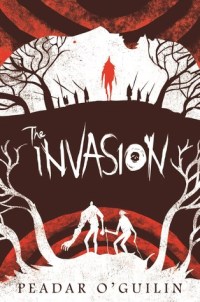
Kate’s Review: “The Invasion”

35292343Book: “The Invasion” by Peadar Ó Guilín

Publishing Info: David Pickling Books, March 2018

Where Did I Get This Book: The library!

Book Description: After so much danger, Nessa and Anto can finally dream of a happy life. But the terrible attack on their school has created a witch-hunt for traitors — boys and girls who survived the Call only by making deals with the enemy. To the authorities, Nessa’s guilt is obvious. Her punishment is to be sent back to the nightmare of the Grey Land for the rest of her life. The Sídhe are waiting, and they have a very special fate planned for her.
 
Meanwhile, with the help of a real traitor, the enemy come pouring into Ireland at the head of a terrifying army. Every human they capture becomes a weapon. Anto and the last students of his old school must find a way to strike a blow at the invaders before they lose their lives, or even worse, their minds. But with every moment Anto is confronted with more evidence of Nessa’s guilt.

For Nessa, the thought of seeing Anto again is the only thing keeping her alive. But if she escapes, and if she can find him, surely he is duty-bound to kill her…

Review: I was so very pleasantly surprised by Peadar Ó Guilín’s novel “The Call” that when I found out that it was getting a sequel I was on pins and needles for it to be released. His take on a malevolent and violent faerie world was something that I hadn’t seen before in such brutal and disturbing fashions, and it definitely took the concept of faerie worlds and put it in a dark reality, all while making their rage somewhat understandable. I also loved our protagonists Nessa and Anto, friends and would be boyfriend and girlfriend who beat the odds when they were ‘called’, Anto being a pacifist and Nessa having a disability because of childhood polio. Plus, the concept of humans being the actual monsters at the heart of that book (in the form of violent misogynist Conor) is a theme that I always enjoy. It combined into one of my favorite reads of that year. So when “The Invasion” showed up in my holds, I waited a little bit to savor the anticipation of revisiting Nessa, Anto, and the Sídhe of the Grey World.

Perhaps I put too much anticipation into it, because ultimately, I was kinda disappointed with “The Invasion”.

giphy17
Why have your forsaken me? (source)

I do want to give “The Invasion” credit where credit is due. Ó Guilín is relentless in his portrayal of war and violence, and the price of war for those who are part of it. While Nessa and Anto think that perhaps they can live their lives out together and have a happy ending, the Irish Government has other ideas for both of them. Anto is recruited to fight against the invading Sídhe (against his will), even though he has survived the Call with a disfigured, giant arm and is a pacifist at his heart. And Nessa is assumed to be a traitor, because they don’t believe that a girl whose legs were weakened because of childhood polio could have POSSIBLY survived The Call without making a deal with the enemy, and so she is carted off to a life in prison, and then to be sent to the Grey Land as punishment. While it was a super bummer to see that these two are probably not going to get their happy ending together, I appreciated that Ó Guilín doesn’t try to sugarcoat how a reality these two are living in would actually be. He still keeps the violence and disturbing imagery and themes up to a solid eleven, and there were many times that I pretty much squirmed in my seat while reading this book. I also liked seeing Aoife have more of a role in this book. In “The Call” she is merely the mourning girlfriend to Nessa’s best friend Emma. In “The Invasion”, she is with Anto and other classmates of their old school, and she is becoming a warrior out of necessity, even though she is questioning so much. Her character arc was very satisfying to see. We also get to see more of the flora and fauna of The Grey Land itself, beyond the evil faeries. I liked Ó Guilín’s world building here and found it to be as creative as it was messed up.

But there were so many things about this book that didn’t make it feel as satisfying as I wanted it to be. As much as I appreciate that realistically Nessa and Anto are going to have obstacles, I wanted to see them together. I wanted to see them adjusting to life after The Call, but they really didn’t have much interaction outside of the two of them pining for each other. And I found myself frustrated with Anto’s storyline, Aoife aside. Yes, I appreciate Ó Guilín portraying war the way that it should be portrayed, I just didn’t care about Anto and his compatriots fighting on the front lines. ESPECIALLY since some things happen with Liz Sweeney, the mean girl from the first book who is still pretty much awful. And Nessa herself didn’t get as much credit this time around. She got some cool accolades and I did like her new adventure in The Grey Land, but I felt like she didn’t really get much to do. And she deserved so much more than she got.

Overall, “The Invasion” probably ended Nessa’s and Anto’s story realistically, wrapping it up and pretty much tying all the loose ends up as well. But it felt abrupt, and I wanted more, and not in a good way. I appreciate choosing the end that he did, but wish it had felt more like a worthy successor to “The Call”. I’ll definitely give another book by Peadar Ó Guilín a try, but I had wanted more from this.

Rating 6: A sequel that focuses on the price of war and how it tears people apart, “The Invasion” is a not as satisfying conclusion to “The Call”. While it didn’t live up to the first of the two, it was a realistic follow up.

Reader’s Advisory:

“The Invasion” isn’t VERY new but isn’t on many relevant Goodreads lists for some reason. But I think it would fit in on “Books About Faery”, and “Best YA Fantasy Series About The Fae”.

Find “The Invasion” at your library using WorldCat!

Previously reviewed: “The Call”

Serena’s Review: “Beast: A Tale of Love and Revenge”

31019831 Book: “Beast: A Tale of Love and Revenge” by Lisa Jensen

Publishing Details: Candlewick Press, July 2018

Where Did I Get this Book: ARC from the publisher

Book Description: They say Château Beaumont is cursed. But servant-girl Lucie can’t believe such foolishness about handsome Jean-Loup Christian Henri LeNoir, Chevalier de Beaumont, master of the estate. But when the chevalier’s cruelty is revealed, Lucie vows to see him suffer. A wisewoman grants her wish, with a spell that transforms Jean-Loup into monstrous-looking Beast, reflecting the monster he is inside. But Beast is nothing like the chevalier. Jean-Loup would never patiently tend his roses; Jean-Loup would never attempt poetry; Jean-Loup would never express remorse for the wrong done to Lucie. Gradually, Lucie realizes that Beast is an entirely different creature from the handsome chevalier, with a heart more human than Jean-Loup’s ever was. Lucie dares to hope that noble Beast has permanently replaced the cruel Jean-Loup — until an innocent beauty arrives at Beast’s château with the power to break the spell.

Review: Oof, another challenging “Beauty and the Beast” retelling. I think I could probably write an entire PhD on the pitfalls of re-telling this fairytale. When I first saw the book description, I was excited to read a version that was seemingly focused on an entirely new character, not “Beauty” herself. And while that aspect was still interesting, the book itself was very difficult to read and I will have a hard time recommending it to others, unfortunately.

Lucie is a servant in the house of the rich lord, Jean-Loup. After a horrific event, she is the one to wish the worst on her master, resulting in him turning into a beast, and her into a sentient household item. As time passes, she begins to suspect that this new, beastly version of her master might not be the same, and when a stranger arrives on the scene, the world begins to change once again.

So this is obviously not a positive review, but there are a few things I’d like to highlight as positives for this book. One, I still very much appreciate the originality behind the concept of this story. We’ve all read a million and one versions told from various “Beauty’s” perspectives. Some are better than others, but the basic construct is the same. They all arrive on the scene, confused and scared. And slowly come to change their minds and fall in love with the Beast. Here, Lucie knows Jean-Loup before his change and her experiences with him as a Beast are from the perspective of a servant, not the traditional heroine’s role. What’s more, Lucie isn’t even the “Beauty” in this story, and that character does make an appearance and play a part in the story unfolding. It’s a very creative take on things, and I truly wish that other choice had been made that would have allowed this new version to stand well on its own.

Further, I did like the writing for the most part. The “voice” fits well with the re-telling of a fairytale. It verges on rather simplistic and “younger” sounding, but I think that, done right, this tone actually works really well for fairytales which can be unique for having a different cadence, such as this. However, the writing also directly lines up with some of my major criticisms of the book.

It is very simplistic and straight forward. As I began reading, I started thinking “Huh, ok. So this is maybe more of a middle grade version of ‘Beauty and the Beast.’ Great!” Mentally, I started aligning it with the words of Shannon Hale, who’s written a bunch of fairytales, many of which have a younger-sounding voice and simple story-telling technique. But alas, this comparison died a sudden, very harsh death only a few chapters into the story.

(This might be a spoiler, but it’s pretty crucial to understanding the negative reaction I’ve had to this book, so if you want to go in blind, skip the rest!)

The prologue to the story sets it up that Lucie is the one who directed the fairy to go “all in,” as it were, on the curse on Jean-Loup. So we know that something awful has to happen to inspire this level of hatred. And something awful does indeed happen, in the form of a graphic sexual assault scene.

This was shocking to see on several accounts, but not least of all is the direct contradiction that the graphic nature of this scene lays across the middle-grade nature of the writing itself. I was mentally comparing this book to Shannon Hale, of all people, based on the writing style itself. The most sweetest fairytale writer you can find! And that’s a problem. Likely, the type of reader who is going to appreciate the tone of this writing style is going to verge younger. Even for me, a fan of middle grade and YA fiction, I was distracted by the simplistic nature of this writing. So those who may truly enjoy it are going to be young. And then you get a scene that could have been straight out of “Game of Thrones.” It’s going to be tough to read for even the most hardened among us who are semi-used to running across scenes like this in adult fantasy, let alone younger readers. But, on this side of things, readers who are prepared for this type of dark scene, are likely going to be completely turned off by the young-sounding writing. So there’s a contradiction there where the writing and content are, conversely, going to turn off both options for a reader-base.

Beyond this, I have problems with the actual story line, having included a scene like this as the basis for Lucie’s hatred of Jean-Loup. For all intents and purposes, Lucie ends up as the romantic interest for the Beast, instead of Belle. The book tries to roll out the tried and true rug of “magically separated/changed selves” that would absolve the Beast of past actions, as he is now no longer truly that person. I will always struggle with this type of wand-waving. Regardless of the fact that the “reasons” that Lucie points to as evidence that these two beings are inherently different are horribly minor (like food preferences and fears of spiders), there’s always going to be an insurmountable hill, in my mind, between forgiving an attacker (a hard ask on its own) and falling in love with him. I just can’t get behind that story, and I don’t think this book did nearly enough, even, to highlight any exception that could be made.

While the latter argument could be a matter of personal preference (though I still don’t think there is a huge swath of readers out there who are just searching for that great tale highlighting a victim falling in love with her attacker), my first point about the very real conflict between writing style and content is enough for me to give this a low rating. I honestly just have a hard time really focusing in on who exactly the audience is supposed to be for this book. At the very least, I wasn’t part of it.

Rating 4: Not for me. I don’t think this is a message we want to send out, regarding victims and their attackers, and the writing style was in direct conflict with the content.

Reader’s Advisory:

Again, honestly, if you want a good “Beauty and the Beast” retelling, go read “Beauty,” (the classic, in my opinion), “Heart’s Blood,” (by may favorite author, Juliet Marillier), or “Hunted” (for a more recently published option).

Find “Beast: A Tale of Love and Revenge” at your library using WorldCat!


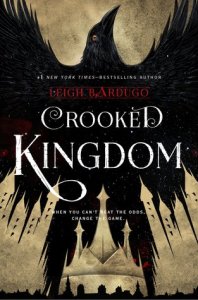
Serena’s Review: “Crooked Kingdom”

22299763Book: “Crooked Kingdom” by Leigh Bardugo
Publishing Info: Orion Children’s Books, September 2016

Where Did I Get this Book: own it!

Book Description: Kaz Brekker and his crew have just pulled off a heist so daring even they didn’t think they’d survive. But instead of divvying up a fat reward, they’re right back to fighting for their lives. Double-crossed and badly weakened, the crew is low on resources, allies, and hope. As powerful forces from around the world descend on Ketterdam to root out the secrets of the dangerous drug known as jurda parem, old rivals and new enemies emerge to challenge Kaz’s cunning and test the team’s fragile loyalties. A war will be waged on the city’s dark and twisting streets―a battle for revenge and redemption that will decide the fate of the Grisha world.

Previously reviewed: “Six of Crows”“Six of Crows”

Review: As was established in our bookclub review of this book, I was definitely the side of our blogging duo who loved the first book. I was all the more surprised given the massive burn I’m still nursing from the author’s original Grisha trilogy that I’ve come to see as an example of how even great writing and great characters can fall prey to some unfortunate YA fantasy tropes. But “Six of Crows” seemed blessedly free of the concerns that plagued those original books, and I was so excited after reading it that I immediately ordered this, the second half of the duology. And, I’m pleased to report, that she stuck the landing on this one!

Kaz and crew are in a tight spot. While they pulled off their last crazy stunt, the reward they were promised not only wasn’t forthcoming, but the powerful merchant with whom they had bargained instead kidnapped Inej and tanked the reputation of the entire crew with the other powerful gangs that make up Ketterdam. Now, stuck between a rock and a hard place, the group must not only recover their lost member and loot, but somehow resolve a political situation has the potential the change the world for the worse.

What sold me on the fist book was the strength of this cast of characters. There are a lot of them, and it speaks to Bardugo’s abilities as an author that she was able to balance so many competing personalities and story arcs. Many of those continue into this book, though there are slight shifts in focus. While much of the first book was taken up by slowly revealing Nina and Mattias’s shared past and resolving their ongoing prejudices, here, their romance and role in each other’s lives has settled down more. The fallout of Nina’s use of the highly addictive, powerful stimulant that she used in the last book to save the team at the very end, was an important and captivating arc for her.

Jesper and Wylan, instead, received more word count and chapters than they had had in the first book. Jesper’s own past was delved into, as well as his continued confrontation with his own gambling addition and the ongoing damage that his past poor choices are wreaking on his own life and the lives of those he loves. Wylan, too, further explores his own highly toxic familial relationships and the true horror that lies at the heart of many of his father’s lies. Their relationship, together, is also given more focus, especially as Jesper begins to realize that his crush on Kaz is a dead end and that Wylan may have always been the better match for him.

Of course, for me, Inej and Kaz were my main points of interest. I enjoyed both of these two the most in the first book, and I continued to enjoy their chapters here. I do feel like they each had a bit less, ultimately, due to the increased focus on Jesper and Wylan, however, I still loved what we were given. Inej, specifically, had come to some pretty frank realizations about what she saw for herself in the future by the end of the last book. And here, it was learning how to follow through with two competing desires. She’s also confronted by a mysterious assassin who may actually be even more skilled than the Wraith herself. Kaz, too, still struggles to overcome the lasting effects of his past. His arc didn’t have as many clear points, as it was more a simple continuation of his rise as a force to be reckoned with in Ketterdam. However, his relationship with Inej and the vulnerability that is required to maintain (begin!) it, is a continual point of challenge for him.

As for the plot itself, I very much enjoyed the complicated heist that was put into effect. There were several points that were laid down here and there that later came to play in new and surprising ways. There was just enough made clear to see the building blocks of the plan, but enough was hidden from various characters to have a good number of surprises in store (this is probably another reason why we had fewer Kaz chapters than I’d like, since, by necessity of the plot remaining a mystery, the man who knows it all can’t have a lot of focus). I liked the multiple showdowns that came into play and the ways in which various crew members’ strengths were called upon at different times to solve different problems.

The story was a bit more sprawling than the close-focused mission of the first book and I both appreciated the added complication but also felt a bit more adrift in the middle when the pieces were still being put together. The goal itself was almost too ambiguous to give the action a clear focus. This resulted in some of what should have been compelling action scenes feeling a bit disjointed from the book, as it wasn’t clear until the end how they all added together to get the result.

I also really enjoyed the ending. The story definitely didn’t shy away from some grim choices, and while I know this will disappoint some readers, I felt that these decisions were necessary to reflect the true dangers of the situation at hand. Further, while broad paths were laid before each character, their stories were by no means neatly wrapped up. Instead, we saw glimpses into what could be the future, but they were left so wide-open that there’s room to imagine various outcomes for them all.

Overall, I very much enjoyed this duology. It’s hard to think of many fantasy/heist books (of course, there’s the insurmountable Megan Whalen Turner), so in many ways these stories felt like a breath of fresh air in YA fantasy fiction (is it even YA? This was a question we discussed at bookclub, and I’m not sure of the answer for books like this). If you enjoyed “Six of Crows,” or Megan Whalen Turner’s “Queen’s Thief” series, or other books by Leigh Bardugo, definitely check this one out!

Rating 9: A thoroughly satisfying conclusion to this duology.

Reader’s Advisory:

“Crooked Kingdom” is included on these Goodreads lists: “YA fantasy/sf novels with major LGBTQ Characters” and “Thieves.”

Find “Crooked Kingdom” at your library using WorldCat!

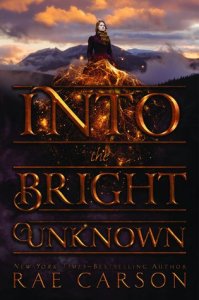
Serena’s Review: “Into the Bright Unknown”

18054074Book: “Into the Bright Unknown” by Rae Carson

Publishing Info: Greenwillow Books, October 2017

Where Did I Get this Book: audiobook from the library!

Book Description: Leah Westfall, her fiancé Jefferson, and her friends have become rich in the California Territory, thanks to Lee’s magical ability to sense precious gold. But their fortune has made them a target, and when a dangerous billionaire sets out to destroy them, Lee and her friends decide they’ve had enough—they will fight back with all their power and talents. 

Lee’s magic is continuing to strengthen and grow, but someone is on to her—someone who might have a bit of magic herself. The stakes are higher than ever as Lee and her friends hatch a daring scheme that could alter the California landscape forever. 

Previously reviewed: “Walk on Earth a Stranger” and “Like a River Glorious”

Review: This is the last in the “Gold Seer” trilogy and after the previous book which seemed to wrap up much of the story and do-away with its main villain, I wasn’t sure where this book would go from there. I was also still smarting from the pretty graphic and hard-to-read scenes that made up a good chunk of that book, so I went into this one hopeful that we’d have a return to the “Oregon Trail” adventures of the first book. What we got was probably something in-between.

Life is moving along in Glory, California. Lee and her friends have on their hands what looks to be a growing and bustling town. Except for the fact that the town charter they had paid for from the wealthy Henry Hardwick in the last book has yet to arrive. With this problem before them, a large chunk of our main characters head off to San Fransisco. What they find is a man much more villainous than they had suspected and before long, Lee and her friends have much more to deal with than just a small town charter.

With this as the last book in the trilogy, looking back, it’s hard to get a real sense for this series as a whole. The first one was a fairly straight-forward travelogue with fun call-outs to the tropes of Oregon Trail games and stories. The second took a nose dive into the worst parts of humanity and left Lee as a bit of a passive character. And this one gets the gang back together, adds a new villain, and pretty much turns into a heist story. It’s all a little strange, from that angle.

But to judge this book on its own, there were definite areas of improvement from the last book but it still didn’t manage to reclaim the highs of the first. I very much enjoyed the return of many of our familiar characters who were largely absent in the second book. In particular, Becky, who had snuck up on me in the first book as a favorite and then disappeared in the second installment. As a heist story, it makes sense to have this large cast and the book already had many of these people on hand, so it was fun seeing them all interact and plan together in a way that was intentional, rather than the hap-hazard manner in which they had been forced by circumstances on the trail to work together before.

Lee and Jefferson’s relationship was also good. I was glad to see them working together for much of this book after being separated for so much of it during the previous one. The lack of relationship drama was also a welcome relief given that all too often it seems as if authors feel the need to throw a wrench in their romances in the last book from a misguided attempt to “build tension.”

One of the strongest portions of this book, for me, was the increased focus on Lee’s abilities. There was a big shift in the end of the last book with how her gold sense operated, and it was interesting watching Lee continue to practice and explore the possible new uses of her powers. There were several moments in this book where she came up with clever ways to put this power to use, and after being mostly useless in the second book, the success of their plans ultimately did fall to Lee’s own abilities, both with her powers and her planning. I was also surprised when an arc was introduced that dealt more fully with where these abilities might have come from and what other forms of magic might exist in the world. It was a nice addition as, up to this point, it felt a little strange to have Lee be the only exception to a world that otherwise seemed magic-less and true to history.

Those were the stronger aspects of the book. However, I did still struggle with the main plot itself and the villains. It’s a weird complaint, but like the second book, the villains were almost TOO villainous. In that they all seemed evil simply…because. And while I know that money and influence could go a long way then (and still can today), it also bordered on unrealistic that some of the villains’ actions could have been overlooked for so long. A man is killed in a crowd of people at one point, and no one bats an eye. Even with prejudices in mind, I have to think that this would have lead to something more.

The heist itself was interesting enough. But it was also a bit too complicated, for my thoughts. Or, barring that, not easy enough to put together on ones own without a massive infodump at the end explaining it all. A good heist story keeps some cards hidden, but still leaves room for the reader to put things together for themselves. Here, while there were parts that I could guess, the infodump where “all was told” was still long and confusing. This could partly be due to the simple fact that no finesse was used for said infodump: characters just spilled it out in long chunks of dialogue. At the best, it was just boring. At the worst, it left me still confused but not wanting to expose myself to the boredom again in an attempt to try to understand with a second read-through.

In the end, the series never quite regained the high that was the first book and seemed to flounder around for purchase and focus in the last two books, each presenting wildly different stories both in tone and topic. If I was to recommend this series, I’d almost say to just stop with the first. The second two are not worthless, but they’re also the kind of books that I will quickly forget. But if you are still enjoying these characters and the unique combination of realistic history with small doses of magic, this book was still an improvement on the second and might be worth checking out.

Rating 6: A serviceable story with a few highs relating to Lee’s magic, but a heist that was too confusing to be truly enjoyable.

Reader’s Advisory:

“Into the Bright Unknown” can be found on these Goodreads lists: “California Gold Rush in YA & Middle Grade Fiction” and “Young Adult Books Without Insta-Love.”

Find “Into the Bright Unknown” at your library using WorldCat!

Serena’s Review: “Spinning Silver”

36896898Book: “Spinning Silver” by Naomi Novik

Publishing Info: Del Rey, July 2018

Where Did I Get this Book: Edelweiss!

Book Description: Miryem is the daughter and granddaughter of moneylenders… but her father isn’t a very good one. Free to lend and reluctant to collect, he has loaned out most of his wife’s dowry and left the family on the edge of poverty–until Miryem steps in. Hardening her heart against her fellow villagers’ pleas, she sets out to collect what is owed–and finds herself more than up to the task. When her grandfather loans her a pouch of silver pennies, she brings it back full of gold.

But having the reputation of being able to change silver to gold can be more trouble than it’s worth–especially when her fate becomes tangled with the cold creatures that haunt the wood, and whose king has learned of her reputation and wants to exploit it for reasons Miryem cannot understand.

Review: I was so excited when I saw that this book was coming out! “Uprooted” is one of my favorite more recent fairytale novels, and part of the reason I loved it was that it was a stand alone book. So to see that Novik was releasing yet another fairytale that would likely also be a standalone made my day. I was even more excited when I realized that it looked to be a reinterpretation of “Rumpelstiltskin” which has been, by far, one of the more underutilized fairytales in the midst of this retellings resurgence. And all of my wildest hopes and dreams have come true! I absolutely adored this book and my hardback copy is already pre-ordered.

Miryem’s life has been one filled with strained relationships. Her grandfather, a wealthy money lender, has struggled to watch his daughter’s family slowly slip into poverty as his son-in-law, Miryem’s father, has failed to make an earning as a moneylender himself. What’s more, Miryem, a decisive and strong-willed young woman, has never understood her father’s struggles to collect. After being pushed to far, with her mother’s health at risk, Miryem finally takes over the business, to her father’s shame and sadness, as this is by no means a “proper” task for a young lady. But Miryem excels. Far too well even, as she draws the attention of the magical beings who wander the winter woods looting and raiding villages for gold. And who could be more valuable than a woman you seems to turn anything she touches to gold? Now tangled in a complicated world of fairy rules and wars, Miryem will need to  draw on all the strength she has to save not only herself but perhaps even her country.

It’s no secret that I love fairytales, be they original or retellings. But as I’ve had a string of bad luck with “Beauty and the Beast” retellings (oof, there’s another one coming, folks, so look forward to that!), I have been hankering for a more original tale, unbound from conventions that all too often skew what could have been a good story. What’s more, Novik has already proven herself as being able to masterfully take the bare bones of a fairytale and make it something that only marginally resembles the original. And this held true for “Spinning Silver,” as well. While there are the barest tinges of the original “Rumplestilskin” tale before the story quickly (I’m talking a few chapters in) swerves into new and uncharted territory. And much better territory, when it comes down to it.

For one thing, given the description above and my own false assumption that it would follow the standard set by “Uprooted,” I went into this book fully expecting it to be Miryem’s tale following her struggles to turn rooms of silver into gold. And for the first several chapters, that’s what I got. But then a new character was introduced, a young woman from the same village whose home life is terrible and who is looking for a way out for her and her young brothers. Ok, now we have two. A few chapters more and yet another new character comes in, this time a young woman who is the disappointingly plain heiress to a father who has high hopes of rising his family’s position in the nobility. And that’s only the first three and the three who would turn out to be the more traditional lead characters for a book like this! But Novik doesn’t stop there and we get even more chapters from characters like the younger brothers, the nurse maid to the heiress, and even the villain himself at one point.

As has been documented on this blog several times before, I typically prefer books with only one narrator. I can handle two. But, like all silly reading “rules,” an exception was bound to come along, and that exception came here. While I did have favorites, Miryem herself, of course, as well as the heiress who played a much bigger role than I had expected at first, I enjoyed ALL of these characters. Not only did they all contribute important view changes on what became a very twisty plot, but each had a distinct voice, a “must” for any multiple POV book, and the point where I usually have criticisms for same-ness. They also all experienced clear character growth as the story progressed, though the amount of this was tied to the varied amount of page time each was given. Miryem’s sense of responsibility warred with the pride that lead her to become entangled in fairy wars. The peasant girl with the bad home life grew to have an appreciation for what family should mean. And the heiress found her own power in a world that had already written her off.

It also takes a lot of plot to provide ample room for movement and growth for a book with a cast of characters as large as this. And, again, Novik met this challenge head-on. The story slowly builds with several seemingly disparate through lines following each of these characters. But as the book continues, steadily these lines get woven together until by about halfway through the book the complicated network of intrigue is coming together. The players have been established and it is now up to several young women, all of whom are hugely out of their depth with creatures of magic and power surrounding them, to come together and save a country that is more and more plagued by long-lasting winters.

The magical elements were also surprising and unique. With the “Rumpelstilskin” parallel presented right at the get-go, I fully expected to see plenty of struggles regarding turning various things into gold. But that was only a small part of the fantasy world Novik created here. For one thing, the villain came completely out of left-field and was appropriately threatening and devious. Further, Miryem is not the only one to encounter and wield power in this story, and I was thrilled to see small references to other fairytales sprinkled here and there throughout the story.

The book also surprised me with a careful look at the anti-Sematism that Miryem, her family, and her people experienced throughout this book. While the story is set in a fantasy world, the challenging tension that is balanced between the Jewish people, their neighbors, and their roles in finance and banking was all too familiar to real-life history. Through Miryem, we see the struggles her family has faced with these prejudices, but also the important role her religion and culture holds in her life. Through other characters, we see their own biases and prejudices challenged and changed. It’s a nice added commentary in an otherwise purely fantastical tale.

Like “Uprooted,” the romance is understated in this story and isn’t a driving force for any of its characters. While I could have liked a bit more of it, I was quite pleased with what we did get, and, again, surprised that it wasn’t limited to our primary main character.

All in all, I absolutely loved this book. If you liked “Uprooted,” or like fairytales, or like fantasy, or just like good books, get your hands on this one!

Rating 10: Should I have been surprised? No. Was I thrilled? Yes. I can pretty much guarantee this will make my “Top Ten” list in December.

Reader’s Advisory:

“Spinning Silver” is on these Goodreads lists: “All that Glitters: Rumpelstiltskin Retellings” and “Upcoming 2018 Sci-Fi/Fantasy With Female Leads or Co-Leads.”

Find “Spinning Silver” at your library using WorldCat!


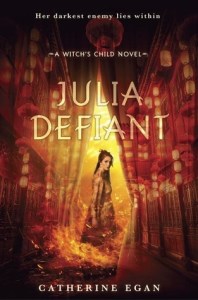
Serena’s Review: “Julia Defiant”

30634295Book: “Julia Defiant” by Catherine Egan

Publication Info: Knopf Books for Young Readers. June 2017

Where Did I Get this Book: audiobook from the library!

Book Description: Julia and a mismatched band of revolutionaries, scholars, and thieves have crossed the world searching for a witch. But for all the miles traveled, they are no closer to finding Ko Dan. No closer to undoing the terrible spell he cast that bound an ancient magic to the life of a small child. Casimir wants that magic will happily kill Theo to extract it and every moment they hunt for Ko Dan, Casimir s assassins are hunting them.

Julia can deal with danger. The thing that truly scares her lies within. Her strange ability to vanish to a place just out of sight has grown: she can now disappear so completely that it s like stepping into another world. It s a fiery, hellish world, filled with creatures who seem to recognize her and count her as one of their own.

So . . . is Julia a girl with a monster lurking inside her? Or a monster wearing the disguise of a girl? If she can use her monstrous power to save Theo, does it matter?

Previously reviewed: “Julia Vanishes”

Review: I saw that the third novel in this series was due to come out shortly, so it was a good reminder to check out this second book. Somehow the “Julia Vanishes” had slipped completely off my radar, all the more surprising for it having a few rare qualities that stand out in a sea of fantasy fiction that can be all too filled with tropes. These rarities were on display once again in this second book, and some of the quibbles I had with the first have also largely been resolved.

Several months have passed and miles have been crossed since the ending of the first book. Julia and her rather enormous cast of fellows now find themselves in a foreign land, loosely based on China, still on the search for a way to remove the magical book from the body of little Theo. Julia, in particular, is devoted to this mission in an effort to make up for her past disastrous choices with regards to Theo. But as she works towards this cause, she begins to discover more aspects of her unique vanishing ability and with these discoveries come unwelcome questions about her own history and identity.

First off, it is absolutely necessary to read the first book in this series before getting to this one. Even the several months break I had between the two lead to a longer than usual re-familiarizing period of time when I started this one. Several of the points that make this book and series so good (a large cast of characters, unique worlds, complicated histories) also make it very challenging to jump into with out refreshing oneself on the events of the past book. Beyond our cast of familiar characters, we’re also dropped into the middle of a new portion of this world with its own politics with regards to witches, its own powerful individual with whom Julia and co. must work, and new settings. After I finally felt like I had caught myself up, I greatly enjoyed this change in scenery. (It’s also noteworthy that for all of these challenges with complicated names/histories/etc., I greatly appreciated the author’s choice to trust her audience to catch up with things on their own. There were no info-dumps or clunky prologues to help with this process, but instead readers are left to put the pieces together on their own, which, with some patience, is perfectly doable.)

One of my criticisms of the first book was the fact that it felt like it had two dueling stories competing against each other, both detracting from the other. This problem has been completely handled in this book. The plotting felt much more streamlined and there was an appreciated increase in the action of the story. The book is driven by the mission to save Theo and this action is balanced by the character growth and inspection that comes through the ongoing mystery into Julia’s past and her abilities. Rather than having two plot pieces tangling together, this balance of plot and character development feel much more natural and give this book a stronger sense of natural flow.

Julia’s development is probably one of my favorite parts of this story. Her increased confidence and clever use of her vanishing powers could have opened a door for her character to lose value due to being “over powered.” But instead, the author finds ways to not only bring large questions into her magical abilities and history, but also focus in on the very human struggles that Julia is still managing. Her feelings of self-hatred with regards to her past choice to give up Theo to the enemy. Her relationship with a brother and her realization that he has lived a restricted life in an effort to support her. The ongoing fallout from her broken heart in the last book, and her realization that there are more fish in the sea.

What makes this last point stand out so well is the way the author introduces other fishes without setting any of them up as a “soul mate” or “one true love.” I loved the “Alanna” series by Tamora Pierce growing up. And I think one part that I liked then and have grown to appreciate more and more as I get older was the way that Pierce exposed Alanna to different romantic interests throughout the series until, in the end, she finally is able to recognize what is important in a partner and what she specifically needs. All to often in YA fiction, romantic interests are introduced who are A.) the protagonists first love of any kind and B.) perfect for them in every way, no questions asked. This never sits well, and I commend the author of this book for exploring a more honest take on the trials and tribulations of young love. Your first love may not be perfect for you. What’s more, your SECOND love also may not be perfect for you. But you learn things from them all. I had a hard time thinking of a similar current series that has tackled this subject as well as this book has, especially given how small a role the romantic aspects play in either book, all told.

I really enjoyed this book, even more than the first. My quibbles about the plotting where deftly handled, and this one was a quick read full of intense action sequences, strong characterization for a large cast, and solid character growth and exploration for Julia herself. Of course, as I’ve said, you have to read the first book first. But if you enjoyed that one at all, I definitely recommend this book as I think it’s even better!

Rating 8: With a realistic portrayal of the challenges of young love and an increased amount of action, “Julia Defiant” is an even better novel than the first!

Reader’s Advisory:

“Julia Defiant” isn’t on any relevant Goodreads lists, but it should be on “Fantasy Books about Thieves.”

Find “Julia Defiant” at your library using WorldCat!