Monthly Marillier: “Seer of Sevenwaters”

“Monthly Marillier” is a review series that is, essentially, an excuse for me to go back and re-read one of my favorite author’s back catalog. Ever since I first discovered her work over fifteen years ago, Juliet Marillier has been one of my favorite authors. Her stories are the perfect mixture of so many things I love: strong heroines, beautiful romances, fairytale-like magic, and whimsical writing. Even better, Marillier is a prolific author and has regularly put out new books almost once a year since I began following her. I own almost all of them, and most of those I’ve read several times. Tor began re-releasing her original Sevenwaters trilogy, so that’s all the excuse I needed to begin a new series in which I indulge myself in a massive re-read of her books. I’ll be posting a new entry in this series on the first Friday of every month.
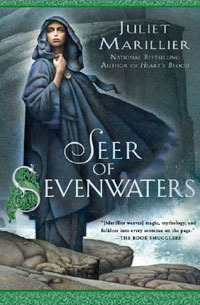
Book: “Seer of Sevenwaters” by Juliet Marillier

Publishing Info: Roc Hardcover, December 2010

Where Did I Get this Book: own it!

Book Description: The young seer Sibeal is visiting an island of elite warriors, prior to making her final pledge as a druid. It’s there she finds Felix, a survivor of a Viking shipwreck, who’s lost his memory. The scholarly Felix and Sibeal form a natural bond. He could even be her soul mate, but Sibeal’s vocation is her true calling, and her heart must answer.

As Felix fully regains his memory, Sibeal has a runic divination showing her that Felix must go on a perilous mission-and that she will join him. The rough waters and the sea creatures they will face are no match for Sibeal’s own inner turmoil. She must choose between the two things that tug at her soul-her spirituality and a chance at love…

Review: Unlike the first Sevenwaters trilogy which jumps generations with each book, the second trilogy remains focused on one generation: the daughters of Sean and Aisling. We’ve met, or heard reference to, them all before either in “Child of the Prophesy” or the previous book, so there’s an element of familiarity and expectation on each’s story from the start. Clodagh was a fantastic first pick for this new set of books, and it seemed only natural that Sibeal, her reserved, mystical younger sister would be the next choice. Unfortunately, for as much as I liked Sibeal’s character in “Heir to Sevenwaters,” her story has been one of my less favorite Marillier books, and so it remained with this re-read.

Even without the power of a seer, Sibeal believes she knows what will come of her life. She is soon to take her final vows to become a druid and join her brethren in the services they provide, that of wisdom, story-telling, and powerful, magical insight into the world around them. But this clear, straight path takes a sudden turn when Sibeal discovers a young man washed up on the shore with no memory of who he is. Suddenly, her life becomes much less clear and mysteries appear around every corner. For his part, Felix knows next to nothing about himself, with only dire hints at his own past and what paths he had been trodding before meeting Sibeal. Together, each must take on a perilous journey not only of self-discovery but to unlock wonders in the very world itself.

I really liked what we got from Sibeal in “Heir to Sevenwaters.” She didn’t have much page time, but she was a refreshing breath of fresh air in the midst of a family who was all treating Clodagh fairly poorly. Sibeal, alone, believed Clodagh and provided what support she could in the journey set out before her sister. Alas, as a main character, Sibeal wasn’t nearly as compelling. For one thing, her voice and perspective are not as distinct and unique as I had hoped. In too many ways, she seems similar to the other female protagonists we’ve seen in these stories and lacks the spark needed to make her stand out from the pack.

What’s worse, for the first time in this series, the narrative is split between Sibeal’s chapters and Felix’s, the romantic interest. And his are even worse than hers. Not only does the bare fact that splitting the narrative this way lesson the page time we have to get to know Sibeal as a character (perhaps this extended page count would have allowed for more development for her), but Felix himself brings next to nothing to the story. Amnesia stories are tough in this way, and Marillier falls into the same trap that many authors do with this type of arch: there’s just not enough to build upon when your character doesn’t know himself or his history. Beyond that, Felix’s chapters feel almost too similar to Sibeal’s. I’m not saying that there is a “male” and “female” way of thinking/speaking, but I definitely don’t want my two main characters to sound almost indistinguishable.

I also didn’t enjoy the overall story in this one as much as I have in Marillier’s previous Sevenwaters books. The mystery itself was fairly obvious, with numerous clues laid down well in advance of any characters piecing them together. It also all felt disconnected from the rest of the Sevenwaters story. In many ways, I feel like you could almost lift this book out of the series and no one would miss it.

Marillier’s writing remains strong, but with weaker characters and a weaker story overall, some of her tried and true go-toes become a bit more obvious as well. Some of her turns of phrase feel a bit tired and over-used, even. I did enjoy reading the final act of the story, where I felt like the pace picked up a bit more and my interested was piqued somewhat. But overall, it wasn’t enough to justify the rest of the story.

I remember being very disappointed when I read this book and wondering whether it might not be for the best that Marillier just hang up the Sevenwaters series altogether. Luckily (spoilers!), I did enjoy the last book in this series quite a bit, so that helped me recover from this reading experience. Luckily there are very few duds in her work, but this is definitely one of them.

Rating 6: The weakest Sevenwaters book of the lot with two main character, neither of whom are particularly interesting.

Reader’s Advisory:

“Seer of Sevenwaters” is on these Goodreads lists: Hidden Gems: YA-Fantasy Novels and Best Reconciliation Romance Books.

Find “Seer of Sevenwaters” at your library using WorldCat!

Kate’s Review: “The Sandman (Vol. 9): The Kindly Ones”

Book: “The Sandman (Vol.9): The Kindly Ones” by Neil Gaiman, Marc Hempel (Ill.), Richard Case (Ill.), D’Israeli (Ill.), Teddu Kristiansen (Ill.), Glyn Dillon (Ill.), Charlie Vess (Ill.), Dean Ormston (Ill.), & Kevin Nowlan (ill.).

Publishing Info: Vertigo, 1995

Where Did I Get This Book: I own it.

Book Description: The Penultimate volume to the phenomenal Sandman series: distraught by the kidnapping and presumed death of her son, and believing Morpheus to be responsible, Lyta Hall calls the ancient wrath of the Furies down upon him. A former superheroine blames Morpheus for the death of her child and summons an ancient curse of vengeance against the Lord of Dream. The “kindly ones” enter his realm and force a sacrifice that will change the Dreaming forever.

Review: If I’m being totally honest, as I was going through my “Sandman” re-read, “The Kindly Ones” was the issue that I was most dreading. For one, it’s long. It’s the longest of all the volumes. Normally length doesn’t daunt me, but knowing what was coming, added thickness just wasn’t getting me stoked for this part of my re-read. And the bigger reason, without spoiling too much, is that “The Kindly Ones” is really where the big, sad, frustrating and beautiful climax happens for this series. Yes, we have one more volume to go, but that’s all release and wrap up. “The Kindly Ones” is the action part of the finale, and it packs an emotional wallop.

Pardon me while I go stare aimlessly at a wall for a good long time. (source)

“The Kindly Ones” is the volume in which everything comes to a head. In “Worlds’ End” we saw a haunting funeral procession in the sky. In “Brief Lives”, Morpheus finally released Orpheus from his eternal life, though the consequences were sure to be dire. In the middle of the series, a faerie named Nuala stays in the Dreaming to live her life in a lonesome way. And way back, early in the series, we saw Morpheus tell Lyta Hall that her son Daniel would always belong to him in some way, as a child conceived in the Dreaming. All of these moments come together in “The Kindly Ones”, and lead to a huge consequence that destroyed me the first time I read this book. And knowing it was coming didn’t make it any less painful. But let’s move back a little bit.

“The Kindly Ones” is about vengeance, and retribution, and paying the Piper. It opens with an image of a ball of string, and ends with the image of a ball of string, symbolizing the circular events that this series has always been about, at least in part. Plot set up wise, Lyta Hall’s son Daniel is suddenly kidnapped. She assumes that not only is her only child, and last tie to her dead husband, dead, but it is at the hands of Dream because of what he told her about Daniel way back when, that he would always belong to Dream. Lyta, already a bit emotionally unstable because of her husband’s death, is basically destroyed, and hellbent on revenge. So she turns to The Furies (also known as The Kindly Ones), hoping that they will grant her vengeance against Dream and all he holds dear. It’s been building and simmering awhile, and now it has come to fruition: Lyta’s rage has serious consequences through the Furies, and characters that we met and have grown to love, or at least expect to be there, are victims to her wrath.

And it all feels inevitable, like the pages in Destiny’s book. Gaiman pulls out all the stops and spares nothing, and as we are reunited with some characters, we say goodbye to others. And all the while, we watch Dream as he has to meet with his own destiny, and has to do so in the same lonely, isolated way that he’s had to endure so much before this. My God, it just hurts as you read it. Through the entire series Dream has been about responsibility above most other things, sometimes to his detriment, and because of his responsibility to another character he made a promise to in this arc, it leads to a terrible fallout. It feels both devastating and incredibly in character for him. We also have a lovely and incredibly painful call back to the first time we saw Dream and Death interact, amongst a flock of pigeons, as they have their inevitable moment before everything changes. Gaiman, you monster!

I will say, however, that “The Kindly Ones” has probably my least favorite artwork of the entire series. I know some people who love it, and hey, to each their own, but it feels discordant when compared to what is going on in the narrative.

“The Kindly Ones” is arguably the most epic and consequential of “The Sandman” series. It was a hard read again, even knowing what was to come. Up next is the epilogue to this series, “The Wake”.

Rating 8: “The Kindly Ones” isn’t a story that I really ‘enjoy’ because it hurts so much, but it’s a really well done bit of storytelling from Gaiman.

Reader’s Advisory:

“The Sandman (Vol.9): The Kindly Ones” is included on the Goodreads lists “Death Gods and Reaper Protagonists”, and “Mythic Fantasy Comics”.

Find “The Sandman (Vol.9): The Kindly Ones” at your library using WorldCat, or at a local independent bookstore using IndieBound!

Previously Reviewed:

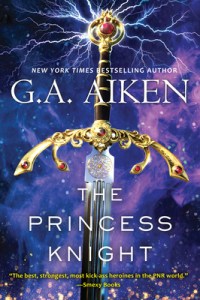
Serena’s Review: “The Princess Knight”

Book: “The Princess Knight” by G.A. Aiken

Publishing Info: Kensington, November 2020

Where Did I Get this Book: NetGalley!

Book Description: Gemma Smythe dedicated her life to the glory of battle. With her fellow War Monks, she worshipped the war gods, rained destruction on her enemies, and raised the dead when the fancy took her. Until her sister Keeley became the prophesied Blacksmith Queen, and Gemma broke faith with her order to journey to the Amichai Mountain and fight by Keeley’s side.

The Amichai warriors are an unruly, never-to-be-tamed lot, especially their leader-in-waiting, Quinn. But when the War Monks declare support for Gemma’s ruthless younger sister Beatrix, the immaturity of her key ally is the least of Gemma’s problems. She has to get to the grand masters, dispel their grudge against her, and persuade them to fight for Keeley and justice. If her conviction can’t sway them, perhaps Quinn’s irritating, irreverent, clearly unhinged, ferocity will win the day . . .

Previously Reviewed: “The Blacksmith Queen”

Review: I read “The Blacksmith Queen” a few years ago and enjoyed it well enough for the wacky thing it was: a fantasy, romance, kind of comedy, kind of urban fantasy, bizarre little story. I hadn’t read anything else by the author, so I really didn’t know what I was getting into. But I did like the main characters, especially Keely, and usually that’s enough for me to want to continue on with a series. I requested this sequel quite a while ago and only got around to it recently, however. I’m glad I finally did though, because I thought it was a lot of fun!

Gemma has always been a warrior, fighting her elite force of monks. But her loyalties are tested and refocused when her sister becomes the fabled Queen. But the War Monks don’t follow her, instead choosing her younger, and more brutal, younger sister. But Keely’s efforts need their support, and it is up to Gemma to persuade them back. Perhaps, she wonders, they will respond better to someone equally unhinged? Perhaps the infuriatingly handsome and unruly fighter, Quinn? With so much at stake, Gemma must find a way to bridge these divides and bring aid to her sister’s fight.

As I said, I hadn’t read this author’s previous series (same world), so I wasn’t familiar with out multiple books in the same story really operated. I was pleased to find that this one continued forward with having several POV characters and that, most importantly, Keely still featured heavily as a main character herself. I was excited to read about Gemma, of course, but I wasn’t looking forward to totally forgoing Keely who I’d liked so much in the first book and who, being queen, still had a large role to play going forward.

The characters, overall, still remain my favorite part of this story. I was particularly interested in reading Gemma’s story and her attempts to balance her loyalties between her sister, the queen, the fighting force of monks that she had been fully committed to prior to the last story. Her history around the worship of the death god that the warrior monks serve was also very interesting, as well as, of course, their practice of raising the dead. I did struggle a bit to become fully invested in Gemma’s story, however, because Keely was still such a presence in this book, and I knew her a bit better. But I did enjoy the fact that Gemma was distinctly her own character. She was much more wary and paranoid than her more trusting and accepting sister, something that I think works with her warrior’s background.

The romance also takes a back seat in this book. I enjoyed it well enough, but it was definitely not the most compelling part of the story. They had decent chemistry, but there wasn’t a lot of spark, more just a steady burn of comradery that turns into a relationship at one point. I like this kind of love arch, too, so I was ok with it. But, like I said, if you’re tuning in for a sparkling romance, this probably isn’t it. Instead, the story focuses much more heavily on the battles and political maneuvers that Keely and her force must employ to protect her queenship from the various other heirs who are still hoping to unseat her. These action-packed scenes were a blast, and the story really felt like it was on its most solid footing during these points.

Overall, I really enjoyed this book. Perhaps a bit more than the first, even, just because I knew a bit better what to expect from it. I was also pleased with Gemma as a new character, while also not having to give up my beloved Keely, which I took as a big win. Fans of this author and her work are sure to enjoy this one!

Rating 8: Light on the romance, but it compensates with a fast-moving, action-packed story.

Reader’s Advisory:

“The Princess Knight” isn’t on any Goodreads lists, but it should be on Badass Female Leads!

Find “The Princess Knight” at your library using WorldCat!

Serena’s Review: “Given”

Book: “Given” by Nandi Taylor

Publishing Info: Wattpad Books, January 2020

Where Did I Get this Book: Edelweiss+

Book Description: As a princess of the Yirba, Yenni is all-but-engaged to the prince of a neighboring tribe. She knows it’s her duty to ensure peace for her people, but as her father’s stubborn illness steadily worsens, she sets out on a sacred journey to the empire of Cresh, determined to find a way to save him at any cost, even though failure could mean the wrath of her gods and ruin for her people. One further complication? On the day she arrives at the Prevan Academy for Battle and Magical Arts, she meets an arrogant dragon-shifter named Weysh who claims she’s his “Given”, or destined mate. Muscular, beautiful (and completely infuriating), he’s exactly the kind of distraction Yenni can’t afford while her father’s life hangs in the balance.

But while Yenni would like nothing more than to toss Weysh the man into the nearest river, Weysh the dragon quickly becomes a much-needed friend in the confusing northern empire. Yet when her affection for the dragon starts to transfer to the man, Yenni must decide what is more important: her duty to her tribe, or the call of her own heart.

Review: This book had two things going for it immediately: first, the cover is so cool! There was an alternative cover that was much less compelling, but the one I highlighted here was the one I saw and the one that initially drew me in. And second, it’s a book about dragons. Lump me in with all the other unoriginal fantasy fans who love dragons, I don’t care! A good dragon story will always be right up my alley. A bad dragon story, however….

Yenni has always grown up with duty at the heart of her life. But when her father falls prey to a mysterious illness, this duty takes on a new form. Not only must she travel to a distant academy to follow through on her next steps to queendom, but while there, she desperately hopes to find a cure for her beloved father. The last thing she needs is distractions. Especially not distractions that show up in the form of infuriating, handsome, young men. And frankly, the only thing in this particular young man’s favor is his dragon form whom Yenni forms a close relationship. Sadly, one comes with the other. But as Yenni finds herself growing closer to man and dragon, the choices before her and the duties that call to her begin to blend and meld.

I probably should have known from the description that this probably wasn’t going to be a winner for me. YA books that describe their romantic heroes as “infuriating” and “arrogant” are almost always underselling it, with the terms “demeaning” and “borderline-abusive” often being the words I would substitute. Alas, so was the case here.

There were so many cringe-worthy lines (also to be expected from most fantasy romances that center around some sort of “mate bond”…can we just stop with this entire idea??). And what was worse was how quickly Yenni ultimately got over her first impression made by some of these rude interactions. Her initial reaction of dislike is completely justified. Her 180-turn like five pages later was….less so. And that’s all without touching the utter lack of romance involved in an insta-love connection. Or any of the other trope-ridden high school romance boxes that were dutifully checked off as the story progressed. All the worse in that these were supposedly more adult characters! Sadly, every aspect of this romance didn’t work for me and pretty much ruined my experience.

Perhaps it’s for the best, then, that I also didn’t feel like there was overly much to ruin in the first place. The writing was strong enough, but wasn’t accomplishing anything truly note-worthy. There was an over-reliance on the author telling readers how they should feel about things, rather than creating situations and dialogue that would resonate with readers and do the showing for her. And the world-building and magical school were incredibly predictable and unoriginal feeling. Sure, one can say that with “Harry Potter” looming large, it’s almost impossible to write a magical school book that doesn’t feel like either a straight-up copy attempt or a pale comparison. But in response, I will point you to Naomi Novik’s “A Deadly Education” and leave it at that. It definitely can be done. This one just doesn’t manage it.

Ultimately, I was really disappointed by this book. Not only did it not live up to the awesome, bad-ass heroine who seemed to be depicted on the cover, but it fell into every negative romance trope you can think of in recent years. I really wouldn’t recommend this book to anyone. There are better dragon stories out there. Better leading ladies. Better worlds. In a word, better books.

Rating 4: Not only did it not bring anything new to the table, but it highlighted another unhealthy romantic dynamic as some sort of wish-fulfillment.

Reader’s Advisory:

“Given” is on these Goodreads lists: 2020 Fantasy and Science Fiction Books by Black Authors and Fantasy That Isn’t Fantastic Straight White Men Doing Epic Things….

Find “Given” at your local library using WorldCat!

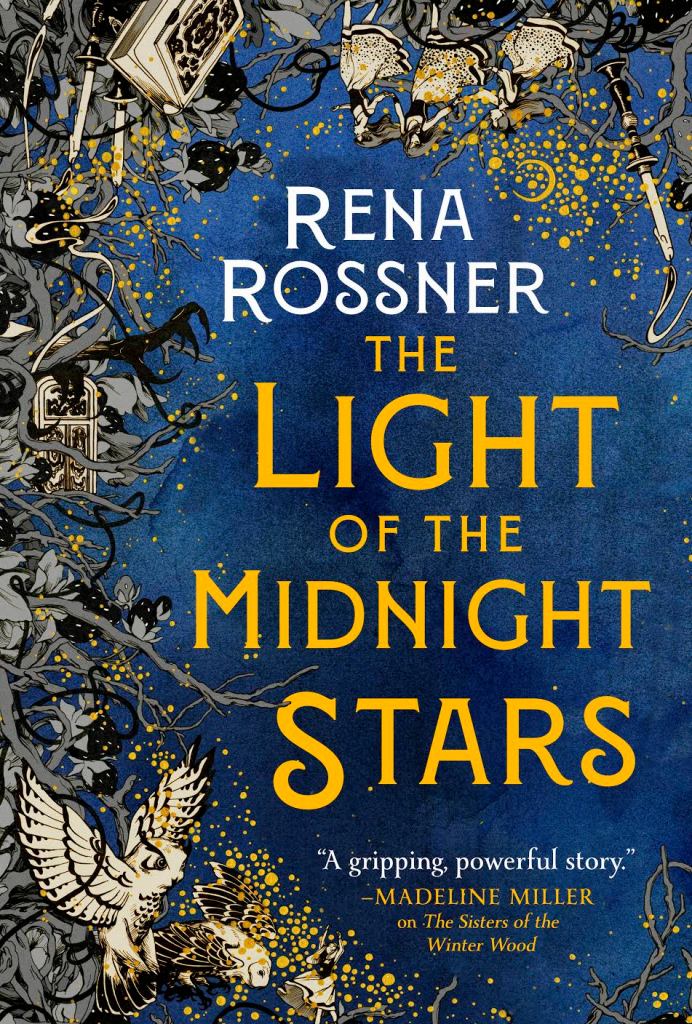
Serena’s Review: “The Light of the Midnight Stars”

Book: “The Light of Midnight Stars” by Rena Rossner

Publishing Info: Redhook, April 2021

Where Did I Get this Book: from the publisher!

Book Description: Deep in the Hungarian woods, the sacred magic of King Solomon lives on in his descendants. Gathering under the midnight stars, they pray, sing and perform small miracles – and none are more gifted than the great Rabbi Isaac and his three daughters. Each one is blessed with a unique talent – whether it be coaxing plants to grow, or predicting the future by reading the path of the stars.

When a fateful decision to help an outsider ends in an accusation of witchcraft, fire blazes through their village. Rabbi Isaac and his family are forced to flee, to abandon their magic and settle into a new way of life. But a dark fog is making its way across Europe and will, in the end, reach even those who thought they could run from it. Each of the sisters will have to make a choice – and change the future of their family forever.

Review: I really enjoyed the first book by this author I read. It was a similar tale of sisterhood, fairytale-like magic, all couched around the persecution the Jewish people have faced throughout history. On the surface, this book looks like it could be almost the exact same story, only add one more sister to the bunch. Am I complaining about that? Heck no!

Each possessed of their own natural, magical talent, three sisters have grown up performing minor miracles beneath the night skies of their forest home deep in Hungary. While wonderous and fantastical, not all view the abilities of the Solomandar sisters as signs of goodness. Instead, their faith and their practices attract dark forces to their once peaceful home. Each must contend with these evil workings intruding on their lives, and each must come to their own path forward, living in a world that is not as good as the believe it can or should be.

There are many things to like about this book. First, as I mentioned, there are a lot of similarities in themes and style of storytelling between this and the first book, so if you enjoyed that story, you probably don’t need to read much further in this review before picking this book up. But this is not a series, and this book does stand on its own with its own unique characters and arcs.

With three sisters’ stories now to tell, I was a bit concerned that I would find myself gravitating towards one more than other, thus rending large chunks of the story as less-interesting. Indeed, even with the ‘The Sisters of the Winter Wood,” I found myself becoming more invested in Liba’s story over Laya’s. Here, I think the author has improved on that and made each of the three sisters compelling in her own right. Each travelled very distinct paths and had to overcome their own specific challenges and experience their own growth. I could probably still pick a favorite if you forced it out of me, but as I don’t have to, I wont!

I also really liked the tone of this book. Last month, I wrote a post on “literary fantasy” and how hard a sub-genre that is to categorize and/or even find to read. But I think this book is a perfect example of a multi-faceted fantasy title that spans genres. Not only would I consider it a “literary fantasy” novel, but it could also be shelved under historical fantasy and fairytale fantasy. These are a lot of subgenres to balance, and I applaud the author for managing all three so well! I particularly enjoyed the intersections of historical events and the fairytale-like style of writing. The author includes an excellent note at the end detailing the various pieces of folklore she pulled from when writing this book. And it’s truly impressive how neatly she has lain these fantasy elements on top of a time and place in real history.

I continue to really enjoy books by this author. Fans of historical fiction who also enjoy a good fairytale are sure to enjoy it. The story is full of magic and wonder, all overlain across a darkly-real threat. It is sure to pull at your heartstrings.

If you’re interested in reading this book, don’t forget to check out the giveaway I’m hosting for an ARC copy!

Rating 8: Dark and beautiful, the woods and starlight feel almost real in and of themselves.

Reader’s Advisory:

“The Light of the Midnight Stars” is on these Goodreads lists: Midnight and Historical Fiction 2021.

Find “The Light of the Midnight Stars” at your library using WorldCat!

Giveaway: “The Light of Midnight Stars”

Book: “The Light of Midnight Stars” by Rena Rossner

Publishing Info: Redhook, April 2021

Book Description: Deep in the Hungarian woods, the sacred magic of King Solomon lives on in his descendants. Gathering under the midnight stars, they pray, sing and perform small miracles – and none are more gifted than the great Rabbi Isaac and his three daughters. Each one is blessed with a unique talent – whether it be coaxing plants to grow, or predicting the future by reading the path of the stars.

When a fateful decision to help an outsider ends in an accusation of witchcraft, fire blazes through their village. Rabbi Isaac and his family are forced to flee, to abandon their magic and settle into a new way of life. But a dark fog is making its way across Europe and will, in the end, reach even those who thought they could run from it. Each of the sisters will have to make a choice – and change the future of their family forever.

I really enjoyed Rena Rossner’s first book, “The Sisters of the Winter Wood”, when I read it in 2018. It was a lovely, fairytale-like story featuring two sisters, so pretty much right up my alley! The author also experimented with her style of writing, alternating between the more traditional prose for one sister, and a lyrical, poetic form for the other. Not only did this make the reading experience feel varied and alive, but the choice of each style of writing matched the aspects of each sister: the solid, grounded prose for the sister who can turn into a bear, and the more whimsical, flighty poems for the sister who can turn into a swan.

With that incredible first outing, I was excited to see that the author had another book coming out this spring. And even more excited when I received an ARC in the mail! In many ways this book sounds similar: a Jewish fairytale featuring sisters, this time three. Is this too similar to the first one? Or just more to like? I’ll post my full review this coming Friday. In the meantime, enter to win a copy! This giveaway is open to U.S. residents only and ends on April 28, 2021.

Enter to win!

Kate’s Review: “The Magic Fish”

Book: “The Magic Fish” by Trung Le Nguyen

Publishing Info: Random House Graphic, October 2020

Where Did I Get This Book: The library!

Book Description: Tiến loves his family and his friends…but Tiến has a secret he’s been keeping from them, and it might change everything. An amazing YA graphic novel that deals with the complexity of family and how stories can bring us together.

Real life isn’t a fairytale. But Tiến still enjoys reading his favorite stories with his parents from the books he borrows from the local library. It’s hard enough trying to communicate with your parents as a kid, but for Tiến, he doesn’t even have the right words because his parents are struggling with their English. Is there a Vietnamese word for what he’s going through?

Is there a way to tell them he’s gay?

A beautifully illustrated story by Trung Le Nguyen that follows a young boy as he tries to navigate life through fairytales, an instant classic that shows us how we are all connected. The Magic Fish tackles tough subjects in a way that accessible with readers of all ages, and teaches us that no matter what—we can all have our own happy endings.

Review: I will be the first to admit that outside of my re-read of “The Sandman”, I’ve been slacking on the graphic novels as of late. But after dropping the ball on that, I have promised myself that I will try to be better, and make an effort to get some more in the review rotation. And let me tell you, I have a good one to start with, by a local author no less! I hadn’t heard of “The Magic Fish” by Trung Le Nguyen until I saw it pop up on my Goodreads feed, and once I felt comfortable getting physical library books again after our Fall/early Winter surge I requested it. I went in with little knowledge and expectations, and was thoroughly impressed with what I found.

“The Magic Fish” has a number of themes that swirl in its pages, and all of them connect through the importance and power of stories, namely fairy tales. The plot follows Tiến, a middle school boy who is the son of Vietnamese immigrants who left Viet Nam as refugees, and who don’t speak much English. To practice mother Hiền will have Tiến check out fairy tales from the library and they will read them together. We follow Tiến as he starts to accept his sexuality, and as he wonders and worries about what his parents will think when he tells them that he’s gay. This takes place in the 1990s, and while Tiền’s friends seem to be accepting, people at school, and society at large, is not as much, which makes him feel Othered. Meanwhile, Hiền left her home in the aftermath of the Viet Nam War, and hasn’t returned to see her family in many years. She and her husband are doing their best to raise their son in Minnesota, but being away from the home he had to leave is hard, and when she does go back it’s due to a very significant loss. I liked seeing both the themes of identity and immigration being addressed in the ways that they were, through some subtle and bittersweet longings, anxiety, and hope.

And then, the fairy tales. Both Hiền and Tiền bond through and are drawn to fairy tales, which intersperse within the narrative. The first two are various takes on the “Cinderella” story, one being the German “Allerleirauh”, and the other being the Vietnamese “Tấm Cám”. Story one is shared between Hiền and Tiền at their home, while the second is one that Hiền is revisiting while she is back in Vietnam. Both interpretations and presentations play into what we’re seeing in the moment, be it Tiền hiding his true self from his mother, or Hiền being reminded that sometimes fairy tales don’t have the happily ever afters that everyone seeks. But it’s the re-telling of “The Little Mermaid” that I liked the best, another shared between Hiền and Tiền, and subverted in a way that shows that we tell our own stories, and that we get to choose how they end. It’s all so seamless and lovely, and I greatly enjoyed it.

And the artwork. THE ARTWORK. Different stories have different designs, and again, they tie into what is going on in the moment on the surface and beneath it. For example, the three fairy tales all had different aesthetic designs for the art styles (my personal favorite was “Tấm Cám”, influenced by a 1950s Viet Nam French Colonial style), while moments in reality may have different colors depending on time and place. It always works, and all of it is beautiful.

“The Magic Fish” is a charming story that reads and feels like a modern fairy tale. I highly recommend that you read it if you love graphic novels.

Rating 8: A lovely coming of age story with magical moments and gorgeous artwork, “The Magic Fish” is a joyful and emotional tale of family and the power of stories.

Reader’s Advisory:

“The Magic Fish” is included on the Goodreads lists “Queer Graphic Novels”, and “Comic Book Club Recommendations”.

Find “The Magic Fish” at your library using WorldCat, or a local independent bookstore using IndieBound!

Serena’s Review: “The Bright and the Pale”

Book: “The Bright and the Pale” by Jessica Rubinkowski

Publishing Info: Quill Tree Books, March 2021

Where Did I Get this Book: Edelweiss+

Book Description: Seventeen-year-old Valeria is one of the only survivors of the freeze, a dark magical hold Knnot Mountain unleashed over her village. Everyone, including her family, is trapped in an unbreakable sheet of ice. Ever since, she’s been on the run from the Czar, who is determined to imprison any who managed to escape. Valeria finds refuge with the Thieves Guild, doing odd jobs with her best friend Alik, the only piece of home she has left.

That is, until he is brutally murdered.

A year later, she discovers Alik is alive and being held against his will. To buy his freedom, she must lead a group of cutthroats and thieves on a perilous expedition to the very mountain that claimed her family. Only something sinister slumbers in the heart of Knnot.

And it has waited years for release.

Review: Of course this new YA fantasy was marketed as similar to Leigh Bardugo’s work. If it’s not the Grisha series, it’s “Six of Crows. This nonsense has gotten completely out of hand. At this point, that comparison has been used so often (and so poorly) that it’s essentially meaningless. But, alongside the Leigh Bardugo comparison, this book was blurbed as being for fans of Katherine Arden’s “Winternight” trilogy, an all-time favorite series of mine recently. So that did the trick in getting me to pick this one up. Unfortunately, the book really doesn’t deserve either comparison…unless we’re back to the meaninglessness of the Leigh Bardugo spin where all it really signifies is that the book you’re about to pick up is a YA fantasy, which, then, yes.

To this point, Valeria’s life has been nothing but loss. First she lost her home and everyone she loved to a deep freeze. And later, after finding refuge in the Thieves Guild, she loses her best friend Alik to a brutal death. But she is also a survivor, eking out an existence beneath the very nose of the Czar who is out to silence anyone who has survived the freeze. Her life takes a turn, however, when she discovers that Alik is alive. Alive, but changed. To save him, she must venture back to the very place she fears most, the mountain that claimed her town to its cold power.

To get it out of the way from the start, this wasn’t a favorite read of mine. But the one thing I did enjoy, overall, was the world-building involved. Most especially, perhaps, the gods called the Bright and the Pale were very interesting. I liked the idea that neither is inherently good or bad, therefore choosing to follow one over the other doesn’t necessarily speak to any overall world-view or intent on an individual’s part. I also enjoyed the general world-building. It was easy to picture the frozen landscape and the ominous presence of the mountains and the magic that lurked there. The atmosphere itself worked very well for what the story was trying to accomplish.

However, I struggled to enjoy this book. The pacing was difficult, with a slow start that took quite a while to become engaging. This beginning was also hindered by a style of writing that too often veered into telling rather than showing, with information feeling squeezed into dialogue and in the narration in ways that felt unnatural and ponderous. The writing itself was rather clunky, and it took me several chapters to realize that part of the reason I was struggling with the book was the fact that I needed to re-read several sentences to try to piece together what the author was actually getting at. Hopefully, as I was reading an e-ARC, some of this will be cleaned up in edits (there were words missing from sentences even, though the sheer number of times this seemed to happen makes me think it might have just been a very poor writing style choice??).

Valeria was also not a character to write home about. There was nothing obviously wrong with her, and the attempts at giving her a dark back story with the loss of her home suited well enough. However, she still simply felt like every other YA heroine with “a past.” There wasn’t enough distinction to her voice or character to make her stand out from the increasingly crowded set of leading ladies in YA fantasy.

I also didn’t care for the romance or some of the twists in the story. I felt like most of the reveals were telegraphed way too early and too obviously to provide any sort of weight when they finally landed. And the romance struggled against some of the unlikable aspects of Alik’s character. There was too much time spent on him saying horrible things and then later apologizing for those same horrible things. From there, it just followed the typical YA romance arc without adding much or creating any real sizzle between these two.

Fans of Russian-inspired fairytales may enjoy this read, but I do think it has enough marks against it to not earn a strong recommendation. It definitely wasn’t for me, and I think there are likely better examples of similar works to read if one is looking for books like this. Katherine Arden’s “Winternight” series, for sure, and Naomi Novik’s “Spinning Silver,” come to mind.

Rating 6: A disappointing read that had promise but seemed to lack some of the writing proficiency needed to really pully it off.

Reader’s Advisory:

“The Bright and the Pale” are on these Goodreads lists: Monsters and Magic Society and 2021 Young Adult Debuts.

Find “The Bright and the Pale” at your library using WorldCat!
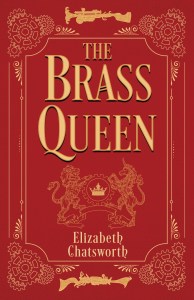
Serena’s Review: “The Brass Queen”

Book: “The Brass Queen” by Elizabeth Chatsworth

Publishing Info: CamCat Books, January 2021

Where Did I Get this Book: Edelweiss+

Book Description: In 1897, a fiery British aristocrat and an inept US spy search for a stolen invisibility serum that could spark a global war.

Miss Constance Haltwhistle is the last in a line of blue-blooded rogue inventors. Selling exotic firearms under her alias, the ‘Brass Queen,’ has kept her baronial estate’s coffers full. But when US spy, Trusdale, saves her from assassins, she’s pulled into a search for a scientist with an invisibility serum. As royal foes create an invisible army to start a global war, Constance and Trusdale must learn to trust each other. If they don’t, the world they know will literally disappear before their eyes.

Review: I haven’t reviewed a lot of them, but that’s because I don’t really see them around that much, but I do really enjoy a good steampunk fantasy when I can find it. It’s a neat, little quirky subgenre in fantasy fiction that is kind of bizarre in the specific elements that are seemingly expected from the genre: must involve steam-powered machine, often set in the Victorian period or some historical-feeling setting, has a decent overlap with Manners period pieces, etc. Those are all things I typically enjoy, so combine them well, and you’ve probably got a winner for me! Ah, but combining them well….

Constance must marry. Her family home is in danger, and with an absent father and no other recourse before her, the marriage market is her only way forward. Of course, she must find a husband who can either ignore or not see the other identity that Constance keeps under tight wraps: her position as the “Brass Queen,” a well-respected, underground weapons dealer. All is going exactly not to plan when her debut ball is interrupted by thieves. She quickly finds herself caught up in an elaborate plot that extends past Britain’s own borders. Not only that, she’s paired up a ridiculous U.S. spy whom she’s not sure she can even trust. What could go wrong next?

Like I said, I generally enjoy steampunk fantasy stories, and this one in particular had some interesting things going for it, like our heroine’s secret life as the Brass Queen. I also liked the way the author explored the idea of this imagined version of England with its machines and mechanized creations. The very first scene sees Constance opening a ball in a room overseen by towering animatronic suits that can be piloted by riders within. Constance’s own alternate identity gives the reader a direct line into the ins and outs of how this type of weaponization has and could be used. There was a lot of creativity here and elements to pique one’s interest.

But other than these aspects of the world-building, I struggled with this story. Constance, for one thing, was a walking, talking contradiction whom I could never quite understand or believe in as a living, breathing person. On one hand, she’s this weapons dealer who works with great power players all of the time. And yet in the very first scene, we’re supposed to believe that she’s been bumbling around the ball room this entire time and is about to fall to pieces over a simple speech? Someone who runs an underground weapons dealership would surely have a firm hand on proper decorum and behavior and much experience talking to strangers, likely to even more important people and with greater stakes at play. This contradiction continued throughout the book. I just had a hard time buying a lot of Constance’s actions when set against the idea that she was supposed to be this powerful, underground operator (as many characters remind us).

I also felt like the romance was a bit off the entire time. I’m not sure if this was because I was constantly distracted by Constance, or what exactly the problem was. I think part of it was Trusdale had a very “American cowboy in Britain” thing going on that I also had a hard time taking seriously. The book was clearly trying to incorporate a good amount of humor, and some the bantering between these two was actually quite good. But the balance was just slightly off and some of the humorous moments early on made it hard for me to take either of these characters too seriously or care overly much about their romance as a whole.

I also struggled with the writing in general. I had a hard time picturing some of the elements of the story, never a good thing for a fantasy book. And the story sometimes had jarring jumps between one scene and another. The formatting on my Kindle e-galley didn’t help with this. Hopefully the finalized version will have better page breaks to distinguish these scenes a bit better.

Overall, I had a fairly middling response to this book. There was nothing that I really disliked, but I also didn’t care about the story that much. The writing wasn’t quite strong enough to support some of the more fantastical elements, and the characters weren’t complicated enough to add any weight to the action. If you really enjoy steampunk fantasy stories, this might be worth checking out, but it wasn’t quite all I had hoped it would be.

Rating 7: Fun enough at times, but not all I had hoped it could be.

Reader’s Advisory:

“The Brass Queen” is on these Goodreads lists: Gaslamp Fantasy and 2021 Swoony Awards.

Find “The Brass Queen” at your library using WorldCat!

Monthly Marillier: “Heir to Sevenwaters”

“Monthly Marillier” is a review series that is, essentially, an excuse for me to go back and re-read one of my favorite author’s back catalog. Ever since I first discovered her work over fifteen years ago, Juliet Marillier has been one of my favorite authors. Her stories are the perfect mixture of so many things I love: strong heroines, beautiful romances, fairytale-like magic, and whimsical writing. Even better, Marillier is a prolific author and has regularly put out new books almost once a year since I began following her. I own almost all of them, and most of those I’ve read several times. Tor began re-releasing her original Sevenwaters trilogy, so that’s all the excuse I needed to begin a new series in which I indulge myself in a massive re-read of her books. I’ll be posting a new entry in this series on the first Friday of every month.

Book: “Heir to Sevenwaters” by Juliet Marillier

Publishing Info: Roc, November 2008

Where Did I Get this Book: own it!

Book Description: The chieftains of Sevenwaters have long been custodians of a vast and mysterious forest. Human and Otherworld dwellers have existed there side by side, sharing a wary trust. Until the spring when Lady Aisling of Sevenwaters finds herself expecting another child? A new heir to Sevenwaters. Then the family’s joy turns to despair when the baby is taken from his room and something…unnatural is left in his place. To reclaim her newborn brother, Clodagh must enter the shadowy Otherworld and confront the powerful prince who rules there.

Review: Marillier wrote several other books between her first three “Sevenwaters” entries and this, the first of a second set of three. I’ll get to many of those books later, but I thought it might be nice to review all of the “Sevenwaters” books straight out in order. Reading this the first time, I remember being concerned that Marillier was returning to a world and story that had largely felt contained and completed in the first trilogy. But this was a strong outing for the second set and started this next trilogy out on the right foot.

Set during the same generation as Fainne from “Child of the Prophesy,” this second trilogy shifts its focus to the Lord of Sevenwaters, Sean’s, children. The well-ordered life of Sevenwaters is disrupted in the best way with the birth of the first boy in the family, Finbar. But this joyous arrival is soon cut short when Finbar is stolen away. Only Clodagh recognizes that something magical is afoot, seeing the sticks-and-stones baby that was left behind as a living, breathing magical infant and not simply the cruel, inanimate doll the others all see. She sets out on a dangerous mission to exchange this magical creature for the return of her baby brother. With her travels Cathal, a young man with his own mysteries and a distinctly rude take on Clodagh and her life, but who has his own connections to the Fae world and could help her rescue baby Finbar before his loss tears Clodagh’s family and world apart.

There’s a lot to love about this return to the Sevenwaters world. But there were also elements of this story that began to frustrate me in their similarity to hiccups I had with the previous books. But we’ll start with the pros, as always!

Marillier’s writing and creativity with the magical elements of the story are as strong as ever. She has a beautiful way of painting scenes on the page that feel just as real as they do magical and whimsical. In this story, Clodagh and the reader travel into the wonderous world of the Fae themselves, and here Marillier’s masterful portrayal of magic with an underlying sense of danger was on point. As beautiful and mystical as this world and its beings are, it is also clear that it is a distinctly inhuman place and the rules and dangers are not of the sort that are immediately clear or rational to a human mind.

I particularly loved description of the Fae infant that is left behind in Finbar’s place. The bond that grows between this baby and Clodagh was beautiful and heart-breaking. Frankly, I was almost more invested in this relationship than I was in the building romance between Clodagh and Cathal. But man, reading this book as a mother now made some elements of it very difficult to get through. There was more ugly crying than I care to admit.

I also enjoyed Clodagh as a main character. However, she was also very similar to some of the leading ladies we’ve seen in the past, particularly Liadan. They are both described as very domestic and happiest at home. But when faced with challenges and the obstinance of their families, each chooses to make their own choices and way in the world. So while I like Clodagh, just as I liked Liadan before her, I wish there had been a bit more variety to her characterization that would make her stand out as distinct in her own right.

I also struggled to connect to Cathal. While there are several interesting reveals to his character later in the story, and the eventual romance is very sweet, he comes across as a bit too rude and harsh in the beginning. I enjoy a good enemies-to-lovers romance as much as the next person, but it’s a delicate balance to strike, and I think Cathal veered a bit too far in the rude direction initially (and for too long) to fully recover in my opinion as the story went on.

The book also takes quite a while to really get going. This is also a standard feature of Marillier’s works and something that only bothers me now and then. I think if the main character and tertiary characters are strong enough, I don’t notice the slow starts. But this one had weaker characters in Clodagh and Cathal, so I felt myself beginning to become impatient that we get this show on the road. This wasn’t helped by my incredible frustration with the entire Sevenwaters clan other than Clodagh herself.

In “Son of Shadows,” we see the Sevenwaters family’s awful treatment of Niamh. The explanations that come later don’t do much to rectify this treatment of a beloved daughter. And then here, again, we see Clodagh, a young woman who, to this point, had been completely trusted and relied upon, suddenly dismissed as crazy and irrational when she draws attention to the Fae characteristics at play in Finbar’s disappearance. She’s spoken to quite badly at points. It’s pretty shocking treatment towards a young woman who’s given no prior indications to being prone to flights of fancy. And shocking to have it come from a family who has more experience with magical beings and enchantments than most could say. Something is definitely wrong with this family and its treatment of supposedly “beloved” daughters.

Overall, however, I enjoyed this return to Sevenwaters. The magical elements, in particular, felt unique and interesting. The main character is endearing, if familiar, and her bond with the Fae baby is quite lovely. Fans of Marillier’s work and the previous Sevenwaters trilogy are sure to like this book.

Rating 8: A return to a familiar world brings some new magical elements, but also a few familiar tropes.

Reader’s Advisory:

“Heir to Sevenwaters” is on these Goodreads lists: Best Australian Fantasy Reads and The Best Books about Elves or Faeries.

Find “Heir to Sevenwaters” at your library using WorldCat!