
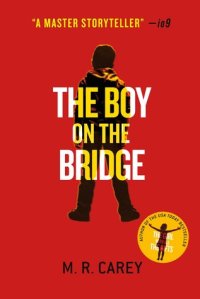
 Book: “The Boy on the Bridge” by. M.R. Carey
Publishing Info: Orbit, May 2017
Where Did I Get This Book: I received a review copy from the publisher.
Book Description: Once upon a time, in a land blighted by terror, there was a very clever boy.
The people thought the boy could save them, so they opened their gates and sent him out into the world.
To where the monsters lived.
Review: First and foremost, I want to thank Orbit/Hachette for providing me with a review copy of this book. In exchange for you generosity I will provide an honest review.
A couple of years ago I picked up the much hyped and much loved novel “The Girl With All The Gifts”. I had heard nothing but praise about it from those around me who like zombie fiction, and given that I like zombie fiction so much I had high hopes for it. While I did like aspects of it, overall I was kind of underwhelmed by it. But I made a note to keep reading Carey’s stuff, as plot aside I really loved the writing style and how Carey explores his characters so deeply. “Fellside” proved to be a win for me (as seen on this blog). And that brings us to Carey’s newest novel, “The Boy on the Bridge”. Though it’s not a sequel to “The Girl With All The Gifts”, it is a companion piece that takes place in the same world, where a fungal zombie infection has ravaged mankind.
Since our book description doesn’t really give us much of an idea what this book is about, I’ll give you a rundown. “The Boy on the Bridge” takes place about tenish years before “The Girl With All The Gifts”, with a combination military and scientific research team heading out into the world of the ‘hungries’ to try and gather samples and specimens that could potentially lead to a better understanding of the infection, and perhaps a cure. If you remember from the first book, that group of protagonists stumbled upon a mobile lab called the “Rosalind Frank”, which seems to be stopped in it’s tracks without succeeding in it’s mission. Well guess which mobile team we’re following! Yep, The Rosalind Frank team! So there are some foregone conclusions that could be drawn from this…..
But that doesn’t stop Carey from drawing many emotions and facets to his characters. The team has a number of interesting characters. There’s Samrina Khan, a scientist who has recently discovered herself pregnant by another member of the team, John. She is now more than ever determined to find some hope for the sake of her baby. There’s Dr. Fournier, the leader of the science part of the team, who is singleminded and determined to throw his weight around as one of those in command (who is also trying to figure out who the father of Khan’s baby is, as he sees it as a breach of protocol). There’s Colonel Carlisle, who is the head of the military team, and who is haunted by his past during the early days of the infection. And then there’s Stephen Greaves. He’s a teenage boy and science prodigy who invented the e-blockers that people use to hide their scents from the hungries, who may be able to find a cure as well. He is on the spectrum, and Dr. Khan is the only person that he trusts, and the only person who really understands him. With a few other people in their team, they are traveling up towards Scotland, trying to gather as much info as they can. But they soon discover that something is following them, something that none of them have ever seen before. These things look like children, but are definitely not ‘human’, nor at they fully ‘hungries’ either. They could be the key to a cure, but they could also be the team’s downfall.
So there were the same issues in this one that I had with “The Girl With All The Gifts”. I did find myself a bit bored sometimes with how the story is told. It’s definitely a writing style choice that focuses more on the literary and less on the pulpy thriller, and that can encourage my mind and attention wander sometimes. I don’t think that it’s through any fault of Carey’s, mind you. I just found myself skimming a bit, and would have to go back and re-read sections because of it. I found myself wanting to get to the point faster than we did at times. But like in “The Girl With All The Gifts” I did find the characters in “The Boy on the Bridge” interesting, and in this one I was more interested in the overall story arc than I was in the previous book. There is just something about an official mission that goes horribly wrong that will always, ALWAYS suck me in. It’s a plot point that you don’t see too much in modern zombie fiction, which tends to focus more on the chaos of living in the zombie zone. I liked how the tension between the science side and the military side was built up in this story. It’s a trope that is old as time itself, but when it’s done well it can feel fresh and unique. In this book we get it not only through the encounters with the hungries (like we did in the first book), but also through the character of Greaves, who few people care to understand because he’s Autistic. Many of the military people call him “The Robot”, and their lack of understanding is frustrating to Dr. Khan. It’s not wholly unrealistic either, given how people on the spectrum are viewed and treated in modern society. I thought that Carey did a good job with Greaves as a character overall. It felt like he did a lot of research and took great care to make him an accurate and sensitive representation of a neurodivergent person. Greaves had many moments that I found incredibly bittersweet, and humorous, and yes, frustrating, but he always felt very real, and worked as a great dual protagonist along with Dr. Khan, whose determination to survive is noble and perhaps heartbreaking in it’s likely futility. While the other characters kind of treaded towards two dimensions at times, these two always felt fully realized with clear motivations and personalities.
The scenes with the hungries were also pretty tense, as I found myself holding my breath when they were fully interacting, wondering if logic would prevail over fear. I appreciate the concept of humankind evolving to adjust and adapt to the ‘Cordyceps’ pathogen, as we as humans sometimes tend to think that we are the end of an evolutionary line, as if our present selves are the goal. But really, evolution doesn’t have an end point, it keeps on moving and changing and adapting. So I LOVE that Carey has introduced that aspect of the theory into his stories, and postulates that perhaps this kind of catastrophic event wouldn’t necessarily lead to our extinction, but to a transformation. Perhaps we wouldn’t be the same as we are now, but we wouldn’t necessarily be wiped away from the world.
Do you have to read “The Girl With All The Gifts” to appreciate “The Boy on the Bridge”? That’s kind of a hard question to answer. I think that it does work as a standalone for the most part, at least up until the epilogue (which I won’t spoil here, because it’s a great nod to the first book). But even then I think that you would be on solid footing, perhaps just not as able to appreciate the revelations and scenes that come right at the end of the book. I also think that I enjoyed it more than “The Girl With All The Gifts” just because the plot felt like a new take within this already new take, and I don’t know if that would be as clear if you hadn’t read the previous book. But that said, you won’t be lost at all. You just may not see the easter eggs that are laid out.
“The Boy on the Bridge” does stand on it’s own two feet, and I did enjoy going back into this world. I definitely recommend that those who loved the first book should get their hands on this one as soon as possible. And if you were like me and wasn’t as caught up in “The Girl With All The Gifts”, this book may still be worth the read.
Rating 8: With a couple well explored characters and some tense zombie moments, “The Boy on the Bridge” was a good companion piece to “The Girl With All The Gifts”. It may be richer by having read the previous book, but it isn’t a requirement.
Reader’s Advisory:
“The Boy on the Bridge” is included on the Goodreads lists “Waterstones Recommends”, and “Most Anticipated Novels of 2017”.
Find “The Boy on the Bridge” at your library using WorldCat!
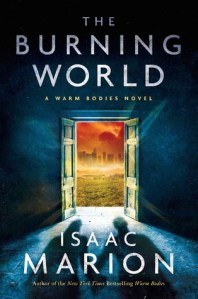 Book: “The Burning World” by Isaac Marion
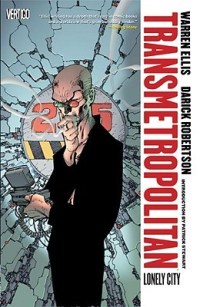 Book: “Transmetropolitan (Vol.5): Lonely City” by Warren Ellis and Rodney Ramos (Ill.)
 Book: “Transmetropolitan (Vol.4): The New Scum” by Warren Ellis and Darick Robertson (Ill.)



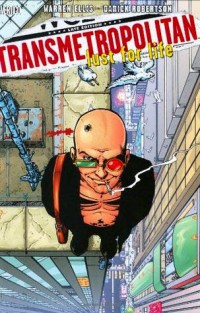 Book: “Transmetropolitan (Vol.2): Lust for Life” by Warren Ellis and Darick Robertson (Ill.).
 Book: “Oryx and Crake” by Margaret Atwood
 The Library Ladies