Serena’s Review: “Without a Summer”

15793208Book: “Without a Summer” by Mary Robinette Kowal

Publishing Info: Tor Books, April 2013

Where Did I Get this Book: the library!

Book Description: Jane and Vincent go to Long Parkmeade to spend time with Jane’s family, but quickly turn restless. The year is unseasonably cold. No one wants to be outside and Mr. Ellsworth is concerned by the harvest, since a bad one may imperil Melody’s dowry. And Melody has concerns of her own, given the inadequate selection of eligible bachelors. When Jane and Vincent receive a commission from a prominent family in London, they decide to take it, and take Melody with them. They hope the change of scenery will do her good and her marriage prospects—and mood—will be brighter in London.

Once there, talk is of nothing but the crop failures caused by the cold and increased unemployment of the coldmongers, which have provoked riots in several cities to the north. With each passing day, it’s more difficult to avoid getting embroiled in the intrigue, none of which really helps Melody’s chances for romance. It’s not long before Jane and Vincent realize that in addition to getting Melody to the church on time, they must take on one small task: solving a crisis of international proportions.

Review: I continue on with my reviews of this series! As I commented on in the first reviews, the books’ ties to the Jane Austen novels that the author attempts to mimic has been the difference maker between my enjoyment levels of the first two in the series. The first tried to tie it too closely to “Pride and Prejudice” and “Sense and Sensibility,” leaving original characterization and plot to suffer. While the second seemed to step away completely from this format presenting readers with a completely original story and being stronger for it. This third book strikes on the perfect balance of the two with its very loose connections to “Emma” while also building on its original stories and characters.

I was most excited when picking up this book to realize that Melody was again going to play a central role to the story. Her absence was one of the few low points of the second book, in my opinion. And she was featured even more than I originally thought! Jane, back home with her husband Vincent and now recovered from her experiences and trauma dealt in the end of the last book, is realizing how alone and sad her sister is feeling. Country living just doesn’t have enough variety, particularly in the potential husband arena. So, upon receiving a commission for Jane and Vincent’s work on a glamoural for a wealthy family in London, Jane decides the change of scenery would do her sister good. And so we begin to see the set up and ties to “Emma” in this story, with Jane standing in as our poor, struggling matchmaker.

As I said, this book really seemed to hit on the formula for emulating, but not becoming bogged down by, an original Austen work. Only the loosest ties to “Emma” are visible (and three lines from the novel, for those looking closely!). Jane makes many mistakes as a matchmater, but they are of a different variety than Emma’s, both due to differences in their personality and position. Jane is a married woman, so her own romantic confusion is not involved in this. Further, Jane is a very different character than Emma. Emma is lovable for her blissful naivety. Jane is a much more earnest character and one who is used to being on the right side of most conflicts.

I actually found this to be a very interesting take on a matchmaking failure, and one that can speak to a quandary that many people can find themselves in. In many ways, Jane is a very open-minded, justice-oriented character. In the last several books, she is always on the right side of situations that deal with prejudice and injustice. So, in this way, its not surprising that she has become a bit complacent with her own perception of the world, sure that she does not fall into the same traps that other, less wary and more judgemental, people do. But alas, we can guess how this turns out! I really enjoyed this take as it is a pitfall that I think many of us can fall into, becoming falsely secure in our own perception of the world and failing to recognize that we are still susceptible towards opinions and thoughts that are convenient and not as open-minded as we may think. Vincent’s sly hints that she might be a bit off track were also great. It was a nice little wink to the maneuverings of marriage where battles must be picked carefully and opinions offered gently.

The other main storyline of this book was the complete and utter awfulness that is Vincent’s family. We’ve heard about his past some in the previous books, but here we get to meet the whole cast and man, weren’t they all just a bundle of joy. His father in particular reached truly astonishing levels of evil. There were a few scenes where they are all getting together for family gatherings, and just coming of Christmas, which can have familial challenges for some, I think we can all just count ourselves lucky that at least it wasn’t this. The snark was high with these ones.

The pacing of this book was a bit strange, I have to admit. The first half is fairly slow, with a lot of groundwork being laid, but not a lot of action coming of it. But the book did take a big, unexpected turn towards the end that really brought a new life to the story. While the resolution was very convenient, I did enjoy the tension that was brought to the story in this last third.

All in all, I think this book was a great addition to the series. I enjoyed the ties to “Emma,” but was relieved to find that the story was still also very much its own thing. The action towards the end was appreciated, and I’m excited to see where the books will go next and if we’ll see any other Jane Austen storylines! As long as its not “Northanger Abbey”…

eek
(source)

Rating 7: Series seems to be still going strong!

Reader’s Advisory:

“Without a Summer” is included on these Goodreads lists: “Alternate England” and “Napoleonic Novels.”

Find “Without a Summer” at your library using WorldCat.

Previously Reviewed: “Shades of Milk and Honey” and “Glamour in Glass”

Serena’s Review “In the After”

12157407Book: “In the After” by Demitria Lunetta

Publishing Info: HarperTeen, June 2013

Where Did I Get this Book: audiobook from the library!

Book Description: They hear the most silent of footsteps.
They are faster than anything you’ve ever seen.
And They won’t stop chasing you…until you are dead.

Amy is watching TV when it happens, when the world is attacked by Them. These vile creatures are rapidly devouring mankind. Most of the population is overtaken, but Amy manages to escape—and even rescue “Baby,” a toddler left behind in the chaos. Marooned in Amy’s house, the girls do everything they can to survive—and avoid Them at all costs.

After years of hiding, they are miraculously rescued and taken to New Hope, a colony of survivors living in a former government research compound. While at first the colony seems like a dream with plenty of food, safety, and shelter, New Hope slowly reveals that it is far from ideal. And Amy soon realizes that unless things change, she’ll lose Baby—and much more.

Review: This is the kind of book that walks the line between Kate’s preferred genres and mine. There is definitely horror and suspense, but it’s also a post-apocalyptic story, the type which, especially in YA fiction, often falls under the all-encompassing “speculative fiction” category. Either way, it was a nice change from my usual reading, and while I can’t say that it was necessarily a “fun” read, its very lack of “fun” is what lends me to rating it more highly.

This book could easily be split into two separate books. The first is a fairly typical survival story. Strange creatures have invaded the earth and swiftly killed off the majority of the population. Our heroine, Amy, survives purely due to lucky circumstances (a fact that is refreshingly not glossed over), but over the course of years, she grows to become an expert at living in this new “After” world. There were several portions of this first part that I really enjoyed.

First is the inclusion of Baby, a toddler that Amy finds and adopts after the first month of devastation. These two’s relationship is key to the plot and it was so refreshingly new. All too often the primary relationships in these types of YA books are romantic. This, a sisterhood/parental relationship between a teenage girl who raises a toddler for several years alone, is completely unique. Further, I was very impressed with the author’s ability to portray Baby so completely. As a small child, it would have been very easy to simply gloss over her as an actual person while instead simply relying on general child attributes as fill-ins.

Second, the use of a substantial time jump is well executed. Through clever positioning of flashbacks, we see Amy’s journey through this new world and the events at each step that directed her ability to survive the many challenges of this new world, from how to survive the creatures themselves to how she evolved her approach to interacting with other survivors. Amy doesn’t just become a badass survivor out of nowhere. We see her mistakes and understand what lessons she had to learn to become who she is in the present day.

The second half of the book is a complete switch to what living in a community built in this post-apocalyptic world would be like. The horror, too, takes a sharp turn away from the monsters-in-the-night to what monsters humans can be. This part, while maybe slower than the first half, was even more horrifying to me. It was a strange reading experience because I was so frustrated, angry, and uncomfortable on Amy and Baby’s behalf throughout it all that I had a hard time enjoying reading it. In this section, you know that something awful is coming and you’re just watching these beloved characters walk towards their doom. (I wish I had read this book before we did our “Walking Dead Read Alikes” list as this would definitely have been included based purely on its similar exploration of the different ways that communities of people find to live in a world where society has fallen away.)

In the later half, there were a few twists that I felt were a bit expected. It’s definitely not a unique set up, but I don’t think that lessens the overall effect. It’s also a bit jarring to suddenly have many other characters introduced halfway through the story, and while I enjoyed many of them, I was sad to see Baby fading into the background a bit. However, I did enjoy most of these characters. I also appreciated the fact that what little romance is introduced in this part of the book is very light and never overpowers both the action/horror of the story or the primary relationship between Baby and Amy.

I also listened to this as an audiobook and I thought the reader did a very good job. Especially in the second half of the book, she made some clever choices with her general reading style that allows listeners to immediately identify flashback sequences from the other portions.

Ultimately, I very much enjoyed this book and will be checking out the final book in the duology. I might need to give myself a break between the two as they are definitely not light reading, but I’ll be getting there soon, I hope. This book does end on a cliffhanger, fo sorts, so for anyone going into it, beware of that.

Rating 7: An intense ride with a unique primary relationship, though it did get a bit predictable towards the end.

Reader’s Advisory:

“In the After” is included on these Goodreads lists: :Less Known Doulogies/Trilogies I Might Check Out” and “Strong Womances In YA.”

Find “In the After” at your library using Worldcat!

Serena’s Review: “The School of Good and Evil”

16248113Book: “The School of Good and Evil” by Soman Chainani
Publication Info: HarperCollins, May 2013

Where Did I Get this Book: audiobook from the library!

Book Description: The first kidnappings happened two hundred years before. Some years it was two boys taken, some years two girls, sometimes one of each. But if at first the choices seemed random, soon the pattern became clear. One was always beautiful and good, the child every parent wanted as their own. The other was homely and odd, an outcast from birth. An opposing pair, plucked from youth and spirited away.

This year, best friends Sophie and Agatha are about to discover where all the lost children go: the fabled School for Good & Evil, where ordinary boys and girls are trained to be fairy tale heroes and villains. As the most beautiful girl in Gavaldon, Sophie has dreamed of being kidnapped into an enchanted world her whole life. With her pink dresses, glass slippers, and devotion to good deeds, she knows she’ll earn top marks at the School for Good and graduate a storybook princess. Meanwhile Agatha, with her shapeless black frocks, wicked pet cat, and dislike of nearly everyone, seems a natural fit for the School for Evil.

But when the two girls are swept into the Endless Woods, they find their fortunes reversed—Sophie’s dumped in the School for Evil to take Uglification, Death Curses, and Henchmen Training, while Agatha finds herself in the School For Good, thrust amongst handsome princes and fair maidens for classes in Princess Etiquette and Animal Communication.. But what if the mistake is actually the first clue to discovering who Sophie and Agatha really are…?

Review: This book seemed to hit a peak a few years ago with everyone raving about it, and finally now, years later, I’ve finally gotten to it. I don’t read a lot of middle grade fiction, but this one, with its fun premises and, I’ll admit, very catchy cover seemed worth checking out!

This book is a bit tricky to review, now that I’m getting to it. I finished reading the book about a week ago and am only now writing the review. And that one week, I think, has made an impact on my opinion of the book. Either way, ultimately, I did very much enjoy the story. But with the extra time, I feel there are a few things that were a bit clunky and problematic about it.

I breezed through this story, guys. I mean, fast. Its biggest strengths are the exact things that particularly appeal to me: very creative world building, character-based stories, and a strong dash of wit. I loved all the ties to fairytales in this book, both the direct reference to Snow White, Jack and the Beanstalk, Beauty and the Beast and others, as well the way it poked fun at the generalities of these stories. In the school of Good, princesses must learn how to speak to animals and wait patiently for their princes to save them. In the school of Evil, witches must learn how to curse household items like apples and hairpins and uglify themselves to scare off heroes and heroines. The schools and their history and connection to fairytales were so much fun. Much of it was parody, but parody with heart.

There were also a lot of great characters in this story, other than just Agatha and Sophie, who I’ll get to in a moment. There was Tedros, the most popular prince in school, and son of the famed Arthur and Guenevere who struggles with his mother’s legacy and its impact on his relationship with the women around him. Sophie’s witch roommates, Hester, Dot, and Anadil are each great, particularly Hester whose badassery knows no bounds. The teachers for both school reminded me a lot of the professors from the Harry Potter novels. They are all quirky and teach particular classes. This is one area of the story that I wish there had been more of. The few classroom scenes we had were some of my favorites in the whole story.

And then there are Agatha and Sophie. There was so much I loved about these two. Their friendship is complicated not only by the fact that they are in different schools, but by the very nature of their own beings and their struggles to define themselves. Poor Agatha with her broken down self-esteem. And poor Sophie, trying so hard without realizing the huge mistakes she’s making at almost every step. Neither are simple characters, and I appreciated the time that the author gave to these two and the attention to the difficulties of growing up and recognizing the power we all hold to mold who we want to be.

Packed into this romp of a fairytale are a lot of messages, and some of them are handled better than others. As I said before, there is a lot of parody going on here. This, of course, opens the door for the parody to go unrecognized and for the more harmful aspects of some of these messages to stand as true. The author does a lot of work to speak to the fact that actions speak louder than looks, to the power of goodness and love, and many other very important points. But due to binary set-up of the story and the parallels placed between goodness/beauty and villainy/ugliness, it’s possible for some unwanted aspects to slip through. Ultimately, I feel that if the story is read in the tone that it is meant, much of this comes through very clearly. But this book might not be for everyone, due to this.

While I was able to get on board with many of these points, there was one that was a sticking point, even for me. I love stories about girls’ friendships, and at its core, that it was this is. There is a lot to be said for forgiveness and understanding in friendship, but there were a few too many times where this line was crossed far to completely to be simplified in this way. It is the same as romantic relationships, in this way: at a certain point, if you are being actively hurt by another person, that person is not your friend, even if they truly do have good feelings toward you. So, while I love the message of Agatha saving her friend through sheer will, forgiveness, and kindness, the story also, unfortunately, sets up a bad example of friendships in general. Through large portions of this story, this is not a healthy friendship. And, while we can sympathize for Sophie, it should not stand as an example that just because we (or Agatha) love a friend/boyfriend, that we should tolerate bad treatment with the hope that they will get better.

This last point is what has stuck with me through this last week of building up to this review. I sped through this book and it was wildly entertaining as I was reading. But with distance comes more clarity, and there were problematic aspects of it, as I mentioned. That said, I will definitely continue on with the series. However, I will keep my eyes open for how some parts of it are handled in the future, most notably, this friendship.

Rating 7: Really great world-building and a lot of great lessons about self-worth and self-esteem; unfortunately, lessened by some questionable portrayals of healthy friendships.

Reader’s Advisory:

“The School of Good and Evil” is included on these Goodreads lists: “Best Books About Special Schools” and “Fairy Tales in All Their Ways.”

Find “The School of Good and Evil” at your library using Worldcat!


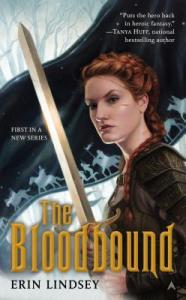
Serena’s Review: “The Bloodbound”

20949421Book: “The Bloodbound” by Erin Lindsey

Publishing Info: Ace, September 2014

Where Did I Get this Book: audiobook from the library!

Book Description: A cunning and impetuous scout, Alix only wishes to serve quietly on the edges of the action. But when the king is betrayed by his own brother and left to die at the hands of attacking Oridian forces, she winds up single-handedly saving her sovereign.

Suddenly, she is head of the king’s personal guard, an honor made all the more dubious by the king’s exile from his own court. Surrounded by enemies, Alix must help him reclaim his crown, all the while attempting to repel the relentless tide of invaders led by the Priest, most feared of Oridia’s lords.

But while Alix’s king commands her duty, both he and a fellow scout lay claim to her heart. And when the time comes, she may need to choose between the two men who need her most…

Review: Another book that landed on my to-read pile quite a while ago that now I have no memory of selecting. But, luckily for me, my past self must have been on top of things, because this lesser known fantasy novel hit just the spot!

I’m going to whip through the basic review portions to devote the rest of this post to two things that I feel make this book noteworthy in the long list of fantasy fiction being published currently.

General worldbuilding: pretty typical European-centric, medieval fantasy world. The bloodbinding magic used to create super weapons is interesting, but isn’t breaking any hugely new ground. I was fairly well into the book when I started questioning whether this even was a fantasy novel given how little these magical elements were mentioned. Later, however, it did play a bigger role, but if you’re interested in complex magical systems, this is not that book.

Characters: Alix is great. She’s a competent, funny, independent character whose abilities and intelligence are never questioned. She makes mistakes and is flawed, but her character arc takes her through these struggles smoothly, never undermining the stronger aspects of her character. The dialogue, both her own and those around her, was witty and I caught myself laughing out loud several times.

So, all of that aside there were two things that I found notable about this story. First, I was dismayed to find a love triangle smack dab in the middle of my adult fantasy novel.

giphy9
What? No! (source)

As we all know, I do not appreciate most love triangles. I find them unrealistic, and they often seem to bring out the worst in all characters involved (selfish heroines, ridiculous-verging-on-abusive love interests). Now, I won’t say that I loved the inclusion of a love triangle even here. I’ve just never really been too entertained by the drama of multiple love interests. Seems like it would be stressful and, for me, it is the exact opposite of wish fulfillment. That said, this one righted many of the wrongs I’m used to seeing with love triangles. Perhaps the simple fact that the author is writing about adults and for adults makes the difference here. There are real consequences to the choices that are made. Hearts are broken. Confusion is unpleasant, not thrilling. And the relationships between all characters involved are real and priorities are rightly placed beyond the romance of it all. I still struggled with some of Alix’s internal musings about the situation, as it still seems unrealistic to me to be equally drawn to two different people. However, the author provided a decent explanation for this, if one that I still somewhat questioned in reality. Further, the reaction of the two men involved was a highlight. No silly posturing. No abusive possessiveness. Actual hurt and confusion. They are people who have real feelings involved. Further, they have lives, relationships, friendships, duties, and families outside of Alix that they rightly keep in perspective throughout all of this. I was particularly pleased with the way this love triangle resolved itself. So, all of that said, while I still don’t find love triangles particularly entertaining, this book proves that they can be told from a more realistic and appealing angle.

My second notable aspect of the story was its treatment of women. I am continually frustrated by stories that justify the maltreatment of its women characters (or, frankly, the glorification of very objectionable material) and the creation of generally very traditionally sexist societies by hand-waving it all under the claim that this is somehow “more realistic.” You’re writing a damn fantasy novel with magic, unicorns, and zombies for heaven’s sake. You’ve left “realistic” far behind, so why is this one aspect somehow imperative to the “reality” of your story? This book highlights how to create a fairly typical medieval fantasy world while leaving that all behind. It’s not preaching “woman power.” It’s not bashing anyone over the head with A MESSAGE. It’s just telling a story in a world where women simply are there in the army, are there in politics, are there representing the head of their family. No big deal. Sure, it’s mentioned that as women are not as physically strong, they’re often found as archers in the military. But this is by no means a rule, with the doors to others roles left wide open. And no one blinks an eye at any of this. This book is a perfect example and response to the aforementioned narrative that it is somehow impossible to balance this type of typical fantasy world with a more inclusive approach to women’s roles.

All said, I very much enjoyed this book. It’s not breaking any walls as far as plot, following a pretty simple plot structure. But the strong characters, entertaining dialogue, and well-represented world recommend it to anyone who enjoys traditional fantasy fare with a dash of romance.

Rating 7: A fun fantasy story, notable for a not-gag-worthy love triangle and a strong representation of a more inclusive fantasy world.

Reader’s Advisory:

“The Bloodbound” is included on these Goodreads lists: “Female Bodyguards” and “High Fantasy” with Female Leads / protoganists.”

Find “The Bloodbound” at your library using WorldCat!


Serena’s Review: “Shades of Milk and Honey”

8697507Book: “Shades of Milk and Honey” by Mary Robinette Kowal

Publishing Info: Tor Book, August 2010

Where Did I Get this Book: the library!

Book Description: Shades of Milk and Honey” is exactly what we could expect from Jane Austen if she had been a fantasy writer: “Pride and Prejudice” meets “Jonathan Strange & Mr. Norrell.” It is an intimate portrait of a woman, Jane, and her quest for love in a world where the manipulation of glamour is considered an essential skill for a lady of quality.

Jane and her sister Melody vie for the attentions of eligible men, and while Jane’s skill with glamour is remarkable, it is her sister who is fair of face. When Jane realizes that one of Melody’s suitors is set on taking advantage of her sister for the sake of her dowry, she pushes her skills to the limit of what her body can withstand in order to set things right—and, in the process, accidentally wanders into a love story of her own.

Review: As a fan of Jane Austen, I routinely find myself picking up books that have any hint of similarities. And as the description with this one promised a mix of Jane Austen PLUS fantasy, I knew I would have to read it immediately.

In many ways,  Jane lives in typical Regency England. Manners, gentlemen and ladies, balls, and lots of sitting in breakfast rooms gossiping about one’s neighbors. Except, to be a proper, accomplished lady, alongside skills in embroidery, painting, and music, one must also master the art of glamour. Described as folding and weaving light, a glamourist is able to create magical scenes and movement, often for the purposes of impressing one’s neighbors at dinner parties. It seems equivalent with hiring a master painter to create unique portraits for one’s family, essentially. And while Jane’s sister Melody received the looks and charm of the family, Jane is the sister skilled in this specific art.

I really enjoyed the descriptions of this glamour magic. It is such a unique idea and seems to have endless applications. It’s curious seeing it primarily as an art form, as I would imagine there would have to be many other more practical uses for something like this, other than just decorating rich people’s houses. But, like many historical “manners” stories, we are mostly focused on the very privileged lives of our gentry main characters, so I guess seeing it mainly as a form of art makes sense. The whole idea is fascinating and the descriptions of the process of weaving light and the end results were engaging.

As for characters, they were fairly typical fare for a book that is purporting itself as a “Jane Austen read-alike.” It was an interesting mix of storylines and character types from both “Pride and Prejudice” and “Sense and Sensibility.” For fans of Jane Austen’s work and those two books specifically, it was fun spotting the tie-ins. Jane, herself, was a likeable heroine, if perhaps lacking some of Elizabeth Bennet’s spunk. Vincent, too, plays the role of the broody leading man effectively. His backstory was interesting and I enjoyed learning more about his character and motivations.

There were a few problems with the writing itself. For the most part, the language is descriptive and elegant. However, there were times where it seemed that the author couldn’t decide how fully to commit to the language of the time. Words would go back and forth from being spelled in the traditional manner to the modern. And there were even a few words of the time that it seemed the author didn’t fully understand. She used the word “droll” in place of the word “dour” it seemed, several times using “droll” to describe a character who was behaving in a gloomy and stern manner. This was frustrating to see in what was otherwise a very competent novel.

All in all, language quibbles aside, I very much enjoyed this book and will be checking out the next one. As all of Jane Austen’s stories were one-offs, it will be interesting to see what the author does with this story, now that we are beyond the point that any of those books cover.

Rating 7: A very unique magic system, if only marked down for some peculiar language mistakes.

Reader’s Advisory:

“Shades of Milk and Honey” is included on these Goodreads lists: “Fantasy of Manners” and ““Sister” Novels.”

Find “Shades of Milk and Honey” at your library using WorldCat.


Kate’s Review: “How To Hang a Witch”

27405351Book: “How To Hang a Witch” by Adriana Mather

Publishing Info: Knopf Books for Young Readers, July 2016

Where Did I Get This Book: The library!

Book Description: It’s the Salem Witch Trials meets Mean Girls in a debut novel from one of the descendants of Cotton Mather, where the trials of high school start to feel like a modern day witch hunt for a teen with all the wrong connections to Salem’s past.

Salem, Massachusetts is the site of the infamous witch trials and the new home of Samantha Mather. Recently transplanted from New York City, Sam and her stepmother are not exactly welcomed with open arms. Sam is the descendant of Cotton Mather, one of the men responsible for those trials and almost immediately, she becomes the enemy of a group of girls who call themselves The Descendants. And guess who their ancestors were?

If dealing with that weren’t enough, Sam also comes face to face with a real live (well technically dead) ghost. A handsome, angry ghost who wants Sam to stop touching his stuff. But soon Sam discovers she is at the center of a centuries old curse affecting anyone with ties to the trials. Sam must come to terms with the ghost and find a way to work with The Descendants to stop a deadly cycle that has been going on since the first accused witch was hanged. If any town should have learned its lesson, it’s Salem. But history may be about to repeat itself.

Review: I need you, readers, to go back and read that description. I will wait…

Okay, did you read it again? Does it not sound absolutely BANANAS?!?! If you said anything other than ‘yeah totally’, I want to know what your life is, because to me this is totally bonkers. Which is why I put it on my list, of course. Because you have a YA novel about teenage witches in Salem, Massachusetts, and the teenage girl descendent of Cotton Mather, written by an ACTUAL descendant of Cotton Mather, that has magic, bitchy teen girls, a Puritan era curse, and a ghost who is a partner in detection.

giphy
(s0urce)

Look, I’m going to be honest. There are many thing that I would criticize: The writing is clunky, Sam is very much a stereotypical ‘I’m so edgy and no one understands me!’ protagonist, the dialog borders on unbelievable, the metaphor of witch hunts as modern day bullying is kind of ham fisted, and there were so many cliches that I lost track of them. But guess what? I DID NOT CARE!!!  All these things aside, it pretty much met all the needs that I needed it to meet! “How To Hang A Witch” by Adriana Mather is a sanitized version of “The Craft” and “American Horror Story: Coven” and yes, it’s over the top and silly, but I’m not mad because I thoroughly enjoyed the time I spent with it.

Why, you ask? Well, lots of reasons. I like witch stories. I liked that Mather has clearly done a lot of actual research about the Salem Witch Trials and the history of the town, and her family. I like that she does manage to incorporate a lot of that history into the narrative, even if it’s forced in at times. And I was kind of left guessing about who the perpetrator of the curse was, as Mather does put in some good red herrings that did distract me here and there. What could have easily just been a gimmicky book written by a descendant of someone who was there turned out better than it could have. I also did ultimately like our main character, Sam Mather, even if she is close to falling into many a trope in YA literature. As a descendant of Cotton Mather, of COURSE she’s a target for bullying by The Descendants, who are descendants of accused witches. So I was able to forgive Sam’s dark sulking, because unlike other sulking protagonists in YA stories that shall go unnamed, her father is in a coma, her mother is dead, all of her friends have had terrible things happen to them, and now she’s being tormented by most everyone around her. EVEN THE TEACHERS, I kid you not. Because of all this I get her defensiveness and I’m more willing to forgive it, even if it all seemed a bit heaped on. True, when in the first paragraph she warned the reader that she’s super sarcastic I was skeptical, and her constant spats with most everyone in town were also worrisome and repetitive. But as the book went on that forced edginess eventually tapered off, and Sam became more natural in her interactions with those around her, so it didn’t feel as ridiculous. It would have been easy to make it her against the world and that’s it, but she grew and developed, and therein found more common ground with others, which made her more sympathetic and easy to swallow.

But we do need to talk about the love triangle. Because boy, is it a doozy in this one. First you have Jaxon, the nice boy next door type who believes in Sam and is kind and nice to her, if not a little flat and boring. He’s fine. He’s a pretty clear ‘best friend I don’t have feelings for or do I?’ contender. But then…. Then there’s Elijah. Elijah, the thoughtful, brooding, sarcastic, GHOST. A GHOST, GUYS.

giphy1
What even is this and why do I kind of love it? (source)

So yeah, that happened. Man, I really do hate love triangles, especially when there is seriously no reason for them. But I did like Elijah, because there was enough sarcastic and snarky personality to him that he wasn’t just an ‘awwwww, woe is meeeeee’ stereotype of the supernatural love interest. He and Sam always felt like they were on equal footing in their investigation of the mystery of the curse, and while he may not have totally adhered to a lot of Puritanical values for sake of storytelling, it was a pretty okay representation of parties equally giving and taking. His motivation was his own as well, with his backstory tied up in the curse and the tragedies of the Salem Witch Trials, so it didn’t feel like he was just thrown in for the love angle alone. He was at least justified in being there. Him being a ghost was a bit silly, sure, but it did add a tragic spin to his romance with Sam. I think that the friendship and intimacy between the two also emphasized that Sam has a harder time fitting in with her living peers (which is dangerous because she teeters towards ‘I’m not like the other girls’-dom). But Jaxon just felt unnecessary to me, and shoe horned in because there needed to be some extra drama in the romance department for whatever reason. True, he starts by serving as the one person who trusts and supports Sam, but then that is rendered unnecessary as time goes on. I’m wondering if he was just there to potentially set up more drama down the line, because looking at Goodreads it looks like this is considered the first in a series. Given how it ended, in kind of an ‘end of “District 9″‘ sort of way…. well, I’d probably read the next one if it does come to fruition.

So to recap: this book is cheesy, silly, and painted with a broad brush, but I found myself deeply entertained while reading it. Is it going to be something I’d point to if you are genuinely interested in reading about the Salem Witch Trials? Hell no. Is it something I’d point you to if you wanted a spot of fun and a quick read about teen witches? Hell yes. “How To Hang A Witch” was a doozy, and I just decided to buckle up and enjoy the ride, which worked in my favor. No regrets!

Rating 7: At times cheesy and predictable, but also very fun and a nice fluffy read, “How To Hang A Witch” was an entertaining book with characters I cared about and a sappy romance I enjoyed. It’s bananas and I loved that about it.

Reader’s Advisory: 

“How To Hang A Witch” can be found on the following Goodreads lists: “YA & Middle Grade: The Salem Witch Trials”, and “Horror Extravaganza: 31 Days of Halloween”.

Find “How To Hang a Witch” at your library using WorldCat!

Kate’s Review: “You Will Know Me”

25251757Book: “You Will Know Me” by Megan Abbott

Publishing Info: Little Brown, July 2016

Where Did I Get This Book: The library!

Book Description: Katie and Eric Knox have dedicated their lives to their fifteen-year-old daughter Devon, a gymnastics prodigy and Olympic hopeful. But when a violent death rocks their close-knit gymnastics community just weeks before an all-important competition, everything the Knoxes have worked so hard for feels suddenly at risk. As rumors swirl among the other parents, revealing hidden plots and allegiances, Katie tries frantically to hold her family together while also finding herself drawn, irresistibly, to the crime itself, and the dark corners it threatens to illuminate. From a writer with “exceptional gifts for making nerves jangle and skin crawl,” (Janet Maslin) You Will Know Me is a breathless rollercoaster of a novel about the desperate limits of desire, jealousy, and ambition.

Review: When I was a kid my parents signed me up for gymnastics classes at the local Y. They weren’t terribly hardcore or intense. I learned how to walk a balance beam, how to do proper somersaults, and cartwheels, and even how to do a pretty basic routine on the bars, i.e. how to flip around one bar and MAYBE shift your position from one direction to another. There were no delusions that this was just to give me something to do and round my childhood experiences out a bit more, but I did enjoy it for the two years that I did it. I was never going to be exceptional at it, even good at it. I was fine. And while maybe that would break some people’s hearts, it doesn’t break mine, because to be truly exceptional at something means you are investing all you have into it. I’m content watching the Women’s Gymnastics Team at the Olympics every four years, I never needed to be there with them. “You Will Know Me” takes that idea of exceptionalism and explores the darkest sides of devoting one’s life to sheer raw talent. It’s the sacrifice behind the glory, along with some soapy suds, lies, and murder. Aka, everything I ever wanted from a novel about gymnastics.

giphy7
Bela Karolyi’s rollercoaster of emotions is my love for soapy thriller novels about gymnastics personified. (source)

I’ve read two other Megan Abbott books about toxic girlhood. “Dare Me” was about high school cheerleading, and “The Fever” was about tenuous friendships. “You Will Know Me” is a bit different, because while it’s definitely about Devon, the very gifted and laser beam determined fifteen year old gymnast, it’s from the perspective of her mother Katie. Katie and Eric have put their entire life into Devon’s gymnastics, having put themselves into serious monetary and emotional debt so she could pursue her dream. Perhaps it’s out of pride, but you also get the sense that it’s out of guilt on both their parts, as a freak accident left Devon with a deformed foot at three years old, an accident that certainly could have been prevented. To see their negligence bloom into something phenomenal is the solace they can take from it, I suppose. Of course, it leaves their younger son Drew a bit neglected in his own right, as now everything, especially for Eric, is about Devon’s success and their collective dream of Olympic Gold. The pride mixed with the toxicity of the need for affirmation is one of the more disturbing things about this book, and Abbott does not hold back on showing how much damage is being done to this family. Even before the unexpected death of Ryan, a young handyman close to the team and their families, you can tell that the Knoxes are in a sedate, yet very real, turmoil. They have put 100% of their eggs into the Gymnastics Basket, and that’s a serious problem. Toxicity indeed.

Abbott does a pretty good job of showing the problems instead of telling them, slowly laying out the information across the story and its characters. The mystery of what happened to Ryan is the heart of the tale, but some of the more interesting parts to me were the family dynamics. You have Katie, a woman who got married young because she was pregnant, who is very much in love with her husband but knows all too well that youth is exciting and maddening. Perhaps that’s why she’s on board with Devon having all this structure in her life, since she herself didn’t have any. Then there’s Eric, a man who never thought he would be married and now his entire life is (one of) his children. And Devon, well…. She’s robotic and scary. The mystery is surrounding this family and the secrets that all of them have, but I do have to say that if you really think about it and the clues that are not so subtly dispersed throughout the story, you will probably be able to figure it out pretty quickly. Maybe you won’t be able to figure out the motive right away, but that too will become pretty obvious if you put some thought into it. So as I was reading I resolved myself to enjoying it for the character study as opposed to the mystery that was presented. And honestly, that was just fine. I devoured this book because I was just taken in by how dysfunctional and screwed up the Knox Family was. Seriously, I read this book in basically a night because even though I pretty much knew what was going to happen, I wanted to see it happen. That’s what I liked about Abbott’s book “The Fever”: it really pulled me in even if I couldn’t tell you much about the mystery now. I love it when a book can do that.

So I suppose that as a mystery and a thriller, “You Will Know Me” didn’t really have any surprises for me personally, but ultimately that didn’t really matter. Abbott does a good enough job of telling an entertaining surrounding story that it kept me going in spite of the lack of mystery.

Rating 7: Though the mystery wasn’t too hard to figure out, the portrayal of family tension and drama was spot on and engrossing.

Reader’s Advisory:

“You Will Know Me” can be found on the following Goodreads lists: “The Girl on the Train Readalikes”, and “Women Are Writing The Best Crime Novels”.

Find “You Will Know Me” at your library using WorldCat!

Kate’s Reviews: “Outcast (Vol.1): A Darkness Surrounds Him”

23043731Book: “Outcast (Vol.1): A Darkness Surrounds Him” by Robert Kirkman and Paul Azaceta (Ill.)

Publishing Info: Image Comics, January 2015

Where Did I Get This Book: The library!

Book Description: NEW HORROR SERIES FROM THE WALKING DEAD CREATOR ROBERT KIRKMAN! Kyle Barnes has been plagued by demonic possession all his life and now he needs answers. Unfortunately, what he uncovers along the way could bring about the end of life on Earth as we know it. Collects OUTCAST BY KIRKMAN & AZACETA #1-6.

Review: I guess I’m kind of on a Kirkman kick this week, huh? First we had “Rise of the Governor’ and now we’re going back to his comics roots with “Outcast (Vol.1): A Darkness Surrounds Him”. Perhaps you’ve heard that this comic series, which focuses on demonic possession as opposed to zombies, now has a television show as well. While I haven’t checked that one out, I did decide it was high time to check out the source material. Demonic possession stories are not as high on my list as zombies are when it comes to themes in horror stories. While I think there is a lot you can do with the zombie trope and while I think you have lots of room to experiment with it, demonic possession tends to be pretty rooted in religious mythology, almost always Judeo-Christian mythology at that. But I have faith in Kirkman, and so I went in with an open mind.

The story concerns Kyle, a down on his luck and severely depressed man who has seemingly lost everything. His mother is in a perpetual state of catatonia, his wife left him and took their daughter with her after she accused him of beating the girl up, and he spends most of his days cut off from the world except when his sister Megan visits. But soon he’s approached by a local clergyman named Anderson, who wants his help dealing with a possessed boy. After all, Kyle is no stranger to possession. Unlike “The Walking Dead”, a comic without many mysteries, “Outcast” takes it’ sweet time unveiling the pieces of the puzzle that make it up. Going in we know very little about Kyle, and Kirkman is more interested in showing rather than telling this time around. Kyle is a character that even after Volume 1 I feel like I don’t know much about him, but he’s being drawn out in such a meticulous way that I’m not in any hurry to know everything. Especially since there is clearly so much tragedy in his life that many of these revelations are going to be no doubt painful. But as of right now, we know that Kyle has seen people he loves taken over by demons, which ultimately results in him losing them one way or another. Kyle is a tragic character who wants the world to leave him be, but happenstance always yanks him back to demons one way or another.

My favorite character as of right now, though, is Megan, Kyle’s sister whom he met in foster care before he was permanently taken in by her family. Megan is loyal and stubborn, and she has a family of her own now that Kyle is too afraid to get close to (not to mention her husband Mark believes that Kyle is a monster because of what happened to Kyle’s daughter). She is no nonsense and has not, as of yet, willingly played the part of a madonna in need of protecting (like Kyle’s ex wife Allison), which I am always afraid of in stories like this. Kirkman has written some very strong ladies in his day, and I’m happy to say that as of now Megan is one of those ladies. The other women in the book are not as well focused, as Allison is a spectral figure who Kyle is watching over and pining for, and a mysterious woman named Mildred who has been exorcised once before, and can’t stand to be near Kyle for probably pretty obvious reasons if you really think about it.

So is “Outcast” scary? For me, not really. I’m never really scared by stories like this, but at this point the plot is very much in set up mode. We see a few demons, and we see what becomes of them after Kyle and Anderson are able to get rid of them. But for now all we know is that Kyle has a strange power that makes him a huge threat to them. We know little about their actual origins, if they are religious as Anderson thinks they are, or not. I think that once all of the foundation is in place for this series, the scares will be able to come out in fuller force. Until then, we are very much talking about a character study, from broken Kyle to zealous Anderson to empathetic Megan, and even volatile Mark. However, there is one character who is giving me some serious creeps, and that is Sidney, a strange old man who has been lurking around Kyle and Anderson. He is clearly much much more than he appears to be given the last we saw of him (no spoilers here), and I definitely want to see more of this weirdo. He’s a far more interesting villain than the random demons as of now, and lord knows they gotta be connected somehow. Plus, I guess Brent Spiner plays him on the television show, so now THAT association is going to be fixed in my mind as I go forward as I continuously ask myself ‘what would a possessed Data look like?’

giphy2
Good God, forget I asked. (source)

I would be a dope if I didn’t talk about the artwork in this book. Again, a wonderful illustrator has been chosen to give this comic it’s own tone and feel through design, and the colors (by colorist Elizabeth Breitweiser) add to the overall effect. The characters are all rather grim in their appearance, but they all have distinct looks and traits that separate them from each other. Lots of shadows are used to set a scene, from the darker images and saturations of Kyle’s home to the brighter but dull scenes of Anderson’s church. But the exception is the color red. Red always jumps off the page no matter what.

image-291
(source)

Vibrant colors and bold hues are seen throughout the pages, and I loved how different it all was from other Kirkman comics. The scenes are works of art.

“Outcast (Vol.1): A Darkness Surrounds Him” has some serious potential to be a great comic. It’s going slowly as it sets everything up, but I feel as though I’m willing to try and be patient just so I can see how it’s all going to play out. This is a different kind of horror comic from Robert Kirkman, and.I am ready to dive in.

Rating 7: Though it’s slow moving and I don’t have a complete feel for all the characters yet, “Outcast (Vol.1): A Darkness Surrounds Him” is setting itself up to be a very interesting comic about demons, the literal and the figurative kinds.

Reader’s Advisory:

“Outcast (Vol.1): A Darkness Surrounds Him” is, frankly, only on lists that don’t represent it’s themes at all. So let’s stick to horror comics and say that you should look at “Hellblazer”, “Hellboy”, and “Chilling Adventures of Sabrina” if you want comics in a similar vein.

Find “Outcast (Vol.1): A Darkness Surrounds Him” at your library using Worldcat!


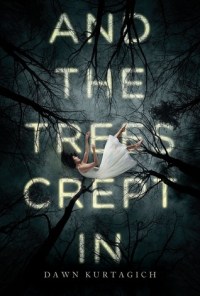
Kate’s Review: “And the Trees Crept In”

28449150Book: “And the Trees Crept In” by Dawn Kurtagich

Publishing Info: Little, Brown Books for Young Readers, September 2016

Where Did I Get This Book: The library!

Book Description: A stunning, terrifying novel about a house the color of blood and the two sisters who are trapped there, by The Dead Houseauthor Dawn Kurtagich

When Silla and Nori arrive at their aunt’s home, it’s immediately clear that the “blood manor” is cursed. The creaking of the house and the stillness of the woods surrounding them would be enough of a sign, but there are secrets too–the questions that Silla can’t ignore: Who is the beautiful boy that’s appeared from the woods? Who is the man that her little sister sees, but no one else? And why does it seem that, ever since they arrived, the trees have been creeping closer?

Filled with just as many twists and turns as The Dead House, and with achingly beautiful, chilling language that delivers haunting scenes, AND THE TREES CREPT IN is the perfect follow-up novel for master horror writer Dawn Kurtagich.

Review: What makes a good gothic horror story? There are many things that need to come together to really make a horror story a gothic one. You usually need a protagonist who is female, though really this isn’t a hard and fast rule anymore. It was just a very common protagonist type back in the Victorian era when these stories were super popular and remain classics. You also need a house or place of action that is isolated and generally creepy in ambiance, like a manor house or a hospital. And there usually has to be a question of what or who is actually causing the conflict of the story: is it something otherworldly, or is it just our poor isolated protagonist losing a grip on reality. “And the Trees Crept In” by Dawn Kurtagich is a pretty good representation of the gothic horror genre, and since it’s written for teens who may be more interested in something that’s more in your face than filled with nuance, I think that it’s a breath of fresh air, YA literary world wise. You have Silla and Nori, two sisters who have fled their abusive home life to live with their Aunt Cath, whose large blood red manor house is in the middle of a forest. From the get go things are strange for the sisters. There’s no technology in the house to be seen, Aunt Cath is both very happy to have them but filled with anxiety, and house seems to be in all kinds of disrepair. Soon Aunt Cath has locked herself in the attic and the trees in the woods seem to get closer and closer to the house. “I am ON BOARD!” I crowed to myself as I started this book, and given that there was talk of a Slenderman-like creepy thing in the woods (super tall, no eyes, huuuuge grin), I was even more elated to devour this book.

But then…. It became really weird, really fast.

giphy
…..Huh. (source)

While the Gothic genre is certainly supposed to be about isolation and questions of sanity, “And the Trees Crept In” kind of took it a little too far and into a realm that was beyond cohesive and more muddled. The story is told mostly from Silla’s point of view, though sometimes Nori’s random scribbles and notes do get some play as well. But mostly it’s a first person narrative from Silla, and diary entries from Silla, which lends perfectly to an unreliable narrator device. However, as Silla’s diary entries go on, they become more and more unclear as to what exactly is going on, just as her narration starts to fall to pieces as well. Normally this is fine in this genre, but I feel that Kurtagich almost took it too far, as by the time we got to the end of the book I was just lost and more frustrated than not. Writing a well done and believable descent into madness is hard to do, to be sure, and while a valiant effort was made here, it didn’t totally work. That being said, everything does eventually get explained in a narrative moment given by Silla’s love interest Gowan. While I appreciated that explanation was given, and while it did TOTALLY make sense, I think that it shouldn’t take a literal monologue of rundown and explanation to achieve that. And on TOP of that, there is a HUGE random twist at the end that just came completely out of left field! That was strange and I didn’t know how to feel about it. There wasn’t really any reason for it to go on top of the other twist that was revealed.

And let’s talk about Gowan and Silla a little bit. Silla’s characterization of a girl who is possibly losing her mind made it very hard for me to be like ‘oh yes, Silla and Gowan FOREVER’. While Gowan does serve a purpose in terms of wrapping things up for us readers in a tight little bow, I don’t quite buy into the romance that these two are supposed to have. I mean, after all is said and done I GET it, but I still don’t quite buy it. There wasn’t enough there before the end to make me really feel all that invested in it. I was far more interested in Silla’s relationship with her little sister Nori. The dynamic was not only interesting because of the age difference (Silla was ten when Nori was born and has always felt like a second mother to her), but because of the fact that Nori is mute. They can communicate with each other, and they have a strong love and bond through their clandestine communication, which gave a more desperate dynamic to both of them. In one sense it makes Silla more desperate to protect her since she seems to have that added layer of vulnerability, but it also makes a tension bubble up because Silla has a harder and harder time having her only company (outside of Gowan’s intermittent visits) be someone who has no voice and is different from her. And Nori’s fascination with the strange being in the woods adds even more tension still. I am admittedly pretty ignorant when it comes to what it is like to be a mute person, but I feel that Nori was portrayed in a sensitive manner.

At the end of the day, I did enjoy this confusing gothic tale of terror. I think that it definitely could have been a bit less convoluted while still maintaining it’s gothic aura. I would tell readers that it does all make sense. You just have to be willing to wait for it.

Rating 7: A pretty confusing and odd tale with a plot that needed explanation, but once it was clear what was going on I was pretty okay with it. There were some unsettling and creepy moments and the Slenderman-esque imagery was spooky.

Reader’s Advisory:

“And the Trees Crept In” is included on the following Goodreads lists: “Diverse Horror”,  and “New Speculative Fiction Stars”.

Find “And the Trees Crept In” at your library using WorldCat!

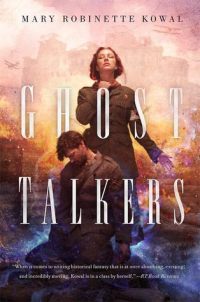
Serena’s Review: “Ghost Talkers”

26114291Book: “Ghost Talkers” by Mary Robinette Kowal

Publishing Info: Tor Books, August 2016

Where Did I Get this Book: the library!

Book Description: Ginger Stuyvesant, an American heiress living in London during World War I, is engaged to Captain Benjamin Harford, an intelligence officer. Ginger is a medium for the Spirit Corps, a special Spiritualist force.

Each soldier heading for the front is conditioned to report to the mediums of the Spirit Corps when they die so the Corps can pass instant information about troop movements to military intelligence.

Ginger and her fellow mediums contribute a great deal to the war efforts, so long as they pass the information through appropriate channels. While Ben is away at the front, Ginger discovers the presence of a traitor. Without the presence of her fiance to validate her findings, the top brass thinks she’s just imagining things. Even worse, it is clear that the Spirit Corps is now being directly targeted by the German war effort. Left to her own devices, Ginger has to find out how the Germans are targeting the Spirit Corps and stop them. This is a difficult and dangerous task for a woman of that era, but this time both the spirit and the flesh are willing…

Review: This book description was right up my alley: historical fiction PLUS fantasy PLUS romance. And, while there were a few surprised here and there, I mostly enjoyed this book, perhaps especially because it is *shocker!* a standalone novel!

The book description for this is surprisingly accurate, so I won’t bore you with another recap of events, but jump right in. The biggest question was this book was whether not it would manage combing fantastical elements into a historical setting in a seamless manner. It would have been all too easy for the fantasy to overwhelm the setting or to throw questions on historical events. However, this is pulled off with aplomb. I particularly enjoyed the backstory with Houdini and Sir Conan Doyle being used by the military itself to discredit spiritualism in an effort to protect their mediums and discourage Germany from adopting similar tactics. It was a clever way of tying in reality while providing a clever explanation for events.

The story also doesn’t shy away from the prejudices that were alive and well in this time period and would impact our female protagonist and her fellow mediums. The systematic sexism and racism of the time are handled neatly, if a bit too easily. The conflicts were a bit too mild and the resolutions, a bit too easy. For a shorter novel, however, that’s main focus is narrating a spy story with a fantastical twist, I can’t fault it too much for not devoting more time to fleshing these bits out more thoroughly. Not every book needs to accomplish everything, and I was satisfied with the approach taken here.

The beginning does start with what could amount to a spoiler-y twist. For some, it’s probably pretty obvious, but I’ll refrain from going into details for those (like me!) who weren’t really looking for it (though now I do feel a bit “duh” about the whole thing…). I really enjoyed the mystery/spy/traitor storyline that was the central focus of this book, and thought that the use of mediums and ghosts was incorporated in clever, if not completely unique, ways. I also very much enjoyed Ginger as our leading lady.

This is a shorter, stand-alone novel, so if you’re in the mood for a quick read and are interested in WWI but not too finicky about the addition of things like ghosts, mediums, and seances, then this book might be just the thing!

Rating 7: I enjoyed it, but it’s also a very tried-and-true story with nothing particularly challenging or unique to offer. Still a fun read though!

Reader’s Advisory:

“Ghost Talkers” is a new title and isn’t on many Goodreads lists. But I would include it in this list “Gaslamp Fantasy”  and, even though it has obviously has fantasy elements, this list “WWI Historic Fiction.”

Find “Ghost Talkers” at your library using WorldCat.