Kate’s Review: “It’s Always The Husband”

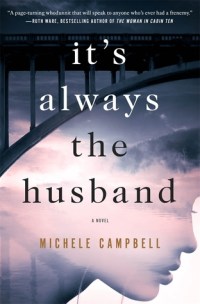
31451082Book: “It’s Always The Husband” by Michele Campbell

Publishing Info: St. Martin’s Press, May 2017

Where Did I Get This Book: Audiobook from the library!

Book Description: Kate, Aubrey, and Jenny. They first met as college roommates and soon became inseparable, even though they are as different as three women can be. Twenty years later, one of them is standing at the edge of a bridge . . and someone else is urging her to jump.

How did things come to this?

As the novel cuts back and forth between their college years and their adult years, you see the exact reasons why these women love and hate each other—but can feelings that strong lead to murder? Or will everyone assume, as is often the case, that it’s always the husband? 

Review: On the show “Major Crimes”, one of my favorite characters, Detective Lt. Provenza, has a tag line that he lives by. “It’s always the husband, it’s always the husband it’s ALWAYS the husband.” Of course, on the show it isn’t ALWAYS the husband, but it plays to the sad statistic that when a woman is murdered, the odds are that her murderer is going to be her husband or boyfriend. It probably doesn’t surprise you that when I first heard of the book “It’s Always The Husband” by Michele Campbell that this phrase was going through my head. But like on “Major Crimes”, I had a feeling going in that it would be a bit more complicated than the steadfast and all too real adage that Provenza likes to toss about.

The story is told through two time periods that tend to flip flop from one to the other. The first is twenty years in the past, when three women start their freshman year of college at a prestigious school in New England. Aubrey is the girl who got there solely on her brains, and is escaping an impoverished life back in Nevada. Jenny is a townie who has ambitions and hopes to become more than her small town expectations. And Kate is the entitled and rick party girl, who expects life to be handed to her. Their differences were stark and while I had a hard time believing that they would have been as close as the book makes them out to be (specifically Jenny; I just don’t believe that she would have put up with Kate’s bullshit), I felt like they were all well explored and fleshed out. I liked seeing how they changed and shifted in their personalities from their freshman year to the present day, when they have all gone their separate ways and established themselves. I also liked that none of them were all good, or all bad. While Kate was absolutely a wretched and toxic human being, Campbell threw in some background and plot points that humanized her. While Jenny was determined and incredibly competent, and absolutely my favorite of the three main characters, she makes stupid decisions and mistakes that I wanted to smack her upside the head for. And Aubrey is so damaged and innocent that you definitely feel sorry for her, but a dark side lingers there, and when it rears it’s ugly head you can’t help but be a bit freaked out by it. As a reader I cared about all of them in some way, and was invested in how things turned out for all of them, and who it was that ended up on that bridge. It may also be a testament to how good the narrator was on this audiobook, as she varied her voices and inflections for each character wonderfully.

The mystery itself was very well done. The clues to what happened are laid out in both the past and the present, giving hints both in actions and the characters personality traits. This book definitely kept me guessing as it went on, and I never had a complete handle on what the ultimate solution was, which I really liked. My thoughts and opinions shifted in the ways that Campbell probably wanted them to, and I didn’t even mind that I was being led about like a puppet on a string because it was so fun to be taken on this journey. It eventually becomes clear just who it is on the bridge, but even getting to that first reveal was a fun trip to take, and it was even more enticing to find out who put her in that position, and why.

I will say that there were a couple of things that I took umbrage with. For one, there is a storyline with the new Chief of police in town who is investigating the murder, Owen. He goes in completely biased, as he had a VERY short dalliance with the victim before she ends up dead, and I found myself just irritated with everything about him and his motivations. I also found it a bit hard to swallow that an unexpected dinner with a woman who didn’t even give him her real name would affect him so much, no matter how magnetic she was, and it felt like an unnecessary way to throw in some drama. There are plenty of cops who try to fit evidence to a perp as opposed to the other way around without having a personal connection to the victim, so that seemed a bit superfluous. And this book also does that thing that I just cannot stand, in that in the last page and paragraphs of the book a FINAL TWIST is revealed. Man, that made me roll my eyes super hard. But unlike other books that have implemented this strategy in my recent reading, I enjoyed this one enough for everything else that I couldn’t hold it  totally against it. Just know that it’s coming.

“It’s Always The Husband” was a sudsy and compelling thriller that I had a great time listening to. While it had some flaws, overall I greatly enjoyed it. And I think that it would truly get Provenza to rethink his usual mantra.

Rating 7: A fast paced and well plotted thriller with some great revelations and some great surprises. One plot line was a bit tedious and frustrating, but overall I enjoyed what this book had to give.

Reader’s Advisory:

“It’s Always The Husband” is included on the Goodreads lists “2017 Librarian Recommended Books”, and “Best Twists”.

Find “It’s Always The Husband” at your library using WorldCat!
Serena’s Review: “A Poison Dark and Drowning”

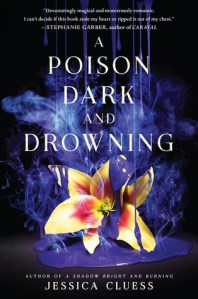
33629245Book: “A Poison Dark and Drowning” by Jessica Cluess
Publishing Info: Random House Books for Young Readers, September 2017

Where Did I Get this Book: Blogging for Books

Book Description: Henrietta doesn’t need a prophecy to know that she’s in danger. She came to London to be named the chosen one, the first female sorcerer in centuries, the one who would defeat the bloodthirsty Ancients. Instead, she discovered a city ruled by secrets. And the biggest secret of all: Henrietta is not the chosen one.

Still, she must play the role in order to keep herself and Rook, her best friend and childhood love, safe. But can she truly save him? The poison in Rook’s system is transforming him into something monstrous as he begins to master dark powers of his own.

So when Henrietta finds a clue to the Ancients’ past that could turn the tide of the war, she persuades Blackwood, the mysterious Earl of Sorrow-Fell, to travel up the coast to seek out strange new weapons. And Magnus, the brave, reckless flirt who wants to win back her favor, is assigned to their mission. Together, they will face monsters, meet powerful new allies, and uncover the most devastating weapon of all: the truth.

Previously Reviewed: “A Shadow Bright and Burning”

Review: I wasn’t a huge fan of “A Shadow Bright and Burning.” It wasn’t the worst thing ever, but I had a few distinct issues with it and, perhaps worse, after reading it, I pretty much forgot about it and the fact that it was the first in a trilogy. But then “A Poison Dark and Drowning” popped up on Blogging for Books, and I thought “why the heck not?” I also requested an audiobook version from the library, since we all know how I am about needing my multiple formats. And, in this case particularly, I’m very glad I did! While this wasn’t a perfect book and several of my concerns from the first came to fruition here, this sequel is definitely an improvement on the first, increasing the stakes, expanding the setting, and, for the audiobook, read by an awesome narrator who added much needed depth and tone to Henrietta’s voice.

Opening shortly after the end of the first novel, Henrietta has settled into her new life as a sorcerer. As well as she can, that is, knowing that she is being asked to live a lie and pose as the prophesied savior. London is in a precarious point in the war against the almost all-powerful Ancients, lead by the horrifying Skinned Man, Relim. Yes, at the end of the last book they struck a crucial blow, killing one of the Ancients for the first time ever. But the protective ward around the city fell as a result, and now they all wait, exposed, wondering why Relim hasn’t yet struck. Throughout all of this, Henrietta’s focus is also drawn more close to home as her childhood friend and love, Rook, begins to succumb to the darkness that has poisoned him after being attacked in the last book.

It is clear that Cluess felt much more freed up, as it were, when she wrote this novel. It’s not even that surprising. She had a lot of ground to cover in the first book including world-building, the mysteries surrounding Henrietta’s family, and setting up not one but two magic systems. Here, with all of these factors already in place, it feels like the author was finally able to open her wings. The pacing of this story was much more active, and the magical elements fit more naturally into the storyline. Henrietta’s tale takes outside of London, onto the treacherous ocean, ruled by a monstrous spider Ancient, to a misty moor hiding a monster hunter’s house, down into the land of fairy that is ruled by the capricious and cruel Queen Mab, and through many different battles, with the Ancients themselves, as well as their creepy familiars.

Henrietta herself is also more fully fleshed out in this novel. While she still had a tendency to withhold information and lie more often than is likely wise (a pet peeve of mine with YA heroines), she’s also more sure of herself and of her own powers, specifically her magicians magic. She also barely avoids the typical “martyr complex” also all too familiar for YA heroines, and still maintains a practical head on her shoulder, even when atrocities are being committed simply to lure her out. Part of my increased appreciated for Henrietta is due to the clever and nuanced voice that the audiobook narrator managed to give the character. There were moments where she added tones of humor, exasperation, and sense to dialogue that may have read more melodramatic simply from the page. It’s one of those tricky things, in cases like this. I honestly can’t tell how much of my improved attitude towards this character comes from the way she was written (was the characterization actually stronger?) or from simply enjoying this narrator quite a bit (would I have appreciated the first book’s version of Henrietta more had I listened to the audiobook version of that one too?).  Ultimately, I do think that Henrietta’s storyline was much stronger in this book, largely freed from the angst and drama from the first book.

We also delved more deeply into Henrietta’s history and into the mystery surrounding how and why the portal that let the Ancients into this world was open 17 years ago. While I found some of this to be fairly predictable, there were enough twists and turns added to still make the reveals feel new and interesting.

The stakes were also much higher in this story. The ward is down, London is in danger, and the odds are not good. And these things aren’t simply left as passive threats. There are battles, soldiers die. Towns are destroyed, and civilians suffer. Beyond this, there are consequences, real and terrible consequences, to the choices that characters make. I was surprised and impressed by the author’s commitment to “going there” with some of these decisions. This added seriousness of tone did a lot to balance out my major, and predictable criticism of this book: a love square.

As I mentioned in my review of the first book, the story is set up with Henrietta surrounded by a bunch of young men, all potential love interests in some manner or another. In that book we had Rook, Henrietta’s childhood love, and Magnus, the charming rogue. The story ended with Henrietta choosing Rook, in no little part due to the fact that Magnus turned into a jerk who was not only already engaged but let loose that he thought Henrietta was beneath him. But here, not only does Magnus get freed back up, breaking his engagement, but somehow is retconned into being much more regretful about his previous behavior. Henrietta’s heart is with Rook, however his descent into darkness and the unknowable future make their relationship challenge. And now we also add in Blackwood, the dark and brooding magicain who was slow to warn to Henrietta in the first book, but looks to be being slotted into a sort of “Mr. Darcy/bad boy” role where he’s made better by his close friendship with Henrietta, a relationship that, at first only on his side but slowly on hers as well, begins to blossom into something more.

The worst part of all of this was the fact that the book was clipping along until about halfway through with barely a reference to any romance, other than a few thoughts and concerns shot Rook’s way. And then BAM, right in the middle of the story and the action the brakes were thrown on and the story became stuck in love-triangle/square-melodrama. Thankfully, the story did kick back into the action eventually, but there were times in the middle of this section where I almost put the book down. I really don’t understand why this is considered to be necessary in YA fantasy. The story was so strong without it, and sure a dash of romance is often appreciated, but tonally, the book takes a massive swerve when it suddenly commits so much page time to these silly romantic flounderings. And ultimately, this middle section soured my opinion on all the characters involved: Henrietta, Blackwood, Rook. Magnus, bizarrely, probably comes out of all of this in the best light. And in the end, I’m not sure how I’m supposed to feel about where things stand. Who exactly am I supposed to be rooting for? The fact that I can’t tell is the biggest problem, and ultimately, I wish Henrietta would just kick them all to the side and go have awesome adventures with Maria.

To end on a good note, Maria, a Scottish witch they pick up on their travels, was probably my favorite part of this story. Not only does she add the much needed female companion to Henrietta, but as a character herself, she’s excellent. Through her we see the horrors that the witches have suffered, alongside the magicians who we’ve heard about through Henrietta’s story, during the systematized persecution put in place after the portal was opened years ago. She has a powerful magical ability, and she wields an ax. And, best of all, the story sets her up in a pivotal role going forward. Again, Henrietta, girl, throw those boys away and hang with Maria. Rook = no personality. Blackwood = kind of a jerk with controlling tendencies. Magnus = already showed his cards as a player. Maria = besty who is the only one Henrietta is comfortable being completely truthful with. Seems pretty obvious to me.

Ultimately, I did enjoy “A Poison Dark and Drowning” more than the first. The story is given increased depth and danger, and while some of my predictions regarding the plethora of love interests did come to icky fruition, the added character of Maria makes up for it. If you like audiobooks, I do recommend checking out that version of the story as some of my increased opinion could be due to the narrator’s skillful reading.

Rating 7: Full of action and dark twisty magic, if unfortunately interrupted by silly romantic entanglements at times.

Reader’s Advisory: 

“A Poison Dark and Drowning” is fairly new and isn’t on any very relevant Goodreads lists, but it should be on “Victorian YA Novels.”

Find “A Poison Dark and Drowning”  at your library using WorldCat.


Serena’s Review: “The Fifth Petal”

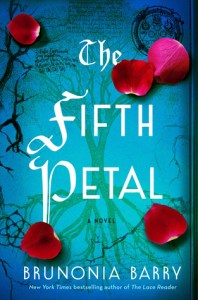
29741905Book: “The Fifth Petal” by Brunonia Barry

Publishing Info: Crown, January 2017

Where Did I Get this Book: Blogging For Books

Book Description: When a teenage boy dies suspiciously on Halloween night, Salem’s chief of police, John Rafferty wonders if there is a connection between his death and Salem’s most notorious cold case, a triple homicide dubbed “The Goddess Murders,” in which three young women, all descended from accused Salem witches, were slashed on Halloween night in 1989. He finds unexpected help in Callie Cahill, the daughter of one of the victims newly returned to town. Neither believes that the main suspect, Rose Whelan, respected local historian, is guilty of murder or witchcraft.

But exonerating Rose might mean crossing paths with a dangerous force. Were the women victims of an all-too-human vengeance, or was the devil raised in Salem that night? And if they cannot discover what truly happened, will evil rise again?

Review: This is the second book by Barry, the first being “The Lace Reader.” I haven’t read this book, and when I requested this one I didn’t know that it was connected to this first novel. However, luckily for me, this story takes place many years later and any recurring characters that appear are at a different enough point in their lives that I never felt that missing this first book had much of an impact on my views of this. And, all told, they were fairly postive

As we all know by now, Kate is the horror/thriller reader on this blog, but in the spirit of Halloween, I tried to choose one book to read that month that was at least somewhat “on theme.” Enter “The Fifth Petal,” a murder mystery with ties to relations of the women accused as witches in the Salem trials. So, yeah, about as close as I’m ever going to venture to true horror. Witches, however, are more within my realm of experience and interest, so this seemed like a good compromise.

As the story progressed, I found this connection to modern day Salem and its history to be one of the more intriguing aspects of the story. Like many people, this place, time, and horrifying event, has always held a note of fascination for me. I feel that I went into this story already knowing much of this information, but I still enjoyed the nuggets I as able to pick up here and there, especially about the modern day town.

The author’s note at the end goes into good detail about how much of it is based on truth, which made these aspects of the story even better, in hindsight. Much of layout of the town is accurate, such as the location of the hanging tree. Goes to show how much good research reflects well on a story.

The story was also very action packed and never wanted for movement. This is a good and bad thing, in my view. I whipped through this read very quickly, but at the same time, portions of the story felt muddled, trying to fit too much within a limited page count. It’s a tough balance to strike, but I feel that either slowing it down in a few parts, or simply extending the page count out a bit so each of these elements had more room to breathe, would have ultimately served the novel well. At a certain point I began to question whether all of these various plotlines were necessary.

Callie was an ok leading lady. The mystery of her lost memories was interesting, but in a lot of ways she was just kind of bland. Nothing about her really stood out to me, and she ended up reading like the typical main character at the heart of stories like this. This, too, might have been improved had the author not devoted so much time to the many, many plotlines that I referenced earlier.

I also found myself enjoying the romantic spin of the story. I don’t typically read contemporary books, or contemporary romance, specifically, but every once in a while, themes from books like that can hit the spot. This book was a good compromise in this way as well. Got my romance fix, but still got to keep my fantasy/thriller moments.

Ultimately, I enjoyed “The Fifth Petal.” It wasn’t without flaws, and it falls pretty far outside of my usual reading tastes, but it was an fun enough time. It won’t stand out to me as anything special, but for readers who enjoy thrillers and contemporary romance a bit more than me, this might be a good read for you!

Rating 7: Fairly unassuming and enjoyable. Could be improved by fewer plotlines stuffed into one story, but was a quick read, especially for those interested in the Salem Witch Trials.

Reader’s Advisory:

“The Fifth Petal” is a newer book, but it is on this Goodreads list: “Fall, Halloween, New England Fiction.”

Find “The Fifth Petal” at your library using WorldCat!

More information:

About Brunonia Barry

More on The Fifth Petal”

Kate’s Review: “Fragments of the Lost”

27797316Book: “Fragments of the Lost” by Megan Miranda
Publishing Info: Crown Books for Young Readers, November 2017

Where Did I Get This Book: I received an ARC from the publisher and NetGalley!

Book Description: From the New York Times bestselling author of All the Missing Girls and The Perfect Stranger comes a suspenseful psychological mystery about one girl’s search to uncover the truth behind her ex-boyfriend’s death. Perfect for fans of We Were Liars and 13 Reasons Why . 

Jessa Whitworth knew she didn’t belong in her ex-boyfriend Caleb’s room. But she couldn’t deny that she was everywhere–in his photos, his neatly folded T-shirts, even the butterfly necklace in his jeans pocket . . . the one she gave him for safe keeping on that day.

His mother asked her to pack up his things–even though she blames Jessa for his accident. How could she say no? And maybe, just maybe, it will help her work through the guilt she feels about their final moments together.

But as Jessa begins to box up the pieces of Caleb’s life, they trigger memories that make Jessa realize their past relationship may not be exactly as she remembered. And she starts to question whether she really knew Caleb at all. 

Each fragment of his life reveals a new clue that propels Jessa to search for the truth about Caleb’s accident. What really happened on the storm-swept bridge?

Review: A special thank you to Crown Books for Young Readers and NetGalley for providing me with an ARC of this book!

So perhaps you all remember that I read and reviewed Megan Miranda’s novel “All the Missing Girls”, and I wasn’t very impressed with it beyond the framing of it. But I was intrigued enough by her as a writer that I knew I’d probably pick up something else she had written in the future. That book happened to be “Fragments of the Lost”, a new YA psychological thriller by her. I saw that it was available on NetGalley, and decided to request it. When I finally got to reading it, I figured that I would start it one evening and make my way through, as I did with “All the Missing Girls”. But lo and behold, I actually sat down and read it in one sitting. So you know that we’re off to a pretty good start when THAT happens.

I think that what grabbed me about this book right away was Jessa, our main character. She’s a girl who has gone through the awful trauma of losing her ex-boyfriend Caleb after his car is thought to have gone off a cliff during a rainstorm and flood. She’s believable in that she has mixed feelings about cleaning out Caleb’s room, as they had broken up before his car went off the cliff on that rainy day. She was a very down to earth and realistic person, never treading into the realm of simpering or frustrating in her emotions. Which is funny, because I fully prepared myself for her to be the kind of wreck that Nicolette was in “All the Missing Girls”, and yet it was in the YA novel that Miranda’s main character was bit more nuanced. As she cleans up Caleb’s room, we get to see their relationships through flashbacks, depending on the object that she is sorting in the moment. While it had ample chances to become schmaltzy, it never did because Jessa is that well rounded and complex of a character. As for the other characters, we really only got to see them through Jessa’s eyes, so it was harder to get a gauge of who they were. I think that you certainly can give readers a handle on other characters through a main character filter, but I didn’t feel like we completely got there with Jessa. While I really liked her, everyone else was fairly bland. Caleb was really just this enigmatic good person that we didn’t really get to know beyond this plotline, and while I did like their mutual friend Max, a sweet geeky kind of guy, he was really just there to provide support to Jessa through thick and thin, no matter what. I liked him and I liked how he interacted with her, but he was just there for the ride and showing up when needed.

The mystery was solid enough, and I liked that we were given the pieces as Jessa boxed up his room. From a pair of spare glasses to a broken fan to some sporting equipment, we learn bit by bit what Caleb was like, what his relationship with Jessa was like, and why perhaps none of it was as real as she thought it was. I think that had it stopped there, and been an examination about young love lost, the different sides of people even in relationships, and why we may never know everything about them, this would have been a pretty powerful book. But while the mystery was solid (as to what actually happened to Caleb that day), I think that it may have actually hindered an already powerful narrative. That isn’t to say that Miranda had to write a book that was solely a meditation on grief and loss, because it’s her prerogative to write a mystery and I say have at it. Hell, this mystery was interesting to follow and I liked it enough. But along with it, we started to get into areas that kind of pulled me out of the story because of how unrealistic things were. It was mostly little things, like how a library computer would probably NEVER have search history that went between sign in sessions because of privacy laws, or how it would take a whole lot more than just a fake ID to completely restart your life as a new person. These may not seem like much, but it was enough to take me out of the story even for a little while, which was distracting. There was also a sudden shift in solution in the end, and you all know how I feel about that kind of thing. When I’m told that only options A and B are going to work, I have a really hard time swallowing a sudden option C rearing it’s ugly, if not convenient head.

“Fragments of the Lost” was a twisty turny read, though, and I think that it’s one of the stronger YA thriller/mysteries that I’ve read this year. Meg Miranda should definitely write more for this audience, as she brings the nuance that is needed to write an effective whodunit.

Rating 7: A pretty interesting mystery with an engrossing parsing of clues, “Fragments of the Lost” is a tangled read with some unexpected surprises. The characterization of supporting characters could have been stronger, but I enjoyed reading it.

Reader’s Advisory:

“Fragments of the Lost” is pretty new and not on many Goodreads lists, but I think that it would fit in on “YA Post Death Novels”.

Find “Fragments of the Lost” at your library using WorldCat!

Serena’s Review: “La Belle Sauvage”

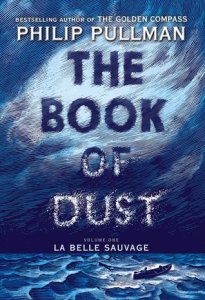
34128219Book: “La Belle Sauvage” by Philip Pullman
Publishing Info: Alfred A. Knopf Books for Young Readers, October 2017

Where Did I Get this Book: the library!

Book Description: Eleven-year-old Malcolm Polstead and his dæmon, Asta, live with his parents at the Trout Inn near Oxford. Across the River Thames (which Malcolm navigates often using his beloved canoe, a boat by the name of La Belle Sauvage) is the Godstow Priory where the nuns live. Malcolm learns they have a guest with them, a baby by the name of Lyra Belacqua . . .

Review: This is going to be such a hard review to write! Not only do I have drastically mixed opinions of this book, but there’s just no escaping the fact that there is no way I can be completely objective about this. As I was reading it, my husband looked over and asked about the strange smile on my face and the only way I could explain it (yes, he is one of those rare individuals who hasn’t read the “His Dark Materials” trilogy) was to compare it to reading a new Harry Potter book. It’s something you never thought would happen, so much so that you gave up wishing for it, and yet, one day, it arrives on your step and you’re once again back in this magical world, and more than than, you’re back to when you were a kid reading the series for the first time. The only word to describe the entire experience is “surreal.”

But. I did have qualms, and I think through these I was able to take off the nostalgia glasses long enough to be able to analyze the book as much outside of its connection to this beloved trilogy as I can. Here we go!

Set eleven or so years before the events of “The Golden Compass,” this is the story of Malcolm, an 11 year old boy whose family owns and operates an inn called the “Trout.” Malcolm is everything we expect from young heroic boys: smart, resourceful, and kind. If you look up the actual definition of “boy scout,” I’m pretty sure it would say “See the character of Malcolm from Philip Pullman’s “La Belle Sauvage.”

Other than caring for his beloved canoe (the name of which is where the title of the book comes from), his main duties in life are avoiding the acerbic teenager Alice who works as a dishwasher at the inn, and helping a group of nuns who live in a priory nearby. Until, that is, a mysterious baby girl named Lyra appears in the nuns’ care. Now, devoted to Lyra, Malcolm finds himself caught up in a cold war between two powerful parties both looking to determine Lyra’s future (or whether she should have one at all). Fleeing the disturbed man named Bonneville and his even more disturbing daemon, a three legged hyena, who have their own designs on the baby, Malcolm, Alice and Lyra flee during a massive flood, looking for safety and a future for this small, but important, girl.

First with the simple parts of my review. Obviously, Pullman is still the incredible author we all knew him to be. His writing is clear, concise, and compelling. While the story starts out slowly, this, too, that fans of this author should have been expecting. “The Golden Compass” itself isn’t known to have a bang of a start. And once the flood takes place, the action picks up to almost a frantic pace, changing dramatically into an almost “Odyssey” like tale with Malcolm, Alice, and Lyra drifting from one mystical and dangerous island to another. This aspect of the story was a complete surprise to me, and I very much enjoyed the entire sequence and the various types of magical elements that these scenes added to Lyra’s world.

Further, his main character, Malcolm, is a strong addition to the cast. This was probably the biggest challenge: how do you create a new child hero that will hold his own when compared to Lyra and Will, and notably not be the same as either of those two characters? Malcolm has much of Will’s earnestness and good will, and, if Will’s childhood hadn’t been flooded with the darkness it was, he and Malcolm may have turned into very similar boys. Malcolm is essentially the result of a good childhood and good parents. In some ways he could be read as a bit one dimensional in this goodness, but as the story progress, specifically the last half of the story, his character is tried and tested enough that I think he can avoid this accusation. Malcolm confronts real horrors and real choices, and while he holds true to his “boy scout” mentality, he is also clearly very much changed by the end of the story.

The second biggest hurdle faced by Pullman was how to handle characters we are all familiar with from the first trilogy. It would be all to easy for these known characters to overwhelm a story like this and wash out the new characters being introduced. For the most part, I think he handled this very well. The cameo appearance of many of these character were like bright jewels to run into, but at the same time, I was satisfied enough with the main story not to crave their absence. There were a few moments, like a very brief scene with Mrs. Coulter, that I felt verged a bit too close to fan service for my taste. Was it really necessary to this story that she appear on the page? But these are pretty minor quibbles, and I thought Pullman mostly avoided any pitfalls in this area.

Now, my concerns. There are two that really stand out: Bonneville as a villain and the aspects of the story caught up in him, and Alice’s character and role in this story. We’ll start with Bonneville as I think he leads nicely to my second point.

Bonneville is introduced as a criminal with a pretty nasty past, one specifically dealing with his imprisonment for some type of sexual crime that Mrs. Coulter testified against. So, we can make some assumptions there. Then, throughout this story, we see Bonneville terrorizing and coercing the women around him, notably Alice and a few of the nuns. And towards the end of the story, this culminates in a very horrible way.

Look, Bonneville himself, and his creepy hyena, were scary villains. They served their purpose as a persistent and unpredictable terror following close behind the children. But the fact that his danger is tied up in sexual violence read as strange, especially with regards to the choices made with Alice’s role in the plot, and, more importantly, with all of the work Pullman did in his first trilogy to reclaim the importance of the body and to write strong, complex female characters.

At one point, early in their flight, Alice accuses Malcolm of only bringing her along to change the diapers of Lyra. And, in the end, this is most all she does. She’s clearly a smart and competent character, but she is given very little to do in this story other than care for Lyra and wait while Malcolm saves the day (repeatedly). Which all just makes the sexual violence towards the end all the more disturbing and off putting.

I’m not sure exactly how this trilogy is planned to play out, but I read somewhere that at least one of the next books will deal with Lyra as an adult. If that’s the case, are Malcolm and Alice only the main characters here? And if that’s the case, this last violent scene plays all the worse. I’m not convinced it is necessary, other than to push Malcolm into action (won’t go into that aspect of it, just look up “fridging female characters” and you’ll get my point), and I’m worried that it will be left as is, with no real followup in subsequent stories.

Ultimately, the whole thing was just confusing to me. Why was this choice made? What purpose was it serving? And, from an author like Pullman who gave us such excellent characters as Lyra and Mary Malone, why was Alice written so simplistically and then, even worse, combined with these story choices? I honestly can’t understand it.

As I said at the top, I closed this book with some very mixed feelings. I can’t help but love the fact that there’s a new entry into this world, and I very much enjoyed Malcolm and much of the action of this story. And there’s never an argument to be had about Pullman’s mastery of writing. But some of the choices with the villain and the themes brought up with him were very unsettling. What’s more, the original trilogy simply had more to say. And very little of that philosophical underpinning can be found in this book, leaving us only with a very gruesome and largely unaddressed sexual violence theme. But, obviously, I’ll be back for the next to in the series, and hopefully some of this book’s action will be addressed there. And if not, hopefully Pullman will once again find his footing with the larger questions that made the first trilogy so fascinating.

If you’re fa fan of his first series, I don’t even need to tell you to check this out, because I’m sure you will. If you’re a new reader, I strongly recommend reading the fist trilogy before picking this up; not only is it much better, but it provides much needed context for a lot of what is presented in this book.

Rating 7: A wonderful return to a beloved world with an excellent new character in Malcolm, but one that is marred by some jarring writing decisions.

Reader’s Advisory:

“La Belle Sauvage” is included on these Goodreads lists: “Alternate History in 2017” and “Most Anticipated Speculative Fiction Books of 2017.”

Find “La Belle Sauvage” at your library using Worldcat!

Kate’s Review: “Are You Sleeping”

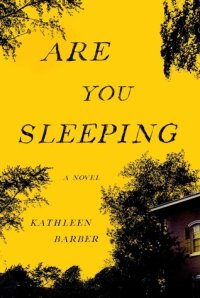
30753570Book: “Are You Sleeping” by Kathleen Barber

Publishing Info: Gallery Books, August 2017

Where Did I Get This Book: The library!

Book Description: Serial meets Ruth Ware’s In A Dark, Dark Wood in this inventive and twisty psychological thriller about a mega-hit podcast that reopens a murder case—and threatens to unravel the carefully constructed life of the victim’s daughter.

The only thing more dangerous than a lie…is the truth.

Josie Buhrman has spent the last ten years trying to escape her family’s reputation and with good reason. After her father’s murder thirteen years prior, her mother ran away to join a cult and her twin sister Lanie, once Josie’s closest friend and confidant, betrayed her in an unimaginable way. Now, Josie has finally put down roots in New York, settling into domestic life with her partner Caleb, and that’s where she intends to stay. The only problem is that she has lied to Caleb about every detail of her past—starting with her last name.

When investigative reporter Poppy Parnell sets off a media firestorm with a mega-hit podcast that reopens the long-closed case of Josie’s father’s murder, Josie’s world begins to unravel. Meanwhile, the unexpected death of Josie’s long-absent mother forces her to return to her Midwestern hometown where she must confront the demons from her past—and the lies on which she has staked her future. 

Review: Like a lot of people, I was damn well obsessed with the podcast “Serial” when it aired it’s first season a few years ago. I had held off on listening to it for awhile, but then I gave in and was able to binge almost all of it over the course of a few days. As someone who has always been interested in true crime, the thought that someone may have gone to prison for a murder he didn’t commit, and that perhaps those around him may have known his innocence the whole time, I found the premise compelling. I know that some people found it ghoulish, as the podcast used the murder of Hae Min Lee as a framework for it’s investigation. Such grievances are raised in the novel “Are You Sleeping”, a debut from Kathleen Barber, and makes the reader look at it through the eyes of a murder victims family as old wounds are opened up for sensationalism and ‘entertainment’. I’ll admit I felt a little yucky with myself as I read this book. But I wasn’t just chastened; I was also sucked into the story of Josie, her twin sister Lanie, and the family that is still suffering from the fallout of the murder of the family patriarch.

The plot starts out common enough; Josie is living a happy life in New York with a genuinely good man named Caleb. But what Caleb doesn’t know is that Josie hasn’t told him about her past. Her father, Charles Berman, was shot in the head when she was a teenager, and her twin sister Lanie said that their Goth and rebellious neighbor Warren pulled the trigger. Shortly thereafter, their mother Erin ran off and joined a cult, and Josie split town as soon as she could and swore she’d never talk to her sister again, and never return. But then a popular podcast hosted by the duplicitous and fame hunger Poppy Parnell has started raising questions as to Warren’s guilt, and tragedy sweeps Josie back to her hometown, the secrets and lies she’s told her whole life starting to plague her. Pretty common fare for this kind of book. But what sets is aside from others I’ve read is that it makes use of the podcast format, as well as the social media frenzy that can come with it, to help frame the plot and the characters that we meet. It was great seeing twitter feeds, reddit posts, and transcripts from the episodes to get various pieces of the puzzle that we may not have otherwise seen, and it was kind of fun sifting through them like the reader, too, was an armchair detective. The pacing and tone was fast and tense from the starting gate, and I was basically hooked the moment that I sat down and committed to it, reading most of it in one day. The mystery itself wasn’t that hard to figure out, but it was definitely a fun ride to take even if I predicted the destination pretty early on.

That said, it wasn’t really doing much different or unique from this genre. While I definitely enjoyed it more than, say, “Every Last Lie” or “Into The Water”, it didn’t blow me away as some other thrillers this year have (“Everything You Want Me To Be”, anyone?). Josie wasn’t as large a mess as these kins of protagonists can be, which was incredibly refreshing, but Lanie was REALLY hard to take at times just because she very much WAS a huge, honking trainwreck. I’m relieved that the book wasn’t from her POV, because I’m pretty sure I couldn’t take that. None of the characters, however, really stood out as more than pretty standard players in this kind of book (the dutiful boyfriend, the ex who caused you pain, the uptight female relative). I had been hoping that there would be a little bit of experimentation with these tropes, but alas, it wasn’t to be.

But run of the mill characters and kind of easy to see ending aside, I really did have a fun time reading “Are You Sleeping”. Given that the holiday season is basically upon us and travel may be in some of your futures, I would definitely recommend this book for a long plane ride, a road trip, or just reading in the coziness of your home as the weather turns colder. But don’t let it shame you from listening to your favorite true crime podcast, okay?

Rating 7: An addictive mystery with a fun framework, but it isn’t really anything much that we haven’t seen before outside of said framework. A breezy read, maybe perfect for travel or a ready by a roaring fire.

Reader’s Advisory:

“Are You Sleeping” is included on the Goodreads lists “Sister Mysteries”, and “There’s Something Dangerous About The Boredom of Teenage Girls”.

Find “Are You Sleeping” at your library using WorldCat!

Serena’s Review & Giveaway: “Girls Made of Snow and Glass”

32768509Book: “Girls Made of Snow and Glass” by Melissa Bashardoust

Publishing Info: Flatiron Books, September 2015

Where Did I Get this Book: ARC from ALA 2017

Book Description: At sixteen, Mina’s mother is dead, her magician father is vicious, and her silent heart has never beat with love for anyone—has never beat at all, in fact, but she’d always thought that fact normal. She never guessed that her father cut out her heart and replaced it with one of glass. When she moves to Whitespring Castle and sees its king for the first time, Mina forms a plan: win the king’s heart with her beauty, become queen, and finally know love. The only catch is that she’ll have to become a stepmother.

Fifteen-year-old Lynet looks just like her late mother, and one day she discovers why: a magician created her out of snow in the dead queen’s image, at her father’s order. But despite being the dead queen made flesh, Lynet would rather be like her fierce and regal stepmother, Mina. She gets her wish when her father makes Lynet queen of the southern territories, displacing Mina. Now Mina is starting to look at Lynet with something like hatred, and Lynet must decide what to do—and who to be—to win back the only mother she’s ever known…or else defeat her once and for all.

Review: “Snow White” fairytale re-tellings have had quite the resurgence it seems over the last few  years. And many of them, like “Girls Made of Snow and Glass,” are attempting to re-imagine this classic tale into something new and different. Not an easy feat. To add to this, this novel was also marketed as somehow connected (based on??) the smash Disney hit “Frozen,” as well. Which in turn was based on yet another fairytale, “The Snow Queen.” In all honesty, I picked this one up with a bit of trepidation, worrying that all the elements listed above, plus the fact that I knew it had LBGT elements, would combine into what could only be described as a hot mess. But I’m not to proud to admit when I’m wrong, and while I would consider this one a home run, it did manage to pull all the elements it committed to.

The story follows to young women: Mina, a young woman without a heart, who never the less seeks out love, hoping to find it in a King with a young daughter. The daughter, Lynet, is our second main character, a young woman created in the image of her own dead mother. Chapters alternate between these two main characters, and while each of their stories plays out in different manners, what’s at the heart of their struggles is the same: the meaning of family, what is love, and how they, as women, must make hard choices in order to navigate the world in which they live.

Honestly, in many ways, this book took the best advantage of the opportunities to respond to a fairytale that is completely based on woman vs. woman competition due to beauty. There is a lot to unpack there, both with the relationships formed between women, as well as the value on beauty above all else that society, and women themselves, place upon young girls.

I was honestly very surprised with the direction that this story went at different points in the book. Obviously, it was refreshing to read a version of the “evil queen” who was sympathetic, who had made tough decisions to protect herself and what she wanted, and knew that it was wrong that she is being punished for it. Lynet, too, was more than the simpering, often one dimensional princess character that is often found in these stories, and hers the romance containing LGBT elements. For all the hype around this aspect of the series, however, I did find this romance to be a bit underfed. Lynet’s story is only half of the book after all, and Mina’s romantic storyline read as more fully developed. This is unfortunate, but I applaud the author’s intentions in this aspect.

My primary criticism of the story was the writing style. Perhaps it simply wasn’t the type of writing I prefer, but at times it read as a bit middle grade and simplistic for a young adult novel. Especially for a young adult novel that was trying to do and say some big things about found families, the wide varieties and intrinsic value of loves to be found in the world, and the challenges that women face when trying to control their own lives without being punished for it. For all of these large and complicated topics, for being based on not one but two action-packed fairytales, at times I just found myself to be bored. A couple of scenes in the middle, specifically, should have jumped off the page, but somehow seemed to wilt, leaving me under enthused.

But, these criticisms aside, “Girls Made of Snow and Glass” did an excellent job of reimaging a fairytale that has almost be “reimagined” to death at this point. Just when you start to think that there isn’t much more that can be done with a story like this, an author comes along and proves you wrong. If you’re a fan of fairytale retellings, and especially if you’re looking for better representation in your fantasy fiction, check out “Girls Made of Snow and Glass” and enter the giveaway below to win a copy for yourself!

Giveaway is for an ARC of “Girls Made of Snow and Glass” and is open to U.S. entrants only. Giveaway ends on Tuesday, November 7.

Congrats to @melissadougher for winning this giveaway!

Rating 7: Fantasy fiction with a lot to say about found families and feminism. Come for the familiar, stay for the new!

Reader’s Advisory:

“Girls Made of Snow and Glass” can be found on these Goodreads lists: “LGBT Retellings of classic Fiction/Fairy Tale/Myth” and “Snow White Retellings.”

Find “Girls Made of Snow and Glass” at your library using WorldCat!

Kate’s Review: “Sleeping Beauties”

34466922Book: “Sleeping Beauties” by Stephen King and Owen King

Publishing Info: Scribner, September 2017

Where Did I Get This Book: The library!

Book Description: In this spectacular father-son collaboration, Stephen King and Owen King tell the highest of high-stakes stories: what might happen if women disappeared from the world of men?

In a future so real and near it might be now, something happens when women go to sleep; they become shrouded in a cocoon-like gauze. If they are awakened, if the gauze wrapping their bodies is disturbed or violated, the women become feral and spectacularly violent; and while they sleep they go to another place. The men of our world are abandoned, left to their increasingly primal devices. One woman, however, the mysterious Evie, is immune to the blessing or curse of the sleeping disease. Is Evie a medical anomaly to be studied, or is she a demon who must be slain? Set in a small Appalachian town whose primary employer is a women’s prison, Sleeping Beauties is wildly provocative and gloriously absorbing.

Review: Happy Halloween, friends!!!! I hope that you are all doing (or have been doing some great things to celebrate the holiday!! I’m unfortunately working today, but then tonight I’m going to watch some gory horror movies and hand out candy to the neighborhood children. I have been saving an epic book for my Halloween review, and what better book than the newest one by Stephen King and his son Owen, “Sleeping Beauties”. Clocking in at about seven hundred pages, this book is a bit of a behemoth, but the timing was such that it ended up being the book with which I close out my HorrorPalooza reviews (though fear not, lots more horror reviews to come in the near future).

Stephen King has always known how to write a tense and dark disaster tale, be it “Under the Dome”, or my personal favorite “The Stand”, and when he teams up with Owen King they bring us a dark and dreamy tale of a world without women. Well, mostly. The human women of the world have started to fall asleep, and a gauzy film grows over their faces as they refuse to awaken. If you try to remove the film, the woman will violently and graphically attack you before going back to her slumber. This is definitely the stuff of nightmares, but in this book it never really treads fully into pure horror territory. Tense, yes. But there is also a dreaminess about it that makes you feel more like you’re living within, well, a dream. The cast of characters is huge, and we see perspectives of many different people. At times it was hard to keep up with them all, but they all mostly had connections to each other within the small town of Dooling and the Women’s Prison that is nearby. The characters come from a number of different backgrounds, be it Clint Norcross, the Prison psychologist, or Lila, the Sheriff of the town and Clint’s wife, or Jeanette, a prisoner who is trying to do good so she can do right by her son, or many many others. I liked seeing how all of them responded to the sudden crisis, and the places that the Kings took the reactions, from the sad, to the disturbing. My favorite character by far, though, was Evie, the mysterious woman who shows up in town just as the ladies start falling under the mysterious spell. She is both menacing and whimsical, frightening and utterly charming, and I loved that we got to know her, without getting to know much at all.

I also liked the setting of this book. Stephen King has always done a very good job of creating a small town and exposing it’s underbelly, but along with Dooling we get to see where these women ‘go’, when they are ‘asleep’ (though not all of the women characters fall asleep; some stay awake through either drug induced interventions). A sort of post-apocalyptic world comprised entirely of women is a fascinating concept, and where they are is a little “Y, The Last Man” and a little “The Stand”, but without the carnage and tragedy and violence. Sure, it kind of raises some hamfisted musings about how if women ran society it would be a peaceful place because they are just so so good, but I liked seeing a new society built up without the usual bickering and power plays that come with a story like this when dudes are in charge. Especially given some of the stuff coming out about violence and sexual mistreatment of women across our present society. Did I think it was a bit cloying and kind of ‘madonna’-esque? Sure. But man, it did kind of sound nice, if only for a short while.

I do think that this book was kind of long and filled with so many characters it was hard to keep up. The Kings provide a handy dandy chart at the beginning of the book giving us all the characters and their roles in town. This was a nice resource to have, but damn, if you need that resource maybe there are just too many characters you’re trying to juggle. I think that some of the subplots were kind of unnecessary, and it could have probably been trimmed down by a hundred pages or so. But I also understand that when you have two writers, both of them from the King family, there might be lots of ideas that are ultimately going to want to make the final cut. And when you’re part of the King family, who is to say no to that? I just found myself having to go back and remind myself of various things because there was so much to keep straight, and that’s not always a good thing when you’re trying to be absorbed in an otherwise well thought out story.

Overall, I thought that “Sleeping Beauties” was a well done collaboration between father and son. They blended their voices together well enough that it did feel like one voice and contributor, and that can be hard. This may not be the usual fare that one may expect from Stephen King, but hey, the guy is expanding his horizons, and it’s nice to tag along. It also makes me interested in picking up more of Owen’s work, to see if I can pinpoint his influence.

Rating 7: An epic and dark fantasy that explores gender, human nature, and societal roles between the sexes. It was a little convoluted, a little hamfisted at times, and a little long, but Stephen and Owen King mostly achieve a book that raises some legitimate questions and examines the human condition.

Reader’s Advisory:

“Sleeping Beauties” is included on the Goodreads lists “ZZZZZzzzzzzzz”, and “Stephen King Books” (in case you didn’t already know).

Find “Sleeping Beauties” at your library using WorldCat!

Kate’s Review: “The Lost Boys (Vol.1)”

33252331Book: “The Lost Boys (Vol.1)” by Tim Seeley, Scott Godlewski

Publishing Info: Vertigo, August 2017

Where Did I Get This Book: The library!

Book Description: In this follow-up to the 1987 cult classic film, horror masters Tim Seeley and Scott Godlewski wade into the bloody, badass world of California vampires for an all-new tale of thrills, chills, and good old-fashioned heart-staking action in THE LOST BOYS VOL. 1!

Welcome to scenic Santa Carla, California. Great beaches. Colorful characters. Killer nightlife. And, of course, all the damn vampires.

The Emerson brothers (Sam and Michael) and the Frog brothers (Edgar and Alan) learned that last part the hard way–these underage slayers took on the vampire master Max and his pack of punked-out minions, and drove a stake right through their plans to suck Santa Carla dry. After scraping the undead goo off their shoes, they figured everything was back to normal.

But now there are new vamps in town.

A coven of female undead called the Blood Belles has moved in, and they’ve targeted Sam, Michael, the Frog Brothers, and every other vampire hunter in Santa Carla for bloody vengeance.

It’ll take every trick in the brothers’ monster-killing book to stop these bloodsuckers from unleashing an entire army of the damned. And they’ll need help from an unexpected source–a certain shirtless sax-playing savior known only as the Believer!

Do you still believe? Collects #1-6.

Review: Everyone who knows me knows that “The Lost Boys” is one of my very favorite movies of all time. OF ALL TIME. It’s a tongue in cheek, earnest as hell, and in some ways a legitimately creepy vampire movie. I love it so much that this past year my friend Laura (of our “It” video review fame) and I went to a Fantasy/Sci Fi convention cosplaying as Edgar and Allan Frog, the sibling vampire hunters played by Corey Feldman and Jamison Newlander.

lauramefrogbros
Destroy All Vampires.

So of course when I found out about the comic series that Vertigo created to work as a canonical sequel to that movie after two not so great film ones (though I have to say I kind of love “Lost Boys: The Thirst” because it’s basically just Corey Feldman acting exasperated the whole time), I was over the moon! A continuation of one of my favorite vampire tales, all in comic form? Hell yes! I started it in comic form but then just decided to wait for the trade collection, and when it finally came in at the library I snatched it up and dove right in.

One thing that struck me right away is that Tim Seeley and Scott Godlewski struck the proper tone that the movie had. It continues to have the earnestness and charm that the original had, and all of the characters feel in character and true to how they should be. It gives a good balance to the man characters, and gives a little more focus to the Frog Brothers, which is a-okay by me. Sam and Michael are still centered as the protagonists, but the spotlight is more equally distributed between the players. It also gives a little more gender equity to this universe, as there are actual honest to goodness female vampires in this called The Blood Belles. Unlike Star (more on that in a bit), the girl vampire from the movie, The Blood Belles are aggressive and formidable villains, with their own motivations and personalities that give ladies more to do this time around. They are a gang that lives up to the previous vampire villains, which was a true relief not only as a fan of the movie, but as someone who resents the fact that Star and Lucy Emerson are so passive in the original story. I also appreciated that this comic is partially steeped in pure, unadulterated fan service. Not only do we have The Frog Brothers becoming actual vampire hunters (under the tutelage of Michael and Sam’s Grandpa), there are also some other character returns that I never thought that we’d see. For one, David is back (which is kind of a spoiler, but it happens very early so I’m not going to feel THAT bad about it), and he’s brought back in a feasible way even after being impaled. He also doesn’t shove aside the Blood Belles with his presence, which I was quite worried about. Worry not. These chicks know how to take care of themselves. But the fan favorite return that I was the MOST excited about wasn’t David, or the Frogs, or even the adorable Laddie (more on him later). Nope. It was most definitely the triumphant return of The Saxophone Man.

giphy3
I STILL BELIEVE!!!! (source)

And not only is he back, he’s also a rogue vampire killer who calls himself, wait for it…. THE BELIEVER. I screamed my goddamn head off when all of this was revealed. This one off scene of a random band on the boardwalk has given us a treasure of a plot point.

But now I have to address the issues I had with this comic, because issues abound. The first involves the continuity problems. The biggest one was the fact that the little boy and former half vampire Laddie is now living with Sam and Michael now, in spite of the fact there was a milk carton with his face on it in the movie. Someone is looking for Laddie, guys!! You can’t just keep him! So either the Emersons and just prolonging his abduction, or that has been thrown out the window in interest of keeping Laddie there for plot purposes. But the bigger issue I had was with Star. Star is a character that I both love and kind of resent. She’s beautiful and charming, and Jami Gertz plays her so well, but she is so passive and just there to be a vaguely moral center. She’s another half vampire, but doesn’t even get to vamp out once! I had higher hopes that she would have more to do in this one, and at first it seemed like she did (and the reasons I say this I won’t spoil)….. But then she really just ended up being passive and unwilling or unable to act at times she could. AGAIN. They had the chance to redeem Star, or at least give her the credit that was never afforded her, but they still  relegated her to the sidelines again.

The artwork is a fun style, kind of reminding me of “Locke and Key” in the way the people are drawn. The colors pop off the page, and while the characters don’t really look like their inspirations, it kind of gives them a new chance to become their own characters that can evolve beyond the film.

the-lost-boys-3-2-600x922
(source)

While I had my qualms, for the most part I had a blast reading “The Lost Boys (Vol.1)”. It feels like a worthy follow up to the classic vampire film, and I really hope that it goes for awhile. I need the Emersons, The Frog Brothers, and all their vampire foes in my life.

Rating 7: A fun follow up to one of my favorite movies. While there were continuity issues and I was frustrated with Star STILL having little to do, as a “The Lost Boys” fan I was pretty pleased with it overall.

Reader’s Advisory:

“The Lost Boys (Vol.1)” is fairly new and not included on any Goodreads lists as of now, but I think that it would fit in on “Vampire Books That Don’t Suck”, and “Supernatural (not Superhero) Comics”.

Find “The Lost Boys (Vol.1)” at your library using WorldCat!

Kate’s Review: “You Should Have Left”

32337898Book: “You Should Have Left” by Daniel Kehlmann, Ross Benjamin (Translator)

Publishing Info: Pantheon Books, June 2017

Where Did I Get This Book: The library!

Book Description: From the internationally best-selling author of Measuring the World and F, an eerie and supernatural tale of a writer’s emotional collapse

“It is fitting that I’m beginning a new notebook up here. New surroundings and new ideas, a new beginning. Fresh air.”

These are the opening lines of the journal kept by the narrator of Daniel Kehlmann’s spellbinding new novel: the record of the seven days that he, his wife, and his four-year-old daughter spend in a house they have rented in the mountains of Germany—a house that thwarts the expectations of his recollection and seems to defy the very laws of physics. The narrator is eager to finish a screenplay, entitled Marriage, for a sequel to the movie that launched his career, but something he cannot explain is undermining his convictions and confidence, a process he is recording in this account of the uncanny events that unfold as he tries to understand what, exactly, is happening around him—and in himself.

Review: Back when I was just out of college but still hadn’t quite found my footing, my dear friend Blake (bestie from high school, now far away friend) told me about this creepy book that he was reading called “House of Leaves” by Mark Z Danielewski . He said that it was basically three stories combined into one, told with transcripts, footnotes, weird spacing choices, and a claustrophobic nuance that made the reader feel like they were going a bit loony. I asked my sister to get it for me for my birthday, and when I picked it up it was so intricate and odd that it took me awhile to read it. But boy did I love the concept of a scary story told in weird, experimental ways. Flash forward to this fall, when my Mom sent me another of her emails saying “I found this book through the New York Times, you should look into it.” That book was “You Should Have Left”, and when I finally picked it up a few weeks later, I started having flashbacks to my time spent with “House of Leaves”. Only this one, clocking in at less than 150 pages, was possible to read in one night.

When we meet Narrator (as he has no name), his wife Susanna, and their little girl Esther, they have taken a cabin retreat to give him time to work on his newest screenplay. I mean, if you want isolation from the world around you, a mountain cabin is probably the way to go. The only parts of Narrator’s story we get to see are through his own writings, be it meditations on writing, the screenplay itself, or his random diary-esque entries talking about his family, the cabin itself, and other observations within the moment. It’s when he makes off the cuff remarks about things that seem odd that you start to slowly realize that something isn’t quite right here. Narrator is under such pressure, both in his professional life and his personal life, that as the reader you are constantly wondering how reliable these various things are. It’s a great device, and Kehlmann uses it pretty well. As various things happen, both in his personal and professional life AND within the house itself, it’s hard to know if one causes the other or vice versa. There were some really good moments of uncanny horror in this one, from strange silhouettes out of the corner of the eye to Narrator maybe seeing himself walking around inside the house even though he’s outside of it. Moments like these made it so that I was thrown for a loop and a bit weirded out, which was fun and unsettling and very satisfying because of it. Even though I read this all in one sitting, throughout that sitting I would find myself looking towards the dark corners of my bedroom and into the hallway, knowing I wouldn’t see anything, of course, but worried that I might. Any Gothic novel worth it’s weight knows how to make fear from isolation and darkness, and I felt like Kehlmann achieved it.

The translation itself was pretty good, Benjamin was very skilled and making the prose flow easily, and it never felt clunky or forced, or like anything was being lost from German to English. I find that can sometimes be a problem for translated works, so it was good that the suspense was still palpable and the tension still tight.

But sadly, because I went in with “House of Leaves” on the brain, this one didn’t quite live up to all of my expectations. I know that short and sweet horror can be very effective when it is done right, and while I do think that “You Should Have Left” was done very well, it sort of felt like a been there, done that kind of read for me. While that isn’t necessarily a relevant thing for those who haven’t read “House of Leaves”, it just wasn’t quite strong enough to buck that association and comparison. Had it been longer, and had we spent more time with Narrator as he either a) falls victim to a haunted house, or b) falls victim to his own emotional breakdown, perhaps I could have left my past associations at the door. While I do fully intend to go back someday and re-read “House of Leaves”, “You Should Have Left” is probably a one and done kind of ghost story for this reader.

If you’re in need of something short this Halloween season, “You Should Have Left” will probably whet your appetite pretty thoroughly. It’s unsettling and creepy, and knows how to push the right buttons.

Rating 7: An unnerving and eerie novella that kept me on edge, “You Should Have Left” was strange and raw. At times it felt like “House of Leaves”-Lite, but a solid and fast horror story it still is.

Reader’s Advisory:

“You Should Have Left” is not on any Goodreads Lists as of right now, but honestly, if you want some similar books dealing in isolation and potential mental breaks, give “The Shining” and “House of Leaves” a try.

Find “You Should Have Left” at your library using WorldCat!