Publishing Info: Algonquin Young Readers, September 2014
Where Did I Get this Book: the library!
Book Description:Newly arrived in New Fiddleham, New England, 1892, and in need of a job, Abigail Rook meets R. F. Jackaby, an investigator of the unexplained with a keen eye for the extraordinary–including the ability to see supernatural beings. Abigail has a gift for noticing ordinary but important details, which makes her perfect for the position of Jackaby’s assistant. On her first day, Abigail finds herself in the midst of a thrilling case: A serial killer is on the loose. The police are convinced it’s an ordinary villain, but Jackaby is certain it’s a nonhuman creature, whose existence the police–with the exception of a handsome young detective named Charlie Cane–deny.
Review: This was actually a book club book that I read a few years ago, but I wanted to review it here on the blog since I’m currently reading the sequel and I’m a librarian, so I’m naturally a completionist! Gotta have em all!
When this book showed up on our bookclub list, I was very excited. It was marketed as “Doctor Who” meets Sherlock Holmes, and while I’m not a complete nut for “Doctor Who” all told, I do love its wacky take on fantasy and science fiction. So combining that with “Sherlock Holmes” (my love of which has been well documented), seemed like it should be something that would be right up my alley! Ultimately, while I did like it, it was a bit more on the “meh” end of things than I would have liked.
Abigail Rook, fresh off the boat with dashed dreams of being an archaeologist like her father in hand, falls into a strange apprenticeship with an even stranger man: Jackaby, a paranormal investigator. Story aside (I’ll get to that a bit later on), this book lives and dies on these two main characters and right here is where we get into the general feeling of indifference.
Abigail herself is a likable character. Her personality, drive, and ability to make her way, even as ineptly as she does here, did feel a bit out of character for the time period. Yes, we’re on the cusp of the turn of the century, but there would still be some harsh realities facing her as a young woman alone in a new country. There’s nothing egregious going on as far as anachronisms or anything, but Abigail did feel a bit out of place for the time. That aside, I did enjoy her as a protagonist. She serves as our eyes into this new world, and her confusion is our confusion. As the story progresses, it becomes clear what role she will play as the Watson to Jackaby’s Holmes. Jackaby is nothing if not dense when it comes to social clues, and here is where Abigail fits in this puzzle. It’s not a super creative take, but it works for the story and she plays her part well.
I especially enjoyed the way Ritter approaches the small amount of romance in this story. Even that sentence is misleading as any romance that is seen here is strictly in the foreshadowing category. But what is most relieving is the fact that it is clear that this romantic angle will decidedly NOT focus on Abigail/Jackaby. I had definite concerns that this was going to be the romantic couple of the series, or *shudders* one corner of a love triangle. But, thankfully, we are introduced to a new character outside of the primary duo who seems to be set up to play this role going forward.
Jackaby himself was…ok? Honestly, I think some of my problems with the book had to do with him as a character. He was a bit too “preciously wacky,” if that makes sense? He’s obviously a creation based on both Holmes and the Doctor, but the portrayal definitely falls more closely to the latter. It’s simply not unique enough. Jackaby could practically BE the Doctor, and it starts to feel derivative rather quickly.
To end on a good note, the world-building and the paranormal elements that were included were interesting and more unique. The villain character and several of the other beings were not the ones we’re used to seeing in this type of story, and I enjoyed diving into some of the history of these creatures. The supporting cast is also interesting, including the previously mentioned love interest who turns out to be more than he seems, as well as Jackaby’s current roommates, a ghost woman with unfinished business, and Jackaby’s previous apprentice who now lives an unfortunate, if still scholarly, life as a duck.
There were definitely strengths of the book, but it’s always going to be a struggle if the title character doesn’t live up to expectations. That said, if you enjoy “Doctor Who” and Sherlock Holmes this still might be a fun book to check out. Stay tuned for my upcoming review of the sequel “Beastly Bones.”
Rating 6: If I could, I’d give it a solid 6.5. Better than average, but rather underwhelming.
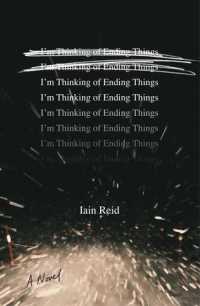
Book: “I’m Thinking of Ending Things” by Iain Reid
Publishing Info: Gallery/Scout Press, June 2016
Where Did I Get This Book: The library!
Book Description:You will be scared. But you won’t know why…
I’m thinking of ending things. Once this thought arrives, it stays. It sticks. It lingers. It’s always there. Always.
Jake once said, “Sometimes a thought is closer to truth, to reality, than an action. You can say anything, you can do anything, but you can’t fake a thought.”
And here’s what I’m thinking: I don’t want to be here.
In this deeply suspenseful and irresistibly unnerving debut novel, a man and his girlfriend are on their way to a secluded farm. When the two take an unexpected detour, she is left stranded in a deserted high school, wondering if there is any escape at all. What follows is a twisted unraveling that will haunt you long after the last page is turned.
In this smart, suspenseful, and intense literary thriller, debut novelist Iain Reid explores the depths of the human psyche, questioning consciousness, free will, the value of relationships, fear, and the limitations of solitude. Reminiscent of Jose Saramago’s early work, Michel Faber’s cult classic Under the Skin, and Lionel Shriver’s We Need to Talk about Kevin, I’m Thinking of Ending Things is an edgy, haunting debut. Tense, gripping, and atmospheric, this novel pulls you in from the very first page…and never lets you go.
Review: I am constantly running the risk, given my fiction tastes and predilections, that when I close a book I may be saying to myself ‘what the EFF was THAT?!’ And knowing this, I kind of try to brace myself for it, especially when a book is described as ‘edgy’ or ‘literary’ in a horror sense. Usually this jives with me just fine. With “I’m Thinking of Ending Things”, I’m having a harder time making sense of what I read, what it meant, and what I thought of it. And I’ve been thinking about it! It’s one of those books that I think I’d have to go back and read again to really pick up on everything and to totally be able to unpack it. But…. I don’t have time, man. Not right now. Right now, there are other books to read.
So now I need to figure out what to say about this book without giving things away. Tricky tricky tricky.
Well for starters, Our Narrator, nameless as she is, has a very well done stream of consciousness voice. Her thoughts and feelings flow out, in regards to her boyfriend Jake, parts of her life before the events of the story, or just random passing musings. We know that she and Jake are going to meet his parents at their farm, her first meeting with them; we know that she’s been getting mysterious, stalker-esque phone calls; and we know that she’s thinking of ‘ending things’ with Jake, certain that it just won’t last. Why she thinks this is unclear, but her mind is pretty much made up. We know far more about Jake than we do Our Narrator, as she talks about how analytical he is, how his personality ticks, how he has bursts of passion but is almost always grounded in his earnestness. He works in a lab and is quite brilliant, but never lords it over her or puts on airs about it. It’s really quite stunning that we learn so much about Jake through her eyes, and yet learn so little about her outside of bits and pieces of stories.
This book builds up with unease from the get go. Our Narrator shares a number of disconcerting stories as the book goes on, stories from her experience in the past or moments happening as we read the book. They are always less in your face scary, and more ‘well that’s just weird and unsettling’. Like seeing a very tall man outside her window at night when she was a child, only seeing his chest and his hands and he wrung them together. Or the story of a neighborwoman bringing cookies to her family, asking her if she was ‘good or bad’, and then the Mom getting food poisoning from said cookies. It’s little things that just set your nerves on the slightest edge, that by the time you reach the serious crux of things that’s referenced in the description, you feel like you’re about to fall out of your chair. The suspense is taut and well done, and the imagery of shadows, unfamiliar hallways and faces, it’s all placed very well. You see clues and hints that come back later, but then when you’re done with it all you still have to go back and find everything. It’s meticulously crafted, and it definitely unsettled me.
But at the same time, the big confrontation came so late in the book, and it was so haphazard and chaotic, I had a hard time following it. Plus, there would be moments where the reader would be taken right out of it again, as Our Narrator would start on a tangent of waxing poetic on other, not as pressing matters as, say, the fact she’s lost in a strange labyrinthian school and can’t find her boyfriend. These moments of stopping and starting made the climax feel interrupted and jostled. There were other interruptions in the narrative as well, as between chapters we would get snippets of an italicized conversation between two faceless, nameless people, commenting on a terrible crime that has occurred. Obviously it has to do with what we’re all leading up to, but these interruptions worked a bit better because they felt like placeholders, and because they did give us more clues and puzzle pieces.
So what did I think of this book overall? I think I liked it. I know it disturbed me. I didn’t see where it was going at first, but then looking back at clues and references it started to come together. The problem was that getting there was so crazed and maniacal that at the end I was more overwhelmed than satisfied.
Rating 6: I THINK I pretty much liked it okay? But it gets kind of disorienting and also has the ability to take us into journeys that would amount to nothing, and distrupt the plot. It’s well done in a lot of ways, but you’ll have to read it twice (or more) to get it, I think.
Where Did I Get This Book: An ARC provided by the author in exchange for an honest review.
Book Description:You spend your days staring into a computer screen, trying to sell life insurance to young couples with new babies.
You spend your nights staring into a computer screen, extracting filth from and injecting bile into the internet.
You still live with the same dickhead housemate you went to university with. Your only respite from computer screens are nights spent getting smashed with him at student bars, watching him prance around, trying to pull much younger girls.
Your life sucks and you suck at it.
One drunken night, you try something new. Something terrible. But something that brings you new energy, new drive, new desires.
You start eating the young.
Note: THERE WILL BE MANY SPOILERS IN THIS REVIEW.
Review: Oh, hey, hi! What’s up? Uh huh, uh huhhhhh, yeah, that’s cool. Oh, how did I spend my night, you ask? Oh you know. Watching ‘Top Model’… Eating some cake…
Reading a novella about a guy who eats babies…
You read that right. Also, spoiler alert. (source)
Terrible etiquette, I apologize. But yeah. “Cold Calling”‘s main character eats babies. Okay, just hold on, hear me out here. I felt a need to get that spoiler out there because 1) I had no idea it was coming and I could have used something to soften THAT blow, and 2) I think that if you read the description you can kind of maybe guess that’s the end game. Even if you didn’t really want to believe that’s what was happening. Me getting this out there was not out of malevolence or spite, even if I was pretty well put off by it when I was reading this book. But, in spite of the fact that is just a reprehensible reality of this story, I do believe that there was a point to it. And once I kind of came around to that point, well, I was more willing to think about what the baby eating was kind of really about.
Our protagonist (“You” as he is referred mostly, as this is written in the second person, but Rhys by everyone else) is living a monotonous life in modern day Britain, working a cold calling job that is utterly thankless. Then he goes home and exists in the same sphere as his roommates, masturbates a bit to web cam porn, occasionally goes to the pub with his mates who aren’t really that good of mates if we’re being honest. His mates and those around him barb and bitch about the problems of society, usually pinning it all on immigrants, and then Rhys goes back and repeats it all over again, and again, and again. Until in a drunken blackout he finds the home of someone he’d cold called, murders the entire family, and brings the corpse of the baby home. And then he cooks it and eats it. And decides that yeah, he could do it again. It actually kind of smacked of an old school Ketchum novel, with balls to the wall violence and depravity that is meant to make the reader squirm and shake and question whether or not they could continue. I could also see the undertones of Chuck Palahniuk at his most disgusting and wretched (looking at YOU, “Guts”). I mean, horrific imagery and themes aside, I have to admit that Wilks can write, can craft words and sentences and soliloquies that leapt off the page as I was reading this book, my jaw fully agape in abject horror. Sometime the second person didn’t quite work or came off as scattered, but I do understand the choice behind it. And I think that I do see where Wilks was going. For me, the point is that for some people, the more deplorable realities of society crushes them and twists them into monsters that do absolutely horrible things. And then in turn, that same society refuses to see just what it was that really happened, or the role that it played, and then instead focuses on scapegoats that fit a narrative that are far more comfortable (i.e. everyone assuming that it had to be some ‘immigrant’ that had kidnapped these missing babies). Just to let the cycle start over again. It was as if ‘you’ were the symbol or product of an apathetic, cynical society that chewed people up and spit them out as mutants, which eventually led to the sacrifice and violent consumption of the innocent and innocence in itself. Which I really appreciated in these times.
And THAT, my friends, is why I really have no idea what to do with this story when it comes to saying what the HELL I thought about it!!!
I guess I will say this. I definitely appreciated the underlying metaphor here that lots of innocent people get caught in the crossfire of awfulness that could have been prevented if perhaps an overarching selfishness or apathy was done away with or combated by those who have the power to do so. Yes, by having our protagonist devolve to a point and literally eat babies it was hitting the reader over the head. But I can’t say that it’s untrue. So fine, “Cold Calling”. Ultimately I jive with what you had to say. But DAMN if it wasn’t an absolutely nasty ass read and NOT for the faint of heart. It was too much even for me.
Rating 6: The writing is pretty good and the ultimate metaphor was one that I got and found pretty powerful. But I personally had a hard time with the implementation of said metaphor.
Reader’s Advisory:
“Cold Calling” is new and hasn’t found it’s way onto any Goodreads lists yet. But it would fit in on “Maneaters”, and “Cannibal Books”.
“Cold Calling” isn’t available of WorldCat as of now, but you can find it on Kindle Unlimited at Amazon.
Book: “Fear the Drowning Deep” by Sarah Glenn Marsh
Publishing Info: Sky Pony Press, October 2016
Where Did I Get This Book: The library!
Book Description:Witch’s apprentice Bridey Corkill has hated the ocean ever since she watched her granddad dive in and drown with a smile on his face. So when a dead girl rolls in with the tide in the summer of 1913, sixteen-year-old Bridey suspects that whatever compelled her granddad to leap into the sea has made its return to the Isle of Man.
Soon, villagers are vanishing in the night, but no one shares Bridey’s suspicions about the sea. No one but the island’s witch, who isn’t as frightening as she first appears, and the handsome dark-haired lad Bridey rescues from a grim and watery fate. The cause of the deep gashes in Fynn’s stomach and his lost memories are, like the recent disappearances, a mystery well-guarded by the sea. In exchange for saving his life, Fynn teaches Bridey to master her fear of the water — stealing her heart in the process.
Now, Bridey must work with the Isle’s eccentric witch and the boy she isn’t sure she can trust — because if she can’t uncover the truth about the ancient evil in the water, everyone she loves will walk into the sea, never to return.
Review: So look, on paper this, to me, sounded like a straight up thriller with a supernatural twist to it. That’s why I’m reviewing this book that is, in actuality, pretty much just a straight up fantasy. Sorry, Serena, this is my genre today! That being said, there are definitely a number of strange and creepy things that really added to the potential of “Fear the Drowning Deep”. A witch’s apprentice? Murdered girls? ANCIENT EVIL IN THE WATER?
But sadly, while I was all in and totally stoked, when I got to it, it didn’t quite live up to what I hoped it would. I think that what tripped this book up for me were a couple of things. One, my expectations were not met, and while that’s not the book’s fault, it nonetheless made it so I was setting myself up for a fall. The second thing is that it fell into too many traps of the fantasy romance YA genre, which I have become less and less forgiving of as time has gone on. You combine these two things, and then throw in a description that really played up more of a horror thriller angle than it was, and well, we’re bound to have some problems.
But hey, let’s start off with the things that I DID like about this story before we get into the negatives. First of all, I enjoyed the setting of this book, taking place on the Isle of Man in 1913. I don’t know much about the Isle of Man outside of the fact that the Bee Gees were from there, so seeing it in a historical setting with some of the mythology from the area were fun themes to explore. Bridey was an alright protagonist. I liked that she was a responsible teenager of her time, and while sometimes her aspirations kind of treaded towards the less pragmatic and more fanciful, by 1913 I think this is a more acceptable mentality for a teenage girl to have. I also really liked the storyline involving her and Morag, the island ‘witch’ whom Bridley apprentices for, just as her mother did when she was a girl. The parts of the story where Bridley was learning how to find ingredients for medicine, charms, and protection, were very intriguing to me, and I liked Morag’s role in the story as the misunderstood outsider. True, it got a bit aggravating when Bridey would dismiss Morag’s advice or warnings as superstitions or useless, because she has spent her whole life believing her to be some kind of witch! I have a hard time believing that she’d be so dense or haughty that she’d just toss this woman’s opinions out the window! It didn’t feel like it matched Bridey’s character, and that got a bit annoying.
I also liked the take and portrayals of various mythological creatures that you may not see as much in fantasy stories. Sure, we’ve all seen our fair share of dragons, vampires, and ghosts, but in this book we get sea serpents, Little Fellas, and fossegrims. Marsh has taken some long neglected mythologies and has given them a fresh perspective, and I think that this book could easily encourage interested parties to take a gander at these stories when they may not have otherwise.
However, a big strike against this book, for me, is that once again, we are met with the Dreaded Love Triangle. THIS time it’s between Bridey, her childhood friend Lugh, and the mysterious visitor Fynn, who washes up on shore one day with no memory of who he is or how he got there. Boy, a girl is torn between her true blue best friend and a strange and enigmatic newcomer. I sure haven’t read anything like THAT before.
This is only compounded by the fact that a day before Fynn showed up, Bridey had been kissed by Lugh, and she had really quite liked it. But the moment that Fynn arrives, Lugh is completely out of her thoughts. It’s one thing if she was always a bit ambivalent about her feelings for him. It’s tired and worn out, but at least it’s realistic. Because MAN did she shift on a dime without any second thoughts. Plus, we got a ridiculous scene in which Finn and Lugh start fighting each other over her, and everyone felt a bit out of character all just for the drama. Lugh just didn’t feel like a character who even needed to be there, in all honesty. There was plenty of dramatics without Bridey having to be in the middle of a fight between the two stereotypes of romantic entanglements.
This book definitely had some things going for it, but overall “Fear the Drowning Deep” found itself in a couple of ruts that it never really pulled itself from. I really enjoyed the mythology aspect and the witch aspect, but there were too many well worn ideas that weren’t really reinvented to make it a complete stand out. Come for the mythos, try and tolerate the repetitiveness.
Rating 6: Though original in some ways, “Fear the Drowning Deep” wasn’t what I had hoped it would be, and fell into too many YA traps.
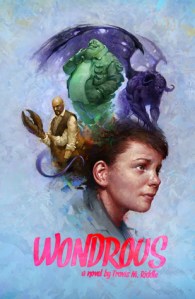
Book Description:Miles went to sleep tucked tightly in bed in his Austin apartment and woke up in the middle of a damp, dark forest in the kingdom of Rompu, a land being torn apart by a civil war between its king and queen.
Miles has few companions in this vast kingdom, which is filled with fantastical animals and flora yet sprinkled with familiar items like digital clocks and vinyl records. As he searches for a way to return home, he discovers that certain memories trigger magical abilities: he can shoot fireballs from his palms, heal with nothing but a touch, and more. But as he struggles to make sense of this new world, his thoughts are punctuated by painful memories of his sick grandmother, quarreling parents, and an icy school therapist.
When Miles learns that a monstrous entity flying through the countryside and killing for sport was summoned from a portal to another realm, he believes this creature is the key to learning how to open another rift and return home. Tracking down this beast and mastering his newfound magical abilities may be the only way for Miles to help save Rompu and get back to his family in Texas.
Review: I received an ARC for this book from the author, and after checking out the plot synopsis, it sounded like a book that might be up my alley! I always love an “other world” story where our hero is plopped down with as much confusion as we the readers have, and I was intrigued by the idea of the protagonist being such a young boy.
The story doesn’t waste any time getting started. I was a bit concerned after reading the first chapter and having Miles so suddenly transported to this new land with very little explanation for how/why he was transported and no backstory to support the reader’s interest in Miles story. While I still wish there had been a bit more set up to Miles’ trip to this new world, I was pleased to discover the clever way the author provided this backstory and connected Miles’ real life problems to his own burgeoning powers in this new world.
The magic system was rather simple, but the way Riddle connected the use of the power to Miles’ memories of his home life and the emotions that these memories inspired was an interesting take. I appreciated the inclusion of these aspects of Miles’ life. It would have been all too easy to simply write a fun, adventurous romp for this character. But instead, through Miles, Riddle addresses many aspects of childhood that are challenging, such as parental conflict, the death of aged relatives, and struggles with school.
I wavered back and forth with regards to my opinion of Miles himself. In many ways, he was a very likeable, young boy. But at other times, perhaps realistically, he came off as a spoiled brat and it became hard to understand the patience with which the adult beings in this new world had for him when they were in the midst of a very trying war. My other struggle with Miles was his age. Nine years old is very young, and at times it was hard to buy-in to Miles’ inner voice and thought process that sometimes verged into what felt like an older child’s range, perhaps 12 or so. Ultimately, I still did enjoy Miles when I could get past these few distractions.
As for these side character, they also had varying mileage. The species we meet are creative, but there were a few stylistic choices that sat oddly, like a frog-like species called Rompun speaking French. But these choices may work better for young readers.
Speaking of young readers, some of these concerns, simple world-building, a lack of depth to certain narrative choices like Miles trip to this land and the relationships between the different species that make up this world, could be explained by the target audience of this book. Though it isn’t explicitly stated anywhere in the book description, I’m guessing that this book is aimed towards middle grade readers. In this case, some of these choices make more sense (in particular, in the end there were a few rather implausible, narrow escapes for our supporting cast) if Riddle was wanting to keep the tone of the book more light. However, I would also suggest that middle grade fiction should still be held to a similar high standard with regards to some of these choices. It is possible to add depth to a fantasy world and create positive, but more believable, outcomes to dangerous situations that is still approachable to middle grade readers.
All in all, I had a fun time reading this book, but feel that it is an example of middle grade fiction that might be received better by its intended age range, rather than adult readers. If you have a middle grader who likes escapists fantasy, this might be the book for them!
Rating 6: A fun story, but had frustrating moments for me as an adult reader.
Reader’s Advisory:
“Wondrous” has just been published, so it isn’t included on any Goodreads lists yet. However, an obvious similar book would be “A Wrinkle in Time.” Both feature young protagonists thrust into new worlds with new alien beings.
Publishing Info: G.P. Putnam’s Sons Books for Young Readers, July 2014
Where Did I Get This Book: Audiobook from the library!
Book Description:It’s senior year at St. Joan’s Academy, and school is a pressure cooker. College applications, the battle for valedictorian, deciphering boys’ texts: Through it all, Colleen Rowley and her friends are expected to keep it together. Until they can’t. First it’s the school’s queen bee, Clara Rutherford, who suddenly falls into uncontrollable tics in the middle of class. Her mystery illness quickly spreads to her closest clique of friends, then more students and symptoms follow: seizures, hair loss, violent coughing fits. St. Joan’s buzzes with rumor; rumor blossoms into full-blown panic. Soon the media descends on Danvers, Massachusetts, as everyone scrambles to find something, or someone, to blame. Pollution? Stress? Or are the girls faking? Only Colleen—who’s been reading The Crucible for extra credit—comes to realize what nobody else has: Danvers was once Salem Village, where another group of girls suffered from a similarly bizarre epidemic three centuries ago . . . Inspired by true events—from seventeenth-century colonial life to the halls of a modern-day high school—Conversion casts a spell. With her signature wit and passion, New York Times bestselling author Katherine Howe delivers an exciting and suspenseful novel, a chilling mystery that raises the question, what’s really happening to the girls at St. Joan’s?
Review: So I was one of those kids who went to a private prep school in St. Paul from Kindergarten up through Senior Year. Gotta say, while it definitely more than adequately prepared me for college and graduate school, at the time I was under immense, immense pressure. So when I started listening to “Conversion” by Katherine Howe, there were a lot of things that were familiar to me. An ‘Upper School’ building for upper classmen. Homeroom being called ‘advisory’. A Dean of Students. I will say, however, that while I was under stress, I wasn’t going to school in a town that had a notorious history of people being falsely accused of witchcraft and then hanged. So yeah, I couldn’t say that I could totally relate to the tale that was told. In fact, I would say that beyond having the occasional moment of ‘ha, we had that too’, I didn’t really relate to the characters in “Conversion”, even if I was probably supposed to to a certain degree. While Howe definitely put in a good effort at writing teenage girls, a lot of the time it fell pretty darn flat.
I think that the first problem was Colleen herself. While I understand where Howe was trying to go with her, I found her to be incredibly naive and dense, far more dense that someone who is supposedly a legitimate contender for Harvard and neck in neck for Valedictorian at this prestigious prep school. I don’t really want to go into any spoilers here, but there are a few plot points that I feel would have been pretty damn obvious for a number of people who would have been in the situation and experiencing it first hand. I understand that to draw out suspense and story line she would have to be, but it felt like her intelligence was in conflict with the plot. And while I didn’t have as many problems with Colleen’s personality as others have, I didn’t find her to be terribly compelling as a narrator. Neither are her friends. Usually I can find a side character that keeps me going even if the protagonist isn’t too interesting, but in this one we didn’t even really get that. They are all pretty privileged girls whose problems, while mostly relatable given my high school experience, just didn’t connect to me.
Our other narrator is Anne Putnam, one of the girls in Salem Village who accused her neighbors of bewitching her. Far less sympathetic than Colleen (someone who isn’t really all that sympathetic to begin with), Anne tells her story from two perspectives: the time she was accusing people, and the time where she is gearing up to confess her sins to the rest of the town, long after the trials have finished and the fallout has left a mark. While I liked the fact that Howe clearly did a lot of research into the trials and the people involved, making them as realistic and historically accurate as possible. Sure, she took license with motivation, as we don’t know why these girls accused all of these innocent people of crimes that sealed their deaths, but I think that her theories in this story make sense. They definitely have more weight behind them than Arthur Miller’s “The Crucible”, though in his defense that wasn’t really about Salem. We all know that. Howe really committed to telling an accurate story. The problem is, while it is meant to serve as a juxtaposition to what is going on in Danvers in 2012, it doesn’t quite work.
And let me tell you why it doesn’t work. Howe has two stories that have similar themes (mass ‘hysteria’), but they ultimately don’t line up. Outside of being two groups of teen girls in the same geographical region, Howe throws in a couple of twists that ultimately undermine the juxtaposition that she put out there in the first place (side note: one of the solutions IS up to interpretation, I will give you that, but boy is it laid on pretty, and supernaturally, thick). I suppose that one could argue that one other connection may be a feeling of powerlessness for adolescent girls, which manifests in puritan times to the modern age, but again…. It’s undermined. I won’t say how, but it is, and that irritated me to no end.
Something that does work, though, is the modern analogs for the Witch Trials, in the form of a trial by media as opposed to a puritanical court room. The press is, of course, whipped into a frenzy about this ‘mysterious illness’ that has fallen upon these girls, and their attention on the school and the students just feeds into it and makes things much, much worse. Adding into that is the factor of rich, entitled, nasty parents who are rightfully afraid for their children, but then lash out when answers aren’t readily apparent. And then, of course, love the media attention, both for awareness an for their own egos. A few people definitely end up on the other end of their fury, and on the other end of the fallout of the mysterious illness. This was both the most interesting, and angering, plot point. Howe wrote this SO well, she has her fingers on the pulse of the nastiest parts of human nature, both in the modern time line and the past time line. These parts made me the angriest, and hey, that was a serious emotional reaction that she no doubt wanted. So she did her job. I did find myself frustrated that sometimes I think she wanted me to feel sympathy for the girls in Salem, as a being a Puritan was very hard, and being a female Puritan was even harder. The lack of power and the lack of agency was apparent. But nope. These girls condemned a number of innocent people to their deaths. I have no sympathy for that.
Finally, this was an audiobook, and the narrator was pretty good! I thought that she did a good job of making her voice sound like a teenage girl when she needed to, but also an adult when the character called for it. Her accents seemed pretty good to me, though I admittedly don’t know much about the linguistics of the Puritan era in America. Overall, I think it was more her that kept me going. Had I been reading this in print form I may have struggled.
So “Conversion” has its moments, but I didn’t like it as much as I thought I would. Though now I’m definitely interested to learn more about the actual people of Salem beyond what was told to me in “The Crucible”.
Rating 6: Though the historical accuracy and research was spot on, “Conversion” had too few interesting characters and too many missed opportunities.
Book: “Only the Dead Know Burbank” by Bradford Tatum
Publishing Info: Harper Perennial, October 2016
Where Did I Get This Book: The library!
Book Description:With Lon Cheney and Boris Karloff among its characters, this sweeping and stylish love letter to the golden age of horror cinema tells the wonderful, tragic story of Maddy Ulm. It takes readers through her rise from the complicated shadows of Berlin’s first experiments with expressionist cinema to the glamorous deserts of Hollywood. For Maddy has a secret. A secret that has given her incredible insight into the soul of horror. A secret that has a terrible price as well.
A young girl awakens in a hastily dug grave—vague memories of blood and fever, her mother performing a mysterious ceremony before the world went away. Germany has lost the first great war and Europe has lost millions more to the Spanish Flu epidemic. But Maddy has not only survived, she has changed. No longer does she eat, sleep, or age. No longer can she die. After taking up with a pair of street performers, she shocks and fascinates the crowds with her ability to survive outrageous traumas. But at a studio in Berlin, Maddy discovers her true calling: film.
With her intimate knowledge of fear, death, and realms beyond the living, she practically invents the modern horror genre on the spot. Before long, she travels to California and insinuates herself in Hollywood as the genius secretly behind The Phantom of the Opera, Dracula, and Frankenstein. And yet she must remain in the shadows—a chilling apparition suspended eternally between worlds.
Clever, tragic, and thoroughly entertaining, Only the Dead Know Burbank introduces readers to one of the most unique, unforgettable characters in fiction.
Review: This past Halloween weekend, I was attending a bonfire gathering of former coworkers. Me and my friend Scott were the first to arrive, and as we build the bonfire and chatted he told me about a book that he had heard of and was interested in. When he told me it was about a girl in Germany is some kind of immortal state who takes an interest in movie making and moves to Hollywood, having a hand in making the Golden Age of Horror movies that define the time… I too was interested. As someone who likes horror, someone who likes vampire(?) lore, and someone who really likes the Golden Age of Horror Films, this should have been a home run right out of the park.
The bad news is that it didn’t quite even get a double.
The good news is, Boris Karloff is a treasure.
I spent a majority of this book wanting to keep him safe and loved. (source)
I stand by my assertion that this plot does have a lot of serious potential and promise. Madchen, or Maddy, is a very well rounded and relatable protagonist, a girl who is trapped in stasis and has ambitions that are beyond a world she does not fit into anymore. She is a tragic figure who never asked for this eternal life, the ‘victim’ of a ritual performed by her negligent and narcissistic mother who, in a rare moment of love for her daughter, tried to save her from the Spanish Flu. Maddy is haunted by her immortality, and also haunted by the spirit of a cruel man named Volker, who may or may not be her father, and fell victim to murder at the hands of her mother. Unfortunately, the tangles and drama in Weimar Germany and Austria really dragged the narrative down, and while I appreciated the references to German Expressionism and the undoubted influence it had on Maddy, and therefore the films she would influence, I just kind of wanted for her to go west, young vampire(?).
By the time we did get to Hollywood, things picked up, and it was lots of fun seeing Maddy interact with familiar icons of the Universal Horror circuit. From Lon Chaney to Tod Browning to a superb and sweet Boris Karloff, Maddy interacts with legends of old and her unique perspective on death and existential crises helps create the masterpieces of cinema that are still heralded today. And yet the song is still the same, as she is influential and instrumental, but as a young woman she gets absolutely no credit and is never taken seriously. These parts were the best parts of the book for me, and her friendships with Chaney and Karloff (especially Karloff, whom she affectionately called “Billy”) gave her that much more heart and rounded out two real life giants who had flaws, dreams, and spirit. Karloff is such a gentle and thoughtful soul in this book, and for whatever reason that just plucked at all my heartstrings.
But Maddy’s greatest relationship is the one she has with Mutter, a gentle giant she meets while still in Europe, who was wounded in WWI and permanently maimed both physically and mentally. Mutter is the other great tragedy of this book, as while he is so unattached from others around him for being different and special needs, his affection for and connection to Maddy is one of those tenuous threads that does connect her to humans. Maddy’s fondness for him is absolutely touching, and it leads to many moments where the two of them, defined and limited by their Otherness, are in this together, and against the world. True, one of his storylines felt awkward and superfluous (he ends up living with a number of the Native American actors who live on the studio lot, on call for roles as disposable extras, and the view and description of them made me uncomfortable because they too were so Othered), but their final bit together really, really hit me right in the gut. Because Maddy and Mutter find themselves being shipped back to Germany, right when Hitler has taken power…
Unfortunately, while I liked these really well done nuggets of characterization and mythology, the pacing was very slow, almost to the point where I was close to giving up on it. Whenever Maddy was back in Germany, the odd storyline with Volker and the baggage that comes with Maddy and her mother weighed down the narrative. It wasn’t as bad the second time, but it definitely hurt the tone to the point where I couldn’t really get past it. I also feel like it probably went on a bit longer than it had to, as the extended adventures with her mother in Hollywood were just not what I was here for. I was here for Boris Karloff. I wanted more Boris Karloff.
There were moments of “Only the Dead Know Burbank” that were absolutely beautiful in their power, tenderness, and despair. I lived for those moments. I just wish that it hadn’t taken so long to get there, and that we didn’t get slogged in parental angst. Overall, Maddy was a lovely and fascinating creature, and I will no doubt think of her whenever I rewatch an old monster movie from the 1930s.
Rating 6: Though it had moments of beautiful pathos and super fun and moving portrayals of classic movie stars, the slow start and disjointed focus in certain plot points made the book a bit harder to swallow than I had hoped for.
We are part of a group of librarian friends who have gone the extra mile and created our own bookclub. Each “season” (we’re nerds) we pick a theme and each of us chooses a book within that theme for us all to read. Our current theme is “Across the Decades,” we each drew a decade and had to select a book that was either published or set in that decade.
For this blog, we will post a joint review of each book we read for bookclub. We’ll also post the next book coming up in bookclub. So feel free to read along with us or use our book selections and questions in your own bookclub!
Book: “A Brief History of Montmaray” by Michelle Cooper
Publishing Info: Knopf Books for Young Readers, October 2009
Where Did We Get This Book: audiobook from the library!
Book Description:Sophie Fitzosborne lives in a crumbling castle in the tiny island kingdom of Montmaray with her eccentric and impoverished royal family. When she receives a journal for her sixteenth birthday, Sophie decides to chronicle day-to-day life on the island. But this is 1936, and the news that trickles in from the mainland reveals a world on the brink of war. The politics of Europe seem far away from their remote island—until two German officers land a boat on Montmaray. And then suddenly politics become very personal indeed.
Kate’s Thoughts
So as a fan of “Downton Abbey”, and as a fan of kicking the shit out of Nazis, I had high hopes that “A Brief History of Montmaray” would combine the best of both worlds. I had this vision of Mary Crawley punching an S.S. officer in the face a la “Indiana Jones” while making some snippy and cruel remark, and in my mind that was just the best damn thing that I had ever thought of in the history of ever, crossover wise.
And she’ll never tell where the bodies are buried either. (source)
While the book did have some likable characters (the cousin Veronica, in particular) overall I was a bit disappointed that “A Brief History of Montmaray” was more focused on the dysfunctional, if quirky, royal family and the problems that they are facing in love, life, and succession. Our narrator, Sophie, is pretty good at laying out the family lines and showing how the royal family connects to each other (King John has no male heir, so the next in line should be his nephew Toby, Sophie’s older brother). Sophie, not having as much investment in the royal line to the throne, is a good choice for narrator, as she doesn’t have the pressure of being a direct heir like her brother, nor does she have the frustration of being an ineligible heir like her cousin based solely on her gender. Because of this she can present a pretty fair view of how things are supposed to work in this family. She is a fine narrator and a good lens to see these conflicts, but at the same time she isn’t as interesting as I wanted her to be. I much preferred Veronica, the incredibly intelligent and capable daughter of the King, who would make a fine queen if only Montmaray approved of female succession. She was by far the most interesting character, as she has so much more interest in her home country than Toby, the flaky rightful heir. It’s the perfect example of an unjust and sexist society that is probably really screwing itself over. Veronica is also quite well rounded, probably the most well rounded of all the characters. She is cunning and ambitious, but also loves her home and her family, so much so that she puts rightful succession above all else even though you know she is aching for it. Had the story been following Veronica’s POV, I think that I would have been able to forgive it a bit more for not focusing on the Nazi storyline, and the storyline about how Europe was in serious, serious danger at this time. I do realize that this is a series and that there were two other novels to focus on that, and that this novel was more about introducing us to this family. But to me, the family wasn’t the part that I wanted to focus on outside of Veronica. It was a bit too “I Capture The Castle” for me, a book that I recognize as being significant and a classic, but one that I also am not terribly fond of as a whole.
And yes, I’m resentful that there weren’t enough Nazis, at least not as much as the summary would suggest. True, the Germans do land on Montmaray, sending the FitzOsbourne family into turmoil for many reasons. But they are there for a moment in the middle, and then come back at the end. The rest of the book is about the family and their squabbles and scandals. And hey, I like a nice soap as much as the next person, but it all felt kind of trite compared to the things I knew were coming, even further into the series. It’s hard for me to care about awful (AWFUL) housekeepers and their stupid secrets when I know that a whole lot of awful pain is about to rain down on the rest of Europe. And maybe for me it’s still a little raw since there was recently just footage of a bunch of these guys doing the Hitler salute in D.C. But had I known that the family malarky and hoopla was going to be the focus (aka, more “Downton” and less “Indiana Jones”), my expectations would have been more in line with how it turned out, and therefore I would have been more receptive to it. As it was, I kept saying to myself “BUT WHEN ARE ALL THE NAZIS GOING TO REALLY GET THEIR COMEUPPANCE?!”
Preferably in this kind of endgame situation. (source)
So I think that it’s fair to say that “A Brief History of Montmaray” was at a disadvantage because of misplaced expectations. It’s not necessarily the fault of Cooper, but more so how it was promoted. I loved Veronica, but that was about the only thing that I really enjoyed, and sadly that’s not really enough to keep me going.
Serena’s Thoughts
This book had been on my reading list for a while as it was well reviewed by several other blogs that I followed. And when I ended up with the 30s as my decade of choice for our bookclub theme this go-around, it seemed like a perfect time to finally get around to it!
As the historical fiction reviewer on this blog, it’s probably not a surprise that I enjoyed this book more than Kate. For the most part, the historical detail is what captures me in these stories, and I enjoy books about quirky families (ala “Anne of Green Gables” and Jane Austen novels). The addition of a bit more action than is usually found in this type of book was the extra cherry on the top for me.
I agree with Kate’s assessment of the characters themselves. Sophie was an interesting narrator and I enjoyed the transformation she goes through during this book. The combination of teenage silliness mixed with a healthy dose of self-awareness with regards to said silliness made her a very endearing teenage protagonist. Veronica, however, is the type of character I generally gravitate towards. Intelligent, snappy, and a girl who firmly has her head on her shoulders. Seriously, nothing would get done if Veronica wasn’t there. And she has by far the most challenging set of circumstances to deal with, what with the sexism involved in the rules of ascension and the terrible family life (crazy dad who hates her, abandoned by her mother).
As for the boys involved, I found myself increasingly frustrated with Simon, the set up love interest for Sophie. I couldn’t help agreeing with Veronica’s assessment of him as a bit of a self-serving prat. And while I generally liked Toby, I found myself becoming more and more annoyed with his selfishness. I mean, the guy gets to go out and live in the world to go to school, make friends, be in society, and, yes, there are responsibilities to being the heir, but that’s a huge amount of privilege, too. So for him to whine to his cousin and sisters who are living in a castle that is literally falling down around them and who have no friends of any sort really just seems ridiculous and made me want to slap some sense into him.
As for the Nazi involvement: I actually really appreciated that this book didn’t go the expected route with them. There was a lot of discussion with regards to the political climate in Europe and it does a lot to remind modern readers that the Nazi party didn’t just sprout out of the ground fully formed. There were a lot of moving pieces and many years went by before it became clear just what everyone was dealing with. There were some interesting nuggets that were very…Indiana Jones-ish…and were quite fun, and another lesser used mode of introducing Nazis into the story. I do agree that the book summary can be misleading, so if you go into it expecting clashes with Nazis and said comeuppance served upon them it might not be for you. However, given the year that this is set in, and that it’s the first in a trilogy, I guess I was more prepared for delayed gratification re: Nazi destruction.
All in all, I enjoyed this book quite a bit. It’s definitely more geared towards readers who enjoy slower paced historical novels. There’s a good amount of family drama, family mystery ala books like “Rebecca,” and historical detail. And, while there is action and Nazis towards the end, those aspects definitely come later and don’t take up as much page time as the rest.
Kate’s Rating 6: Though I greatly enjoyed the character of Veronica, overall the story didn’t match my expectations, and therefore didn’t grab me as I thought it would.
Serena’s Rating 8: Strong historical detail and interesting characters, though beware the lighter Nazi involvement if that’s what you were here for!
Bookclub Questions:
1.) How did we feel about Sophie as a narrator? What do you think the story would have been like if it had been told from the perspective of a different character?
2.) Montmaray is an imaginary kingdom that is meant to exist in an otherwise historically accurate version of Europe. Did it succeed in this way? Were there aspects of the historical set-up that you particularly enjoyed or found distracting?
3.) The Nazis: How did you feel about them? Their entrance into the story, their mission, and the resolution to their involvement?
4) For a first-person narrated story, it feels as if we get a good amount of detail about many of the side characters. Were there characters who stood out? What about Rebeca and Simon?
5) The book does seem to involve some supernatural elements, how did you feel about this inclusion and twist?
6.) This is the first in a trilogy. Where do you think/want the story to go from here?
The Next Book Selection: Not sure yet! We’re at the switching point between one “season” and another. For our next theme, we all chose two things (“a book that’s been turned into a musical!” or “a book about animals!”) and had to draw from a hat for our own options. We’ll see what comes up!
Book Description:In the enchanted kingdom of Brooklyn, the fashionable people put on cute shoes, go to parties in warehouses, drink on rooftops at sunset, and tell themselves they’ve arrived. A whole lot of Brooklyn is like that now—but not Vassa’s working-class neighborhood.
In Vassa’s neighborhood, where she lives with her stepmother and bickering stepsisters, one might stumble onto magic, but stumbling away again could become an issue. Babs Yagg, the owner of the local convenience store, has a policy of beheading shoplifters—and sometimes innocent shoppers as well. So when Vassa’s stepsister sends her out for light bulbs in the middle of night, she knows it could easily become a suicide mission.
But Vassa has a bit of luck hidden in her pocket, a gift from her dead mother. Erg is a tough-talking wooden doll with sticky fingers, a bottomless stomach, and a ferocious cunning. With Erg’s help, Vassa just might be able to break the witch’s curse and free her Brooklyn neighborhood. But Babs won’t be playing fair…
Review: Another book that I had on my highlights post for Septmeber that finally showed up a week or so ago! I wasn’t familiar with the original Russian fairytale that inspired this book, so I came into it with very little idea of what it was going to be. Magic in Brooklyn and a Baba Yagga villain. Sounded awesome.
And large parts of it were! The general worldbuilding was very interesting. Your mileage with this will largely depend on how willing you are as a reader to “just go with it” as far as explanations and magic systems. There’s really no explanation for why and how magic exists in this area of the world. Further, the type of magic that is presented is much closer to the nonsense magic seen in “Alice in Wonderland” than to a more outlined and rule-bound magic like “Harry Potter.” That being the case, there is a lot of things popping up here and there with no rhyme or reason and then disappearing just as quickly. Some of these things I particularly enjoyed, like a group of swans that Vassa befriends, and a pair of sinister hands that operate as Babs’ henchmen, essentially.
Other parts felt a bit contrived, however, and as if Porter was simply trying too hard. Particularly some of her efforts to involve nonsense word-play (similar to the Fairyland books I had just read). And maybe having just come off those which were almost the perfect example of nailing this writing style, I was a bit biased against Porter’s attempts here. But I also feel that it was simply not executed well. While nonsense writing can be very insightful, this was clunky and actually confusing. At several points I had to re-read section to try and understand them and then, more often than not, came away with the conclusion that this was just another unexplained element. And while some of these unexplained magical oddities were enjoyable, it didn’t translate here. Dialogue and descriptions needs to be clear, regardless of how little you as an author are providing insights into other magical elements.
Vassa was a very strong protagonist. Her voice was unique and interesting, and I especially enjoyed her relationship with her sisters, especially her elder sister. As I’ve said, I always like sister stories! And, of course, Vassa’s primary partner in crime: Erg, the animated doll. I was both creeped out by and intrigued by Erg. I don’t think I was supposed to be as creeped out as I was, but there were certain elements of her and Vassa’s relationship that was confusing to me. Erg is definitely an intelligent individual with her own opinions, motives, and outlooks on life. So it was very strange switching from her and Vassa debating what do do about some problem or another to Vassa petting and nuzzling her the way you would a kitten. It was strange. But, as I’ve said, so was the whole book.
Ultimately, this book was stronger as a concept than it was as an actual story. There were almost too many weird things thrown in at every moment which prevented me from ever becoming fully invested in the story. I was too busy being confused by some of the writing choices and bouncing from one thing to another to really be able to draw a connecting line throughout the book or form real attachments to characters. There were random chapters inserted here or there attempting to provide some background information that only opened up more doors and left more dangling plot lines (Vassa’s father’s storyline was one of these). While this book is probably the closest thing I’ve seen to an actual dark fairytale set in an urban setting (vs. most urban fantasy which often is the usual, generic, vampires and witches and such in an in every other way normal city), it was too weighed down by its own concept to every really take off.
Rating 6: A unique concept and interesting worldbuilding places too much burden on a confusing plot.
Reader’s Advisory:
“Vassa in the Night” is a new book and isn’t included on many Goodreads lists. However, it should be on “Dark Fairy Tales.”
Book Description:Lucy Acosta’s mother died when she was three. Growing up in a Victorian mansion in the middle of the woods with her cold, distant father, she explored the dark hallways of the estate with her cousin, Margaret. They’re inseparable—a family.
When her aunt Penelope, the only mother she’s ever known, tragically disappears while walking in the woods surrounding their estate, Lucy finds herself devastated and alone. Margaret has been spending a lot of time in the attic. She claims she can hear her dead mother’s voice whispering from the walls. Emotionally shut out by her father, Lucy watches helplessly as her cousin’s sanity slowly unravels. But when she begins hearing voices herself, Lucy finds herself confronting an ancient and deadly legacy that has marked the women in her family for generations.
Review: Halloween seems like it was so long ago, and yet I’m still digging into the books that I put on my list for Horrorpalooza that didn’t quite make the cut, timing wise. True, it was a long list so that’s to be expected. The next one that didn’t quite get the timing right is “The Women in the Walls” by Amy Lukavics. Lukavics wrote one of my favorite horror stories last year, “Daughters Unto Devils”. It was one of the scariest books I read last year, and it was a reminder that YA horror can have serious chops if you get the right writer. Seriously, horror fans need to check it out and how. So I was very excited when I found out that she had another one coming out, and digging into it was something I was very much looking forward to.
I think that there were a couple of mitigating factors that made this book not as engrossing as “Daughters Unto Devils” was, specifically that I was reading it during Election Week. And hey, let’s be honest, given how I felt about how that all went down, it would have taken a SERIOUSLY engrossing and charismatic read for me not to be totally distracted and brought down while reading it. But at the same time, “The Women in the Walls” just didn’t quite hook me the way that “Daughters Unto Devils” did. True, I can’t be sure if the extenuating circumstances had any blame, but as I read this book I wasn’t as scared or enthralled as I’d hoped to be. To begin, I didn’t feel as much of a connection to Lucy, or protagonist, as I wanted to. I understood her plight and sympathized for her, of course, but I didn’t feel like there was much heart to her through actions as much as her narration told me why there was heart to her. That is one of the perils of first person narration. I didn’t want Lucy to tell me that she was close with her aunt Penelope, or that she was best friends with her cousin Margaret, or that she resented her Dad because he was keeping secrets from her. I wanted to see it through action. I also just wasn’t as empathetic to her as I was probably supposed to be, and some of her character traits seemed a bit trite and just there to foster sympathy as opposed to give her actual depth.
But, the good news is that this book does have a lot of really scary and creepy moments and themes in it. Lukavics still doesn’t hold back when it comes to putting some upsetting imagery in her stories. Be it a desolate cemetery in the middle of the woods, a faded blood stain on an attic floor, or a bag full of human teeth, there were many moments where shivers were sent up my spine. She took a few old hat tropes and made them fresh and interesting, which is definitely a plus for me. She also does a very good job of building dread and letting unsettling moments slowly evolve into something that is so far beyond what you’d expected. There are definitely some parts of this book that made me squirm, and I don’t squirm that easily. So as a pro-tip, I would just suggest that if you have a thing about insects, well….. tread carefully.
I love that Lukavics has the guts to put some Stephen King levels of fear and shocks into her books for teens, because I think that some teens (especially seasoned horror fans) want to have scarier and grittier stories. I would have loved to have these books when I was a teen, as seeing teen girls in horror literature wasn’t something that I was used to back then because if I wanted horror, I had to go to the adult section. To be fair, YA literature wasn’t as prominent when I was that age, but even these days a lot of the teen horror is pretty tame and wouldn’t have satiated me even then. By having books like Lukavics’ available it says that this is a genre that can be for you too, ladies. Okay, soapbox moment here. Horror as a genre is still kind of a Boys Club in a lot of ways, so getting women writers in there to write books that teen girls are going to read really brings me great joy. Even if some of the stuff in this book also had me totally yucked out. I know it’s strange, but to me that’s a good thing.
So I guess that while I wasn’t as invested in this story as I had hoped I would be, I still did enjoy quite a bit about “The Women in the Walls” and what it gives to the genre as a whole. I’m definitely still considering myself a fan of Lukavics’, and I will be seeking out whatever books she puts out there. This is the kind of YA horror I want to see.
Rating 6: Though I wasn’t too fond of the main character and though it sometimes was too on the nose, I enjoyed the scary and horror moments of “The Women in the Walls” quite a bit.
Reader’s Advisory:
“The Women in the Walls” isn’t really on any Goodreads lists yet, but it would fit in on the following lists: “Haunted Houses”, and “Gothic YA”.
 Book: “Jackaby” by William Ritter
 Book: “I’m Thinking of Ending Things” by Iain Reid
 Book: “Cold Calling” by Hadyn Wilks

 Book: “Fear the Drowning Deep” by Sarah Glenn Marsh

 Book: “Wondrous” by Travis M. Riddle
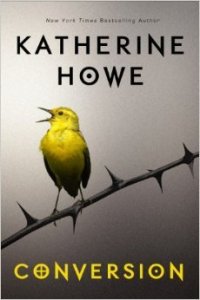 Book: “Conversion” by Katherine Howe
 Book: “Only the Dead Know Burbank” by Bradford Tatum
 Book: “A Brief History of Montmaray” by Michelle Cooper

 Review: “Vassa in the Night” by Sarah Porter
 Book: “The Women in the Walls” by Amy Lukavics
 The Library Ladies