Serena’s Review: “Wild Sign”

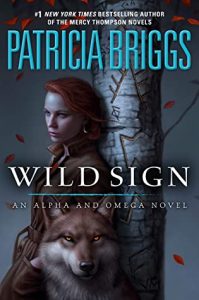
Book: “Wild Sign” by Patricia Briggs

Publishing Info: Ace Books, March 2021

Where Did I Get this Book: NetGalley

Book Description: In the wilds of the Northern California mountains, all the inhabitants of a small town have gone missing. It’s as if the people picked up and left everything they owned behind. Fearing something supernatural might be going on, the FBI taps a source they’ve consulted in the past: the werewolves Charles Cornick and Anna Latham. But Charles and Anna soon find a deserted town is the least of the mysteries they face.

Death sings in the forest, and when it calls, Charles and Anna must answer. Something has awakened in the heart of the California mountains, something old and dangerous — and it has met werewolves before.

Previously Reviewed: “Burn Bright”

Review: If you go back and read my review of the previous book in the “Alpha and Omega” series, you’ll see that I was…less than thrilled with that entry. My concerns from that book spanned both this series as well as the “Mercy Thompson” books. But as my review earlier this week demonstrated, that series managed to sidestep the implications of the events in “Burn Bright.” But I was always a bit more concerned with how the next book in this series would do, given that Bran is more of a main character here. And, well, Briggs tries to walk it back a bit, I guess. But unfortunately the distraction offered in the main plot just introduces another frustration of mine.

Old things live in the dark wilds of the forest. And if you stay on the path, maybe you’ll miss the dangers lurking there. But when an entire town’s worth of people go missing, what lurks in the shades of the trees leaves a mark to big to ignore. Anna and Charles are called into action to track down the mystery. Where do you start, though, when all of the victims seem to have vanished into the air leaving behind no trace? Clues exist however in rumors of a powerful force that once lived there centuries before and may have faced werewolves before.

So, I did like this book overall. It’s hard, however, to write a review without taking up tons of wordcount on how this book deals with the fallout of the previous one. Or getting sucked into a long commentary piece on my frustrations with one particular aspect of it that I’m beginnig to struggle with more and more. So…I’ll try to write a fairly general bit before getting into any of that.

Overall, I liked the villain at the heart of this story. Its powers and backstory were very unique and interesting and left me guessing for much of the story. I was able to piece a few bits together early on, but there were a number of genuine surprises throughout that really helped build towards the final conflict. The action and threat-level felt high when it needed too, and there was a underlying sense of doom that pervaded the book in a really nice, creepy way.

I also liked what we got from Charles and Anna. Brother Wolf, the personified version of Charles’s wolf half was given more to say/do here and it was almost like having an entire third character. Might be a bit unfortunate, though, when your wolf character is more interesting than the two humans. Not that Charles and Anna are bad characters, but they still seem a bit dull and one-note, especially in comparison to the characters in the Mercy Thompson series.

The book also introduces a few chapters from Leah’s perspective. On the surface, this is a good thing. The story largely has to do with events in her history, and it’s great seeing inside the head of a character who has been at the heart of so much conflict earlier in the series and even in the “Mercy Thompson” series. It seems clear that by doing this Briggs is attempting to respond to the criticism of the previous book. Her history is such that Bran’s actions in her life are highly criticized by both Charles and Anna. Briggs also seems to try to build up a more true relationship between Leah and Bran with Bran needing to deal with his own past actions and open up to Leah more. It’s all well and good, I guess, but, really, it just makes the previous book’s “reveal” about Bran’s feelings for Mercy feel more about of place. This book not only doesn’t address that but seems to want to just paint over that with some alternative history in which Bran does care for Leah and that whole Mercy thing…never happened.

But when diving into Leah’s history, Briggs steps right into another big problem that I have. I’ve already struggled with the fact that both of Briggs’ leading ladies has a history of being a rape victim. Several SFF authors have written about how pervasive this particular trauma is within the genre and how unfortunate that fact is. Here are two of my favorite pieces, one by Seanan McGuire and one by Sarah Gailey. Each tackles the topic much more thoroughly and eloquently than I can.

Unfortunately, this book not only includes another rape attempt on our main character, but gives the only other POV female character we have a history of rape as well. Now all three POV female characters we’ve had in both series have experienced this particular trauma. Beyond that, the topic is placed firmly at the center of the conflict in this book. I wouldn’t have a problem with that fact on its own if it wasn’t for this established history of using it for our two other main characters. It not only begins to feel a bit much, but Briggs is falling into the exact trap that McGuire and Gailey discuss in their pieces: that somehow rape and sexual assault are almost necessary traumas that female heroes must go through in the ever-chased goal of “character development” and “added depth.” And in Leah’s case, particularly, it almost seems to be used as a way to excuse her abusive treatment of Mercy in the past. The entire thing reads as lazy and uninventive at best and as exploitative at worst.

So, there you go. Another book in this series that’s hard to evaluate based only on the merits of the story itself, but instead gets stuck in challenging topics that outweigh much of the rest. At this point, I’m sure I’ll still continue to read this series if there are more to come. But I’m on high alert now with this author and if these topics continue to come up in this manner, it might be time to throw in the towel.

Rating 6: A solid story is marred by the unfortunate, recurring use of sexual assault as a character-building tactic.

Reader’s Advisory:

“Wild Sign” isn’t on many relevant Goodreads lists, but it is on this funny-titled one: My Vampire Book Obsession Book Boyfriends

Find “Wild Sign” at your library using WorldCat!

Kate’s Review: “The Girls Are All So Nice Here”

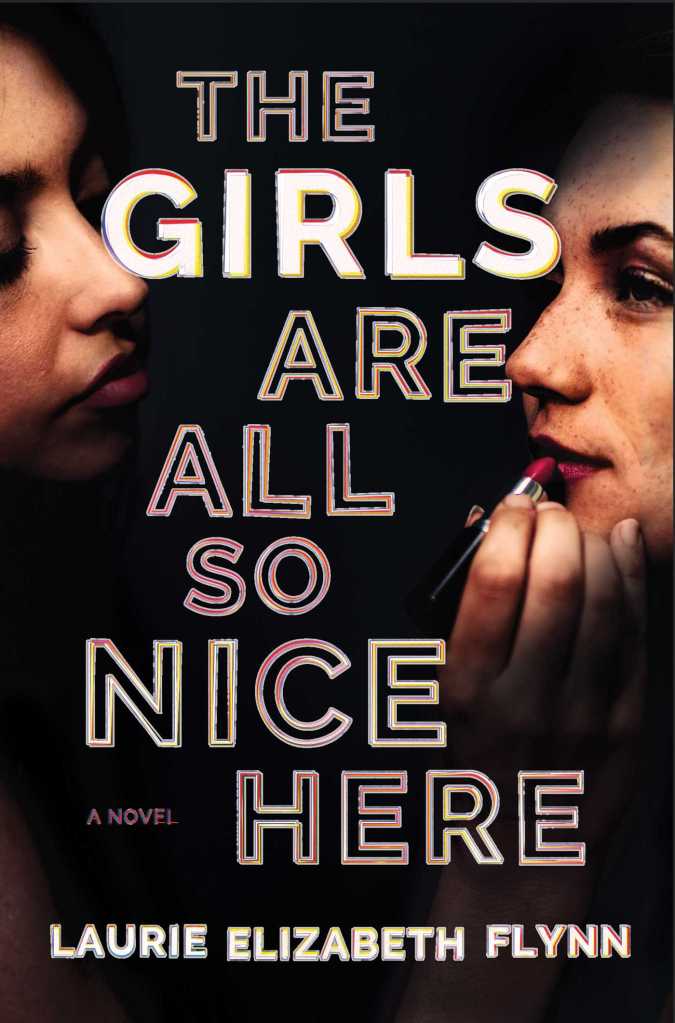
Book: “The Girls Are All So Nice Here” by Laurie Elizabeth Flynn

Publishing Info: Simon & Schuster, March 2021

Where Did I Get This Book: I received an eARC from NetGalley.

Book Description: Two former best friends return to their college reunion to find that they’re being circled by someone who wants revenge for what they did ten years before—and will stop at nothing to get it—in this shocking psychological thriller about ambition, toxic friendship, and deadly desire.

A lot has changed in the years since Ambrosia Wellington graduated from college, and she’s worked hard to create a new life for herself. But then an invitation to her ten-year reunion arrives in the mail, along with an anonymous note that reads “We need to talk about what we did that night.”

It seems that the secrets of Ambrosia’s past—and the people she thought she’d left there—aren’t as buried as she’d believed. Amb can’t stop fixating on what she did or who she did it with: larger-than-life Sloane “Sully” Sullivan, Amb’s former best friend, who could make anyone do anything.

At the reunion, Amb and Sully receive increasingly menacing messages, and it becomes clear that they’re being pursued by someone who wants more than just the truth of what happened that first semester. This person wants revenge for what they did and the damage they caused—the extent of which Amb is only now fully understanding. And it was all because of the game they played to get a boy who belonged to someone else, and the girl who paid the price.

Alternating between the reunion and Amb’s freshman year, The Girls Are All So Nice Here is a shocking novel about the brutal lengths girls can go to get what they think they’re owed, and what happens when the games we play in college become matters of life and death.

Review: Thank you to NetGalley for providing me with an eARC of this novel!

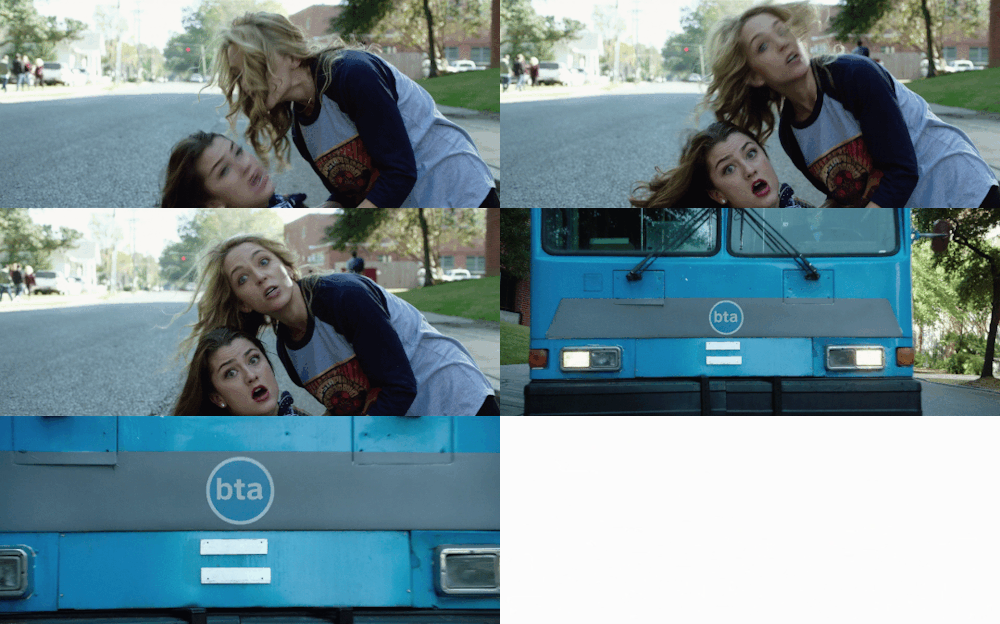
Having gone to a large public university (two, really, as I transferred after freshman year from one U of MN campus to another) and having only lived in the dorm for one year, I didn’t really find myself caught up in any dorm drama or scandals. Perhaps my dorm was just boring, or perhaps I wasn’t looking hard enough. The closest I got was having a roommate with whom I initially bumped heads (but even that doesn’t really count because now she’s one of my dearest friends). But I guess that I can believe that such things do happen. And “The Girls Are All So Nice Here” by Laurie Elizabeth Flynn is steeped, and I mean STEEPED, in the poisonous shenanigans that some college kids get up to while living on campus. I’ll admit that I was just picturing Danielle from “Happy Death Day” as I read the description. And while I wasn’t too far off, it didn’t rise to the occasion that I was anticipating.

Danielle and Tree play my expectations when they’re smacked back to reality. (source)

“The Girls Are All So Nice Here” has some pretty good hits, and a few glaring misses. I’ll start with the hits, however, as there were definitely things that worked really well. We have ourselves a mystery at hand. Our narrator, Amb, has done her best to leave her college days behind and forget about them. She has a kind husband, lives in New York, and has cultivated a scandal free life. But when her college reunion looms, she starts getting strange messages from an anonymous person saying that they need to ‘talk about what they did that night’. The story is Amb going back to the school to find out who is sending the messages, and we as the readers slowly get to find out what it is she did, through flashbacks and the present day reunion weekend. It’s a device that we’ve seen before, but it works well here as Flynn carefully peels back the layers of Amb’s freshman year, and her relationships. Specifically those she had with her then best friend Sully, the resident mean girl, and Flora, Amb’s sweet and well loved roommate. I will say that what we find out is pretty damn upsetting, with mean girl bullshit spiraling out of control, jealousy and pettiness getting the best of people, and the entitlement thinking one deserves more than they have leading to very bad things. I’m being vague deliberately, because the plot itself is well done. When I thought a character couldn’t stoop lower, she did. When I thought that a twist was one thing, it ended up being something else. A couple reveals felt a bit convenient, but ultimately I was enjoying the ride enough that it didn’t put me too off.

What didn’t work as well for me were the characterizations of the various players in our toxic soup of a story. I definitely understand having garbage people being at the forefront in a story like this, and I don’t have a problem with following an unreliable narrator who is also an unlikable and nasty person. But I think that if you are going to do that, I would like a little bit of exploration as to what it is that makes them that way, or at least make them wickedly entertaining in their nastiness. With Amb, we get a lot of telling that she is insecure, that she is jealous of Flora and how easy it is for ‘girls like her’, but there wasn’t really much in Amb’s background that we see that made me fully see the complexities that go with this kind of dangerous coveting and jealousy that leads to very bad things. Sully, too, is just nasty with no reason or exploration into her nastiness. We just see she’s horrible and that’s all we get from her, and she isn’t interesting enough to even make it fun to hate her. Perhaps one would think that Flora may get a bit of depth here, given that she is the one who is hurt the most by Amb and Sully, but no. Flora is your two dimensional really nice girl that is there to be a martyr. Even when she talks with Amb or other characters talk about her with Amb in the past and the present, all we know about Flora is SUPER sweet which, sure, makes your blood boil when Amb and Sully treat her like crap. But that only gets me so far.

So while the plot was engrossing and had some genuine tricks up its sleeves, “The Girls Are All So Nice Here” was a fairly run of the mill thriller about women behaving badly. It gets the job done, but it probably could have done more.

Rating 6: A twisty thriller with some fun surprises, “The Girls Are All So Nice Here” will keep you guessing, but doesn’t have anyone to root for.

Reader’s Advisory:

“The Girls Are All So Nice Here” is included on the Goodreads list “Mystery & Thriller 2021”.

Find “The Girls Are All So Nice Here” at your library using WorldCat, or a local independent bookstore using IndieBound!

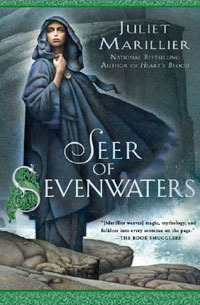
Monthly Marillier: “Child of the Prophecy”

“Monthly Marillier” is a review series that is, essentially, an excuse for me to go back and re-read one of my favorite author’s back catalog. Ever since I first discovered her work over fifteen years ago, Juliet Marillier has been one of my favorite authors. Her stories are the perfect mixture of so many things I love: strong heroines, beautiful romances, fairytale-like magic, and whimsical writing. Even better, Marillier is a prolific author and has regularly put out new books almost once a year since I began following her. I own almost all of them, and most of those I’ve read several times. Tor began re-releasing her original Sevenwaters trilogy, so that’s all the excuse I needed to begin a new series in which I indulge myself in a massive re-read of her books. I’ll be posting a new entry in this series on the first Friday of every month.

Book: “Child of the Prophecy” by Juliet Marillier

Publishing Info: Tor, June 2003

Where Did I Get this Book: own it!

Book Description: Magic is fading… and the ways of Man are driving the Old Ones to the West, beyond the ken of humankind. The ancient groves are being destroyed, and if nothing is done, Ireland will lose its essential mystic core.

The prophecies of long ago have foretold a way to prevent this horror, and it is the Sevenwaters clan that the Spirits of Eire look to for salvation. They are a family bound into the lifeblood of the land, and their promise to preserve the magic has been the cause of great joy to them… as well as great sorrow.

It is up to Fainne, daughter of Niamh, the lost sister of Sevenwaters, to solve the riddles of power. She is the shy child of a reclusive sorcerer, and her way is hard, for her father is the son of the wicked sorceress Oonagh, who has emerged from the shadows and seeks to destroy all that Sevenwaters has striven for. Oonagh will use her granddaughter Fainne most cruelly to accomplish her ends, and stops at nothing to see her will done.

Will Fainne be strong enough to battle this evil and save those she has come to love?

Review: Several years after the events in “Son of the Shadows,” we meet Fainne, the daughter of Niamh, Liadan’s lost sister. Growing up in practical isolation, and with the loss of her mother early in life and a reclusive father, Faine’s life has been one of quiet and seclusion. In many ways, Faine feels that she and her father aren’t simply hiding from his cruel, sorceress mother, Oonagh, but they are hiding from their own dark potential. But when the currents shift and Faine is forced out into the world and finds herself in her mother’s ancestral home of Sevenwaters, Faine must begin to make choices about her own future. Will she follow in her grandmother’s footsteps? Or will she choose a new way like her aunt and maternal grandmother before her?

By the time I got to this book, I’d actually read a few of Marillier’s other works. This was probably for the best as this is one of my less favorite of her books. It’s kind of surprising, because overall, I think her Sevenwaters series has been one of her biggest draws to her fantasy readership. But for me, something felt off about this book almost from the start. However, let’s talk about the things I liked, first off.

Marillier’s writing is almost freakish in its consistency. If you read a lot of her books, you’ll soon be able to immediately recognize her unique style of lyrical prose and straightforward storytelling. There’s a sense of wonder and comfort in much of her work, even as she touches on some dark topics. Every word feels delicate and intentional. There’s no denying the craftmanship of her work, and that was all on display here, especially when working with a character like Faine who is very different than the leading ladies who came before her.

I also liked seeing some familiar faces again. I, of course, really enjoyed Liadan and Bran’s story, so it was great seeing them again. It was also interesting to see side characters who had grown into roles they had just begun in “Son of the Shadows.” Sean, for example, has now been leader of Sevenwaters for over a decade. We also see Aisling, his wife, in her role as the lady of Sevenwaters. And, most jarring but also best of all, we get to see a grown Johnny balancing his role as heir to Sevenwaters and presumed fulfiller of the much-debated prophesy that has sat at the heart of the story from the start.

The problem with all of this, however, is that these side characters, both the very familiar, like Liadan and Bran, and the less so, like Johnny, are more intriguing than Faine. Much of Marillier’s work lives and dies on the strength of her characters. Most of her books are slow on the action and heavy on the introspection. So that main character has a lot of heavy lifting to do. And unfortunately, Faine just isn’t up to it. To some extent, I appreciate the challenges that Faine represents. Liadan and Sorcha were almost perfect women, so it’s refreshing to see Marillier tackling a heroine who faces challenges both physical and emotional. Faine walks with a limp, and due to her reclusive lifestyle, she struggles to form connections and maintain relationships. These parts of her character I thought were very well-drawn, and it was interesting watching her learn to piece together human interactions with people who are family in name only to her.

Unfortunately, her naivety turns into almost willful stupidity at points. Her concern of the darkness within her drives her actions past the point of reason. It’s hard to be sympathetic at points when events around her and those who would seek to use her are less than subtle. She does some pretty bad stuff for some pretty weak reasons. And much of her motivation seems weak and more told to the reader than shown in any way that would make it truly threatening feeling.

I also really disliked the romance. It’s not that it was bad, and the hero had his charming, appealing moments. But in comparison to the deep, well-drawn relationships that came in the books before, this one just feels shallow and uninteresting in comparison. I never felt any real chemistry between these characters, and there was very little tension in the proceedings. Some dramatic events happen towards the end, but even then, what should have been heavy hits felt fairly removed for me. I just didn’t care that much.

Of the original trilogy, this book is the weakest by far. It had a really interesting premise, featuring a character who has grown up more on the fringes of Sevenwaters and its stretching legacy, but several aspects of the book just felt a bit off. Faine wasn’t nearly as compelling as Sorcha and Liadan. And the romance felt stilted and thin. It’s still worth reading, however, if you’re a fan of the series as some pretty significant events occur and many of the mysteries laid down in the first two books are resolved. Events that occur here will also be referred to loosely in the second trilogy in the series.

Rating 6: Underwhelming after the flashes of mastery that were the first two books in the trilogy.

Reader’s Advisory:

“Child of the Prophecy” is on these Goodreads lists: Great Celtic Fiction and Myth and Folktale Retellings.

Find “Child of the Prophecy” at your library using WorldCat!

Serena’s Review: “Fireheart Tiger”

Book: “Fireheart Tiger” by Aliette De Bodard

Publishing Info: Tor.com, February 2021

Where Did I get this Book: Edelweiss+

Book Description: Quiet, thoughtful princess Thanh was sent away as a hostage to the powerful faraway country of Ephteria as a child. Now she’s returned to her mother’s imperial court, haunted not only by memories of her first romance, but by worrying magical echoes of a fire that devastated Ephteria’s royal palace.

Thanh’s new role as a diplomat places her once again in the path of her first love, the powerful and magnetic Eldris of Ephteria, who knows exactly what she wants: romance from Thanh and much more from Thanh’s home. Eldris won’t take no for an answer, on either front. But the fire that burned down one palace is tempting Thanh with the possibility of making her own dangerous decisions.

Can Thanh find the freedom to shape her country’s fate—and her own?

Review: I’ll admit that this was another book that pulled me in on the strength of the cover art alone. I mean, that’s just a gorgeous cover, and there’s no second opinion about it! The description comparing it to “Howl’s Moving Castle” and “The Goblin Emperor” couldn’t help but add more intrigue. Plus, it’s a novella, which I haven’t read one of for quite a while. Unfortunately, it didn’t quite live up to all of those expectations!

Life as a political hostage is not easy, but then no one ever expects it to be. More surprising for Thanh, a princess returning home at long last, is that her homecoming proves to have its own set of challenges. Haunted by a first love now thrown back in her path who sees her own path forward, Thanh begins to understand that she will need to evolve. As a passive hostage, her life had been simple. But as princess, wielding great power and responsibility, she has choices, some of which could impact the future of her entire country.

While I can think of several good examples of novellas that I’ve read in the past (Seanan McGuire’s entire “Wayward Children” series, for example), unfortunately, this book highlights much of how to do them wrong. With the strict word count limit imposed on writing a shorter story, the author has to be incredibly efficient with world-building and character development. And even then, you can’t spend too much time on it, necessitating that both the world, story, and character are fairly interesting and compelling on their own from the very start. And in these key areas, this book fails the test.

Particularly, Thanh herself is a fairly paper-thin character. She doesn’t stand out in any bad ways, but she’s also not very interesting and lacks the charisma needed to drive a short story like this. Her lack of a strong voice makes the necessary info-dumping portions of the story stand out more than they should. Beyond that, I found the character to be a bit unlikable, seeming to wallow in self-pity more often than not and easily distracted by her own personal dramas over the larger state of affairs going on around her.

I also was very uninvested in the love interest and romance of this story. We simply aren’t given enough here to care. Ephteria’s attraction is almost entirely contained in the author’s telling rather than showing style. She has blue eyes…that’s about all we get. But Thanh spends pages upon pages obsessing over her, and the readers are stuck there with her, just not understanding why. The thin depiction of this relationship is mirrored in Thanh’s other relationships as well, with her mother, and with another young girl she befriends.

Beyond this, the writing didn’t work for me. I found it often to be jarring and uninspired, pulling out cliches when you’d most expect them and not helping to build any tension as the story worked its way through its plot points. The dialogue was at times particularly egregious, with some of the villains just one mustache-twirl away from being comical.

There may have been a good story here somewhere if the author had had more word-count to work on. But I’m also not convinced that the characters, world, or overall plot could have supported an increased page count. It’s kind of a chicken or the egg thing: did the page count limit the creativity of the characters and flow of the writing, or were these aspects weak on their own and would have just struggled more in a full-length novel?

Rating 6: Pretty disappointing overall. Though the cover is still one of the best I’ve seen in a while.

Reader’s Advisory:

“Fireheart Tiger” is a new title so it isn’t on too many Goodreads list, but it is on Upcoming 2021 SFF Books With Female Leads or Co-Leads.

Find “Fireheart Tiger” at your library using WorldCat!

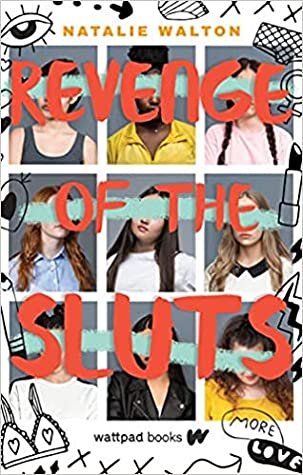
Kate’s Review: “Revenge of the Sluts”

Book: “Revenge of the Sluts” by Natalie Walton

Publishing Info: Wattpad Books, February 2021

Where Did I Get This Book: I received an eARC from NetGalley.

Book Description: Double standards are about to get singled out.

In this stunning debut, author Natalie Walton tackles privacy and relationships in the digital age.

As a lead reporter for The Warrior Weekly, Eden has covered her fair share of stories at St. Joseph’s High School. And when intimate pictures of seven female students are anonymously emailed to the entire school, Eden is determined to get to the bottom of it.

In tracking down leads, Eden is shocked to discover not everyone agrees the students are victims. Some people feel the girls “brought it on themselves.” Even worse, the school’s administration seems more concerned about protecting its reputation than its students.

With the anonymous sender threatening more emails, Eden finds an unlikely ally: the seven young women themselves. Banding together to find the perpetrator, the tables are about to be turned. The Slut Squad is fighting back!

Review: Thank you to NetGalley for providing me with an eARC of this novel!

I thank my lucky stars that I got out of high school before social media became a huge thing, because my GOD I don’t know if I would have survived it all. I went to a prestigious and rigorous prep school, and as someone who was a bit of a weirdo who, for some time, bore the brunt of my meaner classmates, I can’t even imagine what might have happened if Snapchat, Tik Tok, or the like were available (I’m old, are those still popular with the youths?). “Revenge of the Sluts” by Natalie Walton addresses a number of the things that make my heart hurt when it comes to stories of teenage bullying and cruelty, specifically that of girls who send nudes to people they think they can trust, only to find their trust broken and their bodies exposed for laughs, revenge, or what have you. When I saw this book on NetGalley, I knew that I had to read it.

“The Revenge of the Sluts” is a VERY fast read that kept me interested, as I pretty much read it in one day during a long weekend. The mystery of who leaked the nudes of seven high school girls is technically the heart of this book, but it felt more like an examination of the difficulties of high school life for girls in modern society. I really enjoyed Eden, our protagonist and intrepid student reporter who is investigating the invasive and cruel leak of nude selfies of seven of her classmates. While Eden wasn’t a target herself, she and co-journalist/editor in chief Ronnie not only see a huge story, but a number of girls who deserve justice and deserve to have their voices heard. Eden has a few more layers to it as well, as she too has sent nude photos of herself in the past to her ex boyfriend, and while he never shared them so that they could potentially be leaked, she knows that she was just as vulnerable.

I liked that Walton brings up all of the complicated messy issues about teen dating and sex. Such things include the pressures that some may feel do do things that they may not want to do, and the self autonomy that others have to be comfortable in their sexuality which can lead to stigma and punishment from others when that is put on display. The victims are a wide variety, with some enjoying casual hook ups and sexual exploration, and others being in monogamous relationships with people they are supposed to be able to trust. Walton never frames any of these girls as anything but victims, and I really liked that we get to explore double standards when it comes to boy vs girl sexuality and the expectations that is foisted on the two, many times unfairly. I also liked the frustrating but probably pretty realistic subplot of the mishandling of the scandal by the school and the greater community, as the girls are treated less as victims and more as, well, ‘sluts’, like in the title.

Therein, however, lies some of the weaknesses in this book as well. These messages and themes are absolutely important, especially for teen readers who may have to navigate such things in their lives. But some of the lessons were presented in really awkward and clunky ways. Many times we would have these teachable moments with characters going into long lectures or diatribes about consent, bodily autonomy, double standards, and misogyny which felt like they were lifted from educational or resource materials. There would be debates between characters that go the way that one would expect from an after school special as opposed to an actual conversation between classmates or friends. It ended up making things feel a bit canned and packaged, and while I know that the YA audience may like things a bit more straight forward, I think that authors need to give teens a little more credit in how they can process the messages being conveyed.

All in all, I thought that “Revenge of the Sluts” had a few hiccups here and there in execution, but the themes and statements behind that are too important for me to write it off completely. It’s quick and engaging, and I hope that it can help people who may be going through the bad things it addresses.

Rating 7: A quick and entertaining read that often treads towards clunky monologues and lecturing, “Revenge of the Sluts” has good messages about bodily autonomy, consent, and rape culture, even if it felt a little canned.

Reader’s Advisory:

“Revenge of the Sluts” is included on the Goodreads lists “YA Girls Take on the Patriarchy”, and “Best Books to Read When You Need a Reminder of Why Feminism Is Important”.

Find “Revenge of the Sluts” at your library using WorldCat, or at a local independent bookstore using IndieBound!

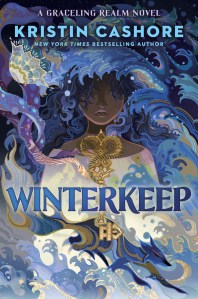
Serena’s Review: “Winterkeep”

Book: “Winterkeep” by Kristin Cashore

Publishing Info: Dial Books For Young Readers, January 2021

Where Did I Get this Book: Edelweiss+

Book Description: Four years after “Bitterblue” left off, a new land has been discovered to the east: Torla; and the closest nation to Monsea is Winterkeep. Winterkeep is a land of miracles, a democratic republic run by people who like each other, where people speak to telepathic sea creatures, adopt telepathic foxes as pets, and fly across the sky in ships attached to balloons.

But when Bitterblue’s envoys to Winterkeep drown under suspicious circumstances, she and Giddon and her half sister, Hava, set off to discover the truth–putting both Bitterblue’s life and Giddon’s heart to the test when Bitterbue is kidnapped. Giddon believes she has drowned, leaving him and Hava to solve the mystery of what’s wrong in Winterkeep.

Lovisa Cavenda is the teenage daughter of a powerful Scholar and Industrialist (the opposing governing parties) with a fire inside her that is always hungry, always just nearly about to make something happen. She is the key to everything, but only if she can figure out what’s going on before anyone else, and only if she’s willing to transcend the person she’s been all her life.

Review: Well, we’ve finally arrived at the long-awaited (really, was anyone actually waiting on this? I think it took most fans by surprise!) fourth book in the “Gracely Realm” series. I’ve enjoyed my re-read so far, though the high of the first two has definitely been dampened by what I felt was a lackluster showing in “Bitterblue”. But given that it has been almost a decade since that book was published, I was curious to see which version of the author’s writing we’d get here: the fast-action, heartstring- pulling story that we saw in the first two, or the more slow, somewhat bloated story that was last one?

It’s been four years since the events of “Bitterblue” and the world has once again expanded. Winterkeep is a distant land whose society is largely focused on politics and industry. With fantastical airships and the knowledge of powerful resources, Winterkeep’s society is at an impasse over the progression of its industry over the environmental effects of some of the resources needed to power those advancements. When two of her envoys die under mysterious circumstances, Bitterblue takes it upon herself to visit this distant land. Things quickly go wrong, and she and her party are left to unravel the mystery at the heart of Winterkeep alongside a local teenage girl, Lovisa, whose parents are somehow connected to it all.

So, I’ll just get it out of the way early: this, sadly, fell much more into the “Bitterblue” school of book than the “Graceling” type which in turn means it was a bit of a disappointment for me. But I’ll start with what I did like. In many ways, I feel like the writing was stronger in this book than in “Bitterblue.” That book was almost oppressively gloomy and serious, whereas here, while the story still tackled serious topics and had darker moments, there were also several funny lines and observations throw in. Bitterblue herself was a much more likable character for having some of these funnier lines/thoughts early in the book which immediately endeared her to me.

I also liked Giddon’s chapters. He was a strong point in “Bitterblue,” so it was great to see Cashore recognize his potential and make him a POV character here. His relationship with Bitterblue was also much more interesting in that book than her romance with Saf, so I was happy to see their friendship/romance take precedence. We also get chapters from a telepathic fox, a special type of animal that is common in Winterkeep and bonds with humans, as well as chapters from a mysterious ocean monster.

But I struggled to connect to Lovisa, and that proved to be a fairly large failing for my enjoyment of the story. As the only native human character we have for Winterkeep, much of the world-building and deeper insight into this world comes through this character. I think there are a few problems here. For one thing, Lovisa simply didn’t have a strong inner voice or particularly compelling character. Those funny lines I mentioned with Bitterblue? None to be found with Lovisa. I’m not asking for a joke a minute, but her voice simply didn’t have any particular aspect to it that made it stand out, which leads to my second problem.

Much of Lovisa’s chapters and inner thoughts are devoted to long reflections on Winterkeep’s political situation and the challenges of balancing industry and environmentalism. Fairly early in the book, I read one of her chapters that devoted almost half of her page count to long paragraphs on these topics. And there simply wasn’t much there! The entire “debate” about environmentalism is a very thinly veiled depiction of our own struggles in this world. And the politics involved are just the same, a very watered down version of the U.S. two party system with entrenched viewpoints on both sides. There are plenty of good ways of using a fantasy novel to get out modern debates, but these were so washed out and thin that they didn’t actually get at any new ideas or add anything of value to the overall conversation. Plus it’s a fantasy novel which usually gives authors a lot of creative leeway to present these ideas in unique and interesting ways. Not so here, unfortunately. The two parties are called the Scholars and Industrialists, for heaven’s sake! And poor Lovisa’s chapters are just full of this stuff, going on and on.

Which gets to my final complaint: this book is way too long. Just like “Bitterblue,” the story begins to feel like a slog fairly early into the first third of the book. The action dies down, the mystery drags on and on, and then finally we get to the resolution, only to find that there’s a significant page count left to get through. In which, again, nothing much happens and the whole thing could have been wrapped up in half the time. This book seriously needed the firm hand of an editor who wasn’t afraid to make great big slashes through some of this.

By this point, it’s clear that Cashore is the type of author who likes to write about issues. Unfortunately, I feel like the books in which she focuses on this the most are her weakest. “Graceling” and “Fire” both touched on some pretty important topics about self-acceptance and the responsibility and dangers of great power. But when the stories delved into more broad topics like they did in “Bitterbue” and here, these issues seemed to consume the book, its characters, and any attempts to build up tension. Fans who enjoyed “Bitterblue” will probably be more pleased with this entry than those who struggled with that book.

Rating 6: Overall, pretty disappointing and bogged down by uninteresting takes on social and political statement pieces.

Reader’s Advisory:

“Winterkeep” is a newer book so it isn’t on many Goodreads lists, but it is on YA Novels of 2021.

Find “Winterkeep” at your library using WorldCat!

Serena’s Rev-Up Review: “Bitterblue”

Book: “Bitterblue” by Kristin Cashore

Publishing Info: Dial, May 2012

Where Did I Get this Book: own it!

Book Description: Eight years have passed since the young Princess Bitterblue, and her country, were saved from the vicious King Leck. Now Bitterblue is the queen of Monsea, and her land is at peace.

But the influence of her father, a violent psychopath with mind-altering abilities, lives on. Her advisers, who have run the country on her behalf since Leck’s death, believe in a forward-thinking plan: to pardon all of those who committed terrible acts during Leck’s reign; and to forget every dark event that ever happened. Monsea’s past has become shrouded in mystery, and it’s only when Bitterblue begins sneaking out of her castle – curious, disguised and alone – to walk the streets of her own city, that she begins to realise the truth. Her kingdom has been under the thirty-five-year long spell of a madman, and now their only chance to move forward is to revisit the past.

Whatever that past holds.

Two thieves, who have sworn only to steal what has already been stolen, change her life forever. They hold a key to the truth of Leck’s reign. And one of them, who possesses an unidentified Grace, may also hold a key to her heart . . .

Previously Reviewed: “Graceling” and “Fire”

Review: So this re-read has been one of discoveries so far. I discovered first that “Graceling” held up really well in the ten plus years since it was first published, even given the boom of similar YA fantasies novels that have come out since. I discovered that while I still prefer “Graceling” overall, I actually liked the romance in “Fire” better. And with “Bitterblue” I discovered…I actually hadn’t read this one before?? I own a copy, and I think I must have skimmed through it at some point, but a full, cover-to-cover read? Nope! Given my takeaway at the end of this read, I suspect I may have skimmed some Goodreads reviews when this came out and put it on the back-burner, being a bit wary. Because, yes, for me, this was quite the step down from the highs of “Graceling” and “Fire.”

Bitterblue has been queen of Monsea since she was ten and her sociopathic father was killed at the hands of Bitterblue’s strongest protector, Katsa. In the years since, Bitterblue has struggled to put her broken country back together. But with endless paperwork and little contact with her actual people, Bitterblue begins to suspect that her efforts aren’t accomplishing much. She takes matters into her own hands and sneaks out to wander the streets of her city and see the state of things for herself. What she discovers opens the floodgates and she is suddenly overwhelmed with all of the mysteries and secrets that have lurked from the time of her cruel father’s reign.

So, overall, I really didn’t love this book. It was so surprising and disappointing to have a reaction like this after just loving both books that came before! But, unfortunately, I think there were several things that worked against it. Not least of which is the fact that I think that even its strengths ultimately work against it when compared to the books that came before. Namely that Cashore’s strengths for creating interesting new worlds and great fantastical elements weren’t allowed any room to grow here. We’ve already been introduced to Monsea, and while the story does show us around the city itself and has some new things to add here, the world itself is largely familiar. The magic, too, is familiar. We may meet a few new Gracelings, but their abilities and their place in the world are already understood. So, too, we already know about the Seven Realms and, largely, how they differ from one another and interact with each other. All of this works to undercut much of what made the first two books so great: Cashore’s deeply imaginative new worlds and magic systems.

And while both of the first two books were slower reads overall, this one really seemed to drag on. It’s much longer than the first two, and nothing in the story really justifies this length. Bitterblue is constantly beset with new mysteries and new roadblocks on any progress she’s making on the ones that came before. More than once she simply gives up and returns to her paperwork in her tower. This is just as boring and anti-climatic for the reader as it’s said to be for her. What’s more, many of the mysteries are built around the seemingly crazy actions of many of the characters around her. But they are so random and so off-the-wall that with the lack of understanding around them comes also the lack of caring. Unlike the books before where it felt like clues were being laid down that reader’s could begin to piece together for themselves (part of what kept the pacing better in those books), here, it all feels too disconnected to any logic or overall plan to really engage the reader.

I also really, really disliked the romance in this book. This was truly shocking as the other books in this series had two of my favorite romances ever. But here, nothing really works about it. Saf is a terrible romantic hero. When he’s not annoyingly immature (it’s never a good sign when you’re heroine herself calls the hero this and she’s completely right!), he’s outright rude and mean to Bitterblue. And all of this is when he’s even on the page at all, for there are large chunks of the story where he’s nowhere to be seen. From a personal reading perspective, his absence isn’t missed as when he was around I was mostly frustrated by him. But from the perspective of trying to build a compelling romance, it’s hard to do when you’re romantic hero is nowhere to be found for the last half of the book. And the end was only satisfying because it was ultimately unsatisfying, essentially!

I did like Bitterblue as a character, but I think the romance and the plodding storyline both did her a massive disserve. It was also confusing trying to understand why Bitterblue was suddenly noticing all of these things around her. Presumably she’s been acting as queen for the last 8 years, and while she was too young initially to take notice, it’s hard to understand what was distracting her from it all for the last few years. There’s no obvious impetus for any of it, really. “Winterkeep” will also feature Bitterblue, so I’m excited to see how the character fares when put in a different (hopefully better!) story. We’ll find out next week when we finally get to “Winterkeep” itself!

Rating 6: Very disappointing. It has some serious weaknesses on its own, but it’s definitely not helped by the fact that the two before it were such hits for me.

Reader’s Advisory:

“Bitterblue” is on these Goodreads lists: YA Second World Fantasy and Best Kick-Ass Female Characters From YA and Children’s Fantasy and Science Fiction.

Find “Bitterblue” at your library using WorldCat!

Book Club Review: “Sailor Moon Eternal Edition (Vols 1 and 2)”

We are part of a group of librarian friends who have had an ongoing bookclub running for the last several years. Each “season” (we’re nerds) we pick a theme and each of us chooses a book within that theme for us all to read. Our current theme is “Outside the Genre Box”, in which we each picked a book from a genre or format that we don’t usually read.

For this blog, we will post a joint review of each book we read for book club. We’ll also post the next book coming up in book club. So feel free to read along with us or use our book selections and questions in your own book club!

Book: “Sailor Moon Eternal Edition (Vols 1 & 2)” by Naoko Takeuchi

Publishing Info: Kodansha Comics, September 2018/November 2018

Where Did I Get These Books: I own them.

Genre/Format: Manga

Book Description: The guardians in sailor suits return in this definitive edition of the greatest magical girl manga of all time! Featuring an extra-large size, premium paper, and an all-new translation and cover illustrations by creator Naoko Takeuchi!

Teenager Usagi is not the best athlete, she’s never gotten good grades, and, well, she’s a bit of a crybaby. But when she meets a talking cat, she begins a journey that will teach her she has a well of great strength just beneath the surface and the heart to inspire and stand up for her friends as Sailor Moon! Experience the Sailor Moon manga as never before in these extra-long editions.

Kate’s Thoughts

Though I have read some manga here and there and have watched a fair number of anime series (I actually just started watching “Death Note” for the first time, and I’m DIGGING it!), I never go into “Sailor Moon”. I had friends in high school who liked it, but by the time I did get into anime and ‘Magical girl’ stories, I pretty much just went with “Princess Tutu” and left it at that. So when our new Book Club session started up and one of our members wanted to read the first two books in “Sailor Moon”, I figured that now was as good a time as any to read one of the most influential Magical Girl mangas.

I think that had I been in a very specific time frame when reading “Sailor Moon” for the first time (perhaps after grade school but before I entered my ‘I’m not like other girls and too cool for girly shit’ punk and Goth phase in high school) I would have probably appreciated it more than reading it now. That isn’t to say that I don’t get why “Sailor Moon” is such a phenomenon. I liked the mythology of the Sailor Scouts, and I liked how we slowly got to meet each one and the different things that they all bring to the table. I also can tell that there is a LOT of mythology we haven’t even gotten to yet, and that as Usagi and her friends/teammates go forward there will be a lot more to learn regarding their identities, how Tuxedo Mask (the mysterious love interest) fits into it all, and how Usagi will balance this with her normal life as a teenage girl. In the first volume there is a lot of this kind of set up, while the second volume there is more solid adventuring and conflict that escalates. It was also pretty neat to see that things weren’t afraid to get dark as the plot arcs went on in Volume 2, and there were some pretty high stakes involved for Usagi and the others, as well as some legitimate peril to wrangle with. But at the end of the day Usagi herself was hard to connect with because there is a lot of effort to make her super imperfect to contrast with the amazing Sailor Moon alter ego that she has inside of her. But at the end of the day, these stories are not written for me as the intended audience, and because of that this is definitely a ‘your mileage may vary’ situation, as I DEFINITELY get the appeal in theory. Just not in my own practice.

I now feel like I have a better understanding of a story that has a very firm and well earned place in pop culture. It may not be for me, but I love that it is a story for teenage, fantasy loving girls who want their own kind of power fantasy. My hat does off to that and to them.

Serena’s Thoughts

Unlike Kate, I did read a lot of magical girl fantasy right around when this was coming out. But, unlike Kate in general, I’ve never really gotten into reading Manga or graphic novels much at all. As an adult, I’ve discovered more graphic novels that I enjoy, but it’s still not a go-to type of reading for me, even within my preferred genres. And as a middle school girl, I think I just associated any/all graphic novels with comic books and filed them away under “boring boy stuff.” I went on to have a complicated relationship with “Sailor Moon” in high school due to my on again off again boyfriend’s love of the series and my suspicion that he only wanted to date me initially based on my name being the same as the Americanized version of the main character’s. I was pleased to find that on reading the series now the main character’s name has been reverted back to the original, thus reducing my flashbacks to teenage years and highschool love letters between Serena and “Tuxedo Mask” (yes, he would sign off like that!)

With that little jaunt down memory lane out of the way, I had a lot of similar impressions to Kate. I can definitely see the appeal of this story and understand how it came to have such a far-reaching fanbase. The characters are all intriguing, the magic is fun, and the story is willing to engage with some darker themes. It also has much of the drama and awkwardness that teenagers enjoy, with Sailor Moon’s teenage identity providing a stark contrast to her magical girl persona.

Like Kate said, the second volume had more to work with after the first one spent much of its time laying down the foundation for the series. But even in the second one, it was clear that the story was just scratching the surface of all the stories it wanted to tell with these characters. I was pleased to see it go a bit deeper than the first volume did.

Overall, this also wasn’t really my thing. But I think that’s probably mostly due to my age and my generally picky approach to graphic novels and Manga. I picked up a “Pride and Prejudice” Manga at ALA a few years ago, and even that wasn’t really my jam. So this one had a steep hill to climb. But I definitely see the appeal for fans of the format and fantasy lovers in general, especially teenagers.

Kate’s Rating 6: Definitely ground breaking and assuredly appealing to magical girl fantasy fans, but not really my cup of tea at the end of the day.

Serena’s Rating 6: Approachable and fun for those who fit its audience type; unfortunately that wasn’t me.

Book Club Questions

  1. Have you read any manga before this? If so, what manga have you read and how does it compare to “Sailor Moon”? If not, what did you think of this first foray into the format?
  2. What did you think of the structure of the story as a stream of consciousness path that Usagi is taking? Did you like learning things as she did, or do you wish there had been a more organic way to explore the mythology?
  3. Did any of the Sailor Scouts appeal to you more than the others? If so, who, and why do you think that is?
  4. What did you think of the relationship between Sailor Moon/Usagi and Tuxedo Mask?
  5. Which elements, if any, of the ‘magical girl’ genre did you find most appealing?

Reader’s Advisory

“Sailor Moon Eternal Edition” Vols 1 and 2 (in other formats) are included on the Goodreads lists “Magical Girl Manga”, and “Fandom Origins”.

Find “Sailor Moon Eternal Edition” Vols 1 and 2 at your library using WorldCat, or a local independent bookstore using IndieBound!

Next Book Club Book: “The Widows of Malabar Hill”

Serena’s Review: “Bridgerton Collection”

Book: “Bridgerton Collection: Volume One” by Julia Quinn

Publishing Info: Kindle Edition, May 2020

Where Did I Get this Book: own the e-book

Book Description: The first three Bridgerton books all in one e-book volume! Includes The Duke and I, The Viscount Who Loved Me, and An Offer From a Gentleman.

Set between 1813 and 1827, the Bridgerton Series is a collection of eight novels, each featuring one of the eight children of the late Viscount Bridgerton.

I’m going to do a quick mini-review for all three books in this series. I’ve reviewed a couple random books by Julia Quinn on this blog over the years, but I’ve jumped all over the place from random books in this main series to ones from the prequel series, etc. But with the Netflix show just coming out, I thought it was high time to at least familiarize myself with the first three in the correct order so that when I watched the show I wouldn’t be completely lost. Because obviously I was going to watch the show! Historical romance?? Yes, please!

The Duke and I

So I had actually read this, the first book in the series, once before years ago. I didn’t remember much about it except that, unfortunately, I had rated it fairly low on Goodreads at the time. I went in with some skepticism. Unfortunately, this wasn’t a great start to my read through of these first books in the series, and my original rating wasn’t far off for how I would rate this book now.

The strengths of Quinn’s writing is clear, and it’s easy to understand how she has become one of the most popular romance authors of the time. This book completes its most important edict: it sets the stage for a million and a half sequels, creates an interesting window in this version of British society, and has quick, snappy writing that move the story along.

Unfortunately, the actual story in this book and especially its heroine and hero’s relationship was a huge let down. Each were very toxic in their own ways, and I’m not one for throwing that word around lightly. There are some extreme inconsistencies in how knowledgeable Daphne is about certain aspects of life that stretch the point of believability to its breaking point. And the great “conflict” between the Simon and Daphne leads to each treating the other in very despicable ways, with Daphne committing a pretty unforgivable crime against Simon. I’m sure this wasn’t the intent of the author with this scene, but it’s definitely how it reads and how it would (and should!) be understood. As our first two paired up grouping, I’m sure we’ll see more of Simon and Daphne on the sidelines in other books, but I’ll try to just put this one behind me. I’m also really curious how they’ll play this particular relationship in the Netflix adaptation.

Rating 6: A good start to the series, but the horrid actions of both the hero and the heroine really drops it down.

“The Viscount Who Loved Me”

First things first: this second book was a great improvement on the first. While I still had some problems with the hero, Anthony (the Bridgerton in this little story), the heroine, Kate, was vastly better than Daphne. Not only was she not bizarrely ignorant of some pretty basic facts of life, she also didn’t assault her husband. So there’s that. But beyond all of that, Kate is just a fun character. She’s spunky, smart, and a fun character to follow through this story.

Anthony takes a bit more time to warm up. For one thing, he’s presented as the go-to historical romance leading man character type: a rake. I could probably write an entire thesis on why this type of character seems to dominate these books and why most of them get it wrong, but I’ll resist. To sum up, Mr. Darcy is considered the epitome of romance heroes, and I think many authors confuse the appeal that comes from his being a catch due to his lack of interest with the idea that rakes are a decent sit-in as they, too, have no interest in love and marriage. Big difference being that Mr. Darcy didn’t have a reputation for toying with women’s hearts. But enough on that. Anthony’s rake-ness is part of his problem, as is the fact that he has some pretty unappealing ideas about the relationship between husbands and wives initially. Thankfully, he seems to work through that and does end up being a likeable enough character.

What stood out the most about this book was the dialogue. Maybe it was just the nature of the story, Kate’s trying to spare her sister from the devious rake, but there was a lot of snappy, fun interchanges between our leading lady and leading man. There were several moments where I chuckled out loud, which was a nice reminder of why I’ve liked other books by this author in the past. Overall, I’m much more excited to see this relationship play out on the show than the first one.

Rating 8: Much better than the first, but still marked down for the hero being kind of an ass for a good chunk of the first half.

“An Offer from a Gentleman”

This book was a bit different than the two that came before it. As the cover implies, it’s a very loose re-telling of Cinderella. Sophie is an illegitimate daughter who meets our her, Benedict Bridgerton, at a ball where she’s undercover as a true lady. Sparks fly. Two years later, the two meet again, but Benedict doesn’t recognize his lady love in the servant girl before him. An intriguing enough premise and a fun twist on the more traditional retellings out there.

I, again, liked the heroine, Sophie, better than the hero (I guess Daphne goes down as the worst of the three). She was earnest and stood up for herself well enough given the situation (I’ll touch on that when I get to Benedict). But she also kept unnecessary secrets that created a bunch of angst and drama for no good reason. I always struggle with these types of narrative mechanisms that are clearly put in there to move the story one way or another but defy any understanding. There’s no good reason for Sophie to keep these secrets other than the fact that it creates the drama and fallout the author was looking for.

And Benedict. Oh, Benedict. He’s probably my least favorite hero of the three we’ve seen. When he meets Sophie again, he pressures her to be his mistress or a servant in his house. And when I say pressure, I mean he puts the screws to her over it. It’s pretty obnoxious. And from there, he goes on to warn her that somehow it is her responsibility to head him off early because if he gets too, um, excited, he wouldn’t be able to stop. Nope! Don’t like that! Throughout it all, he’s pretty self-absorbed and unable to understand Sophie or her motives. Even when the truth is revealed, somehow Benedict is the injured party in all of this. I hope the show makes some big improvements on this particular story. Well, this one and the first one.

Rating 7: Not as bad as the first one, but the hero had some big problems and the heroine created unnecessary drama.

Kate’s Review: “The Good Girls”

Book: “The Good Girls” by Claire Eliza Bartlett

Publishing Info: HarperTeen, December 2020

Where Did I Get This Book: I received an eARC from NetGalley.

Book Description: The troublemaker. The overachiever. The cheer captain. The dead girl.

Like every high school in America, Jefferson-Lorne High contains all of the above. After the shocking murder of senior Emma Baines, three of her classmates are at the top of the suspect list: Claude, the notorious partier; Avery, the head cheerleader; and Gwen, the would-be valedictorian. Everyone has a label, whether they like it or not–and Emma was always known as a good girl. But appearances are never what they seem. And the truth behind what really happened to Emma may just be lying in plain sight. As long-buried secrets come to light, the clock is ticking to find Emma’s killer–before another good girl goes down.

Review: Thanks to NetGalley for providing me with an eARC of this novel!

I am not too proud to admit that while I was an outcast and a weirdo in high school, I was not without my own faults when it came to judging other people, especially girls. It takes a lot of time and effort to try and unlearn the malignant lessons that society teaches you when it comes to how girls are supposed to be and act, and even as a woman in her mid thirties I’m STILL learning. I wish that I had read books at that age that would have helped the process along a bit. The good news is that girls these days can pick up books like “The Good Girls” and get some pretty good insight into how to reject internalized misogyny and rape culture! What I thought was going to be a YA thriller turned into something that had more value than I anticipated when it comes to theme and message.

The strongest aspect of “The Good Girls” is how Bartlett examines the damage that rape culture and misogyny wreaks upon young women no matter what their ‘social standing’ is, and how the damage can manifest in different ways. I think that one of the more popular ways to address it in teen fiction these days is to give a perspective to an ‘outcast’ character who is seen as promiscuous or ‘bad news’ in other ways. We do get that here with Claude the party girl and (deceased) Lizzy the addict, but we also see how it can still be damaging to girls who are seen as ‘good’ or ‘successful’, like cheer captain Avery and ‘good girl’ Emma. I think it’s especially important for this kind of ‘representation’ (for lack of a better term) in YA literature, as those who aren’t targeted in the more obvious ways may be less able to recognize it. I also liked that this book addresses that sometimes people in authority positions, because of their own biases, can stumble and fail when it comes to protecting those who are victimized. Or, even worse, use their position of authority to intimidate others into silence, or perpetuate abuse themselves. I thought that “The Good Girls” tackled these themes really well.

All of that said, in terms of mystery and thrills, “The Good Girls” missed the mark for me. While the characterizations were valuable and felt pretty realistic, they also managed to not work outside the box of the tropes that they fit into. I liked all of the main characters well enough, but none of them felt that different from other iterations of the boxes that they fell into. And when it comes to the mystery of who pushed Emma into the river, and what actually happened to Lizzy and how the two connect, I didn’t find myself raring to find the answer or terribly shocked by how it all played out. Even the smaller mysteries that add into the larger parts didn’t really surprise me, and I called a couple of the reveals pretty early on. Admittedly a couple caught me by surprise, but even then I wasn’t wowed. It just feels pretty run of the mill when it comes to the story itself. Not bad by any means. But also not unique. And at the end of the day, valuable message and explorations aside, I read “The Good Girls” because I was looking for a thriller, which it didn’t really provide.

I think that if you go into “The Good Girls” looking for a character study on the effect of misogyny and rape culture on girls from all kinds of labels, you will find something interesting, and certainly something with an important message that could help YA readers. But in terms of mystery and thrills, it isn’t really anything new.

Rating 6: I really liked the themes that take on rape culture and misogyny, but the story itself didn’t feel much different from other stories that have similar characters and plot points.

Reader’s Advisory:

“The Good Girls” is included on the Goodreads list “YA Mysteries and Thrillers”, and would fit in on “Small Towns with Secrets”.

Find “The Good Girls” at your library using WorldCat, or a local independent bookstore using IndieBound!