Monthly Marillier: “The Dark Mirror”

This post may contain affiliate links for books we recommend.  Read the full disclosure here.

“Monthly Marillier” is a review series that is, essentially, an excuse for me to go back and re-read one of my favorite author’s back catalog. Ever since I first discovered her work over fifteen years ago, Juliet Marillier has been one of my favorite authors. Her stories are the perfect mixture of so many things I love: strong heroines, beautiful romances, fairytale-like magic, and whimsical writing. Even better, Marillier is a prolific author and has regularly put out new books almost once a year since I began following her. I own almost all of them, and most of those I’ve read several times. Tor began re-releasing her original Sevenwaters trilogy, so that’s all the excuse I needed to begin a new series in which I indulge myself in a massive re-read of her books. I’ll be posting a new entry in this series on the first Friday of every month.
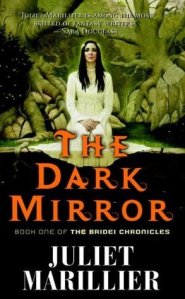
Book: “The Dark Mirror” by Juliet Marillier

Publishing Info: Tor, September 2004

Where Did I Get this Book: own it!

Where Can You Get this Book: Amazon | IndieBound | WorldCat

Book Description: Bridei is a young nobleman fostered at the home of Broichan, one of the most powerful druids in the land. His earliest memories are not of hearth and kin but of this dark stranger who while not unkind is mysterious in his ways. The tasks that he sets Bridei appear to have one goal-to make him a vessel for some distant purpose. What that purpose is Bridei cannot fathom but he trusts the man and is content to learn all he can about the ways of the world.

But something happens that will change Bridei’s world forever…and possibly wreck all of Broichan’s plans. For Bridei finds a child on their doorstep on a bitter MidWinter Eve, a child seemingly abandoned by the fairie folk. It is uncommonly bad luck to have truck with the Fair Folk and all counsel the babe’s death. But Bridei sees an old and precious magic at work here and heedless of the danger fights to save the child. Broichan relents but is wary.

The two grow up together and as Bridei comes to manhood he sees the shy girl Tuala blossom into a beautiful woman. Broichan sees the same process and feels only danger…for Tuala could be a key part in Bridei’s future…or could spell his doom.

Review: When I was planning out this review series, I can honestly say I forgot about this trilogy in my first run through of scheduling. So, take from that what you will! I can say that this is another of Marillier’s trilogies that leave me with the very hipster opinion of preferring the second book in the series to any other. As you will see, this book wasn’t my favorite, and as much as I do enjoy the second entry in the trilogy, I think it’s this lukewarm start that has me so often forgetting about these books’ existence in Marillier’s catalog of work.

Bridei’s childhood is clearly centered around some greater plan being put to work by the druid Broichan. Mysterious and reclusive, Broichan is not one to explain himself to Bridei, but Bridei does know that when they discover a baby girl at their door, this is definitely not part of the plan. Now, growing up alongside Tuala, Bridei begins to suspect why his teacher was so cautious to begin with. But Bridei himself can’t help but feel a stronger and stronger connection to the young woman, and, soon enough, the fates of an entire people may rest in her hands.

So, this another of my least favorite of Marillier’s works. Many of her strengths are equally present: the lyrical writing, the clear sense of the world and time period, and a flowing style of storytelling that lends even practical scenes a sense of wonder and magic. But some of her most common limitations are also present. That is, a stalled pace, especially in the beginning of the story, and a romance that is hard to become invested in. This latter point is the most puzzling, because her amazing romances are part of the reason I love her so much! But she is one of those authors who seems to either really nail the romance or to miss the mark altogether.

This book leans heavily on the political situation surrounding Bridei’s coming of age and the role he is meant to have in the future of the land. As such, much of the story is very much set in the human world (as opposed to some of Marillier’s more fantasy-focused stories). This isn’t a bad thing on the face things, but the story does feel slow and plodding for the first half or so. It’s a struggle to really put together the pieces that are moving and see much of an actual story arch building in the book itself.

The romance was also very cringe-y at times. It’s a hard balance to write a romance that develops from childhood friendship into romance, especially when there’s a distinct age gap. I think that “The First Girl Child” did very well, but that relied on separating the main characters until the younger of the two, the young woman, was an adult (by the time’s standards). Here, Bridei’s views of Tuala seem uncomfortable at times, given her age. I also felt like the resolution for the romance came on too suddenly in the end, with their feelings for one another going from zero to hundred over the course of one event. It wasn’t bad, but it doesn’t hold up to Marillier’s more complex and swoony romances.

This was only my second time reading this book, and I can say that my original lower opinion stands pretty true. I think I might have disliked it even more than the first time I read it, as I found the romance to be harder to read without feeling uncomfortable this go around. But I do remember liking the second book much more. In fact, I know I’ve read that one more than once, though it’s still be about a decade since I last revisited! I hope it holds up!

Rating 6: A slow, plodding pace isn’t helped by a romance that falls more on the cringe side of the cringe/swoon scale.

Reader’s Advisory:

“The Dark Mirror” is on these Goodreads lists: Wise Women, Witches, Midwives, Healers, and Strong Girls! and Medieval Fantasy Books.

Kate’s Review: “The Witch Haven”

Book: “The Witch Haven” by Sasha Peyton Smith

Publishing Info: Simon & Schuster Books for Young Readers, August 2021

Where Did I Get This Book: I own it.

Book Description: The Last Magician meets The Lady’s Guide to Petticoats and Piracy in this thrilling and atmospheric historical fantasy following a young woman who discovers she has magical powers and is thrust into a battle between witches and wizards.

In 1911 New York City, seventeen-year-old Frances Hallowell spends her days as a seamstress, mourning the mysterious death of her brother months prior. Everything changes when she’s attacked and a man ends up dead at her feet—her scissors in his neck, and she can’t explain how they got there.Before she can be condemned as a murderess, two cape-wearing nurses arrive to inform her she is deathly ill and ordered to report to Haxahaven Sanitarium. But Frances finds Haxahaven isn’t a sanitarium at all: it’s a school for witches. Within Haxahaven’s glittering walls, Frances finds the sisterhood she craves, but the headmistress warns Frances that magic is dangerous. Frances has no interest in the small, safe magic of her school, and is instead enchanted by Finn, a boy with magic himself who appears in her dreams and tells her he can teach her all she’s been craving to learn, lessons that may bring her closer to discovering what truly happened to her brother.

Frances’s newfound power attracts the attention of the leader of an ancient order who yearns for magical control of Manhattan. And who will stop at nothing to have Frances by his side. Frances must ultimately choose what matters more, justice for her murdered brother and her growing feelings for Finn, or the safety of her city and fellow witches. What price would she pay for power, and what if the truth is more terrible than she ever imagined?

Review: I am now at that age where if someone asks me what I want for my birthday or the holidays, more often than not I think ‘ah crap’. Given that one of my biggest hobbies is reading, one might think that books are always an option, but more often than not I just use the library, especially since I work for one. But I keep a few in mind, especially for my husband, so this past November when he asked for birthday ideas I told him “The Witch Haven” by Sasha Peyton Smith. I’d seen it bumping around my social media feeds on and off, and on top of that it is not only a mysterious boarding school story, it also has witches! And you know me, I’m always down for some teenage coven shenanigans!

(source)

I should definitely say right away that “The Witch Haven” is more of a YA Urban Historical Fantasy, a genre that isn’t usually my wheelhouse, especially on the blog. But I figured that witches, being one of my faves, was fair-ish game, and while the genre tropes constrained it a bit (for me at least), overall I enjoyed this book. Firstly, I really enjoyed the time and place. We find ourselves in 1911, and in New York City, so the time period is one that I’m not as familiar with books wise. This post Gilded Age, solidly Progressive Era timeframe makes for interesting themes and historical footnotes, and I felt that Smith used these to her advantage. We both address the constraints of women during this time, be it the factory work that many had to endure (and yes, there are references to the Triangle Shirtwaist Fire), the Suffrage Movement, and the way that men, even in magical settings, are constantly trying to hold them back and take their power. Sometimes literally. Frances, our protagonist, is whisked away to Haxahaven School because her powers manifested after she was attacked by her boss at the shop she works at as a seamstress, and the mythology of Haxahaven and the way witches are seen and function in historical New York City is unique and entertaining.

I also appreciated that Smith doesn’t look back at every element of this time period as rosy when it comes to progressive ideas, nor does she paint Haxahaven School as a super positive and supportive ‘yasss queen’ institution (though the friendships that Frances makes there are VERY positive and show a supportive and feminist group of women). This is most revealing when it comes to Frances’s roommate and close friend Lena. The girls who attend Haxahaven are plucked from their lives and taken to the school to learn how to control their magic and to become witches who can harness their powers, even if that means sometimes stifling them. For Lena, however, it is not an empowering place, as she is Indigenous, and longs to return to her family and her community. I liked that Smith had Lena in this story for a couple of reasons. The first is that it shows that the feminism of this time period was reserved for white women only, and that women like Lena were ignored or abused because of their race. It also was a way to address the Boarding Schools for Indigenous children in this country during this time period (as Lena was taken from a boarding school to attend Haxahaven), and how it was a tenant of genocide that our government was committing against Natives. I can’t speak to whether Smith did her due diligence when it comes to telling Lena’s story, but I liked that the broader themes of this story were told.

But there were some stumbles along the way in “The Witch Haven”. For one, the pacing feels a little off. It has a lot of fast paced plotting at the beginning, but we get a little bogged down as Frances and her friends make connections with Finn, a young man who is a magic student at a male institution. It ramps up again once we get to the last third of the book, but it slogs a bit as Frances interacts with Finn in hopes of learning some of his magic to find out what happened to her murdered brother William. I think that part of the problem is that I didn’t really care for Frances as a character, so therefore her story and her journey didn’t keep me as interested when we needed that exposition. I think my biggest issue with her is that she is purely defined by her brother’s death and wanting to solve what happened, with little other interesting character traits. I also found her decisions to be unclear, like why she is so suspicious of the people she is living with and learning with, but more than happy to trust Finn and the people he is allied with without any questions. It just felt like her character development was less for her and more to progress the plot.

All that said, the ending is a bit open ended, and my interest was piqued enough by it that should Smith write a sequel I would probably pick it up, just to see what happens next. “The Witch Haven” didn’t quite live up to my hopes, but it was fine for what it was.

Rating 6: Though the pacing is a little off at times and the main character a bit grating, overall “The Witch Haven” has a fun setting that lets witches shine, albeit with complexities of the time period.

Reader’s Advisory:

“The Witch Haven” is included on the Goodreads lists “ATY 2022: Academia or Teacher Impacted”, and “Popsugar 2022 #16: A Book About Witches”.

Find “The Witch Haven” at your library using WorldCat, or at a local independent bookstore using IndieBound!

Serena’s Review: “The Amber Crown”

This post may contain affiliate links for books we recommend.  Read the full disclosure here.

Book: “The Amber Crown” by Jacey Bedford

Publishing Info: Daw Books, January 2022

Where Did I get this Book: Edelweiss+

Where Can You Get this Book: Amazon | IndieBound | WorldCat

Book Description: The king is dead, his queen is missing. On the amber coast, the usurper king is driving Zavonia to the brink of war. A dangerous magical power is rising up in Biela Miasto, and the only people who can set things right are a failed bodyguard, a Landstrider witch, and the assassin who set off the whole sorry chain of events.

Valdas, Captain of the High Guard, has not only failed in his duty to protect the king, but he’s been accused of the murder, and he’s on the run. He’s sworn to seek justice, but his king sets him another task from beyond the grave. Valdas doesn’t believe in magic, which is unfortunate as it turns out.

Mirza is the healer-witch of a Landstrider band, valued and feared in equal measure for her witchmark, her scolding tongue, and her ability to walk the spirit world. When she’s given a task by Valdas’ dead king, she believes that the journey she must take is one she can never return from.

Lind is the clever assassin. Yes, someone paid him to kill the king, but who is to blame, the weapon or the power behind it? Lind must face his traumatic past if he’s to have a future.

Can these three discover the real villain, find the queen, and set the rightful king on the throne before the country is overcome?

Review:: Yet another fantasy book with the title “The ‘something’ Crown.” I have another book with a type of crown in the title coming up in a week or so! I don’t know what it is about crowns that seems to be seen as the go-to in fantasy, but I do miss the days of more creative titles. Please, no more “crowns,” “queens,” or “the BLANK of BLANK and BLANK” for a solid five years please. Anyways, that mini rant aside, let’s dive in!

Valdas is in disgrace. As Captain of the guard, his one duty is to protect the monarch, and when the king is killed under his watch, there cannot be a failure more profound. But his duty does not end there, and when he’s tasked with finding the missing queen and heir, he finds himself in mixed company: a healer with powerful magical abilities (something that Valdas didn’t even believe in until it was forced upon him recently) as well as the assassin who seems responsible for the king’s death itself. But who was the power behind the order? And can they save the queen and heir before they, too, are harmed?

One of the reasons I found myself initially intrigued by the premise of this book was how much it sounded like a fairly traditional fantasy story. The world-building and magical system didn’t seem overly complex, and the plot itself followed a fairly standard “group goes on a quest” storyline. Most of these things have a long history behind their “trope-y-ness” because they can be implemented easily to tell fantastic stories (“Lord of the Rings,” anyone?). Sadly, here, there too many other things working against the story for me to really revel in these sorts of classic fantasy features.

To start with what I liked, however. All three main characters were fairly interesting. Each had a decent amount of time given to establish their unique personalities and, more importantly, their motivations going through this journey. All three of them were nuanced characters, none falling neatly inside a black or white box. However, even here, I do wish we had seen just a bit more. It’s hard to really describe what I mean, but, in their own way, each character felt like it fell just short of really coalescing into a complex, compelling character.

On to some of my struggles, first my general problems. For some reason, the writing fell flat for me. The plot itself never truly sucked me in, and I was very aware of the experience of reading the book as I turned the pages (clicked on the Kindle). I just couldn’t fall into the story, and the pacing was a let down at times. Moments that should have landed with more “oomf” rather landed with a “thud,” and the ending was surprising anticlimactic considering the work that had been put into building up the entire situation.

From there, the specifics. While I just got done saying that I generally struggled to connect to the writing, there were also a few specific writing choices that didn’t land right. The author makes an effort to include a diverse cast of characters, and yet it seems to be done in a very clunky way. Instead of simply initially identifying her diverse characters, she routinely described people as “the black fighter” or something like that. The sheer amount of repetition here is maybe partly what did it. There was just something off. I was also turned off by the number of times women’s breasts were described and in ways that are of the more egregious sort. Like, a woman would enter the room and would be described as having her breasts almost popping our of her shirt….Why? How is this detail adding to the scene, characterization, or story? There were also far too many rapes/near rapes/threats of rape in this story. Everyone knows my thoughts on this sort of thing so I’m just not going to go into it again. Suffice to say, rape can be included in a thoughtful, meaningful way. In this case, it was not and just adds up alongside the overuse of sexualized descriptions of women and strange fixation on skin color.

I was very disappointed by this book. I had hopes of diving back into my roots and finding a new “classic” fantasy story. And in some ways I did: sadly it was “classic” in the sense that it felt like it was committing very dated mistakes that, happily, are seen less and less often. Fans of fairly straight forward classic fantasy may like this, but I think there are better options out there in general.

Rating 6: Interesting characters are let down by a strange set of tired “classic” fantasy missteps.

Reader’s Advisory:

“The Amber Crown” isn’t on any Goodreads lists yet, but it should be on: “Books with Crowns.”

Monthly Marillier: “The Caller”

This post may contain affiliate links for books we recommend.  Read the full disclosure here.

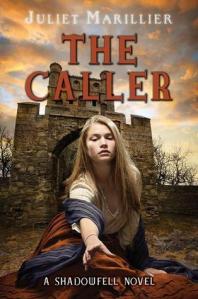
“Monthly Marillier” is a review series that is, essentially, an excuse for me to go back and re-read one of my favorite author’s back catalog. Ever since I first discovered her work over fifteen years ago, Juliet Marillier has been one of my favorite authors. Her stories are the perfect mixture of so many things I love: strong heroines, beautiful romances, fairytale-like magic, and whimsical writing. Even better, Marillier is a prolific author and has regularly put out new books almost once a year since I began following her. I own almost all of them, and most of those I’ve read several times. Tor began re-releasing her original Sevenwaters trilogy, so that’s all the excuse I needed to begin a new series in which I indulge myself in a massive re-read of her books. I’ll be posting a new entry in this series on the first Friday of every month.

Book: “The Caller” by Juliet Marillier

Publishing Info: Knopf Books for Young Readers, March 2014

Where Did I Get this Book: own it

Where Can You Get this Book: Amazon | IndieBound | WorldCat

Book Description: Neryn has made a long journey to perfect her skills as a Caller. She has learned the wisdom of water and of earth; she has journeyed to the remote isles of the west and the forbidding mountains of the north. Now, Neryn must travel in Alban’s freezing winter to seek the mysterious White Lady, Guardian of Air. For only when Neryn has been trained by all four Guardians will she be ready to play her role in toppling the tyrannical King Keldec.

But the White Lady is not what she seems. Trapped with Whisper, her fey protector, Neryn is unable to send word to her beloved Flint, who is in danger of being exposed as a double agent. When a new threat looms and the rebellion is in jeopardy, Neryn must enter Keldec’s court, where one false move could see her culled. She must stand up against forces more powerful than any she has confronted before, and face losses that could break her heart.

Previously Reviewed: “Shadowfell” and “Raven Flight”

Review: This series was a bit of a roller coaster ride when I read it the first time, and the same holds true now. The first book was a bit slow and plodding. The second book was much improved and more to my taste. And the last book…was kind of back to being a miss, leaving the trilogy as a whole as probably my least favorite series from Marillier. So with that exciting preview to go on, let’s dive in!

Neryn’s task, to meet and gain the blessing of the four Guardains of the fae, has not been completed, and the powerful and dangerous forces in the land of Alban grow. She must hurry, not only does the entire land depend on her ability to communicate with the Fae, bringing them into the battle to secure their country from its cruel dictator, but her love, Flint, may soon be exposed as a spy. But magic can’t be rushed, and there are secrets to be discovered in the chilly halls of the North.

This book was not my favorite. Part of this has to do with the strange pacing of the story which makes it feel like poorly fit pieces of a puzzle that just won’t lie together. In many ways, the beginning feels like a natural extension of the second book, so much so that it reads a bit strange to find it at the beginning of a completely separate book that rather quickly leaves this type of “magical trial” storyline in the dust. But still, as I greatly enjoyed the second book for this very same storyline, the first part of this book is by far my favorite. I enjoyed the magical mysteries to be found with the northern Guardian, and this small adventure perfectly fit Neryn’s optimism and persistent pluck even in the face of seemingly insurmountable challenges.

However, from there the book goes downhill in my estimation. We move on to a undercover spy game that, on its own, isn’t bad but pairs poorly with the magical adventures that came before it. Again, my lack of investment in Flint and his relationship with Neryn didn’t help, leaving me feeling a bit bored as we made our way through what should have been touching reunions and tense games of cat-and-mouse.

And, sadly, the ending was the worst of it. Not only did I find the manner in which these conflicts were resolved unbelievable, but the entire thing undercut much of the grief and terror we’d seen up to this point. Neryn’s journey, her power, all were useful, of course. There was a brief battle. But in the end, it felt like the rebellion, Neryn, and us, the reader, had been primed for something that simply didn’t happen. And if it was ultimately as easy as this (I don’t think it would be and frankly my eyebrows were exploding off the top of my head, they were raised so high), the entire situation could have been handled sooner and the threat was never that powerful to start.

There was also left only a small, short chapter to really wrap up the remaining storylines. We were given only the briefest glimpses into the possible future for these characters, and it all simply felt like too little tacked on at the very last minute. Given how little of this series showed Neryn and Flint together, this truncated ending for them felt like even more of a let down.

So, yeah. I didn’t love this trilogy when I read it the first time and was curious to see if, perhaps, I just wasn’t in the right mood that go around (though, to be fair, I read these as they came out, so I would have had to be “not in the right mood” for like three years for that to be the case). But, no. This series just wasn’t for me. Neryn was a bit too Mary Sue. The romance lacked the spark I’ve come to expect from Marillier. And the story often felt half-baked. If you’re a fan of her work, maybe check this out. But other fantasy readers are sure to find better entries from this author in her other series.

Rating 6: A disappointing end to a lackluster series. Honestly, with “Wildwood Dancing” as the exception, Marillier is a far better adult fantasy author than YA.

Reader’s Advisory:

“The Caller” is on these Goodreads lists: Most Interesting Magic System and Australian Speculative Fiction.

Serena’s Review: “A Psalm of Storms and Silence”

Book: “A Psalm of Storms and Silence” by Roseanna A. Brown

Publishing Info: Balzer + Bray, November 2021

Where Did I Get this Book: from the library!

Book Description: Karina lost everything after a violent coup left her without her kingdom or her throne. Now the most wanted person in Sonande, her only hope of reclaiming what is rightfully hers lies in a divine power hidden in the long-lost city of her ancestors.

Meanwhile, the resurrection of Karina’s sister has spiraled the world into chaos, with disaster after disaster threatening the hard-won peace Malik has found as Farid’s apprentice. When they discover that Karina herself is the key to restoring balance, Malik must use his magic to lure her back to their side. But how do you regain the trust of someone you once tried to kill?

As the fabric holding Sonande together begins to tear, Malik and Karina once again find themselves torn between their duties and their desires. And when the fate of everything hangs on a single, horrifying choice, they each must decide what they value most—a power that could transform the world, or a love that could transform their lives.

Previously Reviewed: “A Song of Wraiths and Ruin”

Review: So, if you’ve read my review of “A Song of Wraiths and Ruin,” you will remember that I checked both of these out from the library at once. Very rarely do I get a chance to read books back-to-back like this. Either because I read the first one when it comes out and there is naturally a long wait. Or because I can’t get my hands on them both at the same time. But it’s always a fun experience to simply stay in one world over the course of two books. The first one followed a fairly straight-forward plot, but its interesting uses of West African culture and folklore kept me on board. Let’s see what the second one had to offer!

All of Karina’s worst fears have come to pass, the mutiny she had feared struck and she now wanders alone and hunted, desperate to reclaim her throne. But it soon becomes clear that Karina’s desire to return to her throne is not only important to her but to the entire country, for with the return of her sister as come chaos and disaster. Malik quickly learns that returning Karina to her throne is all that will resettle this disturbance. But, of course, their is the teensy problem of trying to get a woman you tried to kill to trust you once again and work alongside you.

Before we get into the real review, I just want to take this moment to love on the covers of both of these books. Rarely do I like covers that feature models, I think they’re usually too cheesy and draw to mind cheap covers of romance paperbacks of old. But I really like the cover for both this book and the first one. I think I probably like this one even more than the first. It’s great to see Malik, and Karina looks more like the powerful character I imagined.

Sadly, this book was a bit of a let-down. I had some concerns going in, considering one of my bigger complaints about the first book was the fairly bland and straight-forward writing style and plot design. This is always a bit difficult for me to review in these types of books, as I’m not the target audience, not being a young adult myself. However, while I think that perhaps a younger audience would be less turned off by this more plain style of writing and plotting, I do think that authors and publishers regularly underestimate their readers. Just because YA readers will read this book and maybe not be actively turned off by the simple writing (unlike me), I would theorize that they would greatly appreciate it more if the author challenged their abilities and expectations a bit more.

Mostly, I was disappointed with the direction the romance and characterization took for our two characters. I never enjoy a romance that has tension created and kept alive only by actively obtuse levels of determined noncommunication. Maybe just talk to each other?! I also have limited patience for wishy-washy trust issues of the sort we see here. It simply doesn’t feel natural to try to pair the level of interest/love these two are meant to feel for each other with the level of distrust we get from their mental dialogues and their unwillingness to communicate basic facts. It just doesn’t read as natural to have characters behave like this.

I was pleased enough with the ending, a bit expected, but it also felt like a natural fit for the story. So, while I personally didn’t really enjoy this duology on the whole, I do recognize that it may appeal much more to actual YA readers. The West African cultural elements and folklore were still very interesting, so I don’t regret checking it out.

Rating 6: A bit of a let down with a romance plot line that I generally don’t enjoy. But I’m also not the target audience, so take from my opinion what you will.

Reader’s Advisory:

“A Psalm of Storms and Silence” is on these Goodreads lists: 2021 Fantasy and Science Fiction Books by Black Authors and X of Y and Z.

Find “A Psalm of Storms and Silence” at your library using WorldCat or at a local independent bookstore using IndieBound!

Serena’s Review: “The Kingdom of Gods”

Book: “The Kingdom of Gods” by N.K. Jemisin

Publishing Info: Orbit, October 2011

Where Did I Get this Book: audiobook from the library!

Book Description: For two thousand years the Arameri family has ruled the world by enslaving the very gods that created mortalkind. Now the gods are free, and the Arameris’ ruthless grip is slipping. Yet they are all that stands between peace and world-spanning, unending war.

Previously Reviewed: “The Hundred Thousand Kingdoms” and “The Broken Kingdoms”

Review: So, I didn’t let the time between books go nearly as long between this one and “The Broken Kingdoms,” a win! I also managed to get my hands on the audiobook, as I’ve really been enjoying the narration for this series. But I have to say, sadly, this was by far my least enjoyable book in the series.

The book description for this book is so, so poor! Not only does that description barely give any hint as to what’s actually going on in this book, but it doesn’t even tell you who the main character is. Turns out, the main character is Sieh. After seeing himself and the other gods freed and a new god joining their ranks, Sieh has found himself restless of late, unsure where he fits in this new world. Like him, the world itself is still stumbling, and the powerful Arameri family have found themselves in a tough spot. But perhaps, together, Sieh and an unexpected pair of siblings can, once again, change the world.

I was so sad to find myself not enjoying this book! It was almost like the world and characters got away from Jemisin, something that I didn’t think I’d ever say. I think the first mistake was centering the book around Sieh, the child-like god of fun and tricks. This is the kind of character who serves as an excellent side character, dishing out laughs and the necessary unexpected twists that keeps a reader on their toes. But when you make him the main character, these same traits make him a difficult character to root for. His capriciousness and childlike brattiness were less endearing and more frustrating when he’s the head I was in through most of the book. And while the book is seemingly about Sieh growing older, he tended to just grow into teenage angst, a phase I find equally annoying to read as that of the bratty child.

I also felt like the structure of the story suffered. There were time jumps all over the place which, again, left me feeling unstable and unable to fully immerse myself in the world and story. The pacing just felt jolting and like Jemisin wasn’t exactly clear on what her story was actually going to be. Instead, it felt like she had a lot of ideas for progressing the world and the magic system, an end goal that she wanted to land on to finalize the series. But there wasn’t an effective story to get her there, and so we were left with this messy little thing.

I was also disconnected with the romance, an unconventional love triangle. The other characters involved were interesting enough, but the entire thing made me feel uncomfortable at times, and I just was never invested in it in the same way I was with the romances in the first two books.

Jemisin’s writing and way with words were as strong as ever, and I think the endpoint she had in mind for this trilogy was great. Unfortunately, it didn’t seem like she had a story to get her there. Fans of this series might want to check it out just to finish it all up, but for casual fans, I’d say stick to the first two and leave it at that.

Rating 6: A big come-down from the first two books; some characters should just stay side-characters, I think.

Reader’s Advisory:

“The Kingdoms of Gods” is on these Goodreads lists: Fantasy That Isn’t Fantastic Straight White Men Doing Epic Things… and Best Fantasy God Type books.

Find “The Kingdom of Gods at the library using WorldCat, or at a local independent bookstore using IndieBound!

Kate’s Review: “A Lesson in Vengeance”

Book: “A Lesson in Vengeance” by Victoria Lee

Publishing Info: Delacorte Press, August 2021

Where Did I Get This Book: The library!

Book Description: Felicity Morrow is back at Dalloway School.

Perched in the Catskill mountains, the centuries-old, ivy-covered campus was home until the tragic death of her girlfriend. Now, after a year away, she’s returned to graduate. She even has her old room in Godwin House, the exclusive dormitory rumored to be haunted by the spirits of five Dalloway students—girls some say were witches. The Dalloway Five all died mysteriously, one after another, right on Godwin grounds.

Witchcraft is woven into Dalloway’s history. The school doesn’t talk about it, but the students do. In secret rooms and shadowy corners, girls convene. And before her girlfriend died, Felicity was drawn to the dark. She’s determined to leave that behind her now; all Felicity wants is to focus on her senior thesis and graduate. But it’s hard when Dalloway’s occult history is everywhere. And when the new girl won’t let her forget.

It’s Ellis Haley’s first year at Dalloway, and she’s already amassed a loyal following. A prodigy novelist at seventeen, Ellis is a so-called “method writer.” She’s eccentric and brilliant, and Felicity can’t shake the pull she feels to her. So when Ellis asks Felicity for help researching the Dalloway Five for her second book, Felicity can’t say no. Given her history with the arcane, Felicity is the perfect resource. And when history begins to repeat itself, Felicity will have to face the darkness in Dalloway–and in herself.

Review: You give me a YA thriller that involves a boarding school with a bloody history, and I am one hundred percent here for that kind of narrative. And if you throw in witches, or even the rumor of them, I’m even MORE interested. So obviously when I read about “A Lesson in Vengeance” by Victoria Lee, I definitely wanted to give it a read.

The thing that worked best in “A Lesson in Vengeance” was the eerie setting and atmosphere of Dalloway School, the prestigious boarding school that our protagonist Felicity attends. It has a long history of educating women, but a notorious past involving five students who were supposed witches, and who died under strange circumstances. Lee builds this history up through Felicity’s perspective, as well as research that she and new student/prodigy author Ellis are conducting. We know that Felicity has been through some kind of trauma involving her former girlfriend Alex, who also died, and whose death is haunting Felicity for various reasons. As she and Ellis start to dig into the occult rumors, the tension builds at a well paced rate. I was definitely wondering just what Felicity was hiding, both from the reader as well as herself, and while I kind of figured out some of (okay, a lot of) the twists and reveals that we had along the way, the creepy setting and atmosphere that Lee had in place made the journey work for me. I also thought that the tension between Felicity and Ellis was nice and taut, as they are playing a game of sexual and romantic desire and want, while also perhaps not being able to trust each other for various reasons that are slowly peeled back as the book goes on.

But that brings us to the characters themselves. “A Lesson in Vengeance” has a harder time with keeping the characters interesting as the story goes on, as I felt that both Felicity and Ellis were pretty two dimensional. Or at the very least, tropey in their characterizations. Felicity is the unreliable poor little rich girl, whose toxic relationship with her now dead ex girlfriend has damaged her, but also perhaps has her hiding something. Ellis is the cold and blunt child prodigy whom everyone loves due to her fame (as she is a published author) but who is also potentially hiding secrets and ulterior motives. They have a slow building romance that may or may not be dangerous, but it isn’t anything we haven’t seen before in thrillers where characters are potentially fatales, femme or otherwise. The tension is there, and it is effective, but at the end of the day neither Felicity nor Ellis had much unique to their characters, and came off more flat than anything else.

“A Lesson in Vengeance” is definitely an effective Dark Academia thriller, but it doesn’t reach the high levels I was hoping for.

Rating 6: A creepy and atmospheric thriller involving a history of witches, dangerous romance, and a school full of secrets. The characters, however, are a little flat for the tale they inhabit.

Reader’s Advisory:

“A Lesson in Vengeance” is included on the Goodreads lists “Dark Academia”, and “2021 Sapphic Releases”.

Find “A Lesson in Vengeance” at your library using WorldCat, or at a local independent bookstore using IndieBound!

Serena’s Review: “A Rush of Wings”

Book: “A Rush of Wings” by Laura E. Weymouth

Publishing Info: Margaret K. McElderry Books, November 2021

Where Did I Get this Book: Edelweiss+

Book Description: Rowenna Winthrop has always known there’s magic within her. But though she hears voices on the wind and possesses unusual talents, her mother Mairead believes Rowenna lacks discipline, and refuses to teach her the craft that keeps their Scottish village safe. When Mairead dies a sinister death, it seems Rowenna’s one chance to grow into her power has passed. Then, on a fateful, storm-tossed night, Rowenna rescues a handsome stranger named Gawen from a shipwreck, and her mother miraculously returns from the dead. Or so it appears.

This resurrected Mairead is nothing like the old one: to hide her new and monstrous nature, she turns Rowenna’s brothers and Gawen into swans and robs Rowenna of her voice. Forced to flee, Rowenna travels to the city of Inverness to find a way to break the curse. But monsters take many forms, and in Inverness Rowenna is soon caught in a web of strangers who want to use her raw magic for their own gain. If she wishes to save herself and the people she loves most, Rowenna will have to take her fate into her own hands, and unlock the power that has evaded her for so long.

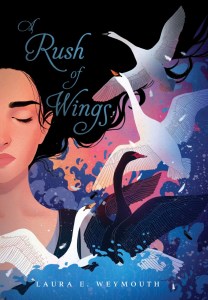
Review: I’m always down for a fairytale retelling of “The Seven Swans.” I have a pretty solid favorite in Juliet Marillier’s “Daughter of the Forest,” but there have been a few surprising contenders of the years. This month, strangely enough, I’ll be getting through two very different versions of the story! First off is “A Rush of Wings” featuring a very pretty cover! Alas, the story didn’t quite hold up to that promising start.

With latent magical abilities, there is nothing Rowenna wants more than to follow in her mother’s footsteps, using her gift to protect her family and the land. But where her mother is calm and serene, Rowenna’s spirit is wild and rebellious. So much so that her mother refuses to teach her, worried that Rowenna would lack the discipline to use such a gift wisely. But when Rowenna’s mother dies before teaching her, and then, disturbingly, returns changed for the worse, Rowenna is left without the tools to combat this powerful enemy. Now, with her loved ones trapped as swans and deprived of her voice, Rowenna must fight to understand and control the powerful magic within herself.

Obviously, I love the bare bones fairytale at the heart of the story: the young woman proving that strength comes from within, willing herself to keep going to save those she loves, pushing through pain and fear until the end. And that story can be found in this book. However, I was already struggling before we even got to that point, unfortunately.

For one thing, Rowenna was a difficult character for me to like. I understand her arch, one of coming to realize her own strengths and temper her more reckless moments. But that story seemed to mesh awkwardly with the typical character arch to be found in this fairytale. In the originally, you need to be wholly behind the heroine, to feel her pain with her, to urge her onwards and feel completely involved in the challenge before her. But with Rowenna, because she is set up originally in weaker position character-wise, I struggled to care for her story. She wasn’t outright unlikable, but she also didn’t have any particular aspects to her character that made her quickly appeal to me. Right there, the entire story was a bit hobbled going forward.

Beyond that, I found the writing to be stilted and awkward. Dialogue didn’t feel natural, and, worst of all, there was an abysmal lack of descriptive additions to scenes and characters. I couldn’t describe what almost any of the characters looked like or what their world truly held. It almost felt like the author was in such a rush to get to the action of her story, that she forgot to fully flesh out the world her story took place within. Without being grounded in any clear world or attached to the main character, the book felt like a rather sterile plot machine rather than a story.

One example of this problem came when fairly early in the story a few fantastical creatures were casually mentioned. I had no idea we were fully operating in this type of second world fantasy! Obviously there was magic, but the story went full on “magical creatures” on me, and without any descriptions of the world given to me, I had already established the world as largely based on our own. This is the kind of mental disconnect that can happen between a reader and a book when the author hasn’t done enough to establish the world firmly.

I was so sad to find myself struggling to finish this book. I think the author had some interesting ideas, but her characters and unclear world let the story itself down. Fans of fairytale re-tellings could perhaps add this to their list, but I think there are better versions of the story out there.

Rating 6: A bland main character and stilted writing left me feeling disconnected from the story overall.

Reader’s Advisory: “A Rush of Wings” is on these Goodreads lists: “Rowena” and YA Releases of November, 2021.

Find “A Rush of Wings” at your library using WorldCat, or at a local independent bookstore using IndieBound!

Kate’s Review: “The Bright Lands”

Book: “The Bright Lands” by John Fram

Publishing Info: Hanover Square Press, July 2020

Where Did I Get This Book: The library!

Book Description: The town of Bentley holds two things dear: its football, and its secrets. But when star quarterback Dylan Whitley goes missing, an unremitting fear grips this remote corner of Texas.

Joel Whitley was shamed out of conservative Bentley ten years ago, and while he’s finally made a life for himself as a gay man in New York, his younger brother’s disappearance soon brings him back to a place he thought he’d escaped for good. Meanwhile, Sheriff’s Deputy Starsha Clark stayed in Bentley; Joel’s return brings back painful memories—not to mention questions—about her own missing brother. And in the high school hallways, Dylan’s friends begin to suspect that their classmates know far more than they’re telling the police. Together, these unlikely allies will stir up secrets their town has long tried to ignore, drawing the attention of dangerous men who will stop at nothing to see that their crimes stay buried.

But no one is quite prepared to face the darkness that’s begun to haunt their nightmares, whispering about a place long thought to be nothing but an urban legend: an empty night, a flicker of light on the horizon—The Bright Lands.

Review: I went to a high school with a pretty terrible football team. And hey, sports weren’t really the point of this academic institution, but it was pretty funny that we were a few blocks away from one of the most elite sports schools in the state, while we just crashed and burned on the football field repeatedly. I went to one football game my entire high school career, and I only went because the guy I had a crush on was going. Oddly enough, that was one of the few games we won during my high school time. So I really don’t connect to the high school football worship that I hear about, but I absolutely know that it is a THING and that I am not interested in it at all. Enter “The Bright Lands” by John Fram, a small town with secrets (and a high school football obsession) horror novel that takes on not only urban legend scary story themes, but also a dismantling of homophobic and toxic masculinity culture. It really succeeds at the latter. The former, on the other hand, leaves a bit to be desired.

Our protagonist (well, one of many, but we’ll get there) Joel is a gay man who fled his small Texas town of Bentley after his sexuality was exposed in a very public and demeaning way. While hasn’t gone back and has been living it up in New York City, his younger brother Dylan, star of the football team, is his tie back to his home. So when Dylan reaches out via text and sends him strange and disturbing messages, Joel goes back, hoping to help his brother…. who then disappears. This is the bare bones of this book: a gay man who has to return to the town that inflicted great pain on him in hopes of saving his brother, and unbeknownst to him that the town is living with a dark secret that has been feeding off of young men for decades. As Joel digs into the mystery, he is once again steeped in the small town football craze, how the football players get away with a lot, and how gay people like him are harassed and brutalized by the community. Fram really presents how a town that prides itself on community and family values can be so harmful to LGBTQIA+ people, and how gay men will go to many lengths to hide who they are, or to suppress it with terrible consequences. I also liked seeing how he took the idea of the small town football obsession and examined how the value placed upon it and those who play it (who then are rarely held accountable for when they do bad things) can be unfair at best, and incredibly damaging at worst. The town places football on a pedestal that it will do anything to keep the secrets and wrongdoing of those involved hidden, and anything to keep them happy. All of this I really, really liked.

What didn’t work as well in “The Bright Lands” were the huge cast of characters, and a supernatural plot line that felt a bit neglected. I went in thinking that Joel was going to be the main person we followed. Then there was also Clark, Joel’s high school girlfriend (and unwitting beard) who is now a local cop who is pulled into Dylan’s disappearance and all that comes after. I could handle two, as both Joel and Clark work well together, they have a connection that has a bit of conflict, and they play well off each other characterization wise. But then there are a slew of other characters we follow, from football players to girlfriends to suspects and others, and it makes for a lot of perspectives that jump around a lot. Had we been more focused on Joel and Clark, I feel like I would have followed it a bit better, but as it was it felt like not enough attention was paid on most of the people we were following. On top of that, there is definitely an urban legend/supernatural element to this tale that makes it more of a horror novel than a thriller, involving some kind of being or creature that Clark had been told about by her mother when she was a girl, and Joel had potentially seen in passing one crucial night in his youth. And while it does, ultimately, focus in on this element by the end, it’s so few and far between in the build up that it feels more tacked on than anything else. It was a shame, because there was a lot of potential there that just wasn’t quite realized.

“The Bright Lands” has things that work and things that don’t, but I’m definitely interested in reading more John Fram in the future. Still not interested in the high value placed on high school football you see from time to time.

Rating 6: A really good examination of homophobia and toxic masculinity within a community filled with secrets, but too many characters and not enough monster moments.

Reader’s Advisory:

“The Bright Lands” is included on the Goodreads lists “Make Horror Gay AF”, and “Queer Horror”.

Find “The Bright Lands” at your library using WorldCat, or at a local independent bookstore using IndieBound!

Serena’s Review: “The Grimrose Girls”

Book: “The Grimrose Girls” by Laura Pohl

Publishing Info: Sourebooks Fire, October 2021

Where Did I Get this Book: Edelweiss+

Book Description: Four troubled friends, One murdered girl… and a dark fate that may leave them all doomed.

After the mysterious death of their best friend, Ella, Yuki, and Rory are the talk of their elite school, Grimrose Académie. The police ruled it a suicide, but the trio are determined to find out what really happened.

When Nani Eszes arrives as their newest roommate, it sets into motion a series of events they couldn’t have imagined. As the girls retrace their friend’s last steps, they uncover dark secrets about themselves and their destinies, discovering they’re all cursed to repeat the brutal and gruesome endings to their stories until they can break the cycle.

This contemporary take on classic fairytales reimagines heroines as friends attending the same school. While investigating the murder of their best friend, they uncover connections to their ancient fairytale curses and attempt to forge their own fate before it’s too late.

Review: This book had a few things going for it that bumped it up my “to be requested” list fairly quickly. First, boarding school books. Blame “Harry Potter” if you will or some weird American obsession with the British (often) boarding schools in general. I also love, love, love this cover! It quickly conveys many aspects of the books without the reader even needing to read the summary. Fairytale like artwork, girl squad, diversity (at least from what we can see of different body shapes being featured.) Plus, it has a hint of creepiness that points to the murder mystery at the heart of the story. So, with all of that together, I dove right in with high hopes.

As close as friends and roommates can be, Ella, Yuki, and Rory are determined that the police have it wrong: their roommate didn’t kill herself and something more nefarious is at work. When they get a new roommate, things are kicked into another gear altogether. Now, they realize it’s not simply a matter of solving a potential murder, but they must unravel the world of fairtyales and magic that they are all caught up within. Turns out, each is destined to re-live a classic tale and fall prey to the dark curses that seem to always exist at the heart of such tales.

I’ll put it right out there, I didn’t enjoy this book as much as I wanted to. But it’s also one of those books that I do think will appeal to a bunch of different readers, so I fully expect opinions to vary quite a bit on this one. I will immediately give it props for tons of representation. But I will also side-eye that a bit with the fact that it did seem like the author was trying to cover literally every single base. And yes, I’m all for increasing diversity in books in every way. But I don’t think every book should be trying to cover every single angle itself. It not only is impossible, but it does a disservice to each individual character represented, as jamming a book too packed ultimately reduces page time for any one character, thus reducing that character to a few (often well-known and, if not harmful in anyway, still fairly stereotypical) key traits. Nothing raised my eyebrows at all, but while I give props to the author for the attempt, the sheer number of characters as a whole did significantly reduce my enjoyment of this book.

And this is part of the reason I think it will be a book with divided tastes. I’ve come to realize that I generally struggle with books that have more than two POVs. There are a few exceptions, like “Six of Crows,” but really, not many. Here I had the same problems I’ve always had. The story is so busy jumping from character to character that I never have the time to form any type of emotional investment in any one character. As a reader who enjoys books mostly due to characterization, this is a big problem for me. This many POVs also significantly hinders the pacing of a book. You have to spend so much time in the onset setting up each individual character, that the reader must get through a good number of pages before anything resembling a plot begins to unfold. Here, for example, we only had one chapter from each character really describing or even experience their grief over their lost friend. Because there are so many characters to get through, I could never feel the strength of that connection as just as quickly the story needed to move on with each of them.

I did enjoy the various fairytales and the ways they were threaded into the story. There were enough clues here and there that were fun to spot (they weren’t well-hidden or anything, but I enjoyed it all the same). The main mystery, however, again suffered from this over-abundance of plot and characters. There were so many things to get through that there were times when I felt like the death of their friend was almost forgotten. I’ll also say that by the end I didn’t feel as if I was given enough answers to any of the questions presented. All of the character kind of just took all of the magical elements in stride without batting an eyelash. And the revelations that did come were few and far between.

I’m starting to question my own selection process here. I think I need to start taking a second thought before diving into these large cast POV books. I’ll also say that my history with boarding school books is rather spotted, so maybe that too shouldn’t be as much of an “auto request.” Lastly, I don’t know what it is, but the publisher Sourcebooks Fire must have a great book description writer because they are always putting out books that I get super hyped about but then don’t end up enjoying that much. Which is too bad.

Rating 6: Too many things packed into one book reduced my enjoyment of all of them individually and as a whole.

Reader’s Advisory:

“The Grimrose Girls” is on these Goodreads lists: 2021 Queer SFF and Boarding School Mysteries.

Find “The Grimrose Girls” at your library using WorldCat, or at a local independent bookstore using IndieBound!