Publishing Info: Tom Doherty Associates, April 2016; Original Dutch edition published in April, 2013.
Where Did I Get This Book: I own it.
Book Description from Goodreads:Whoever is born here, is doomed to stay ’til death. Whoever settles, never leaves.
Welcome to Black Spring, the seemingly picturesque Hudson Valley town haunted by the Black Rock Witch, a 17th century woman whose eyes and mouth are sewn shut. Muzzled, she walks the streets and enters your homes at will. She stands next to your bed for nights on end. Everybody knows that her eyes may never be opened.
The elders of Black Spring have virtually quarantined the town by using high-tech surveillance to prevent their curse from spreading. Frustrated with being kept in lockdown, the town’s teenagers decide to break their strict regulations and go viral with the haunting, but in so doing send the town spiraling into the dark, medieval practices of the past.
Review: It takes a heck of a lot to scare me, guys. I’ve been watching suspense films like “Rear Window” and “Vertigo” since I was a kid, I started watching slasher films when I was in middle school, and my first venture into horror movies in the theater was when a chaperone took me and a friend to “The Blair Witch Project”the summer before freshman year of high school. Suffice to say, I’m a veteran at the horror rodeo, and it now means that the subject of horror I’m consuming needs to really pull out all the stops in very specific ways before I am affected by it. It’s good in that I’m not kept up late at night jumping at every sound, but bad in that I like being scared for funsies every once in awhile.
But “HEX”? “HEX” kept me up at night.
I don’t know why I thought reading it before bed was a good idea. (source)
I think that it was a combination of multiple things that made “HEX” such a scary read for me. The first is that Katherine van Wyler (aka the Black Rock Witch) just sounds like a really scary entity. She walks in silence, towers over people, just stands in place for hours on end, and has her eyes and mouth sewn shut. I mean jeeze, this is the stuff that my nightmares are made of. While the people in Black Spring are used to her, and while they pretty much know how to handle her, that isn’t to say that they aren’t living every day in fear of her and what she could do, and has done in the past. You do get Katherine’s backstory, but Heuvelt saves that for a little later. The book itself just opens with our protagonist family, Steve, Jocelyn, Tyler, and Matt Grant, going about their business as Katherine stands and blindly stares in their living room. I closed the book after the first chapter and just sat there for a moment, wondering what exactly it was I was getting myself into. There are scenes with her that took my breath away because I was so tense, and scenes where I was nearly shaking. She is absolutely terrifying. But Katherine is tragic as well. She has cursed this town for what it did to her back when Black Spring was still run by Dutch settlers, and as you find out more about what that is, the more sympathy you feel for this creature that everyone lives in fear of. Not to say that the reader isn’t still in fear of her as the book progresses. I mean, the description alone is just scary as hell, and there were moments of characters tromping through the woods at night that took me back to that summer before freshman year when I was practically pissing myself watching “The Blair Witch Project”. That is to say I had to nope the hell out and stop reading.
But something that sets this book aside from other genre horror is that it is not The Black Rock Witch who should be most feared. The town of Black Spring has evolved in such a way because of this curse that they have turned into something far more unsettling. While I didn’t have as big of a problem with the HEX Group (the surveillance group that keeps tabs on Katherine’s whereabouts through surveillance and the vigilance of the townspeople reporting in on their phones), I most certainly had a problem with the Town Council. Led by a zealous old man named Cotton Mathers, the elders of the Town Council are determined to make sure that everyone in Black Spring keeps this life and Katherine a secret from the outside world, and anyone who goes against those rules are subject to unspeakable punishments. Black Spring is still stuck in an age that is very reminiscent of the Puritans, and their religious fervor and practices of atonement and groupthink were by far the most upsetting moments in this book. The way that the town gets whipped up into a frenzy out of fear of Katherine just reeked of the scariest parts of history, and while I sometimes had to put the book down because of the witch-related suspense, I was far more upset by the absolutist violence and terror that the humans in this book doled out, to their own citizenry and to Katherine alike.
The characters were also very well written. The members of the Grant Family were the main protagonists, with Steve and Tyler at the forefront. Steve and Jocelyn were unlucky enough to move to Black Spring from the outside and realize that they couldn’t leave for longer than a couple weeks, but Steve has since adapted to the ways of the town and believes in keeping the status quo as a way to protect his family. Steve loves his family to a fault, but most of his love is for his oldest, Tyler. Steve really just wants everyone to be safe, and is acquiescent to the life that they have found themselves in, even if that means that they are ultimately prisoners.
Tyler, on the other hand, has grown up in Black Spring, but has also had the Internet his whole life and has seen the outside world, and wants to live in it. Their conflicting views provide the main conflict at the heart of this book: the old ways being pushed against by the younger generation. Tyler is the one who wants to expose the Black Rock Witch Haunting to the world via his website and blog, thinking that if outsiders knew it may break the curse, while the elders of the town think that it would just spread it. I understood both sides of the argument, and what I liked best about it was that neither side was completely right, or wrong. Tyler has a hard lesson to learn in who to trust for such good intentioned (though ultimately selfish) sentiments, as one could argue it’s one of his friends, Jaydon, who sets of the events of this book. Jaydon has his own personal vendetta against Katherine, and that in combination with a childhood of abuse and rage set off a lot of very upsetting events and violence directed at Katherine that made me, as a woman, a bit sick to my stomach to read. Again, it’s the people of Black Spring that are the biggest villains of all in this book.
I also greatly enjoyed the character of Robert Grim, the head of the HEX Group and main tracker of Katherine’s movements. He’s brash and he’s sarcastic, but he’s also one of the few voices of reason in Black Spring. He’s a realist living in a town filled with superstition and fear, and he is noble to a fault when it comes to trying to protect the community he doesn’t really fit into, not at the heart of his being. It would have been so simple to make him just another antagonist, but Grim is quite possibly the most righteous of characters in Black Spring.
“HEX” was a fabulous, very scary read. Fans of horror really need to pick this one up, because it has everything you could ever want. But maybe don’t read it at night. And if you live by a wooded area like me, definitely try not to think about that either…
Rating 9: This book scared the dickens out of me. Definitely recommended but maybe not for those easily scared.
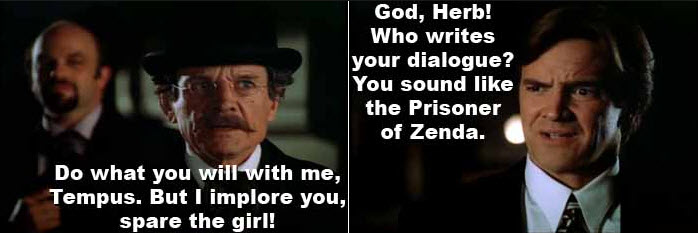
Last week, the two of us had gotten together at Serena’s house to continue our long and drawn out re-watch of a show that both of us enjoyed in childhood. That show is “Lois and Clark: The New Adventures of Superman,” and it was a formative part in both our childhoods when it came to portrayals of Superman in popular culture. With the new trends of the DC Universe leaning more towards gritty and ‘real’ interpretations of their characters, it’s been very fun going back and watching a more light-hearted version of Clark Kent/Superman, and his best gal-pal Lois Lane. Even though there are a lot of things about this show that are painfully 1990s (see below for one of many fashion statements), the storylines, characters, and themes really hold up for 21st century sensibilities.
So we thought that it would be fun if we took a fond look back on this show and the ways that it brought Lois Lane, Clark Kent, and all the important characters of Metropolis to life!
History of the Show
“Lois and Clark: The New Adventures of Superman” premiered on Sunday nights on ABC in September of 1993. Teri Hatcher was cast to play Lois Lane with Dean Cain as Clark Kent/Superman.
Before “Lois and Clark,” Hatcher was probably best known for recurring roles on “The Love Boat” and “MacGyver,” though one of her first jobs was as a cheerleader for the 49ers. These days people will probably know her best from the show “Desperate Housewives,” but to us she will always be known as the best damn Lois Lane there’s been. For the part of Clark Kent, the NFL was consulted once again, as they cast Dean Cain, a former player for the Buffalo Bills who remained benched for the entirety of his career due to an injury. He did commercials and guest roles before winning the role of Clark Kent.
The series creator, Deborah Joy Levine, was the show-runner for the first season. Unfortunately, the show’s time slot left it in direct competition with “Murder, She Wrote,” so top performance was not in the cards straight out of the gate. (Angela Lansbury was, and still is, a formidable foe.) But a solid second was the goal, and Levine and her writers knew they had to approach their characters in a way that would be family friendly, but entertaining for adults as well. In a departure from most previous Superman storylines and depictions, “Lois and Clark” refocused its story on the relationship between Lois Lane and Clark Kent rather than the exploits of Superman, with Supes’ dazzling feats of heroics often playing an exciting, but decidedly second, fiddle.
Between season 1 and 2 a number of changes were made. The show completely dropped the character of Cat Grant, the saucy and bawdy gossip columnist at the Daily Planet (played perfectly by cult TV show staple Tracy Scoggins), and replaced their Original Jimmy Olson, Michael Landes, with Justin Whalin to make Jimmy 2.0.
FUN FACT: In the commentary of the pilot episode on the DVD release, it was revealed that this recasting was due to a concern that Landes, also dark haired and eyed, too closely resembled Cain’s Clark Kent.
This also marked the departure of Lex Luthor as the main over-arching antagonist (as John Shea apparently had a falling out with production), whose presence as a corporate villain set the focus for Season 1. Sadly, Deborah Joy Levine also departed the show after Season 1, along with the original writing staff. The network wanted a bit more focus on action and romance, and there is a noticeable tonal shift to a more over-the-top feel starting in Season 2. Instead of focusing on more realistic villains and undercover crime reporting, villains started becoming far more magical, supernatural, and fantastical. At times, this shift also resulted in an increased, and one has to imagine, unintentional, comedic factor with regards to the show’s villains. One remembers (fondly, I might add), re-imaginings of classic Superman villains, such as the Toyman, into gushing fountains of cheesy 90s goodness (this version creates toy rats that spray a goo into people’s faces, reducing them to a greedy, child-like state. This affect even works on Superman. He steals Lois’s candy, and it’s great.)
Season 3 was the most successful of the seasons ratings-wise, though much of the show became about a wedding between Lois and Clark that just couldn’t quite get off the ground. But by Season 4 ratings started to drop, the show got tossed around different time slots, and even though the titular characters did finally get married “Lois and Clark” was eventually not renewed for a fifth season (though apparently they had been told that they probably would be).
FUN FACT: The wedding episode was timed to air with the release of the comic book “Superman: The Wedding Album” which featured the same marriage for the first time in 60 years; the first “for realsies” marriage that is, as there were several dream sequence type “fake outs” over the many decades previous.
The show ended with Lois and Clark, after being told that they wouldn’t be able to have any biological children together, finding an abandoned baby on their doorstep wrapped in a blanket featuring the Superman symbol. So ultimately, what was meant to be a cliffhanger, oddly helped wrap the show up in a suitably ‘happily ever after’ kind of way. The final episode aired on June 14th, 1997.
Lois/Clark/Superman Character Analysis
The show took a couple of interesting characterization stances when it came to telling the stories of Lois Lane and Clark Kent/Superman. The first was that it was made clear early on that Clark Kent does not have the usual life balance that Superman had in other comic and movie portrayals. In the show Clark lives in an apartment, acts like Clark when no one is looking, and doesn’t become Superman as we know him until the pilot episode. He is even unaware of his Kryptonian background until several episodes into the first season. In this way, it is firmly established that Clark Kent IS his identity; Superman is his alter ego.
FUN FACT: To further emphasize this shift in dominant personalities, Clark Kent and Superman’s hair styles are swapped with Superman sporting the slicked back and stylized hair, while Clark Kent features the more natural and laid back floppy style.
Clark’s humanity is further highlighted with the many romantic blunders that he commits throughout the show’s running. We spend much of our re-watches throwing our hands up in frustration and saying “No, Clark! Not again! Lois…you can do better.” “No, she can’t, it’s Clark.” “You’re right, and I’m sorry for saying it, but really…?” Cain plays the role with a sincere but goofy take, always pulling back at the right moment to prevent the character from taking himself too seriously.
Cain’s strengths definitely lie in his portrayal of Clark Kent. Due to the show’s focus on Clark as the character and Superman as the role, when Superman is on screen he is often saddled with the cheesier aspects of the show, a fact that isn’t helped by what are now very dated special effects. The character is further weakened by his isolation from the rest of the cast, often working against the aforementioned over-the-top villains for the most part with only dashes of interactions with a Lois who (especially in the first two seasons when she doesn’t know his true identity) is often at her most lovesick and ridiculous. While Cain is still effective in this role, the added layer of playing the character of Clark who is then playing the character of Superman adds a certain strain to his acting that can seem a bit forced at times.
In the end, it is Hatcher who carries the show with the stronger performance. While Lois plays the usual ‘damsel in distress’ role, she is also written as a very competent and well respected reporter. From the beginning through to the show’s end, Lois is clearly the superior reporter and takes the lead in their professional life. And, let’s be real, their personal life too, once she gets the whole super identity thing figured out. Hatcher wraps up a character who could verge into the realm of overbearing and ridiculous within layers of sweetness, insecurity, and vulnerability that makes Lois completely relatable and endearing.
And ultimately, it is the undeniable chemistry between Cain and Hatcher that carries the show. The progression of their relationship, from strained co-workers, to friends, to dating, to married life, is always peppered with the perfect amount of humor, respect, friendship, and finally love, and is joy to watch.
Other regular characters included Jimmy Olson, Perry White, and, in another notable difference from many Superman stories, the routine appearance of Jonathan (thankfully living!) and Martha Kent.
Villains
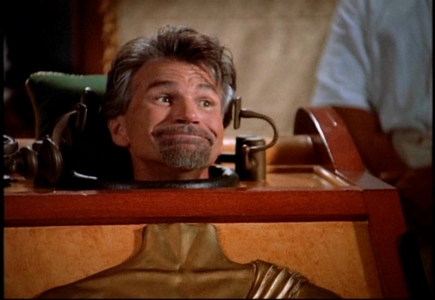
The villains on “Lois and Clark: The New Adventures of Superman” ranged from fairly realistic corporate and crime moguls, to strange and out there time travelers, ghosts, or in the case of Spencer Spencer, a head on a deformed torso that he hides in a box.
Played by a guy who looks like a Swayze Brother but isn’t a Swayze Brother. (source)
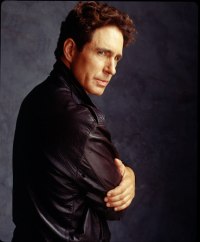
The show’s most recognizable villain, however, is Lex Luthor, played by John Shea.
This interpretation of Luthor follows the John Byrne version of the character, who isn’t so much a mad scientist as he is a corporate villain with lots of money at his disposal. This version is the one that many people think of for Luthor these days, and Shea fits the part to a t. Shea’s Luthor is charismatic and charming, a villain that is pretty fun to hate. Or not hate, in Kate’s case. Shea has good chemistry with Cain in their antagonistic moments, but his chemistry with Hatcher crackles. The viewer can hate him for not only wanting to take down Superman, but also because he effortlessly and, one could argue, realistically romances Lois away from Clark. While it would have been an obvious choice to make him a bad boyfriend, Hatcher’s strong, confident Lane would never have tolerated that. So this Luthor is formidable in all ways, and the ultimate villain for the show.
And then the character was killed off at the end of Season 1.
This gave other villains time to shine. While a few of the comic book villains did show up (perhaps most notably Mr. Mxyzptlk, played by Howie Mandell), quite a large number were original.
FUN FACT: Aside from Lex Luthor, General Zod is likely one of the best known Superman villains. However, the show could not get rights to the character. Instead, they created a nearly identical character named Lord Nor who, alongside a group of Kryptonians, attempts to take over Earth in season 4.
Many times these villains would be B-lister guest stars, or people who made their name in other sci-fi/fantasy television shows or movies. You had Bruce Campbell playing Bill Church Jr., the leader of the nefarious organization Intergang. You had “Star Trek: Next Gen” alums Denise Crosby and Jonathan Frakes playing Lex Luthor’s ex-wife and a wealthy megalomaniac, respectively. Even people who had shows on ABC at the time would make tongue in cheek guest appearances, as was the case with Drew Carey from “The Drew Carey Show” when he played a realtor who accidentally summoned the ghost of a murder victim. Kathy Kinney, who played Drew’s nemesis Mimi on “The Drew Carey Show,” was the ghost, naturally. The villain-of-the-week became the name of the game format of the show, and the more scenery they could chew, the better.
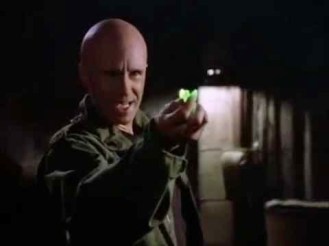
Luthor did return a handful of times for a couple of small arcs (reanimation for the win!) But even he wasn’t unaffected by the new “the bigger the better” bottom line for how villains were portrayed. He went from a suave and chill super-villain with a bank account to a crazed science experiment gone mad with dreams of revenge and reconnecting with his lost love, Lois Lane.
Shea played both versions well, but it’s safe to say that he was more fun when he was tangling with Superman with an ice cold demeanor, unphased by most things that the Man of Steel could throw at him.
The upside to this carousel approach to villains is that the show really is, at its heart, about Lois Lane and Clark Kent figuring out their relationship, and Clark figuring out how to function both as himself and as Superman. So ultimately, it’s just as well that the villains, Luthor aside, never stuck around too long. The prolonged angst of dark and demented nemeses wouldn’t fit the tone of the show at all. The villains serve their purpose, but at the end of the episodes they are, usually, vanquished, and the status quo is returned for Lois and Clark.
Favorite Episodes
Kate:
Look how thrilled she is to be working with him.
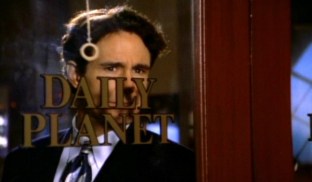
You probably won’t be surprised to hear that my favorite episodes come from the first season, as that was the season that was more grounded in subtleties. I love “Pilot,” as I feel that it perfectly establishes every single one of the characters as the show is writing them. Clark Kent comes to the Daily Planet looking for a job and looking for a normal life, but by the end of the episode he’s taken on the Superman role in hopes of helping others. Lois has the perfect introduction in this, just coming off an undercover case that she has totally nailed. She is ambitious and snide, but clearly has a very good heart along with a good head on her shoulders. Her disdain for boy-scout Clark Kent as her new partner (a partner she does not want nor think she needs) is hilarious. Plus Dean Cain just embodies the persona of Clark Kent with his ‘aw shucks’ demeanor. And an MVP award has to go to Lane Smith, who is the best damn Perry White ever with his blustery attitude and ‘God I hate/love my staff so much’ demeanor. He takes a chance on Clark, but doesn’t let him off easy either. That’s the Perry I know and love.
Lex wishing he’d just gone to the opera without Lois. (source)
I also have to give a shout out to the episode “Fly Hard,” the nineteenth episode of Season 1. In this one Clark, Perry, Lois, Jimmy, and Lex Luthor are being held hostage at the Planet by a group that is trying to find a large amount of money hidden in the building. This one I really like because it has a good amount of suspense, a very funny scene involving Cat being completely oblivious about her co-workers being held hostage, and one of the best pick up lines that Lex Luthor has given in the history of Lex Luthor pick up lines (“[Money] can’t buy brown eyes.” I’m sorry, I’m kind of a Lois/Lex shipper on this show because of how good Shea is when he’s on screen with Teri Hatcher). “Fly Hard” sticks out in my mind very prominently.
Serena:
I definitely agree with Kate’s picks and would have listed them as well! For my picks, I’m going to highlight an episode from Season 2 and Season 3.
For Season 2, one of my favorite episodes has always been number 7 “That Old Gang of Mine.” It also perfectly illustrates the more nonsensical villains that were introduced in this season by featuring a mad scientist who, after discovering that he knows how to raise people from the dead, decides that the best way to impress people with this power is to bring back famous criminals such as John Dillinger and Al Capone. What is this plan?!? Anyways, Lois and Clark investigate, but while undercover, Clark gets shot. Of course, Clark, not being Superman, must “die.” This episode was a real turning point for Lois’s character with the realization of how deeply she depends on Clark’s friendship. Clark, too, also realizes how important his life in Metropolis is (Clark’s history before the timeline of the show involved him globe-trotting and never laying down roots due to his lack of a secret identity and inability to not help when he sees something going wrong). Their reunion is also very cute!
The second episode that I always love rewatching is in season 3 episode 13 “Tempus, Anyone?” Aside from Lex Luthor, Tempus is the second most-used villain in the show, appearing in 3 out of the 4 seasons. A time traveler from the future, Tempus for some reason doesn’t like good things and wants to prevent the utopian future that was created due to the actions of Lois/Clark/Superman, so whenever he shows up, time tomfoolery is sure to happen! His appearance in season 3 is his second attempt at disruption when he whisks Lois away to a parallel universe where things are very different. In that universe, Lois died years before meeting Clark. More so than almost any other episode, this is a “Lois episode,” not only featuring her as the well and true heroine of the story, but also highlighting how crucial her presence is to those around her, most importantly, to Clark.
Also, Tempus has some of the funniest lines in the whole show! (source)
So, there you go! A very long winded “brief” history of our love for the 90s classic “Lois and Clark: The New Adventures of Superman.” Are there any older tv shows that you consider lost gems? Let us know in the comments below!
(Many sources of information in this post come from the Wikipedia page on “Lois and Clark: The New Adventures of Superman” and the references that can be found at the bottom of it.)
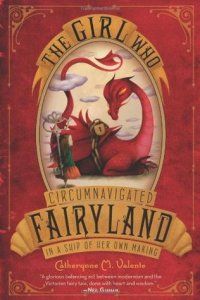
Book: “The Girl Who Circumnavigated Fairyland in a Ship of Her Own Making” by Catherynne M. Valente
Publishing Info: Feiwel & Friends, May 2011
Where Did I Get this Book: from the library!
Book Description from Goodreads:Twelve-year-old September lives in Omaha, and used to have an ordinary life, until her father went to war and her mother went to work. One day, September is met at her kitchen window by a Green Wind (taking the form of a gentleman in a green jacket), who invites her on an adventure, implying that her help is needed in Fairyland. The new Marquess is unpredictable and fickle, and also not much older than September. Only September can retrieve a talisman the Marquess wants from the enchanted woods, and if she doesn’t . . . then the Marquess will make life impossible for the inhabitants of Fairyland. September is already making new friends, including a book-loving Wyvern and a mysterious boy named Saturday.
Book: It’s going to be so hard to talk about this book without gushing. Or crying. Or gushing. Or crying/gushing. (Gushily crying?)
But remember how I listed the “Oz” books as one of the formative series of my childhood? Along side a similar love for the “Narnia” series and a brief stint as Alice in a children’s theater production of “Alice in Wonderland,” I have a special fondness in my heart for books about children traveling to fantastic and nonsensical worlds. But the true joy of this book was its heart, the deeper meanings, feelings, and yes, tragedies, that could be seen sparkling through the ridiculous trappings of a crazy Fairyland world. And I loved every minute of it.
Beyond the gushing, it’s also going to be hard to write about this book given what it is. While there is a plot, and there are great characters, its all wrapped up in the trappings of madness. And the language itself is what makes the story great. How do I really capture that in a review? So, I might try something different here, and pull out some of my favorite quotes and use those to frame my thoughts.
“Stories have a way of changing faces. They are unruly things, undisciplined, given to delinquency and the throwing of erasers. This is why we must close them up into thick, solid books, so they cannot get out and cause trouble.”
September, our 12 year old heroine, is ready for an adventure. As a child who loves to read, she is well accustomed to what it would take to be a great traveler and is only waiting for her invitation.
“One ought not to judge her: all children are Heartless. They have not grown a heart yet, which is why they can climb high trees and say shocking things and leap so very high grown-up hearts flutter in terror. Hearts weigh quite a lot. That is why it takes so long to grow one. But, as in their reading and arithmetic and drawing, different children proceed at different speeds. (It is well known that reading quickens the growth of a heart like nothing else.) Some small ones are terrible and fey, Utterly Heartless. Some are dear and sweet and Hardly Heartless At All. September stood very generally in the middle on the day the Green Wind took her, Somewhat Heartless, and Somewhat Grown.”
And one day it comes in the form of a Green Wind riding a leopard ready to whisk her away to Fairyland where she will get in an awful lot of trouble, meet some great friends like a Wyverary (a wyvern/library definitely NOT dragon) and a mysterious boy names Saturday, and be called upon to de-throne a monarch.
“Such lonely, lost things you find on your way. It would be easier, if you were the only one lost. But lost children always find each other, in the dark, in the cold. It is as though they are magnetized and can only attract their like. How I would like to lead you to brave, stalwart friends who would protect you and play games with dice and teach you delightful songs that have no sad endings. If you would only leave cages locked and turn away from unloved Wyverns, you could stay Heartless.”
The beautiful language in this book can not be praised enough. It is difficult enough to write a nice, straight forward story. But to write nonsense, and nonsense that hides deep, dark truths while also just being simply beautiful to read and repeat aloud, that is a unique and rare talent.
“… but as has been said, September read often, and liked it best when words did not pretend to be simple, but put on their full armor and rode out with colors flying.”
Valente also employs another tricky technique, that of inserting her own authorial voice into the story. I’ve seen this ploy used all too often to super-cheesy effect. But here, like with everything else, Valente captures the perfect balance of whimsy and wit, so instead of being read as intrusive or tonally jarring, these insertions only add depth and further insight to the story.
“It is true that novelists are shameless and obey no decent law, and they are not to be trusted on any account, but some Mysteries even they must honor.”
So, I have successfully reviewed this book while mostly relying on the author’s own work to speak for itself and done very little myself. But, that too, is a praise of the book and of the author herself. I am proceeding straight to the next book and, if it is as amazing as this one, will likely be equally incoherent in my next review.
“All stories must end so, with the next tale winking out of the corners of the last pages, promising more, promising moonlight and dancing and revels, if only you will come back when spring comes again.”
Rating 10: Could have gotten this rating for this quote alone, but the book also completely earned it.
“She sounds like someone who spends a lot of time in libraries, which are the best sorts of people.”
Reader’s Advisory:
“The Girl Who Circumnavigated Fairyland in a Ship of Her Own Making” is included on these Goodreads lists: “Books that Love Words” and “Girls with Dragons” (but A-Through-L is NOT a dragon!!)
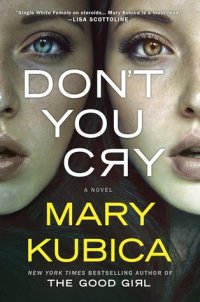
Book Description from Goodreads:In downtown Chicago, a young woman named Esther Vaughan disappears from her apartment without a trace. A haunting letter addressed to My Dearest is found among her possessions, leaving her friend and roommate Quinn Collins to wonder where Esther is and whether or not she’s the person Quinn thought she knew.
Meanwhile, in a small Michigan harbor town an hour outside Chicago, a mysterious woman appears in the quiet coffee shop where eighteen-year-old Alex Gallo works as a dishwasher. He is immediately drawn to her charm and beauty, but what starts as an innocent crush quickly spirals into something far more dark and sinister than he ever expected.
As Quinn searches for answers about Esther, and Alex is drawn further under Pearl’s spell, master of suspense Mary Kubica takes readers on a taut and twisted thrill ride that builds to a stunning conclusion and shows that no matter how fast and far we run, the past always catches up with us in the end.
Review: I don’t know about you guys, but I have a guilty pleasure love for the movie “Single White Female”. While it never really scared me so much (the only time I’ve lived with a stranger was in the dorms, and my friend Megan is the bee’s knees), I did enjoy how creepy it was. So when I heard about “Don’t You Cry” by Mary Kubica, and saw it described as “‘Single While Female’ on steroids”, well. I mean, come on. Let’s do this. The fact that it was written by Kubica was just the icing on the cake, as I read her previous novel “Pretty Baby” earlier this year and found it truly addictive. Her first person POVs in that were well done and very unreliable, making it a book filled with unpredictable (but yeah, sometimes predictable) twists and turns. The good news is that “Don’t You Cry” follows a similar structure of expectations, as it was definitely creepy and caught me off guard a number of times. The not as good news is that sometimes in an effort to throw the reader off the scent, it made some characters farfetched and treading into mixed up territory.
There are two different perspectives in this book that alternate between chapters. First there is Quinn, the roommate of the missing Esther, and then there is Alex, a teenager in a small town who leads a lonely life until a mysterious stranger arrives. I’m going to start with Alex, as I found his parts to be the weaker of the two. I understand why he was used, for the most part, and seeing him get close to ‘Pearl’ (as he calls the mysterious stranger) was a unique way to present some of the missing puzzle pieces in the mystery at hand. But at the same time, Alex felt like an odd choice of character to plant in this role. He didn’t really have any connection to the rest of the mystery, he felt more like a hapless bystander who was just there out of convenience for later plot points. While I know I was supposed to feel bad for him, he never really got past a superficial characterization of ‘the loner boy who has no one who loves him and aches for affection’. I like this trope just fine if it is properly explored, but in this case it wasn’t, and he just kind of bored me. His hardships were more just there not because it made his character interesting, but because it made some of the late game choices he made plausible. And that didn’t really fly for me.
But then there is Quinn’s side of the story. This was definitely the stronger of the two perspectives, and the one that I most wanted to be reading. But there is a problem with this side too. I know that the whole point of the thriller genre is to make the reader question what is genuine and who the true threats are. Kubica did a really good job of this in her book “Pretty Baby”, as in that book one of the narrators slowly descended into madness. It was written in such a way that it was like the frog in the slow boil. I’m going to be a little spoilery here, because it doesn’t really take away from the overall mystery, because I need to address this issue. Quinn, to me, seemed a bit unhinged and nuts. There were things that she did that just seemed very off and obsessive, and I was fairly convinced that she was going to be the end game antagonist. But lo and behold, she wasn’t. And I can’t help but feel like she was still just a little too nuts to be someone that we are ultimately supposed to be rooting for. I don’t know if I was just assuming that she was insane and therefore just saw that in everything, or if Kubica did too much in trying to red herring her. I appreciate trying to mislead the reader, but I think that it went a little too far with Quinn.
The mystery itself was pretty well done. I had no idea what was going on and when I thought I’d figured something out, it turned out I hadn’t. I was turning the pages very quickly during the climax, eager to see how it all fell into place, and looking back through the narrative the keys to the mystery were sprinkled throughout expertly.
Rating 7: The mystery was pretty strong and kept me guessing, but the characters were either too flat, or overly suspicious.
Eleanor West’s Home for Wayward Children:
No Solicitations
No Visitors
No Quests
Children have always disappeared under the right conditions; slipping through the shadows under a bed or at the back of a wardrobe, tumbling down rabbit holes and into old wells, and emerging somewhere… else.
But magical lands have little need for used-up miracle children.
Nancy tumbled once, but now she’s back. The things she’s experienced… they change a person. The children under Miss West’s care understand all too well. And each of them is seeking a way back to their own fantasy world.
But Nancy’s arrival marks a change at the Home. There’s a darkness just around each corner, and when tragedy strikes, it’s up to Nancy and her new-found schoolmates to get to the heart of the matter.
No matter the cost.
Review: I highlighted this novella as an upcoming release that I was anxiously looking forward to back in April. I have read some of Seanan McGuires other books and have liked her style. Beyond that, the premises is right up my alley.
When my sister and I were little (or maybe only a few years ago, too), we would discuss what we would do if we suddenly came upon a portal to another world. The conversation was always pretty short: we’d go through of course! Having grown up on stories where children visit places like Oz, Narnia, and Wonderland, this really seems to be the only option.
Going is never in question and there are millions of stories that share these adventures. But what happens when these children come back? (I am restraining myself from going into a long, drawn out discussion about the existential trauma that the Pevensies children must have gone through after living full adult lives in Narnia only to suddenly topple back to their own world as small children. If you really think about it for a minute, the true horror of that situation really sets in. Ok, mini rant over.)
“Every Heart a Doorway” addresses this very issue. This novella posits that every child who disappears to these different worlds is also matched to a world that fits an inner part of themselves that cannot be fully expressed here in the human world. And when those children (adults in children’s bodies, many of them) return, it is not by free choice. Nancy is one of these children. After spending the last several years in an Underworld, the “Halls of the Dead” world specifically, she has returned to the “real” world and finds that she’s not too happy about it. Her parents, confused and saddened by the loss of their daughter of before, a past person that Nancy herself does not mourn, do what many such parents have done: carted her off for “treatment.” Luckily for Nancy, this “treatment” consists of a boarding school operated by a woman who knows all too well of Nancy’s unique struggles, having herself traveled between worlds for much of her life.
It’s amazing how much ground McGuire covers in such a short story. The book is only 150 pages long and yet she lays out not only Nancy’s story, but several other unique characters as well. Such as Jack and Jill, twins who spent years and years in a land called “The Moors” which seems to be based on old horror movies such as “Dracula” and “Frankenstein.” There’s Sumi, Nancy’s roommate, who traveled to a nonsense world, and perhaps has the most honest things to stay about these experiences from it. And Kade, a boy who was scooped up by fairies as a child, but who was kicked out when they learned that the little girl they thought they had captured identified as a boy and was much more interested in slaying trolls than in parading as their princess.
Alongside these fantastic characters, McGuire creates a unique system for cataloging these worlds, with axis of Nonsense and Logical with cross beams of Virtue and Wicked and many other offshoots as well. As a longtime reader of fantasy stories where characters world-jump, it was great fun looking at this mapping process and trying to apply it to other magical worlds from stories.
The mystery at the center of the story is also very effective and another huge mark in its favor. Again, the author had half the page count of a typical book to fit in all of these elements. I loved every minute of this book, and while I would love to have spent more time with these characters and this exploration of children traveling to fantasy worlds and their experiences after returning, the best compliment I can give any novella is to say that I felt fully satisfied with it as a short stand-alone.
Rating 9: Really great read! Fun characters, fun mystery, and most importantly, a great exploration of a typical fantasy trope.
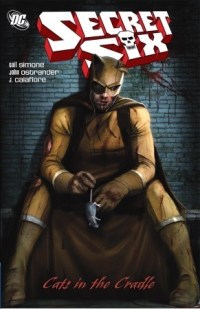
Book: “Secret Six (Vol.4): Cat’s in the Cradle” by Gail Simone, Jim Calafiore (Ill.), R.B. Silva (Ill.), and Alexandre Palamaro (Ill.)
Publishing Info: DC Comics, January 2011
Where Did I Get This Book: The Library!
Book Description from Goodreads:Gail Simone’s fan-favorite team of rogues and bad guys returns in an all-new collection that pits one team member against the whole group.This volume finds Thomas Blake – a.k.a. Catman – heading to Africa to find the three men who kidnapped his long lost son. Catman leaves a trail of destruction in his wake that threatens to destroy the Secret Six once and for all.
Review: As I am sure it was clear in my previous review of the series “Secret Six”, I was worried that the story was starting to become stagnant and repetitive. I knew that I still liked it enough to keep going, but I was starting to fret that things weren’t going keep my interest. But when I picked up “Cat’s in the Cradle”, I was immediately pulled back into the story, because the focus was, very clearly, going to be on Catman.
The thing about Catman is that of the entire group, he is the one who is the most morally ambiguous. He has been labeled a villain, and tries to wear that label with pride, but there is something in him that makes him tread towards goodness at times. We finally got some more insight into his past, and why he is the way he is. Spoilers: it’s absolutely heartbreaking. Along with being a story about underdogs and misfits, “Cats in the Cradle” explores the story of fathers and sons. The title alone, clearly taken from Harry Chapin’s song about a father and son relationship that is beyond broken, let’s you know what is in store. Catman finds out that his son with Cheshire has been kidnapped, and while he goes looking for the baby, he thinks about his own relationship with his father, who was abusive and violent.
I liked that Catman didn’t all of a sudden become a no fault hero in his son’s time of need. In fact, he was actually willing to sacrifice his son for his team, and then take bloody awful revenge later (perhaps it’s more fair to say he gambled with the baby’s life, as he was almost totally convinced that the kidnappers would balk). It was nice to see that in a moment where betrayal seemed inevitable, Simone made Catman find another way. I also liked seeing his past, and seeing just why it is that he’s so afraid of being a Dad, and knows that he can’t really be one because of the choices he’s made. I got very misty-eyed at the end. Okay fine, I cried.
It was also nice to see that while the team split up because of Catman’s decision (with Bane and Jeanette leaving the group), there weren’t any hard feelings between anyone. I was thinking that when the team split there would be a whole lot of drama, and yet they seem to be perfectly amicable and understanding. It was a nice choice, and not the obvious one.
And this volume marked the return of the funny and unique side stories! The first one involved the Six as prey in a ‘most dangerous game’-like situation, where a compound of wealthy men with Presidential aliases think that they can hunt the Six and live to tell about it….. I’m sure you can guess how well that goes. The other story was an alternate universe story of the Six, which took place in the Old West. It had some steamy scenes with Jeanette and Deadshot (yes please!) and some cute and fun moments with Ragdoll as a puppeteer. But then…. Well, it ended very dark. And I’m very worried that the ending is a hint as to what is to come in the last two volumes. It served as a reminder that these guys aren’t heroes, they’re villains. And villains aren’t known for winning in stories like this…
I am very pleased that the Six are going strong. I can’t wait to dig into Volume 5, “The Reptile Brain”. If they can keep up the momentum, I feel like this series is going to stick the landing. We can only hope.
Rating 8: The Secret Six are back on track, with new character development and some very dark themes. But the humor and the heart is always present.
We are part of a group of librarian friends who have had an ongoing bookclub running for the last year and a half. Each “season” (we’re nerds) we pick a theme and each of us chooses a book within that theme for us all to read. Our current theme is “Books with Movie Adaptations.”
For this blog, we will post a joint review of each book we read for bookclub. We’ll also post the next book coming up in bookclub. So feel free to read along with us or use our book selections and questions in your own bookclub!
Book: “Tomorrow, When the War Began” by John Marsden
Publishing Info: Pan Macmillian, 1993
Where Did We Get This Book: Both from the library!
Book Description from Goodreads:When Ellie and her friends return from a camping trip in the Australian bush, they find things hideously wrong — their families are gone. Gradually they begin to comprehend that their country has been invaded and everyone in their town has been taken prisoner. As the reality of the situation hits them, they must make a decision — run and hide, give themselves up and be with their families, or fight back.
Kate’s Thoughts:
When our dear friend and co-book club member Melissa picked “Tomorrow, When The War Began” for book club, I hadn’t heard of it. In my mind I was picturing something like “A Boy and His Dog”, which is… decidedly not what this book is. I think that I hadn’t heard of it because of a few things, the most obvious being that I was younger than it’s demo when it came out in 1993, and when I did become part of the YA reading age group I had already pretty much graduated to adult novels. So suffice to say, this was a whole new experience for me.
One thing that struck me about this book was that it was pretty grim by today’s standards, so the fact that it was published in 1993 kind of boggles my mind. There are many themes in this book that seemed pretty dark and mature for a book written for teens about twenty years ago. The first thing that is striking and out in the open is the violence. Marsden isn’t gratuitous with the violence that Ellie and her friends encounter, but he isn’t unflinching with it either. It always feels very real, be it Ellie coming home to find her dogs dead or dying, or Ellie blowing up a lawnmower and in turn causing the deaths of some invading soldiers. The reactions to violence from most of the group also feels very true to life, as they don’t automatically turn into commandos right away. Ellie is definitely uncomfortable with hurting people, even if she eases into it out of necessity, and other characters in the group also have to adapt and react in their own ways.
I was also quite impressed with how Marsden so wonderfully captured the voice of a teenage girl. I by no means think that guys can’t write girl voices or vice versa, but I was a little worried that it may come off as a bit stereotypical, even if he hadn’t meant to. So I was very happy when Ellie did seem like a pretty normal, and typical teenage girl. I thought that the way she thought and approached certain situations seemed reasonable and understandable given her character, and while I was a bit irritated that there was a brief possibility of a love triangle between her, nice boy Lee, and her best friend Homer, it was quashed pretty quickly and acknowledged as displaced feelings. After all, Lee is the one that gets her going both intellectually and physically, at the end of the day. I also thought that Marsden’s approach to sex was pretty realistic too, as Ellie definitely has urges and does think about these things. While I know there are some people out there who may think that these kids would have more on their minds than their sex lives, I think that they are humans at the end of the day, and teenagers to boot.
I think that my qualms were definitely more just about the story as a whole. I like end of days dystopia kinds of stories, but this one almost felt a bit too realistic for me to be able to get super into it. A strange criticism, I know. The ending felt abrupt, and while I know and get why he wrote it the way he did, it just seemed like a fast way to wrap things up. Luckily, there are a bunch of other books in the series, so it’s not like it ended completely on a note of ambiguity…. Or maybe it does, I don’t know I haven’t read them. Overall I did enjoy reading “Tomorrow, When the War Began”, but I don’t think I’ll keep going. This was good enough as it was.
Serena’s Thoughts:
I was one of only two book club members who had already read this book. Not only that, but I had read the entire series! So all the gold stars for me! (Is self-congratulatory speech a good look??) I grew up in rural Idaho and for some reason the librarians at the tiny local library were all about Australian, teen guerilla warfare and had bought the complete series. I remember blowing through them as a kid, and have from time to time thought of them as an adult when reminscing about favorites books as a kid. But I hadn’t re-read them, so it was a treat getting to re-visit the series now as an adult.
I must say, it holds up. If anything, I’m kind of impressed with kid-Serena’s good taste (the self praise has gotten out of control! But seriously, I had many other questionable favorites as a kid, so this was a bit reassuring, really.) As Kate said, I was impressed by many things in this book, especially given when it was written. The author doesn’t shy away from the violence or trauma of the events he lays out. His characters are never given any easy outs and the variety of reactions and coping methods that the different teens fall back on seem all too realistic. Certain characters whom you might not expect to thrive under the stress rise to the occasion, while others struggle more. Moreover, there is never any criticism for these different reactions.
And, also following Kate’s lead, the author’s take on a teenage girl’s inner thought process and voice is spot on. As a kid, I never spent much time thinking about whether an author was a man or a woman (take that publishing companies that think teenagers fret about that stuff!), so when I picked it up as an adult and saw that it was a male author, I was actually a bit surprised. Especially given that the book was written in first person, an easier narrative style for many young readers and often a go-to for these type of books even now, this ability to slip into the skin of his female protagonist was really impressive. As simplistic as first person narration is, I think it can also be more challenging in specific situations like this where the author has to so completely encompass the full perspective of the character.
Specifically, there was a moment in the book where Ellie is having a conversation with one of her male friends and there is an inner line where she recognizes his tactics as typical of a teenage boy, trying to “bully” her into a relationship almost. This is so spot on! Reading it myself, I instantly recognized the type of conversation that was happening, and for an adult man to so fully capture this inner working of teenagedom from a young girl’s perspective is truly impressive.
My one complaint was that the book was a bit long on the descriptions. I don’t remember noticing this as a kid, and it may have simply been a factor of my re-read. I knew where things were going and was maybe in a rush to get there. But while there might have been a lot of text given over to these descriptions of scenes and locales, the writing was on point and really did an excellent job of painting the scene of the Australian wilderness.
All in all, I thoroughly enjoyed returning to this series. I also heard from a fellow book club member that there is a follow-up series, “The Ellie Chronicles,” that I might need to check out now, too!
Kate’s Rating 7: An impressive narrative and story for what I was expecting! It wasn’t totally my jam, thematics wise, but it was a worthwhile reading experience!
Serena’s Rating 8: I greatly enjoyed returning to this series and am almost even more impressed with it now as an adult than I was the first time around as a teen.
Book Club Notes and Questions:
In due diligence to our book club theme, we watched the 2010 version of “Tomorrow, When the War Began” which is currently available on Netflix. I, for one, really enjoyed this movie. The casting was spot on, specifically the actors they got for Ellie and Homer. While they did have to leave out several parts of the book (sadly a lot of the time they spent in Hell the second go around), most of the decisions made sense and it seemed that the movie could stand alone. The biggest disappointment, probably, was the fact that several of the characters had to be narrowed down to meet the shorter screen time they were allotted, so we didn’t have as fully rounded character arcs for some of them. Again, understandable, if not a bit disappointing. And while the Australian scenery in the film was beautiful, I think Kate (and everyone at book club) will agree that the only Australian scenery that is ever needed is this:
Hugh Jackman in “Australia”
1. This book was published in 1993, but has a lot of themes that are pretty common in today’s YA literature. Do you think that this book would be as successful if it came out today, and took place in the early 21st century instead of the late 20th?
2. What did you think of the invading army’s ‘identity’ being ambiguous? Do you think that having to know who was invading would have improved the story? Hindered it? Not made any difference?
3. How did you feel about Ellie as a character? Do you think that her voice was authentic and relatable?
4. Who was your favorite character in the book? The movie? If they were different, why?
5. If you went on a camping trip and came back to find your homeland invaded, what 6 other people would be in your group? Would you turn to guerilla warfare? Hide?
Book Description from Goodreads:In England’s budding silent-film industry, megalomaniac Randolph Fflytte is king. At the request of Scotland Yard, Mary Russell is dispatched to investigate rumors of criminal activities. At Lisbon rehearsals for “Pirate King”, based on Gilbert and Sullivan’s “The Pirates of Penzance”, thirteen blond-haired, blue-eyed actresses meet the real buccaneers Fflytte has recruited to provide authenticity. But when the crew embarks for Morocco and the actual filming, troubles escalate.
Review: I have been reading Laurie King’s “Mary Russell and Sherlock Holmes” series on and off for the past…decade?? A long time is all I know. It’s one of my favorite mystery series, and the fact that I can simply jump into the story at whatever point I left off previously (perhaps years previously) with such ease is a huge mark in its favor. All that said, when I was feeling the need for a little mystery action in my reading cycle, I knew just where to look. And King’s “Pirate King” did not disappoint!
Following the usual track for these stories, the book begins with Mary Russell being sent off on some investigation or another. This right here is one of the reasons I enjoy this series so much. The focus is well and truly on Mary Russell’s character, with Holmes firmly in the supporting role. The fact that I love the Sherlock Holmes mythos so much makes me all the more appreciative of this decision. Like the originals, told from Watson’s perspective, Holmes is a character best appreciated from a slight distance and in sprinklings of narrative brilliance. And Mary Russell, herself, is a strong lead for the series. Adventurous, witty, clever, and full of energy, it has never been a challenge picturing her as the equal and companion of our famous detective throughout the series. She drives the story, and while I always look forward to Holmes’ next appearance, I am never antsy waiting for it. Russell is a great lead on her own.
As noted in the jacket description, this mystery revolves around a silent film production featuring pirates. The film company “Fflytte films” is known for the “realism” in its production quality. So, naturally, this means that the eccentric director must hire “real” pirate actors, rent a pirate ship, load 13 flighty British actresses on board and head off for Morocco, with poor Russell trailing along attempting to solve a mystery of criminality in the production history all while arranging the administrative details of such a venture. No small task!
Mary Russell and Sherlock Holmes, as I mentioned earlier, have always been great characters in this series. That being the case, the strength of individual novels in the series often depends on the supporting characters that are introduced. “Pirate King” has a great cast! The aforementioned eccentric director, his long-suffering cousin who is in charge of arranging the “realistic” pieces (“A pirate parrot!” “A real castle!”), the Moroccan man-of-mystery hired to play the pirate king, and, of course, the 13 actresses and their doting chaperone mothers. It is easy to see why Russell might have been hesitant to sign up for this one!
A few criticism of the book. The pacing was rather uneven. The story gets off to a slow start, at times feeling dragged down by the minutiae of the film industry and the challenges of the bloated cast of characters. While enjoyable, it’s hard to keep track of 13 teenage actress characters right off the bat! But, by a third of the way in, the story really takes off and is highly enjoyable. However, the ending is then wrapped up all too quickly. These abrupt shifts in pace were rather distracting and interrupted the flow of the story, ultimately.
My second criticism will really depend on how much of a mystery element one wants in a mystery series. This book is definitely light on the mystery itself. The investigation that Mary Russell sets out on initially is even acknowledged by herself as likely much ado about nothing. And the additional mystery that is tacked on towards the end has much less to do with an actual mystery than in character analysis. I, personally, was ok with this as I found the adventure and light-hearted tone to be a nice reprieve from the more grim and serious books that came directly previous to this in the series. But if you’re looking for a capital “M” mystery, this might not be your best choice.
All in all, “Pirate King” is another solid entry in this series. While I recommend checking out the other books in the series, especially if you like historical mysteries, it is by no means necessary to have read them all, or any, to enjoy this book.
Rating 7: Another fun adventure with Mary Russell! The pacing in the first and third act were my only holdups, and whether the mystery is compelling enough is going to be highly dependent on reader expectations.
Publishing Info: Atria/ Emily Bestler Books, February 2016
Where Did I Get This Book: The library!
Book Description from Goodreads: Joe Goldberg is no stranger to hiding bodies. In the past ten years, this thirty-something has buried four of them, collateral damage in his quest for love. Now he’s heading west to Los Angeles, the city of second chances, determined to put his past behind him.
In Hollywood, Joe blends in effortlessly with the other young upstarts. He eats guac, works in a bookstore, and flirts with a journalist neighbor. But while others seem fixated on their own reflections, Joe can’t stop looking over his shoulder. The problem with hidden bodies is that they don’t always stay that way. They re-emerge, like dark thoughts, multiplying and threatening to destroy what Joe wants most: true love. And when he finds it in a darkened room in Soho House, he’s more desperate than ever to keep his secrets buried. He doesn’t want to hurt his new girlfriend—he wants to be with her forever. But if she ever finds out what he’s done, he may not have a choice…
Review: Joe Goldberg has sort of kind of unexpectedly become one of my favorite recent literary narrators. Trust me, I’m shocked too. This is a guy who (oh man will there be spoilers in this review) has killed multiple people, stalked multiple women, and murdered his supposed true love Beck from his first book, “You”. This guy is a predator who targets women all because of his delusions of true love and romance….. And I kind of love him. Which makes me feel yucky.
In “Hidden Bodies”, Joe has taken up with Amy, the girl he met in “You” when she tried to commit credit card fraud at his store and he was instantly smitten with her. What the Goodreads description fails to mention is that Joe is going to L.A. because Amy tricks him and rips him off of a whole lot of cash, and he is going not to try and make a fresh start, but for good old fashioned revenge against her. I’m ashamed to say that I was totally on board for Joe tracking her down and making her pay, as what does that say about me?! I think that it says more about Kepnes as a writer, as Joe is a horrible person, but she writes him in a way that is so funny and so entertaining that you just want to see what he does and how he’s going to survive in a city of phony people and platitudes when he thinks so highly of himself. Spoiler alert: the results are both unsettling and incredibly funny.
This book drops the framework of being in the quasi second person, and it’s better for it. Joe is now his own being, and he can do so much more with this range that has opened up for him. This story reminds me quite a bit of “The Talented Mr. Ripley” series, as Ripley, too, was a sociopathic protagonist who you couldn’t help but follow willingly into violence and cruelty. In L.A. Joe shines even more, and Kepnes uses him as a strange Greek Chorus to point out the absurdity of the culture. Joe is a psychopath living in an L.A. that is portrayed as pure sociopathy, and the fact that they do not really mix well until he embraces it is darkly delightful. Joe does embrace it when he meets Love, an heiress to a grocery fortune who is kind, loving, and born with a silver spoon in her mouth. She is different from Beck and Amy in that while those two were trying to make it and rife with insecurity, Love has already made it thanks to her parents’ money and fully secure within herself. She is a striking contrast to her twin brother Forty, who is everything that is wrong with L.A. privilege and excess. Seeing Joe interact with these two people was far more interesting than a repeat of “You”, which I was worried “Hidden Bodies” would be, and it made him more of a “Dexter”-like avenger as he takes out the very worst of what L.A. has to offer. Is this a bit strange rooting for a man who is taking out human trash? Kind of? Does it validate Joe’s stalker actions towards Beck in “You”? I don’t think it does. Joe is still absolutely creepy and repugnant, but why not let a creep take out a few other creeps along the way?
Like with “You” there were a few plot points that felt a bit forced or convenient. There were times that Joe probably should have gotten caught, or at least had some culpability thrown his way, but external circumstances fixed that. I rarely like a deus ex machina solution, and there were moments in this that felt that way. I saw that it was more trying to show that sometimes luck is just on people’s side, like in the movie “Matchpoint” (as Joe loves Woody Allen movies), but it still frustrated me. But one big twist, which I won’t spoil here, was very intriguing, and involved Joe’s girlfriend Love. Love was a unique character in that she always exceeded my expectations. While Beck was pretty two dimensional, at least how Joe saw her, Love is very clearly a complex and hard to read foil for Joe. I am very, very interested in where her character goes, especially with some of the progressions we saw with her.
That is to say, if this series keeps going. It ended on a note that could very easily go either way for Joe. I really do hope that we get to see more of him, and that Kepnes treats us to another book about Joe Goldberg and the terrible, yet enthralling, deeds that he does. “Hidden Bodies” was very fun, and I’m ready for more.
Rating 8: A great follow up to “You” and Joe Goldberg remains fiendishly fun. There were some deus ex machina moments, but ultimately I hope that this series continues.
Book: “This Shattered World” by Amie Kaufman and Meagan Spooner
Publishing Info: Disney-Hyperion, December 2014
Where Did I Get this Book: audio book from the library!
Book Description from Goodreads:Jubilee Chase and Flynn Cormac should never have met.
Lee is captain of the forces sent to Avon to crush the terraformed planet’s rebellious colonists, but she has her own reasons for hating the insurgents.
Rebellion is in Flynn’s blood. Terraforming corporations make their fortune by recruiting colonists to make the inhospitable planets livable, with the promise of a better life for their children. But they never fulfilled their promise on Avon, and decades later, Flynn is leading the rebellion.
Desperate for any advantage in a bloody and unrelentingly war, Flynn does the only thing that makes sense when he and Lee cross paths: he returns to base with her as prisoner. But as his fellow rebels prepare to execute this tough-talking girl with nerves of steel, Flynn makes another choice that will change him forever. He and Lee escape the rebel base together, caught between two sides of a senseless war.
Review: After reading and liking “These Broken Stars,” the first book in the “Starbound” trilogy, I was excited to jump right into the sequel. As I said in that review, I was even more intrigued by this book (and this series) by the fact that it was being written as companion novels, each featuring new characters, while spinning out a larger mystery that connects them all. When most YA series have recently followed a very predictable path, this was a creative take and a way to “have your cake and eat it, too” as an author. Sustainable series that will build and maintain a reading followership? Check. Get to write exciting, new characters and storylines? Check. Garner new readers with each book by not requiring knowledge of a previous story to engage with the current one? Check. So, in theory, “This Shattered World” was a brilliant concept. In reality, it was a swing and a miss for me.
Starting with the things I liked. Strengths from the previous novel were still present here: strong grounding in science fiction, not shying away from the realities and horror of the story’s premises, and the ability to draw characters who are both flawed and sympathetic and whose journey to mutual understanding is believable and compelling. These are no easy marks to meet, and I can’t emphasize enough how impressed I have been by the authors’ ability to balance alternating character chapters in a way that makes each perspective relatable and interesting in both of these stories. I personally found Jubilee’s voice more compelling, but this is likely due to my own personal preference for her character type as opposed to the more quiet and introspective Flynn.
Further, I was impressed with the way that the previous book’s main characters were tied into this story. The larger conflict dealing with Lilac’s father, his company, LaRoux Industries, and the experiments they have been undertaking on a mysterious alien life form were neatly woven in to this book. The unique conflict and peril of the story, the growing rebellion between the military and rebel leaders, were balanced nicely with this larger plot point. And while Lilac and Tarver are not present for much of the story, when they do make an appearance, it doesn’t feel forced or contrived. This story neatly builds upon the first one and does a good job laying down more groundwork and pushing the narrative towards the inevitable confrontation that will take place in the final book in the trilogy.
Now, sadly, for the negatives. First off, the writing in this book, overall, felt weaker than the last. The limited vocabulary was noticeable to a point of distraction. At one point, the word “shattered” was used 4 times within 2 pages. Hearts shattering. Sound shattering. Thoughts shattering. And it was only later that day when I remembered that that word was also in the title! I wouldn’t necessarily say that this is a marked difference from the first book, but instances like this did happen often enough to make me notice it in this story. Whether that comes down to the fact that there was an actual drop in writing quality in this book, or instead an indicator that I was not as thoroughly invested in this story enough that I was noticing things like this, I don’t know. Honestly, neither explanation is very good.
For some reason, beyond the alternating character chapters, the authors chose to include dream sequences from Jubilee’s perspective between each chapter. In a book as long as this is and with chapters as short as they were, that’s a lot, A LOT, of dream sequences. Way too many to be of any actual use to the story. A few of them may have contributed some background knowledge into Jubilee’s past, but I’m not convinced that this method was the best way to go about this. We learned Flynn’s past fine without resorting to 20+ dream sequences spread out through the entire book. And by the time the story gets to the final act, these dream sequences were not only failing to add to the story, but actively distracting from it and inserting a jarring tonal change between action-packed sequences. Further, there were more writing quality issues with the decision to refer to Jubilee as “the girl” throughout each dream sequence. “The girl hid under the table. But the girl could not see anything.” This writing technique is only rarely successful, from my experience, and there needs to be a good reason to choose to do it. That wasn’t the case here.
This also ties in neatly to my last critique. Typically I don’t have a lot to say about the audiobook version of a book I’ve read. Maybe I’ve just been lucky so far and had good experiences. This, however, was decidedly not. The writing challenges were only further highlighted, I feel, when listening to the story. And some of the creative decisions were very poor. For instance, they decided to have three narrators, one for Jubilee, one for Flynn, and another for the dream sequences portion.
The direction for the dream sequences was absolutely atrocious, and I don’t say that lightly. For some reason, they decided to include this whispery murmuring and wind sound affect in the background for each bit. And the voice actor read the entire thing in a very dreamy, whispered voice. It was almost impossible to take it seriously. The combination of these affects, and the dramatic reading voice, alongside the very simplistic writing style and the whole “the girl” narrative style, was severely off putting. It was taking itself way too seriously and ultimately made a joke of the whole thing. This is very unfortunate. I feel like I would have disliked the dream sequences even if I had simply read the book for the reasons I highlighted earlier, but the audio book version almost made them unbearable.
And sadly, the voice actor who read for Flynn was also not a favorite of mine. His tonal inflection was very bland and he didn’t vary his voice at all between characters which made several portions of the story very difficult to follow. The woman who narrated Jubilee, however, did a very good job. It is just too bad that having only one successful voice actor out of three makes a serious impact on the audio book’s success overall.
I would have rated the story alone as a 6. The strengths from the previous book were still present, however this book suffered from slightly weaker characters, a slightly weaker plot, and even perhaps slightly weaker writing. However, when the audio book is as bad as this one, I have to detract another point. It just goes to show how important it is to properly cast and direct an audio book. It has a huge effect on a story, making small flaws that much more noticeable and potentially adding points of distraction and distaste to an otherwise adequate story.
Rating 5: The story was ok, but the audio book was not.

 Book: “HEX” by Thomas Olde Heuvelt




 Book: “The Girl Who Circumnavigated Fairyland in a Ship of Her Own Making” by Catherynne M. Valente
 Book: “Don’t You Cry” by Mary Kubica
 Book:“Every Heart a Doorway” by Seanan McGuire
 Book: “Secret Six (Vol.4): Cat’s in the Cradle” by Gail Simone, Jim Calafiore (Ill.), R.B. Silva (Ill.), and Alexandre Palamaro (Ill.)


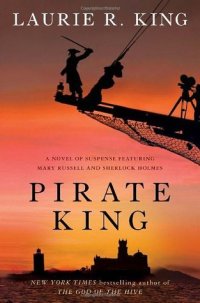 Book: “Pirate King” by Laurie R. King
 Book: “Hidden Bodies” by Caroline Kepnes
 Book: “This Shattered World” by Amie Kaufman and Meagan Spooner
 The Library Ladies