Serena’s Review: “A Study in Scarlet Women”

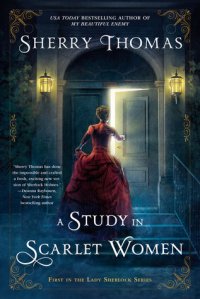
28588390Book: “A Study in Scarlet Women” by Sherry Thomas

Publishing Info: Berkley Books, October 2016

Where Did I Get this Book: Christmas present from Kate!

Book Description: With her inquisitive mind, Charlotte Holmes has never felt comfortable with the demureness expected of the fairer sex in upper class society. But even she never thought that she would become a social pariah, an outcast fending for herself on the mean streets of London.

When the city is struck by a trio of unexpected deaths and suspicion falls on her sister and her father, Charlotte is desperate to find the true culprits and clear the family name. She’ll have help from friends new and old—a kind-hearted widow, a police inspector, and a man who has long loved her.

But in the end, it will be up to Charlotte, under the assumed name Sherlock Holmes, to challenge society’s expectations and match wits against an unseen mastermind.

Review: While this has been on my TBR list for QUITE a while, I’ve also been incredibly nervous by the entire concept. I mean, let’s be honest, their is definitely “Sherlock exhaustion” in the air. I can think of several adaptations that came out in the last few years off the top of my head, all with “new” twists on the character. Many of these “new” twists are all very similar and have something to do with a female Sherlock, either a modern relation of him, or a modern relation of Watson who is a young woman, something! So, on the face of things, this book falls solidly in the same category. However, it has also been hugely popular and several reviewers whom I trust raved about it. But the credit in this case for me finally getting to reading it goes to Kate for getting it for me for Christmas. And man, suddenly all of my seemingly good reasons for being hesitant about this read went immediately out the window!

As stated, this is yet another re-imagining of Sherlock Holmes. In this version, Charlotte Holmes takes on the role of the brilliant detective, and the surrounding classic characters all get a revamp too. We have a newly imagined Watson, a new take on Mrs. Hudson, and a few references to the Myrcroft of this world. What’s particularly brilliant about them all is how much license the author gave herself to completely re-think these characters, their histories, and their relationships to each other. All too often, “unique” retellings only switch one basic fact and then try to simply re-tell the same story. Like, let’s just make Sherlock a woman, but change nothing else about the character, regardless of the massive impact that this one change would have on everything else. In a case like this, that change makes all the difference, given the very different worlds that men and women inhabited at this time. Often, this leaves these retellings feeling not only hollow, but anachronistic.

But Thomas takes it a step further: not only is Charolette a woman, but she is a woman who, while just as brilliant as Sherlock, is also distinctly her own person. We would expect a female Sherlock (indeed, we’ve seen this play out many times before) to be described as a thin, willowy woman, not only in an attempt to mimic the original character’s height and thinness, but because when wasn’t the young female lead thin and willowy? (but of course she’s insecure about it…) Charlotte is none of these things. A large focus of her day is spent thinking about food, and she has a strict number of chins that she’s decided are allowable before she much cut back. She’s blonde, cherubic, and society regularly uses the word “darling” to describe her. So right off the bat, this is a welcome change! At one point in the story, one character says something along the lines that it is God’s little joke that the most brilliant mind is housed in a body least likely to be suspected of having it. It’s awesome.

Further, Charlotte is written as a believable young woman would be, brilliant mind aside. Her intelligence is on display at all times (particularly her insights into people’s minds based on their clothes choices, as garish fashion is another of her pet loves), but she’s also a young woman who has been raised as a member of the gentry. She’s not automatically amazing at everything (a trope that is far too common for almost all Sherlock iterations nowadays). There are people in her life whom she respects who share with her these skill sets. I loved this attention to realism, and it helped make Charlotte feel like a more believable young woman. And it’s great fun to watch her build towards the “woman of all trades” that she will ultimately become.

Beyond Charlotte, the other characters were exceptional. As I said, their relationships with her and their own personal histories are much changed from the original, but somehow Thomas manages to perfectly capture the essence of each and re-create the roles they play in Charlotte’s story. There are little clues scattered throughout that were immensely fun to put together with my knowledge of the originals.

Further, Thomas introduces new characters, most notably, a beloved sister for Charlotte, Livia. Through Livia, we get an insight into Charlotte’s childhood and family life. Livia, too, serves the purpose of humanizing Charlotte. This was another aspect of this take on Sherlock Holmes that I loved. All too often, because he is brilliant, he’s simply allowed to treat others terribly and it seems as if he truly doesn’t care for anyone around him. Livia impresses upon Charlotte how important it is to learn how to function socially, and we never question Charlotte’s humanity due to her unfailing love for her sisters, particularly Livia.

All of this and I haven’t even covered the mystery! I can barely even sum it up, because, man, it was complicated. And this is one of the biggest compliments I can give it! I love mysteries that are challenging for the reader, and I loved piecing it all together after the reveals towards the end. But I can also see how this might be a turnoff for readers who don’t particularly enjoy mysteries. As I said, this one is pretty complicated, and with the huge cast of characters/suspects, I had to page back and forth a few times to make sure I was keeping track of everything. I didn’t mind this, but it may prove frustrating for other readers.

Beyond all of this, I loved the exploration of what it meant to be a woman in this time, and the underlying feminism at the heart of the story. Never does it bash you over the head, but instead, meticulously, carefully, and graciously, it lays out the case that women are just people, people who have their own thoughts, desires, ambitions, and loves. None of this taking away from the men around them, but simply existing alongside them. There was one scene, in particular, between Inspector Treadles (Charlotte/Sherlock’s connection in the police force) and his wife that really strikes upon this fact. Mrs. Watson, too, was a lovely force of will in this way. And, obviously, Charlotte herself who was ever practical about the limitations of her sex and how best to manage them towards her own goals.

I really could just rave about this book forever, but I’ll cut myself off here. I literally stopped reading about halfway through and ordered the sequel, so expect to see a review for that up soon!

Rating 9: A pure delight! THIS is the Sherlock Holmes re-imagining that I’ve been waiting for!

Reader’s Advisory:

“A Study in Scarlet Women” can be found on these Goodreads lists: “Victorian/Regency Female Sleuths/Mysteries” and “Reimagined.”

Find “A Study in Scarlet Women” at your library using WorldCat!

Kate’s Review: “Before I Let Go”

33918883Book: “Before I Let Go” by Marieke Nijkamp

Publishing Info: Sourcebooks Fire, January 2018

Where Did I Get This Book: I received an ARC from NetGalley.

Book Description: Best friends Corey and Kyra were inseparable in their snow-covered town of Lost Creek, Alaska. When Corey moves away, she makes Kyra promise to stay strong during the long, dark winter, and wait for her return.

Just days before Corey is to return home to visit, Kyra dies. Corey is devastated―and confused. The entire Lost community speaks in hushed tones about the town’s lost daughter, saying her death was meant to be. And they push Corey away like she’s a stranger.

Corey knows something is wrong. With every hour, her suspicion grows. Lost is keeping secrets―chilling secrets. But piecing together the truth about what happened to her best friend may prove as difficult as lighting the sky in an Alaskan winter…

Review: I want to extend a special thanks to NetGalley for sending me an ARC of this book!

It’s been a cold cold cold January up here in L’Etoile du Nord, and while we weren’t hit with a bomb cyclone of snow our temps were pretty low starting out the month. So whenever I read books that take place in Alaska, I usually think to myself ‘yeah, I feel that’. So the town of Lost Creek in “Before I Let Go” felt pretty darn relatable, at least in terms of climate and temperature. But Marieke Nijkamp made sure that the comparisons stopped there, as she created a community based on secrecy and lies. So when I picked this up I thought that I was getting a weird and creepy story about a town hiding things. Sadly, that wasn’t what Nijkamp gave me, and to be honest I’m not totally sure what exactly she did give me. “Before I Let Go” was a bit of a muddled mess.

The story is told in a couple of ways. The main ways are through flashbacks and moments in the present. We see the relationship that Corey and Kyra had before Corey and her mother moved away, and we also see how Corey is dealing with the loss of her friend, and how the town is dealing as well. And within those two ways, we get a couple of devices. Those devices include phone conversations, written out like transcripts, and then actual letters and correspondence, with notes as to whether they were sent or not. I usually like stories that experiment with the storytelling, and these devices were fine. But there was a third device that wasn’t introduced until halfway into the book, and that was through what appeared to be either screenplay or play directions. This only happened a couple of times, and it was introduced so late that it felt less organic and far more jarring. The first time it happened I was completely thrown for a loop, and it yanked me right out of the story. If you are going to use this device, I feel like it would better serve the story if you do it far earlier than halfway into it.

I also had a hard time getting invested in the characters and the story. The description seemed to imply that this was going be a mystery a la “Twin Peaks”, with a strange town with secrets that culminate with a dead girl who died mysteriously, but I didn’t feel like it ever took the plunge with any of the themes. For example, Kyra, who is bipolar (more on that in a bit), painted to cope with her manic episodes, and it’s implied that she has a bit of a psychic or prophetic ability through her painting. So, of course the town starts to take interest in this, as they want to know what their futures hold. Which is fine, but the psychic angle isn’t explored that much at all. It’s just thrown out there as a reason for the town to latch on, and it’s never said why she has them, IF she has them, or how they manifest. So it feels less like an intriguing plot point and more like a device that could have been achieved in other ways. So what did this story want to be? A small town melodrama? A coming of age/coming home story? A supernatural mystery? I wasn’t certain. If it wanted to be all three, I don’t think they were combined well into a single narrative. While we do get to learn a fair amount about Kyra through Corey’s memories, the letters, and the town people and their recollections, I feel like we know very little about Corey, our actual protagonist. All we know is that she had a deep relationship with Kyra, and wants to find out what happened to her, an obsession that is stoked by her own guilt for leaving her in the first place.

I do have to give props on a few things though. I did think that it was neat that Nijkamp made the choices to make a number of her characters LGBTQIA, as Corey is asexual, there is a gay couple in town, and Kyra was a lesbian. One of the central conflicts that Corey is struggling with is the fact that she and Kyra had a tense moment that they never really addressed, which wasn’t so great because it definitely felt a little ‘bury your gays’ for Kyra. But I do like that Nijkamp did have some ace representation, and doesn’t portray Corey as ‘disgusted’ by intimacy, as the stereotypes can sometimes imply. It also seemed to be that Nijkamp was conscientious to be careful and respectful when writing Kyra and her bipolar disorder. There was a very important moment where Kyra expresses frustration that she is only being seen as her bipolar disorder and not as a person, and I think that with so much stigma around mental illness having characters like Kyra is important for representation.

So while I think the representation and the themes of mental illness were well achieved, overall “Before I Let Go” was a disappointment, story wise. I had higher hopes for it, and while I could see myself recommending it to some, if you are looking for the thriller this might have wanted to be, look elsewhere.

Rating 4: It had some promise and takes a responsible and realistic approach to mental illness, but I felt like it didn’t really know what it wanted to be genre wise, and because of this felt confused and muddled.

Readers Advisory:

“Before I Let Go” is included on the Goodreads lists “YA & Middle Grade Fiction Set in Alaska”, and “Mental Health Book Bingo”.

Find “Before I Let Go” at your library using WorldCat!

Serena’s Review & Giveaway: “Shadowsong”

30694168Book: “Shadowsong” by S. Jae-Jones

Publishing Info: Wednesday Books, February 2018

Where Did I Get this Book: ARC from the publisher

Book Description: Six months after the end of Wintersong, Liesl is working toward furthering both her brother’s and her own musical careers. Although she is determined to look forward and not behind, life in the world above is not as easy as Liesl had hoped. Her younger brother Josef is cold, distant, and withdrawn, while Liesl can’t forget the austere young man she left beneath the earth, and the music he inspired in her.

When troubling signs arise that the barrier between worlds is crumbling, Liesl must return to the Underground to unravel the mystery of life, death, and the Goblin King—who he was, who he is, and who he will be. What will it take to break the old laws once and for all? What is the true meaning of sacrifice when the fate of the world—or the ones Liesl loves—is in her hands?

Previously Reviewed: “Wintersong”

Review: I’ll be honest, the only reason I decided to pick this series back up after my lackluster response to “Wintersong” was the fact that the publisher was kind enough to send me an ARC. But, while I still didn’t love this series as much as others have, this book was an improvement on the first, and I found myself enjoying more of it as I went along. As a whole, I can also see why this duology is as popular as it is, even if it wasn’t my cup of tea.

Set six months after the events of the first book, Liesl is trying to set her mind and action on her and her brother’s music. But this is easier said than done and she can never quite shake the memory of her time spent below with the enigmatic Goblin King. Shocking no reader ever, events occur that once again lead Liesl down into the Underground and back into the presence of the Goblin King. Now the stakes are even higher, and Liesl must once again try to puzzle out the truth of her mysterious beau.

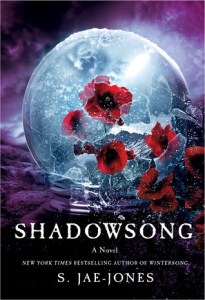
First off, I have to give props to the designer of the cover art for both this book and “Wintersong.” Both of these covers are gorgeous, and these are exactly the types of covers that would stop me short in a bookstore and get me to pick up a book. So well done on that front!

As I said, I did end up enjoying this book more than the first and I think this largely has to do with my connecting to the darker tone and topic that was introduced in this book. I still have an ongoing issue with the writing style which I find to be overly dramatic and taking itself too seriously, but at least here, in this book, that style of writing seems to better fit with the tale that is being told. The events and themes are dark and dramatic, so a verging-on-melodramatic tone doesn’t grate up against the story that is being told, but instead can work to support it.

I also appreciated the shift in focus that this book takes, away from Liesl’s relationship with the Golblin King and towards her relationship with her brother. I love a romance as much as the next person (perhaps more, if I’m honest), but these two’s romance wasn’t something I loved the first go around, so for me, a shift to a sibling relationship, something that I often adore in my books, was a welcome surprise. I especially liked the complications in their relationship, the fact that while they could not particularly like each other at times, they were still willing to sacrifice whatever was necessary on the other’s behalf it if was necessary.

However, I still felt that the story moved too slowly, dragging at point. And this was made worse by the lengthy time spent in Liesl’s head as she pined over the Goblin King. But the world building was excellent, and, again, I felt that the author was better able to leverage her strengths in this area this time around to balance out portions of the story that didn’t connect with me as much. There were some nice subtle touches with reoccurring elements throughout the book that did help bring the story to another level.

In the end, I have mixed feelings about this book. For me, it is definitely an improvement on the first story, dealing more fully with some tough subjects, creating a more consistent storyline, and shifting the focus off the romance and onto a sibling relationship. However, some of the issues I had with the writing style are still there, but I know that this is a very preferential opinion and that others enjoy this type of writing more than I do. There’s also the fact that because the story is a departure from the first, I’m not sure how it will be received? Will others who didn’t enjoy the first also find themselves liking this one more because of the changes (will they even read it if they didn’t enjoy the first)? Or will readers who loved the first one be turned off by the shifts in this story? I’m not sure!

But you can decide for yourself because I’m giving away a copy of “Shadowsong!” The giveaway is open to U.S. residents only, and will be running until January 31st!

Click here to enter!

Rating 6: A welcome change for a reader who didn’t love the first book. A darker and more serious story that better matches the dramatic style of writing.

Reader’s Advisory:

“Shadowsong” is a newer book so isn’t on any relevant Goodreads lists, but it should be on “Best Goblin Books.”

Find “Shadowsong” at your library using WorldCat!


A Revisit to Fear Street: “One Evil Summer”

394305Book: “One Evil Summer” (Fear Street #25) by R.L. Stine

Publishing Info: Simon Pulse, 1994

Where Did I Get This Book: ILL from the library!

Book Description: Summer at the beach and Amanda Conklin’s stuck in summer school. Well, at least she doesn’t have to take care of her little brother and sister. That’s Chrissy’s job.

Chrissy seems like the perfect babysitter — so kind and trustworthy. But Amanda soon discovers Chrissy’s terrible secret. Babysitting is Chrissy’s job — but killing is what she does best!

Had I Read It Before: Yes.

The Plot: Amanda Conklin awakens in her bland and cramped room at Maplewood Juvenile Correctional Facility. She’s been there for three days, and is surrounded by other teenage psychopaths and delinquents, and it seems that she may be in there for murder. How did she get there? She’s perfectly happy to let us readers in on the fact that it’s all because of an evil girl named Chrissy, and we start the flashback to earlier in the summer….

giphy3
Perhaps Amanda telling the other inmates about her summer up until now. (source)

Amanda and her family and leaving Fear Street and Shadyside behind for the summer in favor of spending it at a rental house in Seahaven, a seaside town that sounds actually pretty fun. Amanda’s dad is a public defender who made sure not to schedule any trials this summer (not sure that’s how it works, Stine) while he catches up on paperwork, and her mom is a reporter who is writing a story about the stresses of today’s youth. Amanda has two siblings, a little brother named Kyle and a little sister named Merry, whose speech impediment is like Cindy Brady and is written out phonetically! Oh joy of joys! Since the Conklins are going to be ‘working’ while on this family vacation I’m just not sure either of them could afford on their salaries, they will need to hire a live in ‘mother’s helper’ to help with Kyle and Merry, as Amanda has to go to summer school for Algebra, as she failed the previous year.

I am immediately calling bullshit for a number of reasons.

  1. If Amanda has to take summer classes, wouldn’t they have to be taken at her school in Shadyside? Would credits from Seahaven transfer to Shadyside?
  2. I’ve done summer school before. It is not a full school day. I think that my classes (also for math) were about three hours a day at most, so Amanda could easily care for her siblings in the afternoon.
  3. How hard would it be for Mr. or Mrs. Conklin to work on their various work projects in the morning while watching the younger kids? Couldn’t they trade off shifts? They’re both working from the beach house, aren’t they?

Anyway, they get to their summer home and it’s isolated and really chic, with a pool and everything. Mom and Dad take Kyle and Merry into town, so Amanda sets up the family canaries in a sunny spot and brings the family cat Mr. Jinx into the house. As she settles in, there’s a knocking on the door. She answers, and sees a blonde and beautiful teenage girl outside. She says she’s here about the mother’s helper ad, and says her name is Chrissy Minor. Amanda tells her that her folks are out at the moment, and Chrissy says that she has another job interview so WHATEVS. Amanda, knowing her folks are kind of desperate to not have to deal with their kids at all that summer, says she can try and get a hold of them. She does, and Mom says they will come right back. Chrissy then has a run in with Mr. Jinx. Mr. Jinx hisses at her, and Chrissy hisses right back, looking like a complete nutbag when she does it. Mr Jinx freaks, and Amanda is immediately wary.

Her parents return and they interview Chrissy. She says she lives with her aunt outside of town, but her cousin is home for the summer and the house is a little cramped, so a live in job for Chrissy would be perfect.

THIS IS A LIVE IN POSITION WHEN SHE WOULD ONLY BE LOOKING AFTER THE KIDS FOR HALF A DAY??? WHY?!

She says she has references and provides the phone numbers, so Mrs. Conklin goes into the kitchen to give them calls. Amanda tells her about the weird interaction with Mr. Jinx, but Mrs. Conklin isn’t phased. She tries the phone numbers and neither work, but Mrs. Conklin says that she has a good judge of character, and so therefore she is going to hire her anyway!! Amanda tells her that that’s totally irresponsible, and her mother basically says NO YOU by saying that AMANDA was irresponsible for failing Algebra. So…. let me get this straight, Mrs. Conklin, you don’t think that you have to get references for the person who is going to be responsible FOR YOUR CHILDREN FOR THE WHOLE SUMMER????

giphy5
(source)

Mrs. Conklin goes back to the living room and Chrissy mentions that Mr. Jinx hissed at her, and it was probably because she cleaned a mousetrap that morning. Yeah, okay. They hire Chrissy on the spot, and she goes out to her car to get her things that she brought ‘just in case’. Amanda notices that Salt and Pepper, the canaries, stopped singing when Chrissy was in the room. Amanda helps Chrissy to her room, and when she drops Chrissy’s suitcase a bunch of things spill out, including some old newspaper clippings. Chrissy first hides it, but then thrusts one of the articles at Amanda. It talks about a girl named Lilith Minor, who was in a coma two years prior. Chrissy informs Amanda that Lilith is her twin sister, and that she’s still comatose. Amanda gives her condolences, but Chrissy says not to be sorry because ‘Lilith is EVIL!’

Amanda starts summer classes that Monday, biking into town. While the family has really come to like Chrissy, Amanda is weirded out by the whole Evil Sister Lilith thing. In class she meets a cute boy named Dave, who ends up becoming her partner on the math problems and totally flirts with her. After class she asks him about Chrissy and if he knows her, and he says no, and asks what she’s like. Amanda says she seems okay, but Mr. Jinx hates her and wonders if that’s weird. Dave doesn’t think so, and they part ways. When she gets home, she can’t find anyone, and goes out to the deck with the pool… only to see Merry floating face down!!! She runs out and jumps into the pool to try and help her, but finds out that Merry is fine, and Chrissy was below helping her float and Amanda is crazy! Mrs. Conklin sees the commotion, and calls Amanda out to yell at her!! I’m getting the feeling that Mrs. Conklin is going to be the worse Fear Street Mom by the end of this. Amanda explains, and Mrs. Conklin lightens up a bit. Amanda tells her about the lack of bird singing, though, and the fact that Chrissy said her sister is evil, and of course Mrs. Conklin doesn’t think anything of it. And no, she still hasn’t talked to Chrissy’s references, but she’s perfectly lovely so what’s the problem? This woman. Amanda relents, and goes to let Mr. Jinx out of the house. She watches Chrissy, Merry, and Kyle play in the front yard, when suddenly a car on the road swerves out of control!! It barrels towards the kids, but Chrissy knocks them out of the way just in time, and the car ends up crashing into the family vehicle. The driver claims he has no idea what happened, the car just went nuts on him…. And sadly, Mr. Jinx was a casualty. GOD DAMMIT, STINE. Amanda, devastated, notices that Chrissy is smiling. Amanda goes to bury her cat in the woods by the house, Kyle going with her, and they give Mr. Jinx a proper funeral together. The family plays charades on the deck that night, and Chrissy, being a horrible bitch, does “The Cat in the Hat”.

Amanda has a bad dream and wakes up in the middle of the night. She goes to get a glass of water, but as she passes Chrissy’s room she sees Chrissy laughing evilly. Also, she’s floating in the air. Next thing Amanda knows, she’s waking up on the floor to her worried parents faces, and they tell her she fainted. She tells them what she saw, and they, surprise and shock, don’t believe her. And hey, I don’t think that I can really blame them, even if Mr. And Mrs. Conklin are just the absolutely worst. Amanda tries to prove it, by running into Chrissy’s room to catch her in the act of witchery…. but Chrissy is sound asleep. Amanda attacks her, as this is obviously how to prove that you aren’t crazy. Her parents pull her off and tell her that she’s probably super stressed and sleepwalked/dreamed the whole thing.

So I need to put in another aside here. This book sure seems to take a lot of influence from the classic Lois Duncan teen creep “Summer of Fear”, in which a teenage girl named Rachel suspects that her cousin Julia, who has just moved in with her family after a tragedy, is a witch who is manipulating those around her to garner favor, all the while pushing Rachel out of her life. It was made into a TV movie starring Linda Blair. The parallels seem way too similar and it really takes me out of this book.

Anyway, Amanda tries to fall back asleep, but can’t. She hears Chrissy leave her room and goes to see what she’s doing. Luckily, she’s just going on an Oreo binge in the kitchen, so Amanda takes the opportunity to try and gather evidence in Chrissy’s room. She grabs some of the newspaper clippings, but Chrissy catches her and threatens her. Amanda runs back into the hallway, but lucky for her on the of the clippings blew into the hall. Amanda goes back to her room and reads it. It’s from a place called Harrison County (not where Seahaven is), and talks about a couple named Minor who died in their beds after their car’s exhaust ran into the house. Their daughter Lilith was left in a coma. No mention of a sister/daughter named Chrissy. Before Amanda can think too hard, the clipping bursts into flames!!

The next day Amanda recruits her friend Suzi to go to the Shadyside Library and find any information she can on the Minor family. Suzi’s no nerd and doesn’t sound thrilled, but agrees to do it. Unfortunately, the phone starts to melt in Amanda’s hand, and Chrissy’s voice comes over the line spewing more threats. Amanda runs out of the room hoping to show her parents the melted phone, and notices Chrissy’s reference sheet again. Before she can even bring up the phone, though, she sees that it’s back in tact and in ti’s cradle. Amanda, you are fighting a foe who is far more formidable than yourself. So she goes to school, where she confesses to Dave everything that’s been going on. Dave, for whatever reason, totally believes her, and when she shows him the reference sheet and resume he tells her that the house Chrissy listed as her aunt’s has been long abandoned. They decide to go driving together, and he takes her on a boat ride to an island near shore where he shows her his ‘secret hideout’. Inside, he tells her he and his brother used to come here and have stocked it full of lots of practical things. Then he tells her he knows how she can get rid of Chrissy, and presents a knife to her. When she questions him and his murderous plot, he tells her that he thinks she should just plant it in her room. Not too shabby, Dave. Then they start kissing because aw, love.

Dave brings Amanda home and she introduces him to Chrissy. They ask her about the house she says she lives in, and she tells them she and her aunt haven’t moved in yet, she just bought it. CONVENIENT. Dave opts to distract Chrissy by offering to show her his car, and she probably takes it as some euphemism because she agrees. Amanda goes to plant the knife, but suddenly it’s spraying blood everywhere! Amanda runs out of the room, and then discovers that the family birds have had their throats slit. Her parents run into the room to find her screaming, but they also find her covered in a LOT of blood. Then Chrissy runs in and says she found a knife in her room and all of her things are covered in blood, and all signs are pointing to Amanda. Her parents think she killed the birds and then destroyed Chrissy’s things, but how much blood do they think is in two parakeets, because DAMN it sounds like a deluge. Amanda says Chrissy did this, but her parents decide to try and find her a doctor.

The shrink diagnoses Amanda with a lot of stress because of failing algebra and says that’s what causing this acting out. Amanda pretends to sleep in the car and eavesdrops on her parents, who tell each other they they can’t fire Chrissy because it will just feed Amanda’s delusions. So Amanda decides to stop playing checkers and start playing chess in this goddamn chess tournament. They get home and she ‘apologizes’ to Chrissy, ready to lure her into a false sense of security. Then, randomly, a kitten brushes up against her leg before hissing at Chrissy. Amanda says she’ll take it back to the forest, but instead sneaks it into her room. Then the phone rings, and she’s told that it’s for her. Expecting Suzi, she answers. But its’ actually Carter “The Cheater” Phillips! And she has some bad news. While at the library, Suzi suddenly started bleeding out of her nose and mouth and slumped over, and is now in a coma!!! No one knows what happened!….. Amanda does though.

Amanda decides to call Chrissy’s references herself while the other girl is busy reading to the kids. The first one doesn’t answer, but the second one does and says a whole bunch of gobbledeygook about being a neighbor and a judge and bad things happening, and then when Amanda tells her Chrissy is in the house the woman tells her to get out and hangs up. Reassuring it isn’t. Amanda finds Chrissy making Kyle some milk, but sees her put something in it. Worried she’s poisoning Kyle, Amanda panics, and intercepts the glass. While trying to figure out what to do wtih it, the doorbell rings, and it’s Dave. Amanda tells him her fears, and he knocks it out of her hands, claiming it was a klutz move on his part when Chrissy walks in. Dave eventually asks Chrissy to go to a movie with him as a distraction technique, giving Amanda some much needed snooping time. She finds another newspaper clipping, but this time it’s one with Mr. Conklin’s picture in it! It details a case that he had where he defended a homeless man against arson charges that involved the law offices of Minor and Henry. But what does it all mean?! She is about to go through more, but then Dave and Chrissy come home. Amanda hides under the bed, but when she makes a break for it she’s totalyl seen by Chrissy! She and Dave bolt (Leaving the little ones with a now potentially desperate crazy person with telekinetic powers, good show Amanda), and drive away. Amanda shifts through more clippings and finds out that not only was the homeless man acquitted, but her Dad recommended that charges be brought against Anton Minor…. who must be Chrissy’s father! That’s the good news. The bad news is that when they pull into a parking lot to use a pay phone, Dave suddenly starts bleeding from his nose and mouth and passes out! And the doors won’t open!

Amanda finds a screwdriver to try and break the windows, but then sees CHRISSY!!! Who uses her telekinetic powers to yank her out of the car and start monologuing. Turns out Chrissy’s father indeed burnt his law firm down and tried to pin it on a homeless guy, but when he failed he tried to go Family Annihilator on everyone and pumped car exhaust into his home, killing himself and his wife and Chrissy’s sister. Chrissy is taking revenge, and has already taken out the families of the Assistant DA and the Judge (who were her references), and is now going for the Conklins. She throws Amanda back in the car and then uses her powers to knock it off a cliff.

giphy7
She is NOT fucking around. (source)

Amanda survives the fall. Dave does not, may he rest in peace. Amanda finds herself on the bluffs above the ocean that were near the island that Dave pointed out, so she slowly climbs down, and passes out from exhaustion at the bottom.

She eventually wakes up the next day, and decides it’s time to make the long walk home to try and save her family. She gets there, but overhears Chrissy on the phone with her parents, who have evidently gone back to Shadyside to look for Amanda. Amanda sneaks up to her room to get the kitten she’s been hiding the set it free, but then her stomach overrides all rational thought and she has to get some food- Okay, this is just so long and tedious. We’re pulling a “Lights Out” and bullet pointing the rest of this sucker, it’s not worth the depth.

  • Chrissy uses mental powers to tell Amanda she knows she’s alive, and some weird code she’s built for herself makes it so she must kill Amanda before the others.
  • Amanda steals a dude’s wake-runner and takes it out to Dave’s Island to stock up on supplies and weapons.
  • Chrissy has sort of tracked her telekinetically and bounds and gags Kyle and Merry, tossing them in the cabin’s skiff and we are getting ourselves a WATER SHOWDOWN, PEOPLE!!
  • Amanda fights Chrissy powered headaches to ride the wave-runner to the skiff, but is thrown off by Chrissy.
  • She pulls herself up and there’s a fight that ultimately ends with the skiff crashing and Chrissy being thrown into some rocks and knocked out.
  • Amanda, Kyle, and Merry are left on the sinking skiff, but the water is shallow so they can just wade out. And she even brings knocked out Chrissy because she isn’t petty. Or maybe she’s just an IDIOT.
  • They get back to the house and Chrissy comes to and sets the house on fire. She’s about to kill Amanda with her own bare hands but the kitten trips her and she falls into the fire LIKE A DUMMY.
  • Amanda gathers up kitten and siblings and Chrissy has evolved into a fireball, but doesn’t get too far and collapses in a smoky burny heap on the deck and that’s it.
  • We go back to the hospital where we met Amanda, and apparently everyone thinks that she killed Chrissy and that’s why she’s there. But Kyle is talking again after the fire and he’s cleared everything up and she’s FREE TO GO!
  • Also there was no Chrissy, it was always Lilith, and WHO CARES, THAT’S WHY.
  • But as the whole family drives away from the smoldering pit of the summerhome, there’s a girl with blonde hair waving at them, who vanishes. The End.
giphy8
We made it. That was a journey. (source)

Body Count: At least 5, three of which are dear pets and I’m still hurt whenever Stine kills animals for shocks in his books. I THINK that Suzi was going to pull through, so it may just be Dave on the human side outside of Chrissy, beyond the bullshit ‘the end???’ twist at the end.

Romance Rating: 7. Amanda and Dave were pretty smoking until Chrissy gave him an aneurysm.

Bonkers Rating: 6. Perhaps you think that it should be higher, but it’s getting points docked for pretty much lifting plot points from “Summer of Fear”.

Fear Street Relevance: 1. Much like “Ski Weekend” and “Sunburn”, it doesn’t even take place on Fear Street. Amanda’s family lives there, but their biggest crisis is at the beach.

Silliest End of Chapter Cliffhanger:

“She let out a shrill scream as she saw the enormous eye staring at her. And then Amanda started to slip off the boulder. She almost lost her grip as the gigantic face moved toward her, its gaping mouth open wide as if to swallow her whole.”

… And then it’s not Chrissy doing her best “Attack on Titan” impression, it’s a mural drawn on the cliffside.

That’s So Dated! Moments: Well, nothing really fun, just mentions of Suzi looking at microfilm at the library and the rumor of a pay phone Amanda and Dave want to use.

Best Quote:

“‘Seriously, Amanda, what do you find most stressful about your life?’ Mrs. Conklin asked again. I hate these questions! Amanda replied silently. But she knew her mother wouldn’t give up until she got a real answer. ‘Algebra,’ Amanda replied.”

I HEAR YA ON THAT ONE, SIS!

giphy6
(source)

Conclusion: “One Evil Summer” is muddled and confused in a lot of ways, and in other ways it totally rips off Lois Duncan’s “Summer of Fear”. But antagonist wise, Chrissy is fun to hate!

Bookclub Review: “Book of a Thousand Days”

248484

We are part of a group of librarian friends who have had an ongoing bookclub running for the last several years. Each “season” (we’re nerds) we pick a theme and each of us chooses a book within that theme for us all to read. Our current theme is a “Dewey Call Number” theme. This book comes from a Dewey Decimal Call Number range, and has to fit the theme of that range.

For this blog, we will post a joint review of each book we read for bookclub. We’ll also post the next book coming up in bookclub. So feel free to read along with us or use our book selections and questions in your own bookclub!

Book: “Book of a Thousand Days” by Shannon Hale

Publishing Info: Bloomsbury Children’s Books, September 2007

Where Did We Get this Book: the library!

Book Description: When Dashti, a maid, and Lady Saren, her mistress, are shut in a tower for seven years because of Saren’s refusal to marry a man she despises, the two prepare for a very long and dark imprisonment.

As food runs low and the days go from broiling hot to freezing cold, it is all Dashti can do to keep them fed and comfortable. With the arrival outside the tower of Saren’s two suitors–one welcome, the other decidedly less so–the girls are confronted with both hope and great danger, and Dashti must make the desperate choices of a girl whose life is worth more than she knows.

Serena’s Thoughts

I have read a good number of Shannon’s Hale’s books. Not only the Princess Academy trilogy that I reviewed for this blog, but a few of her other YA stories like “The Goose Girl” and such. I’ve always loved her simple, yet beautiful, writing style, and as a fan of fairytale retellings, her work is always a hit for me. However, I don’t particularly love epistolary stories, which was the reason I held back on this one. I always have a hard time turning off my brain and not thinking about how incredibly unrealistic it is that anyone would write out entire conversations in their journal. But, I admit, I have been proven wrong in the past, and there are several books I can think of (“A Brief History of Montmoray,” for example) that I have enjoyed despite of this.

For the first third of the trilogy, I didn’t even need to bother with this concern. Dashti and the Lady Saren have been locked in a tower. There isn’t much else to do other than write extensive entries in ones journal! While some readers might feel this section is slow, I particularly enjoyed this section of the book. Not only do we have tons of character development for Dashti that builds up a good foundation for her character which goes on to drive important decisions she makes later in the story, but I enjoyed the fact that the threat wasn’t really any sort of villain. The threat was simply the looming dark, isolation, and dwindling food that came with their imprisonment. Throughout this ongoing challenge, Dashti’s strengths are apparent. She is resourceful, optimistic, hard-working, and willing to find joys in small things.

As the story progress, we move beyond the tower. I also enjoyed these segments, but I do think they were made better by what we had learned of Dashti and the Lady Saren as characters from their time in the tower. Further, as the story progressed readers are given more opportunities to fully immerse themselves in this world. I particularly appreciated the setting that Hale chose for this story, placing it in a kingdom that is similar to Mongolia. After reading a million and one European-set fairytale retellings, this choice was a breath of fresh air.

This story is also a bit more dark than some of Hale’s other works. I thought this was another big point in its favor. While Dashti herself is an optimistic character, the challenges that she face are by no means simple or easy. The villain is truly terrifying, and the sacrifices that Dashti makes throughout the book are at times heart-breaking. This layer of darkness and seriousness provided a nice balance to Hale’s simple and clear storytelling.

Beyond Dashti, the characters were excellent. As I said, the villain was worthy of the story and quite creepy. And Lady Saren was the type of character you could enjoy disliking. This was made even better by the fact that she was also a realistic character whom you couldn’t help but sympathize with. She is what she was made to be, and while that was frustrating, it also portrayed a very honest take on a character. There was also a cat, My Lord, whom we all at bookclub probably obsessed about more than is healthy.

Kate’s Thoughts

“Book of a Thousand Days” was my first foray into Shannon Hale, and as an introduction to her work I found it to be pretty good! Though fantasy of this sort isn’t really my cup of tea, I was immediately taken in by the medieval Mongolia-like setting. Like Serena, I found it to be a nice change from the Euro-centric fairy tales and fairy tale re-tellings that the genre is kind of inundated with, at least in our culture and collective consciousness. I had never heard of the fairy tale that this was based off of, so I didn’t have the context of comparison, but ultimately that didn’t matter. Hale made this story her own, and she made the characters interesting in their own right.

Character wise, I really liked Dashti. Perhaps it was because of her first person perspective vis a vis diary entries, but the way that her character changed and progressed was a really nice story to follow. She goes from being absolutely and completely devoted to Lady Saren, to a well rounded and independent person in her own right who can stand on her two feet. The choices she made, while sometimes frustrating and upsetting, were within the realm of her character. And then there’s Lady Saren, who I found to be incredibly unlikable and obnoxious. But even that characterization was wholly believable based on the way that she had been raised, and based on the dark stuff that she had gone through. They both came from various kinds of hardship and trauma in their lives, and Hale did a good job of showing different ways that we cope (without casting judgement).

I did think that the tower part was a bit stronger than the time after. I will admit that I was kind of taken by surprise that they left the tower at all. That isn’t to say that the second part of the book didn’t have well done moments or was poorly written, I just liked spending a claustrophobic and tense time as Dashti and Saren started to wonder if their food supply was going to dwindle to nothing.

And don’t even get me started about My Lord the cat.

All in all I think that “Book of a Thousand Days” was a nice fairy tale retelling, and I see why Shannon Hale has the following that she does. I don’t know when or if I’ll pick up more of her stuff, but I’m glad that I can say that I have read her work.

Serena’s Rating 9: A bit darker than some of Hale’s other works, but better for it. An excellent re-telling of a lesser known fairytale and one that features an excellent leading lady in a unique location.

Kate’s Rating 7: The great location and the awesome protagonist made this book a worthwhile read. Even though fantasy of this type isn’t really my thing, I had a fun time reading this book and give props to Hale for creating this world.

Bookclub Questions:

  1. This book is divided into three sections. How did you feel about each of these sections? Did you have a favorite? A less favorite?
  2. This book is set in a world based on Mongolia. What aspects of the world-building and the cultures of Dashti’s world spoke to you?
  3. Towards the middle of the book, Dashti makes a decision with regards to My Lord, how did you feel about this? (Like I said, we at bookclub were a bit fixated on this question!)
  4. What did you think of Khan Tegus as a character? How did his relationship with Dashti compare to romances you usually see in fairy tales?
  5. What did you think of the mucker vs gentry dynamic?
  6. What did you think of the end? Did it feel believable? Should it feel believable as a fairy tale retelling?

Reader’s Advisory:

“Book of a Thousand Days” is on these Goodreads lists: “Best Lesser-Known Books” and “Best Princess Tales.”

Find “Book of a Thousand Days” at your library using WorldCat

Next Book Club Pick: “The Golden Compass” by Philip Pullman


The Great Animorphs Re-Read: “The Hork-BajirChronicles”

Animorphs 22.5: “The Hork-Bajir Chronicles” by K.A. Applegate

Publishing Info: Scholastic Paperbacks, December 1998

Where Did I Get this Book: own it!

Book Description: Dak Hamee, born into the Hork-Bajir tribe, is something special from the start. “Strange,” says his mother. “A seer,” says the Old One, Tila Fashat. “A seer is one who is born to show a new way. Many, many seasons pass, then our father, the Deep, and our mother, the Sky, say, ‘Send a seer to the people. The people have need.’ And so one is born who is different.” When strange and different Dak meets Aldrea, the clever Andalite daughter of Prince Seerow, they learn together of the dangerous plot of the Yeerks, and of Esplin 9466, who will stop at nothing to build his empire. Learn more about Prince Seerow’s Kindness, find out how Andalites kiss, and plumb the mysteries of the Deep in this suspense-filled story of good, evil, and interspecies love.

Narrators: Dak Hamee, Aldrea, Esplin 9466

Plot: This story marks a departure from regular Animorphs books in several ways. For one, it is a story being told to Tobias by the freed Hork Bajir. It also features three narrators: Dak Hamee, a seer Hork  Bajir, Aldrea, an young female Andalite and the daughter of the infamous Seerow, and Esplin 9466, an ambitious Yeerk. The story also jumps around through time, starting around 1966 (Earth time) when Seerow first releases the Yeerks onto the galaxy, and ending a few years later.

The story begins with Aldrea describing the moments after the Yeerks first show their true colors and attack the Andalites who have set up a base on their home world. Alloran (yes THAT Alloran) shows up and begins berating Seerow for the mistakes he has made with the Yeerks by giving them technology and a portable Kandrona.

<Stupidity,> Alloran said harshly. <The stupidity of kindness. Charity to potential enemies. You’re a fool, Seerow. A soft, sentimental, well-meaning fool. And now my men are dead and the Yeerks are loose in the galaxy. How many will die before we can bring this contagion under control? How many will die for Seerow’s kindness?>

Two years later!

Aldrea and her family (her father, mother, and brother) are traveling to far away planet that is known to have life to observe and make sure there is no Yeerk presence. It is not an esteemed mission and Aldrea likens it to be ongoing exile due to her father’s actions. The planet they land on is made up of deep valleys full of huge trees and are soon greeted by the Hork Bajir. They send Dak Hamee, a young Hork Bajir who has known he was difference since he was a child. He is what the Hork Bajir call a “seer,” a rare Hork Bajir that is born rarely and who is much more intelligent than the common Hork Bajir. He has been told that he will bring a “new way” to his people. After meeting the Andalites and forming a friendship with Aldrea, he thinks that this “new way” is simply learning the vastness of the universe and all of the secrets of life and technology that Aldrea is showing him.

In the meantime, Esplin 9466 has his first experience outside of the Yeerk pool. He reveals that many Yeerks are perfectly satisfied with their lives in the pool, and that some, even after infesting a host body, find the prefer that life, finding the infestation experience too frightening and overwhelming. Esplin, however, becomes immediately addicted, especially to the sense of sight. He quickly understands that he must make himself useful if he is to earn the privileged of gaining a permanent host body (which are in high demand), so he sets out to become an expert on their enemies, the Andalites, with the hopes that his knowledge will be called upon in the future.

Three months pass.

Aldrea and Dak have become friends, and Aldrea is continuously surprised by how quickly Dak is absorbing all of the information she is presenting him. But she is also beginning to feel bad about spying on the Hork Bajir, having not explained to Dak the truth of why they are on his planet or anything about the Yeerk threat. Her parents are too caught up in their own things to pay much attention to what she is doing. They both question the fact that Dak is truly as intelligent as Aldrea reports.

One day as Aldrea and Dak are exploring (Aldrea has acquired a local animal called a Chadoo that she uses to travel through the trees alongside Dak), Dak hears a message being sent from another valley. The Hork Bajir use the trees and a system of strung vines to communicate across the distances. He says they are confused by a strange new alien creature that has come and taken away some of their own. Aldrea quickly realizes that they are describing the Gedd and that the Yeerks have arrived. Even worse, she realizes that her father will be sending out his nightly report and that the message is sure to be intercepted by the Yeerks in orbit if she doesn’t stop him. She arrives just in time to see her father send the message.

Meanwhile, Esplin has gained a Hork Bajir host body and is reveling in its power and the possibilities that this new species will give the Yeerks in their fight against the Andalites. The Yeerks intercept Seerow’s message and quickly locate the Andalites’ camp, and see three of the four Andalites nearby. Esplin warns them to wait until the fourth Andalite appears before shooting, using his knowledge of Andalites to deduce that the fourth wouldn’t be inside the scoop, as the other Yeerks theorized, as Andalites do not like to be cooped up if they have a choice. The Yeerk leaders ignore him and fire on the camp.

Aldrea watches her family and her home explode. Dak, confused by the violence and what is happening, has to drag her away from the scene. The Yeerks land and Hork Bajir Controllers immediately go after Aldrea. This is the first time Dak sees his own and his people’s blades as weapons, and manages to cripple one of the Controllers before he could kill Aldrea. They flee.

Aldrea swears vengeance for the death of her family and looks to Dak to inspire his people to fight. Suddenly realizes that the Hork Bajir aren’t peaceable by choice but that they literally don’t understand the concepts of fighting and battle. Dak insists that she explain everything; she tells the story of her father’s mistake. Dak quickly realizes the heart of the matter: the Yeerks were content on their own, but once they saw what they didn’t have, they wanted more. Aldrea, in her arrogance, assumes this insight is simply because now, too, the Hork Bajir are going to be jealous of the almighty Andalites.

Aldrea is insistence that the Hork Bajir must become killers to avoid being slaves. Dak sees this for what it is: both a death for his people and their ways. Aldrea sees Dak  begin to look at her in a strange, new way, his face filled with contempt. As the Yeerks continue to chase them, Aldrea and Dak flee to the Deep, one of the deeper crevices on the planet’s surface that is known to contain monsters that have killed all Hork Bajir who have wandered their in the past. They have no choice, however, and run down. The Yeerks follow, but Dak and Aldrea are saved when one of those very monsters, a huge Jubba Jubba creature, attacks them and kills the Yeerks. Aldrea manages to lob off its hand and they flea deeper.

Further down they find a sheer cliff, and in the cliff an intricate city of windows, bridges and balconies. They hide in one of the rooms that has been built into the wall. There they discover a new species, the Arn who look very similar to the Chadoo animal that Aldrea morphed. The Arn, however, are an intelligent species and, while trying to get Dak and Aldrea to leave, they explain their own history and that of the Hork Bajir planet. The Arn had been there first when the planet was lush and beautiful. However, there was an asteroid that had an unstable orbit around them. The Arn know that one day it would hit, however, being biologists, they couldn’t manage to create space ships that could get them past their own moon. Eventually the asteroid did hit, and only a few Arn who had been frozen and left on the moon survived. When the woke up they found their home world much changed, now covered in deep valleys and with an atmosphere that was barely stable. To manage this they created the vast trees. And to manage the trees, the created the Hork Bajir. They also made the monsters to serve as a barrier between the Hork Bajir and their own civilization further below.

The Arn want nothing to do with the war, but Aldrea and Dak manage to convince them that the Yeerks’ threat to the Hork Bajir will result in the Arns’ loss of their gardeners. The Arn teach them how to use the mind control system they have in place for controlling the monsters.

Meanwhile, Esplin and the Yeerks have been busy acquiring more Hork Bajir, around 100 a day. They cut down one of the massive trees and turn it into an impromptu Yeerk pool to aide in the infestation process. However, Esplin knows they must still find the Andalite. But Aldrea and Dak find him first, leading an army of monsters. Aldrea also calls to the Hork Bajir watching saying “Do as he does! Do as he does!” to get them to mimic’s Dak’s fighting. While Dak and the Hork Bajir fight, Aldrea sneaks on one of the Yeerk ships and manages to send out a message to the Andalites, calling for aide and saying the Yeerks have arrived. Hork Bajir!Esplin shows up and tries to capture Aldrea to infest her. She morphs a Jubba Jubba and escapes after using the fighter to blow up the tree  Yeerk pool.

Seven months pass.

Dak and Aldrea lead a guerilla war against the Yeerks, but they are taking huge losses. Aldrea can’t understand why the Andalites haven’t shown up; it should have only taken two months. Finally, they do arrive. Immediately they call Aldrea to come speak with Prince Alloran, but dismiss Dak. Dak insists that this war is taking place on his planet and being fought by his people: Alloran can come to him. Once the Andalite higher ups land, Dak finally manages to get their attention by giving a detailed report on the terrible conditions on the planet. Not only are the Yeerks infesting thousands of Hork Bajir, but they are also building new ships and will soon be able to travel the galaxy in huge numbers. They’re even creating a massive ship called a Blade ship.

They learn that the Andalites only showed up in small numbers, having not taken Aldrea’s warning seriously. After all, she was only a young female and the daughter of Seerow at that. The entire fleet is in another sector altogether and can’t arrive for another year. Dak knows that the Andalites will only use the Hork Bajir in this ongoing war. Aldrea doesn’t want to believe it, saying that Andalites aren’t like that.

We had been created by one brilliant species, invaded and enslaved by another. And now a third was using us. 

Esplin has been promoted to Sub Visser 12. He leads an attack on the newly arrived Andalites and reduces their number substantially.

Six more months pass.

The fight is not going well. Two thousand Andalites have been reduced to four hundred and the Hork Bajir are down to only 12 fighters. There are now one hundred thousand Hork Bajir Controllers. Dak, Aldrea, and the Andalites are holed up alongside the Arn (the Arn have adapted their bodies so that if they are infested they die,  however the Yeerks have simply turned them into slaves in other valleys). Dak notices that there is a section that the Andalites are guarding. He points it out to Aldrea. She is skeptical of it being anything of note, and tried to defend the Andalites. However, the two have grown much closer throughout all of this and she tells Dak that if the choice is between him or her people, she’ll choose him. After all of the Andalite arrogance and even Aldrea’s own lies to him, Dak doesn’t believe this, though he feels good to hear her say it. Aldrea manages to acquire Alloran. When Dak is confused by how she managed to pull this off, she says that morphing is a new technology and acquiring can be quite subtle. She simply took Alloran’s hand and gained his DNA without him noticing the drowsiness. She demonstrates how easy it is by acquiring a nearby female Hork Bajir.

She morphs Alloran and she and Dak gain entrance to the guarded room. There they find a computer lab and learn that Alloran has been creating a virus that is targeted to kill Hork Bajir. Dak is enraged, but not surprised, saying that this is the obvious next step for the ruthless Andalites who know a lost battle when they see one. Aldrea, equally horrified, insists that this is beyond the pale, even for Andalites, and that Alloran has clearly gone insane. They nab the canister containing the virus and destroy the lab. Dak is impressed and touched that Aldrea is willing to stand by her word, choosing him over her own people. Aldrea morphs a Hork Bajir to escape. This draws the attention of the rest of the Andalites. They only manage to escape because the Yeerks choose this very moment to attack the valley.

Dak and Aldrea managed to leap from a high bridge onto the passing Blade ship below. However, when the leap off, they are immediately captured by Yeerk Controllers and Esplin. Esplin immediately announces his plans to infest Aldrea, but Aldrea says that in two hours she will be trapped in this body forever (this is news to the Yeerks who don’t understand morphing technology). To prevent this, Esplin abandons his current Hork Bajir host body and attempts to infest Aldrea. Just before he fully gains control, the now freed Hork Bajir kills the Controllers around them and tugs Esplin back out from Hork Bajir!Aldrea’s ear. However, a nearby Andalite ship attacks the Yeerk ship they are in and they all go down.

Later, they wake up crashed on the valley floor. Aldrea has been trapped in Hork Bajir morph. As they search for Esplin (they theorize that he may have escaped into a nearby stream), the freed Hork Bajir swings down from the tree carrying the canister that he knows must be important. It’s open. The freed Hork Bajir immediately begins showing symptoms. Aldrea and Dak flee, hoping that the fact that the wind is against them will prevent their being infected. Right when they reach the Arn valley, they see the remaining Andalite ships leaving the planet.

They know the fight is lost. The virus is loose. And the Andalites have abandoned the planet. Aldrea and Dak reflect that there are valley far away that won’t be reached by the virus for quite a long time. And at least they have each other.

The book ends with Jara Hamee concluding his tale. Tobias says that now he’s even more depressed. Jara is confused by this and Tobias says he wishes he knew what happened to Aldrea and Dak, and even Esplin. Jara explains, as if to a small child, that Aldrea and Dak had a son whom they named Seerow, who had a son named Jara Hamee. And that Tobias already knows Esplin: Visser Three. As Tobias gets ready to leave, Jara introduces him to his daughter, Toby, named after Tobias. He says that Toby is special, and Tobias realizes that she, too, is a seer.

Dak Hamee & the Hork Bajir: Dak is a great character. I love everything about him. And it is clear that he is set up as the most wise of all the characters in this book, even the almighty Andalites. Really, looking at his character, this is what Cassie should be. He is peaceful by nature, incredibly talented at reading the underlying messages in people’s behavior, easily able to predict how those same people will act, and, importantly, willing to fight, even if he hates it. Yes, Cassie gets there too. But Daks’ anger and sadness never overcome him, he never puts others at risk to save his own conscience. His relationship with Aldrea is also great. Especially given the deeper understanding he has of some of her less positive qualities. But his ability to forgive is probably his strongest asset.

As for the Hork Bajir, I had forgotten much of their history. Especially their creation story, so that was a fun bit to re-experience. And man, the Arn are kind of the worst! I think they rival even the Andalites for arrogance! And are much more self-centered at that. They could care less what happens to everyone else, as long as they’re left alone. Their plan to adapt their bodies so that they’re uninfestable is clever, but they’re so self-focused that they don’t listen to the wisdom of others when they’re warned that the Yeerks won’t care about that and will find a way to destroy them anyways. Which they do by enslaving them and putting them to work mining for resource to be used to build more space ships. However, it’s not quite clear what their ultimate fate would be. After the virus was released, the Yeerks would flea the planet to avoid their hosts dying. But would the virus wouldn’t affect the Arn. So maybe their “outlast” plan worked after all. Even if they were little jerks the entire time.

Aldrea & the Andalites: Aldrea is also a great character. Most importantly because she is by no means a perfect character. Whereas Dak learns technical things about space, science, art, etc., he’s already a wise person. Aldrea is book smart, but she is naive about her own people and  exhibits many of the flaws of her species right from the beginning. She lies to Dak repeatedly; tries to downplay the Yeerk threat as long as she can; after her parents die, she becomes obsessed with revenge, not caring that the people who will be dying in this fight aren’t her own; when the Andalites arrive she fails to anticipate just how badly they will treat the Hork Bajir, and even at the end, struggles to believe Dak when he suggests that they are hiding things. For all of this, however, her arc of growth is clear. In the end, she stands by her statement to support Dak over her own people. And of all the characters we’ve seen become stuck in a morph, Aldrea expresses the least regret. Obviously this allows her to be with Dak, but I have to also think that by this point, she’s not a huge fan of her own species. Her father let loose the Yeerks on the world and then her commander tried to commit mass genocide. Maybe being a Hork Bajir is better, even if it’s short-lived.

As for the Andalites as a whole, you can’t say that Applegate ever gets “precious” about her “hero” alien species. If anything, the Andalites are getting a rougher and rougher history. They’re just kind of…all dicks. And sexist ones at that! Alloran says they pretty much dismissed Aldrea’s first call for help not only because she was Seerow’s daughter, but she was just a young female, so probably just foolish. It looks more and more like Elfangor and Ax are outliers, rather than examples of the Andalites as a whole. Even Ax struggles quite a lot to overcome his people’s arrogance and condescension towards other species. As always, Dak says it best:

I laughed. “You almighty Andalites. There is no limit to your arrogance, is there? Well, let me tell you something: We may be simple people. But we don’t use biology to invent monsters. And we don’t enslave other species. And we don’t unleash a plague of parasites on the galaxy, endangering every other free species, and then go swaggering around like the lords of the universe. No, we’re too simple for all that. We’re too stupid to lie and manipulate. We’re too stupid to be ruthless. We’re too stupid to know how to build powerful weapons designed to annihilate our enemies. Until you came, Andalite, we were too stupid to know how to kill.”

Esplin 9466 & the Yeerks: Esplin’s story was a very interesting one. My first thought as I started reading his chapters was that he sounded nothing like the Visser Three we know and love (?). For one, he seems pretty darn smart. He very quickly understands that he needs to make himself useful to be earn a permanent host body. And he also realizes, more than any of the other Yeerks, that to win they must understand the enemy. In this case, the Andalites. The interesting thing about this is that this plan is ultimately what also becomes his downfall. He learns everything about the Andalites, but then seems to become obsessed with them, and with the idea of infesting one.

In the main books’ arcs, this obsession has become a problem. His obsession with the Andalites has translated into a conclusion that they are the only worthy enemy in the universe. He immediately dismisses humans as a threat, thus leaving him with the inaccurate conclusion that he’s fighting Andalite bandits. Not only does he then misunderstand their tactics, motivations, and methods, but he fails to do the due diligence on the enemy he’s currently facing. The guy knows practically nothing about humans and the Earth, something that Visser One mocks him for. So the guy who began his career because he knew that it was important to fully know those whom you are fighting, is now losing because he got to caught up in his obsession over this first enemy. He’s no longer using what once was his best weapon, and thus losing this fight.

Beyond Esplin, we got some interesting facts about the Yeerks. Most notably, not all Yeerks enjoy infesting a host body. And, as Dak realizes early in the book, the Andalites failed to realize that a species might be content with the lives they lead and that introducing more is not necessarily helping. The Andalites’ huge failure is to under appreciate the difference cultures and priorities of the aliens the encounter. They believe they are the ideal, and therefore either dismiss (the Hork Bajir) or try to “help” (the Yeerks) the “lesser” species they encounter.

We also learn that the Yeerks already had a Council of Thirteen system when they lived in their pools, but the Visser/Sub Visser ranking only came after they attacked the Andalites. Esplin is also one of the first to realize that the type of host body you have reflects your own importance. Another reason for his obsession to become the first Yeerk with an Andalite host body.

A Hawk’s Life: As I’ve said before, a case can definitely be made for Tobias being the main character of this entire series. We now have both Chronicles books tying back to our main characters and storyline through Tobias. In the first, obviously, we learn that he is Elfangor’s son. Here, Toby, the new seer of the Hork Bajir, is named after Tobias in honor of the role he played in helping free the Hork Bajir now living in the hidden valley. For his own bits, the few scenes we have for Tobias are fairly depressing. He ends up at the valley because he’s feeling sad and lonely, and then it’s not like this story is the most uplifting thing ever either, so he’s pretty bummed at the end of it too. Obviously, the pay off and optimism comes with the introduction of Toby.

“I Get that Reference!”:  There were a few bits in this book that clearly touched on information that we as readers can connect to other bits of the story. One of the monsters from the Deep is one of the strange alien morphs that Visser Three uses (the vine-tentacle monster that took out all of the Animorphs back in the alternate timeline jungle story in book #11). There’s a reference to Dak and Aldrea theorizing that Esplin escaped in a nearby creek, something that must be kind of his move, since we saw him pull the same trick on Ax back in book #8.

Best (?) Body Horror Moment: There wasn’t a lot of body horror in this book. For one, Aldrea is the only one to morph and she doesn’t fixate on the process all that much. It was interesting learning that morphing was a very new technology at this time. Which means that in the grand scheme of things, morphing is very, very new for Andalites, even by the time we get to our main storyline back on Earth. I always thought of it as something the Andalites must have had for quite awhile. Aldrea also mentions that she is more skilled at morphing than others, and theorizes that females might have a better affinity for this technology, which is supported by the fact that Cassie is so good at morphing herself.

Couples Watch!: These Chronicles books are also turning out to be the most romantic of the entire series, and yet again we have a cross-species relationship forming. While I love the sweetness and humor of Elfangor and Lauren’s relationship, their storyline takes place over a short period of time, so it feels a bit less fleshed out. And then we miss the years in between when they truly form a romantic relationship. Here, with Dak and Aldrea, their romantic relationship grows in a much more realistic, and more painful, manner. The differences that they carry with them simply due to their species (Aldrea: arrogant, supremely confident, a tendency to think she knows best and look down on others. Dak: optimistic, has wisdom that could be seen as simplistic, but is actually more honest) are apparent from the beginning and are something they have to spend months working through.

Their relationship also forms through a much harder set of circumstances. Aldrea’s grief and anger over the loss of her family. Dak’s grief and anger over the loss of his entire people. And the fact that 90% of their time together is spent fighting a hopeless war. It’s dark, but it also makes their relationship feel that much more true and earned in the end.

We also get to see a Hork Bajir “kiss” when Dak presses his head blades to Aldrea’s in a moment of tenderness after she’s morphed Hork Bajir. She then compares it to an Andalite “kiss” which is when an Andalite strokes another Andalite’s face with their palm.

Adult Ugly Crying at a Middle Grade Book: Um, the entire book?? While I do love this book, it’s also one of the more challenging reads for me. It’s probably the most serious book in the series so far, and even at the beginning, the reader knows that things aren’t going to end well. We know the outcome of this war. We know the depth of betrayal the Andalites commit. We know that ultimately the Hork Bajir, and Aldrea and Dak, are doomed. So while the story does an excellent job of exploring some really important and challenging stuff (the price of violence on a peaceful people, the value placed on individuals based on intelligence, the lines that can be crossed in warfare), it’s still a tough book to feel pumped about reading from the start.

On a specific note, in this re-read, towards the very end of the book there is this quote:

It was Gah [the recently freed Hork Bajir whom Esplin had abandoned]. He was in the tree above us, in the high branches. He was swinging down to meet us. He was carrying the canister. He had retrieved it from the branches above. He had known that it was important. He was bringing it to us. It was open.

I don’t know why, but the sad, simple, sweetness of this small moment just crushed me. It perfectly illustrates the sadness behind the Hork Bajir people and the loss that was their ultimate fate. Here is Gah, just trying to help his friends, not understanding any of the complexities of the situation. Just bringing something he knows they found important. And dying for it.

Favorite Quote:

This really gets at the heart of the tragedy that is the fate of the Hork Bajir. And Dak understands this really early in the story, after only his fist encounter with the Yeerks:

<We can save your people, if they will learn to fight! They don’t have to be destroyed.>
“Yes, they do,” he said quietly. “Either they will learn to fight and hurt and kill, or they will learn to be slaves. Both will destroy them. Killers or slaves. They will be one or the other. Killers or slaves.”

Scorecard: Yeerks 3, Animorphs 6

No change!

Rating: As I said above, I think this is one of the more serious books in the series and the one that tackles big topics most head-on. Dak is an incredible character, and Aldrea is a great example of creating a flawed character who experiences a life-changing story arc. It’s also incredibly depressing. Unlike the “Andalite Chronicles,” we know how this story will mostly go. So while there are surprises (most notably the history of the Hork Bajir), it’s hard not to read it with an ever-present sense of dread. I have a hard time with sad stories, so that always make this book one of the ones that I have to talk myself into more when considering a re-read. But I’m also always glad that I did re-read it. After this book, it’s hard to read the battles between the Animorphs and the Yeerks without thinking about the tragedy that are all of the Hork Bajir hosts who are dying in these fights, confused and alone.

Note: I’m not going to rate these books since I can’t be objective at all! But I’ll give a one sentence conclusion and you can take from that what you will!
Kate’s Review: “Haunting The Deep”

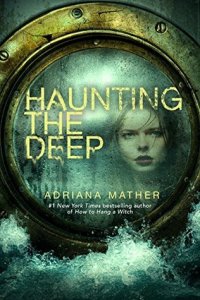
33977969Book: “Haunting the Deep” by Adriana Mather

Publishing Info: Knopf Books for Young Readers, October 2017

Where Did I Get This Book: The library!

Book Description: The Titanic meets the delicious horror of Ransom Riggs and the sass of Mean Girls in this follow-up to the #1 New York Times bestseller How to Hang a Witch, in which a contemporary teen finds herself a passenger on the famous “ship of dreams”—a story made all the more fascinating because the author’s own relatives survived the doomed voyage.

Samantha Mather knew her family’s connection to the infamous Salem Witch Trials might pose obstacles to an active social life. But having survived one curse, she never thought she’d find herself at the center of a new one. 

This time, Sam is having recurring dreams about the Titanic . . . where she’s been walking the deck with first-class passengers, like her aunt and uncle. Meanwhile, in Sam’s waking life, strange missives from the Titanic have been finding their way to her, along with haunting visions of people who went down with the ship. 

Ultimately, Sam and the Descendants, along with some help from heartthrob Elijah, must unravel who is behind the spell that is drawing her ever further into the dream ship . . . and closer to sharing the same grim fate as its ghostly passengers.

Review: Never in my wildest dreams did I think that I would have a deep and obsessive attachment to a YA paranormal romance series, and yet here we are. It’s a bit more than a year since I read the bananas kooky and super awesome “How To Hang A Witch”, and I was waiting with bated breath to finally get my hands on book two of the series. I knew that it was going be a series, and that I’d be able to gallivant with my beloved witch Samantha and her ghost boyfriend Elijah once again. The moment that I found out it was finally coming out, I was excited. And when I found out that the main plot point involved The Titanic, oh man….

giphy4
SEVENTH GRADE KATE IS FREAKING OUT!! (source)

If I were more cynical or less inclined to give this series all the passes because of my affection for it, I’d probably call out Mather for taking another part of her personal family history to fuel this book (if the next one takes place during another significant event that her family happened to be a part of I will start to really question). But as of now I’m just happy to be along for the ride. Mather has really fallen into a strong stride with her characters now, as Sam no longer feels like she’s trying to hard to be cynical and her friendship with The Descendants is on easy and natural footing. I was worried that bringing her Dad into the dynamic might make things a bit tricky, especially since he doesn’t know about his ex-wife Vivian being a witch who tried to curse him and Samantha, only foiled because of Samantha’s own dabbling in magic. But luckily, he adds a new foil for Sam to interact with, another skeptic who she is trying to hide herself from.

The Titanic theme was a little harder for me to swallow, though I did overall enjoy it enough. I think that my reticence is less because of how Mather approached it and more because I worked in an exhibit that was all about the Titanic during my museum days and I’ve been pretty burned out on the topic ever since. It also made some of the inaccuracies more glaring than they would have been otherwise. For example, there is mention of the Steerage passengers being locked behind gates so that First and Second Class had access to the lifeboats first. Yeah, that didn’t happen, so it was a little disheartening that that ‘fact’ was kept in, especially since I was under the impression that Mather did the research before writing. Plus, yeah, I have the skeleton in my closet that I did indeed see “Titanic” in the movie theater four times, and so my lingering embarrassment paints my judgment. It wasn’t even because of Leo and I don’t really want to talk about it…

But hey, let’s be real. I’m not here for the Titanic plot line. I’m mostly here for Elijah, the handsome and mysterious ghost who had to leave his lady love Sam behind when he crossed over at the end of “How To Hang A Witch”. Or did he? Spoiler alert, he did not.

giphy5
This must be what “Twilight” fans felt like. (source)

I really like Elijah and Sam as a couple, mostly because while Elijah does have his old world ideas of chivalry and protecting her, Sam shuts that shit down and he respects her and her decisions. He isn’t in this one as much as he was in the first book, but when he is there it’s really great and romantic. Plus, that kind of lets Sam show off that she is more than her love life, and given that some of the more popular paranormal romances stumble in this regard, it’s refreshing to see her have her own agency and personality. True, there’s a bit of a kerfuffle regarding Jaxon, the boy next door who is also keen on Sam (damn love triangles), but the good news is that Sam doesn’t really waffle or question where her heart is. She knows exactly who she wants, and so this love triangle is basically defunct, which is the best kind of love triangle. True, it adds for needless tension that I just kind of skipped over, but it made it easier to hate Jaxon, which I was down for.

OH, and the female friendships are in full swing in this book! In “How To Hang A Witch” there was an enemy situation between Sam and the Descendants, but now that the conflict has been resolved Sam, Alice, Susanna, and Mary are BFFs for life and it’s good seeing positive female friendships in a YA novel. We also are getting to know each of them a bit more, and I can only hope that this continues because I need to know more about all of them. Especially Alice, that sassy and snarky Queen Bee!

Overall, “Haunting The Deep” continues a series that I’m still totally invested in. I hope I don’t have to wait long for the next one, as I’m not sure I can go for another year without another Elijah fix.

Rating 8: A fun and soapy sequel to one of my favorite not so guilty pleasure books, “Haunting The Deep” brings us back to the delightful bitchcraft of the Descendants, the plucky Sam, and the swoon-worthy Elijah.

Reader’s Advisory

“Haunting the Deep” is a newer book and isn’t on many relevant Goodreads lists, but it’s included on “2017 YA Horror”, and I think that it would fit in on “Wise Women, Witches, Midwives, Healers, and Strong Girls!”.

Find “Haunting the Deep” at your library using WorldCat!

Previously Reviewed:


Serena’s Review: “Iron Gold”

33257757Book: “Iron Gold” by Pierce Brown

Publishing Info: Del Rey Books, January 2018

Where Did I Get this Book: NetGalley

Book Description: A decade ago, Darrow was the hero of the revolution he believed would break the chains of the Society. But the Rising has shattered everything: Instead of peace and freedom, it has brought endless war. Now he must risk everything he has fought for on one last desperate mission. Darrow still believes he can save everyone, but can he save himself?

And throughout the worlds, other destinies entwine with Darrow’s to change his fate forever:

A young Red girl flees tragedy in her refugee camp and achieves for herself a new life she could never have imagined.

An ex-soldier broken by grief is forced to steal the most valuable thing in the galaxy—or pay with his life.

And Lysander au Lune, the heir in exile to the sovereign, wanders the stars with his mentor, Cassius, haunted by the loss of the world that Darrow transformed, and dreaming of what will rise from its ashes.

Previously Reviewed: “Red Rising,” “Golden Son,” and “Morning Star”

Review: I absolutely loved the “Red Rising trilogy. It was epic in every sense of the word: a sweeping landscape that sprawls across the entire galaxy. An intimidatingly large cast of characters whose political machinations were challenging (in a good way!) to keep track of. And a story driven by one man’s quest to begin a revolution that would shake an entire world order. But in Darrow’s success, and the trilogy’s success, where is left to go? Many, many places it turns out!

From the get go, “Iron Gold” sets out to be its own story. It’s been ten years since Darrow’s revolution, and yet he, his comrades, and his civilization are still at war, both with the remnants of the old system who seek to bring back their own ways and privileges, as well as with those in their own fledgling government who struggle to direct this new world order from within a different political and societal perspective.

The narrative is also split between four characters. Alongside Darrow, we have Lyria, a Red girl who grew up on a “freed” Mars where all is not as well as they had been promised when her family and their colony were brought up to the surface from the mines below. Back on Luna, an ex-solider-turned-thief struggles to find meaning in an existence void of his fiance who died years ago and finds himself caught up in an underbelly mafia that might be more than he can handle. And far on the out reaches of the galaxy, Lysander, the exiled heir apparent, drifts along until he unexpectedly finds himself pulled into a revolution of its own.

Both of these tactics, the expanded POV cast and the time jump, were managed extremely well. Not only was it a great choice to set the story 10 years later, but by splitting the narrative, “Iron Gold” was freed up from some of the constraints that were beginning to niggle at me back in “Morning Star” when Darrow’s hero complex and habit of speechifying was just beginning to annoy me.

Here, not only do we have the three other characters, but Darrow is very much a changed man from the hopeful, conquering hero that we saw at the close of “Morning Star.” Through him, Brown tackles complicated issues surrounding ongoing warfare, the effects to the psyche on career soldiers, and the simple truth that winning a revolution doesn’t magically deliver up a new world freed of the systemic social classism that was at the heart of the old one. Darrow doesn’t know how to come home, and his discomfort while there, surrounded by friends, his wife, and his son, is palpable. Further, Brown gives us a more complicated Darrow. No longer is the reader assured that however morally grey Darrow’s decisions may be, that of course he is on the right side of this issue, he’s going to save the day! This Darrow is operating in a world where the black and white issue, upending the Gold class system, has already happened. But Darrow’s own legend has become  a burden and throughout this story I often found myself questioning not only his actions but his justifications. Darrow almost becomes an unreliable narrator, and I loved it all.

This discomfort and moral greyness carried over throughout much of the series. While the first trilogy was in many ways a simple mission with the good guys saving the world, this book challenges much of what we took for granted before. Through Lysander, we see a young man who was torn from the only life he had been trained to and cast out into the wilderness. Alongside him, we see the fallout of decisions that were made years ago to support Darrow’s revolution, but had their own catastrophic consequences on other parts of the galaxy and felt by other people. I enjoyed Lysander for the most part, but I also struggled with his decisions towards the end. While I understood them and why he, specifically, would choose as he does, this discomfort of both rooting for AND against a character at the same time was challenging.

Lyria, growing up in the slums on Mars, highlights the fact that winning a war isn’t all that is needed to save a downtrodden people. She and her family are essentially refugees on their own planet, forgotten by the very people who set out to save them who are now caught up in the “bigger picture.” Yes, that big picture is important, but through Lyria, we see the very real image of a revolution that is still actively failing the vulnerable. Lyria was the one character who was entirely sympathetic, and I loved all of her chapters.

Ephraim, the Grey solider-turned-thief, was almost the most “Darrow-esque” character of the whole lot, at least as far as you can judge from the original trilogy. Which is funny, since of the four, he’s also the one most in the wrong throughout the book. But through him we had much of the action and adventure we had in the first series. More jokes, less brooding.

There was also, of course, the return of many characters from the first book. Most notably, Sevro is right along Darrow for much of this ride. I loved that for all of his craziness, of the two, Sevro was by far the more balanced individual, able to carry the trials of war more lightly, and, most importantly, still able to retain a healthy, loving relationship with his wife and children. His wife, Victra, was probably my favorite character in the book for the simple fact that she had a battle suit fitted for her 8 month pregnant body and didn’t let it slow her down one bit.

The biggest disappointment, however, was Mustang. Not in anything she does, but by the simple fact that she has very little page time in this book. It’s not unexpected, considering her role as Sovereign, but I still wish we had more from her. I did enjoy the conflict that arose between her and Darrow. They are on the same side, obviously, but Brown masterfully illustrated the fact that a ruling Sovereign and a general on the front lines might still find themselves in very different places and making very different decisions, even when reaching for the same goal.

This is clearly the first book in a trilogy (?), and while many of the storylines are wrapped up well enough for the book itself, there are just as many ongoing challenges that are only made worse in this first book. Things go pretty badly for almost everyone involved and it definitely seems to be heading towards a “darkest before the dawn” type place. Further, given this book’s willingness to confront the moral quandaries and grey zones of warfare, it feels like less of a given that all will end well for our heroes. As we’ve seen here, winning the battle doesn’t get you very far if you don’t know how to live without fighting. And what’s more, what is the line in a war to save a galaxy? And are you even saving it to begin with? This book challenges its readers in ways that the original trilogy did not, and that is one of the highest marks in its favor. If you’re a fan of the first series, definitely get your hands on this one soon! But make sure to browse through those first few books again first, cuz, man, there are A LOT of characters and connections that I had to try and remember as I went along!

Rating 9: Darker and more complicated than the first, but just as excellent, especially with its expanded POV character cast.

Reader’s Advisory:

“Iron Gold” is a new book and isn’t on any relevant Goodreads lists, but it should be on “Sword and Laser Sci-Fi.”.

Find “Iron Gold” at your library using WorldCat!

Kate’s Review & Giveaway: “Senlin Ascends”

35271523Book: “Senlin Ascends” by Josiah Bancroft
Publishing Info: Orbit, January 2018

Where Did I Get This Book: I received an ARC from the publisher!

Book Description: The Tower of Babel is the greatest marvel in the world. Immense as a mountain, the ancient Tower holds unnumbered ringdoms, warring and peaceful, stacked one on the other like the layers of a cake. It is a world of geniuses and tyrants, of airships and steam engines, of unusual animals and mysterious machines. Soon after arriving for his honeymoon at the Tower, the mild-mannered headmaster of a small village school, Thomas Senlin, gets separated from his wife, Marya, in the overwhelming swarm of tourists, residents, and miscreants.

Senlin is determined to find Marya, but to do so he’ll have to navigate madhouses, ballrooms, and burlesque theaters. He must survive betrayal, assassins, and the long guns of a flying fortress. But if he hopes to find his wife, he will have to do more than just endure.

This quiet man of letters must become a man of action. 

Review: I firstly want to thank Orbit publishing for sending me an ARC copy of “Senlin Ascends”!

For someone who used to work in a historic Victorian house in full Victorian maid’s uniform (and sometimes Victorian style undergarments), I’m surprisingly not in tune with steampunk literature. My only steps in the genre are Alan Moore’s “League of Extraordinary Gentlemen” comic series, and the book “The Clockwork Scarab”. But when Orbit sent me “Senlin Ascends”, it became clear quite quickly that I was going to be jumping right into the deep end of a complex and steampunky world. I will admit that I was a bit overwhelmed at first as I got to know Thomas Senlin, cautious and meek school teacher, and his excursion into a technology ridden and complex Tower of Babel. But as I read on, I got into the groove.

The first thing that struck me was how intricate and creative this alternate world is that Josiah Bancroft has created. The Tower of Babel is an imposing structure from Biblical Mythology, and Bancroft transports it to a Victorian-esque time period in a world that is similar to our own, but not quite the same. The references to Victorian societal norms and fashions within a world of steam blimps and flying ships was very fun, as were the strange puzzles and conflicts within the Tower itself as Senlin moves his way through, hoping to find his lost wife, Myra. From drug dens to maniacal plays to space piracy, Bancroft puts Senlin in a world that he, and the reader, doesn’t see coming. I enjoyed jumping from scenario to scenario, experiencing it through the eyes of someone just as uninitiated as I was. The writing itself to describe this world was lyrical and flowing, reminding me of more classical styles similar to an adventure novel by Verne or Stevenson. It was just another nod to the time that steampunk tends to function in, and it fit the story perfectly.

I also enjoyed seeing the journey of Senlin himself. He starts as a meek and pragmatic school teacher from a small town, who brings is effervescent and new bride Mayra to the Tower in hopes of a vibrant honeymoon. All he knows of the Tower is what he has read in guidebooks, which make it seem fascinating and wondrous. As he comes to realize that it is, in fact, far more dangerous than he was led to believe, he has to confront himself and his own pitfalls and weaknesses if he wants to get Mayra back. To be frank, when Senlin starts out he is naive and privileged, and his transformation to hero is a slow one. It’s one thing if you start out merely naive, but it seems that Bancroft deliberately wanted to make him earn his hero status, as Senlin starts out with maddening cowardice, whose idealism has put his wife in serious danger that he can’t quite confront. I would go so far as to say that Senlin starts out as a rather unlikable character, as he abandons people who are helping him or working with him if he can escape with his tail between his legs. But to start him out this way means that he is going to learn from his mistakes, and by learning he becomes a better, if more hardened, person more equipped to function within the corrupt tower. His rotating companions and allies all have their roles to play in his growth, and I liked meeting them and seeing how he interacted with them.

But there was a glaring issue I took with “Senlin Ascends”, and that is how women have functioned within the narrative thus far. The most important, of course, is Mayra, and while we do get a little bit more insight beyond his here and there, she is very much objectified as a victim to be saved. She disappears within the first pages, and becomes this specter of longing who is merely idealized and not explored as a person, but as an ideal. I’m hoping that she does show up more in the later books and can become more than a beautiful, missing woman in a red helmet (side note: I love the fashions described in this book, and if this is what steampunk fashion is for the most part, I’m down!). Then there was Edith, one of the first people Senlin meets in the Tower. While she has ended up in a pretty cool place by the time he meets up with her again, what we see on page is her being put through the ringer and tortured, and not really any of the triumphs that bring her to final, self actualized state. It’s great she gets there eventually, but it would have meant more to see it. There is Voleta, who is the sister of one of Senlin’s companions, who was forced into performing acrobatics for abusive and corrupt men of power, another damsel in distress. And finally there’s Iren, an insanely strong enforcer who Senlin teaches how to read. While she was intriguing in her storyline, wanting to learn to read and become more that just brute force, she was, again, a woman to be saved in some way. I am going to give all of this the benefit of the doubt for now, as this is book one in a series and there are more books for all of them to come into their own. But I had hoped that women would play more of a role in this book beyond motivation for men.

Those issues aside, I did find “Senlin Ascends” to be a compelling story with lots of really neat ideas.

Rating 7: An exciting adventure novel with an interesting protagonist. I wish that female characters weren’t relegated to victim status, but am hoping in the next book they will get more to do and be more fleshed out.

But there’s more! I am giving away a free ARC of this novel! Given the indie success of this book and the other books in the series, I’m thinking that it will make a splash in the mainstream publishing world! The giveaway is open to U.S. residents only, and will be running until January 23rd!

Enter The Giveaway Here! 

Reader’s Advisory:

“Senlin Ascends” is just getting started and isn’t on any Goodreads lists, but I think that it would fit in on “Steampunk”, and “Best Steampunk and Gaslight Works”.

Find “Senlin Ascends” at your library using WorldCat!

Rah Rah for RA!: Spooky Reads for Kids!

Occasionally we here at Library Ladies get an email asking for some Reader’s Advisory. Sometimes it’s a general ‘what should I read next?’, and sometimes it’s a specific genre or theme that the reader is asking for. We do our best to match the reader to some books that they may like based on the question they give us. 

Dear Library Ladies,

As a person who is occasionally asked for reading recommendations for kids/teens, I could use some advice. I’m not well versed in the scary/horror story genre, so I would like some suggestions for books for kids, middle grade, and teens. Since I can’t always interpret the scary-tolerance level of the people that ask, a range, or even a general guideline for people new to this genre, would be greatly appreciated. Thanks!

Sincerely,

“Person who definitely did not fast forward through the Oogie Boogie Man song as a kid”

Hi, Person!

Good on you trying to expand your literary repertoire! It’s always good to have a nice bag of tricks when it comes to all genres. Given that horror can run a huge gamut, we’ll give you some titles that could be for those who need tamer works, and those who want to be super scared.

Picture Books:

7552359Book: “Zen Ghosts” by John J Muth

While this picture book does talk about ghosts and spooky folklore to an extent, the imagery and the themes are so gentle and muted that it probably won’t be too scary for any reader. Muth’s books in this series star a panda who gives zen teachings to children, and even in this Halloween themed book he addresses the spirit of the season as well as more thoughtful and introspective things.

363973Book: “The Little Old Lady Who Was Not Afraid of Anything” by Linda Williams
This is another Halloween themed story, but it can work year round as well. This brave little old lady is normally not afraid of anything, but then something follows her home. It’s a story that shows that even brave people can be scared sometimes, and that sometimes confronting your fears can be hard, but rewarding.

760205Book: “There’s A Nightmare in My Closet” by Mercer Mayer
What child hasn’t been afraid of things hiding under their bed or in their closet? This story is about a boy who ultimately confronts that monster in his closet, and finds out that it may not be as scary as he thought. The empowerment of the main character is a nice touch to a story that teaches the readers that sometimes what we are afraid of can’t really hurt us. And Mercer Mayer is always a joy, with fun and sweet characters.

Middle Grade:

267972Book: “Wait Til Helen Comes” by Mary Downing Hahn
Mary Downing Hahn is one of the high queens of children’s horror, and “Wait Til Helen Comes” is probably her most well known. When Michael and Molly’s mother marries Heather’s father, the blended family goes through immediate growing pains. Not only is Heather a manipulative brat, but she is constantly talking about her new friend Helen… who happens to be a ghost with not so nice intentions. This book is both creepy, and also addresses some real life issues involving family and siblings.

22859559Book: “The Jumbies” by Tracey Baptiste

This book brings Caribbean folklore to the forefront as it sends thrills and chills down readers spines. Corinne and her father are non believers when it comes to
Jumbies, Haitian folk creatures that lure people into the woods to eat them. But when
Corinne’s father falls under the mysterious spell of a strange woman named Severine, she needs to enlist the help of her friends and a witch in hopes of getting her father back! With diverse characters and a mythology that may be new to readers, “The Jumbies” is a fun, spooky read!

125581Series: “Goosebumps” by R.L. Stine

Well, of course. R.L. Stine’s classic book series for kids may have started in the 1990s, but it remains a favorite of children who love to be scared. While the levels of horror and themes vary from book to book, there are so many different monsters and creepy crawlies that most horror fans will find a couple that resonate with them (Kate still thinks about “The Werewolf of Fever Swamp” on occasion). True, the stories can be repetitive at times, but the familiarity can be a plus for those who want to read more and more with an author they are comfortable with.

Young Adult:

18748653Book: “Daughters Unto Devils” by Amy Lukavics
Starting this section off with a book for hardcore horror fans. The cover alone is jarring and upsetting! When Amanda Verner and her pioneer family move from their home in the mountains to an abandoned house on the prairie, weird things start happening. Amanda, with secrets of her own, starts to wonder if the demon she thinks saw that past winter has followed her… With claustrophobic settings and an undercurrent of paranoia, this book will keep the reader up at night jumping at any sounds outside the window.

19364719Book: “Slasher Girls and Monster Boys” by April Genevieve Tulchoke
For people who want multiple scary stories that can be read in one sitting, “Slasher Girls and Monster Boys” may be the book for them! this collection of horror short stories takes various pop culture influences to make all new takes of terror. From multiple authors in the YA horror genre, this collection has something fun and scary for everyone! The scary factor also varies from story to story, some being tame and weird, others being deeply disturbing.

25263927Book: “The Girl from The Well” by Rin Chupeco

Fans of “The Ring” and “The Grudge” will be familiar with the premise. Okiku, a Japanese vengeance ghost, traveled the world hunting down child killers and rapists, giving them a death they truly, truly deserve. But one day she stumbles upon a boy named Tarquin, an American teenager with intricate and strange tattoos. They aren't just ordinary tattoos. There is something creepy and sweet about an onryō actually helping others instead of straight up murdering them…

So there you have it!! A list of horror for kids of all ages and all levels of freak out tolerance. If anyone else has any recommendations, leave them in the comments!